Project Bento arrives on the main grid in Second Life

Project Bento, the Lab-initiated, collaborative project involving Second Life content creators to bring greater capabilities to mesh avatars and – potentially – rigged attachments – is now available on Agni, the Second Life main grid.

The news – not entirely unexpected, as the Lab has been gearing-up to make the move for the last few weeks – came via an official blog post on Tuesday, May 31st.

Project Bento has been in development for over a year, the initial phases of the work being carried out by the Lab behind closed doors, before a period of closed development involving a number of expert creators and tool makes – notably the Avastar team who produce the avatar plug-in for Blender, and Cathy Foil, who produces Mayastar, a similar plug-in for Maya. I was also invited to observe this initial work – my sincere thanks to Oz Linden for the opportunity – so that I could follow the project and report on its development, which I was able to start doing in December 2015, once the project had been publicly announced, and the project opened to greater input from content creators and animators.

Project Bento has involved staff from Linden Lab, notably Troy Linden, Oz Linden and Vir Linden, together with assistance from Alexa Linden, Simon Linden, Rider Linden, Aura Linden and others. It has also involved SL content creators including the folk from Avastar, Cathy Foil, Toady Nakamura, Siddean Munro and Flea Bussy
An early Project Bento meeting. The project has involved staff from Linden Lab, notably Troy Linden, Oz Linden and Vir Linden, together with assistance from Alexa Linden, Simon Linden, Rider Linden, Aura Linden and others. It has also involved the folk from Avastar and Mayastar as well as many content creators and animators

At that time, Bento introduced over 90 additional bones to the avatar skeleton, with no fewer that 30 being added to avatars hands to allow for finger manipulation, and another 30 to the head for facial expressions. To further support the new additions, new attachment points were added to the skeleton and – most recently of all – a good number of the bones (particularly those in the face) were hooked-up the viewer appearance sliders, allowing them to adjust elements of suitably rigged mesh heads, etc.

Net result: the ability for mesh avatars to be far more expressive and customisable than before, and much, much better support for non-human avatars. There’s also the potential for a wide range of other uses – such as Aki Shichiroji’s wyvern pictured below, or  rigged attachable pets – even the potential for gowns and other clothing to move naturally with an avatar’s movement.

Aki Shichiroji demonstrates a wearable wyvern utilising Bento bones for animation. Inset: the model under development at a Bento meeting.
Aki Shichiroji demonstrates a wearable wyvern utilising Bento bones for animation. Inset: the model under development at a Bento meeting (main image courtesy of Linden Lab)

Many of the possibilities for Bento are highlighted in a special promotional video released by the Lab and embedded at the end of this article, made with the full support for the creators who have been actively engaged in the project for the last 6-12 months.

It is important yo note that – as the official blog post states, this still a testing release of Project Bento: making it available to a wider audience than is possible when it is constrained to Aditi, and thus allowing further testing of things like overall simulator / grid performance with larger numbers of Bento avatars operating, looking out for other issues, etc., which may not have come to light during the Aditi testing, and also further refining and improving the viewer so it might progress to a release status.

Which brings up a further important point, again as the official blog post notes:

Anyone wishing to view the new content must be running the latest Bento Project Viewer.

If you encounter Bento avatars and are not using the Bento Project Viewer, you may see some strangely behaving avatar animations and meshes. If you’re using a very old (i.e. no longer supported) viewer, encountering Bento content may even cause a crash.

Some TPVs have already starting integrating the Bento code into experimental versions of their viewers. However, if you are testing Bento, working with content which leverages Bento capabilities, you are best off using the official project viewer for the purposes of bug reporting, etc.

There is also a Project Bento User Group wiki page for  those wishing to get involved in the project. However, please note that the meeting venue will likely be changing from Aditi to Agni now the project is available on the main grid.

Note, as well, that Project Bento is intended for use with mesh avatars and models – the capabilities are not intended to work with the default avatar form, as it was felt that attempting to do so risked potential content breakage and / or other issues which could impact the project.

Nevertheless, the new capabilities could herald a new era for mesh avatars within Second Life, with more realistic non-human avatars, greater dexterity with human-style avatars and even the potential for expressive, customisable mesh heads! So, welcome to the start of a new era for mesh avatars in Second Life.

Useful Links

Project Bento User Group update 14 with audio

Project Bento – extending the SL avatar skeleton

The following notes and audio were taken from the weekly Bento User Group meeting, held on Thursday, May 26th at 13:00 SLT on Aditi. For details on each meeting and the location, please refer to the Bento User Group wiki page.

Note that this update is not intended to offer a full transcript of the meeting, nor does it present the discussion points in chronological order. Rather, it represents the core points of discussion, grouped together by subject matter were relevant / possible, whilst maintaining the overall context of the meeting.

Bento on Agni

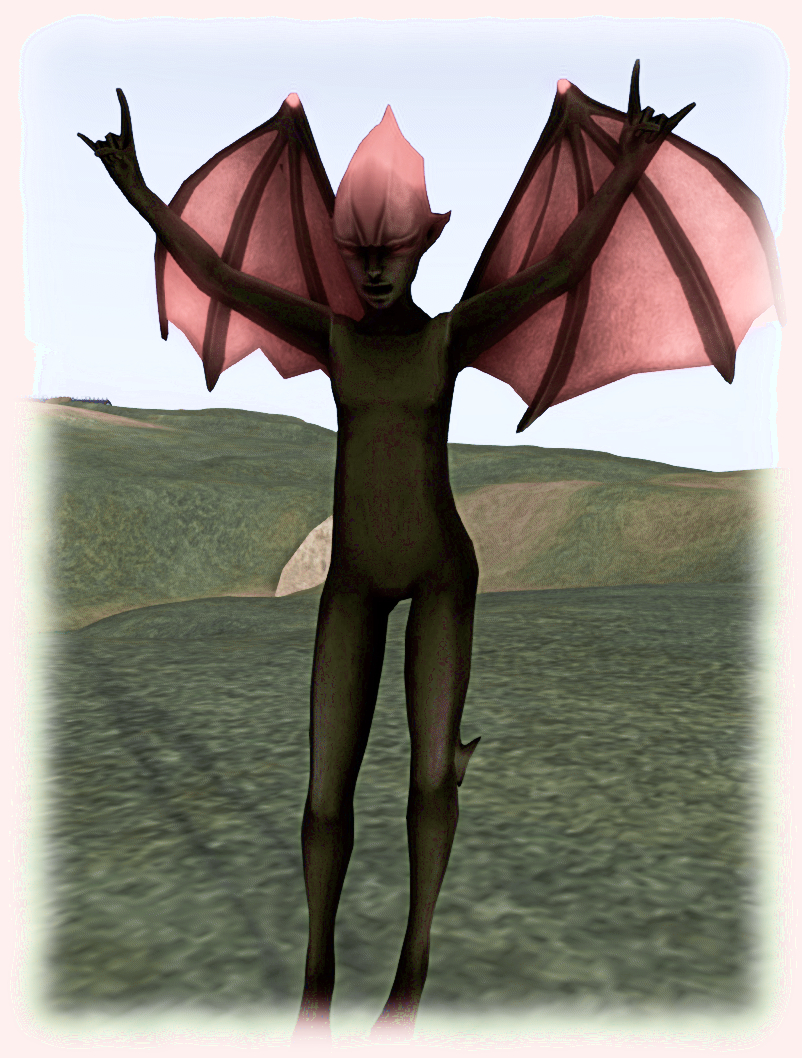
A Bento Imp celebrates the upcoming Bento move to Agni

It had been hoped that back-end support for Bento would be enabled on Agni (the main grid) during week #21. However, things got held up while a fix was being pushed through QA (possibly the security fix which rolled to LeTigre and then to all channels this week?).

The Lab is now planning to enable Bento in week #22, most likely on Tuesday, May 31st.

A couple of points to remember with the move to Agni:

  • This isn’t in any way a “final” release of Bento, although the Skeleton and slider updates are now frozen (unless a really significant issue / bug is found. At this point, enabling Bento on Agni, which includes the ability to upload Bento items to the main grid, is to expose the capabilities to a wider audience of content creators and allow broader testing
  • Until the Bento code comes into wider circulation among TPVs, any mesh avatars, etc., rigged to the new bones will look deformed in non-Bento viewer, and may cause some viewer instability / crashes.

Details are still TBD, but one aspect of the move to Agni will be a further stress test to see how large numbers of Bento avatars impact performance, region crossings, etc. Details, including date and time will be made available in due course.

Date and Location of Next Meeting

With the deployment of Bento to the main grid, Bento User Group meetings will also swap over to Agni as well to encourage attendance. Details of where meetings will take place will be announced via the User Group wiki page and through the Bento forum thread.

With regards to the next meeting, due on Thursday, June 2nd, there is a Lab internal meeting taking place that day. It is therefore unclear if the Bento meeting will take place or will be cancelled (Vir would prefer for the latter not to happen, given the scheduled Bento deployment to the main grid). A decision on whether, when and where it will be held will again be made via the User Group wiki page, etc., once decided.

Project Viewer Update

The Bento Project viewer updated to version 5.0.0.315657 on Thursday, May 26th. This version includes the following significant updates:

reset skeletionA “Reset Skeleton” option, intended to fix cases where an avatar is distorted in your world view as a result of incorrectly applied joint updates. For example, a non-human avatar may show as “crunched up” because it is still in a human pose.

Right-clicking on the affected avatar (your own or another) and selecting Reset Skeleton from the avatar context menu should correct the avatar’s appearance in your view. As this is a viewer-side update, it will not affect how anyone else sees the affected avatar until they use Reset Skeleton. The Lab has requested feedback on the capability if it fails to work as intended.

The viewer also includes a few late-breaking changes to the slider support for mesh avatars, including jaw shape and head shape. Sliders that affect the scale of mPelvis now also alter mHindLimbsRoot, to better keep the front and hind legs synced up.

Updated Skeleton and Test Files

At the time of writing, the Bento test files have yet to be updated to reflect the most recent viewer changes. When this has happened, they will be linked via the Bento Testing page. Matrice Lavalle from Avastar and Cathy foil of MayaStar are working on getting the skeleton files updated for their respective plug-ins, and ensuring the are consistent with one another, something they hope have finished in the very near future.

Once this has been done, both Avastar and Mayastar will be updated, and will include collision volumes and some other weighting tweaks which should help improve slider behaviour when editing an avatar’s appearance.

Vir has started putting together a repository for supporting test models and animations which can be made available through the wiki Bento test page, so if there are other Bento creators / animators who have test models and files they would like to submit, he asks that they drop him a line.

There was also discussion on how to present the models to ensure those using different modelling tools (e.g 3D Max) can obtain a full set of bones with which to work.

Other Items

BVH File Interpreter

The Second Life BVH interpreter has apparently been updated so it will allow the upload of position data. However, if problems are found when doing so, the Lab requests a JIRA is filed to let them know,

Animation Exports and Mayastar / Maya

Mayastar is the skeleton plug-in Cathy Foil produces for Maya users (Avastar being the plug-in for Blender). Mayastar will current export  .BVH files with bone rotations for the entire skeleton, but translations for the mPelvis bone only. This works reasonably well with these restrictions, although it does have an issue with feet Cathy is currently looking to fix. As far as skinning, etc., is concerned, Maya works “pretty good”.

However, and in her own time, Aura Linden is working on an exporter for Maya which is intended to support export .ANIM files with both rotation and translation of all bones in the skeleton.

This should eliminate the need to sue two skeletons for Mayastar – one for rigging and one for animations. Subject to confirmation, the .BVH uploader may also have been updated to eliminate the need to use two skeletons.

Continue reading “Project Bento User Group update 14 with audio”

SL project updates 16 19/2: server, viewer, Bento Agni deployment

Rosemoor; Inara Pey, May 2016, on FlickrRosemoorblog post

Server Deployments Week #19 – Recap

The RC server maintenance package deployment planned for Wednesday, May 11th was postponed as a result of the 3-day Aditi outage delaying testing. The update, which comprises minor internal improvements which present no visible functional changes to Second Life, will now most likely go ahead until week #20 (week commencing Monday, May 16th.

Viewer Updates

The Quick Graphics RC viewer updated to version 4.0.5.315117 on Wednesday, May 11th, brining it to code parity with the current release viewer. Providing no major issues are uncovered, this might be the last RC update for this viewer prior to its promotion as the de facto release viewer.

Project Bento

As noted above, the Project Bento meeting was severely disrupted by continuing Aditi issues, which left people unable to reach the meeting either via direct log-in or via teleport.  As Vir Linden was also unavailable (due to an unrelated matter), Troy Linden steered the meeting, fighting against a slowly deteriorating region condition.

A pile-on test had been planned for immediately after the meeting with the intention of stress testing a region with a large number of animated Bento avatars all with active animations. The test was to have been an internal Lab test, but members of the Bento user group were invited to join-in as well if they wished. Unfortunately, the continuing poor Aditi performance force the test to be postponed.

Agni Test Release Deployment

Allowing for things like stress testing and unforeseen issues, the plan is for a test release of Bento on Agni (the Main grid) to be made during week #21 (week commencing Monday, May 23rd).

The release will be the current server-side support for Bento, plus the project viewer. It has not as yet been decided to make the deployment grid-wide, or restrict it to an RC channel  / dedicated channel.

The deployment is to gain a broader audience testing Bento assets and content and using the viewer. This does mean that if you wish to see or try Bento content, you will have to be using either the Bento project viewer, or a TPV which has the Bento updates.

Continuing voice issues rendered recording the meeting impractical, so hopefully normal reporting will resume  next week.


Project Bento User Group update 13 with audio

Project Bento – extending the SL avatar skeleton

The following notes and audio were taken from the weekly Bento User Group meeting, held on Thursday, April 28th at 13:00 SLT on Aditi. For details on each meeting and the location, please refer to the Bento User Group wiki page.

Note that this update is not intended to offer a full transcript of the meeting, nor does it present the discussion points in chronological order. Rather, it represents the core points of discussion to Project Bento, grouped together by subject matter were relevant / possible.

Issue Fixes

Partial Joint Offsets

As noted in my last update, one issue facing Bento is in how best to handle defining partial joint offsets – a mesh that specifies the override positions for some of the joints but leaves  other joints alone, which would allow different meshes to be mixed and matched to create an avatar look. Currently, the viewer doesn’t handle  multiple root bones in a mesh with partial rigging correctly, and to help correct this, Vir Linden has published a proposal for moving forward. Essentially, this would filter out any joints which have a position unchanged from their expected default, even if the mesh claims to use an offset, with only a very small adjustment (0.1mm or greater) is required to have a joint treated as having its own offset.

Offset and Slider Conflicts

Another issue which has been discussed recently is that joints offsets (notably translation offsets) can conflict with adjustments made using the appearance sliders, resulting in adjustments made using the sliders “snapping back” to their original location on leaving edit shape or following a relog or after removing / rewearing the avatar mesh.

An adjustment has now been made so that where an offset has been set for a joint, adjustments made using the sliders which only affect the offset will be ignored, only changes to the scale of a joint (length, height) made using the sliders will work. It is thought that this fix will also address the likes of BUG-11854.

Work in progress: Aki Shichiroji demonstrates a wearable wyvern utilising Bento bones for animation.

It has also been noted that BUG-10991, “[Bento] Mesh rigged to the new joints either partly disappears, collapses or melts when viewing that avatar as an imposter” has not been fixed with the latest version of the project viewer. It will hopefully be one of the issues addressed with the next update.

Next Viewer Update

The above fixes, coupled with other work which has been carried out are regarded as being sufficient to kick-off another update to the project viewer, although there is a further piece of work Vir hopes to include. If all goes according to plan, this should see a new version of the Bento project viewer appearing in week #18 (week commencing Monday, May 2nd).

Animation File Size Limit

Currently, there is a file size limit of 120 Kb on animation files enforced by the back-end servers. With the increased number of bone available for animation. As it is now possible to animate a far large number of joints, some creators have started to find this limit a problem, and a request has been put in for it to be increased (see BUG-11836).

While there is potential for this to be done, it is currently unclear how much the file size limit should be increased. There are also other considerations to take into account, such as the intention for animation assets to be moved to the CDN for better delivery.

If there are specific examples of animation with large file sizes which could be attached to the JIRA as examples, they would be welcomed by the Lab. It has also been suggested that the Lab establish a best practices guide for animations files on the wiki.

This lead to a brief discussion on interpolation and the differences between .BVH and .ANIM animations, with Vir providing background information on how each are respectively handled.

Sliders for Remaining Bento Bones

While many Bento bones  – notably those of the face / head – have been tied-into the existing appearance sliders, there are still those which do not have slider support because they would require the development of dedicated sliders. this has been considered outside the scope of the initial Bento work, and it is far from certain it will be taken up in the near-term future, if at all.

Part of this comes down to the added complexity further sliders would thrust into the viewer UI, and also – as Vir explains – because the use of many of the Bento bones is intended to be arbitrary, therefore providing sliders to adjust them may not suit all of the uses to which they might be put, and cause further confusion / unpredictable results when used.

Continue reading “Project Bento User Group update 13 with audio”

Project Bento User Group update 12 with audio

Project Bento – extending the SL avatar skeleton

The following notes and audio were taken from the weekly Bento User Group meeting, held on Thursday, April 21st at 13:00 SLT on Aditi. For details on each meeting and the location, please refer to the Bento User Group wiki page.

Note that this update is not intended to offer a full transcript of the meeting, nor does it present the discussion points in chronological order. Rather, it represents the core points of discussion to Project Bento, grouped together by subject matter were relevant / possible.

Bento Promotion

Troy Linden, the product team lead for Project Bento opened the meeting by offering thanks to all those who have participated in the project. The Lab is now preparing to deploy the project to the main grid, most likely some time in Q2 2016. In support of this, they want to hear from content creators who would be willing to submit avatars for use in Bento promotional videos and supporting documentation. Those interested in helping the Lab by providing content are asked to content Troy directly, indicating what they are producing, so a good cross-section of content can be demonstrated.

Skeleton Status and Viewer

From the TPV Developer Meeting, Friday April 22nd

It is believed the skeleton in now frozen, and the Lab would prefer not to add further bones / amend the existing bones. There will be a period of test (around two weeks) to ensure there are no further significant changes which must be made before the project progress to the main grid. Work is continuing on trying to resolve or at least improve issues which pre-date Bento but what have an impact on it (e.g. the various default animation issues discussed in these reports), although these are not considered blockers to the project moving forward, so they may or may not be all resolved over time.

Joint Offsets and Overrides

Partial Offsets

Note: see the forum thread discussion commencing here, and the three messages immediately following it, and further follow-ups  here and here (plus the two messages immediately following it) for additional background.

One problem people have encountered is when defining partial joint offsets – that is, having a mesh that specifies the override positions for some of the joints but leaves  other joints alone. This is seen as particularly useful in allowing different meshes to be mixed and matched to create an avatar look. However, there appear to be issues in how both the viewer and – possibly – Avastar are handling things.

The issues within the viewer have been identified as the viewer failing to handle  multiple root bones in a mesh with partial rigging correctly. For example, if a creator is trying to override the shape of both hands in a mesh without overriding anything else (and so no common root such as the pelvis is defined), the viewer currently applies the defined offsets to one hand, but not the other due to them having separate root bones. It is hoped a fix for this will be in the next project viewer update.

Flagging joint Overrides

Another issue is that currently, there is no means to flag whether or not a joint has an override on an individual basis. The current assumption is that all the joints that are skinned to either also have an offset defined, or none of them do.

The problem is how to let people specify individual overrides without changing the mesh asset structure as it is currently defined, as it would really be outside the scope for Bento (an example of this would be providing a custom attribute to specify offsets)

Suggested options are:

  • Treat certain values in the mesh asset as indicating there is no offset. There are issues associated with this. For example, if 0,0,0 were to be used, then joints would not have any offsets relative to the pelvis, leaving them all in that position, squishing the model
  • Use the default location for a joint offset as a kind of “magic” value, indicating that nothing is to be changed.

The latter is seen as preferable, although it is acknowledged it might not suit all cases or might cause more issues if using the default positions proves complex. Vir has therefore invited further discussion on the matter through the forum thread.

One other suggestion was put forward: using a true / false boolean to define the state of offsets on a joint by joint basis. However, this would again mean changes to the mesh asset structure and, if included in the mesh uploader as suggested in the discussion, a complex and potentially confusing update to the viewer UI.

Facial Sliders: Animation Translation vs. Slider Offset Conflicts

As noted in my update #11, there are concerns about the potential for animations which reposition the facial bones conflicting with the use of facial sliders to adjust the position of the same bones, particularly when using bone translations in animations. This could potentially make it difficult to make portable facial animations, as they can end up conflicting with facial bone positions set by the sliders.

In short:

  • When using rotations in an animation, the rotation will generally take its baseline from whatever offset is selected by adjusting the associated slider. So changing the size / position of a facial element with the sliders shouldn’t drastically impact the appearance when the animations are running
  • When using translations, however, their offset is taken as an absolute. This means that if the associated appearance slider only uses an offset to define the size of a bone – such as with the new ear-tip bones – changes made using the slider will be instantly overridden by the animation as soon as the appearance editor is closed (so if an animal’s ears are made larger using the sliders, then will instantly “snap back” to the size defined by the animation translation)
  • The problem should be limited to the sliders which only use offsets rather than scaling to achieve results, and these are thought to be a minority. However, further discussions will be had to try to determine how the issues might be remedied
  • Krystal Silverweb has offered some examples of issues on the forum thread Which continues through to page 58, at the time of writing), and Gaia Clary has added some further notes concerning the translation / rotation of joints and the use of the appearance sliders to the Avatar documentation.  See also discussions within the thread under the heading “Facial animations and appearance sliders compatibility….”

Vir is considering starting a best practices document on the use of animations and sliders, and is hoping that further testing can be carried out to see what works best, where limitations reside, etc., and that people will help expand this to provide practical help and support to others. This will likely be linked to the Good Building Practices for ease of reference.

Initial discussion on sliders and issues

Post-meeting discussion on sliders / offsets and animation bone rotations / translations between Medhue, Cathy and Elizabeth

Other Points of Discussion

Linking Bones to Create Snakes

Medhue Simoni referenced his observations in trying to link bones together to produce avatars such as snakes, where a large number of bones have to be linked to effectively produce a spine. The expanded into a broad discussion on the use of the “hind limb” bones, and the use of custom skeletons within 3D tools for the purposes of animating and constraining the SL skeleton bones.

Bones and Rigging

One problem with the volume of bones the skeleton is what to rig and when in creating avatar models. Following the core meeting a brief discussion was held with further explanations given on:

  • teeth bones: designed to ensure the teeth in an avatar accurately follow the movement / position of the lips; if the teeth are rigged to the lips, misalignment /warping can occur
  • Chin bone: to allow for easier adjustments to the head.

This also covered some of the thinking behind the linking of the facial sliders to the Bento bones.


Project Bento User Group update 11 with audio

Project Bento – extending the SL avatar skeleton

The following notes and audio were taken from the weekly Bento User Group meeting, held on Thursday, April 14th at 13:00 SLT on Aditi. For details on each meeting and the location, please refer to the Bento User Group wiki page.

Note that this update is not intended to offer a full transcript of the meeting, nor does it present the discussion points in chronological order. Rather, it represents the core points of discussion to Project Bento, grouped together by subject matter were relevant / possible.

Viewer Status

A new version of the project viewer arrived on Thursday, April 14th. Version 5.0.0.313876 brings with it:

  • Addition of a mFaceChin bone to the face to support the use of appearance sliders
  • Addition of “Left Hind Foot” and “Right Hind Foot” attachment points
  • Added or improved support for a large number of sliders,  notably those for the avatar shape.

As previously noted, the slider support means that many of the Edit Appearance sliders will work with both the original avatar form (using morphs) and with mesh avatars utilising the Bento skeleton. This means that height can be adjusted via the sliders, the face can be adjusted (eye or mouth position, nose and chin shape, etc.). However, musculature changes are not supported as there are insufficient bones available to properly support this.  The update also includes a number of bug fixes, including one for some graphics glitches in the mesh upload preview.

Unless serious problems are encountered when using this version of the viewer, there are no plans to make further changes to either the skeleton or the sliders going forward, and the emphasis on viewer work will primarily be on bug fixing.

The humanoid avatar models on the Bento testing wiki page should also be updated to reflect these changes, and Avatar should have an update to match the skeleton shortly (if not already available).

Sliders and Animations

A point of note with linking the appearance sliders to the Bento bones is that they can change both the position and the scale of the linked bones. Any changes made using them may therefore clash with animations used within the avatar to also reposition the same bones, or may have an impact as a result of the scaling being changed via slider adjustments (Second Life currently doesn’t support the ability for animators to control bone scaling themselves). How to limit the impact of this when users are changing their avatar shapes may be an issue, although initial testing suggests that using bone rotations on those bones which are linked to the shape sliders can reduce the impact of conflicts.

The lack of bone scaling within the SL animation system is recognised by the Lab as a limitation, but is seen as being a separate project, were it to be addressed in the future, rather than something directly encompassed by Bento, due to the amount of work involved in defining the necessary tracks to manage scaling and extending the format for how scaling data is stored and represented.

Moving to Agni

The Lab is still looking to move Bento to the main grid (Agni) during the second quarter of 2016. The final time frame hasn’t been determined, but there may be more on this at the next meeting, however it is likely to be sooner rather than later. This means that the Lab will be focused on resolving the more major / obvious bugs people are currently experiencing and will be looking for feedback on experiences with the latest version of the project viewer ASAP.

Arrival on Agni won’t signify the end of the project, but it will mean that creators will be able to upload and test content on the main grid, and more users will obviously be able to see Bento content. The project will likely be promoted by the Lab through blog posts and videos, and they will be inviting people to submit their own Bento videos and content.  Details on how to get involved in this will likely be discussed at the next Bento project meeting.

It has been suggested that once Bento has been moved to Agni, the Mesh Dev in-world group becomes the medium for handling Bento related general discussions and information exchange for content creators, rather than establishing a dedicated in-world group.

Other Items

Partial Joint Offsets / Overrides

There has been some discussion on the forums concerning partial overrides and best practices with regards to the Bento skeleton, and Vir has offered some thoughts on the matter. Some problems have been encountered in using some of the bones within “worn” pets, with offsets with these bones appearing to affect others in the skeleton. However, further investigation is required to determine whether this is a potential issue, or possibly a problem within the models being used.

Issues

  • Odd deformations seen in the Bento viewer: Medhue's fly should be standing on all six legs, not standing upright
    Odd deformations seen in the Bento viewer: Medhue’s fly should be standing on all six legs, not standing upright

    Deformations: avatars are sometimes still being seen as deformed by some using the Bento viewer (prior to the latest release). The issue is still being looked into by the Lab as to potential cause or causes

  • Spine Joints: the added spine joints are proving difficult to use in some cases – snakes and similar are proving difficult to animate
  • “idle” animation state: when transitioning between animations, or when ending an animation, the default animation system uses an “idle” animation (e.g. if an animation generates a look of surprise on an avatar’s face, the “idle” animation will return the expression back to a neutral look when the animation stops running). However, because the default system is unaware of the Bento bones, then these “idle” animations get ignored (so that the avatar’s face remains stuck with the surprised look, for example, or a transition between animation states fails to ease-in / ease-out correctly). To avoid this, one suggestion has been to encourage animators to explicit set their own “idle” animation.

While not directly related to Bento, a long-standing issue was raised at the meeting: that of the default walk failing to play under a variety of circumstances (running an animation unrelated to walking / crossing from one region to another / wearing something / etc), with the result that the avatar appears to “slide” over the ground. While long-standing, it appears a JIRA has never been raised against it, so a request has been made for one to be raised so that the Lab can dig into things outside of Bento.