Travel to Originalia is the newest art exhibit on Amase Levasseur’s Originalia sim. It features three new works, Postcards Home by Callipygian Christensen, Adapt or Perish by Cherry Mangaand and Gateway to Hell by Fuschia Nightfire, together with a chance to once more enjoy Scottius Polke’s acclaimed The Docks.
The exhibit itself opens this coming weekend, but I was lucky enough to be invited to preview the installations ahead of the formal opening.
Teleporting to Originalia brings you to a small arrivals area, with the ominous title Adapt or Perish.From here lay a series of wooden or stone paths leading to the different exhibits in the installation, three of which are visible without excessive camera-panning, two under their own respective domes, while the third appears to be a quite rural English Post Office of yesteryear.
There is no specific order in which you should view the exhibits; however, as I am English, I naturally felt drawn towards the Post Office, which also seemed to have a small welcome area in front of it. So that is where this preview starts.
Postcards Home
If it wasn’t for the very obvious domes raising from behind and one side of it, one could almost imagine the Post Office is part of a set awaiting the arrival of Miss Marple and a BBC film crew. It’s a charming place, with a fountain out front and places to sit. There is also a poster for the exhibit, which provides an introductory notecard and a series of landmarks (which actually all resolve to the same arrivals point).
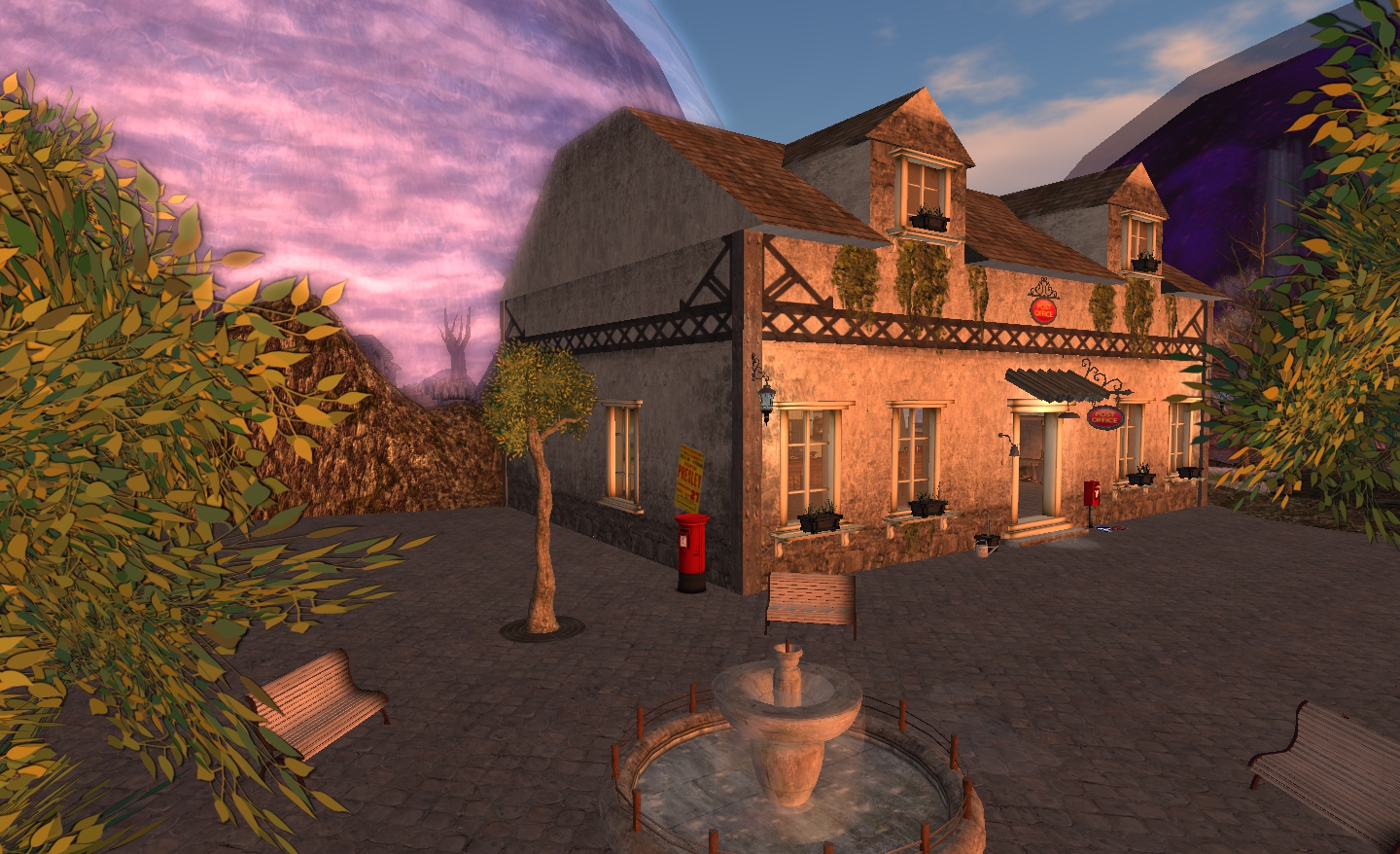
Inside are the orderly roped counter queue areas (we English so love our queues), a familiar counter and, on the walls, Callipygian Christensen’s images which form Postcards Home. Each, as the name of the exhibit suggests, features an image captured from somewhere within SL displayed as a postcard, complete with the “reverse” side tucked in behind it, some of the text just visible.
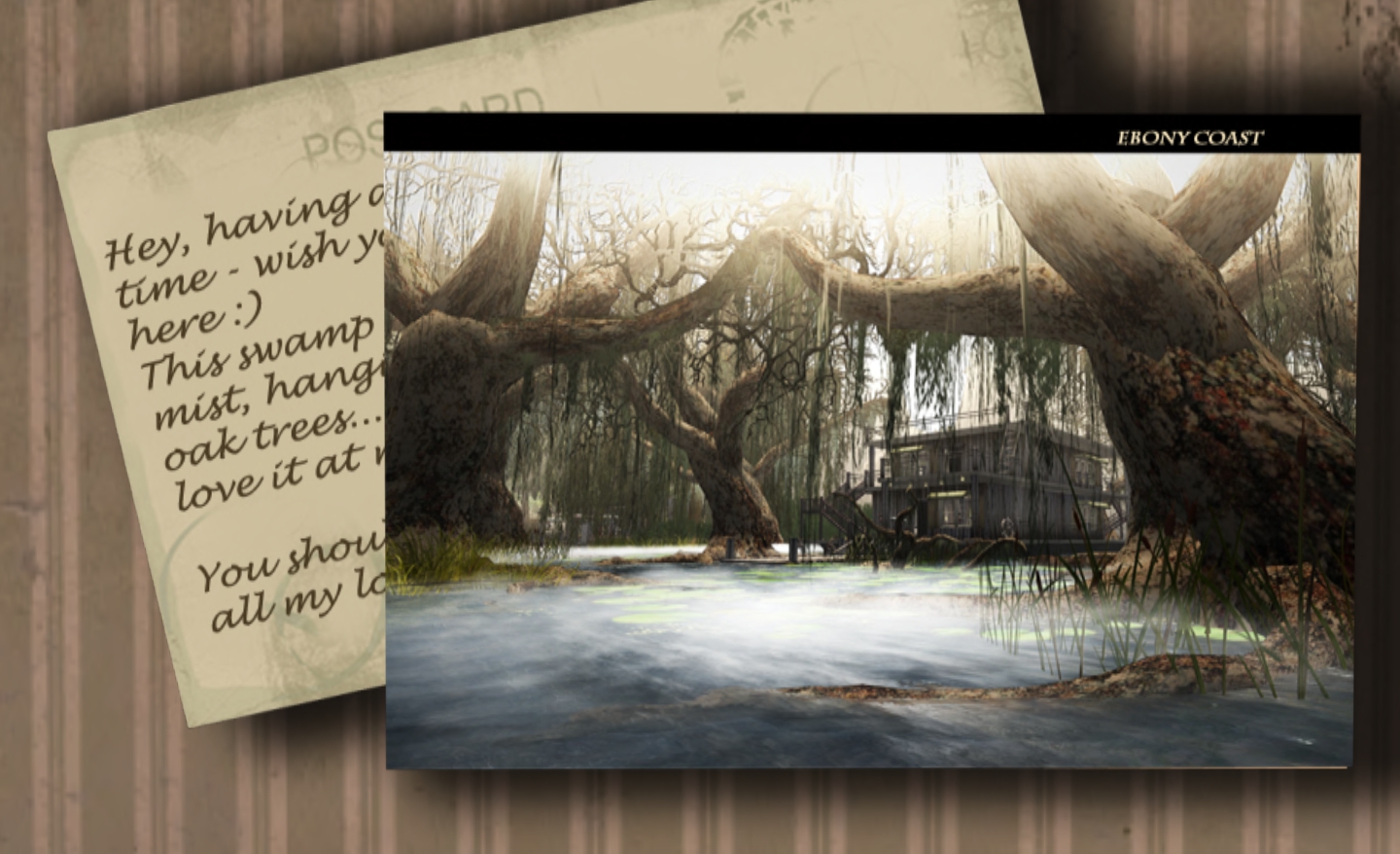
It’s a clever approach; the images themselves can be evocative – there is one of AM Radio’s work which causes a slight pang given his sims are now sadly gone from SL. The partially viewed messages from the “backs”of the postcards give each one added depth, as we catch a small glimpse into the life and thoughts of the person who sent the cards.
Adapt or Perish
This is something of a cautionary tale about our need to remain in harmony with nature or risk destroying it – and ourselves.
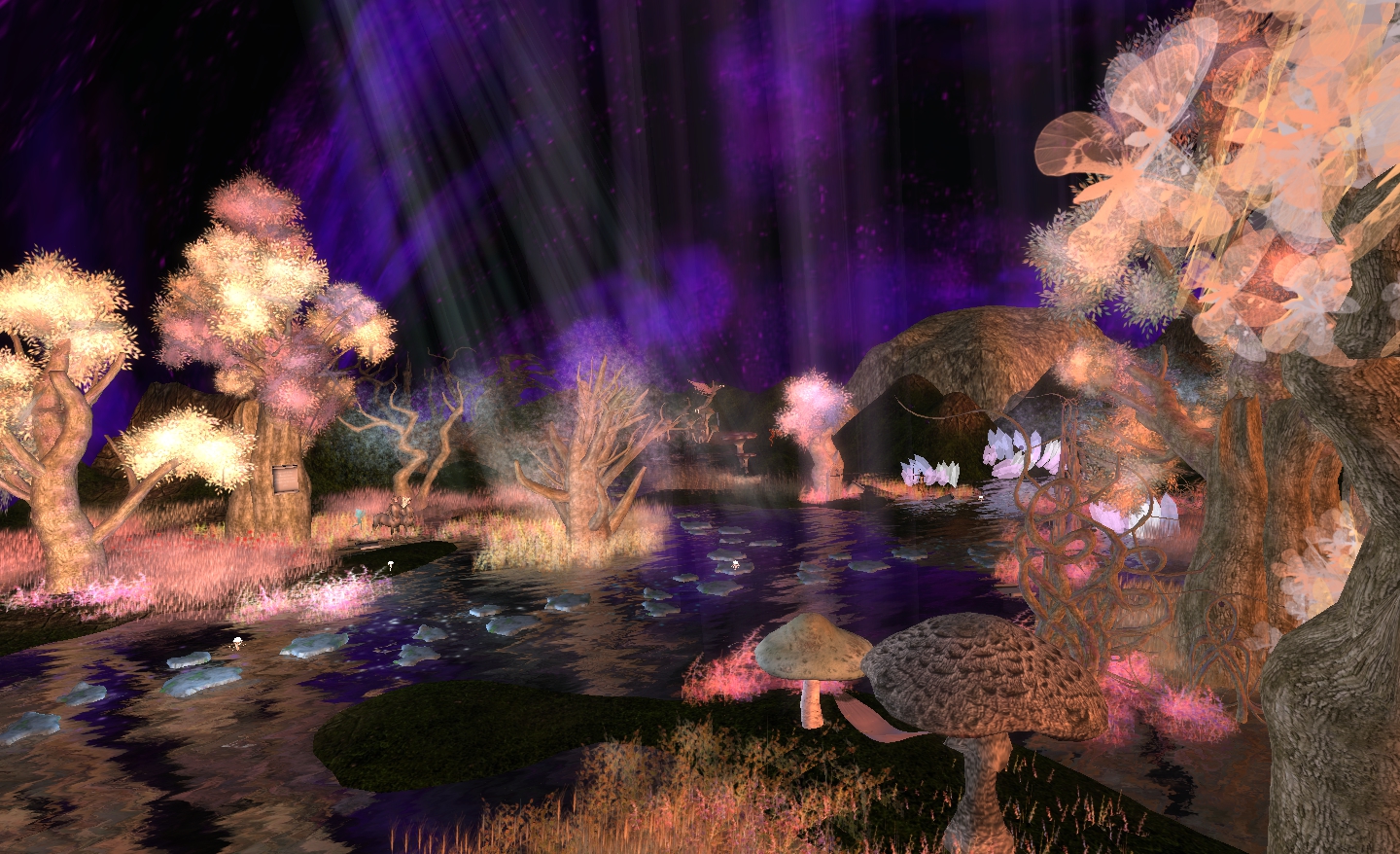
Entering the dome, you enter a fantastical landscape, rich with flora, with fairies, fawns, centaurs. This is not a single tableau, however. Rather, it is as series of visual vignettes, all of them interlinked and accompanied by a short verse, which all build together into the overall piece and the story it tells.
 Stone paths over the water lead you deeper into the piece, past those who have learned to adapt and accept what Nature has to offer, taking no more than what is needed, sharing, making nature their home and giving thanks for all that they have.
But as one moves deeper, so things grow darker. The grass dies. The leaves wither from branches overhead. The trees themselves become bare-branched, misshapen grotesques. So to, does the music change, a haunting, deadly voice slowly filling the air the further one continues.
Here is the realm of those out of harmony with nature; those, we are warned, who steal and kill, who always want more. Their footprint is that of desolation where a dank mist covers the ground and nothing but fungi flourish. The air is filled with the sound of leaden, warning drums and a deathly chanting, and the path leads us inevitably to chaos and death.
 It is a sobering message, one only too clear in its meaning – and it is also one beautifully rendered, although I must admit that I wish something other than a refrain from the soundtrack of Kubrick’s Eyes Wide Shut had been used for the more menacing element of the background music; this tended to allow images from the film slip into my mind, spoiling my focus on the piece in front of me.
Gateway to Hell
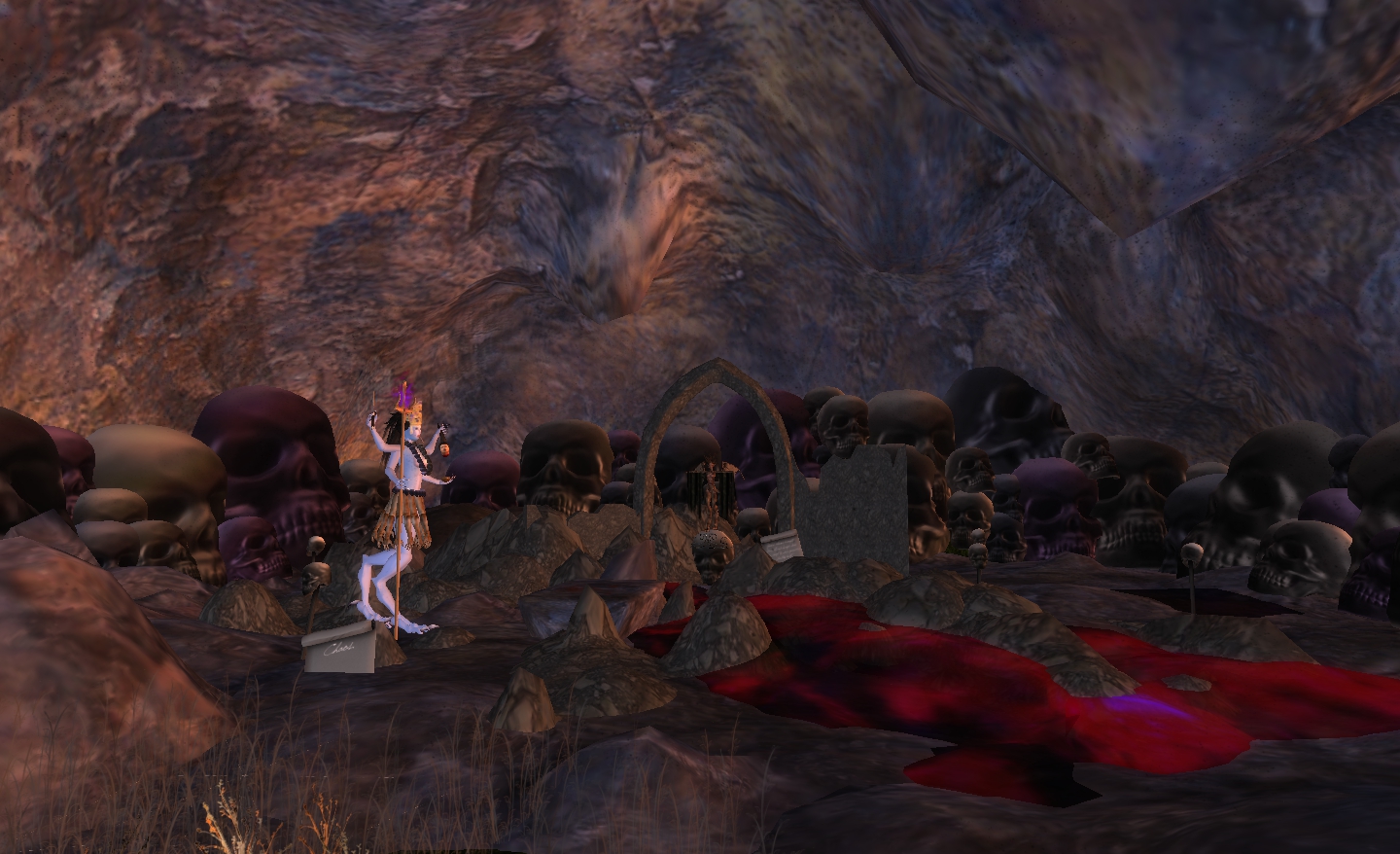
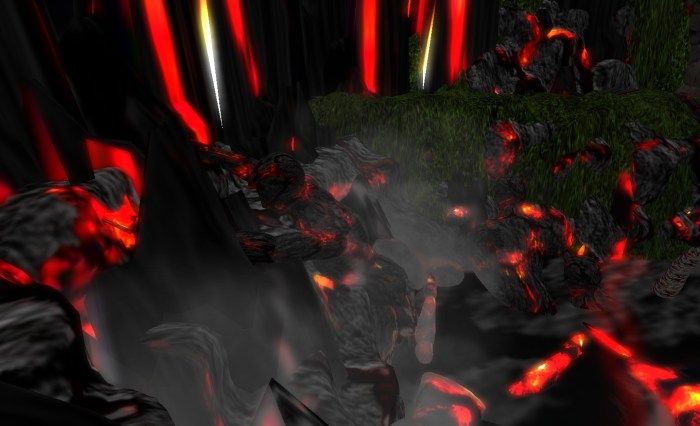
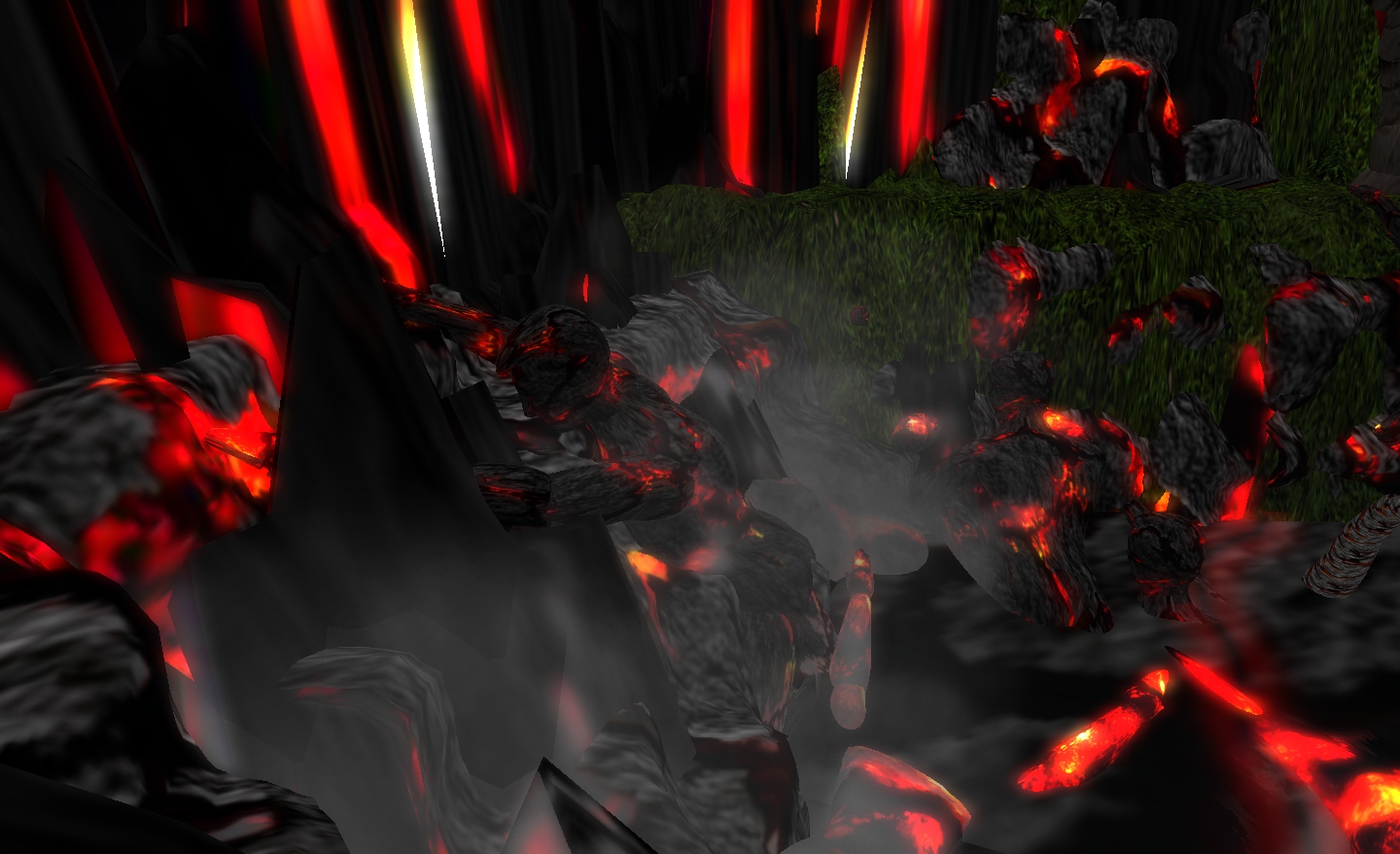
 Gateway to Hell in some ways continues the theme of death and damnation as it presents us with burning image of the entrance to hell, the air heavy with ravens, a fire pit heaving and pulsating beneath, the tentacles of unknown creatures writhing up through the fiery rock. As lava flows down from the walls, so to become visible the spirits of the damned as they are pulled down through the pit into hell itself, few willing to go without a struggle.
 The Docks
Scottious Polke’s The Docks won acclaim when first presented in SL, and became a popular subject for Machinima makers across the grid. Now it makes a welcome return to its original home. It is a haunting place to visit, one that is perhaps best summed up in What isn’t Underneath by Textcavation.
Opinion
Travel to Originalia is an interesting mix of exhibits, each with its own context and meaning, yet three of them – The Docks, Gateway to Hell and Adapt or Perish carrying, for me at least, a common subtext. I enjoyed all four pieces – The Docks perhaps slightly more than the others, as I had missed it the first time around, and have only had machinima to allow me to see it; so having the opportunity to visit it in person gave me a sense of anticipation the other pieces, being original items, couldn’t match.
Which is not to say they are not worthwhile seeing. Rather then reverse, in fact. Whether see as a whole, and in a single visit, or as individual displays, each visited independently, they are well worth the trip. Should you visit all three together, I would recommend you do so in the order I used: start with the Post Office and Postcards Home, then go to Gateway to Hell via Adapt or Perish.
Travel to Originalia opens at 13:00SLT on Saturday October 22nd.


 Inara Pey: Living in a Modemworld