The Silicon Valley VR (SVVR) Meet-up at the end of March featured a series of presentations from people within the VR field, including those by Brian Bruning, VP of Business Development and Marketing at Technical Illusions (castAR) and Philip Rosedale of High Fidelity.
The full video of the presentations is provided below, and I’ve included notes on each of these two presentations in particular. When reading, please be aware that these are notes, and not a full transcript.
Brain Bruning – castAR
Brian Bruning’s presentation commences at the 0:05:48 mark.

I’ve covered the early work on castAR in the past, some of which is touched upon at various points in the presentation, so I don’t want to repeat things here. What is interesting is that the system’s development has been following a similar route to that of the Oculus Rift: Technical Illusions have been out attending technology shows, conferences, exhibitions, etc., to gain visibility for the product , they ran a successful Kickstarter campaign for castAR which raised $1,052,110 of a $400,000 target.
[07;10] castAR has three modes of operation:
- Projected augmented reality (AR), which presents a 3D hologram image projected onto a retro-reflective surface in front of you. allowing you to interact with it via a “wand”
- Augmented reality of a similar nature to that of Google Glass
- Virtual reality of the kind seen with the Oculus Rift.

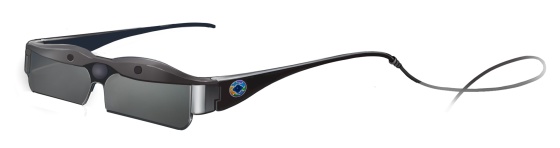
The emphasis is that the headset is natural, comfortable-looking (a pair of glasses) which has three product features built-in. As a result of the Kickstarter, the company has now grown to 10 people, and the technical specifications for the system have been decided:
Glasses
|
Projectors
|
Tracking System
|
AR & VR Clip-On
|
[11:20] castAR has its roots within the gaming environment and has been developed with the games market in mind (again, as had pretty much been the case with Oculus Rift), although they had recognised the potential for wider applications – they just hadn’t anticipated that someone like Facebook would step into the VR / AR arena and potentially add impetus to the wider applications for VR / AR.
[11:45] One of the benefits seen with a combined approach to VR / AR is that there are situations in work, in education, in research / medical fields where a completely occluded view of the real world – as required by head-mounted displays (HMDs) such as the Oculus Rift – are simply not appropriate (Mr. Bruning jokes that there are even some activities associated with gaming where a HMD is inappropriate – such as simply trying to eat a snack or take a drink without interrupting the game flow!). In these situations, the projected AR or the Google Glass-like” AR are seen as more beneficial, and hence the drive to address all three modes of operation.
[13:20] Technical Illusions believe that many of the challenges faced by AR and VR content creators are similar in nature – such as dealing with UI issues, both seeing UI elements and interacting with those UI elements, or dealing with physical objects which my be places within a VR / AR scene. As such, Technical Illusions are focused on educating content creators to the needs of immersive / augmented environments and are producing dev kits to assist content creators in developing suitable environments / games / activities which take such issues into account.
[14:57] Current planning is for Technical Illusions to have their dev kits and the Kickstarter sets shipped in summer 2014, and to have the consumer version ready to ship by the fourth quarter of 2014, and it is indicated that price-point for consumer kits (glasses, tracking components, retro-reflective surface and input wand) will be “sub $300”.
The castAR update is an interesting, fast-paced piece, primarily focused on the projected AR capabilities of the glasses. Little or nothing was said reading the ability of the system to be used as a VR system, and no disclosure was given on the VR clip-on system.
This is apparently a deliberate decision on the part of the company, in that they are allowing VR HMD focused companies promote the potential use of VR, While Technical Illusions focus on the potential of projected AR capabilities. While an interesting approach to take, I can’t help but feel that (assuming the VR clip-on is at a “feature complete” status) promoting all capabilities in castAR wouldn’t be better, as they help present the product as a more versatile tool.



 Inara Pey: Living in a Modemworld