Art Project 3 at Blue Orange in Second Life

Blue Orange: Xirana Oximoxi

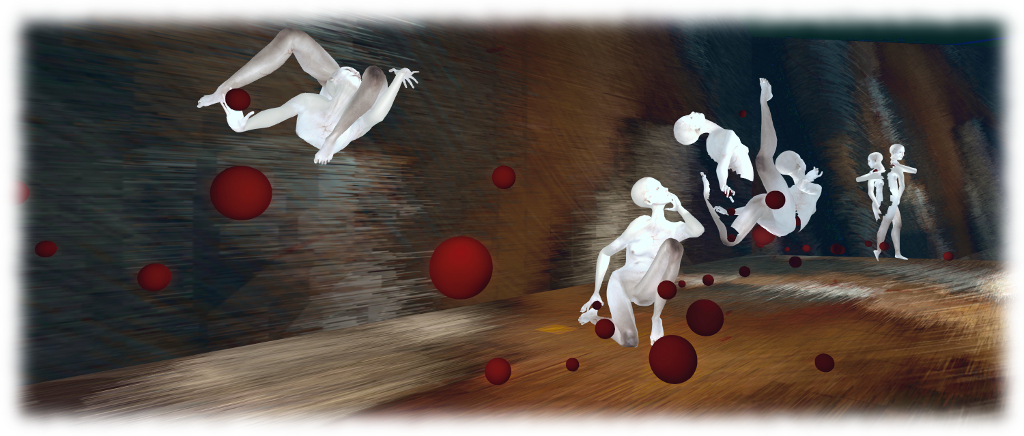
Currently on display at Blue Orange, the music and arts venue in Second Life curated by Ini (In Inaka), is Art Project 3, featuring work by Aicha-Tubal Amiot, Gitu Aura, Rebeca Bashly, Chibbchichi, Jadeyu Fhang, NicoleX Moonwall, Nevereux, Bryn Oh, Xirana Oximoxi, and Theda Tammas.

As I’ve mentioned in the past, part of the delight in visiting this particular venue is its subterranean look and feel, which offers something of a warren of spaces which take time to explore, and make the discovery of what lies within them more interesting. This exhibit is no exception, although my visit did leave me with a feeling the art spaces have been expanded, with everything turned around a little, making navigation this time around a little harder – the LM I regularly use delivered me within the club space itself, rather than out on the subway platform as used to be the case (there’s no official landing point).
Blue Orange: Gitu Aura and NicoleX Moonwall

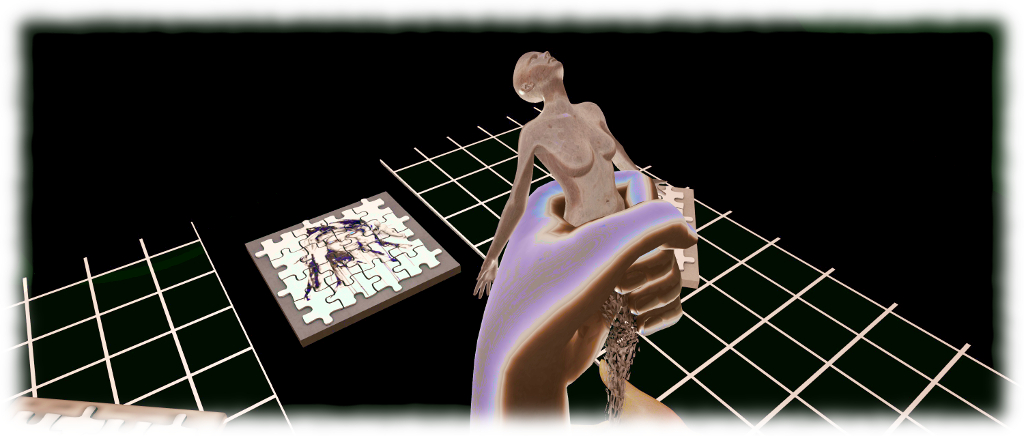
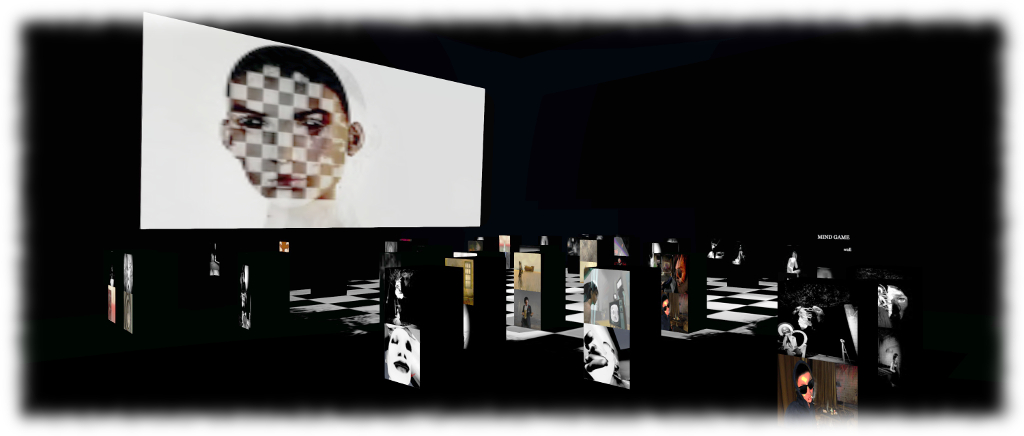
The art on exhibition is split between four main areas. The first of these is the Art Corner hall just off of the club, featuring a sculpture by Rebeca Bashly, art by Ini herself, and Mindgames by Gitu Aura and NicoleX Moonwall, a display area above the club, featuring pieces by JadeYu Fhang. A hall leading off of this area leads to Alchemy by Nevereux, defined as, “a series of visual allegories meant to detract you from a physical plane and deliver you into mysticism via transformation and criticism.” Note there is a warning to those who are sensitive to flashing lights with this exhibition, but it only applies to the hallways leading to it.

The second Art Corner hall, accessed via the subway station platform outside of the club, features Waiting Box by Theda Tammas, while a further hallway from this again leads to a section of Alchemy. This shares the same warning for those with a sensitivity to flashing light, which again only applies to the entrance hall.

Blue Orange: Nevereux

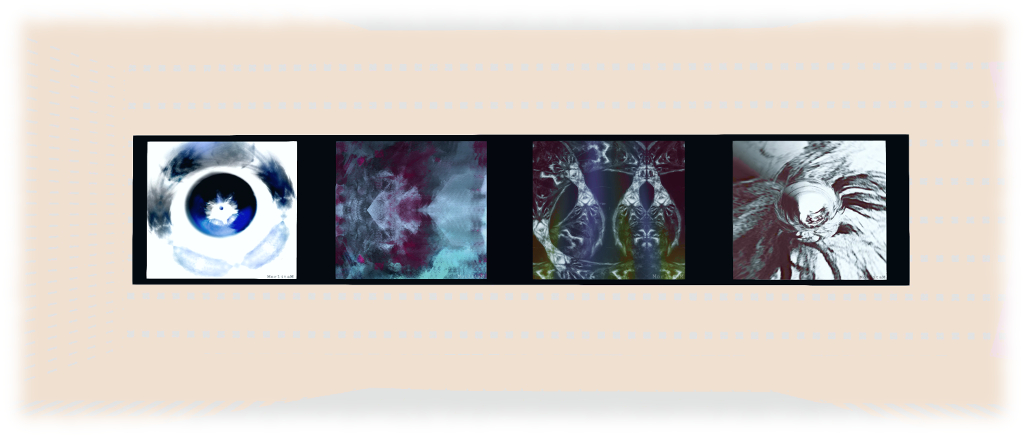
Above the club is a further hall, this one featuring elements some may recognise as being from OpeRaAxiEty (see here). The final art display area is devoted to 2D art, and split between the hall connecting the club with the subway station platform, while art and drawings by Xirana Oximoxi can be found in a hall down the stairs running down from the hall featuring Rebeca’s art.

Such a broad mix of art makes highlighting individual elements that much more difficult, particularly given the calibre of the artists brought together here. As such, these are displays best enjoyed individually as you pass through the halls and hallways of Blue Orange. However, were I to pick one with a particular appeal, it would be Alchemy. There is a depth of interpretation to be found within it – which is not to in any way diminish any of the others; for example, it’s always a delight to see Bryn Oh’s 2D art.

Blue Orange: JadeYu Fhang

SLurl Details

Jes Mode at Artful Expressions in Second Life

Artful Expressions: Jes Mode

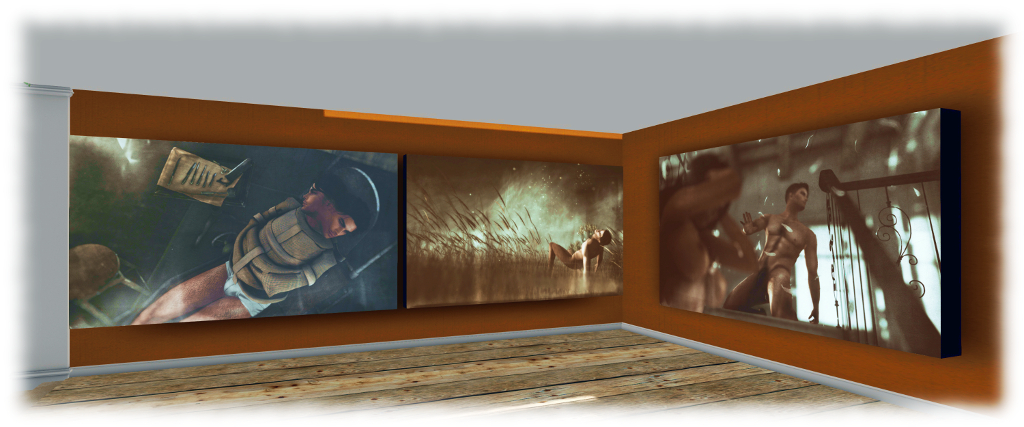
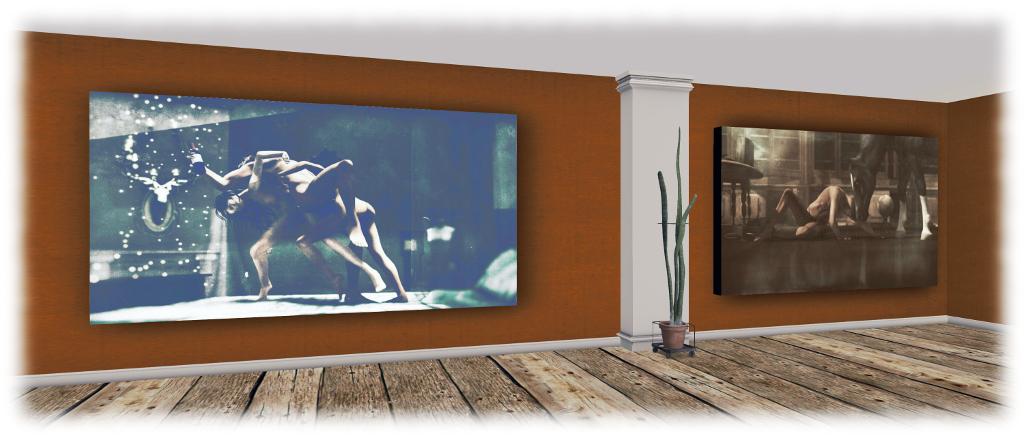
Now open at Artful Expressions, curated by Sorcha Tyles, is United States of Mind, the second solo exhibition of photography by Jes Mode (J3sus Mode). It features a total of eight studies, each focused on a specific state of mind / feeling / emotion.

Presented in muted tones, and a step away from Jes’ more usual use of black-and-white, these are considered, artful and provocative takes on their subject matter, using both Jes and his in-world partner and fellow artist, Cecilia Mode (Cecilia Nansen) as models.

Artful Expressions: Jes Mode

Each piece takes its title from the state of mind  / feeling being presented: apathy, breakdown, fear, hedonism, insomnia, nihilism, schizophrenia,  and vanity, and is accompanied by notes from the artist to give further expression to the piece.

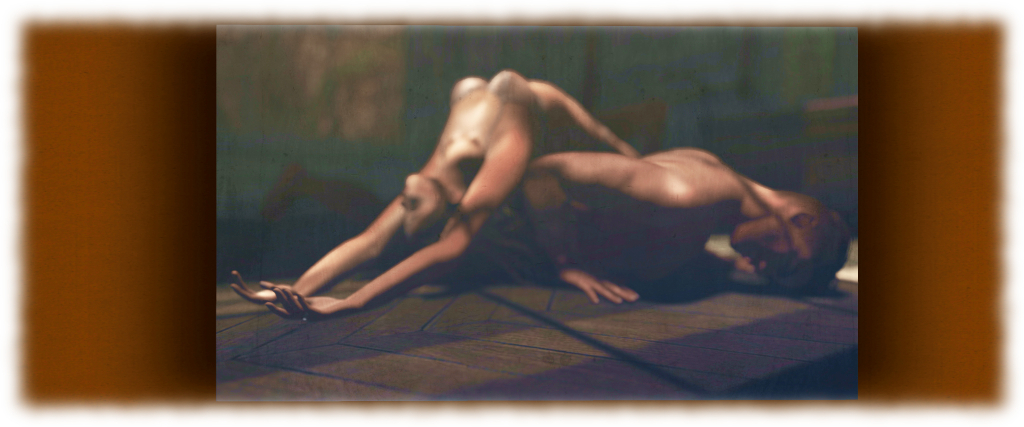
For some of the art, the subject matter is presented in what may appear to be a relatively  straightforward manner: there is little doubting Schizophrenia, for example, with its figure bound within a straitjacket shaking his had so rapidly we literally see he is in two minds, while Breakdown offers a physical manifestation of collapse. Others are more nuanced in presentation, such as Hedonism, with not only its menage-a-tois, but also its more subtle hints at pleasure. Others appear to run slightly contrary to their title, or at least bind it with other outlooks / philosophical standpoints; Nihilism, for example, when taken with its accompanying text perhaps also suggests vanity and solipsism through the emphasis of self.

Artful Expressions: Jes Mode

Be this as it may, all deserve careful study, because they are perhaps more layered than may first appear to be the case – again, note the bottle of wine in Hedonism, the overall setting of Schizophrenia – the image itself perfectly positioned alongside of Fear, offering a visual as well as metaphysical link between the two subjects. Similarly, Apathy offers an evocative presentation in which not only are the two bodies positioned so as to suggest a lack of (sexual) interest in one another – or at least mutual passivity – the blurring of facial features speaks volumes suggestive of a total lack of interest / concern, each towards the other, adding further depth to the sense of apathy within their pose.

In short, these are all marvellous studies, skilfully executed representations of their subject matter, mirror reflections of their accompanying descriptions (consider Vanity and the quote Jes gives from Lou Reed, or the way Insomnia focuses the eye not on the figure, but on the shadow, echoing the idea of a copy of a copy, as quoted in Jes’ notes. All told, a captivating exhibition, and one which should not be missed.

SLurl Details

A Night to Remember in Second Life

A Night to Remember: first hall

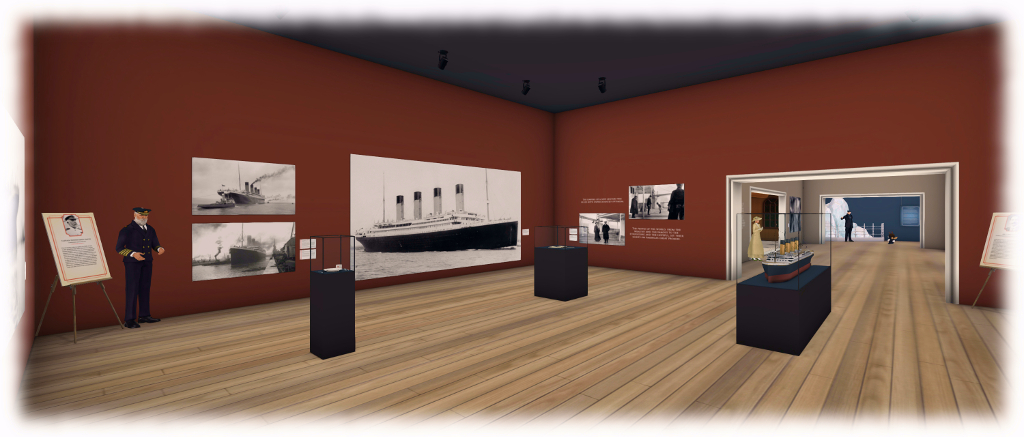
Currently open through until the end of 2017, is A Night to Remember, created and curated by Emery Milneaux. Taking its name from the 1958 British film about the last night of RMS Titanic’s ill-fated 1912 maiden voyage across the Atlantic, it presents an interactive commemoration of that tragedy, one which originally appeared in Second Life as one of three immersive exhibitions presented at the opening of the Vordun Museum and Gallery in July 2016 (see here for more), and which has now been expanded somewhat.

The current exhibition is presented in a purpose-built museum space, complete with front entrance (the landing point) and ticket hall / lobby area sitting before the main exhibition space. This gives one the feeling of visiting an actual museum exhibition and adds depth to the installation. On passing over the threshold of the exhibition proper, on the far side of this foyer area, visitors will receive instructions on how to proceed through the halls via text chat, together with a boarding pass, which should be worn (default location: lower right of your screen). This bears the name of an actual passenger aboard the Titanic, with the promise that the fate of the passenger will be revealed further into the exhibition.

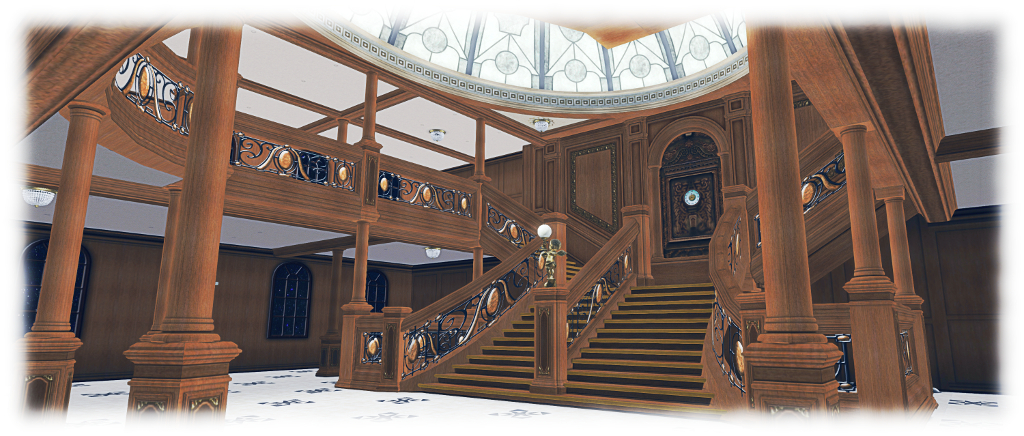
A Night to Remember: the Grand Staircase

The story of Titanic’s maiden – and last – voyage is told through a richly mixed medium of interactive elements (click a photo to focus your camera on it, for example; click the information plaque beside it to receive further information in chat), together with principal figures from the liner’s story: Commodore Edward John Smith, the Titanic’s Captain, socialite Madeleine Talmage Astor, first class passenger and survivor, Frederick Fleet, one of the vessel’s lookouts on the fateful night, and a young newspaper boy in London, Ned Parfett. Bump into any of these characters, and they will give a short “first hand” narrative.

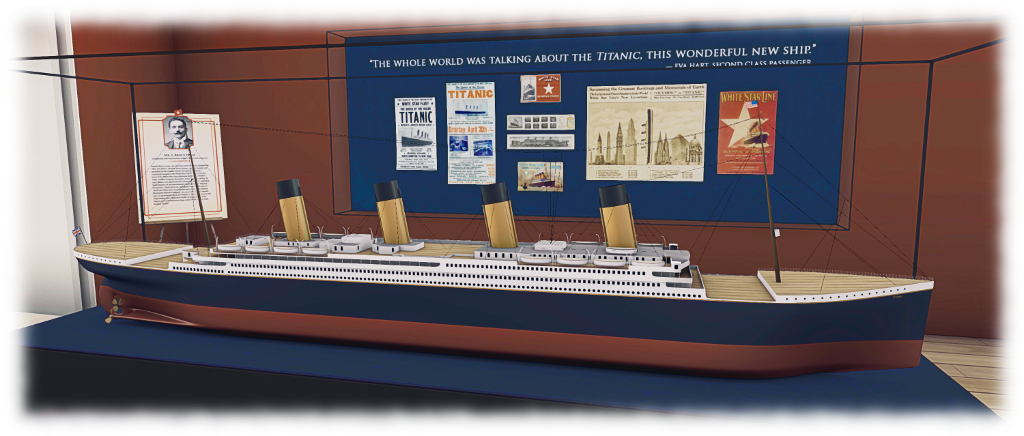
The first hall, featuring the presence of Commodore Smith examines the ship’s design, construction, layout and launch, and offers reproductions of items related to the liner. Beyond this, visitors pass along a recreation of the ship’s first class promenade deck to reach a model of the ship’s famous Grand Staircase which linked the Boat Deck and E Deck, together with reproductions of a first class and a third class cabin – starkly outlining the massive class divide of Edwardian society.

A Night to Remember: the Titanic in miniature

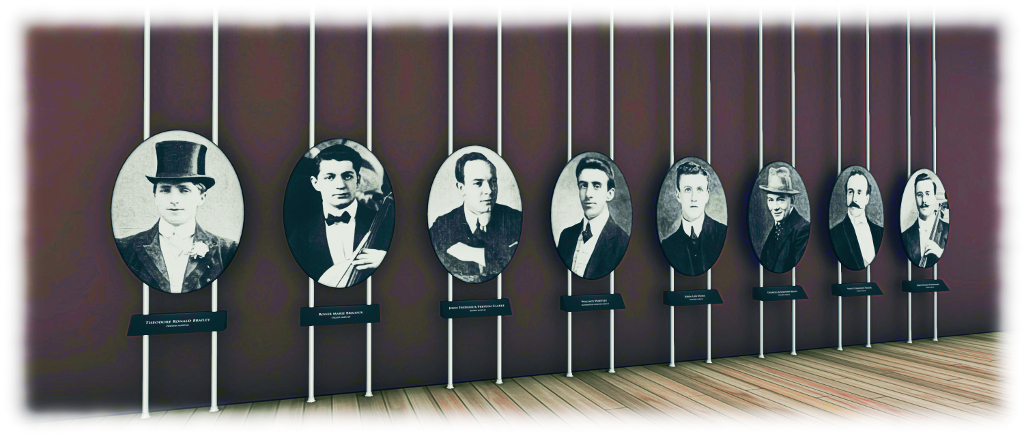
However, it is the display prior to reaching the Grand Staircase and the cabins, together with the last hall within the exhibition which are the most poignant. The first of these is one of the expansions to the original exhibition, and commemorates the music of the Titanic and the eight members of the ship’s band. Wallace Hartley, John Law Hume, John Wesley Woodward, John Frederick Preston Clarke, and Percy Cornelius Taylor spend the voyage playing as a quintet, while Georges Alexandre Krins, Roger Marie Bricoux and William Theodore Ronald Brailey played separately as a trio up until the night of the disaster.

After the call had been given to abandon ship, all eight men – none of them White Star Lines employees, but contracted from the Liverpool firm of C.W. & F.N. Black, and so classified as passengers – famously played together in order to calm passengers after the call to abandon ship had been given, and remained aboard to perish in the freezing waters of the Atlantic. Within A Night to Remember, the pictures of all eight men are displayed, together with information on their musical repertoire – complete with a HUD-based sample of the music they played. Also included is a remarkable commemoration of their passing: a reproduction of Wallace Hartley’s violin – the original of which survives to this day, having been recovered from the Atlantic together with Mr. Hartley’s body, a few days after the sinking.

A Night to Remember: the Titanic’s eight musicians

The final hall of the exhibition, laying beyond Frederick Fleet’s recounting of his time as a look-out and displays concerning the ice conditions prevalent at the time Titanic went down and photos from the site of the wreck, contains three large plaques listing the names of every passenger and crew member who sailed with the ship. These are split between the three passenger classes, and sub-divided between those who perished and those who were saved. Through them, visitors can discover the fate of the passenger named on their boarding pass, adding something of a personal dimension to the exhibition.

When we first saw A Night to Remember in 2016, we found it to be a considered, well-presented commemoration of the tragedy, and on the technical level, an extremely well-presented installation.  Neither of these views has changed, although the section dealing with the eight musicians could perhaps be a little better served with some biographical data about them (or even a link to their pages at Encyclopaedia Titanica. This is still very much a poignant, informative installation, and the opportunity to re-visit it has been most welcome. Anyone interested in the Titanic’s loss or modern maritime history should be sure to pay it a visit before the end of the year.

A Night to Remember: lost and saved

SLurl Details

CioTTolina’s Dum Spiro Spero in Second Life

DaphneArts: Dum Spiro Spero

Now open at DaphneArts, the gallery spaces curated by Angelika Corral and Sheldon B, is an exhibition by Second Life sculptor and personal favourite, CioTTolina Xue, in which she presents a range of her work, some of which has appeared in previous exhibitions or in her store, and all of which share a theme of hope.

Dum Spiro Spero, “While I breathe, I hope”, is widely used as a motto by families, organisations, states, military organisations, and so on.  It is regarded as a paraphrase of ideas that survive in two ancient writers, Theocritus and Cicero through such works as Letters to Atticus. For  CioTTolina, it encapsulates her outlook on life.

DaphneArts: Dum Spiro Spero

“I try to create emotions,” CioTTolina says of her work, “And send a message: hope.
I’m still not good at what I do, but I put my heart into it. I hope that the love I put into things shows as what I might accomplish. This is the message that matters.”

Personally, I have always felt – and continue to feel – CioTTolina undersells herself. Her work has – and remains – full of beauty and meaning; as I said in reference to her exhibition at Solo Arte, Hope, “CioTToLiNa has clearly grown in confidence as an artist, producing ever more complex pieces which are not only beautiful and highly collectible, but also reflect her own interests / concerns for the world, and how we relate as a species one to another and the world around us.”

DaphneArts: Dum Spiro Spero

Indeed, Dum Spiro Spero is in many respects and expansion of Hope, richly demonstrating the breadth and depth of CioTTolina’s work and an ideal reflection of her ideals and outlook, with each of the seven display areas in the gallery space offering at least one of her pieces for viewing. Some may appear to be thematically linked one to another, expressing hope, love, joy, others may stand in contrast to one another. Taken together, the use of the spaces to display CioTTolina’s work is considered, allowing us to better study and appreciate the pieces offered in each.

If you haven’t seen CioTTolina’s sculptures before, I can recommend Dum Spiro Spero as an ideal means by which to gain familiarity with it.

SLurl Details

Gem’s Chaos in Second Life

Chaos – Gem Preiz

Chaos is the title of a new exhibition of Gem Preiz’s fractal art, now open at  The Eye art gallery, curated by Mona (MonaByte). It is an exhibition those familiar with Gems work might find surprising in terms of the visual style of the images presented.

“Confronted with the mysteries of the origins, Gem says in describing the exhibition, “And with the question of the determinism of the Nature, Man has, from Hesiod’s Theogony to the most recent mathematical theories, attempted to tame Chaos, first by naming and personifying it, then much later by putting it in equations which remain unsolved.”

Chaos – Gem Preiz

And so it is that we are presented with twelve images which are raw in nature,  very different to the sweeping vistas of fractally generated architecture, landscapes and deep space scenes we are perhaps more familiar with seeing.  Instead, these images present a far more primal force, one both alien and yet familiar.

Examining these pieces is like looking back at the formation of Earth itself. In some, the reds and golds suggest a time when volcanism was rife across the planet, giving rise to swirling, sluggish rivers of lava and molten rock which crept outwards from craters and fissures, flowing over a prehistoric landscape, shaping it and, as they cooled, becoming part of it before other flows replaced or added to them. In others, the blues and whites suggest the points where land and water met and engaged in a battle for dominance.

Chaos – Gem Preiz

All are representative of primordial settings, places utterly uninhabitable – but which, in their formation and evolution, helped bring forth the very stuff of life itself: liquid, chemicals and minerals, which in turn gave rise to the first living organisms, setting off a chain of events which led down through the aeons to – us.

There is also something else here. We often speak of order arisen out of chaos; as Gem points out, there is something of a poetic balance in these images. Each of which presents a chaotic scene, yet each one is fundamentally built out of the order of code and mathematics. Thus each of them offers a fresh interpretation of the complex intertwining of order and chaos.

Chaos – Gem Preiz

SLurl Details

Art at La Maison d’Aneli in Second Life

La Maison d’Aneli – Theda Tammas

The latest ensemble exhibition at the gallery at La Maison d’Aneli, curated by Aneli Abeyante opened on October 25th. It offers an eclectic mix of five artists and their work: Xirana Oximoxi, Vangogh Rembranch, Kaijah Chrome, Morlita Quan and Theda Tammas.

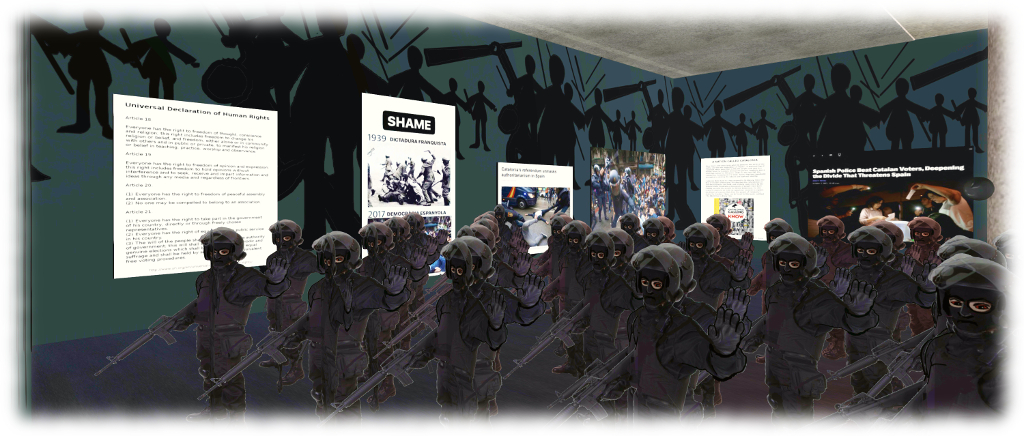
The exhibition is split between the two levels of the gallery. The upper level, featuring the foyer area and a tribute to Holala Alter, is a 3D is an untitled piece by Theda Tammas. Across the hall is a larger display mixing 2D and 3D works by  Xirana Oximoxi examining the situation between Catalonia and the central Spanish government.

La Maison d’Aneli – Xirana Oximoxi

Social media in particular helped bring the realities of referendum day in particular to the rest of the world, at a time when much of Spain’s own media appeared to be turning a blind eye on the sheer brutality of the official response to the those attempting to vote, and this forms a focus of the exhibit. True, the referendum had been declared “illegal” by the central government, and both sides were guilty of heavy-handed posturing in the run-up to the vote. However, none of this justified the levels of violence unleashed by well-armed, well-protected police.

This is powerful central exhibit. Not only does it remind us how art can offer commentary on politics and events, but which also serves as a reminder that in a time when much of the main stream media is under attack for being purveyors of so-called “fake news”, just how important it is for our news services not to become the vassals of political desire.

La Maison d’Aneli – Morlita Quan

The lower level of the gallery presents a primary exhibit are featuring Morlita Quan’s organic geometric art, with 2D pieces focused around a central tree. Alongside of this is a hall featuring painting by the intriguingly named Vangogh Rembranch, and more “traditional” Second Life focused art by Kaijah Chrome.

All three make for intriguing exhibits, Vangogh’s in particular forming – for me – a first time introduction to his work. Kaijah’s, meanwhile, offers a Halloween setting for this work – which should not be taken to mean  the art itself is Halloween themed.


La Maison d’Aneli – Vangogh Rembranch

I tend to enjoy ensemble exhibitions, and the five artists on display at La Maison d’Aneli all present unique approaches to art and expression, making this a particularly interesting visit.

SLurl Details