Second Life in your browser: a new initiative from Linden Lab

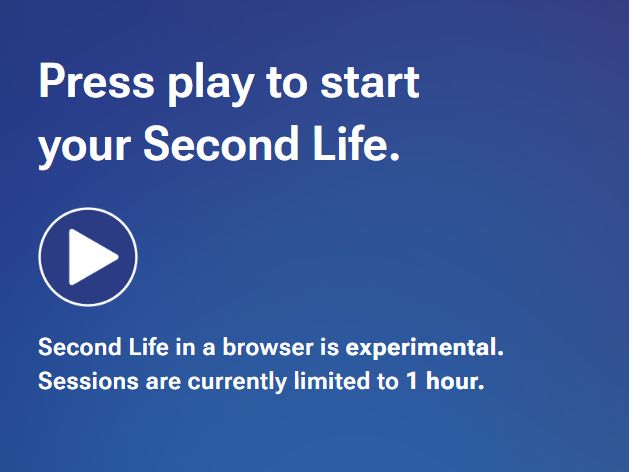
The viewer-in-a-browsers website, showing increased time limit (as of January 9th, 2025)
On December 23rd, 2024, I was able to sit down with Linden Lab co-owner and Executive Chair, Brad Oberwager and the company’s founder and now CTO, Philip Rosedale, to talk about a project the Lab are working on, and what it may mean for many users either already engaged in SL or who are joining the platform.
Table of Contents

The gist of it is, starting at the very beginning of January, we’re going to start making Second Life available through a browser. We’ve had a team on it for a couple of months now, and we’re going to make the first demonstrative use of it at the start of January.
In fact, we’re taking advantage of a mix of different changes in the market and technology; we’re going to tie a bunch of different components together, but at the core of the offering that we’re going to start testing at the beginning of January is a streaming version of Second Life which is pixel-perfect, 1080p, you can’t tell you’re not using a desktop client, there’s no way you can perceive that you’re using it … and so it’s just like logging-in to Second Life [on a desktop viewer].

– Philip Rosedale, in conversation with me, December 23rd, 2024

This ability to stream Second Life through a browser is now available for testing – and if you wish to do so, you can do so free of charge for the next few days – simply hop down to the notes on how to do so at the end of this article.

However, the streaming test is one part of a broader strategy the Lab is taking in an attempt to make Second Life more accessible to both existing and incoming new users, and I want to focus here on that, and what we are likely to be seeing during 2025.

Of course, this is not the first time an attempt has been made to stream SL to users; there have been two commercial attempts to do so in the past with both SL Go, provided by OnLive between March 2014 and April 20151, and then via Bright Canopy, provided through the Frame application delivery service (now Dizzion) between 2015 and 20202. However, those services were at a time when streaming complex content was still relatively in its infancy, and their providers were subject to business and marketplace forces which ultimately led to their respective demise.
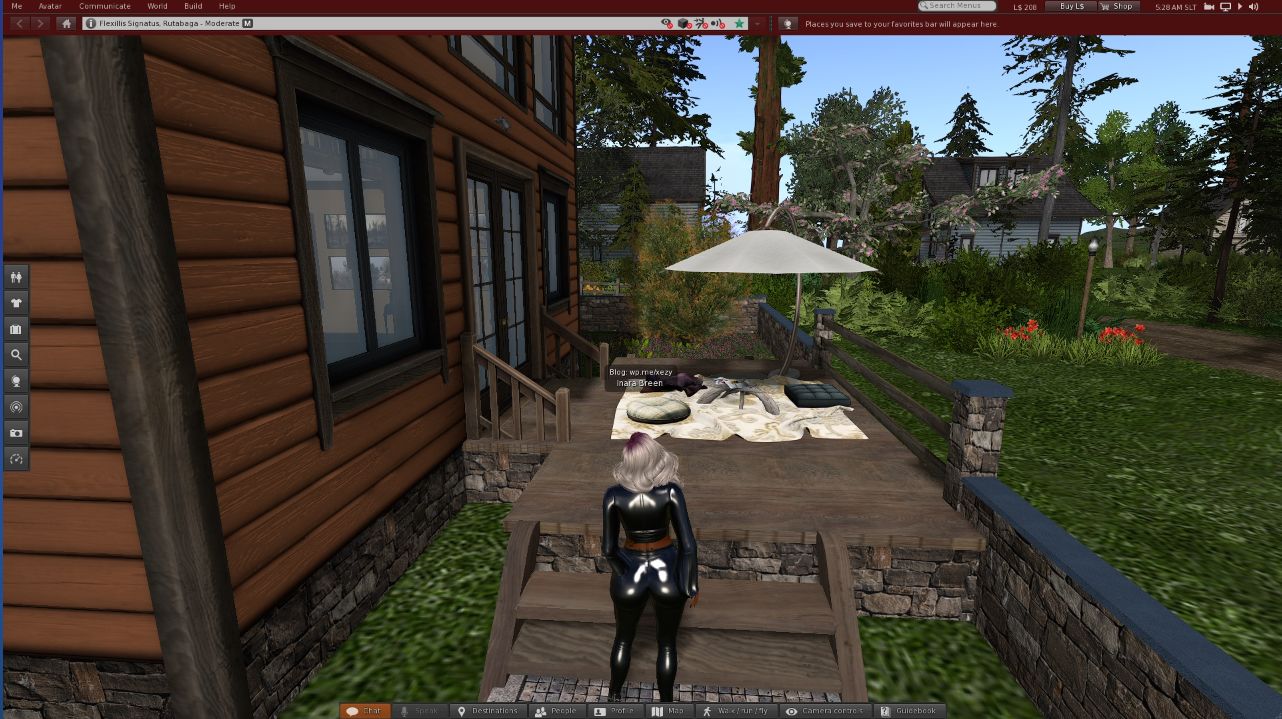
Second Life streamed via Firefox

For the Lab, the move towards browser-based accessibility to Second Life is based on addressing a number of long-term pain points in using the platform:

  • The fact that it continues to require fairly high-end computer hardware to experience it at its very best – and roughly 50% of the existing user base do not have such hardware at their disposal.
  • The fact that it requires a dedicated viewer to be downloaded and installed by new users as a part of the sign-up process.
  • The fact that the viewer has a sprawling and complex UI which can be both hard to master by new users.

Offering a browser-based / streaming solution can overcome these issues – and that is the point of what is being called Project Zero: to allow those on low-spec systems experience SL as if they were using a gaming rig with a high-end GPU, whilst offering incoming new users direct access to coming in-world via a URL within the sign-up workflow.

We’re [also]  going to start A/B testing by letting a good chunk of the people that come in new to Second Life go through this new streaming system, as opposed to downloading the desktop. So we’ll be able to start to test that and quickly see how they compare. Our expectation is, barring any unforeseen problems, it’s going to be the case that a lot more people are going to be able to get into Second Life because they don’t need a high-end GPU or have to go and install some software.

– Philip Rosedale in conversation with me, December 23rd, 2024

But this is just the tip of the iceberg.

Project Zero: Evolutionary and Revolutionary

The initial offering of the viewer through a browser is just that: a baseline service which allows someone to go to a URL and launch an instance of the viewer and access Second Life. As such, it has limitations (which I note below for reference). However, Linden Lab intend to start iterating on the capability pretty rapidly, utilising the experience they’ve gained through other projects, to build on the browser experience and improve it – particularly  in regards to the UI.

We’re going to re-do the interface completely, in the same way that we did with the Mobile client. We’re going to start by streaming the existing interface, but then very quickly – probably sometime in January – you’ll see us turning off the UI layers that are in the [browser] client and switch them out into a modern HTML / React style web UI on top of the viewer which should look and feel a little bit like what we’ve done with Mobile, where we’ve only been implementing the features we absolutely need, and then implementing them cleaner than they were before and in a way anybody coming into Second Life today, no matter what their age so just look at it and go, “oh yeah, that looks like a sensible UI.”

– Philip Rosedale, in conversation with me, December 23rd, 2024

Once these core elements of using SL are working within an overlay-style of presentation, the plan is to move on to the more challenging aspects of the UI and using SL – such as avatar customisation. And here things start to get revolutionary, as the Lab will be looking for input and assistance from content creators.

We’ll move upstream in terms of difficulty level towards the kinds of things that people need to do to get acclimated inside Second Life. We view the dressing problem to get the avatar to look the way you want to be the penultimate challenge here; that is the thing we need to get both greatly improved in its usability, and then moved on to an entirely new UI approach.
We’re going to do that UI design in partnership with others; we’re going to do things like put different default avatars in there which we’re going to build in partnership with content creators; we’re going to sit down with content creators who have complex things like HUDs  and say, “OK, if we started from scratch, how would we make your experience perfect accessible to a new user?”, and do that co-design with them and rapidly push that into the pipeline of the actual code-base of this new viewer

– Philip Rosedale, in conversation with me, December 23rd, 2024
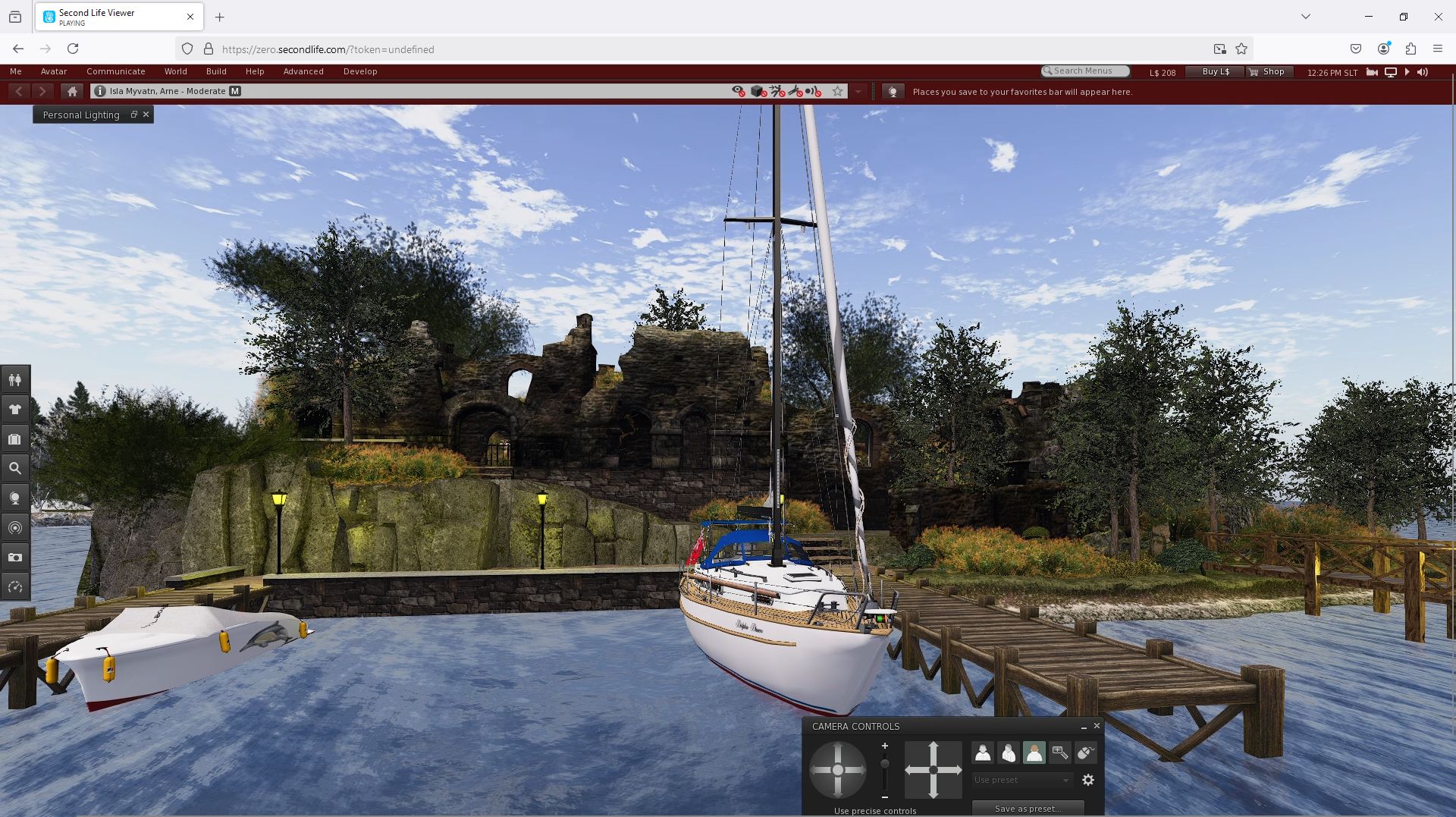
Second Life streaming through Firefox

Does This Mean The Viewer is Going Away?

No. The intent with streaming Second Life / Project Zero might be summed up as being about:

  • Trying  to try to ensure a new user first experiences Second Life to in as friction-free and as friendly a way as possible before eventually graduating to more advanced Viewer options.
  • To give those on lower-specifications a cost-effective means of experiencing Second Life at its fullest, should the wish to do so.

The familiar viewer – official and TPVs  – is not going away, and the Lab emphasises that is is not in any way  downshifting any development of, or support for, its own and  third party viewers. In fact, LL are open to talking to TPVs and adding them to the streaming capability as it is developed and enhanced.

The best way to thing of streaming and the installable viewer is that they compliment one another – although it is possible that some of the refactor of the UI could be ported back to the installable viewer, if they are seen as particularly beneficial.

Of Costs and Philosophy

As noted, the ability to stream SL through your viewer is at this point in time, both a test and is being offered free of charge. However, the elephant in the room is that like it or not, streaming something as complex as Second Life does cost money. As such, the need to cover those costs has to be considered – and here again, the Lab is trying to be flexible.

What we’re trying to build long-term, is a browser-based interaction with Second Life. Right now, it has to be streamed. That’s the technology to do it NOW and do it FAST, and we’re going to learn a lot. Clearly, streaming is expensive; so we’re looking at this as an investment in a way to build down the road.
But, Second Life is big, and people spend a lot of time in-world, so if we get charged on an hourly basis, we can’t get into a situation where we’re spending $100,000 a day. So yes, we’re going to explore all different ways. Right now, it’s free; we’ll probably explore “what if we give it away to Premium Plus? What if we come up with a subscription fee? What if we do it per hour? Would you get a better deal if it is a completely new [Second Life] subscription?” We’ll test all of that to figure out what the residents want; but to be clear, we’re not looking to make money on it.

– Brad Oberwager in conversation with me, December 23rd, 2024

There is also something of a value proposition here for those using lower-specification systems which are more than adequate for everything else they want to do on a computer, but would like to experience a smooth, more immersive Second Life: is paying a fee / subscription for streaming SL more preferable that the up-front cost of buying a new high-end computer just to enjoy SL’s full graphic fidelity? This is something of an imponderable – but it is one the Lab is looking at.

We recognise that today, some of the most trivial pay-as-you-go  set-ups are just too expensive to just let everybody in Second Life on; but hopefully, between Brad and myself and the overall technologies changes, we’ll be able to drive that price down. So it’s kind-of tricky, because we can’t put ourselves out of business in the short-term, but we also know that we’ll be able to get the price down quickly. 

– Philip Rosedale in conversation with me, December 23rd, 2024

Exactly where that price-point lands remains to be seen. In the meantime, the streaming option is now available to test.

Trying SL in a Browser

The updated Second Life web login-in screen

To try out the streaming version of the viewer for yourself:

  • Go to https://zero.secondlife.com/
  • If you have not logged-in to Second Life via the web for some time (e.g. to your dashboard at secondlife.com), you will be asked to log-in via the updated web log-in page.
  • Read the notes on the Second Life in a Browser splash screen
  • Click the Play button.
  • The viewer should then launch through your browser (I tested on Chrome, Firefox, Opera and Edge with Windows, and all worked for me, Brave, Vivaldi and Gener8 did not).

Things to Note When Trying the Option

  1. This is a free-to-try test, intended to offer LL a demonstration that they have the core capabilities working: the viewer is streamed smoothly, and overall performance (frame rates, etc.), is at least as good as seen when running Second Life on reasonably high specification computers.
  2. As it is a test, there are limits on the number of users who can concurrently access the service – LL are hoping to support several thousand per day, but depending on demand, you may find you have to wait to try.
  3. Individual sessions are limited to just one hour (as of January 9th, 2025), after which you will be disconnected.
    • There is no warning of any impending disconnection; you are simply logged-out of SL and pushed to the official viewer download page in your browser.
    • If you were testing something at the time of disconnect, you can start a new session. However, from my personal testing, I would recommend waiting a few minutes before doing so, rather than immediately trying to re-launch a viewer instance in your browser, as the log out process seems to lag behind redirecting you to the viewer download page.
  4. In addition, whilst it is hoped that people will not repeatedly log-in to the service (so as to give as many as possible the opportunity to try it) please note:
    • The viewer is being streamed at a 1080p resolution. If your display does not support this, you may have to use you browser’s zoom and full screen options to display the viewer in its entirety, or use the browser scroll bars.
    • As the viewer is being streamed, there are limits on what can be done: personal preferences and settings are not saved; you cannot upload textures, etc., if you use MFA you will have to provide a token with each session. Further, Voice chat is not currently available.
      • However, all of the above will be changing as the service iterates.
  5. Please do not create ALT accounts use multiple accounts when trying the streaming service, just keep it to one existing account when trying it.
  6. Whilst it should be possible to access the streaming option on Tablet devices (subject to the notes above) it is not intended to be accessed via mobile devices like ‘phones, etc., with small screens: these remain the purview of SL Mobile.

If you do try the service out, please give feedback to help LL in the design process. For this first phase, we are most interested in finding any failure cases where you are unable to connect at all, and if so-minded, join the conversation in the designated forum post for this topic.

Personal Experience

I accessed Second Life via the browser option using a laptop with the following specifications: Intel Core i31.8 Ghz; Intel HD 4000 integrated graphics (up to 1.8 Gb shared memory); 8Gb DDR memory. Outside of the resolution issues referenced above (the screen was 1366×768 resolution). The experience was not too far off that of running a viewer on my primary PC (AMD 5800X 8-core processor with 16 Gb DDR4 and Nvidia RTX 3060 12Gb), and both PC and laptop using wired connections rather than wifi.

Footnotes

    1. You can read more about the history of SL Go in this series of articles.
    2. Some of Bright Canopy’s development and history is covered in this series of articles.

Bay City New Year 2024/25 prim drop in Second Life

Bay City Prim Drop 2025

Tuesday, December 31st 2024 will once again see Bay City celebrate the turning of the year with their annual Prim Drop festivities.

An outdoor, formal dress event, the Prim Drop is open to all Second Life residents, with festivities opening at 23:00 SLT at the Bay City Fairgrounds in North Channel. Marianne McCann will be providing the music and fireworks in a 2-hour extended DJ set, and food and drink will be provided.

This will also be the final opportunity for 2024 to donate to Child’s Play Charity,  a US 501c3 non-profit organisation which helps seriously ill children around the globe during their hospital stays with the purchase of games and gaming equipment. So even if you can’t make it to the event itself, do please consider taking a couple of minutes out of your SL day and stopping by the Bay City Fairgrounds and making a donation via one of the collection bins there.

About Bay City and the Bay City Alliance

Bay City is a mainland community, developed by Linden Lab® and home to the Bay City Alliance. The Bay City Alliance was founded in 2008 to promote the Bay City regions of Second Life and provide a venue for Bay City Residents and other interested parties to socialize and network. It is now the largest group for Residents of Bay City.

SLurl Details

New Year in Wonderland in Second Life

Roxksie Logan: Wonderland, December 31, 2024 – January 3, 2025

If you’re looking for somewhere a little different in which to spend New Year in Second Life, then you might try visiting Wonderland, a pop-up art installation by Roxksie Logan (with the support of Sadiya Snow) which will be available briefly from December 31st, 2024 through until January 3rd, 2025 as a pop-up art installation. It offers an interesting fusion of two great literature classics, Alice in Wonderland and Charlie and the Chocolate Factory, both of which are brought together through the use of motifs, objects and both direct and indirect references in an immersive, semi-interactive environment offering a richness of colour, content and whimsy.

Fusing these two books is an interesting idea; there are both obvious similarities between the two – they are both viewed as children’s novels, for example; there is a degree of magic / mystery and some degree of nonsense involved in both (perhaps more so in Alice than Charlie), both have dark edges to them. some of these differences are far less obvious (such as eating / devouring), and both have a degree of satire and a touch of subtle allegory.

Roxksie Logan: Wonderland, December 31, 2024 – January 3, 2025

Most of all, however, the two books are filled with imagery which is very much locked in the public consciousness, not only because of their popularity as books, but because of their many adaptations (a part of me wonders how many of us are perhaps familiar with either / both on their basis of their many and various film and television adaptions rather than as a result of reading the books themselves).

It is these latter aspects primarily evident within Rocksie’s Wonderland, wherein many of the familiar motifs from Alice in Wonderland (and touches from Alice’s other adventures – such as the presence of unicorn heads guarding the entrance to the main installation) are mixed with reimagining’s of Wonka’s magical and mysterious chocolate factory.

Roxksie Logan: Wonderland, December 31, 2024 – January 3, 2025

Before getting to that however, do note that the Landing Point sits aloft the installation, and will request you join the local Experience – which you should do prior to jumping down the rabbit hole!

Within the main element of the installation, the mixes of motifs and ideas are everywhere: sweets and sweet snacks abound ( some of them very … bouncy … shall we say?); pumps deliver chocolate, giant candies form Christmas Trees; cats grin as they line up to guard the walk into a garden dominated by a familiar top hat as human-faced flowers look on; open-topped cakes offer a carousel ride (sit and touch the central handle of the plate on which they sit); card houses tower into the sky and more.

Roxksie Logan: Wonderland, December 31, 2024 – January 3, 2025

Elsewhere, meringues stand-in for snowy hills, gumball vendors and slushy-like drinks dispensers await the opportunity to dispense, and of course there is the tea party, chess boards, and more, all presenting a visual feast through which visitors can wander. There are also more subtle references within the build as well – at least for those who might want to seek them.

For example, just as mathematics and logic play a role within Lewis Carroll’s work (under his real name, he was a mathematician at Oxford’s Christ Church and some have seen Alice as a reaction against aspects of 19th Century mathematics), so too are geometric patterns used here here as representations of logic and mathematics: neat rows of rectangles set out to form a square; arrays of sweets, the grid pattern making up the rectangular dance floor together with it circular centrepiece homage to Alice herself.

Roxksie Logan: Wonderland, December 31, 2024 – January 3, 2025

Yet more might be written concerning this engaging installation, but really the best way to appreciate it is to enjoy it first-hand – and as noted, you can do so through until January 3rd, 2025.

SLurl Details

2024 SL viewer release summaries week #52

Logos representative only and should not be seen as an endorsement / preference / recommendation

Updates from the week through to Sunday, December 29th, 2024

This summary is generally published every Monday, and is a list of SL viewer / client releases (official and TPV) made during the previous week. When reading it, please note:

  • It is based on my Current Viewer Releases Page, a list of all Second Life viewers and clients that are in popular use (and of which I am aware), and which are recognised as adhering to the TPV Policy. This page includes comprehensive links to download pages, blog notes, release notes, etc., as well as links to any / all reviews of specific viewers / clients made within this blog.
  • By its nature, this summary presented here will always be in arrears, please refer to the Current Viewer Release Page for more up-to-date information.
  • Note that for purposes of length, TPV test viewers, preview / beta viewers / nightly builds are generally not recorded in these summaries.

Official LL Viewers

  • Release viewer: version 7.1.11.12363455226. formerly the ExtraFPS RC, dated December 17, promoted December 19 – No change.

LL Viewer Resources

Third-party Viewers

V7-style

  • No updates.

V1-style

  • Cool VL Viewer Stable: 1.32.2.30, December 28 – release notes.

Mobile / Other Clients

  • SL Mobile (Beta) version 2024.10.537 / 0.1.529 – December 23.

Additional TPV Resources

Related Links

Loch Tredach Inn and Retreat in Second Life

Loch Tredach Inn & Retreat, December 2024 – click any image for full size

Loch Tredach Inn & Retreat is a Full region leveraging the Land Capacity bonus offered by Linden Lab. It is held by Isabelle Larkspur, who is largely responsible for the region’s design and for most of it being available as a public venue. I caveat things here because most of the north-eastern quarter of the region is given over to a private home and extensive grounds, which means it is both private and the landscape is their own.

Given that this part of the region is a private residence, it will play no further role in this article, other than to note it is possible to accidently wander into the property from the north side of the rest of the region – which is open to the public throughout – without spotting the signs warning of the private property. Should you witness a change in the local environment as you explore the ruins beyond the Aviary, you will know you have crossed the property boundary and at risk of trespass.

Loch Tredach Inn & Retreat, December 2024

But that said, even in respecting the privacy of those living in the region, the rest of the setting offers a lot to see and appreciate, bringing together as it does a mix of wild countryside, mystical locations, romance and opportunities for skating, dancing and simply relaxing. At the time of my visit, the region was dressed for winter, and as it was my first visit, I have no idea if only the seasons change here through the year, or if the majority of the region goes through periodic re-dressing; that’s something I’ll have to find out in the future!

Welcome to the enchanting Loch Tredach Inn and Retreat – a place where romance, vibrancy, and magic come together to create unforgettable memories. Step into a realm where every corner is a canvas waiting to be painted with the hues of love and joy. Capture the essence of the season. Every nook and cranny offers a picturesque backdrop for your lens to capture candid moments, from secluded gardens to the mystical ruins.

– from the Loch Tredach Inn & Retreat Destination Guide entry

Loch Tredach Inn & Retreat, December 2024

The Landing Point sits towards the centre of the region, on the west bank of a frozen lake where snow falls in mist-like sheets, and a pavilion sits out over the frozen water, held up by stout wooden legs oblivious to the cold, and a fire in the hearth awaits the opportunity to warm cold fingers as it provides  further cosiness to the pavilion’s genteel comfort. A somewhat Dwarven-looking Santa stand stands at the pavilion’s  boardwalk, ready to offer skates to those wising to take to the ice.

From here, it is a short walk south and over a bridge spanning the bubbling stream that feed the lake to reach the inn of the setting’s title, its red timbers announcing the promise of warmth and comfort inside. Nestled between the inn and a shoulder of the curtain walls of rock that run from here to the west and then northward along the coast sits another pavilion, this one fully enclosed by tall glass windows and doors, the home of a hot tub ready for use by guests at the inn.

Loch Tredach Inn & Retreat, December 2024

A path from here runs towards the western rocks, and following it gives explorers the choice of crossing another bridge and heading north, or turning south over the snow and into the arms of the cliffs, where a romantic little hideaway overlooks the stream’s high falls, the tumbling waters offering a rainbow to visitors.

Meanwhile, the route north passes steps leading down to snowy shelf of rock with chairs drawn close against a blazing brazier, and onwards to where a folly presents a bookworm’s retreat – although the weather might be a tad cold for wintertime use; just as well, then, that another pavilion stands close by with a fire of its own, and comfortable seating where books might be reasonably carried and read.

Loch Tredach Inn & Retreat, December 2024

Beyond this, the path passes through a rocky hallway to arrive back close to the Landing Point. A round folly stands close by, looking down on the lake as it guards the entrance to the setting’s more mystical elements. Here, trees bend their backs to present an aisled walkway passing between rock wall and gentle slope to arrive at a beautiful venue suitable for a range of events – and which I believe I’m correct in saying is available for hire by those seeking somewhere special for a party or wedding or similar.  Stone steps climb from the terrace overlooking this space to reach a mirror pond surrounded by crystal walls, within which more steps rise upwards through the clouds, presenting if not a stairway to heaven, then certainly one to a floating garden.

Overlooking the main venue with its flagstones serenely floating on the waters beneath and its beckoning ruins, sits the Aviary. Reached either by climbing another stairway rising up to it from the venue space or by climbing the slopes of the hill on which it sits from the Landing Point, the Aviary offers an indoor space suitable for a special events such as a wedding reception or more formal / romantic dance, and includes a terraced space outdoors with seating.

Loch Tredach Inn & Retreat, December 2024

As noted above, it is beyond the Aviary that the land belonging to the private residence commences, so explorers should proceed from it with caution.  This residence can also be reached via the trails on the south side of the island as they cross a high bridge to the east of the in.

Here the boundary between public spaces is more obvious, a pond and fast-flowing stream (which also tumbles its way down to the lake below) marking it for all eyes to see. Prior to reaching the stream, however, the path offers a chance to visit the local café and lighthouse.

LLoch Tredach Inn & Retreat, December 2024

With Itan dancing columns throughout, multiple places to sit  – not all of which are mentioned here – plus the general beauty of the setting, Loch Tredach Inn & Retreat makes for an ideal visit.

SLurl Details

Space Sunday: selected spaceflight previews for 2025

Blue Origin’s New Glenn performs a full 7-engine statis fire test at Space launch Complex 36, Cape Canaveral Space Force Station, December 27th, 2024. Credit: Blue Origin

As we’re at the end of 2024, rather than looking back over the year, I thought I’d look ahead to some of the spaceflight events hopefully coming our way in 2025. Note this list intentionally does not include schedule missions to the ISS, SpaceX Starlink launches or test programmes, or similar.

New Glenn Maiden Flight

While Blue Origin didn’t meet their target to fly their new heavy lift launcher, New Glenn, before the end of 2024, the flight now looks set to go ahead in early January 2025. Specifically:

  • On December 27th, 2024, and after some delay, the company finally received a license from the FAA to conduct New Glenn launches out of Canaveral Space Force Station for five years.
  • That same day, the rocket, which has been on the pad for final testing, completely a full static fire test of its core stages engines. The test saw all seven core stage engines run for a total of 24 seconds, over half of which saw them throttle up to 100%.
  • While a launch date has not been disclosed by Blue Origin, an airspace advisory has been released referencing NG-1, the name of the flight, and warning of airspace restrictions around and over Florida’s Space Coast for the period 06:00 through 09:45 UTC on January 6th, 2025, with the option for a second airspace restriction being enforced at the same time on January 7th, 2025.

As I’ve previously noted, the flight will be carrying a prototype Blue Ring satellite platform capable of delivering up to 3 tonnes of payload to different orbits, as well as being able to carry out on-orbit satellite refuelling (as well as being refuelled in orbit itself) and transporting payloads between orbits. However, Blue Ring will not physically detach from the launch vehicle’s upper stage for the flight. Additionally, the flight is seen as the first of two flights required to certify New Glenn to fly United States Space Force national security and related payloads, and will hopefully see the first stage make a safe return to Earth and landing on the company’s Landing Platform Vessel 1, Jacklyn.

Japan Goes Lunar Roving

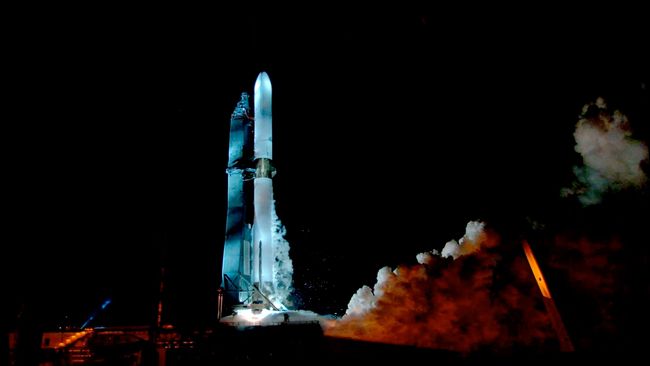
January is also the target month for Japan’s second attempt at a private lunar landing, in the form of the Hakuto-R Mission 2, developed by ispace. It is a follow-up to the Hakuto-R Mission 1, a technology demonstrator mission also launched by ispace, which took the “long way” to the Moon, covering a total of 1.4 million kilometres in a 5-month journey.

However, the lander and its payloads were lost during it landing attempt on April 23rd, 2023, after a disagreement between the main flight computer and the vehicle’s altimeter resulted in it entering a sustained hover some 5 km above the lunar surface, expending its propellants so it fell uncontrolled to the Moon’s surface.

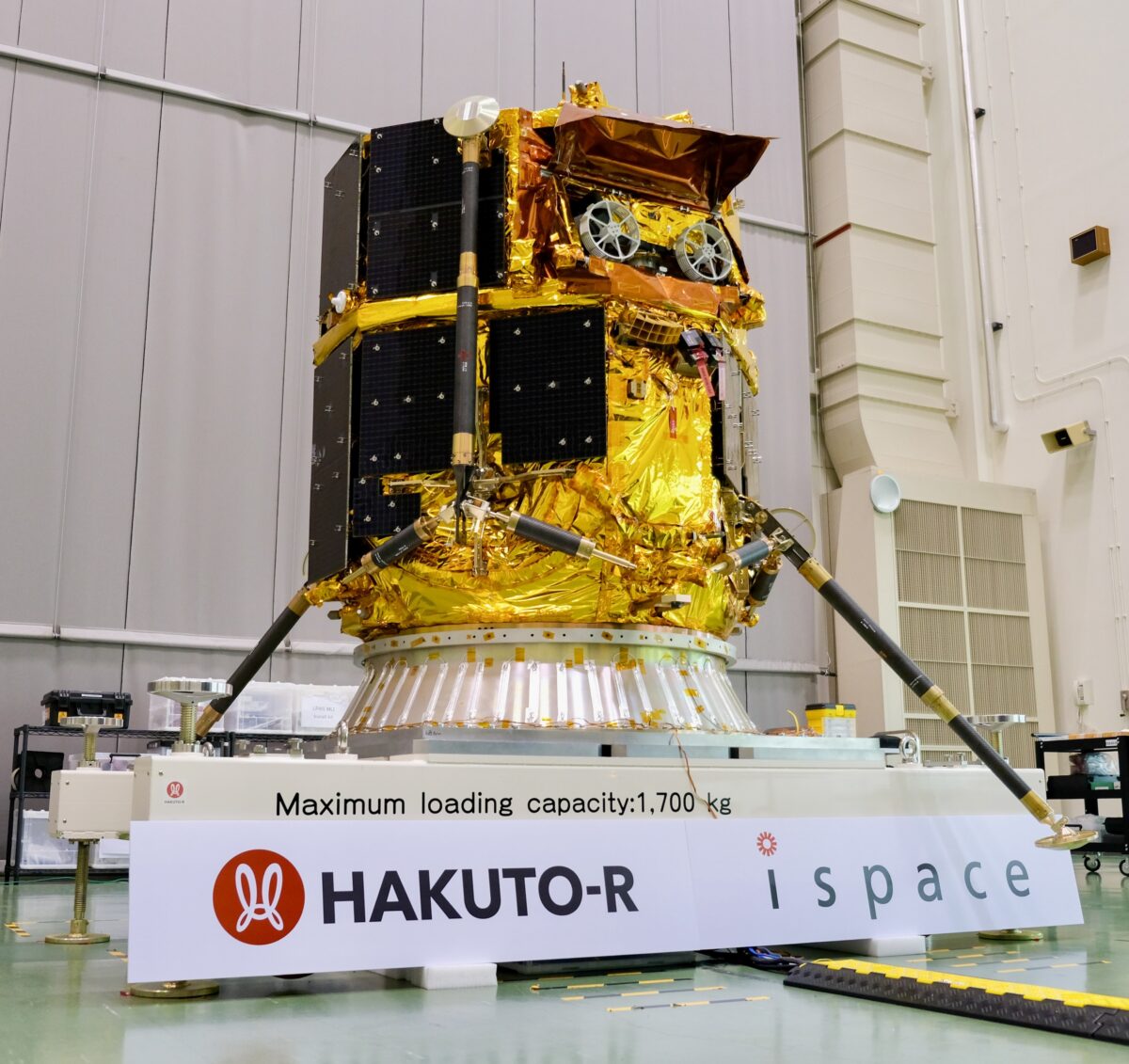
The Hakuto-R lander Resilience with micro-rover Tenacious visible, undergoing final preparations at a JAXA facility in Tsukuba, Japan prior to being shipped to Kennedy Space Centre. Credit: ispace/JAXA

Like its predecessor, Hakuto-R Mission 2 comprises a lander vehicle some 2.5 metres tall and 2.3 metres wide intended to demonstrate a reliable small-scale lander capability with data transmission and relay capabilities for use as a part of the US-led Project Artemis. The lander will launch atop a SpaceX Falcon 9, but unlike it predecessor will head directly to the Moon, where it will land in Mare Frigoris, the Sea of Cold.

Once there, the lander – called Resilience – will deploy a micro-rover called Tenacious. Weighing just 5 kg, this has been built as a multi-role vehicle by a team in Luxembourg. Once deployed, it will demonstrate autonomous driving capabilities as it explores the area around the lander, and will also partner with the lander in an ISRU (in-situ resource utilisation) demonstration, attempting to extract water from the lunar surface, heating it and splitting the resultant steam into oxygen and hydrogen.

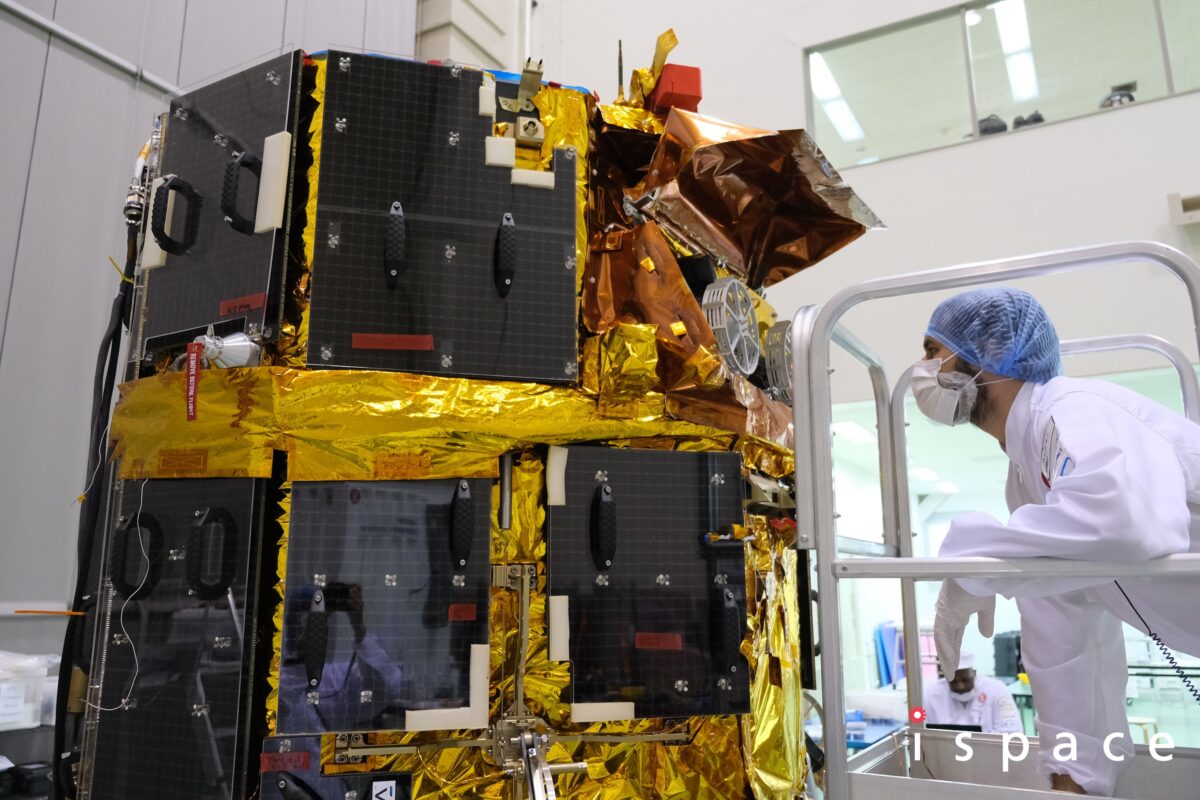
One of the team responsible for Tenacious checks the little rover before the cover is closed on the payload bay containing it. Credit: ispace

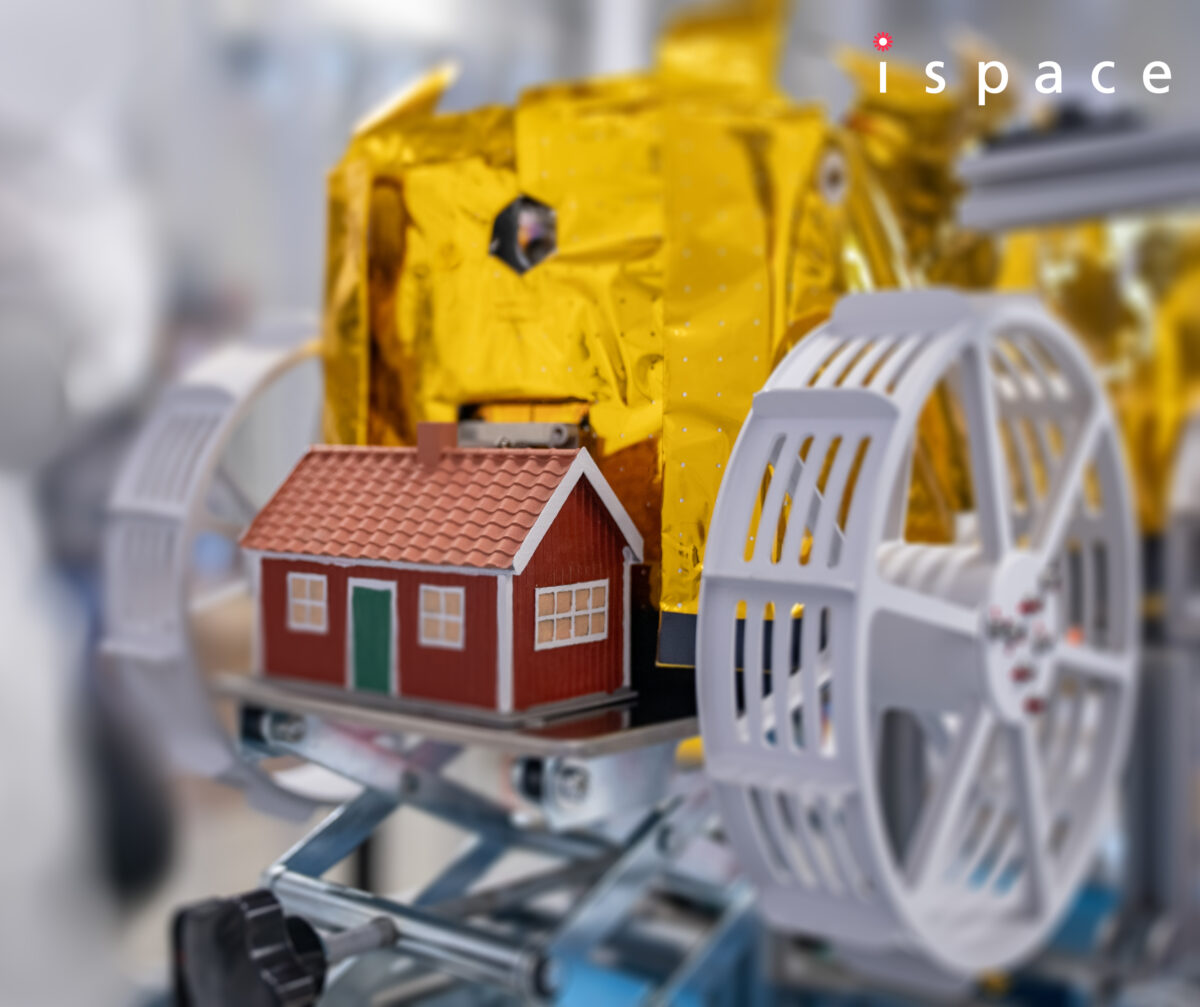
The mission will carry a number of additional payloads, perhaps the most unusual of which is Moonhouse, by Swedish artist Mikeal Genberg.

For 25 years, Genberg has had a dream about a little red house (“all house in Sweden are red!” he states) on the Moon; throughout that time he’s visualised it through art installations here on Earth, and has even seen one of his models flown aboard the space shuttle, courtesy of Swedish astronaut Christer Fuglesang. Now, Tenacious will carry one of Genberg’s little houses to the surface of the Moon. It is secured to a platform on the front of the rover, and represents the culmination of Genberg’s 25-year-long dream.

Mikael Genberg’s Moonhouse mounted on the front of the micro-rover Tenacious. Credit: ispace / JAXA

As to its meaning – Genberg notes that it could be many things, depending on who you are. A symbol of life; for the potential for future life; a beacon of hope that anything is possible if we put our minds to it; a commentary on humanity and our treatment of the one home we have; as art, it has the ability to speak to each of us, and to do so differently with each of us.

Fram2 Private Polar Mission

Due to launch in around March 2025, Fram2 is another “all-private” space mission in the mould of Jared Isaacman’s Inspiration4 (2021) and Polaris Dawn (2024) flights. Also utilising SpaceX Crew Dragon Resilience, Fram2 will fly a crew of 4 on a mission of up to 5 days duration in a 90º inclination orbit between 425 and 450 km altitude. It aims to observe and study aurora-like phenomena such as STEVE and green fragments and conduct experiments on the human body, including the first X-ray of a human in space.

The Fram2 mission will utilise SpaceX Crew Dragon Resilience, which will once again be fitted with the panoramic cupola in the vehicle’s nose section, replacing the ISS docking mechanism. Credit: SpaceX

The crew for the mission comprise:

  • Chung Wang, the mission commander and co-bankroller, a Chinese-born Maltese crypto currency entrepreneur who founded f2pool , one of the largest Bitcoin mining pools in the world, and Stakefish, one of the largest Ethereum staking providers.
  • Jannicke Mikkelsen, the vehicle commander, and co-bankroller for the mission, a Scottish-born Norwegian cinematographer and a pioneer of VR cinematography, 3D animation and augmented reality. A skilled speed skater, she will become the first Norwegian astronaut and the first European to command a space vehicle.
  • Eric Philips, a 62-year-old noted Australian polar explorer, who will serve as the vehicle pilot as will be the first Australian national to fly in space (while both Paul Scully-Power and Andy Thomas were born in Australia and flew on space shuttle missions (Thomas flying multiple times), they only did so after becoming US citizens).
  • Rabea Rogge, a German electrical engineer and robotic expert, who will fill the role of Mission Specialist and will become the first German woman to fly in space, beating-out those selected as a part of the privately-funded programme Die Astronautin, specifically set-up to fly a German woman in space by 2023.
The Fram2 crew (l to r): Chun Wang, Jannicke Mikkelsen, Eric Philips and Rabea Rogge

Fram2 is named for the Norwegian polar exploration vessel Fram, a veteran of multiple expeditions to both poles between 1883 and 1912, including Roald Amundsen’s historic 1910-1912 southern polar expedition, is planned to launch in March 2025.

Tianwen-2: Asteroid Sample Return Mission

China will continue its deep-space exploration ambitions with the planned May 2025 launch of Tianwen-2 (“’Heavenly Questions-2”) robotic vehicle. Whilst bearing the same name as the highly-successfully mission to place an orbiter around Mars and a lander and rover on the surface of that planet in 2021 (and covered within past Space Sunday articles), Tianwen-2 is a very different mission: that of rendezvousing with, and landing on, a near-Earth object (NEO) asteroid and gathering up to 100 grams of material for a return to Earth.

A screen cap of the Tianwen-2 vehicle arriving at 469219 Kamoʻoalewa. Credit: CCTV

The target for the mission is a quasi-moon 469219 Kamoʻoalewa, thought to be around 40-100 metres along its longest axis. It orbits the Sun at distance of between 0.9 and 1.0 (the average distance of the Earth from the Sun) and with an orbital period of 365-366 days. This makes it appear as if it moving around the Earth, although it is in fact oscillating around the L1 and L2 and L4 and L5 positions, and not actually gravitationally bound to Earth, never coming closer than some 14 million kilometres.

What is particularly interesting about 469219 Kamoʻoalewa, first identified in 2016, is that spectral analysis suggests it is likely silicate in origin; combined with its orbit, this points to it possibly being a lump of rock ejected from our Moon as a result of an asteroid impact. However, it could equally be an S-type asteroid (which account for around 17% of all known asteroids) or possibly an L-type, which are exceptionally uncommon.

Thus, given the mix of potential heritage, 469219 Kamoʻoalewa has been seen as an intriguing subject for up-close study ever since its identification, and a number of proposals have been put forward up-close study, as well as being the target for observation by numerous Earth-based telescopes. Following launch, Tianwen-2 is expected to intercept the asteroid in 2026, and conduct remote sensing activities which will include identifying locations for sample acquisition. It will also deploy both a nano-orbiter and a nano-lander for independent study of the asteroid.

To collect samples, Tianwen-2 will send down a sample gathering unit which will conduct both touch-and-go operations similar to those used by Japan’s Hayabusa2 probe sent to obtain samples from the near-Earth asteroid 162173 Ryugu (2014-2020), and NASA’s OSIRIS-REx (2016-2023) mission to gather samples from asteroid Bennu, and also anchor-and-attach – the first time such a technique will be attempted.

The two approaches to gathering samples: in touch and go, the sample gathering vehicle will briefly touch the surface of the asteroid to gather a sample, the  spring-loaded arm of the sample gatherer absorbing the vehicle’s downward momentum before pushing it back away from the asteroid. With Anchor-and-attach, the sample vehicle will attempt to use four legs with penetrators to grip the asteroid’s surface, prior to the sample arm being deployed to collect material. Credit: CCTV

After gathering samples, Tianwen-2 will depart 469219 Kamoʻoalewa and make a fly-by of Earth in 2027, which it will use to both drop-off its sample capsule and also complete a gravity assist manoeuvre in order to travel on to rendezvous with active asteroid 311P/PanSTARRS, which orbits the Sun every 3.24 years and exhibits the characteristics of both an asteroid and a comet, including having up to six comet-like tails.

Estimated to be around 240 metres across and always orbiting the Sun beyond the orbit of Mars, 311P/PanSTARRs was first identified in 2013, and observations in 2018 suggested it might have a companion orbiting it. Tianwen-2 is expected to reach it in 2034.

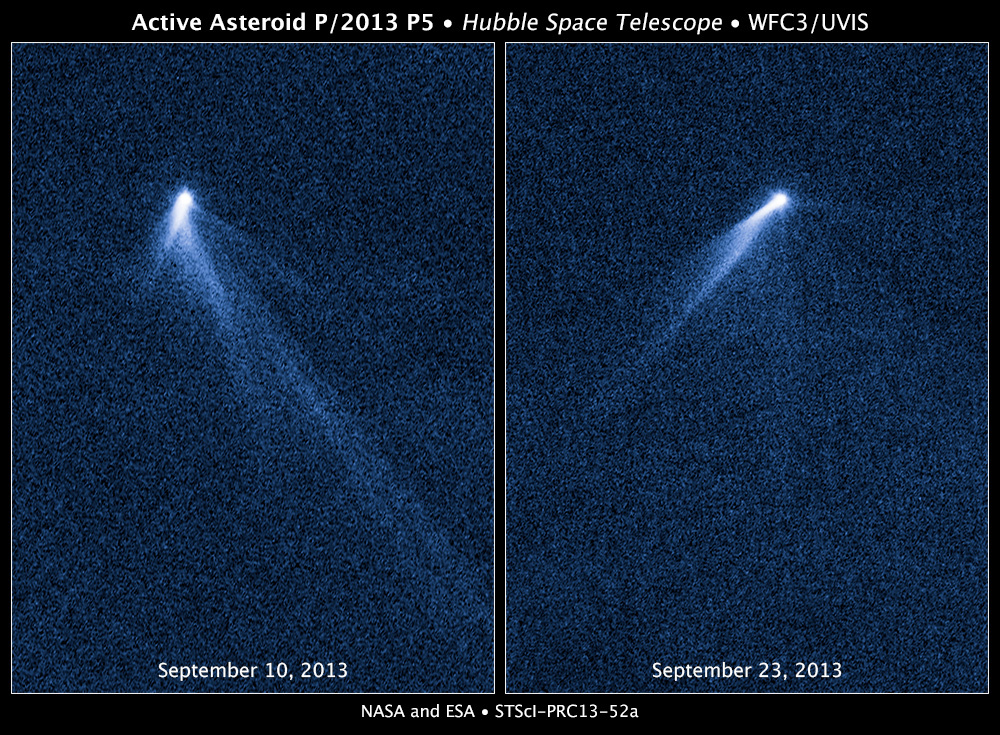
Two images of 311P/PanSTARRS captured by the Hubble Space Telescope and showing its tail formations. Credit: NASA, ESA, D. Jewitt

Dream Chaser Rises

May is the month that will hopefully see the launch of the newest addition to the fleet of vehicles that help keep the International Space Station (ISS) well-stocked with supplies and operational, when a ULA Vulcan Centaur VC4L lifts-off from Space Launch complex 41 at Canaveral Space Force Station, carrying Tenacity, the first Dream Chaser Cargo vehicle from Sierra Space.

Referred to SSC Demo-1, the mission will see Tenacity and its Shooting Star power and cargo module carry out a check-out mission of up to 45 days duration which will see the combined vehicle rendezvous and dock with the ISS, undergoing check-out by ISS crew and eventually undocking, after which the Shooting Star module will be jettisoned and Tenacity will return to Earth for an aircraft-style landing at the former Space Shuttle Landing Facility, Kennedy Space Centre.

Dream Chaser Tenacity and its cargo module undergoing testing at NASA’s Neil Armstrong Test Facility, Kennedy Space Centre, Florida. Credit: NASA

When operational, Dream Chaser with Shooting Star will have the largest all-up payload capacity of any ISS resupply vehicle: 5.5 tonnes; 5 tonnes of which can be pressurised. However, missions will likely be flown with lesser payload amounts. In addition, Dream Chaser can return to Earth with payloads of up to 1.75 tonnes, comprising equipment, experiments and general waste.

Six Dream Chaser resupply missions to the ISS have been contracted, using at least two Dream Chaser vehicles, Tenacity and Reverence (although construction on the latter is currently suspended). The date of the first operational flight (CRS SSC-1) has yet to be given, but is unlikely to be before 2026.

Space RIDER Flies

The European Space Agency (ESA) is expected to debut its entry into the reusable spaceplane market in the latter half of 2025 with the maiden flight of Space RIDER (Space Reusable Integrated Demonstrator for Europe Return), a two-stage vehicle designed to provide routine and relatively low-cost capabilities to delivery payloads of up to 620 kg to low-Earth orbit.

I’ve covered Space RIDER in the past, but briefly, it is a small-scale reusable lifting body supported by an expendable service module which supplies it with main propulsion and electrical power when in orbit, prior to being jettisoned before the main vehicle re-enters the atmosphere. Payloads are intended to be experiments and science instruments, which the vehicle returns to Earth at the end of a mission, although it will have the ability to deploy smallsats in space as well.

An artist’s impression of ESA’s Space RIDER in orbit. The black module with solar panels to the rear is the vehicle’s expendable service module. Credit: ESA

Massing 4.9 tonnes at launch (including the service module), the lifting body – referred to as the Re-entry module (RM) – masses 2.8 tonnes on landing. The combined craft has a length of just over 8 metres, of which 4.6 metres is that of RM, which includes a payload volume of 1.2 m³.

Designed to be launched atop ESA’s Vega-C rocket, Space RIDER can remain in orbit for up to 2 months at a time conducting experiments. Following re-entry, the RM will use its lifting body shape to drop its speed from Mach 25 to Mach 0.8 (roughly the speed of an commercial airliner) as it descends, prior to deploying a drogue parachute at between 12-15 km altitude, which will slow it to around Mach 0.22. After this, a parafoil is deployed, which allows the vehicle to glide under control to a horizontal landing. It is designed to make up to six flights into space, and has a turnaround time of “less then 6 months”.

The Year of Fly-bys

2025 is going to be a year of fly-bys for several deep space missions, including:

  • January: The ESA / JAXA BepiColumbo mission to Mercury will complete its sixth and final fly-by of the planet as it uses Mercury’s relatively weak gravity to both decelerate and swing it on to a trajectory from which it can establish itself in orbit around the planet. The manoeuvre will mark the end of 9 fly-bys of three planets – Earth (1); Venus (2) and Mercury (6); the next time the probe reaches Mercury (after another passage around the Sun) in November 2026, it will fire its motor and enter orbit ready to commence its primary science mission, over 8 years after its launch.
  • March: ESA’s Hera mission, launched in October 2024, will perform a fly-by of Mars en route to its final destination, the Didymos binary asteroid system, where it will carry out a detailed study of the aftermath of the NASA Double Asteroid Redirection Test (DART) which impacted the asteroid Dimorphos in an attempt to deflect it in its orbit around the larger Didymos.
An artist’s impression of ESA’s Hera mission, complete with its payload of two cubesats as they observe the asteroid Didymos. Credit: ESA
  • March: NASA’s Europa Clipper mission will also fly-by Mars as it makes its way towards Jupiter in order to study the icy world of Europa. The second of two such mission to be launched – the other being ESA’s Juice mission (see below), The NASA mission will make better progress to Jupiter by virtue of being launched atop a more powerful rocket – the SpaceX Falcon Heavy.
  • April: NASA’s Lucy mission will complete its fourth fly-by of a celestial body, and the second of a main belt asteroid – 52246 Donaldjohanson, named for the paleoanthropologist who discovered the famous “Lucy” fossil. This vehicle is on a complex mission to examine eight separate asteroids (2 within the main belt between the orbits of Mars and Jupiter; four more in the L4 Trojan cloud occupying the same orbit a Jupiter, but 60º, which it will reach in 2027; and a pair within the Trojan cloud trailing Jupiter in its orbit by 60º, which it will reach in 2034 after a further fly-by of Earth at the end of 2030.
  • August: ESA’s Jupiter Icy Moons Explorer (Juice) will make a fly-by of Venus as it gathers the momentum it needs to reach Jupiter and start its studies of Europa, Ganymede and Callisto. The fly-by of Venus will be the second of four such manoeuvres, the other three (August 2024, September 2026, January 2029) being around Earth.