2026 week #5: SL CCUG and Open Source (TPVD) meetings summary

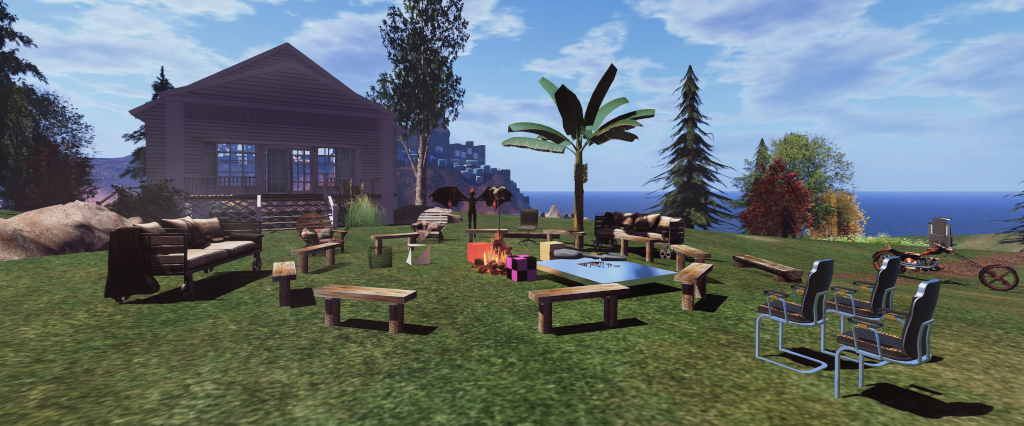
Hippotropolis Campsite: venue for CCUG meetings
The following notes were taken from:

  • My chat log of the Content Creation User Group (CCUG) meeting of Thursday, January 29th, 2026 and my chat log of that meeting
  • Pantera’s video (embedded at the end of this article) and my chat log of the Open-Source Developer (OSD) meeting held on Friday, January 30th, 2026.
Table of Contents

Please note that this is not a full transcript of either meeting but a summary of key topics.

Meeting Purpose

  • The CCUG meeting is for discussion of work related to content creation in Second Life, including current and upcoming LL projects, and encompasses requests or comments from the community, together with related viewer development work.
    • This meeting is generally held on alternate Thursdays at Hippotropolis and is held in a mix of Voice and text chat.
  • The OSD meeting is a combining of the former Third Party Viewer Developer meeting and the Open Source Development meetings. It is open discussion of Second Life development, including but not limited to open source contributions, third-party viewer development and policy, and current open source programs.
    • This meeting is generally held twice a month on a Friday, at 13:00 SLT at the Hippotropolis Theatre and is generally text chat only.
  • Dates and times of meetings are recorded in the SL Public Calendar.

Official Viewer Status

  • Default viewer 2025.08 – 7.2.3.19375695301 – maintenance update with bug fixes and quality of life improvements – December 2 – No Change.
    • Notable addition: new VHACD-based convex decomposition library for mesh uploads.
  • Second Life Project Lua Editor Alpha version 7.2.3.19911032641, December 5 –  No Change.
  • Second Life Project Voice Moderation viewer 26.1.0.20139269477, December 12 – No Change.
    • Introduces the ability to moderate spatial voice chat in regions configured to use WebRTC voice.
  • Second Life Project One Click Install viewer 26.1.0.21295806042, January 26, 2026 – one-click viewer installation.

Upcoming Viewers

Viewer 2026.01 – One-click Installer / Updater

  • Now available as an alpha viewer (above).
  • As the name suggests, triggers a one-click install / viewer update process.
  • Is still being worked on, with a focus on ironing out some kinks in the one click install, including an uninstaller for old non-velopack viewers that can be triggered when required, the usual registry stuff for Windows, and so on.
  • Also includes improved monitoring / logging of viewer freezes and crashes, etc.

Viewer 2026.02 – “Flat” UI, Font Changes

Example of the upcoming flat UI. Via: Geenz Linden / Github #4681/2
  • This viewer is to be part of the Lab’s “first impressions” push to make SL resonate more with incoming new users and hopefully encourage them to keep logging in.
  • Will include a new “flat” UI (as seen in the Project Zero (viewer in a browser) version) which comprises things like a font change, a colour scheme change,  and generally giving the viewer a more “modern” look and feel. This is not a major UI overhaul in terms of overall look and feel, more an aesthetic one.
  • Font changes within this viewer are currently described as “experimental”.
  • Also looking like it will include a log-in landing refresh.
Example of the upcoming flat UI. Via: Geenz Linden / Github #4681/2

General Viewer Notes

  • Work on clearing viewer bugs and implementing smaller feature requests into the viewer is continuing, so users can expect more of this, allowing for other priorities in viewer work.
  • On the viewer development side:
    • There should be some vcpkg movement in the near future. A Pull Request for this work via a third-party developer is apparently in progress, but will not be shipped immediately on approval. Rather, it will be allowed “soak time” so other developers can assess impact on their build pipelines downstream and the like.
    • There will also be some CMake project changes, although these appear to be more of a “modernization” push, to bring CMake in the viewer into line current CMake project norms.
  • LL is contemplating bringing back viewer maintenance releases to try to encourage some TPVs to pick-up bug fixes and incorporate them faster into their viewers (rather than waiting for a major viewer update which includes bug fixes to get to release status and then merging them).
    • If this is done, the maintenance releases will be “much smaller in scope” than past maintenance updates (so a kind of taking bug fixes that are flowing into upcoming major viewer releases, cherry picking them and then QA’ing and releasing them as a small update to the viewer.
    • Those TPVs at the meeting indicated this could either add to their workload or that they would not alter their existing workflow due to overheads, but instead will continue to cherry-pick upstream fixes as a part of their own release cycles.
  • In response to questions on whether Kitty Barnett’s RLVa code contributions will be included in the official viewer (and which are currently pending fixes she has submitted for RLVa avatar appearance fixes anyway), Geenz Linden stated:
If we did, it’d likely be a very progressive and targeted thing that we do. And hopefully not in a way that significantly makes downstream more difficult to maintain. It’s a longer discussion that needs to be had basically. 
    • This led to concerns that LL could end up implementing a variant of  RLVa that is at odds with the current RLV/RLVa API, and effectively end up being ignored for being incompatible. In response, Geenz further noted:
I’d prefer one that everyone can participate in if we do go that route so we can be more targeted with others helping to guide that. Last thing we want to do is make it take 7 months to ship a TPV just because we made a change to RLVa. We also have to consider overall content compatibility and such.
  • Also as per the last meeting, official Linux support is aligned with the in-progress SLua viewer .

“First Impressions” Context

  • This work is focused on trying to ease that first experience for a lot of new residents to try and drive up retention numbers.
  • The work is seen more-or-less as experimentation at this point in time, but the goal is to drive up first day engagement among incoming new users to encourage them to continue to log-in to SL.
  • Work on this is on multiple fronts, and more will be shared on it in due course.

Grid-Wide WebRTC Deployment

  • The Lab is currently looking at a March deployment of WebRTC voice across the grid, but this is subject to possible change.
  • The viewer server is currently in a beta soak test (see: WebRTC Voice Open Beta is Expanding).
  • The last major server crash has been fixed, and there have been none since that fix went in.
  • There is an upcoming fix – see Pull Request #5322  (included in viewer 2026.01) – to address some of the issues with voice dropping. The recommendation is for TPVs to get this into their viewers for a good user experience.
  • An upcoming server-side update will hopefully address some of the issues with WebRTC spatialisation (e.g. voice volume varying greatly with even small camera position movements on the part of a listener).
  • Additional connection tweaks for WebRTC have been made to the 2026.01 viewer to help improve voice performance (e.g. to improve auto-reconnect).
  • Feedback on people’s experiences with WebRTC is still being sought (notably via the beta testing).

SLua Update

  • An update to the SLua project viewer is forthcoming.
  • As noted above, this will bring with it support for Linux
  • Still no confirmation as to when SLua will go live across SL

General Discussion

OSD Meeting

  • SSR and PBR water real time reflections and shadows: Geenz indicated that work is progressing on this and that when available, it will be given “a proper” alpha/beta/Release Candidate process.

  • The was noted that whilst improvements on SSR and PBR water reflections are being made, they will never 100% match pre-PBR views without a lot of work being put into optimisation, what would likely still result in mixed feedback without any significant win.
  • This led to a general discussion on addressing water reflections and shadows.

CCUG Meeting

  • PBR lighting: still on the list of potential updates, but requires “quite a few” server-side changes in order for it to happen.
    • The existing SL lighting system has a range of constraints dating back 20+ years, and so would require significant modification in order to enable PBR lighting support.
    • As such, this is currently viewed as being on the back burner for the foreseeable future, while other things are worked on.
  • A question was asked on whether it would be possible for an Animesh using only ten bones in total to have a lower Land Impact / rendering cost than one rigged to 10 out of the 110 bones of the default skeleton. Short answer: no, not without custom rigs.
  • Custom rigs themselves are acknowledged as something SL should have, but the work involved in enabling them is extensive and touches on multiple areas (e.g. re-targeting bones for clothing fits; re-targeting animations – and even a couple overhaul of the animation system -, etc.). There is also work to be carried out elsewhere that would yield benefits for things like quality of life which are of a higher priority. As such, custom rigs are not something currently on the roadmap.
  • In-world mesh creation tools: unlikely to be a thing, as the implementation would be costly in time and effort, and likely would not measure up to the capabilities of external tools like Blender.
  • It was asked if the import route for rigged meshes could be “streamlined” without the need for AvatarStar / MayaStar. Neither of these tool are actually a requirement for rigged mesh import / export, rather they are tools that can help with the process of rigging from within SL. Meshes that have been correctly rigged and weighted using external tools should import correctly through the current import mechanisms (COLLADA or glTF).
  • Overhauling the mesh import file format  / process through the support of something like OpenUSD is an idea that is being mulled over within the Lab. However, a) this is not something that is likely to be prioritised in the next 12 months; b) it is something that would require a lot more in the way of discussion before moving towards it; c) there is still work to be done in improving the import / export of currently supported formats before trying to add to them / replace them.
  • Materials import for meshes: this is something the Lab wanted to implement for glTF mesh import (rather than having to import materials separately).
    • However, due to the way in which asset uploads to SL work, it proved to be more a complex issue than first thought.
    • The hope is that the work can be returned to in the future, possibly using a new import flow that is more in line with other platforms and tools, but this is not something on the current roadmap.
  • PBR specular support: this is still something Geenz would personally like to get done, but it is currently sitting behind various other items which need to be completed / implemented in order to clear time for working on it. Also, this work does have impacts on things like the glTF upload validator, scripting, simulator support, managing glTF overrides (which are currently not well handled) etc., all of which would have to be factored into the work and which are outside of Geenz’s immediate responsibilities.
  • In terms of extending glTF support in general (PBR specular, IoR, etc.), the preference at the moment is to fix more of the existing issues / bugs within the existing PBR capabilities before adding further options.
  • The meeting was somewhat sidetracked by talk on the use of bots, ToS bot violations, Tiny Empires, etc., the majority of which are more of a Governance issue.

Next Meetings

2026 week #3: SL CCUG and Open Source (TPVD) meetings summary

Hippotropolis Campsite: venue for CCUG meetings
The following notes were taken from:

  • My chat log of the Content Creation User Group (CCUG) meeting of Thursday, January 15th, 2026 and my chat log of that meeting
  • Pantera’s video (embedded at the end of this article) and my chat log of the Open-Source Developer meeting held on Friday, January 16th, 2026.
Table of Contents

Please note that this is not a full transcript of either meeting but a summary of key topics.

Meeting Purpose

  • The CCUG meeting is for discussion of work related to content creation in Second Life, including current and upcoming LL projects, and encompasses requests or comments from the community, together with related viewer development work.
    • This meeting is generally held on alternate Thursdays at Hippotropolis and is held in a mix of Voice and text chat.
  • The OSUG meeting is a combining of the former Third Party Viewer Developer meeting and the Open Source Development meetings. It is open discussion of Second Life development, including but not limited to open source contributions, third-party viewer development and policy, and current open source programs.
    • This meeting is generally held twice a month on a Friday, at 13:00 SLT at the Hippotropolis Theatre and is generally text chat only.
  • Dates and times of meetings are recorded in the SL Public Calendar.

Official Viewer Status

  • Default viewer 2025.08 – 7.2.3.19375695301 – maintenance update with bug fixes and quality of life improvements – December 2 – No Change.
    • Notable addition: new VHACD-based convex decomposition library for mesh uploads.
  • Second Life Project Lua Editor Alpha version 7.2.3.19911032641, December 5 –  No Change.
  • Second Life Project Voice Moderation viewer 26.1.0.20139269477, December 12 – No Change.
    • Introduces the ability to moderate spatial voice chat in regions configured to use webRTC voice.

Upcoming Viewers

Viewer 2026.01 – One-click Installer / Updater

Viewer 2026.01 is in progress. This will include:

  • Improved bugsplat support (we want better reporting for freezes, and just generally better crash reporting). This work builds on the successes of 2025 in detailing with viewer crashes and reducing overall causes for crashes.
  • A new one-click installer, which in brief:
    • Will be powered by a new dependency called velopack, and will allow a single-click installation of the viewer (with a brief pop-up message), with the viewer launching once the install process is complete.
    • Will default to installing under Apps/Local on windows; will remain as a drag-and-drop process on Mac OS, while Linux is currently TBD. It will still be possible to install the viewer to a custom location, initially via a command line argument.
    • Will not change the install location of config files, or anything that counts as user data.
  • Development work on this did hit a delay, which has now been cleared, the hope remaining to get an Alpha (previously known as Project) viewer out with the update code in place sooner rather than later.
  • As an added benefit to the switch to velopack for TPVs, LL will be providing a solution to add auto-update functionality to TPV projects, if TPVs wish to leverage it. More information on this is due to be made available in the next week or so.

Viewer 2026.02 – “Flat” UI, Font Changes

  • This viewer is to be part of the Lab’s “first impressions” push to make SL resonate more with incoming new users and hopefully encourage them to keep logging in.
  • This first impression work is on multiple fronts, and for the 2026.02 viewer will be a switch to the “flat” UI seen in the Project Zero (viewer in a browser) version which comprises things like a font change, a colour scheme change,  and generally giving the viewer a more “modern” look and feel.
  • The font update:
      • Should not impact people’s use of unicode.
    • Will require XUI updates which will likely require updates for TPVs using their own custom XUI – TPVs are advised to keep an eye on Discord and Github for more information on these changes as they develop, and to particularly track this github issue.

General Viewer Notes

  • Linux support will likely ship as a part of the in-progress SLua beta viewer.
  • The viewer development roadmap is still being worked on in terms of fixes and updates and actioning feature requests, the focus being to work these into the viewer without disrupting major initiatives the Lab is looking to develop (such as the “first impressions” drive).
  • 2026.02 might include some screen space reflections (SSR) updates to help improve the appearance of Linden Water under PDR/HDR.
  • The avatar appearance fixes contributed by Kitty Barnett and intended to make the current outfit folder more reliable when changing outfits, messing with outfits, etc., may get to see the light of day in viewer 2026.03 – but this had yet to be confirmed.

Grid-Wide WebRTC Deployment – Initial Announcement (OSD Meeting)

  • The Lab is currently looking at a March deployment of WebRTC voice across the grid.
  • The schedule is not firmly set as yet, but will follow the usual server-side deployment routine: first to one (or more) simulator RC channels, then to all simulator RC channels (if not all rolled at once), and then a week after this, deployment to the Main simulator channel.
  • The important point in this is that once grid-wide, WebRTC will completely supplant Vivox Voice, and those who use Voice by who are not running a WebRTC voice capable viewer (which generally means anyone not on a non-PBR supporting viewer) will be unable to use Voice.
    • This does not mean that the Vivox service will be immediately shut-down. It will remain an option for the Lab to re-enable until such time as LL is confident in the WebRTC service and no surprises have come to light.
  • There is one remaining WebRTC critical issue in the viewer that makes the experience not great for a small body of users:
    • People with certain network characteristics may see a dropout because the WebRTC provider is not properly handling renegotiation.
    • LL has a fix which should be deployed with viewer 2026.01. However, TPVs wishing to merge it now can do so via Pull Request 5126.
  • In the meantime, the beta for WebRTC has expanded – see this official blog post for details.
  • Roxie Linden also indicated that LL is experimenting with speech-to-text using WebRTC, but does not as yet have anything available for public demonstrations.
  • The issue of Linux builds not using Pulseaudio but with the WebRTC code crashing on start-up was reiterated at the meeting. Whilst this might not be a widespread issue, the feeling was that it should be looked at; however, if the pool of impacted users is liable to be very small, it will not be seen as a reason to block / delay WebRTC deployment as a whole and any fix is liable to be prioritised in terms of resources / impact of the issue, post-deployment.

General Discussion – Both Meetings

  • Avatar support related:
    • Shape key support and / or custom bone hierarchies – seen as complex area of work, and not being looked at.
    • While the current avatar does technically use shape keys, it is very different to how modern blend shapes are used.
    • SL’s internal format also doesn’t store bones.
  • Questions were raised on the status of game_control. This is more a subject for the Simulator User Group meetings, where Leviathan Linden indicated he was trying to resume work on the code. However, it was also indicated during this meeting that Leviathan had again been “borrowed” to work on other code.
  • Despite rumour to the contrary, Puppetry is not currently set for revival or on the current 2026 roadmap.
  • Geenz noted that while work on things like new tools, updates to the GLTF uploader, etc., are not “done”, the focus for the time being in more on dealing with technical debt together with the aforementioned “first impressions” initiative, etc.
  • Questions were asked on auto / planar-aligning PBR materials  – see: Aligning Faces when using PBR and Planar face alignment with PBR GLTF materials. This is something the Lab has yet to resolve, and has offered a contribution bounty for any developer who is able to provide a solution. Geenz also indicated he would try to get bugs like this better prioritised.
  • A general discussion on ideas for improvements to chat, including: ability to have a “last unread” indicator in chat when logging-on; having the chat rings on the mini-Map on by default, some idea about a special chat tab that would allow region-wide chat (presumably at the region owner’s discretion to enable), ability to correct text in chat / IM after sending(!), etc.
  • The You Tube embedding issues was again raised (see here for more), with a possible (if hacky) workaround. LL are looking to You tube to address the problem, as they created it.
  • There was a general discussion on the complexities of Land Impact, particularly – but not restricted to – mesh objects. In short, LI is a complicated subject, and not easily addressed; hence why the Lab backed away from the subject recently. This also strayed into the equally complicated realm of LOD generation.
    • On the subject of LOD generation, it was suggested that the Lab should look to implement a LOD generator and then inform creators LODs have to be generated  to fit a defined set of criteria – or defaults will be forced.
  • A discussion on the choice of VHACD over HACD as a replacement for Havok in mesh decomposition. The latter is seen as more mature, but LL opted for VHACD is a “middle ground” solution as it is more regularly maintained, it is also apparently more reliable when dealing with the “weirder meshes” some SL creators produce, when compared to something like CoACD. However, Geenz indicated it would be “nice” to have “swappable”  convex decomposition solutions at runtime.
  • A further request for Error creating thumbnail” message on SL wiki, breaking images  to be addressed.

Next Meetings

2025 week #51: SL CCUG and Open Source (TPVD) meetings summary

Hippotropolis Campsite: venue for CCUG meetings
The following notes were taken from:

  • My chat log of the Content Creation User Group (CCUG) meeting of Thursday, December 18th, 2025 and my chat log of that meeting
  • Pantera’s video (embedded at the end of this article) and my chat log of the Open-Source Developer meeting held on Friday, December 19th, 2025.
Table of Contents

Please note that this is not a full transcript of either meeting but a summary of key topics.

Meeting Purpose

  • The CCUG meeting is for discussion of work related to content creation in Second Life, including current and upcoming LL projects, and encompasses requests or comments from the community, together with related viewer development work.
    • This meeting is generally held on alternate Thursdays at Hippotropolis and is held in a mix of Voice and text chat.
  • The OSUG meeting is a combining of the former Third Party Viewer Developer meeting and the Open Source Development meetings. It is open discussion of Second Life development, including but not limited to open source contributions, third-party viewer development and policy, and current open source programs.
    • This meeting is generally held twice a month on a Friday, at 13:00 SLT at the Hippotropolis Theatre and is generally text chat only.
  • Dates and times of meetings are recorded in the SL Public Calendar.

Official Viewer Status

  • Default viewer 2025.08 – 7.2.3.19375695301 – maintenance update with bug fixes and quality of life improvements – December 2.
    • Notable addition: new VHACD-based convex decomposition library for mesh uploads.
  • Second Life Project Lua Editor Alpha version 7.2.3.19911032641, December 5.
  • Second Life Project Voice Moderation viewer 26.1.0.20139269477, December 12.

Viewer Updates

Viewer Side Voice Moderation

  • Introduces the ability to moderate spatial voice chat in regions configured to use webRTC voice.
  • Allows region  / parcel owners (the latter subject to local region permissions) to moderate Voice chat (i.e. muting people if required) on their land.
  • Allows existing Group moderators to moderate Voice chat, if used within their groups.
  • This function is viewer-side and limited to muting people.
    • Muting remains active through the muted individual’s log-in session (i.e. if they TP out of a parcel where they are muted, then TP back, they will still be muted; however, if they log out / in, then they will be unmuted until moderation is re-applied).
    • This approach is to make the moderation more a social tool – e.g. muting someone who has left their microphone open and are accidentally flooding the channel with background sounds whilst AFK.
  • For more obnoxious users on Voice, the currently-existing ban methods are recommended.

Viewer 2026.01 – One-click Installer / Updater

Viewer 2026.01 is in progress. This will include:

  • Improved bugsplat support (we want better reporting for freezes, and just generally better crash reporting). This work builds on the successes of 2025 in detailing with viewer crashes and reducing overall causes for crashes.
  • A new one-click installer:
    • To be powered by a new dependency called velopack.
    • The process will literally be: click once, and a (small) pop-up is briefly displayed stating the viewer is being installed, and the viewer is launched when done.
    • On Windows, the viewer will default to installing under Apps/Local; on Apple OS it will remain as a drag-and-drop; Linux is still TBD.
    • It will be possible to tell the installer to install to a custom location, if preferred, but initially, this will be via a command line argument.
    • Config files and such are not changing. Anything that counts as user data will not change. It’s only where the viewer is installed by default that is changing.
    • In addition:
      • Older viewers will need to be uninstalled.
      • NSIS installer scripts will still be around for projects that prefer that.
      • Velopack does output “portable” viewer installs – literally a zip file with everything needed to install the viewer, if required.
      • The new installer will be offered as an opt-in to TPVs wishing to make use of it.
    • The one-click install capability will likely be an alpha (formerly project) viewer, which will be made available “in the coming days” in order to gain some user feedback.
    • These changes will not affect the current viewer repos, channels, cohorts, etc., as currently used by TPVDs.
  • It is also hoped to include a new updater to make viewer updates more transparent, running the the background without the need for direct user intervention.
    • So, when there is a new version of the viewer available and a user attempts to launch their current version of the viewer, the new version will be downloaded, installed and launched.
    • It will still be possible to disable automatic viewer updates from within the Viewer Preferences.
  • The idea behind the new installer  / updater is to make installing and updating the viewer a less onerous task for newer users.

General Viewer Notes

  • Viewer 2026.02 will likely be UI-focused. This might include:
    • Changes to the UI font See: https://github.com/secondlife/viewer/issues/2023), which will likely require some updates to various floaters and panels in the viewer.
    • Adoption of some of the UI updates made to the Project Zero (viewer in a browser) version of the viewer.
    • More information will be available on this viewer as plans are settled.
  • As a general note on viewer performance, and within the official viewer, Geenz Linden notes that at the start of the year, LL was tracking an average viewer FPS of around 40 on the official viewer, but as the end of year approaches, the average has “moved well past that”, and “getting pretty close” to tracking above 50 FPS.

General Discussion – Both Meetings

  • No plans to offer larger sizes for prim creation at present.
  • WebRTC voice:
    • Still needs further adjustments (e.g. such as with voice roll-off with distance).
    • Can have issues of “muffling” when moving the camera, and these are still being looked at.
    • Is now available on the Project Zero viewer.
  • A general discussion on colour palette spaces in the colour picker for saving colours (e.g. providing more, and whether it might be better served as a list).
  • A further debate on having a dedicated chat bar exposed in the official viewer.
  • A general discussion on the derender capability found in various TPVs (very useful for photographers / machinima makers; silencing noisy  / spammy objects, etc).
  • A discussion in the OSUG on the upcoming viewer font update.

Next Meetings

2025 week #49: SL CCUG meeting summary

Hippotropolis Campsite: venue for CCUG meetings
The following notes were taken from my audio recording and chat log of the Content Creation User Group (CCUG) meeting of Thursday, December 4th, 2025 and my chat log of that meeting.
Table of Contents

Please note that this is not a full transcript of the meeting but a summary of key topics.

Meeting Purpose

  • The CCUG meeting is for discussion of work related to content creation in Second Life, including current and upcoming LL projects, and encompasses requests or comments from the community, together with related viewer development work.
  • This meeting is generally held on alternate Thursdays at Hippotropolis and is held in a mix of Voice and text chat.
  • Dates and times of meetings are recorded in the SL Public Calendar.

Official Viewer Status

  • Default viewer 2025.08 – 7.2.3.19375695301 – maintenance update with bug fixes and quality of life improvements – December 2 – New.
  • Second Life Project Lua Editor Alpha (Aditi only), version 7.1.12.14888088240, May 13 –  No Change.

General Viewer Update

  • 2025.08 is largely a maintenance release. However:
    • For Apple Silicon it includes a new VHACD-based convex decomposition library for mesh uploads, so creators on Apple Silicon should be able to upload meshes using it. If this library proves useful on Apple, then it will be implemented for Linux and Windows viewers, allowing the current Havok sub-library to be deprecated.
  • The first planned viewer for 2026 (2026.01) is being referred to as First Impressions. As the name suggests, the focus will be on refining the user experience for those who are coming into Second Life for the first time. Details to follow in the new year.

SLua Update

  • As per the official blog post, the SLua beta on Agni (the Main grid) has been officially announced.
  • The viewer is still a beta RC version, and an updated version is due out “soon”.
  • Official VSCode Plug-in (Recommended).
  • Official scripting documentation.
  • Third-party transpiler (LSL to SLua). Note that whilst viewed as workable, the use of this transpiler might not be as efficient as writing SLua code.
  • The nine beta test regions are centred on SLua Beta Void (mind the water or just search “slua” in the viewer’s World Map)..

WebRTC Voice Update: Speech to Text

  • There has been an LL-internal demonstration of Voice-to-text using WebRTC (transcribing Roxie Linden’s speaking into local chat in the viewer).
  • When used, the generated text is shown in local chat using a different colour to typed text.
  • Transcriptions are currently to English only (although Philip Linden indicated this will be from multiple languages).
  • The demonstration was described by Kyle Linden as “a little rough around the edges, but working.”
  • The process is direct – from voice to text, currently without any need for user intervention.
    • However, given the need for voice to be passed to the WebRTC server, then passed for transcription into text and then passed to the chat service for injection into local chat, there might be a degree of latency between someone speaking and seeing their words appear as text (around 1 second).
    • Going via the WebRTC server rather than using any form of plug-in with the viewer means that anyone using voice will have their words transcribed to text only once, rather than multiple plug-ins receiving the voice and then pushing it to a transcription service before receiving it back (which would be a non-trivial cost – e.g. 100+ plug-ins requesting the transcription of someone speaking at a Linden Community Round Table as opposed to the WebRTC server requesting the transcription once and broadcasting it to local chat).
  • One of the things LL are cognizant of is the tension between providing a fully automated service, which may tread on exiting solutions which meet specific needs, and potentially working to open the capability to allow it to work alongside of existing solutions / assist them.
  • As the transcribed text is pushed to local chat, then it is likely than worn translations tools will pick-up on the text and translate it as well; this many be both beneficial and annoying (beneficial, a non-English speaker can read the translated text just like anything else typed into local chat; annoying as it could result in someone using a worn translation tool constantly receiving walls of text (the spoken word transcribed to English text and then the translated text). As such, it was acknowledged some additional controls might be required.
  • A key point with this functionality is that it is a work-in-progress and not yet ready for formally release (WebRTC has yet to be fully deployed anyway), and once it is available, it will continue to be refined and enhanced (e.g. one enhancement might be to translate voice rather than just transcribe to English) .

In Brief

  • Default viewer chat bar. The independent chat bar was removed with the implementation of the the CHUI (communication hub user interface – the integrated chat and IMs floater) in around 2013 for the official viewer, although some TPVs re-implemented it not long after.
    • Requests have long been made for LL to return the chat bar functionality to the official viewer – and this is now being done, starting with Project Zero (the viewer in a browser).
    • However, if a TPV with the chat bar functionality were to submit a pull request to LL, then consideration would be given to taking the code as-is and implementing it into the 2026.01 viewer.
  • The bug relating to scale / offsets, etc., not being persistent on PBR when switching materials has now been addressed.

Next Meeting

2025 week #47: SL CCUG and Open Source (TPVD) meetings summary

Hippotropolis Campsite: venue for CCUG meetings
The following notes were taken from:

  • My chat log of the Content Creation User Group (CCUG) meeting of Thursday, November 20th, 2025 and my chat log of that meeting
  • Pantera’s video (embedded at the end of this article) and my chat log of the Open-Source Developer meeting held on Friday, November 21st, 2025.
Table of Contents

Please note that this is not a full transcript of either meeting but a summary of key topics.

Meeting Purpose

  • The CCUG meeting is for discussion of work related to content creation in Second Life, including current and upcoming LL projects, and encompasses requests or comments from the community, together with related viewer development work.
    • This meeting is generally held on alternate Thursdays at Hippotropolis and is held in a mix of Voice and text chat.
  • The OSUG meeting is a combining of the former Third Party Viewer Developer meeting and the Open Source Development meetings. It is open discussion of Second Life development, including but not limited to open source contributions, third-party viewer development and policy, and current open source programs.
    • This meeting is generally held twice a month on a Friday, at 13:00 SLT at the Hippotropolis Theatre and is generally text chat only.
  • Dates and times of meetings are recorded in the SL Public Calendar.

Official Viewer Status

General Viewer Updates

  • 2025.08 is to be the last viewer release for 2025. This is likely to be promoted to de facto release status after the US Thanksgiving holiday.
  • At the time of writing, 2025.08:
    • The crash rate is improving.
    • This viewer includes the VHACD convex decomposition library.
    • Mesh content creators are encouraged to try the current beta of the the viewer to make sure physics hulls are working in-world, etc., given that many settings with the library are different to those used by Havok, the longer-term plan being to eliminate Havok sub-libraries from the viewer.
  • The next viewer version will by 2026.01 – details of which will be made available once its likely contents have been initially settled on by the Lab.
    • However, it looks like 2026.01 will include the new code for faster log-in loading of inventory for those with very large inventories, and a dedicated Linux build of the viewer.
    • During the OSUG meeting, Geenz Linden indicated that another project he hopes to start moving forward with in 2026 is the Current Outfit Folder (COF) updates contributed by Kitty Burnett (Catznip), and the current plan is to get this into 2026.01.

You Tube Embedding Issue

  • As a reminder:
    • You Tube recently updated elements of their video embedding code such that non i-frame youtube.com/embed/NNNNN style links will not work within Second Life (whilst youtube.com/watch/NNNNN style links will still function correctly – although this latter format does expose all the You Tube on-screen video controls, etc).
    • This is an issue liable to impact a variety of in-world television and similar systems utilising You Tube.
    • It is very much a You Tube issue, so there is no guarantee they would remain valid / useful for any length of time.
  • For further detail please refer to the official blog post: YouTube Embeds in Second Life: What Happened and How to Keep Your Media Working.
  • Those finding further information on issues arising from this You Tube change should report them via the SL Feedback Portal.

SLua Update

  • Back-end support for SLua is now available in Beta on Agni, the main grid.
  • The SLua beta viewer, available from the official Alternate Viewers page, must be used for writing SLua code, but no specialised viewer to view SLua scripts running in-world.
  • The latest SLua viewer includes the websocket to Visual Studio.

SLua Resources

CCUG Discussion – In Brief

  • glTF animation upload support: this is “on the radar” for development, but is not currently an active project, and needs to be added to the current viewer roadmap.
    • A request to review animation priorities was also requested, and it was suggested this might be something that could possibly be looked at within the current animation support framework.
    • A general discussion on animations and priorities continued through the early part of the meeting, but no-one from the Lab with sufficient up-to-date knowledge of the animation system to provide meaningful input to the discussion.
    • This discussion included the following animation feature requests: user-definable animation priorities and allow starting an animation with a specific priority, together with this proposal for animation network reworking from user Coyote Enthusiast.
  • A request was made for an independent alpha channel (i.e. not linked to Diffuse/Colour channel) and available to both both Blinn-Phong and PBR that could help reduce the number of unique textures required for things like terrain, and without having to atlas huge sheets of layered details. The short answer was that this is unlikely until there is (at the very least) an opportunity to revisit texture streaming at the very least, with Geenz noting:
We’re already on some razor thin memory margins on some of our potato machines – so if we did that we’d need to find a way to make some stuff more scalable in our texture streaming tech. This isn’t a no – we need that for other things. But it’s not a 30/60/90 days thing I’m sorry to say.

Bakes on Mesh (BoM) Layering

  • Better layer ordering has been put to the UI/UX team with not promises as to when it might be worked upon, although there are “other projects” the Lab is planning which would also benefit from this.
  • A feature request for allowing sets / containers for/of BOM layers has been submitted, and is defined by Geenz as “interesting” and “TBD”.
  • The above led to a discussion on BoM improvements (e.g. PBR materials support; blend modes of different layers; etc).
    • In response to this, Geenz noted he would like to get PBR specular support, if only as a migration path from Blinn-Phong (and with the noted, “if you do this expect things to not quite look right if you mix these two”).
  • This discussion involved the potential complexities / straightforward aspects of PBR specular support, providing BoM support to alpha channels, before circling back to the benefits of having better texture streaming in general and prioritising the latter to different texture slots, etc.
  • This discussion touched upon BoM support for Animesh and a request for a universal alpha.

OSUG Discussion – In Brief

  • Signal Linden revealed that Friday, November 21st, 2025 was his last day at Linden Lab after 10 years with the company, rising to the position of Director of Engineering.
    • Signal has been the major driver in overhauling and improving the Lab / third-party/open-source relationship, which is to continue along the path Signal has set for it, improving and refining things where appropriate.
  • Roxie Linden noted that there has been a WebRTC voice server update. This provides HRTF (better spatialization) as well as server crash fixes. It’s still regarded as “beta”, but the WebRTC team is looking for feedback on its usability.
    • Further work on WebRTC is in progress, including spatial moderation.
    • Thought is still being given to replacing Echo Canyon (Vivox Voice testing region) with a WebRTC equivalent, with Roxie Linden indicating this is now a matter of scheduling and implementation.
    • Roxie’s preferred approach would be to have an ‘echo’ option with Preferences which, when used, does a full round trip to the server and back, allowing both device verification on the WebRTC service and network quality. If adopted, this will require both a server update and some viewer UI work.
  • A brief discussion on potentially replacing Chrome Embedded Framework (CEF) in the viewer (e.g. to something like Servo – as this matures). The response was that CEF is unlikely to be replaced in the foreseeable future, which does not mean there will not be fixes, etc., for identified issues.
  • Request for LL to provide SGV support, including for text on prims / test rendering in-world, including the following two requests:
    • SVG Canvas: A way to generate dynamics graphics on prim faces (without MoaP).
    • Add a Text Rendering Method.
    • In response, and specifically in terms of in-world text rendering, Geenz Linden suggested that something like MSDF might be more appropriate for SL, as it allows pre-rasterizing a large collection of fonts into some really tiny textures, and get some pretty sharp text rendering that scales “pretty easily”.
    • This led to a discussion on potential uses of SVG, and the advantages of SVG over MSDF, and vice-versa, and other options for in-world text rendering (and the use-cased thereof – such as notice boards, etc.).
    • Geenz requested tat if there are SVG-specific use-cases before text rendering, these be recorded in a feature request Canny.
  • A request was put forward to have TPV stats (usage per OS, crash rates and crash types) on a more frequent basis once more (they were at one time monthly, then switched to weekly before becoming more sporadic once more). This will be looked into.

Next Meetings

2025 week #45: SL CCUG and Open Source (TPVD) meetings summary

Hippotropolis Campsite: venue for CCUG meetings
The following notes were taken from my audio recording and chat log of the Content Creation User Group (CCUG) meeting of Thursday, November 6th, 2025 and my chat log of that meeting, together with Pantera’s video (embedded at the end of this article) and my chat log of the Open-Source Developer meeting on Friday, November 7th, 2025.
Table of Contents

Please note that this is not a full transcript of either meeting but a summary of key topics.

Meeting Purpose

  • The CCUG meeting is for discussion of work related to content creation in Second Life, including current and upcoming LL projects, and encompasses requests or comments from the community, together with related viewer development work.
    • This meeting is generally held on alternate Thursdays at Hippotropolis and is held in a mix of Voice and text chat.
  • The OSUG meeting is a combining of the former Third Party Viewer Developer meeting and the Open Source Development meetings. It is open discussion of Second Life development, including but not limited to open source contributions, third-party viewer development and policy, and current open source programs.
    • This meeting is generally held twice a month on a Friday, at 13:00 SLT at the Hippotropolis Theatre and is generally text chat only.
  • Dates and times of meetings are recorded in the SL Public Calendar.

Official Viewer Status

General Viewer Updates

  • 2025.08 is liable to be the last viewer release for the year, with development work as a whole (including server-side) liable to slowing down due to end-of-year holidays and company breaks.
    • That said, Geenz Linden is hoping to get the go-ahead to try and get “a few things” out for the door before year-end. These include fixes/improvements to PBR water , and also clearing some technical debt.
    • The fixes/improvements to PBR water sparked a brief conversation on the PBR water issues and solutions (e.g. tweaks to SSR and whether or not these will “fix” things – although it was made clear that the “old” water reflections code will not be coming back to the official viewer codebase).
  • Work is progressing on getting a Linux flavour of the official viewer back into shape. Those interested in the work can find it in this viewer repository, and the Lab is actively looking for feedback.
    • Note that this build is WebRTC only, Vivox Voice is not supported.
    • Depending on progress / feedback there is a potential for this viewer to surface as a Release Candidate / beta viewer before the end of the year – Geenz is hoping to achieve this as a part of the technical debt clean-up work.
  • Open Source meeting: Geenz is attempting to move forward with replacing the viewer Contributor License Agreement with digital certificates of origin for code contributions to the official viewer.
    • In short, instead of contributors having to read through and accept LL’s code license, and assign rights accordingly, when a code contribution is made, the originator  just adds a sign-off as a part of the code contribution commit.
    • There will be new documentation on this revised process that will be made available ahead of it being implemented.

You Tube Embedding Issue

  • You Tube recently updated elements of their video embedding code such that non i-frame youtube.com/embed/NNNNN style links will not work within Second Life (whilst youtube.com/watch/NNNNN style links will still function correctly – although this latter format does expose all the You Tube on-screen video controls, etc).
  • This is an issue liable to impact a variety of in-world television and similar systems utilising You Tube.
  • The is very much a You Tube issue, so while the Lab could investigate options for workarounds there is no guarantee they would remain valid / useful for any length of time.
  • Note that (obviously) Vemeo (and other services) video embedding is unaffected by this issue, as does hosting from a personal server.

CCUG Discussion – In Brief

  • Brief discussion on the following PBR bugs:
  • A request was made for an official viewer specific user group “to discuss the UI”.
    • As pointed out at other meetings where this has been raised, there are already two user groups wherein the official viewer and TPVs are discussed: the Content Creation User Group, and the Open-Source Development User Group (formerly the TPV Developer UG). Adding a third really doesn’t add anything significant.
    • In terms of UI “discussions”, it was suggested these are rarely fruitful with in a large group, as opinions tend to be subjective / biased according to which viewer people prefer to use, and which UI style (viewer 1.2X style or viewer 2.0+ style or variations thereof) they like. Ergo, a meeting specifically focused on the viewer UI isn’t potentially going to be that beneficial in terms of generating actual UI improvements.
  • A discussion on SL enhancements and prioritisations: A general note on the complexities of making enhancements to SL and determining what should / can be done and when.
    • In terms of graphical enhancements, it was noted that often, these tend to work best with dedicated / more recent GPU cards, with the problem being that stats show the majority of SL users tend to run medium or lower specification hardware, often with more limited GPUs and / or integrated graphics which may or may not be able to adequately run newer rendering options. Thus, the implementation of such capabilities can become a complex balancing act of determining what the “average” SL system can manage, how well it can do so without dramatically changing how SL appears to the user (changes to SL’s in-world appearance often causing widespread backlash when changes are made), determining what the general defaults for new capabilities should be in order to best address end-user hardware capabilities, etc.
    • Then there are enhancements to the platform which may not have a performance impact, but which do have questions around them in terms of overall benefit to users (e.g. quality of life improvements for the majority of users, content creation improvements, etc.), and also around resources required to bring them to fruition, etc., all of which need to be balanced against one another and with things like graphics improvements, et al, in order for the Lab to determine prioritisations.
  • The above extended to offering hardware cut-off points for SL, with the Lab preferring to keep this more towards operating systems (and associated hardware drivers, etc.) reached a manufacturer’s end-of-life, rather than arbitrarily setting cut-off points.
    • An example of this could be taken with older versions of the Mac OS (e.g. OS 12 or older). LL would like to cease support for these versions of the OS and focus on more recent releases offering support for more up-to-date libraries, etc., offering better functionality, but the number of Mac users still running systems only capable of running older versions of the OS currently prevents LL from setting a cut-off for Mac support.
    • The flipside to this is when OS vendors present an end-of-life for a given operating system, it can actually benefit SL and users who do upgrade (e.g. the ending of official support for Windows 10 bringing many older versions of Intel’s integrated HD graphics to an end of life state).
  • The above expanded into a conversation on communications, keeping users informed of SL’s capabilities and changes, what can be done within SL with the right viewer settings, informing users of the potential impact on their systems of enabling  / increasing various settings (based on stats, etc., the viewer is dynamically gathering on in-world scenes and the hardware running the viewer), etc
  • Geenz indicated that a longer-term hope is that more work can be done in making the viewer more multi-threaded in CPU use and cutting down on the reliance on co-routines within the viewer code as a result. However, no time frames on this.

OSUG Discussion – In Brief

  • It is likely that the current alpha-blend Blinn-Phong issues are likely to be fixed prior to year-end, as these require server-side work as well, and the server team is already very busy with WebRTC and SLua.
  • The first part of the meeting involved a discussion on Linden water reflection, Screen Space Reflections, lighting probes (all as summarised above) and a potted history of invisiprims and their “return” as water exclusion surfaces.
    • Elements of work Geenz is looking to try to get moved forward with the viewer include:
    • Re-introducing legacy search.
    • Discord integration with the viewer.
    • Making the viewer updater “more open source friendly”.
    • “Killing” Autobuild in the viewer build process.
  • Geenz offered a PSA to TPVs:
 If you are receiving increased reports about the latest AMD drivers causing problems with shadows enabled, I can confirm that a rollback to the previous version fixes that. I’m already digging around to see who I can report a driver bug to.
  • A request was put forward to have TPV stats (usage per OS, crash rates and crash types) on a more frequent basis once more (they were at one time monthly, then switched to weekly before becoming more sporadic once more). This will be looked into.

Next Meetings