The Drax Files Radio Hour: healing and memories

Episode #37 of the Drax Files Radio Hour arrived on Friday September 19th. I’m little out-of-step with things, having missed segment #36, so my apologies on that and the late arrival of this article.

The two major topics of interview with this episode are remembering Joe Miller (Joe Linden) and on SL as a tool for counselling and support, as seen by Dr. Tammy Fletcher.

Joe Miller (Joe Linden) remembered in the show (Image: Sportvision.com)

Jeska Dzwigalski remembers Joe Miller early on in the show (the 02:56 mark). Mr. Miller, who passed away in July 2014,  served as the Lab’s Vice President of Platform and Technology Development from May 2006 through until December 2010, and as such, oversaw many of the key technical developments within Second Life.  Jeska is well placed to recall him, as she worked with him through his time at Linden Lab, where he was highly respected by colleagues and by SL users.

A lot of Jeska’s comments are reflected in the short piece I wrote on Mr. Miller, but her time working with him obviously gives her recollections a very first-hand and personal feel, and her comments on the arrival of voice – which was added to SL pretty much as a result of Joe Miller’s involvement at the Lab – help shine a light on how the Lab believed it could add a whole new level of immersiveness to the platform.  She also touches upon his genuine passion for the platform, and his direct influence on her as a mentor, thus providing a warm insight to one of the great heroes of Second Life.

Prior to going to the interview with Dr. Fletcher, the show touches on a number of areas, including the plight of young LGBT people, who are forced from home by their parents. This is something Vilvi Rae actually covered through a Second Life machinima film called Sun Dog, focusing on the estimate that around a quarter of all homeless young people in Western countries identify as LGBT, who cite conflict at home as the main reason for leaving and taking to the streets. The film was second runner-up in the University of Western Australia’s / Screen My Shorts’s Project Homeless challenge, being one of three films made in Second Life on the subject of Homeless which topped-out the machinima section of that challenge.

During the VR commercial break ;-), the discussion sort-of edges towards the idea that VR and AR may merge.  I’ve given up waving my arms at Drax and chanting, “castAR, castAR” as an early example of technology already well down this road, so instead, I’ll cut to my own commercial break 🙂 – the last few minutes show the AR / VR combination element.

We get to the chat with Dr. Tammy Fletcher (known as Avalon Birke in SL) starting at 27:48 with an introduction by Drax. A therapist providing individual and couples counselling, Dr. Fletcher is a long-time believer in the role virtual environments can play in mental healthcare and support.

In some respects, this interview travels further through a door opened during the episode #35 interview with Jacquelyn Ford Morie, which also touched upon the use of VWs in therapy work, specifically mentioning the ICT’s work with VR and virtual environments (and which will be the focus of one of my promised further articles on the ICT), the use of the SimSensei, which I wrote about in August, and also Jacki’s work with Dr. Valerie Rice of the US Army in using mindfullness-based techniques within VWs to assist US service personnel and veterans deal with PTSD.
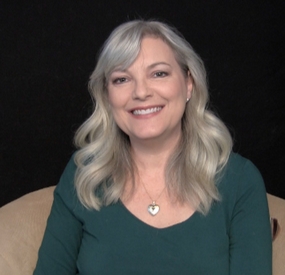
Dr. Tammy Fletcher
Dr. Tammy Fletcher (via fletchertherapy.com)

Which is not to imply that this conversation is simply a re-run of topics already covered. Far from it; the discussion is very broad-ranging and offers considerable food for thought, looking as it does at the complexities, benefits and potential problems of providing or seeking counselling and support through a virtual medium such as Second Life.

For example, how can you, as an SL resident for example, be sure that the person offering to provide counselling is actually qualified to do so, when you have nought but an avatar name to (initially) go on? How can you be totally assured of confidentiality of information – either as a person seeking support or as a therapist wishing to provide support. All of this and more enters the discussion, and Dr. Fletcher’s own experiences as both a Second Life resident and as a professional counsellor provides added depth to what is already a thought-provoking subject.

A frequent theme within the interview is countering the oft-held view (generally from outside the platform) that SL is somewhat itself a pathology. This is done very clearly and directly on a number of occasions, such as drawing parallels between it and other, similar activities which present the same degree of involvement but which are regarded as “acceptable”, and by underlining the fact that by offering many and varied avenues for release and self-expression, SL is potentially an ideal environment for what might be referred to as self-therapy. Of course, as SL users, we may all feel we’re well-versed and understand how beneficial SL can be; nevertheless, Dr. Fletcher’s comments are well worth listening to, as they provide a perfect frame by which many of these negative views on SL can be positively countered.

That said, and in terms of the core issue of providing therapy and support within such an open virtual medium like SL, all is not necessarily sunshine and roses. There are a fair few thorny issues involved, which Dr. Fletcher both acknowledges and offers additional food for thought. Identity and veracity are two such thorns: how can you really know that a person hanging out a shingle to offer professional counselling is qualified to do so? How can those providing counselling and support actually determine the genuineness of those seeking their support? more importantly, how they can fulfil their legal obligation of attempting to intervene should threats of self-harm be raised by a patient.

This is perhaps where the mask of anonymity works against the platform, and not necessarily just within the healthcare community. Some groups have striven to address this through their own means; Dr. Fletcher makes mention of one group in the healthcare community, while the SL Bar Association have also established their own verification service to help those seeking legal advice via SL. But should the Lab be more directly involved? That’s a tough question to answer; certainly making the Lab the gatekeeper of activities over which they have no direct control (and may not be best placed to manage) may not be as straightforward as it sounds.

Similarly, there is often only so far a therapist / counsellor can go when issues of threatened self-harm are raised on the part of a patient; how can the proper authorities be informed when all you have is an avatar name? Where or how should the Lab be involved, can they be involved in an effective manner?

Issues like these can have an impact on the overall degree and effectiveness of providing support and therapy through a virtual medium, and Dr. Fletcher superbly sets out many of the boundaries faced by the virtual counsellor as well as pointing to the rich benefits that can be obtained through such immersive environments like SL, with its many and varied communities and subcultures, opportunities for positive release and for what might – as mentioned above – be referred to as self-therapy.

With reference to communities and subcultures, her commentary on both the furry and child avatar communities within SL are a definite must listen, and directly challenge the misguided preconceptions sometimes held by those outside such communities, and on the way each of them are sometimes quite wrongly viewed as being a pathology.

In fact, so much is touched upon within the interview – including a look ahead to the potential of the Lab’s next generation platform – that it’s impossible to encapsulate it all in written words. If you haven’t already listened to this segment of the Drax Files Radio Hour, then it is one that I’d really encourage you to find time to sit down and run through, whether or not the subject of psychology is of interest to you. It will leave you with a lot to consider and contemplate.

The Drax Files Radio Hour: Jacquelyn Ford Morie – finally!

radio-hourEpisode #35 of  The Drax Files Radio Hour was posted on Friday September 5th, bringing with it a return to the “live” podcasts with Jo Yardley.

This is the episode which (finally!) brings us the interview with Jacquelyn Ford Morie, which I’ve been waiting for since I first heard that Drax had interviewed her back in July. Our very own Vick Forcella also puts in an appearance as well, making some pertinent observations about the Lab’s next generation virtual world platform, which you can also read on his blog.

As well as the main interview, there is the usual round-up of VR news. In this, the Samsung Gear VR and the beta of a new VR portal site are perhaps the most interesting elements.

The Jackie Ford Morie interview comes in at the 20:20 mark. For those unfamiliar with her name or work, she is an artist, scientist and educator working in the areas of immersive worlds, She obtained her Masters in Computer Science from University of Florida in 1988, prior to helping in the development of the Computer Graphic Design and Computer Animation programs at the Ringling College of Art and Design games and social networks. From here she progressed on to the Visual System Lab (VSL), a part of the Institute for Simulation and Training  at the University of Central Florida in Orlando, FL. While there, she worked on Virtual Reality projects for the State of Florida and the Army Research Labs.

Jacquelyn Ford Morie
Jacquelyn Ford Morie (image via DSKNECTD)

She has also worked for Walt Disney Feature Animation (WDFA), where she was responsible for developing a comprehensive year-long apprenticeship for incoming computer graphic animators, an approach she replicated for VIFX, Blue Sky Studios and Rhythm and Hues Studios. However, it was while at WDFA that she was invited to take part in a 1996 National Research Council workshop entitled Modeling and Simulation: Linking Entertainment and Defense. This led directly to the founding of the Institute for Creative Technologies (ICT) at the University of Southern California. Until 2013 she was a Senior Research Scientist at the ICT, involved in a range of VR projects, many of which are described in the interview. Around mid-2013 she departed the ICT to set-up All These Worlds, LLC to take her work related to virtual worlds and avatars which was initiated during her time at ICT, to a broader audience.

For anyone remotely interested in the field, Jackie is precisely the person to listen to. Not only is her own experience with the technology fascinating to discover, her sheer knowledge of how the technology developed and the potential applications, from highly specialised through to the entertainment industry to consumer-focused uses through the 1990s is absolutely fascinating. And if you’re reading this, Jackie – yes please, do go ahead and write that book on the history of VR!

At several points in the discussion, the issue of presence is touched upon. With the re-emergence of VR in the modern era, this has become a slightly divisive subject, as there is really two side to it: that of the physical / spatial immersion, wherein we having the physical feeling of being within an environment as represented through VR; and the emotional / social aspect of immersion – which is something that the likes of SL is particularly good at enabling.

It’s fair to say that many currently engaging with VR perhaps place greater emphasis on the form, physical / spatial immersion, than on the latter – hence why some don’t see worlds like SL as particularly relevant to VR. However, as Jackie points out, physical  / spatial immersion is less than half the story. No matter how involved the environment, or how “real” it seems, a part of our minds is always aware that it is a virtual environment, and that we’re still rooted in reality outside of the environment. However, bring the emotional / social sense of immersion, and then VR really becomes all-encompassing. Indeed, it is this aspect of emotional engagement, of bringing the mind to a point where it is so convinced that what it is witnessing is real, which has caused some to cogitate on whether VR could, if handled incorrectly, literally become a killer app.

Jacki’s own involvement in VR has been directed toward the more psychological elements of immersion, something which perhaps started with her involvement in the “presence questionnaires” used by researcher throughout the 1990s and right up to today to measure both a person’s predisposition to become immersed in something and their actual sense of immersion in a virtual experience, through to seeking ways and means to enhance the psychological sense of immersion up to and including the use of scents.

Sargeant Star - one of the ICT's virtual humans used to present the US military to the public
Sargeant Star – one of the ICT’s virtual humans used to present the US military to the public

At the ICT, her work has very definitely been focused on the more psychological aspects of immersion, including the use of a wide range of other technologies to heighten a person’s sense of psychological immersion, some of which has been a natural extension of her early work in the fied.

Alongside of this, she has been involved in the development of virtual humans – in which the ICT is a work leader. I’ve covered some of the ICT’s work in this area through my look st SimSensei and MultiSense (which Jacki references in the interview) as a means of providing support for those suffering mental health issues.

The ICT’s work, whilst bent towards military applications, actually represents a unique fusion of technology research, the entertainment industry and military applications, and it is something I’ll be looking at some more in the near future, as I have two further articles on their work waiting in the wings to be polished-off.

One of these is a look at the ICT’s use of VR in helping veterans and personnel deal with post-traumatic stress disorder (PTSD). This is also something Jacki has been involved in, through her collaboration with Colonel Valerie Rice into the use of Mindfulness-based Stress Reduction (MBSR), which has also been a focus of her new company, All These Worlds.

It was because of the developmental work on virtual humans that Jackie became involved in virtual worlds like Second Life, which she first used in combination with the virtual human toolkit developed by the ICT to create more advanced and reactive / responsive automated avatars (aka bots), which could be potentially used in a range of scenarios and training opportunities.

ANSIBLE: one aspect of a NASA funded look into how virtual environments can provide psychological support for astronauts on deep space missions

More recently, All These Worlds have been involved with NASA, looking at the ways in which VR, immersive environments and even virtual humans could be used to benefit astronaut crews engaged in deep space missions (such as one to Mars, which would likely have a 3  to 3.5 year duration, much of which would be outside of synchronous two-way communications with Earth due to time delays in transmissions). I touched upon some of this work, that of the ANSIBLE project also back in June 2014 as a part of a high-level look at VR’s role in space exploration. With a more involved project likely to be kicking-off in the near future, it’s something I plan to return to and look at in more depth later in the year.

Rounding-off the interview is a look to the future and where VR may well be leading us, and some of Jacki’s views are again though provoking, as is some of the work on which she’s been engaged – but I’ll leave it to you to listen to the programme and discover. This really is an interview not to be missed.


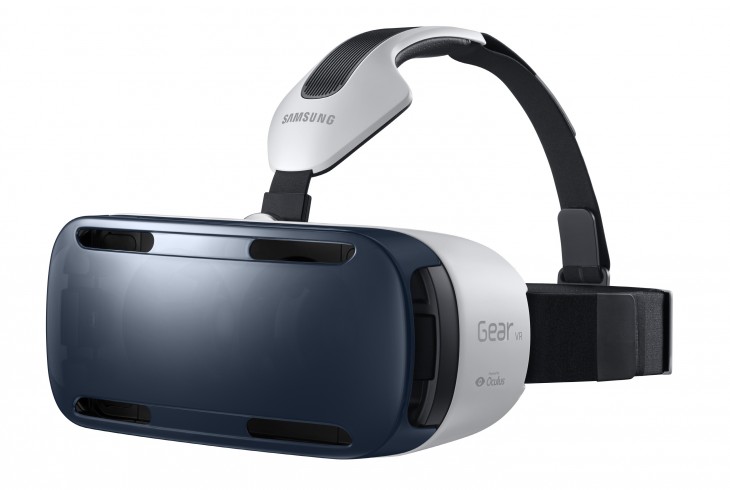
The Samsung Gear VR (image via TNW blog)

The Samsung Gear VR is particularly interesting because it seeks to take an important step beyond what could limit the mainstream take-up of VR when looking purely at something like the Oculus Rift – portability. Frankly, many people aren’t going to want to be tethered to their PC or a high-powered laptop in order to enjoy their VR; they’re going to want to have the freedom to enjoy VR where they like, when they like. The Gear VR is a clear step in the right direction where this is concerned. It’s also, for a device using mobile technology (the Galaxy Note 4), a lot smarter looking than the “mobile VR solutions” we’ve seen to date.

Of course, the Gear VR is far from perfect – it does require a Galaxy Note 4 to power it, so even with the headset rumoured to be costing around $199 (or £150 / $245 through one third-party reseller), it is likely the yet-to-be-confirmed price / monthly contract fees for the Note 4 will to see the overall cost of a Gear VR set-up pushed pretty high, again possibly limiting its appeal to that of the real VR enthusiasts.

Nevertheless, it’ll be interesting to see where this goes – and how it feeds back into the Oculus Rift down the road. Samsung are expects in mobile / portable technology and computer hardware design, so what might come out of a synergy between them and Oculus VR down the road could yet be surprising and revolutionary.

The second element to the news – the beta testing of a new content portal for the Gear VR market under the Oculus banner. Providing access to games and films, and which is itself provided as a VR experience, the portal pointer to the potential future for Oculus VR, not so much as a hardware maker but as a technology innovator and (more specifically) a content provider. And when it comes down to it, content is where the big money in VR actually resides.

Content is why I personally feel that rather than bringing about a resurgence of interest in virtual worlds, as some seem to believe will be the case, VR will result in virtual worlds remaining a niche usage, simply because the richness of available VR content results in the mainstream continuing to see VWs as superfluous to their needs, even while they embrace VR for a wide range of pursuits and activities – such as by watching things like movies and live events such as sports via VR, which itself was so recently given a  preliminary road-test by the UK’s BBC in a world’s first that seems to have gone largely unnoticed by the VR fraternity.


Drax Files 22: adventures in virtual health

Sandy Winkler is  an assistant professor at NOVA Southeastern University College of Healthcare Sciences in Florida, teaching occupational therapy, and she has brought a unique 3-year study to Second Life: how a virtual world might better serve as a learning environment for amputees when compared to a traditional website.

Dr. Sandra Winkler (via Nova Southeastern University)

The study, entitled Dissemination of Amputation and Prosthetic Evidenced-based Medicine, is funded by the United States Agency for Healthcare Research and Quality, and Sandy is half-way through the allotted 3-year study period. Enough time to have started gathering and assessing data based on patient studies, and to provide general feedback – although as Sandy herself states towards the end of the piece, it is still too early to draw definitive conclusions.

A core focus of the study is to increase the acceptance of living with an amputation and the use of prosthetics. Both aspects of this work involve overcoming psychological and physiological issues an amputee faces. Physiological in terms of adjusting to life without a limb or limbs, and also in physically learning to use a prosthetic; psychological in terms of mentally adjusting to the loss of a limb pr limbs, dealing with a range of potential emotional issues which inevitably arise from the loss of a limb or limbs, together with the joint psychological / physiological aspect of learning to adopt their lifestyle, activities and mobility to suit the use of a prosthetic or wheelchair.

The work has involved the use of both traditional 2D-based websites and Second Life to assess how amputees respond to information relating to loss of limbs and the use of prosthetics.

The main building at Virtual Health Adventures

The in-world side of the study offers the same information, history and so on, to patients via the Virtual Health Adventures island (VHA), which is supported both by a website of the same name and developmentally by Virtual Ability Inc.

Here amputees can not only read about exercises, learn about mobility using a prosthetic or wheelchair (such as getting the latter in and out of their car), they can experience them via their avatar, the actions and movements of the latter being sufficiently life-like that they can be replicated in the physical world, encouraging patients to repeat the exercises, etc. Such is the sense of identification subjects feel with their avatar, that Sandy notes those who have balance problems with a prosthetic leg in the physical world make a marked improvement in their sense of balance as a result of seeing their avatar get around within Second Life.

Alongside this, VHA offer a range of in-world activities and opportunities for social engagement, with windsurfing, jet skiing, and more on offer by way of activities, together with opportunities to sit and chat with others and / or participate in the aforementioned exercises. These have been shown to offer what might be called a two-step benefit. On the first, there is the obvious social interactive element and the benefits arising therefrom, together with the sheer enjoyment of kicking back and doing things which are fun. In addition, the activities have been shown to assist in dealing with phantom limb syndrome.

The museum in the upper floor of the VHA building

Occupational therapy obviously plays a huge role in adjusting to living with an amputation and learning to operate with a prosthetic limb. The VHA has a special role to play here as well, which is directly focused on therapists and students, allowing them to spend time in-world as an amputee, experiencing first-hand what it is like to have more limited mobility or limited vision, allowing them to better understand situations and circumstances face by amputees and to  directly integrate the prosthetic into their own body image, helping them to develop a more empathic bonding with those whom they treat.

While, as noted above, it is still too early to draw definitive conclusions and the VHA’s work, Sandy has a positive view of the potential of virtual worlds. “It’s pretty clear that the virtual world environment is a significant next step in tele-healthcare,” she says. “We live in such exciting times, technology is making huge leaps, and interactions and digital worlds are becoming more and more immersive. If we let our imagination fly, there’s no limit to what can happen.”

So very true.

Continue reading “Drax Files 22: adventures in virtual health”

Drax Files 21: bringing some Editorial Clarity to the series

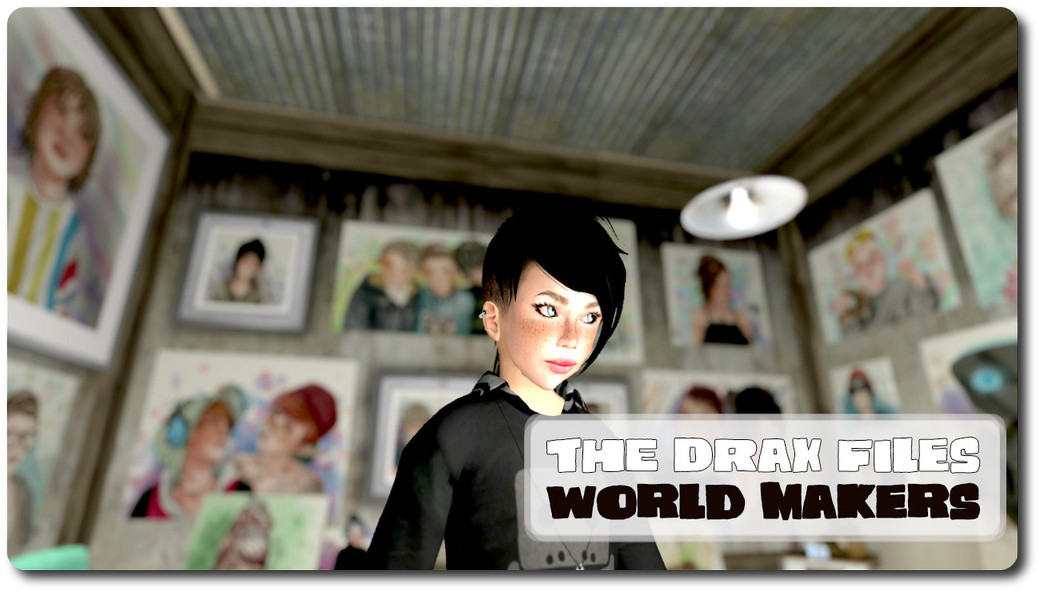
For episode 21 of The Drax Files: World Makers, Drax turns his lens towards perhaps one of the most iconic names in Second Life design and publishing: Editorial Clarity, owner and operator of Love to Decorate (LTD) magazine  and website.

LTD is the go-to magazine on home and garden design, and has a deserved reputation for high quality articles and images focusing on the very best in SL design, and Editorial himself has a perfect eye for design and decorating, something which is stunningly reflected in his SL home designs (he admits to changing house fairly frequently just for the joy of decorating it and creating an ambience around it!).

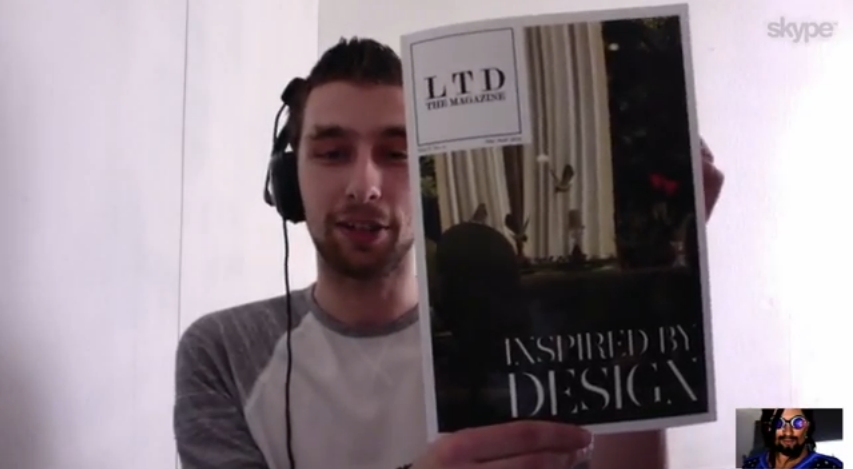
Editorial holds up a coffee table version of LTD magazine
Editorial holds up a coffee table version of LTD magazine as Drax looks on (inset)

However, this isn’t a segment focusing solely on Editorial’s work in Second Life. While this acts as a springboard for the film, providing insight into the publication and the work that goes into it, this is very much a personal piece, focused on the way in which the digital and the physical can intertwine and lead to relationships which, while started in the digital, can cross the invisible divide into the physical and flourish in both.

“In 2010, I met my partner, Rico,” Editorial says, half-way into the segment, “who lives in the United states now, he was originally born in the Philippines. He’s very artistic and does express that with his avatar; he would come up with these crazy outfits with flowers all over the place and top hats. They are the clothes that he would like to get away with in real life…”

Since meeting, the two have gently and naturally extended their relationship, through an in-world wedding, to  Skyping by voice to Skyping with video, right up to crossing back and forth over the Atlantic to spend time together in the physical world. Throughout it all, their shared passion for Second Life and design has furnished them with the foundations upon which they have been able to build a strong, trusting relationship, with both environments allowing them to fully and freely express themselves to one another.

That Second Life can lead to lasting relationships in the physical world isn’t exactly unknown; just recently, television production company Back2back in the UK were still seeking couples who had first met on-line through communities such as Second Life for a Sky Living documentary, Happily Ever After. However, Editorial’s open description of his relationship with Rico demonstrates an a very simple, no-fuss way just how long distance relationships can not only be enjoyed more easily thanks to the use of technology, but can actually be as immersive and as engaging as anything shared in the physical world, allowing memories to be gained and shared of events and times together – as the images of their wedding so clearly demonstrate.

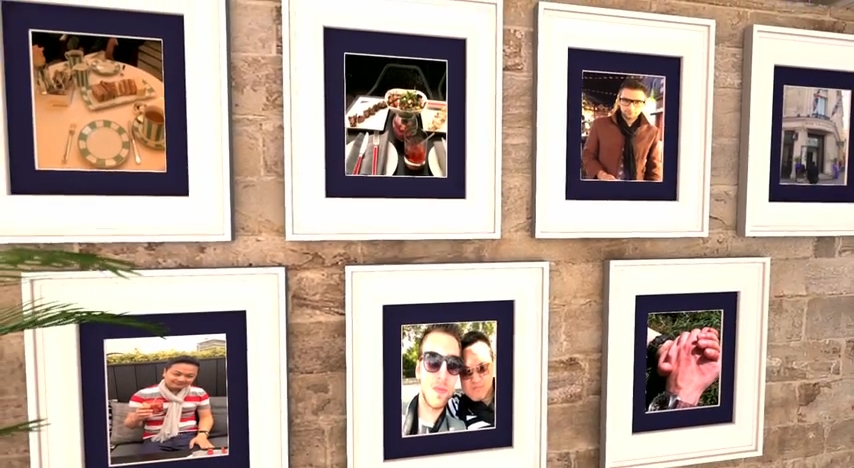
In this there is something of a feedback loops as well – not only does the digital relationship help build and reinforce the relationship in the real world, the latter can also enrich the former. Witness the photos of Rico’s and Editorial’s time together in London, all beautifully framed on the wall of their in-world home; allowing them to again share in the memories – and look ahead to future visits together.

Not only can memories of times shared in the virtual strengthen a long-distance physical relationship, real-world memories or times together in the physical world can be brought into SL and shared, helping to strengthen both the virtual and "real world" relationship
Not only can memories of times shared in the virtual strengthen a long-distance physical relationship, times together in the physical world can be brought into SL and shared, helping to strengthen both the virtual and “real world” relationship

Returning to LTD magazine for a moment, and taking a slight digression from the video. At the start of the segment, Editorial holds up a physical coffee-table edition of the magazine, and in doing so demonstrates the potential Second Life offers someone looking to expand or change their physical-world career. For example, LTD may be something of a labour of love, but in bringing it together, Editorial demonstrates so major skills which clearly have value in the physical world: graphics design, layout, editorial management, fiscal management, project management, and so on, and he has a finished, high-quality item which could – were he so minded – be presented to potential employer as proof positive of a strong track record in publishing.

Obviously, not all businesses in SL are quite so portable when it comes to demonstrating talents and abilities in reference to careers and work in the physical world, but nevertheless, the skills we acquire through this virtual medium should never really be discounted, and if it is possible to develop a portfolio of achievements in SL with reference to a career or job opportunity, then it is something to be seriously considered and worked upon, and we shouldn’t necessarily be put off the idea of doing so on account of SL’s “poor” reputation.

Editorial and Rico
Editorial and Rico

Leaving such diversions aside, and returning to the video, Editorial himself comments on another power of Second Life which, while it’s likely to have been the subject of studies and research, may not be something that’s really commented upon in day-to-day discussions about the platform – and is likely not even considered in media coverage; and that is its power to help us grow as individuals.

“I had issues with confidence,” he says towards the end of piece, “And with SL, it helped me to discover what I’m good at or what I’m not good at, or what I’d like to pursue. I’m still not the life of the party, but it made me realise that I don’t really have to be. It taught me that I can be who I am, no matter what.”

And when it comes to understanding oneself, and facing the world openly, there can perhaps be no greater testament to the positive impact second Life can have on a person’s life than that.

Related Links

Drax Files 20: Flokers – a portrait in colour and words

The latest edition of The Drax Files: World Makers focuses on the life and art of Second Life resident Flokers, a young woman from Sicily, now based in the UK, who has a remarkable story to tell. So remarkable, in fact, that the show forgoes the usual teaser  / titles and end piece featuring Drax talking to his guest, and instead lets Flokers tell her story, straight from her lips to our ears.

That the story is presented in this way makes it all the more powerful to the viewer; in just under five minutes, Flokers beautifully encapsulates the breadth and depth of Second Life in so many ways, and reveals just how relevant it can be to people’s real lives and interactions. She also provides a touching insight into synesthesia – and even offers-up an opinion on the value of the humble keyboard at a time when some caught in the renewed enthusiasm for VR are calling for it to “get out of the way”.

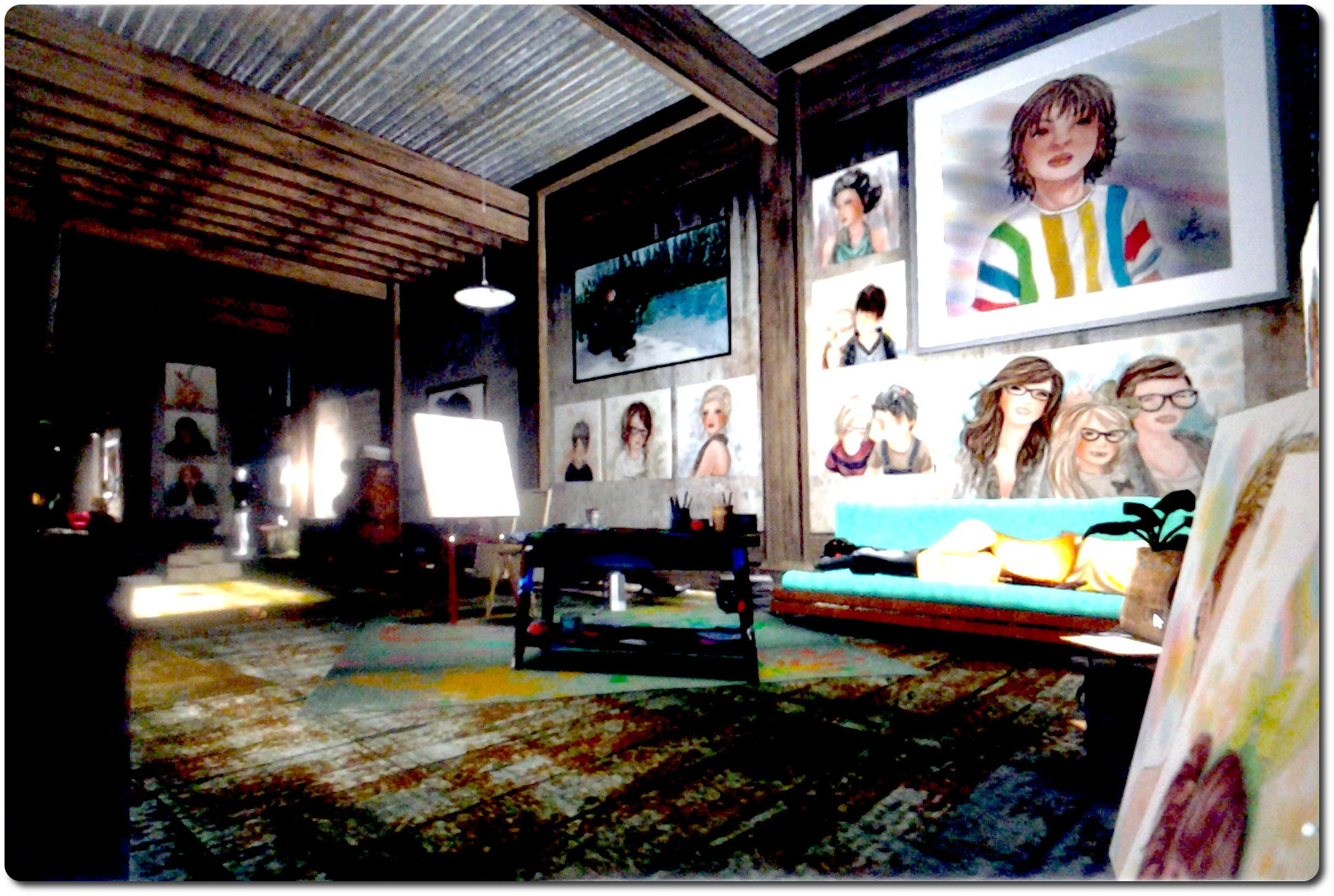
As an artist, Flokers presents a unique view of the avatars inhabiting Second Life. Rather than photographing them, she digitally draws them in real life as they pose in her studio in SL, and then later uploads the finished portrait back to Second Life.

“I am going to paint them as if it were real life,” she explains. “I know that avatar represents the inner persona that’s inside the person who is sitting in that computer. I want to represent them the best I can. Doesn’t matter to know who they are in real life, because I know them in Second Life; that’s what I see with my eyes.”

The care Flo takes with her portraits and the success she has in not only capturing the image of the avatar but also something of the personality behind it is clear the minute you enter her studio in Second Life and see the prints of past studies hanging on the walls. Not only that, but to anyone reasonably familiar with Second Life, it is clear she has also captured the essence of the SL avatar itself, making it clear where her subjects reside.

Flokers' studio in Second Life
Flokers’ studio in Second Life

Flo offers those of us who have never experienced synesthesia a first-hand insight to the condition, of which she experiences in both its Grapheme-colour synesthesia and Chromesthesia forms. Not only does she describe the condition verbally, she provides the graphics in the video which allow us to see how she visualises letters, numbers, moods, sounds and even people. Her approach is to present the condition openly and in a matter-of-fact manner which speaks volumes about her own inner strength of character.

“I’ve never seen a city that had not a single child,” she says of her choice in keeping her avatar childlike. As with her description of synesthesia, she tackles the use of child avatars in Second Life head-on; offering a simple and clear message to all those who see anyone opting to use a child avatar as someone leaning towards more negative social behaviour such as edge play or age play: having a child avatar is fun. nothing more, nothing less; it’s a visual recapturing of the carefree fun and moods we experienced as kids and really shouldn’t be taken to mean anything else.

Carefree fun

Much noise has entered the airwaves of late about how the keyboard and mouse represent “the” barrier to the wider adoption of virtual worlds among the general public. Much of this noise has centred around the building excitement about new immersive VR systems and has focused on emerging technologies such as gesture devices.

It’s no real secret that I don’t entirely agree with the view of the keyboard as an obstacle. Not only do lean towards the non-adoption of virtual worlds as being much bigger than an issue of technology, I tend to feel that like it or not, the keyboard and mouse aren’t going to go away that easily, and Flokers offers-up a perfect illustration as why this is so:

In Second Life I can communication better, because I can filter the words that I want to use. The typing animation will tell people that you [are] actually formulating a sentence before sending it. I can re-read what I’m saying, and I can try to think if that in any way, shape or form could offend anybody else.

While voice is undoubtedly a wonderful means of communication, it can led to unnecessary misunderstandings or upset if we don’t give due consideration to what we’re saying and how we’re saying it – which is something we don’t always do; “speak in haste, repent at leisure”, one might say. The keyboard is a wonderful medium for allowing us that time to think; for those who may additionally be communicating in a language which is not naturally their own, it gives added time for consideration, none of which can be easily matched by either talking directly into a microphone or using a voice-to-text filtering tool.

flokersFloker’s Second life story is intimately bound to her current real life situation, not because she earns her living through SL – which is perhaps a story we’re all familiar with – but because she obtained her real-life employment as a direct result of her being in Second Life, where she met her current employer.

Now working as a graphics designer, Flokers sees Second Life very much an integral part of life and her work. In this, and in closing-out the video, she offers-up the perfect response to all those who would otherwise dismiss the platform as “fantasy”:

Second Life changed my life, because what people thought was just a game actually became a real life main source of money and fun. I am able to be myself here. It gave me the chance to become the artist I always wanted to be.

Each time a new edition of The Drax Files comes out, it is hard to imagine that the series could reach further or higher in terms of exploring Second Life and bringing genuine stories about it and the people who use it into the public eye. Yet each and every time the next segment appears, it does precisely that – reaches higher and further.

While a large part of this is down to the stories themselves – and possibly the luck of the draw in terms of the order in which subjects are selected and filmed – the production values evident in each edition cannot be overlooked, nor can the sensitivity shown towards the subject matter. Both of these points are wonderfully demonstrated in this segment, and it would be remiss of me not to mention them and underline the unique editorial skills Drax employs in putting these pieces together.

The magic in this piece, for example is that it really is Floker’s story. There is no need for anything else; no talking heads between Drax and his subject, no need even for an opening title sequence. Floker’s careful, precise and utterly honest discussion of her involvement in Second Life and her real life situation simply doesn’t need any embellishment; it reaches directly into the heart without manipulating emotions, and resonates perfectly.

The musical balance in this show is particularly fine in this regard; the soundtrack is mostly understated, acting as a gentle underlining of Floker’s comments, without ever getting in the way of what she’s saying. When it does come to the fore, it does so magnificently during the airship scenes, with a full-blown orchestral excerpt rich in emotional content which draws one into the scene, eliciting feelings of joy, just as those playing the game surely experience.

Once again, another remarkable piece which is a joy to watch and which speaks volumes about both Second Life and the people who use it.

Related Links


Drax Files 19: the chemistry of Second Life

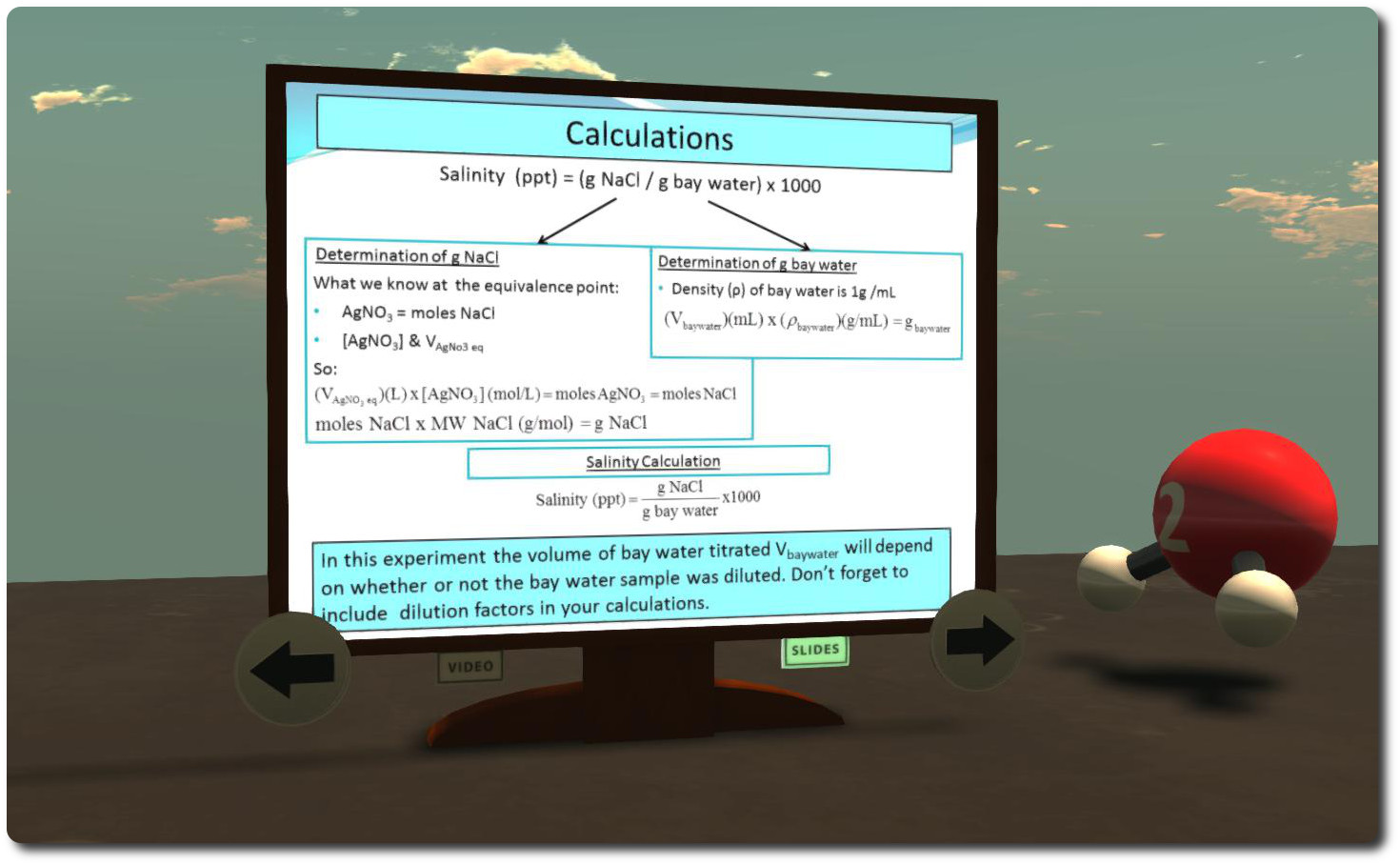
Students at Texas A&M University can learn about chemistry in a 3D environment in Second Life (image: Draxtor Despres)

Second Life’s role in eduction has been something of a focus of late. Earlier in April 2014 we had the 7th annual Virtual Worlds Best Practices in Education conference once again taking place in part in SL, and which featured the Lab’s CEO, Ebbe Altberg fielding a raft of questions from the audience. A recent segment from the Drax Files Radio Hour featured  Liz Falconer, Professor of Technology Enhanced Learning at the University of the West of England (UWE), and Stylianos Mystakidis, E-learning Manager for the Library and Information Centre at the University of Patras, Greece.

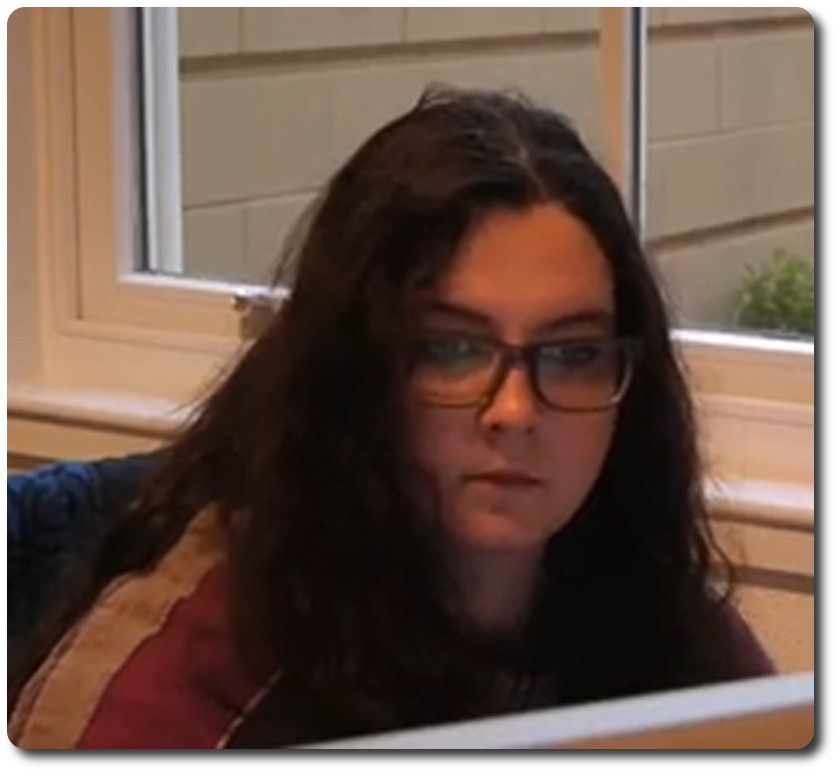
Now the education theme continues with the latest instalment of The Drax Files, with a look at a unique experiment in learning being conducted by Wendy Keeney-Kennicutt of Texas A&M University and Kurt Winkelman from the Florida Institute of Technology, focused around students studying chemistry.

wendy
Dr. Wendy Keeney-Kennicutt (image via Texas A&M University)

“Specifically with chemistry, Second life is an amazing thing. So much of chemistry is based on [the] shapes of molecules and understanding the 3D nature,” Wendy says of the in-world science classes she oversees, and why chemistry in particular is a good match for Second Life.

She also notes the collaborative nature of the environment for learning as well. “You can walk around the molecule, you can sit on the molecule, I have interactive periodic tables. You have your friend with you, and your friend doesn’t have to be sitting next to you looking at the screen. Your friend can be at home, you’re in school together, you come in together, you build together. That’s important for the learning process.”

Texas A&M University operates an impressive, multi-region faculty within Second Life, complete with a dedicated web page in the university’s Instructional Technology Services website. Within the faculty regions sits “Dr. K’s First Year Chem Program”, which offers a grounding in chemistry in an open-air, interactive environment. This is where Wendy teaches chemistry in a manner she notes – and despite the cost of SL regions – is apparently more cost-effective than purchasing dedicated modelling software, because SL offers a much more flexible working and creative environment than dedicated tools may provide, and can thus be better utilised to suit the needs of her students.

A part of the interactive learning environment operated by Wendy Keeney-Kennicutt in second Life for her students
A part of the interactive learning environment operated by Wendy Keeney-Kennicutt in Second Life for her students

Up in the air above a portion of the faculty regions, and restricted to access by students, staff and invited guests, sit a number of research areas. It is here that Wendy, alongside Kurt Winkelman, studies the impact and effectiveness of teaching within a virtual environment when compared to more traditional classroom-based teaching. The study is funded by a National Science Foundation grant, and has grown out of a pilot programme run in the autumn of 2013.

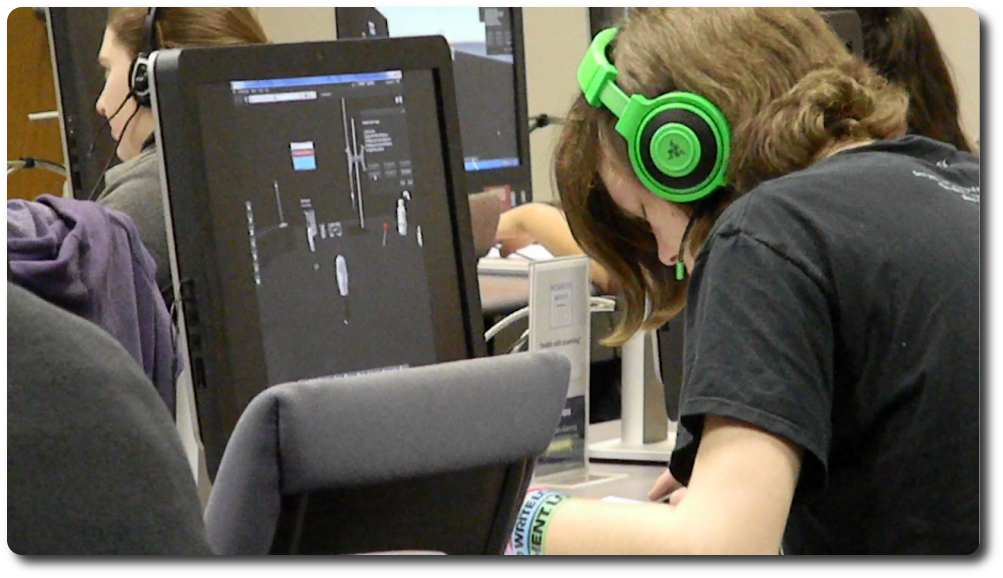
For this work, Wendy uses two groups of students, each of whom is following the same course programme, with one group working in Second Life on the sky platforms, and the other working entirely in the real world. Within the virtual learning environment, efforts have been taken to present students with much the same requirements and activities their counterparts have to perform in the real world: gases must be handled, weighed, measured, etc., just as they do in a real-world lab in order for valid results to be obtained. The study is currently at the half-way mark, and due to complete in April 2015.

The NSF-funded study environments are located in the sky over the main A&M faculty space in-world, and like the facilities on the ground use the full power of SL's multi-media capabilities
The NSF-funded study environments are located in the sky over the main A&M faculty space in-world, and like the facilities on the ground use the full power of SL’s multi-media capabilities

One of the interesting outcomes of the study is that those students in SL behave in very much the same way as those in the real world chemistry lab. The same caution and responsibility is demonstrated in handling and manipulating butane as would be expected in a real chemistry lab, despite the risk of injury resulting from the flammable nature of the gas obviously being non-existent in SL. This in turn has resulted in the students working within the SL environment to retain a kinesthetic ability in using and manipulating the science equipment which is on a par with that demonstrated by the students working the physical equipment.

More interestingly, the students working in the SL lab reported they enjoyed themselves far more there than in the real lab, and felt they were much more focused, and suffered from less distraction. Even their ability to read-back and interpret data appears to be significantly better than seen within the real lab.

The kinesthetic learning (also known as tactile learning, wherein the student learns by carrying out a physical activity) results evident in the programme are interesting, as are the overall results to date.

Students in the study reported a more enjoyable experience when using Second Life, and exhibited an aptitude at least on a par with those working in a physical lab while enjoying better results
Students in the study reported a more enjoyable experience when using Second Life, and exhibited an aptitude at least on a par with those working in a physical lab while enjoying better results (image via Draxtor Despres)

The findings so far released as a part of the study – notably the results of the pilot programme – tally very well with the benefits of situational learning discussed by Liz Falconer in episode 15 of The Drax Files Radio Hour, where she noted the benefits students experience through narrative learning.

While chemistry is more a procedural activity than a narrative undertaking, the approaches used in the SL environment point very strongly to students working within the environment reacting in a similar manner to those placed in situational learning environments: their kinesthetic abilities are sharpened, even though the level of interaction with the equipment they’re using is very different to that of the physical lab, as noted above. Also of interest is the observation made as a result of the pilot programme that the artificial nature of the SL environment caused the students to be more focused on procedure and technique, rather than on results – a very important aspect of research chemistry.

There is still another year to go with the primary study, but the results, as indicated by Wendy in the video, seem to be reflecting those obtained during the pilot programme. as such, it’ll be interesting to see what does emerge when findings are fully published. In particular, it’ll be interesting to see if the finding examine the role played by aspects such as the viewer UI in shaping students’ experiences and learning abilities in the SL-based environments (e.g. were better results obtained purely because students found the virtual environment a more enjoyable environment for learning, or because the nature of the viewer UI encouraged a greater need for focus and help eliminate more common elements of distraction among students?).

Towards the end of the video, Wendy (Julia Tiraxibar in SL) talks more broadly about the potential of Second Life for education and educators, and makes some interesting and valid points about students travelling around SL (remembering that we’re talking here about students 18 and over, and therefore with the freedom of movement we all enjoy in SL). Her remarks here match the common-sense attitude expressed by Liz Falconer in episode 15 of The Drax Files Radio Hour.

This is another excellent video segment, one which takes a slightly different tack to others in the series, but which again offers much food for thought and which certainly stands as a very focused piece which would appear to be ideally suited for helping promote SL within the education sector. As such, it is one I’d strongly encourage teachers and educators to bookmark and not be afraid to show to colleagues – and indeed, for students to put before their teachers and faculty staff.

Related Links