The Drax Files Radio Hour: giving it the HiFi!

radio-hourOne of the big use-cases is going to be kids maybe doing an extra, like instead of doing their homework in the normal way in the evening, they go on-line where they join a study group where they join a teacher..

So opens segment #75 of the with some thoughts from Philip Rosedale, co-founder of Second Life, and more particularly now the CEO of start-up virtual worlds company, High Fidelity.

At just over 89 minutes in length, this is a special show, exploring High Fidelity from the inside, so to speak, complete with conversations with Mr. Rosedale, Ryan Karpf (HiFi’s co-founder and ex-Linden), Chris Collins and Ozan Serim, while David Rowe (perhaps more familiarly known to SL users as Strachan Ofarrel creator of the Oculus Rift compatible CtrlAltStudio viewer), who has been working with the HiFi team, becoming a guest host for the segment.

Since its founding, High Fidelity has made remarkable strides in developing its next generation, open-source virtual world environment, both technically and financially. Since April 2013, the company has undergone three rounds of funding, attracting around US $16 million, most of which has come from True Ventures, Google Ventures and, most recently, Paul Allan’s Vulcan Capital (which also participated in the October 2014 US $542 million investment round for Magic Leap). In addition, HiFi has attracted a number of high-profile advisers, including VR veteran Tony Parisi and, most recently, professors Ken Perlin and Jeremy Bailenson.

As well as Philip Rosedale, Drax talks with Chris Collins (l), Ryan Kampf and Ozan Serim from high Fidelity
As well as Philip Rosedale, Drax talks with Chris Collins (l), Ryan Karpf and Ozan Serim from high Fidelity

The interviews themselves are quite wide-ranging. With Dave Rowe, (known in HiFi as CtrlAltDavid) the open-source nature of the platform is explored, from the ability to download and run your owner HiFi server (aka “Stack Manager“) and client (aka “Interface“), through to the concept of the worklist, which allows contributors to bid for work on offer and get paid based on results.In Dave’s case, this has led him to working on various aspects of the platform such as integrating Leap Motion capabilities to improving eye tracking within HiFi’s avatars, so they track the movements of other avatars, just as our own eyes track other people’s facial and other movements as they interact with us.

In terms of general looks, the avatars – which have in the past been critiqued for being “cartoony” (despite it is still very early days for HiFi) –  are still very much under development. In particular, Ozan Serim has been working to raise –  and no pun intended here – the overall fidelity of the avatars in terms of looks and capabilities. He’s well-placed to do so, being an ex-Pixar animator.

One of the problems here is that the more real in appearance and capabilities they get, the closer the avatars come to the Uncanny Valley, which has led HiFi and Ozan to look at a number of avatar styles, from those which are very human in appearance through to those that are more “cartoonish” in looks.

A 2014 video showing Ozan’s work in improving the rigging around a more “realistic” HiFi avatar to more actually reflect mouth forms and facial movement when singing. High Fidelity now use Faceshift for real-time facial expression capture, rigging and animation, using either 3D or standard webcams

In discussing the Uncanny Valley, and particularly people’s reactions to avatars that are somewhat less-than-real (and we can include SL avatars in this, given their inability to naturally reflect facial expressions), Ozan raises the interesting question of whether people who critique the look of such avatars actually want to have a “realistic” looking avatar, or whether it is more a case of people wanting an avatar look that is appealing to their aesthetics which they can they identify with.

This is and interesting train of thought, as it is certainly true that – limitations of the avatar skeleton aside – most of us in Second Life are probably more driven to develop our avatars to a point where they have a personal aesthetic appeal, rather than in wanted them to be specifically “more realistic”.

Currently, HiFi is leaning towards a somewhat stylised avatar as seen in Team Fortress 2, which is allowing them to develop a natural-looking avatar look that doesn’t come too close to the Uncanny Valley. They use Adobe Maximo as their avatar creation tool, which Ozan views as a capable workflow package, but which may have some creative limitations. However, as an open-source environment, HiFi does offer the potential for someone to script in “in-world” character modelling tools, or at least to offer upload capabilities for avatar model generated in tools such as Blender. Avatars can also, if wanted, by uploaded as a complete package with all required / defined animations, such as walks, etc, included.

Chris Collins has very much become the voice of High Fidelity on You Tube, producing a wide range of videos demonstrating features of the platform, together with short tutorial pieces. The video above is one of his, demonstrating how to code interactive 3D content, using the Planky game as an example

While Ozan and his team work on avatar animations and rigging using real-time capture, Ryan Karpf reveals that by default, an avatar’s facial expressions are driven via the audio more than by direct capture: the mouth movement, for example, comprises 3 positions based on the audio, while a rising of voice or tone can result in the avatar’s eyebrows rising and falling. Ryan also touches on the Uncanny Valley issue of people’s increasingly discomfiture the closer avatars become to looking “photo-realistic”.

In talking to Chris Collins, an ex-Linden Lab alumni who headed the former SL Enterprise division, who now wears a number of hats at HiFi, Drax discusses how HiFi deals with the ever-changing face of the emerging VR hardware market, where headsets, input, tracking, and so on, is in something of a state of flux. Chris points out that while open-source, HiFi does have a set of strict coding standards and licensing, and offer external libraries to help support third-party SDK integration.

One of the powerful elements of High Fidelity is the ability you to have full agency over your environment, if you so wish; using the Stack Manager, you can create your own server / world / space, and control who might access it.  The scripting tools similarly allow users to download and tweak elements – such as walking animations, a basic avatar appearance, etc., quickly and easily.

Continue reading “The Drax Files Radio Hour: giving it the HiFi!”

The Drax Files 30: The Secret of success in Second Life

“When you mention Second Life to people,” Maylee Oh, the subject of segment #30 of The Drax Files World Makers says, “they picture the noob avatar from 2007. So what I do is, I show them what creative people can do today.”

There’s probably one pundit out there who may well view this as a “distorted” view of Second Life, as Maylee’s vision of creativity in the platform does not mention a certain three-letter word starting in “s” and ending in “x”. However, for the rest of us, Maylee’s words open the door to another fascinating 5-minute exploration of the creative richness Second Life offers anyone willing to set aside prejudices and simply watch.

Maylee Oh
Maylee Oh

Maylee is, without a doubt one of the more interesting success stories to come out of SL’s 12-year history. Indeed, she’s been a part of the platform’s unfolding story for eight of those 12 years, using the time to build up her brand Secret Store to become one of the leading creative lights in Second Life – and a business fully capable of supporting her in the physical world.

“I quit art school during the third year because I wanted to try something different, Maylee adds a little later in the video. “I still don’t regret [it], because Second Life is still my main income. To me, this is being successful.”

Given Maylee made this decision when just 20 years old, one cannot help but wonder how her parents reacted at the time; the idea that one’s son / daughter is pushing away a good college qualification to spend time making imaginary clothes for a “game” probably isn’t something that would have most parents jumping for joy.

In fairness to Maylee’s mother however, and as illustrated in  wonderful series of hand-drawn images in the video, she is now clearly enthusiastic about her daughter’s choice and acts very much as Maylee’s physical world promoter – even if, again as shown in the drawings, explanations of Maylee’s chosen profession does generate sideways glances from those outside of the platform who are being told her story. Nor does the very important element of physical world support end there: Maylee has also had the firm encouragement of both her best friend and her boyfriend.

Having the support of those around you is important for anyone going into business for themselves; Maylee has been blessed in her endeavours by the support and encouragement of her best friend (l) and byofriend
Having the support of those around you is important for anyone going into business for themselves; Maylee has been blessed in her endeavours by the support and encouragement of her best friend (l) and boyfriend

Another fascinating angle in this piece is the manner in which Maylee demonstrates another way in which the real and virtual can combine to present another fascinating potential – and one which Maylee has perhaps been one of the first to creatively explore. This is through her use of the platform, together with external tools to creating highly effective adverts which stand as much as a demonstration of the sheer versatility offered by Second Life for such work as they do as a vivid visual promotion of Maylee’s secret store.

The sheer creative power presented by Maylee’s ads speaks volumes; one wonders what might have been had those companies who flocked to Second Life had actually recognised the creative potential offered within the platform and leveraged it accordingly, rather than simply trying to translate their brand and goods into digital offerings. Outside of this question, Maylee’s work demonstrates how Second Life can be used to enormous effect within mixed media presentations that go well beyond “simple” advertising.

As is often the case in these segments, the show touches upon the collaborative nature of the platform, and its ability to cross social and geographic divides. In terms of collaboration, Maylee both demonstrates how she contributes to this as well as overcome much of the “secrecy” she encountered when starting-out as a content creator in SL, through the expedient of sharing her workflow on-line as well as more directly collaborating with others in her work,

“Second Life is full of creative minds and talents people,” Maylee also observes of SL’s cultural melting pot, although layer of the platform so often missed by commentators looking in from the sidelines. “Everyone has their own culture and we exchange a lot [of] feedback from all around the world.” This also links into matters of identity, which in turn loop back to people’s reaction to the idea of clothing a virtual character in a virtual world; as she points out, the clothes we choose and wear are as much a statement of our in-world identity as the avatar we use.

Identity is also far more the driving force behind Maylee’s creativity than physical world fashions – which might come as a surprise, given she lives in one of the great fashion centres of the world.

“What I enjoy about Paris is the diversity of people,” she notes. “I love to look at everyone, and everyone’s styles and identity; it keeps getting me inspired. Paris is somehow a bit like Second Life. because it’s a huge mess but it’s also full of amazing things.”

There is no reasons why our phsyical and virtual lives cannot complement one another - a point often missed by those all too eager to point to foibles and perceived failings of Second Life and its users
There is no reasons why our physical and virtual lives cannot complement one another – a point often missed by those all too eager to point to foibles and perceived failings of Second Life and its users

Once again Drax challenges perceptions of Second Life by presenting a story that is – as this continuing series of videos demonstrates – very much the “norm” for those of us engaged in the platform. Maylee is no basement dwelling individual without a “first life” as the media and SL’s critics seem to be ever-willing to believe. She is a young woman who has set-up a successful business which is generating an solid income for her and which is teaching her the fundamentals of good business practice: customer relationships, team management and so on.

Hopefully, in watching her story unfolding in these five short minutes, those from outside the platform will find Maylee’s story challenging their preconceptions on the value of virtual spaces like Second Life, and be more prepared to approach SL with a more open mind, rather than merely looking for the stereotypical memes, or those wishing to peddle them to whoever will listen.

The Drax Files 28: art and SL as cathartic renewal

“You know, when you first asked me to do the Drax Files, I said no,” Whiskey Monday states at the start of segment #28 of The Drax Files World Makers. I doubt anyone watching the show regrets her decision to actually go ahead and appear on the show.

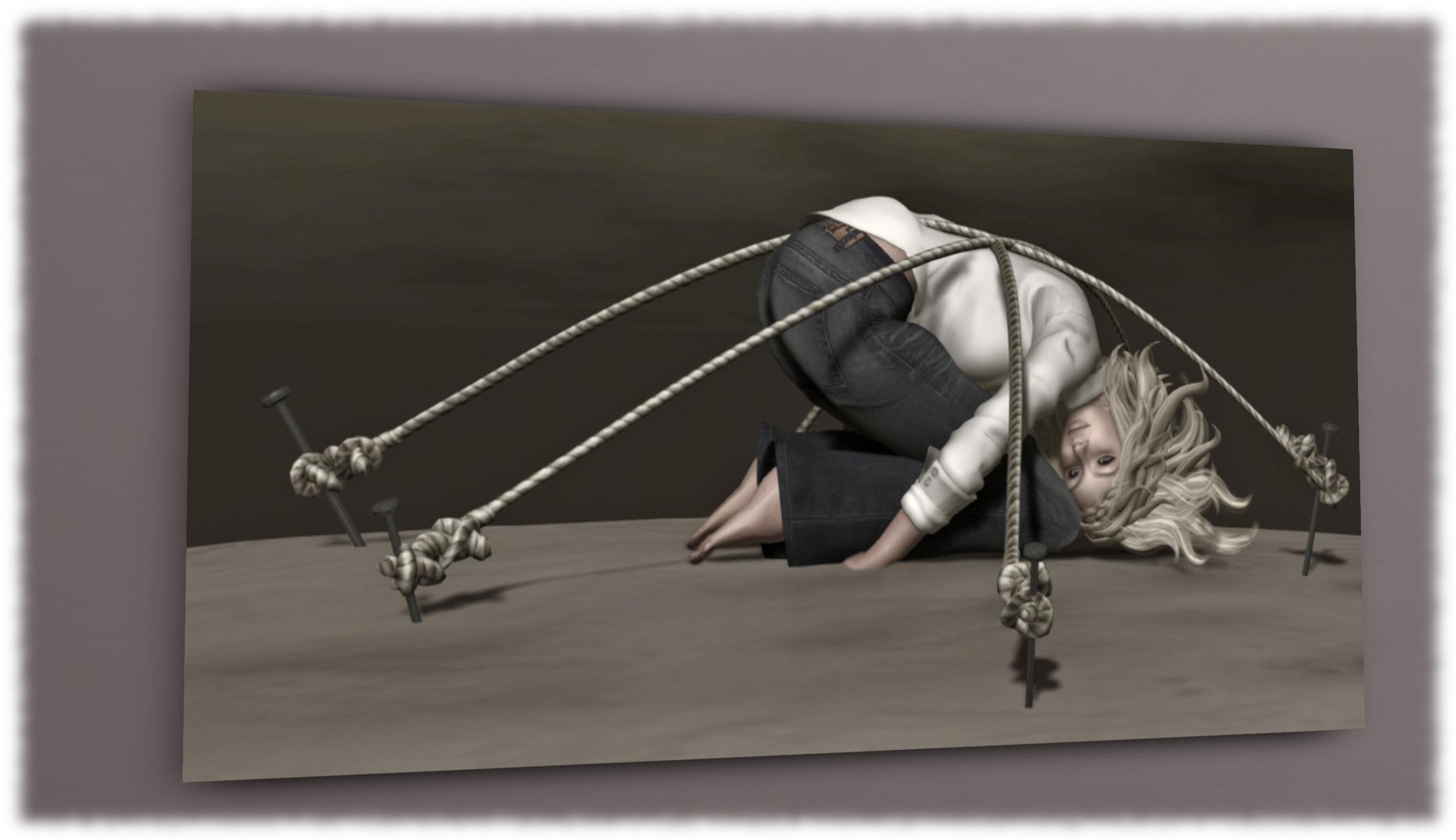
Whiskey is well known throughout Second Life for her incredible artwork, which started with her single frame stories. Her work is thought-provoking, intelligent, evocative, mischievous, fun, pointed, and more – and all of it is certainly some of the finest expressions of art as a medium for social and general commentary I’ve ever seen. It’s also deeply personal, much of it reflecting on Whiskey’s real life; usually in a frank, honest way free from pathos while laying bare her mindset and emotions.

Whiskey Monday at work

It is on this latter aspect of her work that the show primarily focuses on, in what is once again one of the most compelling pieces of video journalism I’ve seen in a long while, with Drax almost completely absent from the piece and leaving Whiskey to tell her story in her own words. As such, what is delivered is an incredible journey through Whiskey’s lives (plural intentional) which allows us to witness first-hand how Second Life can be a platform for emotional release, self-expression and cathartic renewal in our lives, as well as a place where creative investment brings additional rewards which help spur us on.

“I have been going through a really difficult personal life the past few years,” Whiskey says just after he opening comment on the video. “And I have used Second Life as a medium to express my frustration with the real world; depression; my issues with my mother; my issues with my sister. It helped me get through those times, Drax. and I couldn’t do that as my physical identity.”

Whiskey's work is intensely personal, but also strikes many assorted chords for those who see it
Whiskey’s work is intensely personal, but also strikes many assorted chords for those who see it

This is an incredibly powerful, open, and honest statement to make; a baring of the soul that requires a huge amount of honesty and trust. That Whiskey is prepared to speak so freely  about matters is itself testament to the degree to which her creativity through Second Life has been cathartic for her.

Through the video, we get to share in Whiskey’s creative process, travelling with her from an initial idea, through to the completed image, with Whiskey describing each step of the journey in creating what are highly personal images. It’s a remarkable and painstaking process, as she honestly admits she’s not that comfortable with Photoshop, and so strives very hard to achieve as much of the finished piece in-world as she possibly can – something which itself speaks to the incredible creative power found within SL, either directly through the tools provided by the viewer, or via scripted tools and systems provided by other users.

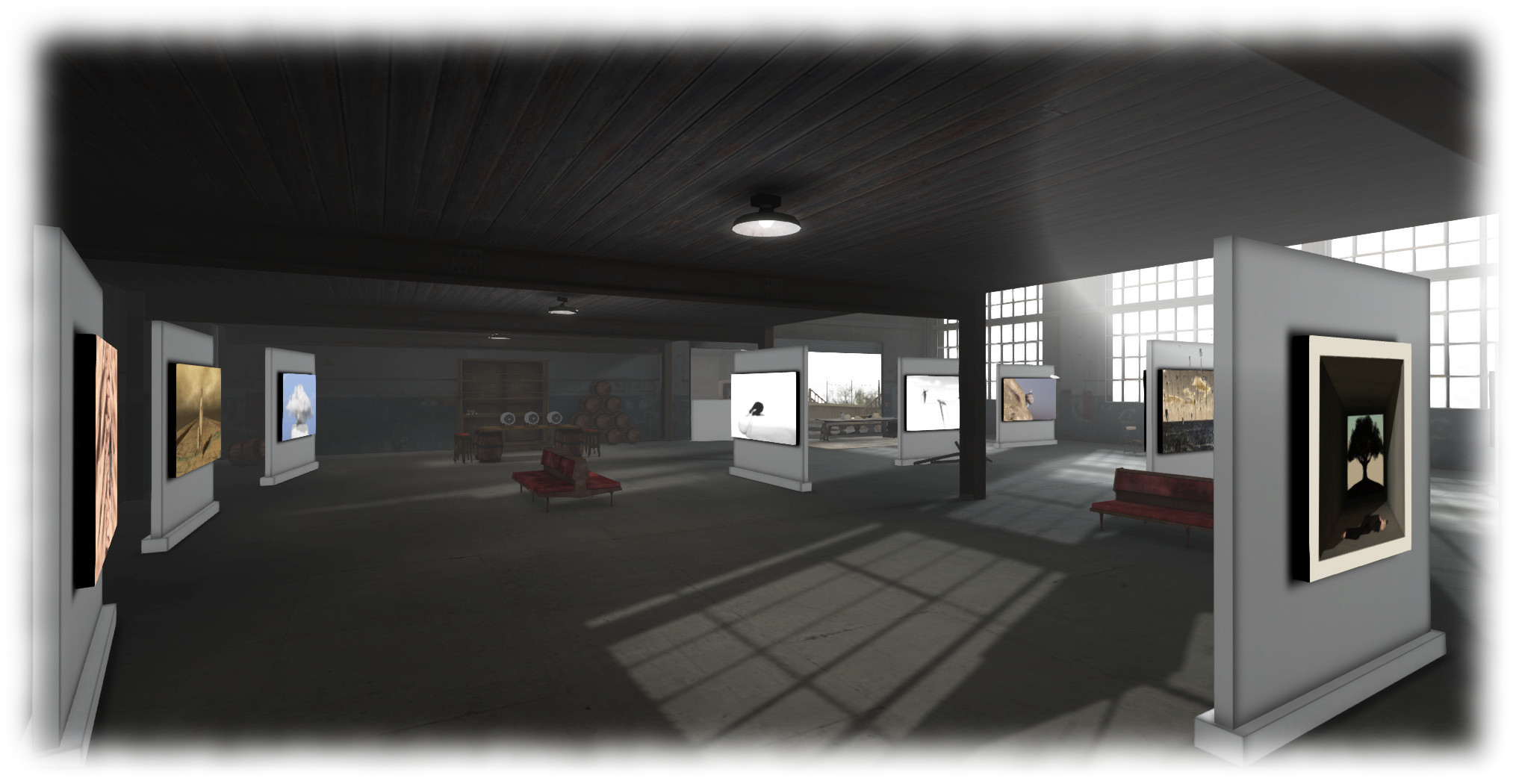
Whiskey's most recent exhibition, entitled  Recently, was the debut exhibition for the new– Dathúil gallery run by Max Butoh (see my review here)
Whiskey’s most recent exhibition, entitled Recently, was the debut exhibition for the new Dathúil gallery run by Max Butoh (see my review here)

Framing her images so precisely obviously requires the execution of a high level of control in terms of the subject matter and how the observer sees it. It’s a level of control Whiskey is very aware of; it’s also something that, given the context of her art, might be too easily dismissed as manipulating the audience.

Yet Whiskey makes no apology for this – and nor should she. She certainly isn’t the first artist to manipulate the environment (virtual or real) to focus the audience’s attention and direct their emotional responses; artists do it all the time be it through the initial framing of their shot or via cropping and editing after the fact, or through extensive post-processing. In fact, I’d argue that Whiskey is entirely right in the level of control she exercises – although I’d perhaps refer to it as compositional direction. At the end of the day, these images are her stories, and as the narrator, she has the right to shape the manner in which they are told.

What’s more, it makes her work all the more striking to those who witness it, as it more than likely strikes a far more personal chord within us than might otherwise be the case; hence why Whiskey also tries to leave the images as open-ended in interpretation as possible.

Continue reading “The Drax Files 28: art and SL as cathartic renewal”

The Drax Files Radio Hour: listening to the words of an Angel

radio-hourThe opening of 53rd episode of The Drax Files Radio Hour may have the feeling of being a slightly rushed production; there’s not casual introduction by the featured guest or other notable mentioned later in the show. Instead we launch straight into the Draxtor Theme.

However, any feeling the recording’s opening may have in being pushed through quickly is understandable: this segment of the show comes right off the back of a gruelling week for Drax cutting and finalising the 26th instalment of his World Makers series, which I looked at following its release.

More to the point, it offers plenty of time for an extended interview with Second Life architect Kaya Angel, the man behind the stunning Angel Manor, and who has been responsible for a number of unique and beautiful builds across Second Life over the years, as well as running his own business selling high-quality prefab houses. And if that isn’t enough, Kaya is also a great patron of the arts, providing both the Rose Theatre Ballroom and the Rose Theatre Gallery for a wide range of events and art exhibitions.

The interview with Kaya kicks-off at 14:11, following the musical interlude, starting with mention of Kaya beautiful 6-minute video Second Life: A different perception, which I make no apologies for embedding here once again, even though I featured it in these pages just over a week ago.

The interview starts with Kaya relating his own initial involvement in Second Life. While acknowledging himself to have been a gamer with a specific interest in on-line games, he was actually drawn to SL from something of a philosophical bent, created as a result of a question Philip Rosedale asked back in the very early days of the platform’s public existence: if you were given the tools to re-create society and reality, what would you create?  Would you create something new, or repeat what we can see around us?

From here the discussions focuses on the issue of engagement in SL. All too often when this is discussed, the focus tends to immediately narrow to matters of technology – such as the “steep learning curve” inherent within the viewer. While the viewer is complex and does take time to master, I do tend to feel that it and the technology are looked to as being the bugaboos preventing SL’s wider adoption because they are far more tangible an issue than the more fundamental (and oft acknowledged by seldom addressed) reason that the sheer lack of any direction given to people in terms of what they “should” be doing or achieving or seeking or fighting or building or destroying (insert you own term here) leads to confusion and departure a lot quicker than any really deep-seated problems within the viewer.

As Kaya states, “How do you get people to stay in a virtual world when they are so use to having specific things that they told that they should do or can do?”

It’s a question that has long plagued user and the Lab themselves; we’re all familiar with how hard it is to define SL – although Kaya goes on to express a few ideas of his own. However, I would just not that in terms of the initial discussion and ideas put forward, I would disagree with Drax on the idea that directed experiences, when used as gateways into the platform might further reduce people’s ability to see the wider potential of the platform.

If anything, I’d suggest the reverse is true; providing such “gateway experiences” offer some form of informative portal to the broader potentials of SL / a UGC driven environment, they are more likely to engage with an audience (those interested in the experience) and bring them into it and encourage those among them who are so minded to explore SL further far more effectively than simply dropping them in-world in a manner that is almost entirely random in nature and lacking any structure at all.

Angle Manor, January 2015
Angel Manor, January 2015

As a content creator, it comes as no surprise that Kaya sees one of the major means of engagement with the platform as being the ability to build and create. In itself, this is not a new idea – we’ve all pointed to much the same when discussing getting people more involved in SL; however, this doesn’t make what Kaya says any less valid. Rather, his comments give pause for thought on just how much harder it is for people coming into SL today to discover the expressive power and joy of content creation for themselves.

This isn’t so much because emphasis has shifted over the last few years from the humble prim and in-world building to mesh and external tools (although this does get touched upon during the discussion). nor does it really have anything to do (to a great degree at least) with the provision of Linden Homes or the inclusion of starter avatars in the viewer, both of which are also referenced.

Continue reading “The Drax Files Radio Hour: listening to the words of an Angel”

The Drax Files 26: fashioning your life through Second Life

“You’ll know what your avatar looks like when you find your soul avatar. You’re like, ‘that’s it! That’s me. That’s who I am!’.” so opines Absinthe (aka Sinontherocks or AbsintheMontenegro) at the start of The Drax Files: World Makers episode #26.

This might sound like an obvious statement to make; but like many things that may first appear to be blindingly obvious, Absinthe’s comment contains a huge amount of depth; for many of us who come into Second Life, our avatar is such an extension of our personalities, that we can feel confined, or self-conscious or even inadequate until we find that visual look that encompasses what we feel within, but haven’t perhaps found a way to give it expression.

It is also a statement that opens a segment of the Drax Files which, in just five minutes, once again paints a broad and fascinating canvas encompassing matters of self-identity and expression, the power of Second Life as a creative medium, thoughts on the perceptions about Second Life and those who use held by people not involved in the platform, the way in which the platform can spur on into endeavours that reach back out into the real world, and more.

The matter of identity and our relationship with our avatar is encapsulated within the first 73 seconds for the show, as Absinthe talks about her relationship with her avatar – an SL fashion model – and her upbringing, and how the latter informed on aspects of the former’s looks. I actually feel a strong affinity with the remarks made in this part of the video, as Absinthe and I share something of a similar upbringing, and we’ve moved in a similar direction in terms of avatar looks which has little to do with matters of ethnicity or anything like that, but is simply an expression of various facets of our personalities and outlook; the primary difference between her and myself, is it probably took me a little longer to discover my “soul look” with Inara.

Absinthe offers insight into the relationship between person and avatar

From matters of looks, the programme transitions through a glimpse of the world of SL fashion modelling – something which some may look upon as slightly frivolous  / bordering on role-play, yet the fact of the matter is that modelling is one of the central pillars of the fashion industry within SL, which is itself one of the powerful engines of the platform’s economy. Absinthe provides insight into the complexities involved in working as an SL model – including matters of anxiety and nerves which can be experienced prior to a show.

However, the power of the piece  – for me at least – lies in Absinthe’s outlook on life, her work, Second Life and in how, as with others interviewed through this series, this virtual world we inhabit and which is so often sneered up by those outside, Second Life has been both a welcoming hobby and release and the focal point of growth and the catalyst for new opportunities for creative expression within the physical world. In Absinthe’s case, the creation of the Ferosh  project,

Ferosh HQ in-world
Ferosh HQ in-world

Ferosh, which absinthe describes as a “visual art and fashion experience [in which] our photographers, models and designers use products from Second Life to interpret real life fashion trends”. The result is a stunning publication, primarily offered as a e-publication on-line, but which appears to also receive at least some hard copy prints as well, going by the footage in the video.

It is a project that has allowed her to bridge the virtual and the physical in a unique way, not only becoming the medium through which she can explain her involvement Second Life to her family, but one which has also attracted the attention of digital artists from outside of SL who want to be  part of the project – thus opening doors to ways and means of encouraging people to look at the platform with unbiased eyes.

Ferosh has come about as the result of a number of things – not the least of which is Absinthe’s own determination and her zest for life. It has also, I’d venture to suggest, come about as a result of one other thing she has a lot to say about that should be heard – friendship. And it is in her comments on myriad ways in which people are drawn to Second Life, and the manner in which friendships are formed and  – to return to the open element of the show – we can find outward expression of our inner selves, that Draxtor puts together a little magic of his own.

Our avatars are us
Our avatars are us

The images of people alongside their avatars, the clips from earlier shows in the series and clips from the brilliant Login2Life documentary that presents a very poignant and clear message to all who watch the segment.

This is another quite brilliant piece, with a richness of content from both Absinthe and Draxtor that make it a powerful slow burner; I was privileged to watch its development over several iterations, I’ve watched and re-watched the finished item several times – and yet, each and every time I’ve watched it, it has had something new to say to me.

So if you haven’t seen it already, click the Play button below.