The 100th segment of The Drax Files Radio Hour went out on Christmas Day 2015, the last new podcast for the show for the year.
To make it special, the show was a live recording featuring members of the Firestorm Team and MadPea, discussing the Firestorm Gateway and the Lab’s trial gateway programme, and Oz and Vir Linden talking Project Bento.
The first part of the show focuses on the Firestorm gateway regions. These from a part of the Lab’s new gateway programme, which in a nutshell is a revamp of he community gateway programme which was operated up until September 2010. The idea is to allow groups and communities to build their own in-world and web presence, which they can use to bring new users into Second Life (including taking them through the account sign-up process), and then when they are in-world, help them with gaining familiarity with the viewer and accessing guidance and support from established users, etc.
The re-vamped programme is currently running on a trail basis, involving a number of communities and groups beside Firestorm, although they are perhaps the most visible. Their offering is quite expansive, folding-in their existing new user orientation island and their in-world support presence, both of which have been on-line since 2012, as well as providing a range of activities typical of those newcomers can find in SL, and free-to-play games, all designed to engage the new user and encourage them to return to Second Life and explore the grid as a whole.
Drax talks gateways with (l-to-r) Kiana Writer and Kess Crystal from MadPea and Jessica Lyon and Ed Merryman from Firestorm
Marketing such gateways isn’t easy; it requires a budget, and that’s something most communities don’t have. Firestorm is trying to address this by leveraging their existing user base and getting them to promote Second Life to family and friends. There is actually nothing wrote with this approach – I’ve frequently said myself that are no better ambassadors for the platform than those of us actively engaged within it. However, there are potential limits to how effective this can be over the longer periods of time, so broader-based approaches may be required down the road, but it is a good place to start.
That said, one particular advantage in leveraging existing users is that it might help further boost retention rates simply because it could led to some of those coming into SL receiving the direct support of family and friends already using the platform (although I would perhaps suggest they wait on the other side of the orientation island, and let people complete this under their own steam).
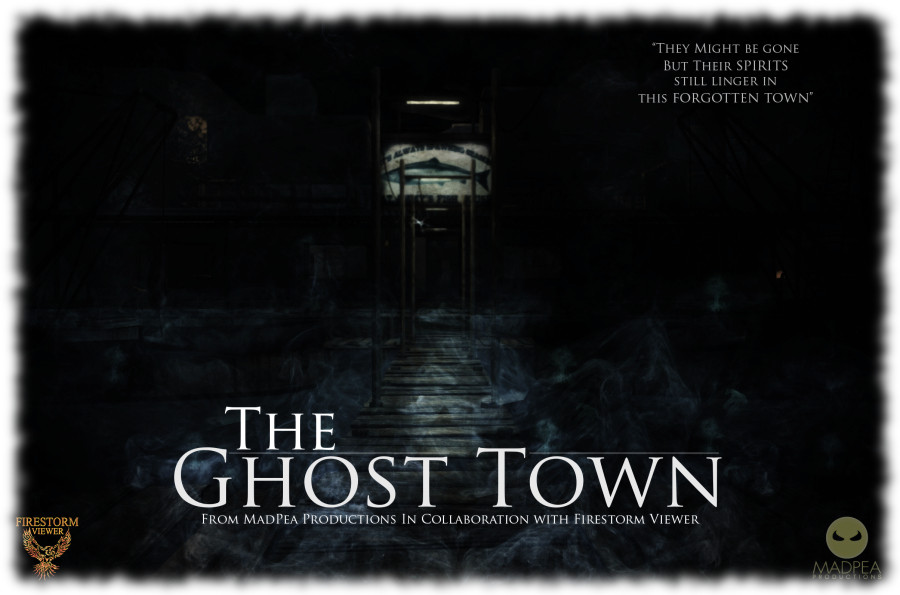
Kiana and Kess from MadPea provide a good overview of The Ghost Town, the first in a series of free-to-play games provided by MadPea expressly for the Firstorm Gateway and intended to further orient new users in using the viewer and HUDs, etc., while demonstrating some of what they might find by way of activities in SL – and reward them for doing so
A crucial part in assessing the project will be the data that demonstrates things like throughput rates and, more importantly, retention levels; particularly when compared to the Lab’s own new user experience. The Lab, via Oz Linden, indicates this is the kind of data they’ll be presenting to gateway operators. Oz also indicates there have been some technical elements to be fully ironed-out, particularly in matters of compliance and data security, which might not have been so prevalent during the time of the “old” gateway programme.
The Drax Files Radio Hour is celebrating its 100th (ish!) episode during Christmas week 2015, and to celebrate, they’re holding a special live recording session, and inviting people to attend as part of the audience.
The podcast series first launched back in January 2014, although the initial idea for such a series goes back as far as the latter half of 2013. Hosted by Draxtor Despres and Jo Yardley, the show generally presents an hour long segment each week, focus on news, opinion, interviews and reports on all things virtual – virtual worlds, virtual reality, virtual living.
If I’m totally honest, the show was, early on, far too infatuated with all the hype surrounding the Oculus Rift, which led to a certain slant becoming increasingly (and sometimes painfully) apparent. However, this doesn’t negate the fact that overall, the series has presented some pretty thought-provoking and also very informative podcasts. Virtual harassment, virtual identity, examinations of the Lab and Second Life, digging into the Terms of Service, looking at virtual worlds and education – all these and more have been covered, while interviews with folk from the Lab, from education, the worlds of VR, AR, and interactive fiction, and (again) more have offered many defining moments for the show.
For the 100th show recording. Drax and Jo will be talking with Oz and Vir Linden, Jessica Lyon and Ed Merryman from Firestorm, and Kiana Writer and Kess Crystal from MadPea Games, in a far-reaching discussion encompassing a look back over 2015, a look ahead to 2016, and embracing the upcoming Gateway trial programme, the recently announced Project Bento, and maybe a little more besides.
Drax tells me that those attending the recording get a free Drax Files cap
The show will be recorded at the Firestorm Amphitheatre on Wednesday, December 23rd, starting a 12:00 noon SLT. however, those wishing to be a part of the audience as advised to get there a little ahead of time to both secure a seat and help ensure the recording can start relatively promptly.
When you’re in a virtual world, it’s not just your avatar, it’s not just the storyline. It’s the furniture in the room, it’s the building around you, it’s the trees you see. That’s what makes immersion possible; that’s what i create, an environmental space.
These are the words of Isla Gealach, known throughout Second Life for her in-world brand of Cheeky Pea, which open the 34th segment of The Drax Files World Makers. But this is not simply an examination of another’s creator’s on-line life and activities in Second Life; anyone who is familiar with this outstanding series of video shorts by Draxtor Despres will know there is far more of a story to tell here.
While Isla’s creative is a focus of the segment, it shares the time very much with her physical world life, because the two share an inseparable intertwining which demonstrates that – contrary to idea that our on-line lifestyles are increasingly isolating us from the “real” (whatever that is) – there are situations and circumstances which occur every single day where people who know one another on-line are drawn closer together, and that that for some, it evolves into a relationship which spans both the virtual and the physical.
Ewan Mureaux
For Isla, this is clearly demonstrated in her relationship with Ewan Mureaux. Starting out as colleagues collaborating together on Second Life products, Isla designing and creating them with Ewan scripting them whilst also working on SL land deals, the two of them struck up a friendship which eventually led to a real-life meeting which evolved into a relationship spanning both the physical world and the virtual.
In some ways, their story almost sounds like an office romance, with both Isla and Ewan noting that the time they spent working together was as natural as being colleagues working together in the same environment, even if they were actually miles apart and (at that time) only seeing one another through their digital personas. Like work colleagues, they came to know one another working together and that naturally lead to spending time in-world together at social events, and so things grew between them, just as relationships naturally grow between people in any aspect of the physical world.
Given this background, both Isla and Ewan are keenly aware of how digital relationships inform us differently when compared to those occurring purely in the physical world; a fact which can lead to people reaching a greater depth with one another than might otherwise be the case. “Second Life can cut through societal constraints,” Ewan notes, “And it gets more to the heart of who you are.” Isla then adds, “You get a feel for the personality first.”
Isla’s Cheeky Pea brand offers many items for house, garden and environment, and is a favourite among many SL users
It is this ability to make emotional connections which can be as genuine as anything we experience through any other medium, which Isla sees as the real power behind Second Life. It’s a view I agree with fully, because above everything else – the democratising of content, the freedom of creative expression, the myriad of things we can find to do in-world – ultimately, Second Life brings people together. It doesn’t matter if this is as friends, companions, or lovers, as couples or in groups; the platform allows us to form relationships and connections with other which are quite unique and with the power to outlast anything which might be experience through less immersive on-line social environments.
Within this broader story, we do also gain insight into what it means to be an effective successful creator in Second Life. And contrary to the hype which spread about the platform being a place of instant riches which grew up around Second Life back in 2006/7 and which did much to fuel its rapid growth, the reality is far different – as every content creator knows, and Isla encapsulates perfectly:
The illusion that I sit around in my pyjamas all day and eat cake and look at the sky and get inspiration is … not true. My job requires a lot of self-discipline, which I never thought I was capable of. I’m working from the time my daughter goes to school to the time she gets home, when i have to spend the time with her, doing her homework. Sometimes, when I’m on a deadline, I’m working until she wakes up! I don’t have that luxury of not completing things.
Second Life can greatly enrich our virtual lives and our physical lives
However, it is in the way in which Second Life has the power and ability to hugely enrich both our virtual and physical lives where this segment retains its power. Isla and Ewan’s relationship is almost a personification of the ideal that Second Life is a “shared experience” – although not at all in the manner the Lab might have imagined when applying the term to the platform.
Between them, and with Isla’s daughter, who gets to participate in the creative process as well, Isla and Ewan demonstrate very clearly home the platform can bring people together, presenting new opportunities for them to grow on both sides of the digital divide. In this, they are not unique among Second Life users, and there will be others watching this segment and identifying fully with it.
Such is the power of Second Life, that it really shouldn’t be seen as a substitute for the physical world as some who fail to understand the platform and those like it would all to quickly opt to dismiss it. The truth is that Second Life actually does more to eradicate the digital divide for many of us, allowing us free motion, from the physical to the virtual and back again, enhancing our lives in both. This is something Isla clearly understands and appreciates, as she notes in closing out the segment::
I think that in a world where virtual goods and services are becoming more and more important, we shouldn’t neglect excitement for the physical world in our kids. There are so many things you can do in your community; simple family walks, explore your town [and] its history.
At the same time, it’s not helpful to frame virtual reality as an escape. Because look, i live near Edinburgh, which is one of the most beautiful cities in the world, and I still love to go into Second Life, have fun and express my creativity. You can have a balance of both, right?
Absolutely.
Second Life presents so many ways for us to share in experiences and activities together, on both sides of the screen
Given the subject matter of the segment, The Drax Files World Makers #34 takes a slight departure from previous segments. In part, it reverts to the approach to the early shows in the series in which he appears in his digital self, asking questions and providing an initial thrust to the video. However, with this segment, we also see a very subtle shift, as digital Drax is also joined by physical Drax.
By doing this, he adds a gently underlining of the central theme to the piece, again indicating how, for many of us, our identities – physical and virtual – are one in the same, with each informing and enriching the other.
Note: apologies to subscribers who may have received multiple notices about this post, some of which may have had invalid links when clicked. WordPress SNAFU’d on me when first published, and caused additional issues when trying to correct.
Hauptmann Weydert (aka Cyberpiper Roelefs in SL and Pit Vinandy in the physical world), the driving force behind the virtual Luxembourg work, sharing time in-world at Fort Thüngen with his daughter (image: The Drax Files World Makers)
I admit to having something of a personal bias towards The Drax Files World Makersepisode #33, which premiered on Friday, October 30th, as it focuses on the work of Hauptmann Weydert (Weydert – also known as Cyberpiper Roelefs within Second Life and Pit Vinandy in the physical world) and his team and their work with the 1867 Project, which recreations elements of the City of Luxembourg as they were at a pivotal point in its history in the 19th century.
I had the pleasure of visiting Fort Thüngen, which forms a part of the project, and then touring The Virtual Pfaffenthal alongside Hauptmann Weydert (looking resplendent in his period uniform), as we discussed the project in July 2015 – see my article Luxembourg 1867: exploring virtual history in Second Life. So to witness almost first hand through this video just how faithful a reproduction the 1867 Project presents, and gain a greater insight into the Project’s collaboration with Luxembourg City History Museum, comes as an absolute pleasure.
Second Life and environments like it have always been recognised as having a powerful role to play in both education and historical recreation, and this is once again brought home in this segment of the World Maker’s series. In it, viewers are invited to explore the immersive, educational and creative powers inherent in the platform and to catch a glimpse of a fascinating period in European history as well, one which is in turn being shared with the general public in that city through the collaboration with City History Museum.
The immersive power of the platform is marvellously presented through footage filmed in the physical world which has been carefully matched with footage filmed in-world. These differing scenes are then beautifully transitioned between, carrying the viewer seamlessly from one to the other, visually conveying the richness of content and opportunity within the virtual in a manner no amount of narrative could convey. Kudos to Drax for both the filming in Luxembourg and the editing.
The creative power of the platform is beautifully encompassed in just 25 seconds starting at the 1:50 mark, when Pit provides a simple description of the various options for design and building, both in-world and through external tools, as he works on a part of the fort in-world.
Jay Jay Jegathesan (Jayjay Zifanwe in SL) patron to the arts in Second Life and founder of the University of Western Australia’s presence in Second Life
With machinima, you are getting a glimpse into the soul of the artist. They’re not making this film so they can sell tickets at the movies. They are making this to show you who they are.
– Jayjay Jegathesan
The above statement comes at the start of The Drax Files World Makers episode 32, and perhaps perfectly encapsulates a good part of the message offered within it. It also encompasses much of what Second Life is for so many of us: a means of expressing ourselves fully and freely and without the burdens we often face in the physical world – a point Jay Jay also makes later in the film.
This segment is a slight departure from previous episodes, in that it could be said to cover two different, if related, themes. On the one hand, it offers insight into the amazing world of Second Life machinima and the ways in which the platform offers many unique ways of artistic freedom for film-makers. On the other it is a personal look at Jay Jay’s own role within the platform, both at founder and manager of the University of Western Australia’s presence in-world and through it a patron and champion of the arts and machinima through his in-world alter-ego, Jayjay Zifanwe.
Natascha Randt and Karima Hoisan are two of the featured machinima-makers in segment #32 of The Drax Files, their work helping to illustrate both the rich diversity of machinima films made in SL and the unique opportunities for collaboration across the world offered by the platform
These two threads, woven together through the UWA’s ongoing series of art and machinima challenges, make for one of the most complex pieces yet produced by Drax as a part of the World Maker series. In it, he precisely balances insight and understanding into the appeal of machinima and the creative potential Second Life offers the medium with a clearly understandable examination of Jay Jay’s and the UWA’s work in-world, presenting audiences not necessarily well-versed in Second Life with a narrative flow combining both elements into a cohesive whole.
UWA’s Winthrop Clock Tower & Reflection Pond as reproduced in Second Life and a landmark frequently featured in UWA machinima contest entries
From Jay Jay’s opening comment, we see machinima initially framed through the UWA’s ongoing series of art and machinima competitions (such as Pursue Impossible, which is currently underway), and which serves also to underline the fact that just about every kind of film genre and type known in the physical world can be produced within the virtual – and to extremely high standards.
This richness of opportunity is further underlined with brief statements on their art by some of second Life’s top machinima makers such as Rysan Fall (long a personal favourite), with clips from films by others such as Tutsy Navarathna (ditto). Through this comments, albeit individually brief, the audience gains a well-rounded view of machinima and its creative power and value, as well as into way so many find it so personally satisfying.
And just in case there are any doubts over machinima’s position as a genuine form or artistic and creative expression, I’d at least point to Rysan Fall’s short film Invisible City. This not only topped-out the machinima category for the Project Homeless competition sponsored by the City of Parramatta, new South Wales, it took second position overall in the competition, beating many films made solely in the physical world with its context, narrative and production quality.
Rysan Fall’s brilliant Invisible City
Art and machinima serve many purposes in Second Life, just as they do in the real world, and it is to the UWA’s credit that they have sought to embrace this as much as possible through their promotion of virtual arts – such as with their involvement in Project Homeless, as mentioned above.
Tom Boellstorff: digital ethnographer extraordinaire – and the focus of World Makers #31
It is directly because of Tom Boellstorff‘s influence that I have tended to cease referring to what goes on the physical world as “real life” and use the term “physical world” instead – as regular readers here may have noticed. As Tom once pointed out to me, such are the complexities of our digital activities and interactions, they are in fact no less “real” than almost everything we do in the “real” world.
I mention this because Tom is the subject of episode #31 of the Drax Files World Makers, and within it, he excellently expands upon this idea. Around half-way through the segment, he focuses down onto the issue of the artificial divide that is consciously established in the mind when one employs the term “real world” to differentiate between physical world interaction and digital interactions. As he points out, given the nature of both, is one any the more “real” than the other? Not really; both have multiple levels of activity and interaction which freely encompass both.
Really, the only thing the use of the term “real” does is perhaps instil a subconscious or active bias against anything related to immersive digital space interactions. As evidence of this, we need only look back as far as Pamela in the 8th segment of The Drax Files Radio Hour. She is openly dismissive of Second Life for a number of reasons, not the least of which is that it is “not real”.
Tom openly challenges the use of the world “real” to differentiate between our physical world and digital world activities and interactions
As an ethnographer and professor at the Department of Anthropology at the University of California, Irvine, Tom has devoted a solid portion of his time to digital ethnography within Second Life. He signed-up to the platform in 2004 – when, as he notes, there were only around 2,500 total users, with an average concurrency of a couple of hundred, and you could fly over every region across the grid and witness what was going on in each of them in a the space of a week.
Since then, he has studied social interactions through Second Life at length, and has written two books on the subject as a result: Coming of Age in Second Life: An Anthropologist Explores the Virtually Human,(Princeton University Press, 2008), and Ethnography and Virtual Worlds: A Handbook of Method (Princeton University Press, 2012, co-authored with Bonnie Nardi, Celia Pearce & T. L. Taylor). So when it comes to matter of social interaction, interpersonal relationships, the exploration of self and issues of identity, Tom has a lot to say that is directly relevant to today’s world – and not just in terms of virtual spaces like Second Life.
Digital environments like Second Life are unique in the added depth of interaction, self-identity and self-awareness and presentation they offer us
Ethnography, be it studied in either the physical or the digital, is a huge topic to try to encapsulate in just five minutes – and it is to Tom’s credit and Draxtor’s post-production skills that so much is encompassed within the time frame, given this is a very different – and potentially (with no disrespect to the content creators generally features in the series) a lot deeper subject into which to plunge.
Thus it is that as well as an intriguing exploration as to the validity of the word “real” when applied to the digital, we get a measured look at the virtual and all it can encompass to empower us in many ways. Tom encourages us to consider the social and personal interactions we have, which can be as rich and engaging as anything we might experience elsewhere; he highlights the emotional depth offered through even the most simple of digital interactions such as texting one another; and he opens the door to much broader aspects of self and identity, such as in matters of gender. This latter aspect is beautifully underlined with a fine reference to Cecilia D’Anastasio’s Motherboard piece from April 2015, Avatar IRL (which I reviewed here).
a powerful aspect of virtual spaces like Second Life is the power they give individuals to explore matters of their own identity, including issues of gender – as explored with Veronica in Avatar IRL, touched upon visually in World Makers #31
In discussion matters of identity, there’s also a reflection on the likes of Google, Facebook and other companies who wish monetise everything they can possibly learn about us. The activities of these companies do highlight the importance of identity, and of the need for us to have a freedom to choose how we represent ourselves to the digital world.
Certainly, Second Life stands to give the lie to the idea that anonymity is “about” deception and questionable activities, as some have in the recent past have tried to project. If anything, as a Tom points out, the anonymity embodied in Second Life in terms of user-to-user interactions is a major contributor to people’s willingness to be creatively expressive, and their ability to establish their own digital business and revenue streams.
Tom participates in, and observes, a group of us engaged in a Digital Cultures Chat
This is another outstanding segment in a series which has never faltered through the 31 episodes to date deliver a relevant commentary on our digital lives and activities. It is also one that perhaps has a somewhat different audience among those outside of Second Life from past segments, highlighting as it does the extreme relevance of the platform to the likes of researchers, academics, etc. It might also, for those willing to listen, offer food for thought to businesses on the benefits of allowing us greater freedom in how we represent ourselves to one another through their platforms and services – and in allowing use to have more say in how the personal information we provide to them directly might be used.
I could prattle on, but really, Tom says everything so clearly and succinctly, that any further observations or interjections I might have are superfluous. Better to watch the segment yourself!
P.S. Tom, if you get to read this – you still owe me a round of golf! 🙂
 The 100th segment of The Drax Files Radio Hour went out on Christmas Day 2015, the last new podcast for the show for the year.


 Inara Pey: Living in a Modemworld