Having opted to get out on the water recently, and following Indigo Mertel’s suggestion that sailing is one of the best ways to explore SL, this week I set out to navigate the further reaches of Blake Sea and the surrounding regions. Along the way I discovered Second Norway, a group of around 17 regions which celebrate life in Norway, providing both a themed environment for people living there and a wide range of public spaces which can be enjoyed by residents and visitors alike, all of which can be explored by road, water and air.
While not attempting to be a representation of any single place in Norway, Second Norway does include several features from its real-life namesake, and offers up much which is representative of the Norwegian countryside and Norwegian heritage, all of which combine to make it a fascinating visit.

My first encounter with the SL / rl cross-over came on sailing into the main harbour area, which features a recreation of a row of multi-hued buildings on the waterfront in Bergen. This is forms one of the social hubs in the regions, hosting a range of events as well as being within easy reach of a number of nearby attractions.
One of these, on the hill overlooking the quayside and colourful shops, is a replica of the triple nave stave church at Borgund, which is believed to be one of the best-preserved examples of a stave church in Norway, having been originally built some time between 1180 and 1250. The church in Second Norway is the very first build undertaken by Ey Ren, one of the co-founders of the modern Second Norway community, and a leading figure therein along with Mialinn Telling.
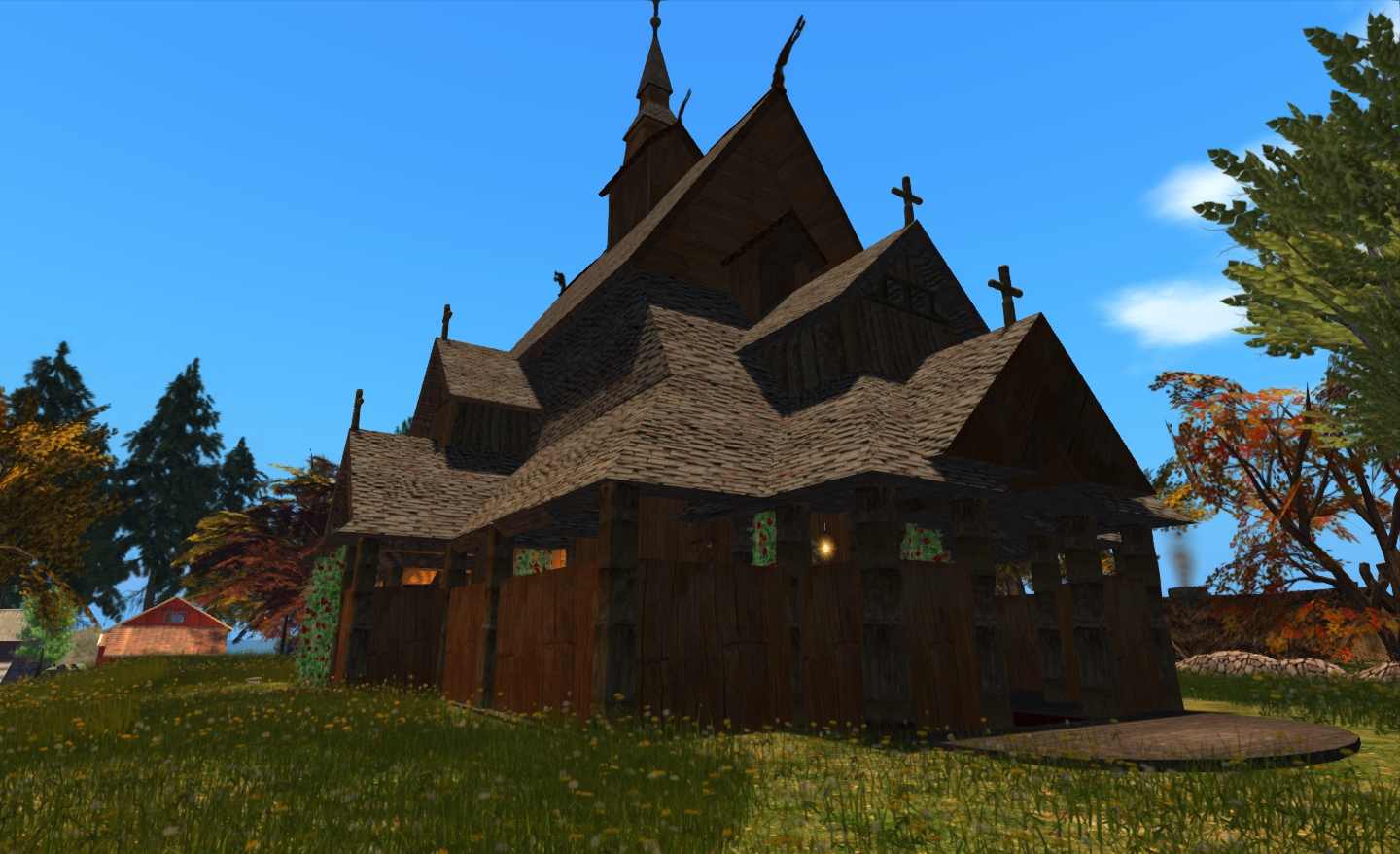
It is a fabulous build, and provides a wonderful focal-point for visits and for SL photographers, and appears to be used for special ceremonies such as weddings. The attention to detail, both outside and in is a delight, and I found myself drawn back to it several times during my visit. I love the alter, and the traditional bell structure located outside.

A short walk from the church and bell, shaded by trees, is a memorial installed by residents of Second Norway to remember the 77 people who lost their lives in the terrible events of 22 July 2011, in both Oslo and on the island of Utøya. It is a simple affair, and all the more moving for being so, bearing an inscription of a quote from one of the survivors of that black day.
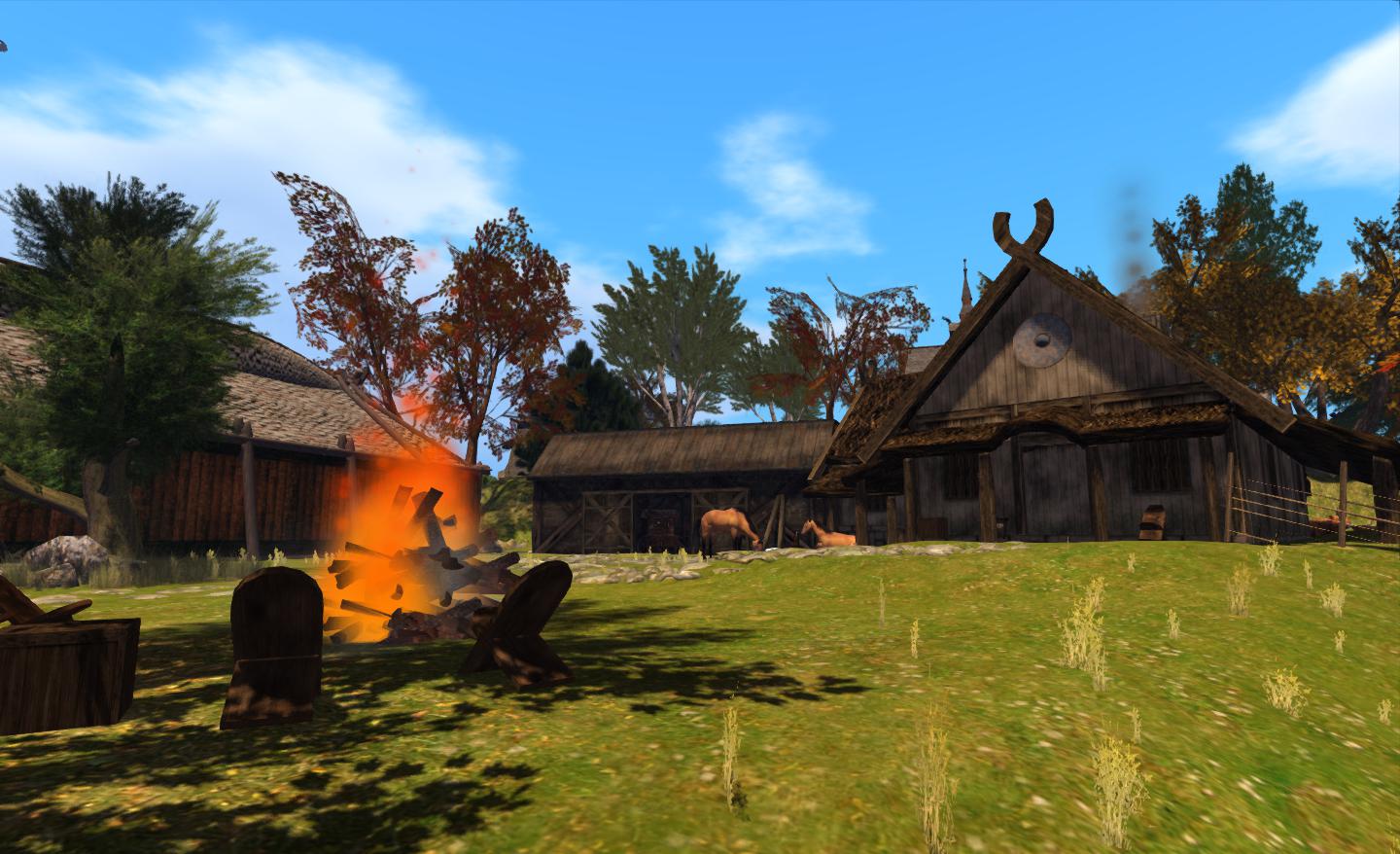
Just down the hill from the church is another point of historical interest – part of a traditional viking village, a virtual living museum, the long house of which is used to host both events and exhibitions.
From here I opted to take to the road to continue my explorations. Second Norway includes a comprehensive road system which goes both overland and underwater, thanks to a tunnel system. A section of the roads is modelled on Norway’s Atlantic Sea Road, and is a great drive to take. I initially started out using my ubiquitous Neuspa, partially because I felt its amphibious capabilities would be useful if I happened to fall off the road into the neighbouring waterways, and partially because some of those involved in Second Norway are into biking, and I wanted to share something of their experience when out on the open road. I did, however, also take my Autoworks 43S GT for a spin (which did encounter a few issues with road section seams).
Please use the page numbers below right to continue reading this article