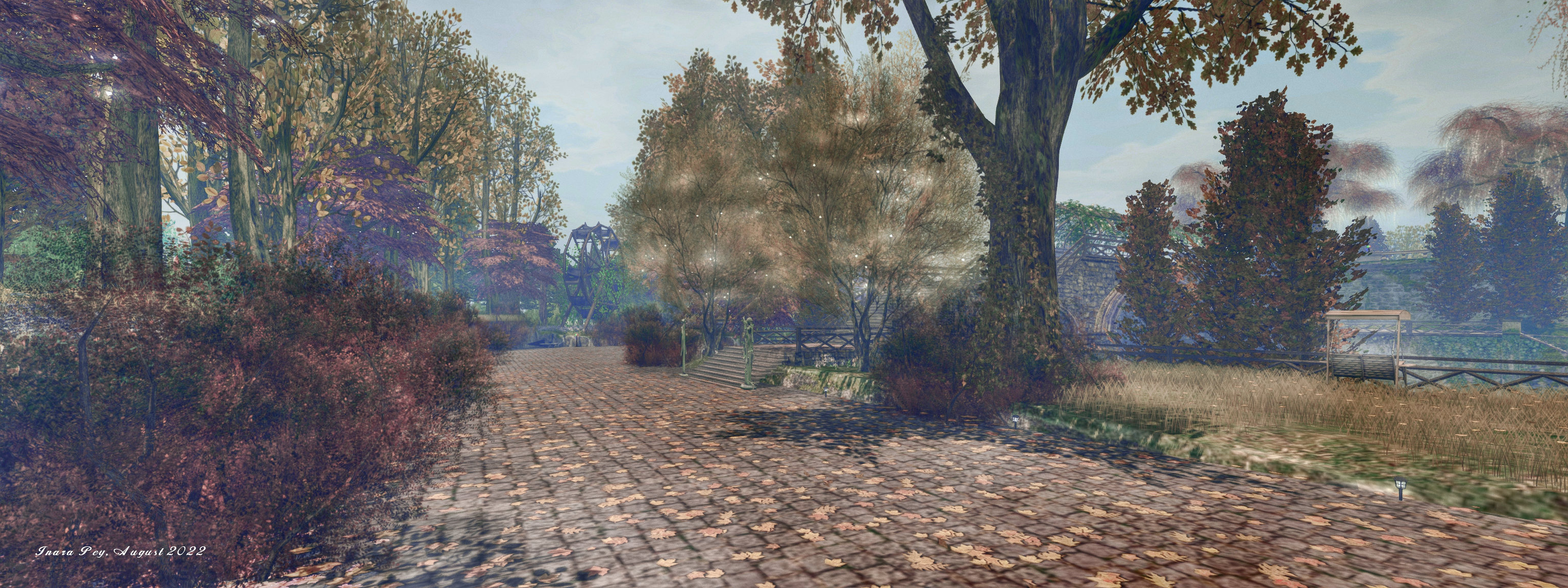
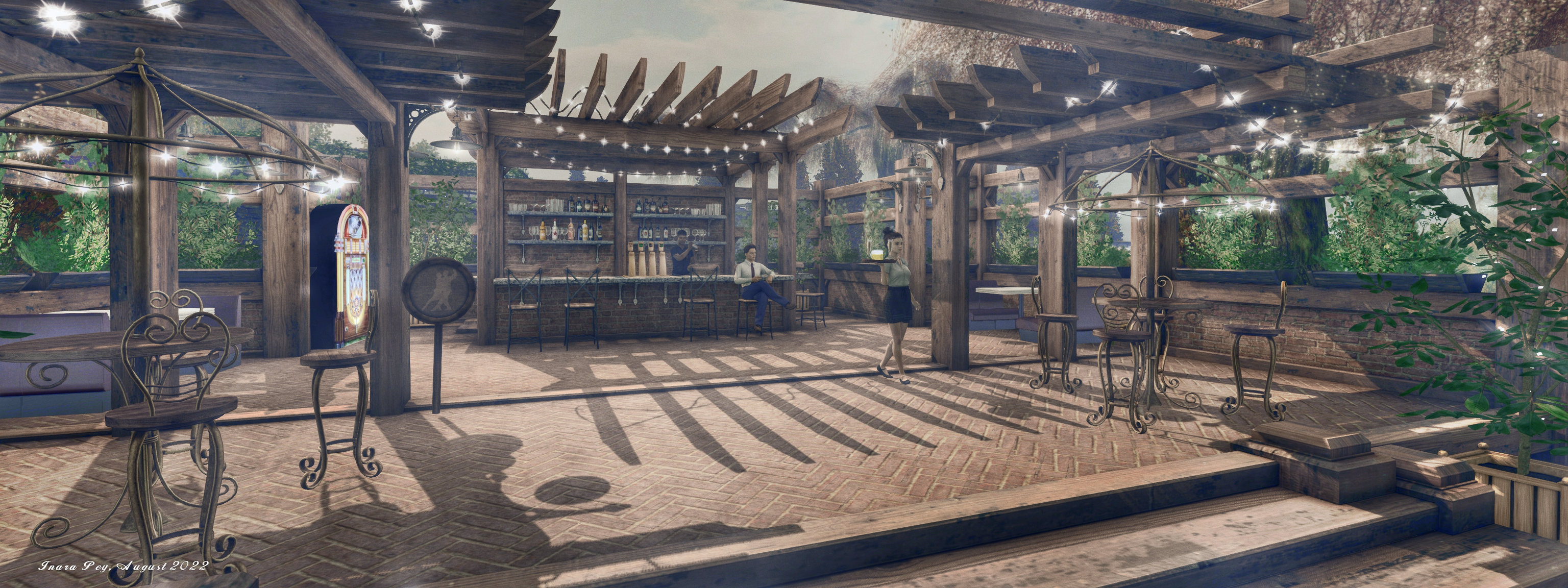
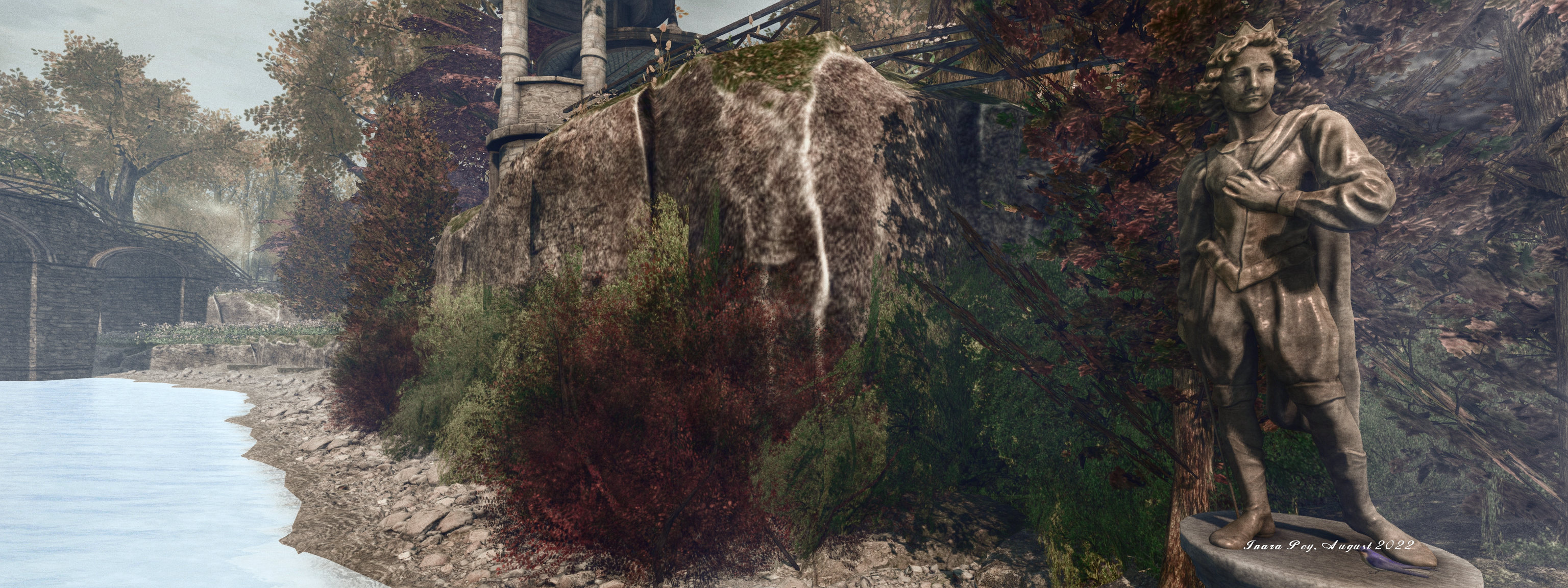
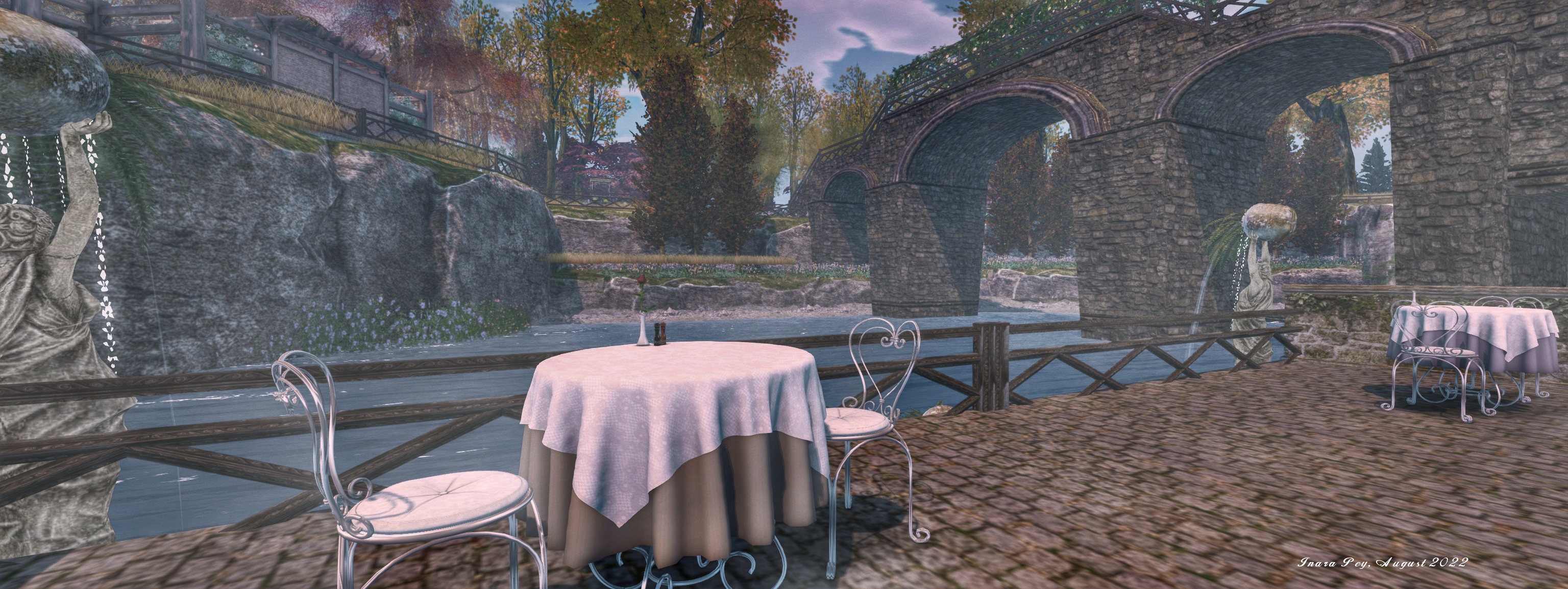
Sweetwater Valley, August 2022 – click any image for full size
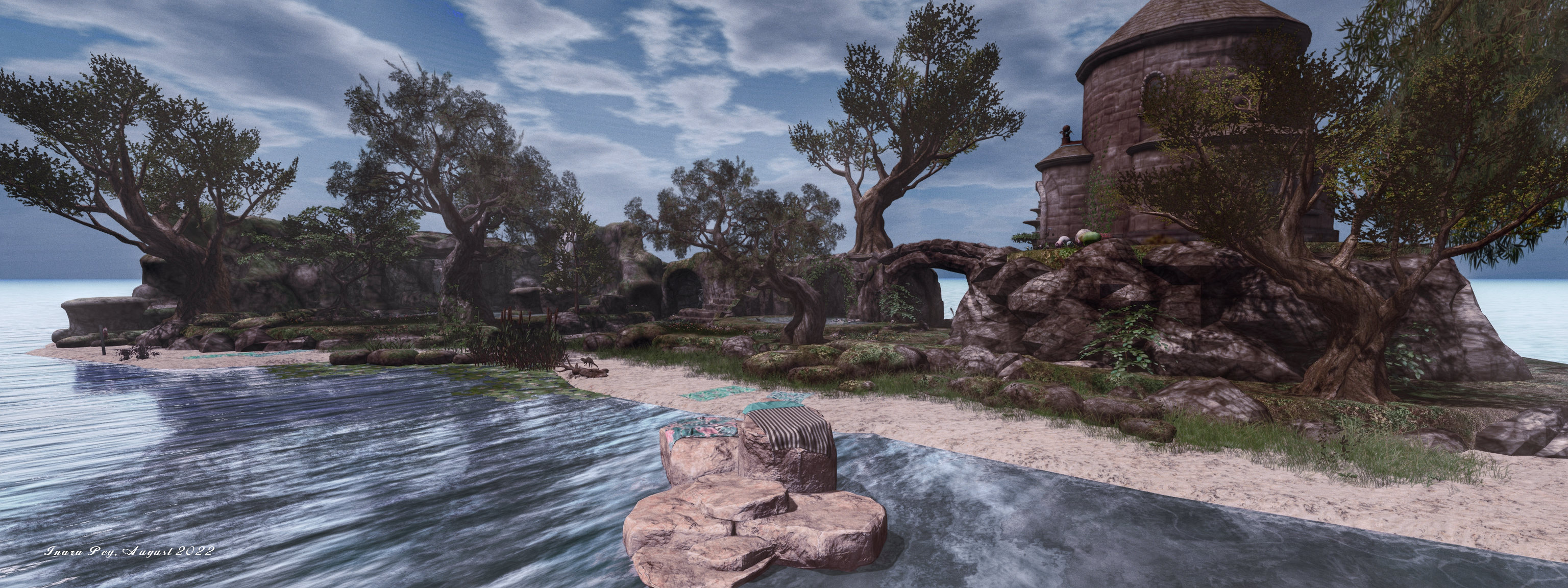
It was off to Heterocera once more after Shawn Shakespeare passed me the Landmark for Sweetwater Valley, an utterly engaging region-sized retreat set out as cliff-top parklands running around the edge of a narrow passage of water which has over time, cut its way into the landscape to leave a lone table of rock rising between cliffs and open sea.
Sitting on the north-east coast of the continent, the setting has been designed by Selena XOXO. The landing point sits on the southern side of a broad bricked path as it arcs around the top of the cliffs, and is set a short distance back from their edge.
Sweetwater Valley, August 2022
To the east, this path runs straight and true, passing an ice-cream concession before dropping down a stairway to sit just above the water’s edge. Here, a small wharf sits and a gondola can be taken for an (automated) ride around the base of the offshore island.
Westward, the path curls gently north, passing the entrance to the park from the local highway and also by an old Ferris wheel, to become something of a headland sitting between open waters and the mouth of the gorge. Here sits a tiered area for relaxing and / or dancing, and where steps descend to where a carpet of flowers sit under the shade of trees and a further hidden place to sit and contemplate or cuddle can be found. A further waterside wharf can also be found here, tucked below the terraces, allowing people to hop off (or onto) the automated gondola as it circles the waterway.
Sweetwater Valley, August 2022
The centre island can be reached via the span of a single high bridge sitting atop three tall arches as they march across the waters of the gorge from the western cliffs. This bridge offers access to a waist-high paved footpath which circles the island, occasionally dipping down towards the waters below or providing access to terraces and places to sit.
Facing the bridge as it reaches the island is a set of stairways leading up to the flat top of the island’s plateau, passing by way of a shortcut linking it to the setting’s landing point. The top of the island is a place given over to dance and music, where Elvis is busy swinging his pelvis and Samuel L. Jackson is shruttin’ his funk in moves John Travolta could only dream of in Pulp Fiction. OK, so maybe they are not actually Elvis and Mr. Jackson, but you get my drift…
Sweetwater Valley, August 2022
Finished with a custom soundscape and environmental settings (although it looks good under a variety of the latter), Sweetwater Valley is rich in detail, with sculptures scattered throughout and little touches than encourage one to stay and explore (including a farther ride on the water, for those who spot it under the island!). Yes, there are a few places where the grass and flowers disconcertingly march away from rocks and edges to float in mid-air, but not enough to in any way put one off.
Above all, this is a pace that lives up to its About Land description, requiring very little more to be said about it other than – go see for yourself!
Beautiful hangout with good music, and an awesome dance area. Take that someone special on a romantic Gondola ride. Lots of cuddle spots.
Rosehaven Seafolk Sanctuary, August 2022 – click any image for full size
In July I received an invitation from Matticus Marinea (Matticus.Blinker), the lead builder for Rosehaven Seafolk Sanctuary to pay a visit to the latter and spend time exploring. It admittedly to me longer than I’d hoped to get there – my apologies to Matticus and region holder Owner of Rosehaven Valley and the rest of their community for this being the case.
Below a timeless European country estate, lies a watery realm of mysticism & tranquillity. Rosehaven Seafolk Sanctuary is an open refuge to all ocean dwelling residents of Second Life. We invite everyone to come and explore our large underwater caverns and seafloor. Discover the many hidden wonders, connect with others at the many scheduled events in a safe community atmosphere.
– via Matticus Marinea / Rosehaven Seafolk Sanctuary About Land
Given the location occupies a Full private region with the additional LI bonus, there is a lot to see, with visits starting either above or below the waves, depending on preferences.
Rosehaven Seafolk Sanctuary, August 2022
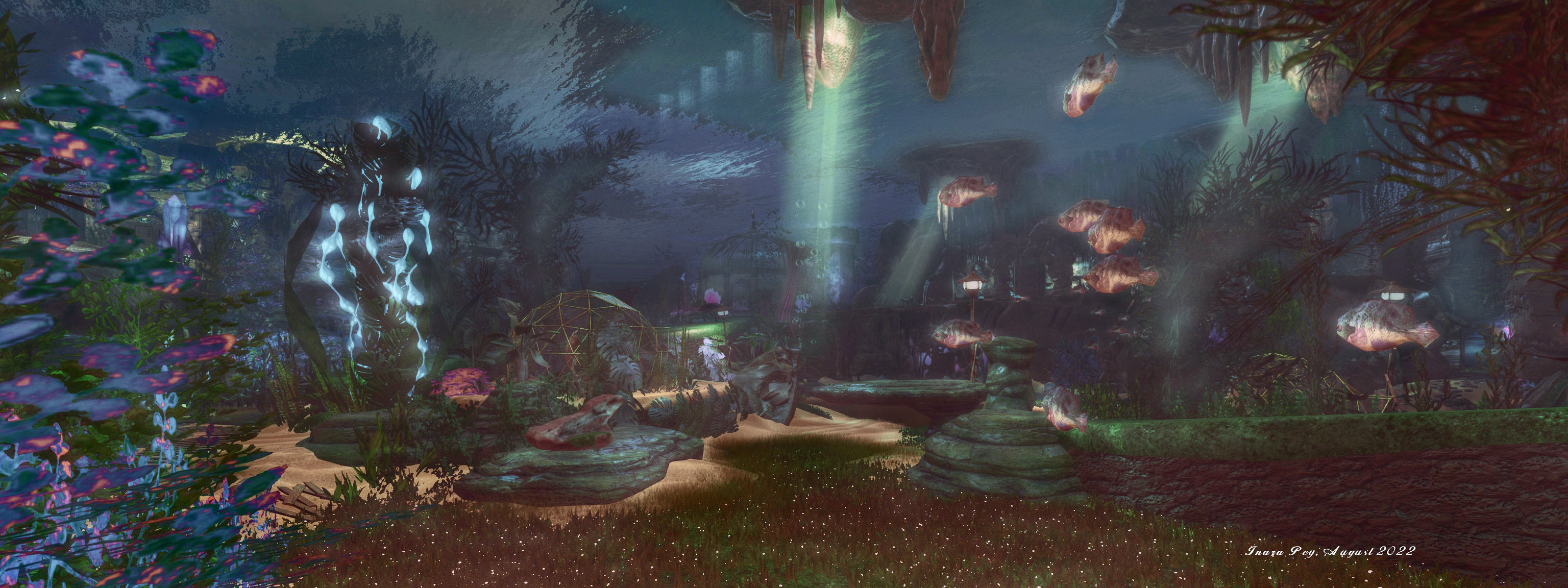
Merfolk will most likely want to start underwater, as this offers the most varied environment; it’s certainly where Imp and I started our explorations. The landing point here offers information on the region, together with two teleport boards – aquatic and land. Both offer quick access to key points under and above water, but I really recommend exploring by walking / swimming.
One thing that quickly becomes apparent when underwater, is the care that has been put into making things as diverse as possible, mixing larger public spaces with smaller, more romantic /intimate spots that are tucked away between doors and inside caves or at the end of tunnels or beyond rocky arches.
Rosehaven Seafolk Sanctuary, August 2022
There is also more of a richness of architectural and floral expression to be found here that might be expected from a merfolk environment: places resembling tree houses, plants that might be as at home in a garden on dry land as one where octopi might tend.
Being a long time merman in Second Life, I have seen a lot of underwater sims come and go. A big problem we have as mer-builders is that there just isn’t enough diversity in items (foliage, rocks, buildings) which are made specifically for underwater spaces. Therefore, when I finally had the opportunity to work on something in this larger scale, I wanted to incorporate non-traditional plant life to create an experience that is distinctively different and yet familiar.
– Matticus Marinea
Rosehaven Seafolk Sanctuary, August 2022
Exploring can be done mer-style – by swimming (we slipped into a couple of mermaid-like looks!) or on foot; the central public spaces are neatly paved, and human walkways and paths are clearly marked, and stairs and steps link areas at different depths, while ladders and stairs offer various routes up to the dry land elements of the setting.
That said, finding your way around still requires a little patience and time; just when you think you’ve seen everything, it’s more than likely turning another corner around a shoulder of rock or climbing another set of steps will reveal something more, be it an underwater lawn complete with a miniature of Stonehenge, an oyster-like bed or a little nightclub awaiting a singer at the microphone – and more.
Rosehaven Seafolk Sanctuary, August 2022
Above ground, the region is laid out as a grand manor estate with outhouses. The manor sits with an elegant formal garden before it, the outhouses range around in a quadrangle. The manor, its garden and the majority of the outhouses are private, unless playing hose to an event. The only exceptions to this are the Tourist information Centre, which forms the above water landing point (complete with information and teleport boards), and the café / bistro facing it.
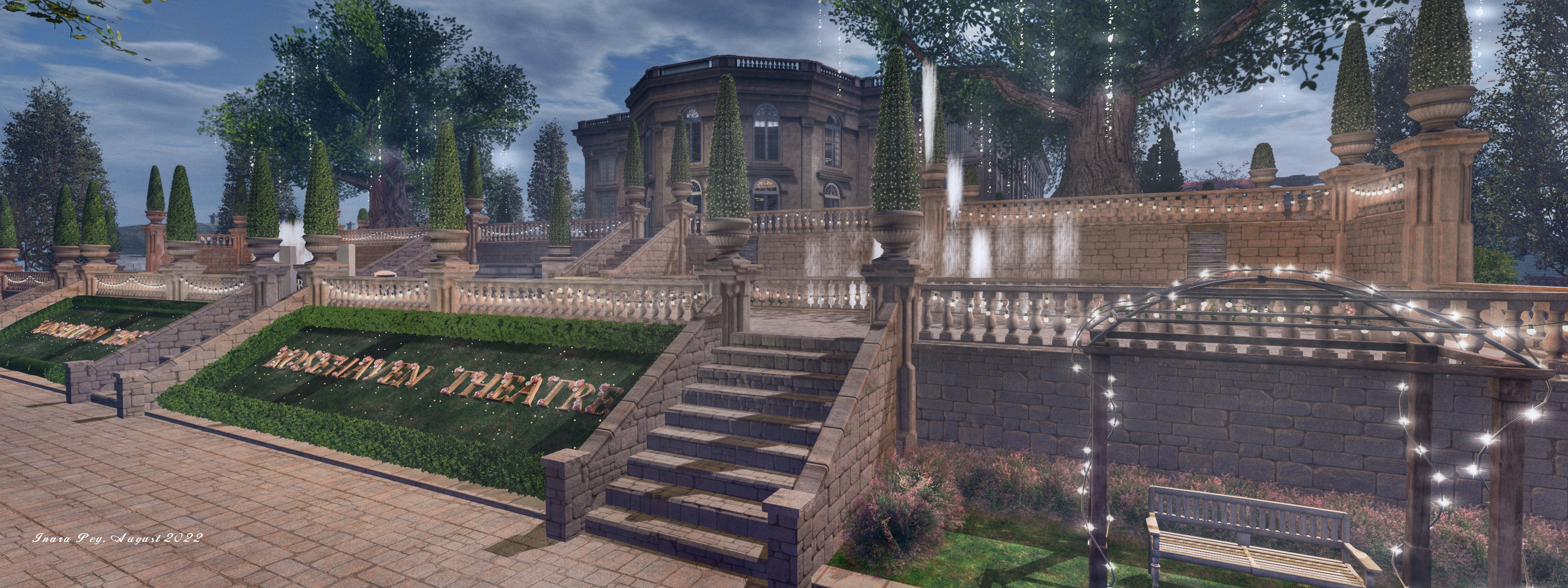
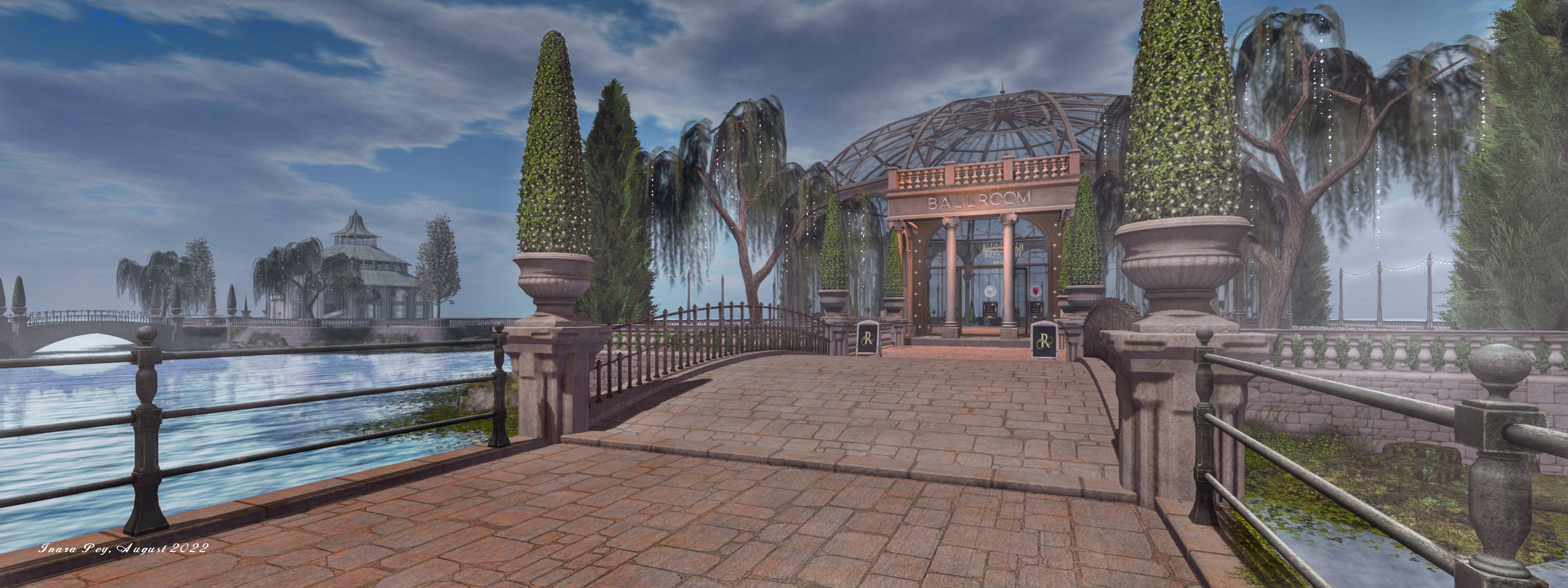
These latter face a waterside walk, the water spanned by a trio of bridge which provide access to the Rosehaven Theatre, home to productions that include Broadway shows, ballet performances, variety shows, musicals, dance recitals and more, presented by the theatre’s troupe and cast. Alongside of sit the double tier of The Cabaret Club, offering an open air performance space on its flat roof and a further venue inside.
Rosehaven Seafolk Sanctuary, August 2022
A further bridge crosses a water channel between the Club and the Aviary – but as it was unclear whether or not the latter is open the public, we kept clear (there is another small island bracketing the theatre and Cabaret Clubs, and this is home to private residences, so please avoid trespass.
Two islands are also to be found tucked into the region. Within the south-east corner sits Sawyer Island. A little haven unto itself, separated from the manor and other structures by water, it is best reached by boat or – for those wanting to come to it underwater – by finding the path, stairs and ladder that provide access to the island via a pool close to its centre. Please be aware that Sawyer Island area is a “clothing optional” space; naturists are always welcome but visitors should not confuse “a lifestyle of practicing non-sexual social nudity in private and in public” with anything sexual.
Rosehaven Seafolk Sanctuary, August 2022
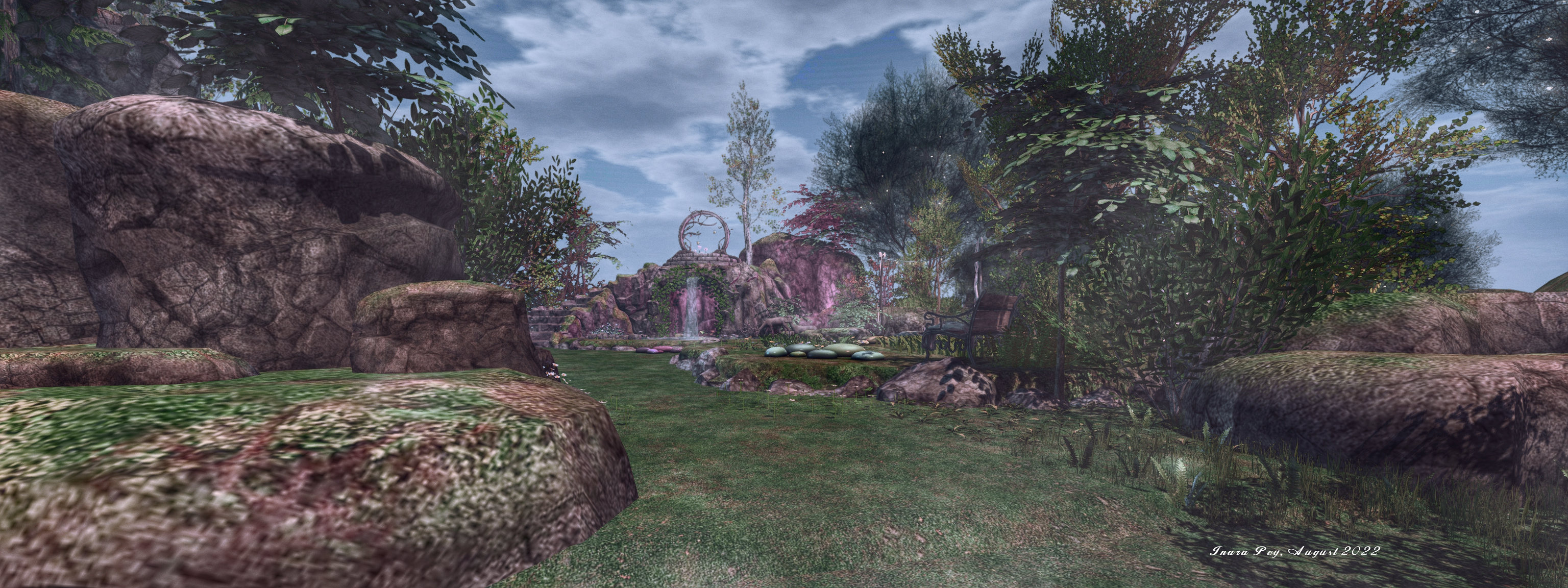
Occupying the north-east corner of the region is Fae Haven. Again best reached by boat or by finding your way up to it from underwater, this presents an idyllic, relaxing retreat awash with magic and enchantment, perfect for those seeking a quiet place to relax with friends or to simply be at one with nature. It sits as a welcome refuge to the Fae Folk of Second Life: elves, fairies, sprites & fauns, with the Enchanted Pond often used as a gathering place for dancing and music.
For me, one of the most impressive aspects in Rosehaven is the use of space. The entire size of the region is use for both the above water and undersea settings without either directly impinging on the other. They can thus be enjoyed and appreciated entirely individually to one another, whilst also being gently bound together by their connected access points to present an integrated environment.
Rosehaven Seafolk Sanctuary, August 2022
Finished with an accompanying local soundscape, Rosehaven Seafolk Sanctuary makes for a richly detailed visit (which can take some systems by surprise, so do be prepared to make some viewer adjustments if necessary) with a lot for find and enjoy both above and below the waves.
For her latest 80 Days region builds, Camila (Camila Runo) carries us from Italy and the town of Ars Vivendi (see: A touch of Italy for photographers in Second Life), to her native Germany and a place of the imagination called Krayentanz, which once again presents a picturesque setting well deserved of a visit by SL explorers.
I say “place of the imagination” because while a visit takes us to Germany, it carries us back in time to offer a view of that nation as it might have appeared in the Middle Ages – a fact reflected in the setting’s name, as Camila explains:
Krayen is a variation of the Middle High German word “kraeje” and means crow. So the meaning of Krayentanz would be Dance of the Crows in English. As Middle High German was spoken from approx. 1050 till 1350 AD, so the build matches the time frame.
– Camila (Camila Runo)
Krayentanz, August 2022
This is very much a setting of three parts, two of which are open the public, and the third, tucked into the north-eastern corner of the region, forms a private home. The latter is neatly hidden by a curtain run of a hill, a richly wooded landscape and the hide side of a table of rock and grass; as such it is very hard to run the risk of trespass – just stay on the village side of the humpbacked curtain of hills or the top of the table of rock and grass.
The latter is home to a sprawling collection of buildings set within a large, enclosed courtyard protected by high walls and a pair of stout gates themselves guarded by defensive towers. Described as a convent, these buildings, with their stone towers, look like they many have previously served another, possibly more war-like purpose, while the floor mosaics within several of the rooms give a suggestion of Romanic influences.
Krayentanz, August 2022
But whatever its past, the place is now given over to holy worship and to the vows of the nuns who live within its walls. And two of these nuns can be found within the courtyard of the cloisters, engaged in conversation with an individual I assume is a visiting Prior or Brother. Behind them, the Blessed Mother holds the baby Christ as she keeps watch on the convent’s gates, whilst beyond the side of the cloisters the nuns are facing, the land rises again to become the seat of a church, reached via stone steps set into the grassy flanks of the hill.
The convent is itself reached via a dusty track the meanders from a small steam that feeds a much large pool of water, and which passes the region’s landing point just as it divides. One arm of the track then continues around the foot of the plateau before finally climbing it to the convent; the other presents a short walk to where a small but apparently prosperous town, given the look and conditions of the buildings and the garb of the locals, sits behind high, protective walls.
Krayentanz, August 2022
The men folk here clearly take the responsibility of protecting the town seriously: the gatehouse under which the road passes is very solidly built and has a strong portcullis which can be dropped to bar access into the town. Further, the walls sweeping away from the gatehouse to enclose the town in their protective arms are in good repair, if a little lacking in defensive positions along their length. Meanwhile, arms for the defenders come by way of the local smithy, conveniently place closed enough the gatehouse so they can be grabbed whilst running to defend it.
Most of the houses and buildings here are furnished in keeping with the period and are open to the public, whilst the town square features a raise stage where, doubtless pronouncements may be made from time-time-time to the gathered inhabitants – although for visitors, it offers the chance to partake of a medieval dance with music provided by the local bard. Music lovers can also find more at the local tavern, sitting on the lower should of an escarpment also within the town’s walls, on the track that leads to a thumb-like knoll rising above the town, and upon which a windmill benignly keeps watch on all that goes on.
Krayentanz, August 2022
As well as the village, stream and pool, the region’s lowlands are home to gentle woodlands to the west, sitting below the plateau of the convent. Here, sunlight slants between leaf-laden boughs to offer pools of light amidst the trees whilst glades open out from between their trunks, and deer wander and graze.
In introducing Krayentanz, Camila offers an apology for having to downsize her work from a Full private region to a Homestead. Personally, I think this is misplaced; this is a setting as richly engaging as any of her previous designs, the greater land capacity afforded by the Full regions they occupied notwithstanding.
Certainly, moving to a homestead has not diminished Camila’s eye for detail, and the manner in which she has seamlessly presented the region within a mesh surround helps enhance the sense that were are somewhere deep within Germany’s borders. This sense of immersion is further enhanced by the soundscape she has created for the setting – so do please make sure you have local sounds enabled when visiting. Finally, those wishing to engage in informal period role-play are apparently welcome to do so, whilst photographers and bloggers will doubtless find a lot to see and appreciate when visiting.
Tourtour de Prouvenco, July 2022 – click any image for full size
Occupying one half of a Full private region leveraging the additional Land Capacity bonus, sits Tourtour de Prouvenco, a setting designed by Annisss Moreau (annisss) that is offered for public enjoyment.
Tourtour is a small French Provencal village where you can relax by the sea and listen to the best DJs of the second life at the Blue Note ‘Club evenementiels Djs LIVE’.
– from Tourtour de Prouvenco’s About Land description
This is a setting very much of two parts separated by a deep inlet that cuts across the parcel, a wide bridge close to its mouth providing the sole direct link between the two elements, helping them to flow together. The parcel itself offers an east-west orientation, the landing point sitting upon a small square.
Tourtour de Prouvenco, July 2022
The home of a small open market, this square is book-ended on its west side by the bridge mentioned above, and a gatehouse accessing what might be considered the older part of the town. The square and the bridge offer good views of the almost rectangular inlet as it forms a natural shelter / harbour. Looking at the basin of the inlet, it is not hard to picture it as once having been a port of call for trading ships plying the coastal regions under the power of wind and canvas. Today, the stone wharf has been extended by wooden moorings that offer places of rest for a mix of small fishing boats and the shark-like forms of power boats and speedboats.
The way down to the boats is presented on the far side of the bridge from the landing point, steps descending down from road level, the buildings behind them set well back from the drop to the water to provide a broad waterfront area, home to stores, stalls, cafés, kids at play and a sandy pétanque court awaiting older players.
Tourtour de Prouvenco, July 2022The buildings here are suggesting of having been built in the 18th or 19th centuries, although they are centred on a much older structure, almost a ruin, lacking a roof, some walls broken and the floors they once supported collapsed. Accessed via an arch, this has in fact been cleared out and partially renovated to become the Blue Note referenced in the About Land description, and home to DJ events.
A further arched passageway facing the bridge offers the way between the tall houses and buildings, allowing visitors to reach more features with the setting. These include the western beach, overlooked by the Chocolat, where visitors can enter into a (kilo-gaining!) romance with all forms of chocolate and dessert. This side of the town offers the local cinema, and a marvellous courtyard comprising façades of shuttered houses.
To the east, the older element of the setting is far more rural in nature, and includes some almost Tuscan touches thanks to some of the selected architecture. sitting on the top of rocky cliffs that fall to a further beach on their north side, and cut through by a deep gorge, this is much the larger of the two parts of the setting, and offers a huge amount to take in.
Tourtour de Prouvenco, July 2022
The houses and stores here are furnished, giving a rich sense of homeliness, whilst the town can be explored by following various paths through it. The most obvious of these is the rutted lane that runs between the Tuscan-like buildings to cross a natural rock pass over the waters of the gorge as it empties into the sea. In the far side, this road curls back on itself to follow the southern lip of the gorge, passing below the local art gallery.
Set within a grand building reached via a couple of separate footpaths leading up to it – both of which should be explored in order to fully appreciate the region – the gallery dominates the setting in terms of its elevation, and does tend to draw the attention. However, and while a visit is recommended, do take the opportunity to explore around and behind the houses to discover all that the setting has on offer.
Tourtour de Prouvenco, July 2022
And also, when passing under the arch from the landing point square, be sure to keep an eye out for the teleport posters that will take you up to a couple of locations in the sky that I’ll allow you to discover for yourselves!
Charming, well designed and laid out with plenty of opportunities for photography Tourtour de Prouvenco is well worth spending time visiting.
It’s been over a year since I’ve written about the work of Lex Machine (Archetype11 Nova), perhaps one of the most engaging visual artists within Second Life. Part of the reason for this gap is that I understand Lex has been on something of a hiatus. Even so, his most recent installation opened back towards the beginning of July, and to my shame, I came very close to missing it.
Kids These Days takes as its topic the changing face of childhood; of the truth that even in so-called developed nations, children are all to prematurely being made to “put away childish things”, and deal with the “realities” of life. Before they are old enough to understand who they are, they are being forced to focus on “who they want to be”; before they can really understand if who they want to be reflects who they actually might be, they are being cajoled into confined tracks of thinking and discourse, channelled into taking decisions that are ill-equipped to understand – or which are patently harmful to their core self.
Lex Machine (Archetype11 Nova): Kids These Days
Of course, for many children the world over, this is very much a fact of life; they are from the earliest age forced into marriage and/or to bear children or take up arms on the basis of tribal or ethnic fealty. Day in and day out, they are forced into situations we in the west correctly view as abhorrent. But until now, those of us in developed nations have managed to remain aloof to all of this secure in the belief it couldn’t happen here.
Only it has; as noted, kids these days are subjected to pressure beyond their years. Some of this can be blamed on “the Internet”, and that dark and mysterious world beyond the computer and mobile device screen, and the increasingly role of the toxic and utterly partisan worlds of social media.
Lex Machine (Archetype11 Nova): Kids These Days
But more insidious than this is the fact that in many respects adults and parents are now making the situation worse for; just take, as two example: the matter of gender and the matter in which many on the religious right are determined to suppress any and all acceptance of anything but “male” and “female; and the blatant disregard the majority of adults today have for the environment, thus forcing those for whom we should be stewards in safeguarding the world, to fight for a future world where they can live without fear of climatic or other repercussions.
All of these ideas are explored within Lex’s Kids These Days through a series of individual, but interconnected vignettes. Some of these are – in his trademark and captivating way – on a massive scale, while others are of a more natural avatar-based size – and perhaps as a result, easier to miss.
Lex Machine (Archetype11 Nova): Kids These Days
Some of the latter might bring to mind the innocence the “childhoods past” – the locomotive suggesting playing with toy trains; a blanket set with cushions, parasol and the delights of a panic representing carefree family days out, adventures by car to new worlds to explore; the presence of cars themselves referencing time when teenager years were about engines, racing, personal freedom and escape, and not – as is all to frequently the case today – a focus of political activism or having to “rebel” in order to be recognised. Others offer commentary on the pressures piled on kids today – the demands that they “gain the keys of success” and “unlock their potential”; demand that all too often leave youngster forced to bear of drag weights of expectation they are ill equipped to carry.
The larger vignettes, meanwhile, offer a more immediate focus, speaking as they do to the central theme. Here we find pieces depicting the way technology can carry young minds to concepts and worlds they are ill equipped to handle. Scattered around the landscape stand Crow Demons, symbolising the many predators – criminal, psychological, familial, political, and so on, waiting to prey on young minds and bodies. And, in the midst of them stands a clown-like pied-piper, representing adults the world over touting their pipes of conformity over their young.
It is among these that Lex offers his clearest and most succinct observation about the future of kids across the globe being born into the world of today, a sentiment that should stand as a warning to us all for the way we continue to abuse our offspring.
Lex Machine (Archetype11 Nova): Kids These Days
Kids These Days is rich its visual expression and powerful in the manner in which it presents its subject. It is also – for those like me who are confirmed admirer’s of the artist’s installations and regions builds – a place that offers numerous Easter Eggs to Lex’s past works, some of which where build when he was known by a different name(!).
Endless: Birdlings Flat, July 2022 – click any image for full size
It was back to Endless:, the Full private region held by Sombre Nyx for me recently to witness her latest design inspired by a physical world location. For this build she has turned to the southern hemisphere, and a country for which I have a certain fondness; for reasons I’ll not bore you with here.
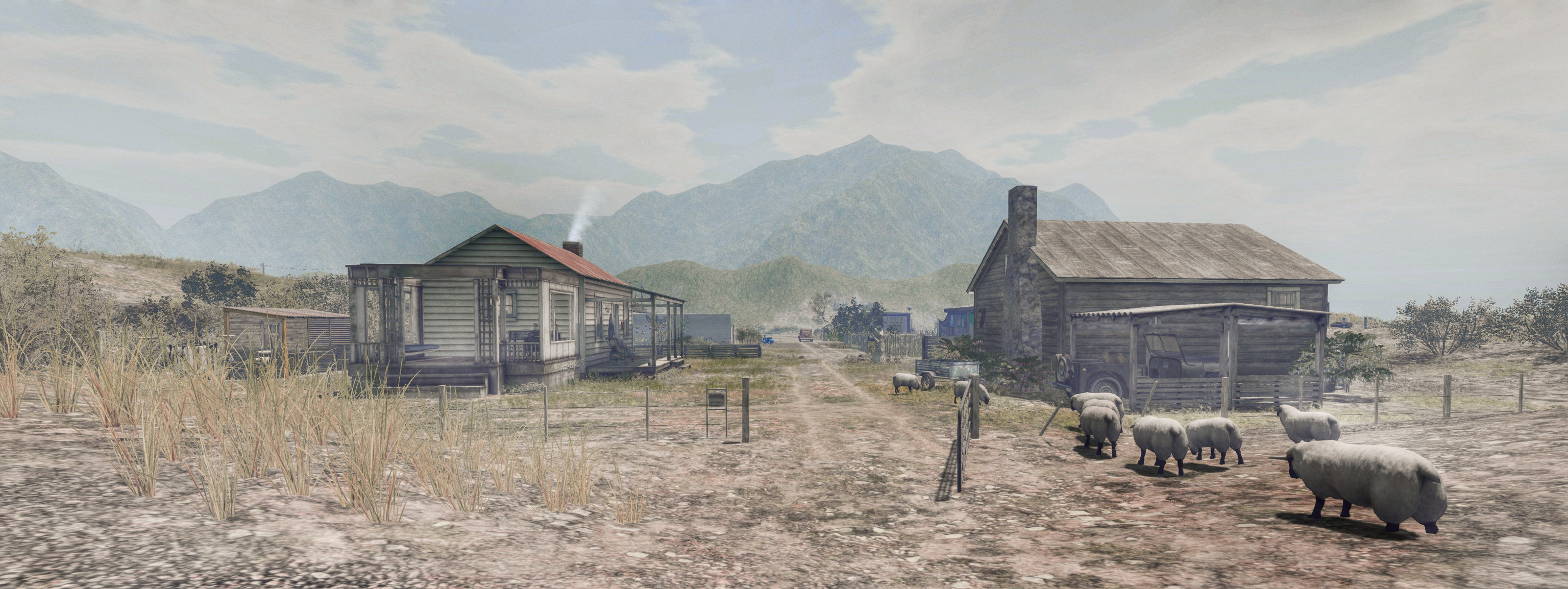
Birdlings Flat takes its name from a settlement in Canterbury, New Zealand, at the eastern end of Kaitorete Spit and the southern end of Lake Forsyth, where the lake discharges to the sea. It’s a place of rugged natural beauty named for the Birdling family, the first European settlers to farm the area.
Endless: Birdlings Flat, July 2022
In her About Land notes, Sombre describes the setting thus:
Inspired by a small and isolated coastal settlement in the South Island of New Zealand, Birdlings Flat offers wide vistas, unkempt fields, a pebbled coastline strewn with driftwood, a sprinkling of science, and a chance to find stillness.
However, prior to the arrival of William Birdling and his family, the area was called Te Mata Hapuku, with Birdlings Flat nowadays used to specifically in reference to the pebble beach on the ocean side of Kaitorete Spit, a location well known as a place to find small agates and a variety of other attractive rounded pebbles.
Endless: Birdlings Flat, July 2022
Designated as a rural settlement, the area actually thrived for a time as a centre of farming, even gaining its own branch of the local railway, connecting the area to the nearby town of Lincoln to allow for easier shipment of goods and produce. This line became known as the Little River Line when it was extended to another settlement (called by that name in the 1880s), and while the line was closed in 1962 and the tracks torn up, the route today is known as a public walking and cycling track called the Little River Rail Trail.
Over the years, the area has seen various uses – it is popular for those carrying out coastal studies, and the the waters are known for the presence of significant number so Hector’s dolphins and can be used by southern right whales, while during certain times of the year, fur seals and (occasionally) elephant seals can be found along the pebbled coast.
As well as coastal studies, the area was once used by the University of Canterbury for meteorological studies, the university establishing a weather station there for several years. Birdlings Flat has also been used for launching sub-orbital sounding rockets, using the US-built Arcas (All-Purpose Rocket for Collecting Atmospheric Soundings) system. These launches also fall under the prevue of the University of Canterbury, which also established a radar station in the area to monitor rocket flights and the airspace around the launch area.
Endless: Birdlings Flat, July 2022
The latter forms a part of Sombre’s build, which encapsulates the small, rural nature of the location and its tiny community (in 2018, the local population was just 195) whilst also capturing the rugged nature of the landscape and life along this coastal area simply but perfectly. It’s not a setting one needs to wax lyrical about, because it speaks very eloquently for itself, and exploration and photography within it are both a delight.
However, in order to reach Birdlings Flat, visitors must go via the region’s Landing Point, and this once again presents visitors with the opportunity to visit not one, but two settings within the region. This is because Sombre is once again joined by Jackson Cruyff, who offers people the chance to visit his Forest.
Occupying a sky platform some 2,000m above the ground-level setting of Birdlings Flat, Forest presents a wooded environment somewhat mindful of the North American continent rather than anywhere antipodean; a place left to the wilds and where assorted animals and wildfowl might be found wandering and / or circling over head. It’s a place where people can simply roam and find refuge, and also – for those who look – places to sit and contemplate.
Endless: Birdlings Flat, July 2022
Two easy-on-the eye settings; one offering a rich depth of background on one of the more remote parts of the physical world few of us are likely to have the opportunity to visit.