Mirai Melody’s Japanese fusion in Second Life

Mirai Melody, May 2024 – click any image for full size

Another year has passed, and so once again I decided to click my heels and make what is now an annual pilgrimage to Bambi’s (NorahBrent) Missing Melody. I did so because a little birdie informed me that she’d teamed up with Ethan Takeda to produce an interesting sky platform called Mirai Melody. However, the project didn’t start out with the intent to build a complete setting, as Ethan explains:

The inception of this street stemmed from Bambi and my initial vision to craft a backdrop for an editorial piece on NeoJapan for L’Homme Magazine April 2024. What began as a mere backdrop evolved into a captivating narrative, sparking discussions about creating a mini-sim. As ideas began to take shape, our conversations ignited a creative flurry, resulting in the birth of Mirai Melody.

– Ethan Takeda

Mirai Melody, May 2024

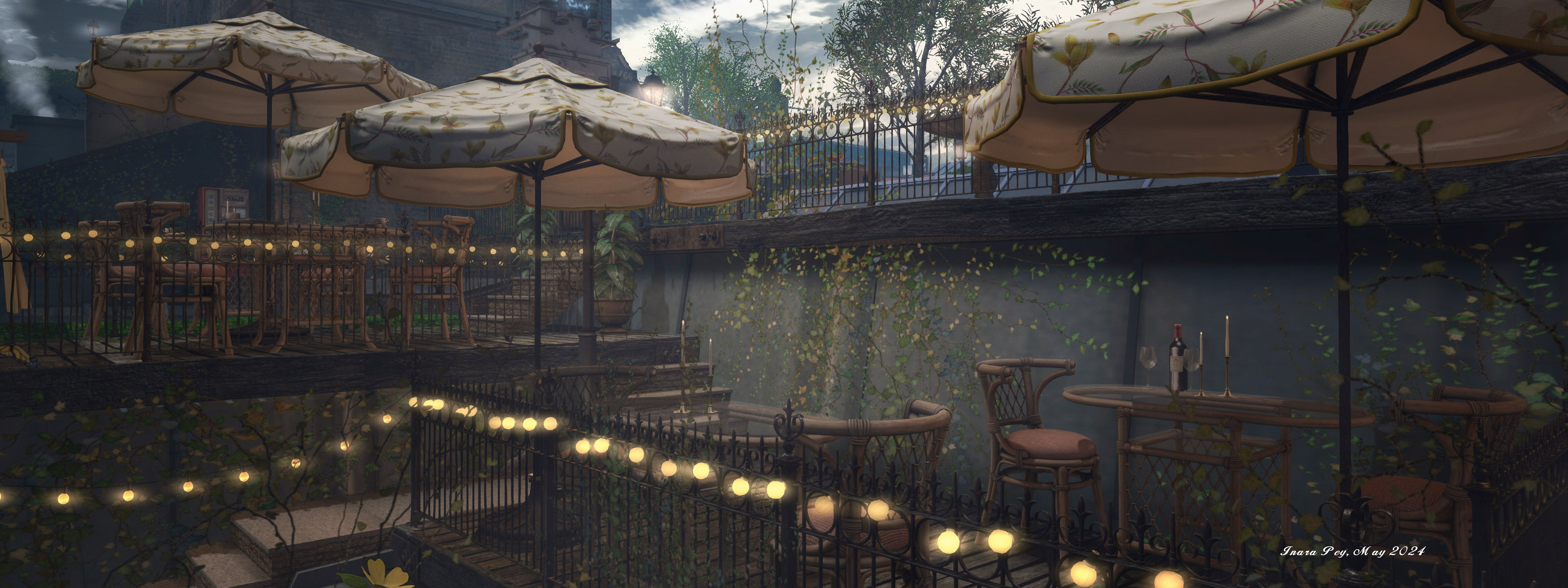
The setting comprises a single street “somewhere in [insert name here]” as the hoary old TV / film caption goes. Not there is anything hoary about Mirai Melody; rather the reverse, offering as it does an engaging fusion of “old” – a ramshackle environment in a city where the surrounding high-rises might well look down on disdainfully – but their very presence allows it to carry a life of its own; one edged in the bustle of local life and – going on the presence of certain individuals at the landing point – can have a frisson of danger associated with it.

The main street scene is packed with detail – I strongly recommend visiting using the shared environment and, if you can manage them, with shadows enabled. This will ensure you get the full impact of the setting. There are local sounds as well, but I admit I’m not sure they entirely worked for me although they certainly add depth to all the eateries along the way.

Mirai Melody, May 2024

This is a place rich in the tradition of the street market and what – going on the general friendliness evident throughout most of the street’s length – is likely a relatively close-knit community of small businesses support the local populace and possibly used to having tourists find their way through its length.

It is also a place which, as well as having a history to it, is very much of the present (or the future-present, so to speak). Holographic advertising is much in evidence, at one some are using “old school” mobile phones, other XR units which project information and data around them, and one of the sushi bars appears to have dropped in quite literally, given the thrusters located along its underside! Elsewhere, an apothecary’s shop offers a haven of peace, even if it does share the paved square in occupies with a noodle bar managed by mechanoid server that would look just as at home strolling across Mars!

Mirai Melody, May 2024

Away from the landing point and the paramilitary types loitering there (are they the local militia? Here to keep unwanteds out or to stop those here wandering into the city proper? I’ve no idea – you make up the story for yourself!). Fortunately, most of them appear to be preoccupied by the flickering holo dancers just to the side of the landing point, so slipping past them is not a problem – although their presence appears to be enough for one stall owner to feel the need to wear a sidearm and another to look as if she’d happily bop the snoz of anyone remarking unfavourably on the gifts on her stall!

Mirai Melody, May 2024

Further along the street things are a lot friendlier, as noted above, and visitors can mangle with the static NPCs, poke at the shops and stalls, slipping (literally in one case!) into a side-alley to find a book stall or through a doorway into a bar or a little old-style school.

For photographers, Mirai Melody is a delight, whilst the touches of detail and humour are bound to raise a smile. There might be an tendency to look at it quickly and think Bladerunner (as someone commented in local chat whilst I was hopping in and out), but I’d disagree. Whilst mixing an Oriental street scene with cyberpunk / futurist elements might have caused Ethan and Bambi to lean in that direction, they have wisely avoided the temptation and instead come up with something visually unique and engaging.

Mirai Melody, May 2024

Visit and enjoy it whilst it lasts!

SLurl Details

Alpha’s Quiet in Second Life

Quiet, Alpha Auer, May 2024 - click any image for full size
Quiet, Alpha Auer, May 2024 – click any image for full size

I made a return trip to Alpha Auer’s Alphatribe Island recently, after tripping over its latest entry in the Destination Guide. The last time a visited – just over a year ago, the region was hosting Alpha’s Mythologies, “a curation of cultural artefacts that were found on a vast 3D resource called Sketchfab”, which you can read about here.

Quiet – the name of the installation which drew me back to Alphatribe – sees a return of Alpha’s own expressiveness as a visual artist and content creator. In all, it spans a total of four levels, including the ground-level area, with three platforms sitting overhead (along with Alpha’s store), all connected to the ground by a tall scaffold tower. Fortunately, climbing the tower isn’t necessary to reach these upper levels, as a teleport system connects all of them together, and be found at the base of the tower.

Quiet, Alpha Auer, May 2024

As is common with Alpha’s style, the setting and levels are both enigmatic in interpretation and captivating to view. No explanation is offered – although local instructions are – and so interpretation is left entirely up to the individual, although some clues might be had from the names of the sky platforms as listed on the teleport menu.

In terms of the region viewing instructions, these are essentially to have shadows enabled – as this is a sunset style of environment, where the shadows are part and parcel of the whole thing (purely for illustrative reasons here, I did jockey with the position of the Sun when taking photos, to help illuminate details), and to enable the region’s media stream (the movie camera icon, top right of the viewer window).

Quiet, Alpha Auer, May 2024

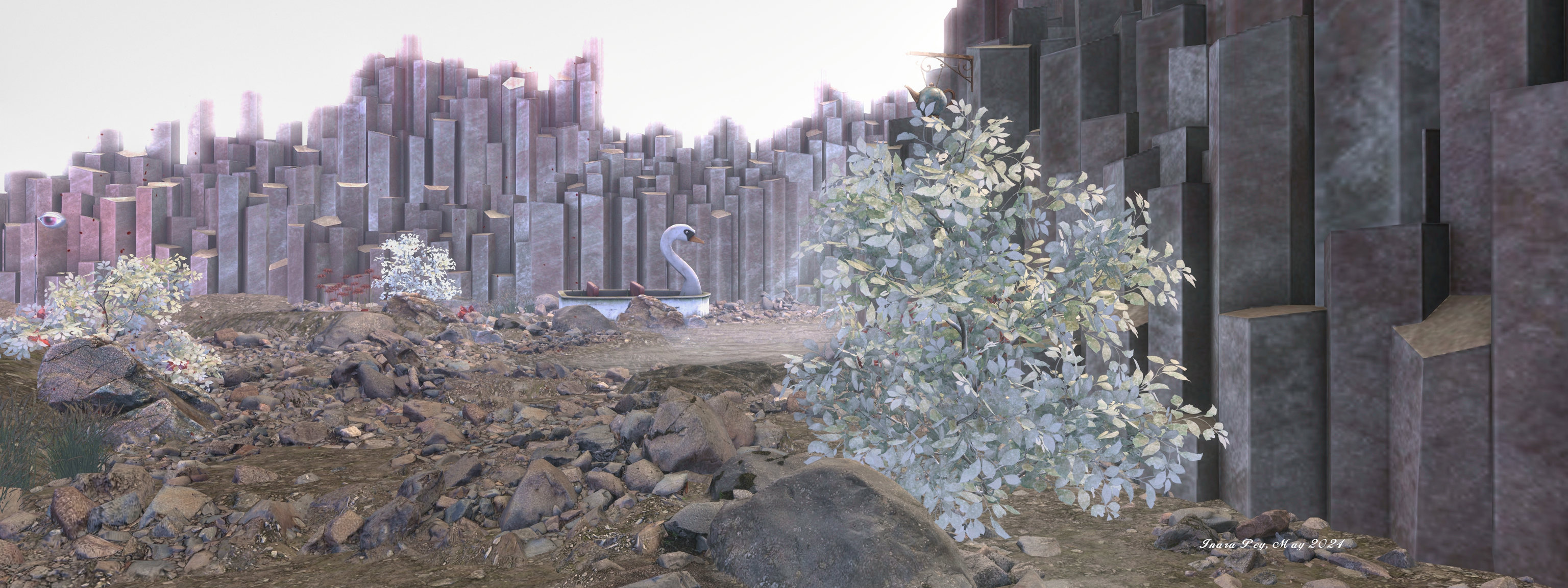
The ground level area comprises a series of vignettes, all easily reached on foot from the landing point and existing on a sandy island with high dunes. The architecture throughout is in Alpha’s familiar use of geometric forms and structures – with some Oriental influence as well. A question might be asked as to whether we are on Earth or not; the locals appear humanoid, but also faintly alien in the manner in which they dress and decorate their bodies.

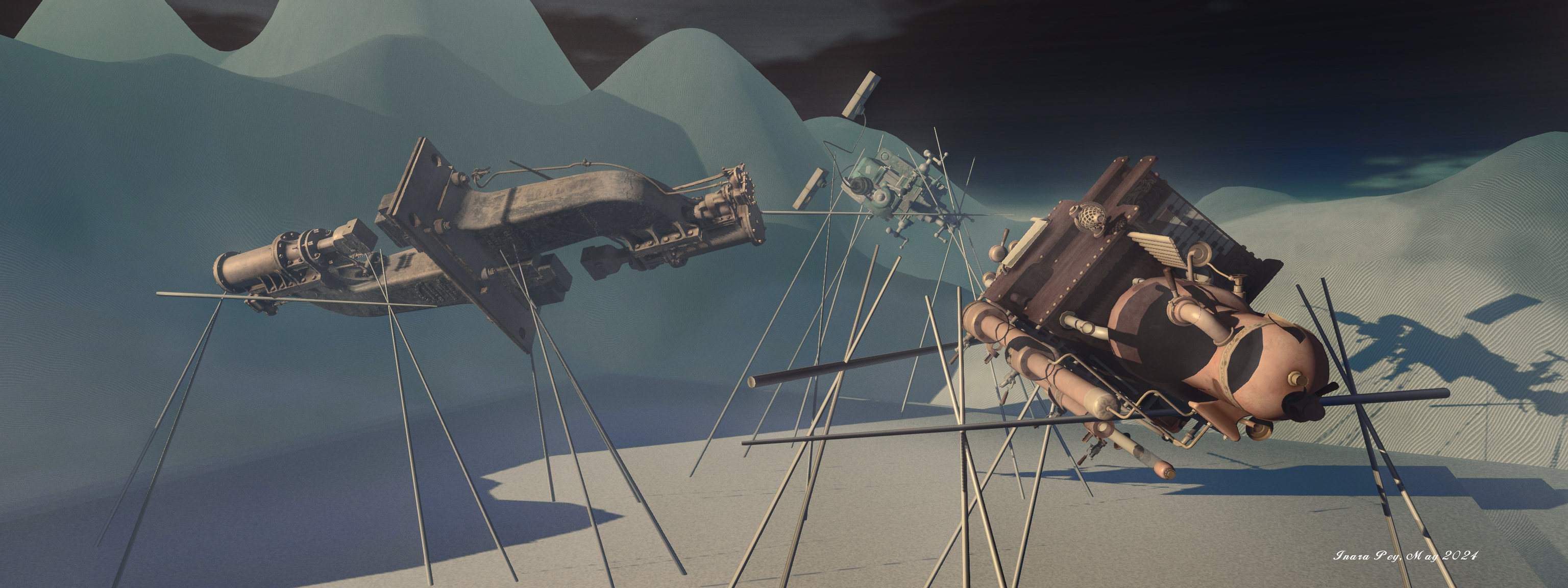
This is a place where technology appears to be common, if a little aged or at least mixed. There are both Steampunk and Dieselpunk vibes to be found throughout, whilst machines and tools (such as a very human hand drill) stand as sculptures supports on spindly scaffolds. to one side a huge generator appears to be providing power to an equally huge projector, whilst further afield, another machine appears to have been raised over a rotunda and wedding couple.

Quiet – Bestiary – Alpha Auer, May 2024

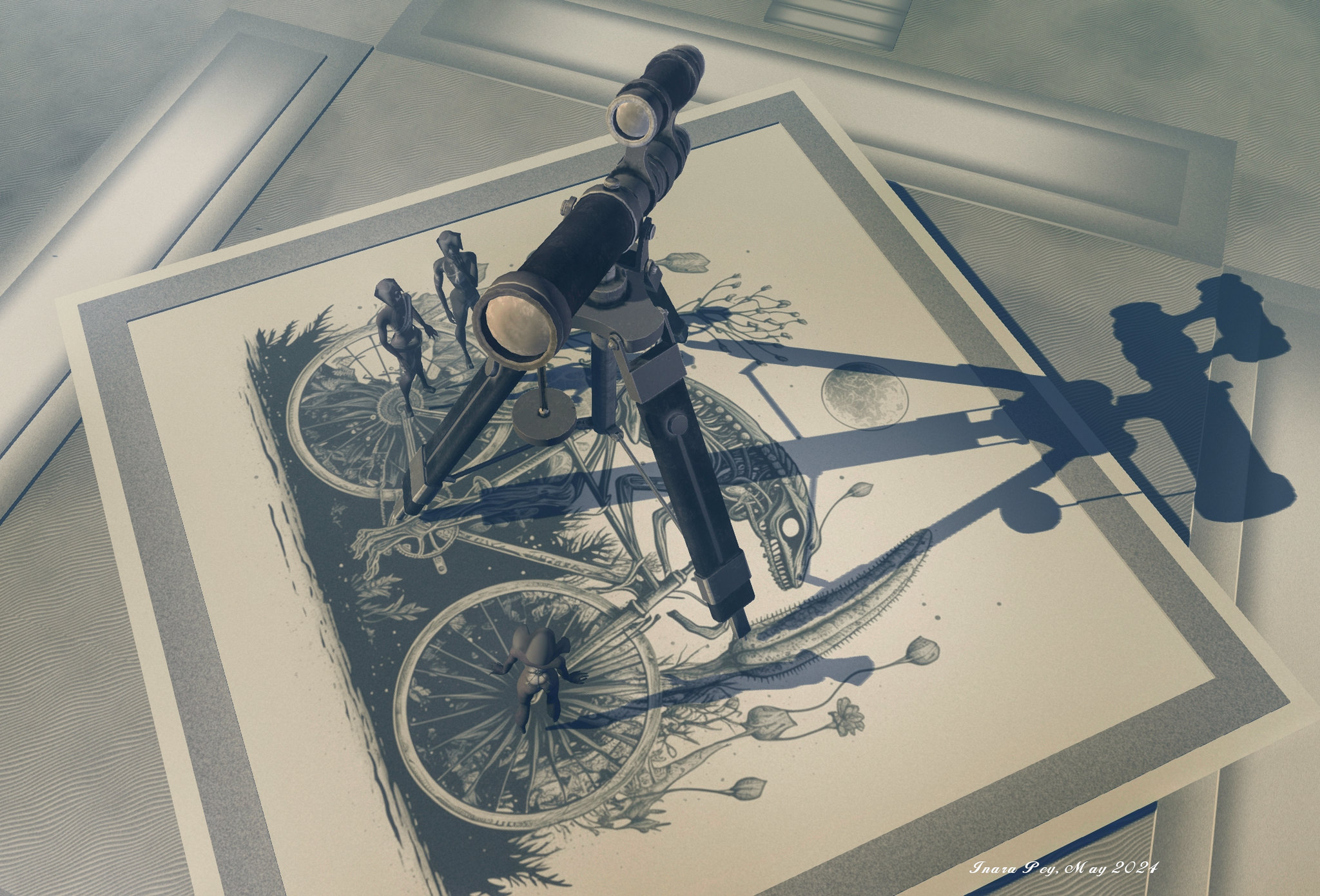
The sky platforms, meanwhile, offer more individual vignettes we might attempt to form into stories of their own. To take them in the order presented by the ground-level teleport, the first is called the Bestiary, and is – unsurprisingly, given the name – home to a celebration of the most exotic animals, the majority offered in 2D illustrations beautifully rendered as if forming the illuminations of an ancient and revered manuscript.

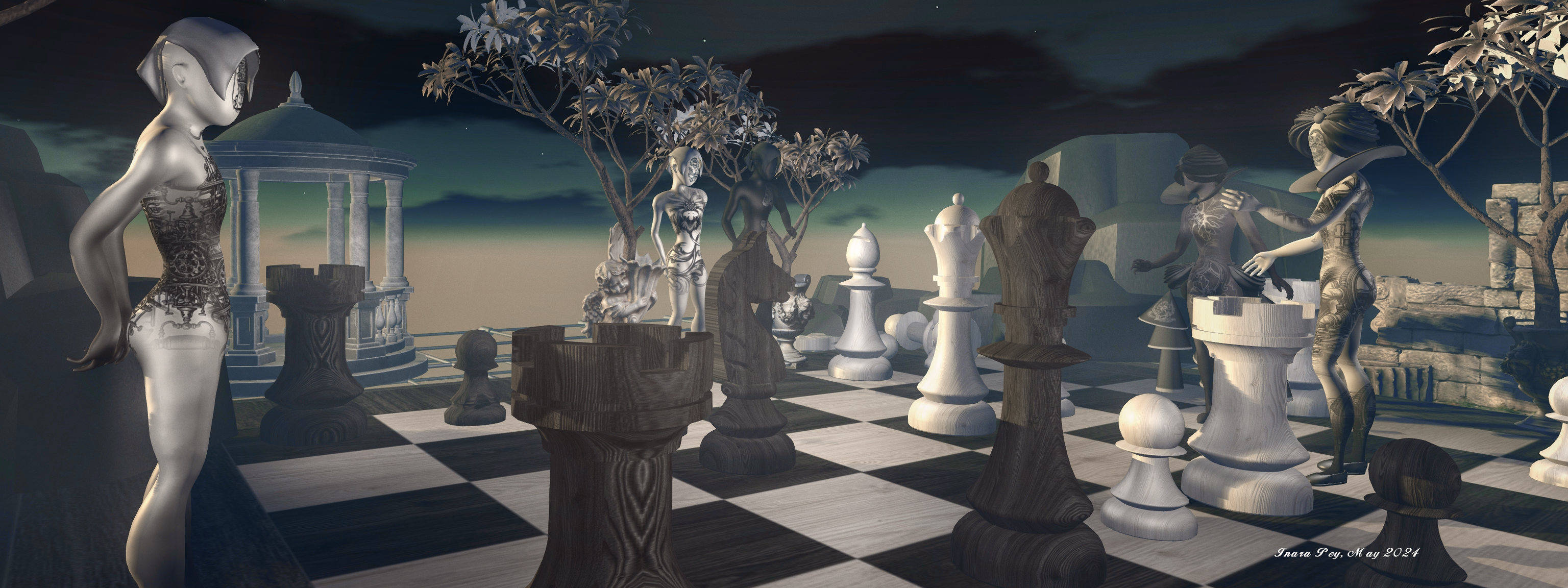
Below this, and within a garden, some of the body-painted locals are engaged in a game of chess. But are they actually living people or are they automatons? I have no idea – but their style of body and facial painting makes for an interesting cogitation of the question.

Quiet – Chess – Alpha Auer, May 2024

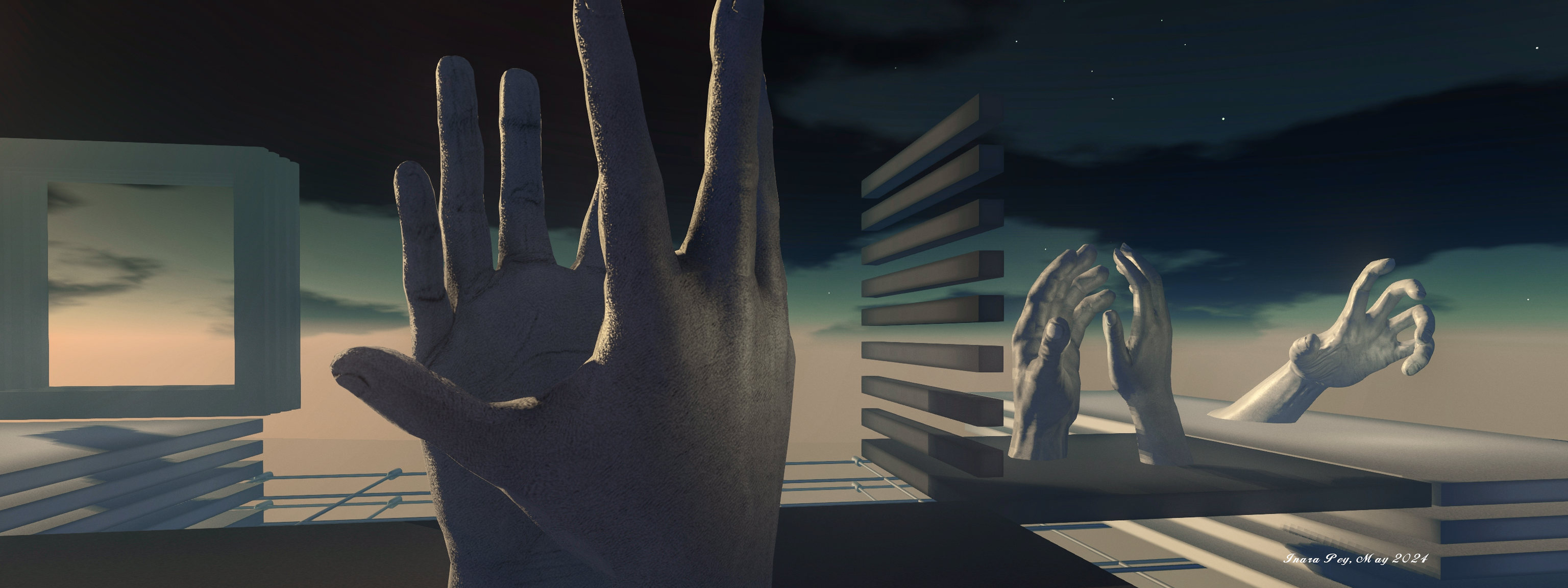
The last and highest platform is Hands, a series of sculptures of the human hand, once again – and as well Bestiary – placed within an environment formed of and divided by, geometric shapes. However, this installation stands slightly apart from the rest, as Alpha explains at the teleport landing point on the platform:

Hands was made for the artist Lampithaler, who resides on the OpenSim on the Pangea Grid. Although I am the artist who made it, it is her property, and she very graciously gave me permission to rez it here in SL. 

The plaque on which this information is provided includes details on how to reach the original version as seen on Pangea (for those who have or wish to create a suitable OpenSim account.

Quiet – Hands – Alpha Auer, May 2024

All told, another fascinating installation from Alpha, one worth taking the time to see and appreciate – and for lovers of exotic avatars or those who wish to obtain a copy of a scene and / or any characters displayed within Quiet or from some of Alpha’s past installations, do be sure to drop by the store.

SLurl Details

  • Quiet (Alphatribe Island, rated Moderate)

Caught within a Butterfly Effect in Second Life

The Butterfly Effect, May 2024 – click any image for full size

The butterfly effect is most commonly referenced as a part of chaos theory; it is the idea that a seemingly trivial action or change in one thing or place (such as the flapping of a butterfly’s wing) can result in a very non-linear and much larger change (such as a tornado) elsewhere. In this respect, the term is most directly associated with mathematician and meteorologist Edward Norton Lorenz, although he originally referenced a seagull flapping its wings to produce the change but was persuaded to change it to butterfly as the latter sounded more “poetic”, and the core idea goes back much further than Lorenz.

Within Second Life, the name has been selected by Vally Lavender for a full region she has designed along with Megan Prumier. However, the name should not be taken to mean that either Vally or Megan are offering any form of visual treatise on the effect itself – although one might be fooled into believing this might be the case when arriving at the region’s landing point (if you have local sounds on – and you should for a visit – just make sure the volume is turned down a little when teleporting into the region – the sound scape at the landing point is a little loud). Rather, they have sought to create a region which can mix themes, roles, outlooks and ideas – and perhaps offer a challenge to us in terms of who we are: change one thing, change everything.

The Butterfly Effect – Chaos Theory, May 2024

This challenge is displayed at the landing point, sitting on the side of a large stone archway. Walk under it and  – literally – into the light, and you will be collision teleported to the first of two settings located within the region. In doing so, the purpose of the region is revealed: to provide a locations that is photogenic, largely open to exploration by visitors, a potential home to those who might wish to live within it, and a club / event venue.

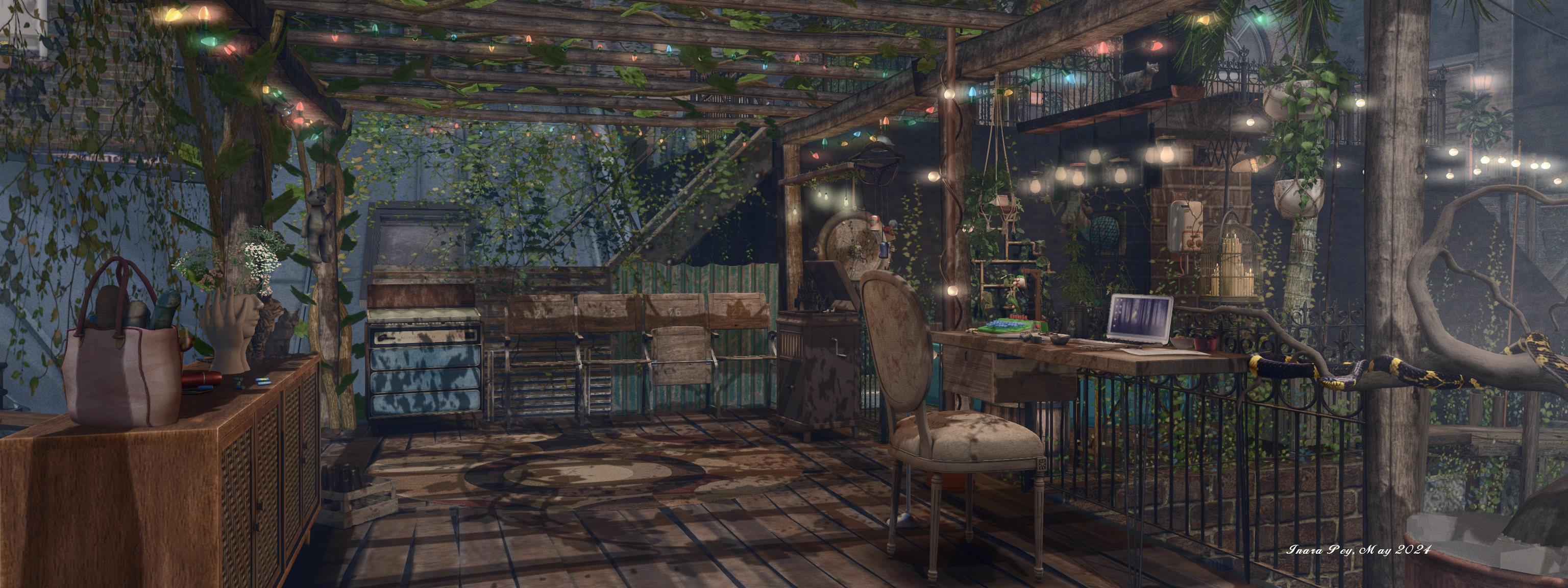
Called Chaos Theory in keeping with the overall theme, this first setting has been built by Megan. It takes the form of a rooftop environment over a city somewhere; a place where the building are so closely packed, it appears the gaps between them have been built over using decks and walkways to provide a new and continuous living and social space for the locals. Within it might be found shops, places of business, a café, places to live (including actual rental apartments scattered around – so please watch for the signs and be careful to avoid trespass onto people’s private retreats), places to sit and pass the time, and a lot to see and possibly photograph.

The Butterfly Effect, May 2024

One of the largest open spaces within the setting is the open-air club space, which I understand will be the home for DJ led events in the setting every couple of months and is the place where visitor touch down following a teleport from the landing point. From here one can wander the walkways and space, climbing and descending steps and iron stairs that might have once served as fire escapes only, but which now do far more, discovering all the little corners and details which come together to offer an intriguing mix of influences, suggesting in own part a Japanese lean, in another a more Parisian rooftop setting and elsewhere touches that feel distinctly American in origin.

There is a ramshackle beauty spread throughout these rooftop spaces that is admirable both in the level of detail provided and in the sense that this is a real, bohemian-leaning community of like-minded souls. It’s a setting with a real sense that music, art and creativity all flourish without ever being forced or artificially nurtured; somewhere where everyone lives more as an extended family than mere friends and acquaintances drawn together through shared interests.

The Butterfly Effect – Chaos Theory, May 2024

This latter point is well evidenced as one explores; garden spaces and little personal nooks and corners open off of the walkways and open spaces without any let or hindrance to those happening past them. Instead, they offer an invitation to come in, sit, share a drink and chat or play a game of dominoes or simply enjoy the company of the local feline community (of which there are a few!).

The club space is also home to a teleport door that will drop those left-clicking it down to ground level and The Butterfly Effect as designed by Vally.

The Butterfly Effect, May 2024

This is a very different location to The Chaos Theory, offering a pair of subtropical islands, one of which forms Vally’s private home and is thus not for uninvited wandering. It lies to the south of the region, separated from its larger sibling by a fast-flowing channel of water spanned by a single bridge (complete with sign noting it is private), thus making it hard to miss. Two further private residences are located within the larger of the two islands, one to the east and the other to the north-west; again, both are clearly signposted to help avoid accidental trespass.

There are a number of other buildings on the larger island, starting with the large greenhouse / landing point with its information board and teleport boards. Close to this is a smaller rotunda, where tea and cakes might be enjoyed, perhaps followed by a stroll along the beach forming the edge of a shallow cove to the island’s north side. More centrally, and within the ruins of what might have once been a small chapel, is a place where music might be enjoyed, whilst to the west are two further buildings worthy of additional mention: the Mariposa Bath House and the Quantum Coffee House.

The Butterfly Effect – Chaos Theory, May 2024

Both of these venues are reflective of the Adult rating for the region, in that nudity may be encountered in the former, whilst the art in the latter might be considered not suitable for work (NSFW) containing as it does images of female nudity. To avoid too much offence / confusion, access to the Bath House is restricted to Valium group members (joining fee L$250, which also grants rezzing rights should you want to use props for photography – but please pick them up when done!), and those not wearing the group tag will be given a polite but firm warning to remove themselves from the Bath House by the security orb there.

The Coffee House is open to all and offers a pleasant environment in which to pass the time, with plenty of seating on sofas and at tables. Many more places to sit and relax can be found through the setting, both on land and on the waters around and within the island, including within gazebos, under the branches of trees in the form of benches and swings, on the beach along the paths and terraces, and so on, with various elements available for photo poses as well (like the bicycles in their rack or the piano and harpsichord in the chapel ruins).

The Butterfly Effect, May 2024

The region does have a set of behaviour rules relating to it, and these are worth reading through  – click one of the information boards to obtain them. It is also finished with specific EEP settings, so I’d suggest visiting both Chaos Theory and The Butterfly Effect, I would recommend having your viewer set to Use Shared Environment, and my earlier warning about sounds at the landing point notwithstanding, do have local sounds enabled when exploring.

SLurl Details

The Butterfly Effect / Chaos Theory (rated Adult)

Visiting the Lenixus Project in Second Life

Lenixus Project ~ Chapter I : The Snail Princess, May 2024 – click any image for full size
I took some time to build something a little more ambitious I admit…I welcome you to this new edition, the first chapter of a long story. This story will evolve as the project does, so don’t be in too much of a hurry. Let’s not rush. Let’s evolve together in this adventure.

– Len Teardrop

With these words on her Flickr stream, Len Teardrop invites people to visit her Lenixus Project ~ Chapter I : The Snail Princess, an engaging installation occupying a sky build within a quarter (or thereabouts) of a Full private region.

This is intended to be an evolving story, told both visually and through prompts and sounds, with Len planning on presenting a new scene (a new chapter?) about every four months – although as she notes in the About Land description, the entire idea is still evolving, and so things might not be stable insofar as direction, updates, and so on, are concerned.

As it stands at the time of writing, the installation comprises a number of elements, starting with the landing point. This serves to provide an introduction to the story, present links to view the installation’s Group and Flickr and provide instructions on viewing the installation (essentially just set the viewer to Use Shared Environment and to which I would add, make sure that local sounds are enabled, as there are collision-triggered spoken word narrative elements in places); all perfectly presented as writing on a chalkboard and as drawing.

Lenixus Project ~ Chapter I : The Snail Princess, May 2024

Note, as well, that the EEP setting used within the installation are available as a gift leaning against one of the chalkboards for those who wish to take them.

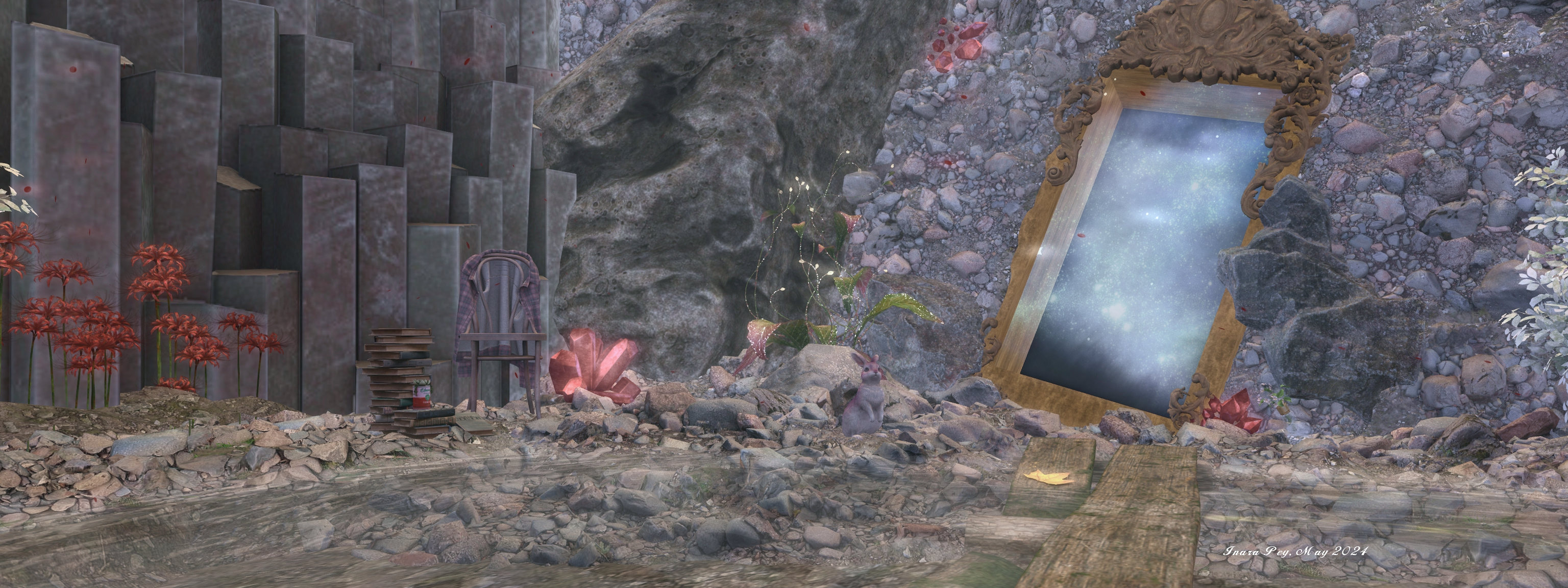
That morning she had resigned herself to walking through the mirror. The unknown, which was hidden behind the pale reflection of its slim shape, frightened its reason with obscure doubts and uncertainties, but her curiosity and her need for constant flight made her heart beat with an arrogant rhythm that led her to fall beyond the mirror.
That morning it all started.

– Lenixus Project Chapter I introduction

From here, passage through the door drawn on one wall carries visitors through to the first major scene.

Lenixus Project ~ Chapter I : The Snail Princess, May 2024

Offered in the same white as the landing point, the first scene has a trio of vignettes, all laid out in such a way that they might be photographed as a whole, or as individual elements. Each has plenty of opportunities for taking avatar–centric image, and they should each be examined carefully, as there are a multitude of details which might help frame your perception of the tale being told.

Lenixus Project ~ Chapter I : The Snail Princess, May 2024

What that tale might be is really open to interpretation; I found myself led in a certain direction, but as this was likely a result of my own personal bias towards matters of identity, adolescence, maturity, and growth, I’m not going to say any more here because I rarely don’t want to impinge my thinking on yours.

All I will say is that there is, perhaps, an interesting question to be asked from the outset; one posed by the framing paragraph of the story as it appears on its chalkboard: is this a tale told from the perspective of a child or young person (as suggested by the drawings and the use of the term “princess”), or might we actually be witnessing the narrative from the point of view of a much older person, a woman perhaps looking back on days passed? This may well become clearer in future chapters – but the fact that the question might be asked can have an interesting effect on how the entire installation might be interpreted.

Passing from this initial trio of vignettes to the next scene is a case of following in the footsteps of that girl / woman – finding and then stepping through a mirror (follow the water to find it!) and into the unknown.

Here, under a bent lamp, sits the figure of a man – father? Grandfather? Stranger? You decide. Reading a paper, he acts as the anchor point for three surrounding scenes, with opportunities to sign the installation guestbook and offer a donation to Len’s work on either side of him.

Lenixus Project ~ Chapter I : The Snail Princess, May 2024

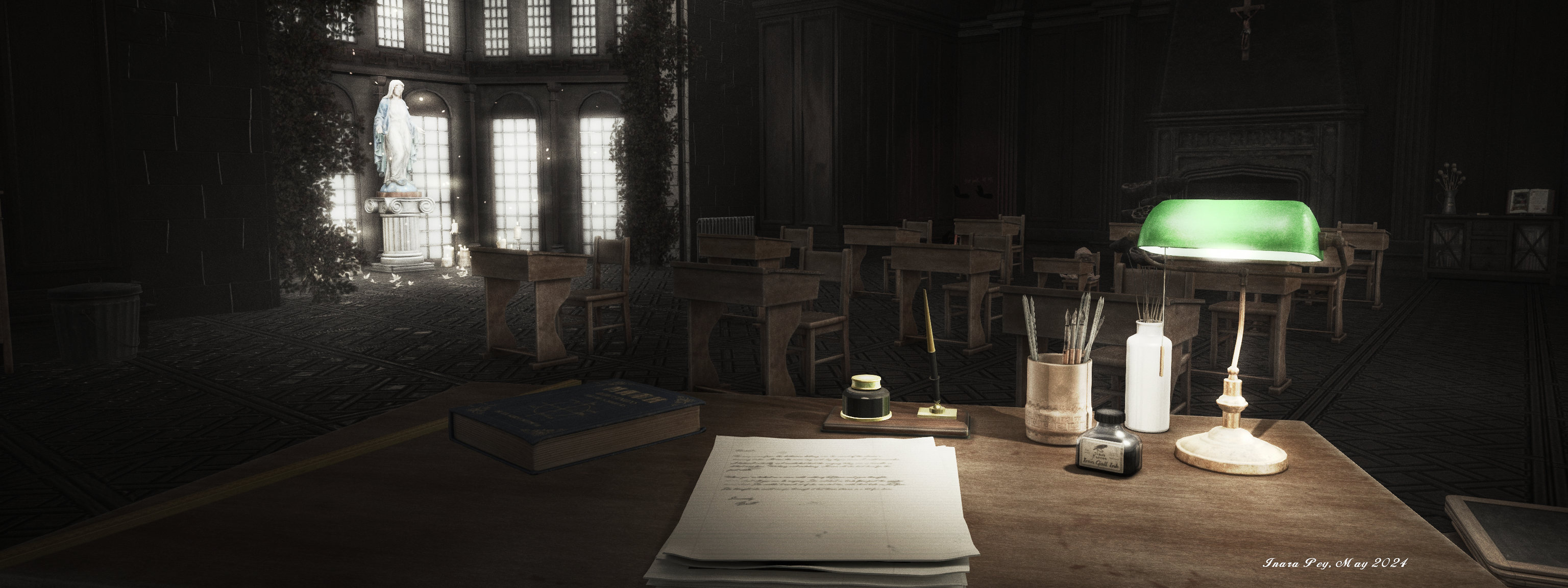
If there is an order to viewing the three scenes, it is one I didn’t see noted – but I would recommend taking the School first (indicated by the iron gate) the (possibly) indicative name Ecole Jeanne d’Arc mounted on the wall beside it, then move on to enter through the Castle gatehouse, and leave the road tunnel until last.

Once again I don’t want to say much about the School or the Castle. Both appear rich in symbolism and metaphor and offer multiple opportunities for avatar-centric photographs. All I will say is that to leave the School, pass back through the doors (they will be behind you on entering), and to leave the gardens of the Castle, pass back through the hole in the wall (again, behind you on entering).

Lenixus Project ~ Chapter I : The Snail Princess, May 2024

As with the trio of vignettes in their white space, both the School and the Castle / garden (which could perhaps benefit from a surround to block out the looming distraction of the residential skybox next door) are rich in content and elements which might be taken as either symbolic of the story, or metaphors to direct how we might interpret it (for example, rightly or wrongly, I found the manner in which the thorny brambles are breaking through the walls of the garden to be potentially symbolic of the story’s possible meaning).

The final scene, reached through the road tunnel, drops visitors into a more worldly setting which is in part literally under construction, with a couple of men putting up prims and slapping on paint. This offers the suggestion that the tale is to be continued here, although it also contains elements which might already be a part of the story, together with at least two potential exits-in-waiting for onward transition. As such, it offers both an enticement for what is yet to come and further opportunities for considering the story thus far and  / or taking photos.

Lenixus Project ~ Chapter I : The Snail Princess, May 2024

Imaginative, creative and with a near-perfect execution, Lenixus Project is engaging, intriguing, photogenic – and well worth visiting.

SLurl Details

Alone: an immersive literary experience in Second Life

Alone, May 2024 – click any image for full size

It has been a fair time since Sheldon Bergman (SheldonBR) has presented an immersive experience within Second Life; so when he contacted me personally to tell me he has a new installation available for people to visit, I was immediately intrigued, and as soon as time allowed, I followed his invitation and hopped over to Alone.

Often working in collaboration with Angelika Corral – with whom he once co-ran the always engaging DaphneArts gallery and arts centre – Sheldon earned a rightful reputation for developing immersive art installations leveraging the (then new) capabilities of SL Experiences. In particular, these installations sought to bring the work of poets and artists from the physical world to life within the virtual, with a noted focus on the life and works of Edgar Allan Poe (as covered in these pages, for example, by A dream within a dream: celebrating Poe in Second Life (2017) and Annabel Lee in Second Life (2019)).

Alone, May 2024

With Alone, Sheldon continues within this theme, presenting installation with a personal dedication to Angelika, featuring what is Poe’s most revealing – and potentially his best – verse. It may not be as well known as the likes of The Raven or Annabel Lee – in fact it wasn’t even published until well after his death in 1849, finally appearing in print in 1875, having been held within the possessions of a family in Baltimore – but what it does say does much to help our understanding of Poe’s nature and what lay behind his writing.

Exactly when the poem was written is unclear; the original manuscript was both untitled and undated. However, the year is widely taken as being 1829 – no doubt the result of the poem’s first publication being accompanied by a facsimile of the original manuscript and on which the editor of the magazine had taken upon himself to add the date “March 17, 1829”. As this does sit as the middle year of the three in which Poe’s poetry was at its most focused terms of annual output (the other two being 1827 and 1831), it’s potentially not unreasonable to pin it to that year.

Alone, May 2024

But whether it was 1829 or 1827 or 1831, the poem would have been written when Poe was in his early 20s; as such it shows a remarkable sense of self-awareness and personal perception. At its heart, Alone focus on themes of loneliness, isolation and – most particularly – of being different and apart from others. It marks how Poe had always known he had a substantially different outlook to those around him, one that has existed from a childhood in which he saw himself unable to see things as other children saw them, perhaps because of the tempestuous nature of his first two years on Earth, marked as they were by abandonment by his father, the death of his mother and his being taken into a strict foster care – as the poem directly references:

And all I lov’d—I lov’d alone—
Then—in my childhood—in the dawn
Of a most stormy life—was drawn

Alone, May 2024

This autobiographical element flows throughout the poem, right up to its open-ended final line in which the dash seems to state, that just as he past and present life had been, so to will be the future; whatever might pass as normalcy for those around him will forever be a foreign land to him, whilst his world will forever be beyond their understanding.

In this, Alone perhaps does more to shine a light on Poe’s short and tortured life than any amount of analysis of his work or examination of his death , both of which are too often the focus of any such analysis. Hence why, perhaps, Sheldon’s installation includes references to some of Poe’s famous works, both visually and through quotes: The Fall of the House of Usher (1839); The Black Cat (1843); The Raven (1845); A Dream Within A Dream and Annabel Lee (both 1849); doing so underlines the foundational element of understanding Poe’s view of himself any thus all of his writing.

Alone, May 2024

To appreciate Alone in its fullness, visitors should accept the local Experience after arriving at the landing point by clicking on the displayed poster. This will allow a HUD to be temporarily attached to the viewer – it will detach on leaving the region, but must be left in place through a visit – which will initially offer instructions on how to correctly view the installation. In short these are: use the local Shared Environment; make sure local sounds are enabled and you have Advanced Lighting Model (ALM) enabled via Preferences → Graphics. Once these points have been followed, clicking on the HUD text will deliver visitors to the installation proper.

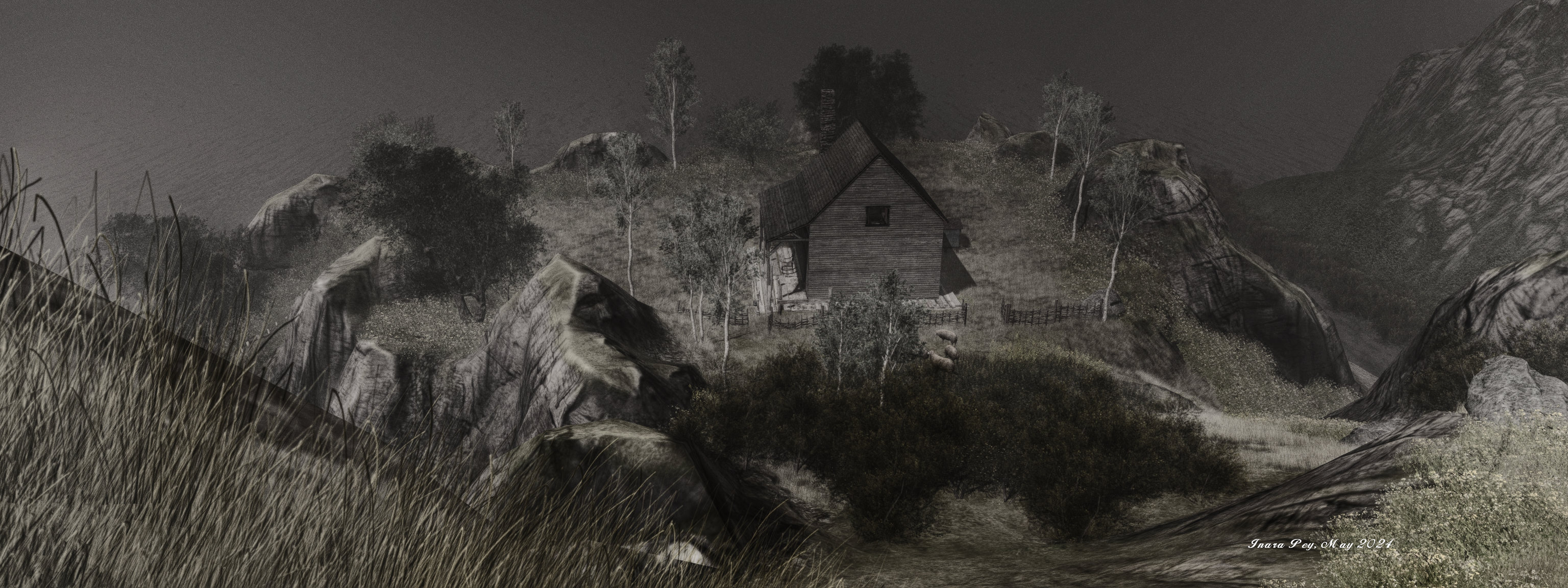
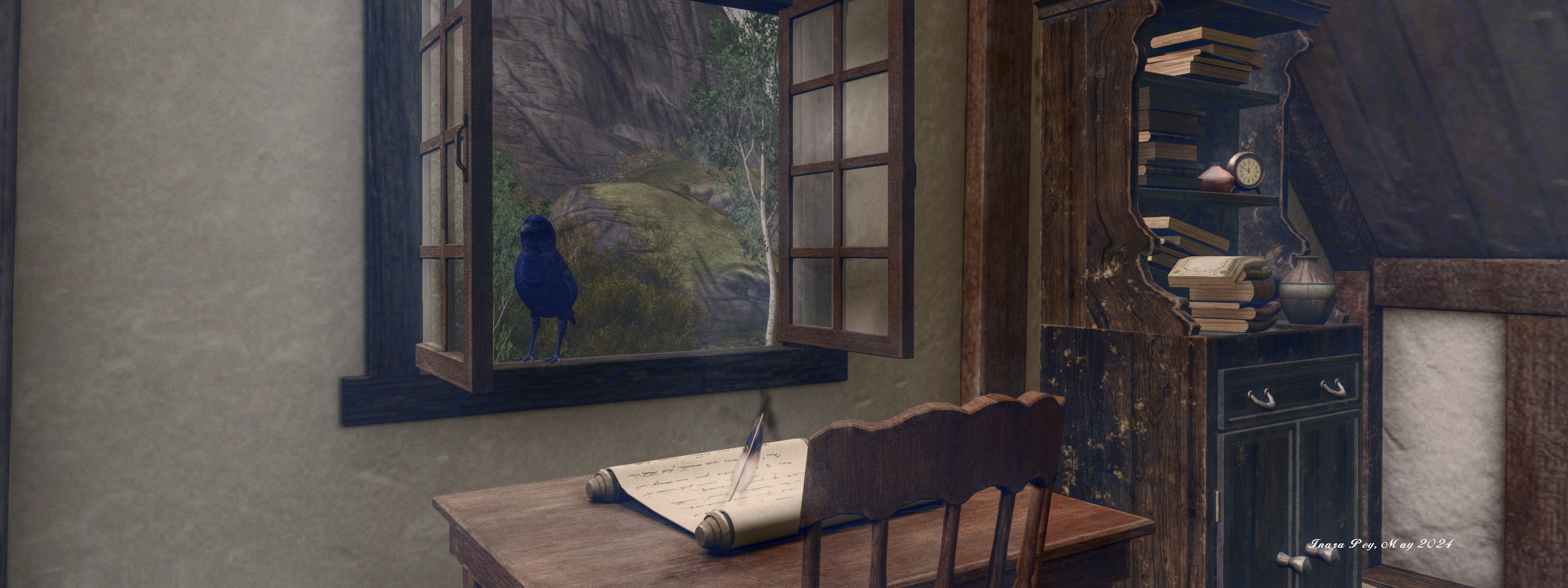
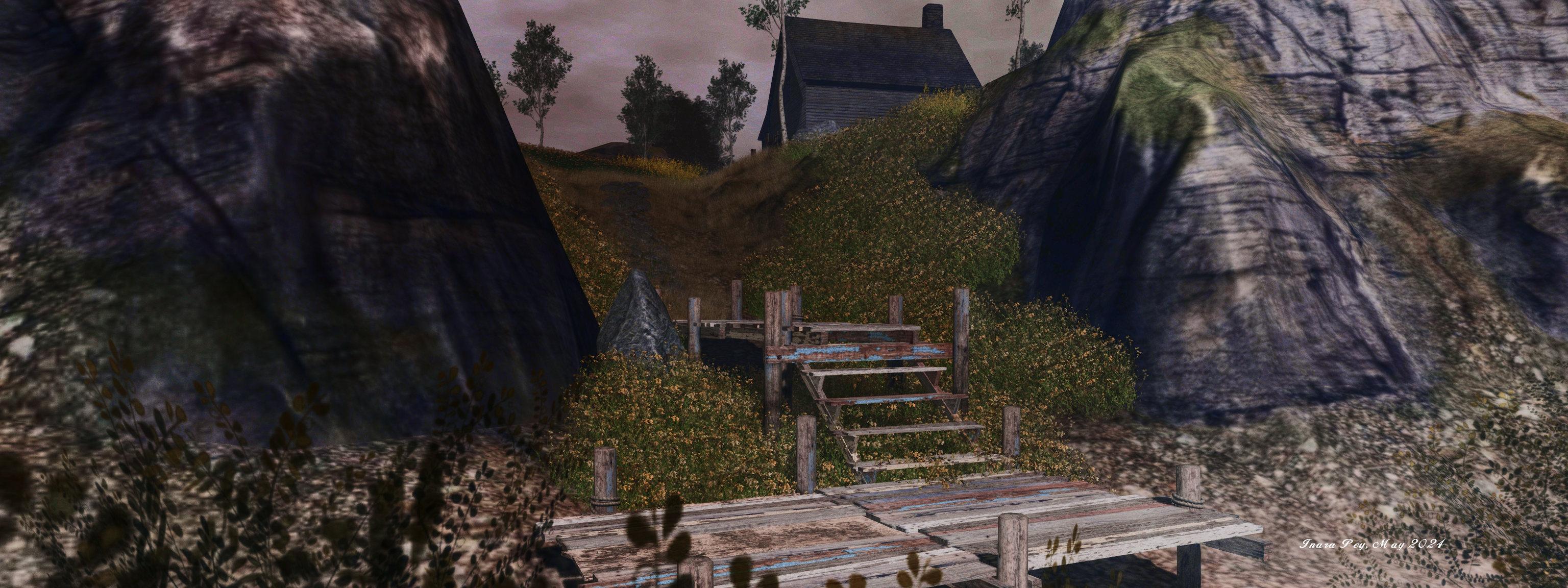
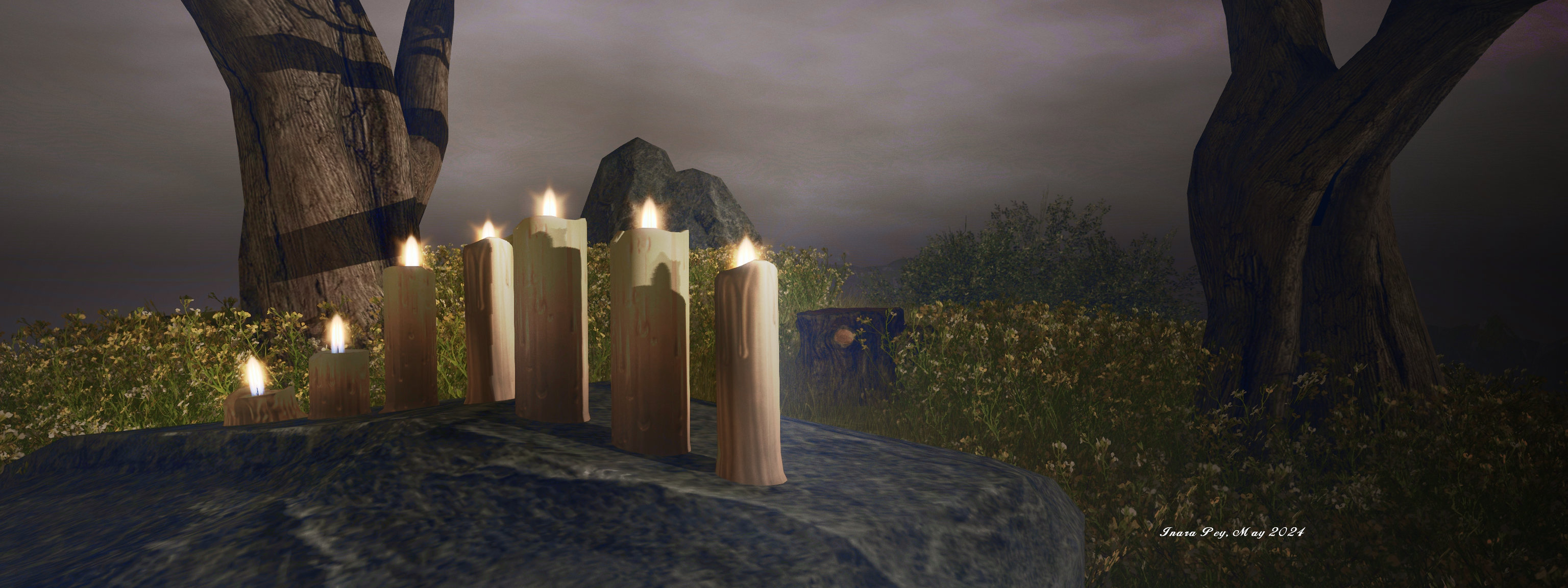
From here, it is a case of walking through the landscape from the landing point, up to the cabin sitting on the shoulder of a hill and then through it (upstairs and down), before exiting through the back door and following the path down to the waters and pier at the back of the cabin. In doing so, visitors will trigger visual elements at various points (such as the candles lighting to guide you up the hill) and text elements within the HUD, whilst also encountering reflections of the poems and stories the text references. Some of the latter might be obvious (such as the rave at the open bedroom window) others perhaps less so (e.g. the image on the wall of the cabin; the cabin and the wilderness in which it stands, etc.).

Alone, May 2024

The final element of the installation requires climbing the ridge rising from the east side of the cabin (where the sheep are grazing) to run first south and away from the cabin and then back to the west as it rises to reach the top of a hill overlooking the landing point far below. Crowned by a trio of windswept trees standing as bent-backed guardians, the hilltop is home to a low, alter-like stone within candles and a tree stump seat. It’s a place I have little doubt the poet would have approved for the recital of his poem (triggered as visitors reach the trees), its isolation and position apart from the rest well suited to the poem’s themes. Further, in coming at the end of the experience, it offers another underlining of the poem as a means to better understand Poe and his work.

Alone might not be the easiest of installation to grasp, but for those with a love of poetry and the work of Edgar Allan Poe – and who indeed who might feel separated and apart from the rest of life for whatever reason – it is an engaging and potentially evocative one.

SLurl Details

  • Alone (Canary Islands, rated Moderate)

Vindfjell: Nordic Beauty in Second Life

Vindfjell, May 2024 – click any image for full size

Open for a period of a month – through until late May 2024 – is a new Homestead region design by Dandy Warhlol (Terry Fotherington). Called Vindfjell, it is a marvel of windswept, Nordic beauty, balancing the region perfectly against the surrounding backdrop.

It’s my wont to often try to place regions with natural settings like this against locations within physical world which they might – if they existed – reside, or at least helped to inspire them. In some cases, this is helped by the region creator pointing to their inspiration or inspirations for their designs; sometimes it is possible to take a lead from the overall design and the designer’s background; other times, it is pure guesswork and imagination on my part.

Vindfjell, May 2024

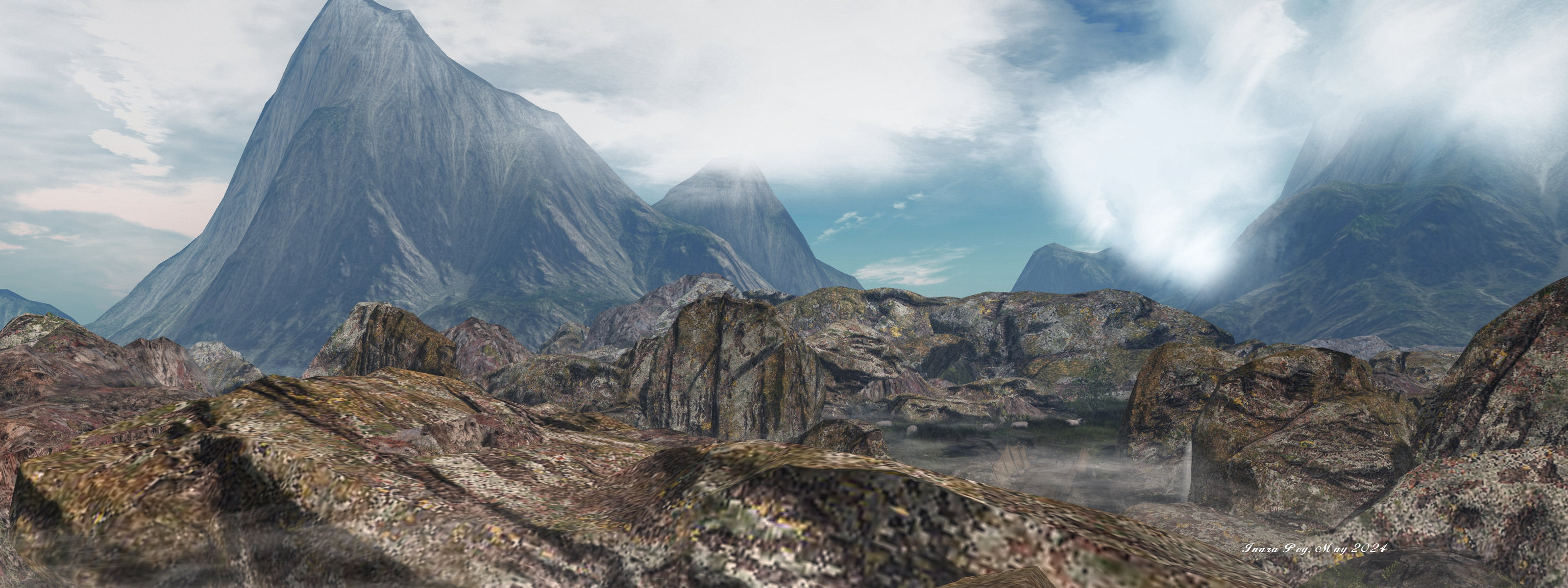
With Vindfjell, it might be easy to point to Telemark County in Norway – specifically the Vindfjell mountain and nature reserve. However, whilst the name might well be taken from that area of Norway, I’d suggest that’s as far as the inspiration goes; the region itself folds numerous ideas and elements into it so that it is possible to see influences from across the Nordic countries of Finland, Sweden, Norway and Iceland and their associated autonomous regions, together with the likes of Denmark’s Faroe Islands and Greenland.

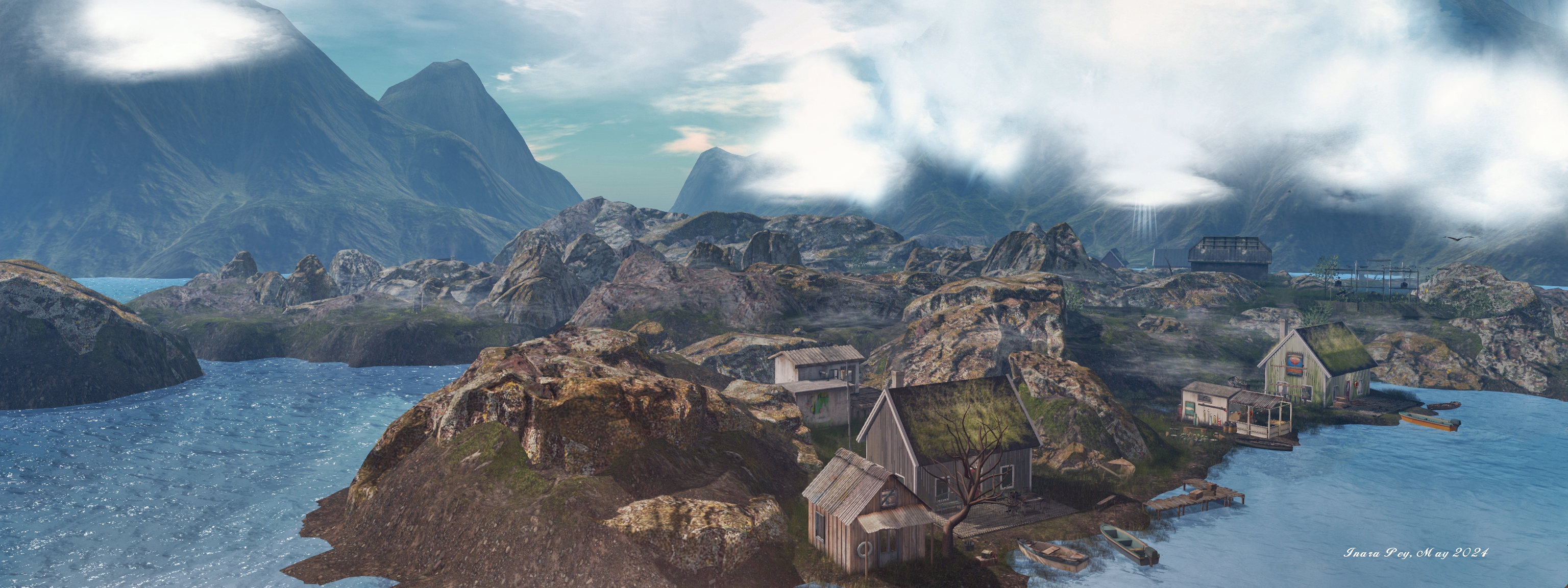
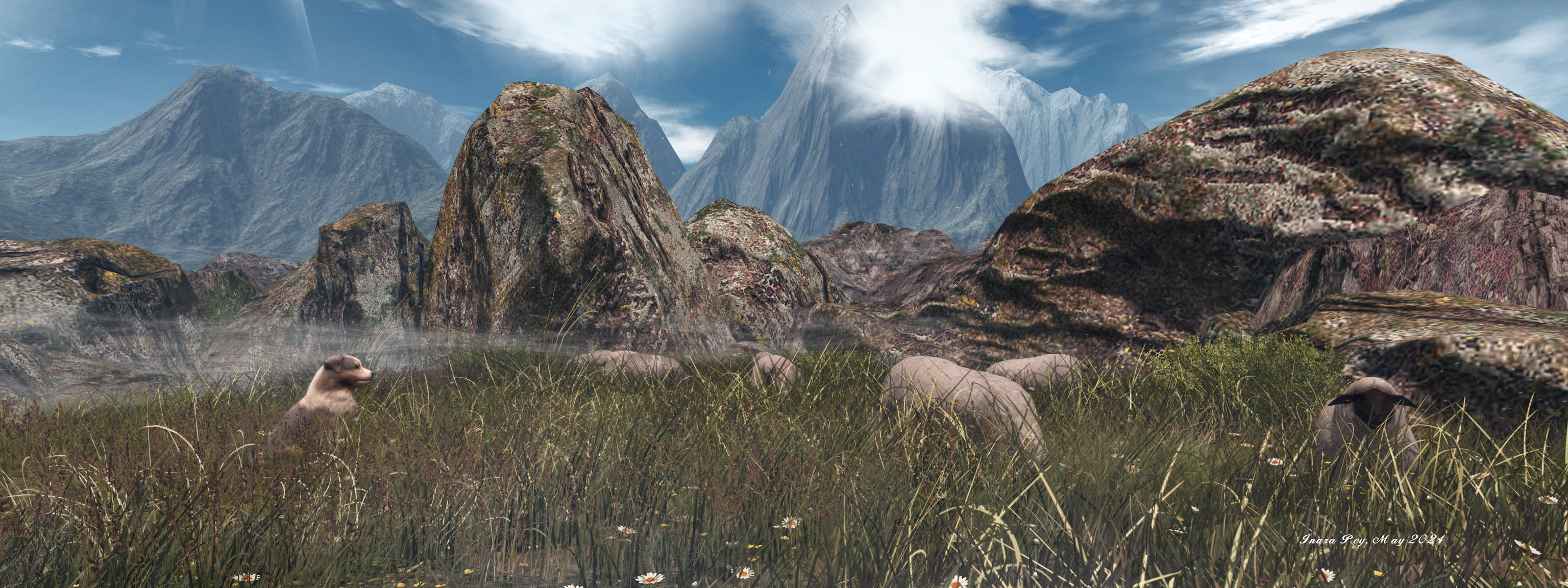
This is a place of rugged beauty and hardy living; a sheltered island sitting within fjords and inlets where fisher folk can live protected from the harsher aspects of North Atlantic weather, and from which they could depart in their boats to ply their trade, perhaps supplemented by a little sheep farming (although the sheep also likely help feed them!).

Vindfjell, May 2024

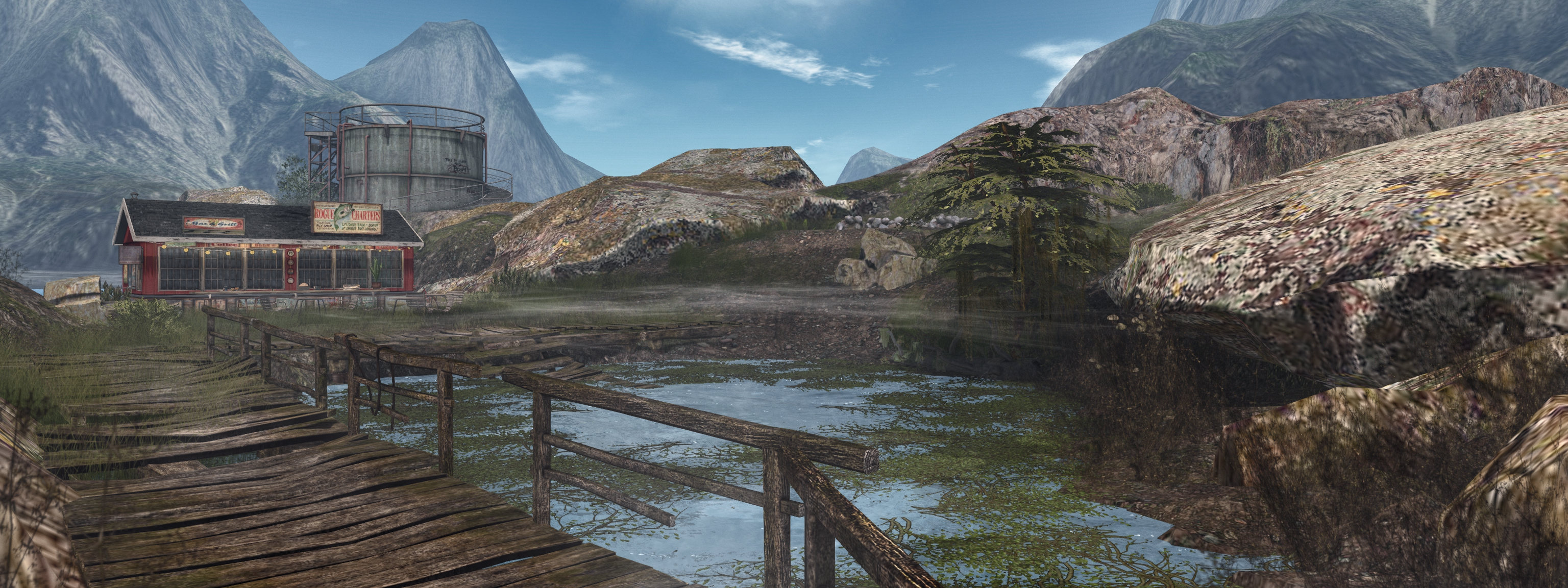
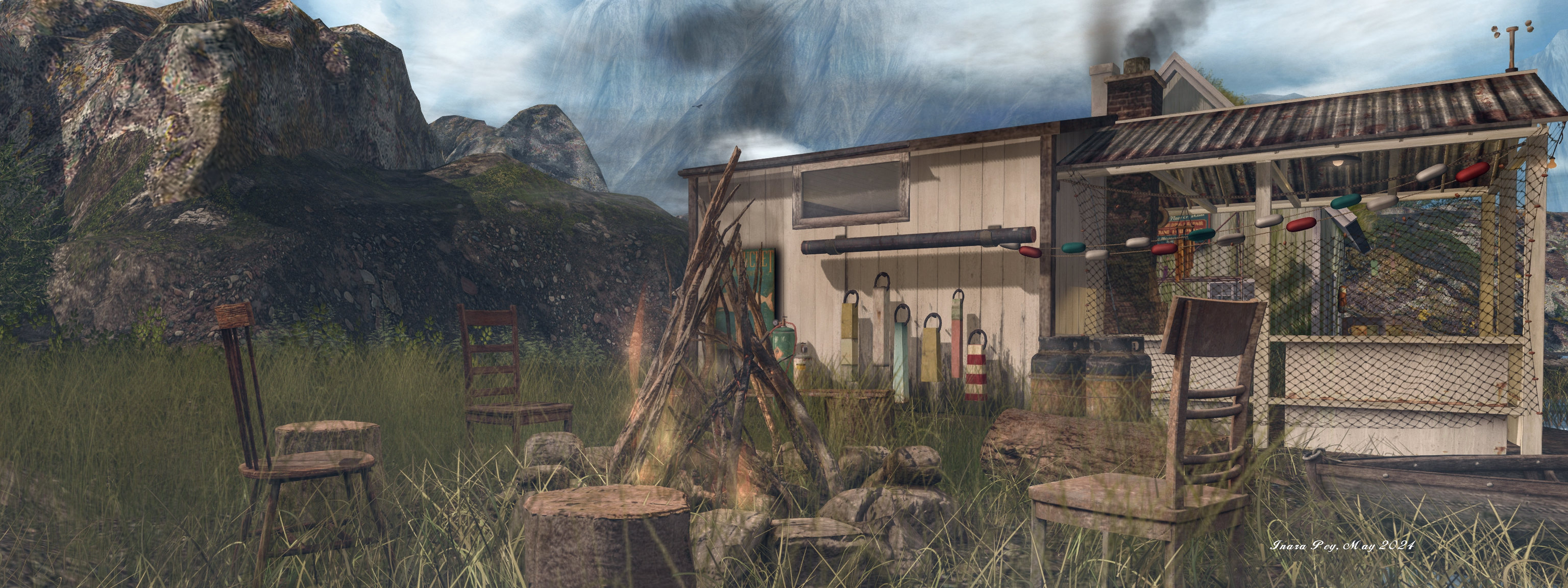
Given this, and as one might expect, the houses and cabins tend to confine themselves to the coastal aspects of the setting, where they can be easily reached by boat; indeed few are without a wharf, jetty or wall where boats may come alongside. Most – as typical of many Nordic houses in remote / rural areas – have a semi-turfed roof to help with insulation. These and the rugged nature of the island I found particularly evocative of my times in the northern parts of Iceland around Akureyri (which remains a place with one of the most spectacular runway approaches I’ve experienced, flying down through the ever-narrowing fjord) and Mývatn.

Most of the setting’s interior is given over to rocky beauty, with scrub grass and the occasional tree breaking the ground – something else that brought to mind parts of Iceland (and indeed, some of the remoter points along the north coast of Scotland I’ve seen).

Vindfjell, May 2024

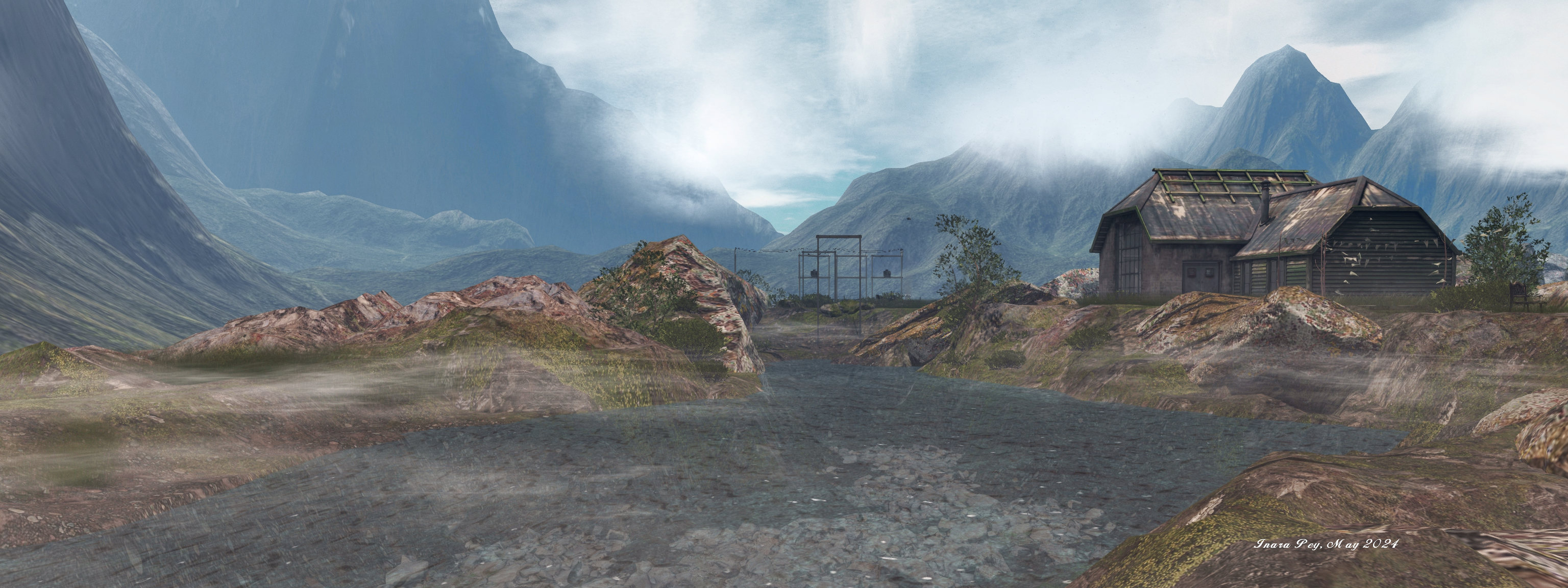
However, the one exception to this is a large industrial-like structure sitting somewhat inland, balanced between a deep gorge cutting its way through the landscape and a large body of water. Its presence, coupled with the electrical power lines close by together with the water and nearby falls might suggest this may once have been a hydroelectric power generation centre, or perhaps a place where geothermal energy had once been used to provide local power.

Or maybe the building had some other purpose, now being deserted; the choice is left totally open to the imagination – which adds further to the beauty of the setting, allowing as it does visitors to cogitate their own narratives as to the history of this place.

Vindfjell, May 2024

A further hint that the island once had something of an industrial use sits on the north-western headland, misty waters encroaching upon three sides. This is the kind of promontory many would look to site a lighthouse. Instead, Dandy (wisely, in my opinion) eschews that cliché and instead offers an ageing storage tank as a sentinel  overlooking the waters, the gentle twist of steps around its circumference making an easy climb to its flat top, the threatening graffiti notwithstanding!

The landing point for the region sits somewhat towards the centre, amidst the scrub grass where sheep are grazing peacefully, having wandered up a narrow valley from the little farmhouse / fisherman’s cabin on the southern coast. As well as providing the route back to that cabin – no doubt followed by the sheep as night closes in, and the sheep dog herds them gently home – the grassland also presents a path and board walk down to the north side of the land, from where the storage tank mentioned above might be reached, together with the grassy spit of land forming the island’s northern side and which provides space for a couple of windswept houses.

Vindfjell, May 2024

In addition, the graceful arc of a stone bridge spans the gorge from this sheltered grazing, giving arrivals the means to reach the old industrial unit with its attendant body of water or follow a fence-marked trail down to the little hamlet occupying the south-east east of the setting, as they find shelter against the elements on their southern side by a blocky bluff of a headland poking out into the sounding waters.

Throughout all of this, Dandy has added further ambience to the setting via the region EEP, and through the use of mesh “puff” clouds, low-lying misty and floating seed heads float and flow as they are caught on the wind (in some cases to be blown helter-skelter between the narrower walls of rock, where one much reasonably expect any breeze to be funnelled and accelerated). That said, the static nature of the mesh clouds are a little at odds with the haunting hiss of the wind present in the sound scape – but one can forgive their refusal to move simply because they add a further depth to the setting.

Vindfjell, May 2024

Dandy calls the setting “ephemeral”, mostly because Vindfjell is only with us for a short time. As such, it’s a fitting term – but one to which I’d personally add the word “beauty”, as the setting really is glorious in its natural beauty and sense of being. A fabulous celebration of the rugged pulchritude of Nature, this is a setting very definitely not to be missed.

SLurl Details