A dreamer’s forest in Second Life

Telrunya - Forest of Dreams; Inara Pey, January 2016, on Flickr Telrunya – Forest of Dreams (Flickr) – click and image for full size

TELRUNYA – Forest of Dreams is a relatively newly opened region in Second Life. Designed by Nessa Zamora (Noralie78) to help demonstrate her landscaping abilities, the region is also an envisioning of her “happy place”,  a place of ethereal beauty in which it is easy to lose oneself.

Entering the Forest of Dreams, it is easy to feel as if you have stepped into a corner of Middle Earth; that you are perhaps on the edges of Lothlórien or another forested elven enclave, sheltered from the rest of the world by the tall, grass-covered hills surrounding the region.

Telrunya - Forest of Dreams; Inara Pey, January 2016, on Flickr Telrunya – Forest of Dreams (Flickr)

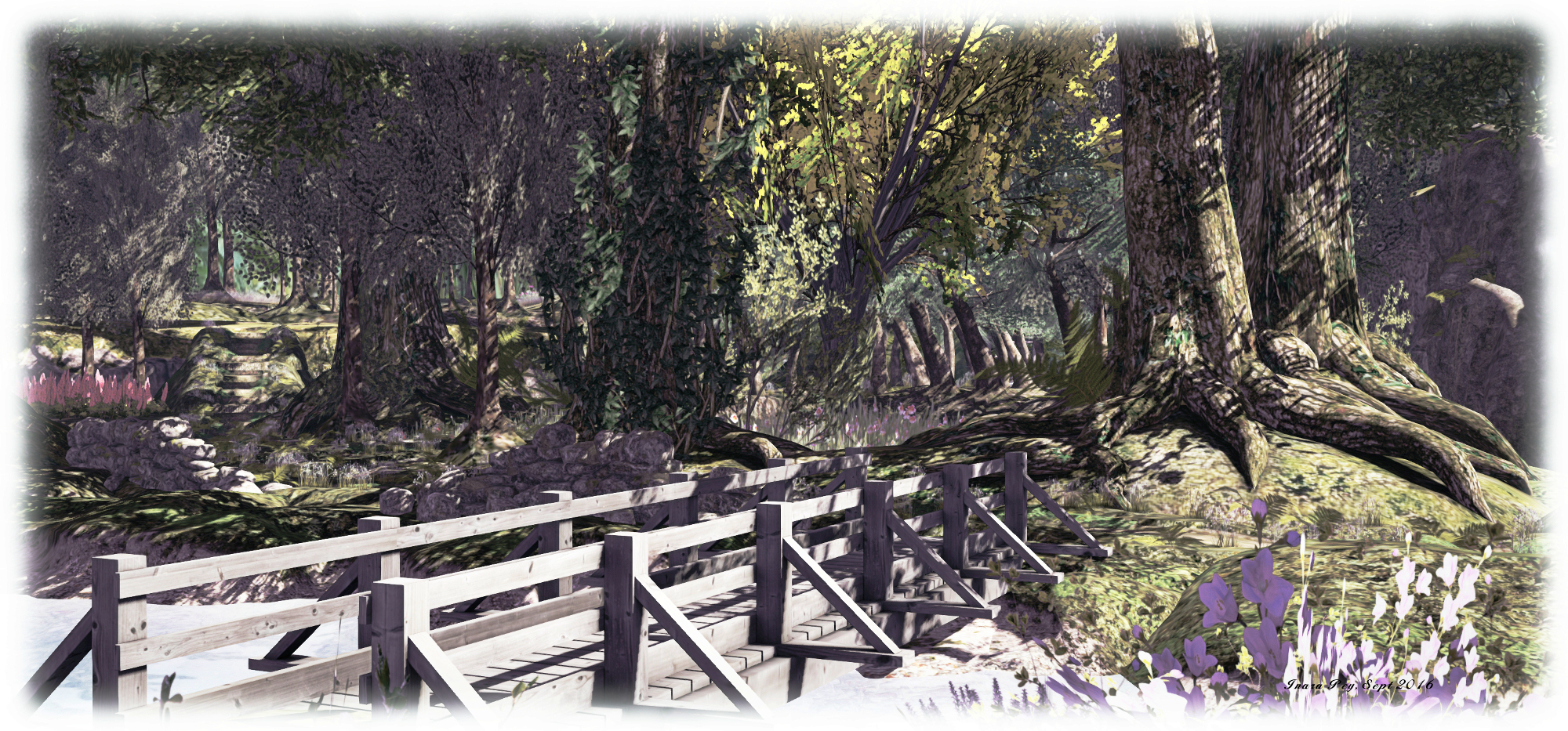
This is a place where exploration is very much the key to discovery. The dense forest means that casual camming around isn’t easy and risks you missing a lot; only on foot can you really appreciate all there is to be found here, be it beneath the forest’s canopy, along the banks of the winding waters, at the top of ancient-looking steps cut into the tall hills, or underground.

To help you find points of particular interest, there are teleport points to be found scattered across the region. These are certainly handy for keeping track of places you may have missed, but again, I do urge travelling on foot as much as possible to really appreciated the forest.

Telrunya - Forest of Dreams; Inara Pey, January 2016, on Flickr Telrunya – Forest of Dreams (Flickr)

As might be expected from an elven realm, the Forest of Dreams is in a state of perpetual twilight. However, the region works with many windlight options, although I’d venture to suggest those offering a dusk or twilight offer perhaps the best options for appreciating the region as you explore.

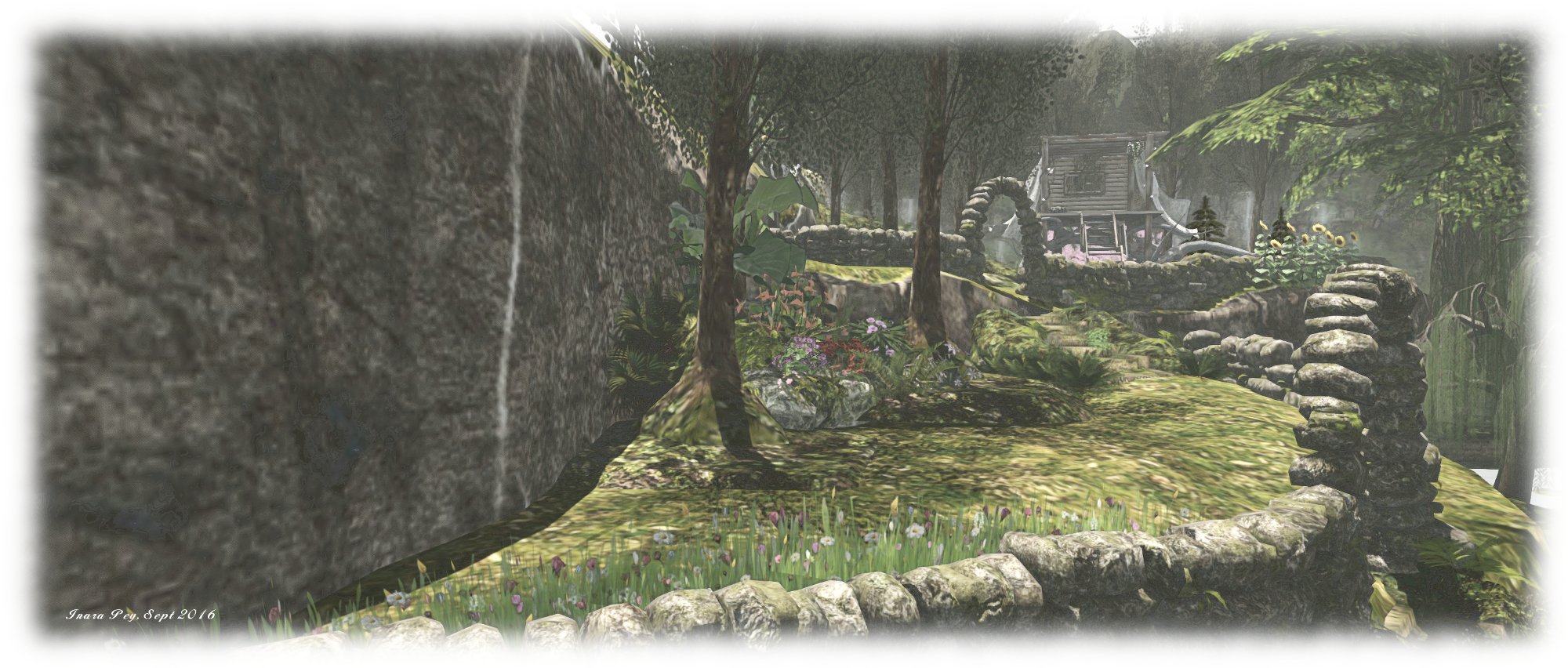
Throughout the forest there are numerous places to sit and ponder, or spend time with a friend or loved one, including a walled garden, a small camp in the midst of standing stones, alongside the river, facing the ruined tower (my personal favourite)  – and elsewhere.

Telrunya - Forest of Dreams; Inara Pey, January 2016, on Flickr Telrunya – Forest of Dreams (Flickr)

The description of Forest of Dreams tells us  it is, “a world straight out of a fairytale where you can find magical creatures around every corner. A haven for  those who look for a tranquil environment, a home for fairies, fauns, elves and those who love to be lost in a dreamworld.” Having spent time exploring on foot, and via row-boat, Caitlyn and I can confirm this is absolutely so!

SLurl Details

Discovering The Keys in Second Life

The Keys; Inara Pey, January 2016, on Flickr The Keys (Flickr)

With Christmas and the New Year behind us, the thoughts of many caught in the grip of winter inevitably turn to warmer locations, sunshine and, perhaps beaches. But with summer still several months away, we might need something else to sate our desire for warmer climes.

The Keys might well be a way for those of us in Second Life to do so, offering as it does an expansive landscape offering cliffs, gorges, sandy beaches, rolling meadows, secluded glades, all mixed with tree-lined walks, woodlands, coastal paths, and scattered houses beneath a summer blue sky. Such is the genius of the design, it’s at times hard to reconcile it with being confined to a single region.

The Keys; Inara Pey, January 2016, on Flickr The Keys (Flickr)

Featured in the Destination Guide Highlights for Friday, January 8th, 2016, The Keys, while Adult rated, has been created with one thing in mind: photography. But whether you’re into SL photography, or simply enjoy exploring stunning regions, this is a place which should not be missed off any itinerary.

The landmark provided in the Destination guide appears a little off, dropping you neatly into the pool of a Romanesque structure on the west side of the region, so I’m offering a slightly different one here which will hopefully drop you onto the terrace alongside the pool. Just to the north of this structure, beyond a ribbon of tall trees, sits the beach, looking out over a bay which separates The Keys from the more coastal suburban area of neighbouring Anarchist Bay to the west, which can be visited by crossing the bridge linking the two over the water. If you wander the beach, do take care no to disturb the mice as they enjoy their vacation!

The Keys; Inara Pey, January 2016, on Flickr The Keys (Flickr)

To the south of the landing point, the ground slopes gently up to an expense of trees seemingly caught in autumn’s golden crown, a place where mist drifts between the tree trunks, deer graze peacefully and the wanderer might come across sculptures and a secluded gipsy cabin nestled close to high cliffs overlooking the ocean, together with some of the off-region islands which further add to the visual appeal of The Keys – just don’t try walking out to the terrace on the lone finger of rock!

Eastward from the trees, the gently rolling ground is open to the sky and the grass grows tall, mixing with wild flowers. Horses graze here, while those seeking places to sit  while or simply to rest can find them among the merry-go-round, pavilion and shaded seating areas scattered along the edge of a broad gorge which cuts into the south-east corner of the land, the canopy of golden trees continuing on the far side, reached via a broad wooden rope bridge, or by following the edge of the gorge inland and then back out again.  Even then, the region is not finished with you – beyond the tongue of the gorge, a further bridge spans the void between the land and a small, rugged island on top of which sits a stylish house.

The Keys; Inara Pey, January 2016, on Flickr The Keys (Flickr)

And this is the beauty and power of  the region; just when you think you much have reached the end, there’s more to be discovered, making exploration here a genuine pleasure. There are fishing cabins, the coastal areas, secret ways beneath the ground, and one or two little surprises along the way. It’s also a place of whimsy, as can easily be seen in things like the island floating over the north-east corner of the island, stoutly anchored to the hill below, or the steps curling up from the sea to reach a door to… where…?

The Keys is a place which measures up to its description perfectly, making it an eye-catching visit, with plenty of opportunities for both photography and for simply sitting down and enjoying the visual and aural ambience of the place, and letting the world just take care of itself for a change. Don’t miss the Flickr group, either.

SLurl Details

Let it Snow! in Second Life

Let it Snow!; Inara Pey, January 2016, on Flickr Let it Snow! (Flickr) – click any image for full size

In December 2014, I visited artist Milly Sharple’s winter themed Let it Snow! on the Isles of Lyonesse, and I’m more than happy to say it is once more with us, the region again offering snow, fronted trees, wintry walks, opportunities for dancing and, of course, for photographs.

Those who visited Let it Snow! in 2014 will immediately be struck by the feeling of familiarity and homecoming; there is much here that echoes last year’s build – but there is also much that has changed, making a visit more than worthwhile. From the landing point towards the middle of the region, visitors are free to wander as they please as snow falls from a cloudy sky (courtesy of an all-encompassing dome) lit by a lowering sun, the landscape braced on two sides by tall hills.

Let it Snow!; Inara Pey, January 2016, on Flickr Let it Snow! (Flickr)

There are paths to be found, snow-covered but still visible, showing the way between the cottages and other buildings to be found within the isle, but for the most part routes are set by avenues between the trees which, in summer, would doubtless be greensward. Thus a walk through Let it Snow! is truly a journey of discovery; and there is much to be found, be it the cottages scattered far and wide, huddling under the lee of hills or sitting boldly atop them, or at the little brick-built Christmas Shop sitting across from a n open-fronted café, both offering rest and refreshment, or the many little places lovers and couples can snuggle in one another’s company, the chimes of a music box playing in the distance and birds chirping overhead.

Everywhere you do wander, you will doubtless come across plenty of opportunities for outdoor dancing, while a great glass house offers a romantic setting if you want to be more formal when taking your partner by the hand. Those seeking a warm, quiet sit down indoors will find it in a couple of the cottages, with the LAQ cottage toward the south-east corner of the region, and not too far from the landing point, offering a particularly comfortable retreat.

Let it Snow!; Inara Pey, January 2016, on Flickr Let it Snow! (Flickr)

Those with a keen eye will also doubtless spot little signs scattered around the landscape. Touching any of these will rez a sled you can ride on your own, or with a friend. Once seated on it, touch the menu to get yourself properly posed and then use *Move* to get yourself going (cursor / WASD thereafter).

In December 2014, I described Let it Snow as a delight. It still is – one that is beautifully photogenic, as you might expect. It’s also a place where descriptions are really superfluous; far better go along and enjoy. You’ll probably find Caitlyn and I lurking around as well 🙂 .

Let it Snow!; Inara Pey, January 2016, on Flickr Let it Snow! (Flickr)

SLurl Details

A journey through Nightfall in Second Life

Nightfall; Inara Pey, January 2016, on Flickr Nightfall (Flickr) – click any image for full size

Nightfall, the homestead region held by Uni Looney (Unique Loon),  is a place Caitlyn took me to visit late 2015, but I didn’t get around to blogging about it at the time. As such, it seemed right that it should be one of the first places I re-visit and write about as we start the new year.

When visiting the region back then, it was in the grip of what might be considered an Indian summer; bright greens and autumnal golds were everywhere despite the month of October slowly advancing. With my most recent visit, however, that last dash of warmth had clearly departed, leaving the region firmly in winter’s tight grip.

Nightfall; Inara Pey, January 2016, on Flickr Nightfall (Flickr) – click any image for full size

The landing point in the south-west corner of the region provides access to the ruins of an old castle or fortification, rising from grass which is itself attempting to keep its head above the snow drifting down from above. Here the newly arrived can enjoy a spot of ice skating, while a turn to the north will lead the way through the ruins, past camp fires, seating areas, and a mouse on his own grand tour, to the north end of the region and the beach. Just mind the  sleeping brown bears and very much awake polar bears should you head in that direction!

The journey eastward requires you either take a cold dip in the frigid waters of the channel which divides the region, or you make your way across one of the three bridges spanning it – two of which look decidedly rickety, although they are in fact quite sound.

Nightfall; Inara Pey, January 2016, on Flickr Nightfall (Flickr) – click any image for full size

The weather on the east side of the region is somewhat colder; the snow falls in heavy sheets to cover roads and paths, ponds lie frozen, and the local livestock and horses all appear to be enduring the weather rather than appreciating it. A convertible sits just outside the falling snow, the owner brave enough to leave the top down; given the state of the weather, I’m not sure I’d be so confident!

A little cottage sits no far from the dividing water, offering shelter from the snow, and while the fireplace may be lacked, there is a bath for those needing to warm themselves up with a quick, hot dip. Beyond this, and reached via two smeller bridges arching over a little stream, three more cottages can be found. Two of these are somewhat whimsical in nature while the third,  sitting atop a low hill, offers a warm fire to please colds toes, hands and noses.

Nightfall; Inara Pey, January 2016, on Flickr Nightfall (Flickr) – click any image for full size

Nightfall is a gentle region, a place you can roam as you see fit, either following the paths and board walks, or simply setting out through the grass as the mood takes. As with many regions in SL, there is plenty of ambient sound available to add to the sense of immersion. For those who prefer, bicycles can be rezzed from the board walk near the beach on the north side of the island.

All told, a charming place to visit and explore.

SLurl Details

Stargazing in Second Life

Bell of Firmament
Bell of Firmament

It’s no secret I’m quite into space exploration and astronomy, and within Second Life I’ve visited a number of planetariums and observatories, many containing interactive displays and educational information on the cosmos, stars and planets.

One of the more unique interactive astronomy-related  installations I’ve come across in Second Life, is the The Bell of Firmament by Maygray Riverview (Maygray Heron), co-owner of MayLou Designs.

Make sure you read the guide to using the installation

This is a very clever interactive piece, allowing the visitor to interactively visualise the constellations in 3D, with the stars seen in terms of their relative size, colour and position to one another as seen from Earth.

Constellations can be seen individually, or you can build up a “star display”, gradually adding more and more constellations. It’s also possible to add lines between stars to help visualise the constellations as they appear in the night sky, and the display can be tilted and rotated or cammed around.

To use the Bell of Firmament effectively does take practice and patience, but the results can be interesting. A full set of instructions are provided, and I recommend reading through them beforehand. These are located on the lowest level of the installation and introduce you to the menu system, using the compass rings and drawing lines between the stars. Once you’ve done this, use one of the small blue teleport spheres to move up to the observation decks.

The decks provide access to the star menus, where you can define how you want to display constellations: either individually or adding each one you select to those already on display. When starting out, I’d recommend starting by displaying them one at a time; things can quickly get crowded – you can make sure this is set by clicking on Options > Replace Stars (use Options > Sum Up Stars when you want to add constellations to an existing display). Constellations are divided into three groups: signs of the zodiac, characters from mythology, and animals.

The in-world menu system provides the menu to set-up the display and select the constellation(s) you wish to view

A model of Earth is provided in the display area, and can help you orient yourself; however, if you’re not overly familiar with astronomy and star naming conventions, I would recommend having Wikipedia at the ready; the stars are defined by a combination of their Flamsteed and Bayer designations, rather than their familiar names (so, for example, Betelgeuse is defined as 58α Ori).

You can link the major stars of a constellation to help better relate the display to how the stars appear to be aligned from Earth
You can link the major stars of a constellation to help better relate the display to how the stars appear to be aligned from Earth as with Orion, seen here

Once you have located the key stars in a constellation, you can can click on them to create lines of light between them, allowing you to better identify them as they are seen from Earth. Doing so also allows you to see first-hand just how subjective the constellations really are; simply cam around – even just a little – and watch how the familiar patterns quickly change. Should you need to, use the compass rings to adjust the position of your star display to position any stars you may wish to see better

There are perhaps a few things missing from The  Bell of Firmament. Offering the common names of familiar stars – Rigel, Betelgeuse, Aldebaran, Arcturus, Deneb, Castor, Pollux, etc.- would perhaps help the lay user, and it would be nice to seen a names of displaying information on a given “major” star. However, the latter is a major task in and of itself, and would require careful consideration on how best to achieve it (an in-world info panel? An ability to provide a link to an external web page / Wikipedia?, etc), and could complicate things.

However, these are really, really minor points. As it is, Bell of Firmament is one of the more unique interactive displays in Second Life, and if you do have an interest in astronomy and haven’t had a play with it as yet, it could well be worth a visit.

SLurl Details

Winter at The Trace Too in Second Life

The Trace too; Inara Pey, December 2015, on Flickr The Trace Too (Flickr) – click any image for full size

Seasons change at The Trace Too – it’s one of the elements which keep Kylie Jaxxon’s homestead region so fresh and appealing, causing many of us to return there again and again through the year. This Christmas / New Year season is no different, and visitors dropping into the homestead region will find it snuggled under a blanket of snow, the surrounding mountains a salt and pepper mix of snowy folds and exposed rock.

While the rural look and feel to the region which came with the autumn season remains, the landscape and buildings scattered across it have changed somewhat. The landing point offers a choice of snowy paths to follow; which you take is entirely up to you. Closest to the landing point sits a row of cottages and houses, a short distance from the local church.

The Trace too; Inara Pey, December 2015, on Flickr The Trace Too (Flickr)

The houses lead the way to a stone bridge, deer foraging in the woods nearby as the path arches over the stonework of the bridge, crossing a frozen stream to turn back eastwards, taking the visitor to a beautiful appointed wood framed house. Further to the north sits a frozen lake with a little chalet on the shore, while to the north-east sits a cosy little group of shops offering more shelter from the cold.

Everywhere the show lies crisp and deep – if not necessarily even, having drifted into mounds here and there as more falls from a sky tinged with grey cloud. The snow has piled high on rooftops as well, and hugs an A-frame house in its grasp, making a particularly picturesque setting among the fir trees to the east of the region.

The Trace too; Inara Pey, December 2015, on Flickr The Trace Too (Flickr)

Kylie always makes great use of space within her region designs, and this winter offering is no exception. Houses, shops and cabins are positioned so that one can enjoy a good walk whilst exploring and gain the impression the region is bigger than expected. Options to simply sit and enjoy the landscape can also be found scattered around.

For those looking for a wintry location to enjoy that’s not crowded-out with bits and bobs, or who want to grab some more scenic and seasonal photographs, The Trace Too is a perfect destination.

The Trace too; Inara Pey, December 2015, on Flickr The Trace Too (Flickr)

SLurl Details