Return to ISM in Second Life

International Space Museum

It’s been over five years since I wrote about the International Spaceflight Museum (ISM) in Second Life.  At that time, this two-region facility, offering something of a history of space exploration, had just come through something of a financial crisis (see here and here).  Prior to that, my last visit was far back in 2012 – so I thought I’d hop back over for an update.

Comprising Spaceport Alpha and Spaceport Beta, and entirely funded by donations and sponsorship as a 501(c)3 non-profit, ISM is a large-scale undertaking, providing a good introduction to the history of space flight, charting many of the key events and the systems they used. It provides insight into international space operations covering – America, the Soviet Union/Russia, Europe, Japan, China, India – together with something of a look at commercial activities.

International Space Station: Rocket Ring

A visit starts at the main landing point / information hub. This features a citation to a letter from Konstantin Eduardovich Tsiolkovsky, the Soviet Russian rocket scientist regarded as the “grandfather” of modern rocketry. Given as Earth is the cradle of humanity, but one cannot live in a cradle forever, the quote is from a phrase Tsiolkovsky wrote in 1911, which transliterates as Planyeta yest’ kolybyel razuma, no nyelzya vietchno zhit’ v kolybyeli – “a planet is the cradle of mind, but one cannot live in a cradle forever”. However, both this literal translation and the more popular quote point to the same ideal: that to grow as a species, humanity must as some point reach beyond the planet of our birth.

A path leads away from the landing hub towards ISM’s most impressive feature: the Rocket Ring. This provides models of some of the major launch systems used by countries around the world. This includes vehicles such as the V2 rocket – which both Russia and America utilised in their early post-war experiments; launch systems developed from ballistic missile systems – such as America’s Titan and Atlas; through to more familiar launchers such as the Soviet / Russian Soyuz and Proton families, and a look at some of the more recent vehicles to enter the market: SpaceX’s Falcon 9 and Falcon Heavy.

International Space Museum: SpaceShipOne

The ring is far from complete – systems such as Blue Origin’s New Shephard and New Glenn are lacking, NASA’s Space Launch System is missing (although the cancelled Ares launchers from the US Constellation programme are present, dominating the ring alongside Russia’s massive N1 lunar booster). However, space is limited, and what is presented is still a rich array of launch vehicles which, for those interested in the less well advertised space programmes – such as Japan’s, India’s or China’s, provides some excellent models of their current fleets.

Beneath the Rocket ring are further exhibits, including models of the Apollo Command and Service Module (CSM) and Lunar Excursion Module (LEM), the Gemini capsule, and a look at the lives of  Tsiolkovsky and Robert Hutchings Goddard, regarded as the “father” of modern rockery. NASA’s Orion Multi-Purpose Crew Vehicle (MPCV) in both its original form, with rounded solar arrays and a more recent design, featuring twin rectangular solar arrays. Orion will use a Service Module based on the European Automated Transfer Vehicle (ATV), which used to haul up to 5 tonnes of supplies and equipment to the space station, and include the ATV’s unique arrangement of four solar arrays.

International Spaceflight Museum: an historical look at the ISS with the shuttle docked, and a European ATV resupply vehicle arriving. Also docked is a combination of Soyuz+Progress vehicles

Further out from these are further displays, including the Apollo Saturn 1B rocket, information centres and more. These also include interactive elements, such as a Gemini V / Atlas II rocket, which offers a ride up to one of the sky exhibits – that of the International Space Station (which can also be reached from the ground-level sit-on teleport kiosks). Also in the sky and reached from the ISS display, are models of the solar system.

Spaceport Bravo, reached via a runway-like bridge over which the first sub-orbital flight of SpaceShipOne is recorded, sits a reproduction of NASA’s Vehicle (or Vertical, as it was originally known) Assembly Building (the VAB). This is where the Apollo rockets and space shuttle systems were “stacked” and readied for launch, and where the SLS rocket will be assembled ready for flight. One of the bays in the VAB feature the space shuttle Atlantis, which has just been mated with its External Tank / Solid Rocket Booster units; the other features a Saturn V leaving the bay atop its crawler-transporter. Alongside of this is an Orbiter Processing Facility (OPF), the interior of which is somewhat sparse, but does offer models of NASA’s lunar rover vehicle and the  Lunniy Korabl (LK) lander vehicle which formed part of the Soviet Union’s manned lunar programme aspirations.

International Space Station: Mercury recalled

Visually, ISM offers a lot to see, not all of which is expressed here – and at one time hosted a range of events (it’s unclear whether this is still the case). However, there are some disappointments. An attempt has been made to link exhibits to a wiki, but the majority of pages have yet to be populated, for example. Several areas appear a little sparse – such as the OPF building, as noted; all of which gives a feeling the ISM is caught in time – as if in the midst of a still-to-be completed update, including elements which might be relatively easily seen to. Take the photo map of the Florida space coast, for example. This shows the facilities at both Kennedy Space Centre and Cape Canaveral Air Force Station, but has yet to be updated to reflect SpaceX’s use of Kennedy’s Pad-39A and Canaveral’s SLc-40 and SLC-13.

Even so, for those who want to dip their toes a little more deeply into the world of space flight, ISM retains a lot to offer, while across the water NASA’s Explorer Island offers an interesting looking back in history to the US space agency’s involvement in Second Life.

SLurl Details

International Spaceflight Museum (Spaceport Alpha, rated; General)
Tarrying at Tramore Bay in Second Life

Tranmore Bay; Inara Pey, December 2017, on FlickrTramore Bay – click on any image for full size

Tramore Bay, the work of Pernilla (PernillaOhl) and Amelie Tautou (Amilee34) is once again evidence that you don’t need at entire region – Full or Homestead – to make a lasting impression in Second Life. Occupying the south-east corner of a Full region, Tranmore Bay is a compacts design, making full used of the space available to presents a highly photogenic and quite delightful cove-like environment in which to spend time.

That said, a visit begins, not within the cove itself, but high overhead, at the industrial / brewery chic Tramore Bar, where music can be enjoyed with a drink and game of darts or while cosying close to the fireplace.  Six teleport options are available on the wall next to the landing point (and a TP station in on the floor, the twin of several at ground level), each of which delivers visitors to an area of the cove at ground level. As all are within easy walking distance of one another, which you take to the ground isn’t that important – although the café is perhaps the most central.

Tranmore Bay; Inara Pey, December 2017, on FlickrTramore Bay – click on any image for full size

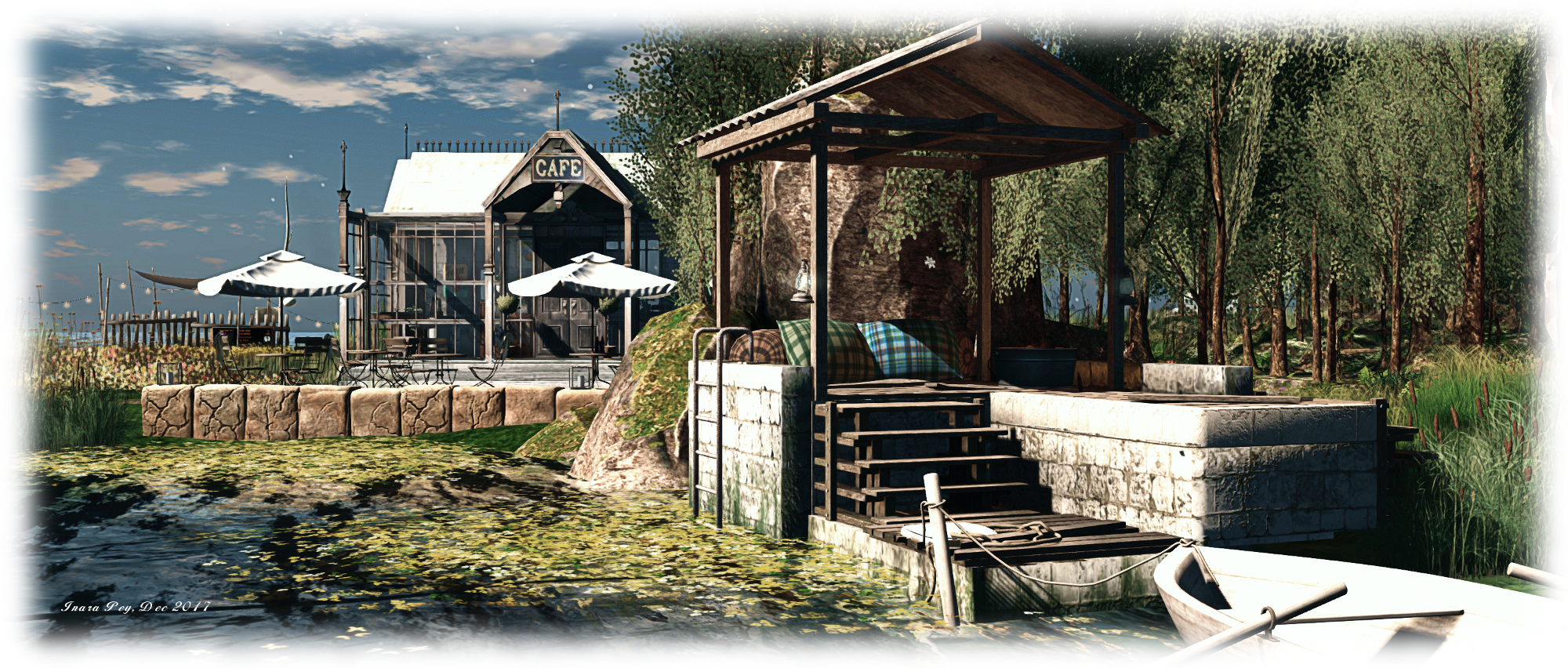
The default windlight at ground level is a deep sunset, but this is a place where a rich variety of environmental settings can be used to create the ambience required of your pictures. As Caitlyn and I both felt we needed a break from winter’s snow and hints of winter, I selected a more late summer setting for the pictures here to add some further sensations of warmth.  The café is an old wooden structure, looking equally out to sea and inland. It’s and the rest of the cove lay protected by high rocky walls on three sides, with a view out over beach and sea to the south.

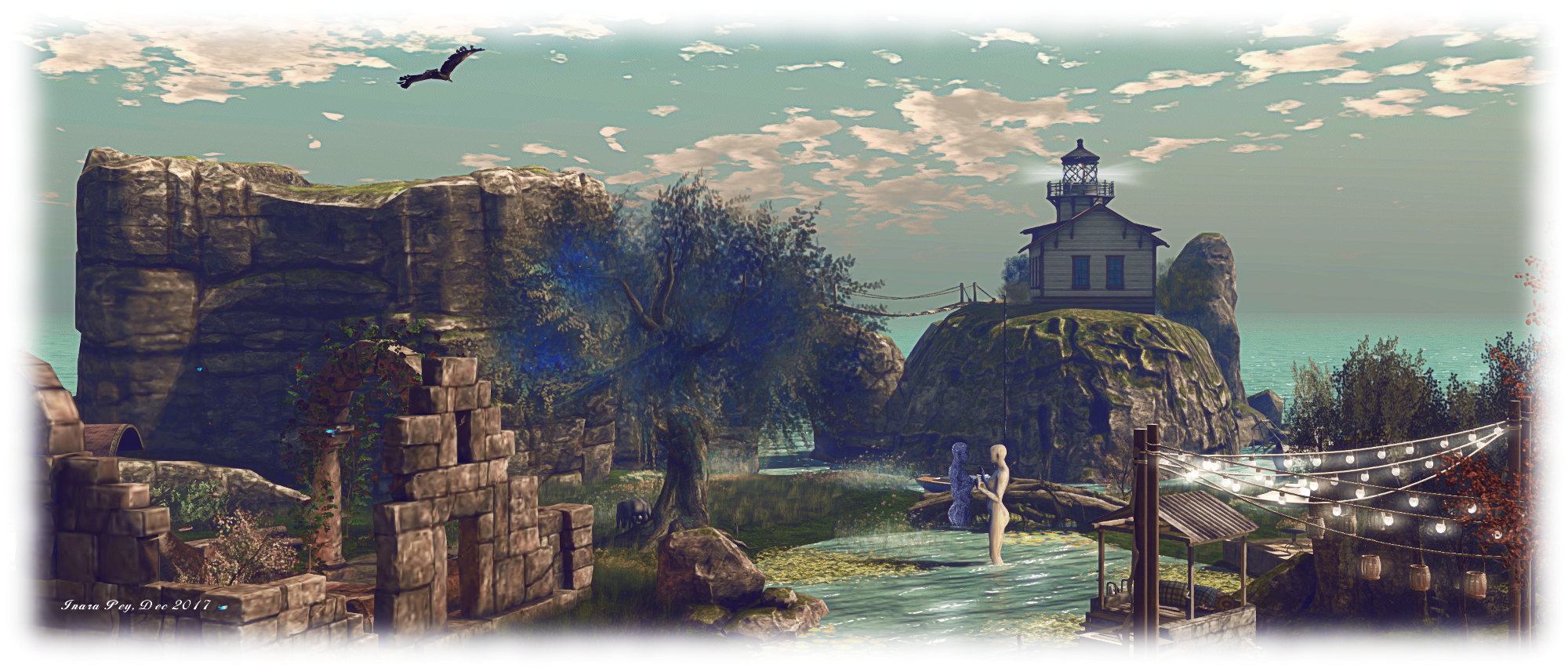
Woodlands border one side of the café , sitting in the lee of the cliffs and offering paths to wander and deer and horses to watch. Inland from the café is a music stage, with a path lurking in the shadows, offering a winding path up into the west cliffs. It is this path, and the one to the east of the land, which add further depth to the setting, allowing visitors to climb up between rocky shoulders to the flat cliff tops, then roam along the grass-covered rock to a camp site on the west cliffs or, by way of wooden bridge, to the chapel-like lighthouse keeping a watchful eye on things from a rocky island in the very south-east corner of the region.

Tranmore Bay; Inara Pey, December 2017, on FlickrTramore Bay – click on any image for full size

The path to the lighthouse lies across a narrow body of water from the café , spanned by a rough bridge formed by the fallen trunks of trees. The path to it, like the one to the camp site, offers superb views over the land, particularly from the great rocky arch spanning the water to the lighthouse’s little perch. Also to be found on this side of the water, tucked under the cliffs, is an old ruin, the setting for outdoor dining, a little Romany camp close by.

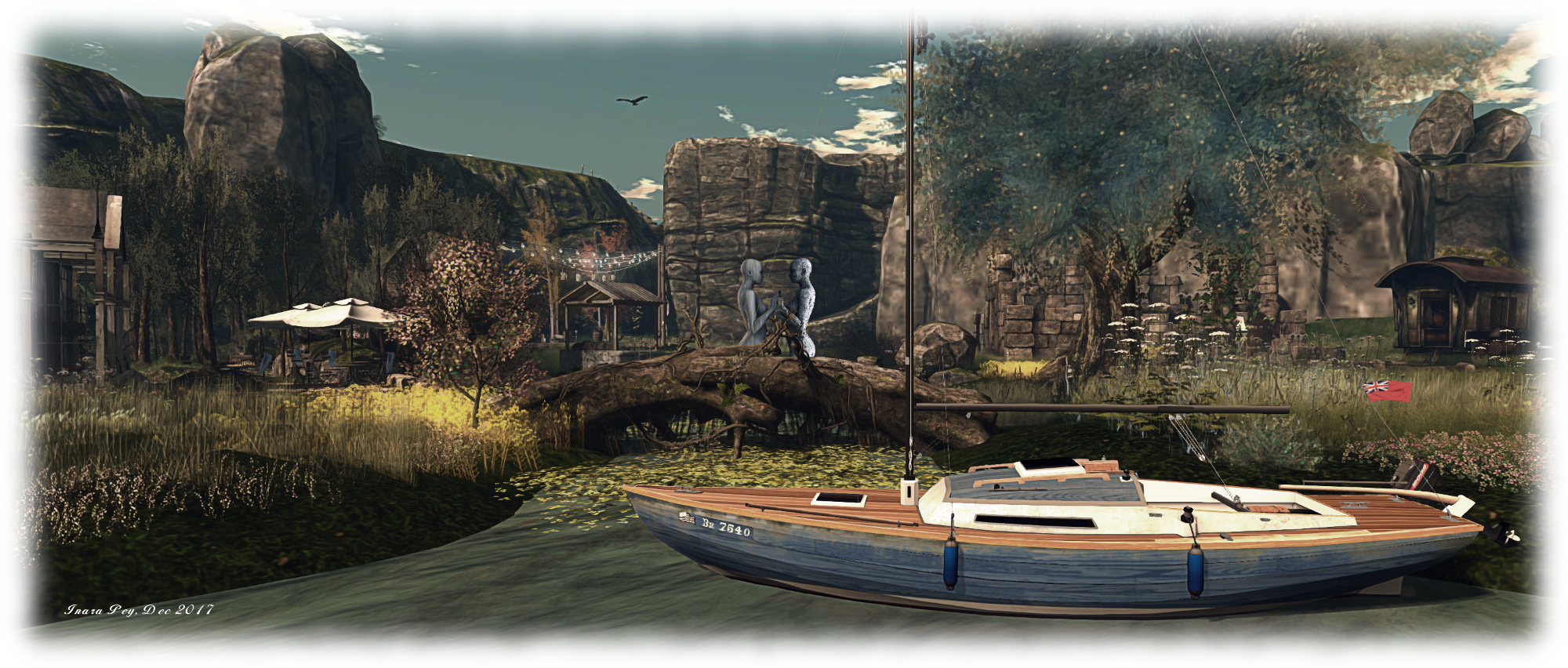
Throughout all of this, there are charming little touches: the wild flowers; the snuggle posts on the beach and around camp fires; a scatter of art by Mistero Hifeng which add a unique feel to the setting; the sailing boat (privately owned) moored in the lee of cliffs and lighthouse island – and more besides. There are a couple of little rough spots in the landscaping where plants perhaps need to be phantom, or path sections don’t quite align, but these are more than compensated for by the sheer beauty of Tranmore Bay.

Tranmore Bay; Inara Pey, December 2017, on FlickrTramore Bay – click on any image for full size

All told, this is a really delightful place to visit. Those interested in learning about music events at Tramore Bay can join the local group, photographers can enjoy the setting for their work, and explorers will find plenty to see and appreciate – and to offer reasons to tarry a while. Should you enjoy your visit, do please consider making a donation towards the enjoyment of Tranmore Bay by others via the tip jar up at the bar.

Tranmore Bay; Inara Pey, December 2017, on FlickrTramore Bay – click on any image for full size

SLurl Details

D 0 X: an Island Fantasy in Second Life

D o X; Inara Pey, December 2017, on FlickrD o X – click on any image for full size

Update: D 0 X has closed, and Paradise has a new setting – Tokyo Street. Read this review for more. SLurls removed from this article. 

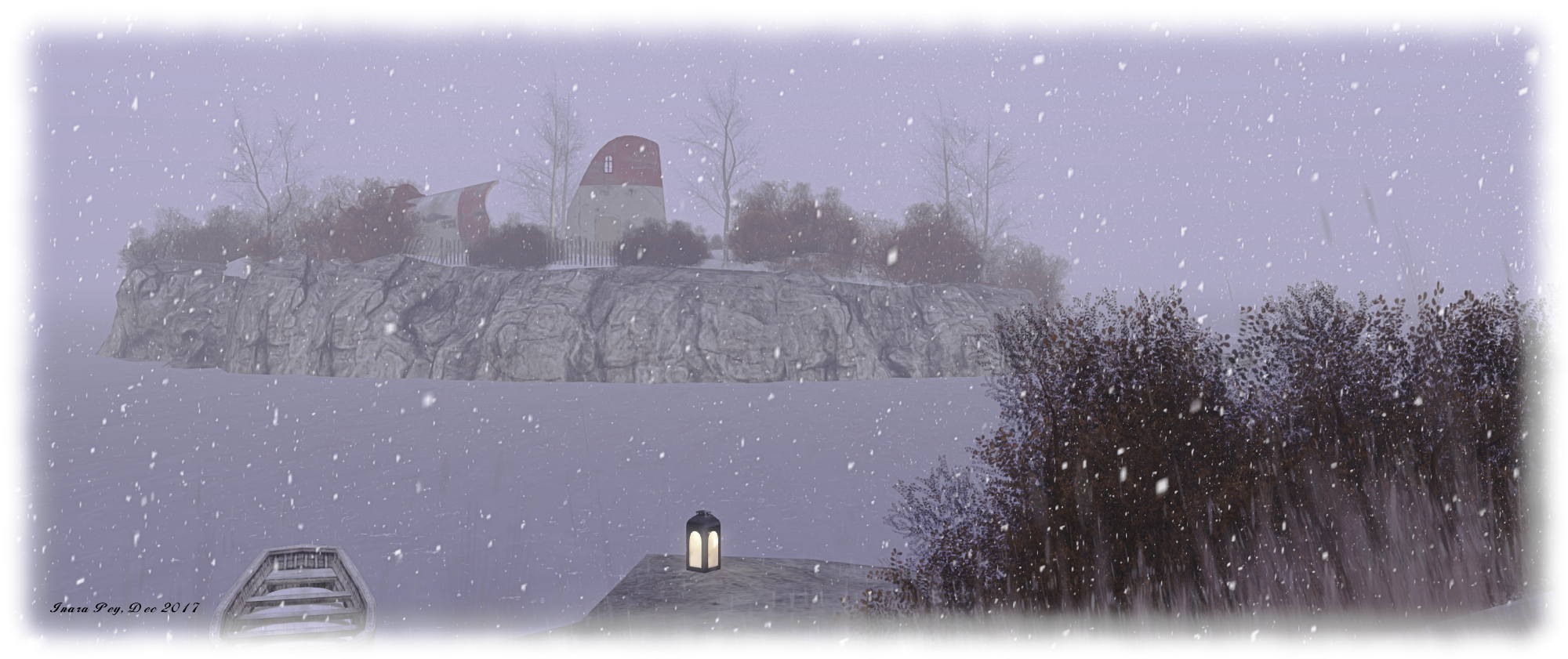
D 0 X is a Homestead region designed by Paradox Ivory, and the home of the Urben Gallery. Open to the public, the region, at the time of our visit, lay split into three winter-bound islands, rowing boats (via rezzer) enabling explorers to travel between them without the need for flying.

Visitors arrive on the largest of the three islands, on the north-west side of the region, where snow is falling heavily. The landing point is on the central neck of the island, a short distance from the warehouse forming this single living space on the island. This has been converted into a cosy home, where someone has been baking and the table is set for dinner. Through a glass panelled door, the bedroom is scattered with the bric-a-brac of daily living, the entire scene within the building one of homely warmth, perfectly contrasting with the snowy scenes visible through the windows.

D o X; Inara Pey, December 2017, on FlickrD o X – click on any image for full size

Outside, paths offer ways west, east and south. The latter is the shortest, running past an old church gatehouse (in which sits information on the region and a teleport up to the Urben Gallery, which will open on January 7th, 2018. This path ends at a wooden jetty where a rowing boat can be reached, providing the way to reach the remaining two islands.

The path to the east climbs a little set of stone steps under an arch of rowan boughs string with lights. It leads, by way of a path running between trees and bushes, to a rocky outcrop providing a view out over the winter waters to the smallest of the three islands, the home of a ruined lighthouse. Westwards, the path is wilder, again running between trees and bushes to a south-facing headland and offering a view towards the second largest of the islands.

D o X; Inara Pey, December 2017, on FlickrD o X – click on any image for full size

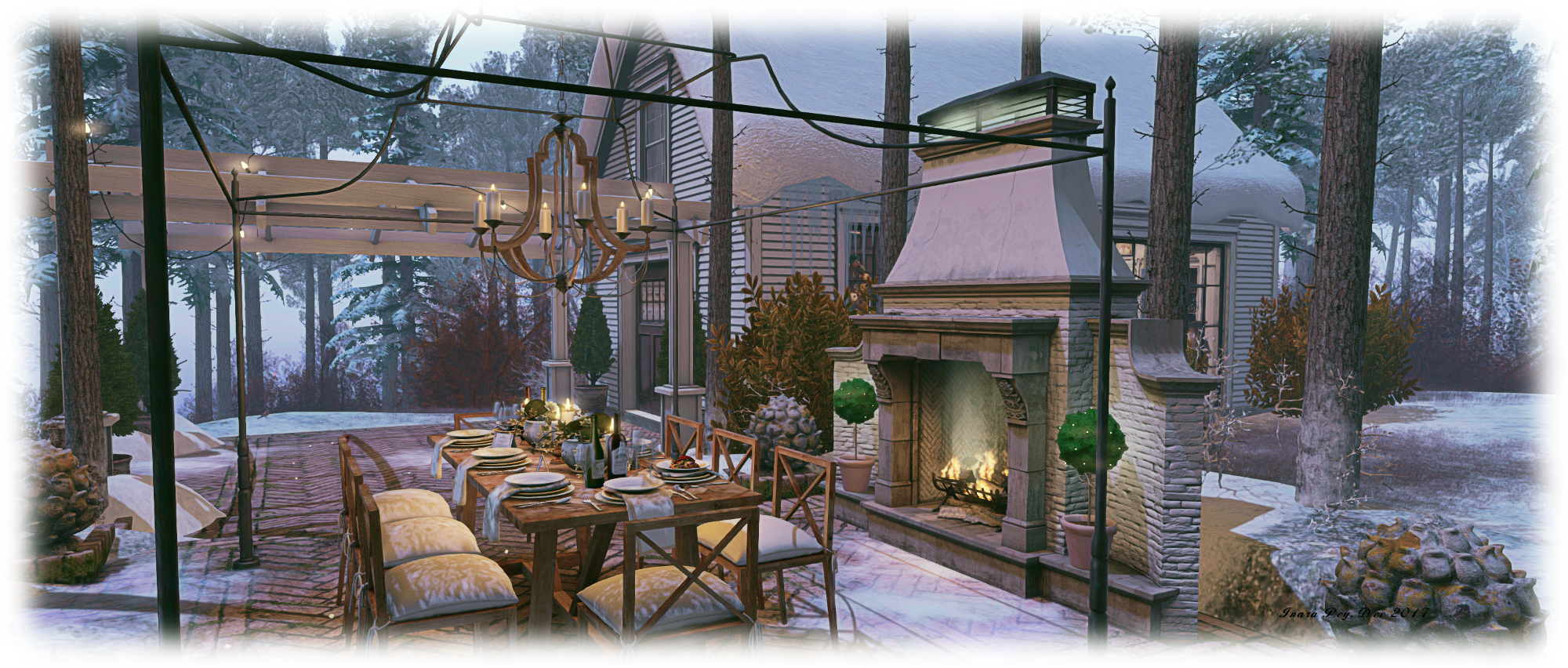
With a grey rocky skirt topped by undulating snow, this island is home to a barn converted into a warm snug of a home, where the traditional bed appears to have been replaced by a chaise. The fireplace sparkles with flames, armchairs you could lose yourself in ranged before it, with all the accoutrements of life again scattered cosily around. Whoever lives here obviously isn’t put off by the cold: the brick paved terrace to the front of the property features a table set for dinner, an outdoor fireplace glowing with warmth alongside it.

The barn is reached via a path rising by step and curve from the island’s jetty, guarded at either end by gabled gates. This path runs alongside the house, offering access to the front terrace before continuing on to another outdoor seating area atop a small squared-off terrace and warmed by another fire. A little to the south from the barn, and overlooking a little inlet, is another outdoor fire and seating, a Thermos available for hot drinks.

D o X; Inara Pey, December 2017, on FlickrD o X – click on any image for full size

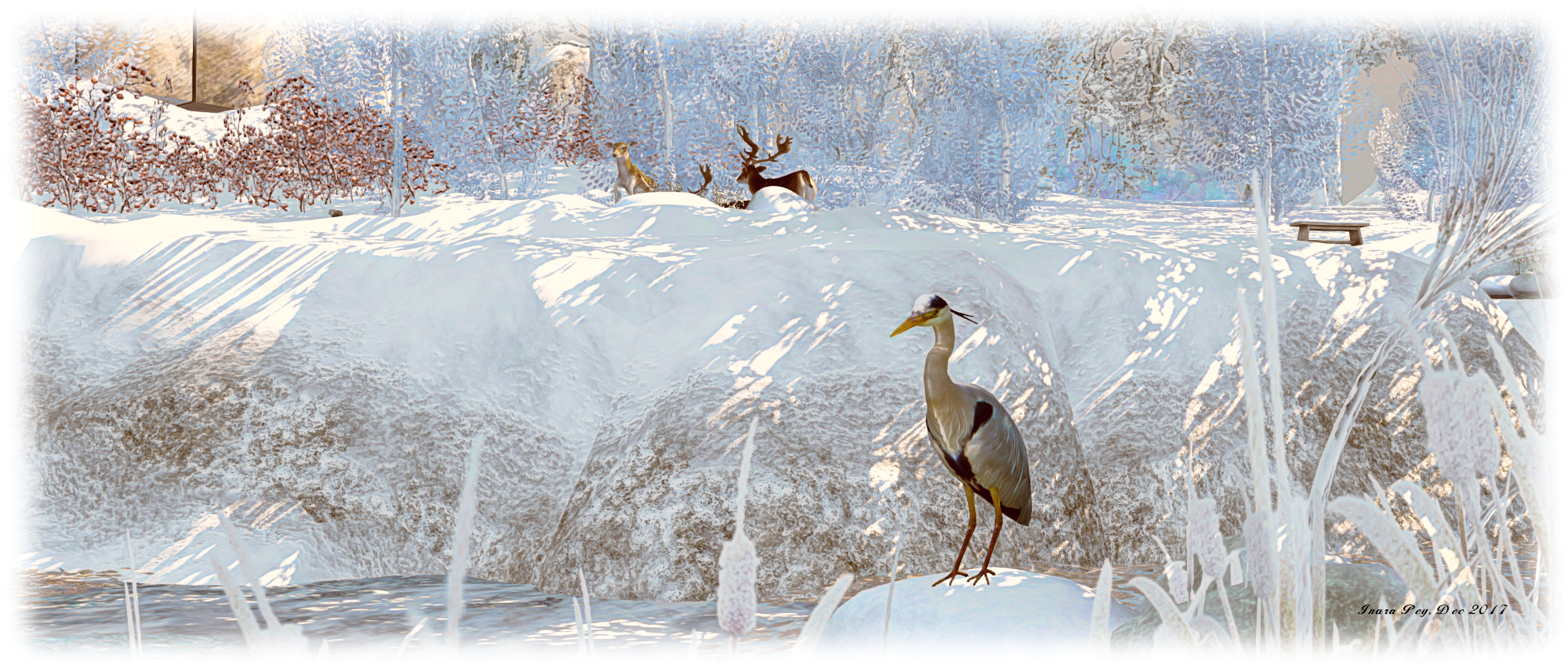
The northern end of this island is crowned by a great wind turbine – presumably providing electrical power to the properties on both of the larger islands. Its great blades turn steadily, shadows seeming to slice silently over the snow, completely ignored by the deer roaming here.

With two further (off-sim) islands to the north-west and south-east, D o X has the feel of a tiny winter-bound archipelago in which seasonal retreats have been established. Set beneath a twilight sky circled by an aurora and patrolled by deer, it is a picturesque setting. We’ll doubtless be returning in the new year, when we’ll also pay a visit to the Urben Gallery up in the sky.

D o X; Inara Pey, December 2017, on FlickrD o X – click on any image for full size

The beauty of a snowflake in Second Life

Snefnug; Inara Pey, December 2017, on FlickrSnefnug – click any image for full size

“Snefnug is Danish for ‘snowflake’. Welcome to our home in the Arctic circle.” So reads the description for the midwinter landscape of Snefnug, a Homestead region designed by Stella Pelous (Stella Mahogany).

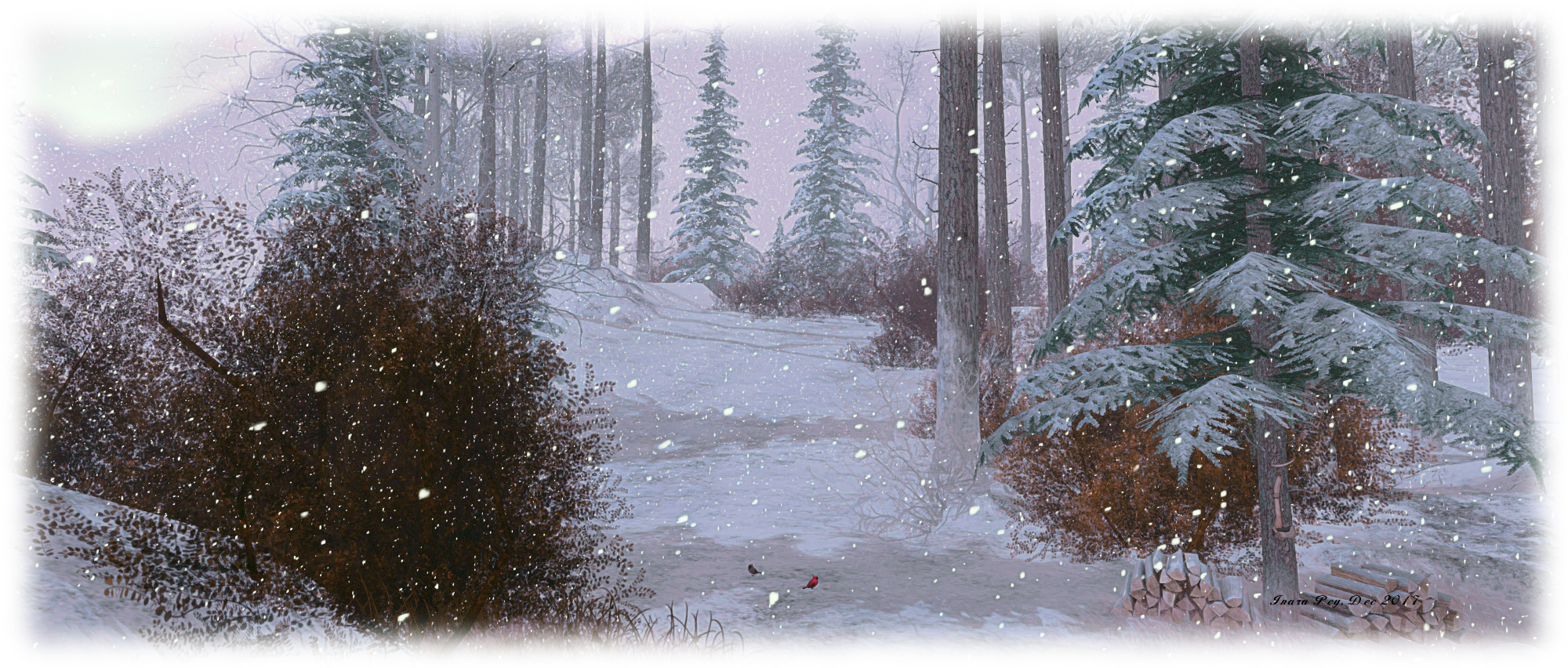
Danish it might be, but with the high peaks of snowy mountains surrounding it, Snefnug is – as the description suggests – perhaps representative of a landscape somewhat further to the north in Scandinavia. Covered in a heavy blanket of snow, the region offers a relatively flat landscape within the bowl formed by the surrounding mountains, from which it is separated by water. This water also cuts into the land to form a deep inlet running from the west, which faces a channel reaching to the open sea beyond the mountains.

The landing point is at the eastern extreme of this inlet, looking out over the water and snow falls from a hazy sky. To the north and south, fingers of land point outwards, linked by a wooden bridge spanning a narrow sliver of water which extends a little further inland from the bay, its passage eventually stopped by the trunk of a mighty oak tree.

Snefnug; Inara Pey, December 2017, on FlickrSnefnug

The bridge is guarded at either end by wooden gatehouses, strong A-frames supporting steeply sloping roofs. But the gates are thrown wide, allowing free passage across the water, rather than forcing visitors to trudge through the snow and around the great oak. Whether you head south across the bridge or turn north and west along the northern side of bay is entirely up to you.

Should you head north, the way will take you past a track leading the way to a barn where fir-trees are being sold for Christmas, while a barn heated by a stove and cosy gazebo lit by a warm fire body offer very different places to sit and pass the time. Through a woodland of denuded birch trees, fir-trees and oaks, sits a studio cabin of modern design, warmly furnished – but with doors locked.

Snefnug; Inara Pey, December 2017, on FlickrSnefnug

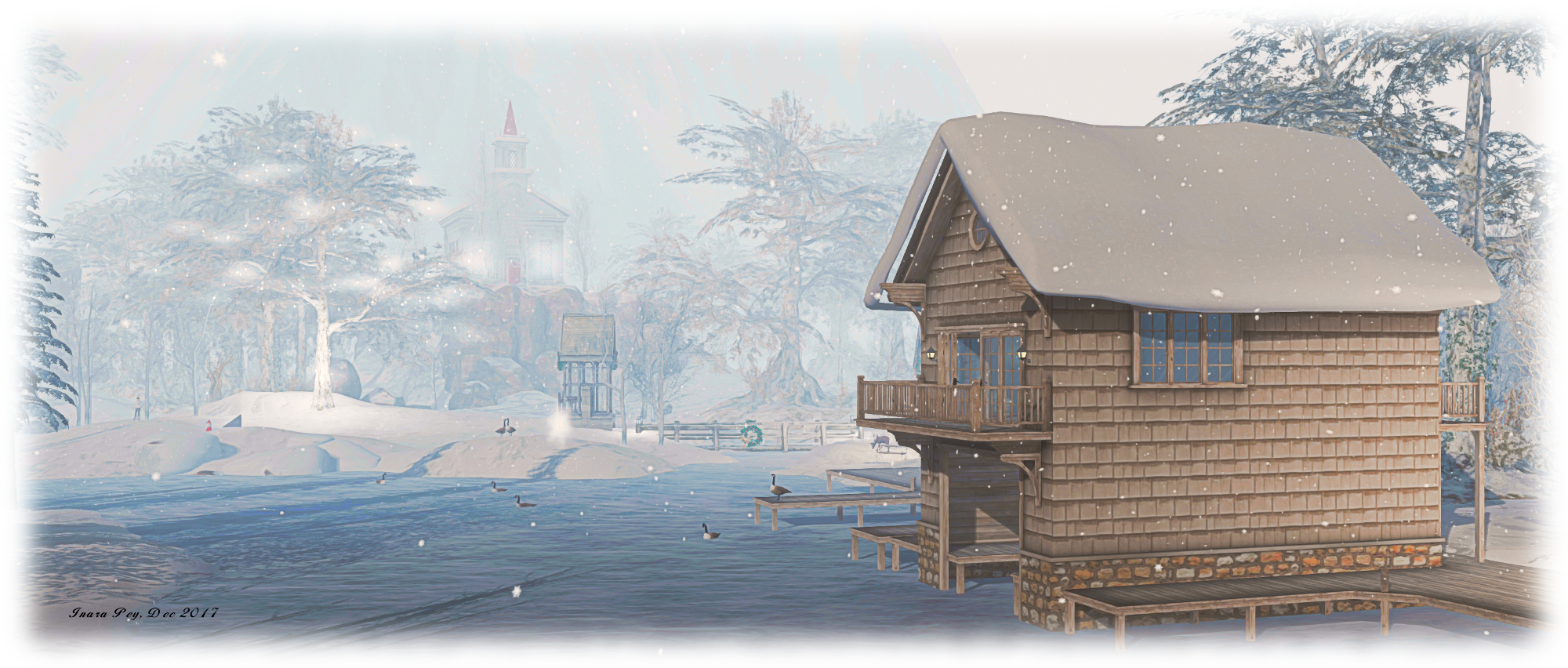
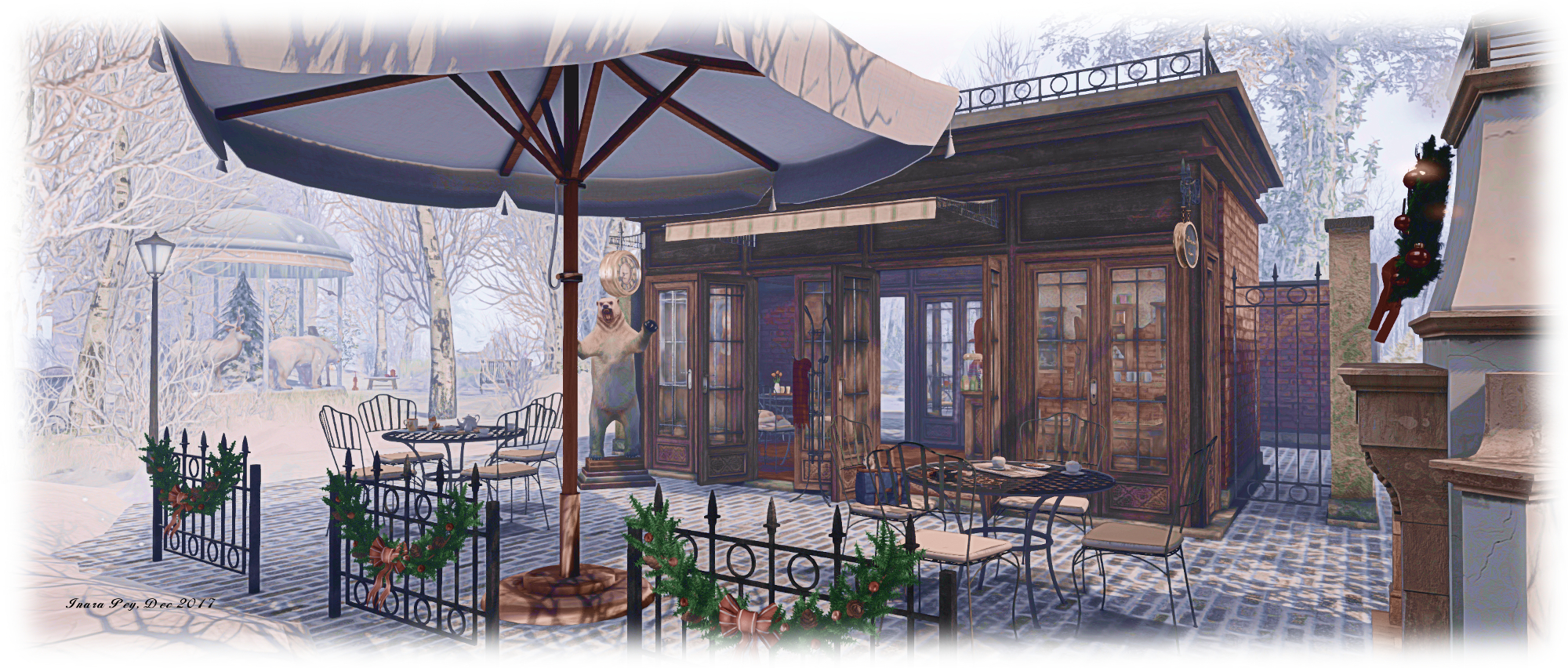
Across the bay, on the southern shore, sits a boathouse and quays, the rooms above the boathouse unfurnished, but the building itself offering an imposing shoreline presence. Behind it, a track runs by a snowed-in carousel to a little café with a fireside terrace – the perfect place to enjoy a hot drink while exploring.

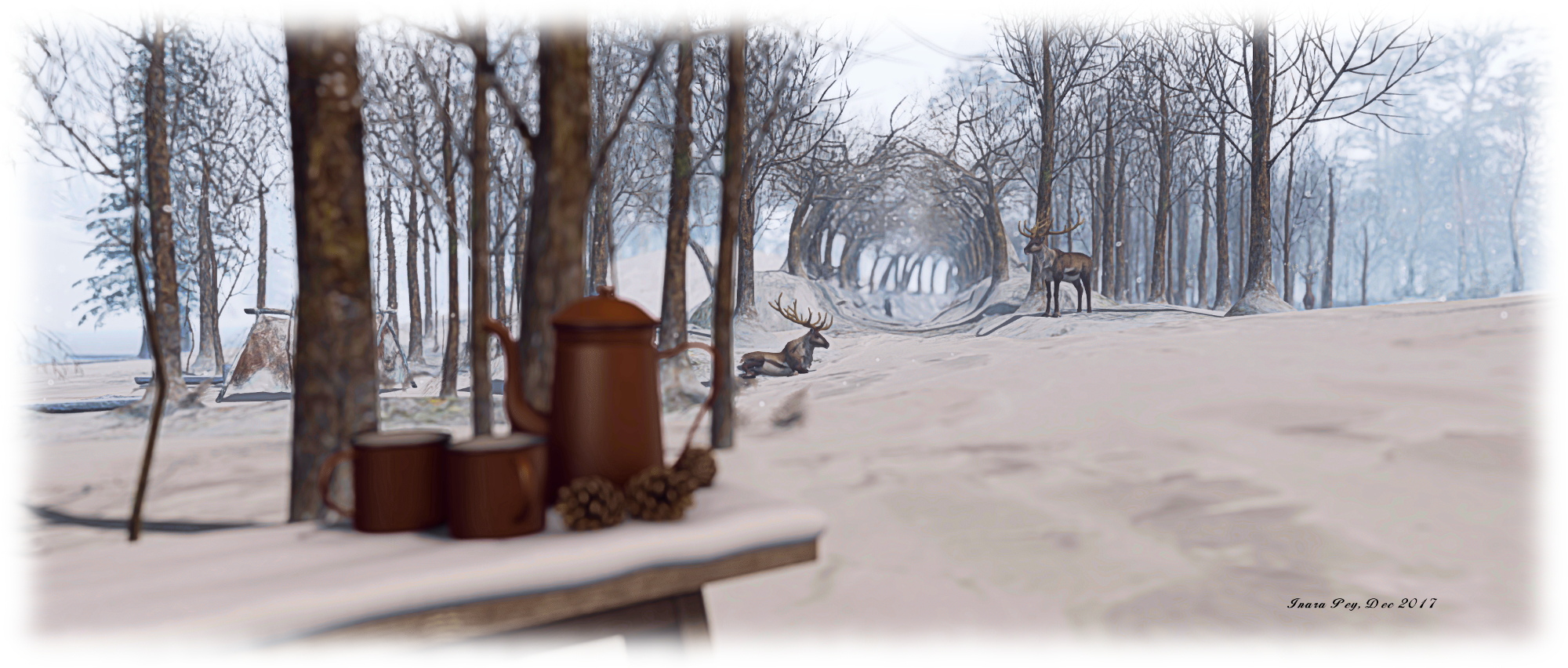
The land around and to the north of the café is a mix of open, snow-covered ground, woods, and a tree-lined avenue, inviting exploration. Deer roam the land here, and all routes eventually bring you to another house, roofs laden with thickly laying snow, but doors unlocked and inviting people inside. A short distance to the east, a set of stone stairs wind up one of the region’s two highland areas – a flat-topped plateau of rock on which sits a chapel. A second plateau sits close by, but doesn’t offer a way up its vertical sides.

Snefnug; Inara Pey, December 2017, on FlickrSnefnug

Those who enjoy walking in winter wonderlands will doubtless enjoy a visit to Snefnug, it is a delightful, open place with plenty of opportunities for photography, exploring and sitting – whether on your own or with a friend or close one. Do keep an eye out for all the little touches with the wildlife around the place from the bird-riding mouse and his (her?) companion to the raccoon family enjoying an outing in the snow.

Another picturesque winter seasonal regions well worth a visit.

Snefnug; Inara Pey, December 2017, on FlickrSnefnug

SLurl Details

  • Snefnug (Callisto Bay, rated: Moderate)

Holiday Trace in Second Life

Holiday Trace; Inara Pey, December 2017, on FlickrHoliday Trace – click any image for full size

Update: Holiday trace is now closed, and Secret Charm is under now ownership.

Over the years, a visit to The Trace family of regions – The Trace, The Trace Too, Summer Trace, Fall Trace, Winter Trace – has always been a pleasure. I’ve written about these regions, which were started by Kylie (Kylie Jaxxon), then became a partnership between her and  Elvira Kytori, on numerous occasions in this blog. So, it was with delight that I received news from Shakespeare that there is another in the series – Holiday Trace – now open for visits, and made a point to hop over and explore with Caitlyn as soon as we could.

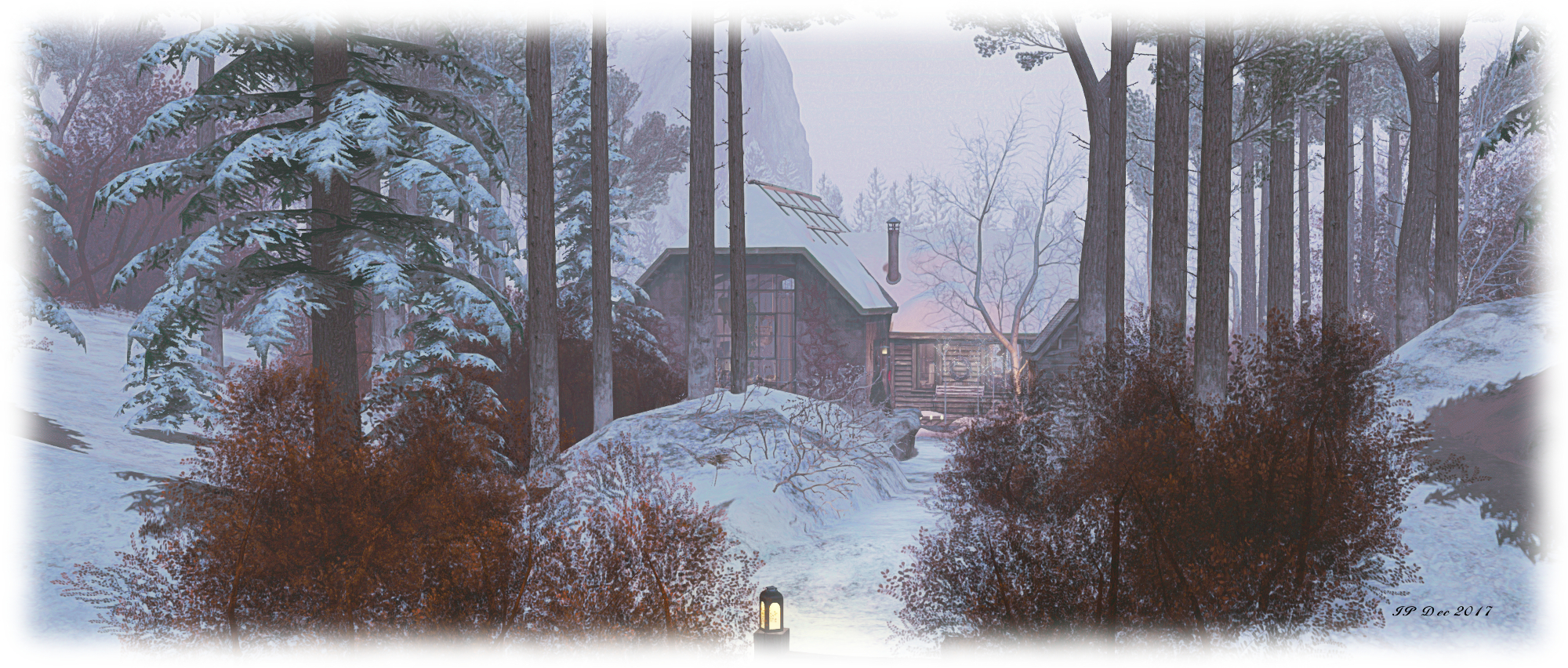
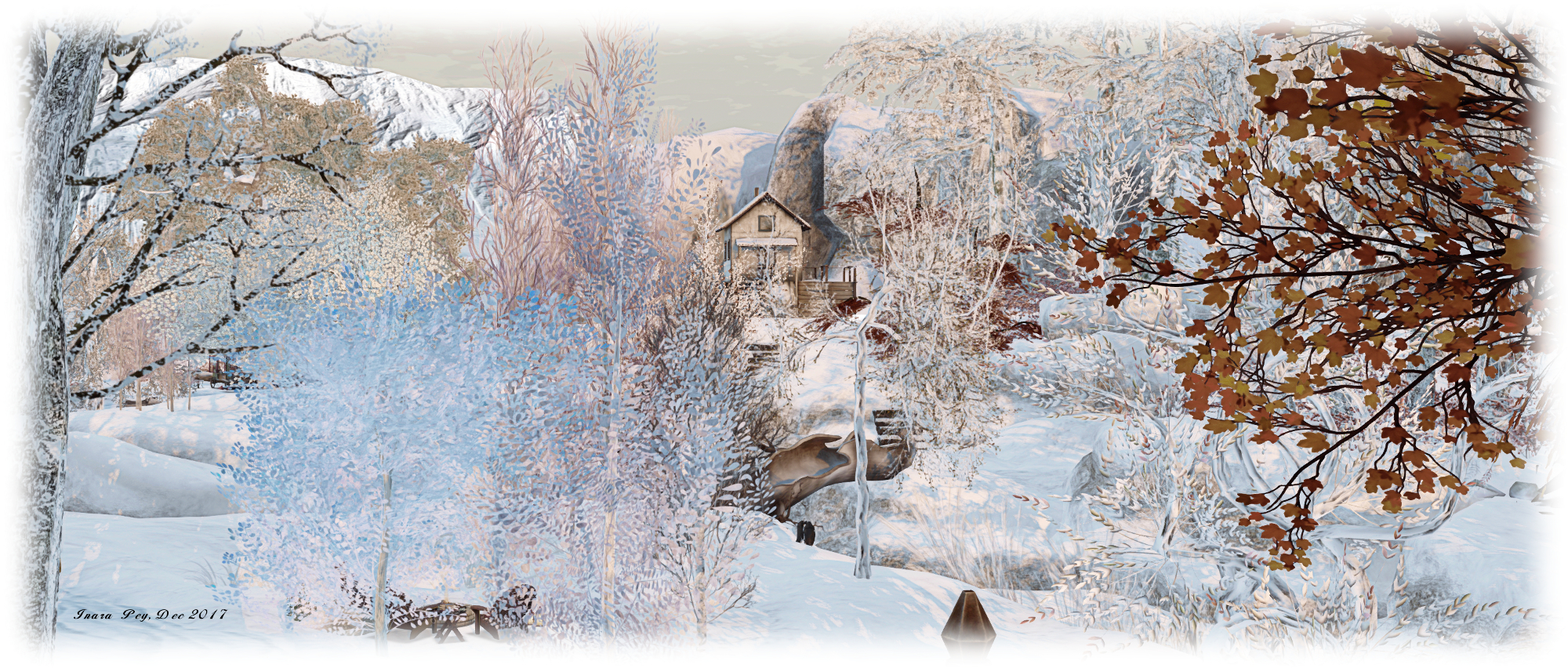
Given the time of year in the northern hemisphere, Holiday Trace is a wintry setting. Snow lies heavy on the ground and falls gently from a windless sky. Exposed water here is heavy with ice thick enough to skate on, and the sounds of the countryside are subdued.

Holiday Trace; Inara Pey, December 2017, on FlickrHoliday Trace

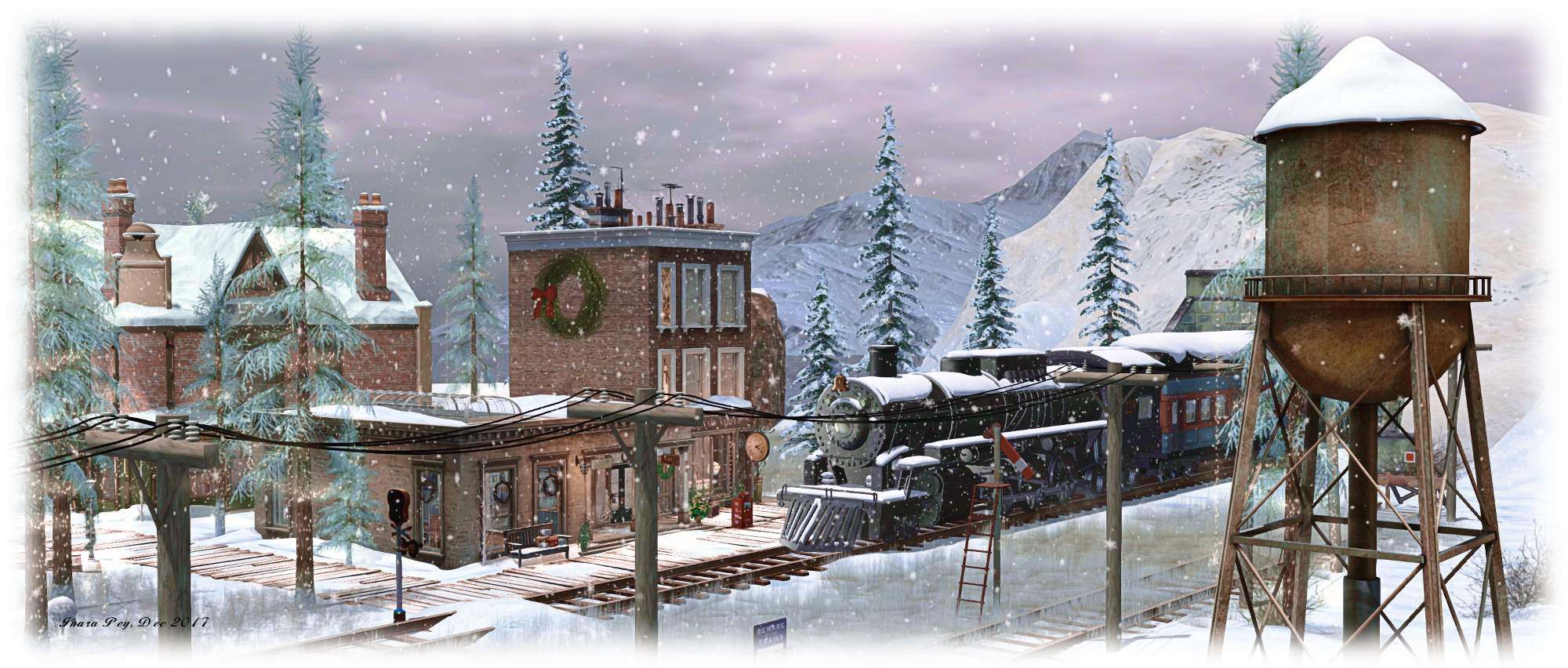
In the south-east corner of the region sits a little country train station, sitting quietly with a tavern, each waiting passengers or customers. The great black bulk of a DRD Arctic Express steam train stands at rest before the station, having emerged from a dark tunnel, the great lamp on the front of its huge boiler still lit.

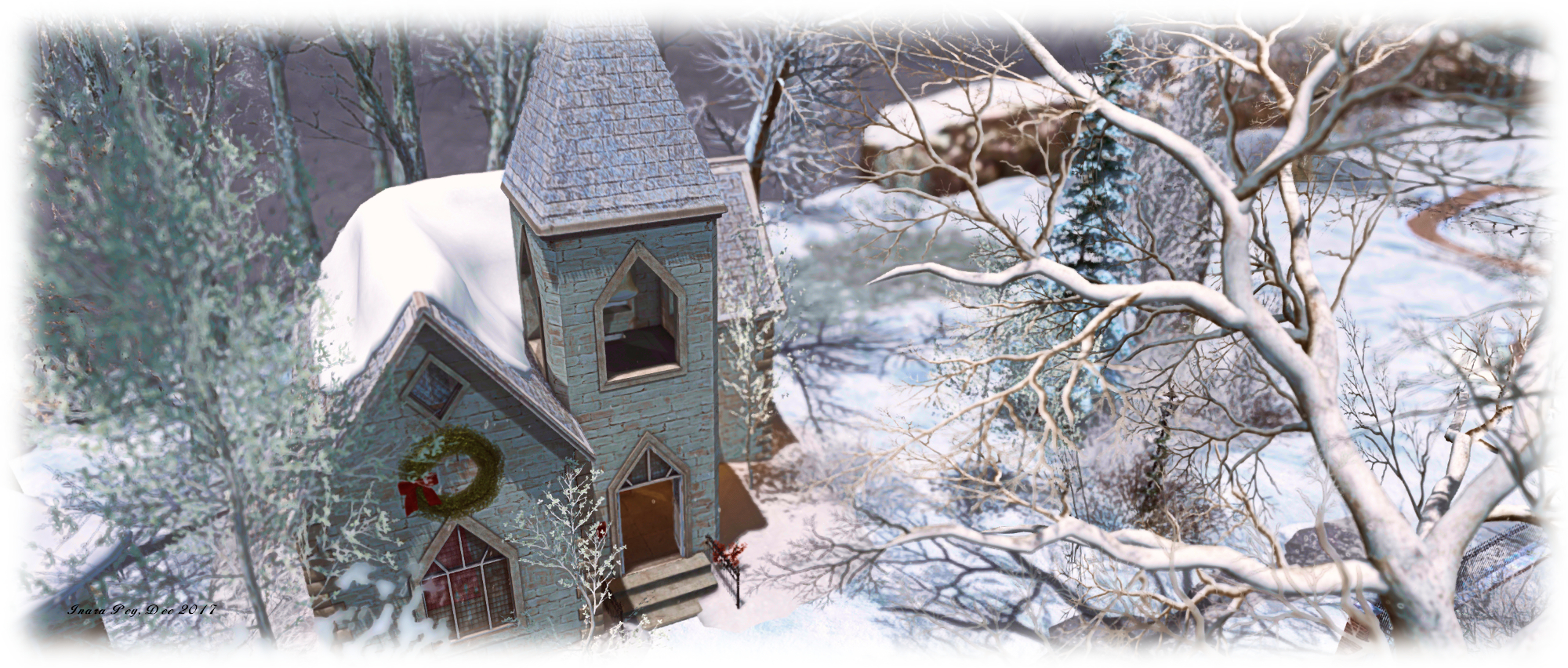
Across the region to the west and over the snow blanketing the land, sit the house and barns of Christmas Tree Farm, which may beckon visitors to set out across country to visit them. Northwards from the station however, along a brickwork footpath one might find the way to the local chapel. The path may have been salted at some point, as the snow is having a hard time settling on it. Also, it doesn’t offer a direct route to the chapel.

Holiday Trace; Inara Pey, December 2017, on FlickrHoliday Trace

Instead, the path splits a short walk from the station and tavern, branching east and west to encircle a frozen pond where children skate. Nor does the path resume on the far side of the pond; visitors must walk through the snow and over an icy path (or is it another frozen body of water on which the snow has settled?

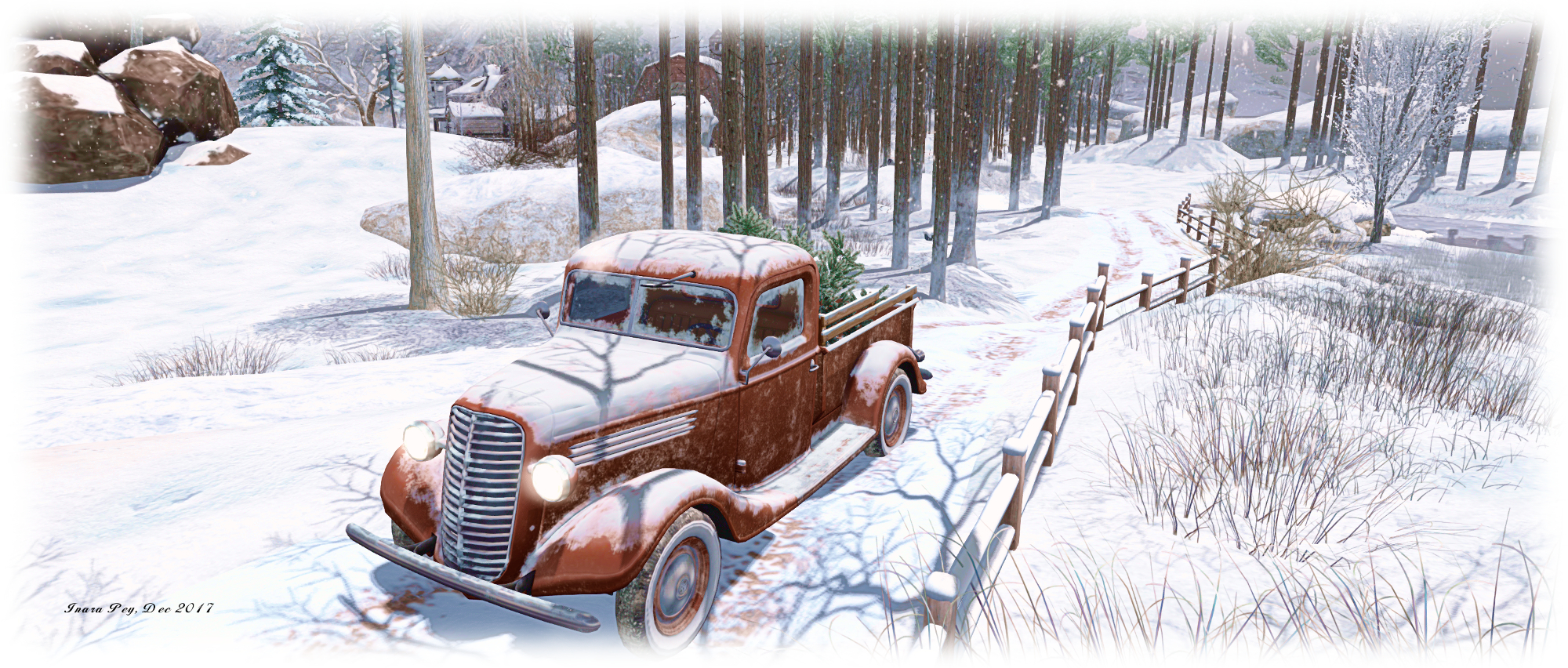
This route runs alongside a walled and fenced garden in which a fountain – drained, one might guess, for winter – before visitors arrive at the little chapel. Tall beech trees, barks frosted, branches bare, stand around the chapel as if protecting it. Between their stout trunks a rutted track winds westwards to where a covered bridge spans a narrow stream which feeds into a larger finger of water cutting into the land. A rowing boat is trapped in the frozen stream and a horse and sleigh might shortly vie for use of the track with a red pick-up truck that is coming up behind them.

Holiday Trace; Inara Pey, December 2017, on FlickrHoliday Trace

Laden with a fir-tree, the truck might be making its way to the chapel from Christmas Tree Farm, sitting a short distance from the western end of the track, where a Surrey-style carriage sits in the snow, also bearing a fir-tree and watched over by a fox and reindeer as Canada geese fly risk an low pass through a gab in the trees overhead.

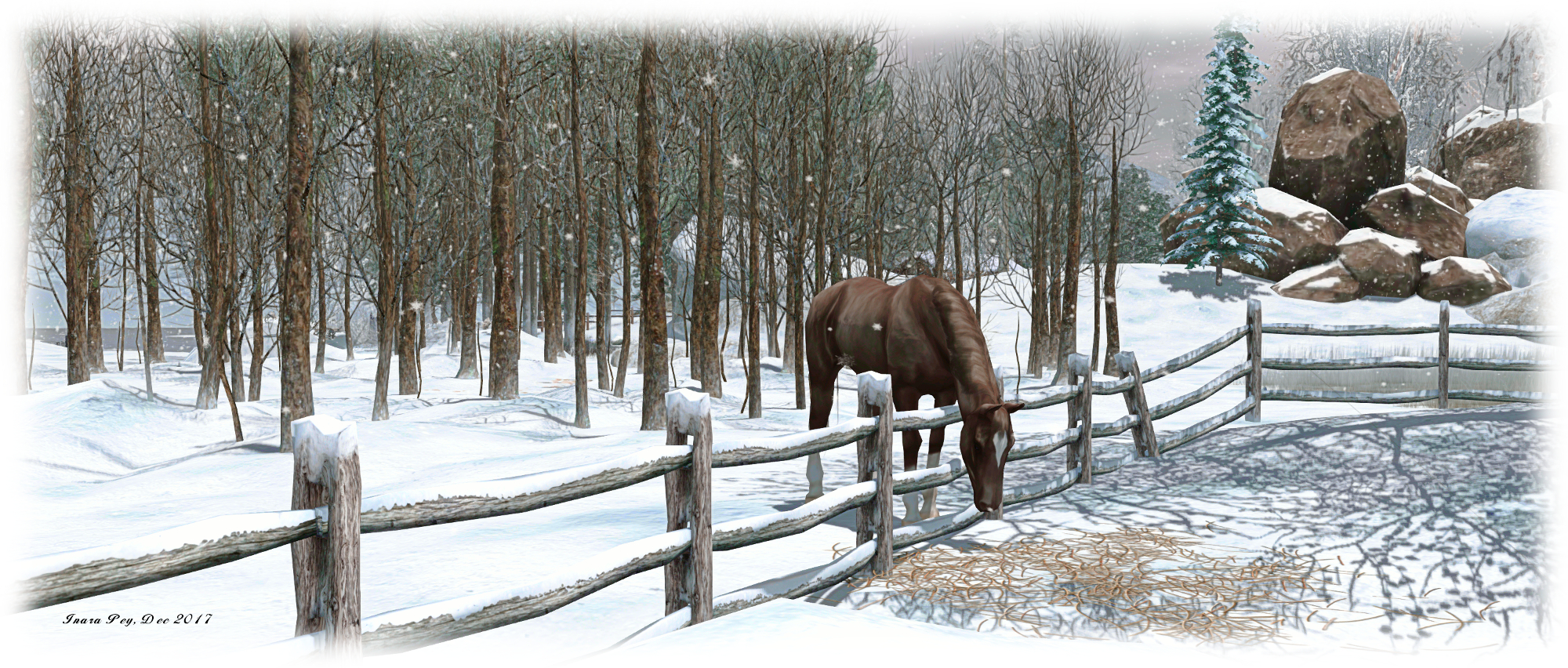
With trees a-plenty, rocky cairns and step-like slabs covered in snow, whilst offering a home to foxes, deer, reindeer, dogs, and birds, Holiday Trace is a delightful winter setting. It’s a place where wanderers can wander, couples can cuddle (try the sleighs and the old cable car!), individuals can sit and ponder, and photographers capture the scenery and memories.

Holiday Trace; Inara Pey, December 2017, on FlickrHoliday Trace

SLurl Details

The Mill at Christmas in Second Life

The Mill; Inara Pey, December 2017, on FlickrThe Mill – click any image for full size

It’s always a pleasure to visit The Mill, the homestead region designed by Shakespeare (SkinnyNilla) and Max (Maxie Daviau). It’s a place we’ve paid numerous visits to, on account that it receives a seasonal rebuild, so when Shakespeare dropped an invitation for Caitlyn and I to drop in and see the Winter 2017 build.

The Mill; Inara Pey, December 2017, on FlickrThe Mill – click any image for full size

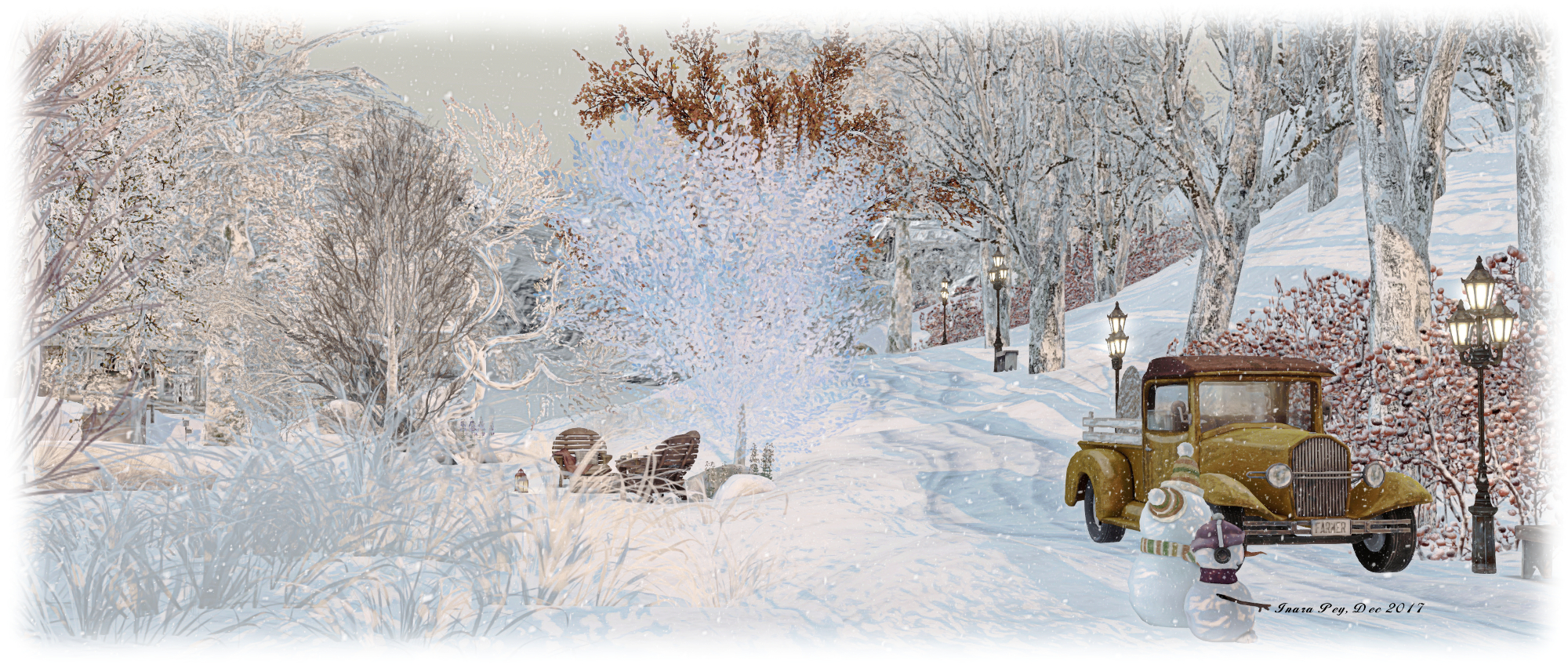
As is the tradition with The Mill, a visit commences at the titular location for the region:  the great stone mill, currently located in the south-east corner of the region. From here, track runs through the snow, circling a little café serving welcome hot drinks. From here, steps lead up and to the west, where a snowy little cabin sits, overlooking the region’s frozen river. An old pick-up truck is struggling to the cabin, trying to deliver a Christmas tree, having driven past a little row of houses beyond a rocky arch.

The Mill; Inara Pey, December 2017, on FlickrThe Mill – click any image for full size

Alternatively, a decorative bridge reached a short walk from the landing point offers a way across the river to where a church keeps watch on a deck built out over the ice, and a little carousel. Here the route divides once more, one track leading up a hill and under the boughs of a giant Virginia Oak to a house atop the hill, the other running around the base of the hill. This lower road follows the high bank of the river to where a set of stone steps leads up to the lower end of a sleigh run – the upper end not far from the hilltop house.   

The Mill; Inara Pey, December 2017, on FlickrThe Mill – click any image for full size

With riverside camps, hillside look-out points, horse, deer and sheep wandering throughout, The Mill presents a perfect rural winter scene, with plenty of places for people to enjoy taking photos or enjoy the setting. Accompanying the region is a superb audio stream in the form of Martini in the Morning – one on my personal favourites, and with which I share some history, having helped introduce Brad “Martini” Chambers to the world of Second Life.

The Mill; Inara Pey, December 2017, on FlickrThe Mill – click any image for full size

For those who prefer not to explore with the audio stream active (as we generally do), there’s a gentle ambient sound scape for the region, complete with some seasonal touches with the help of Nat “King” Cole, Dean Martin and  – I believe – Matt Munroe at the carousel.

As always, The Mill is a joy and a pleasure to visit – make sure you do, and don’t forget to offer a token of appreciation via the little bear by the landing point to help Shakespeare and Max continue to offer the region for visitors to enjoy.

SLurl Detail

  • The Mill (Pale Moonlight, rated:  Moderate)