Abandoned Abandale in Second Life

Abandale; Inara Pey, July 2018, on FlickrAbandale – click any image for full size

Update: Abandale has closed. The SLurls in this article have therefore been removed.

Somewhere, along some coastal road, perhaps hidden under the shade of trees or easily missed as it tries to compete with the stunning ocean vista on the other side of the road, an ageing, fading sign points the way down a turn off and is stencilled with a single word, fading with age: Abandale.

Take the turn, and the road gradually becomes more and more decrepit until, just as the idea of turning back and forgetting curiosity’s call, it arrives at a narrow stretch of coastline caught between sea and undulated shoulders of rock. Here sits a place where the black top finally gives up, and an old cargo container offers itself as a makeshift bridge spanning a narrow finger of water, the original crossing perhaps only a ford. It is the setting for the remnants of Abandale, a little town lost from civilisation and forgotten by time.
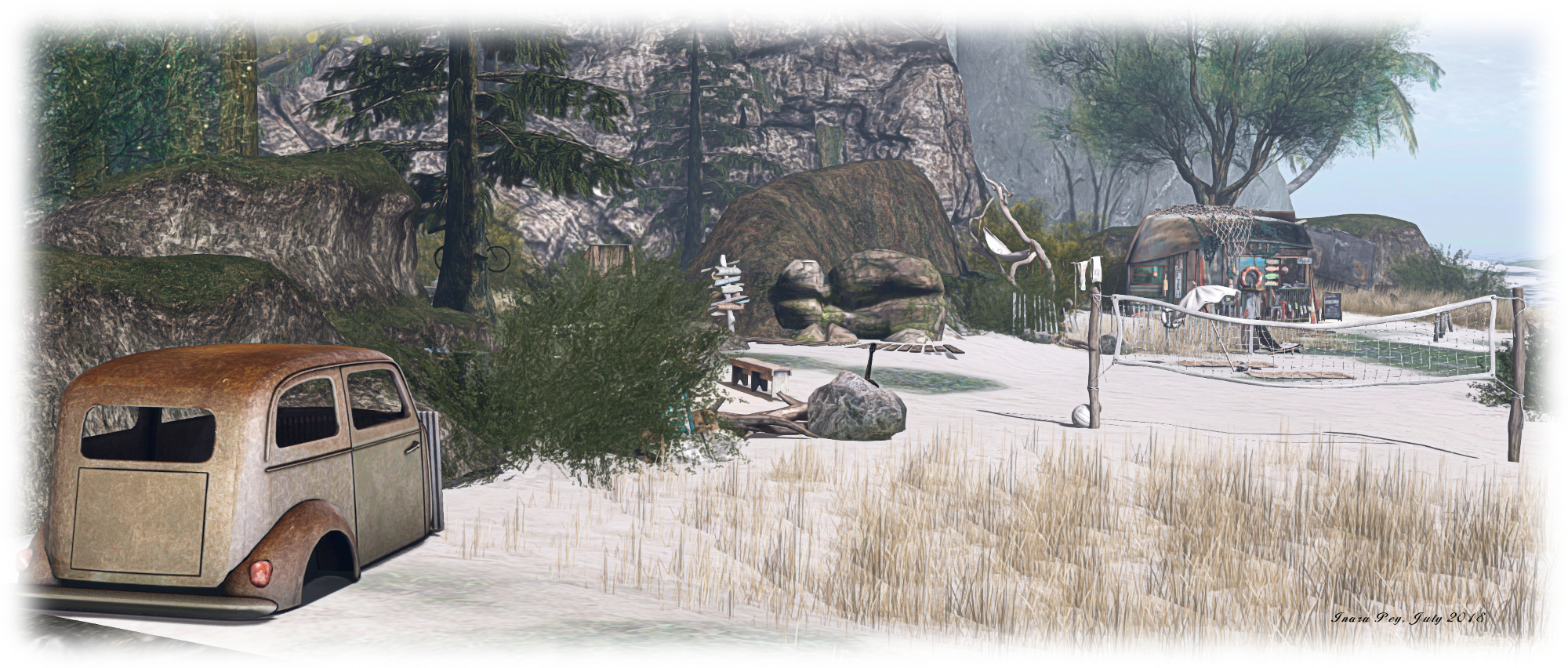
Abandale; Inara Pey, July 2018, on FlickrAbandale

There’s not much here to commend itself to visitors seeking comfort – all that’s left of the motel which may once have  stood at the town’s edge is the entranceway and the front office. Whether the rest was demolished or fell prey to a violent storm – the place stands almost on the edge of the land – is hard to say.

Beyond a curtain of trees from this, and reached by a wooden board walk, sits the ruins of a large building. But it doesn’t appear to be part of the motel; its general shape and the large gates sitting to one side suggest it was once a house, possibly part of a farm, going by the broken windmill and barn close by.
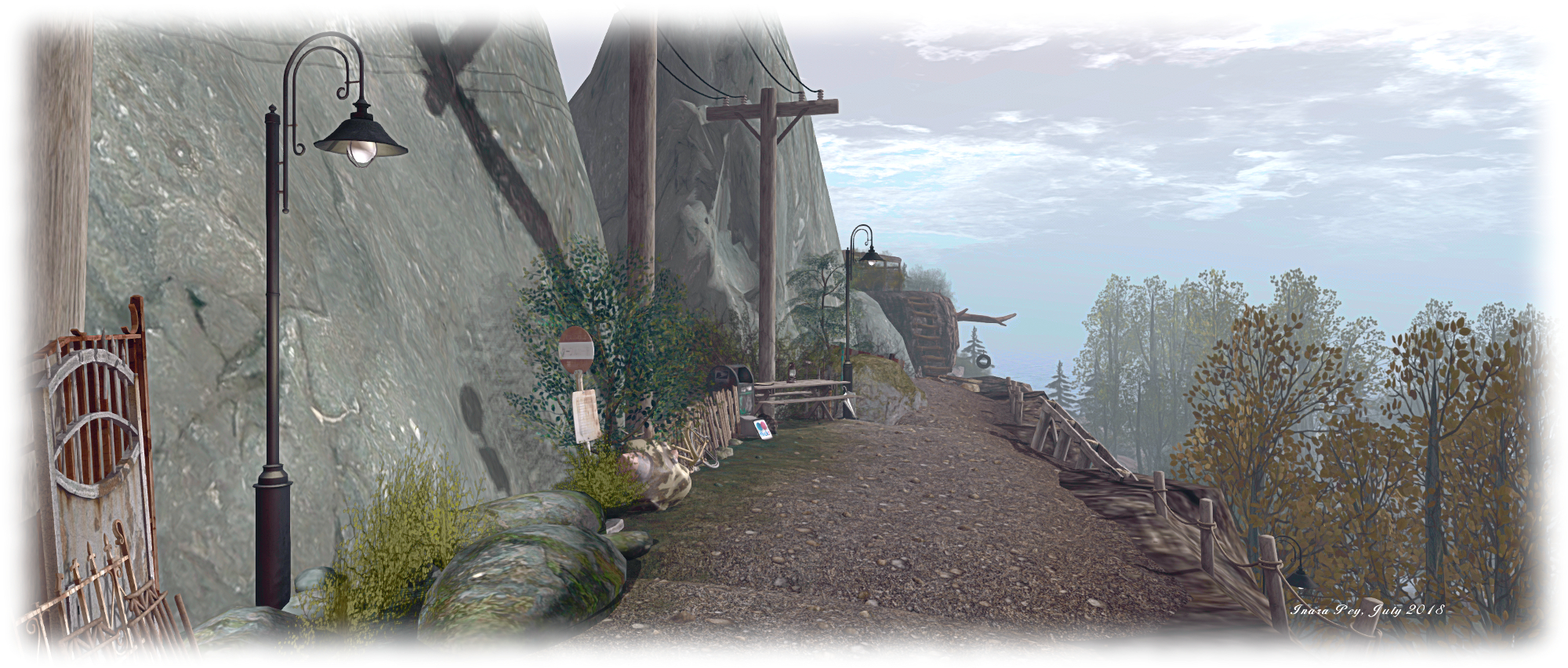
Abandale; Inara Pey, July 2018, on FlickrAbandale

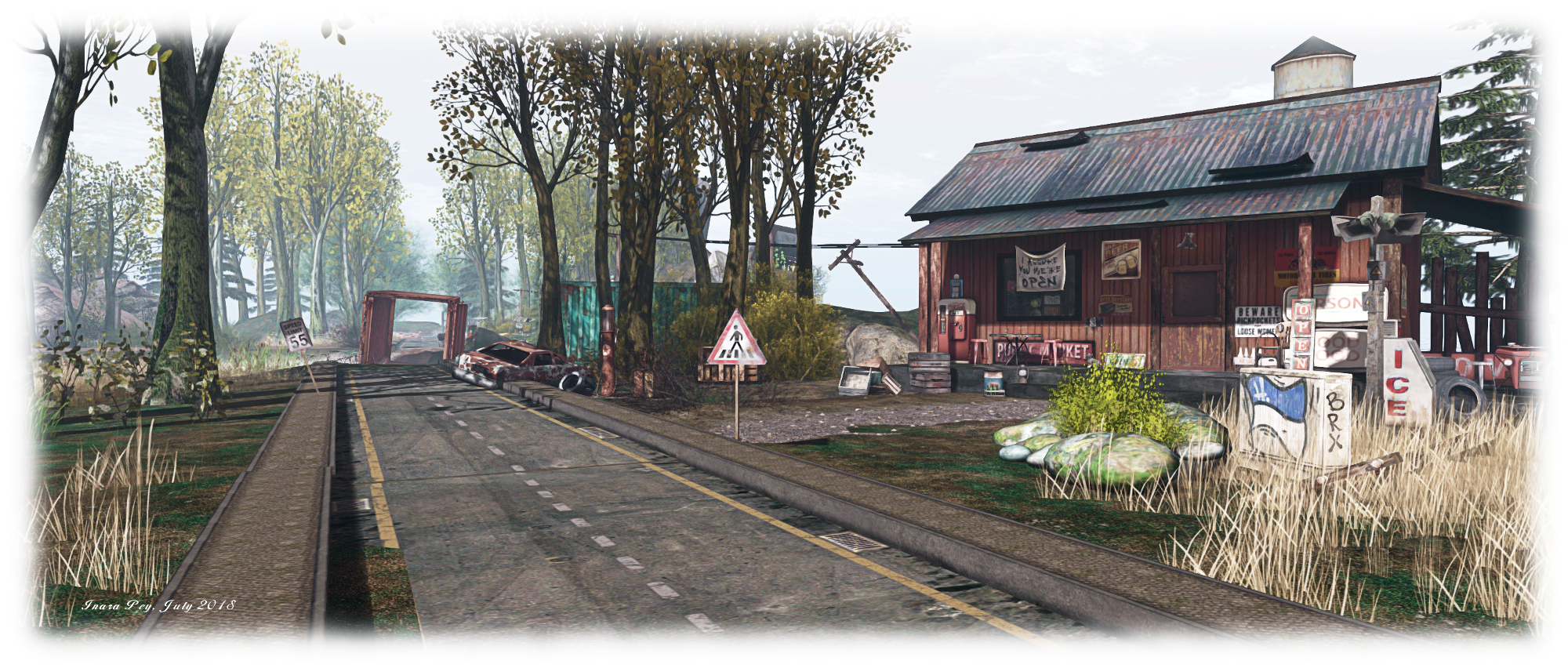
The town’s bar, however, does survive intact. It faces the ruins of the house across what’s left of the main road, but the sign confirming it is open for business may not carry quite the assurance the proprietor likely hopes. Certainly, the detritus of other human habitation before it doesn’t offer a comforting invitation.

Across the narrow channel of water the intrepid explorer can find more signs of former habitation: a long abandoned and broken little fun fair shaded from the sun by a tower of rock, the ruin of an old chapel sitting on the other side of the road and reached via an old track. A second track offers passage up to the hills to where a run-down cabin sits.
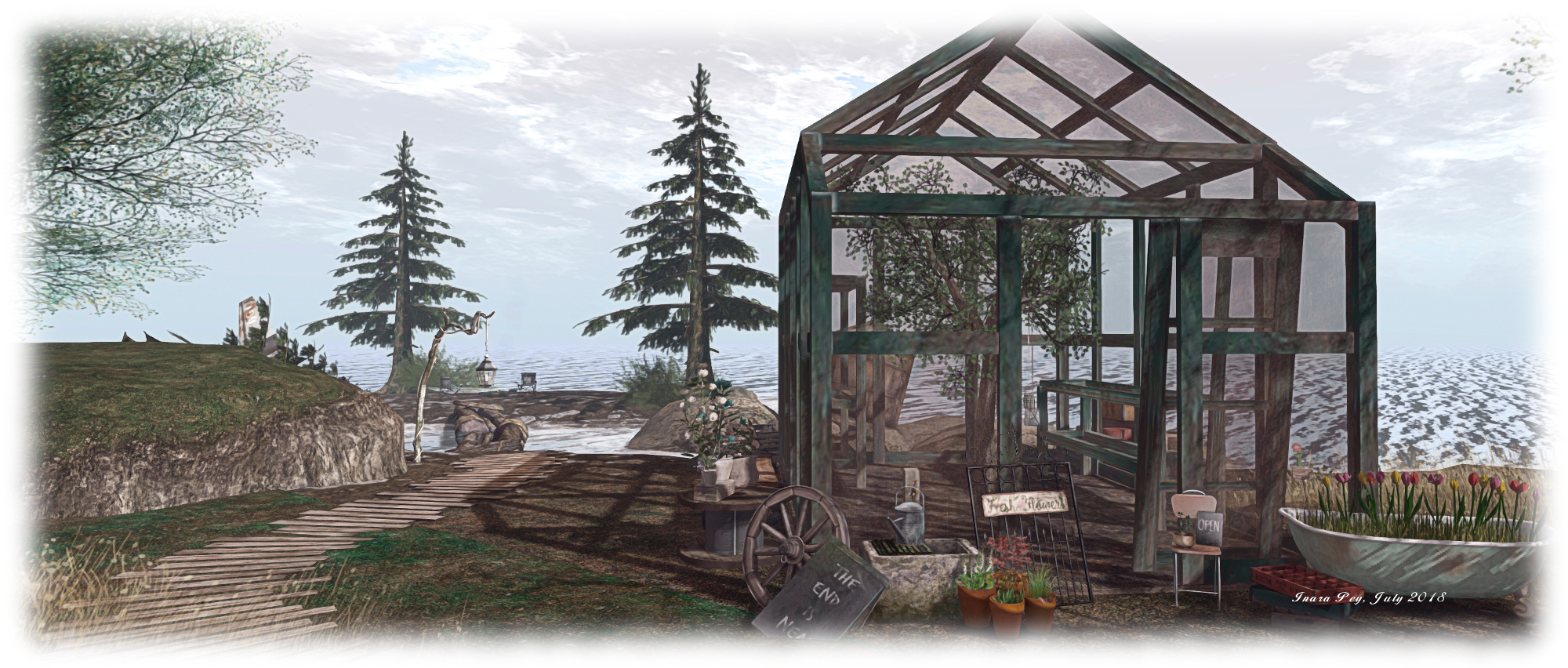
Abandale; Inara Pey, July 2018, on FlickrAbandale

To the west of this, down on the coast, sits a beaches – perhaps the one place that offers an almost pleasant greeting for those who find it; certainly, someone has opted to set-up camp close by and avail themselves of the bar and volleyball. Perhaps whoever it is owners the rather pristine motorbike parked outside the old town’s garage, and they’ve found what’s left of Abandale a cosy enough place to rest from their own travels…

Designed by Dominique Redfield, Abandale occupies half a Homestead region and offers SL visitors something just that little bit different. Poetic licence on how to reach it aside, a visit begins up on the hills marking the parcel’s southern boundary, a switch back path offering a way down to the ruins of the house mentioned above, as a well as presenting a short walk along the cliff-tops to a high placed little wooden snug.
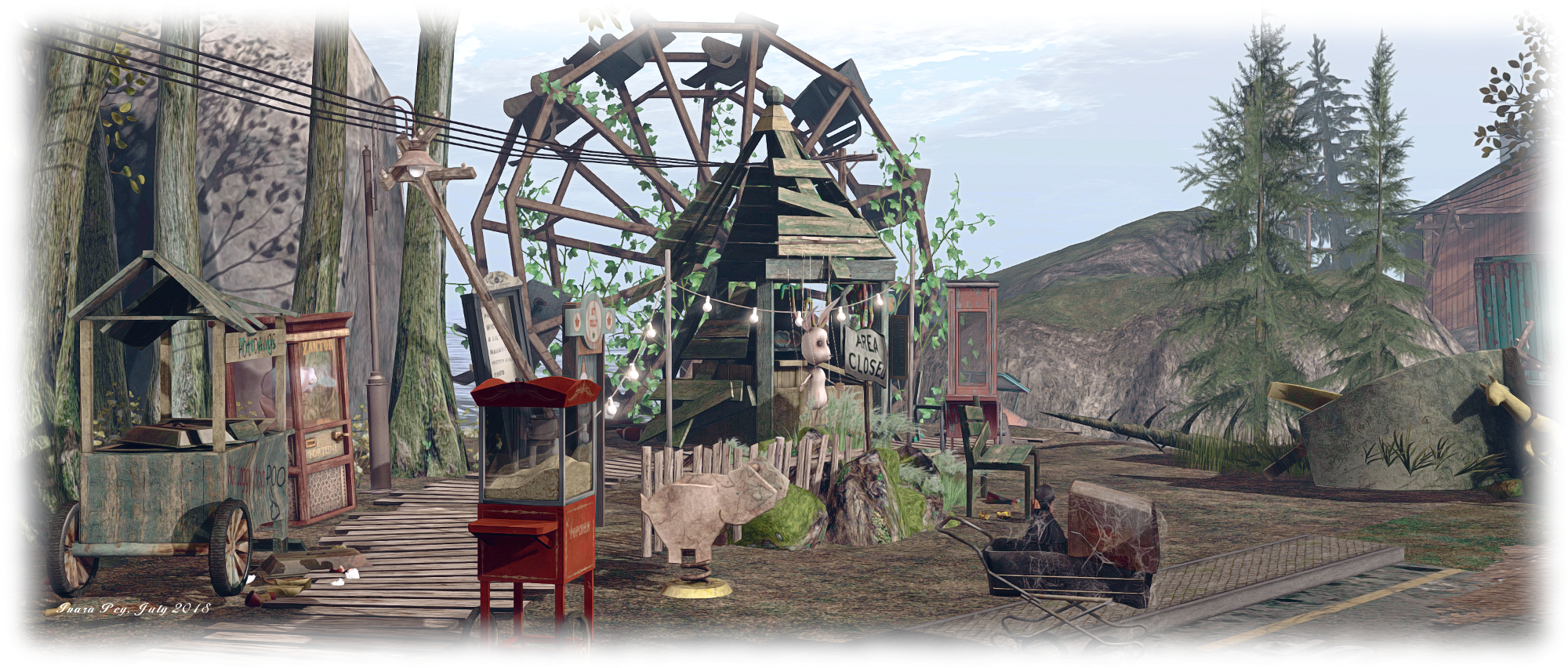
Abandale; Inara Pey, July 2018, on FlickrAbandale

There is a ramshackle, ageing charm to Abandale, with plenty of room to explore and for photography. True, some of the landscaping is a little rough (I’d personally have avoided laying the dirt tracks up the slope to the cabin, or at least worked the land a little more to help blend the edges of the track more with the rocks and shrubs), but there’s nothing here to really spoil the time spent in visiting it.

For those who enjoy atmospheric settings for their photography and who enjoy experimenting with their windlight settings to define a desired result, Abandale offers plenty of scope (and has its own Flickr group). Similarly, those looking for places to sit and relax in a “country grunge” type of setting, will find plenty of such places here as well, from the beaches to the aforementioned cliff-top shelter.

Abandale; Inara Pey, July 2018, on FlickrAbandale

Return to Chouchou and a musical crossing of the divide

ChouchouMemento Mori

One of the places I’d always enjoyed visiting in Second Life – although I admit it’s been getting on for 4 years since I was last there – is the paired regions of Chouchou, Chouchou V. These form the in-world base for the musical pairing of Japanese pianist arabesque Choche and vocalist Juliet Heberle, together also known and Chouchou. Over the years they gained a strong following in-world and have produced a number of CDs of their musical and original compositions, with samples and tracks showcased through their YouTube channel.

I first blogged about Chouchou – the region – far back in 2012, and it is both surprising and gratifying as to how little has changed over the years. The ground level setting, with its sand banks, shallow waters and teleport ladder rising into the sky remains always as it was, offering a haven of peace presided over by the duet’s music (do have the music stream enabled when visiting).

Chouchou

The teleport ladder provides access to two areas in the sky (both of which can also be reached via direct teleport as weell – SLurls at the end of this article): Islamey and Memento Mori (a third area, Babel, sadly seems to have sadly disappeared at some point in the past).

Islamey offers something of a traditional Japanese garden look, with teahouse built over water and walks under cherry blossoms, all sitting beneath a bright blue sky. This was once the venue for concerts – but to be honest, I’m not sure if this is still the case. But even if not, as I noted far back in 2012, it is a place of quiet contemplation where you can come when you want to give free passage to thoughts and ideas, or when you simply want to find peace and let Chouchou’s music soothe you gently.

ChouchouIslamey

Memento Mori is a place that used to draw me a lot because it is a magnificent build styled after the great medieval cathedrals, and that simply must be seen to be appreciated. It may appear to be a startlingly bright environment when first arriving,  but it is well worth leaving the default windlight set while climbing the stairs from the arrival point up into the cathedral’s great nave; the way the jet black piano is revealed through the surrounding light is almost transcendental in feeling and perfectly suited to the setting.

The intricacy of this build – a joint work dating from 2010 by Juliet collaborating with Miya Grut and with the support of Yuki Aabye for some to the sculpt work – is completely mind-blowing: From the sheer size of the cathedral, through the curling stairways leading to the upper passages, the great bell suspended over the piano as it sits within the space below the great tower to the ghostly pews between the nave and the two outer aisles, the beauty here tends to leave the visitor in awe. It is genuinely a place that has to be visited and seen, rather than written about and photographed.

ChouchouMemento Mori

I was actually drawn back to Chouchou for two reasons. Firstly, to witness Memento Mori once more, simply because it has been so long since my last visit. Secondly, and, more particularly, because reader Silvana Silk e-mailed me with a link to a recent video on Chouchou’s YouTube channel announcing a new set of concerts by arabesque Choche.

A noted and respected classical pianist going by the name of Michal Horák in the physical world, he will – for the first time – be giving a series of concerts in Japan under both his physical world name and his Second Life avatar name. As the notice with the video states:

Up until now, arabesque has been working not only as a composer and a pianist of Chouchou, but also as a classical pianist under his real name Michal Horák. And this fall, for the first time the two names will be combined together. He will have the first piano concert under two names with this title “Michal Horák/arabesque Choche Piano Concert.” The concerts will be held in Tokyo, Osaka and Kagoshima, and Chouchou’s new and second piano album “piano02 opus” expected to be released on December, 2018 will be on presale at the concert venues.

Tickets for the concerts are on sale, and there are links in the video description (in Japanese) to the concert venues – I only with I was in a position to attend one of them. As I’m not, and to mark the occasion in my own small way, I’ve put together a video of Memento Mori. I hope you’ll enjoy it and use it as a reason to visit / return to Chouchou.

SLurl Details and Links

A vision for the mind’s eye in Second Life

Aphantasia; Inara Pey, June 2018, on FlickrAphantasia – click any image for full size

Update, August 27th: Aphantasia appears to have closed. SLurls have therefore been removed.

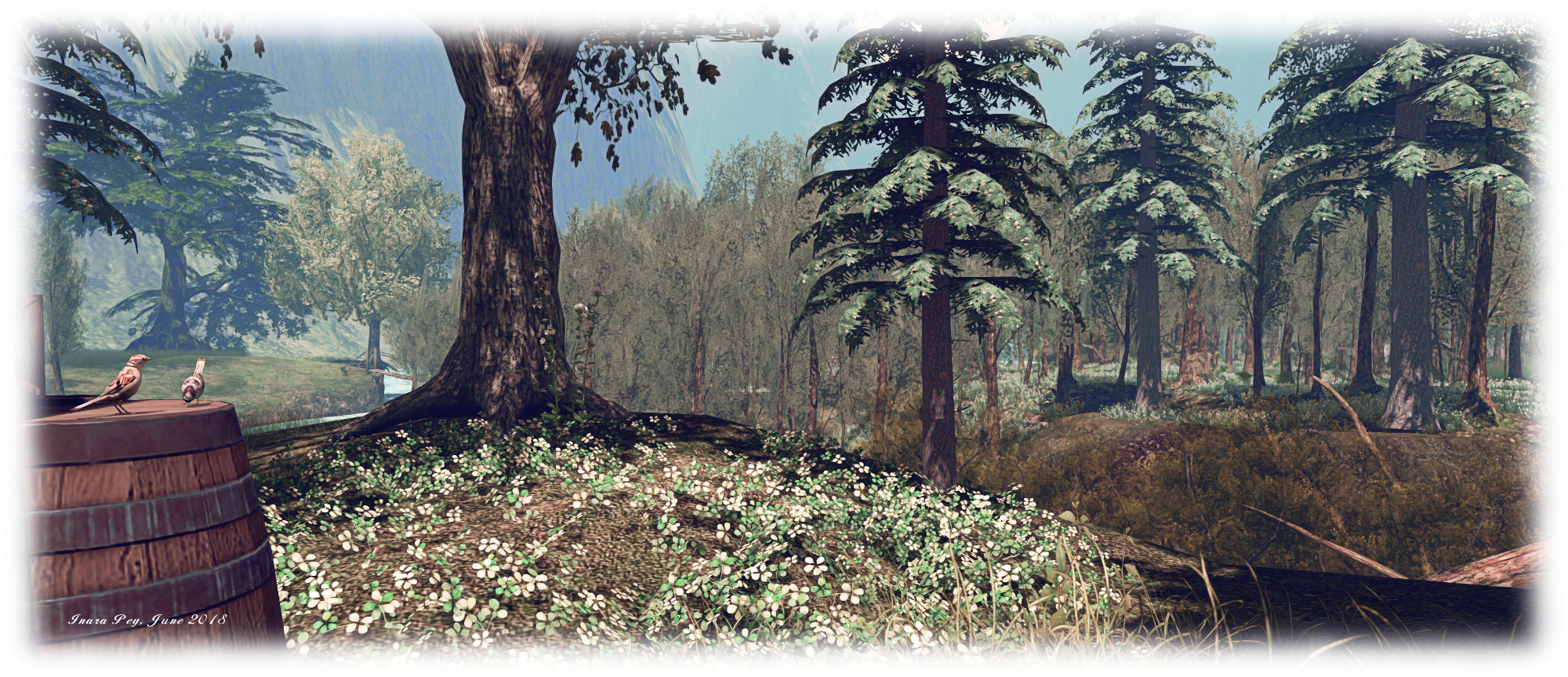
The rolling echo of distant thunder reverberates between high peaks, a bass backdrop to the much closer dusk-time voices of nature that rise from between the tall fingers of shadowy trees clustered across the tops of a little archipelago of grassy islands. The waters from which these rise are turned brown under a sky heavy with an evening haze through which a lowering Sun tries to reach and which those thunder reflecting peaks into shadowy guardians surrounding this little grouping of islands.

Such is the aural greeting awaiting visitors to Aphantasia, a wonderfully atmospheric Homestead region designed by Benny Green. The region’s name is taken from that suggested for a condition where one does not possess a functioning mind’s eye, and so cannot voluntarily visualise imagery – the face of a loved one, a favourite place, a shop down the road, and so on.

Aphantasia; Inara Pey, June 2018, on FlickrAphantasia

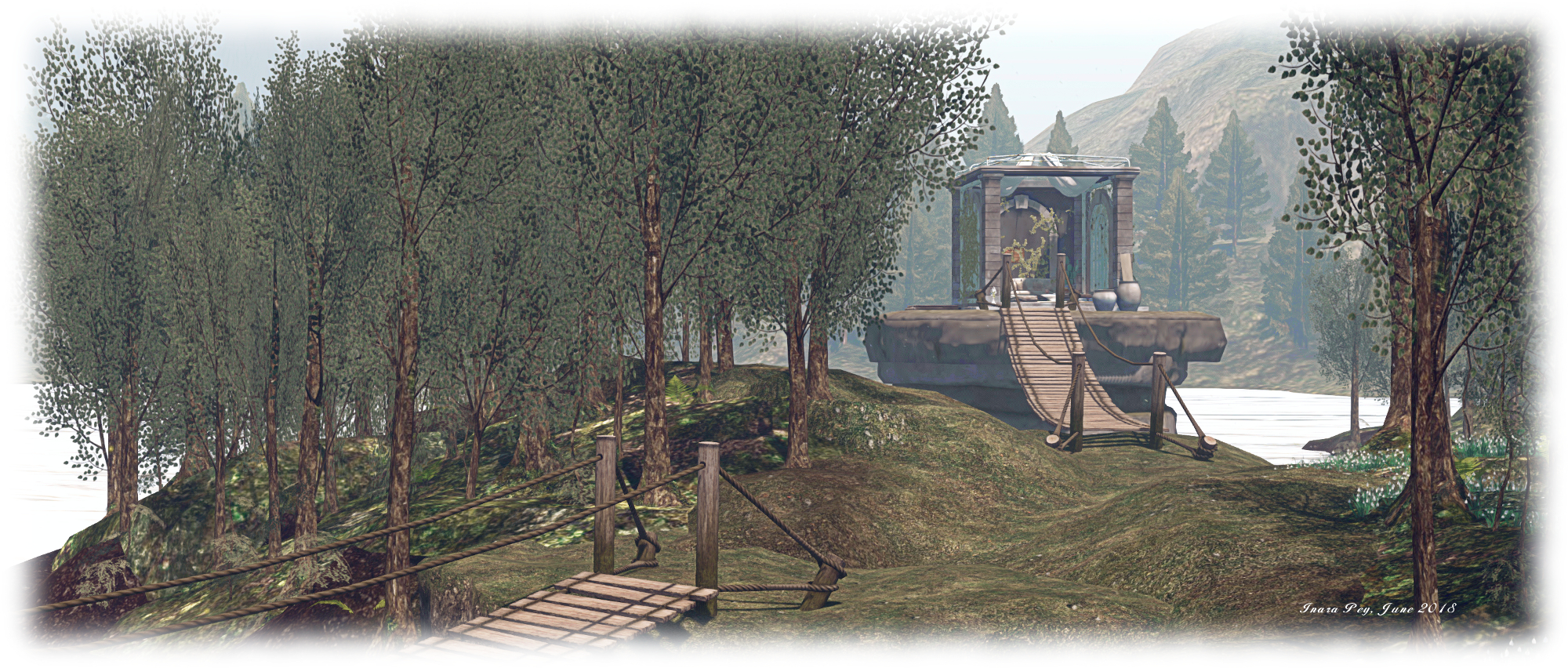
It’s an interesting choice for a place that is, in two words, visually stunning – although perhaps to be fully appreciated during an initial visit, it requires a slight tweak to you viewer’s windlight so the beauty of the region can be seen under daylight. The landing point, rich in those night-time sounds (themselves joined by the soft clucking of a chicken or two perhaps nervous at the approach of darkness), sits upon one of four islands in the region, a home for a circular cottage and a well. It is anchored to the largest of the islands by a rope  bridge, one of two ways to explore the location (the other being the teleport trapdoors to be found at several locations in the region).

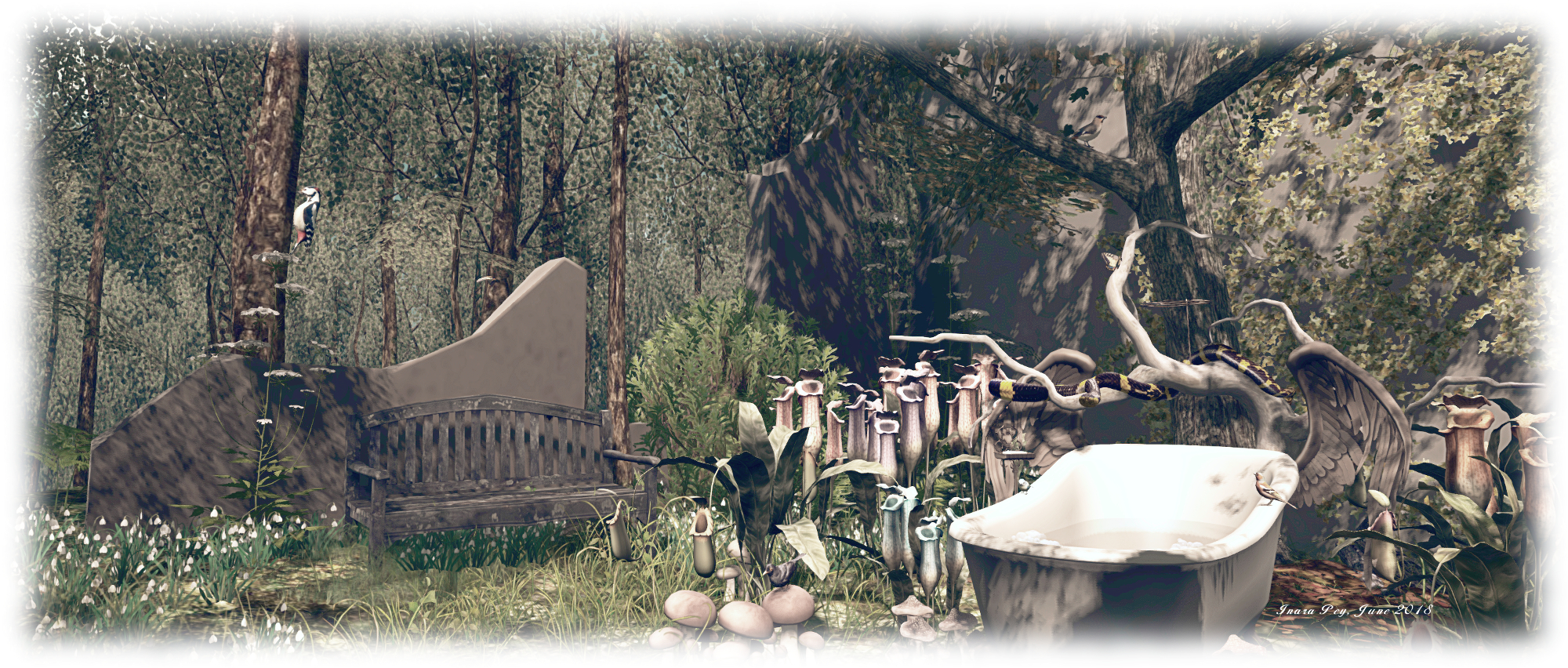
Across the bridge, the large island offers a richly wooded setting, paths winding under tall conifers and smaller trees, directing people with to two further bridges or to the ruins of an old house where a bathtub sits among tube plants, toadstools and flowers, watched over by a snake coiled lazily around an old tree branch.

Aphantasia; Inara Pey, June 2018, on FlickrAphantasia

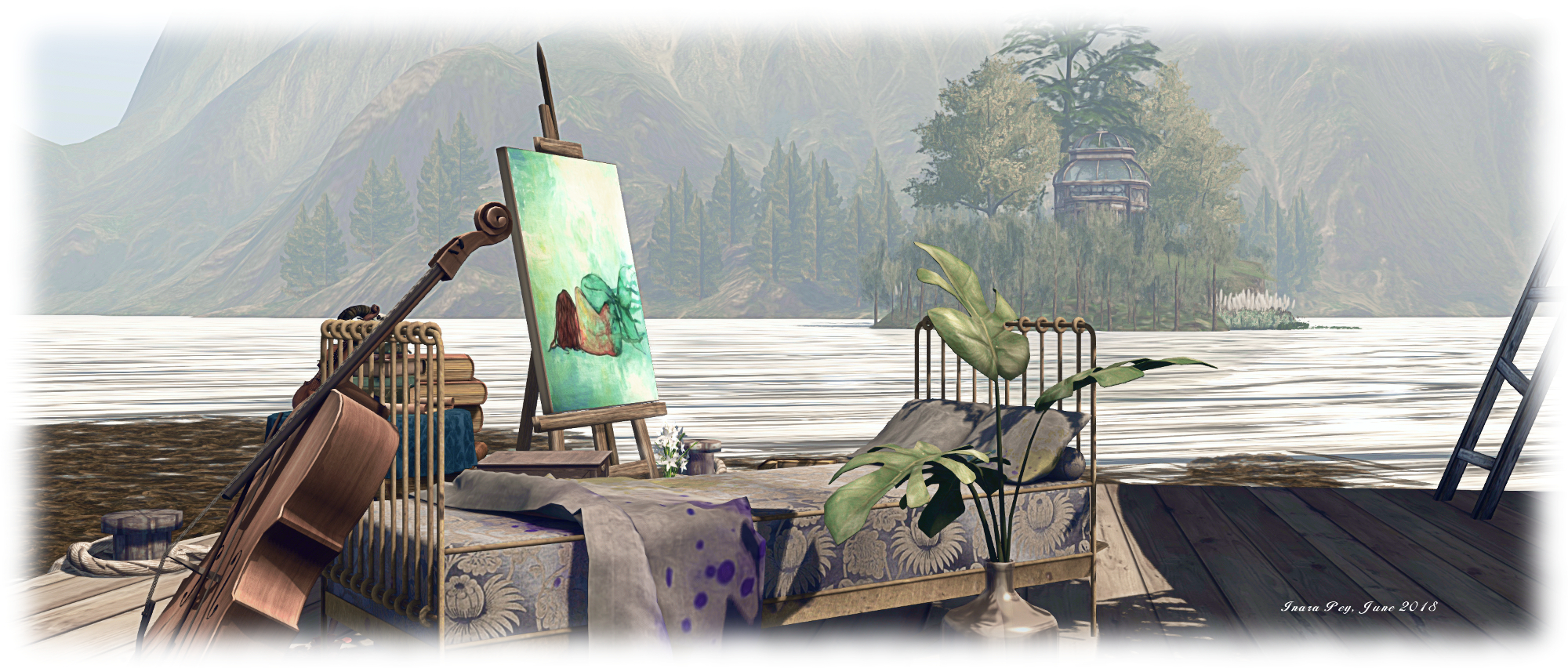
Travel through the conifer-crowned and rugged south-western finger of this island, and you can make your way to the haven of a houseboat moored in the lee of a high cliff. Here can be found signs of occupancy  – possibly by an artist / musician, going by the paraphernalia on the rear deck.

Of the two bridges mentioned above, one offers the way to an island devoid of human clutter, but offering a grass pate on which to wander, watched over by the imposing bulk of a great oak tree. The second bridge provides the way to reach a round plug of rock rising from the water and just about big enough to accept the cosy stone folly sitting on its head. But this isn’t the fourth island in the group.

Aphantasia; Inara Pey, June 2018, on FlickrAphantasia

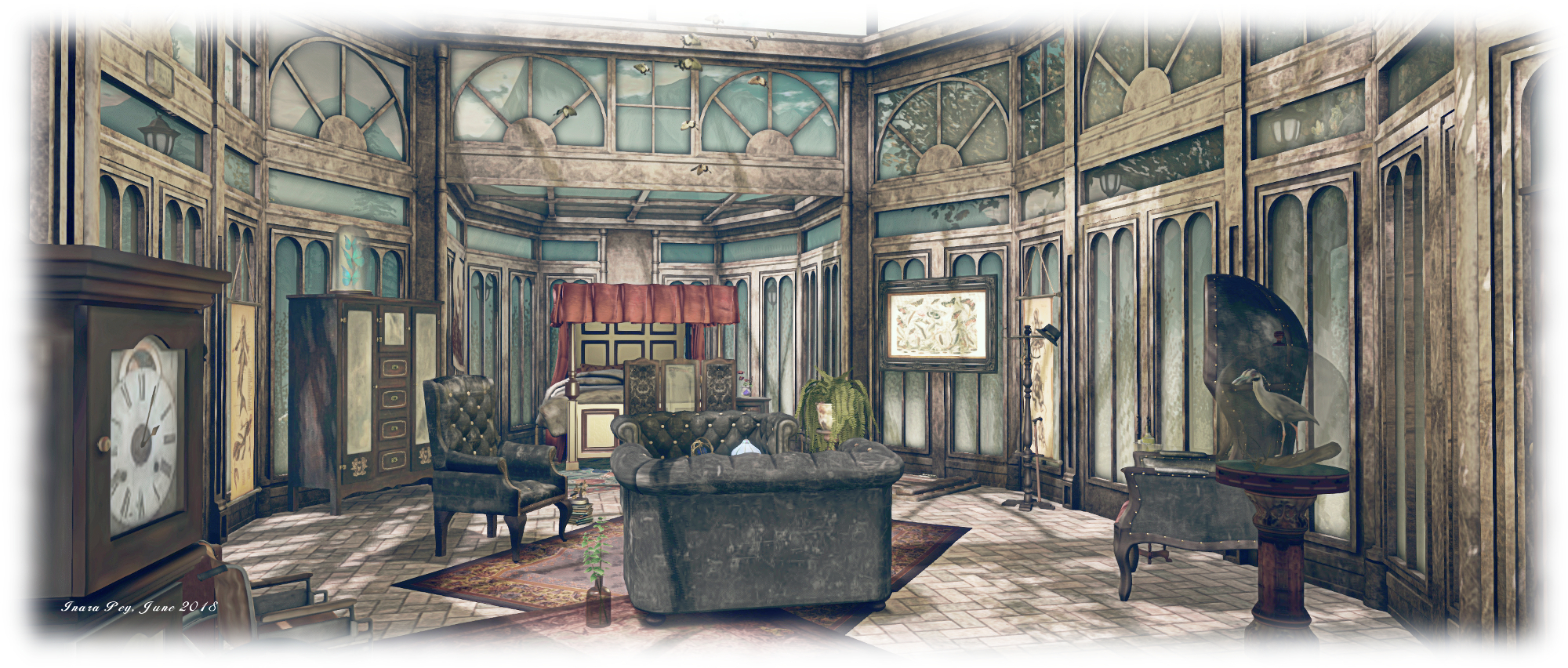
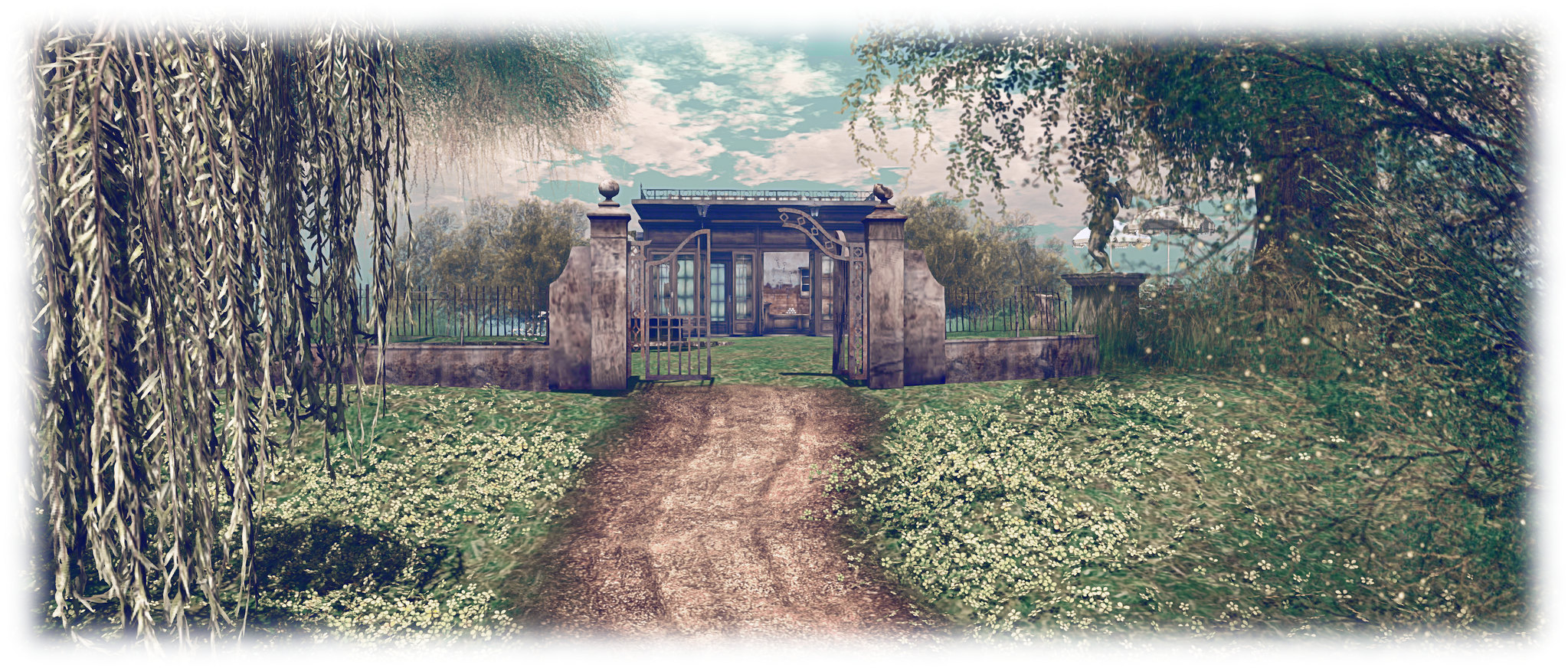
Set well aside from the others, the fourth island in the group lies to the north-west. No bridge connects it to the others, so reaching it requires the use of one of the teleport trapdoors at the landing point, the folly or the houseboat. It is home to a grand conservatory with some interesting furnishings within (mind you don’t find the wheelchair too head-turning an experience!).

Atmospheric and enchanting, Aphastasia is richly detailed, visually and aurally. There are numerous places to sit and relax or cuddle throughout the sitting. Do note the region’s description does state some mild adult activities might take place – although none were witnessed on our visits. There are also a couple of points on the largest island where some of the trees need converted to phantom as they can unexpectedly bump people sideways when encountered – although keeping to the tracks seems to avoid collisions.

Aphantasia; Inara Pey, June 2018, on FlickrAphantasia

For those who take photos of the region, there is a Flickr group where they can be shared (and which interestingly show a hall / cavern of some description being present quite recently, although we found no sign of it on the ground, under the ground or in the air). Also, if you appreciate the region as much as we did, please consider making a donation towards its upkeep at the landing point.

SLurl Details

  • Aphantasia (Serena Nova Zembla, rated: Adult)

With thanks to Shakespeare and Maxie for the pointer.

Entering The Vault in Second Life

The Vault – dare you enter?
There must be twenty ways to kill your avatar, twenty ways to kill your avatar.
Just slip off the bar, Lars, get hit by a ball, Paul.
Step on the grill, Jill, and crisp yourself dry.
Jump for the gems, Jen, just watch where you might land.
Then drop off the ledge, Reg, and get yourself dead.

(with apologies to Paul Simon)

This little ditty kept running through my mind as I took part in The Vault, the absorbingly frustrating and fun free-to-play challenge game offered by Crowley Corporation.

Located on Crowley Corporation’s home region, I was alerted to The Vault by Whirly Fizzle, who also supplied a video link demonstrating the game (just make sure you don’t have the volume set to high when playing the video!). It is reached via a teleport portal located at the region’s main landing point. Once you have done so, follow the yellow floor markings to an elevator that takes you down to the entrance The Vault’s entrance.

There are twenty rooms with obstacles. Just try to get through them without dying. For the more experienced, there are gems to be collected as well.

– CrowleyCorp, the designer of The Vault, describing the aim of the game

The Vault

As noted in the quote above, the aim of the game is to stay alive (and if the mood takes you, collect the gems which may be on offer in some of the chambers within The Vault). while this is a free-to-play game, to help cover the costs of the game and the region in which it resides, CrowleyCorp offers a flash-light and hard hat for modest amounts, which can be worn while making your way through The Vault’s 20 chambers although they are not essential to game play.

To get started, make your way to the first of the vault doors – large, almost daunting things in themselves, and then throw the lever to the right of the doors to open them. Each chamber in The Vault is presaged by similar doors, which may open directly onto the next chamber or form an airlock between two chambers, or provide access to a passageway that must be followed to reach the next chamber.

The Vault … “oh… balls…!”

The obstacles within each chamber vary in nature and specific skills are required to negotiate them – notably an ability to walk (or run!) in a reasonably straight line, the ability to jump accurately, together with a sense of timing and have a degree of patience in places, rather than just rushing at things.

The obstacles themselves come in a variety of forms, some individually, some combined, depending on the chamber you’re in. They include jumping between floating islands, walking along narrow beams, avoiding moving objects (rolling ball bearings, spinning and moving saw blades, etc), laser beams. Getting struck by any of these will kill you, or knock you into the bottomless pit or the lava, etc., over which the obstacles are built, also killing you. Death will result in you re-spawning at the start of the chamber you are attempting to cross.

THE VAULT: shouts: :::::::: Inara Pey fell to their doom! ::::::::

The Vault keeps you informed of any mishaps 🙂

The further into The Vault you get, the more challenging the obstacles become. Also, in some chambers time can be of the essence – stand too long in one place, for example, and you might find it falling out from under you.

The Vault: mind the blades

One point to note, if you leave The Vault before completing all 20 rooms, on your return, you’ll have to start over; thus it is advisable to try to complete all 20 – time permitting – on a single visit. However, if you have to log-out for any reason and have the viewer set to log you into the last SL location you visited, you can can log directly out from The Vault and then return to your last location within it when logging back into SL – but do note that if you are away from the game longer than about an hour, your scores (times killed and gems obtained) will be lost.

I am currently working on an expansion of perhaps a dozen more rooms, and should be completed within a month

CrowleyCorp on future expansion within The Vault to keep things fresh

And should you wish to relax after getting dropped, fried, boiled or zapped, you can teleport down to the ground level and partake of a round of golf. CrowleyCorp is the maker of the CC Elite golf system – which is my personal favourite when golfing in Second Life.

You can also enjoy golf while visiting the Crowley Corporation region

I confess to not having completed all 20 rooms in The Vault – the realities of life prevented me spending the amount of time needed to do so. However, I can say I found the game to be a fun, engaging and addictive (in the more positive meaning of the word), and I definitely want to find the time to go back and try the game again – and maybe even get to the end.

SLurl Details

  • The Vault (Isle of Innovation, rated: Adult)

A return to La Clef des Champs

La Clef des Champs; Inara Pey, June 2018, on FlickrLa Clef des Champs – click any image for full size

Update April 2025: Chef des Champs has closed. SLurls have therefore been removed from this article.

It is a little over a month since I wrote about La Clef des Champs (literally, “the key fields”), a setting which at that time took up a homestead region, which had opened in April 2018 (see here for more).

Since then, there has been something of a change for La Clef des Champs, as Miro Collas  pointed out to me via Twitter recently, it having been moved and downsized to a quarter region parcel within a Full region (and given the changes between my two recent visits, it may still be in the process of being built-out). So, has anything been lost with the move? Overall, I’d say “no”.

La Clef des Champs; Inara Pey, June 2018, on FlickrLa Clef des Champs

As with the original, a visit starts up on a hill overlooking open waters on two sides, and which is topped by a modest café with indoor and outdoor seating. From here, across the grass, a gated track leads the way down the hillside and inland. This runs past a small field and barn to where a fork points the way towards a new feature for the landscape: a large greenhouse sitting on a rugged shoulder of land occupying the inland corner of the parcel. Offering a second commanding view over the parcel, the greenhouse is presented as a summer-house style hideaway with music available from a grand piano and a gramophone, and space to sit or work as one desires.

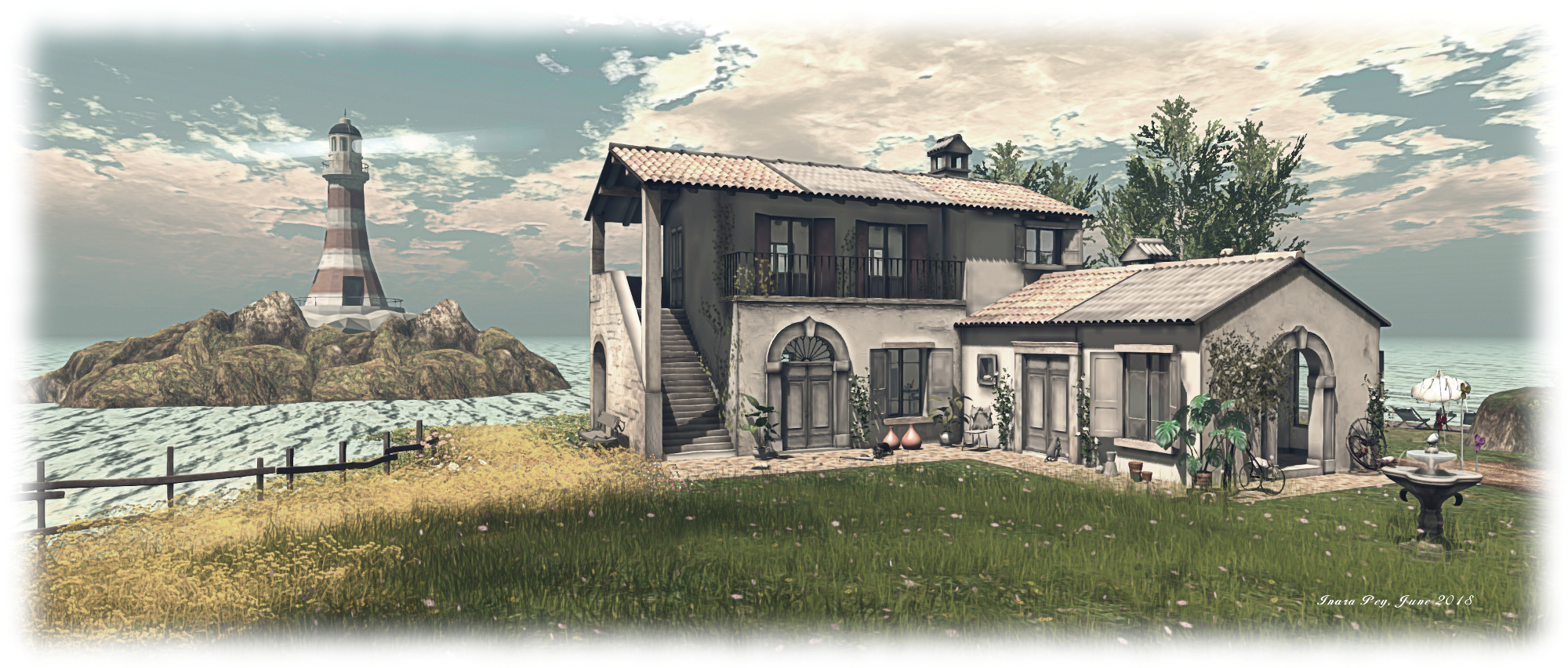
Beyond the fork for the greenhouse, the track turns back seaward and curves past a brick-built barn to arrive at the Tuscan style house that was also present in the Homestead build. This looks out over the water to the east where the windmill still sits just offshore –  albeit on a slightly smaller island -,  and to the north, where a second small island sits, home to a lighthouse.

La Clef des Champs; Inara Pey, June 2018, on FlickrLa Clef des Champs

An old warehouse completes the set of buildings to be found here. This is the place where  – again as with the original design – more adult pursuits can be shared, if desired.

The use of just a quarter region parcel means that this iteration of La Clef des Champs does, for those who visited the original, feel smaller. However, I would suggest it has, lost little of the ambience it enjoyed when occupying a full-sized region space. for those who have not previously visited La Clef des Champs will still find this smaller version a pleasing excursion, with plenty of opportunities still for photography.

La Clef des Champs; Inara Pey, June 2018, on FlickrLa Clef des Champs


A touch of Live and Let Die in Second Life

San Monique; Inara Pey, June 2018, on FlickrSan Monique – click any image for full size

Update: San Monique has closed. SLurls have therefore been removed from this article.

“I’m not really a big Bond fan, just that film and the locations in it,” Zakk Lusch informed me ahead of the official opening of San Monique, his latest region design, developed with They Wray DoneAway (They Ellisson). The region takes as its inspiration the first Roger Moore film in the Bond franchise, Live And Let Die (1973), to which Zakk alludes in his comment. He continues, “I just thought I would be fun to try a create something like this, as Bayou type region can be a challenge to find stuff to use. There are loads of little fun things as you look around.”

These little things include Zakk and They themselves who, for the opening, had adopted looks taken from the film – think Baron Samedi and you’ll get the picture – but there are more to be found when exploring this homestead region. However, it would be a mistake to consider it a representation of any single aspect of the film. As noted, the region is very much inspired by Live and Let Die, and thus is an amalgam of interpretations of settings, themes and ideas from the film.

San Monique; Inara Pey, June 2018, on FlickrSan Monique

An example of this is the region’s name and look. While the name may come from the fictional the Caribbean island-nation of the film, the overall look is very much that of the bayou region of Louisiana, – and the Bayou Des Allemands featured in a boat chase during the film.

Visits begin in the south, where one of only two upland area rise from the waters of the region. A flat-topped table of rock, this is home to the welcome area and landing point, a paved footpath and steps leading down to the lowlands of the region. It is along this path the another motif for the film can be found in the form of the fortune teller’s booth, echoing Solitaire’s harnessing of the Obeah to discern the future.

The second upland area is a small knuckle of a hill on which is perched a small wooden chapel. Within and around this are further echoes of the film – notably the coffin and the snakes and the Samedi-like skull and top hat sitting on a grave.

San Monique; Inara Pey, June 2018, on FlickrSan Monique

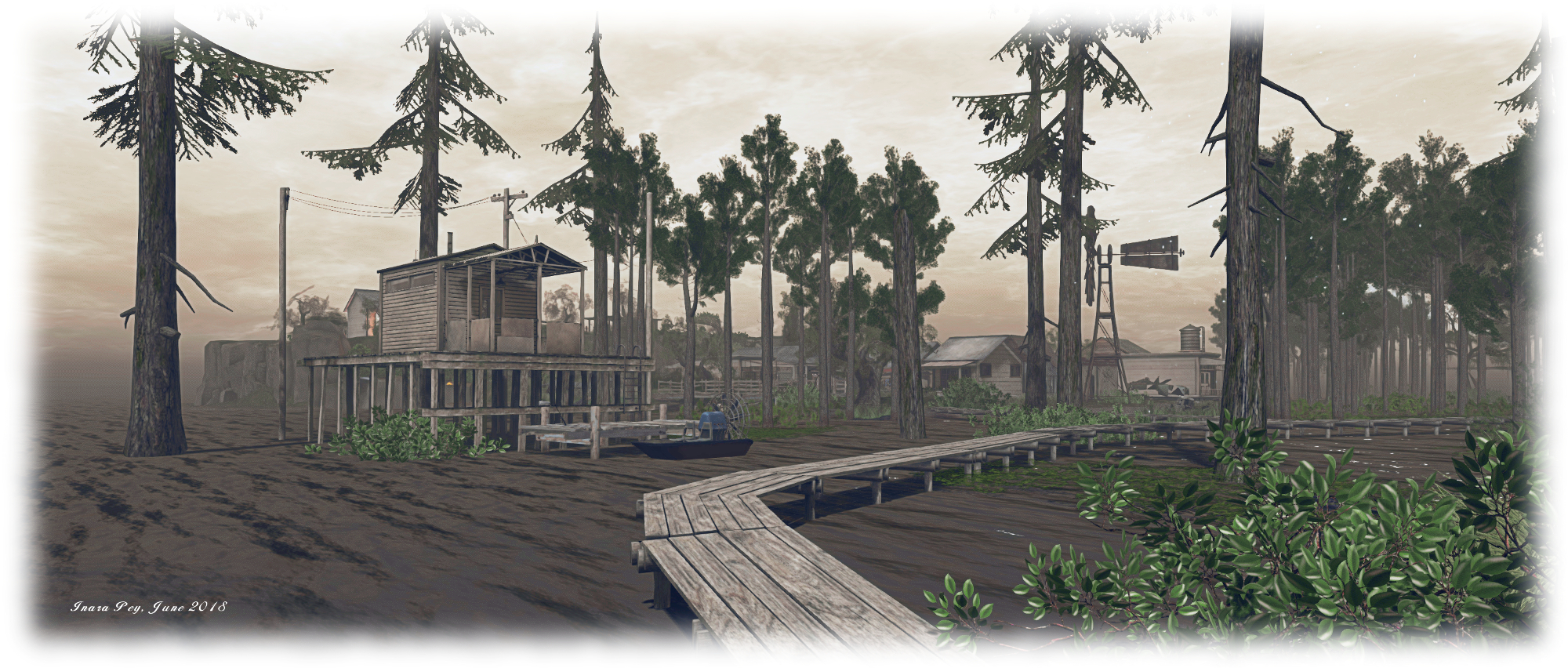
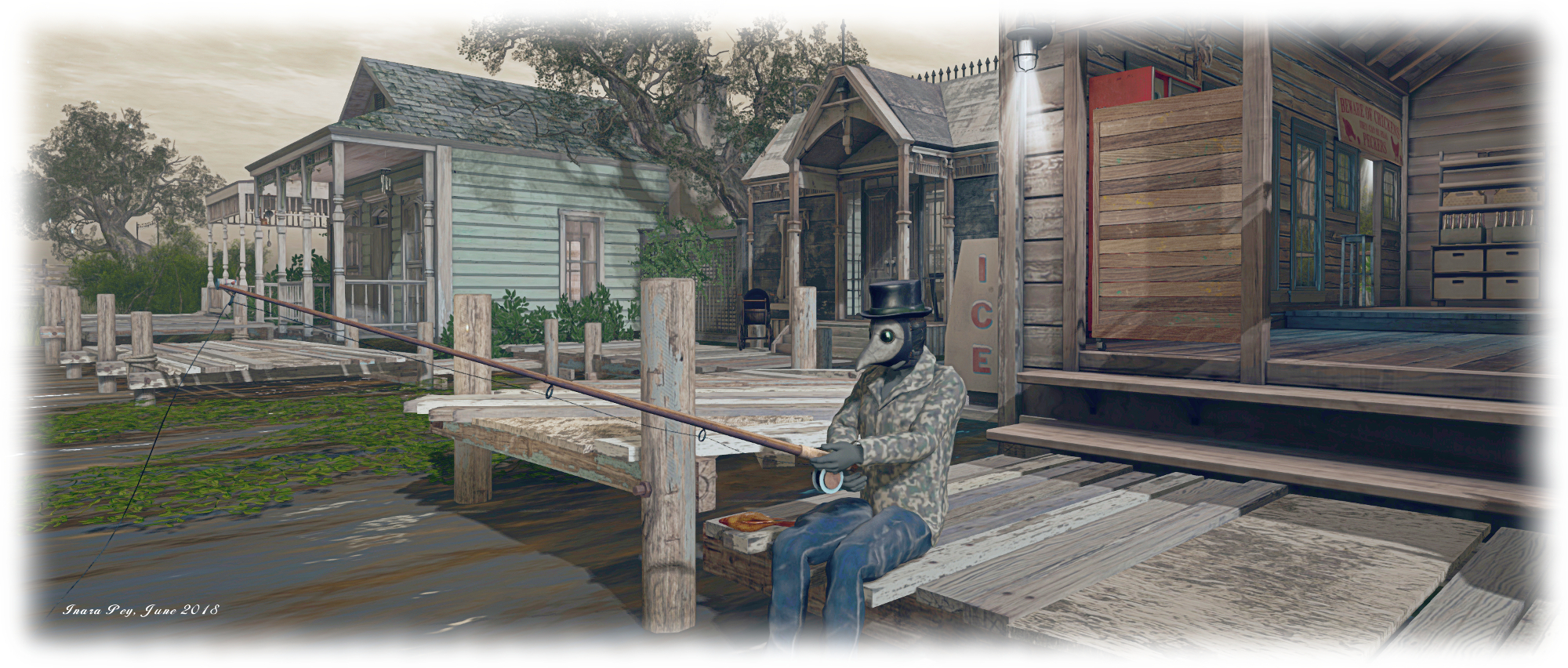
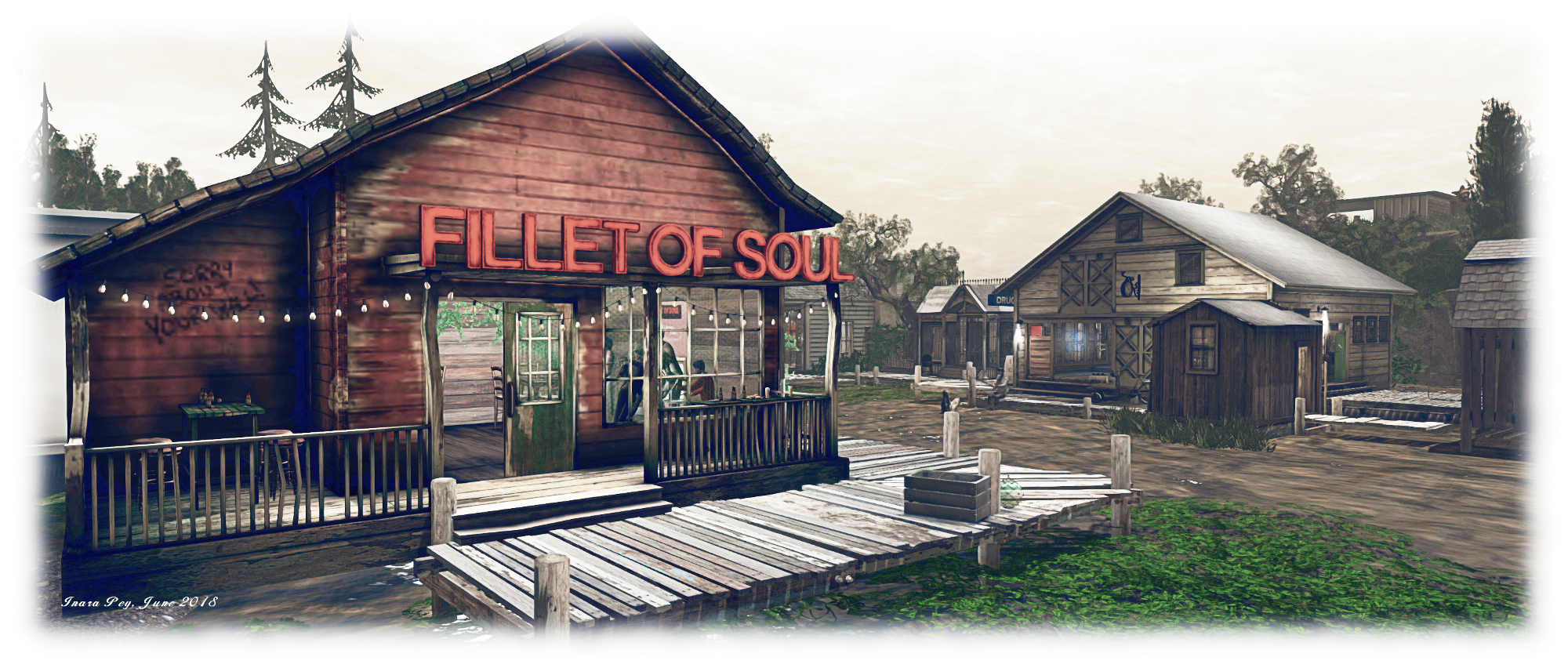
The rest of the region is given over to a bayou-style hamlet: wooden buildings fronted by board walks built out over the water. Here again are more references to the film – a tarot reader’s sign, the mask worn by the chap fishing off of one of the board walks, and – if you walk out and around the buildings – a small club taking its name from Mr. Big’s chain of eateries – the Fillet of Soul.

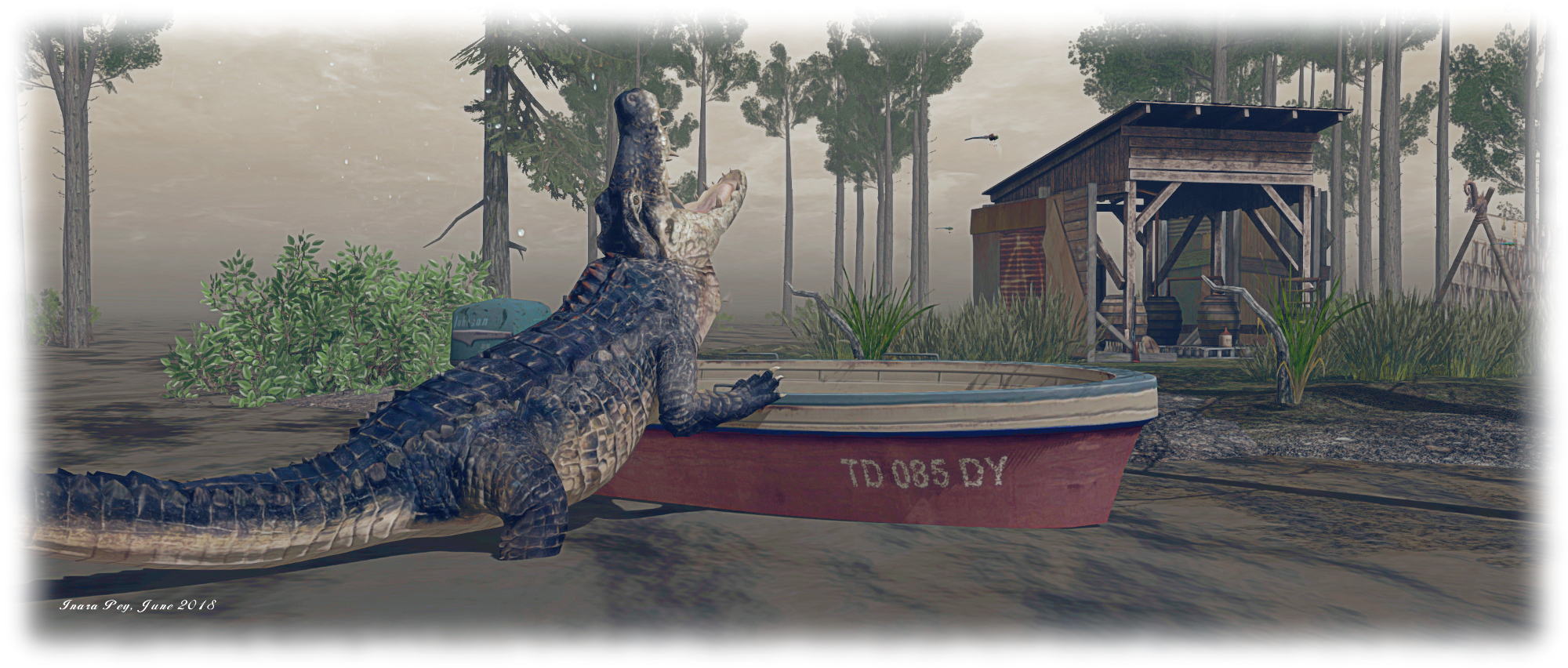
Given this is a bayou setting, the presence of crocodiles shouldn’t be that surprising. But even these echo the film – remember the crocodile farm on the island of San Monique? Thus even the reptiles offer a cinematic link to Bond’s 1973 adventures.

San Monique; Inara Pey, June 2018, on FlickrSan Monique

That said, there are some motifs from Live And Let Die that might be considered “missing” – no poppy fields, for example. But again, this is a Bayou setting, and not a reproduction of San Monique. So instead, it offers more a bayou look and feel: broad walks wind over the shallow waters, crocodiles lurk, an airboat awaits its owner – there’s even an illicit still hidden in a shed out on an island shoal among the bayou’s trees.

All of this makes San Monique a visit of a different kind; those who enjoy Roger Moore’s first outing as the eponymous British secret agent will likely enjoy discovering all the little nods to the film. Those who enjoy visiting, exploring and photographing regions in Second Life will find San Monique an engaging visit – and photos taken in the region can be submitted to its associated Flickr group.

San Monique; Inara Pey, June 2018, on FlickrSan Monique

As always, should you enjoy a visit, please consider making a donation at the landing point to help with the region’s continued presence. I’d like to extend thanks from Caitlyn and I to Zakk and They for the invitation to visit San Monique.

SLurl Details

  • San Monique (Tumbleweed, rated: Moderate)