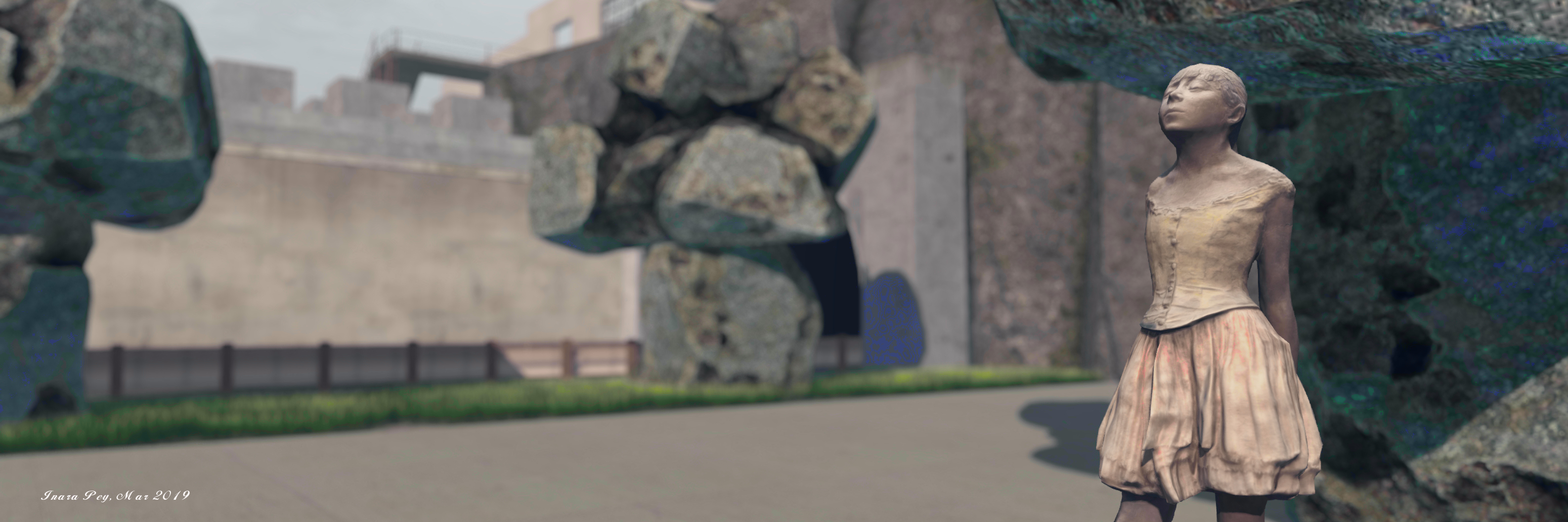
The magic of Season’s Cove in Second Life

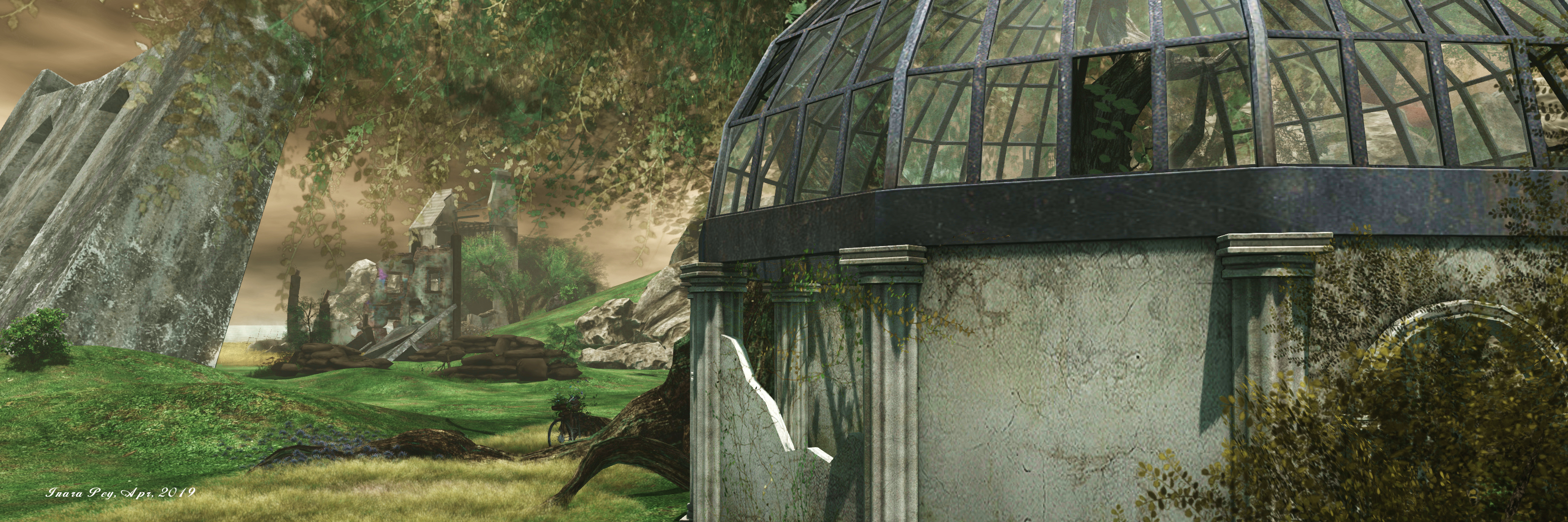
Season's Cove; Inara Pey, April 2019, on FlickrSeason’s Cove – click any image for full size

Update: Season’s Cove appears to have closed.

One type of region we’ve always enjoyed visiting is the type that feels TARDIS-like; that is, when exploring it, it feels much larger than its individual map tile / 256m-on-a-side would suggest. There are many such regions scattered across Second Life, but one of the most imaginative we’ve recently visited is that of Season’s Cove.

Designed by Muira Mingann (Angelique Vanness) with assistance from Takoda Mingann (Mingann), this full region design ticks a lot of boxes for the avid Second Life photographer. The design is rural / coastal with a strong twist of fantasy, hints of magic; a place where wizardly towers overlook tumbledown dance halls, beaches sit above undersea gardens and tunnels with multiple rooms vie with surprise portals to carry you to places in the sky that further extend the feeling of being in a place that’s much bigger that its physical constraints should allow.

Season's Cove; Inara Pey, April 2019, on FlickrSeason’s Cove – click any image for full size

A visit begins innocently enough: a large terrace towards the centre of the region, cliffs to its back, water below its stone walls. It is home to a little café, a carousel and the first hint of the more mystic elements: a fortune teller’s tent. Two wharves sit below the terrace, each offering a way down the water’s edge – and one allowing visitors to travel much further.

Multiple paths lead away from this terrace. Some go around the plateau that sits above it, running south then west. Others point north and then east, promising to perhaps circle the land and meet with their brethren further around the region. Some climb the shoulders of rock to reach the plateau above, others dip down to the water’s edge and promise another means to circumnavigate the island, or to pass by bridge and track to its eastern lowlands, where beaches face the sea, water cuts a winding channel from the large inlet below the landing point terrace to a small pond, all watched over by the ruins of another tower.

Season's Cove; Inara Pey, April 2019, on FlickrSeason’s Cove

A further path leads inwards, under the high table of rock, to where a labyrinth of tunnels connect rooms one to another as water drips from arched stone ceilings and stone cisterns sit with backs to the walls, offering the weary a chance to drink the water purified by its travel though the sandstone. The rooms within these tunnels offer a mix of interior settings, from small bathing pool to rooms clearly intended for more adult pursuits.

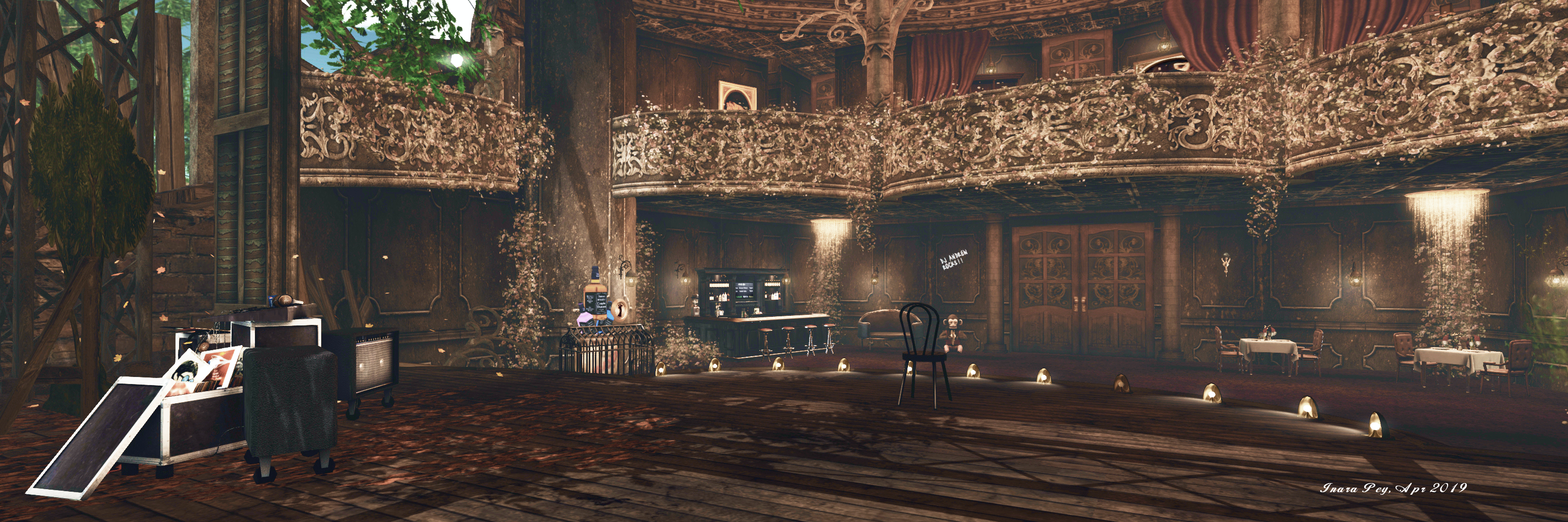
The terrace facing entrance is not the only route into or out of these tunnels: wander far enough around the island or within them, and you will find others. One of these is a wooden walkway that spirals up an open hole on the region’s north-west side. At its top lay numerous further paths waiting to be followed, including one running up to the remains of the old dance hall / theatre which, despite its decrepitude, still offers a place for music to be enjoyed within, complete with tables set for romantic dinners for two.
Season's Cove; Inara Pey, April 2019, on FlickrSeason’s Cove

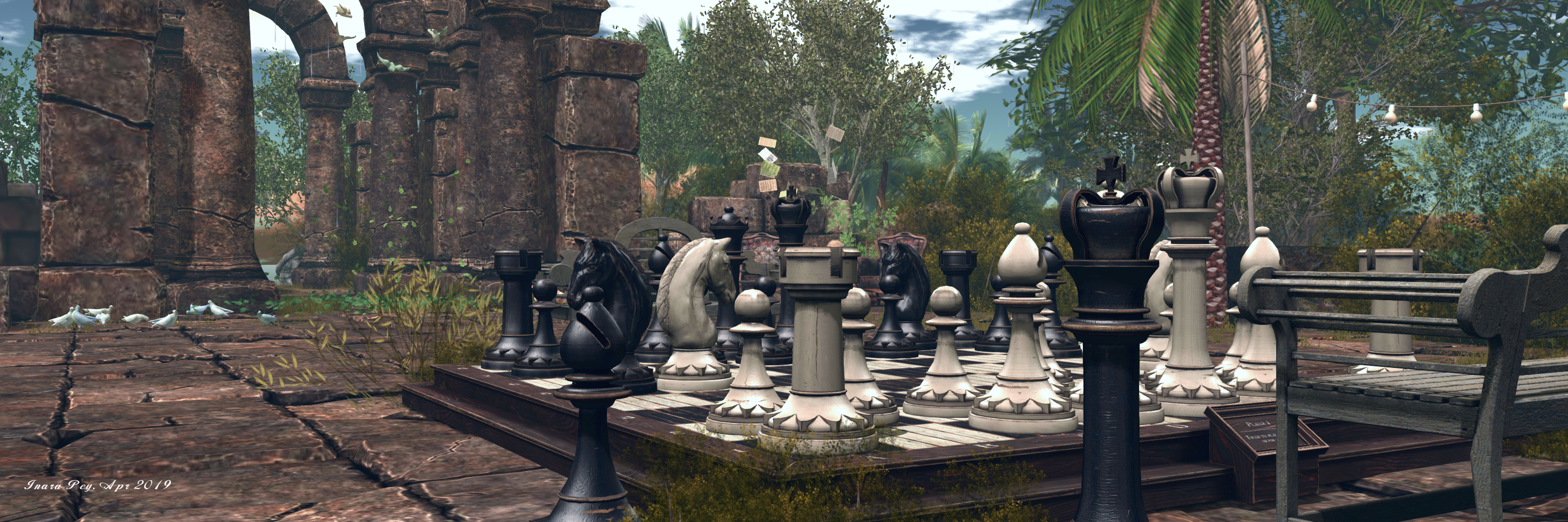
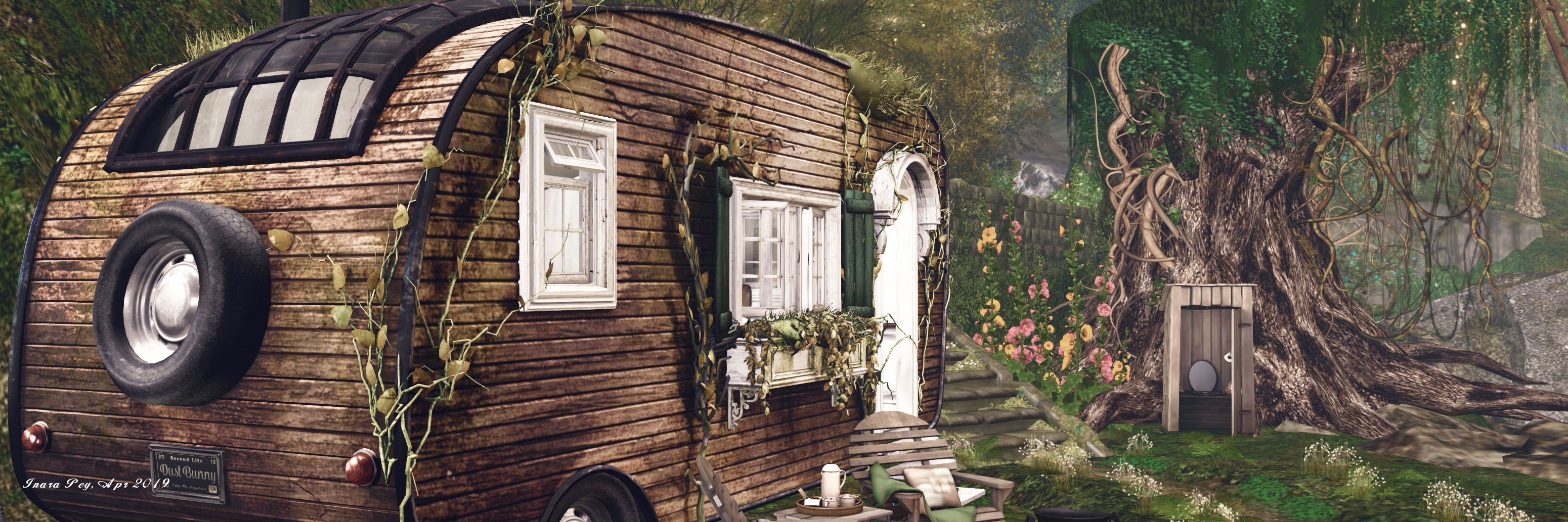
This is another aspect of the delight found within this region: around every corner, at the end of every path is something new and perhaps unexpected to find. Take, for example, the ruins of a Catholic / Orthodox church, complete with confessional, sitting within the low woodlands, or the quaint traveller’s caravan tucked into the lee of the main plateau and looking west to where a tall, rugged island is home to another ancient tower, more ruins lying below it.

Nor is exploration limited to using your feet. It you have a wearable Bento or Animesh horse, you can wear that and take to the paths and trails whilst exploring – most of the routes through the region avoid stairs and steps (although there are some steps and stairs scattered around, to be sure).

And when it comes to horses – keep your eyes open for pointers to the riding trail. They show the way to what initially appear to be paths passing through rocky arches. They are in fact teleport portals leading to points in the sky – in this case, either the “Season’s Cove Stables” or a riding trail in the sky (just be aware the latter including a giant tree house that is a private residence). Several such portals exist within the region; we found two more (one to a lover’s tryst, another to a “BDSM Dungeon), but there could be others that we might have missed!
Season's Cove; Inara Pey, April 2019, on FlickrSeason’s Cove

Using the portals to connect with these skyboxes will require accepting the region’s experience on the first attempt – but thereafter they should be automatic unless or until you revoke the experience. Be warned, as well, that finding your way back to ground level might take a little work, as some return portals are intentionally hidden. Also, some of the return portals may rotate your direction, with the result yo might step back into the ground-level portal as you try to move clear on landing.

Another element of Season’s Cove that makes a visit a pleasure, is the care with which the design is curated. There is a lot going on the ground, in the air and underwater (look for the steps near the landing point terrace for a way down to the underwater gardens and their delights), neither Caitlyn nor I found our computers under any strain from the load. Yes, fps for me with shadows enabled did drop to the low 20s / high teens, but this can happen elsewhere, and certainly didn’t spoil the visit.

With places to sit and  / or dance throughout, dozens of opportunities for photography and the chance to really explore a quite unique and details setting, Season’s Cove present a genuinely worthwhile and engrossing visit. Should you enjoy your visit as much as well did, do please consider a donation towards the region’s continued presence as a public space.

Season's Cove; Inara Pey, April 2019, on FlickrSeason’s Cove – click any image for full size

NOLA in Fairhaven and beyond in Second Life

NOLA @ Fairhaven; Inara Pey, April 2019, on FlickrNOLA @ Fairhaven – click any image for full size

Update: NOLA @ Fairhaven appears to have closed. SLurls have therefore been removed from this article.

We recently received an invitation to visit NOLA @ Fairhaven. Described as  “an homage to New Orleans, Louisiana”, the estate comprises three regions – two Full and one Homestead, with one of the Full regions providing the homage to New Orleans, and the other a pair of settings I’ll discuss a little later.

Designed by Tatianna (TatiannaDiamond) and Jus Strat (jus4strat), all three regions are an impression combination – but given the amount packed into all three mesh, sculpt and texture-wise, can also be a little heavy going if your viewer is running with any significant bells and whistles (such as shadows) enabled.

NOLA @ Fairhaven; Inara Pey, April 2019, on FlickrNOLA @ Fairhaven

There is no enforced landing point within the regions, and the SLurl supplied by Jus dropped us neatly in the north-east corner of the Full region representing New Orleans (and which is the one I’ve used in this article), with the bridge to the other regions leading away eastwards, the town itself lad out to the west and south of us.

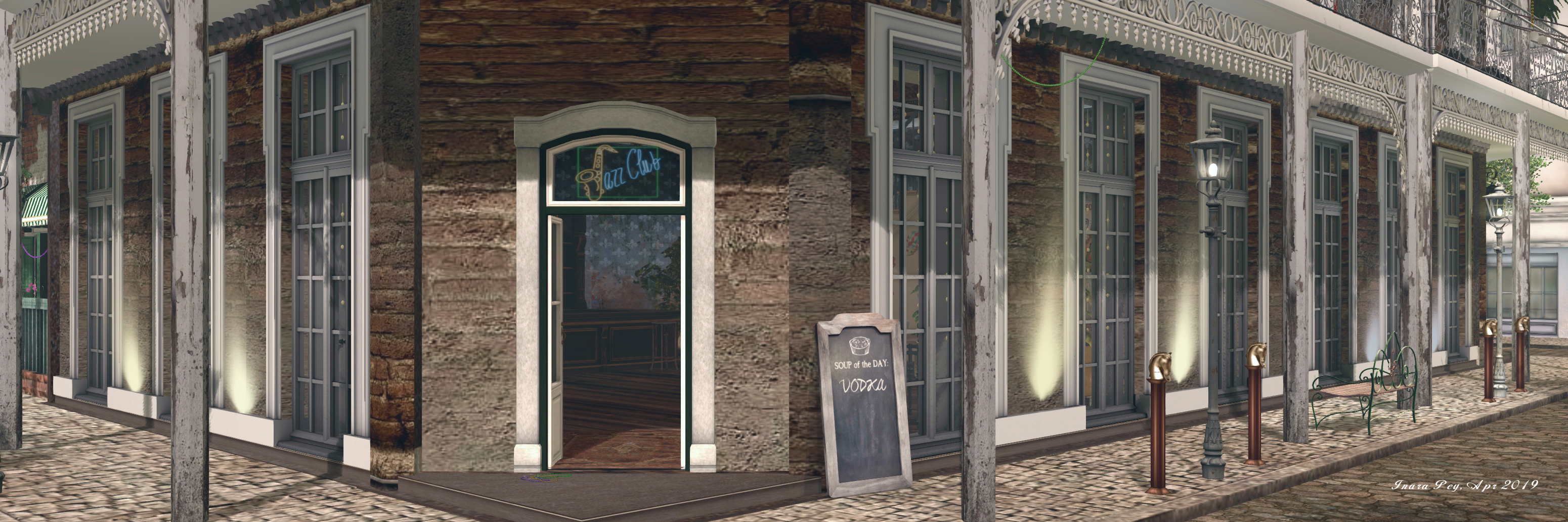
The latter is something of an image of New Orleans perhaps familiar to many from film and television: cobbled roads, balconied establishments whose interiors offer relief from the heat of the day. Cafés rub shoulders with jazz clubs, barbers shops, boutique stores and hotels. Grand houses can be found by wandering through the streets, while squares and formal gardens offer breaks from the urban tightness. To the north-west, the town gives way to a more bayou like setting, with mangroves and swampy-looking grass, while the graveyard betwixt town and bayou offers another “traditional” reflection of New Orleans and its oft-presented ties to voodoo and mysticism.

NOLA @ Fairhaven; Inara Pey, April 2019, on FlickrNOLA @ Fairhaven

The attention to detail within the town is impressive: many of the buildings have interior décor and furnishings, making them attractive points for exploration; several of the roads are lined with ornate, horse-headed bollards, reminding one of the city’s long history, while another reminder lines in the “river” separating the town from the eastern regions of the estate: a stern-wheeled paddle boat (the fabulous Dixie Belle by Analyse Dean), a rickety brow connecting her to an aged wharf where an old mill sits.

Across the water from the town, in the remaining two regions, things take a turn toward a more equatorial tropical feel, with the ground level of both regions styled into the undulating form of a surfer’s paradise. A rocky plateau, reached via the bridge mentioned above, provides a good vantage point as it looks eastwards over the sand and dunes, which in turn gradually narrow into a crooked finger curled around a bay into which white-capped waves roll.

NOLA @ Fairhaven; Inara Pey, April 2019, on FlickrNOLA @ Fairhaven

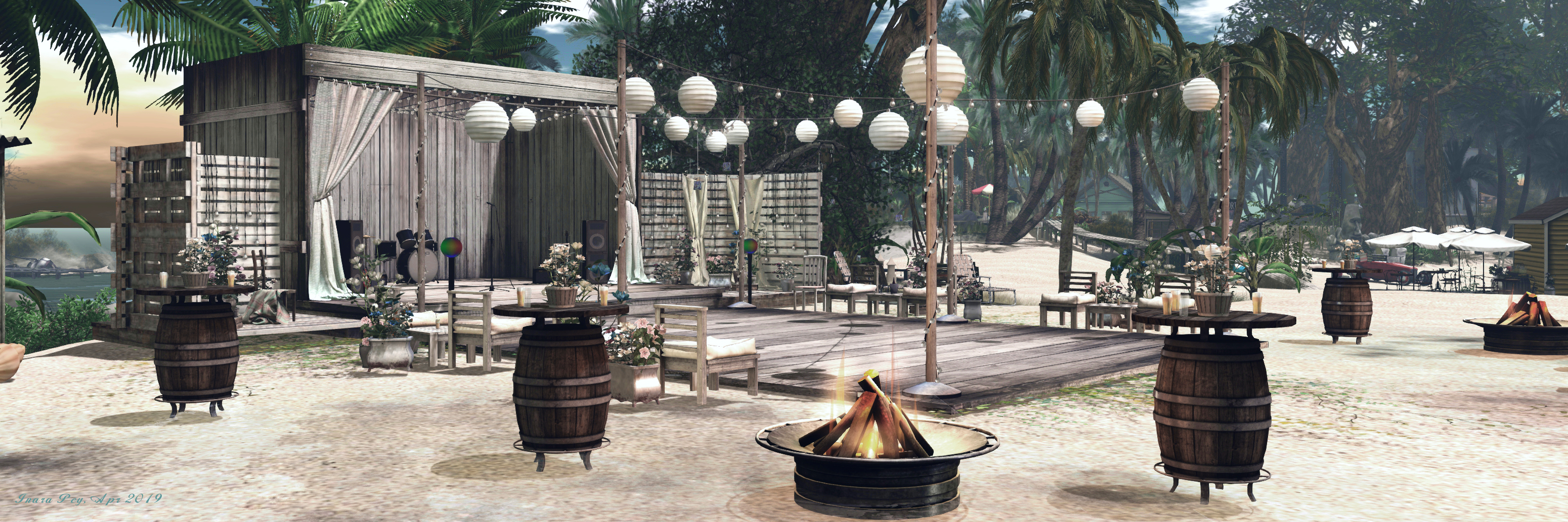
The uplands here are home to a lush area of trees, grass and plants, where an ancient ruins stands and a winding paths disappears through the trees. Touches of fantasy reside here, perhaps most notably in the form of the gondola held aloft by balloons, perhaps as much at home in the air as it might be on a river or canal. Further to the east, the beaches are naturally divided by trees and by raised board walks, with beach houses, shaded spots, lookout points and more scattered throughout.

Nor is this all; find the teleport boards (hard to miss out on the sands!) and you can be carried aloft to where the City of Fairhaven resides in the sky, another venue for music, exploration and photography. Here can be found an amusement park surrounded by trees, and what  – for me at least – is the biggest drive-in cinema screen I’ve come across in Second Life.

NOLA @ Fairhaven; Inara Pey, April 2019, on FlickrNOLA @ Fairhaven

As noted above, there is a lot going on across all three of these regions in terms of mesh, sculpties and textures, which can take its toll on a viewer’s performance (I had to disable shadows to walk comfortably, and even then, in places my viewer still had some issues). However, if you show patience and give things a chance, there is a lot worth seeing here.

Our thanks to Jus for the invitation to visit and explore.

NOLA @ Fairhaven; Inara Pey, April 2019, on FlickrNOLA @ Fairhaven

SLurl Details

  • NOLA and Fairhaven (Stratography, Stratography West and Stratography East, all rated Adult)


Amrum in Second Life

Amrum; Inara Pey, April 2019, on FlickrAmrum – click any image for full size

In March, Shakespeare suggested we visit Amrum, a Homestead region designed by Sunrise Avalanche and Jacky Macpherson. Things being what they were at the time, it took us a couple of weekend to get there – but the visit proved more than worthwhile.

An adult-rated region, this is a place where D/s might be found – although from appearances any such activities are confined to the buildings within the region, so those wandering outside shouldn’t be confronted with more than the occasional flash of nudity. The About Land description is certainly inviting enough:

A peaceful place to relax, to sit on the shore, to meditate, to give space to the thoughts, to gallop on the beach, to listen to the waves. 

Amrum; Inara Pey, April 2019, on FlickrAmrum

In fact, such is the greeting, when returning to take photos, I opted to do just what it suggested: take my horse for a gallop along the beach!

And beach is very much the focus of this region, which presents itself as a low-lying sandy island against which the surf breaks and much of the sand is held in place by scrub grass and stunted trees. Given the German origins for the region, I imagined it might be a smaller island among the North Frisian Islands or perhaps the neighbouring Wadden Sea islands of Denmark.

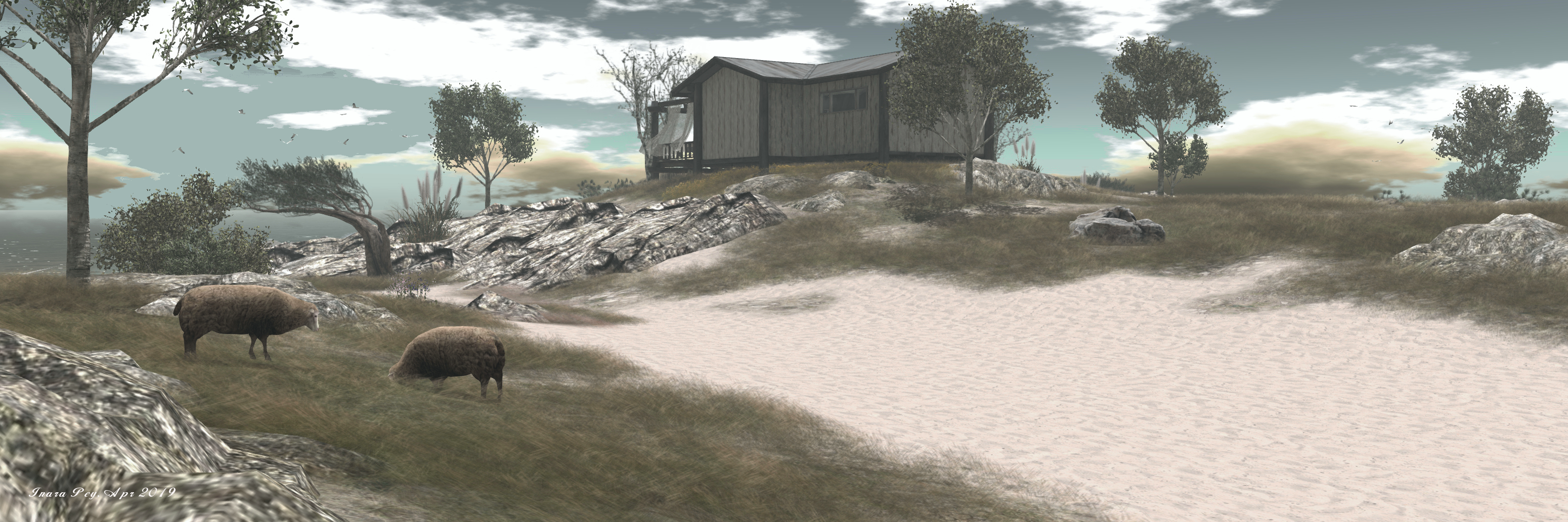
Three buildings can be found on the uplands of the lands – low hills that march from north to south along the eastern side of the region to form a low spine. These buildings comprise two wooden cabins and a more substantial ranch-style single-storey house to the north. All three look across the western sands and beach, while behind them, the land drops quickly but gently to the eastern shore, a curving shoulder of rock sitting between the sea and the ranch-style house.

Amrum; Inara Pey, April 2019, on FlickrAmrum

With a sailing boat sitting just off-shore to the west, the entire island has the feel of being a holiday retreat for those who can reach it – although, as noted above, a more accurate description might be a private offshore community setting for like-minded individuals. Each of the buildings is delicately furnished, with – by-and-large few of the trappings that might be associated with a D/s / BDSM location; only the pictures on the walls offer a clear indication of the underlying theme.

Out on the beach there is a party / dance deck and numerous places to sit and cuddle while sheep and horses graze on the scrub grass and seagulls wheel overhead. There are a few items indoors and out that are gently floating off the floor or the deck and sand that can be a little disconcerting when first seen, but nothing that really spoils the overall look and feel of the setting.

Amrum; Inara Pey, April 2019, on FlickrAmrum

Photogenic under both the default windlight supplied as a part of the setting, or with also whatever you prefer to apply, Amrum is a simple, elegant setting welcoming to visitors and easy to explore and appreciate.

SLurl Details

  • Amrum (Amazonia, rated: Adult)

KSAA Music Commune in Second Life

KSAA Music Commune; Inara Pey, April 2019, on FlickrKSAA Music Commune – click any image for full size

Located on the Homestead of Imagine Hall, the KSAA Music Commune is a curious region design, developed by a group of Japanese users to – as the name implies – promote their local music.

I say curious, because the overall design is a highly eclectic mix of elements with no discernible theme, but which somehow come together and work in a manner that – whether or not you attend any events there – presents itself as a photogenic environment that might best be described as, “rural shabby”.

KSAA Music Commune; Inara Pey, April 2019, on FlickrKSAA Music Commune

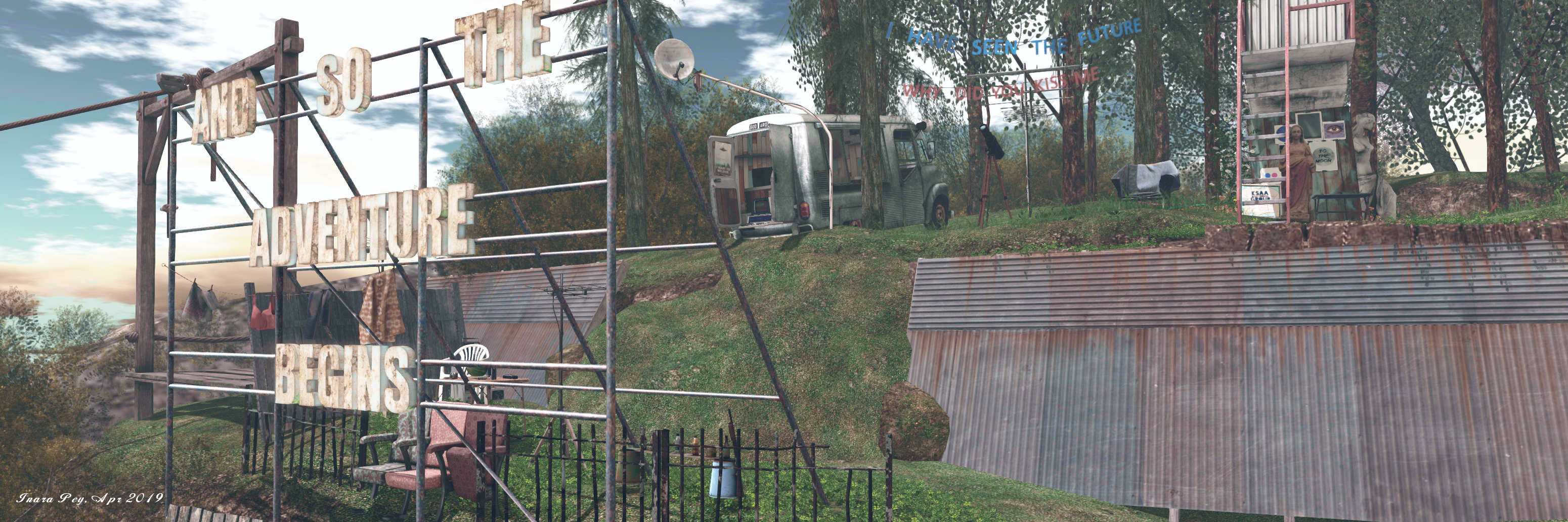
I will start by offering a word of caution: be sure not to step back from the landing point on arrival. It’s tempting to do so, as you land at the foot of a step ladder, but the landing point is actually on the lip of a drop of around 4-5 metres, which can lead to a little confusion as stepping back can have you suddenly dropping / sliding downwards amidst a sea of grey as textures load and render…

The landing point is located on the region’s uplands on its west side. These form a shoe-like oval of grass and tree-topped rock that drops sharply down to the coast on the wets side, and fall in a long, graceful slope eastwards on the other, the grass slope forming a natural pasture / paddock.

KSAA Music Commune; Inara Pey, April 2019, on FlickrKSAA Music Commune

It is possible to walk down this slope from the landing point – but for those who need a faster form of transport, there is a zip line awaiting passengers. This will drop people towards the bottom of the sloping paddock, just before it steps down to a sandy headland marked by a junk yard and aged and deserted big top tent. The junk yard is a haven of mess and oddities, with the wrecks of old cars, the remnants of an auto repair shop, and old furniture mixing it up with children’s toys, bric-a-brac and – indoors – computer hardware belonging to a Steam gaming enthusiast.

The upland area of the island is encircled by a railway track / grass path / dirt track which starts and ends at the sandy headland. Follow it south and west, and the railway tracks will take you over a narrow shelf of grass and rock and across a couple of usual bridges to the western end of the island, directly under the high peak. Here the grass path takes over briefly, offering the way to the dirt road, and a little farm sitting in the lee of the cliffs, shaded by cherry blossom trees.

KSAA Music Commune; Inara Pey, April 2019, on FlickrKSAA Music Commune

Curling around to the north side of the island, the dusty road points visitors to a fork where they can either opt to turn off the road and enjoy the waterside view offered by a shanty bar (pedalo boats available from the rickety pier) and the small beach just past it. If preferred, visitors can continue up a tight, steep slope to arrive at the island’s main music venue, perched under a large water tower and overlooking the beach alongside the shanty bar. This is again an eclectic space, the dance area before the DJ’s “booth” largely taken up by a paddling pool. Beyond this, the road dips back down between dry stone walls to return to the junk yard.

There are various places to sit within the region, and plenty to attract the camera, although it is also true that perhaps a little more attention to detail is required; there are a fair few items floating serenely above the ground or over tables and desks and benches that can have one grumbling and / or grateful for the object derender button.

KSAA Music Commune; Inara Pey, April 2019, on FlickrKSAA Music Commune

I also can’t speak to the frequency of events in the region  – a second dance area can be found at the back of the junk yard – there were no in-world schedule boards apparent during our visit, and Group notices are in Japanese. However, there are Soundcloud links in the Profiles of some of the team responsible for the region, which may give a hint to the types of music played here. There is also a Flickr group for anyone who feels like contributing their photos.

SLurl Details

Welcome to the Hotel California in Second Life

Hotel California; Inara Pey, April 2019, on FlickrHotel California – click any image for full size
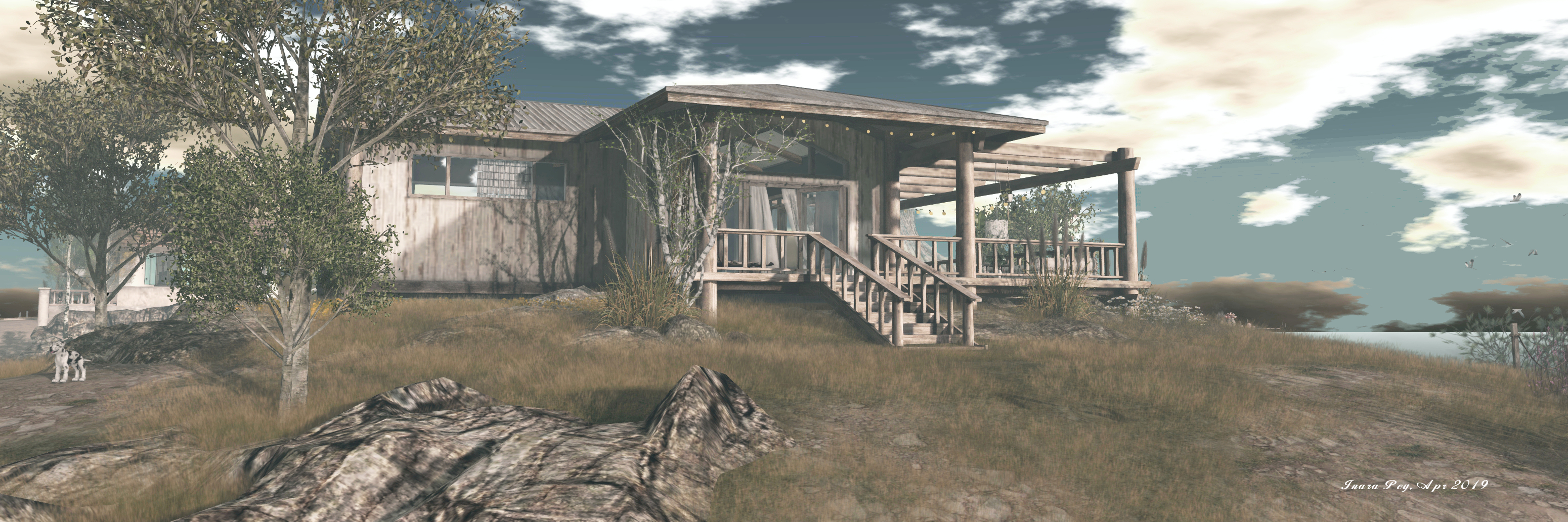
Hotel California is a Full region designed by Lex Machine (Schmexysbuddy) that we were made aware of by Miro Collas. It presents “A war torn land fighting its way back to beauty” where, “Life always finds a way”; and it makes for a curious visit with its mix of influences.

The landing point sits in the middle of a broken bridge that attempts to span the region, rooted in a high table of rock to the north, and pointing south towards a lower hill on the southern end of the region. However, before it reaches that point, it dissolves into ruin, the paved road vanishing, leaving just the piers on which the road once stood – and these are leaning haphazardly, a mature tree sitting between them, suggesting the bridge has been in a state of ruin for decades.

Hotel California; Inara Pey, April 2019, on FlickrHotel California

The table mountain with its small, rounded dome of a peak to one side, is home to the titular Hotel California – although unlike the song, it is probably not a place you can check-out of but never leave. Its dishevelled condition indicative that it hasn’t been in service for many years, the tree within its courtyard grown to a considerable size, the café within its shade suggestive wine hasn’t been served there for a long time.

Below the mountain, the region is primarily flat, sitting just above the surrounding water, the southern hills being the only other relief. This landscape is lush, with verdant grass and yellow rapeseed. deer roam here, although there are some signs of the war that apparently tore through the land at some point: the fuselage of a transport ‘plane, the shells of buildings, and the wreckage of vehicles, including a tank and a rather unusual flying … car.

Hotel California; Inara Pey, April 2019, on FlickrHotel California

A large house, sitting atop a hill, stands apart from the ruins in that it is intact, as if spared from whatever happened. Lightly furnished, it is too large to be a farm-house, its kitchen is well-stocked, its conservatory a place of well-tended plants. Hidden behind the house sits a survivalists bunker; suggesting the house is still in use.

A very localised storm is in full career atop the remaining hill, marked by a shattered lighthouse. Here the rain falls in sheets and the lightening is violent. It looks out over the western lowlands, offering a view of both a ruined rotunda and a passing Predator drone, its weapons pylons empty.

Hotel California; Inara Pey, April 2019, on FlickrHotel California

It is to the west that the region has – for me – its most interesting features. Just off the coast sits the ruin of a large, industrial-like building. It roof is gone, its walls and floors broken, the bare rusted metal of the smashed cement walls visible. A CND “shrine” sits within this broken building, but it is the scenes outside of it which hold the attention.

From the misted waters on one side of the building rise the great tentacles of what might be a Kraken, as if reaching to tear more of the structure down. Closer to shore, a group of statues are grouped, as if frozen in the act of fleeing to dry land. Or are they the petrified remains of people who once fled the now partially flooded building?

Hotel California; Inara Pey, April 2019, on FlickrHotel California

An unusual design for a region, one that is not at all the kind of apocalyptic setting one might expect from the About Land description, but which is photogenic and somewhat prone to fancy, as per the Kraken and water scene. Those wishing to obtain rezzing rights can do so by joining the Shutter Thugs group at the landing point. Photos taken at the region can also be submitted to the Shutter Thugs Flickr group.

Altogether a somewhat different and engaging visit.

Hotel California; Inara Pey, April 2019, on FlickrHotel California

SLurl Details

Art as a landscape in Second Life

Grauland; Inara Pey, March 2019, on FlickrGrauland – click any image for full size

Grauland is a homestead region held by JimGarand and home (in the sky) to his M-1 Art Poses, is one of the more unusual locations I’ve visited recently.

Described simply as a “photogenic sim”, it is actually far more than this; I would describe it more as a setting that presents art as a landscape.

Grauland; Inara Pey, March 2019, on FlickrGrauland

The landing point looks out over a section of coastline mindful of the Giant’s Causeway in County Antrim on Northern Ireland’s northern coast: Cube Republic’s marvellous Basalt columns step down to the sea before stretching out over the water in a slender finger. Several more frame the landing point, which includes a teleport up to the M-1 store.

Grauland; Inara Pey, March 2019, on FlickrGrauland

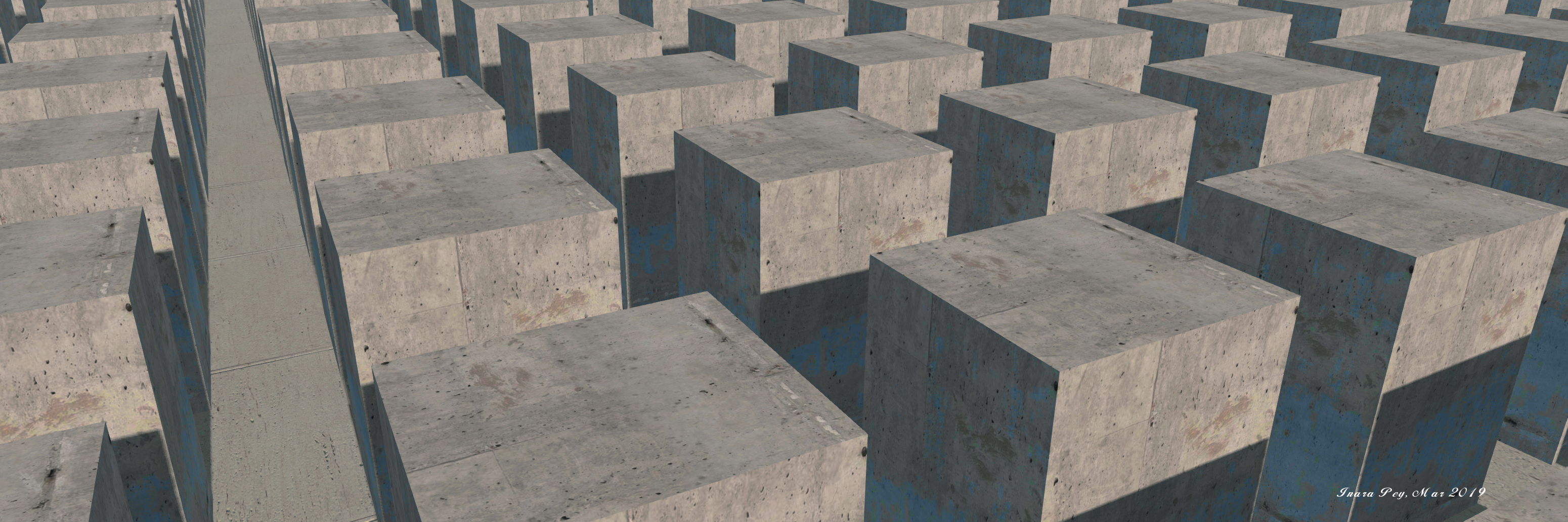
Sitting above the basalt, and split into two plateau-like areas, the rest of the region offers an intriguing mix. Directly behind the landing point, and across a road apparently emerging from a tunnel beneath the taller plateau, sits a large concrete structure, the home to a striking concrete block maze forming a large, and striking statement of modern art which in some ways reflects the columnar basalt coastline.

Grauland; Inara Pey, March 2019, on FlickrGrauland

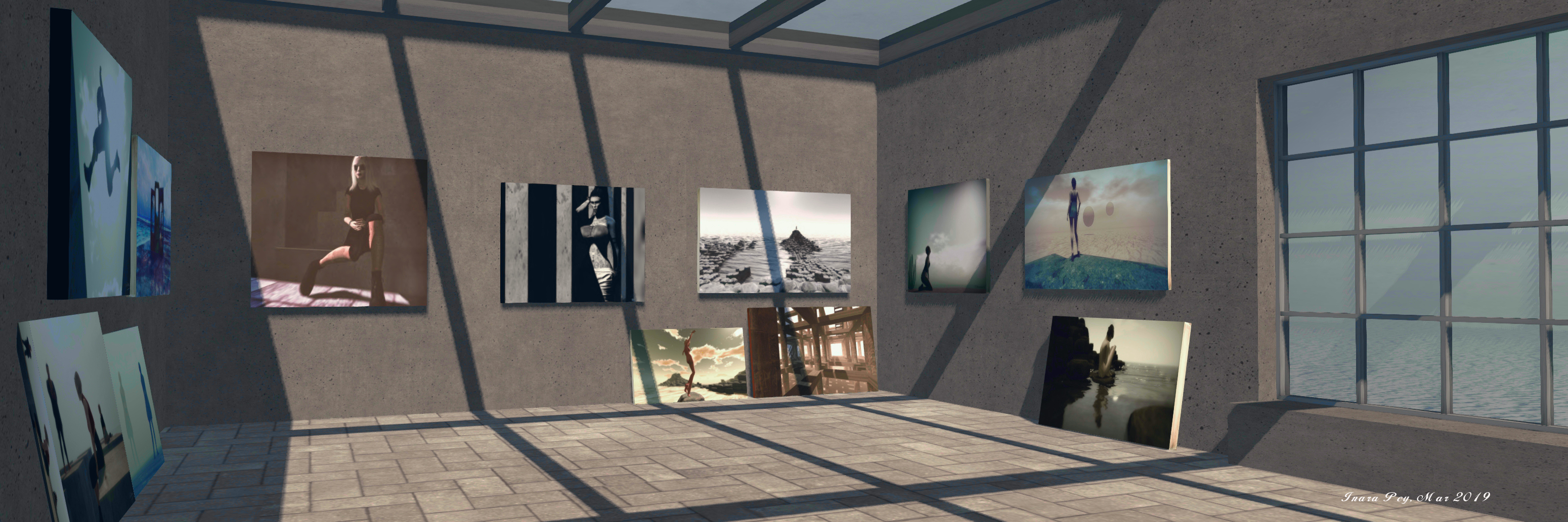
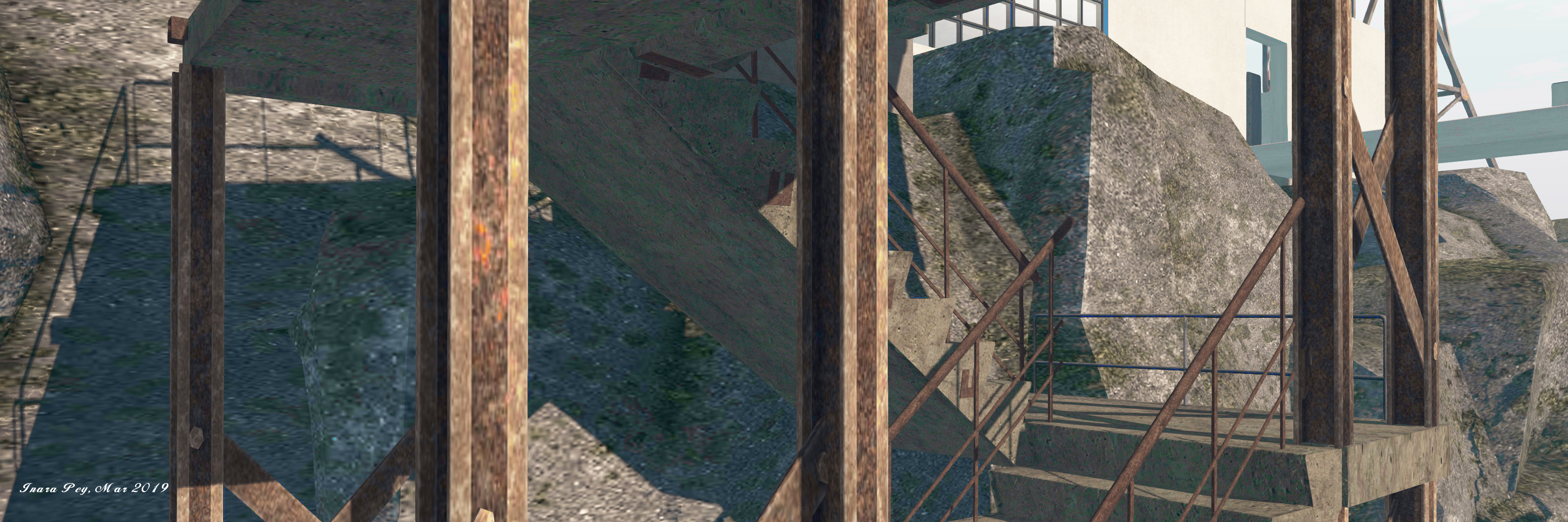
This block theme is continues on the upper plateau, reached via cement stairs built into a steel frame. These lead to a large courtyard area guarded by whitewashed walls and a large, modern hall-like building. More cement blocks sit within the courtyard, extending into a part of the building itself, which forms a gallery space.

At the time of my visit, the gallery was home to a minimal exhibition of striking photographs by Jim himself. However, the gallery is designed to be more than just a home to art; along with the courtyard, it is very much a part of the artistic sweep of the region.

Grauland; Inara Pey, March 2019, on FlickrGrauland

Overlooking the courtyard is an industrial-like tower topped by a cabin. The industrial nature of the tower reflects that of the steps leading up to the courtyard, providing a further sense of continuity in the setting. Apparently open to the public, the cabin offers a bird’s-eye view out over the region.

Nor is this all. Throughout the region are marvellous art-like installations: great concrete swirls surround oak and persimmon trees, while rusting metal shapes sit on a terrace looking out to sea, the ruins of an abandon shack on the coast below them as large spheres float over the water. Elsewhere are smaller artistic elements: a caravan of turtles, a sculpture by Silas Merlin, knots of rock also forming statements of their own, doors hovering above the water… A further concrete-walled maze sits in the lee of the courtyard’s plateau, the walls again offering an industrial feel, together with an expression of graffiti.

Grauland; Inara Pey, March 2019, on FlickrGrauland – click any image for full size
Simple yet elegant, minimalist yet rich in detail. Grauland is a fascinating and very photogenic region and a place where it is easy to spend a lot longer visiting than you might think would be the case on first arriving.

SLurl Details