Logos representative only and should not be seen as an endorsement / preference / recommendation
Updates for the week ending Sunday, August 12th
This summary is generally published on every Monday, and is a list of SL viewer / client releases (official and TPV) made during the previous week. When reading it, please note:
It is based on my Current Viewer Releases Page, a list of all Second Life viewers and clients that are in popular use (and of which I am aware), and which are recognised as adhering to the TPV Policy. This page includes comprehensive links to download pages, blog notes, release notes, etc., as well as links to any / all reviews of specific viewers / clients made within this blog.
By its nature, this summary presented here will always be in arrears, please refer to the Current Viewer Release Page for more up-to-date information.
Note that test viewers, preview / beta viewers / nightly builds are not recorded in these summaries.
Official LL Viewers
Current Release version 5.1.7.517973, dated July 30th, promoted August 3rd. Formerly the Quinquina Maintenance RC viewer.
BugSplat RC viewer, version 5.1.8.518305, August 7. This viewer is functionally identical to the current release viewer, but uses BugSplat for crash reporting, rather than the Lab’s own Breakpad based crash reporting tools.
Second Life Voice RC viewer, version 5.1.8.518310, August 7.
Project viewers:
EAM project viewer, version 5.2.0.518362, August 9 – improved region access control tools; see my overview for more.
MetaChat – Apple has (hopefully temporarily) removed the app from the iStore as part of a purge of “gambling” applications – read the MetaChat blog post for more. D/loaded + installed version s still work.
It’s time to highlight another week of storytelling in Voice by the staff and volunteers at the Seanchai Library. As always, all times SLT, and events are held at the Library’s home at Holly Kai Park, unless otherwise indicated.
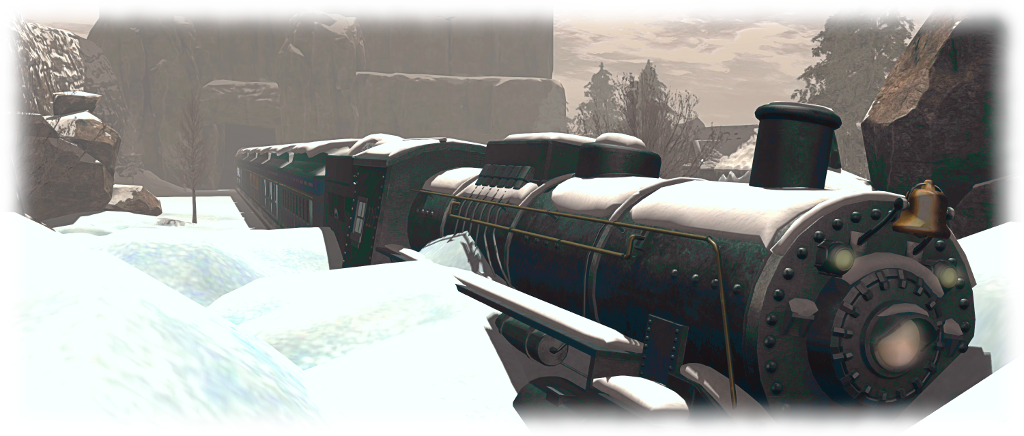
Join Seanchai Library and friends As they reach their final destination: a climatic 90-minutes session that sees a stranded train rescued and Hercule Poirot reaches his conclusions regarding a case most perplexing.
It should have been a route trip aboard the luxurious carriages of the Compagnie Internationale des Wagons-Lits’, Simplon-Orient Express. Yes, arrangements have been made in a rush, yes, it looked as if he would have to make the journey in the confines of 2nd class, but at least Poirot would make it back to London and the business requiring his urgent attention. Then his friend, M Bouc, who just happens to be a director of the company and travelling on the same train, arranges to have Poirot “upgraded” to first class and his accustomed comforts.
All is set for a most agreeable journey, but for the presence of one man: Samuel Ratchett, a noisome American, also aboard the train, and who accosts Poirot, claiming someone is trying to kill him, and demanding Poirot aid him. Refusing on account of finding Ratchett a disagreeable fellow and not at all whom he appears to be, the detective endeavours to enjoy the journey, finding his fellow first-class passengers a most curious group.
Ratchett, however has other ideas – or at least, someone does. With the train caught in a snow drift, the American is found dead in his sleeping cabin, and Poirot, now convinced of “Ratchetts” true identity – that of a child kidnapper and murderer known as Cassetti – finds himself cast into a familiar role of determining who is responsible.
But who – who among the group of travellers killed “Ratchett”? The hard, but quintessentially polite Englishman, Colonel Arbuthnot? The suspiciously acting Count and Countess Andrenyi? The cool and unruffled Mary Debenham? The mysterious and distracting Mrs. Hubbard, who herself probably is not whom she appears to be? The Russian Princess Dragomiroff, frequently giving to lying?
Or might it have been Cyrus Hardman, the flamboyant detective from New York City, whose “assistance” in the case seems less than genuine? Or perhaps it was Hector McQueen, “Ratchett’s” personal assistant – or any one of five other possible suspects? All of them appear to have a link either to “Ratchett” or to his most heinous of crimes and a reason for wanting him dead. Was it one of them? Some of them? All of them? Or – none of them?!
Board the Orient Express one last time in a special setting, as Seanchai library reaches the conclusion of this most famous and engaging of Agatha Christie’s novels!
18:00: Magicland Storytime
When a fortune-teller’s tent appears in the market square of Baltese city, orphan Peter Augustus Duchene knows the questions that he needs to ask: Does his sister still live? If so, how can he find her?
The fortune-teller’s mysterious answer that an elephant – an elephant! – will lead him to his sister, sets off a chain of events so remarkable, so impossible, that you will hardly dare to believe it’s true. And thus we’re off on a wondrous adventure of the kind only Newbery Medalist Kate DiCamillo could tell.
In this timeless fable, she evokes the largest of themes — hope and belonging, desire and compassion — with the lightness of a magician’s touch, and we are joined in a world of What if? Why not? Could it be?
Join Calaedonia Skytower at the Golden Horseshoe for this most enchanting of stories.
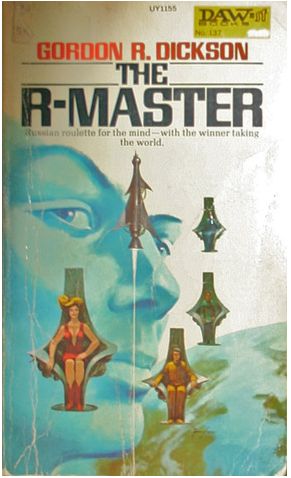
Monday, August 13th 19:00: The R-Master
In the 21st century utopia has arrived in the form of a repressive but seemingly benevolent, if omnipresent, bureaucracy. Their perfectly ordered world, seemingly run for the benefit of all, is actually ruled with an iron fist. In claiming to have people’s best interest at heart, those in power keep the population occupied and docile with menial tasks and the promise of advancement with the aid of the strictly controlled drug, R-47.
For the vast majority, R-47 actually does nothing.But for a special few, observed and selected by the ruling Council, it can massively enhance their intellect, elevating them to the status of “R-Masters” allowing them to solve problems, see advancements, and help ensure – wittingly or not – the Council’s control over the world, cosseted and pampered well away from the drudgery of ordinary life.
However, there is a darker side to R-47: just as it can elevate the intellect of some of those chosen to receive it, so to can it reduce them to imbeciles – and there is no way of knowing who the outcome might be in advance. Wally Ho is one selected to receive R-47 – and suffers the latter fate.
Determining it will raise his problem-solving abilities and restore his brother, Etter Ho obtains R-47 and takes it. But, once elevated to the privileged ranks of the R-Masters and witness the truth behind the Council’s rule, Etter determines the established status quo cannot allowed to continue, and Big Brother must be brought to heel.
Join Gyro Muggins as he reads Gordon R. Dickson’s 1973 novel about life in what is now our times!
Tuesday, August 14th
The Library is closed for the evening.
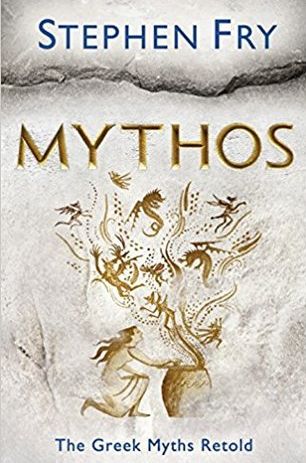
Wednesday, August 15th 19:00: Mythos
The Greek myths are the greatest stories ever told, passed down through millennia and inspiring writers and artists as varied as Shakespeare, Michelangelo, James Joyce and Walt Disney.
They are embedded deeply in the traditions, tales and cultural DNA of the West. In Stephen Fry’s hands the stories of the titans and gods become a brilliantly entertaining account of ribaldry and revelry, warfare and worship, debauchery, love affairs and life lessons, slayings and suicides, triumphs and tragedies.
Through them, you’ll once again fall in love with Zeus, marvel at the birth of Athena, wince at Cronus and Gaia’s revenge on Ouranos, weep with King Midas and hunt with the beautiful and ferocious Artemis.
Thursday, August 16th
14:00: Fireside Tales: The Ghost of the Bridge
Caledonia shares more from her latest short story, inspired by Pfaffenthal 1867 in SL, and a legendary ghost from Luxembourg.
The majority of the following notes are taken from the TPV Developer meeting held on Friday, August 10th 2018. A video of the meeting is embedded below, my thanks as always to North for recording and providing it. This was a short meeting – 24 minutes on the video, which includes some lengthy silences.
Functionally identical to the release viewer, but used to test the Bugsplat crash reporting service (rather than routing crash reports to the Lab’s internal Breakpad based crash reporting mechanism), this RC is likely coming to the end of its test run, sufficient data having been gathered for the evaluation.
Voice RC Viewer
At least one more update is anticipated while this is at RC status. This will contain fixes for crashes within the SLVoice.exe (the viewer should detect the exe’s absence and automatically restart it). This update should appear in week #33 (commencing Monday, August 13th).
The new release of the Animesh viewer due in week #33 will most likely see that viewer promoted from project to RC status.
A new Rendering Project RC viewer should arrive in week #33.
A new Maintenance RC viewer is in waiting, but its release is dependent upon a server-side update for handling group invites and Friend requests whilst off-line (and part of the overall move to HTTP delivery for off-line IMs / notices). These changes should be going to the simulator RC channels in week #33. The Maintenance viewer will be deployed once these updates have reached the SLS (Main) simulator channel.
[12:56-13:23] Viewer TCO project: this contains the updates to how the viewer handles texture caching, and should be entering the project viewer pipeline “soon”, together with some OpenJPEG fixes (also see the end of this report for more on OpenJPEG / KDU).
Project ARCTan
[5:26-9:20] This is the code-name for the project to re-evaluate object and avatar rendering costs to make them more reflective of the actual impact of rendering both. The overall aim is to try to correct some inherent negative incentives for creating optimised content (e.g. with regards to generating LOD models with mesh), and to update the calculations to reflect current resource constraints, rather than basing them on outdated constraints.
As I’ve previously noted, the Lab is sensitive to the implications of doing this, if it results in significant changes – particularly in the area of Land Impact for in-world objects. Should this be the case, steps will be taken to ensure users have advanced notification of changes that affect content, so they can assess what needs to be done and to make any necessary changes to their land / regions.
Part of this work will involve the Lab deploying simulator versions running both the current and the “new” calculations, allowing them to see the overall potential impact of any given set of changes (number of parcels / regions affected), ahead of making any actual change. This would allow them to avoid the kind of mass auto-return situation that has accidentally occurred in the past, and enable them to find a means to inform people of the potential impact.
A further option the Lab has been considering is to raise the land capacity on regions / parcels to compensate for any impact of revised LI calculations. So, for example, if the new calculations result in parcels going over the capacity limit by and average of (say) 10%, region LI might be increased by 15% to offer some compensation. Then, for those who still exceed their limit, there will be a period of grace when then can consolidate and bring their LI use within the limit of the revised calculations before the latter are enforced.
The important aspect of the LI work is that while values may change, they overall why they are being calculated my result in their meaning being different – so numbers might actually coming out “smaller” than is currently the case, resulting in no need for physical changes to be made in terms of what people have rezzed in-world.
Overall, this is a long-term project, and no changes one way or the other will be occurring in the immediate future.
Environment Enhancement Project
[14:01-14:44] No significant news. The project is awaiting the current Inventory AIS updated to be completed on the main grid. There is also an inventory patch for EEP that needs to be deployed and tested on Aditi. Once this has been done, the way will hopefully be clear for EEP to appear on the main grid.
Other Items
OpenJPEG Images and KDU “Downgrade”
[10:33-12:54] : there is an issue with KDU which means that textures encoded using OpenJPEG may not display correctly. As a result, the Lab is rolling by KDU support from 7.10 to 7.9. This is a temporary measure to alleviate the problem whilst LL work with KDU to get a fix. In the meantime, Graham Linden has been working on potential means to avoid the issue is a fix is not forthcoming from KDU.
[17:06-20:37] A new version of the Second Life JIRA is in testing. This will see several changes to the JIRA system, notably visually and when logging-in. The planned deployment of the new system is Thursday, August 16th. Part of this update will ensure JIRA refreshes a user’s e-mail to match the one provided for use with Second Life when logging-in.
The Estate Access Management (EAM) project viewer (dated August 7th) is a new project viewer to enhance – as the name implies – the estate access management tools available to region holders and their estate managers within the viewer.
In brief:
New viewer UI for displaying Estate Managers, allowed groups and allowed / banned individuals within a region.
New capabilities for sorting / searching lists.
Additional information recorded and displayed for banned accounts.
Number of Estate Managers increased from 10 to 15.
Under the current viewer, the lists for managing Estate Managers, allowed groups and allowed or banned avatars in a region / estate have been crammed into the first tab of the Region / Estate floater (World > Region / Estate).
This has made management of the lists difficult, given only around 5 names can be displayed by each – which can be problematic when the Banned list allows up to 500 names. In addition, lists cannot be searched and, again in the case of the Banned list, no other information is provided against a banned name, making it hard to determine whether or not a ban might actually be rescinded, thus helping with general list management.
As such, there have been long-standing requests for the estate access controls to be improved.
The Estate Access Management project attempts to address these issues by introducing both back-end changes in support of managing ban lists and by revising how the various lists themselves are displayed within the viewer and how they can be used.
In particular, the EAM project viewer introduces a new Access tab in the Region / Estate floater (World > Region / Estate). This tab in turn has individual tabs for managing the lists for Estate Managers, Allowed avatars, Allowed Groups and Banned avatars.
The Estate Access Management lists as they appear in the current SL viewer (l), and the new Access tab with individual tabs for Estate Managers list and each of the Allowed / Banned lists. Note as well the increase in allowed Estate Managers (ringed in each image). Click for full size, if required
In terms of adding or removing names and groups, the new sub-tabs work exactly as the lists in the current viewer work.
However, with the new design, additional functionality is added to some of the lists:
The Banned list additionally records:
The last date on which a banned individual logged-in to Second Life (to assist with housekeeping the list – if an account hasn’t been used in X months or years, why keep it on the list?).
The date on which an individual was banned.
The name of the EM / region holder banning them.
Note this information will be displayed by the EAM viewer for all accounts going forward – even those banned using other viewers, reflecting a change to the back-end database for managing bans. Banned accounts existing at the time the EAM updates were introduced will simply have “n/a” recorded for each of these fields.
The Banned tab can be sorted into ascending / descending order by banned name, date last logged in, date banned, or by person banning them. Click on the column title to sort.
The Banned List includes columns for date of last log-in, date banned, and region holder / EM who banned them. These columns can also be sorted into ascending or descending order by clicking on the field title, as can the account name column.
The Estate Managers, Allowed and Allowed Groups tabs can be sorted into ascending / descending order by name. Click on the column title to sort.
The Allowed Groups, Allowed and Banned tabs all include a search option.
The number of allowed Estate Managers is increased from 10 EMs to 15 EMs – again in response to many requests from region holders.
Feedback Sought
The Lab is keen to have feedback on these new tabs and the improvements made to handling estate access control. If you are a region holder with EM rights, or an Estate Manager, please consider downloading this project viewer and giving it a try. Any issues should be reported via the Second Life JIRA, using the [EAM] project reference in the title.
A misted isle where the ground is carpeted in flowers, the rolling hills covered in grass, the beaches arced with sand and the tress provide shade from the sun during the day, once the mist has been burned away, or places to rest and sleep as evening heralds the onset of night.
Such might be the place we slip away to when daydreams come to let us escape the drudgery of everyday life; a mystic realm where turtles can be ridden, fae folk might be found, and mushrooms stand as captive groups should we be tempted to dance before them. A land watched over by a kindly, horned giant, and where snails the size of houses court one another or butterfly people flutter.
This is the world Cica Ghost presents to us in Daydream, which opened to the public on Friday, August 10th, 2018. Another wonderful whimsical build, it is a place to which we can all escape and explore, with something to discover at every turn. From the arrival point, this is a world wreathed in morning haze under a cloudy, almost alien sky, the hills are undulating shadows all around, breaking up the skyline.
Where you might wander is entirely, up to you – but be sure that whichever way you go, you’ll find something to captivate the eye, including many echoes of past works by Cica. Cats, mindful of those from 50 Cats (here), for example, are to be found ready to invite people to come inside hollow tree trunks and sit or lie with them for a time. Meanwhile a great horned dragon lies with his body covered in stand, just his head and tail visible, reminding us of the dragons from Fairy Tales (here), while the giant on the hill carries with him a look of her Beginners (here) – there’s even a hint of Strawberryland (here) waiting to be found, although the berries are rapidly being noshed by another pair of Cica’s characters!
All of which should not be taken to mean that Daydream is derivative; far from it. This is as much an original as all of Cica’s prior works; the echoes are simply that – echoes. And give this is a place for daydreaming, they’re not at all out-of-place; why shouldn’t Cica have little dreams of her art and creations? And why shouldn’t we enjoy her daydreams as well?
As always with Cica’s creations there are things to do while exploring here – quite a lot, in actual fact. I’ve already mentioned a couple – sitting with cats or dancing before mushrooms, but there are many more, next to and on top of things – so be sure to mouse around yourself as you are exploring and taking pictures.
I never cease to enjoy Cica’s work; it is always expressive, something whimsically, sometimes with a deeper interpretation. Howsoever you find it, there is always a sense of fun in life to be found. With Daydream. we’re presented with just that: a chance to jump into Cica’s daydreams and share in them with her, or to go exploring and find our own.
The following notes are taken from the Content Creation User Group (CCUG) meeting, held on Thursday, August 9th, 2018 at 13:00 SLT. These meetings are chaired by Vir Linden, and agenda notes, meeting SLurl, etc, are usually available on the Content Creation User Group wiki page.
The choppiness in some of the audio segments where Vir’s voice drops out is due to issues with SL Voice.
Animesh
Project Summary
The goal of this project is to provide a means of animating rigged mesh objects using the avatar skeleton, in whole or in part, to provide things like independently moveable pets / creatures, and animated scenery features via scripted animation. It involves both viewer and server-side changes.
As of the SLS (Main channel) grid deployment on Tuesday, August 5th, the server-side support for Animesh is now grid-wide.
Animesh Viewer
Vir has completed work on the next update to the viewer, which includes a number of fixes and tweaks. This is currently with the Lab’s QA team. If all goes according to plan, this could see the light of day as a Release Candidate viewer. In particular, this update should include a fix for the bounding box / LOD issues previously reported in these summaries.
General Discussion Points
The LI accounting aspect of Animesh is considered “complete” for the initial release, and no further changes beyond the accounting values Vir has published via the Animesh forum thread are expected.
However, there may still be future revisions to the overall Animesh costs (complexity) as a result of the Project ARCTan work to overhaul all of the complexity calculations in order to make them more reflective of the actual costs involved in rendering, etc., different objects. This work has apparently been on hold recently.
Land Impact: streaming costs / LODs: there was further discussion on the 50% bounding on LODs.
Concerns have been raised at the disparity between the 50% cut-off between the high and medium models compared to the GLOD (Global LOD) cut-off of around 30% (so 70% discarded). Other concerns relate to the 50% between the medium and low models disincentivising creators from trying with a low model. An overall concern is that people will continue to look purely at land impact, rather than considering complexity and optimisation as matters of improved performance.
Vir admits the approach taken with Animesh is something of a trade-off between trying to encourage considered use of LODs and implementing a system that “scares people off” because of its demands. As such, it is something that may be revisited as a part of ARCTan, after more data has been gathered as a result of Animesh being released in the meantime.
A major difference with the “new” system is that it no longer considers scale. This means that creators who animate their creatures using a combination of multiple models and using alpha masks to hide the “unseen” versions and who reduce the “unseen” models to avoid them raising a creature’s LI, will no longer be able to do so.
Per-bone scale animations: having the ability to use per-bone scale animation, which could be particularly useful for non-human bodies (and now Animesh) has been a request since Bento.
Currently, the SL animation format doesn’t allow scales to be specified, so an overhaul of the animation system would be required to make this possible.
A further problem is scale animation can conflict with any use of the shape sliders, when used to modify an avatar shape (one of the items under consideration for a future update to Animesh is support for a body shape and the use of sliders).
The benefits with scale support include:
The ability to create a single creature body and use it in different species of that creature without the need to develop new animations and new rigged attachments (so a “dog” body could be used for a Labrador or a Chihuahua or Dashhound).
The ability to have “young” creations (babies, puppies kittens, hatchlings….) “grow” over time.
The ability for creators to develop a broader range of different NPCs and different creature types without having to rely on the avatar shape / slider system, which is inherently biased towards human forms.
An alternative to animation scaling (and subject of a feature request) that was initially made during Bento, was to have an overall body size slider that could proportionally adjust the entire size of the shape associated with an avatar (and Animesh, if shape and slider support is added to Animesh in the future).
One issue with implementing this at present is that the message format use to communicate slider parameters may not support the level of messaging required to communicate an overall rescaling that affects every joint and bone position at once (which would require updates to the Appearance and Bake services as well, so this would require an overhaul.
A further issue is that of locomotion: the same overall locomotion graph is used regardless of size, so in a single stride, a very tiny avatar made using a “size slider” could appear to move the same distance as a “normal” sized avatar, which can result in it appearing to move really quickly;similarly a really tall avatar created using a “size slider” could appear to hardly move at all each time it takes a step. So, the locomotion graph would need to be overhauled.
Use of per-bone animation scaling hasn’t been ruled-out, with Vir pointing out that even adding body shape and slider support to Animesh is complex, requiring further updates to the Appearance and Bake services in order to work. So it might be something to consider alongside of considering shape / slider support once the initial Animesh project is released.
Bakes On Mesh
Project Summary
Extending the current avatar baking service to allow wearable textures (skins, tattoos, clothing) to be applied directly to mesh bodies as well as system avatars. This involves server-side changes, including updating the baking service to support 1024×1024 textures, and may in time lead to a reduction in the complexity of mesh avatar bodies and heads.
This work does not include normal or specular map support, as these are not part of the existing Bake Service.
There do not appear to be any blockers within the project preventing it from moving forward. However, as indicated at the July 27th TPV developer meeting, there are some changes being made to the AIS system, and the updates to inventory required in support of Bakes on Mesh (which also requires updates to the Appearance and Bake services as), are currently awaiting that work to be completed.
Environment Enhancement Project
Project Summary
A set of environmental enhancements, including:
The ability to define the environment (sky, sun, moon, clouds, water settings) at the parcel level.
New environment asset types (Sky, Water, Days that can be stored in inventory and traded through the Marketplace / exchanged with others.
Day assets can include four Sky “tracks” defined by height: ground level (which includes altitudes up to 1,000m) and (optionally) 1,000m and above; 2,000m and above and 3,000m and above, plus a Water “track”.
Experience-based environment functions
An extended day cycle (e.g a 24/7 cycle) and extended environmental parameters.
There are no EEP parameters for manipulating the SL wind.
EPP will also include some rendering enhancements and new shaders as well (being developed by Graham Linden), which will allow for effects such as crepuscular rays (“God rays”)
These will be an atmospheric effect, not any kind of object or asset or XML handler.
The new LSL functions for finding the time of day according to the position of the windlight Sun or Moon have been completed,and are more accurate than the current options.
EEP remains on internal testing at the Lab, although as I noted in my previous CCUG summary, Rider has been teasing us with images in the forums. According to Dan Linden. the viewer UI is “pretty much” complete, and work is focused on some of the back-end messaging, which appears to be holding things up. There may be a further update on status at the next TPV Developer meeting on Friday, August 10th.
Other Items
Transparency shadow casting from rigged items: there is an issue with rigged / static meshes using transparencies (blended or masked), which causes shadows cast by them to render incorrectly (shadow rendering conforms only to the geometry silhouette). This is still within Graham Linden’s pile of work.
Next Meeting: the next CCUG meeting for August 2018 will take place on Thursday, August 23rd.