September 2018 Town Hall with Ebbe Altberg: transcript with audio

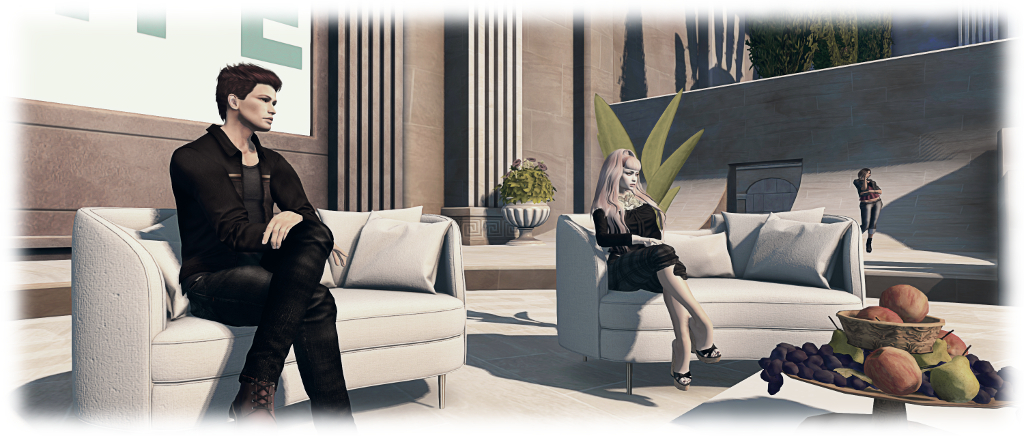
Ebbe is still into his T-1000 look. But then, he does keep to his promises to “be back” (and take people’s questions and offer thoughts and insight into the Lab, SL and Sansar) 😉
On Thursday, September 13th, Linden Lab hosted a further Town Hall meeting at which questions were put to the Lab’s CEO, Ebbe Altberg.

Those wishing to ask questions were asked to submit them via the forum thread September 2018 – A Conversation with Linden Lab CEO Ebbe Altberg, a thread that is now locked from having further questions added, but remains available for viewing.

As many of the questions require a technical response, the decision was made to have the Lab’s subject matter experts address them directly through the forum thread itself after the Town Hall meeting, a process which may take several days to complete. So if you did ask a technical question that wasn’t raised at during the event, be sure to check the thread to see if an answer in provided there.

The following is a summary of the answers to questions asked during the Town Hall session, audio extracts and video time stamps provided as reference. The video is embedded at the end of the article.

Please note that this is not a full transcript of the event. Producing a word-for-word transcript takes a lot of time. Instead, I have attempted to bullet-point the replies offered, and have included an audio extract and a time line to the relevant point in the video.

Also note that:

Table of Contents

  • These notes don’t necessarily follow the chronological flow of the session, as I’ve attempted to group subjects by topic for more concise reference.
  • There is a degree of choppiness in Ebbe’s audio (present on the videos as well). This is down to Voice issues in SL. Because of this break-up, some of the audio clips are edited to remove elements where the break-up is particularly bad, but hopefully without losing the actual context of what was being said.
  • Video timestamps will open the official video in a separate browser tab at the start of the specified time period, allowing readers the choice of listening to the audio extract, or the video recording.
  • Due to the brevity of some answers, not all replies given below have an audio extract – but they all have links to the official video.

Opening Comments

  • Exciting year for Linden Lab – 15 years in the business, lot of investment in SL going on + growing the SL team. There’s a lot going on that has the Lab optimistic about the future, and looking forward to being on the journey for a long, long time to come.
  • In March LL announced a very aggressive roadmap, possibly more than could be achieved within 2018, but goals have been pursued and people hired to help meet them.
  • Perhaps most noticeable work has been the re-balancing the economy: reducing the price of land and finding other means by which the Lab can generate revenue that are fairer for everyone – users and the Lab.
    • This means some things get cheaper [e.g. land], and other may get more expensive [e.g. transaction fees] for people as things are adjusted.
    • Overall response has been positive – particularly the lower Mainland costs – increased “free” tier, which is still keeping the land team busy in handling purchase requests.
  • Roadmap also noted new games and experiences, and the next one is “not far away”.
  • Themed learning islands were mentioned, for more vertical acquisition of new users, and tests have been run.
  • Marketplace improvements are starting to come in, with more on the way, helped by a new hired in the commerce team.
  • New land auction process was deployed, but has had issues, so user-to-user Mainland land auctions still to come.
  • There have also been performance improvements.
  • Animesh is very close to release, and the Environment Enhancement Project (EEP) is close to public testing. Bakes on Mesh is following behind them.
  • More value for premium members is coming, but no announcements to make during the town hall.
  • Return of last names may not roll-out before the end of 2018; there’s still a lot of work to be done.
  • Grid-wide experience operation for users also may not be deployed before the end of 2018.
  • Work is continuing on Linden Home improvements, but not clear if this will be deployed all at once or in stages. The hope is to start releasing some of them before the end of 2018.
  • Moving SL to a cloud infrastructure will not be completed until “well into” 2019. Work is progressing on a server-by-service basis.
  • He is personally every excited with all that is happening, the SL team is dedicated to the work and is growing, and Lab is very pleased with the positive responses from users to the changes and improvements being made.

Video: 4:05-12:54

Audio:


Back to top

Ebbe and Xiola at the September 13th Town Hall.

Q&A Session

Land and Pricing

What was the rationale the up-front higher fees for grandfathered regions?

  • The 2016 buy-down offer was to encourage people who knew they were going to keep land for at least 6 months to obtain lower tier.
  • The structure meant that the up-front cost (US $600) could be recouped in 6 months, allowing the land holder to continue to enjoy a much reduced monthly tier.
  • The transfer fee of US $600 for grandfathered / bought-down regions (compared to the US $100 for “retail” prices regions) is intended to operate the same way: to encourage those who wish to obtain grandfathered land and will hold on to it for a period of 6 months or more to do so, and so continue to enjoy the lower monthly tier.
    • The US $100 transfer fee can still be applied to grandfathered regions, but they will revert to the full monthly tier rate, so the US $600 isn’t necessarily a barrier to selling the land.
  • Currently no plans to make further changes to tier rates – Lab still absorbing the data from the June private region pricing restructure.
  • However, there is still a commitment from the Lab to do more where land is concerned, once with economic situation resulting from the June 2018 change can be fully understood.
  • Personally has a belief that those who commit to holding land for a period of time should be able to benefit from doing so.
    • This may again involve a higher up-front cost that is recouped over a period of time.
    • Does mean that tier pricing differences (e.g. grandfathered to retail) could vary over time – just as the June reduction narrowed the gap between grandfathered and retail monthly tier.
  • But even with the June retail price reduction, those who used the buy-down offer are still enjoying a lower tier than those who buy at retail.

Video: 18:42-23:15

Audio:


Back to top

Will there be further land pricing reductions / increases in land capacity (prim allowance)?

  • Both are things the Lab wants to do.
  • Land price reductions depend on the Lab being able to generate revenue and remain healthy as a business via other means – increased transaction fees, increased check-out fees, increased and broader Premium subscription options, etc., all of which are constantly being looked at.
  • Increasing the land capacity is a matter of performance and hardware improvements. If these continue to be made, then further increases to land capacity might be possible.

Video: 23:28-24:54

Audio:


Back to top

Continue reading “September 2018 Town Hall with Ebbe Altberg: transcript with audio” →

2018 SL UG updates #37/3: Content Creation User Group

“That’s no moon…” – Rider Linden teases with possibilities whilst talking Environmental Enhancement Project (EEP)

The following notes are taken from the Content Creation User Group (CCUG) meeting, held on  Thursday, September 13th, 2018 at 13:00 SLT.  These meetings are chaired by Vir Linden, and agenda notes, meeting SLurl, etc, are usually available on the Content Creation User Group wiki page.

The choppiness in some of the audio segments where Vir’s voice drops out is due to issues with SL Voice. Topics blow are not necessarily presented in the order in which they were discussed, I’ve attempted to group items by subject matter.

Environment Enhancement Project (EEP)

Project Summary

A set of environmental enhancements, including:

  • The ability for region / parcel owners to define the environment (sky, sun, moon, clouds, water settings) at the parcel level.
  • New environment asset types (Sky, Water, Days that can be stored in inventory and traded through the Marketplace / exchanged with others.
    • Day assets can include four Sky “tracks” defined by height: ground level (which includes altitudes up to 1,000m) and (optionally) 1,000m and above; 2,000m and above and 3,000m and above, plus a Water “track”.
  • Experience-based environment functions
  • An extended day cycle (e.g a 24/7 cycle) and extended environmental parameters.
  • There are no EEP parameters for manipulating the SL wind.
  • EPP will also include some rendering enhancements  and new shaders as well (being developed by Graham Linden), which will allow for effects such as crepuscular rays (“God rays”)
    • These will be an atmospheric effect, not any kind of object or asset or XML handler.
  • The new LSL functions for finding the time of day according to the position of the windlight Sun or Moon have been completed,and are more accurate than the current options.
  • EEP will not include things like rain or snow.
  • It will still be possible to set windlight local to your own viewer.

Resources

Current Status

EEP is now “so close”.  A test viewer is ready to go – note test, not project -, the major blockers have all be cleared, and land is being set-up on Aditi for people to be able to test the EEP capabilities there. An outstanding issue is documentation on how to create EEP assets, etc., but this could be available in week #38 (commencing Monday, September 17th).

As part of the update, Graham Linden has adjusted the night-time sky so that those running their viewer with ALM enabled will see stars at night, rather than dots in the sky – and they can twinkle!

Twinkle, twinkle little stars – EEP allows stars to twinkle in SL (you may have to click the image to open it and zoom into the GIF to see the effect better). Credit: Alexa Linden

Animesh

Project Summary

The goal of this project is to provide a means of animating rigged mesh objects using the avatar skeleton, in whole or in part, to provide things like independently moveable pets / creatures, and animated scenery features via scripted animation. It involves both viewer and server-side changes.

Resources

Current Status

Work is continuing trying to clear the last few significant bugs the Lab would preferably like resolved or at least understand in terms of cause, before the project goes to release status. Vir has also been working on the constraints for scale and position with Animesh objects.

Bakes On Mesh

Project Summary

Extending the current avatar baking service to allow wearable textures (skins, tattoos, clothing) to be applied directly to mesh bodies as well as system avatars. This involves viewer and server-side changes, including updating the baking service to support 1024×1024 textures, and may in time lead to a reduction in the complexity of mesh avatar bodies and heads.

This work does not include normal or specular map support, as these are not part of the existing Bake Service, nor are they recognised as system wearables.

Resources

Current Status

No real change. Still awaiting the AIS updates (which also adds support for EEP assets as well). This needs to be deployed before the associated Bake Service updates and simulator update in support of Bakes on Mesh can be deployed to Agni (the main grid). In the meantime, Bakes on Mesh can be tested on Aditi on the Bakes on Mesh test region.

Vir also reaffirmed that there are no plans to implement materials support with Bakes on Mesh at present, for the reasons noted above in the project summary. However, this might be revisited in the future.

As an aside: the main aspect of the AIS update is related to the ongoing work to move Second Life services to a cloud infrastructure.

Texture Use Discussion

Part of the meeting was given over to textures and their misuse within Second Life, with suggestions being offered on how to improve things.

Texture Upload Costs Based On Resolution / Size

One suggestion was to charge texture uploads based on resolution / size (so the higher the resolution, the greater the upload cost). This is not something the Lab is considering, and it seen as being of limited benefit unless set ridiculously high, simply because the upload cost is a one-time fee and does not discourage repeated (and over) use of a texture once uploaded.

Ability to Set Texture Resolution

An alternative suggestion would be to use the viewer’s discard levels (/mipmapping – see here for more) as a means for users to control what texture resolutions are used when displaying an object (or multiple versions of an object). So, for example, if an object uses 1024×1024 texture, but is only used as a “background prop” – objects in a vending machine or display case, for example), a user can use a viewer UI option to restrict the texture resolution of that object to a specific discard level, regardless of whether or not the objects in zoomed in on.

Some issues with this idea are that a) it would require additional data to be manipulated, together with an additional UI element; b) it would require a re-working of some of the viewer logic. Currently for discards to be used, the highest resolution of a texture must be loaded by the viewer; for this approach to be effective, the logic would need to be changed so that only the desired discard (with its lower video memory footprint) is loaded, avoiding the download of the highest resolution version completely.  This also potentially shifts the onus from creator to consumer for using textures responsibly, which isn’t necessarily ideal.

In Brief

  • Transparency shadow casting from rigged items: there has been a long-standing issue with rigged / static meshes using transparencies (blended or masked), which causes shadows cast by them to render incorrectly (shadow rendering conforms only to the geometry silhouette).  Graham has now fixed it, and the fix should be appearing in the next round of viewer rendering fixes due out after the current Love Me Render viewer (version 5.1.8.518751, dated August 20th, at the time of writing). This will work with static mesh and Animesh, once it has reached release status.
  • Blending / mixing textures on a mesh face: the ability to blend / mix textures on a mesh face (in a “similar” manner to how they can be mixed on terrain) has been requested a number of times. Graham linden indicated this is unlikely to be implemented as it would, “require many new shaders and break batches more often (i.e. be less performant).”
  • Mesh uploader: there is a significant list of issues and feedback on the mesh uploader and what could be done to improve it and help people better understand how to optimise content on upload, or make the uploader better behaved. Vir hopes that these will be looked at in the not-too-distant future, depending on what are seen as the next immediate projects to follow Animesh, EEP, etc.
  • Projectors-as-facelights and hair styles: part of the meeting include a discussion on people now unfortunately using projectors as facelights  to offer  form of cubemapping on their avatars, and the new trend in having hair that contains multiple styles (e.g. ponytail over left shoulder or over the right shoulder or down the back). Both impose additional performance hits (the hair particularly so), while the projectors-as-facelights can also impact how a scene is rendered (if an avatar is close to you wearing multiple projectors, you may not see the results of some / all of any projectors used in the same space you are both occupying).
  • Mesh loading by Script / UUID: the ability to dynamically load meshes using their UUIDs was part of early mesh testing, but was removed for a number of reasons – such has performance (for example, and while separate, people were using the ability to load via UUIDs for animation flipping, which caused a big performance hit). Dynamically changing worn mesh items via script is viewer rendering intensive, given the potential frequency with which it could be done – which it turn becomes a potential griefing vector. There is also an issue of potential content theft in making an asset’s original UUID obtainable. As such this is not something that is liable to be re-implemented.

  • Apple OpenGL deprecation: the Lab is continuing to give thought as to what to do in light of this, but is not in a position to make a formal announcement as yet. Given that there are a fair number of Mac users at the Lab (including Oz Linden!), it is unlikely that the Mac version of the viewer will be left to “go away”; in fact Graham Linden anticipates it becoming something of a focus for him in the near future.


Solo Arte: “explore and enjoy” in Second Life

Solo Arte

Opening on Friday, September 14th, 2018 at 13:00 SLT is a new group art installation at Solo Arte curated by Terrygold and Melania (MelaniaBis), Featuring an ensemble cast of artists, it has been given the informal title of explore and enjoy.

Those participating in the exhibition cover the realms of both 2D and 3D art, and comprise Oema, Terrygold, Jill Agresti (Jillx), Solkide Auer, Judy Barton (Mitla), Giovanna Cerise, Desy Magic, Annalisa Muliaina, Maddy (Magda Schmidtzau), Eupalinos Ugajin, Ciottolina Xue, and Moke Yuitza.

Solo Arte: Oema

The setting for the exhibition is rather unique, a three-dimensional space that initially appears as a rooftop garden, dotted with large hollow spheres, each of which contains (or will contain) an element of 3D art by some of the artists, together with some additional buildings and a little stream flowing between rocks and cliffs. However, there is more here than meets the eye: under the garden are numerous spaces, some of which can be glimpsed from above, others of which are fully enclosed and hidden, where more art and other points of interest can be found. Getting around these forms something of a mystery tour, making a visit to this installation a journey of discovery.

The spheres are intended to be worlds of their own – each has at least one entrance / exit, and visitors are invited to step inside them and become fully immersed in the art within. The dioramas and vignettes may come with explanatory text, or may stand alone or – as in at least one instance – share a poetic theme with the words of Jill Barton, whose poetry, inspired by the space, can be found on media boards to one side of the rooftop area under the eaves of a building.

Solo Arte: Ciottolina Xue

Once inside a sphere, you are fully enclosed in the space to generate a feeling of immersion – and which also makes finding your way back out a little interesting if you get turned around inside! But for a deeper sense of immersion, I suggest trying first-person view whilst within a sphere. Note that to fully appreciate some of the art, you must have your viewer’s Advanced Lighting Model option (Preferences > Graphics) enabled. Shadows are also recommended as being enabled when visiting – but I would suggest that this is a more optional requirement, depending on how well or otherwise your viewer performs with shadows enabled.

The 2D art is more traditional displayed on the walls of the lower levels of the structure. These have been designed in such a way that each 2D art area is at least partially open to the natural daylight of the environment (using the local windlight or setting your viewer to sunset is recommended). Maddy’s and Desy’s art is set out so as to appear in garden style environments, while Oema’s is in more of a built-out area that forms the main route into the lower levels from the rooftop garden when exploring on foot.

Solo Arte: Maddy

To fully get around the installation however, requires the use of the Teleport Anywhere Doors that can be found throughout the build. I particular, one of these is located alongside the location for Jill’s poetry, and another on the lower level of Oema’s 2D art display. Together, these two doors form (depending on which you use first) the start / end point for a journey through the installation, passing from display area to display area – including one tucked away deep inside the build, where more 3D can be found.  Nor is this all; also hidden down inside the build – and accessible on foot, should you spot the tunnel – is an underground events / bar area.

With Nessuno Myoo and Kicca Igaly due to join the exhibition during its run, this is a creative approach to displaying art that makes for an engaging and fun, as well as visually impressive, visit.

SLurl Details

2018 SL UG updates #37/2: Concierge and Land user group

The Concierge and Land User Group meeting area

The Concierge & Land user groups are held every 2nd and 4th Thursday of the month from 12:00 noon SLT. The focus of the meetings is “for discussion & education of SL topics such as current known issues and bugs, project viewers and new features, and general Mainland issues. Theresa Linden will be your moderator. Please bring your questions & concerns.”

These meetings cannot be used to discuss:

  • Specific account questions or concerns.
  • Anything pertaining to billing, fees and / or tier.
  • Specific region / viewer performance issues.
  • Abuse related issues.

The initial meeting of the new group was held on Thursday, September 13th, and was somewhat brief in nature. The schedule of meetings for the rest of 2018 is as follows:

  • September 27th, 2018
  • October 11th, 2018
  • October 25th, 2018
  • November 8th, 2018
  • December 13th, 2018
  • December 27th, 2018

Details on the meeting and the agenda can be found on the Concierge & Land official SL user group wiki page.

EAM Viewer

The meeting included a reminder that the Estate Access Management (EAM) viewer is currently in project viewer status (version 5.2.0.518362 dated August 9th, at the time of writing). My own overview of this viewer can be found here.

  • A suggestion has been made to add a field to record the reason a person was banned from a region / estate.
  • It is not clear if the parcel level access controls will be updated to reflect the changed made to the region / estate controls.

Region Sit Exploit

There have been recent issued with “buggy” scripts using llunsit on group deeded private land that can result in avatars sitting on the affected objects to be unseated under very specific (and rare) situations. The Lab is aware of the issue, which has proven difficult to track down,  resulting in feature request BUG-225443 being put forward to allow people to better identify objects that may be causing the unsits when they occur.

Mainland Purchases

Since the Lab announced the Mainland price restructuring, demand for Mainland parcels have significantly increased. Thus far, requests have been handled via support ticket, rather than through the stated policy route of requesting the abandoned land be placed up for auction. The use of support tickets doesn’t actually represent a formal change to the policy – but it has been used as the most direct means to respond to requests for land, simply because of the volume received since the price change was announced. However, Keira Linden indicated that it might in future see the auction policy revised:

We’re still in the evaluation stage and aren’t quite ready to officially change that policy just yet … We’ve been urging people to send in the request in a ticket. We’re using that response to kind of judge whether it should be officially changed or not.

Should this be the case, the policy will be updated, and a Land blog post made to announce that has now officially changed.

In-world Group

To help promote the Concierge & Land User Group, it’s been suggested that an in-world group is established that land owners can join to be kept appraised of meetings and news. This is being looked into. If such a group is established, I’ll add the details to these meeting summaries.

Cica’s The Girl Who Cried Wolf

The Girl Who Cried Wolf

Opening on September 13th, 2018, is Cica Ghost’s latest art installation The Girl Who Cried Wolf, which as she notes is something of a play on the Aesop fable, the Boy Who Cried Wolf.

Within the piece, the wolf has already arrived, and can be found chasing the sheep over hill and dale, hoping for a meal. And where is the shepherd boy, who should be watching over them?

The Girl Who Cried Wolf

Well, unlike the original fable, in which his calls for help are ignored after previously pranking the village into believing a wolf was after their sheep when no such thing was happening, he’s off playing his little flute. Instead, it’s left to a little girl from the village to raise the alarm – shouting for the shepherd boy, who refuses to budge from his perch on a rock.

Within the setting are a number of Cica’s familiar sitting points where visitors can involve themselves in the story (mouse over some of the animals and furnishings to be found in the setting and you’ll discover them), and which offer a little sense of fun to the tale.

The Girl Who Cried Wolf

Looking at the core of the scene, it is perhaps tempting to look for a deeper meaning within it, or to perhaps ascribe some kind of political undertones to it. But neither is Cica’s intent at all; in fact she makes it clear that when it comes to politics, she has no time for the subject, “and I don’t bring politics into Second Life.” she states firmly.

Instead, this is a setting born entirely of the creative process. “I made that scene with sheep and wolf first,” she told me, “And it reminded me of that fable.”And the switch to having a girl raising a warning of the wolf’s arrival? “I wanted the shepherd boy playing a flute,” Cica says, “so I made the girl.”

The Girl Who Cried Wolf

And thus a simple, charming update to a famous tale has been made. One in which, the shepherd boy is more interested in playing his flute than in watching over the sheep – leaving it to the little girl to raise the alarm. But ien’t wanting to be off pursuing his own interests rather than the work assigned to them by their elders typical of many little boys?! 😉 .

The Girl Who Cried Wolf will, as with most of Cica’s installations, remain open for around 4 weeks.

SLurl Details

September SL Town Hall with Ebbe Altberg – reminder

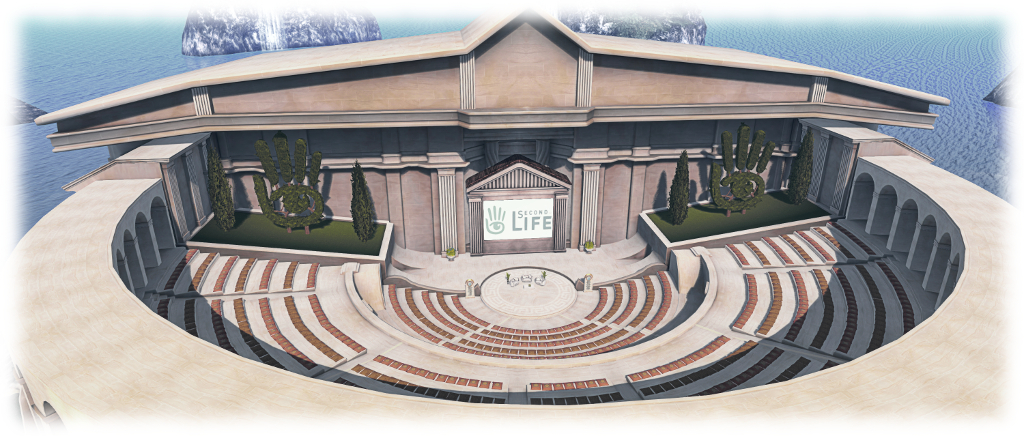
The Town Hall meeting venue

Just a quick reminder.

The next in the Lab’s in-world Town Hall series, again featuring CEO Ebbe Altberg, will take place on Thursday, September 13th, at 09:30 SLT (17:30 BST / 18:30 CET). The event will take place at the Town Hall meeting regions, with the landing point URLs as follows:

Selected questions from the Town Hall meeting forum thread (now closed) will be put to Ebbe during the session, and there may be an opportunity to ask questions from the audience, if time permits.

All things being equal, I hope to have a summary of the session up after the event, which will be similar in nature to my summary of the April 2018 Town Hall – see here for more on that.