Story-teller, commentator, raconteur – R. Dismantled is all of these, and more. A long-time resident of Second Life, R. is a keen patron of the arts in-world, including performance art and dance – so much so that with regards to dance in Second Life, he has in the past been a guest writer in these pages.
R. is also a prolific writer of 100-word stories – or “drabbles” as they’re known. It’s something he got into as a result of several influences, as he explains:
I started writing drabbles after a friend in college wrote a set of them in a 100×100 project. Woody Allen’s play about Abraham Lincoln obsessing over “How long must a man’s legs be? Long enough to reach the ground” inspired me.
Then, a group of writers started the site “100 Words Or Les Nessman” where they challenged themselves to write about a topic, or they had to write about Les Nessman. Featured writers posted on the site, and guest writers joined in the comments section of each post.
– R. discussing the origins of his 100-stories and podcast
On May 31st, 2005, R. started a podcast featuring recordings of his drabbles, promising to write a story a day until life decides otherwise; hence the sub-title of the podcast’s website, The 100 Word Stories Podcast: A 100 word story every day until the day I die.
Today, 15 years on, R. is still writing and the podcast is still going, offering an originally story a day, together with weekly challenges for others to join in the writing fun. It is, as R. is confident in saying, the longest-running daily podcast of original material in the world.
To celebrate 15 years of continuous writing and recording, R will be appearing at the Terpsicorps Pit Stage today, Sunday May 31st, from 17:00 SLT – so why not hop along and listen? You might get to hear about George the Pirate or Doctor Odd, or you may not – but you will hear stories that can by turns be funny, uplifting, thought-provoking, conscience-pricking – and entertaining, delivered by a master raconteur.
FEAR. Face Everything And Recover, May 2020 – click and image for full size
F.E.A.R. is the first region-wide design Yoon (Onyxxe) has attempted, as she notes in her profile and through her blog. While the name might sound as if it references a place that is intended to invoke a sense of dread – and is actually taken from a Stephen King novel (Doctor Sleep) – Yoon uses it in one of its two more familiar forms: Face Everything And Recover (the other being – for polite company – Forget Everything And Run), a term often used in dealing with addiction. In selecting the acronym, Yoon notes:
Another thing I did was attend a webinar from a UK health organization, helping people with anxieties and more … It was like someone shaking me up and telling me: You RUN instead of FACING it. Hiding in too much protection is safe but not always the best choice. So at that very moment I decided my RUNNING was over again. I kept my head together and spoke with and to myself a lot to get it back in shape for being the ‘Face Everything and Recover’ mind.
– Yoon on the origins of FEAR as a region name
F.E.A.R. Facing Everything And Recover, May 2020
Given the resultant Homestead region design offers a place of rugged solitude, perhaps of a Scandinavian or North American origin, using it as a means to confront her anxieties and need to hide in isolation may seem odd, but it really isn’t.
This is because throughout this design, Yoon lays herself open in many ways. She has clearly put her entire creative heart into the region’s look and feel, which can be revealing enough; but it it also clear that she has poured her own desires and artistic soul into the look and feel of the two houses within the region – notably the larger of the two. Thus, in opening the region to visitors, she is figuratively baring her artistic heart for all to see, an act that absolutely requires facing one’s fears and pushes her into the spotlight.
F.E.A.R. Facing Everything And Recover, May 2020
And the results really are gorgeous. Backed by off-region mountains that don’t quite meet the landscaping but which nevertheless offer a feel for this being a mountainous coastal area, perhaps the upper reach of a fjord, they help present a place where water tumbles from falls to roll and tumble down a shallow rocky slope into the landward end of the fjord’s watery tongue.
As noted, two houses sit within the landscape, both on the edge of the rapids-like outflow of water. Both are open to the public, with the A-frame house on its high deck the nearest to the region’s landing point. It is easily reached by walking the south-pointing raised board walk that extends away from the latter, and over the first of several stone bridges to be found within the region. It is a house was a light, cosy look and feel set within a parcel offering a late evening / sunset environment.
F.E.A.R. Face Everything And Recover, May 2020
The larger of the two houses – one that seems to have recently caught the eye of a number of region designers, as we’ve encountered it several times of late (and it is actually a design that is very well integrated that I’d love to make use of myself, although it is probably a little too roomy!) – also sits within a twilight environment setting. Here it forms a home-come-art studio, featuring a rich vein of 2D and 3D art from both the physical and virtual realms, with both it and the A-frame also revealing Yoon’s appreciation of the late David Bowie.
There are a number of places to set and / or enjoy the views across the region scattered around the setting await discovery. Getting to those on the east side may appear to be less than obvious at first glance due to the presence of the big house and the fact it has no obvious point of egress on that side, but just walk around it over the grass and you’ll find your way to where a further bridge spans the water to reach the eastern headland.
F.E.A.R. Face Everything And Recover, May 2020
Highly photogenic, F.E.A.R. is rounded out by a rich sound scape and accompanied by Yoon’s blog post mentioned above, and that comes as recommended read. Our thanks to Shawn for the recommendation to visit!
Cica Ghost opened her latest installation on Sunday, May 31st, and it is another delight. Entitled Elephants, it offers visitors the opportunity to go on a night-time photo safari to film elephants.
Set on a grassy, somewhat humpy landscape and among trees, these elephants wander, stand or sit individually or in little groups. Whether they are African or Indian is up to personal choice – but the setting does perhaps suggest Africa more than India, particularly given the little huts scattered around the landscape.
Static they may be, but through the simple means of animating their eyes, Cica has imbued them with a remarkable depth of life and emotion that really captivates in the degree of expressiveness offered.
Take the pair who standing close to one another, one with trunk raised. At first they may appear to be going about their own, separate, business and just happen to be in close proximity to one another. Then with a swivel of their eyes, a look passes between them that is hard not to see as a look of of unspoken communication and understanding as might pass between a couple.
Cica Ghost: Elephants
Elsewhere, a lone elephant stands before green plants. From one perspective, it appears sorrowful – perhaps feeling lonely or because it is reflecting the plight of elephants in the physical world; but move your position and await a turn of its eyes, and suddenly you have a shy subject in your camera lens, expressing a coy embarrassment at being photographed – as seen top right of this article.
As usual with Cica’s installations, there are interactive aspects to be found here. Mouse over the elephants (and other points in the setting) and you’ll find sit points, some with single poses, others with multiple poses, allowing visitor to join in with the exhibit.
Cica Ghost: Elephants
There’s really not too much more to say about Elephants, as it should be seen, not described. I will say that it is a genuine tonic for those needing to escape (for a while at least) all the bad news reverberating around the world, and it really cannot fail to raise a smile. For those who wish, one of the little huts offers all of the elephants for sale at very modest prices, making them fitting additions to any art collection.
Definitely not an installation to miss.
Cica’s Elephants – who said an elephant can carry baggage with its trunk?
The following notes are taken from the TPV Developer meeting held on Friday, May 29, 2020. These meetings are generally held every other week, unless otherwise noted in any given summary. The embedded video is provided to Pantera – my thanks to her for recording and providing it. Time stamps are included with the notes will open the video at the point(s) where a specific topic is discussed.
The CEF Update RC viewer, version 6.4.3.542757, released on Wednesday, May 27th (with release notes!). This builds on the CEF “Special”; it has additional codec, improvements for streaming into SL, and a major update to the Chrome Embedded Framework.
The FMOD RC viewer updated to version 6.4.3.542964 on Friday, May 29th.
The remainder of the official views currently in progress are as follows:
Current Release version 6.4.1.540593, dated April 27th, promoted May 4th. Formerly the Zirbenz Maintenance RC viewer.
Release channel cohorts:
Love Me Render RC viewer, version 6.4.3.542484, May 19th.
Project viewers:
Mesh uploader project viewer, version 6.4.2.541645, May 15th.
Copy / Paste viewer, version 6.3.5.533365, December 9th, 2019.
Project Muscadine (Animesh follow-on) project viewer, version 6.4.0.532999, November 22nd, 2019.
Legacy Profiles viewer, version 6.3.2.530836, September 17th, 2019. Covers the re-integration of Viewer Profiles.
360 Snapshot project viewer, version 6.2.4.529111, July 16th, 2019.
General Viewer Notes
Currently, it appears that the FMOD Studio RC viewer will be the next to be promoted to de facto release status in week #23 (commencing Monday, June 1st).
The Love Me Render RC viewer is also close to being ready for promotion.
There are some priority graphics fixes required for EEP, but these have yet to be merged into a viewer pipeline. These may be added to the Love Me Render viewer or may go to the next Maintenance RC viewer.
The Legacy Profiles viewer may be close to promotion to RC status, depending on the status on a further web update.
The Copy / Paste viewer is going through a further round of UI dates.
The Mesh Uploader may be also in a position to be promoted to RC status in the near future.
The Build Tools viewer is back with QA. If it passed muster, it may be issued in week #23.
The extended chat range project is now called the Voices Carry project. This is likely to be arriving in a simulator RC update in week #24 (commencing Monday, June 8th).
It is important to note that this chat is only intended to apply to apply to nearby chat channel 0, so it should not impact scripted objects using other chat channels.
Note: a lot of the following points were the subject of text chat.
The Firestorm team have encountered an issue with Bugsplat that results in the error “unable to create the error report” when a user is trying to send a crash report. Thus far, it appears LL has not seen this reported by users on the official viewer.
BUG-228752 “[EEP] Sky turns black when render quality is lowered to Low-Mid” is still awaiting a fix.
BUG-225784 “[EEP] BUG-225446 regression – HUDs are again affected by environment setting” is also awaiting the Lab.
BUG-228821 “Occasional Freeze in Post-EEP Viewers” is also still awaiting investigation.
[21:38-30:40] BUG-228592 “[Bakes on Mesh] editing clothing forces undergarments to top of the render stack” This is still to be fully investigated.
[31:04-38:50] BUG-227725 “SL Viewer and third party viewers hang while launching – dual monitors” – this appears to be an Nvidia / Windows 10 issue, although it does not appear to impact all systems. There is a lengthy discussion in chat on this issue for those who may have experienced in.
[39:57-end] BUG-228838 “Viewer changes have broken my entire outfit system” – this is an issue being experienced by people manually creating sub-folders within the My Outfits system folder / outfit folders within My Outfits in which to sort / copy outfit links.
Given that My Outfits is not designed to support sub-folder nests, whether this is a bug / breakage is questionable. H
However, LL will look at the issue – although it is unlikely that an “official” means of supporting sub-folders with My Outfits / outfit folders with My Outfits will be implemented in the near-term, as doing so will required server-side changes.
The Tower – History of Second Life 1999-2020, May 2020
Sniper Siemens is perhaps Second Life’s most dogged historian, over the years presenting us with a unique look into the platform’s long history using immersive installations. First seen in 2014, with the assistance of the former Linden Endowment for the Arts, they have been outstanding in their curation of information, facts, figures, images and trivia about Second Life.
Unfortunately, circumstance dictated that Sniper had just two weeks to bring everything together for the 2014 installation, which meant some information had to be missed. This was corrected in 2015 with an expanded LEA installation which I had the pleasure of writing about at the time (see Previewing a walk through SL’s history, February 2015).
Inevitably, time marches on, and Second Life, like anything else with a life of its own, continued to evolve. So in 2017, Sniper unveiled Second Life 1999 / 2017 – The Story. Building on the work completed in 2014 and 2015, this brought SL’s story up-to-date at the time, whilst also adding further depth to the information previously presented (see: Sniper’s Second Life 1999 – 2017: The Story, March 2017).
The Tower – History of Second Life 1999-2020, May 2020
Now Sniper has further updated the installation to include the period 2017-2020. The Tower – History of Second Life 1999-2020follows a similar format to previous iterations, presenting information in a garden-like environment. However, there is one major difference with this installation: the history is presented using a tower, with information presented chronologically as you ascend through the floors via teleport.
The lowest level of the tower – Floor 1 – includes an outdoor area with reproductions of maps of the mainland continents, and a circa 2008 that, whilst missing private islands and estates (and with them Blake Sea) and excluding Bellisseria (as it obviously didn’t exist in 2008), still presents the mainland continents in something of a “world-like” form.
Pretty much all of the significant points in SL’s history are covered, from the Lab’s inception all the way through to the arrival of EEP. The teleport stations include a summary of the key points in SL’s history that can be found on each floor, making direct teleport to a specific point of interest possible as well as making it easier to jump directly to a given floor should you opt to explore the installation over two or more visits.
The Tower – History of Second Life 1999-2020 – the original Linden Homes
Information provided in a variety of ways – text boards, images, click-to view (via You Tube) videos and links to web pages – with both technical and social aspects of Second Life’s development covered. Some of the latter may be familiar to people – the 2003 tax revolt, the closure of “private banking”, the various CEOs Linden Lab has in its 21-year lifetime; and some may not be so familiar in terms of their history or the facts surrounding them – such as facts behind the 2008 FBI review of Second Life, or the rise (and fall) of the SLLA.
Much of the information is presented as extracts from the official SL / Linden blogs produced at the time. This helps give a further sense of perspective to things, but it can also leave some matters a little open-ended, which can result in a loss of context in places (e.g. the arrival of the Basic viewer is recorded, but not its eventual end); adding a footnote to such excerpts would perhaps add further context.
One of the earliest video ads for Second Life
For me, what makes this installation (and its past iterations) particularly interesting is that – the aforementioned official blog post extracts notwithstanding – this is also a personal trip through SL’s history. Having originally joined the platform in 2005, Sniper has been involved with SL throughout the greater part of the platform’s life, so there are numerous stories events that are included that have a personal connection to her – Gene Replacement / Plastic Duck, personal commentary on some of the non-blog post boards, etc. These give the installation a more tactile, personal feel.
This “tactile” feel is enhanced be the further inclusion of what might be called “trivia” elements of SL’s history – such as Kermitt Quark and Tringo, carried over from the past versions of the history, together with a new series of boards listing some of the more notable original last names the platform offered to users when signing-up (prior to 2010) and their possible / likely origins.
The Tower – History of Second Life 1999-2020 – the original Orientation Island
Given SL’s history is do vast, The Tower – History of Second Life 1999-2020 is an extensive installation. True, not every single event in Second Life long history is covered – but to try to do this would be a huge challenge in terms of the time needed to curate, organise and present it, and in trying to present the best means to present the information and for people to navigate their way through it.
As it is, the amount of written information on offer can be overwhelming, such that even with the floor summaries at the teleport stations, more than one visit might be advisable if you wish to fully absorb everything. These teleport summaries also allow The Tower to be used as resource by those interested in examining a specific point is SL’s history.
The Tower officially opens on Sunday, May 31st. When visiting, and should you be inclined, you can pick up a Linden World Primitar to wear (and which I was happy to pass on to Sniper 🙂 ). Do, as well, consider making a donation towards the continued presence (and potential update!) to The Tower.
A couple of media articles looking at Second Life appeared on Friday, May 22nd that made for interesting reading. They came from different perspectives, but both offered a relatively fair view of SL and attempted to probe some of its appeal / capabilities.
Writing for Medium, Doug Antin offers How the Virtual World “Second Life” is a Showcase of the Metaverse. It’s an attempt to explain both Second Life and the concept of “the metaverse” by someone who perhaps hasn’t spent a significant amount of time in SL, writing for an audience that may only have a superficial understanding of either the platform and the idea of “the metaverse”.
It might be tempting to roll the eyes at the idea of a reporter writing about Second Life when he may not be as au fait with the platform as we might like – but in fact, Antin does a good job of providing insight into the platform and the idea of it being a precursor of “the metatverse”, by couching one in terms of the other in what is an easy-to-read article.
Doug Antin
This is a piece that concisely and positively covers why Second Life exerts such lasting appeal on its users, whilst also touching on some the the “deeper” aspects of the platform’s reach – a quote from Tom Boellstorff’s Coming of Age in Second Life: An Anthropologist Explores the Virtually Human touches on matters of identity, while an observation that Second Life communities tend to show a reduction in the preference falsification characteristic is particularly relevant in a time when western society is becoming increasingly polarised. I will admit to being surprised at seeing an image of Sansar in the article, but as this is pulled from Engadget, I put it down to a small error in research.
What is particularly engaging with the Medium piece is that it is entirely free of “official” quotes. Not that I have anything against interviews with Linden Lab representatives; it’s just that by taking the approach of looking directly at the platform through the eyes of a user, as it were, and focusing on users (including the embedding of one of Luca’s excellent Second Life videos), Antin’s piece cannot be seen as carrying any kind of “corporate spin”.
This approach allows Antin to reach what I’d say is a fair and balanced summation of the platform:
Second Life isn’t a game. It’s a fringe community experimenting with a new way of life. For the people that participate, it’s a chance to escape their regular lives and build a world they want to live in … The Second Life community probably won’t ever achieve mainstream adoption. It’s too fringe and the technology doesn’t support easy access to a casual user. But it does represent an incubator for what the Metaverse can become.
– Doug Antin, Medium, May 22nd
Writing for VICE, Shamani Joshi offers Virtual Reality Is Going to Change Live Events Culture Forever, an examination of how virtual spaces might revolutionise how we view / attend live events in the wake of the SARS-CoV-2 pandemic. However, rather than looking down the VR headset route, the article instead focuses on three long-running virtual environments: Minecraft, IMVU and Second Life.
In terms of Second Life, this article is a curious mix. As readable as the Medium article, it take the route of direct quotes from Lab CEO, Ebbe Altberg and offers an upbeat view of Second Life’s appeal – the power given to user to develop, promote and execute their own events is reasonably covered, as is the benefit of having a virtual economy, the ability to fund-raise, and even the ability for environments like SL to assist in matter of health (in this instance, dealing with anxiety – again a condition that is relatable to the current situation vis SARS-CoV-2).
The oddities, for me, come in a few places. Early on, the articles refers to the current pandemic having helped both IMVU and SL to “level up their users by more than 75 percent”. While the active user count for SL has increased, I would doubt it is by 75% (“levelling up” to me implying overall user base growth).
Similarly, the closing observations struck me as a little off; I’d actually argue that mobile-phone inspired text speak has done more damage to the art of conversation than the use of a traditional keyboard has ever done. Similarly, given the freedom of interaction and expression offered by a platform like SL, coupled with the rich mix of users it presents actually increases a person’s ability to freely think and behave, particularly when compared with social media platforms, which so often encourage a narrowing of personal outlook to only those views and opinions that conform with, rather than challenge, our own.
But grumbles aside, the VICE article fairly explores the potential of virtual environments and their ability to offer spaces for live events and activities that offer interaction, and without jumping down the VR headset rabbit hole. Like the Medium article, it also casts s solid, positive light on Second Life, and both make for an interesting read if you haven’t already done so.
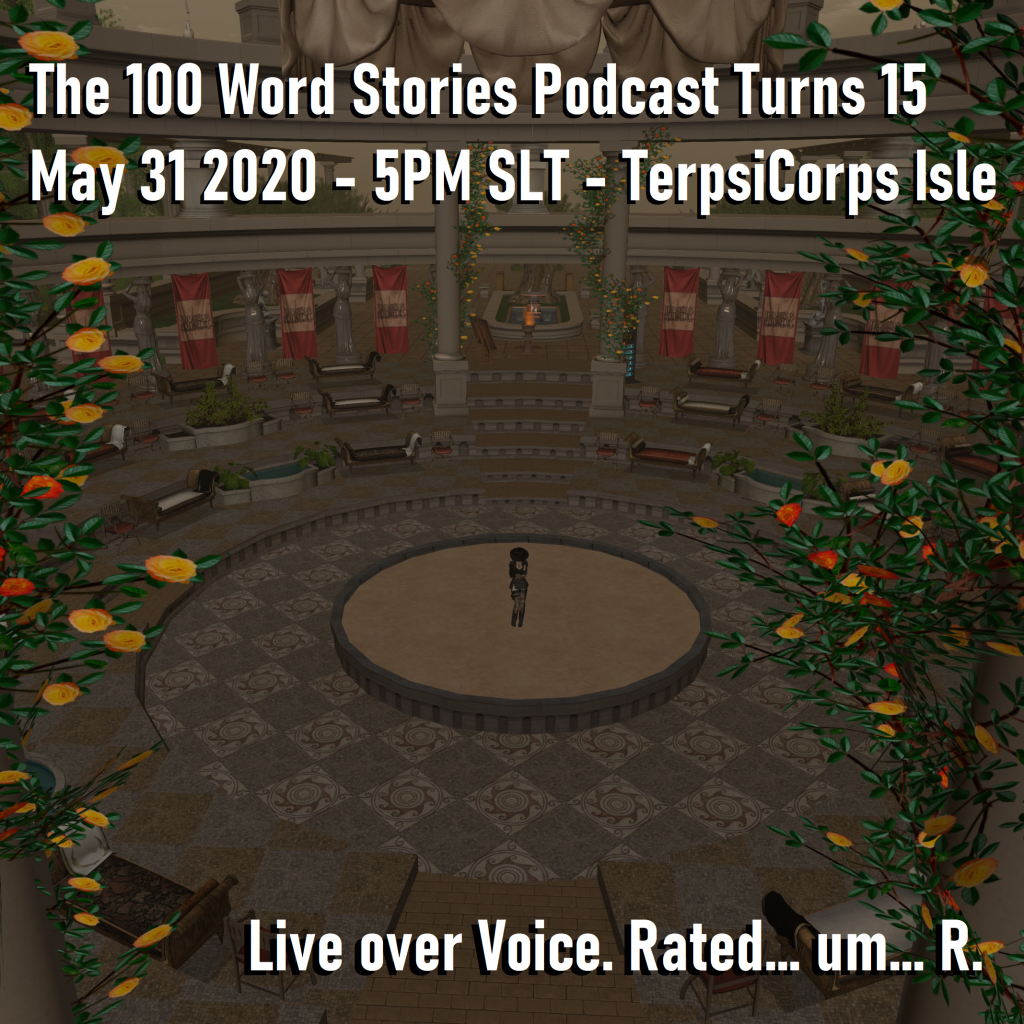 Story-teller, commentator, raconteur – R. Dismantled is all of these, and more. A long-time resident of Second Life, R. is a keen patron of the arts in-world, including performance art and dance – so much so that with regards to dance in Second Life, he has in the past been a guest writer in these pages.