There have been ongoing issues with regions not rendering within the World map. The precise reasons why this is the case is currently unclear; Andrew Linden has been trying to look into the matter since it was reported at the last of the Friday Simulator User Group meetings on the 9th November, but work on Interest Lists has kept him busy.
The problems appear to be twofold: tiles for some regions either entirely fail to generate in the World map, or their appearance is linked to the level of zoom being used.
The first issue is demonstrated with the region Sunny Point, which simply does not appear on the World map at all.
Sunny Point – failing to appear on the World map
With the second issue, Qie Niangao reports that strips of regions on the World map can effectively vanish at certain zoom levels (see JIRA SVC-8115), with some regions of the Zindra adult content apparently never having been drawn at some zoom levels of the Map.
Regions located close to Harshap demonstrate a part of the problem, in that they will appear in the map when zoomed fully in, but step out once on the zoom, and a strip of regions will vanish.
Regions near Harshap: visible when zoomed in…
While the issue has only recently come up for discussion at the Simulator UG meeting, the problem appears to have been persistent for a good while, and some have reported the map is missing strips of region tiles from as many as eight different locations.
Harshap: step out a level with zoom, and a strip of regions vanish, and are not re-rendered.
The World map is generated via a process which images regions from an altitude of around 350m (hence why builds above this altitude do not appear on the map). The information is then scaled for rendering at a number of levels to represent the different zoom levels within the World map floater. Currently, it appears is if the problem lies with the generation of these different zoom levels, at least as far as the “missing strips” issues is concerned. The data from the process is also used for generating map images at maps.secondlife.com, with the result that issues can also occur when viewing map segments there.
As it stands, the possible causes for the problem are still under investigation by LL personnel. However, anyone encountering problems with their region(s) failing to render properly on the World map should consider raising a bug report and /or attending the Tuesday Simulator UG meeting (the Friday meeting is now discontinued).
Regions absent from the World map, as imaged by MartinRJ Fayray for the Simulator User Group meeting on Tuesday 13th November
The basic idea is to get merchants to give feedback on the proposed new Marketplace categories which are under consideration by LL and – by providing suggestions on one category in particular – have the chance of winning “L$2,489 (cost of a month long, frontpage Marketplace Product Listing Enhancement) or [sic] your efforts!”
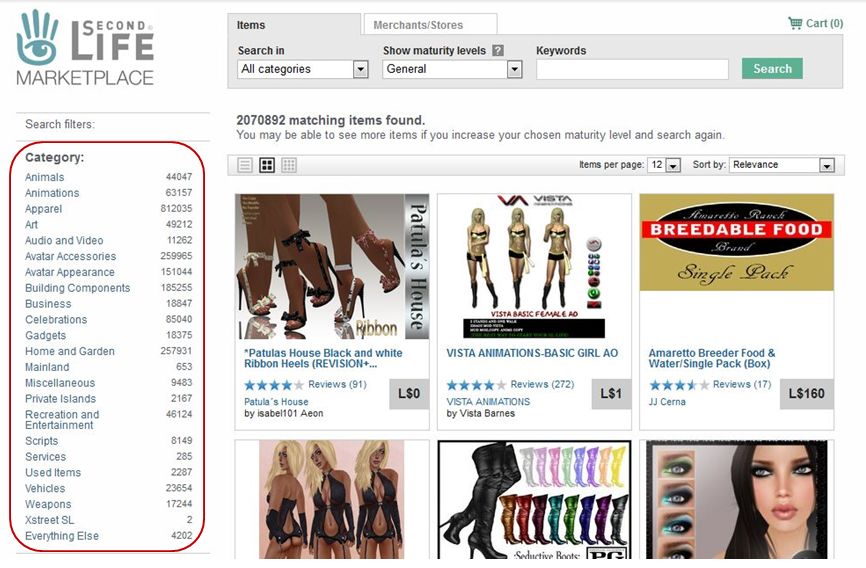
Marketplace listing enhancements: feedback sought
Listing categories are, for the uninitiated, the selections under which merchants can have their products listed in the Marketplace. So, for example, as someone who built houses, I would list my work under the category Building Components > Structures > Residential Structures. The idea is to help quantify / filter products on the Marketplace (together with keywords) so that they can be more easily found (by a user using the Category option on the left of Marketplace pages and clicking down through the options to refine a list of displayed results in the main part of the page).
Merchants have long felt that many of the categories used within the Marketplace are too broad. For example, and keeping with the example above, “Residential Structures” covers a multitude of options: houses, mansions, skyhomes, skyboxes, castles, tropical (tiki) homes, cabins, and so on. These means that search results using the current categories can end up being bloated (there are just under 27K of items under the “Residential Structures” category alone…).
However, defining where and how the categories should be expanded is a problem in itself. Do it autocratically, and you’re bound to get your hand bitten off. Ergo, having a survey – while it is hardly likely to please everyone – is perhaps a preferable route by which to encourage feedback, refine what has already been put forward and so a degree of willingness to engage with customers (merchants) and take on-board their feedback and insight.
Really, the problem here – as Ciaran Laval has pointed out – is one of perception. Coming on top of their refusal to engage directly with people and invite open discussion and discourse with their customers, the Commerce Team have effective said, thanks, but no thanks” which I’ve already commented upon) – the competition runs the risk of being seen as little more than an attempt to curry favour.
The really cynical might even see this as a sideways attempt to try to boost flagging listing enhancement revenues due to all the billing cock-ups in that department over the last 12 months by directly (and repeatedly) linking the cash prizes on offer with the idea of a monthly listing enhancement (see the quote from the blog post announcing the competition above, with the contest rules further pointing out, “Each winner will receive L$2,899 (the cost of a month long [sic], front page featured Product Listing Enhancement on the Marketplace)”, with the survey form itself outright (and confusingly) stating the prize actually is a month-long product listing enhancement (part 3 of the survey).
The prize as quoted in the Contest Survey (13th November 2012) – click to enlarge
Nevertheless, and quibbles aside, the call for feedback on the proposed listing enhancements – whether or not one enters the competition – should be heeded, particularly if, as a merchant, you’ve felt that they are currently too broad at present and need improvement. The contest itself is entirely optional – so if you have no interest in female skin categories, then simply ignore it and complete the first two parts of the survey.
It’s important to note as well that there is no limit as to the number of times anyone can complete the survey – so it is possible to post a response for each of the categories you use to list your products and services.
On the 7th November, the Commerce Team gave their latest update on activities. The post reads in full:
Merchants,
Thank you for your continued feedback. Following is an update regarding your latest questions and requests:
Direct Delivery email notifying merchants receipt of item by customer: We understand your request and are looking into this.
Marketplace category changes: We’re working on some proposed updates to these categories and will give you the opportunity to provide input. Stay tuned for more details – including a survey.
JIRA changes: We are working to adjust our communications practices to make sure all Merchants are kept up-to-date on bug fixes.
Marketplace weekly user group: We will not be adding a user group at this time. [My emphasis]
Publish Marketplace six-month backlog: There are no plans to provide this data.
In addition, we are evaluating ways to improve communications practices with Merchants that will allow us to address technical and support issues more effectively. This includes direct email correspondence, such as the direct email that was sent November 6, 2012 to let all Merchants know about the benefits of Direct Delivery.
We appreciate your patience while we continue to improve marketplace functionality and merchant communications.
The Commerce Team
Of particular interest here are two statements – that the Commerce Team are “evaluating ways to improve communications practices with Merchants”, while simultaneously refusing to agree to in-world user group meetings.
On the subject of the former, the Commerce Team point to their recent e-mail to merchants extolling the virtues of Direct Delivery; virtues which are, as I commented at the time, actually non-existent for many in receipt of the e-mail because Direct Delivery is for them proving to be at least as unreliable as Magic Boxes (and the Marketplace in general). As such, I’m actually unclear on exactly how such an e-mail is actually “improving” communications practices given the frustration it might generate, much less addressing technical and support issues “effectively” – but, c’est la vie.
User Group meetings: a source of positive LL / user interaction the Commerce Team remain unwilling to embrace
The refusal to hold in-world meetings, although hardly unexpected, is regrettable. While it is true that in this day and age, face-to-face meetings are not always required in order to resolve technical issues and problems, the fact remains tat face-to-face meetings – even in the digital domain – do serve a valuable purpose. They help promote a more positive attitude between people and they encourage greater mutual support and respect for one another (and I’m deliberately not mentioning the very practical results which can come out of such meetings by way of ideas and suggestions for dealing with issues and problems or providing LL with information on issues of which they may have no prior knowledge).
Anyone who has ever been to other SL user group meetings cannot fail to note the appreciation and understanding they generate towards LL. sure, there may be occasional bursts of frustration when things are going wonky somewhere on the grid – but by and large both sides of the equation – Lab and users – benefit from the interaction and exchange.
It’s therefore regretful that the Commerce Team continue to step back from in-world interactions with merchants. While the initial meeting may well be a little rough on them – I would venture to suggest that the vast majority of merchants would actually welcome the opportunity to have such face-to-face meetings and would be only to willing to engage with the Commerce Team fairly, rationally and respectfully.
Of course, there is the little caveat to the Commerce Team’s rejection on the idea of in-world meetings, the “At this time.” This suggests that at some point in the future they may well reconsider their position. I hope they do – and that they do so sooner rather than later – because doing so really would be to be to their credit and do far more to help to “improve communications practices with Merchants that will allow us to address technical and support issues more effectively” far more than any number of bland e-mails or forum posts is ever likely to achieve.
Elizabeth Behm-Morawitz, assistant professor of communication in the University of Missouri’s College of Arts and Science, who lead the study
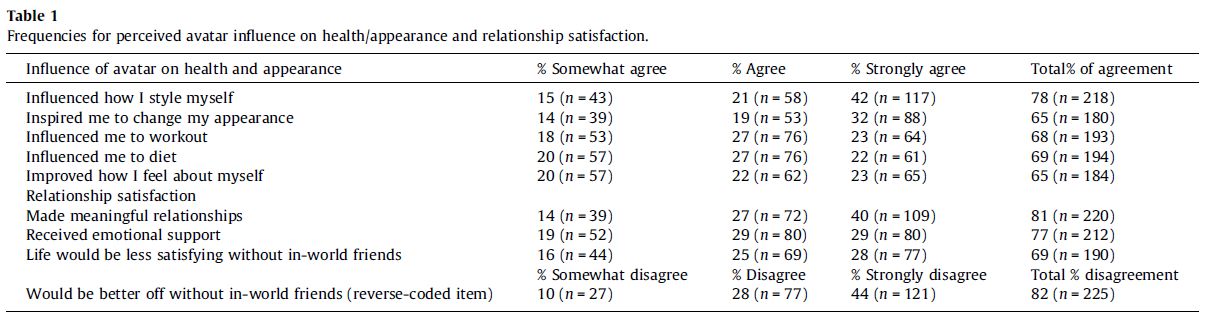
Dr. Elizabeth Behm-Morawitz surveyed 279 Second Life users to study how their choice of avatars affected their real-world existence. She found that the amount of self presence, or identifying with a virtual representation, predicted the amount of influence an avatar had on a person’s life in the physical world. A strong sense of self-presence improved how they felt about themselves and promoted better health and well-being.
“The creation of an avatar allows an individual to try on a new appearance and persona, with little risk or effort,” Behm-Morawitz, communications professor at the University of Missouri, said in a press release accompanying the report. “That alter-ego can then have a positive influence on a person’s life. For example, people seeking to lose weight could create fitter avatars to help visualize themselves as slimmer and healthier.”
Those in the study who indicated they have a high degree of self-presence within SL indicated that they felt their relationship with their avatar improved how they felt about themselves in the real world. Self-presence also correlated to greater satisfaction with online relationships.
This isn’t the first published study to delve into the possible benefits of Second Life. In June of 2011 Indiana University reported that Second Life could be used to practical ends to achieve real weight-loss, with the results of a 12-week study involving both in-world and real-world meetings being widely reported in the media at the time.
In the Indiana University study, researchers found that, over a period of twelve weeks, people attending weight-loss / fitness programmes within Second Life tended to lose the same amount of weight as those attending equivalent real-world programmes. However, they further discovered that those engaged in the programme through Second Life reported significantly greater gains in behaviours that could help them live healthier and leaner lives – again underlining the strong psychological link people can develop with their online alter-ego.
The University of Missouri’s study – which actually pre-dates the University of Indiana’s study inasmuch as iot place in February / March 2011 – did not involve physical activities, but focused on participants completing an online questionnaire. The 279 respondents involved in the study represented 30 countries, with some 65% residing in the United States. Some 56% of respondents were female and 41% male, with the remaining 3% identifying themselves as transgender, male-to-female. The average age of respondents was 41 years, with an overall age range spread of 18 through 70.
The questionnaire iteself was structured to measure feedback against a number of hypotheses established ahead of the study as a result of factor analysis with five questions being asked of the participants.
Perceived avatar influence on health / appearance and relationship satisfaction (click to enlarge)
The format of the study means that it is somewhat flawed – the data has gathered from what is effectively a single point in time. A more accurate measure of the relationship between our real and online selves requires that study should be carried out over a more extended period, with experiences and the effects of their avatar on their human condition being tracked over multiple points.
Nevertheless, both this study and that of the University of Indiana highlight the very strong physical and psychological link people can develop with their avatar. This caused Dr. Behm-Morawitz’s team to extend the concept of “mirrored worlds” (as proposed by Joe Sanchez in 2009 to describe how ‘worlds complete with social and financial dynamics such as Second Life and World of Warcraft can “seep out” of cyberspace to both mirror and impact offline life) to encapsulate the idea of “mirrored selves”, in which the investment we make in out avatars can be both reflected back on, and have impact with, our real lives in meaningful ways.
Many involved in Second Life will view the outcome of the study as unsurprising simply because they have an understanding and awareness of the investment they have made in their avatar. Even so, for those interest in the nature of our relationship with out virtual selves and the degree with which one can positively impact the other, it does make interesting reading.
For Dr. Behm-Morawitz, it has revealed that Second Life and virtual worlds are a rich source of behavioural study, and she is already investigating ways in which avatars may be used to encourage tolerance of diversity. “I am also interested in studying how using an avatar with a different race or ethnicity may increase empathy and decrease prejudice,” she said in the press release announcing the study. “This may occur through the process of identification with an avatar that is different from oneself, or through a virtual simulation that allows individuals to experience discrimination as a member of a non-dominant group might experience it.”
Merchants still using Magic Boxes are in the process of receiving an e-mail from the Commerce Team urging them to swap to Direct Delivery.
The e-mail reads:
Dear Marketplace Merchant,
You are receiving this email because you have at least one listing on the Second Life Marketplace that still uses an outdated delivery process, known as Magic Boxes.
Why should you update to Direct Delivery?
Linden Lab has already started to phase out support for Magic Boxes. In order to ensure uninterrupted service to you and your customers in the future, we strongly encourage you to migrate as soon as possible. It’s easy to do – and worth it for both you and your customers.
Uploading to Direct Delivery is easy
We’ve made it easy for you to update your older listings to Direct Delivery. Many of our top merchants have already migrated and found the process relatively painless. For more information, please check out this Knowledge Base Article or watch these tutorial videos covering the Direct Delivery Basics, andMigration to Direct Delivery.
What are the benefits of Direct Delivery?
Deliveries are TWICE AS FAST compared to Magic Boxes
Direct Delivery purchases are successfully delivered more often (2.5% greater success rate than Magic Boxes)
Direct Delivery supports “test delivery” for safe and commission-free “test run” distribution of your products
You can now see everything that is included, at a glance, on the Contents Tab
Support for a dedicated “Received Items” folder where your customers can quickly and easily find all of their Marketplace purchases.
and much more!
NOTE: Limited quantity items (items that a Merchant cannot copy) are not yet supported by Direct Delivery. If you have problems migrating, please contact customer support with questions or issues.
Thanks,
The Second Life Marketplace Team
I assume this is more of the “upping the tempo” Rod Humble recently promised vis-a-vis Commerce Team communications. If so, fair enough. However…
The e-mail does tend to overlook the fact that for many merchants, Direct Delivery is at least as unreliable as Magic Boxes, and prone to more-or-less the same failures. This is something I pointed out in my last post on the matter, wherein I made mention of the fact that the core issues within the Marketplace are occurring regardless of whether someone is using Direct Delivery or Magic Boxes.
WEB-4441 is a case in point which is related to problems Merchants are encountering regardless as to whether they are using Magic Boxes OR Dirrect Delivery (yet it is still at times used by Commerce Team members as evidence that problems they may be experiencing with Magic Boxes are effectively “their own fault” for not having migrated).
Direct Delivery stats: irrelevant for those experiencing the ongoing Marketplace failures – such as not being able to use Direct Delivery, or facing mechanisms within the Marketplace which are broken regardless of whether or not Direct Delivery is used. (Also: spot the missing line in the comparison)
Frankly, until these issue are resolved, it would appear that there is actually little benefit for those merchants who haven’t yet migrated from doing so. Certainly, a “2.5% faster” delivery time is of little benefit if the reasons why delivery fail remain the same regardless of the mechanism used (Magic Boxes or Direct Delivery).
At the end of the day, it’s up to individual merchants as to whether they migrate. Some are remaining adamant that they won’t until issues are resolved or are at least shown to be improving. While I’ve not had any issues (so far as I’m aware) since converting to DD, I nevertheless can’t say I blame them; they have much more at stake than I.
In the meantime, it appears the cut-off date for Magic Box migration remains “on hold”; there has been no update on this since the (now removed comment from the Merchants forum), nor, except in the most generic of feedback, has there been any real update as to resolving the myriad of issued the Commerce Team have been dealing with for the better part of a year (or more).
Which really brings me back to the comment I used to end my last post on this topic:
It’s not just the tempo, Rod, it’s the quality of the information supplied.
On Friday November 2nd, comment was passed (not from LL) on the apparent departure of Oskar Linden from the Lab. I commented on the matter in my last SL Projects Update for week 44, but at the time it was unclear as to what had happened and why.
A thread on the SL Universe forum started, some of which doesn’t make the most comfortable of reading given some of the attitudes expressed (not towards Oskar or the Lab, I hasten to add, but rather in comments passed by some SL users regarding other SL users). Yesterday – Monday November 5th – (and missed by me at the time as I was completely distracted with other things), Oskar himself popped-up on the thread to pass word himself on the matter, commenting:
To solidify all rumors, yes my employment was terminated by Linden Lab last Friday [November 2nd]. It was a surprise Skype call with the manager of my department and HR. At the same moment all my accounts were locked and I was told a courier was on the way to my house to take my laptop. This is standard operating procedure at the Lab. The reasons given were quite vague, but at the root of it was complaints from a griefer who I had banned from a private testing sandbox that I managed after he was harassing people and threatening to crash them and the region.
Oskar Linden at SLCC 2009 (image: Teagan Linden / Linden Lab)
I was also told that there were issues with my communications. I don’t understand that because I have operated in the role of public communicator for the lab for three years and have always had stellar reviews. It’s not like the reasons really matter anyway. When the Lab wants you gone it’s over.
To be quite honest this has all come as a surprise and a shock. I have known for a while that this would happen eventually though. All Lindens fear ‘the Skype call’. The old Linden culture is long gone. Many Lindens are disappeared in that way when the Lab no longer has use for them. It has been difficult working through the changes at the Lab the past few years. I could have left, perhaps I should have left on my own. I would have been better off. I did not choose to do so because I was dedicated to the wonderful residents I have met during my 4 years working on SL. I was committed to all of you and committed to making Second Life and Linden Lab a better place. I felt I was fighting the good fight and didn’t want to just run away. I felt that I was making a difference. I hope that I did.
I have no idea what is next for me. I have varied passions that I will follow until I feel the need to pursue further employment.
He goes on to add:
I greatly appreciate all of you who friended me and were so passionate about helping me make Second Life a better place. Your enthusiasm to help find bugs greatly helped the quality of the server code. You are all amazing. You are Second Life, not Linden Lab. Never forget that. I love you all and will miss working with you greatly!
I won’t pretend to have known Oskar well; we’d only spoken a few times, and I’ve only recently been attending his meetings – but I will say that I’ve also found him (and despite my one growl I unfairly gave him in these pages as a result of LL’s own communications policy), to be one of the most open and informative Lindens who faced the user community. His departure is going to take some adjusting to for those who did know him well.
To Oskar himself, I’d just like to pass on my personal thanks for all the effort he has put in over the years. I very much hope that all goes well for him and his family wherever his passions and career may lead. Hopefully, we’ll also see you in-world as well.