The Lab has released a curious new project viewer on Wednesday March 26th.
Project Zipper (currently version 3.7.2.286810 is designed to speed-up the viewer installation process. A blog post on the viewer has also been released, which reads in full:
As we continue to work on improving the Second Life experience, one challenge we’ve been tackling is the length of the Viewer installation process. No one likes waiting, and now with Project Zipper, you don’t have to!
With the project Viewer available today, there’s really only one thing different – the installation is super fast. Rather than waiting for install to complete, you’ll quickly be in Second Life doing what you love.
Try out Project Zipper with the project Viewer here.
To try-out the new installation process, I opted to run a clean install of the current release version of the viewer (3.7.2.286707) and a similar clean install with the Project Zipper viewer, and carry out a rough-and-ready timing between the two. I starting the stopwatch on clicking the Install button, and stopped when the Start Second Life Now prompt appeared. The results were:
Second Life release viewer 3.7.2.286707: 35.6 seconds
Second Life Project Zipper viewer 3.7.2.286810: 16.4 seconds.
The installer runs faster, but don’t expect to see any differences in the familiar on-screen messages
Nothing has physically changed in what you see during the installation process, but the faster time is pretty clear (at least on my system – YMMV depending on CPU, disk speed, etc).
This seems to be an odd change to make, and I can’t help but wonder if it is indicative of something else coming down the pipe. Time will tell on that.
Those wishing to try out the project viewer, which I believe should be fully up to par with the HTTP updates in the release viewer, can do so by following the links above in the quoted LL blog post, or below.
The latest podcast of The Drax Files Radio Hour is live, and unsurprisingly, the focus is the recent meet-and-greet with Ebbe Altberg, which I’ve covered here.
Even if you listened to Ebbe through this blog, the show is definitely worth a listen to as well, as it includes questions as well as Ebbe’s comments and replies.
Since the meet-and-greet, Ebbe has also been active in the forums, commenting upon a range of topics, such as those related to communications. As pointed-out in the show, he’s additionally made reference to the Marketplace, to upcoming new starter avatars (which were likely a work-in-progress prior to Ebbe joining, just as the decision to axed Creatorverse, Versu and dio was something started prior to his arrival), and also on the matter of the August 2013 Terms of Service change.
The informal meet-and-greet with Ebbe Altberg
Harvey Crabsticks makes a welcome return to the show to chat about Ebbe’s comments. Harvey is someone I’ve only known a short time in Second Life, and I have to confess to admiring his insight as well as his (and Canary Beck’s) creative skills, and it was good to hear him to express views he and I subsequently batted around during a conversation we had after the recording for this podcast had been made.
The subject of audience, demographics and marketing is touched upon, which in turn edges towards issues of help and assistance for users. Drax mentions the Ebbe said he was unclear as to what had been done by the Lab along these lines; this may be a part of his learning-curve as Rod Humble (and others) have in the past been pretty clear that the Lab does carry out investigations into demographics, what people do in SL, why the leave, etc., and as Harvey points out, the Lab must have a clearer idea as to what SL users do within the platform just for the wealth of data they can gather on our activities on and interactions with the platform. However, as Harvey – and indeed Ebbe, during the meet-and-greet – also states, it’s unclear as to how scientifically that data is mined and used.
Marketing-wise the question of high-profile campaigns is discussed, with Drax pointing to the very recognisable World of Warcraft TV / Internet spots (I was the one who, entirely tongue-in-cheek, mentioned William Shatner and WoW at the meeting with Ebbe). Harvey suggests that any really high-profile campaign would be better suited to a time when user retention is clearly on the upswing; something I’d tend to agree with, which is not to say all marketing should be held-off until that happens…
The “Ebbe meeting” and the interview with Harvey take up most the show, leaving everything else planned as a series of links on the blog page – which is no bad thing. As I’ve said before, things that fall off the end of the desk due to time constraints can be picked-up again in a subsequent podcast. Again, even if you’ve listened to Ebbe on these pages, I recommend you take the time to hear both questions and answers as recorded in the show, it’s more than worth the time. And don’t forget the links on the blog page!
Ciaran Laval beat me to the punch on this one, having cogitated on the matter and posted on the matter of Versu being allowed a Second Life. However, I’m going to blog anyway 🙂 .
Of all of the offerings from the Lab which were axed on February 19th – Creatorverse, dio, and Versu – it was Versu which I found most intriguing – and also most frustrating, as being restricted to the iPad, it was the only one I couldn’t try.
Versu offered a new approach to interactive fiction
The concept and capabilities within it, both as an interactive fiction application and as a potential engine for wider things, such as a means of studying real-world social situations (as the UK’s New Scientist magazine reported in June 2013), were certainly fascinating, and it would be a shame to see them suffer an early death.
As I do feel Versu has a lot of potential, I dropped Emily Short a line on her blog, expressing my hope that a way could be found to allow it to continue. She replied:
I don’t have a concrete answer to that yet, but I’m currently investigating whether it’s possible to regain the IP from Linden.
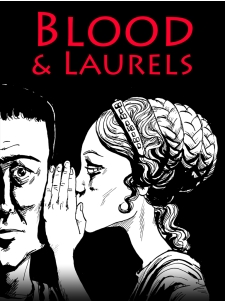
If so, I’d likely take it forward in a slightly different direction than the Lab would have done, but still with the aim of making some tools available to the general public. I’m actually really pleased with some of the things the authoring tools could do at the end — I was able to put together Blood and Laurels, which is a massively branching, 250K word piece, in a couple of months. I’m obviously biased here, but the output feels way tighter than our earliest Versu stories, has much more plot, but still allows for considerable variety in the outcomes of various character relationships. Basically, it’s a type of IF I have been wanting to write for a long time, and for which most of the existing tools are not a very good fit.
So I’d really like to see both the finished stories and the toolset reach an audience, since outside of Linden and a few conference demos hardly anyone has seen what we did. But a great deal depends on what I’m able to arrange.
Anyway, if I have news on the future of Versu, I’ll mention it on this blog.
Blood and Laurels, a 250,000 word title for Versu had, prior to the Lab’s 19th February announcement, been expected soon
Obviously, and as Emily says, there is nothing concrete here to say Versu will be able go ahead, and negotiations are down to her, the Lab and (I assume) Richard Evans to see how it might be taken forward outside of the Lab’s purview. However, I can’t help but keep fingers crossed on the matter; particularly given there is a chance the tools for people to create their own stories would remain a part of any continuance.
The news that Versu was to be axed must have come as a severe disappointment to Emily. As she notes in her blog reply, Blood and Laurels, which had been reported as “coming soon” to Versu as recently as January 25th, 2014, amounted to a 250,000-word piece, which is roughly twice the length of something akin to a work of historical fiction.
The idea of a company releasing technology IP as a result of a shift in focus coupled with a departure of staff isn’t new. Perhaps the most recent high-profile example of this occurring was when Gabe Newell allowed Jeri Ellsworth and Rick Johnson walk away from Value with the IP for castAR, an augmented reality (and potentially VR-capable) headset they had been developing on the company’s dime. By doing so, Newell enabled them to set-up a company and Kickstarter in order to continue the work. So it’s is not beyond the realm of possibility that an agreement between the Lab and Ms. Short / Richard Evans cannot be reached.
CastAR: Gabe Newell allowed Jeri Ellsworth and Rick Johnson to depart Valve with the IP when the project was effectively canned. could LL reach a similar agreement with the creators of Versu? (image courtesy of Technical Illusions / The Verge)
Meanwhile, Qie Niangao has been musing whether Versu’s technology might find a re-use in SL helping content creators develop more immersive user experiences alongside of, or a part of, the still-to-be-released Experience Tools.
Again, it’s an interesting idea. Pathfinding has not turned out to be quite the AI winner in Second Life that perhaps had been hoped, but whether the actual engine from Versu could be re-tailored for use within the platform is perhaps questionable (as Qie himself also notes). It is also unclear what expertise in terms of Versu’s development remains at the Lab, both Richard Evans and now Emily Short having departed.
Of the two options, I confess I’d rather a means be found for Versu to continue elsewhere in more-or-less the form in which we’ve come to recognise it (just with a flavour for the Android OS!). As already noted, it’s an intriguing approach to IF, and one with potentially huge opportunities.
Note: While preparing this piece, Ciaran contacted me to say he was working on a further piece related to Emily Short’s blog post. you can read it here.
Since his first official blog post introducing himself, Ebbe Altberg has not only been immersing himself in the activities required of a new CEO on joining a company, he’s been making the time to respond to a series of SL forum posts made in a thread started as a result of his blog post.
In doing so, he’s demonstrated the same candid feedback which has marked many of his Twitter exchanges with Second Life users, and also shown during his recent meet-and-greet with a number of us.
LL’s new CEO, Ebbe Altberg, seen here on the right in his guise as Ebbe Linden at a recent meet-and-greet: laying the foundations for improved communications from the Lab?
On Communications
One of the major topics of early exchanges with him via Twitter and through various blogs has been on the subject of broader outward communications from the Lab.
Commenting on the forum thread, Amethyst Jetaime raises communications, saying in part:
However I hope you at least take our opinions to heart, take our suggestions when you can and honestly communicate frequently through the official SL channels. Not all of us use twitter and facebook or third-party forums …
And they can’t wait to do that…most common question/issue on both sides of the “fence” has been the same thing! I’m getting love from both sides when I’m talking about fixing communication. I don’t know when/how it got strange but we’ll work hard to make us better at it…motivation is not an issue at all. We just need to figure out process for doing it effectively at scale…
How this will be achieved is open to debate; but the Lab has the means at their disposal to make broad-based communications far more effective, and I tried to point to some of them in my own “Dear Ebbe…” blog post on the matter. In that piece, I particularly look at both the official SL blog and the opportunities presented by e-mail, both of which would appear to meet the criteria of scalability, with an e-mail approach additionally having the potential to reach out to those no longer directly engaged in SL on a regular basis or at all and perhaps encourage them to take another look.
On the Public JIRA
Elsewhere in the thread, Pamela Galli takes the issue of communications to point to the closure of the public JIRA in September 2012:
… In the opinions of many, a good place to start is to make the JIRAs public again so we will know whether an issue is a bug that has arisen, or something on our end. Very often, residents working with Lindens have identified, reproduced, and even come up with workarounds if not solutions to problems. Closing the JIRA felt like a door being slammed, esp to those of us who are heavily invested in SL. (Just grateful for Maestro, who posts in the Server Forum.)
Funny, both engineering and product heads here also didn’t like that jira was closed and want to open it up again. Proposal for how is in the works! I hope we can figure out how to do that in a way that works/scales soon.
Later in the thread, Innula Zenovka who provides one of the most lucid, clearly stated reasons why a complete closure of the public JIRA was perhaps more counter-productive from a technical standpoint than the Lab may have appreciated at the time. Ebbe’s response is again equally reassuring:
Yep, that’s why we will figure out how to open things up again…plan is in the works…
Whether we’ll see a complete re-opening of the public JIRA remains to be seen. I rather suspect the Lab will be looking at something more middle-ground, such as making the JIRA public, but restricting comments to those currently able to access it, together with those actually raising a report also gaining the ability to comment on it as a means of providing additional input / feedback.
While not absolutely perfect, it would mean that the Lab avoids any situation where comments within a JIRA become a free-for-all for complaints, accusations, and arguments (either directed at the Lab or between comment participants), while offering the majority of the advantages which used to be apparent with a more open JIRA mechanism.
Of course, optimism around this feedback – and particularly around the proposal for the JIRA – should be caveated with caution. Not only may it take time for changes to be implemented, it may also be that technical or other issues may impede something like a more open approach to the JIRA from being achieve to the extent that even the Lab would like. However, that there is a willingness to discuss the fact that matters are already under consideration at the Lab would hopefully suggest a reasonable level of confidence that things can be done without risking the disappointment following the decision that there would be no return of last names back in March 2012.
Whatever does happen, there’s enough in these replies to give rise to a cautious and reasonable optimism that things are likely to be changing for the better down the road. Most certainly, it is good to see an outward follow of communication from the Lab’s CEO that is open and candid.
Long may it continue once Ebbe has had to turn his attention more fully on running the company, and others have stepped in to fill the void, and to ensure the follow-through is both achieved and consistent.
Update: Peter Grey has confirmed with me that Versu and Creatorverse will be removed from the App Store (and the other places Creatorverse had been available) and their websites taken down in the immediate future. The dio website will remain until the end of February, with a message announcing its forthcoming closure.
Linden Lab has just confirmed that three of its products, Creatorverse. dio and Versu have been axed.
After careful consideration, Linden Lab has decided to cease development and support for dio, Versu, and Creatorverse. We’re grateful for those who took the time to experiment with these products in their early days, but ultimately we have determined that due to a number of factors, we and our customers will be best served by focusing our efforts on continuing to provide exceptional service and compelling new experiences for the users of our other products.
dio, Versu and Creatorverse gone from most LL web properties
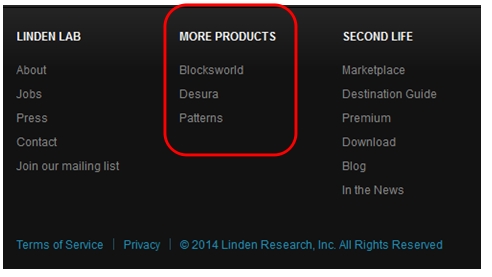
The products have been removed from the footer area of the Lab’s webpages, and from the corporate home page banner and products page.
UKanDo updated on February 14th to version 3.7.0.27930 (release notes).
The core update to this release is that it brings the viewer to par with the Lab’s 3.7.0 code base, and thus it joins the list of viewers with fitted Mesh support.
In addition to this, the viewer is also brought up to par with Marine Kelley’s RLV 2.8.5.9 and incorporates a fix to ensure MUpose and OOC brackets work correctly when RLV is disabled.
As well as the above fix, both MUpose and OOC also get their own radio button options in Preferences > UKanDo > Miscellaneous.
MUposes and OOC get their own options in UKanDo’s Preferences
A further addition is the debug setting ShowLookAtText, which gives the current status of another avatar’s camera (e.g. focused on another avatar or an in-world object; idle; freelook), when ShowLookAt is enabled in the viewer.
ShowLookAtText defines the status of cameras in SL above avatar’s heads
This is seemingly small update to the viewer – but it is one which keeps it pretty much on a par with the released LL code (barring the Facebook Hotfix), and also keeps the viewer to the promise of close alignment with the official viewer with just some of the more popular TPV UI additions.
 The Lab has released a curious new project viewer on Wednesday March 26th.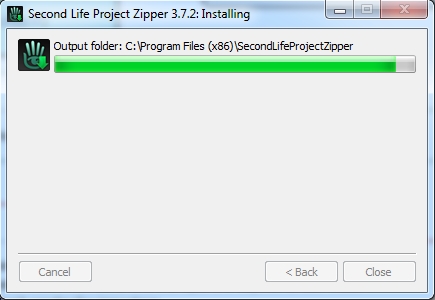






 Inara Pey: Living in a Modemworld