It’s time to highlight another week of storytelling in Voice by the staff and volunteers at the Seanchai Library. As always, all times SLT, and events are held at the Library’s home, unless otherwise indicated. Note that the schedule below may be subject to change during the week, please refer to the Seanchai Library website for the latest information through the week.
Sunday, August 23rd, 13:30: Splash! Tales of the Sea
Seanchai Library presents tales from above and below the sea: legend, myths, and adventure from the Splash celebration for merfolk.
Monday, August 24th, 19:00: Voyage to the City of the Dead
Gyro Muggins reads the 11th volume in Alan Dean Foster’s Humanx Commonwealth series, first published in 1984.
The Humanx Commonwealth is an interstellar ethical/political entity spanning multiple star systems and worlds. One of the more unique of these worlds is Horseye, the home of three alien cultures and renowned throughout the Commonwealth for having the most spectacular river valley anywhere in the known galaxy.
It is both the cultures and the river that has drawn scientists Eitienne and Lyra Redowl to Horseye. Now, after months spent in quarantine, they embark on a voyage to the source of the 12,000 long River Skar, and study it and the peoples living on its banks.
Veterans of exploration and discovery, the Redowls believe they are ready to face anything. But how can you prepare for things like treachery, lies and greed? For a local legend would have it that at the source of the Skar lie a great treasure – and the locals who appear to be willing to help the Redowls in fact plan on finding it for themselves.
Assuming, that is, the treasure is in fact something at can be regarded as offering wealth or power…
Tuesday, August 25th:
12:00 Noon: Russell Eponym, Live in the Glen
Music, poetry, and stories in a popular weekly session at Ceiluradh Glen.
19:00: The Griffin and the Minor Canon
Willow Moonfire reads Frank R. Stockton’s tale for younger readers.
Hearing of a stone image over the main door of an old, old church, the last remaining griffin flies down to the town to sate his desire to learn about how he looks to others. His arrival stokes fear among the townsfolk, who demand the church’s young canon go and learn what “the monster” wants.
Caring only for the well-being of the people, the canon escorts the griffin to his stone likeness, who is well pleased by the statue, regarding it as an “admirable likeness”. So much so, that he decides to stay, following the young canon as he goes about his daily tasks.
The townsfolk, however, are less than happy with this turn of events, fearing for their safety and what might happen at the time of the Autumn Equinox, when the griffin must partake of food. And so they conspire to send the young curate out into the wilds as the equinox arrives, hoping he will lead the griffin away and little caring if the canon lives or dies.
And so the stage is set for the Griffin’s nobility to be displayed for all to see, shining beside the Minor Canon’s innocence and shaming the selfishness of the townspeople.
Shandon presents Rosemary Claire Smith’s adventure in time travel with a touch of Sci-fi. Also in Kitely: teleport from the main Seanchai World grid.kitely.com:8002:SEANCHAI.
21:00 Seanchai Late Night
Finn Zeddmore presents contemporary Sci-Fi-Fantasy from on-line sources including Light Speed, Escape Pod, and Clarkesworld magazines.
Seanchai Library is Moving!
After three years at Holly Kai, Seanchai Library is moving to pastures new (and larger!). The last sessions at Holly Kai Park will be on Thursday, September 3rd. I’ll have a full update on their new location on or just after that date.
It’s time to highlight another week of storytelling in Voice by the staff and volunteers at the Seanchai Library. As always, all times SLT, and events are held at the Library’s home, unless otherwise indicated. Note that the schedule below may be subject to change during the week, please refer to the Seanchai Library website for the latest information through the week.
Monday, August 17th, 19:00: Voyage to the City of the Dead
Gyro Muggins reads the 11th volume in Alan Dean Foster’s Humanx Commonwealth series, first published in 1984.
The Humanx Commonwealth is an interstellar ethical/political entity spanning multiple star systems and worlds. One of the more unique of these worlds is Horseye, the home of three alien cultures and renowned throughout the Commonwealth for having the most spectacular river valley anywhere in the known galaxy.
It is both the cultures and the river that has drawn scientists Eitienne and Lyra Redowl to Horseye. Now, after months spent in quarantine, they embark on a voyage to the source of the 12,000 long River Skar, and study it and the peoples living on its banks.
Veterans of exploration and discovery, the Redowls believe they are ready to face anything. But how can you prepare for things like treachery, lies and greed? For a local legend would have it that at the source of the Skar lie a great treasure – and the locals who appear to be willing to help the Redowls in fact plan on finding it for themselves.
Assuming, that is, the treasure is in fact something at can be regarded as offering wealth or power…
Tuesday, August 18th:
12:00 Noon: Russell Eponym, Live in the Glen
Music, poetry, and stories in a popular weekly session at Ceiluradh Glen.
19:00: A Fireside Evening with Bear
Bear Silvershade shares stories from Katherine Govier’s The Immaculate Conception Photography Gallery and other short tales.
Published in 1996, The Immacualet Conception Photography Gallery is an eclectic collection of short stories that blur the boundaries between seemingly disparate worlds, highlighting the human desire to rationalize life experiences. Within it are tales of how two cottagers mistake the brilliance of a search party’s flares for an alien invasion, and a photographer who can rewrite the past to suit the present by altering his client’s photographs.
Wednesday, August 19th, 19:00: Touch History
It’s the season for memorable journeys. Kt shares one of his own involving a motorcycle, history, geology, and highway engineering.
Thursday, August 20th, 1900: The Weekender
Shandon Loring continues in noir vein with Jeffrey Deaver’s tale of an an attempted drug store robbery that goes horribly wrong. Following one patron’s murder, Jack Prescot kidnaps a man and drags him to a vacant summer home. There Jack learns the true meaning of faith and patience.
Also in Kitely – take the teleport from the main Seanchai World grid.kitely.com:8002:SEANCHAI.
Seanchai Library is Moving!
After three years at Holly Kai, Seanchai Library is moving to pastures new (and larger!). The last sessions at Holly Kai Park will be on Thursday, September 3rd. I’ll have a full update on their new location on or just after that date.
Organised by Elite Equestrian, and running from Sunday, August 16th through Sunday, August 23rd, 2020, is Splash! a special week-long event for merfolk and their friends.
Taking place under the sea, Splash offers music, dance performances, sporting events, stories, raffles, and shopping.
We have a full week of fun events and activities, including noted DJs, spoken word and dance performances, sporting events, shopping, and more!
The full line-up of events comprises (all times SLT):
Sunday, August 16th
14:00: DJ Elrik Merlin, of Radio Riel, opening with a watery interlude of dance and music.
18:00-19:00: DJ Ktadhn Vesuvino and Caledonia Skytower steer a unique course for a journey of music and poetry, featuring the Sea in all her alluring, fierce glory.
Monday, August 17th
10:00: Undersea Kelpy jumping contest with ribbons, trophies and Elite Equestrian gift cards for the top six places.
Tuesday, August 18th
12:00 noon; Keply jousting lessons with Duchess Atrasalus of Tamriel Isles, Knight of Dragon’s Lair, member of the Medieval Games Alliance. Wednesday, August 19th, 7 pm SLT
Wednesday, August 19th
19:00: Undersea Kelpy jumping contest with ribbons, trophies and Elite Equestrian gift cards for the top six places.
Splash, Sunday August 16th to August 23rd, 2020
Thursday, August 20th
12 noon: formal jousting contest.
Friday, August 21st
12:00 noon: DJ Ktahdn provides sea-themed music from various sources. Instrumental and vocal, sailors and swimmers, and maybe even a poem or two. Our course will be adjusted on the fly, as we dance.
18:00: tales of Enchantment from the Sea: Reader Willow Moonfire will read two traditional Celtic legends from Scotland and Ireland, The Soul Cages, and The Seal Catcher and The Selkies.
Saturday, August 22nd
16:00: Idle Rogue’s Guerilla Burlesque appearing life at Splash! with an underwater dance production featuring performances by Aubreya Joszepe, Dax Dover, Gloriana Maertens, Harlequin Lock, Meegan Danitz, and Melina Aurotharius.
17:00-19:00: DJ Caledonia Skytower with a danceable mix of watery tunes.
Sunday, August 23rd
Seanchai Library presents an hour of tales spun in the watery depths: mer people, and creatures of myth and legend.
Splash, Sunday August 16th to August 23rd, 2020
In addition, visitors will be able to ride the Kelpy-Go-Round and receive a merfolk gift (with a new every day), try the Kelpy jumping course for themselves (outside of the contest times) or try their hand at the jousting lists, participate in the raffles meet with other merfolk – or for those not familiar with SL’s mer communities – get to know merfolk.
And in case you’re wondering – a Keply for the the event, is a sea horse (but with legs!). There are boards places around the event space that will rez a Keply for visitors to ride – just accept the event experience and follow the instructions. The jumping course is available through a teleport portal to one side of the event space.
The organisers would like to emphasise that while the event is taking place in an adult region, full nudity should be avoided, although topless outfits are permitted.
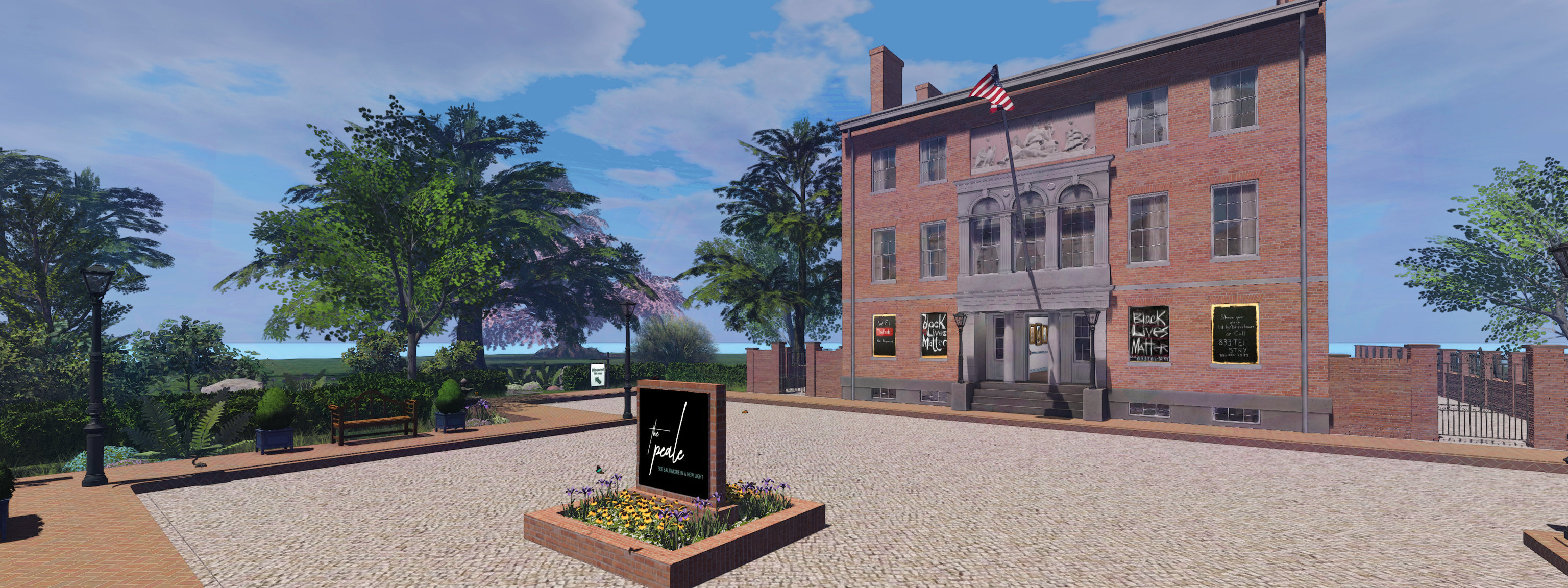
Saturday, August 15th 2020 marks the start of a new public experience in Second Life when the Virtual Peale formally opens its doors to visitors from both within and beyond the platform.
Virtual Peale is a collaborative project involving The Peale Centre for Baltimore History and Architecture and Linden Lab, and with the support of Virtual Ability Inc. It encompasses an in-world reproduction of the historic Peale Centre building, which will be used to host a range of virtual exhibitions and events that both mark the original building’s foremost roles as both a museum, and its modern day role as a cultural heritage centre for the City of Baltimore.
Some of the images of the Peale building over the decades, located in the Virtual Peale entrance hall
As one of the most historic buildings in Baltimore, the Peale Centre building is a US National Historic Landmark, appearing in the US National Register of Historic Places. It first opened its doors to the public on August 15th, 1814 as the first purpose-built museum building in the United States. It was designed by Robert Cary Long, Baltimore’s first native-born (and self-trained) architect, and commissioned by Rembrandt Peale, whose father, the artist, inventor, naturalist and politician Charles Willson Peale (1741–1827), had co-founded the Pennsylvania Academy of the Fine Arts and Philadelphia Museum in 1805.
The Peale building functioned as a museum from 1814 through to 1829, becoming famous for its exhibitions of natural history, militaria and selections of art by some of history’s most renowned painters from around the world, together with works by members of the extended Peale family, most of whom – including Rembrandt Peale – were accomplished artists in their own right. In 1816 the museum made history by becoming the first gas-lit building in Baltimore, Rembrandt following the example of his brother Rubens, Rubens, who had installed similar lighting in the family’s Philadelphia Museum. Doing so allowed Rembrandt to gain the backing needed to establish the Gas Light Company of Baltimore, the first commercial gas light company in America, and this in turn resulted in Baltimore becoming the first US city to be illuminated by gas street lights.
One of the ground floor rooms of Virtual Peale with (l) a drawing of Rembrandt and Rubens Peale demonstrating gas-powered lighting, and (r) The Artist in His Museum, a self-portrait by C.W. Peale painted in 1822, the original now hanging in the Pennsylvania Academy of the Fine Arts
In 1829/30, the museum relocated, and the Peale Building became Baltimore’s City Hall through until 1877. In 1878 it became the location of the first public high school for African Americans in the city, prior to passing into commercial use from 1879 through until 1929. Following an extensive rebuilding programme, in 1930 the building returned to its roots as Municipal Museum of the City of Baltimore, although it was referred to simply as “The Peale Museum”. It continued in this role through until 1997, gaining considerable recognition over the years for its collection of Peale portraits, its annual art and photography events and for several exhibitions combining the history and architecture of Baltimore, such as the nationally acclaimed Rowhouse: a Baltimore Style of Living, a celebration of Baltimore’s distinctive row houses.
Today, the building forms the nucleus of The Peale Centre for Baltimore History and Architecture, and is in the midst of renovations to restore it to its former glory. Once completed, this work will allow it to function as a historic heritage centre / place of learning through the 21st century, including enabling local cultural communities to share their authentic stories of the city both through live performance and on-line.
Another of the ground floor exhibition spaces within Virtual Peale. Note that many of the items throughout the museum are interactive – left-click them for information to be displayed in local chat
To mark the 206th anniversary of the building first opening to the public, the Virtual Peale will similarly be opening its doors within Second Life on what has become known as Founder’s Day for the building. Through it, visitors from across Second Life and beyond will be able to learn about it and the Peale family and participate in special virtual exhibitions.
Developed from a 3D model of the Peale Museum building originally created by the Imaging Research Centre at the University of Maryland, Baltimore County (UMBC) for the university’s Visualising Early Baltimore project, the Virtual Peale reproduces the original’s historic frontage and includes a virtual take on the Peale gardens. Inside, the building presents aspects of the physical Peale Centre’s interior, with exhibition spaces that help tell the building’s story and the work of the Peale family as artists, curators, inventors, and naturalists. The one departure from the original floor plans is the long entrance hall leading to the main lobby area, which is used to present photographs of the original Peale building throughout its history.
The Virtual Peale Garden
For the first exhibition, Virtual Peale presents Redefine/ABLE: Challenging Accessibility, marking the 30th anniversary of The Americans with Disabilities Act of 1990.
Originally developed by students from the University of Maryland (UMD), to be presented as a cross-platform, multi-site exhibit utilising both the UMD’s College Park campus and the Carroll Mansion Museum in Baltimore, thanks to the SARS-CoV-2 pandemic, Redefine/ABLE has been re-imagined as an immersive Second Life experience. It is designed to address diversity, inclusion and ableism, and seeks to engage audiences about the successes and challenges of persons with disabilities in Maryland and beyond.
Developed with a grant from Maryland Humanities, and with the support of the National Endowment for the Humanities and the Maryland Historic Trust, and with the active support and advice of Virtual Ability, Inc., Redefine/ABLE can be found in the Virtual Peale’s second floor Picture Gallery – actually a teleport that leads to a separate platform than is automatically activated on climbing the stairs and “entering” the exhibition space.
The Redefine/ABLE exhibition in Virtual Peale, featuring interactive panels
By using the space in this way, with teleports connecting exhibits with the main building, it will be possible to expand Virtual Peale’s internal layout to offer additional gallery spaces. Some of these will reflect and expand on exhibitions that can also be found in the physical world, whilst others will be inspired by the Peale’s programming and partners, allowing the Peale in Second Life to become a creative hybrid of physical and imaginary museum spaces.
It has been thrilling to develop this new experience of the country’s oldest museum building in Second Life. Thanks to the amazing work of Linden Lab and Virtual Ability, Inc., we are now able to welcome a huge new community to the Peale, and share its rich history as well as the authentic stories and creativity of Baltimore with the largest and oldest virtual world on the Internet.
– Dr. Nancy Proctor, Executive Director of the Peale Centre
In addition to providing input and advice on hosting the Redefine/ABLE exhibition, Virtual Ability has also played a key role in developing Virtual Peale: most of the interior detailing has been put together by Eme Capalini of Virtual Ability, and she also spent time developing a “Mastodon Hunt” to help celebrate the ties the museum and C.W. Peale have to the unearthing of the first mastodon skeleton to be found in the United States that went on to become the focal point of the museum’s opening exhibition and the subject of C.W. Peale’s 1086 painting, Exhuming the First American Mastodon (a reproduction of which can also be found inside the Virtual Peale building). Further, Virtual Ability are assisting The Peale Centre in helping members of the public sign-up and join Second Life for this opening event.
The Redefine/ABLE exhibition in Virtual Peale
Also included in the Virtual Peale build is the StoryTelling Studio. As noted above, a major part of The Peale Centre for Baltimore History and Architecture is to keep alive authentic stories about the City of Baltimore through live performance and on-line events, and the Storytelling Studio is a part of this, together with a partnership the centre has with Libraries without Borders. It is also something the Peale Centre wants to extend into Second Life.
So, if you are a resident of Baltimore and / or have a story connected to Baltimore and its history you’d like to share, the Peale Centre would like to hear from you. contact them by dropping your details and story via note card into the mail box inside Virtual Peale, or if you prefer, you can use the Peale Centre’s Add A Story page, or reach out of project members through the Peale’s in-world group or e-mail them at info-at-thepealecenter.org.
You can learn more about Virtual Peale and the work of the Peale Centre via the Lab Gab video below.
Virtual Peale Opening Event
As a part of the opening, Virtual Peale will host three events on Saturday, August 15th, 2020 (all times SLT):
08:00: a tour of Virtual Peale, hosted by David London, the Peale’s Chief Experience Officer.
09:00: a panel discussion, Accessibility and Inclusion in Physical and Virtual Spaces, featuring George Ciscle, Curator-in-Residence Emeritus at Maryland Institute College of Art; Alice Kreuger, founder of Virtual Ability, Inc.; Monica Rhodes, Director of Resource Management, the National Park Foundation; and Dr. Jeremy Wells, Associate Professor in the Historic Preservation program in the School of Architecture, Planning and Preservation at the University of Maryland.
10:30 (approx): a further tour of the Virtual Peale and open Q&A session with representatives from The Peale Centre and Virtual Ability.
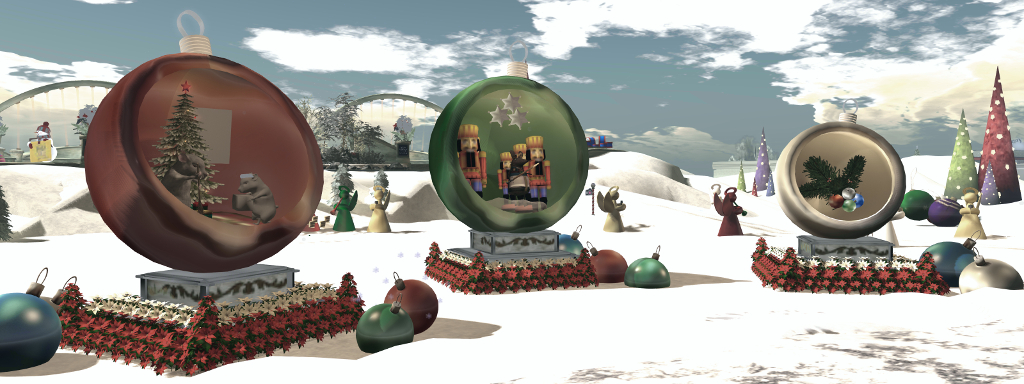
The 2020 SL Christmas Expo in support of the American Cancer Society, will take place between Friday, December 4th and Sunday, December 13th, 2020, inclusive. The theme for this year is that of Christmas Memories, with the organisers noting:
Christmas trees towering over your head while the Lionel train makes is journey around the base. Brightly wrapped gifts spread under the lowest boughs, as the aroma of sugar cookies and gingerbread drift in from the kitchen. Carols playing on the Victrola while the family gathers together to celebrate the holidays. Christmas Memories of all shapes and sizes spring to mind each year as the holidays approach.
– Nuala Maracas, RFL of SL Christmas Expo co-ordinator
This year, the organisers plan to have:
150+ merchants.
Breedables and one-of-a-kind auctions.
nearly non-stop musical performances / entertainment via the Holly jolly Café.
Gachas and hunts.
Christmas trees, ice skating, and a snowman building contest.
The 3rd annual Lights of Hope contest, featuring the best builders and teams of Lindens and Moles in a holiday home decorating competition.
The closing Live Auction with one of a kind items from Linden Lab and SL’s top creators and the annual Holidays of Hope Ball.
It’s time to highlight another week of storytelling in Voice by the staff and volunteers at the Seanchai Library. As always, all times SLT, and events are held at the Library’s home, unless otherwise indicated. Note that the schedule below may be subject to change during the week, please refer to the Seanchai Library website for the latest information through the week.
Monday, August 10th, 19:00: Voyage to the City of the Dead
Gyro Muggins reads the 11th volume in Alan Dean Foster’s Humanx Commonwealth series, first published in 1984.
The Humanx Commonwealth is an interstellar ethical/political entity spanning multiple star systems and worlds. One of the more unique of these worlds is Horseye, the home of three alien cultures and renowned throughout the Commonwealth for having the most spectacular river valley anywhere in the known galaxy.
It is both the cultures and the river that has drawn scientists Eitienne and Lyra Redowl to Horseye. Now, after months spent in quarantine, they embark on a voyage to the source of the 12,000 long River Skar, and study it and the peoples living on its banks.
Veterans of exploration and discovery, the Redowls believe they are ready to face anything. But how can you prepare for things like treachery, lies and greed? For a local legend would have it that at the source of the Skar lie a great treasure – and the locals who appear to be willing to help the Redowls in fact plan on finding it for themselves.
Assuming, that is, the treasure is in fact something at can be regarded as offering wealth or power…
Tuesday, August 11th:
12:00 Noon: Russell Eponym, Live in the Glen
Music, poetry, and stories in a popular weekly session at Ceiluradh Glen.
19:00: The Stars Below
Willow Moonfire reads Ursula K. Le Guin’s short story the initially came to prominence when reprinted in the anthology volume The Wind’s Twelve Quarters alongside of The Word of Unbinding and The Rule of Names, two of the founding short stories of what would become her Earthsea novels.
THE WOODEN HOUSE AND OUTBUILDINGS CAUGHT FIRE FAST, BLAZED UP, BURNED DOWN, BUT THE DOME, BUILT OF LATHE AND PLASTER ABOVE A DRUM OF BRICK, WOULD NOT BURN. WHAT THEY DID LAST WAS HEAP UP THE WRECKAGE OF THE TELESCOPES, THE INSTRUMENTS, THE BOOKS AND CHARTS AND DRAWINGS, IN THE MIDDLE OF THE FLOOR UNDER THE DOME, POUR OIL ON THE HEAP AND SET FIRE TO THAT.
The opening of The Stars Below
Fearing the zealots who razed his observatory burn him at the stake for heresy, an astronomer is forced underground into the cold tunnels of ancient mine workings that sit upon deeper, more extensive tunnels and caverns hewn by nature. Here he is discovered by a group of old miners who still try to eke out a living chipping silver out of the hard rock. Rather than turn him in, they adopt him, and slowly he learns some of their ways and helps them with their work, but never venturing back to the surface, afraid for what might happen if the authorities come upon him.
But his learning of the stars of heaven will not leave him, nor will the skills he learned in making his own telescopes and fine lenses – one of which he rescued from the pyre of his observatory. And so the miners see him less and less as he explore the great caves and caverns, until one evening he comes to them to tell them he has once again found the stars – and they are below the mine.
Wednesday, August 12th, 19:00: Whittington
Caledonia Skytower reads Alan Armstrong’s 2006 Newbery-Honor winning tale.
Whittington is a roughneck tom cat who arrives one day at a barn full of rescued animals and asks for a place there. Present at the barn is a menagerie of animals and young Ben and Abby, whose grandfather owns the barn and does the rescuing.
To earn his place, Whittington tells the tale of his famous ancestor, the nameless cat who brought Dick Whittington to the heights of wealth and power in 16th-century England. In telling his story of how his ancestors saved and elevated Whittington, this tom-with-a-chip, elevates another little boy above his fear of learning to read.
Thursday, August 13th
1900: TBA
Please check the Seanchai Library blog.
21:00: Seanchai Late Night
Contemporary sci-fi and fantasy from such on-line sources as Light Speed, Escape Pod, Clarkesworld, and more. With Finn Zeddmore.
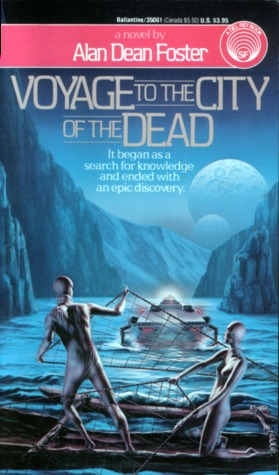 Gyro Muggins reads the 11th volume in Alan Dean Foster’s Humanx Commonwealth series, first published in 1984.
 Willow Moonfire reads Frank R. Stockton’s tale for younger readers.