VWBPE 2016: programme published, and some highlights

via VWBPE.org
via VWBPE.org

The 9th annual  Virtual Worlds Best Practice in Education (VWBPE) conference will take place between Wednesday, March 9th, 2016 and Saturday, March 12th, 2016 inclusive. A global grass-roots community event focusing on education in immersive virtual environments which attracts 2200-3500 educational professionals from around the world each year.

The conference will be primarily hosted on Second Life with additional and special events also being hosted by AvaCon Grid, and the conference programme is now available. Highlights of the latter include:

Wednesday, March 9th

17:00 – Signalling a New Reality with Bronwyn Stuckey: “a look at some of the signals in the past year of a blurring of what is virtual. I have always been the person to call out people who use the real and virtual dichotomy, much preferring to use real and physical. That last year has produced many signals that show even these poles might become redundant. I hope the example we look at in the keynote will trigger your imaginations and help challenge many of the assumptions we hold about the place of our work in virtual worlds. These are the things that could readily be on our horizons so much sooner than we think. For us as educators it is less about keeping abreast of the technological advances but having audacious goals and imaginings. Intrigued? Come along and let’s share our visions!”

Bronwyn Stuckey
Bronwyn Stuckey

Bronwyn Stuckey has been engaged in educational community and games in learning development for the past 15 years. She has worked to explore virtual worlds, games in learning and how we can cultivate identity, agency, citizenship, leadership, and community for students and teachers.

Since leaving lecturing and learning design in the higher education sector her research, consultation and design have been in gamification and game-inspired designs for classroom contexts and professional learning and communities of practice. She is a current post-doctoral research fellow of the Arizona State University Centre for Games & Impact and independently consults to global groups like Intel and Microsoft programs and education communities.

18:00 – Grid Watch with Ebbe:  Ebbe Altberg, Linden Lab CEO, will discuss issues of importance to the Second Life communities. His primary aim for the session, however, is to listen to Second Life residents and respond to questions.

Thursday, March 10th

14:00 – OpenSimulator Featured Panel: Cynthia Calongne, Selby Evans, Stephen Gasior and Maria Korolev engage in a discussion on the different perspectives of people who use OpenSimulator as an alternative, or in addition to, Second Life. This will be a thoughtful discussion on dedication, awareness, perception, and opportunity of the various communities of OpenSimulator.

17:00 – Virtual Worlds on the Go with Stephen DownesIn this presentation Stephen Downes examines the intersection of learning, performance support, and mobile virtual worlds and simulations and discusses the real world applications for this technology, describing a variety of learning scenarios, and background and infrastructure needed to support such a system. Additionally, he examines the role of educators and content publishers, identifying the need for institutions to provide learning support and scaffolding to draw out the benefits of what might be called virtual worlds on the go.
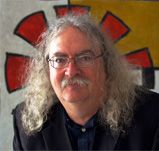
DownesStephen Downes is a specialist in on-line learning technology and new media. He speaks from practical experience both as a college and university teacher and the author of learning management and content syndication software. He has developed and deployed a series of progressively more innovative technologies, beginning with multi-user domains (MUDs) in the 1990s, open on-line communities in the 2000s, and personal learning environments in the 2010s.  As a teacher and designer, he is also known as the originator of the Massive Open On-line Course (MOOC). As a theorist, he is known as a leading proponent of connectivism, a theory describing how people know and learn using network processes. He has published hundreds of articles on-line and in print and has presented around the world to academic conferences in dozens of countries on five continents.

Friday, March 11th

13:00 – Reaching the Engagement Horizon in Virtual Worlds: Crafting Engagement Through Games and Gamification with Karl Kapp: The use of games for learning seems like a good match, but we can’t blindly take it for granted. Instead, we need to explore questions to make sure the intuitive link between games, gamification and virtual worlds reaches its full potential. In this keynote, we’ll answer questions like: How does one mix virtual world and game-based learning experiences? How should games be integrated into a curriculum? Can attitudes and behaviour change result from playing a game in a virtual world? What elements of games can learning designers borrow from game designers? Can flying around as a superhero in a virtual world make you a nicer person? Discover evidence-based techniques for increasing on-line engagement, interactivity and, most importantly, learning.
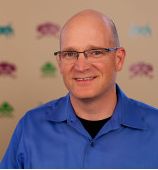
KappKarl Kapp, Ed.D., is a full-professor of Instructional Technology at Bloomsburg University in Bloomsburg, PA. He teaches subjects related to games, gamification and learning technologies, and is also the director of Bloomsburg’s Institute for Interactive Technologies, working with organisations to create interactive instruction including games and simulations, co-founder of educational game company 2Klearning.com and founder of The Wisdom Learning Group. He has authored or co-authored six books, and served as a Co-Principle Investigator on two National Science Foundation (NSF) grants related to games and simulations and serves as an external evaluator on a third game-related NSF grant.

Saturday, March 12th

18:00 – Closing Ceremony and Thinkerer Award Winner Annoucement: closing remarks from Phelan Corrimal and other VWBPE Committee Chairs, the opportunity to learn about VWBPE 2017 and hear the 2016 Thinkerer Award recipient announced.

Registration and Passport to the Metaverse

Those wishing to attend VWBPE 2016 are strongly encouraged by the organisers to register (free of charge or donations towards costs accepted).

Passport to the Metaverse offers the opportunity to explore nine interactive and engaging locations on the Horizons of teaching and learning. Opening of Sunday, February 28th, and running through to Sunday, March 20th inclusive (but exclusive of the conference dates), details on these experiences can be found on the VWBPE website and in the conference programme.


Related Links

VWBPE 2016: of submissions, nominations and deadlines

via VWBPE.org
via VWBPE.org

The 9th annual  Virtual Worlds Best Practice in Education (VWBPE) conference is scheduled to take place from Wednesday, March 9th, 2016 through Saturday, March 12th, 2016 inclusive – but deadlines are fast approaching for those still wishing to to submit a proposal for a presentation.

VWBPE is a global grass-roots community event focusing on education in immersive virtual environments which attracts 2200-3500 educational professionals from around the world each year. Events take place in both Second Life and OpenSimulator.

The call for proposals invites educators and those involved in the education sector or offering support to that sector are asked to reflect on work and their accomplishments within the context of the conference, and consider submitting a proposal and sharing their work with the wider education community:

Educators and communities of practice who use virtual worlds are trend setters–pioneers in a virtual landscape of possibilities. To you, the next horizon is the next opportunity for change, for innovation, and for exploration. It is the next opportunity to offer a paradigm shift, and to chart unexplored lands for the newcomers, the intrepid following in your footsteps, and the curious seeking to find new opportunities and new ways of thinking.

This year there will only be one call, and only one call, for proposals, so get them in by no later than January 17, 2016. This is a hard, no-extensions, deadline. Don’t get left out! 

The full Call for Proposals guidelines can be found  on the VWBPE website. However note that the deadlines are extremely close:

  • The call for proposals in the academic and communities of practice categories ends Sunday, January 17th, 2016.
  • The call for creative categories – exhibits and machinima ends Sunday, January 31st, 2016. Take advantage of the extended machinima deadline to submit your artistic vision and inspire participants!

Thinkerer Award Nominations

Thinkerer-1
via VWBPE.org

The Thinkerer is presented on the basis of lifetime achievement,  rather than for a single contribution, to an individual whose deeds and actions have shown consistent selfless service towards the promotion of learning, community, and educational practices, and who exemplifies the spirit of cooperative development within immersive environments.

Those wishing to nominate someone they believe deserves to be recognised for their contribution to the field of education and immersive environments should review and complete the  nomination criteria and submission form.

All nominations should be received by Sunday, February 7th, 2016. The final selection of the award recipient will be conducted by the VWBPE Organizational Committee by Sunday February 21st, 2016 and will be announced publicly during the conference closing ceremonies on Saturday, March 12th, 2016.

Related Links

VWBPE 2016: Call for Proposals and Thinkerer Award Nominations

via vwbpe.org

The 9th annual  Virtual Worlds Best Practice in Education (VWBPE) conference was recently announced, together with a call for proposals.

Scheduled to take place between Wednesday, March 9th, 2016 and Saturday, March 12th, 2016 inclusive, VWBPE is a global grass-roots community event focusing on education in immersive virtual environments which attracts 2200-3500 educational professionals from around the world each year.

In the context of the conference, a “virtual world” is an on-line community through which users can interact with one another and use and create ideas irrespective of time and space. As such, typical examples include Second Life, OpenSimulator, Unity, World of Warcraft, Eve Online, and so on, as well as Facebook, LinkedIn, Twitter, Pinterest or any virtual environments characterised by an open social presence and in which the direction of the platform’s evolution is manifest in the community.

via vwbpe.org
via vwbpe.org

The call for proposals invites educators and those involved in the education sector or offering support to that sector are asked to reflect on work and their accomplishments within the context of the conference, and consider submitting a proposal and sharing their work with the wider education community:

Educators and communities of practice who use virtual worlds are trend setters–pioneers in a virtual landscape of possibilities. To you, the next horizon is the next opportunity for change, for innovation, and for exploration. It is the next opportunity to offer a paradigm shift, and to chart unexplored lands for the newcomers, the intrepid following in your footsteps, and the curious seeking to find new opportunities and new ways of thinking.

This year there will only be one call, and only one call, for proposals, so get them in by no later than January 17, 2016. This is a hard, no-extensions, deadline. Don’t get left out! 

The full Call for Proposals guidelines can be found  on the VWBPE website, and as noted above, the deadline for submissions is Sunday, January 17th, 2016.

Thinkerer Award Nominations

Thinkerer-1
via VWBPE.org

In addition, on Saturday, November 7th the VWBPE organisers announced the opening of nominations for the 2016 Thinkerer Award.

The award is for lifetime achievement rather than for a single contribution, and is presented to an individual whose deeds and actions have shown consistent selfless service towards the promotion of learning, community, and educational practices, and who exemplifies the spirit of cooperative development within immersive environments.

Those wishing to nominate someone they believe deserves to be recognised for their contribution to the field of education and immersive environments should review and complete the  nomination criteria and submission form.

All nominations should be received by Sunday, February 7th, 2016. The final selection of the award recipient will be conducted by the VWBPE Organizational Committee by Sunday February 21st, 2016 and will be announced publicly during the conference closing ceremonies on Saturday, March 12th, 2016.

Related Links

SJSU iSchool VCARA conference 2015

VCARA 2015Tuesday, April 21st will see the 2015 VCARA (Virtual Centre for Archives & Records Administration) Conference, organised ans hosted by the San José State University’s School of Information, take place in Second Life.

The title for the conference, which is now in its sixth year, is Within Our Grasp: Exploring Reality – Virtually, and speakers explore the means by which virtual environments and activities have meaning and impact in the physical world.

The conference will take place between 18:00 and 20:00 SLT on April 21st, at the SJSU iSchool Island. The main event will be followed by steampunk themed party and a tour of US Revolutionary War space.

Keynote speakers for the event are JJ. Drinkwater from Caledon Library and Caledonia Skytower from Seanchai Library, who will each be presenting two 30-minutes papers. Following the keynote addresses there will be a series of 10-minute mini-presentations.

The published schedule reads thus (all times SLT):

Keynotes:

  • 18:00 – 18:30:  JJ. Drinkwater – Sideways Into the Past, or, What Does the Flying Clockwork Under-Footman’s Aerostatic Tea-Tray Have to Tell Us?
  • 18:30 – 19:00: Caledonia Skytower (Judith Cullen) – If You Build it . . . it is Still Just Stuff

Mini-presentations:

  • 19:00 – 19:10: Sere Timeless (Kathryn Spoehr) — Exploring (Historical) Reality Virtually: The Rocca Sorrentina
  • 19:10 – 19:20: jsweatt (Jeni Crummey) — Building a Business in Second Life
  • 19:20 – 19:30: Valibrarian Gregg (Dr. Valerie Hill) — Minecraft and Information Literacy
  • 19:30 – 19:40: Jane Awesome (Kerri Keil) — Exploring Virtual Museums,Archives, and Libraries
  • 19:40 – 19:50: Snow Scarmon (Chris Nelson) – Avatar Personalization Through Social Interaction
  • 19:50 – 20:00: Amvans Lapis (Marie Vans) — VWBPE 2015: Recapping A Great Virtual Worlds Education Conference
  • 20:00 – 20:10: Cori (Jennifer Christensen) — Use of Virtual Worlds in the Treatment of PTSD
  • 20:10 – 20:20: Amza Hydraconis — My Renaissance Experience
  • 20:20 – 20:30: Cali Libby (Lori Harris) — Using Second Life as a Creative Approach to YA Library Collaboration,Design, and Study, followed by a tour of the YA Space.

The steampunk party will start at 20:40,  and will run for as long as people remain. Guests are invited to addend in costume, although freebie will be provided if required. For those unfamiliar with steampunk, the conference offers the following guidelines:

“Steampunk is an inspired movement of creativity and imagination. With a backdrop of either Victorian England or America’s Wild West at hand, modern technologies are re-imagined and realized as elaborate works of art, fashion, and mechanics … How can we apply this in the 21st century?  Think modern technology–iPads, computers, robotics, air travel–all powered by steam and set in the 1800’s. Think about a world where creativity and ingenuity are limitless!”

USMP’s 3rd Introduction to Second Life for Spanish educators

Monday, April 13th marks the commencement of the 3rd Massive Open Online Course (MOOC) designed to help Spanish-speaking educators in the use of Second Life as a starting point in their interaction with emerging and innovative environments that can be used for education.

Professor Max Ugaz, UMSP

Developed by the Universidad de San Martín de Porres (USMP), located in Santa Anita, Lima, Perú, the course was first run in April 2014, and as I reported at the time, was promoted by the Lab as a part of their re-engagement with the educational sector.

An updated version of the course, developed by the university’s Project Director or Virtual Worlds, Professor Max Ugaz, was again run in September, 2014, which also met with success.

“The purpose is to train educators, researchers, academics and interested public speaking, in creating a virtual identity, accessing and using the virtual world Second Life,” the University’s promotional material for the course states, before continuing, “This version is enriched with the latest version of our platform, which allows us to streamline the process of teaching and keeping better track of participants. ”

As with the previous iterations of the course, which is presented in Spanish, activities will extend over three weeks, with an average workload of 5 or 6 hours a week. Those completing the course will be entitled to a Digital Certificate (Certificate of Participation), awarded by the USMP.

Details on the course, together with a registration form for interested parties, are available on the course web pages, and the activities will take place at one of the USMP’s teaching areas in Second Life, commencing on Monday, April 13th, as noted.

l Proyecto en Mundos Virtuales de la Universidad de San Martín de Porres de Perú, inicia este 13 de Abril la tercera edición del curso en la modalidad MOOC (Curso Masivo Abierto En línea) titulado “Introducción a Second Life para Educadores 3da. Ed.”. El curso es gratuito y está diseñado para capacitar a educadores y público en general de habla hispana en el uso del mundo virtual Second Life, a fin de ofrecer conocimiento que permita desempeñarse en este entorno y aprovechar su potencial, especialmente en el ámbito educativo.

 Si tú o alguien que tú conoces pueden beneficiarse de un curso como éste, pueden acceder al vídeo de introducción y registrarse en la página web. Inicio: 13 de Abril.

VWBPE 2015: Ebbe Altberg – Second Life; the Lab; education

On Wednesday, March 18th, Ebbe Altberg gave the keynote presentation at the 8th annual Virtual Worlds Best Practice in Education conference, which runs through until Saturday, March 21st inclusive, in both Second Life and OpenSimulator.

Ebbe Altberg: opening keynote at the 2015 Virtual worlds Best Practice in Education conference, March 18th

His key address lasted a little over an hour, in which he outlined the Lab’s approach to education and non-profits, provided some insight into what Lab’s future plans, and discussed further information on the Next Generation platform. Following this, he entered into a Q&A session, which ran beyond the main session time, switching from voice to text chat in the process.

The following is a transcript of his initial comments and review of the Lab’s relationship with the education sector, his overview of Second Life as it is today, a look to the future, and his concluding comments. I have produced a separate transcript dealing with his comments on the next generation platform.

As well as including the official video, embedded below, I’ve included audio playback of each part of Ebbe’s talk for those who prefer to listen while reading. Timestamps to both the audio segments and the video are provided.

The Summary

Click the links below to go the relevant section.

Initial comments


[00:00 / 02:55] First off, I’m really, really happy to be back at the VWBPE. Last year, I was pretty much brand new at Linden Lab, and we’ve had a year since then, and a lot of good and interesting things have happened that we’ll talk about. Like you heard in the introduction, we’re going to leave plenty of time at the end for Q&A so that we can talk about all [the] things that are on your minds.

Changes at the Lab

[00:38 / 03:34] So, since last year there have been a lot of changes at the Lab, We have simplified the portfolio of products that we are working on. Since I was here last year, we’ve discontinued work on six products [actually five (that were known about): Creatorverse, dio, and versu, and  Patterns and Desura].

The little "Dorito man" headed off into the sunset in October, as Patterns followed Creatorverse, dio and Versu in being axed from the Lab's nascent product portfolio. It was followed in November by news that Desura had been sold.
The little “Dorito man” headed off into the sunset in October, as Patterns followed Creatorverse, dio and Versu in being axed from the Lab’s nascent product portfolio. It was followed in November by news that Desura had been sold.

[01:02 / 04:00] So we have a much more focused company now, and we’re focused on things that are all relevant to user generated content, either through Second Life, or blocksworld, or through this next generation platform you have yet to see but we’re working on very, very hard to bring to you all.

[01:21 / 04:30] So focus has greatly improved. The other thing I wanted to talk about is some of the improvements made in Second Life. Performance and quality has greatly improved over the course of the last year, with the CDN work and the HTTP pipelining work some of you may have heard of, which should make access to worlds snappier than it used to be. i still feel we still have a lot to do to make it even more performant, but we’ve made great strides in that area.

[02:04 / 05:01] We also brought you the ability to experience Second life with the Oculus, so you can get sort-of an introduction to virtual reality if you have a chance to get your hands on an Oculus device.

The Lab’s Relationship with Users

[02:19 / 05:18] And we’ve also, I think, made a lot of improvements in how we market ourselves, how we’re connecting with you and many other customers and different audiences. I would say that when I showed up here a year ago, the relationship between the Lab and customers and partner was not great; and I think that’s improved greatly. We’ve spent quite a bit of effort, particularly Pete and myself, but also many other Lindens, socialising with you all, talking to you about what we can do better, how we can do things differently, better understand what you’re trying to accomplish. and so I think today, the relationships between us and you are much improved.

The Media, SL and VR

[03:19 / 06:18] We’ve spent quite a bit [of time] talking to the press; Pete and I have spoken to many. I would say a year ago, that was a difficult thing to do; Second Life was seen as old and not particularly relevant. Since the, we’ve had a tremendous boom and boost in all things virtual reality. It sort-of kicked-off with the big acquisition Facebook did when they acquired Oculus for two billion, and when the world started to realise that virtual reality was something that could be achievable much sooner than people [who] had been working in this area had previously thought. So there has been a massive acceleration in people’s mind of what virtual reality can and will do.

[04:16 / 07:15] So now it’s pretty easy to find people who want to talk to us, whether partners or press, about what we’re doing, and people are realising that our experience running Second Life is actually extremely valuable now that virtual reality and virtual worlds are all a sort-of hot topic again. So it’s very exciting for all of us to have the rest of the world sort-of get re-introduced and re-energised by what’s possible in virtual reality.

The Lab and the Education Community

[04:50 / 07:50] We’ve also spent quite a bit of time focusing and understanding education specifically in the context of Second Life, and also understanding it so that we can do a better job with our next generation platform to meet your needs in even better ways. And it’s absolutely clear that the capabilities of 3D and virtual experiences such as visualisation and simulation, and the ability to interact within those environments is an extremely strong component of how we can improve learning and teaching.

[05:33 / 08:32] We see evidence over and over again of how it’s proven that people can more quickly understand subject matter, content and experiences much better and much faster with much better retention of information, if they can experience something in a virtual context where they can do things, not just read or watch.

300+ Organisations and Success Stories

[06:00 / 08:58] We have well over 300 organisations that are taking advantage of our discount programme for educators and non-profits. I think there used to be more than that in the past, and we’re looking forward to making that grow back as we do a better job of meeting your needs.

[06:26 / 09:24] And we continue to hear over and over again just great stories from the community of educators about what they’re doing in Second Life, the success they’re having in Second Life to teach and learn all kinds of subjects from languages to chemistry to economics to health. The stories just keep going and going, and that’s really motivating for us to hear these success stories.

[06:56 / 09:54] And we started a thread on our forum, and I know there’s quite a few stories elsewhere out there, especially on [the] VWBPE.org site. so please continue to share these stories and successes with us; it helps motivate people, it energises us, and also helps us learn what we can do to help you be even more successful.

Collaborating with the Community and Prioritising Needs

[07:25 / 10:24] Like I said, we’ve spent quite a bit of time collaborating and communicating with various groups in the educational community in Second Life, and that’s absolutely great. It’s a great group of people to interact with, and often times I’ve asked these groups to work together  to come up with the things that they find [as] the most important things for us to work on.

[07:54 / 10:53] Sometimes it can be difficult for us to filter all of the ideas and wishes and needs from a community as large as yours, and when you take the time to collaborate among yourselves to further refine priorities and needs for us, it helps a lot. We have to do less guesswork to understand what really matters to you all.

[08:19 / 11:17] I’d particularly like to thank Serenek Timeless, Aldo Stern, JJ Drinkwater Lorelei Juno who, at the end of last year took that request to heart and talked to … more than 60 educators to come up with a sort-of prioritised list of issues and concerns and opportunities for us to think about and focus on to help you all.  so I’ll speak to some of these, and what I don’t speak to, obviously feel free to ask questions about afterwards in the Q&A session.

Platform Pricing and Discounts

[08:57 / 11:56] One thing that comes up quite frequently, and probably because we’ve made mistakes in the past, is the question about pricing. I just want to make it very clear that we have absolutely no intention of repeating the mistake we did in the past of removing the discount or increasing the pricing.

[09:17 / 12:15] So we have absolutely no intention whatsoever to make it more costly for you.

[09:22 / 12:21] We spend no time thinking how to make it more costly for you. We spend actually quite a bit of time thinking about how we can make it less costly for you; and it might be difficult to do in the context of Second Life, but we will try. But as we think about the next generation platform, this is something that’s thought about from the beginning, about how we can make it more economically feasible for more people to participate.

Content Creation and Creators

[09:51 / 12:49] Another thing that comes up is the ability to easily create content. you know, simplified building and scripting capabilities so that all users can create something.

[10:07 /13:06] We do think of creators in sort-of three categories of users that we believe we have to meet the needs of. You have the sort-of artisan or professional people that can create some really high-end experiences. We have the hobbyist, which I would say is where there’s a lot of them in Second life, who don’t necessarily have a formal background in 3D or animation or CGI, but are able to use Second life to create incredible things.

[10:43 / 13:41] And then we have the vast majority of people, who we call “customisers”; they don’t necessarily create original content, but they take bits and pieces by shopping or finding or being given items that they can then place, whether it’s to get dressed or to make their space laid-out just as they like it. So they don’t necessarily make the chair, but they put the chair where they want it. It’s sort-of like real life; most of us don’t build the clothes and cars and homes that we live in and use every day. We’re customisers, most of us; we get dressed in clothes that others make, and that’s probably how it’s going to be in the virtual space as well.

[11:30 / 14:28] We do want to make it as easy as possible for people to create content and contribute content. and I don’t expect there to be huge changes in Second life in this area, although we are working to improve the ability to import content from the outside world.

[11:50 / 14:48] As we think about the next generation platform, which I will talk about more later on, we’ll make a number of difference I’ll speak about then. But the scripting language will change, support for third-party will be very important to us; but I’ll talk about that in a bit.

New User Experience (1)

[12:08 / 15:06] Another thing [is] an improved and customisable new user experience, including entry points. This is something I’ve spoken about before. We feel it’s important to make it very easy for the creators of an experience to be able to attract an audience to come directly to that experience without the need of having to go through some generic front door to get going.

The Lab wishes to move away from the idea of a centralised, generic new user experience within the next gen platform, to something over which experience creators have more control - this might filter into Second Life
The Lab wishes to move away from the idea of a centralised, generic new user experience within the next gen platform, to something over which experience creators have more control – this might filter into Second Life

[12:39 / 15:37] And so we will continue to think about that in the context of Second Life, of how can we bring back notions we’ve had in the past of community portals or some such, and also how SL URLs, or SLurls, can be optimised to be [a] more efficient way of bringing users directly into a particular place. I would say the SLurl today is kind-of a crooked path to come on-board from from the outside world.

[13:10 / 16:09] So we want to improve all these things, so it is easier for all of you to bring users into the experiences you want them to come into.

Continue reading “VWBPE 2015: Ebbe Altberg – Second Life; the Lab; education”