Sansar: preview video more images, currency and monetisation

The new Sansar logo (courtesy of Linden Lab)

On Wednesday, January 4th, Linden Lab issued a “showcase” video alongside the public launch of the Sansar YouTube channel.

The launch of the channel is part of the Lab’s promise to gradually reveal more and more of the platform as they move towards opening the doors to public access. Its launch was accompanied by some in-depth media pieces in which Sansar is discussed in far more details than has until now been the case – including word on the platform’s currency, and the overall progress on the platform towards public access.

The video itself – embedded at the end of this article –  was filmed by Draxtor Despres and features Loz Hyde of Meshworx fame,  the video runs to just over 1 minute 30 seconds, and demonstrates the build environment of Sansar as used without a headset and controllers as Loz puts together a grand hall.
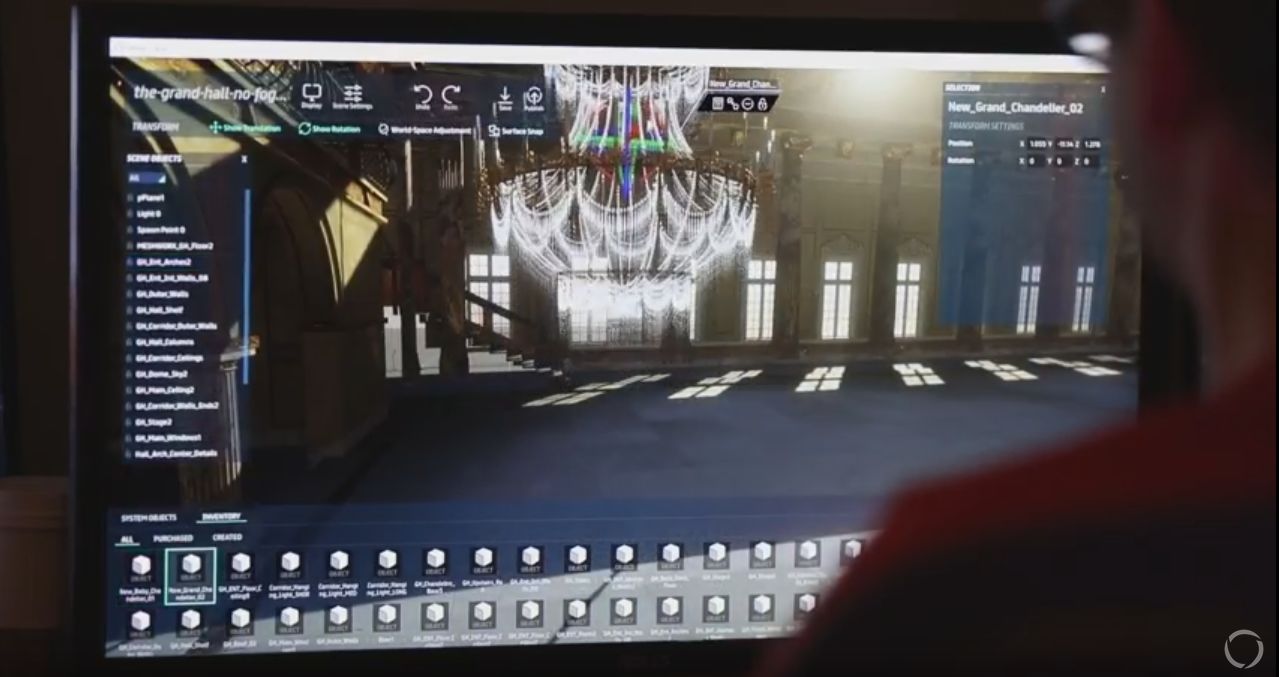
Loz Hyde working in the Sansar editing environment
Loz Hyde working in the Sansar editing environment. Credit: Linden Lab / Draxtor Despres

There’s actually not a lot to see in terms of the mechanics of the environment, but Loz’s view of the overall rendering (by which I assume he means the run-time environment, is “amazing”.

We do get to see the latter as well – or what appears to be the latter – when Drax takes us inside via a HTC Vive. The environment, lighting and detail certainly looks impressive, but again, may from SL are liable to be unimpressed with the detail shown, simply because it is a single interior space, and nothing is shown of it in situ as it were. Hopefully more comprehensive shots of spaces within Sansar will come in time. Certainly what is shown offers an impressive taster of what can be achieved in terms of architecture and fittings.
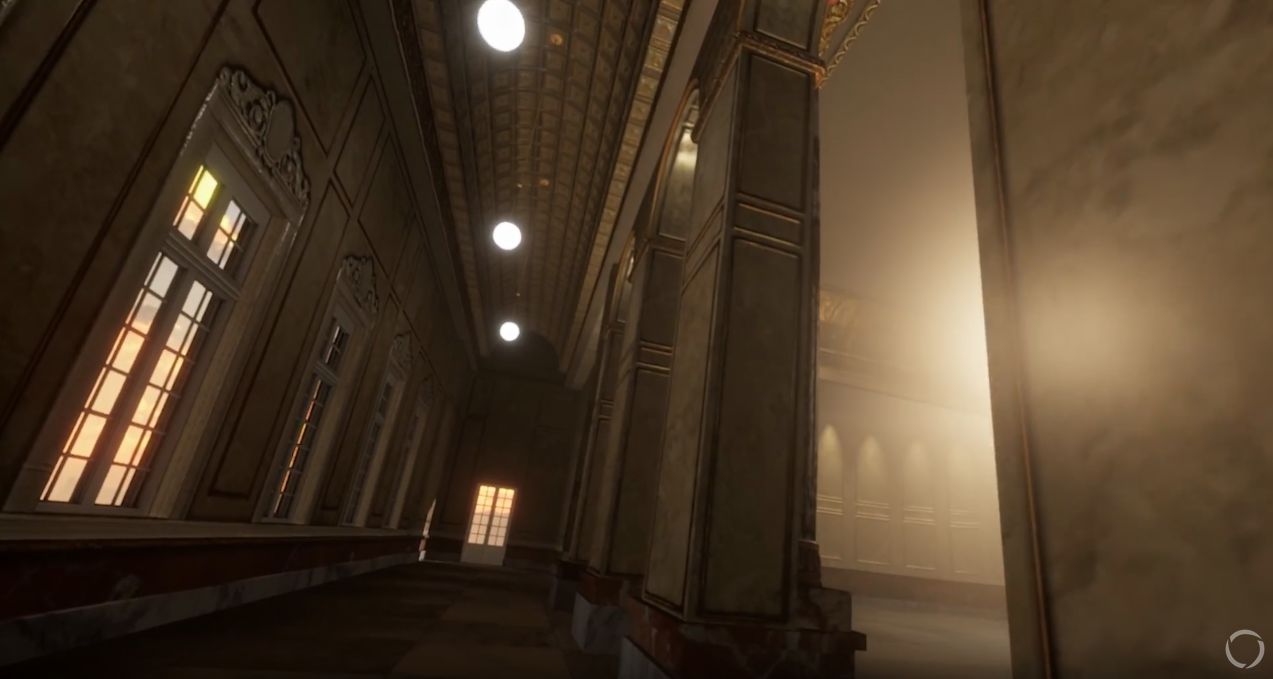
Inside Sansar - the run-time environment (?)
Inside Sansar – the run-time environment (?). Create by Loz Hyde. Credit: Linden Lab

Elsewhere come hints of the size of the Creator Preview programme, and why content creators like Loz are being asked to showcase their work, with the Lab’s CEO noting:

We have over 12,000 creators registered for access to the platform, so we have way more creators than we need to get the feedback, and to ensure they get the tools they need to be successful. We’re really asking these early creators to explain what it is they want to do in Sansar, and if we think the platform is not yet ready to do that, we’re asking them to wait.

Of these 12,000, around 500-600 have so far been accepted into the Creator Preview, and the Lab has revealed that the Sansar currency is now in operation: the Sansar Dollar (S$), which will be traded on the SandeX  – both of which, I assume – are operated under LL’s subsidiary, Tilia Inc, and are something of a port of the facilities and “currency” services the lab built around the Linden Dollar and LindeX. Like the Linden Dollar, the Sansar Dollar will be exchangeable for fiat money, and the system supports payout at least via PayPal.
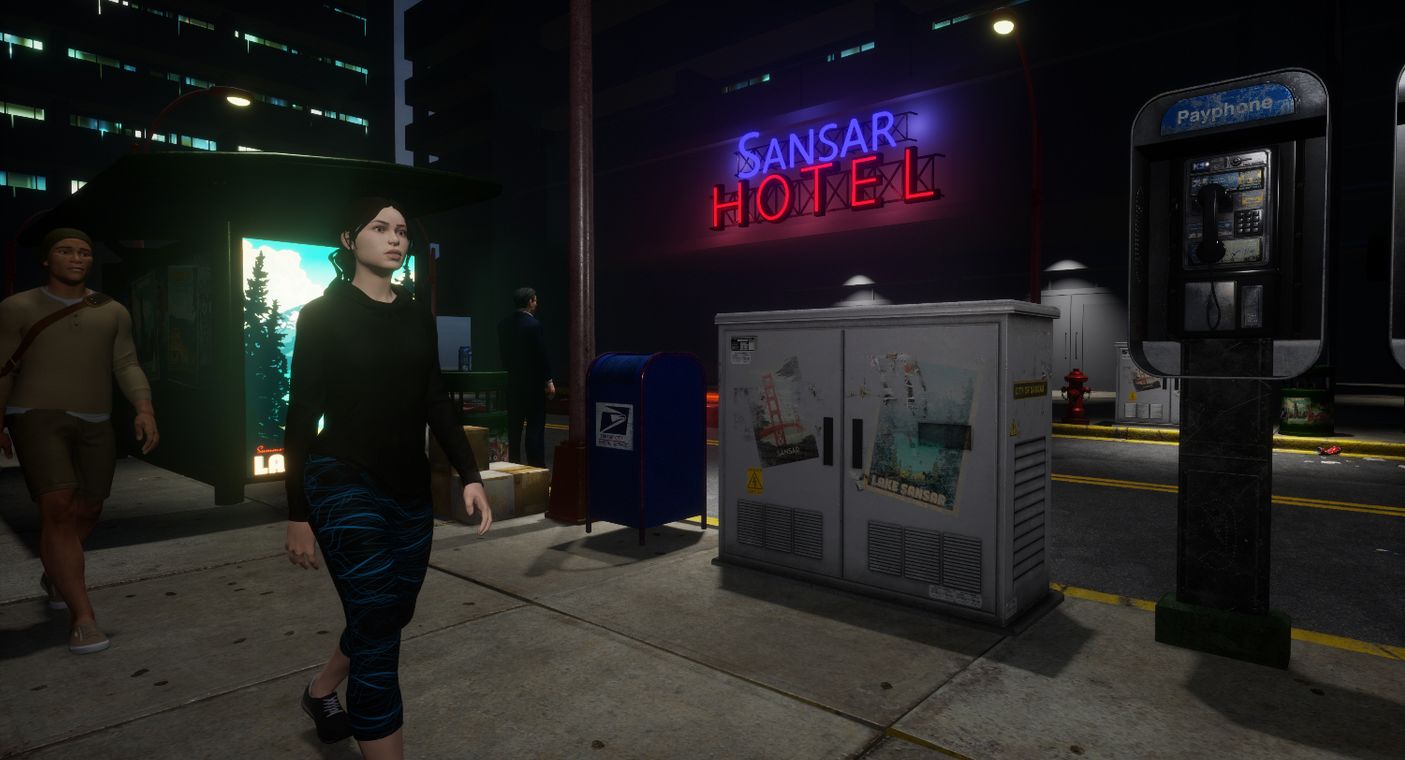
Sansar Avatars. in a city street scene in Sansar created by Paul Lapointe Credit: Linden Lab

What’s interesting here is that the “currency” system (the Lab will doubtless refer to Sansar Dollars as “tokens”), is that it is in operation, with the creators currently engaged in Sansar able to buy and sell their creations among themselves, with the Lab’s Director of Global communications, Peter Gray, noting:

With this new step, they’re [creators] also able to start buying and selling their creations with one another. And so, it’s the start of that sort of economic engine that’s getting warmed up in this creator preview period, and ultimately it will expand. Today they’re able to buy and sell items—pieces of content, but ultimately, creators will be able to monetize entire experience.

This actually makes a lot of sense, not only in terms of kick-starting the Sansar economy and establishing a nascent revenue model for both creators and the Lab, it also means that Creators and leverage one another’s creations to build out their experiences and  – as Peter Gray notes – sell those on as well.

How much the Lab might be generating in revenue from these initial creator-creator transactions – given a “sales tax” is a core part of the revenue model – isn’t indicated (I would actually be surprised if any is at this point being leveraged – outside of a “purchase fee” for S$, simply because the Creator Preview is supposed to be a cooperative venture). However, Dean Takahashi at VentureBeat notes, there will also be a small “hosting fee,” or a property tax equivalent in the real world, for the spaces that you create in Sansar. Again, this isn’t entirely a surprise, but seeing it stated clearly is interesting.

Like the L$, the Sansar Dollar will operate on a user-to-user basis, with the Lab functioning as an exchange operator, not a bank. Currently the exchange rate is running at around S$100 per US dollar, making the S$ more expensive than the L$. However, this is only an initial exchange rate; ultimately, the Lab expects the market to define the exchange rate naturally, so the value might over time move towards something more in keeping with the L$.
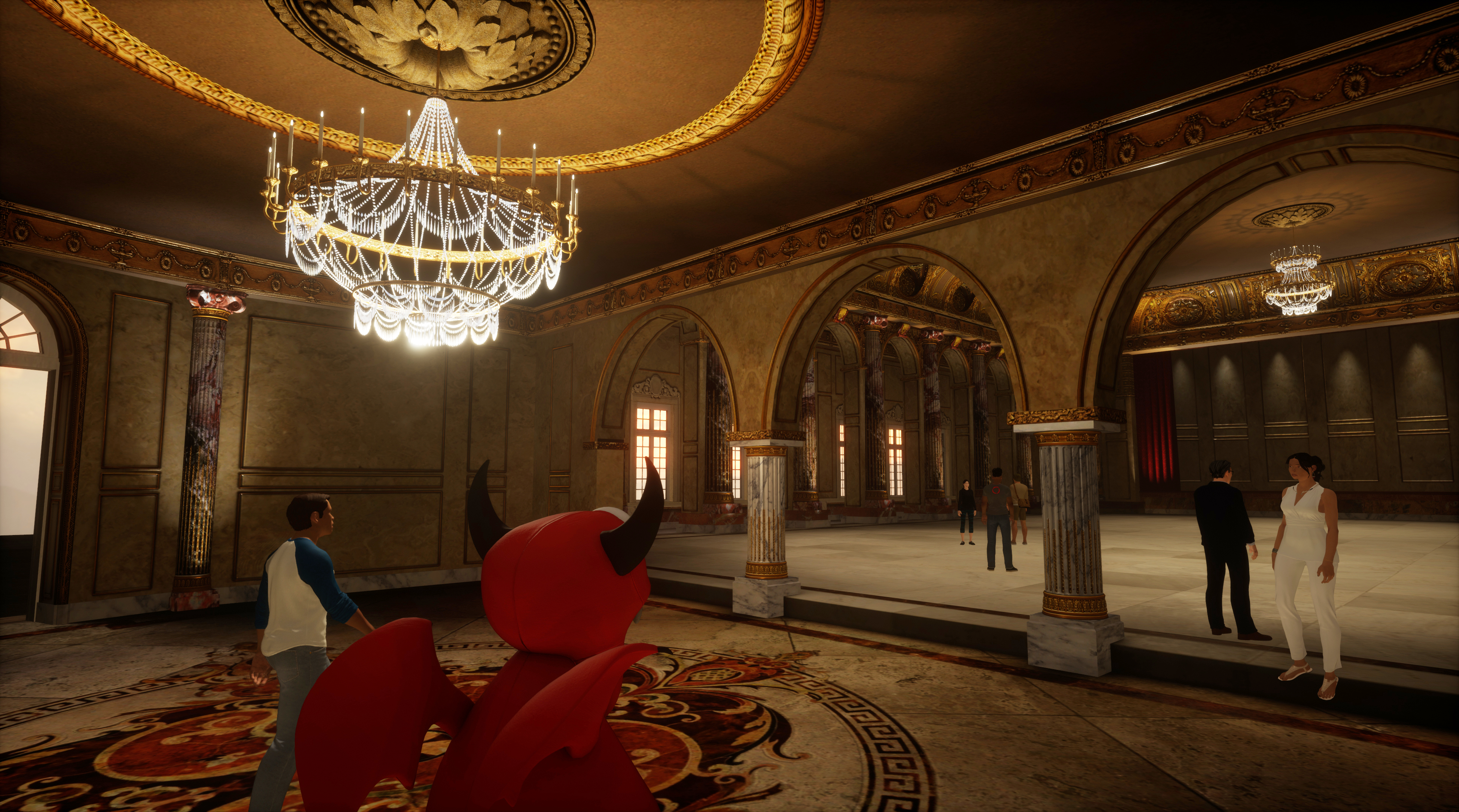
Inside Loz Hyde's creation. Credit: Linden Lab / Draxtor Despres
Inside Loz Hyde’s creation. Credit: Linden Lab / Draxtor Despres

One risk that comes with opening the exchange mechanism to a limited audience of users (creators) is the risk that the exchange itself could be manipulated through things like volume purchases of S$. The Lab is seemingly aware of this with CEO Ebbe Altberg noting that various caps are in place and thresholds are deliberately low at this point in time.

For those hoping to get into Sansar “soon” as a part of the opening-out to the public, the interviews accompanying the video release suggest that they might have to remain patient:

Toms Hardware: So, you’re running the private creator preview for Sansar for the next quarter or so?

Ebbe Altberg: Yeah. We’re trying to be data driven in the process as opposed to date driven. I wouldn’t say we have all kinds of luxuries and that we’re taking our sweet time, but we want to make sure that it’s incredibly great by the time any user can get access.

Again, this really shouldn’t be a surprise. As I’ve mentioned previously, building something like Sansar is a huge undertaking, one in which time frames are bound to slip. As such, we shouldn’t be holding

T articles from VentureBeat, Tom’s Hardware and UploadVR cover a lot of ground, and I highly recommend reading them all – links below. In the meantime however, and to give myself more time to digest them, I’ll leave you with the preview video.

Media Links

Sansar at Web Summit 2016

The new Sansar logo (courtesy of Linden Lab)
Logo courtesy of Linden Lab

November 10th and 11th saw the 2016 Web Summit take place. An annual technology conference, 2016 marked the event’s first appearance at its new home in Lisbon, Portugal. However, as with the 2015, it included a look inside Linden Lab’s Sansar platform, this year presented by the Lab’s CEO Ebbe Altberg and Bjorn Laurin, VP of Product at the Lab.

The official Web Summit video of the demonstration has yet to appear (if indeed they filmed any of the sessions). However, courtesy of Loki Eliot, I was steered towards a video of the presentation taken by an attendee at the summit: Miguel Mimoso Correia, which I’ve taken the liberty of embedding below, as there are a number of points of interest.

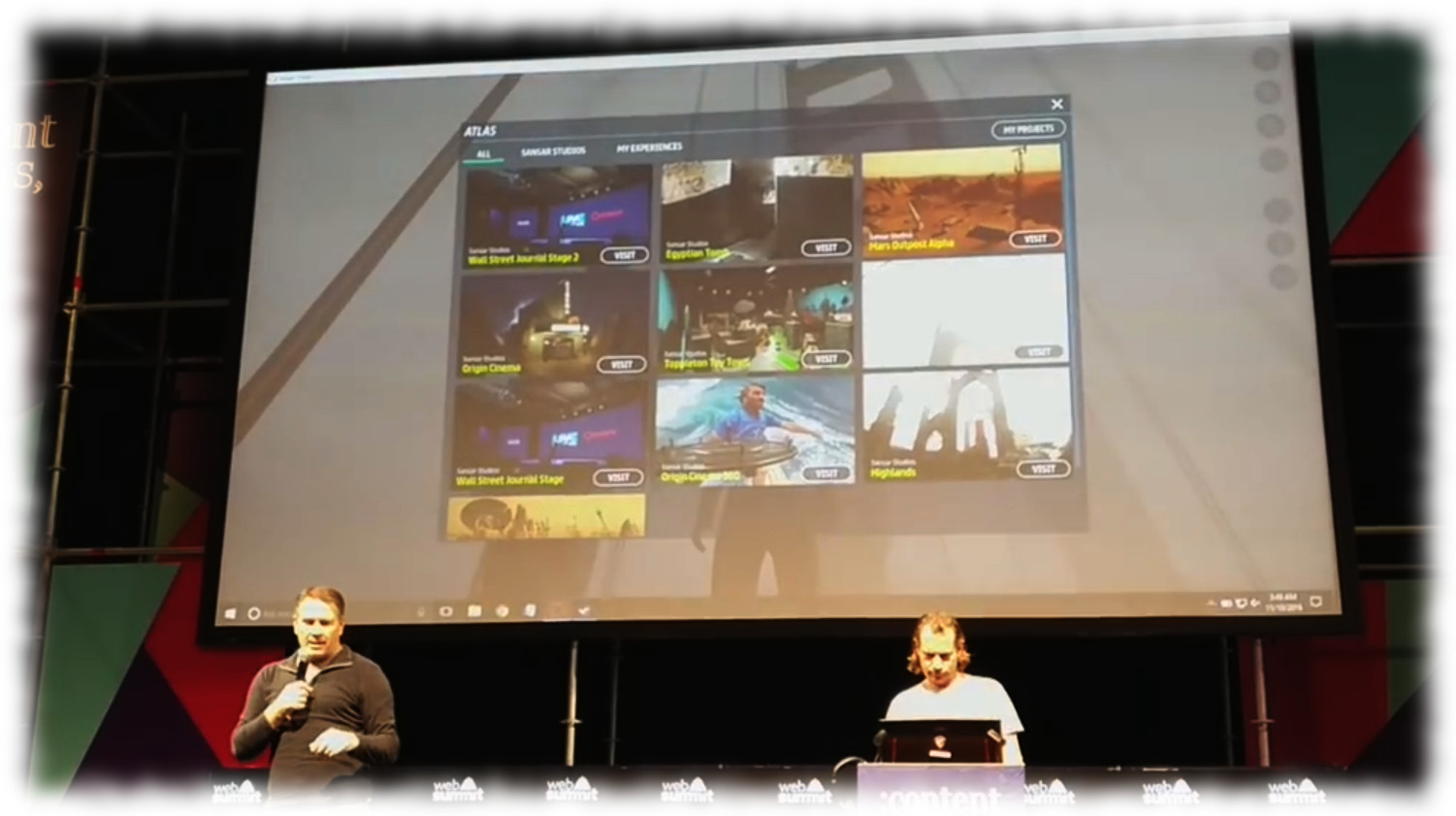
The Sansar Atlas
The Sansar Atlas – a Kitely-like directory of accessible places

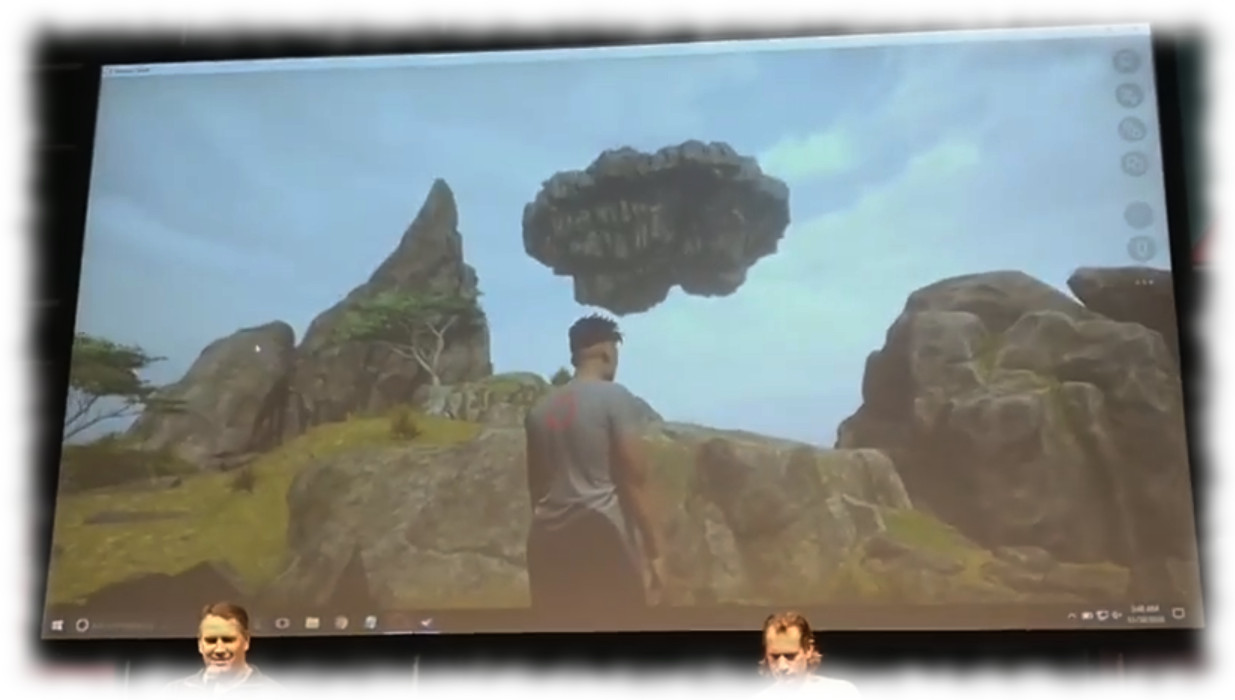
The first is seeing Sansar operating in a purely third-person, keyboard / mouse driven mode. While the platform is obviously primarily geared to VR HMDs and controllers, it’s nevertheless good to get a better look and feel for how it might also be used by people without such hardware. Of particular interest to me in this was the suggestion that users might have relatively free camera placement when moving their avatar around in a third-person view, rather then their camera being locked into a “default” view, as with Second Life.

In the “highlands” scene, for example, the camera is clearly set low down, affording a good view of the avatar and the hilly terrain around him as he walks through it. Meanwhile, in the Mars scene, the camera position is noticeably higher relative to the avatar, giving a broader view of the flatter landscape. The avatars also appear to respond more naturally as well – note how Bjorn’s avatar casually rests one foot on the dais in the 360-degree video sphere when he stops walking.

The “highlands” environment

While the demonstration is given in third-person view, insight is given into how movement is achieved when in a first-person VR headset view:

With VR, we found one thing that’s uncomfortable for some people is to just use a thumb stick, like on an Xbox controller or whatever, and just walk around …. because … you can start spinning the world around. And when your body’s not moving, but the world is moving, some people can get nausea or something like that. So … the way we prefer to move around in VR [in Sansar], is that we actually have with the controllers, a way to point to a spot in front of us with an arrow … and we just jump to that spot.

For those used to Second Life, there might be something of a “bleah” response to this description; but really, it’s not that much different to the convenience of SL’s double-click to teleport option.  However, that said, it would be nice to see if there’s also a Sansar equivalent to SL’s “single click to walk” – something which might be preferable to having other people seeing avatars hopping around, as suggested in Ebbe’s explanation. Elsewhere, we get to see a little of the dynamic capabilities in Sansar, which employ some of the platform’s physics.

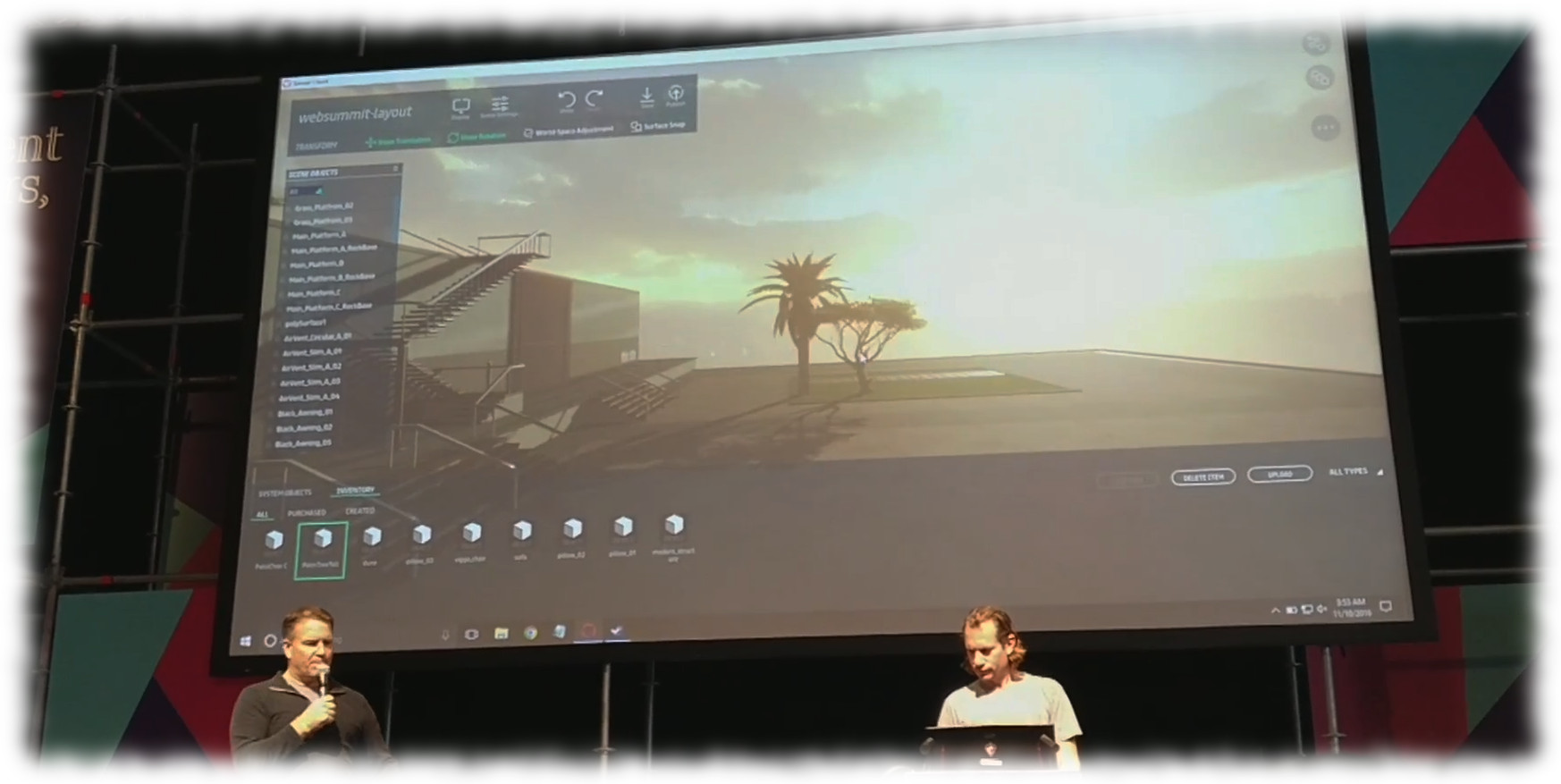
A further (brief) look at Sansar's editing environment

A further (brief) look at Sansar’s editing environment

The creative aspects of Sansar are only briefly looked at, and for those who have been following Sansar reports, offers nothing of significance. However, it is somewhat interesting to learn that the familiar Golden Gate bridge seen in Sansar is actually a TurboSquid model, underlining the ability for models to be purchased from other mediums and pulled into Sansar.

But for me, what is more interesting – if only because it offers room for speculation. Is the use of the term “Sansar Studios”, which appears as each scene is loading. Why not “Linden Lab (or even “Linden Research”)?

Is it simply indicating that the scenes are the result of collaborative work between the Lab and content creators / “content partners”, and simply a means to denote “pre-built” environments which will be available for people to explore when Sansar opens its doors to the public? Or might it be indicative of something else? Might the Lab be looking to sell its own scenes within the platform as a means of additional revenue generation? Or that “Sansar Studios” might be the marketing brand for the platform? Again, I’m not indicating a particular belief, I’m simply speculating as I write.

TSansar, October 2016; Linden Lab, on Flickr A further look at the fantasy “highlands” Sansar space, as revealed by Linden Lab in October 2016

I’m pretty happy with my lot in Second Life and  – at this point in time – have no desire to own a VR HMD (something which might change in the future, depending on how the market and technology develop). Ergo, an outright move to Sansar doesn’t interest me (not that Sansar is intended to be any kind of “replacement” for Second  Life – it isn’t. Hence why the Lab has said Second Life will continue well into the future).

However, I do continue to see the potential for something like Sansar, particularly in those markets where the emerging “low-cost” VR tools could have significant impact: design, engineering, architecture, simulation, education, training, healthcare. These are very much the markets the Lab is looking at for Sansar.

As such, even if the whole “social VR” thing falls flat on its face, I still hold the view that there are potential VR niches and audiences out there Sansar could occupy and be a success, just as Second Life has successfully occupied a niche and developed its own audience.


Inside Sansar with the Wall Street Journal

Ebbe Altberg moving virtual furniture around in Sansar, demonstrating some of the platform's capabilities at the WSJ.D Live conference, October 24th-26th
Ebbe Altberg moving virtual furniture around in Sansar, demonstrating some of the platform’s capabilities at the WSJ.D Live conference, October 24th-26th. Credit: Wall Street Journal

The Wall Street Journal WSJ.D Live conference has just wrapped up for 2016, having taken place in Laguna Beach, California.

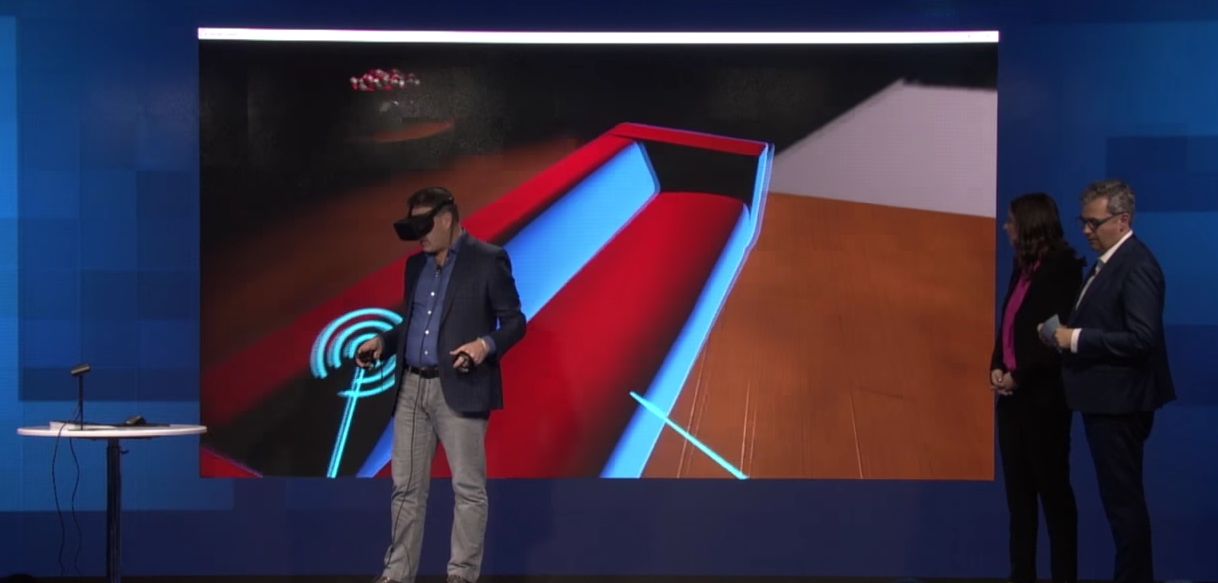
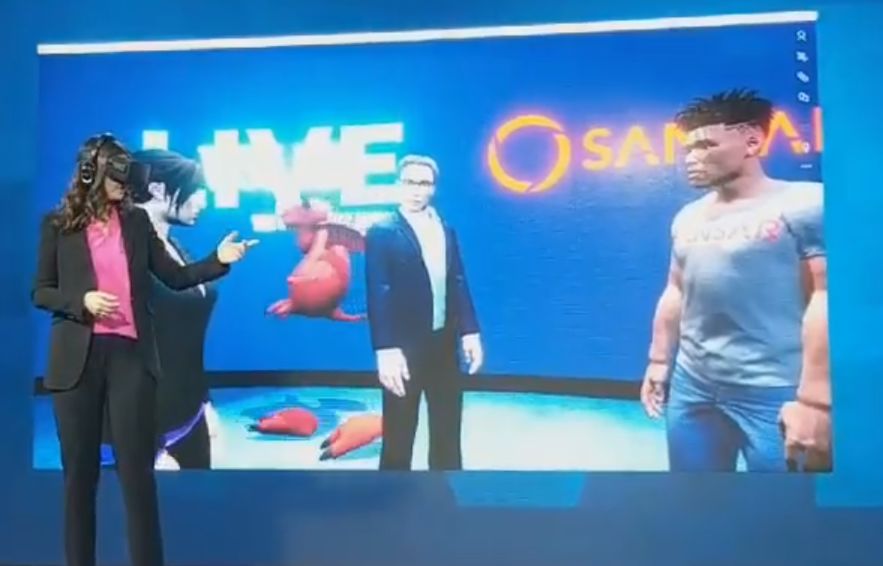
Attending the event, Linden Lab CEO demonstrated using VR headset and controllers within a Sansar scene, showing how the controllers can be used to manipulate objects. The video is available of the WSJ YouTube channel, and I’ve embedded it at the end of this article. The Sansar scene itself is relatively simple, and the aim appears to be just to show how reasonably easy it is to move content around when defining a space, rather than any in-depth look at the fidelity of the platform’s graphics.

As we know, the actual editing environment in Sansar is quite separate from the run-time environment. While the latter doesn’t permit “in-world” building, it has been indicated that users will be able to move content around within in – thus allowing them to personalise spaces and arrange scenes; however, I have it on good authority (Ebbe himself), that the scene shown in the demo was using the edit mode.

The video includes brief shot of the in-world controller / menu, but motion is such that determining anything of import from it is difficult.

Angel investor Benjamin Rohé was at the presentation, and Tweeted a short video of Sansar avatars. As we know from Lab Chat sessions, these are liable to be going through further development as Sansar progresses, so it’s hard to judge how close these are to the looks those stepping through the doors when Sansar allows public admission from early 2017, but I’m guessing it’s not too face off base. What will be interesting is to see just how customisable they will become.

Sansar avatars at WSJ.D Live. Credit: Benjamin Rohé
Sansar avatars at WSJ.D Live.The red thing is a more other-worldly avatar form! Credit: Benjamin Rohé

Beyond the look, nothing really new is said about the platform – numbers of users engaged with it through the closed alpha and the Creator Preview have reached “few hundred”, and the public release is still looked at in terms of Q1 2017.

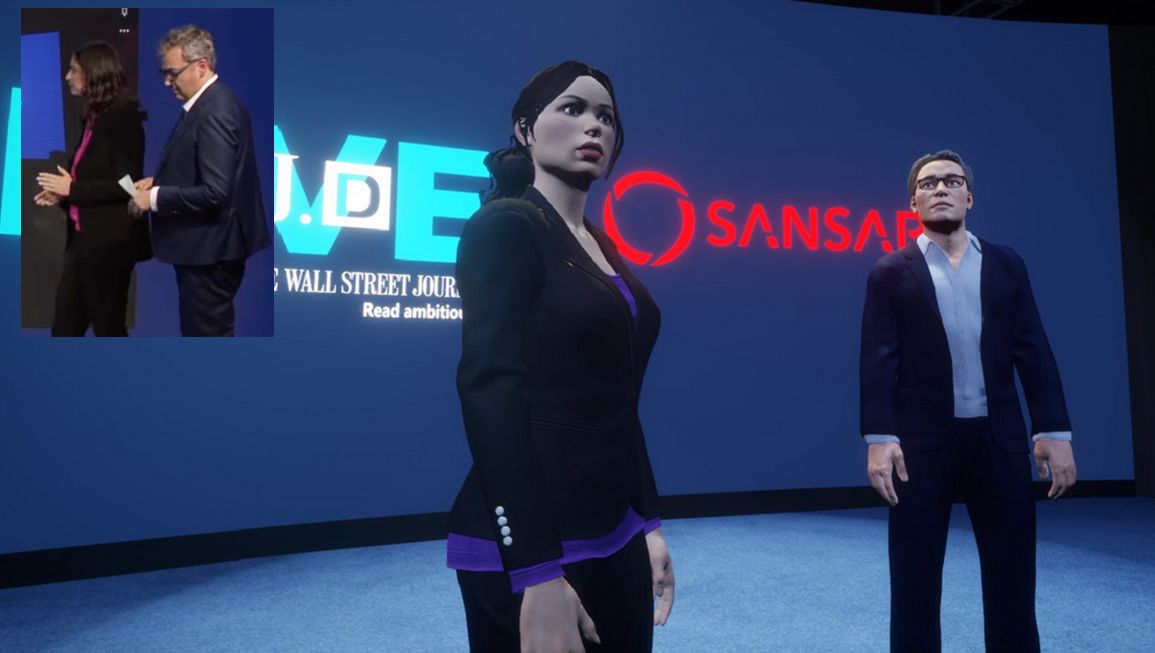
In addition,  presentation hosts Geoffrey Fowler and Joanna Stern Tweeted pictures of themselves as Sansar avatars.

Joanna Stern and Geoffrey Fowler (seen in the inset image) and as they appear as Sansar avatars. Credits: Geoffrey R. Fowler / WSJ Live

The video leaves a lot of unanswered questions – how are tasks like walking and running handled, for example, when using Sansar via HMD? Will it be point-and-hop, which others will see and a fluid walking motion (remember that they’ll be seeing your avatar, whereas you won’t)? Will those entering Sansar without VR headsets, etc., be able to see their own avatar in third-person as we’re accustomed to doing in Second life (and which is actually part of the attraction of spaces like SL)? And more besides. So judging the platform on the strength of clips like this might not be entirely fair.

But it does add to the list of questions for the nest set of lab Chats!

Updated to reflect the fact the demonstration shows Sansar in Edit mode, with thanks to Ebbe Altberg for the clarification, and to add the avatar image of Joanna Stern and Geoffrey Fowler. 

Philosophical frenemies: Altberg and Rosedale

High Fidelity - a composite promotional shot. Credit: High Fidelity (via Wired)
High Fidelity – part of a composite promotional shot. Credit: High Fidelity (via Wired)

Yesterday, a Tweet from Jo Yardley pointed me to an interesting article in Wired by Rowland Manthorpe, entitled Second Life was just the beginning. Philip Rosedale is back and he’s delving into VR. It’s a lengthy, fascinating piece, arising out of a week Manthorpe spent with High Fidelity, while also taking time to poke his head around the door of Linden Lab, offering considerable food for thought – and it kept me cogitating things for a day, on-and-off.

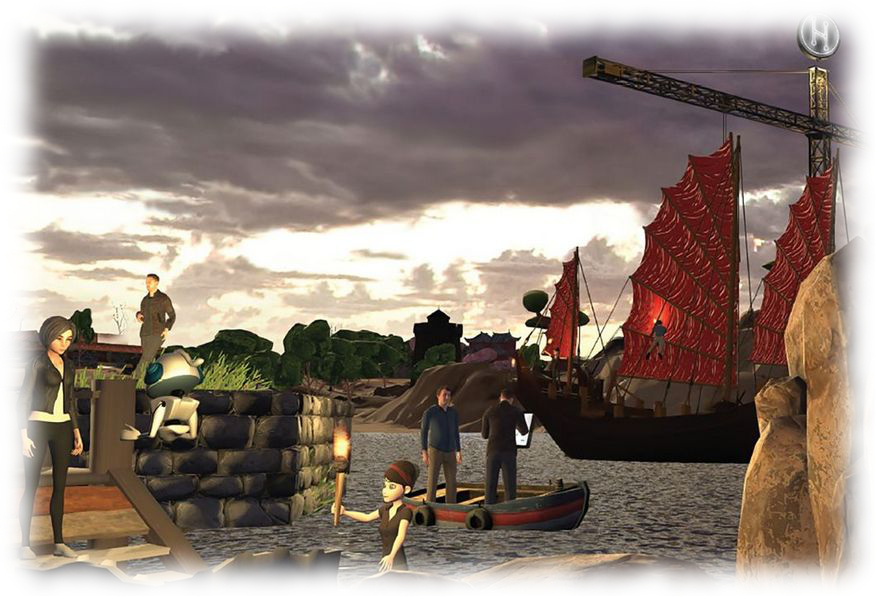
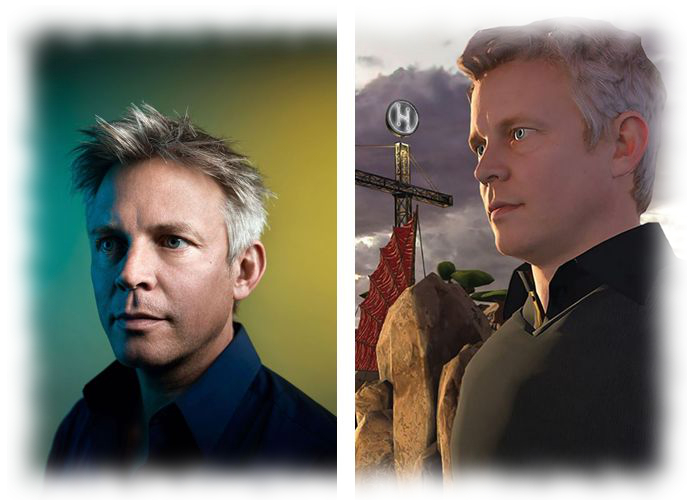
There’s some nice little tidbits of information on both platforms scattered through the piece. For those that have tended to dismiss High Fidelity as a place of “cartoony” avatars, the images provided with the article demonstrate that High Fidelity are walking along the edge of the Uncanny valley; compare the Rosedale-like figure seen the a High Fidelity promo shot within it with a photo of the man himself (below). There’s also further indication that in terms of broader creativity and virtual space, High Fidelity is “closer” to the Second Life model of a virtual world than Sansar will be.

On the Lab’s side of things, we also get confirmation that multiple instances of the same space in Sansar will not be in any way connected (“One school group visiting the Egyptian tomb won’t bump into another – they will be in separate, identical spaces.”). There’s also a hint that Linden Lab may still be looking at Sansar as a “white label” environment.

High Fidelity can still be critiqued by some in SL for it's "cartony" avatar. The reality is however, that for those who wish, avtars in High Fidelity can be extremely life-like, as this picture of what Philip Rosedale might look like in High Fidelity (r) shows when compared to an actual photograph of him. Credits: High Fidelity / Jason Madara
High Fidelity can still be critiqued by some in SL for its “cartoony” avatar. The reality is however, that for those who wish, avatars in High Fidelity can be extremely life-like, as this picture of what Philip Rosedale might look like in High Fidelity (r) shows when compared to an actual photograph of him. Credits: High Fidelity / Jason Madara

But what really makes the piece interesting is the philosophical differences apparent in developing these platforms; each is very much rooted in the nature of the man at the helm of each company.

Rosedale is a dreamer – and that’s not a negative statement. He’s been driven by “dreams” and “visions” throughout most of his post Real Networks career. He also leans heavily into the collaborative, open borders model of development. Both have influenced the working spaces he builds around him. Reading Manthorpe’s piece, the High Fidelity office appears to be run along a similar laissez-faire approach as marked the early years at Linden Lab:  people dabble in what interests them, focused on the technology; there’s a belief that if the company cannot solve a problem (such as practical in-world building using hand controllers), someone “out there” will, and all will be well.

By contrast, Altberg is more consumer / direction oriented with Sansar. Initial market sectors have been identified, work has been broken down into phases. A structured development curve has been set; as we’ve seen from Lab Chat and other sessions, there’s a reasonably clear understanding of what should be tackled first, and what can be pushed further down the development path. The platform itself is closed, controlled, managed.

Sansar Screen Shot, Linden Lab, August 2016, on Flickr Sansar (TM) Screen Shot, Linden Lab, October 2016, on Flickr

In adopting these approaches, and given their somewhat complicated business relationship (Rosedale still have “sizeable” financial holding in Linden Lab; linden Lab was one of the small investors in High Fidelity’s $2.4 million round of seed funding), Rosedale and Altberg describe their relationship as “frenemies”. They are both working towards similar goals, and dealing with the same consumer-facing technology, and are equally sniffy of the other’s product. Rosedale sees Sansar is being potentially too closed, too pigeon-holed in terms of how it will be perceived by consumers; Altberg sees High Fidelity as being to focused on the technology, and perhaps demanding more effort than most on-line consumers in the Facebook pre-packaged content age might be willing to invest.

When looked at from outside, the Rosedale / High Fidelity approach is perhaps more in keeping with the state of VR once all the hyperbole surrounding it is brushed aside:  VR may well be part of our future, but no-one can honestly say at this point just how big a part of our future it will be. The Altberg / Linden Lab approach is rooted business pragmatism: identify your markets and seek to deliver to those markets; build your product to reflect the market as it grows.

Neither approach is necessarily “right” or “wrong”, and there is certainly no reason why both cannot attract their own market share. But I have to admit I find myself leaning more in Altberg’s direction.

This is admittedly partly because a lot of Rosedale’s broader comments about High Fidelity, the Internet, etc., come across as re-treads of things said ten years ago about Second Life and a transformative future never realised. But it’s more particularly because  – as noted above – no-one really knows how pervasive VR will be on a broad level. Other technologies such as augmented reality (AR) and mixed reality (MR) currently lie within the shadow cast by the hyperbole surrounding VR, but have the potential for far greater impact in how we conduct our lives and business. So identifying a market share and aiming for it seems to be the more solid approach insofar as establishing a user base and revenue flow might be concerned*.

Time will obviously tell on this; but one fact is clear: however you regard the philosophies held by Rosedale and Altberg, Manthorpe’s article is a must read. A considered, well presented, in-depth piece, it is sits as a catalyst for considerable thought and potential discussion.

*Edited 25 October 2015, to include this sentence, which was accidentally removed from the initial publication of this piece.

Lab confirms Sansar’s title and issues first Creator Preview invites

Sansar Screen Shot, Linden Lab, August 2016, on Flickr Sansar (TM) Screen Shot, Linden Lab, August 2016, on Flickr

On Wednesday, August 31st, Linden Lab issued a press release indicating they have issued the first of the invitations to successful applicants to join the Sansar Creator Preview programme. This has been picked-up by various media and blogs – but what I’ve found particularly interesting (and others seem to have missed) is that the press release confirms the new platform is to simply be called “Sansar”.

Until now, Linden Lab has referred to their new platform as “Project Sansar” (see their press releases from April 2016 and August 2015 as examples). However, in the press release, the Lab refer to it as “Sansar“, suggesting this may now be the platform’s official name, thus:

Linden Lab® today announced that the first invitations to the Sansar™ Creator Preview are being sent this week. Select applicants will be invited to create their own social VR experiences with the new platform, slated for public release in early 2017.

As further indicators that Sansar is now the official title, the press release included a new logo, and the URL for the Sansar website has been updated to “www.sansar.com”.

The new Sansar logo (courtesy of Linden Lab)

When I contacted Peter Gray, the Lab’s Director of Global Communications to ask if the terminology was deliberate and a reflection of the platform’s official title, he replied with two words:

Good eye 😉

So I’m taking that as a “yes” 🙂 .

The new name shouldn’t really be a surprise – after a year or so of referring to it as “project Sansar”, to the media and the VR public, changing the platform’s name to “Sansar” is a lot easier and less confusing than trying to effectively rebrand the platform, even if it hasn’t yet been formally launched.

Sansar Screen Shot, Linden Lab, August 2016, on Flickr Sansar (TM)  Screen Shot, Linden Lab, August 2016, on Flickr

In terms of the Creator Preview applications Bjorn Laurin (Bjorn Linden), the company’s Vice President of Product, indicates in the press release that over 6,500 people / groups / organisations applied to join the Creator Preview – which remains open to applications. How many of these are content creators / designers based in Second Life is unknown, nor is the number of people admitted in this first round.

avatars
A closer look at the Sansar Avatars (courtesy of Linden Lab)

Those initially invited into Sansar are people whose skills and projects are the best fit for Sansar’s capabilities as they stand at the moment, and who can best provide feedback on the platform and its capabilities which will help the Lab with its development. As Sansar evolves and the capabilities are extended, the Lab plan to broad the scope of those being invited into the preview programme.

To go alongside the press release, the lab have also opened a Flickr account for Sansar, which, at  the time of writing, was populated with four new images – presumably more will be added as Sansar’s content grows, with the Flickr group presumably being a reference point for media outlets requesting images from the platform.

One of these new images features  Sansar avatars, and has been reproduced and enlarged on the right – again, remember that avatar work in Sansar is still in the preliminary stages, and so images like this should be taken as indicative of the “final” Sansar avatar look. Nevertheless as a yardstick, they offer us something a feel for the new platform.

I’ll have more on Sansar in future articles.

Techcrunch and THE examine Project Sansar

Project Sansar: increasingly in the tech media's media's eye
Project Sansar: increasingly in the tech media’s eye. Credit: Linden Lab

It appears that, in keeping with their word, the Lab is starting to allow journalists into Project Sansar. At the start of July, Ed Baig got a look inside Sansar for USA Today, as I reported here and here (with Ed’s own article here). now it is the turn of Techcrunch and, earlier in the month, Times Higher Education (THE), with pieces appearing in Russian, Polish and Brazilian outlets.

In Second Life creators look to revamp reality once again, this time in VR. Techcrunch’s Lucas Matney steps inside Project Sansar at the invitation of Ebbe Altberg, and his guide is the Lab’s VP of Product Bjorn Laurin (Born Linden). As with most articles we seen of late, nothing intrinsically “new” is added to what has so far been revealed about Sansar in terms of capabilities, approach or screen shots, but  there are some interesting tidbits, all the same. For example, early on he notes:

Traversing the worlds of Sansar and chatting with my guide, Linden Lab VP of Product Bjorn Laurin, was a mostly seamless experience but still an oddly unsettling one. It’s not that anything was particularly creepy about the place I was viewing through an Oculus Rift headset. Sansar is visually placid and often beautiful, but it’s also startlingly scalable and boundless. Scale is something that’s often taken for granted in an age of video game epics like Skyrim and GTAV, but when every horizon you see through your own point-of-view is conquerable, you’re left to either feel very bold or very lost.

Lucas Matney considers Project Sansar for Techcrunch

The two things that are interesting here are the comment about the “mostly seamless” experience of moving between “Sansar worlds” (“worlds” here, I assume, means Sansar “scenes” which have been “stitched together”  – to use the Lab’s terminology – to create an “experience”). This appears to imply that whatever mechanism is in place to move avatars between different connected scenes (teleporting?) is pretty smooth and that there may not be too much in the way of any interruption when moving between scenes. It’ll be interesting to discover if / how this might extend to vehicles at some point down the road as Sansar develops.

The second interesting part of the comment is the apparently limitless size Sansar presents to users, suggesting that as with Second Life, Sansar will convey a sense of massive spaces which might reach beyond their physical limits – so will people be looking out onto open “water” as with SL, or will the “land” appear to stretch off into the far horizon – or is it simply that the available Sansar scenes all make use of the upper bounding size (previously reported to be around 4 km / 16 SL regions on a side)? Either way, it may well be that environments in Sansar aren’t quite as “enclosed” – at least visually – as people might be fearing.

A further point of interest in the article takes the form of an astute observation perhaps overlooked when discussing Sansar’s potential for success:

Like Second Life, Project Sansar is not an experience that needs to be perfect at its initial launch or see a certain number of first week user numbers to be a hit. It just has to stay consistent, evolve with the hardware/interface trends of modern VR and steadily push boundaries as it updates.

Hence why the Lab isn’t trying to cross all the “T”s and dot all the “I”s with Sansar from day one, and why they do repeatedly warn SL users it is not going to necessarily be to their taste when the doors first open. VR is going to take time to mature – not just in terms of user conviction, but the very hardware and software itself. Things will change within the industry, probably quite rapidly (look at the pace of change of other “disruptive” technologies, such as the mobile ‘phone), thus it’s important for Sansar to be in a position to demonstrate it can meet user cases and needs – but also remain flexible and responsive to emerging technology and the new needs / opportunities arising from it.

In a time when we’re perhaps becoming inured (so to speak) with the comparisons to Sansar with the likes of WordPress and YouTube for content creation, it’s perhaps refreshing to have someone put their finger on the button of LL’s monetisation focus for Sansar, with Matney observing the company plans to essentially build “an app store for VR creative properties”. This is not only a neat way to encapsulate Sansar’s approach to monetisation, it also neatly folds back into the idea that “creator” in Sansar encompasses a broader cross-section of users than perhaps we consider to be the case in Second Life – as I mentioned in covering Ed Baig’s USA Today piece.

Alice Bonasio: looking at Sansar and VR for THE

One of the several target markets the Lab is looking towards for Sansar is that of education, and it is from this perspective that Alice Bonasio, writing for Times Higher Education, considered Project Sansar back at the start of July 2016.

Starting with a look at the success Second Life has enjoyed within education, Virtual reality really is heading to a university near you more generically considers the role of VR in education, and the manner in which Sansar might be a part of an education revolution – not just in terms of providing immersive teaching environments, but in the ability for universities and colleges, etc., to potentially monetise their environments.

It’s an interesting line to take, but what is perhaps of greater interest, in terms of gaining further understanding as to why Linden Lab felt they needed to push ahead with Project Sansar, is in the vision for education presented through the piece. In this, Alice Bonasio doesn’t just examine the Lab’s hopes for Sansar, she frames them in terms of experiments conducted by Jeremy Bailenson, founding director of Stanford University’s Virtual Human Interaction Lab. These experiments demonstrated some very real benefits of using VR / augmented capabilities can bring to the basic  tutor / student relationship, quite aside from all the deeply immersive potential offer by the technology.

Again, neither article offers anything specifically “new” in terms of how Sansar will look when the door opens or what the baseline capabilities will be when that happens in early 2017. However, they do both provide individual insights into the platform which make them both a worthwhile read, with Techcrunch’s Matney in particular ending with further food for thought, noting that while Sansar might not  require a huge audience from the get-go, it does nevertheless need to succeed in its central aim of providing a platform for “social VR” – and that’s no easy thing, because “social VR” isn’t really an understood medium right now (we can only guess at what it might be like and – equally importantly – how people might react to it). But as he notes in closing:

The early beta shows great promise and while a wide release of its desktop and VR versions is still likely months away, it’s clear that Linden Lab understands the daunting magnitude of both Project Sansar’s challenges and its potential.