Sansar: getting started – the basics

Sansar from Linden Lab

Note, October 4th: interaction with objects when using Desktop Mode were introduced with the Sansar Discovery release. Read more about the release in this article.

Note: This article covers setting-up an account, downloading the client, selecting and customising your avatar and getting familiar with the user interface. For detailed information on working with Snsar in Desktop Mode, please refer to Sansar basics: Atlas, Desktop mode movement, chat and friends.

On Monday, July 31st, Linden Lab opened the Public Creator Beta for Sansar – which you can read about here. The following is designed to offer those from Second Life joining Sansar with some guidelines on getting started.

These notes are based on my coming to Sansar as a first time user during the Creator preview, and are written purely about the run-time environment. You can find further notes and information on the following official Sansar pages:

These can all be found as a part of Sansar’s comprehensive Help pages.

You can also keep up-to-date with announcements via the Sansar blog.

Notes:

  • For ease of reference, and given I don’t have continuous access to a VR headset, these notes are biased to using Sansar via the keyboard and mouse, including working in-world with the UI.
  • These note were written at the time the Sansar Public Beta was launched. As Sansar is evolving, they may at some point become inaccurate or superseded.

Creating an Account and Logging-in the First Time

The first thing you need to do with Sansar is sign-up for an account. Accounts require an e-mail address, password, date of birth and, if you indicate you wish to create experiences, whether you use tools such as Maya or Blender.Make sure you click the Terms and Conditions  / Privacy Policy and Terms of Service Links and check them before checking the box confirming you have read them.

When you have submitted the account creation form, you’ll receive an e-mail asking you to verify the address. Clicking on the verification link will both verify you e-mail address and take you to the web log-in page. Log in to the latter using the e-mail and password you have created. The Sansar Atlas is displayed on your screen. This is the point at which you can join any available Sansar experience from the wb, once you have installed the Sansar Updater (client).

  • Experiences will eventually be accessible via their own web pages.
  • You do not have to use the web version of the Atlas with Sansar – you can access the Atlas from within the client.

Downloading and Installing the Client

The first step towards accessing Sansar is to download and install the (currently 64-bit Windows only) client, via the Download link at the top of the Sansar web site. Simply follow the on-screen instructions from the installer (which may also update itself as the first part of the install process), or follow the installation instructions.

Installation is fairly quick and simple (neither my i4 / GTX 970 main system nor the 2012 i3 / Intel graphics laptop I also use had any issues in installing the client). Once the client has installed, launch it. This may trigger an automatic update to the client itself, which can take some time. Once any update has completed, the Sansar log-in screen is displayed.
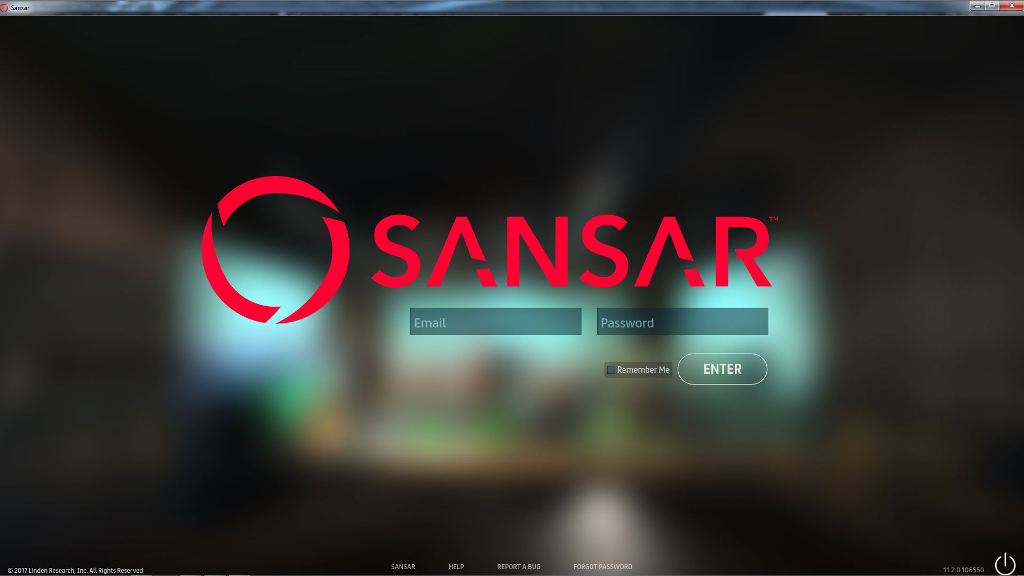
Log-in using the e-mail and password you used when creating your account.

Avatar Creation

Note: Sansar allows you to have multiple avatars, which are created via the Avatar App. This is launched automatically the first time you log-in to Sansar via the client, and can be launched at any time using the My Looks buttons.
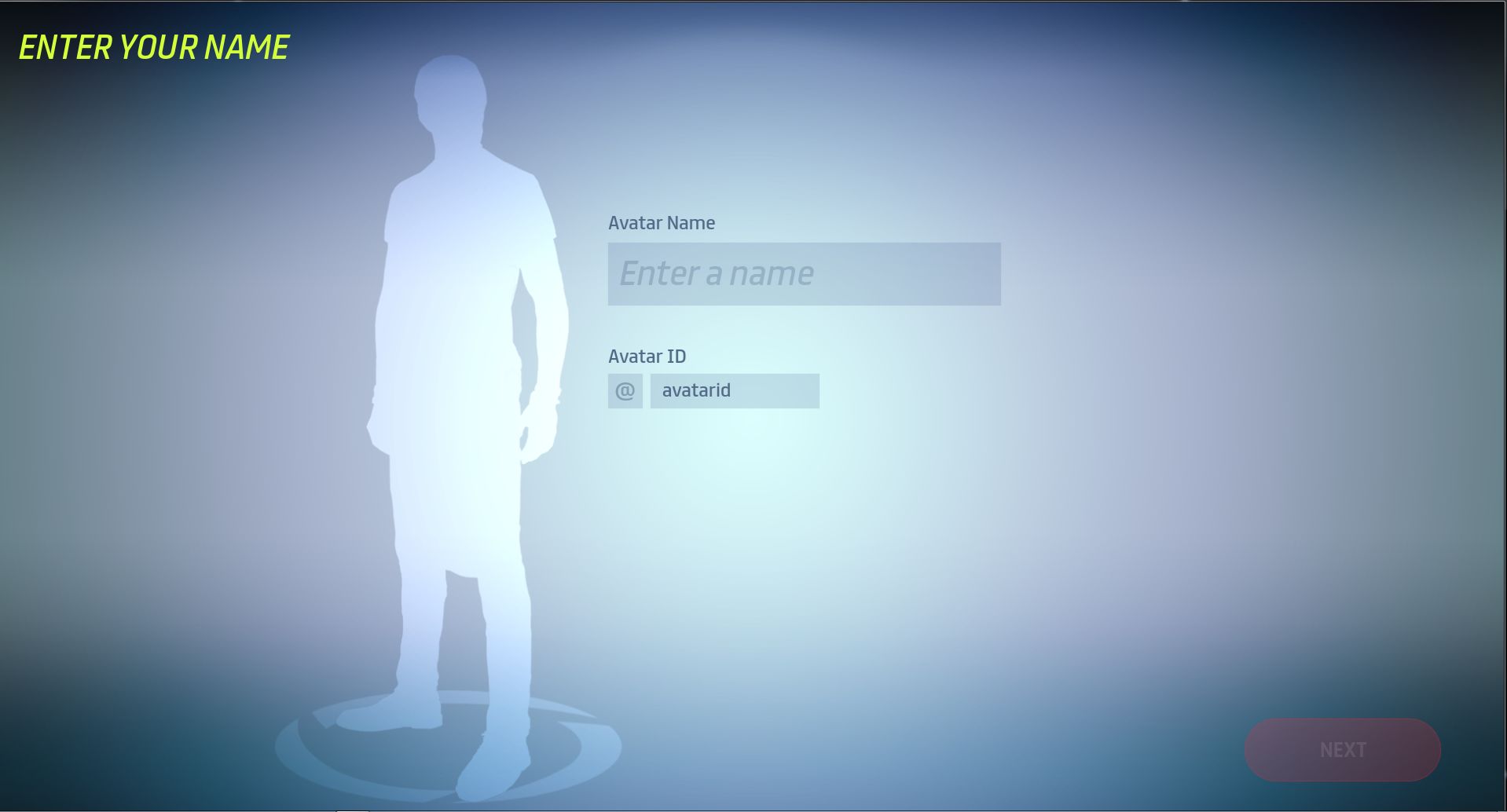
Aavtar Name creation

The first step is to supply an avatar name and avatar ID (a unique and permanent ID which serves as a unique identifier for each user).  The latter can be the same as the avatar itself, or set to something else – letters, numbers and hyphens only. Note that the avatar ID cannot be changed once set, and at this time, the avatar name also cannot be changed, so make sure you’re satisfied with the latter before continuing – it’s how everyone in Sansar will know you with this avatar.

Clicking Next from the Name screen will take you to the avatar picker – and SL users should recognise the origins of this!  Use your mouse to scroll left or right, moving the Sansar logo under the avatars to indicate the currently selected one.

There are two buttons on this screen: Customise and Next.

  • Customise takes you to the current avatar customisation options which allow you to set gender and skin tone, hairstyle, change the facial features though sliders, select an outfit  and accessories.
    • Note that avatar customisation is not as advanced as Second Life at this point in time.
    • You can save multiple looks for the same avatar via the Customise panel in the top left of the customisation screen.
    • Clicking the sliders button will zoom the view into your avatar’s head and you rotate the avatar using a right-click drag with the mouse
    • You can use the buttons at the bottom of the screen to go back to the avatar picker, select an entirely random look for the avatar from the available set of avatars, or undo / redo changes.
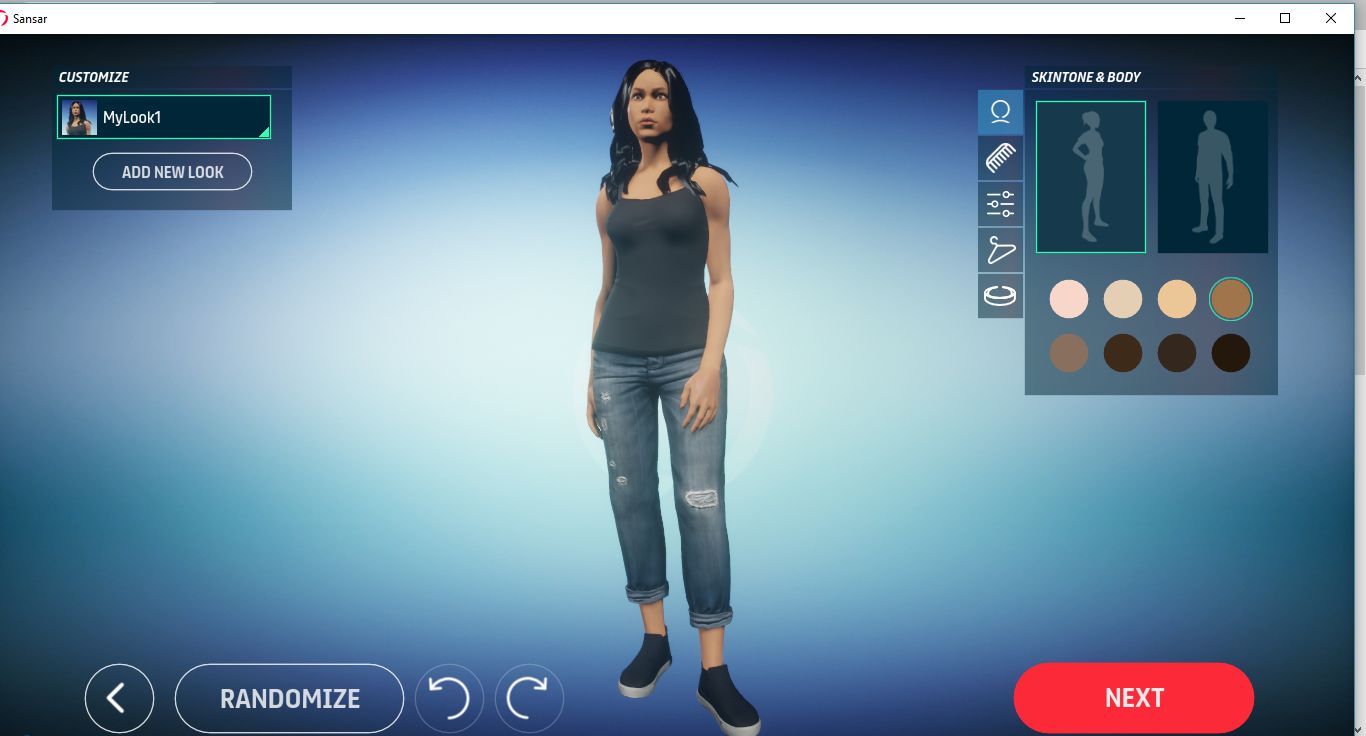
Customising your avatar
  • Next from either the avatar picker or the customisation screen will update the avatar selection a your avatar and move you to the Sansar Atlas.

Reminder: You can return to the Avatar App at any time from the My Looks option (top right of the Sansar Atlas display) or from within an experience via the My Looks button (see below).

Continue reading “Sansar: getting started – the basics”

Linden Lab announces Sansar Public Creator Beta

The Sansar Apollo Museum, by LOOT Interactive

On Monday, July 31st, Linden Lab announced the opening of the Public Creator Beta for Sansar, their new platform for creating and publishing social VR experiences. In announcing the launch, Linden Lab issued a press release which states in part:

SAN FRANCISCO – July 31, 2017SansarTM, the world’s leading social VR platform, today opened its creator beta to the public. Sansar empowers individuals, communities, schools, studios, corporations, brands and others to easily create, share, and ultimately sell immersive 3D social experiences for consumers to enjoy on HTC Vive, Oculus Rift, and Windows PCs. Developed by Linden Lab®, the company behind the groundbreaking virtual world Second Life®, Sansar is a brand new platform built from the ground up to enable everyone to become a creator.

At opening, Sansar’s Atlas directory already features hundreds of engaging virtual experiences, including multiplayer games, recreations of historic sites and landmarks, art installations, movie theaters, museums, narrative experiences, jungle temples, 360º video domes, sci-fi themed hangouts, and much more. Creators invited to the platform during a limited-access preview have published thousands of amazing public and private experiences, and with the opening of beta today, the world is now invited to join them.

Monkey Temple by Unit 9

The press release goes on to highlight some of the capabilities associated with Sansar, including:

  • Simplified Creation & Cross-Device Distribution: Intuitive drag-and-drop editing makes it easy to create a scene with assets imported from common 3D modelling tools or purchased from the Sansar Store.
  • Use of tools from the likes of Speech Graphics for accurate avatar lip-syncing and facial animations (via audio with or without a headset) and IKinema for accurate mirroring of user’s hand / arm movements when using HMD controllers
  • A relationship with TurboSquid to provide creators with access to hundreds of additional high-quality 3D models in the Store today, with thousands more being added in the coming months. This will be extended with integration with TurboSquid’s StemCell initiative to make it easy for TurboSquid’s community of 3D modellers to immediately upload and sell their creations in the Sansar Store, further augmenting the assets readily available to Sansar creators.
Sansar Dwarven City by David Hall

Sansar System Specification

Accompanying the press release were the recommended system specifications for running Sansar:

Sansar Pricing

Basic Sansar access is provided free to users, with subscription options available to those who need them.

Things to Note – Particularly from a Second Life Perspective

I’ll have more to say on using Sansar in separate upcoming articles. However, in the briefest of terms:

  • The Sansar Public Beta is not the “fully fledged” Sansar platform; rather it is another step in the platform’s development
  • This means that much of what is taken for granted in Second Life cannot at present be done in Sansar – do not expect to jump in and find loads of vehicles to drive / fly / sail or to start flying around yourself. These kinds of capabilities will come in time
  • The Sansar avatar is still being developed; therefore what you see on joining Sansar is not “all there is” to the avatar. Expect enhancements and greater customisation to come in time
  • Sansar does not offer “in-world” design / building capabilities in the same way as Second Life. It utilises a separate editing environment and a “published” run-time environment.
  • Do not expect to see tags over avatars heads – this can make the identification of other difficult, but has been done with a purpose (floating tags don’t work particularly well in VR without breaking immersion)
  • Sansar has both voice and text chat, the ability to IM people and to create Friends lists. Chat and IM work in a similar manner to chat and IMs in SL: open text chat and voice are restricted to the the current instance of the experience you are occupying; text IMs will go to friends wherever they are in Sansar relative to you.
  • Most moving between different experiences is achieved via the Atlas – Sansar’s equivalent of the Destination Guide. Teleporting is also possible, where provided
  • Adult content is currently not permitted in Sansar. This is because the platform currently lacks a maturity rating system of the kind we see in Second Life.


Sansar profile 5: the potential of marketing

Sansar from Linden Lab

So, in my last look at Sansar’s preview videos, I made mention of a desire to see something of a focus on creators from outside the Second Life catchment.

On Wednesday, July 26th, I got my wish, as the fifth Sansar preview video hit the airwaves with a look at the work of Unit 9, a London-based studio specialising in content creation in a range of mediums – film, digital, games, VR and “experiential”. They have an impressive list of global clients / partners including Google, Yamaha, 20th Century Fox, Samsung, Mercedes-Benz, Save The Children, Sprint, Delta, the UK’s Channel 4 TV, and so on.

Within Sansar, Unit 9 – under the leadership of Anrick, a director specialising in VR and promotional / marketing films working for clients like Saatchi & Saatchi  and Toyota – has built “Monkey Temple”. I’m not exaggerating when I say this is quite possibly one of the most immersive environments I’ve seen thus far in Sansar – and I’m still sans a headset!

In building Monkey Temple, Anrick and his team have attempted to incorporate many of Sansar’s abilities as they are currently available – and it is fair to say they have succeeded. This is a rich environment, beautifully lit with a creative (if tightly looped) sound scape with a lot to see and a few things to do (providing you have the headset and accompanying controllers!).

Monkey Temple, Sansar preview 5

Whether by accident or design (far more likely the former), this piece is pretty much exemplifies the thrust of my thoughts in writing about the fourth preview video: that while leaning towards a Second Life audience as the first four videos in the series have done, Linden Lab needs to look beyond the shores of SL and the cadre of SL creators working in Sansar if they want to reach the markets they’ve indicated as being of interest to them.

As a director and creator, Anrick offers precise and clear insight into the sheer power of world-building as enabled by Sansar, – and for professionals like him, there is little doubt that Sansar could be a tool / environment of enormous potential. While Monkey Temple itself might initially come across as little more than a visually impressive place with nice sounds and things to do, it actually goes far beyond this, pointing the way to how studio houses such as Unit 9 could leverage a platform for delivering immersive visual and interactive environments which help their own clients entice and engage their desired audience – all  potentially on a fraction of the budget which might otherwise be required.

Unit 9’s Anrick

In this, marketing and promotion is one of the obvious verticals where VR could – and is starting to – play a noticeable role. We’ve already seen very high-tech VR experiences offered to the public alongside new films, etc. With Sansar and roadshows at events, there is potential for companies to offer captive audiences a VR experience focused on a product, service or entertainment. It doesn’t necessarily have to be all rock’n’roll and high-tech thrills; many promotional opportunities at shows and conferences could be much lower-key and simply involve the expertise of studios like Unit 9, a good Internet connection and a booth-like environment with PCs and headsets supplied.

One could argue that more of this needs to perhaps be explained in the video, but I’d disagree; anyone involved in the sectors Unit 9 operates within would more than likely pick-up the message loud and clear. One might also argue that building in Sansar really isn’t as simple as this (and the other videos) portray; the Sansar marketplace notwithstanding, truly original content requires 3D modelling skills which not everyone has. But again, where this video is concerned, that’s perhaps not the point.

Monkey Temple, Sansar preview 5

Should an organisation want an immersive environment designed and built – be it for marketing, training, or whatever – and they don’t have the requisite design skills in-house, this video sends the message that the expertise they might need is already engaged on the platform, and has a track record of content delivery. In this, everyone is potentially a winner: the client gets what they want, the studio is hired for its expertise and Sansar provides the delivery mechanism, with the revenue from doing so passing to Linden Lab.

Obviously, this isn’t going to happen overnight, or even in the short-term as Sansar opens its doors; but over time, the potential is certainly there.

Sansar: profile 4 and thoughts on a wider reach

Sansar from Linden Lab

The fourth Sansar preview video arrived on Wednesday, July 19th, and is the shortest to date. Focusing on SL creator Blueberry (aka Mishi), the 79 second video takes us into one of the experiences she’s developed in Sansar – Blueberry Town – and gives some further brief glimpses of the platform’s tools – notably the Atlas as seen when using a VR headset.

When viewing this video it’s important to remember that Sansar isn’t primarily intended for the Second Life audience; as such some of the statements made should be treated as such. But that said, given the fact these videos focus on “Second Life creators”, they also tend to come across as speaking directly to the existing Second Life audience, and I’m not entirely sure that’s a positive move.

If nothing else, statements that Sansar presents an environment to do things that are “not even possible anywhere else” are liable to have SL users at least hiking an eyebrow or two, if not rolling their eyes across the floor, given what is being shown in Sansar is more-or-less precisely what SL users have been doing for the last 14 years; just because it cannot offer the same depth of immersion as Sansar will actually doesn’t change this point.

Sansar’s Atlas, seen in a HMD

Some of the promotional videos released to date have already been critiqued on precisely this ground. While there have been some good insights in to Sansar – such as with the preview featuring Maxwell Graf (which I reviewed here), the repeated focus on Second Life creators like this does appear to carry with it the risk of a greater degree of negative feedback about the platform than seems necessary.

At the most basic level, statements that Sansar allows people to do things that “are not even possible anywhere else” may not only cause much eye rolling among SL users, they also run the risk of hyping Sansar well beyond what can actually be achieved within the platform at this point in time. As the Lab has tried to make known: when the doors open, this won’t be a final, finished product – it will take time for capabilities to be added and to mature. Nevertheless, there’s a risk people will see the gap between promotional hype and current capability as a negative to be repeatedly pointed out.  This negative response could be increased by Second Life users when, despite the repeated statements from the Lab that it will be some time before Sansar matches many of the capabilities taken for granted in Second Life, they are confronted by the realities of that fact.

Now, in fairness to the Lab, the lion’s share of applications to the Creator Preview have come from Second Life creators, so a focus on their work is understandable when promoting Sansar (they’re also likely to be the most amenable to being the focus of these videos). But it has also been indicated that applications have come from elsewhere. Further, the Lab has also repeatedly indicated a hope that Sansar will be adopted by those market sectors where there is a clear potential doe VR – education, design, architecture, training, simulation, healthcare. So I’m actually surprised there isn’t more of a visible push to directly engage with these sectors; particularly as some are starting to get excited by Sansar’s potential.

On July 22nd, for example, Steve Bambury, writing in his VirtualiTeach blog waxed lyrical about Sansar’s potential in education (and as an aside, it prompted one SL blogger to have the realisation Sansar isn’t “about SL users”). So putting together promotional information on how those in education could practically leverage Sansar – as well as some of the other markets the Lab has pointed at – would seem to be in order.

Of course, this might be happening under the covers, or it might be that the technical wherewithal of Sansar at this point in time causes the Lab to be wary of promising more than can be delivered when the doors open, or it might simply be that those partners from these specific market sectors don’t want their experiments in Sansar highlighted. But this doesn’t stop the Lab crafting suitable messages.

Take their collaborations in using LiDAR mappings of an Egyptian tomb to recreate the entrance of the the tomb in Sansar, and in building a model of the Villa Ortli excavation in the Crimea, or the LOOT Interactive Sansar Apollo Museum. All of these could form the bedrock for helping to visually promote Sansar’s potential through video whilst helping to reach beyond what can appear to be a Second Life audience focus.

The Sansar Apollo Museum, unveiled at Loot Interactive’s The Art of VR event in New York on June 22nd, allows visitors to virtually explore true-to-scale models of the Saturn V rocket, Command Module, and Lunar Module, then walk the entire mission from launch to re-entry via a Museum-length mission map; and teleport to a recreation of the Apollo 11 lunar landing site

It may yet come that we see these videos cast their net a little wider; I’d just like to see it happen a little sooner than later, and see more meat put on the plate of Sansar’s potential.

Sansar profile 3: a broader perspective?

(courtesy of Linden Lab)

The third Sansar preview – and the second in a week – almost slipped by me, as I’ve been otherwise engaged in numerous things. And that would have been a shame had I missed it, as it offers a perspective on Sansar from none other than Maxwell Graf.

I’m bound to be biased here, as I’ve known Max for a long time – almost back as far as my earliest days in SL (he joined between my first and current stints in-world). However, he is worth listening to, because he knows his eggs. Max is behind one of the most well-respected content brands in SL: Rustica, he’s designed regions, work on Blue Mars and Cloud Party, has a finger on the pulse of High Fidelity and has been in Sansar from the initial phases of the current Creator Preview.

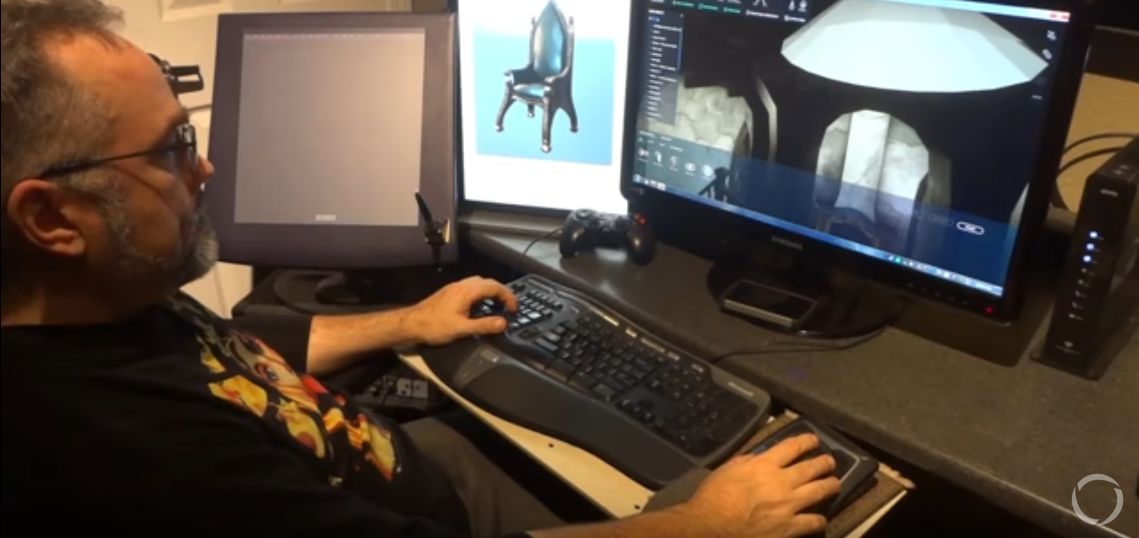
Maxwell Graf working in Sansar via keyboard and trackball

For this piece – running to one minute and 46 seconds, Max has a lot to say – and wisely, Drax lets him get on and say it uninterrupted.  Of course, there are descriptions of the experiences Max has been building – one of which, unsurprisingly, is very Rustica. However, what is interesting is not what he’s building, but what he has been observing about Sansar.

One of the major critiques (from SL users) towards Sansar is the lack of contiguous space – even though, as I’ve pointed out, an experience can be four kilometres on a side (the equivalent of 16 SL regions on a side). That still may not be as big as a Mainland continent in Second Life, but Max puts it better perspective when it comes to something like period role-play (a popular pursuit in SL):

The really interesting thing about something that is on that scale is that from a role-play perspective, it does not have to be confined to a small village any more. You can exist on each side of the mountains and never even see each other because it takes three hours to walks across.

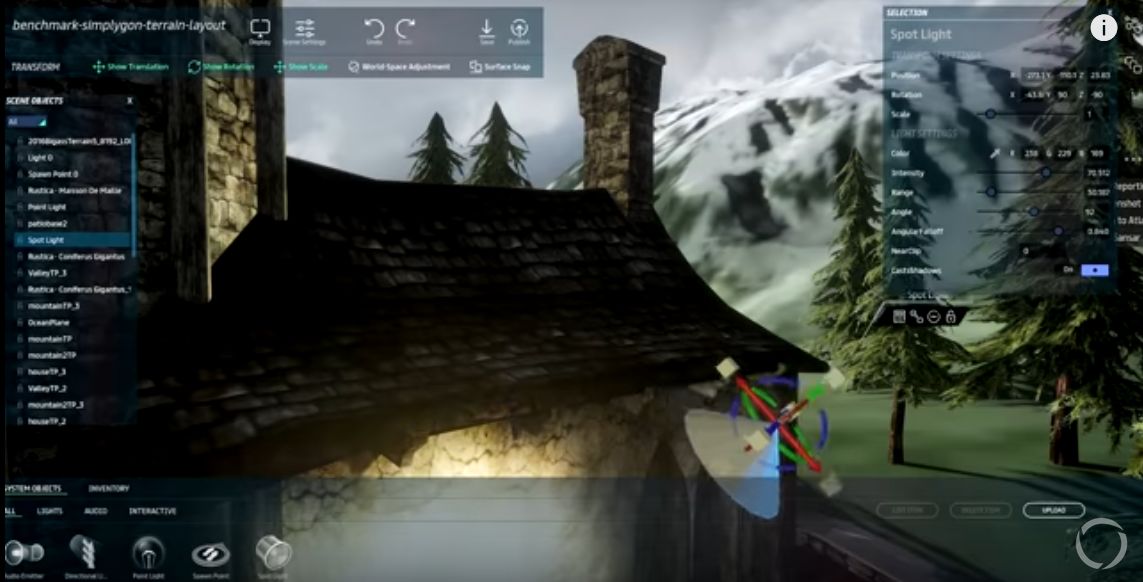
Rustica in Sansar’s Edit mode

When couched like that, in an environment where flying could be disallowed, teleporting strictly controlled, etc., the span of role-play and role-play encounters could be far more involved than anything witnessed in Second Life – if and when Sansar has built up a mass of interested users. It also raises the potential for very real-time training and simulation uses for the platform.

Max also touches  – admittedly lightly – on what is bound to be something of a struggle for balance on the part of Sansar content creators: pitching their goods and services at a price which reflects the effort put into creating / building them, and which users are willing to pay. In some respects, this is where Sansar could be initially hamstrung if its initial core user demographic is drawn from Second Life users, who will likely have certain expectations on the cost of goods and items because of their time in SL.

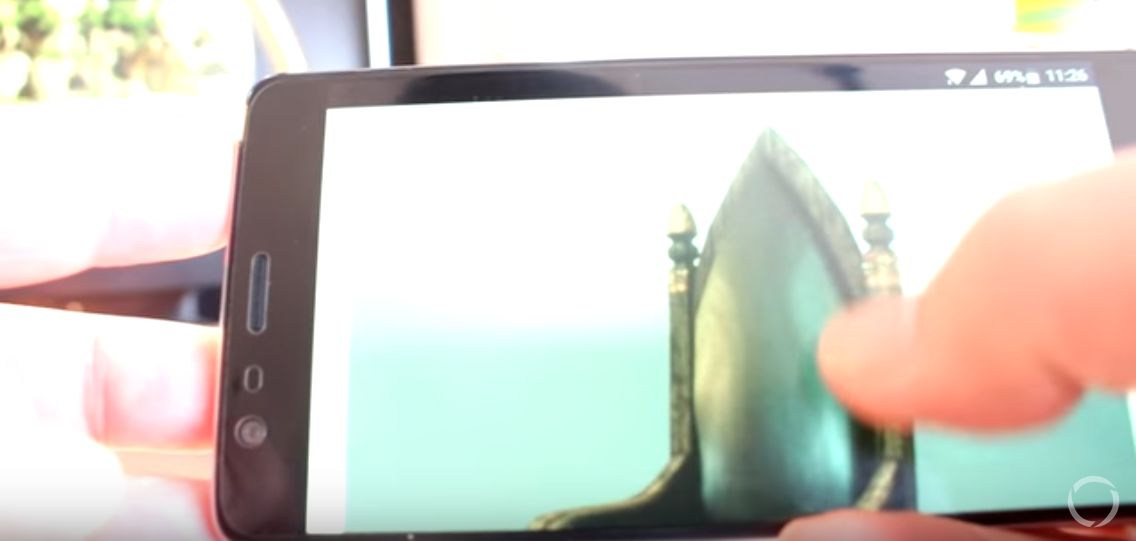
Browsing the Sansar marketplace via smartphone

However, it is in his comments around Sansar’s potential for public reach which are perhaps the most interesting, coupled with the manner in which he is using Sansar:

What Sansar is going to offer the public is an opportunity to get an understand of what an open virtual platform really is about. And that’s going to make a difference, because from here on out, we’re going to be looking at the beginnings of what will become a true metaverse.

Just how likely this is going to be is open to question; will people really see VR and virtual spaces as important to their social engagement, for example. But the important element here is that Sansar’s potential success has been judged on the basis of its lean towards VR, and the fact that (thus far) VR hasn’t really grabbed what could be called a broad market; however; as Max demonstrates in this video is that Sansar can be practically used and enjoyed sans VR paraphernalia.

This is important because, like it or not broader-based user catchment and retention is going to be an issue for Sansar as much as it has been for Second Life, if for no other reason that many of the platform capabilities are going to take time to mature. If it is seen purely as being “all about the VR”, then that catchment is liable to be considerably narrowed, simply because people aren’t buying into VR in a big way as it stands right now (although as the hardware and costs improve, this could well change). Therefore, emphasising the wider potential for the platform to operate without all the expense of HMDs, etc., could boost the level of interest among “the public” (UI allowing). It’s just a pity this point is somewhat undermined by the (somewhat jarring) interjection of HMD use into Max’s narrative.

That said, this is still a further interesting video in a maturing series, and another step along the way to giving further insights into the platform as we move ever closer to Sansar’s public opening.

Sansar: new Creator Profile video as preview invites ramp-up

(courtesy of Linden Lab)

On Thursday, July 6th, Linden Lab released a further Sansar preview video focusing on the work of a content creator – Ria, which I’ve embedded at the end of this article

Given we’re now not that far away from the doors to Sansar opening to a wider audience in the “creator beta” (or whatever the Lab finally calls it), the video can be seen as a further ratcheting of things  – alongside recent media articles – ready for the opening. At the same time, the past week has seen a further batch of invited into the Creator Preview find their way to those who have applied to access Sansar.

Further invites to join Sansar have been issued in the last week by the Lab

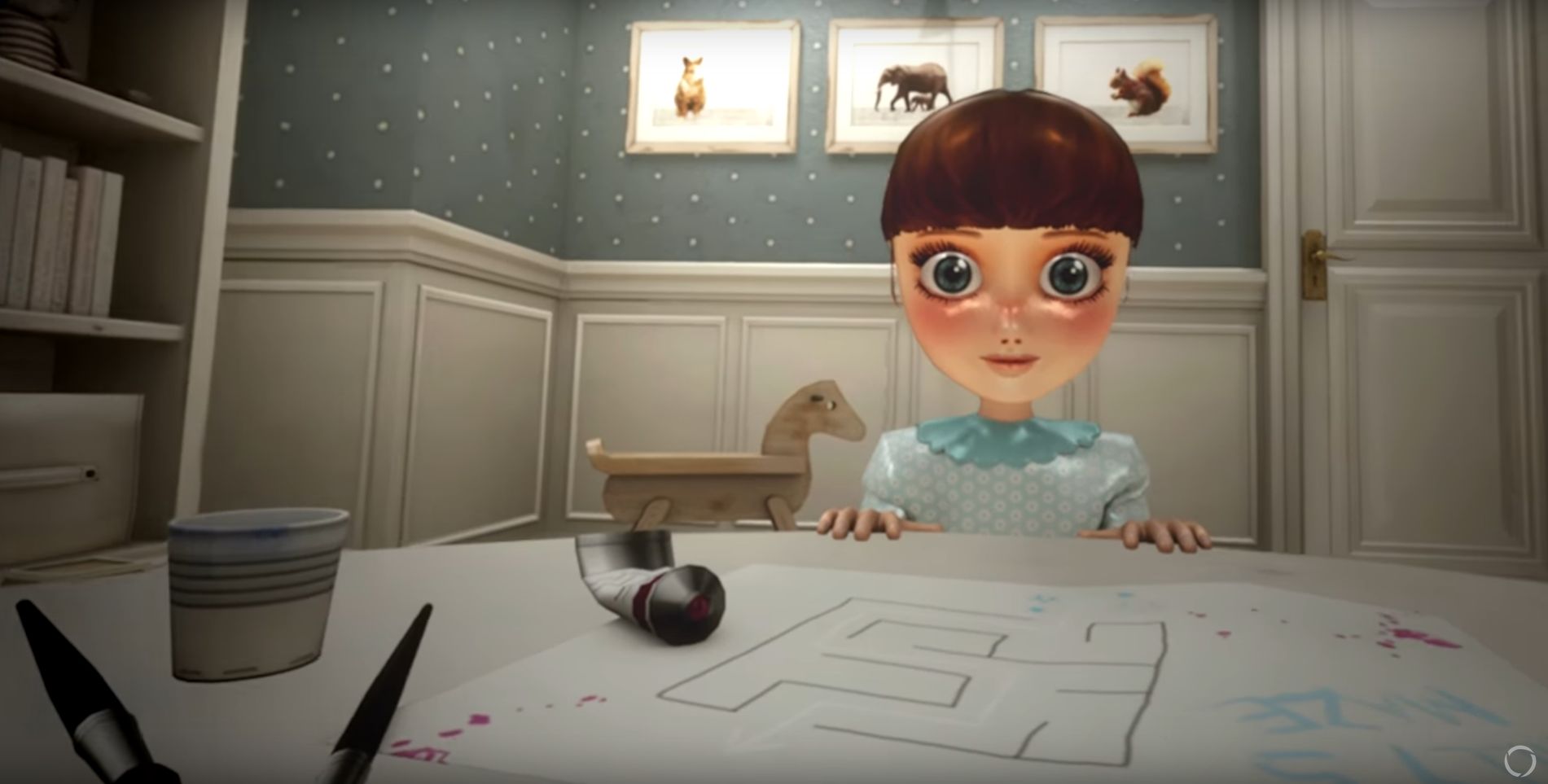
At 99 seconds in length, the video is an engaging enough piece, Ria’s experience from both within and without, which takes the form of an immersive story involving a little girl and her toys, utilising three locations linked by teleports. Kudos to Drax for presenting a means of suggesting the potential of VR immersion by overlaying images from within the game with shots of Ria looking around her creation while using a HMD. It may not be as immersive as “the real thing”, but it’s a lot better that intercut views of heads with HMDs strapped to them bobbing and weaving in front of computer screens we’ve seen in the past.

Those looking for details on Sansar are going to be disappointed however – this is a promotional video after all. That said, there are some interesting shots of the edit environment and what appears to be the fully realised run-time space. Again, given it is a promo video, reading too much into what “is” or “isn’t” said would be a mistake.

Some have found a couple of statements in the video objectionable. The first is the idea that “there is nothing even remotely like Sansar out there” – and I admit to finding it questionable myself.While it may not be as deeply immersive as a “true” VR experience, the fact remains that SL offers pretty much everything Sansar promises, and has done for a good while now. And just because it doesn’t support headsets doesn’t change that. And in terms of VR, there is High Fidelity to consider as well…

The second is that Sansar will achieve “broad appeal” when launched. This has been pooh-poohed on the basis that VR itself has yet to achieve a significant market share. However, “broad appeal” needn’t necessarily mean “mass market” – and the two seem to be getting conflated.

Inside Ria’s Sansar Experience

I personally don’t think VR (and by extension Sansar) will be “mass market”. However, as I’ve oft said, there are markets were VR could have a significant role, and Sansar could be ideally positioned to leverage them. Design, architecture, training, simulation, education, healthcare, for example; plus, as friend and content creator Dassni pointed out to me in a lengthy conversation, it might even appeal to indie game / game modding enthusiasts.  Taken together, these could facilitate the kind of “broad appeal” for Sansar to generate a comfortable level of revenue for the Lab – in time.

How much time? Well, therein lies the rub. Sansar itself is going to need a lot more development work once the gates open to a wider audience, and even among the markets already looking at VR, the preference might be to wait until headsets have improved in capability and looks and come down in price – something which could be around 2-3 years away.