Tranquil Dreams in Second Life

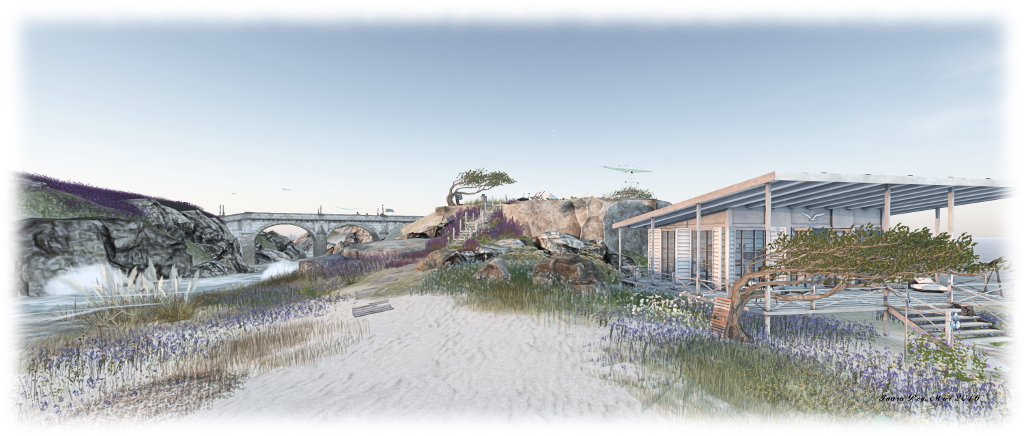
Tranquility Dreams; Inara Pey, September 2015, on FlickrTranquility Dreams September 2015 (Flickr)

Tranquility Dreams is a new region recently opened by Elvira Kytori, the creator of the always stunning  Timeless Memories, which I last wrote about in July. I leaned about this new addition to Elvira’s White Dunes Estate region through Kylie Jaxxon, owner of The Trace Too and a mutual friend to both Elvira and myself, who invited me over to take a look.

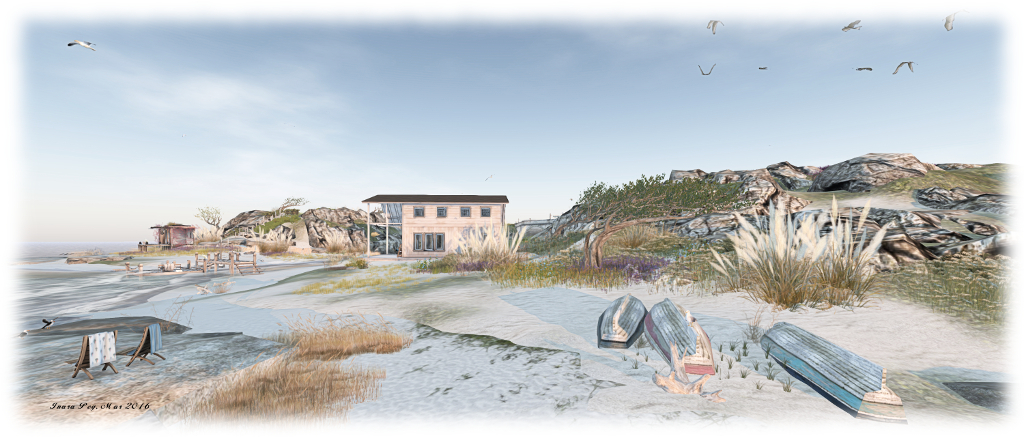
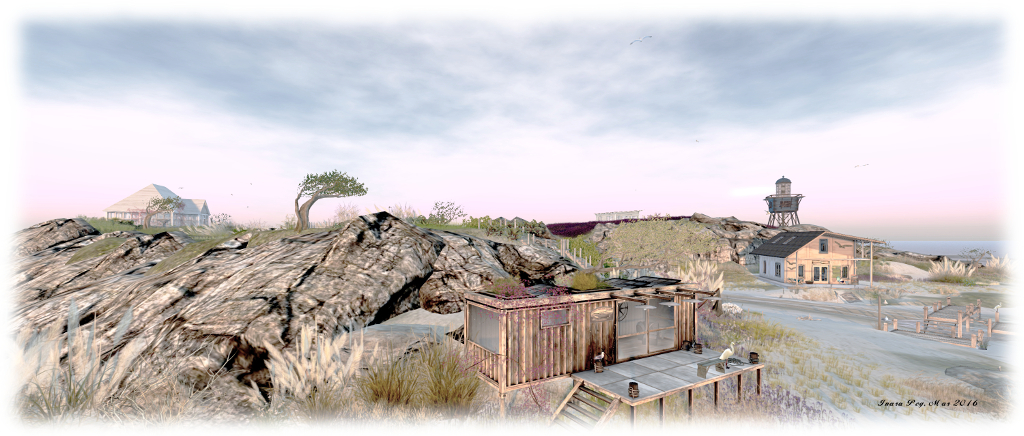
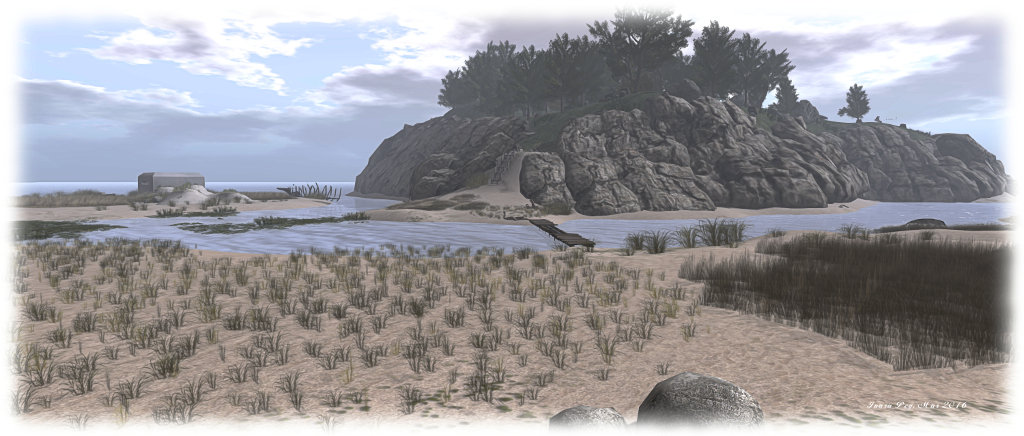
Offering a tropical island look and feel, Tranquility Dreams is split between a residential environment – the houses scattered across the island are available for rent – and public  beaches open to all for wandering and relaxing; the overall design having been put together with photographers in mind.

Tranquility Dreams; Inara Pey, September 2015, on FlickrTranquility Dreams September 2015 (Flickr)

The region’s appearance suggests – to me at least – a feeling of it perhaps being a remote part of the US Gulf Coast; a place facing the sea, off the beaten track, and maybe even once a small private estate, presided over by the large, colonial-looking beach house towards the middle of the region. With ivy clinging to its timber-framed walls, broad balconies and verandahs shaded from the heat of the sun, this seems to hint at money having once run through the area.

Around the house sit a number of smaller dwellings, all wood built and somewhat bleached by sun and salt air, their presence giving the impression that as the money faded, so the land was sold, and people hurried in to take advantage of the prime, ocean-facing real estate. Or perhaps those who once owned the big house built the other properties with the intent to rent them out and help offset the running costs of their little corner of the world.

Tranquility Dreams; Inara Pey, September 2015, on FlickrTranquility Dreams September 2015 (Flickr)

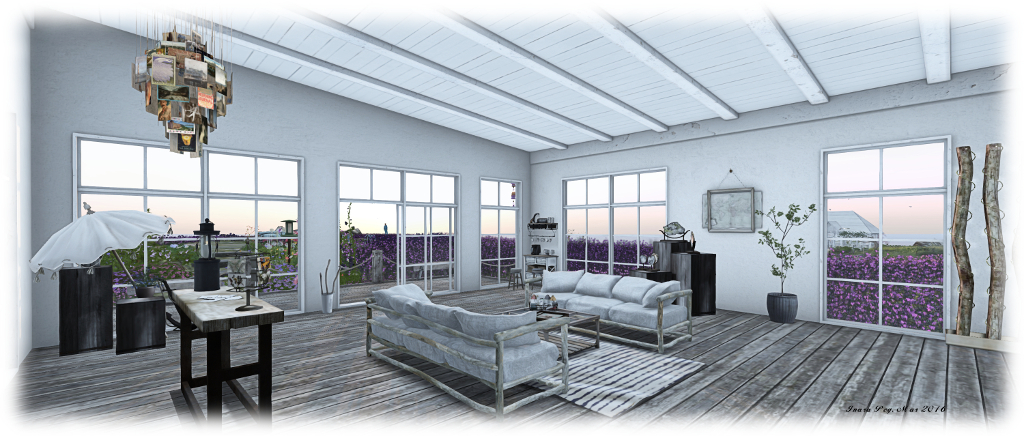
Whichever way you chose to let your own stories about the region form and grow, one thing is clear:  this is a tranquil place, just as the name suggests. The houses are all set far enough apart from one another to invite a feeling of cosy privacy when indoors, while all of them have a their own sea view to be enjoyed by whoever rents them. At the same time, the paths and tracks running between them and down to the beach encourage exploration and wandering.

The houses have all clearly been carefully chosen to complement one another and give a feeling of community and togetherness, with the result that each adds its own character and charm to the region. I confess to finding myself drawn to the delightfully named Dust Bunny Daisy Houseboat by Noel Melody (lxlNoel), which sits on a pair of pontoons just off the beach.

Tranquility Dreams; Inara Pey, September 2015, on FlickrTranquility Dreams September 2015 (Flickr)

With ambient sounds, broad beaches to roam with chairs and picnic spots a-plenty, and a landing point located on a small offshore sandbar connected to the island by a wooden walkway, there is an easy charm to Tranquility Dreams which SL explorers will doubtless enjoy. And if you are looking for a new place to call home, you might just find yourself seduced into staying.

SLurl Details

A farewell to Forgotten City in Second Life

Forgotten City; Inara Pey, August 2015, on FlickrForgotten City August 2015 (Flickr)

Ciaran Laval was perhaps the first blogger to bring word that Forgotten City, the marvellous mechanoid town, largely the brainchild of Jenne Dibou and Mandy Marseille, would be closing in September 2015.

His article, which also contains a link to Mandy’s SL Universe forum post announcing the news and which includes some of the fascinating history behind the region’s development, was followed by numerous other posts about the region and its closure. As such, I decided to hold off a while and pay a further visit in farewell once I had a little time available to put together a video on the region as (hopefully) a reminder to all of this utterly enchanting build, which I last wrote about in June 2013 (a further visit in 2014 sadly didn’t make it into these pages).

Forgotten City; Inara Pey, August 2015, on FlickrForgotten City August 2015 (Flickr)

If you’ve not visited before, then I strongly, strongly urge you to do so before the gates of Forgotten City close, possibly forever. There is so much to see and charm and delight. Not only is the multi-tiered, steampunkish city beautifully scaled and executed (so much so that it was selected by the Lab as a location for some of the early in-world testing using the Oculus Rift), there really is so much to delight and discover.

Forgotten City; Inara Pey, August 2015, on FlickrForgotten City August 2015 (Flickr)

You can, for example watch its mechanical populace go about their daily tasks, possibly in the hope that the human inhabitants responsible for the city – and them – might one day return. Or, if you prefer, you can board a steamship and journey elsewhere, or, witness the arrival of the cat-a-maran (emphasis on the “cat” – complete with mechanoid kittens!), or you can teleport high into the sky and to the City’s Winter Parkland or visit Jenne’s store, the islands it occupies held aloft over the city by three airships. You’ll also find games to be played and – for the careful explorers – hidden secrets to be found.

Forgotten City; Inara Pey, August 2015, on FlickrForgotten City August 2015 (Flickr)

It’s not entirely clear when the gates will close – although it appears this will be later in September, rather than early on. Even so, if you do want to make a visit or a return visit, I’d recommend not leaving it too long, just in case.

SLurl Details

Santaurio’s summer draws to a close in Second Life

Santaurio, Cala del Barronal; Inara Pey, August 2015, on FlickrSantaurio, Cala del Barronal August 2015 (Flickr)

It was only supposed to be a summer 2014 setting, but Santaurio, Jac and Romy Mornington’s idyllic and mysterious island (originally sub-titled “The Lost Island”, in a nod to a certain television series), has endured for well over a year.

However, Jac and Romy have now announced that the region will finally be closing in a week or so, as they feel it is time move on to a new project. So, if you haven’t visited Santaurio so far, or haven’t been back in a while, now is the time to don your hiking boots, grab a hip flask of water and set out to do so, as the region is gain open to all for a land visit – no group membership required.

Santaurio, Cala del Barronal; Inara Pey, August 2015, on FlickrSantaurio, Cala del Barronal August 2015 (Flickr)

There have been a few changes since my first visit, back in April 2014; some subtle, and a nod to the passing of time, others a little more obvious and which present new little scenes that add more to any back story one cares to create for the island.

So it is, for example, that while the island’s signature crashed jet remains offshore, so the bodies within it have now gone (as has the scattered luggage on the beach), and over the passing of time seaweed has gathered around the wreck, no doubt sheltered by the ebb and flow of the tide by the ‘plane’s bulk. So to, interestingly, have some rocks grown up alongside the wreckage, providing a nice little sandy area on which the ever-patent stewardess now stands, ready to offer her greetings to visitors – well, it has to be better than a wet, slippery wing! 🙂 .

Santaurio, Cala del Barronal; Inara Pey, August 2015, on FlickrSantaurio, Cala del Barronal August 2015 (Flickr)

Just back from the beach facing the ‘plane, there had once been some strange ruins. These have since gone, replaced by a small encampment which indicates the downed jet isn’t the only aircraft to have wound up here: the wing of a light aircraft serves as a table, a propeller, presumably from the same ‘plane, propped alongside it. A radio set on another makeshift table suggests attempts to call for assistance…

Elsewhere, much that was familiar in the summer of 2014 remains: the beach club further along the coast from the crashed jet; the river winding inland to the secret little pools and hidden places, the numerous camps and places to sit and enjoy the scenery. Watch out or the entrances to what seems to be an old pirates’ hideaway; I don’t actually remember that from earlier visits – but it is entirely possible I missed it.

Santaurio, Cala del Barronal; Inara Pey, August 2015, on FlickrSantaurio, Cala del Barronal August 2015 (Flickr)

Santuario is another example of why I’ve always loved Jac and Romy’s builds; there is a wonderful attention to detail, with everything always finely tuned to flow together perfectly. Hence why they’ve tended to be covered a lot in these pages over the years – although admittedly, I’m so far behind in my travelogue visits at the moment that I have yet to make it to Bella Place – so expect to see that in these pages soon!

In the meantime, Santaurio still calls should you wish to visit – just don’t leave it much beyond the next week or so. And while it may well be going, I’m already anticipating whatever Jac and Romy have planned to replace it.

SLurl Details

Le Avaline Village in Second Life

Le Avaline Village; Inara Pey, August 2015, on FlickrLe Avaline Village August 2015 (Flickr)

Le Avaline Village is a full sim residential / photographic region designed by Shyne Autumn Meadow (Shyne Button) which seems to blend together a number of influences to produce and interesting rural / coastal environment with just a tiny hint of an urban centre.

Cam out over the water a little from the landing point, looking towards the  group of brick shops and their terraced courtyard, and you might catch a hint of Amsterdam or Rotterdam, the buildings and water suggesting a canal front scene. But walk a short distance way and you’re in altogether more rural and more rugged terrain, the landscape broken up by water which doesn’t quite do enough to create any individual islands, and which is easily crossed by bridges here and there.

Le Avaline Village; Inara Pey, August 2015, on FlickrLe Avaline Village August 2015 (Flickr)

Much of this landscape is elevated  – although not too greatly – by rocky uplands and plateaus upon which houses sit, each within their own grounds. When exploring, do keep in mind that some of these are rented out as private homes, so please be mindful not to invade anyone’s privacy.

A small farm occupies a part of the land, the house atop one of the plateaus to hold a commanding view over the partially fenced lands below. Fencing there may be, but it hasn’t stopped some sheep and horses from wandering away in search of alternate grazing!

Le Avaline Village; Inara Pey, August 2015, on FlickrLe Avaline Village August 2015 (Flickr)

Follow the paths away from the landing point and over bridges and under rocky arches, and a cosy beach can be found, complete with pier and moorings for boats, together with a little cafeteria offering refreshments and a chance to sit and gaze out over the sea. Further around the coast is an open-air movie theatre;  I won’t call it a drive-in unless you have a 4×4 🙂 ,  but the supplied pick-ups and couches offer places to relax.

This is a place where the seasons mix easily with one another as you explore; the greens of summer stirred gently with the yellows and golds of autumn, while under spreading boughs parasol-shaded chairs and tables offer further places to sit and enjoy the surroundings.

Le Avaline Village; Inara Pey, August 2015, on FlickrLe Avaline Village August 2015 (Flickr)

There are plenty of opportunities for photographs within the region, and should you choose, after taking them, you can share them on the Le Avaline Flickr pool.

I enjoyed my meanderings around Le Avaline Village; after my recent self-imposed hiatus from exploring Second Life, it was good to end my walking shoes on one more and find somewhere new to get me back into the habit of wandering and nosing.

You might even say that normal service is being resumed in these pages!

SLurl Details


An eclectic visit in Second Life

Eclectica; Inara Pey, August 2015, on FlickrEclectica August 2015 (Flickr) – click any image for full size

Eclectica, located on the homestead region of The Place, is somewhere I’ve been meaning to visit since it opened earlier in 2015. Designed by Maddy  (Nibby Riddler), it is disarmingly described as an “enchanting sim with an eclectic blend of forestry, fantasy, folklore, whimsy and magical exploration, with wonderful photo opportunities amongst the ruins, hidden caves, lovers spots and romantic meadows.”

And the truth is – it really is – and so much more. This is a region of scenic contrasts, from low-lying, meadows edged with water, to high rocky plateaus from which waterfalls cascade, this is a place demanding gentle exploration, by either following the footpaths leading away from the landing point, or by wandering where soever your feet wish to take you.

Eclectica; Inara Pey, August 2015, on FlickrEclectica, August 2015 (Flickr)

This is a place rich in natural colours, the trees and flowers suggestive of a long afternoon stretching its way lazily from spring to early autumn, and where surprises await around every corner. Romantics are catered for, with plenty of cuddle spots scattered around, some on the ground, others hanging from sturdy tree branches and others floating on the waters or under the tiled roofs of gazebos. often with Intan dance systems nearby.

Photographers are also catered for; there is much here to attract eye and snapshot floater, and under a wide selection of windlights, depending upon your location and where you’re looking. The paths, trees and fields offer lots of rural opportunities for pictures, while the wreck of an ancient man o’ war (or is it perhaps a pirate ship? Ah, let your imagine decide!) sitting off the coast, watched over from ruins on a high cliff offers plenty of opportunity for dramatic and mysterious shots. Meanwhile, the ruins offer a hint of fantasy in which to indulge, as does what appears to be an alchemist’s cottage sitting a short distance away.

Eclectica; Inara Pey, August 2015, on FlickrEclectica, August 2015 (Flickr)

This is also a place of delightful whimsy, with lots of little touches scattered throughout which cannot fail to bring a smile to the face when discovered. Even the orient touches the region in one corner, adding to the eclectic nature of The Place.

Not that everything is in any way a jumble. Such is the skill of the design, everything flows together naturally; so much so, that the overall effect of exploring Eclectia is one of journeying through neighbouring lands, rather than simply wandering a single region.

Eclectica; Inara Pey, August 2015, on FlickrEclectica, August 2015 (Flickr)

In fact, with so much to discover, coupled with the opportunity to take photographs, as well as the myriad of places to sit and unwind as the music plays, it’s easy to get lost within Electica – as I did, for an entire afternoon!

Maddy has done a superb job with what is her first region build. Electica has deservedly gained wide recognition across Second Life. With my own project beckoning me back, I hope that some of her creative eye has rubbed off on me, such is the captivating look and feel to the region. And if not, then I’ll just and to come back and sit under tree or on boat or couch and let the world take care of itself.

SLurl and Website Details

Luxembourg 1867: exploring virtual history in Second Life

The Virtual Pfaffenthal; Inara Pey, July 2015, on FlickrThe Virtual Pfaffenthal, July 2015 (Flickr) – click any image for full size

Currently featured in the Editor’s Picks section of the Destination Guide, The Virtual Pfaffenthal is interesting mix of role-play environment and historical project which crosses over into the real world.

The project – run by the 1867 group founded by Hauptmann Weydert (Weydert), comprises 8 regions, with Pfaffenthal Vauban and Kirchberg being the most developed, although there is much evidence of construction work going on in the other regions. Kirchberg is actually the home of Fort Thüngen, which has been in operation in SL since 2012, and as such may be familiar to some SL residents.

The Virtual Pfaffenthal; Inara Pey, July 2015, on FlickrThe Virtual Pfaffenthal, July 2015 (Flickr)

Eventually, the regions will offer a reproduction of the fortress city of Luxembourg as it appeared in the 19th Century, offering a period role-play focused on a specific point in the city’s history, as the introductory note card explains:

In spring 1867, Luxembourg is a complex military fortress, the ultimate result of a construction that took hundreds of years, a city occupied by a Prussian garrison. The Grand Duchy is an ‘autonomous’ country  and member of the Zollverein, the customs union established by Prussia. The attempt of  Napoleon III to buy the land from the Grand Duke King William the first, creates tensions among the population, trouble spreads throughout  the capital  and the country. The great nations send their secret agents and mobilize their troops, Bismarck intervenes …

However, there is another purpose to the project, as I alluded to in the opening paragraph of this article: it forms an interactive exhibit at the Luxembourg City History Museum, where visitors can come in-world and explore the virtual Luxembourg of 1867 using the Oculus Rift.

At the museum, PCs have been set-up which can be used, with guidance from staff, to directly access The Virtual Pfaffenthal. “We have two PCs set-up right now,” Weydert informed me when we met in-world to discuss the project as he prepared to host a group of visitors at the museum. “One has an Oculus HMD, the other uses a big screen. A further  Oculus Rift set up is to follow shortly.”

Visitors use prepared avatars, complete with period dress, to explore the city, guided by a young boy, Steft who tells them the history of the City from both his perspective and that of 1867.

The Virtual Pfaffenthal; Inara Pey, July 2015, on FlickrVisitors at the City History Museum, Luxembourg, can enter The Virtual Pfaffenthal using prepared avatars such as Jang and Ammy Ecker, above, enjoying a dance on the street, to music by Steft, the virtual guide, in the background

“This has actually be quite a challenge,” Weydert confides in me as we chatted and strolled along the cobbled streets. “We didn’t want people finding themselves accidentally undressing the avatars or teleporting themselves off somewhere, so we’ve had to turn off a number of functions in the viewer.”

Not only are visitors able to time-travel in this way, and witness how Second Life can be used as an immersive experience, Weydert also offers museum visitors the museum the opportunity to learn more about Second Life itself. “I run open workshops on certain days,” he explains, “where folks can learn to create their own avatar, find out more about SL, and then continue their explorations and involvement from home. We also encourage School classes to register for the workshops, so they can learn more about Luxembourg’s history interactively.”

This aspect of the project is something of an extension of activities started at Fort Thüngen. For the last few years, this has been the focal point for workshops on virtual environments  involving the general public and schools, with sessions hosted at the Fortress Museum in Luxembourg in association with the Luxembourg National Museum of History and Art.

The Virtual Pfaffenthal; Inara Pey, July 2015, on FlickrFort Thüngen, Kirchberg, has been in operation since 2012 as a workshop for virtual activities since 2012, and is now a part of the wider regions making up the 1867 project

The educational element of the project is of keen interest to the team, which they’d like to expand. “We want to include schools and other institutions,” Weydert told me, after a slight distraction as he assisted a visitor at the museum. “Such as classes having avatars their students can use to participate [in-world] the whole term.”

So far, the 1867 group has been run on a closed basis, but with the museum element now running, Weydert and his team are keen to open out the venture to include other residents, and grow it as an ongoing venture in Second Life.

“1867 invites residents, artists, 3D builders and graphic artists, scripters, animators, educators and other social actors to come and join us,” he says. “We want to build a community where people can come, enjoy themselves, and in the process learn from history and contribute to our growth.”

The Virtual Pfaffenthal; Inara Pey, July 2015, on FlickrThe Virtual Pfaffenthal, July 2015 (Flickr)

Those that do engage with the community are offered free housing within the project – although they are obviously asked to keep to the period. Those interested are invited to explore the regions and  contact Hauptmann Weydert if they’d like to become a part of the group.

Beyond this, the 1867 group are also considering some pretty far-reaching plans, such as a series filmed entirely in-world within the project spaces together with a supporting comic book, in what Weydert refers to as a transmedia project aimed at engaging students and those interested in history and in discovering more about virtual worlds.

The Virtual Pfaffenthal, July 2015 (Flickr)

For my part, I spent a pleasant afternoon wandering the streets of Pfaffenthal, feeling at home in a free period costume provided to visitors from SL, and encountering a number of the residents along the way. It would be intriguing and interesting to experience The Virtual Pfaffenthal via a HMD, but I’ll content myself with future visits to see how things progress.

My only real disappointment in visiting was seeing the number of people who simply could not be bothered to read – or disregarded  – the request that they wear period costumes prior to leaving the arrival area. Considering perfectly good free outfits are clearly and readily available (you have to walk past them to reach the doors), this struck me as a shame.

SLurl and Additional Links