Lab Gab November 6th: Cloud Uplift update

via Linden Lab

On Friday November 6th, 2020 Lab Gab, the live streamed chat show hosted by Strawberry Linden on all things Second Life returned to the the subject of the work to transition all Second Life services to Amazon Web Services (AWS) and away from running on the Labs’ proprietary hardware and infrastructure.

The session came some 7 months after the last Lab Gab to focus on this work in April 2020 with Oz Linden and April Linden (see Lab Gab 20 summary: Second Life cloud uplift & more), and this time, Oz Linden sat in the hot seat alongside Mazidox Linden.

The official video of the segment is available via You Tube, and is embedded at the end of this article. The following is a summary of the key topics discussed and responses to questions asked.

Mazidox Linden is a relative newcomer to the Linden Lab team, having joined the company in 2017 – although like many Lab staff, he’s been a Second Life resident for considerably longer, having first signed-up in 2005.

Table of Contents

He is the lead QA engineer for everything simulator related, which means his work not only encompasses the simulator and simhost code itself, but also touches on almost all of the back-end services the simulator software communicates with. For the last year he has been specifically focused on QA work related to transitioning the simulator code to AWS services. He  took his name from the Mazidox pesticide and combined it with the idea of a bug spray to create is avatar, to visualise the idea of QA work being about finding and removing bugs.

Oz Linden joined the company in 2010 specifically to take on the role of managing the open-source aspects of the Second Life viewer and managing the relationship with third-party viewers, a role that fully engaged him during the first two years of his time at the Lab. His role then started expanding to encompass more and more of the engineering side of Second Life, leading to his currently senior position within the company.

“The Bugspray” Mazidox Linden (l) and Oz Linden joined Strawberry Linden for the Friday, November 6th segment of Lab Gab to discuss the cloud migration work

What is the “Cloud Uplift”?

[3:25-5:55]

  • Cloud Uplift is the term Linden Lab use for transitioning all of Second Life’s server-based operations and services from their own proprietary systems and services housed within a single co-location data centre to  commercial cloud services.
  • The work involves not only the visible aspects of SL – the simulators and web pages, etc., but also all the many back-end services operated as a part of the overall Second Life product,  not all of which may be known to users.
  • The process of moving individual services to the cloud is called “lift and shift” – take each element of software, making the required adjustments so it can run within a cloud computing environment, then relocate it to AWS infrastructure and hardware in a manner that allows it to keep running exactly as it did prior to the transfer, while avoiding disruptions that may impact users.
  • The current plan is to have all of the transitional work completed before the end of 2020.
  • However, this doe not mean all the the work related to operating SL in the cloud will have been completed: there will be further work on things like optimising how the various services run on AWS, etc.,

Why is it Important?

[5:56-12:12]

  • It allows Second Life to run on hardware that is a lot more recent than the servers the Lab operates, and allows the Lab to evolve SL to run on newer and newer hardware as it becomes available a lot faster than is currently the case.
    • In particular, up until now, the route to upgrading hardware has involved the Lab reviewing, testing and selecting hardware options, then making a large capital expenditure to procure  the hardware, implement it, test it, then port their services over to the hardware and test, then implement – all of which could take up to 18 months to achieve.
    • By leveraging AWS services, all of the initial heavy lifting of reviewing, testing, selecting and implementing new server types is managed entirely by Amazon, leaving the Lab with just the software testing / implementation work.
  • A further benefit is that when SL was built, the capabilities to manage large-scale distributed systems at scale didn’t exist, so LL had to create their own. Today, such tools and services are a core part of product offerings alike AWS, allowing the Lab to leverage them and move away from having to run (and manage / update) dedicated software.
  • Two practical benefits of the move are:
    • Regions running on AWS can run more scripts / script events in the same amount of time than can be achieved on non-AWS regions.
    • The way in which simulators are now managed mean that LL can more directly obtain logs for a specific region, filter logs by criteria to find information, etc., and the entire process is far less manually intensive.

How Secure is SL User Data on AWS?

[12:20-15:43]

  • It has always been LL’s policy when dealing with third-party vendors (which is what AWS is) not to expose SL user data to those vendors, beyond what is absolutely necessary for the Lab to make use of the vendor’s service(s).
  • This means that while SL user data is stored on AWS machines,it it not stored in a manner Amazon could read, and is further safeguarded by strict contractual requirements that deny a company like Amazon the right to use any of the information, even if they were to be able to read it.
  • In fact, in most cases, user-sensitive data is effectively “hidden” from Amazon.
  • LL  is, and always has been, very sensitive to the need to protect user data,even from internal prying.
  • In terms of the simulators, a core part of testing by Mazidox’s team is to ensure that where user data is being handled (e.g. account / payment information, etc.), it cannot even be reached internally by the lab, as certainly not through things like scripted enquiries, malicious intent or prying on the part of third-party vendors.
  • [54:30-55:18] Taken as a whole, SL on AWS will be more secure, as Amazon provide additional protection against hacking, and these have been combined with significant changes LL have made to their services in the interest of security.

Why is Uplift Taking So Long?

[15:48-19:20]

  • The biggest challenge has been continuing to offer SL as a 24/7 service to users without taking it down, or at least with minimal impact on users.
    • This generally requires a lot of internal testing beforehand to reach a point of confidence to transition a service, then make the transition and then step back and wait to see if anything goes dramatically wrong, or users perceive a degraded service, etc.
    • An example of this is extensive study, testing, etc., allowed LL to switch over inventory management from their own systems to being provisioned via AWS relatively early on in the process, and with no announcement it had been done – and users never noticed the difference.
  • Another major challenge has been to investigate the AWS service offerings and determine how they might best be leveraged by SL services.
  • As many of the SL services are overlapping one another (e.g. simulators utilise the inventory service, the group services, the IM services, etc.), a further element has been determining a methodical manner in which services can be transitioned without impacts users or interrupting dependencies on them that may exist elsewhere.
  • The technology underpinning Second Life is a lot more advanced and recent within the AWS environment, and this means LL have a had to change how they go about certain aspects of managing SL. This has in turn required experimentation, perhaps the deployment of new tools and / or the update / replacement of code, etc..

Will Running on AWS Lower Operating Costs?

[19:33-23:00]

  • During the transitional period it has been “significantly” more expensive to operate SL, inasmuch as LL is paying to continue to operate its proprietary systems and services within their co-lo facility and pay for running services via AWS.
  • Even after the need to continue paying for operating the co-lo facility has ended, it is unlikely that the shift to AWS will start to immediately reduce costs.
  • However, the belief is that moving to AWS will,  in the longer term, reduce operating costs.
  • Whether reduced operating costs lead to reduced costs to users, or whether the savings will be re-invested in making further improvements to the service lay outside of this discussion.
  • Right now the focus is not on driving down costs or making service significantly better, but is solely the work of getting everything transitioned. Lowering costs, making more efficient use of the underpinning capabilities provided by AWS will come after the migration work has been completed.

What Happens to the Old Hardware / Facility, Post-Uplift?

[23:09-25:15]

  • Several years ago, LL consolidated all of their hardware and infrastructure into a single co-location data centre in Arizona.
  • Most of the hardware in that facility is now so old it has depreciated in value to a point where it is pretty much worthless.
  • A specialist company has therefore been contracted to clear-out the Lab’s cage(s) at the co-lo facility and dispose of the hardware.
    • As a demonstration of LL’s drive to protect user data, all drives on the servers will be removed under inspection and physically destroyed via grinding them up on-site.

Continue reading “Lab Gab November 6th: Cloud Uplift update”

SL17B: Meet the Moles of Second Life

via Linden Lab
On Friday, June 26th, 2020 at the SL17B celebrations, the final of five Meet the Lindens sessions was held, this one featuring Patch Linden and the Moles of the Linden Department of Public Works (LDPW).

Unlike previous summaries in this series, this does not provide a breakdown of all topics covered. Instead it is structured follows:

Core information about the LDPW and the Moles is given below – who they are, what they do, how to apply to become a Mole, etc.

  • This information is drawn from both the session previous interview with the Moles and information from the SL wiki.
  • This information is supported by the Links to the Video section of the table of contents, right.
Table of Contents

This is followed by a short summary of the question (and their answers) likely to be of interest to readers. These are supported by the links under General Audience Questions section of the table of contents, right. For all of the questions asked in the session, please refer to the official video, embedded at the end of this article.

The Moles

Who or What are the Moles?

  • Officially called the Linden Department of Public Works (LDPW)
  • They are residents from all over the world hired by Linden Lab as independent contractors to undertake specific tasks.
  • The core element of work they undertake is specifically geared towards enhancing the Mainland, as noted in the official LDPW wiki page, although they actually do a lot more than this.
  • The LDPW initially formed in 2008, and so is now in its twelfth year. They are managed by Derrick Linden, the Product Operations Manager for Second Life, together with a team of Linden Lab staffers including Guy Linden, Madori Linden and Kona Linden.
  • Notable major projects carried out by the Moles include:
    • The infrastructure within Nautilus City.
    • The development of Bay City.
    • The Linden Homes continent of Bellisseria (including all topography, flora, infrastructure and housing).
    • The facilities for events like Shop & Hop, SL16B and SL17B, ton hall events, the turn-key regions available for businesses, starter avatars, etc.
    • The Lab provided games such as Linden Realms, Paleoquest, Horizons and the grid-wide Tyrah and the Curse of the Magical Glytches – all accessible via the Portal Parks.
  • They also provide support / input for / to technical projects (e.g. Project Bento and the avatar skeleton extension), and work with marketing, QA and other LL teams.
  • In keeping with their name, Moles were originally given a mole avatar, complete with hard hat. However, over the years, most have moved to having a more individual and personal look.
  • As well as being paid for the work they do, Moles also receive and allowance from the Lab, which is primarily intended to go towards the cost of uploads (texture, animations, mesh objects, etc)., but which can also be put towards developing their individual looks.
  • [Video: 29:58-33:54] Current project focus comprises:
    • Bellisseria / Linden Homes – including four more Homes themes, and next two of which will be “a bit of a departure” from what has so far been seen.
    • SL17B / LL-led events for 2020.
    • A Halloween refresh.
    • End-of-year events.
    • A number of “big media events”.
  • [Video: 39:49-40:52] Due to the Linden Homes work, the LDPW has expanded from 20 to 30.

How to Become a Mole

  • Positions in the LDPW are open to application by residents who believe they are qualified to work in the team, and the team may also approach specific residents and ask if they would consider joining them.
  • Applications are made by dropping a résumé (note card or email) of qualifications / experience (including links SLurls, Flickr, You Tube, etc.) to Derrick Linden (derrick.linden-at-lindenlab.com) or to Patch Linden (patch.linden-at-lindenlab.com).
  • Applicants have to go through a former interview process.
  • Successful applicants get to pretty much choose their hours of work – providing agreed tasks are completed on time.
  • As they are from around the world, this can allow some projects to move forward on almost a round-the-clock basis.
  • Those who are more fully-rounded in skill sets  – content creation, scripting, etc., – are encouraged to apply, but LL will also take on specialists.
  • Motivated, outgoing, communicative people with a passion for SL and willing to self-teach themselves new skill sets are particularly considered.

Selected Questions and Answers

Please use the links to the video in the table of contents to hear full responses to them.

  • Will the SSPE areas around the Log Homes ever be completed?  – Already working on it.
  • Will water regions connect all the continents? – Not all, but where in makes sense, hopefully.
  • Will the Bellisseria railway extend into the “older” region in the continent? – No. the tracks need to be part of the infrastructure built into region, they are not suited to being retro-fitted.
  • Could the trees in Bellisseria be swapped for trees with lower LI, and the LI given to residents? – No, because a) the content the Moles build is in accordance with best practices for things like LOD, etc., and b) Land Impact really doesn’t work is a way that the question implies.
  • Will there be commercial areas in Bellisseria? – It had been intended too release Victorian Commercial as well as the Victorian themed homes (e.g. Millbank, intended to be an open market space), but this was de-prioritised in favour of more homes.
  • Why not convert abandoned Mainland for use with Linden Homes? – The way the Linden Homes regions are set-up doesn’t easily lend itself to use on the Mainland.
  • What about an underground Bellisseria theme? – has been considered along with other ideas. However, there are technical complexities to this – creating the terrain, dealing with the physics, etc., – which are considered to be currently prohibitive.
  • Will there be Trailers and Campers on 1024 sq m parcels, as once stated? Unlikely. The 512m parcels for Trailers and Campers were selected to give Premium members who had already used some of their free tier on a Mainland parcel the option of also trying a Linden Home. Also, the Campers and Trailers don’t scale well on 1024 sq m.

Catch the rest of the session in the video below.

SL17B Meet the Marketing Lindens – a summary

via Linden Lab
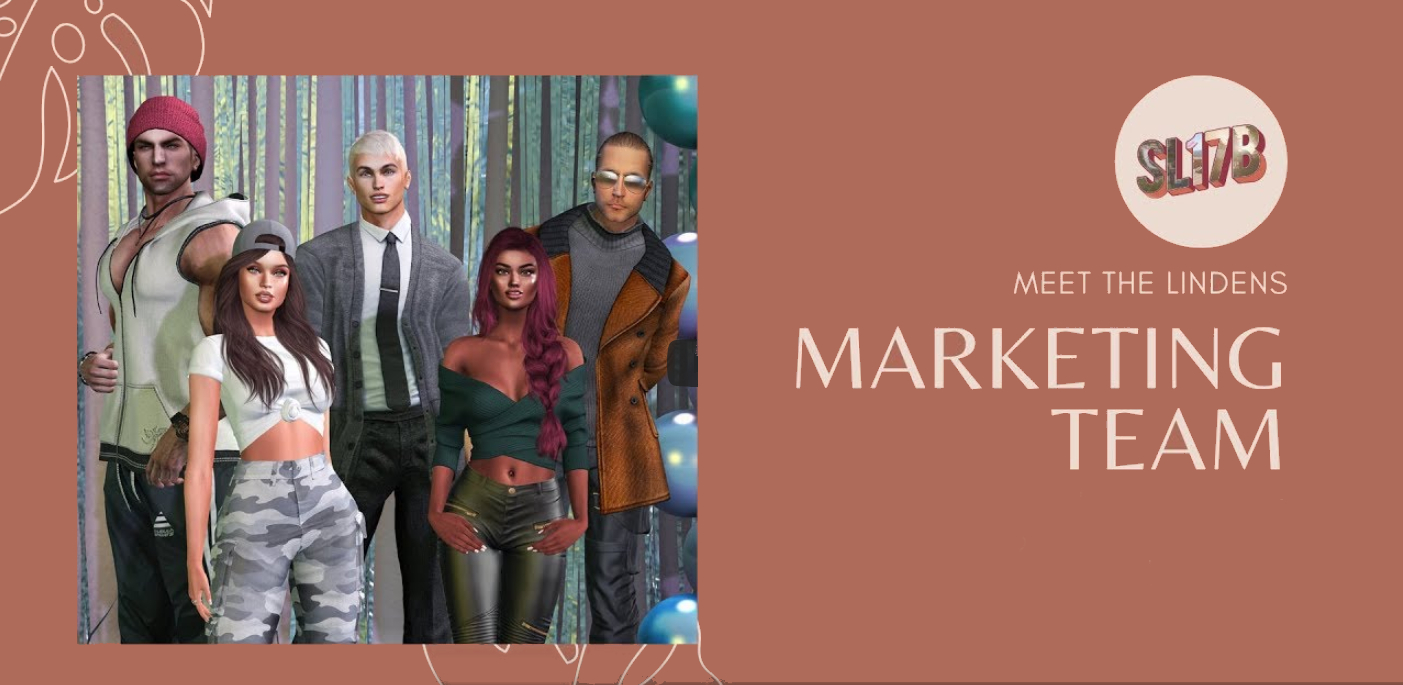
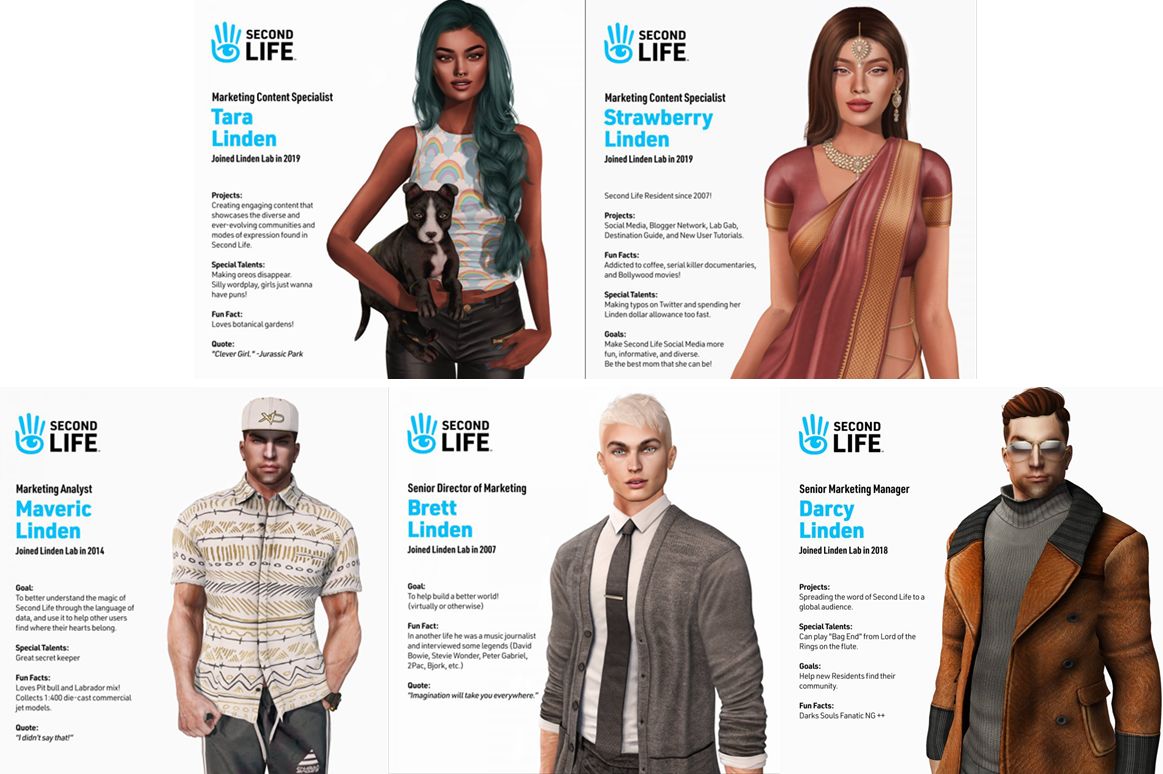
On Thursday, June 25th, 2020 at the SL17B celebrations, the fourth of five Meet the Lindens sessions was held, featuring Linden Lab’s Marketing team, led by Brett Linden, the Lab’s Senior Director of Marketing, Darcy Linden, Maverick Linden, Tara Linden and Strawberry Linden.

The following is a summary of the session covering the core topics raised, with selected audio extracts. The notes provided have been taken directly from the official video of the session, which is embedded at the end of this article. Time stamps to the video are also provided for ease of reference.


Table of Contents

Notes:

  • Due to the random approach taken in presenting subjects, this summary attempts to offer a logical flow to information by topic, and so does not follow the chronology of the session video.
  • Audio extracts, where included, have been cleaned-up and balanced to remove pauses, repetitions, etc.
  • Audience questions were taken at the end of the session (from the 52:00 mark in the video). However:
    • As some were related to the core discussion topics, responses to them have been given under the appropriate topic heading below, with a time stamp to where they were asked in the video.
    • Others – such as land fees, educational use of SL, etc. – were more thoroughly answered in the sessions with Lab CEO Ebbe Altberg, summarised here, and / or with Patch Linden, summarised here. I therefore refer readers to those summaries.
  • In places, information that is supplementary to the team’s comments is provided in square braces (i.e. [ and ]) are used in the body text below to indicate where this is the case.
  • For more information on the Marketing Second of Life, please also refer to the following:

About The Marketing Team

[Video: 1:28-10:00]

  • Brett: joined Linden Lab in 2007, and is a former music journalist who has interviewed David Bowie, Bjork, 2Pac, Peter Gabriel, Stevie Wonder and more.
  • Darcy Linden – Senior Marketing Manager – joined the Lab in 2018.
  • Maveric Linden –  Marketing Analyst – joined linden Lab in 2014, refers to himself as “the data guy”.
  • Tara Linden – Marketing Content Specialist – joined Linden Lab in 2019.
  • Strawberry Linden  – Marketing Content Specialist – joined Linden Lab in 2019 (formerly resident Strawberry Singh).
The Marketing Team
  • Primary focus is the acquisition of new users and retention of existing users in SL.
  • Also work closely with other teams within LL such as Product and Engineering, and may be consulted about various SL features – Name Changes, user on-boarding processes, avatar customisation, etc., but the team is not necessarily the decision makers on such aspects of the platform.
  • User acquisition takes a number of forms such as both paid and unpaid advertising campaigns using both traditional and digital media outlets.
  • The team’s experience is broad-ranging: web analytics, advertising, public relations, journalism, e-commerce, editorial, search engine optimisation (SEO), search engine marketing (SEM) – both of which (and their differences) are explained here -, social media marketing (SMM) and social media community management.
  • More information on the team’s individual backgrounds and roles can be heard between 3:53-8:21.

Back to top

What Impact has the Pandemic Had?

[Video: 10:10-12:13]

  • Brett: on a human level, there have been a variety of reactions throughout LL.
  • In terms of SL, there has been something of a resurgence of interest in the platform as a result of people having to maintain physical / social distancing / being in isolation.
  • Whilst many are discovering / returning to the platform have done so because it offers a safe haven for social interaction and fun, some have been drawn to the platform due to its utility.
  • The upturn in interest is being reflected in the media.
  • Makes for an awkward dichotomy: on the one hand the world is caught within the throes of the pandemic, but professionally, the Lab and SL are benefiting.

Back to top

Active User Numbers

[Video: 12:14-13:57]

  • Brett: In April 2020 – regarded as the “peak” of the resurgence at the time of the event – the monthly active user count was “just shy” of 900,000.
    • [Note a You Tube comment from @Secondlife Official indicates for June, the figure appears to be around the “lower mid-800,000s”.]
  • This increase has been both new users and returning users who have not logged-in for some time.
  • Darcy: Second life has actually been “growing steadily” in user numbers for the last few years, even with surge resulting from the pandemic, so the focus is on maintaining that broader growth trend.

Back to top

Marketing and Second Life

What Are the Challenges Marketing Faces With Returning Users / New Users?

[Video: 14:19-17:48]

  • Darcy: Residents tend to come in three “buckets”: new users; returning with little prior engagement; returning with significant prior engagement.
  • Overall the issues new / returning users who have been absent a long time are facing are not any different during the pandemic as prior to it. They are generally all issues of which LL has been aware of and is trying to address.
  • Part of the approach to issues is a case of “learn by doing” as much as anything else (just how hard is it to create and dress a new avatar?).
  • However, as with much else with SL, until the Uplift project has been completed, there are unlikely to be significant changes that will further assist the new user experience / growing the number of retained users.
  • Steeltoe Linden [referred to as being “back” on SL, so potentially a returnee from Sansar?] has a lot of ideas for improving the viewer UI in this regard.
  • Strawberry Linden: the official Second Life You Tube channel includes a playlist of “official” tutorials  and a playlist of community tutorials that can help new / returning users.
  • [1:01:02-1:03:53] Darcy: tests have been going on directly and with community gateways (notably Firestorm) for the on-boards “first hour”. As a result of this, additional back-end technology that will be used on the learning islands to better monitor approaches to how new users learn and engage – what helps move them towards sticking, etc.

Back to top

Diversity and Representation in Second Life Marketing

[Video: 22:13-23:32]

  • Tara: LL has always believed that inclusiveness is an important element of Second Life, as is the freedom for people to positively express themselves.
  • Events such as Black Lives Matter have helped underline the need to further emphasise this in marketing the platform.
  • Representation is not just a matter of presenting images featuring a diverse array of avatars but also in normalising identities that exist outside of the “accepted” [e.g. straight, white, able-bodied] and accepting and presenting the outlook of minorities, the LGBTQ+ community, disabled people, etc., is a valid position / proposition.
  • Doing so helps those who identify recognise SL is a safe place for people to be where they are welcome to express themselves.

Back to top

Continue reading “SL17B Meet the Marketing Lindens – a summary”

SL17B Meet Oz Linden – a summary with video and audio

via Linden Lab
On Wednesday, June 24th, 2020 at the SL17B celebrations, the third of five Meet the Lindens sessions was held, featuring Oz Linden, the Lab’s Vice President of Engineering.

The following is a summary of the session covering the core topics raised, with selected audio extracts. The notes provided have been taken directly from the official video of the session, which is embedded at the end of this article. Time stamps to the video are also provided for ease of reference.

Note that this is a summary, not a full transcript, and items have been grouped by topic, so may not be presented chronologically when compared to the video.

Table of Contents

Audio extracts, where included, have been cleaned-up and balanced to remove pauses, repetitions, etc.

In places, information that is supplementary to Oz’s comments is provided in square braces (.i.e. [ and ]) are used in the body text below to indicate where this is the case.

About Oz

  • Oz Linden

    Joined the company in 2010 specifically to take on the role of managing the open-source aspects of the Second Life viewer and managing the relationship with third-party viewers.

  • He came to Linden Lab out of a desire to do something “fun” after working in the telecommunication arena, notably with voice over IP systems (VOIP), which he defines as being “really interesting technology with some really fascinating challenge”, but in terms of it being fun, it really didn’t do what I wanted it to do.”
  • For the first two years of his time at the Lab, he was primarily focused on the open-source viewer work and in refining the overall viewer maintenance process, before his role started expanding to encompass more and more of the engineering side of Second Life.
  • When work on Sansar started in earnest, he pro-actively campaigned within the Lab for the role of  Technical Director for Second Life, working to build a team of technical staff around him who all shared a passion for Second Life.
  • In 2019 he was promoted to Vice President, Second Life Engineering (Vice President of Engineering following the sale of Sansar in early 2020), and joined the Lab’s management team alongside Grumpity and Patch Linden (see: Linden Lab’s management team expands: congrats to Grumpity, Patch and Oz).
  • Together with Grumpity and Patch, he forms what Grumpity calls the “troika” overseeing Second Life’s continued development.
  • Classifies his attraction to working with Second Life as perhaps falling into three core areas:
    • The open-source nature of the viewer and being directly involved with how SL users are using the viewer and what they do with it – which can often times take the Lab entirely by surprise.
    • The challenge of trying to implement new technologies alongside of (rather than simply replacing) older technologies.
    • Working with the operations team and others to ensure SL constantly evolves without (as far as is possible) breaking anything – a process he refers to and rebuilding the railway from a moving train.
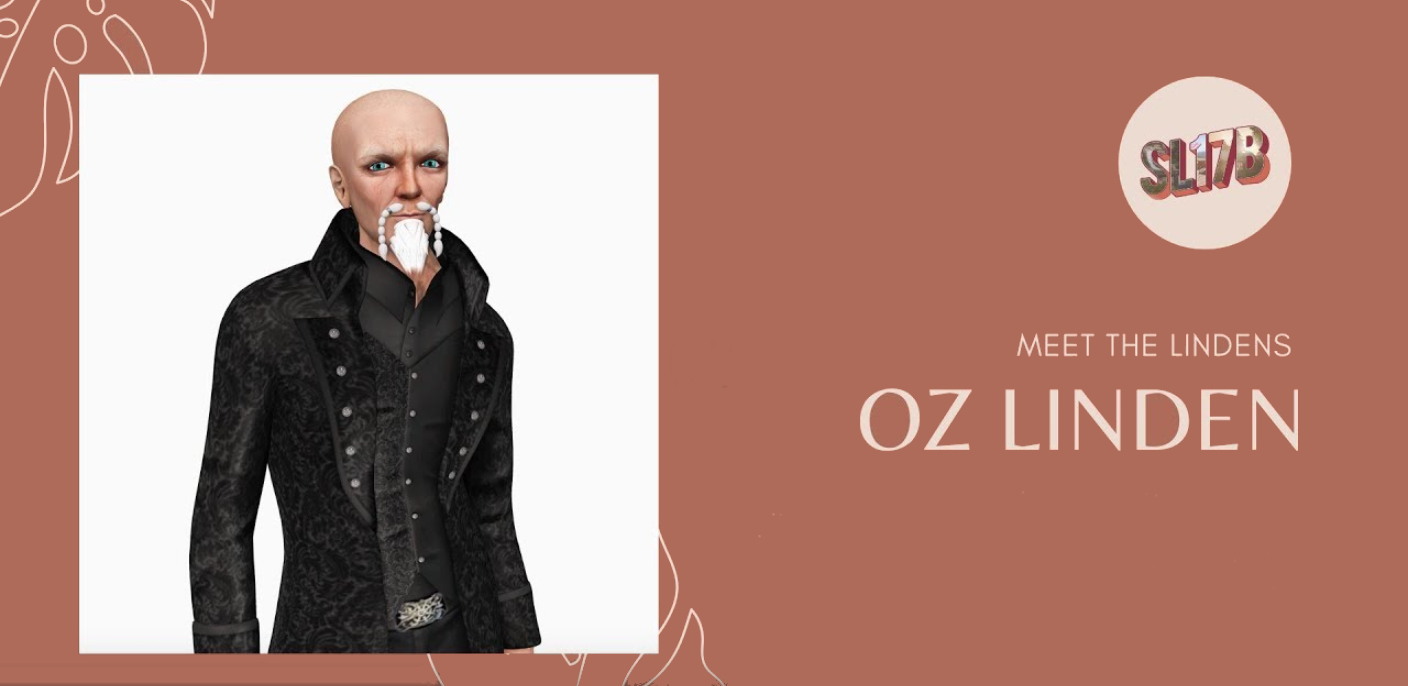
  • Note that his avatar appears bald in the Meet the Lindens publicity shot at the top of this article, as he and his team participated in the 2020 Bid a Linden Bald event to raise money for RFL of SL, and has the team raising the least, that had to spend a month in-world sans hair.

Back to top

His Team

Has it Expanded Since the Sale of Sansar?

[Video: 4:47-5:48]

  • He did persuade a number of people to move back from Sansar to Second Life [those known to have moved back at the time were Runitai Linden (graphics) and Maestro Linden and Monty Linden (engineering), although they obviously may not be the only people to move / move back to work on Second Life].
  • Hiring of new staff has also continued [notable within this are Ptolemy Linden and Euclid Linden (graphics) and at least one Android development specialist].
  • At the time of the event, also looking to hire a further systems engineer working on the back-end Linux systems.

What Impact has the Pandemic Had?

[Video: 6:02-8:07]

  • “Pretty minimal”
  • The Engineering and Operations teams and his developers were already “pretty distributed”, with some of the teams working out of three of the Lab’s offices – Seattle, San Francisco and Boston – but around one-third to half of the total staff reporting to him (Oz included) have generally worked from home as “Moon Labbers” [the “Moon Lab” being LL’s term for remote working].
  • So teams already very familiar with remote working, operating across time zones and holding meetings in SL, as well as tools like video chat, and the transition for the rest has been “pretty much” seamless.
  • Probably the biggest impact is that the team isn’t getting together for their summer meet-up where they socialise and lay plans for future work on SL.

Back to top

Cloud Uplift

Why Is It Being Done?

[Video: 9:00-13:01]

  • Historically, Linden Lab has operated its systems and services the “traditional” way: dedicated hardware, and infrastructure running in dedicated facilities [at one time three data centres, but for the last several years a single co-location (co-lo) centre in Arizona].
  • Actually had to develop a lot of the methodologies the company now uses to manage all of the SL services simply as a result of the speed at which the platform initially grew, building capabilities for which there were no “standard” solutions.
  • Time has moved on, and Amazon and others have developed the means for systems and services to be run / provisioned through the cloud. These services allow Linden Lab to leverage a range of options and capabilities in a number of ways.
  • A particular aspect of the move is that LL no longer has to invest time, effort and money into hardware and infrastructure, but can essentially hand these off to AWS, allowing them to concentrate on SL’s operations and development.
  • With hardware in particular, it has been a number of years since the Lab upgraded their servers, so transitioning to the cloud avoids an expensive capital expenditure in new hardware, and similar expenditures in the future.  For example:
    • In the current environment, if the Bake Service [a collection of servers use by the Lab to generate and manage avatar appearances and ensure they are consistent across viewers] needed upgrading to more powerful servers, LL would have to acquire, test and implement that hardware, and then transition the Bake Service to it.
    • Running via the cloud means picking the required hardware from a catalogue provided by Amazon, who then take care of the heavy lifting to ensure the Bake Service works as required on the selected hardware.
  • Overall, the priority of the work is such that the three goals Oz has set himself : Uplift, Uplift, Uplift.

How is the Uplift Progressing?

[Video: 16:46-19:05]

  • It’s stressful but going well.
  • All of the inventory databases were successfully moved several months ago – twice, in fact: first to the cloud, then to a different type of cloud server. This work was completed so successfully, users were not even aware of any change.
  • The intermediary service sitting between the inventory database and the viewer was also successfully transitioned to AWS. It has also been running for “some time now”, again without users noting any difference.
  • A lot of the back-end services that users never directly interact with have also been successful transitioned
  • There is still a lot of work to do, but the plan is to have Second Life “out of the co-lo by the end of the year”.

Continue reading “SL17B Meet Oz Linden – a summary with video and audio”

SL17B Meet Patch Linden – a summary with video and audio

via Linden Lab
On Tuesday, June 23rd, 2020 at the SL17B celebrations, the second of five Meet the Lindens sessions was held, featuring Patch Linden, the Lab’s Vice President of Product Operations.

The following is a summary of the session covering the core topics raised, with selected audio extracts. The notes provided have been taken directly from the official video of the session, which is embedded at the end of this article. Time stamps to the video are also provided for ease of reference.

Note that this is a summary, not a full transcript, and items have been grouped by topic, so may not be presented chronologically when compared to the video.

Audio extracts, where included, have been cleaned-up and balanced to remove pauses, repetitions, etc.

Table of Contents

In places, information that is supplementary to Patch’s comments is provided in square braces (.i.e. [ and ]) are used in the body text below to indicate where this is the case.

A Note about the New Linden Homes Theme Announcement

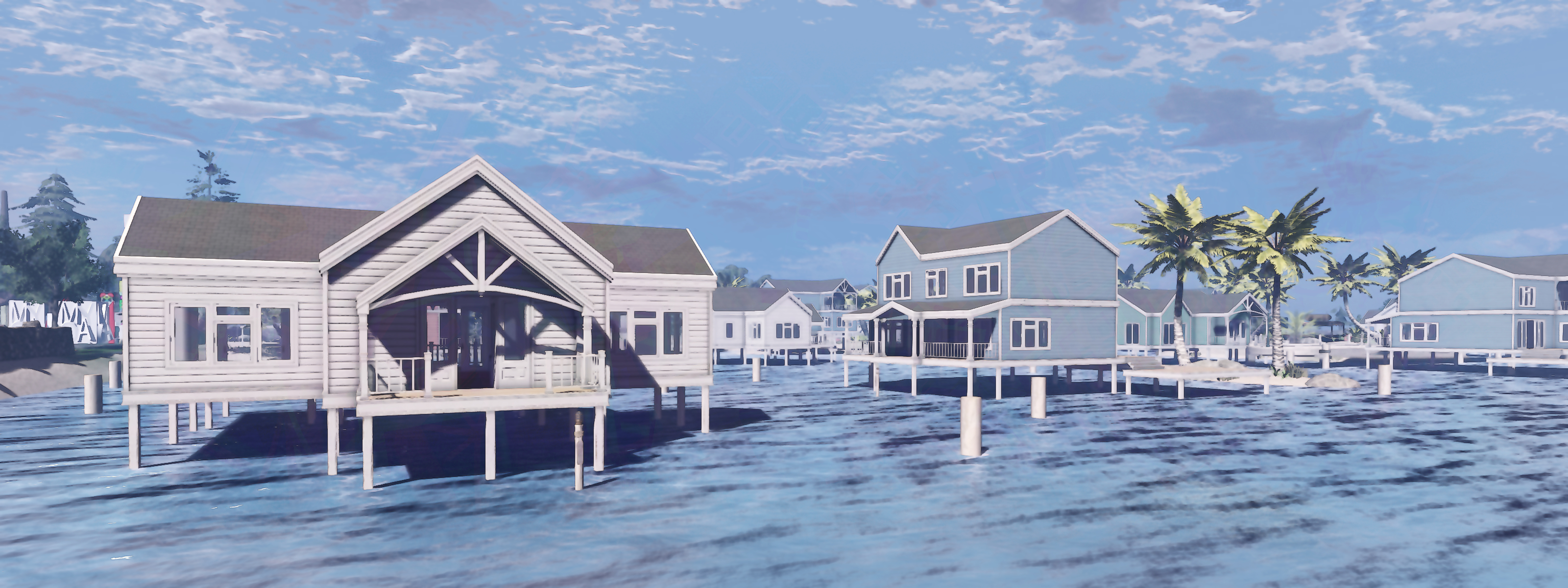
The session included discussion (notably in the last 15 minutes) on the new Linden Homes theme unveiled at SL17B immediately after Patch’s Meet the Linden Session. These elements of the session are not reported here simply because people can now see the theme for themselves. Instead, I refer readers to Second Life: looking at the new Linden Homes Stilt theme in this blog.

The Linden Stilt Home preview region at SL17B – see Second Life: looking at the new Linden Homes Stilt theme for more

Back to top

About Patch

  • Originally a Second Life resident and business owner who joined the platform in 2004, and became a Linden in 2007.
  • Initially worked as a support agent and then as a support liaison. From there he moved to the Concierge team, eventually becoming that team’s manager.
  • Shifted focus to the role of Operations Support Manager for a year, then moved to the Product group, the team responsible for defining the features, etc., found within Second Life.
  • At Product he developed the Land Operations team, which includes the Linden Department of Public Works (LDPW).
  • In 2018, he established the company’s support office in Atlanta, Georgia.
  • In 2020 he oversaw the move to larger office space in Atlanta, although the SARS-CoV-2 pandemic means the new premises have yet to be used.
  • In 2019 he was promoted to Vice President, Product Operations, and joined the Lab’s management team alongside Grumpity and Oz Linden (see: Linden Lab’s management team expands: congrats to Grumpity, Patch and Oz).
  • Together with Grumpity and Oz, he forms what Grumpity calls the “troika” overseeing Second Life’s continued development.
  • In his management team role, Patch continues to oversee all of the Lab’s user support operations (some 5 teams), including the LDPW.
  • Despite his longevity at the Lab, his is not the longest-serving Linden, nor is he the “oldest” resident-turned-Linden.

Back to top

Working with the Pandemic

[Video: 3:07-4:48]

  • His teams have not really been impacted by the pandemic. LL is a remote-friendly company.
  • As a result the company has always thought outside of the box in leveraging their own product as a work tool – running team meetings in-world, etc., – as well as running more “traditional” tools like Slack, Discord, etc.
  • Patch himself started at the Lab as a remote employee, and worked as such for around a decade prior to developing the Atlanta office.

Back to top

What are the Most Significant SL Changes You’ve Seen?

[Video: 5:19-8:17]

  • Changes in avatar appearance – particularly when looking back at old snapshots.
  • The arrival of different types of new content.
  • Adding Voice to Second life [2007], which was probably one of the “bigger ground-breaking changes for Second Life as a virtual world”.
  • Admits to have probably having forgotten more than he can remember, and even today is still learning – such as only recently discovering the ability to completely disable the viewer’s UI in world view [CTRL-SHIFT-U (or ALT-SHIFT-U for Firestorm) – also toggles the UI back on].

Back to top

Bakes on Mesh and Personal Business

[Video: 8:27-9:40]

  • As a resident, used to run a fashion business for male avatars.
  • Still has the inventory, but has not updated the clothing styles in years.
  • Has “tinkered” with Bakes on Mesh to see if it works with his system clothing designs, but does not intend to convert them for use with Bakes on Mesh and flood the market, as styles now too old.
  • Has found the “playing” with Bakes on Mesh to see what does / doesn’t work with older system clothing to be interesting.

Back to top

Bellisseria and Linden Homes

What is the Most Popular Linden Home Theme?

[Video: 11:21-13:05]

  • Probably the Victorian theme, although the Log and Houseboat themes run it a close second.
  • It’s hard to separate into “most popular” as the demand for all of the themes has been equal. For example, even through the Traditional theme are currently fully occupied [and presumably no plans for further deployments at this time] – there is still demand for them.
  • The 4,400 introductory release of Log Homes was filled quickly. Since then, the Monday / Wednesday / Friday region releases have been taken up almost as soon as they are made available.

Plans to Link Continents / Retire Old Linden Homes

[Video: 13:13-16:03]

  • [Note: Bellisseria already now links Sansara and Joegeot.]
  • As the Linden Home continent(s) continue(s) to be built out and possibly be split up for diversity), then it / they may well continue to connect continents.
  • However, as this is done, LL wants to ensure that continents are connected where it makes sense to do so.
  • Overall plan is that as the new continent(s) gain occupancy, to eventually start shutting down the old Linden Home mini continents or at least compressing them, to free-up resources.
  • This point hasn’t quite been reached, as there is still occupancy across the mini continents either because people are waiting to try to obtain a new home of their choice, or because they may not actually be aware of the new home, depending on their log-in frequency.
  • However, even with the old style Linden Homes being retired in time, their themes may not necessarily be forgotten.

Was the Popularity of the New Homes Anticipated?

[Video: 18:04-20:16]

  • Knew they were going to be “super popular”, so tried to put out as much as possible without overly delaying the project as a whole.
  • Striking the balance is hard: on the one hand, foreknowledge of popularity dictates making a bigger initial offering – but how big? On the other, delaying the deployment means sitting on something that people could otherwise be enjoying.
  • As it was, in April 2019, he felt there was sufficient quality and options in home to launch the product. This has allowed LL / LDPW to continue to improve the overall process of provisioning and deploying Linden Homes.
  • This is reflected in the major release cadence from 700-1,000 in initial releases to 2,800 and then 4,400. When it comes, the Stilt Homes initial release will likely be 4,000-5,000 units.

Continue reading “SL17B Meet Patch Linden – a summary with video and audio”

SL17B Meet Ebbe Altberg- a summary with video and audio

via Linden Lab
On Monday, June 22nd, 2020 at the SL17B celebrations, the first of five Meet the Lindens sessions was held, featuring the Lab’s CEO, Ebbe Altberg, aka Ebbe Linden.

The following is a summary of the session covering the core topics raised, with  audio extracts where relevant. The notes provided have been taken directly from the official video of the session, which is embedded at the end of the article. Time stamps to the video are also provided for ease of reference. In addition, audio extracts are provided in places that may be of particular interest to readers.

Table of Contents

When reading this article, please note:

  • It is not a full transcript:
    • Discussion points have been grouped by topic, and not necessarily in the order raised during the session.
    • I have focused on those topics liable to be of the most interest to readers / generated the most informative answers, so this is not a summary of all comments, feedback, etc.
    • Topics are given as bullet-point highlights for ease of reference.
  • In places, information that is supplementary to Ebbe’s comments is provided, and square braces (.i.e. [ and ]) are used in the body text below to indicate where this is the case.
  • Audio extracts have been cleaned-up to remove repetition or pauses, etc.

About Ebbe

[Video: 3:44-6:21]

Note: the following is taken from both Ebbe’s comments and my own research into his background, carried out when he joined Linden Lab in 2014, and which also included input from Ebbe.

  • Swedish by birth and still by nationality – he is still working in the US on a green card.
  • Graduated from Tärnaby Skidhem in 1983. He had hoped to be a ski racer – with eyes on the Swedish national team and the world cup – but was prevented from pursuing this career due to a back injury.
  • Instead went to the USA to study at Middlebury College, Vermont, USA, where he spent a lot of time in the art studio and the computer lab in an extreme left brain / right brain type of education”, before graduating with a degree in Fine Arts and a concentration in Computer Applications.
Ebbe Linden, aka Ebbe Altberg. Credit: Strawberry Linden
    • He  “slipped into Microsoft on a random banana peel”, where he spent twelve years. He was particularly involved with the Office products (Word, Mac Office, etc.), and although he wasn’t directly responsible for Clippy! – he did oversee it being ported to Mac Office 98.
  • In 2000, he joined Ingenio, a company that created marketplaces for people to buy and sell information over the phone. As well as managing the engineering, program management, operations, and quality teams, he also served as both the company’s interim CEO its Chief Product Officer. He also “racked up quite a few patents there.”
  • Joined Yahoo! in 2008, filling out a number of senior roles, working in both Europe and the US.As the Senior Vice President for Media Engineering based in the USA, but with global responsibly for Media Engineering, managing  an organisation of more than 600 engineers, architects, program managers and quality engineering staff, and with dotted-line oversight of some 150 product managers and designers.
Linden Lab’s chairman of the Board, Jed Smith, is a long-time friend of Ebbe Altberg, and had previously tried to get Ebbe to join the company prior to his appointment as CEO in 2014. (image: Owl Ventures)
  • Moved from Yahoo! to San Francisco based BranchOut, a small company that had, prior to his joining built a 25 million user base for its professional networking app before seeing that number shrink to just 3 million. He was specifically responsible for pivoting the company to a new workplace messaging application called Talk.co, launched in October 2013.
  • Has had a long exposure with SL indirectly through his son Aleks, who initially joined the Teen Grid before moving to establish his own in-world business.
  • Has also been long-term friends with LL board Chair, Jed Smith, through whom he met Philip Rosedale. Smith had asked Ebbe to consider the LL CEO position previously to 2013/14, but “things “didn’t line up” .
  • Is immensely proud of the all that the company has achieved and continues to be drawn by both the rewards and challenges involved in running a platform that is so technically and socially diverse.


Back to top

Working at the Lab

Rewards and Challenges Working with SL

[Video: 6:23-10:20]

  • Loves the technical / product aspects of the platform and the diversity of potential use cases it can meet. Also loves the rich diversity of ways users make use of SL creatively, socially, etc., that mean the platform constantly offers unique opportunities and challenges.
  • Enjoys the fact that SL makes it possible to meet people from around the world and from all walks of life who find value in the platform for so many different reasons.
  • These aspects also, for him, present the challenges of working with SL: putting all the different technologies that make SL work together such that they can form a virtual world where people can create, socialise, earn income, etc.
  • There’s also the challenge of talking to a customer base that is not of a single mind in using the platform, but rather is a range of user communities, each of which has nuanced needs and requirements that need to be met.
  • Also likes the challenge of trying to extend and build a product set that no-one else has managed to develop to the same degree – such as with SL’s economic model and the development of Tilia Pay.
  • The strength with SL that he loves is the sheer diversity within the technology required or SL and the people that use is – which is also the platform’s most engaging challenge.

SARS-Cov-2 Impact

[10:22-12:04; 12:30-18:53]

  • Is appreciative of the power that SL has in bringing people together during the SARS-CoV-2 pandemic and providing a safe space for continued interaction, and that it can continue to help furnish those using it to generate an income to continue to do so.
  • From a business perspective, SL has seen significant increases in demand. However, this has been somewhat impacted by the “land shortage” [see The Cloud Uplift, below for more on this].
  • This increase is not just from “social” users; here has been “a lot” of demand from businesses wanting to host meetings through the platform, education institutions wanting to hold lessons, etc.
  • Company has been very fortunate in its operations because, while it does have offices in San Francisco, Seattle, Boston and Atlanta, many of the staff have always worked from home, so there has always been the assumption of remote working [even the Operations Team works remotely from LL’s co-location data centre in Arizona]. So, moving to that model of operations was less stressful than it might have been.
  • The real hamper in the move has been more the “knock-on” effect caused by the isolation – having children at home whilst trying to work, seeing to their needs, etc.
  • Overall is very pleased with how the company has been able to continue to manage SL and move ahead in plans and development.
  • Pandemic has also caused the media to re-examine SL, and Marketing has been via busy dealing the increased interest in how the platform and how it can be of use to people / organisations during the pandemic.
  • What has been particularly pleasing is the more positive view the media has of the platform, and the recognition of its maturity as a platform.
  • Like to point out to reporters that Second Life isn’t “old”, it is “mature”, which is not necessary a bad thing when talking about a platform.

Back to top

The Cloud Uplift

[Note: Cloud uplift is the term used for the project to transition all of the Second Life services from hosting in a single co-location data centre used by Linden Lab and using their own hardware, to provision it all via Amazon AWS cloud services.]

[Video: 19:51-23:25]

  • Likely to be around 3-4 months before new regions are once again available, although it is understandably hard to put a definite date on things.
  • The shortfall is due to LL wanting to cease any expenditure in hardware and supporting infrastructure for SL during the cloud transition, believing they had sufficient reserves to offer during the uplift period – but the SARS-CoV-2 pandemic resulted in an unexpected burn through of that reserve.
  • Provisioning and testing new hardware and infrastructure is being avoided, as this would effectively be “lost” capital expenditure.
  • The uplift work is the primary focus of the product, engineering and operations teams at the Lab, with many services have actually already been transitioned to AWS.
  • Details of which systems these might be are not generally given out by LL due to the fact users often make false assumptions on things like issues when aware of such information.
  • Region servers [aka simhosts] make up the majority of the Lab’s hardware, and the Lab now has a test region server successfully running within AWS, but there is still “quiet a bit more work to do” in terms of security and other elements before the Lab will be in a position to offer a region product running in AWS.

Back to top

Continue reading “SL17B Meet Ebbe Altberg- a summary with video and audio”