The Vera C. Rubin Observatory is a facility I’ve covered numerous times in Space Sunday as it has been constructed and outfitted. Perched atop Cerro Pachón in Chile, at an altitude of 2.67 kilometres, the Vera C. Rubin promises – with a caveat – to totally alter the way we see the cosmos around us.
This is because the telescope is to carry out a 10-year survey to probe the deepest reaches of our universe to reveal its secrets. Called the Legacy Survey of Space and Time, or LSST (“legacy” here referring to the fact that the observations and images the telescope makes will be of interstellar objects as they appeared hundreds of thousands through hundreds of millions of years ago), the survey will be the most comprehensive of its kind to date, and involve astronomers from around the world.
The secret weapon the observatory uses in this survey is the largest telescope-camera system ever built. The primary lens of this behemoth is 8 metres across, with the entire camera weighing some 3 tonnes. Its construction took a decade, after which it had to be carefully packaged and shipped to Chile and up to the observatory, where it was installed into the facility as the core part of the Simonyi Survey Telescope (named for the private donors who sponsored the telescope, Charles and Lisa Simonyi).

Overall, the telescope is a 6.5m class optical telescope, with a 3.2 gigapixel charge coupled device (CCD) for imaging. Over the course of the LSST, the observatory is expected to reveal and catalogue a wide range of objects, including some 5 million Sun-orbiting asteroids (including around 100,000 near-Earth asteroids at least 300 metres across, some of which might present the risk of colliding with our planet at some point in the future); imaging around 20 billion galaxies, 17 billion stars and up to 6 million planetary systems orbiting other stars.
In addition, it is hoped the observatory will be able to catalogue “primitive” objects in the Kuiper belt (i.e. those thought to have existed at the time of the birth of our Sun), observe thousands of novae and supernovae to help astronomers to further understand the nature of the galaxy
The telescope had is “first light” – the first practical use of a telescope after it has been constructed, calibrated and commissioned – took place in June 2025. These took the form of “teaser” images as to what the telescope would be capable of, featuring the Trifid and Lagoon nebulae and extracts from a wide-field view of galaxies in the Virgo Cluster.
More recently, the images of the Virgo Cluster have been further cleaned-up and re-annotated, revealing the sheer power and depth of observations Vera C. Rubin can make. The image below covers a 3.5 degree diameter field-of view and reveals over 100 galaxies and numerous stars (particularly those within the constellation of Virgo) within our own galaxy, presenting a stunning insight into just how vast our universe is.

The telescope is designed to take multiple pictures during each observation period, the main camera taking a 30-decond exposure for each image, with an active optics system with wavefront sensors within the telescope keeping the mirrors precisely configured, aligned and focus for the clearest possible images.
However, whilst images from the telescope are stunning an informative, they also come with a problem, albeit not one of the observatory’s own making. That problem is satellite pollution. In short, megaconstellations like SpaceX Starlink and China’s Guowang are lobbing thousands of low-Earth orbiting satellites into the space around us. These satellites inevitably reflect the Sun’s light as they travel across the sky, and in time-lapse images, this reflected light appears as narrow streaks across an image – and not just one or two, but potentially dozens at a time. All of which has to be painstakingly cleaned-up in order for the full value of images to be obtained.
The issue here is that removing satellite steaks is not just a case of pulling up Photoshop and then editing – the very act of trying to clean up images to remove the streaks can introduce its own errors which might prove impossible to account for and which risk misinterpretations of what is being seen being made.

Nor do the problems end there. A relatively new company, Reflect Orbital has grand designs of orbiting a 50,000-strong megaconstellation of satellites which can deploy large Sun-reflecting mirrors. The aim? To provide “responsive lighting after dark and to increase the effective hours of solar energy production”.
Currently, the company plans to launch a proof-of concept satellite called Eärendil-1 (which likely has Tolkien spinning in his grave) capable of deploying and 18m by 18m Mylar mirror utilising the same material as used to reflect sunlight off of space vehicles, sometime in 2026. This project has drawn such condemnation from astronomers and others (additional concerns about directing sunlight onto specific parts of the Earth and turning “night into day” are that it could have a serious negative impact on the circadian cycles of animals and humans), that Reflect Orbital has promised to work to minimise the broader impact of their idea. Time will tell on whether this offer is genuine or not.
Both the International Astronautical Union (IAU) and the US National Science Foundation have called on companies launching satellite constellations to be more aware of their negative impact and to reduce the reflectivity of their satellites – the IAU recommending that all satellites should appear no brighter than magnitude 7 objects.
Multiple companies have agrees to try to reach this goal, but thus far few have shown any real movements towards it. SpaceX, for example, gave assurances that it would work to reduce the reflectivity of its version 2 Starlink satellites compared to its version 1.x units. However, whilst effects were made, they fell far short of the level requested by the IAU, and efforts to further reduce reflectivity appear to have ceased. Others, such as Texas-based AST SpaceMobile raised a middle finger to the IAU’s recommendation by launching its Bluewalker 3 satellite with a reflectivity some 400 times greater than magnitude 7. Currently, that company plans to launch some 60 even larger and more reflective Bluebird Block 2 satellites into LEO during 2026/27.

What is evident from this is that formalised regulation is required to try to minimise the impact the over-use of the low-to-medium Earth orbit regime, lest our ability to learn about our planet, solar system and the cosmos around us be otherwise degraded to an unconscionable level.
“Life Here Began Out There”
Battlestar Galactica fans will likely recognised this quote, being some of the opening words of the original series (as spoken by Patrick “John Steed” Macnee!), and a refrain which popped up in Ronald D. Moore’s largely excellent reimagining of the Galactica tale. It’s also a phrase which has taken on a certain nuance in recent times.
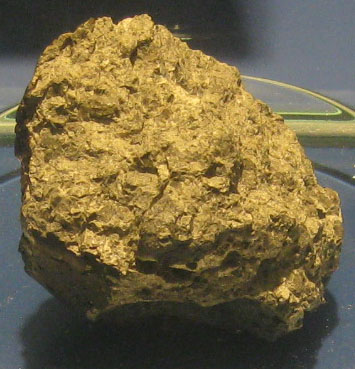
It has long been known that – particularly in the very early history of the solar system – asteroid and other impacts on Mars could carry enough force to send chunks of Martian rock clean off the planet and into space, with some of them eventually coming under the influence of Earth’s gravity and falling down on our planet. One of the most famous pieces of evidence for this is the notorious Allen Hills fragment ALH84001. This was a fragment of rock shown to be consistent with the rocks of Mars discovered in the Allen Hills region of Antarctica in 1984,and which went on to cause a stir when it was announced the rock apparently contained evidence of fossilised Martian life (spoiler alert: it likely didn’t).
ALH84001 is not the sole example – Antarctica is actually a popular (but not the singular) place for asteroid fragment hunting, as the charred and discoloured can often be found close to the surface of the ice and snow fields, where they send out starkly to the human eye. Multiple expeditions have found lumps of asteroid and rocks which have later proven to have arrived here from the Moon or Mars.
Whilst the investigations around ALH84001 may have been flawed, they did help kick-start a debate as to whether life here on Earth might have originated elsewhere – such as on Mars – or might have been kick-started not by Earthly processes alone, but with the assistance of organics-bearing asteroid fragments plummeting through our atmosphere to arrive here. The idea even as a name: lithopanspermia.
Now, a new study suggests that, if not the actual case, either scenario is actually possible. Published in the journal PNAS Nexus, the study demonstrates how bacterium can survive the massive forces of an asteroid impact blasting the rock containing them into space, the extremes of interplanetary space and their fiery arrival on another world possibly altered, but otherwise largely unharmed.
In particular, the study shows that Deinococcus radiodurans, a particularly hardy bacterium known for its thick outer shell and an ability to repair its own DNA, as well as being tolerance of the kinds of radiation it might be exposed to in interplanetary space, could indeed survive all the trials and tribulations of being blown off of somewhere like Mars and landing here on Earth. In fact, so hardy is D. radiodurans that it has for some time had the nickname, “Conan the Bacterium”.
Most intriguingly, the bacterium has been found within rocks in the highlands of Chile and other regions were asteroid fragment hunting is popular.
To simulate the forces involved in an asteroid impact, the researchers sandwiched samples of D. radiodurans between two steel plates. Using a gas-powered gun, they fired a projectile at roughly480 km/h), subjecting the microbes to pressures between 1 and 3 gigapascals. That’s around 10 times greater than the maximum pressure which can be experienced here on Earth (and at the bottom of the Mariana Trench): 0.1 gigapascals.
At the low-to-mid-ranges of impact (1 to 2.4 gigapascals), D. radiodurans showed either no sign of damage or varying degrees of cell rupturing. At the higher pressure, damage was more extensive, but in both the mid-to-high level ranges, the team behind the study witnessed the bacterium’s self-repair mechanisms go into action, repairing damaged DNA and renewing damaged cell membranes.

We expected it to be dead at that first pressure. We started shooting it faster and faster. We kept trying to kill it, but it was really hard to kill.
– Lily Zhao, study lead, John Hopkins University
In fact, so hardy did the bacterium prove, the experiment was halted not because the team eventually killed it – but because the steel plates sandwiching the samples started giving out under the pressure of the gas gun impacts!
Of course, this doesn’t prove that life – or the ingredients of life – came to Earth from Mars or from asteroids. For one thing, we have yet to discover any solid evidence for Mars having once harboured basic life-forms, despite all the evidence it once have the conditions to do so, and they this formed in advance of Earth. There’s also currently no evidence for organics on asteroid having been able to form more complex structures.
However, and on a broad level, it does demonstrate that basic life forms such as bacteria are certainly hardly enough to travel from one place to another – and that if the conditions are just right in the place where they arrive, they might it turn go on to help kick-start more complex life there (assuming the place they arrive doesn’t already harbour some form of basic life which regards them as an invader to be wiped out).
Rockets and Satellites: Proof of Pollution
I’ve written about the growing problem of upper atmosphere pollution resulting from the increasing number of commercial launches around the world, and the potential impact it might be having or come to have on the stratosphere’s weather systems and in damaging things like the ozone layer (in particular, see: Space Sunday: space debris and atmospheric damage + some updates).
Now a team of researchers at the Leibniz Institute for Atmospheric Physics have published the first direct correlation between space vehicle debris re-entering the atmosphere and an increase in atmospheric pollutants – namely lithium.
In February 2025, Spaces launched a Falcon 9 to deliver 22 Starlink satellites to low Earth orbit (LEO). Whilst the upper stage of the rocket successfully delivered its payload to orbit, it suffered a malfunction during a planned de-orbit engine burn which should have lead to its controlled entry into the atmosphere and eventually destruction as it burned-up. As a result, the stage remained orbiting the Earth for 18 day before starting an uncontrolled re-entry some 100 km west of Ireland and proceeding over populated Europe to the point of kindly dropping debris on Poland.
During the event, atmospheric researchers at the Leibniz Institute, Germany, were surveying the upper atmosphere composition using a highly sensitive resonance fluorescence Lidar system when the noticed a sudden and rising spike in upper atmosphere lithium. Normally, lithium exists within the atmosphere to the tune of around 3 atoms per cubic centimetre, but the researchers at Leibniz saw levels climb to some 31 atoms per cubic centimetre at altitudes between 96.8 km and 94.5 km – the range in which Falcon 9 upper stages start to break-up and the risk of pollutant spillage is greatest.

Intrigued, the atmospheric researchers continued to monitor the rising levels of lithium whilst also running some 8,000 simulations of backward wind paths from the Lidar station to the skies over Ireland. What they found, after eliminating any other potential causes for the spike they could think of, was that it commenced almost exactly at the time the Falcon 9 upper stage entered the Earth’s atmosphere west of Ireland and almost exactly tracked the stage’s passage over Ireland and the UK as it reached its point of initial break-up and fell through to around 94 km altitude, very much tying the plume to the stage’s demise – the upper stage of Falcon 9 rockets using lithium extensively in their components.
Whilst this is the first definitive time a significant increase in atmospheric pollutants has been directly tied to a re-entry event, but doesn’t supply all of the answers. For example, no-one actually knows how such concentrated dumps of lithium – which occur following every Falcon 9 launch and every re-entry of a Starlink satellite (which SpaceX have been disposing an accelerated rate in order to “get rid” of their version 1.x satellites in favour of the v2 unit) – will have on high-altitude weather systems or on other aspects of the atmosphere as they disperse and descend.

However, it is indicative that the commercial launch sector as a whole has a major question to answer in terms of what they should be doing to minimise the potential for damage to our atmosphere they are creating

 Inara Pey: Living in a Modemworld