2026 week #9: SL Open Source (TPVD) meeting summary

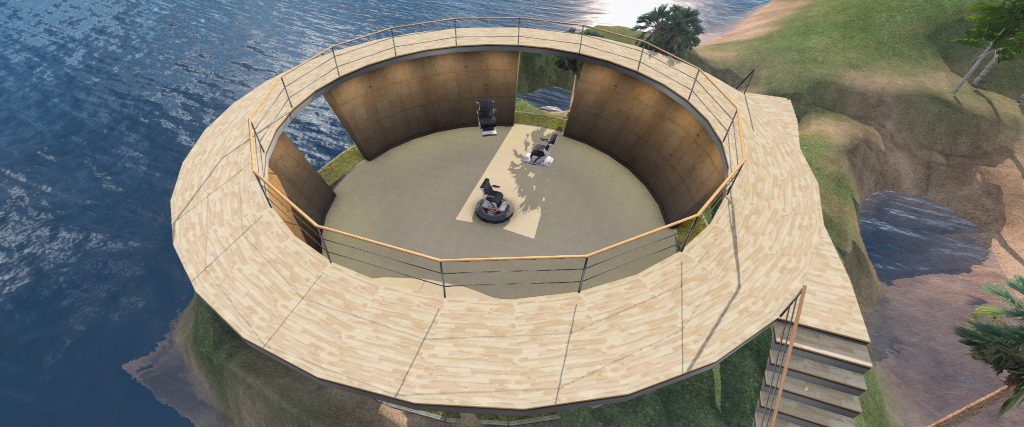
Hippotropolis Theatre: home of the OSD/TPVD meeting
The following notes were taken from:

  • Pantera’s video (embedded at the end of this article) and my chat log of the Open-Source Developer (OSD) meeting held on Friday, February 27th, 2026, together with my chat log of that meeting.
  • Please note that this is not a full transcript of the meeting but a summary of key topics.
Table of Contents

Meeting Purpose

  • The OSD meeting is a combining of the former Third Party Viewer Developer meeting and the Open Source Development meeting. It is open discussion of Second Life development, including but not limited to open source contributions, third-party viewer development and policy, and current open source programs.
    • This meeting is generally held twice a month on a Friday, at 13:00 SLT at the Hippotropolis Theatre and is generally text chat only.
  • Dates and times of meetings are recorded in the SL Public Calendar.

Note: The OSD/TPV meeting has tended to occur in the same week as the content Creation User Group meeting over the last several months, resulting in a lot of repetition of information between the two meetings (and combined summaries on this blog). An attempt is being made to break this cycle by having the next OSD/TPV meeting on Friday, March 6th, 2026 before reverting to the usual every other week format (so the meeting after that will be March 20th, 2026) – thus putting the OSD/TPV meeting and the CCUG on alternate weeks.

Official Viewer Status

  • Default viewer 2025.08 – 7.2.3.19375695301 – maintenance update with bug fixes and quality of life improvements – December 2.
    • Notable addition: new VHACD-based convex decomposition library for mesh uploads.
  • Second Life Release Candidate viewer 2026.01 – 26.1.0.22359044520 , February 25 – NEW
    • Legacy search; WebRTC improvements; QoL improvements.
  • Second Life Project Viewers:
    • Second Life Lua Editor Alpha viewer 26.1.0.21525310258, February 12.
    • Second Life Voice Moderation viewer 26.1.0.20139269477, December 12.
      • Introduces the ability to moderate spatial voice chat in regions configured to use webRTC voice.
    • Second Life One Click Install viewer 26.1.0.21295806042, January 26, 2026 – one-click viewer installation.

Upcoming Viewers

Viewer 2026.01

  • Remains the current viewer development focus with the release of the beta (RC) version, although this will be shifting more to 2026.02.
  • The velopack one click installer / updater is not in the initial beta, and may now in fact slip to 2026.02.
  • 2026.01 includes a high priority fix for specific Bluetooth headset configurations which will benefit WebRTC.
  • Now available as an alpha viewer (above).
  • As the name suggests, triggers a one-click install / viewer update process.
  • Also includes improved monitoring / logging of viewer freezes and crashes, etc.

Viewer 2026.02

  • 2026.02 remains on track for the “Flat” UI and font updates.
  • It now also includes the WebRTC voice moderation capabilities (as seen in the project viewer) to help align viewer-side WebRTC updates more with the hoped-for server-side deployment (see below for more).
  • This viewer might additionally receive some backported updates to texture streaming.
  • No Alpha / Beta viewer is available as yet for this release..
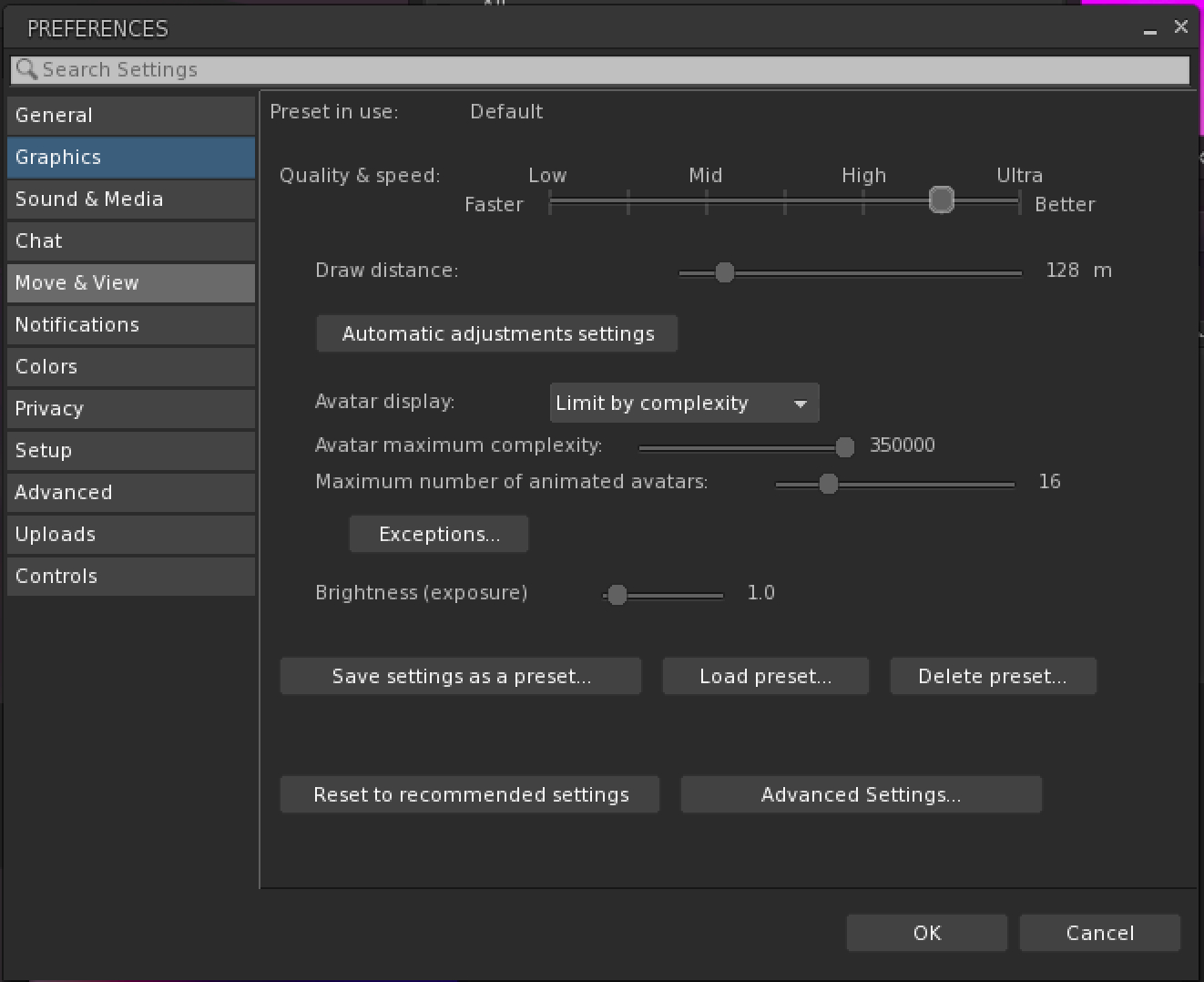
Example of the upcoming flat UI. Via: Geenz Linden / Github #4681/2

Viewer 2026.03 -“SL Visual Polish” (SLVP)

  • 2026.03 had been looking to an April release, however, it might slip back to 2026.04. Part of the decision-making on this is related to upcoming server-side updates to EEP and glTF which are seen as being required prior to SLVP shipping.
  • It will likely to include:
    • The “long baking” SSR improvements that were started last year. This version of the viewer will likely have a long beta soak time to allow feedback on these changes to be gathered.
    • PBR specular for residents who are more familiar with the old Blinn-Phong workflow. This will:
      • Include another texture slot (tint of the specular reflection).
      • Work with metallics.
      • Follow the glTF specification, but will likely initially be without glTF overrides, as this requires server-side work.
    • HDR controls in EEP so residents can decide how bright or dark things should be. This work does require simulator-side updates. This will likely initially have server-side support on Aditi (the Beta grid).
  • It may additionally include:
    • Further mirrors optimisations and a new “Ultra” quality setting that will enable a system mirror for water. A caveat on this work is that while this “water mirror” might up the quality of water reflections, it will do so at a performance hit; SSR for water will always be faster and less intensive.
    • Inclusion of an emissive strength setting for PBR.
  • The Pull Request  for this work can be found here – #5385.

General Viewer Notes

  • Firestorm hosted a Townhall recently, with Lab presence, to try to determine why a percentage of Firestorm users remain reluctant to move away from a 6.x version of that viewer to a PBR-supporting version. The predominant issues appear to be concerns over performance and the degraded water visuals seen with PBR viewers.
    • One aspect of people refusing to move is hearsay: “X said PBR sucketh and has poor performance, therefore I will not even try it”, regardless as to whether this might be true for them or not; another is, potentially, people’s general unwillingness to change from what they like.
    • Exactly how to address such issues / beliefs/perceptions is no easy task.
    • A suggestion was made to have “toggle” in the viewer so users can determine which rendering system they wish to use (e.g. “legacy” or “PBR”). This is far more complicated than it sounds, requiring continued support of two rendering pipes in the viewer, potentially leading to multiple complications and the potential content breakage. As such, it is not going to happen.
  • Geenz Linden is continuing to work with texture streaming and resolutions, with some of the work possibly surfacing in 2026.02 as noted above. He further noted that:
    • Work is not stopping at texture streaming improvements; the Lab is laying plans to deal with some of the “bigger performance bullet points”.
    • It is known that PBR  has introduced performance bottlenecks, many of which have been dealt with, others of which still need work. To this end, the Lab may start running Tracy “very, very regularly” to identify bottlenecks so they can be addressed.
    • The hope is that when adding a new PBR feature / capability, at least one existing bottleneck will be corrected.
  • As noted in the 2026 week #5 OSD meeting, there are potential changes coming to the viewer build chain. These involve updates to CMake and a Pull Request relating to vcpkg. The latter is still under review, and is likely to be implemented “bite by bite”, rather than all at once. It will also be likely to go into its own branch and not emerge until after the SLua /Linux viewer work reaches release status, so as to not over-complicate things for TPVs.
  • TPV Developer Henri Beauchamp (Cool VL Viewer) suggested splitting the viewer’s main thread so that the rendering code can be separated from messaging and objects updates, thus smoothing frame rates in the viewer.
    • Geenz Linden indicated that this had been looked at by a Product Engine engineer, and that it was felt that doing so would help out massively with porting the viewer to other graphics APIs.
    • However, actual work on this has not as yet started, as there is a need to “chip away” at getting approval together with a need to avoid disrupting existing releases.
    • Such is the scale of the work, it could involve “a few quarters” of effort to implement.
    • It was noted that while some multi-threading has been introduced to the viewer, this is mostly “lighter work” more easily removed from the main thread, which still does most of the heavy lifting via a single CPU core.
  • The last point rotated into a more general discussion on the viewer, threads, the future potential for removing coroutines and fibers in favour of “actual” threads, etc. Please refer to the last 10-15 minutes of the video.

Grid-Wide WebRTC Deployment

  • This was targeting a March 2026 deployment, following the usual simulator-side deployment process (a selected RC channel or channels for the first deployment, followed by deployment to all remaining RC channels usually a week later, then a final deployment to the SLS Main channel, usually a week after that).
  • However, it now appears hat the deployment is likely to be delayed, although no specifics have been given on why or when. .

Next Meeting

A look at the Copperfield Heights Linden Homes in Second Life

Linden Homes 2026: Copperfield Heights with the estate winter season

The first Linden Homes release for 2026 has arrived in the form of  Copperfield Heights. This is the first release of Linden Homes that is designed from the ground-up to mix  units that can be obtained by Plus, Premium and Premium Plus subscribers within the same regions, thus fully deserving the term community. in that it allows a reasonably free mixing of the different subscription tier within one estate theme.

The mixing of different home sizes – from 512 sq metre parcels through to 2048 sq metres – is something that Second Life subscribers have been requesting for a while, and in that respect, it is good to see the Lab responding to such requests. The (perhaps) saddening element in the new theme is that  – once again – it is 100% Americana. There’s nothing wrong with it other than it would be nice to see themes that cast their net wider in terms of international appeal given that the majority of such attempts – the “Victorian”, “Mediterranean”, “Chalet” and “Alpine”/”Tudor”/”fachwerkhaus” – all offer Anglo-European ideas through the decidedly American viewing lens.

Linden Homes 2026: Copperfield Heights – Glenwood

The overall style for Copperfield Heights is described as “Craftsman” in design – so a mix of stone, wooden framing, wood siding and slate / tile roofs set out in a suburban setting complete with sidewalks, with the general landscape of the regions able to change with the seasons – an update first introduced with the Aspen Ridge theme homes. As can be expected, the house styles all utilise PBR, giving them a good, modern finish, with a total of 12 styles, eight of which have additional open-plan variants. Size of parcel / available designs is governed by a user’s subscription tier, with both the 1024 and 512 sq m units also available to Premium subscribers should they wish for larger outdoor spaces, as well as the 2048  sq m units, and the 512 and 1024 sq m styles available to Premium.

The following is a summary of the styles available within the theme.

Key Design Elements

As noted above, all of the styles have a stone / wood design. In addition:

  • All feature a covered porch to the front aspect.
  • None of the 512 sq m designs offer a fully open-plan alternative, although the Laurel is offered open-plan on its own.
  • Most – but not all styles include a fireplace.
  • Several styles include a cupboard / storage space opening under the stairs which could easily be used as a teleport space to carry people to a “basement” in the sky as a possible alternative use.

512 sq m Styles

Glenwood: a 2-storey house with double frontage. A central front door provides access to a large front hallway which could serve as a room space with a staircase (with cupboard under) to the rear running cross-wise up the the extended loft space. Three further rooms open off of this, two to the right, one to the left, framed by wood arches. Upstairs is a single large(ish) room.

Laurel: a 2-storey house with a central front door providing access to a single large floorpsace with dogleg stairs (with under-stairs cupboard), leading to a large full-width bedroom to the front of the house and a small box-room bathroom space to the right aspect.

Linden Homes 2026: Copperfield Heights – Maple Grove

Maple Grove: a single-storey house. Inside is a single large room with fireplace, with a smaller open space opening off of it to the rear and providing access to a back door. The latter provides access to a smaller porch with open-topped trellis work. A small box room with windows to the front aspect completes the house.

Prairie: a 2-story house with double front and a central front door. This provides access to a large room to the right of the house, complete with stairs running up to the loft space and with two connected rooms opening off of it via doorways to the left. The stairs provide access to a single bedroom space.

1024 sq m Styles

Blueridge: a single-storey design with the front door offset to the right front, accessing a large front-to-back open-plan space which could be split into two rooms. A rear side door provides access to a further small covered porch. Two further rooms can be accessed via their own doorways, one to the left side aspect of the house and the other to the rear.

Linden Homes 2026: Copperfield Heights – Blueridge / Sunridge
  • Sunridge: a variation on Blueridge featuring a large main room and a single small front room.

Cedarwood: a 2-storey design with full width the front door offset to the right. This accesses three interlink ground floor spaces, the first of which features stairs to the upper floor with galleried landing providing access to three moderately-sized rooms.

  • Hazelwood: a variation on the Cedarwood, presenting a large, open plan ground floor, with the upper floor landing extended to leave 2 rooms facing one another across an open space that could be turned back into a room space.

Meadowbrook: a split-level roof design, the front door and covered porch running to the left of the house. The front door provides access to a living room space with open access to a rear room potentially suitable as a dining room / kitchen. A doorway provides access to a second room at the rear of the house, itself with a doorway providing access to the remaining ground–floor room at the front of the house (which, surprisingly, cannot be accessed directly from the living room). The stairs provide access to two similarly-sized rooms, each with windows to the rear aspect.

  • Millbrook: a variation on Meadowbrook, with a large open-plan ground floor surrounding a central stairway, and the upper floor providing a large open space at the top of the stairs and a single room.
Linden Homes 2026: Copperfield Heights: Sunnydale / Hollowdale

Sunnydale: a 2-storey rectangular design with the front door offset to the left providing access to an entrance hall with stairway, the hall flowing neatly into three open-pan spaces, one to the front and two to the rear aspect of the house. This design also includes and under-the-stairs cupboard while the dogleg stairs provide access to an open space to one side, which might conceivably be converted into a windowless room, and a single bedroom space with door.

  • Hollowdale: a variation on the Sunnydale, providing a single large open-plan ground floor layout.

2048 sq m Styles

Oakridge: a large, 2-storey house with a deep, semi-covered front porch providing front door access and plenty of seating space. The front door provides access to a large living area running through to a full-width kitchen / dining space to the rear with further access to a conservatory and dogleg stairs running to the upper floor. The conservatory has access to a small side porch, while the stairs lead up to an open-plan galleried bedroom space and a weird corner room ripe for a bathroom and potentially a lot of head bumping against angled walls!

  • Willowridge: a variation on the Oakridge, with a large open-plan interlinked ground floor, and single open plan galleried upper floor.
Linden Homes 2026: Copperfield Heights: Oakridge / Willowridge

Pinecrest: a 2-storey house with a gable-roofed front door accessing a large central room with fireplace to the rear and stairs to the upper floor to the left side. A wooden arch provides access to a conservatory extending off the right side of the house, whilst to the left, at the foot of the stairs, a doorway provides access to a further ground floor room.  The upper level is a single, large open-plan space.

  • Maplecrest: a variation on Pinecrest with a single large open-plan lower floor built around a central staircase.

Linden Homes 2026: Copperfield Heights: Prairieview / Lakeview
Prairieview: a 2-storey double-fronted ranch-style house with a central front door. Inside, a large central hall provides access to large rooms to either side framed by wood-beamed openings and a reasonably-sized separate room to the left side as the hall continues through to a rectangular wood-and-glass conservatory to the rear. A staircase rising up the right rear of the house provides access to a large, open upper landing which in turn provides access to two bedrooms to the left and right of the house. The central area of  this landing could conceivably be turned into a third (if windowless) room.

  • Lakeview: a variation on Prairieview, offering a large open-plan lower floor of two linked area and the conservatory to the rear, and a single vary large bedroom-come-bathroom space upstairs accessed via double doors, together with an open space.

Woodland: a 2-story house with offset front entrance. The front door provides access to three interlinked open spaces, the largest of which features a fireplace and a dogleg stairway to the upper floor. The rearmost of the three rooms provides back door access to a second covered porch. Upstairs, a large landing area provides access to a single large room to one side and two smaller rooms on the other.

Linden Homes 2026: Copperfield Heights: Woodland / Oakland
  • Oakland: a variation on Woodland, offering a single large open-plan ground floor area and the upstairs providing two large bedroom spaces.

General Thoughts

The mixing of subscription tiers into a single community is a neat idea, and the new homes appear to be gaining a lot of traction / interest. Some of the styles within the theme are nice enough; but if I’m honest, the re-treading of similar ideas across different themes (stone and wood siding, slate tile roofs, etc.), even with the improvements such as PBR and the regional season changing, it’s hard to escape a certain degree of ah! Same-ol’ same ol'”. For example, whilst different in style, these homes still nevertheless put me in mind of the “Traditional”, “Victorian and “Log Home” styles (albeit it in a different setting to the latter), whilst the overall region landscaping and design brought with it echoes of Ridgewood Enclave and the “Aspen Ridge”, “Newbrooke”, and “chalet” themes.

Linden Homes 2026: Copperfield Heights

True, making things truly unique in terms of landscaping, etc., is hard – the physical world is replete with repeated ideas for suburban living, as we know; but having some real variance would be nice. Or maybe I’m just being a sourpuss – or it’s starting to feel like Linden Home themes are reaching saturation point (how about more updates for existing themes rather than prioritising new themes?). Whatever the case with me, if you do have a Second Life subscription account then the best way to make your mind up is to go visit the Copperfield Heights demo areas at the BelliHub Linden Home Demo area and at the Second Life Welcome Hub and try them on for size – or explore the available regions on foot or via a bicycle or other vehicle.

Additional Information