Logos representative only and should not be seen as an endorsement / preference / recommendation
Updates from the week through to Sunday, July 21st, 2024
This summary is generally published every Monday, and is a list of SL viewer / client releases (official and TPV) made during the previous week. When reading it, please note:
It is based on my Current Viewer Releases Page, a list of all Second Life viewers and clients that are in popular use (and of which I am aware), and which are recognised as adhering to the TPV Policy. This page includes comprehensive links to download pages, blog notes, release notes, etc., as well as links to any / all reviews of specific viewers / clients made within this blog.
By its nature, this summary presented here will always be in arrears, please refer to the Current Viewer Release Page for more up-to-date information.
Note that for purposes of length, TPV test viewers, preview / beta viewers / nightly builds are generally not recorded in these summaries.
Official LL Viewers
Release viewer: version 7.1.8.9375512768, formerly the Graphics Featurettes RC viewer dated June 5 and promoted June 10th.
Release channel cohorts:
Atlasaurus RC (object take options; improved MOAP URL handling), version 7.1.9.9981869229, July 22.
BOSL Waterfront Gallery, July / August 2024: Harlo Jamison
My summer 2024 to the Best of Second Life (BOSL) galleries, operated by Regin Congrejo and Jamee Sandalwood allowed me to take in two exhibitions of late – one of which will be closing in mid-August, and the other will run through until the end of August.
The first is another ensemble exhibition held within BOSL’s main gallery and entitled Hello Summer! It features pieces on the theme of summer from Dante Helios (Dantelios), Sheba Blitz, Sabie Mortenwold (Sabine Mortenwold), Evie Ravens (Evelyn Irelund) Broin Ravens (Brian Ravenhurst), and co-host / curator Jamee Sandalwood. With the exception of Sabie Mortenwold, all of the artists present images captured from within Second Life celebrating the passage of the summer months, the majority featuring landscapes, beach scenes, flowers and wildlife.
BOSL Main Gallery, July 2024: Hello Summer! – Dante Helios
In addition, all of the artists excepting Sabie, also participated in the Hello Winter! at the gallery, which I covered in December 2023. For her part, Sabi offers a selection of her mixed-media collages uploaded to SL, all of them very much focused on the blossoming flowers of summertime and offering a nice set of contrast to the in-world images from the other artists.
Together, all of the pieces presented by the artists offer a very easy-going exhibition, the décor within the gallery adding to the summer time feel of the pictures, all of which offer a unique appeal and sense of the season.
BOSL Main Gallery, July 2024: Hello Summer! – Sabie Mortenwold
Down at the Waterfront Café, reached via a walk through the gardens in which the galleries are set, is a small exhibition of work by the ever-excellent Harlo Jamison. Running through until the end of August, this is a collection of just seven images which might also be side to be gathered under the title of “summer”.
Harlo is a multi-faceted; when last I covered her work it was in regards to an avatar-centric, adult-themed exhibition she had put together jointly with Alex Riverstone (see: A Sugarfish Gallery in Second Life). Here she presents what might be consider two sets of landscape pieces which combine as a masterclass of Second Life photography and artistic imagery.
BOSL Waterfront Gallery, July / August 2024: Harlo Jamison
To the left of the gallery space as you enter it, lay four colour pieces, beautifully cropped, framed and present, offering views of Second Life redolent in the colours of summer. From a beautiful shot across an entire region to the single figure of a windmill standing tall before the admiring gaze of visitors, these four pieces are a lesson in the skilled use of the viewer’s camera and of the gentle use of post-processing techniques.
To the right are three pieces sharing the title A Golden Summer. (a forth frame is provided, but at the time of my visit, did not display an image). Once again, they capture scenes richly and evocatively, but the use of post-processing to lend them a sepia tint and sense of deliberate over-exposure results in a trio of pieces that is simply breath-taking.
BOSL Waterfront Gallery, July / August 2024: Harlo Jamison
In all, a thoroughly engaging collection of pieces, and one which nicely balances the ensemble exhibition in the main gallery.
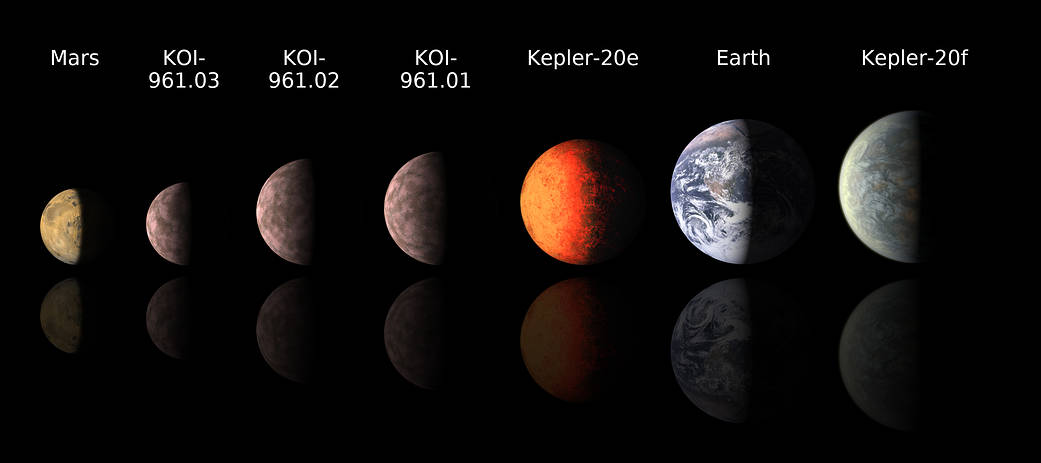
Celestial bodies from our solar system and beyond – although technically, only two meet the current IAU definition of the term “planet”. Credit: NASA
What is a “Planet”? This might sound like a catch question, but in fact it has been the cause for debate for almost two decades at least, and its roots go back as far as – wait for it – 1801.
Up until the start of the 21st century, everyone was reasonably comfortable with the idea of what a planet was: we’d discovered a total of nine making their way around our star over the previous centuries, including the somewhat oddball Pluto. The general (and informal) agreement was that a “planet” was that of a large, roundly spheroid / round object moving in an orbit around the Sun.
Then, in 1801 Ceres was discovered. Whilst tiny by comparison to the like of our Moon, it was nevertheless almost circular in shape and bumbling around the Sun in its own orbit. Hence, many argued, it was a planet – that in fact it was the so-called “missing planet” believed to exist between Mars and Jupiter. However, by 1851 the discovery of yet more bodies within this region of space had pushed the total number of “planets” in the solar system to 23; the eight large planets of Mercury through Neptune, and all these “little” planets, many of which weren’t entirely circular in shape (but others, like Juno, Vesta and Pallas) came pretty close. It was also clear the number was liable to keep on growing.
Thus, astronomers started cataloguing these smaller bodies in their own right and, effectively, the idea of the asteroid belt was born, with Ceres becoming the first asteroid within the belt to be discovered. Problem solved; not even Clyde Tombaugh’s discovery of Pluto in 1930 didn’t upset this approach too much, nor the definition of “satellite / moon”. But then in 1978, someone had to go and find Pluto’s Moon Charon, a body so large, it broke the traditional view of a “moon”, coming close to being a twin planet to Pluto. Then, in 2005, Eris was discovered, and the wheels really started coming off the wagon.
Whilst two other relatively large, “planet-like” Kuiper Belt bodies had been discovered orbiting the Sun – Quaoar (2002) and Sedna (2004) – prior to Eris, they were comparatively small and easy to lump into the “asteroid” container alongside Ceres. But Eris turned out to be around the size of Pluto, and more massive; so, either it was a planet (and was actually referenced the “tenth planet” of the solar system immediately following its discovery) – or Pluto wasn’t a planet. Cue astronomical bun fight.
Planets, dwarf planets, satellites, oh my! Credit: M. Özgür Nevres
The fight between classifying Eris as a planet or downgrading Pluto to “not a planet” became quite heated relatively quickly, prompting much debate within the International Astronomical Union (IAU) which wrestled mightily with the question of how all the various celestial bodies in the solar system should be formally classified – starting with was should be meant by “planet”. In the end, and possibly fearful of the sudden blossoming of planetary bodies within the Kuiper Belt following the discovery of Eris, as had been seen 200 years ago with the asteroid belt following the discovery of Ceres, in 2006 the IAU settled on the side of downgrading Pluto’s status from “planet” to “dwarf” planet.
In doing so, the organisation also sought to ratify the term “planet”, eventually settling on three criteria, published under what id now referred to as Resolution 5B, as found within GA26-5-6. Clause 1 of which holds:
Is it a dwarf planet? A TNO? A Plutoid? An Euler Diagram showing the IAU Executive Committee conception of the types of bodies in the Solar System during the 2006 General Assembly. Credit: Holf Weiher
A planet is a celestial body that:
is in orbit around the Sun;
has sufficient mass so as to assume hydrostatic equilibrium (aka “a round shape”);
The decision caused (and still causes) a lot of emotional upset where Pluto is concerned, and this masked a potentially bigger issue with Resolution 5B-1: be defining a planet and a “celestial body orbiting the Sun”, it immediately excluded the term being formally used with regards to planets orbiting other stars.
Oops.
In fairness, while astronomers have been locating exoplanets since 1992, by the time the IAU arrived at their definition in 2006 the number discovered was measured in the handful, so considering them didn’t really factor into the IAU’s thinking. Since then, of course, things have changed dramatically: we’re fast approaching 6,000 planets known to be orbiting other stars.
Again, being fair to the IAU, they did try to address the issue of exoplanets (the term simply means planet outside the solar system, rather than having any meaningful definition) in 2018. However, the effort never got beyond the “working” phase. In fact, the 2018 discussions revealed that even when applied to just the solar system, Resolution 5B-1 was pretty woolly and unquantifiable; something better was needed. Things weren’t much better by the time of the next IAU General Assembly in 2021.
Potentially, the best way to offer a properly unquantifiable definition for planets wherever they might be found, do this is via mathematical modelling, removing any subjectivity from how both the term and planets are defined.
This is precisely what a team from the USA and Canada has attempted to do. AS they note in their study, published in The Planetary Science Journal, they sought to break down the the potential taxonomy of planetary bodies – both solar and extra-solar – in terms of critical physical characteristics: mass, density, etc., local dynamical dominance within their orbits, the bodies they orbit (single stars, brown dwarfs, binary systems, etc.). Using mathematical models to quantify these measures, they have been able to show that celestial bodies tend to fall in to distinct clusters, and this has enabled them to develop a far more quantifiable definition of the term “planet”, thus:
A planet is a celestial body that:
a. Orbits one or more stars, brown dwarfs or stellar remnants and
b. Is more massive than 1023 kg and
c. Is less massive than 13 Jupiter masses (2.5 x 1026 kg)
This definition is due to be presented at the 32nd IAU General Assembly being held in Cape Town, South Africa in August. If adopted, it will establish a meaningful framework by which planets, dwarf planets and natural satellites – wherever they might be found – can be quantitatively defined in manner that could objectively, rather than subjectively, help shape our understanding of the universe and our place in it.
VIPER Cancelled
On July 17th, NASA announced it has cancelled its Volatiles Investigating Polar Exploration Rover (VIPER) mission due to cost increases and schedule delays.
Roughly the size of a golf cart (1.4m x 1.4m x 2m), VIPER was a relatively lost-cost (in the overall scheme of things) rover charged with an ambitious mission: to carry out extensive prospecting the permanently shadowed areas of the Moon’s South Polar Region, seeking resources and mapping the distribution and concentration of water ice. However, the project has been repeatedly hit by delays and increasing costs, both with the rover (built by NASA) and its Griffin lander vehicle, supplied by commercial space company Astrobotic Technology Inc., and which was due to fly with additional payloads to the rover.
VIPER (Volatiles Investigating Polar Exploration Rover) was to be robotic lunar rover tasked to prospect for natural lunar resources within a permanently shadowed region near the lunar south pole. Rendering credit: NASA
In 2022, these delays resulted in the mission being pushed back to a late 2024 launch date from a planned 2023 date. This was then further pushed back to September 2025. At the time this decision was made, the overall cost for the rover had risen from US $250 million to US $433.5 million and would likely exceed US $450 million by the 2025 launch date. More recently, a review found that whilst the rover is largely completely, it has yet to undergo environmental testing and still lacked proper ground support systems, noting that delays with either of these could quickly eliminate any chance of meeting the 2025 launch date and push the costs up even further.
At the same time, the cost to NASA for the development of the Griffin lander has risen by over 30% (from some US $200 million to US $323 million). These are likely to rise even further as a result of NASA’s requested additional testing of the lander in the wake of the January failure with Astrobiotic’s smaller Peregrine One lunar lander, test which could have also impacted the lander’s readiness for a 2025 launch.
VIPER being assembled in a clean room at NASA’s Johnson Space Centre, Texas. Credit: NASA
The problem here is that the VIPER mission can only be launched at certain times in order to capitalise on favourable lighting conditions in its proposed landing zone; any delay beyond November 2025 for mission launch would therefore mean the mission could not take place until the second half of 2026. As a result, overall costs for the mission could be nudging US $1 billion by the time it is launched. Given NASA’s overall science budget for 2025 has already been tightly constrained by Congress, this was seen as unacceptable by the review board, as it potentially meant putting other missions at risk. Ergo, the decision was made to cancel VIPER.
That said, the Griffin lander flight to the Moon will still go ahead with NASA support, allowing it to fly its planned commercial payloads, together with a payload simulator replacing the rover. In addition, NASA is also seeking to get the rover to the Moon by offering it to any USA company and / or any of NASA’s international partners willing to fly it to the Moon at their own cost. If no such offers are received by August 1st, 2024, then the rover will be dissembled and its science instruments and other components put aside for use with other missions.
NASA Confirms Use of SpaceX for ISS Deorbit Whilst Suspending Falcon 9 Station Launches
On July 17th, 2024, NASA supplied further information on the planned use of SpaceX hardware to de-orbit the International Space Station (ISS) when it reached its end of life in 2030, whilst simultaneously effectively suspending SpaceX launches to the space station pending its own review of Falcon 9 following the recent loss of a Falcon 9 upper stage and its payload.
NASA originally awarded the contract for the United States Deorbit Vehicle (USDV) – the vehicle that will physically de-orbit the ISS – was awarded to SpaceX on June 26th, 2024 with little in the way of specifics, other than NASA aimed to obtain the vehicle for no more than US $843 million. In the more recent statement, NASA confirmed that SpaceX will provide NASA with an “enhanced” version of their Dragon vehicle, comprising a standard capsule with a lengthened “trunk” (the service module providing propulsion and power) equipped with a total of 46 Draco motors and 16 tonnes of propellants.
An artist’s impression of the enhanced SpaceX Dragon docked with the Harmony module on the International Space Station and using its Draco engines to de-orbit the station. Credit: SpaceX
Under NASA’s plans, the USDV will be launched prior to the final crew departing. At this point, the station’s orbit will be allowed to naturally decay to around 330 km, at which point the last crew will depart. The station’s orbit will then be allowed to decay for a further six months prior to the USDV being used to orient the ISS for re-entry in a manner that will see much of the station burn-up in the atmosphere, and what survives falling into the south Pacific.
The contract awarded to SpaceX is for the Dragon vehicle only, not for its launch or operation; on completion, the vehicle will be handed over to NASA to operate. However, given the 30-tonne mass of the USDV and the fact it is a Dragon vehicle makes the SpaceX Falcon Heavy a strong contender as a potential launch vehicle (unless superseded by the company’s Starship / Super Heavy combination by the time USDV is ready for launch).
In the meantime, NASA has suspended all Falcon 9 launches to the ISS pending their own reauthorisation review in the wake of the July 11th loss of a Falcon 9 upper stage and its payload of Starlink satellites.
That loss is already under investigation on behalf of the US Federal Aviation Administration, however, on July 17th, NASA confirmed it will carry out its own review once the FAA’s work in concluded, although preparations for upcoming flights – notably a launch of a Cygnus resupply vehicle via Falcon 9 due on August 3rd and the launch of the Crew 9 rotation due later in August – will continue.
Screenshot from the webcast of a SpaceX Starlink launch on July 11th, 2024, showing a build-up of white material on the upper stage of a Falcon 9 rocket. This is thought to be ice from a liquid oxygen propellant leak, and may have led to the loss of the vehicle. Credit: SpaceX
The suspension of operations is normal when a launch vehicle utilised by the space agency is involved, and NASA made it clear that none of the crew currently on the ISS are in danger or at risk of running out of supplies.
SpaceX has sought to limit the impact of the FAA investigation citing that given the fault occurred in the vehicle’s upper stage and when it was entering orbit, it posed no threat to public safety and so other launches should not be discriminated against as a result. However, NASA has indicated that even if the FAA agreed with SpaceX and allowed Falcon 9 launches to continue during the mishap investigation, the NASA suspension of operations would remain in place until such time as its own review has been completed.
Crew safety and mission assurance are top priorities for NASA. SpaceX has kept the agency informed as it works closely with the Federal Aviation Administration throughout the investigation, including the implementation of any corrective actions necessary ahead of future agency missions. NASA and its partners also will implement the standard flight readiness review process to ensure we fly our crew missions as safely as possible.
NASA statement on ISS-related Falcon 9 launches in the wake of the July 11 loss of a Falcon 9 upper stage





 Inara Pey: Living in a Modemworld