Space Sunday: Starliners and samples

An artist’s rendering of a CST-100 Starliner capsule and service module in low Earth orbit. Credit: NASA / Boeing

Monday, May 6th 2024 should hopefully mark the start of a new phase of crewed space launches from US soil when the long-overdue NASA Crewed Flight Test (CFT) of Boeing’s CST-100 Starliner lifts-off from Canaveral Space Force Station and heads for the International Space Station (ISS).

As I’ve noted in these updates, the Starliner is one of two commercial vehicles specifically contracted by NASA to handle crew transfers to / from the ISS (the other being the SpaceX Crew Dragon), under the the Commercial Crew Program (CCP). Like Crew Dragon, it comprises a reusable capsule powered and supported by an expendable service module. Like both NASA’s Orion capsule (which is somewhat larger) and the Crew Dragon (which is somewhat smaller), the Starliner is also capable of other missions to low-Earth orbit outside of its primary NASA function.

A comparison between NASA’s Apollo and Orion capsules, together with the commercial vehicles from Boeing (CST-100) and Dragon (SpaceX) – all seen without their service modules. Credit: G. De Chiara

Capable of carrying up to seven people (the general crew complement for an ISS Expedition crew rotation) – although normal operations will see it carry four at a time -, Starliner is designed to be used for 10 flights with a 6-month turn-around time. The system was first unveiled in 2010, and was intended to build on Boeing’s experience with NASA and the Department of Defence; with the company confident the vehicle could be flying by 2015 were NASA to fund it forthwith. However, as NASA did not grant a contract (US $4.2 billion) until 2014, the first flight (+ vehicle certification) was pushed back to 2017 – although development work on the vehicle continued between 2010-2014 due to funding via NASA’s Commercial Crew Development (CCDev) contract.

However, as as I’ve again charted in these pages, the programme has been beset with issues – many of them to Boeing’s complete embarrassment. Over confidence on Boeing’s part saw the initial uncrewed test flight(OFT-1) delayed and delayed, finally taking place in December 2019. Post-launch a number of software errors were found, including an 11-hour offset in the vehicle’s mission clock, which resulted in an over-use of propellants and leaving the vehicle unable to rendezvous with the ISS. To further software errors were detected during the flight, either of which might otherwise have resulted in the complete loss of the vehicle.

As a result, a second Orbital Flight Test was required, to be undertaken at Boeing’s expense. Again the company was bullish about things, stating they could complete it in 2020, despite NASA requesting some significant updates to the docking system (which were further exacerbated by COVID, admittedly hardly Boeing’s fault). As a result, the launch pushed back to August 2021, and things went sideways.

somehow, Boeing managed to assemble the vehicle, ship it to Canaveral Space Force Station, have ULA integrate it into its Atlas V launcher, roll it out to the pad and then realise 13 propulsion system valves were stuck in the wrong position. Rather than scrub the mission and roll the vehicle back for a complete check-out and repair, Boeing then tried to carry out a fix on the launch pad, and when that failed, at the ULA Vertical Integration Facility (VIF). Only after this (somewhat risky) options failed, did the company return the spacecraft to the factory for proper remedial action – only to then enter into an embarrassing attempt to blame-shift with propulsion system supplier Aerojet Rocketdyne.
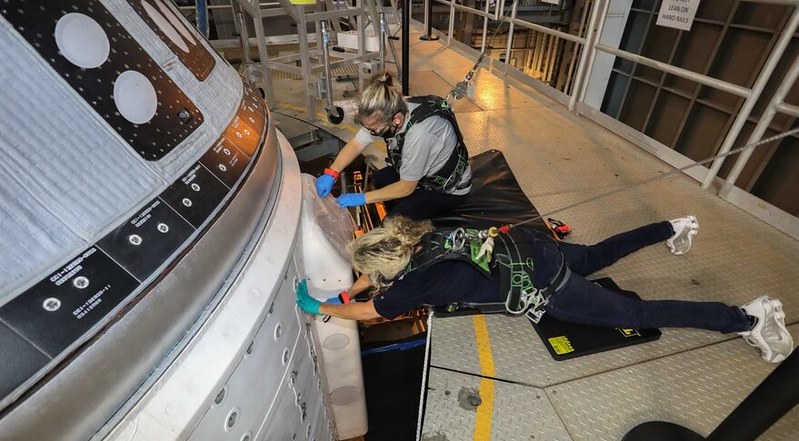
August 22nd, 2022: harnessed against the risk of a fall down the side of the booster, Boeing technicians attempt to repair 13 propulsion valves in the OFT-2 Starliner vehicle from the High Bay of the ULA Vertical Integration Facility at Canaveral Space Force Station. Eventually, the vehicle had to be unstacked and returned to the factory for repairs. Credit: NASA

As a result, OFT-2 did not take place until May 2022, and whilst largely successful, the flight saw issues with both the Orbital Manoeuvring and Attitude Control System (OMACS) and Reaction Control System (RCS). Even so, the flight was seen as meeting all of NASA’s requirements and Starliner was cleared for a crewed test flight (CFT), initially scheduled for early 2023,  only for more issues to cause it to be pushed back. Chief among these were problems with the parachute harness linking the capsule to its descent parachute and also – most worryingly – the discovery that flammable tape had been used with electrical wiring in the vehicle (a contributing factor to the tragedy of the Apollo 1 fire in 1967). The need to subject the parachute harness to upgrades and testing, and to go through the capsule inch by inch and replace the flammable tape knocked any hope of a 2023 CFT launch on the head, and it was pushed by to April / May 2024, with May 6th eventually being selected for the launch day.

For the last couple of weeks, final preparations for the launch have been taking place at both Kennedy Space Centre, where the 2-person crew have been in pre-flight quarantine (with the exception of the pre-flight team assigned to them) so as to avoid either contracting any communicable illness which might be passed to the crew on the ISS; and at Cape Canaveral Space Force Station, most recently with the roll-out of the Starliner vehicle Calypso atop its Atlas V launch vehicle.
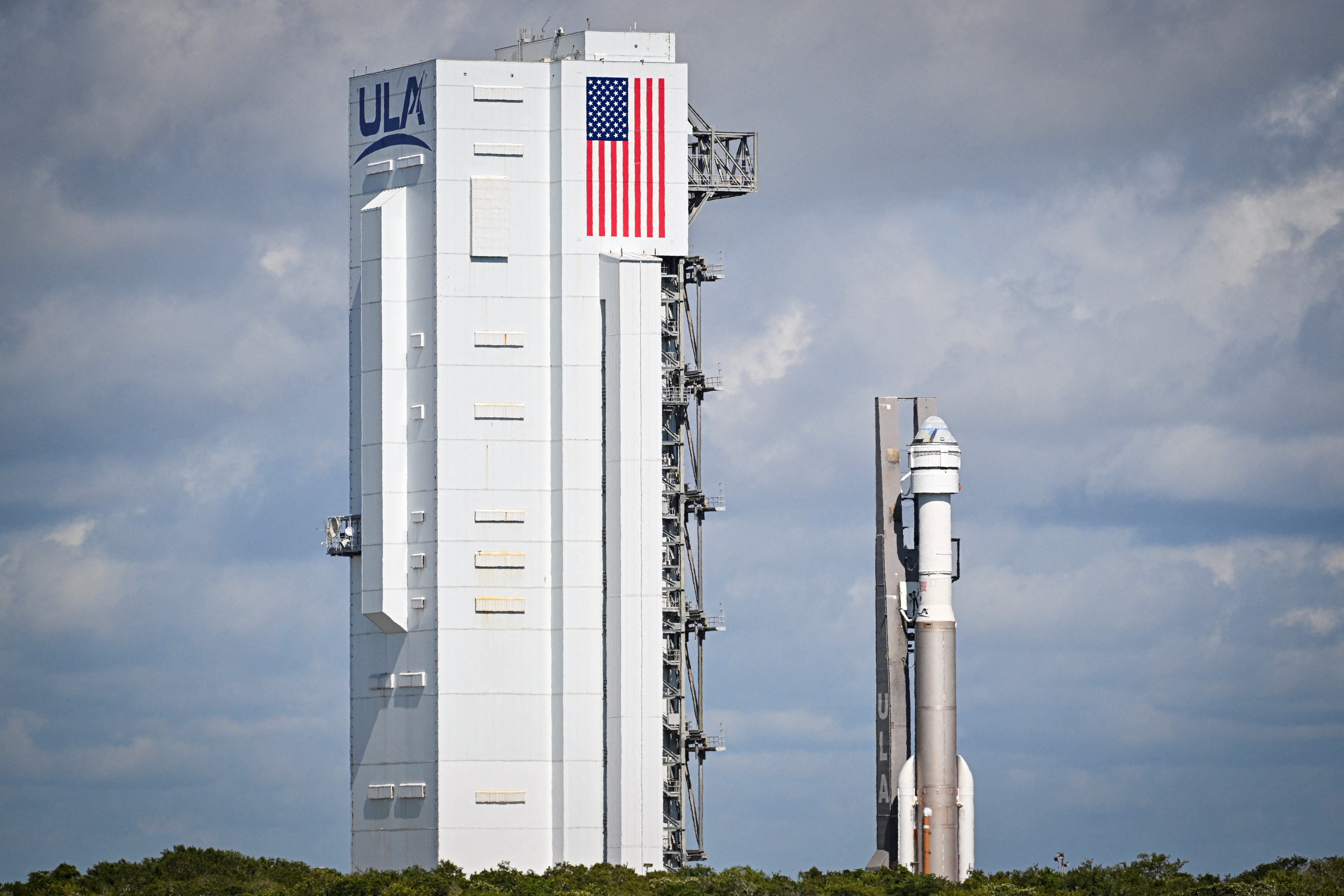
The Boeing Starliner Calypso departs United Launch Alliance’s Vertical Integration Facility atop a ULA Atlas V rocket on May 4th, 2024, heading for Space Launch Complex 41 (SLC-41), Canaveral Space Force Station, in anticipation of its crewed launch on May 6th, 2024. Credit: Miguel J. Rodriguez Carrillo / AFP via Getty Images

The launch will mark the first used of the human-rated N22 variant of the Atlas V, and the first time any variant of the Atlas family of launch vehicles has lifted humans to space since the days of Project Mercury in the 1960s. The launch will also mark the first crewed launch from Cape Canaveral since Apollo 7 (October 1968). The mission is scheduled to last 6 days, with the crew flying the vehicle to a rendezvous and manual docking with the ISS, where they will remain for several days prior to undocking and making a return to Earth and touch down on land (Starliner does not make the more usual – for US crewed capsules – ocean splashdowns, instead using propulsive braking and an airbag, both of which operate in the last second prior to the vehicle landing, to cushion the crew).

Whilst a manual rendezvous and docking with the space station is a major goal for the mission, CFT-1 is also about getting a hands-on view of the vehicle’s capabilities and flight systems, together with an overall assessment of its human factors and handling during dynamic events (e.g. launch, docking, atmospheric re-entry and landing). For this, the crew selected for the mission are highly qualified test pilots turned astronauts in the form of mission Commander Barry “Butch” Wilmore, a Captain in the US Navy NASA, and Pilot Sunita “Suni” Williams, also a Captain in the US Navy.

Whilst Starliner is designed to be lifted to orbit from a variety of launch vehicles – ULA’s Atlas V and Delta IV and SpaceX’s Falcon 9 – all of its completed and planned NASA crew flights will be atop the N22 crew-rated version of the Atlas V. Credit: ULA

Wilmore has spent a total of 178 days in space, flying both the space shuttle (STS-129) in the Pilot’s seat, and on the Russian Soyuz vehicle, which he used in 2014 to reach the ISS as a part of the Expedition 41/42 long duration station crew. As a fleet pilot, he gained over 6,200 hours flying a range of jet fighter and interceptor aircraft and making 663 at-sea landings aboard multiple US aircraft carriers. He also flew 21 combat missions during Operation Desert Storm. As a test pilot, he was heavily involved in the certification of the T-45 Goshawk trainer (a US version of the venerable British Hawk trainer) for carrier flight training, and served as an instructor for both US Navy fixed wing aviators and pilots training at the US Air Force Test Pilot School.

Williams served in the US Navy flying rotary aircraft, flying with Helicopter Combat Support squadrons. She flew missions during Operation Desert Shield, and was a senior pilot-in-charge of a detachment of Navy helicopters flying relief and rescue missions following Hurricane Andrew in 1993. She is qualified as a pilot, a test pilot and an instructor pilot on over 30 types of rotary wing aircraft, including helicopters and the likes of the V-22 Osprey.
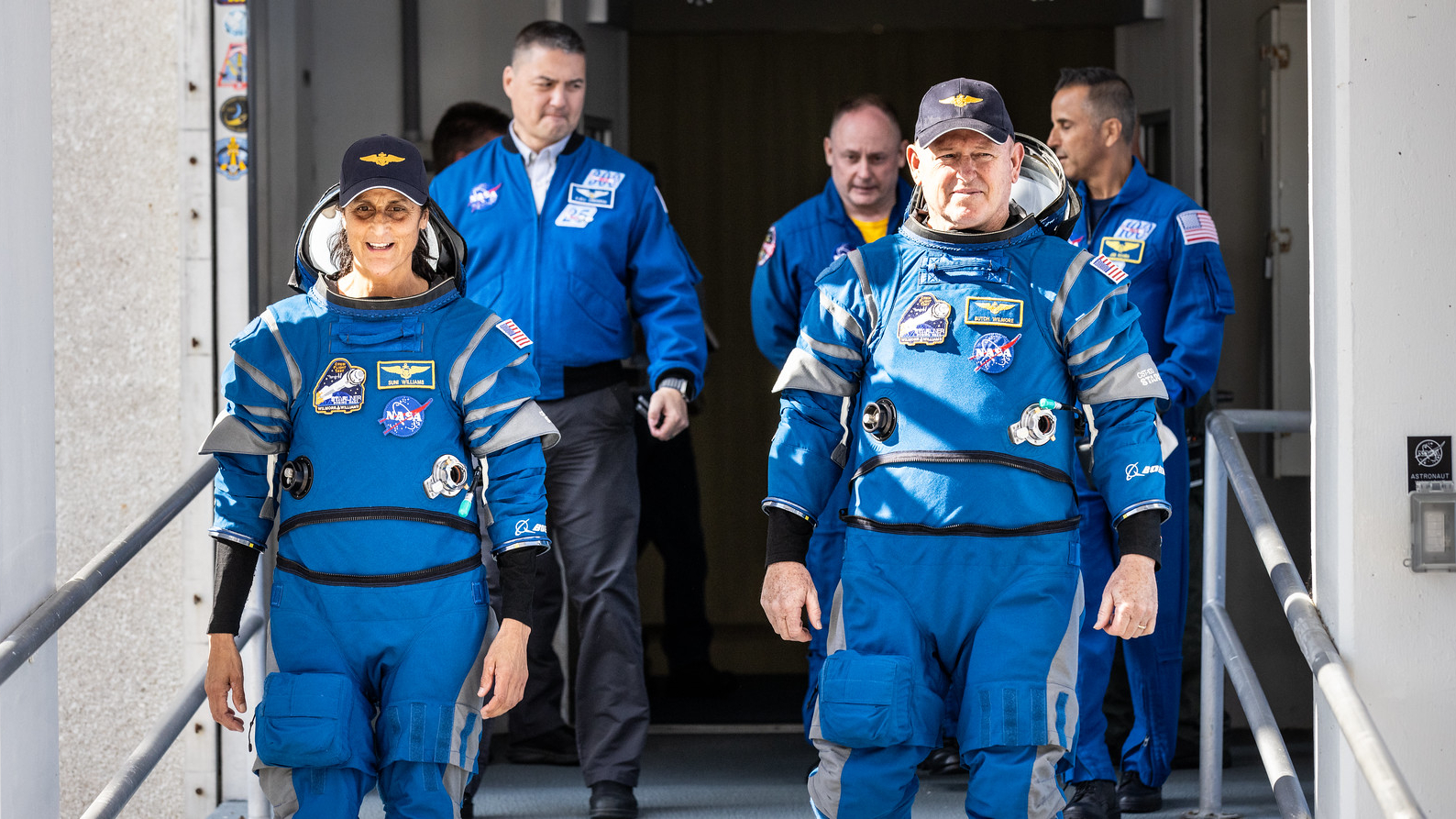
NASA’s Crew Flight Test (CFT) astronauts Sunita “Suni” Williams and Barry “Butch” Wilmore (right) exit the Neil A. Armstrong Operations and Checkout Building at Kennedy Space Centre wearing the Boeing Starliner pressure suits on Friday, April 26th, during a mission dress rehearsal. Credit: NASA / Frank Micheaux

As a NASA astronaut, she has flown in space no fewer than six times, for a total of 321 days 17 hours in space, 50 hours of which were spent carrying out 7 EVAs outside of the space station, marking her as one of NASA’s top five most experienced EVA astronauts. She was also the first person to run a marathon in space, officially participating in the 2007 Boston Marathon. She did this using a treadmill and bungee cords to hold her in place, completing the run distance in 4 hours 24 minutes – during which time she actually circled the Earth 3 times! She took part in the same marathon again in 2008.

Providing CFT-1 is a success and meets all of its goals, it will clear the way for crewed flight operations using Starliner to commence in 2025. No date has been set for the first operational flight, Starliner-1, but it is due to launch a 4-man crew of NASA astronauts Scott Tingle and Michael Fincke, Canadian astronaut Joshua Kutryk and Japanese astronaut Kimiya Yui on a planned 6-month stay at the space station. Once operational Starliner will fly annually on ISS missions from 2025 through 2030, splitting operations with Crew Dragon.

Whilst Starliner can – like Crew Dragon – be used for other orbital mission types, Boeing stated recently that it currently has no plans to start operating the craft commercially. However, the company is a partner in the Blue Origin-led Orbital Reef commercial space station project. This is due to commence orbital operations in the late 2020s, and Starliner is the designated crew vehicle for operations and crew flights relating to that station.
Continue reading “Space Sunday: Starliners and samples”

Alone: an immersive literary experience in Second Life

Alone, May 2024 – click any image for full size

It has been a fair time since Sheldon Bergman (SheldonBR) has presented an immersive experience within Second Life; so when he contacted me personally to tell me he has a new installation available for people to visit, I was immediately intrigued, and as soon as time allowed, I followed his invitation and hopped over to Alone.

Often working in collaboration with Angelika Corral – with whom he once co-ran the always engaging DaphneArts gallery and arts centre – Sheldon earned a rightful reputation for developing immersive art installations leveraging the (then new) capabilities of SL Experiences. In particular, these installations sought to bring the work of poets and artists from the physical world to life within the virtual, with a noted focus on the life and works of Edgar Allan Poe (as covered in these pages, for example, by A dream within a dream: celebrating Poe in Second Life (2017) and Annabel Lee in Second Life (2019)).

Alone, May 2024

With Alone, Sheldon continues within this theme, presenting installation with a personal dedication to Angelika, featuring what is Poe’s most revealing – and potentially his best – verse. It may not be as well known as the likes of The Raven or Annabel Lee – in fact it wasn’t even published until well after his death in 1849, finally appearing in print in 1875, having been held within the possessions of a family in Baltimore – but what it does say does much to help our understanding of Poe’s nature and what lay behind his writing.

Exactly when the poem was written is unclear; the original manuscript was both untitled and undated. However, the year is widely taken as being 1829 – no doubt the result of the poem’s first publication being accompanied by a facsimile of the original manuscript and on which the editor of the magazine had taken upon himself to add the date “March 17, 1829”. As this does sit as the middle year of the three in which Poe’s poetry was at its most focused terms of annual output (the other two being 1827 and 1831), it’s potentially not unreasonable to pin it to that year.

Alone, May 2024

But whether it was 1829 or 1827 or 1831, the poem would have been written when Poe was in his early 20s; as such it shows a remarkable sense of self-awareness and personal perception. At its heart, Alone focus on themes of loneliness, isolation and – most particularly – of being different and apart from others. It marks how Poe had always known he had a substantially different outlook to those around him, one that has existed from a childhood in which he saw himself unable to see things as other children saw them, perhaps because of the tempestuous nature of his first two years on Earth, marked as they were by abandonment by his father, the death of his mother and his being taken into a strict foster care – as the poem directly references:

And all I lov’d—I lov’d alone—
Then—in my childhood—in the dawn
Of a most stormy life—was drawn

Alone, May 2024

This autobiographical element flows throughout the poem, right up to its open-ended final line in which the dash seems to state, that just as he past and present life had been, so to will be the future; whatever might pass as normalcy for those around him will forever be a foreign land to him, whilst his world will forever be beyond their understanding.

In this, Alone perhaps does more to shine a light on Poe’s short and tortured life than any amount of analysis of his work or examination of his death , both of which are too often the focus of any such analysis. Hence why, perhaps, Sheldon’s installation includes references to some of Poe’s famous works, both visually and through quotes: The Fall of the House of Usher (1839); The Black Cat (1843); The Raven (1845); A Dream Within A Dream and Annabel Lee (both 1849); doing so underlines the foundational element of understanding Poe’s view of himself any thus all of his writing.

Alone, May 2024

To appreciate Alone in its fullness, visitors should accept the local Experience after arriving at the landing point by clicking on the displayed poster. This will allow a HUD to be temporarily attached to the viewer – it will detach on leaving the region, but must be left in place through a visit – which will initially offer instructions on how to correctly view the installation. In short these are: use the local Shared Environment; make sure local sounds are enabled and you have Advanced Lighting Model (ALM) enabled via Preferences → Graphics. Once these points have been followed, clicking on the HUD text will deliver visitors to the installation proper.

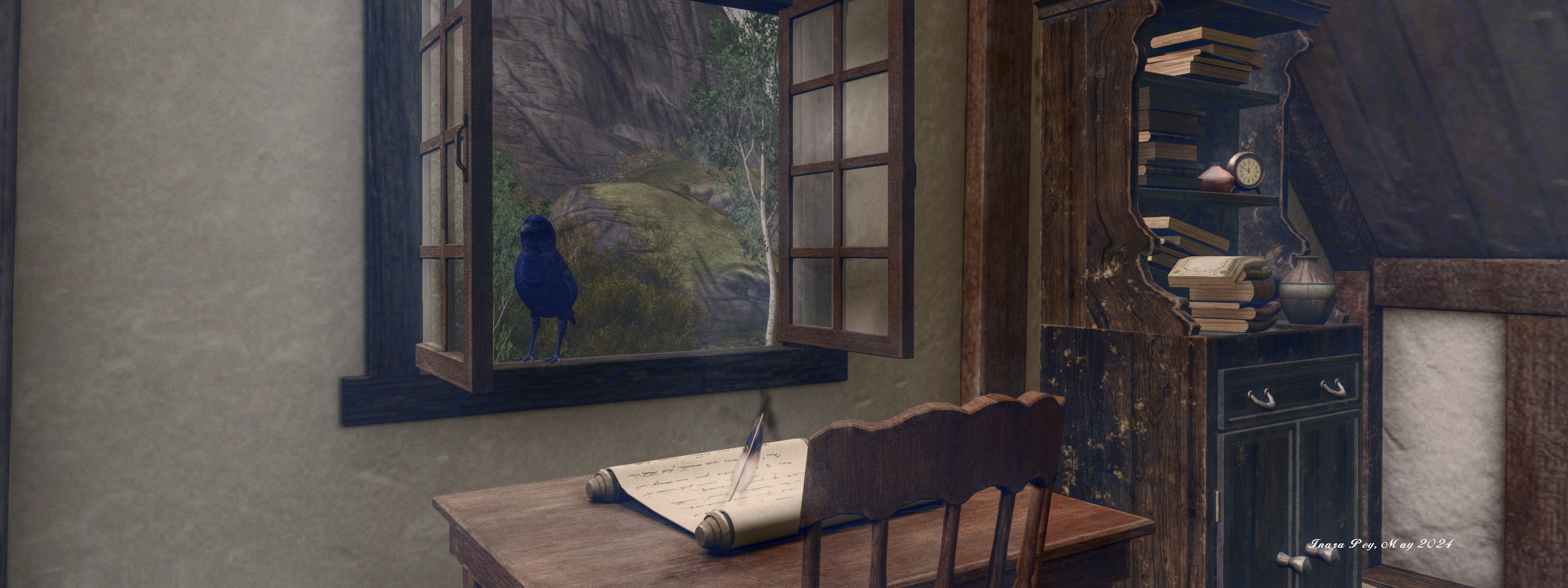
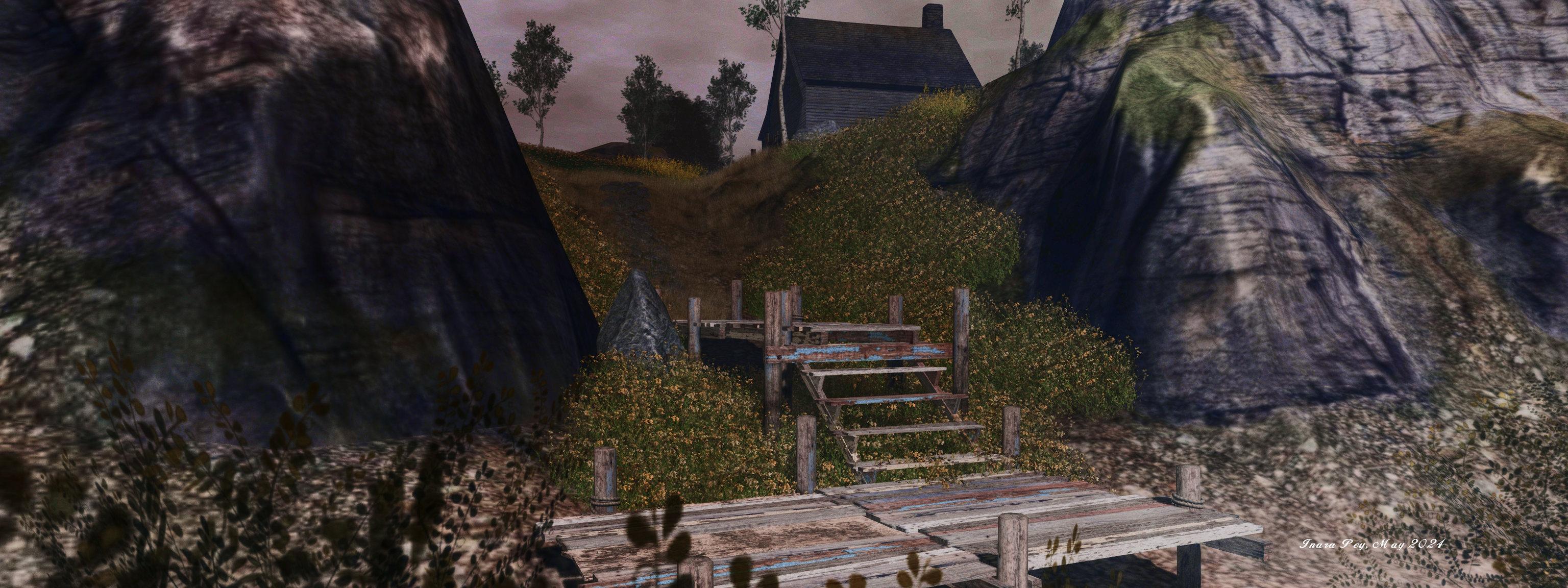
From here, it is a case of walking through the landscape from the landing point, up to the cabin sitting on the shoulder of a hill and then through it (upstairs and down), before exiting through the back door and following the path down to the waters and pier at the back of the cabin. In doing so, visitors will trigger visual elements at various points (such as the candles lighting to guide you up the hill) and text elements within the HUD, whilst also encountering reflections of the poems and stories the text references. Some of the latter might be obvious (such as the rave at the open bedroom window) others perhaps less so (e.g. the image on the wall of the cabin; the cabin and the wilderness in which it stands, etc.).

Alone, May 2024

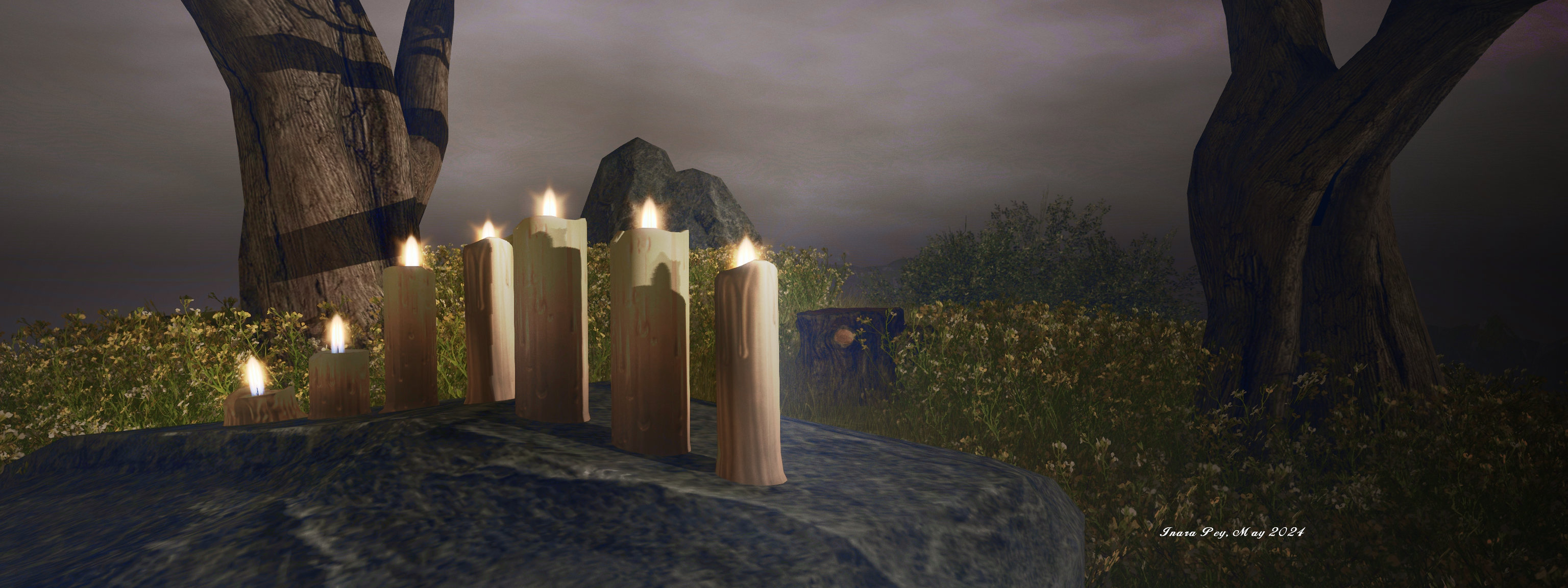
The final element of the installation requires climbing the ridge rising from the east side of the cabin (where the sheep are grazing) to run first south and away from the cabin and then back to the west as it rises to reach the top of a hill overlooking the landing point far below. Crowned by a trio of windswept trees standing as bent-backed guardians, the hilltop is home to a low, alter-like stone within candles and a tree stump seat. It’s a place I have little doubt the poet would have approved for the recital of his poem (triggered as visitors reach the trees), its isolation and position apart from the rest well suited to the poem’s themes. Further, in coming at the end of the experience, it offers another underlining of the poem as a means to better understand Poe and his work.

Alone might not be the easiest of installation to grasp, but for those with a love of poetry and the work of Edgar Allan Poe – and who indeed who might feel separated and apart from the rest of life for whatever reason – it is an engaging and potentially evocative one.

SLurl Details

  • Alone (Canary Islands, rated Moderate)

2024 week #18: SL CCUG summary

Venus by the Water, April 2024 – blog post

The following notes were taken from my audio recording and chat log transcript of the Content Creation User Group (CCUG) meeting held on Thursday, May 2nd, 2024.

Meeting Purpose

  • The CCUG meeting is for discussion of work related to content creation in Second Life, including current and upcoming LL projects, and encompasses requests or comments from the community, together with related viewer development work. This meeting is held on alternate Thursdays at Hippotropolis.
  • In regards to meetings:
    • Dates and times are recorded in the SL Public Calendar.
    • Commence at 13:00 SLT on their respective dates.
    • Are conducted in a mix of Voice and text chat.
    • Are open to all with an interest in content creation.
  • The notes herein are a summary of topics discussed and are not intended to be a full transcript of the meeting.

Official Viewers Status

  • On Thursday, May 2nd, the Materials Featurette RC viewer updated to version 7.1.7.8883017948.

The rest of the official viewers remain as:

  • Release viewer: 7.1.6.8745209917, formerly the Maintenance Y/Z RC (My Outfits folder improvements; ability to remove entries from landmark history), dated April 19 and promoted April 23.
  • Release channel cohorts (please see my notes on manually installing RC viewer versions if you wish to install any release candidate(s) yourself).
    • Maintenance B RC (usability updates / imposter changes), version 7.1.7.8820696922, April 29.
    • Maintenance X RC (usability improvements), version 7.1.6.8758996787, April 23.
  • Project viewers:

Graphics / glTF

  • Mirrors: Geenz Linden continues work on bug fixing (notably the fact that mirrors under Linden Water seem to break) and additional updates to improve usability.
  • PBR Terrain:
    • Cosmic has fixed an issue wherein 2K textures were not rendering on the mini-map.
    • In addition, she is looking into the ability to customise repeats in PBR terrain.
  • It is known that screen space reflections (SSR) do not work well on Linden Water, producing moiré effects. There has been talk within the Graphics team of “ripping out” SSR and replacing it with “something” – but no determination has been made as to what should be used, and it is pending work elsewhere within the graphics / rendering system.

glTF Scene Import

  • Runitai Linden is continuing to work on glTF scene import. This has reached a point where (on test viewers) it is now possible to preview a scene (tied to an in-world object) in-world.
  • Work is now being done to set-up a couple of test region on Aditi (the Beta grid) where this can be more widely tested.
  • The overall status of the glTF scene import work is described as “prototyping with much brokenness”, and the project is liable to continue through summer in order to get it into something of a more productive state.
  • The initial aim is to get to a point where scenes can be imported and seen, and nodes within them updated with both tools in the viewer and / or using LSL, and ensuring they stay in synch with the rest of the scene.
  • Once the above has been reached, then the plan is to start looking at performance, working out a Land Impact accounting schema, etc.
    • In as much as Land Impact is concerned, it is likely that nodes within a scene will have their own Land Impact, with those also involved in skeletal animation having an additional Land Impact.
  • Scenes are liable to use the MSFT glTF extension for Level of Detail (LOD), as this allows LODs to be set per node within a scene, providing more intuitive / consistent LOD switching management (based on screen coverage).
    • For automatic LOD generation, the first pass of work might only use the automatic LODs generated by Blender; if a home-ground automatic LOD generation system is used, it will “almost certainly” be Mesh Optimiser.
    • Overall, glTF scene support should leverage Blender’s LOD generation, as Blender is “way better” at this than LL are “any day of the week”.
    • Managing LODs (e.g. setting a default LOD Factor in the viewer is liable to become more firmly set and managed as glTF scene import becomes available (e.g. all viewers working to a fixed LOD of 3.00 or something).
  • The will be constraints placed on scene imports (e.g. will not be able to have a scene which exceeds the capacity of a region; scenes will not be able to span more than one region (so as to avoid issues with physics, etc.); and so on).
  • It was noted that glTF scene support will require a lot of work in areas such as physics management, update message handling (the object-based messaging currently used will not work with glTF scenes). Not of these aspects are seen as potential blockers – but solving all of them will take time.
  • glTF scenes will present more of a two-way street for creators, moving more seamlessly between a design tool such as Blender and SL when building and testing a scene and, following the upload of a scene, the ability to save it back locally again (subject to the SL permissions system where content has been subsequently added to a scene after its initial upload).

In Brief

  • Animations: it was noted that under glTF there is support for at least eight morph channels (with one vertex attribute being considered a channel, so it could be that 2 morphs change 3 attributes), making animation far more flexible in terms of use.
  • Some using the SL Mobile app have apparently been reporting that PBR terrain textures are not showing in that app, as it currently does not have PBR rendering support – this has been passed to the Mobile team.
  • It was noted that one of the reasons for LL adopting the glTF specification is that it is mobile friendly, so the Mobile team is going to be adding PBR, etc., support.
  • A lot of the meeting was taken up with a general discussion on matters relating to glTF scene import – LOD management, collaborative building, licensing matters (e.g. if an asset is available on a third-party asset store with a specifically licensed use, and importing it to SL potential break that license – should LL proactively block the asset from being imported?), etc., which have yet to be fully determined internally at LL, and so fall outside of this summary.

Next Meeting

† The header images included in these summaries are not intended to represent anything discussed at the meetings; they are simply here to avoid a repeated image of a gathering of people every week. They are taken from my list of region visits, with a link to the post for those interested.

Vision of Spring in Second Life

Serena Arts Centre and Plaza, May 2024: Spring – Vita Theas and Teagan Dawnbringer
The four seasons of the year have long served as focal points for artists who sought to portray the emotions and feelings that each one brings to most people. Spring is a season that is overflowing with life and new beginnings a season where we’re making friends with our emotions again , our emotional reactivity and responses blossom with nature around us, happiness, serenity as flowers hatch and colours explode everywhere in intense expressiveness.

So reads the introduction to an expansive exhibition of art and artistry from Second Life and the physical world, mixing photography with mixed media and painting to express the beauty and renewal of springtime, all of which is being hosted at the Serena Arts Centre and Plaza in Second Life.

Serena Arts Centre and Plaza, May 2024: Spring – Sisi Biedermann and John (Johannes Huntsman)

And when I say expansive, I mean just that: the exhibition is located across Serena Arts Centre and Plaza, featuring both indoor and outdoor displays  which have been thoughtfully laid out so as not to overload the senses with art by the 25 artists who have been invited to participate in the event by the Serena Arts team.

Officially opening at 12:00 noon SLT on May 3rd, 2024, the exhibition – officially called Visions of Spring : Rebirth and Recolouring, will run through until May 23rd, and the 25 invited artists comprise:

Dante Helios (Dantelios), Maggie (maggiemagenta), Greg Parker (GregParker), Terrygold, Christian Carter (XJustFriendX), Tara Paxlapis-Savior  (Tara Aers), Sisi Biedermann, Sheba Blitz, Zia Branner, Raven (Raven Cedarbridge), Teagan Dawnbringer, Prins Evergarden, John (Johannes Huntsman), Layachi Ihnen, Hermes Kondor, Jaminda Galênê Moon (Jaminda Lygon), Dreams (barry Richez), Tempest Rosca-Huntsman (Tempest Rosca), Vee Tammas Shocker (Veruca Tammas), AmandaT Tamatzui, Vita Theas, Nils Urqhart, Pask Wasp, Meycy Winchester, Onceagain (Nanoji Yachvili), Deyanira Yalin, and Cayla (YumiYukimura).

Serena Arts Centre and Plaza, May 2024: Spring – Tempest Rosca-Huntsman (Tempest Rosca), Cayla (YumiYukimura) and Deyanira Yalin

Each artist has been invited to display two items of their work that encompass the central theme of spring the richness and vibrancy of its colours, its beauty, and the sense of renewal and rebirth evident within it. In addition, artists have been able to include their biographies and information on where more of their work might be seen in-world and on-line.

Given such a diversity of artists, it’s impossible to highlight particular pictures of images; suffice it to say that all offer highly individual views of spring, be they images from locations in Second Life or avatar studies, paintings or photographs of their physical world work uploaded to Second Life or purely digital compositions (some of which combine elements from within and without SL). the majority have opted to offer copies of their pieces for sale (some of a limited quantity basis), although one or two have not.

Serena Arts Centre and Plaza, May 2024: Spring – Nils Urqhart and Vee Tammas Shocker (Veruca Tammas)

All of the displays comprising the exhibition are located across the canals from the Centre’s landing point, with the majority being to the west of the landing point, under the two geodomes located there and along the walk linking them, with the rest on the plaza area to the north of the landing point (and directly connected to the area with the geodomes) and the gallery building to the north-east build out over the water and reached via the two decks alongside of it.

Given the organisers have taken care to present a broad mix of genres and art types in each location, rather than focus on a specific genre / approach in each one (e.g. one area devoted to work originating in SL, another for those artists offering work uploaded from the physical world, etc.), the exhibition should be explored in full, and the spread of the exhibit spaces – as noted above – present the eye and mind becoming too overwhelmed whilst also being a pleasant stroll.

Serena Arts Centre and Plaza, May 2024: Spring – Dante Helios (Dantelios), Terrygold and Onceagain (Nanoji Yachvili)

SLurl Details

Linden Lab: updates to policies and new initiatives on community relations

© and ® Linden Lab

On Thursday, May 2nd, 2024, Linden Lab issued the promised updates to both public-facing (i.e. linked to the Terms of Service) and internal policies.

These updates, together with additional internal changes (as noted below), have been made in the wake of investigations carried out in the wake of allegations made pseudonymously in February via the social journalism website Medium (and since removed).

In March, Linden Lab Executive Chairman Brad Oberwager (Oberwolf Linden) made a public statement on these matters indicating as much as was deemed necessary at the time (see my own reporting here, if interested), and that a further statement would be made in due course. It was further indicated by Keira Linden, speaking during a Lab Gab session released on April 19th, 2024 (and summarised in my own words here) that updates to policies were (then) being finalised, so the May 2nd statement – entitled Enhancing Our World Together – comes as no surprise.

Within it, Mr. Oberwager provides a short summary of the outcome of the investigations into the allegations made, before going on to summarise actions that have been / are being undertaken in the wake of those investigations, stating:

The investigation determined that all Lindens and contractors have stayed in compliance with our own community guidelines, as well as unwritten, ethical guidelines. I do not make this statement lightly, and I know there will be plenty of discussion. What I can say is that there is no incentive, monetary or otherwise, for me to mislead the community. At some point, the community has to trust that we, the Lindens, do well when the community thrives. We may make mistakes along the way, and we know that our community will engage with us when we do. Second Life is an enormous virtual world and we have to walk a very fine line between policing and preserving freedoms while also protecting the future growth and health of Second Life as a platform that respects diversity and creative expression among our community.
The findings did highlight opportunities for improvement. As a result, we are making updates to our internal policies to raise the standard for how Linden employees should respectfully engage with community members. This addresses multiple forms of engagement including how we present ourselves, how we interact with the community (even in moments of conflict), and how we minimize the perception of conflict of interest and favouritism in our interactions. 

As a result, the Lab has:

  • Updated the Child Avatar Policy related to the Second Life Terms of Service (ToS) – hence the need to re-accept the ToS on accessing Second Life or its related web properties.
  • Updated internal Policies and Procedures
  • Implemented personnel changes
  • Initiated management improvement programs
  • Committed to Community Roundtables (see below)
  • Committed to increased transparency and accountability

In terms of the the changes to the Child Avatar Policy, the statement notes:

We know that this update has the potential to cause confusion or concern in our community, so we’ve prepared an FAQ which we will continue to update as questions come up.

Community Round Table

  • The first of the Community Round Table events, as referenced in the statement and as previously announced by Linden Lab, will take place between 09:30-11:00 SLT on  Monday, May 20th, 2024, although the venue still to be announced (at the time of writing).
  • The event will feature Mr. Oberwager among those taking part from the Lab. It has been indicated that this event will have a focus on the acquisition of Tilia Inc., by Thunes, but also that reasonable questions / concerns on matter such as this might be addressed.
  • At the time of writing, and anonymous form for those wishing to ask questions of the Lab / offer feedback / suggestions on improving Second Life remained open (but I would advise using it sooner rather than later, if you intend to do so).
  • There will also be a Q&A portion during the Round Table at which questions  / ideas can be put forward.

Please note: if you opt to comment on the Lab’s statement, as outlined in this article, please refrain from discussing / naming any individuals, whether or not they may be related to the matters pertaining thereto.


Vindfjell: Nordic Beauty in Second Life

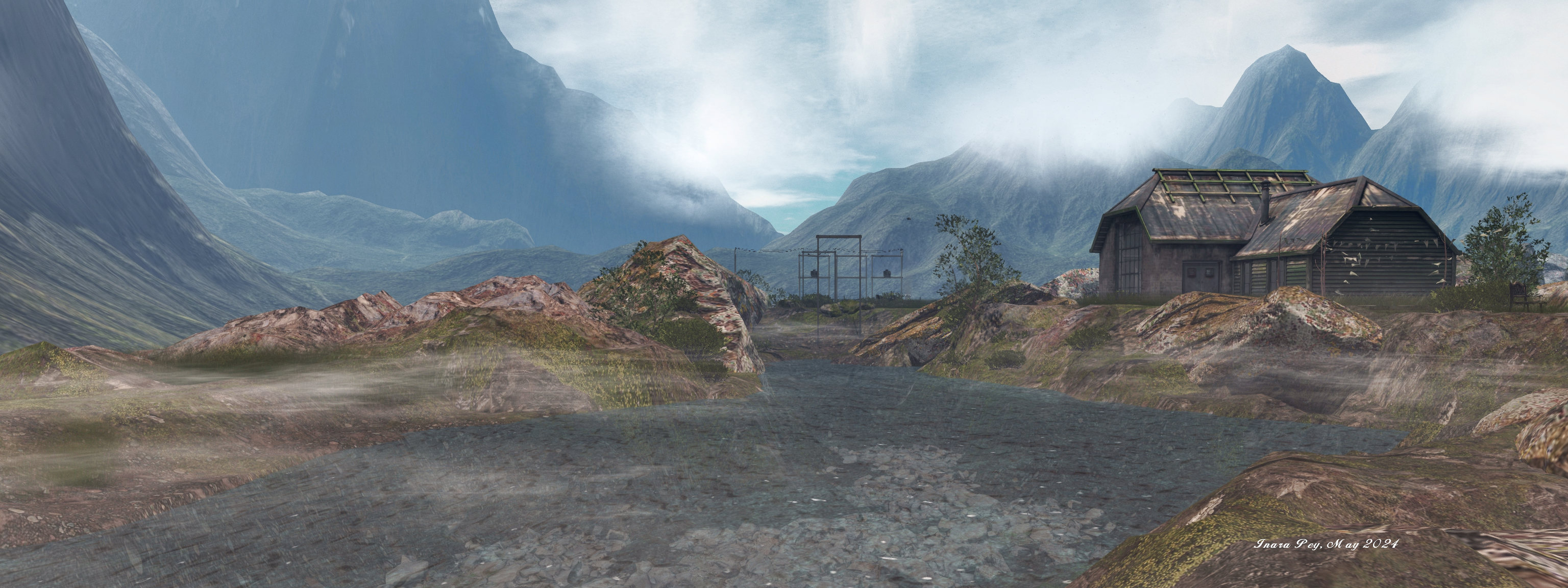
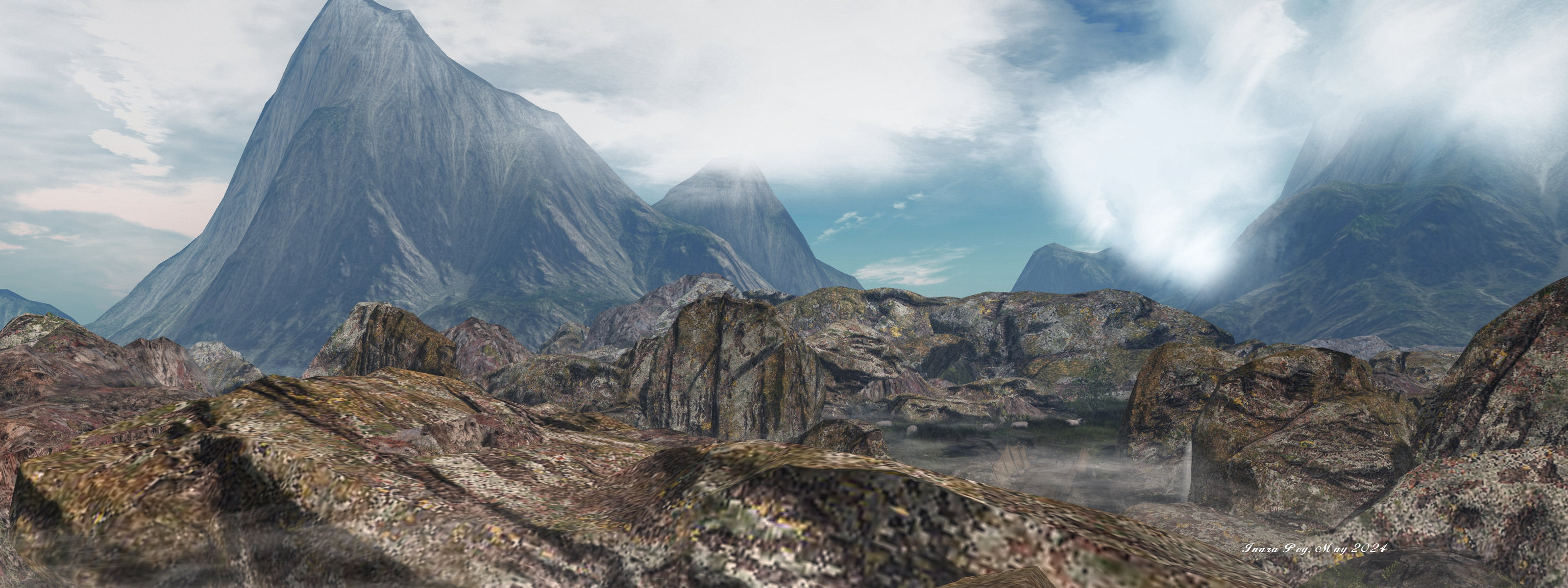
Vindfjell, May 2024 – click any image for full size

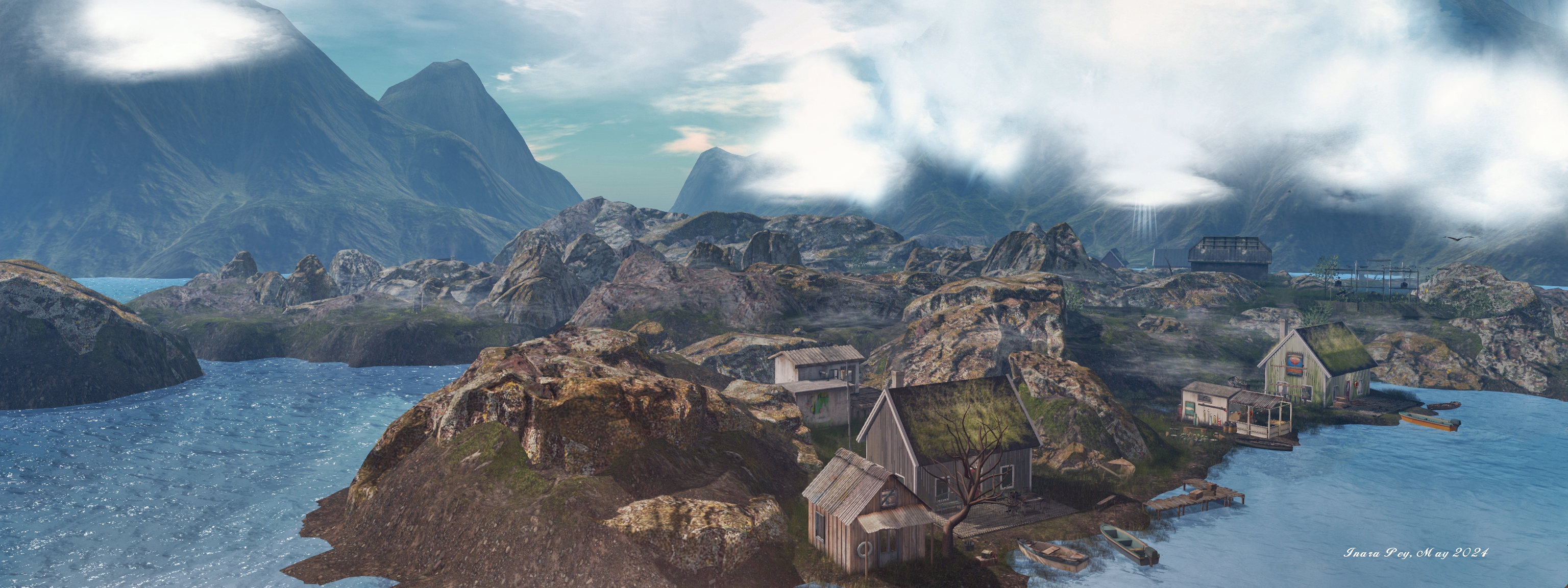
Open for a period of a month – through until late May 2024 – is a new Homestead region design by Dandy Warhlol (Terry Fotherington). Called Vindfjell, it is a marvel of windswept, Nordic beauty, balancing the region perfectly against the surrounding backdrop.

It’s my wont to often try to place regions with natural settings like this against locations within physical world which they might – if they existed – reside, or at least helped to inspire them. In some cases, this is helped by the region creator pointing to their inspiration or inspirations for their designs; sometimes it is possible to take a lead from the overall design and the designer’s background; other times, it is pure guesswork and imagination on my part.

Vindfjell, May 2024

With Vindfjell, it might be easy to point to Telemark County in Norway – specifically the Vindfjell mountain and nature reserve. However, whilst the name might well be taken from that area of Norway, I’d suggest that’s as far as the inspiration goes; the region itself folds numerous ideas and elements into it so that it is possible to see influences from across the Nordic countries of Finland, Sweden, Norway and Iceland and their associated autonomous regions, together with the likes of Denmark’s Faroe Islands and Greenland.

This is a place of rugged beauty and hardy living; a sheltered island sitting within fjords and inlets where fisher folk can live protected from the harsher aspects of North Atlantic weather, and from which they could depart in their boats to ply their trade, perhaps supplemented by a little sheep farming (although the sheep also likely help feed them!).

Vindfjell, May 2024

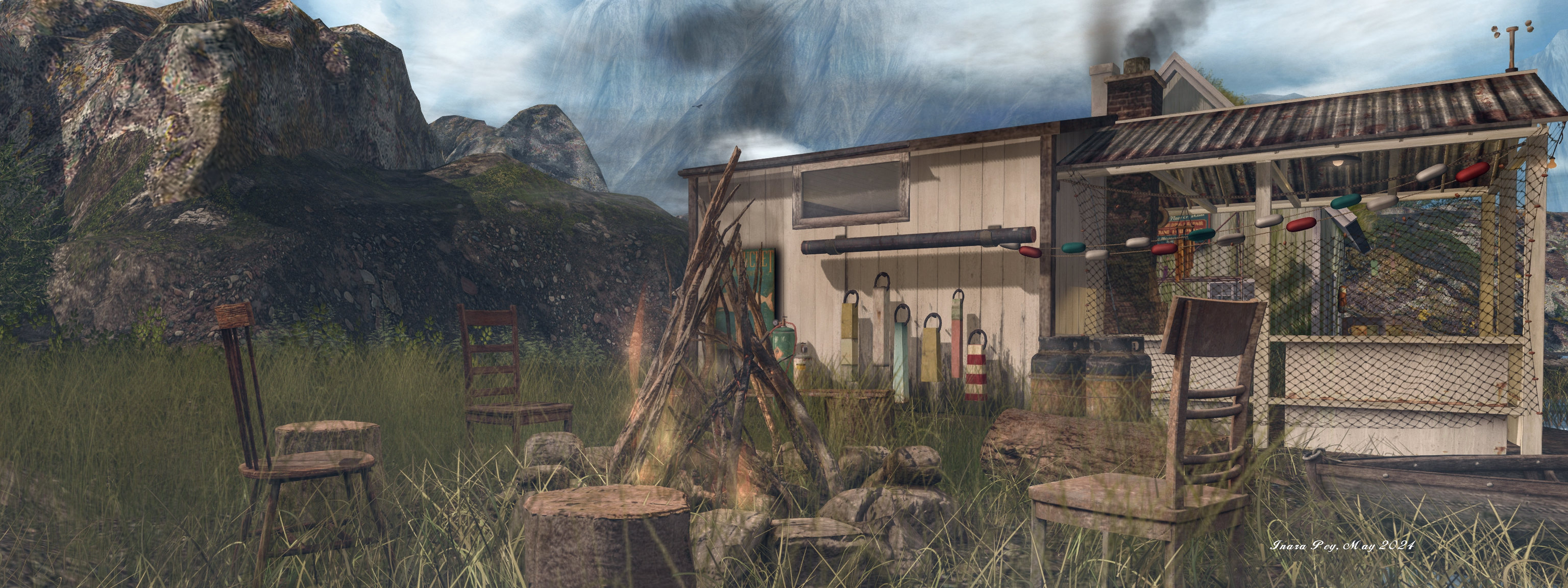
Given this, and as one might expect, the houses and cabins tend to confine themselves to the coastal aspects of the setting, where they can be easily reached by boat; indeed few are without a wharf, jetty or wall where boats may come alongside. Most – as typical of many Nordic houses in remote / rural areas – have a semi-turfed roof to help with insulation. These and the rugged nature of the island I found particularly evocative of my times in the northern parts of Iceland around Akureyri (which remains a place with one of the most spectacular runway approaches I’ve experienced, flying down through the ever-narrowing fjord) and Mývatn.

Most of the setting’s interior is given over to rocky beauty, with scrub grass and the occasional tree breaking the ground – something else that brought to mind parts of Iceland (and indeed, some of the remoter points along the north coast of Scotland I’ve seen).

Vindfjell, May 2024

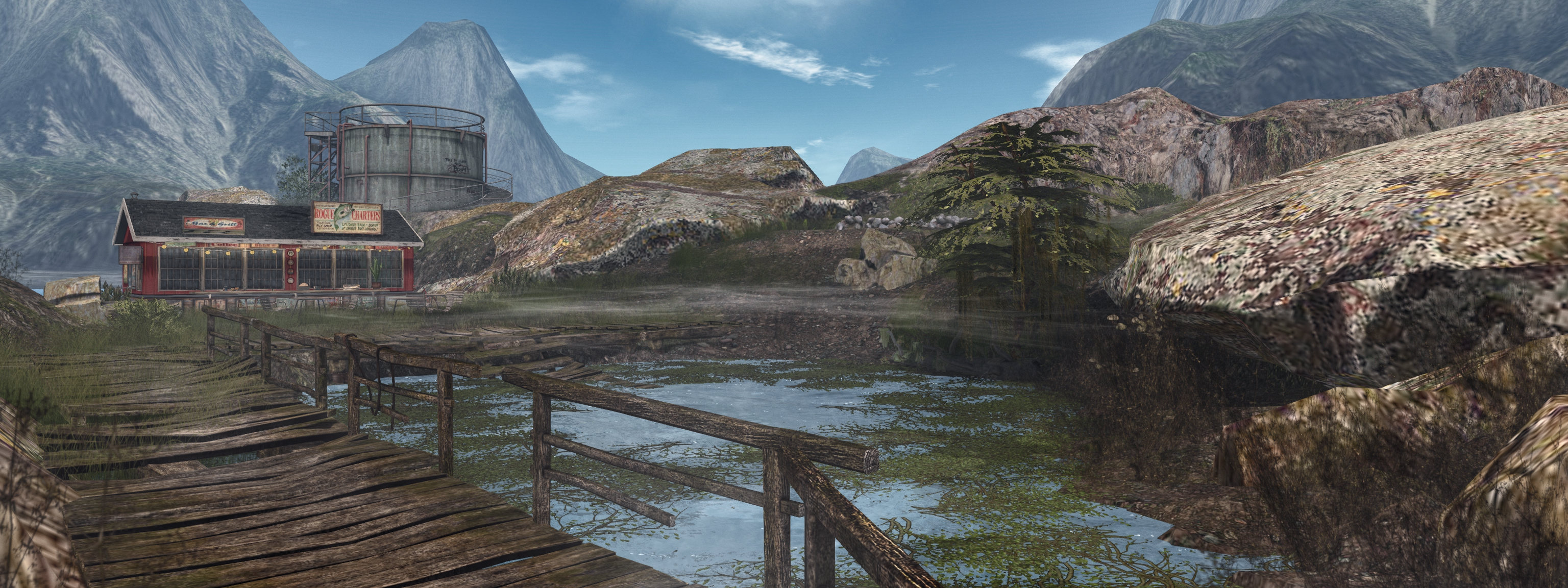
However, the one exception to this is a large industrial-like structure sitting somewhat inland, balanced between a deep gorge cutting its way through the landscape and a large body of water. Its presence, coupled with the electrical power lines close by together with the water and nearby falls might suggest this may once have been a hydroelectric power generation centre, or perhaps a place where geothermal energy had once been used to provide local power.

Or maybe the building had some other purpose, now being deserted; the choice is left totally open to the imagination – which adds further to the beauty of the setting, allowing as it does visitors to cogitate their own narratives as to the history of this place.

Vindfjell, May 2024

A further hint that the island once had something of an industrial use sits on the north-western headland, misty waters encroaching upon three sides. This is the kind of promontory many would look to site a lighthouse. Instead, Dandy (wisely, in my opinion) eschews that cliché and instead offers an ageing storage tank as a sentinel  overlooking the waters, the gentle twist of steps around its circumference making an easy climb to its flat top, the threatening graffiti notwithstanding!

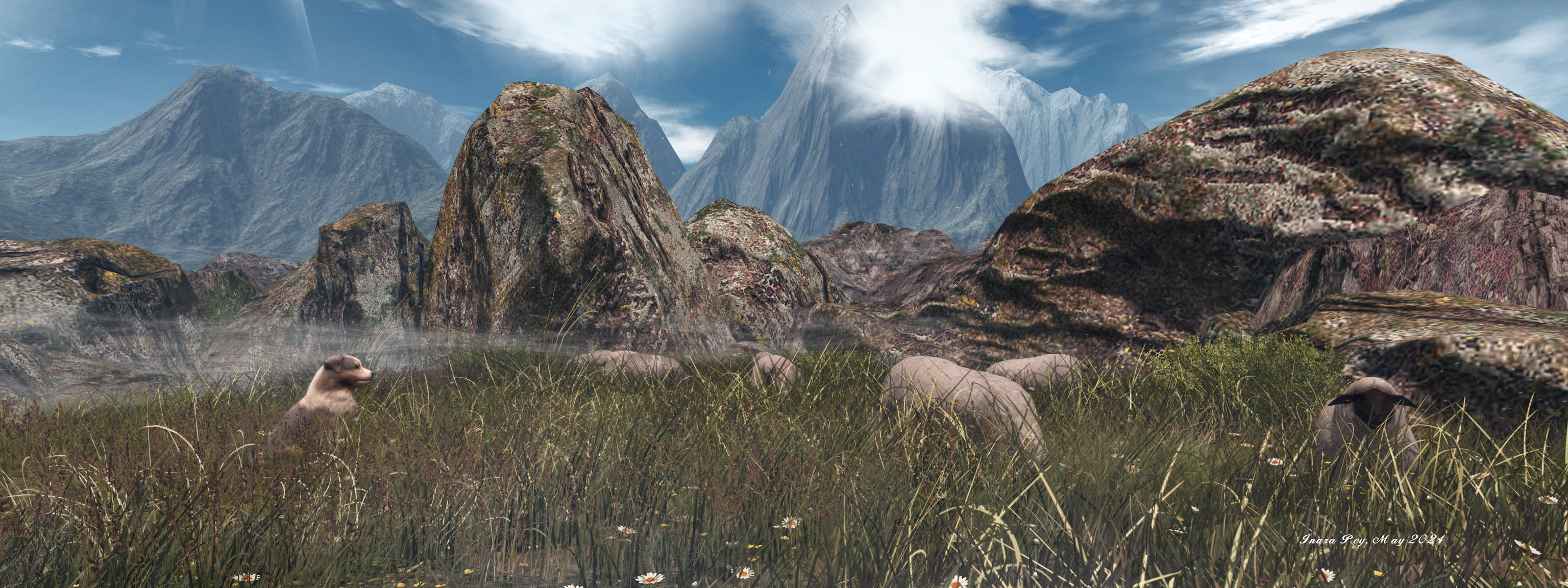
The landing point for the region sits somewhat towards the centre, amidst the scrub grass where sheep are grazing peacefully, having wandered up a narrow valley from the little farmhouse / fisherman’s cabin on the southern coast. As well as providing the route back to that cabin – no doubt followed by the sheep as night closes in, and the sheep dog herds them gently home – the grassland also presents a path and board walk down to the north side of the land, from where the storage tank mentioned above might be reached, together with the grassy spit of land forming the island’s northern side and which provides space for a couple of windswept houses.

Vindfjell, May 2024

In addition, the graceful arc of a stone bridge spans the gorge from this sheltered grazing, giving arrivals the means to reach the old industrial unit with its attendant body of water or follow a fence-marked trail down to the little hamlet occupying the south-east east of the setting, as they find shelter against the elements on their southern side by a blocky bluff of a headland poking out into the sounding waters.

Throughout all of this, Dandy has added further ambience to the setting via the region EEP, and through the use of mesh “puff” clouds, low-lying misty and floating seed heads float and flow as they are caught on the wind (in some cases to be blown helter-skelter between the narrower walls of rock, where one much reasonably expect any breeze to be funnelled and accelerated). That said, the static nature of the mesh clouds are a little at odds with the haunting hiss of the wind present in the sound scape – but one can forgive their refusal to move simply because they add a further depth to the setting.

Vindfjell, May 2024

Dandy calls the setting “ephemeral”, mostly because Vindfjell is only with us for a short time. As such, it’s a fitting term – but one to which I’d personally add the word “beauty”, as the setting really is glorious in its natural beauty and sense of being. A fabulous celebration of the rugged pulchritude of Nature, this is a setting very definitely not to be missed.

SLurl Details