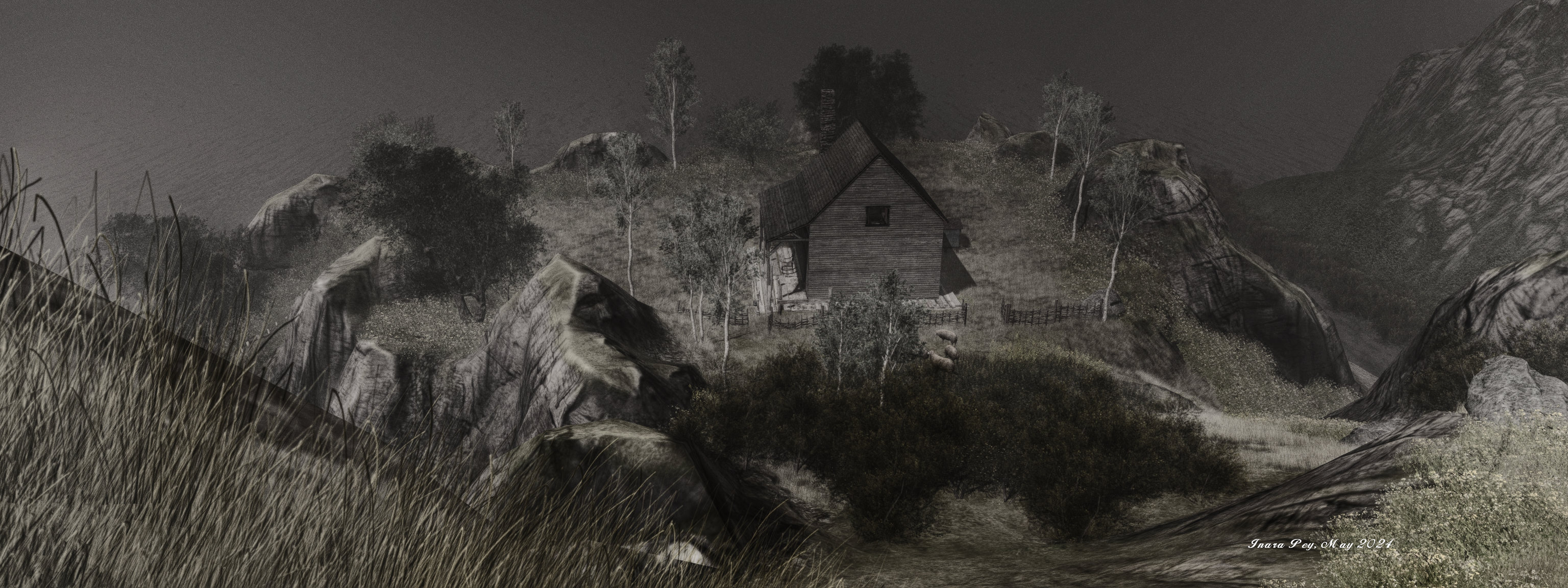
It has been a fair time since Sheldon Bergman (SheldonBR) has presented an immersive experience within Second Life; so when he contacted me personally to tell me he has a new installation available for people to visit, I was immediately intrigued, and as soon as time allowed, I followed his invitation and hopped over to Alone.
Often working in collaboration with Angelika Corral – with whom he once co-ran the always engaging DaphneArts gallery and arts centre – Sheldon earned a rightful reputation for developing immersive art installations leveraging the (then new) capabilities of SL Experiences. In particular, these installations sought to bring the work of poets and artists from the physical world to life within the virtual, with a noted focus on the life and works of Edgar Allan Poe (as covered in these pages, for example, by A dream within a dream: celebrating Poe in Second Life (2017) and Annabel Lee in Second Life (2019)).
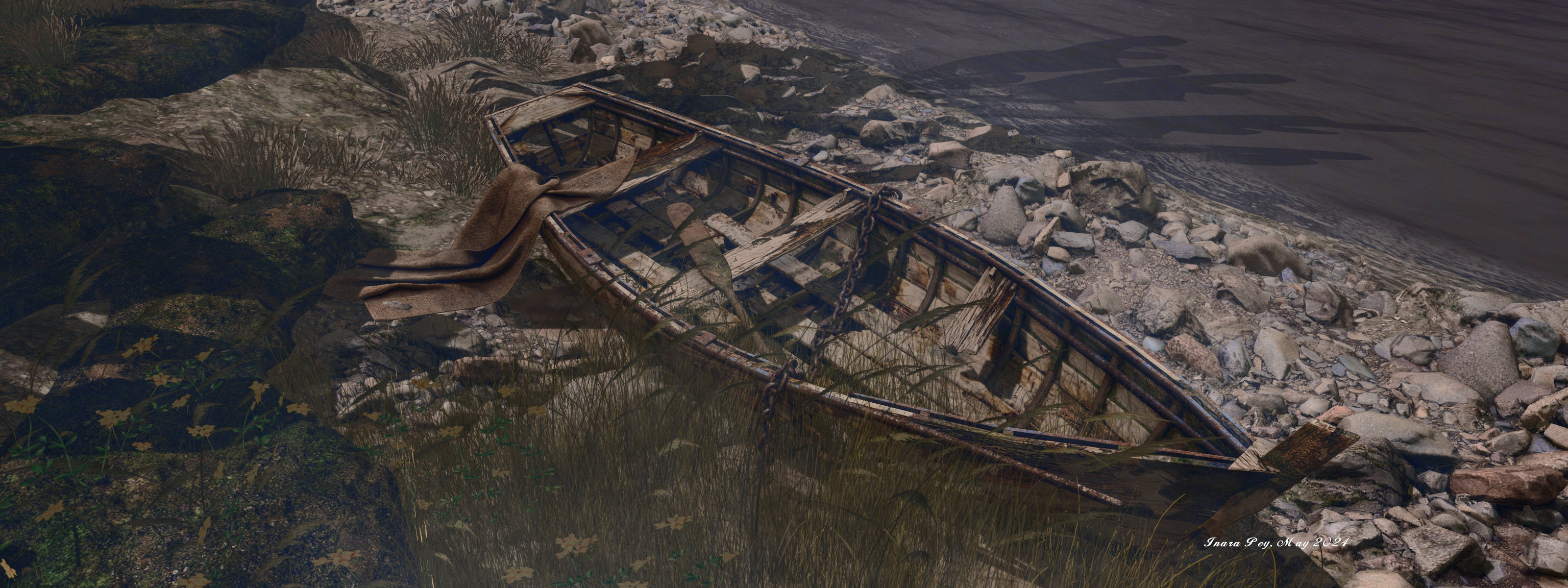
With Alone, Sheldon continues within this theme, presenting installation with a personal dedication to Angelika, featuring what is Poe’s most revealing – and potentially his best – verse. It may not be as well known as the likes of The Raven or Annabel Lee – in fact it wasn’t even published until well after his death in 1849, finally appearing in print in 1875, having been held within the possessions of a family in Baltimore – but what it does say does much to help our understanding of Poe’s nature and what lay behind his writing.
Exactly when the poem was written is unclear; the original manuscript was both untitled and undated. However, the year is widely taken as being 1829 – no doubt the result of the poem’s first publication being accompanied by a facsimile of the original manuscript and on which the editor of the magazine had taken upon himself to add the date “March 17, 1829”. As this does sit as the middle year of the three in which Poe’s poetry was at its most focused terms of annual output (the other two being 1827 and 1831), it’s potentially not unreasonable to pin it to that year.
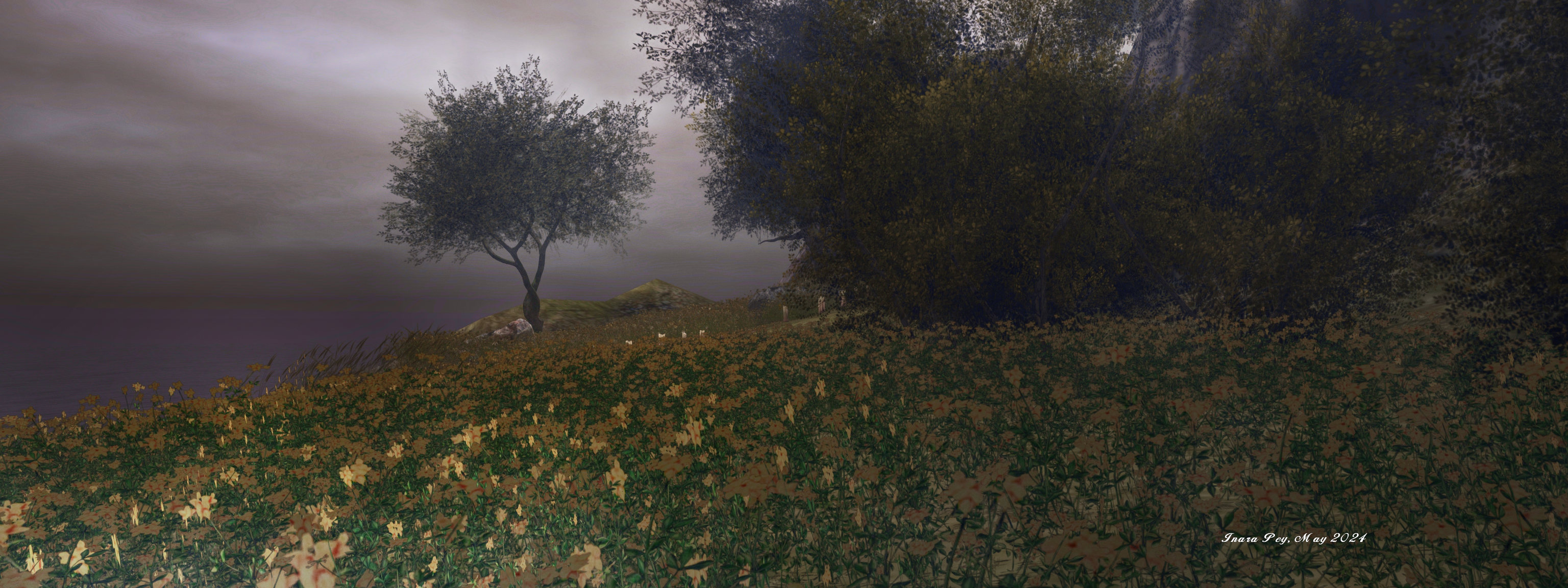
But whether it was 1829 or 1827 or 1831, the poem would have been written when Poe was in his early 20s; as such it shows a remarkable sense of self-awareness and personal perception. At its heart, Alone focus on themes of loneliness, isolation and – most particularly – of being different and apart from others. It marks how Poe had always known he had a substantially different outlook to those around him, one that has existed from a childhood in which he saw himself unable to see things as other children saw them, perhaps because of the tempestuous nature of his first two years on Earth, marked as they were by abandonment by his father, the death of his mother and his being taken into a strict foster care – as the poem directly references:
And all I lov’d—I lov’d alone—
Then—in my childhood—in the dawn
Of a most stormy life—was drawn
This autobiographical element flows throughout the poem, right up to its open-ended final line in which the dash seems to state, that just as he past and present life had been, so to will be the future; whatever might pass as normalcy for those around him will forever be a foreign land to him, whilst his world will forever be beyond their understanding.
In this, Alone perhaps does more to shine a light on Poe’s short and tortured life than any amount of analysis of his work or examination of his death , both of which are too often the focus of any such analysis. Hence why, perhaps, Sheldon’s installation includes references to some of Poe’s famous works, both visually and through quotes: The Fall of the House of Usher (1839); The Black Cat (1843); The Raven (1845); A Dream Within A Dream and Annabel Lee (both 1849); doing so underlines the foundational element of understanding Poe’s view of himself any thus all of his writing.
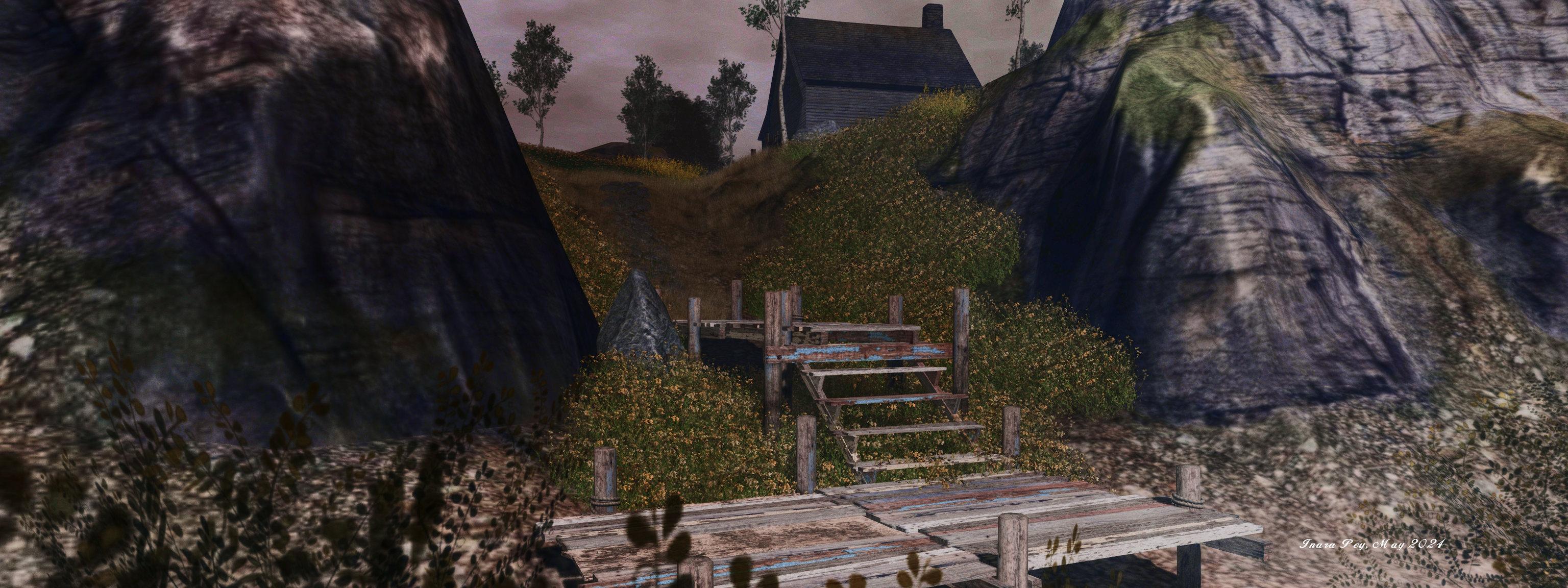
To appreciate Alone in its fullness, visitors should accept the local Experience after arriving at the landing point by clicking on the displayed poster. This will allow a HUD to be temporarily attached to the viewer – it will detach on leaving the region, but must be left in place through a visit – which will initially offer instructions on how to correctly view the installation. In short these are: use the local Shared Environment; make sure local sounds are enabled and you have Advanced Lighting Model (ALM) enabled via Preferences → Graphics. Once these points have been followed, clicking on the HUD text will deliver visitors to the installation proper.
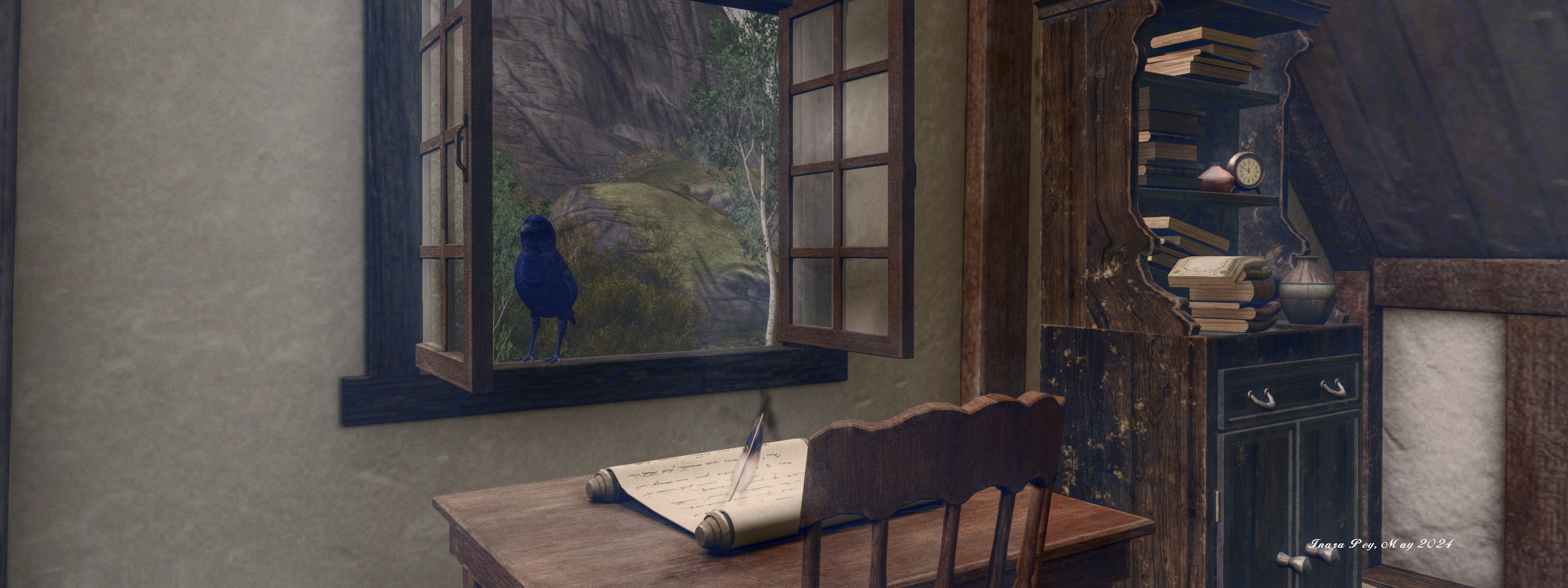
From here, it is a case of walking through the landscape from the landing point, up to the cabin sitting on the shoulder of a hill and then through it (upstairs and down), before exiting through the back door and following the path down to the waters and pier at the back of the cabin. In doing so, visitors will trigger visual elements at various points (such as the candles lighting to guide you up the hill) and text elements within the HUD, whilst also encountering reflections of the poems and stories the text references. Some of the latter might be obvious (such as the rave at the open bedroom window) others perhaps less so (e.g. the image on the wall of the cabin; the cabin and the wilderness in which it stands, etc.).
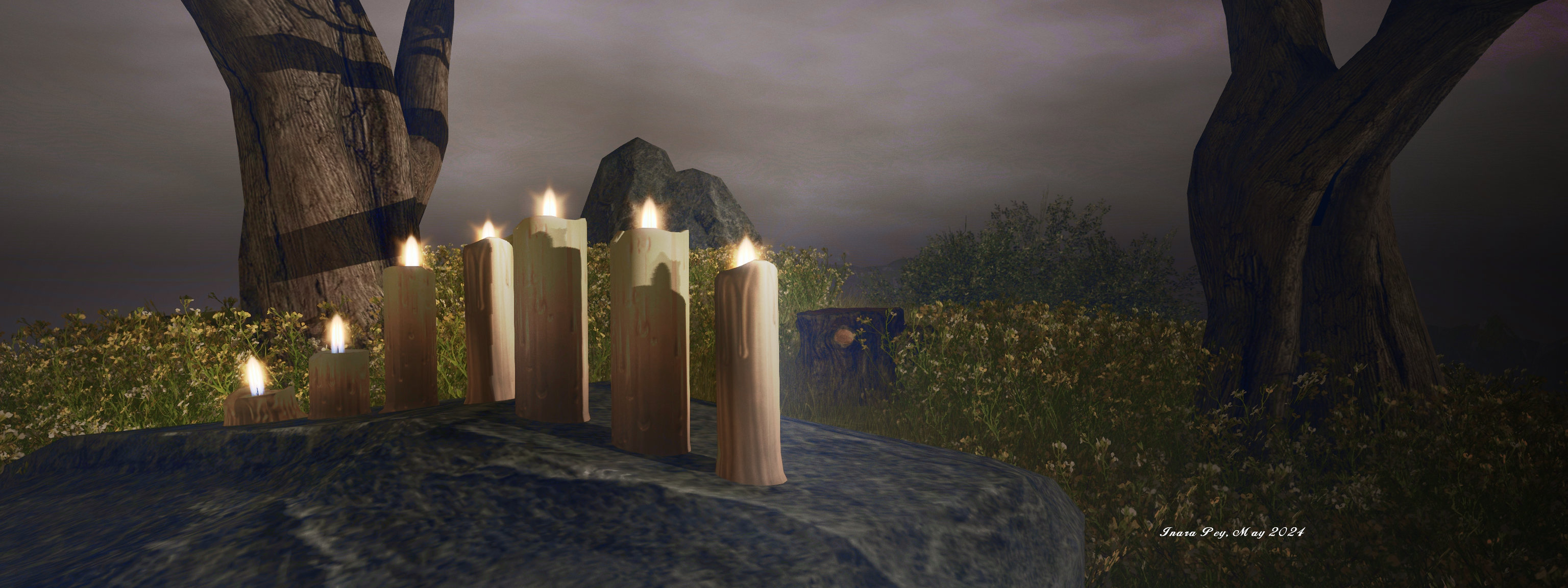
The final element of the installation requires climbing the ridge rising from the east side of the cabin (where the sheep are grazing) to run first south and away from the cabin and then back to the west as it rises to reach the top of a hill overlooking the landing point far below. Crowned by a trio of windswept trees standing as bent-backed guardians, the hilltop is home to a low, alter-like stone within candles and a tree stump seat. It’s a place I have little doubt the poet would have approved for the recital of his poem (triggered as visitors reach the trees), its isolation and position apart from the rest well suited to the poem’s themes. Further, in coming at the end of the experience, it offers another underlining of the poem as a means to better understand Poe and his work.
Alone might not be the easiest of installation to grasp, but for those with a love of poetry and the work of Edgar Allan Poe – and who indeed who might feel separated and apart from the rest of life for whatever reason – it is an engaging and potentially evocative one.
SLurl Details
- Alone (Canary Islands, rated Moderate)
 Inara Pey: Living in a Modemworld