For 40 years, the European Space Agency (ESA) has been at the forefront of space innovation and exploration – although its work and contributions have oft been overshadowed by those of NASA and Russia -, and that drive to innovate is set to continue through the next decade and beyond.
To demonstrate this, on January 3rd, 2024, ESA issued a video showcasing upcoming projects and innovations which will help define the future of crewed and uncrewed voyages into orbit which are being driven from with Europe, either as direct ESA projects, ESA partnerships or ESA-supported private ventures. In particular, the 2:32 minute video (including end credits) showcases the following projects and launch vehicles:
- 0:26: Space RIDER: (Reusable Integrated Demonstrator for Europe Return) – a small-scale reusable lifting body supported by an expendable service module and capable of delivering 600 kg of payload to low-Earth orbit on missions of up to 2 months at a time. Payloads are intended to be experiments and science instruments, which the vehicle returns to Earth at the end of a mission. Designed to be launched atop ESA’s Vega-C launch vehicle, Space Rider will land horizontally, gliding to a landing under a parafoil, and the vehicle’s qualification flight is expected to take place in 2025.

- 0:33: Prime Micro-launcher – a UK-led (by Orbex) private sector launcher designed to leverage the growing cubesat market, and deliver up to 150 kg of payloads to 500 km Sun-synchronous orbit (SSO), primarily from the UK’s SaxaVord Spaceport in the Shetland Isles, and potentially from Portugal’s Azores International Satellite Launch Programme (ISLP) facilities, currently being developed on the island of Santa Maria.
- 0:44: Skyrora XL – a UK-developed 3-stage vehicle designed to place up to 315 kg into a 500 SSO from the UK’s SaxaVord Spaceport. Skyrora will be powered by its own in-house developed engines, including the Skyforce-2 70 kN motor, which is the focus of the video, and which uses liquid kerosene created from waste plastic as its propellant.
- 1:06: Isar Spectrum – a German-led project to develop a two-stage launch vehicle designed to deliver up to 1 tonne to LEO orbits out of Europe’s Spaceport at the Guiana Space Centre, Kourou in French Guiana, and up to 500 kg to SSO from the Andøya Spaceport, Norway.
- 1:26: second launch of Miura-1 – a Spanish-developed sub-orbital, reusable rocket system for flying experiments of up to 200 kg to altitudes between 80 and 110 km. The initial flight of the vehicle occurred in October 2023, but was only a partial success – range safety concerns limited the flight to less than 50 km altitude and the vehicle sank after splashdown, potentially due to its lower than intended altitude resulting in velocity-induced damage on impact with the sea. Once operational, Minura-1 will be Europe’s first fully-reusable launch vehicle and help pave the way for the Miura-5 orbit-capable launcher.
- 1:32: RFA-1 – a German-led project to build and fly a three-stage multi-role launch vehicle capable of delivering up to 1.6 tonnes to LEO, 1.35 tonnes to polar orbit or 450 kg to geostationary transfer orbit (GTO). The first orbital flight attempt is due to take place from the UK’s SaxaVord Spaceport in the summer of 2024.
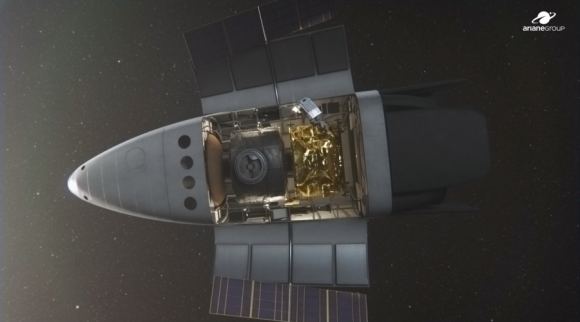
- 1:52: Smart Upper Stage for Innovative Exploration (SUSIE) – potentially Europe’s most ambitious launcher vehicle development programme. A25-tonne lifting body intended to be launched atop the Ariane 64 booster, SUSIE – which is being developed for ESA by ArianeSpace – will be able to deliver either payloads of up to 7 tonnes to orbit when operating autonomously, or crews of up to five astronauts to orbital space facilities. The vehicle is intended to form the upper stage of the launch vehicle, requiring no fairings to protect it during orbital ascent. Following atmospheric re-entry, the vehicle will make a tail-first propulsive descent and landing in a manner akin to the DC-XA demonstrator vehicle, flown in the mid-1990s.

- Propulsion systems featured in the video include:
- 0:40: M10 liquid methane-liquid oxygen motor currently being developed for use on ESA’s future Vega-E booster by Italy’s Avio aerospace company.
- 0:50: Parafin-liquid oxygen hybrid propulsion – an in-development rocket motor by Germany’s HyImpulse, and designed to power the first and second stages of the company’s proposed SL1 launcher, designed to lift up to 500 kg to low-Earth orbit (LEO).
- 1:44: Prometheus – a reusable methane-fuelled rocket motor, currently in development on behalf of ESA and intended to power a reusable test vehicle called Themis, starting in 2025. Both Prometheus and Themis are intended to pave the way for the semi-usable Ariane Next, which will replace Ariane 6 in the 2030s.
Athena: a Space Engine in the Palm of Your Hand
One European innovation not featured in ESA’s video is the Spanish-developed Athena propulsion system. A palm-sized unit specifically designed to manoeuvre small satellites and cubesats once they are in orbit, thus helping them to become more flexible in the range of uses to which they might be put. And it does so in a highly innovative manner – via an electrospray.
An electrospray is an apparatus which uses and electrical current to disperse a liquid through an emitter. The idea itself is not new; its underpinnings were theorised in the 1960s by Sir Geoffrey Ingram Taylor, after whom the most ideal form the liquid is forced into under the influence of the electrical current – the Taylor cone – is named.
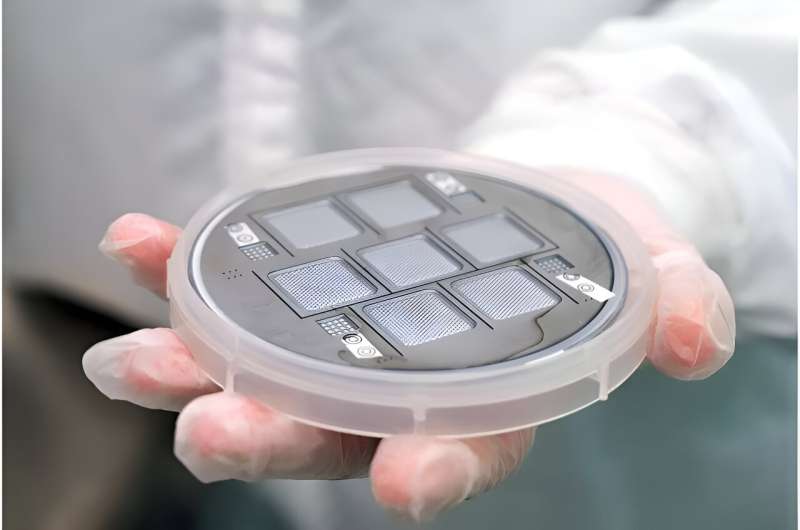
Electrosprays are used in a number of fields of science, and they have spurred the use of electrical currents to direct the thrust of cold gas thrusters on satellites However, what makes Athena (the name standing for Adaptable, THruster based on Electrospray powered Nanotechnology, rather than being drawn from mythology, as is the case with main space-related projects) so unique is a combination of its tiny size coupled with the use of a non-toxic propellant that does not require complex tank storage and pressurisation.
The system comprises a set of seven electrostatically charged thrust emitters, each about two finger tips across and containing an array of 500 pinhole-sized thrust ports each. A conductive salt is passed through these emitters, the electoral charge accelerating the particles and directing them into a cone of unified thrust which can be turned on and off by applying / removing the electrical current. The result is a set of tiny thrusters with practically no moving parts and a propellant which can be stored in a simple, compact container. This means that the overall mass of Athena thrusters and their propellant source is much lower than “traditional” cold-thrust systems, but they are capable of exceptionally fine control.
The current versions of Athena can be used on satellites of up to 50 kg, and can produce a sustained thrust of up to 20 m/s, if required. They are ideal for use on 10-cm-on-a-side cubesats, with the team behind them hoping to scale them up for use with smallsats of up to 300 kg mass.
Vulcan Set to Send Peregrine to the Moon
Monday, January 8th, 2024, is a major date for America’s United Launch Alliance (ULA), as the company seeks to successfully complete the first launch of its new Vulcan Centaur rocket.
Designed to replace ULA’s workhorse Atlas V and Delta IV rockets, Vulcan Centaur has had its share of hiccups and delays in getting to this point. This maiden flight had originally been targeting a 2019 date – although that was admittedly highly ambitious, given ULA only really started developing the vehicle in 2014 and hit some technical issues along the way as a result; other matters outside of ULA’s control – such as the SARS-COVID 19 pandemic and issues with the development of its payload – also contributed to the 4-year delay.
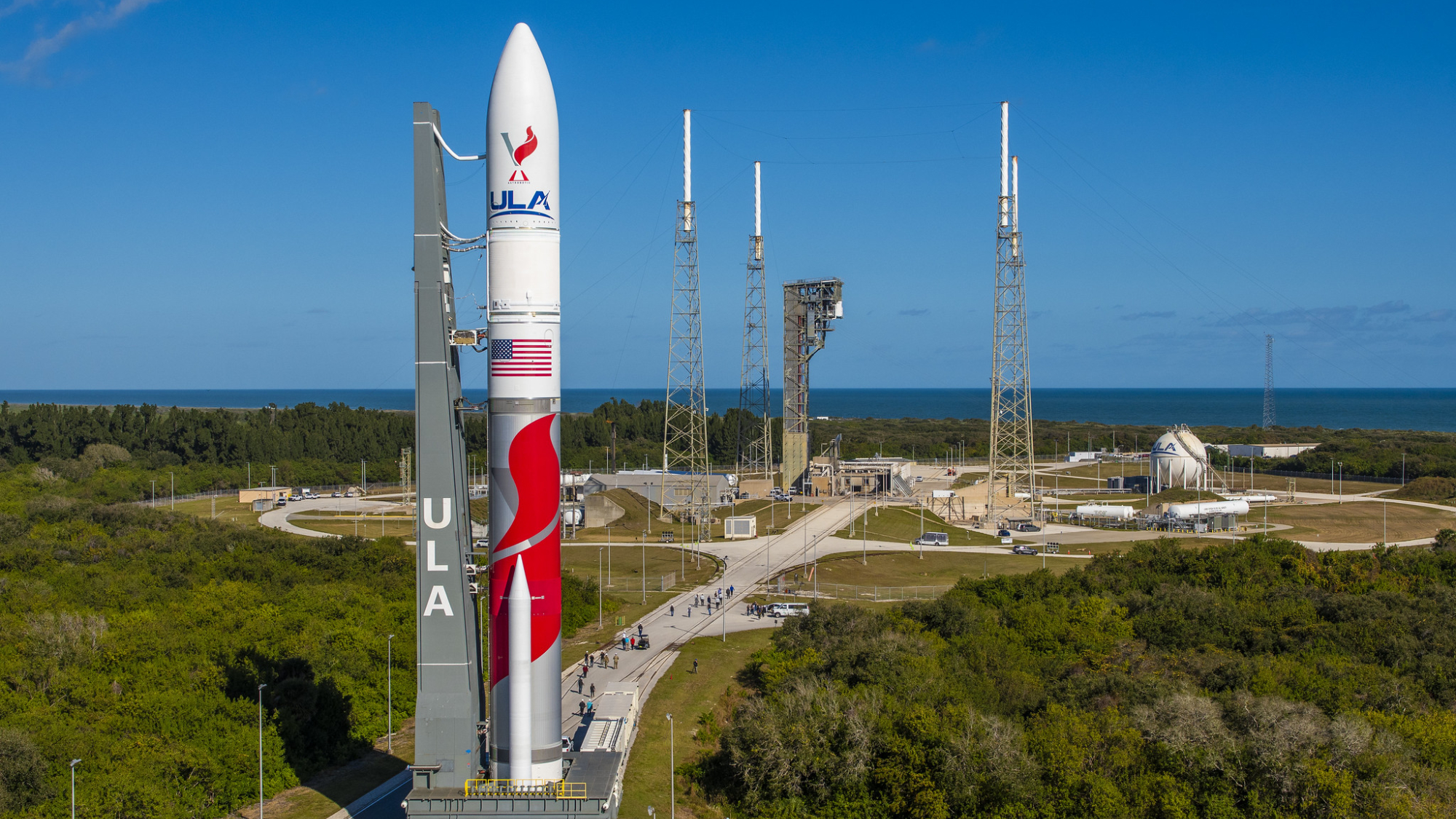
For the company, a lot is riding on this launch. Technically referred to as a certification flight, rather than an operational launch, the two-stage rocket will nevertheless be carrying a functional payload in the form of Peregrine Mission One (aka Peregrine One). This is a privately-built but NASA-funded lunar lander, developed as a part of the agency’s Commercial Lunar Payload Services (CLPS) programme, designed to help pave the way for the agency’s crewed Artemis Moon landings with various robotic missions and vehicles supplied by the private sector.
The launch is designed to be the first of seven through the year, with the second (in April) serving as the final certification flight, although it will also carry a payload aloft in the form of the first Dream Chaser cargo vehicle to fly into space and delivery supplies and equipment to the International Space Station. After this, Vulcan Centaur will complete a series of US government military launches. Assuming this first flight is a success, and the same is true for the rest planned for 2024, they will vindicate the faith customers have in Vulcan Centaur – despite he delays in its development, the rocket already has 70 customers lined-up and waiting their turn to fly payloads aboard it.
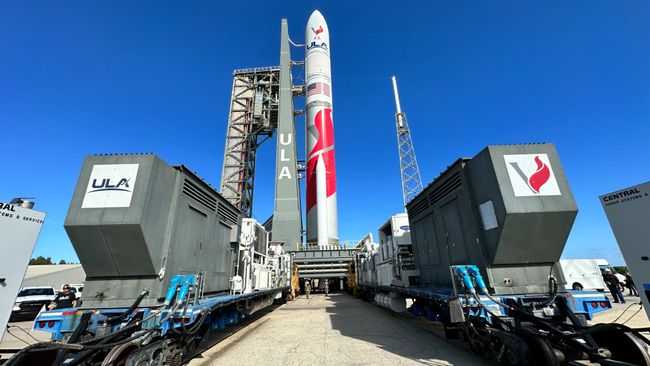
This maiden flight is important in two other ways as well. It will be the first operational use of the Blue Origin BE-4 engine. This the the engine that will be used to power the first stage of Blue Origin’s upcoming heavy lift launcher, New Glenn. The latter is due to make its maiden flight towards the end of the year, so the data gathered from this flight and those that follow between it and the first flight of New Glenn will provide invaluable data on overall engine performance for Blue Origin as they move ever closer to their own launch.
Finally, and as I’ve recently noted, ULA is apparently up for sale. Ergo, a good maiden flight for the Vulcan Centaur would significantly enhance the company’s attractiveness to its potential buyers – whilst equally, a failure could cause one or more of the trio of potential buyers to either rethink or withdraw their offer.
For Astrobotic Technology, the company behind Peregrine One, the launch is equally important; after proposing and subsequently cancelling two prior lunar missions, it represents the company’s chance to both become the first private venture space vehicle to (hopefully) land on the Moon and confirm their position as a capable supplier of lunar lander services to NASA (in fact, the company is due to fly a second mission to the Moon in November 2024, also funded via NASA’s CLPS and featuring NASA’s VIPER lunar rover).
Peregrine One will deliver 90 kg of mixed payload to Mons Gruithuisen Gamma in the northern hemisphere of the Moon. Comprising experiments from the United States and Germany, the payload also includes time capsules from both of those nations, plus Argentina, Canada, Hungary, Japan, the Seychelles and the UK, as well as small rover vehicles – Iris, built by Astrobotic Technology and Carnegie Mellon University, designed to be a technology demonstrator; and Mexico’s Colmena, a set of 5 tiny little rolling landers, each just 12 cm across and weighing 60 grams, which will be catapulted from the lander and operate wherever they roll / bounce to.

If successful, Peregrine Mission One will likely be followed by two further Peregrine-class landers in additional to the November 2024 Griffin Mission One which will carry NASA’s VIPER rover, as mentioned above. Each of the follow-up Peregrine landers will carry increasingly heavier payloads, thus demonstrating the lander’s overall capabilities.
In the meantime, objections to the Peregrine Mission One landing have been lodged by the Navajo Nation. Their objections have been raised as the lander will carry a sealed container bearing DNA samples from Star Trek creator Gene Roddenberry and his late wife, Majel Barratt-Roddenberry (Christine Chapel from the original series / Lawaxana Troi from The Next Generation / Deep Space Nine and the voice of the computer in both the original series and The Next Generation), and DNA samples together with memory files and some of the cremated remains of Star Trek actors Nichelle “Uhura” Nichols, James “Scotty” Doohan and Deforest “’Bones’ McCoy” Kelley). In particular the Navajo Nation state that placing human DNA on the Moon would desecrate a sacred place. In response, it has been pointed out by some associated with Peregrine Mission One that human DNA is already present on the surface of the Moon in the form of human waste contained within the 100 bags of waste material collectively dumped out of their vehicles by the six Apollo crews who landed on the Moon between 1969 and 1972, whereas the container of DNA as remains will stay within the lander vehicle, and will not be deposited on the lunar surface.
The Vulcan Centaur launch is scheduled for 07:18 UTC, Monday, January 8th, 2024 from Cape Canaveral Space Force Base at the start of a 45-minute window, and will be livestreamed on You Tube. Further launch opportunities are available at 24-hour periods through the 9th to 11th January, with launch windows of between 1 and 9 minutes. Assuming the launch goes ahead as planned, the lander will depart Earth orbit 1 hour and 18 minutes after launch, boosted by the Vulcan Centaur’s upper stage. It is due to land on the Moon on February 23rd, 2024.

 Inara Pey: Living in a Modemworld
small error “coupled with the use of a non-toxic propellant that does require complex tank storage and pressurisation.” – I suspect you meant doesn’t require.
LikeLike