Memories, Friendship, Love, and Art in Second Life

Terrygold: My Friends, May 2023

Terrygold has always been and complex and expressive artist, her work often touching on matters of politics, ecology, the environment and more, her installations often a treatise of a theme intended (and succeeding) in getting the grey matter going. Some of her more recent works – Empty Chairs, Rain, I Would –  have contained autobiographical elements and reflections on life.

Such is the case – if only in part, perhaps – with My Friend, an installation which opened on May 20th. Given that they are somewhat autobiographical, these more recent installations can be difficult to follow; not because the narrative is particularly confusing, but simply because the subject matter is so personal. Such is the case with My Friend; but also, like Empty Chairs, Rain, and I Would, it has a message that can resonate deeply.

Terrygold: My Friends, May 2023

However, before getting into the installation itself, a quick detour into viewer settings. Terry’s work relies heavily on ambience, and the local environment is an important part in My Friend, so make sure you have your viewer set to Use Shared Environment (World → Environment →), and that Advanced Lighting Model (ALM) is enabled (Preferences → Graphics). Terry also advises the Shadows are set to Sun/Moon+Projectors, which can place an additional render load on a system; however, as this appears to be for the projected lights – which work just as well with just ALM enabled, so don’t fret if your system cannot hand Shadows. For the benefit of other, do please remove any facelights.

The installation combines three elements – a story presented in text, 2D images, and 3D dioramas, which in turn are combined into three parts. In the first, the story and images continue the broader narrative found in Terry’s earlier instalments, the narrative mixing with images to present the opening idea of how life can be shaped by memories and dreams. From here, on turning a corner, the story segues into a different narrative, one which may well leave the more autobiographic elements behind. It deals with reflections and memories of a lost friendship – and what might have been a first, and ultimately unrequited / lost, love. Finally, and on the upper level of the installation, we are invited to share in some of the memories that form recollections of that friendship.

Terrygold: My Friends, May 2023

The darkened environment reflects both the subtext of dreams used to open the installation and the fact that for many of us, memories most vividly come at night, in the darkened period between the lights going out and sleep arriving, leaping out unbidden. Here, the darkness of the setting causes the images Terry uses to illustrate her story do much the same: their  muted colours leaping from wall to eyes, reflecting that way in which those memories mentioned above flash into being.

In travelling through the art and story, we are drawn into a tale of a precious friendship held by one person towards another, and the mixing of positive and negative emotions that so often ebb and flow through the interactions which mark that friendship, and its eventual – perhaps inevitable – end. I don’t want to spoil the story by saying too much; however, there are elements throughout that will doubtless echo with us as we progresses through the lower level – for who has not had a certain friendship / love that has become framed by regret? What I will note is that all of the images presented have been created in Second Life and sans post-processing of any description, instead relying entirely on the available environment settings.

Terrygold: My Friends, May 2023

At the end of the story, two round openings offer access to a stairway leading to the upper level and a parkland sitting in darkness, pools of light illuminating little vignettes reflective of the story below (most notable the two bicycles).

Exactly how autobiographical the friendship elements within the My Friend might be is not for me to say; they could just as easily be born of the imagination. That is for Terrygold to reveal (or not!). But taken as a whole, My Friend is an evocation and nuanced story in both art and words.

  SLurl Details

Space Sunday: aiding three space telescopes

The Hubble Space Telescope, the Chandra X-Ray Observatory and the Spitzer Space Telescope. Credits: NASA

They are the grande dames, so to speak, of space-based astronomy, observatories launched into orbit around Earth and the Sun to provide us with unparalleled insight into the cosmos around us, born of ideas dating back to the early decades of the space age. They form three of the four elements of NASA’s Great Observatories programme, and all operated, or continue to operate well beyond their planned life spans; they are, of course, the Hubble Space Telescope (HST – launched in 1990), the Chandra X-Ray Observatory (CXO and formerly the Advanced X-ray Astrophysics Facility or AXAF – launched in 1999), and the Spitzer Space Telescope (SST, formerly the Space Infrared Telescope Facility or SIRTF – launched in 2003).

Today, only Hubble and Chandra remain operational. The fourth of the observatories (and 2nd to enter space after Hubble), the 16.3-tonne Compton Gamma Ray Observatory (CGRO), had its mission curtailed in June 2000, after just over 9 years, when it suffered an unrecoverable gyroscope failure. With fears raised that the failure of a second unit could leave the observatory unable to control its orientation, the decision was made to shut it down and de-orbit it in a controlled manner so it would break-up on entering the atmosphere and any surviving parts fall into the Pacific Ocean, rather than risk an uncontrolled re-entry which could shower major pieces of the observatory over populated areas.

Whilst the “youngest” of the surviving three observatories, Spitzer was placed into a “safe” mode in January 2020, ending 16.5 years of service. By then, the nature of the observatory’s orbit – it occupies a heliocentric orbit, effectively following Earth around the Sun  – were such that it was having to perform extreme rolls back and forth in order to carry out observations and then communicate with Earth, and these were affecting the ability of the solar arrays to gather enough energy to charge the on-board batteries. The “safe” mode meant that Spitzer could continue to recharge its batteries and maintain electrical current to its working instruments, potentially allowing it to be recovered in the future. However, while it is true that Hubble and Chandra continue to work, neither is without problems.

Hubble orbits close enough to Earth that even at over 500km, it is affected by atmospheric drag, causing it to very slowly but inexorably lose altitude. This used to be countered through the semi-regular servicing missions, when a space shuttle would rendezvous with HST to allow astronauts to carry out work, and then gently boost the telescope altitude using its thrusters. But the shuttle is no more, and the last such boost was in 2009 to 540 km; currently Hubble is at around 527 km, and at the present rate of decent, it will start to burn-up in another 10-15 years. However, a boost now could see Hubble – barring instrument / system failures – continue to operate through the 2050s.

The Hubble Space Telescope sitting on its holding platform in the cargo bay of the space shuttle Atlantis in 2009, seen through the orbiter’s rear deck windows during the 5th and final (and most extensive) servicing mission. Credit: NASA

Chandra, meanwhile, faces a different challenge. It lies in a highly elliptical orbit around the Earth, varying between 14,508 km at its closest and 134,527 km at its most distant. It has therefore been operating untended for its entire operational life, and is starting to show signs of wear and tear. In 2018, it suffered a glitch with one of the gyroscopes designed to keep it steady during observations (and orient it to look at stellar objects). Whilst the gyroscope was recovered, it was put into a reserve mode lest it fail again. This led to fears that should a second gyro fail, either orientation control might be lost if the 2018 gyro fail to come back on-line correctly to take over the work. Also, and while the main science instructions are in good order, they are aging and presenting concerns as to how well they are actually doing.

Ideas for both boosting Hubble’s orbit and carrying out a robotic servicing of Chandra have been floated for the last few years – but there are now signs both might actually get potentially life-extending missions.

In December 2022, NASA issued an RFI on how Hubble’s orbit could be boosted, and have received eight responses, one of which has also been publicly announced and would seem to offer potential. It involves two companies: Astroscale Holdings and Momentus Space, a US-based company. The former is in the business of clearing space junk from Earth’s orbit, and has already flown prototype vehicles capable of doing this in orbit. This includes the ability to carry tools to mate or grapple junk and then move them. Momentus, meanwhile, are in the satellite servicing business and recently demonstrated a small “space tug” in orbit that was largely successful in meeting its mission goals (7 out of nine small satellites deployed into individual orbits).

In their proposal, the two companies indicate Momentus would provide a variant of their tug, and Astroscale a dedicated capture tool designed to use the grapple holds on Hubble. Following launch, the Momentus craft would self-guide itself to Hubble’s orbit and rendezvous with it using the Astroscale mating tool. Once attached, the Momentus vehicle would use its thrusters to gently raise Hubble’s orbit by 50 km, then detach. The vehicle could then be used to remove orbital debris in orbits approaching Hubble, thus protecting it from the risk of collision.

NASA has yet to comment on any of the proposals received under the RFI, but the Momentus / Astroscale option, using equipment already being flight-tested and refined and which is of relatively low-cost, would appear to be a real option.

A similar, but more expensive and complex idea has been proposed by Northrop Grumman – the company effectively responsible for building Chandra – to help keep the X-Ray observatory going. This would involve the construction and deployment of a “mission extension vehicle”, a “space tug” capable of departing Earth and gradually extending and modifying its orbit to rendezvous with Chandra and link-up with it, taking over the operations related to orienting and steadying the platform using gyros, potentially extending the mission by decades.

This is important because Chandra has already proven invaluable in supporting the James Webb Space Telescope (JWST) which operates in the infra-red. The ability to observe targets in both X-ray and infra-red can reveal a lot more about them.

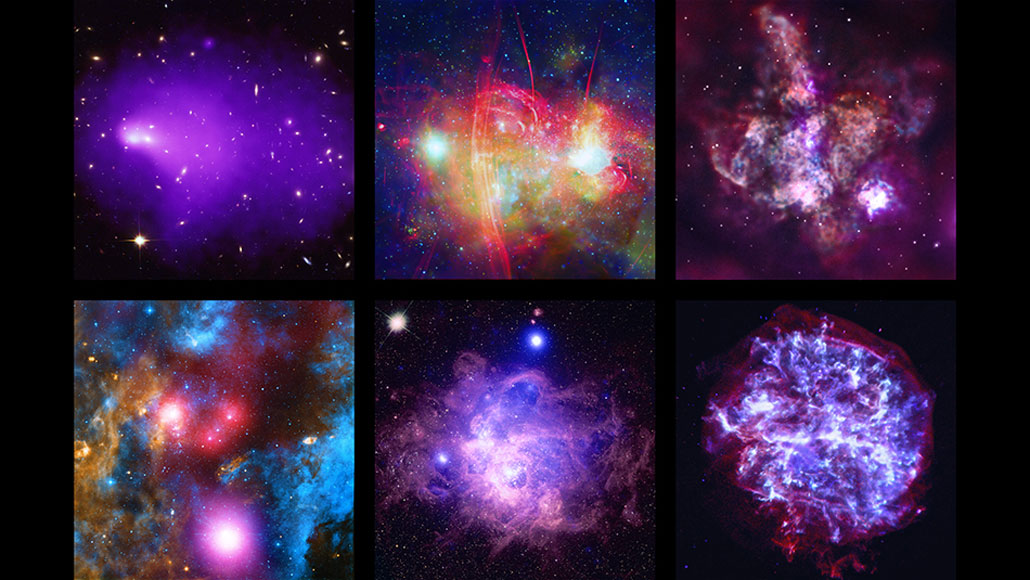
A set of X-ray images of regions of space – including supernova remnants and merging galaxies – captured by the Chandra X-ray Observatory, released by NASA in 2009 to celebrate the telescope’s 20th anniversary. Credit: CXC/NASA, SAO

NASA has given no word on whether it would finance such a mission, although Northrop Grumman has apparently forwarded the results of its own study on the idea to the US agency. However, given the most recent U.S. decadal survey in astrophysics, released in 2021, included mention of a new X-ray telescope to replace Chandra, a servicing mission – even one this complex – capable of extending Chandra’s operations for decades at a fraction of the cost of a new telescope, which itself would take years if not decades to develop, could be highly attractive.

Continue reading “Space Sunday: aiding three space telescopes”

Sunday, May 21st: Bay City at 15 in Second Life

Bay City Fairgrounds, Bay City 15th Anniversary, May 21st 2023

Bay City, the first major project undertaken by the Moles of the Linden Department of Public Works (LDPW), will be marking its fifteenth anniversary on Sunday, May 21st, 2021. Citizens of Bay City and residents of Second Life are invited to join in with the celebrations, which will include the traditional parade down “Route 66,” followed by a live music event in the Bay City fairgrounds.

First opened for initial viewing in May of 2008 and with parcels throughout the city being auctioned soon after, Bay City has shown itself to be one of the highlights of Second Life: a blending of Linden infrastructure and a strong, friendly community of involved residents who give the area its unique charm.

Celebratory activities will kick-off at noon SLT with a parade line-up at the band shell in Bay City – Harwich. At 12:30 SLT, the parade will make its way down Route 66, and proceed to the Bay City Fairgrounds in the North Channel region. DJ GoSpeed Racer will be providing the music throughout the parade, which will be followed by at live concert from 13:30 SLT onwards at the fairgrounds.
The line-up for the concert this year comprises (all times SLT):

  • 13:30-14:30: Jesie Janick – who has herself been active in Second Life for 15 years.
  • 14:30- 15:30: Maximillion Kleene – a Bay City favourite returning once more to the City’s anniversary celebrations.
  • 15:30-16:30: AleyKat (Aleylia Resident).

As usual, celebration goods, including parade float bases and ideas, are available at the Bay City Community Centre, in the Daley Bay region for those who wish to be a part of the parade. Ample viewing areas are provided. The music event is also open to all who desire to attend — not only Residents of Bay City

About Bay City and the Bay City Alliance

Bay City is a Mainland community, developed by Linden Lab and home to the Bay City Alliance. The Bay City Alliance was founded in 2008 to promote the Bay City regions of Second Life and provide a venue for Bay City Residents and other interested parties to socialize and network. It is now the largest Bay city group, and home to most Residents of Bay City.

Each year, in honour of Bay City’s founding, Bay City residents come together with this special celebration.

Anniversary SLurls

A walk through Journey Gardens in Second Life

Journey Garden, May 2023 – click any image for full size

As my last wander in Second Life took me to remote Gaeta 1 (see: A LemonCliff café in Second Life), I decided to stay with the Mainland theme for my next bout of meandering, travelling across Second Life’s map from north to south to pay a visit to Jeogeot and a small parcel of land sitting just off Route 9 toward that continent’s southern coastline. It is a place perhaps easy to miss as you travel along the highway, just a pair of iron gates under a stone arch itself set into a high wall spanning the gap between high granite blocks on the south side of the road. However, it hides a little treasure.

Behind the gates, and occupying the greater part of a 6,400 sq metre parcel is Journey Garden, a charming setting created by Kes Evergarden Teech (Kestrel Evergarden), and offered under her Journey Magazine brand. And when I say charming, I mean precisely that.

Journey Garden, May 2023

Beyond the gates, a path gently winds across the roughly rectangular gardens, the granite blocks continuing on around the setting to neatly fence it in without being obviously oppressive or enclosing.

This main path leads the way past some of the setting’s major features as it makes it way to the southern extreme and the offices of Journey Magazine. A second path doubles back on the first just a few short metres from the gates, winding back to where steps cut through the grass to climb up to wide grassy ledge overlooking a sheltered pond. A bench has been added to a fountain and pool occupying the ledge, making it a perfect retreat for those wanting a cuddle or simply watch the play of ripples over the water.

Journey Garden, May 2023

A second shoulder of low rock sits across the pond, the main path curling gently past its rocky foot. Here lies a further little place to sit, this one talking the form of three hanging seats suspended from the beams of a pergola. However, getting up to them might at first seem to be less than obvious, given the sheer faces on the rock on which the pergola sits – but there is a way. A little slope rises on the side of the outcrop nearest the pond, offering a relatively easy climb up to the top, the grassy path passing a small wooden deck built out over the pond as they do so.

Between the pergola-topped rock and the magazine’s office sits a picnic area and live music space, reached via a short path and steps sitting alongside the garden’s café, a place where refreshments might be enjoyed together with a quiet sit-down. I’m not sure how often live events might be held on the little outdoor stage –  but they are mentioned as occurring in the garden’s About Land description.

Journey Garden, May 2023

This is a place of serenity and photogenic retreat, the one oddity within it sitting back towards the gates, and clearly visible to anyone entering the garden. Set back from the main path at the end of a short walk along loosely placed paving stones is a bus-cum-trailer home which, like the garden it sits within, appears to have been allowed to grow almost completely organically.

The trailer sits as a place which is strangely bohemian whilst also carrying a hint of dark magic. The latter point is added to by the presence of a deer spirit, standing like some Dark Herne behind it. Inside, however, the trailer house is oddly cosy, even with the further hints of magic. However, its presence is not entirely out of place within the garden, as it speaks to Kes’ sense of humour, something which can also be seen in her profile: professional cannibal & existential dread specialist … and on Wednesdays, we play D&D.

Journey Garden, May 2023

Journey Garden is not the only place to be visited along this stretch of Route 9 – right next door, for example, is the Brumby Park Conservatory, another peaceful retreat, created and run by Envy (Envy Renard). However, it is perhaps, a place to be covered in a future piece in this blog; for now, I’ll leave you visit Journey Garden for yourself, and with the SLurl.

SLurl Details

2023 week #20: SL CCUG meeting summary: mirrors and PBR terrain

Small Town Green, March 2023 – blog post

The following notes were taken from my audio recording and chat log transcript of the Content Creation User Group (CCUG) meeting held on Thursday, May 18th, 2023 at 13:00 SLT. 

These meetings are for discussion of work related to content creation in Second Life, including current work, upcoming work, and requests or comments from the community, together with viewer development work. They are usually chaired by Vir Linden, and dates and times can be obtained from the SL Public Calendar.

Notes:

  • These meetings are conducted in mixed voice and text chat. Participants can use either when making comments  or ask or respond to comments, but note that you will need Voice to be enabled to hear responses and comments from the Linden reps and other using it. If you have issues with hearing or following the voice discussions, please inform the Lindens at the meeting.
  • The following is a summary of the key topics discussed in the meeting, and is not intended to be a full transcript of all points raised.

glTF Materials and Reflection Probes

Project Summary

  • To provide support for PBR materials using the core glTF 2.0 specification Section 3.9 and using mikkTSpace tangents, including the ability to have PBR Materials assets which can be applied to surfaces and also traded / sold.
  • There is a general introduction / overview / guide to authoring PBR Materials available via the Second Life Wiki.
  • Substance Painter is also used as a guiding principal for how PBR materials should look in Second Life.
  • Up to four texture maps are supported for PBR Materials: the base colour (which includes the alpha); normal; metallic / roughness; and emissive, each with independent scaling.
  • Given the additional texture load, work has been put into improving texture handling within the PBR viewer.
  • In the near-term, glTF materials assets are materials scenes that don’t have any nodes / geometry, they only have the materials array, and there is only one material in that array.
  • The overall goal is to provide as much support for the glTF 2.0 specification as possible.
  • To provide support for reflection probes and cubemap reflections.
  • The viewer is available via the Alternate Viewers page.
  • Please also see previous CCUG meeting summaries for further background on this project.

Status

  • The RC glTF / PBR viewer was updated to version 7.0.0.580085 on Tuesday. May 16th.
  • Work is continuing to try to fix the issues with pre-PBR skies looking “broken” in the PBR viewer. This is seen as the last major fix required to the viewer, the rest of the required work being seen as or “maintenance” fixes rather than major breakages
    • The probable solution for the sky issue is to use the reflection probe ambience as a hint as to how the sky should rendered. If the ambience setting is zero, various environment sliders such as Brightest (currently referred to a Gamma in the viewer) should respond in much the same way as they do in pre-PBR viewers. Otherwise the sky will be rendered as PDR / HDR.
    • This is acknowledged as being something of a kludge, but is seen as a easiest way to maintain rendering for non glTF / PBR scenes.
  • Water reflections: the glTF / PBR viewer includes updates to the rendering of Linden Water reflections.
    • These are seen as being “not as good” as water reflections seen in non-PBR viewers, but they run with a lot less in the way of overhead on the viewer.
    • The reduction in reflection quality is the result of no longer doing a full rendering pass on Linden Water, and the decision to do this was made to offset the cost of reflection probes and planar mirrors (see below).

Screen Space Reflections and Mirrors

  • Screen Space Reflections (SSR) – (non-SL overview):
    • Now supports both glossy and “stupid” roughness values, with “good” performance, and supports adaptive sampling rates.
    • SRR will apply to “everything” in a scene.
    • The same approach taken with SSR will also be used for planar mirrors.
  • Planar mirrors:
    • Geenz Linden is working on both occlusion culling (at what distance from an avatar / camera should mirrors render) and general mirror constraints (how many mirrors should be active for an avatar at any given time). There are currently no plans to limit mirrors on the basis of size.
    • The latter will most likely initially be set to one, and if there are multiple mirrors within range of an avatar, only the nearest will have reflections actively rendered, the rest will simply render as glossy surfaces.
    • The distance culling is unlikely to exceed 12 m, and there are cases (e.g. some Linden Homes regions) where it would be best suited as being a lot less, to avoid situations where someone has a mirror in their home – but it is impacting their neighbours’ rendering.
    • The rate of update for mirrors might be throttled; a decision has not been taken on this as yet.
    • The limitations are unlikely to have debug overrides (although this might change in part for some as testing progresses) in order to prevent people from inadvertently crippling their frame rates. In this latter regard, Geenz notes:  “The performance sucks, the use cases are limited, and you should plan accordingly.”
    • Rendering takes the form of: reculling the scene from the perspective of the mirror, re-rendering that scene into the G-Buffer, re-shading that scene in the deferred pass, and finally re-rendering semi-transparent objects – all of which is intensive.
  • The intent: LL want to get to a point where SSR and reflection probes should be sufficient for more reflection use-cases. Mirrors should only ever used in exceptional cases where SSR and reflection probes cannot achieve the desired effect (i.e. the shiny metal coffee pot on the table and the “glass” on the picture frame on the wall should both utilise SSR / reflection probes for the reflections on their surfaces and not be set as a mirror).

PBR Terrain

  • As per my TPVD summary for Friday, May 12th, there is a project underway to provide PBR support for terrain.
  • This is seen as a means of leveraging PBR Materials to offer some quality improvements to terrain ahead of any longer-term terrain project which might yet be considered / actioned.
  • The idea is to enable the use of Materials asset IDs in place of the usual texture IDs and applying them to the ground.
  • An initial alpha build of a viewer supporting this work is available through the content creation Discord server. However, note that it is only alpha and unsupported outside of the project at this time.
    • Please also note that at the request of Linden Lab, I am unable to publish details on how creators can obtain access to the content creation Discord server. Those who are interested should wither a) attend a Content Creation User Group meeting and request access there; or b) contact Vir Linden to request details on how to request access.
  • As this is purely a viewer-side change, it does not require a server-side update, but for testing, the viewer should preferably be used on Aditi (the beta grid), where there are materials available within the PBR regions expressly for testing the capability. There is also a debug setting in the viewer which allows it to be used “anywhere”, but this is described as currently “hacky”.
  • This work also sees an increase in the overall texel density for terrain, raising it to 1024×1024, and the texture repeat has been doubled. The latter may only be a temporary move, with discussions at LL revolving around various ideas such as hex tiling.
An example of PBR materials applied to Second Life Terrain. Via Niri Nebula, original by Animats
  • Important notes with this work:
    • It is not terrain painting. It is the application of PBR materials – terrain painting is described as “something that’s on the radar” at LL.
    • The work does not include support for displacement maps.
    • The work is currently only viewer-side, with no corresponding server-side support, the idea here being to prototype what might be achieved and testing approaches / results.
    • It is viewed as a “mini project”, which can potentially be built upon to include elements such as simulator support (including EM tools, etc.).
    • Given the above point, there are also discussions on how best to handle the default grass texture for land (which is just a basic diffuse map) if the PBR terrain work is to go mainstream. Currently, updating this is not part of the mini-project.

glTF and the Future

  • glTF “phase one”: PBR materials (current project).
  • glTF “phase two”: mesh asset uploads support and scenes (up to, but not including animations).
  • glTF “phase three”: animations, morph targets, etc.

Next Meeting

  • Thursday, June 1st, 2023.

† The header images included in these summaries are not intended to represent anything discussed at the meetings; they are simply here to avoid a repeated image of a gathering of people every week. They are taken from my list of region visits, with a link to the post for those interested.

Cica’s Secret Garden in Second Life

Cica Ghost’s Secret Garden – May 2023

For her May 2023 installation, Cica Ghost has used the writings of Frances Hodgson Burnett for a source of inspiration – or perhaps that should be reference; specifically in this case, the third of her most famous works of children’s fiction The Secret Garden, published in 1911. Not that build lifts ideas directly from the novel; rather – and as is the case with Cica’s designs – she uses a quote from the opening of Chapter 25 in the novel to frame her design: And the secret garden bloomed and bloomed and every morning revealed new miracles.

However, whilst the novel goes on the wax lyrical robins and eggs and  the miracle of flight and (to children’s thinking) a house with 100 rooms “no-one ever goes into”, Cica offers us something equally engaging and magical: a place where butterflies flit, crows keep watch, flowers bloom (to themselves blossom into butterflies)  –  hippos frolic.

Cica Ghost’s Secret Garden – May 2023

Yes, hippos; a creature with a long history within Second Life, where they have been an unofficial mascot for a good portion of the platform’s 20-year history. Sadly, this association is perhaps something unknown to more recent residents, with even the SL National Hippo Day of February 15th no longer being widely observed; nor are they to be seen “skipping through SL stomping bugs”. However, evidence of this long association can still be found within the viewer as an echo of even the Lab entering into the spirit of things (CTRL-ALT-SHIT-H for those not in the know).

Given this, and the fact that 2023 marks the 20th anniversary of Second Life officially opening its doors to the public  – and, indeed, of the forum conversation that kicked-off the the unofficial adoption of hippos as a mascot, that they should be a part of Cica’s Secret Garden is highly appropriate.

Cica Ghost’s Secret Garden – May 2023

The hippos can be found right across the garden, both outdoors and within some of the garden houses to be found across the garden’s undulating landscape. Caught under something of a heavy sky, the garden has a slight feel of being a little untended, the shadows and low light adding to its mystery (perhaps another indirect reference to the novel?). This makes exploration more interesting – particularly if you are able to run the viewer with Shadows enabled (not a requirement, but certainly a nice-to-have), allowing things to slowly emerge from the darkness.

As is usual with Cica’s builds, there are multiple opportunities for sitting and watching visitors come and go, and for dancing and having a little fun. So, this being said: Happy Hippos – go enjoy!

Cica Ghost’s Secret Garden – May 2023

SLurl Details