Drax Files 22: adventures in virtual health

Sandy Winkler is  an assistant professor at NOVA Southeastern University College of Healthcare Sciences in Florida, teaching occupational therapy, and she has brought a unique 3-year study to Second Life: how a virtual world might better serve as a learning environment for amputees when compared to a traditional website.

Dr. Sandra Winkler (via Nova Southeastern University)

The study, entitled Dissemination of Amputation and Prosthetic Evidenced-based Medicine, is funded by the United States Agency for Healthcare Research and Quality, and Sandy is half-way through the allotted 3-year study period. Enough time to have started gathering and assessing data based on patient studies, and to provide general feedback – although as Sandy herself states towards the end of the piece, it is still too early to draw definitive conclusions.

A core focus of the study is to increase the acceptance of living with an amputation and the use of prosthetics. Both aspects of this work involve overcoming psychological and physiological issues an amputee faces. Physiological in terms of adjusting to life without a limb or limbs, and also in physically learning to use a prosthetic; psychological in terms of mentally adjusting to the loss of a limb pr limbs, dealing with a range of potential emotional issues which inevitably arise from the loss of a limb or limbs, together with the joint psychological / physiological aspect of learning to adopt their lifestyle, activities and mobility to suit the use of a prosthetic or wheelchair.

The work has involved the use of both traditional 2D-based websites and Second Life to assess how amputees respond to information relating to loss of limbs and the use of prosthetics.

The main building at Virtual Health Adventures

The in-world side of the study offers the same information, history and so on, to patients via the Virtual Health Adventures island (VHA), which is supported both by a website of the same name and developmentally by Virtual Ability Inc.

Here amputees can not only read about exercises, learn about mobility using a prosthetic or wheelchair (such as getting the latter in and out of their car), they can experience them via their avatar, the actions and movements of the latter being sufficiently life-like that they can be replicated in the physical world, encouraging patients to repeat the exercises, etc. Such is the sense of identification subjects feel with their avatar, that Sandy notes those who have balance problems with a prosthetic leg in the physical world make a marked improvement in their sense of balance as a result of seeing their avatar get around within Second Life.

Alongside this, VHA offer a range of in-world activities and opportunities for social engagement, with windsurfing, jet skiing, and more on offer by way of activities, together with opportunities to sit and chat with others and / or participate in the aforementioned exercises. These have been shown to offer what might be called a two-step benefit. On the first, there is the obvious social interactive element and the benefits arising therefrom, together with the sheer enjoyment of kicking back and doing things which are fun. In addition, the activities have been shown to assist in dealing with phantom limb syndrome.

The museum in the upper floor of the VHA building

Occupational therapy obviously plays a huge role in adjusting to living with an amputation and learning to operate with a prosthetic limb. The VHA has a special role to play here as well, which is directly focused on therapists and students, allowing them to spend time in-world as an amputee, experiencing first-hand what it is like to have more limited mobility or limited vision, allowing them to better understand situations and circumstances face by amputees and to  directly integrate the prosthetic into their own body image, helping them to develop a more empathic bonding with those whom they treat.

While, as noted above, it is still too early to draw definitive conclusions and the VHA’s work, Sandy has a positive view of the potential of virtual worlds. “It’s pretty clear that the virtual world environment is a significant next step in tele-healthcare,” she says. “We live in such exciting times, technology is making huge leaps, and interactions and digital worlds are becoming more and more immersive. If we let our imagination fly, there’s no limit to what can happen.”

So very true.

Continue reading “Drax Files 22: adventures in virtual health”
Drax Files 21: bringing some Editorial Clarity to the series

For episode 21 of The Drax Files: World Makers, Drax turns his lens towards perhaps one of the most iconic names in Second Life design and publishing: Editorial Clarity, owner and operator of Love to Decorate (LTD) magazine  and website.

LTD is the go-to magazine on home and garden design, and has a deserved reputation for high quality articles and images focusing on the very best in SL design, and Editorial himself has a perfect eye for design and decorating, something which is stunningly reflected in his SL home designs (he admits to changing house fairly frequently just for the joy of decorating it and creating an ambience around it!).

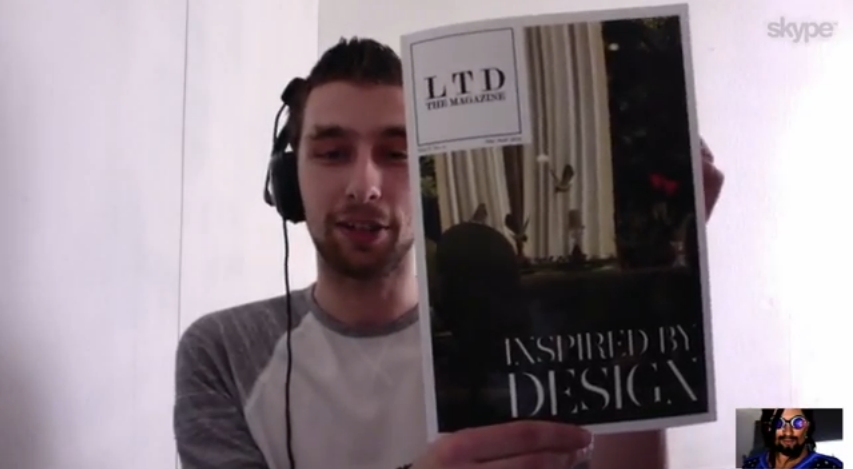
Editorial holds up a coffee table version of LTD magazine
Editorial holds up a coffee table version of LTD magazine as Drax looks on (inset)

However, this isn’t a segment focusing solely on Editorial’s work in Second Life. While this acts as a springboard for the film, providing insight into the publication and the work that goes into it, this is very much a personal piece, focused on the way in which the digital and the physical can intertwine and lead to relationships which, while started in the digital, can cross the invisible divide into the physical and flourish in both.

“In 2010, I met my partner, Rico,” Editorial says, half-way into the segment, “who lives in the United states now, he was originally born in the Philippines. He’s very artistic and does express that with his avatar; he would come up with these crazy outfits with flowers all over the place and top hats. They are the clothes that he would like to get away with in real life…”

Since meeting, the two have gently and naturally extended their relationship, through an in-world wedding, to  Skyping by voice to Skyping with video, right up to crossing back and forth over the Atlantic to spend time together in the physical world. Throughout it all, their shared passion for Second Life and design has furnished them with the foundations upon which they have been able to build a strong, trusting relationship, with both environments allowing them to fully and freely express themselves to one another.

That Second Life can lead to lasting relationships in the physical world isn’t exactly unknown; just recently, television production company Back2back in the UK were still seeking couples who had first met on-line through communities such as Second Life for a Sky Living documentary, Happily Ever After. However, Editorial’s open description of his relationship with Rico demonstrates an a very simple, no-fuss way just how long distance relationships can not only be enjoyed more easily thanks to the use of technology, but can actually be as immersive and as engaging as anything shared in the physical world, allowing memories to be gained and shared of events and times together – as the images of their wedding so clearly demonstrate.

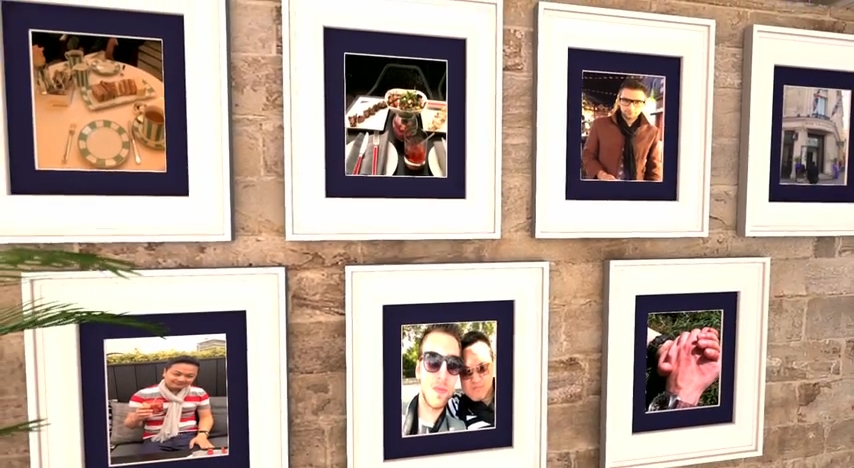
In this there is something of a feedback loops as well – not only does the digital relationship help build and reinforce the relationship in the real world, the latter can also enrich the former. Witness the photos of Rico’s and Editorial’s time together in London, all beautifully framed on the wall of their in-world home; allowing them to again share in the memories – and look ahead to future visits together.

Not only can memories of times shared in the virtual strengthen a long-distance physical relationship, real-world memories or times together in the physical world can be brought into SL and shared, helping to strengthen both the virtual and "real world" relationship
Not only can memories of times shared in the virtual strengthen a long-distance physical relationship, times together in the physical world can be brought into SL and shared, helping to strengthen both the virtual and “real world” relationship

Returning to LTD magazine for a moment, and taking a slight digression from the video. At the start of the segment, Editorial holds up a physical coffee-table edition of the magazine, and in doing so demonstrates the potential Second Life offers someone looking to expand or change their physical-world career. For example, LTD may be something of a labour of love, but in bringing it together, Editorial demonstrates so major skills which clearly have value in the physical world: graphics design, layout, editorial management, fiscal management, project management, and so on, and he has a finished, high-quality item which could – were he so minded – be presented to potential employer as proof positive of a strong track record in publishing.

Obviously, not all businesses in SL are quite so portable when it comes to demonstrating talents and abilities in reference to careers and work in the physical world, but nevertheless, the skills we acquire through this virtual medium should never really be discounted, and if it is possible to develop a portfolio of achievements in SL with reference to a career or job opportunity, then it is something to be seriously considered and worked upon, and we shouldn’t necessarily be put off the idea of doing so on account of SL’s “poor” reputation.

Editorial and Rico
Editorial and Rico

Leaving such diversions aside, and returning to the video, Editorial himself comments on another power of Second Life which, while it’s likely to have been the subject of studies and research, may not be something that’s really commented upon in day-to-day discussions about the platform – and is likely not even considered in media coverage; and that is its power to help us grow as individuals.

“I had issues with confidence,” he says towards the end of piece, “And with SL, it helped me to discover what I’m good at or what I’m not good at, or what I’d like to pursue. I’m still not the life of the party, but it made me realise that I don’t really have to be. It taught me that I can be who I am, no matter what.”

And when it comes to understanding oneself, and facing the world openly, there can perhaps be no greater testament to the positive impact second Life can have on a person’s life than that.

Related Links

Drax Files 20: Flokers – a portrait in colour and words

The latest edition of The Drax Files: World Makers focuses on the life and art of Second Life resident Flokers, a young woman from Sicily, now based in the UK, who has a remarkable story to tell. So remarkable, in fact, that the show forgoes the usual teaser  / titles and end piece featuring Drax talking to his guest, and instead lets Flokers tell her story, straight from her lips to our ears.

That the story is presented in this way makes it all the more powerful to the viewer; in just under five minutes, Flokers beautifully encapsulates the breadth and depth of Second Life in so many ways, and reveals just how relevant it can be to people’s real lives and interactions. She also provides a touching insight into synesthesia – and even offers-up an opinion on the value of the humble keyboard at a time when some caught in the renewed enthusiasm for VR are calling for it to “get out of the way”.

As an artist, Flokers presents a unique view of the avatars inhabiting Second Life. Rather than photographing them, she digitally draws them in real life as they pose in her studio in SL, and then later uploads the finished portrait back to Second Life.

“I am going to paint them as if it were real life,” she explains. “I know that avatar represents the inner persona that’s inside the person who is sitting in that computer. I want to represent them the best I can. Doesn’t matter to know who they are in real life, because I know them in Second Life; that’s what I see with my eyes.”

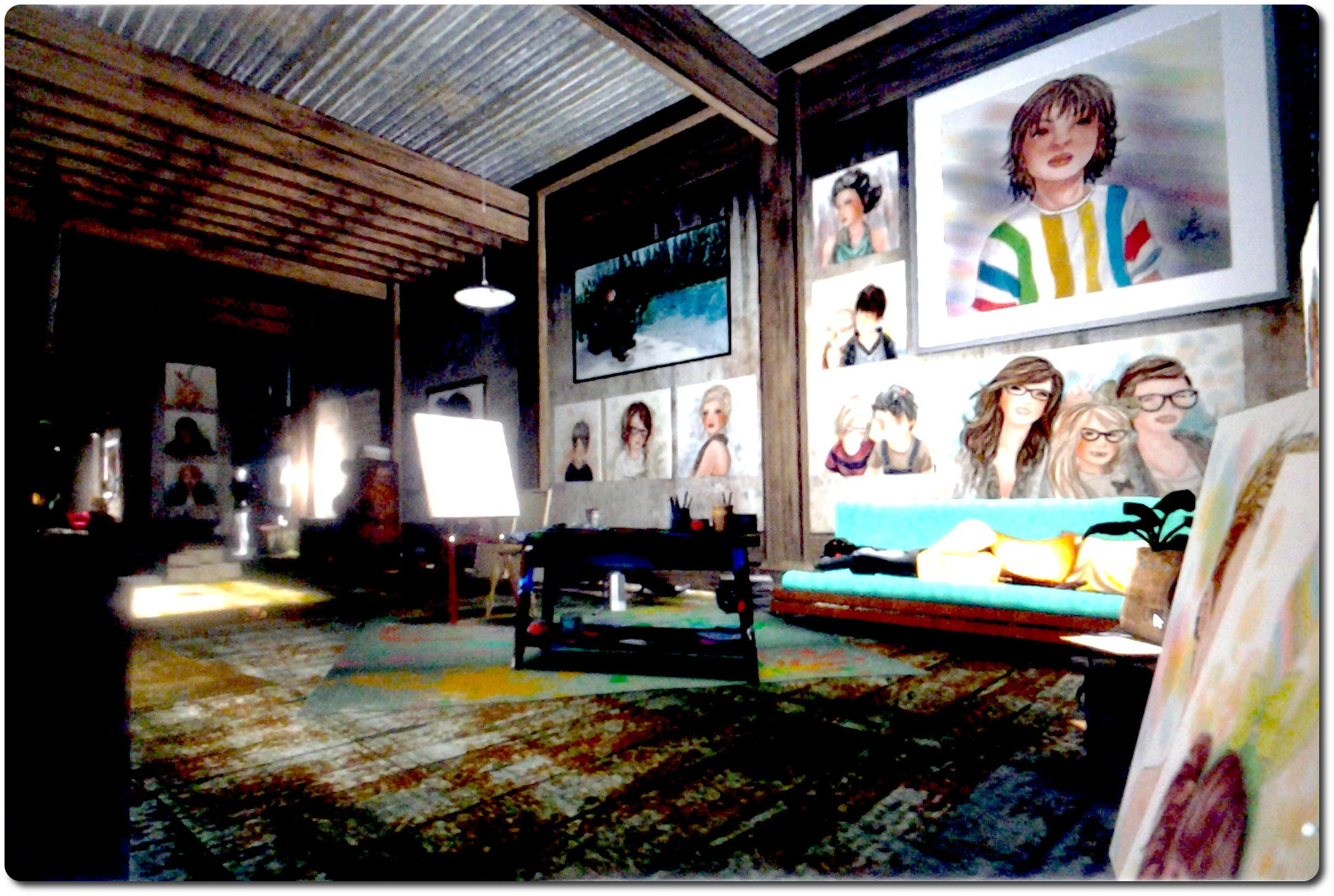
The care Flo takes with her portraits and the success she has in not only capturing the image of the avatar but also something of the personality behind it is clear the minute you enter her studio in Second Life and see the prints of past studies hanging on the walls. Not only that, but to anyone reasonably familiar with Second Life, it is clear she has also captured the essence of the SL avatar itself, making it clear where her subjects reside.

Flokers' studio in Second Life
Flokers’ studio in Second Life

Flo offers those of us who have never experienced synesthesia a first-hand insight to the condition, of which she experiences in both its Grapheme-colour synesthesia and Chromesthesia forms. Not only does she describe the condition verbally, she provides the graphics in the video which allow us to see how she visualises letters, numbers, moods, sounds and even people. Her approach is to present the condition openly and in a matter-of-fact manner which speaks volumes about her own inner strength of character.

“I’ve never seen a city that had not a single child,” she says of her choice in keeping her avatar childlike. As with her description of synesthesia, she tackles the use of child avatars in Second Life head-on; offering a simple and clear message to all those who see anyone opting to use a child avatar as someone leaning towards more negative social behaviour such as edge play or age play: having a child avatar is fun. nothing more, nothing less; it’s a visual recapturing of the carefree fun and moods we experienced as kids and really shouldn’t be taken to mean anything else.

Carefree fun

Much noise has entered the airwaves of late about how the keyboard and mouse represent “the” barrier to the wider adoption of virtual worlds among the general public. Much of this noise has centred around the building excitement about new immersive VR systems and has focused on emerging technologies such as gesture devices.

It’s no real secret that I don’t entirely agree with the view of the keyboard as an obstacle. Not only do lean towards the non-adoption of virtual worlds as being much bigger than an issue of technology, I tend to feel that like it or not, the keyboard and mouse aren’t going to go away that easily, and Flokers offers-up a perfect illustration as why this is so:

In Second Life I can communication better, because I can filter the words that I want to use. The typing animation will tell people that you [are] actually formulating a sentence before sending it. I can re-read what I’m saying, and I can try to think if that in any way, shape or form could offend anybody else.

While voice is undoubtedly a wonderful means of communication, it can led to unnecessary misunderstandings or upset if we don’t give due consideration to what we’re saying and how we’re saying it – which is something we don’t always do; “speak in haste, repent at leisure”, one might say. The keyboard is a wonderful medium for allowing us that time to think; for those who may additionally be communicating in a language which is not naturally their own, it gives added time for consideration, none of which can be easily matched by either talking directly into a microphone or using a voice-to-text filtering tool.

flokersFloker’s Second life story is intimately bound to her current real life situation, not because she earns her living through SL – which is perhaps a story we’re all familiar with – but because she obtained her real-life employment as a direct result of her being in Second Life, where she met her current employer.

Now working as a graphics designer, Flokers sees Second Life very much an integral part of life and her work. In this, and in closing-out the video, she offers-up the perfect response to all those who would otherwise dismiss the platform as “fantasy”:

Second Life changed my life, because what people thought was just a game actually became a real life main source of money and fun. I am able to be myself here. It gave me the chance to become the artist I always wanted to be.

Each time a new edition of The Drax Files comes out, it is hard to imagine that the series could reach further or higher in terms of exploring Second Life and bringing genuine stories about it and the people who use it into the public eye. Yet each and every time the next segment appears, it does precisely that – reaches higher and further.

While a large part of this is down to the stories themselves – and possibly the luck of the draw in terms of the order in which subjects are selected and filmed – the production values evident in each edition cannot be overlooked, nor can the sensitivity shown towards the subject matter. Both of these points are wonderfully demonstrated in this segment, and it would be remiss of me not to mention them and underline the unique editorial skills Drax employs in putting these pieces together.

The magic in this piece, for example is that it really is Floker’s story. There is no need for anything else; no talking heads between Drax and his subject, no need even for an opening title sequence. Floker’s careful, precise and utterly honest discussion of her involvement in Second Life and her real life situation simply doesn’t need any embellishment; it reaches directly into the heart without manipulating emotions, and resonates perfectly.

The musical balance in this show is particularly fine in this regard; the soundtrack is mostly understated, acting as a gentle underlining of Floker’s comments, without ever getting in the way of what she’s saying. When it does come to the fore, it does so magnificently during the airship scenes, with a full-blown orchestral excerpt rich in emotional content which draws one into the scene, eliciting feelings of joy, just as those playing the game surely experience.

Once again, another remarkable piece which is a joy to watch and which speaks volumes about both Second Life and the people who use it.

Related Links


Drax Files 19: the chemistry of Second Life

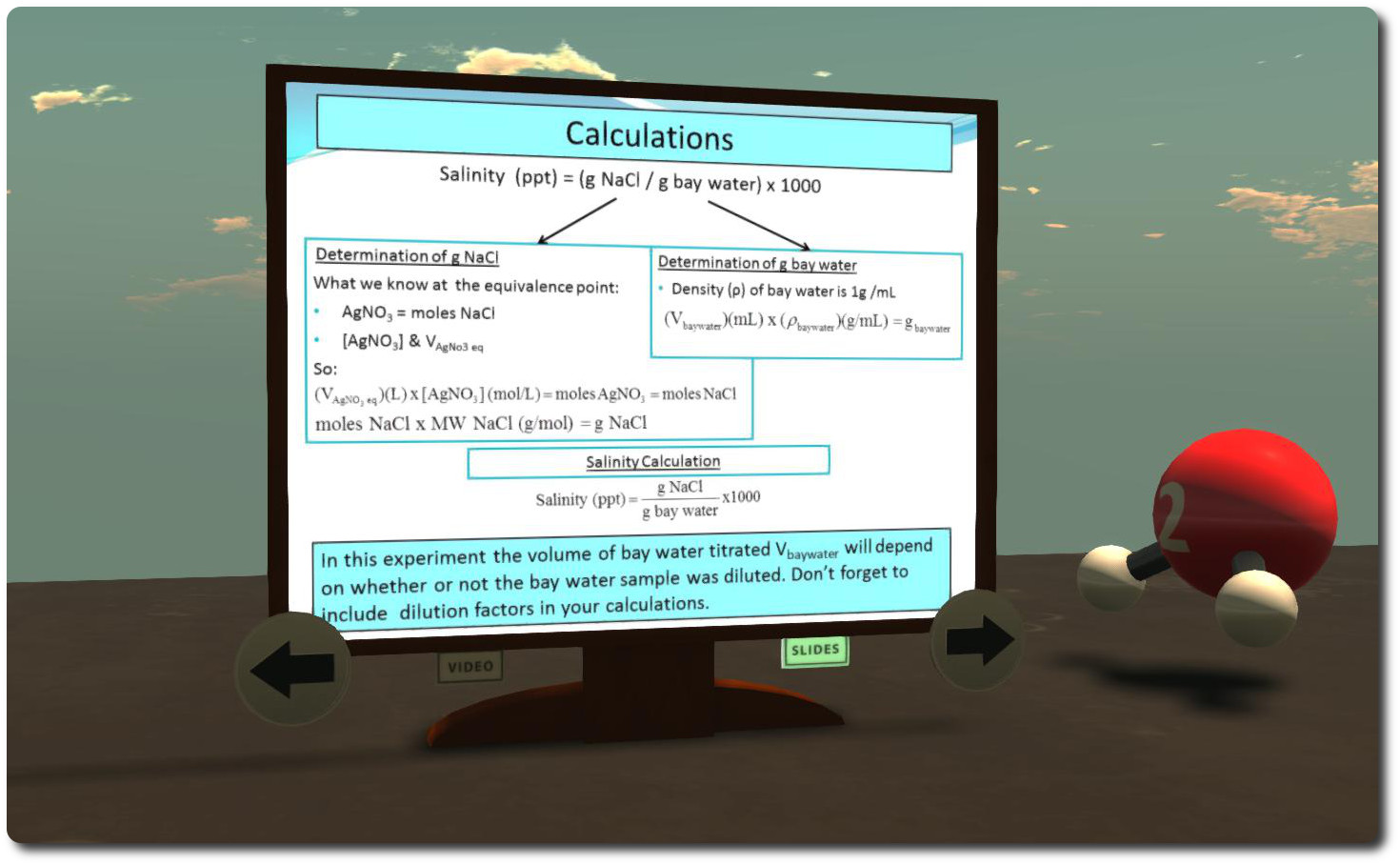
Students at Texas A&M University can learn about chemistry in a 3D environment in Second Life (image: Draxtor Despres)

Second Life’s role in eduction has been something of a focus of late. Earlier in April 2014 we had the 7th annual Virtual Worlds Best Practices in Education conference once again taking place in part in SL, and which featured the Lab’s CEO, Ebbe Altberg fielding a raft of questions from the audience. A recent segment from the Drax Files Radio Hour featured  Liz Falconer, Professor of Technology Enhanced Learning at the University of the West of England (UWE), and Stylianos Mystakidis, E-learning Manager for the Library and Information Centre at the University of Patras, Greece.

Now the education theme continues with the latest instalment of The Drax Files, with a look at a unique experiment in learning being conducted by Wendy Keeney-Kennicutt of Texas A&M University and Kurt Winkelman from the Florida Institute of Technology, focused around students studying chemistry.

wendy
Dr. Wendy Keeney-Kennicutt (image via Texas A&M University)

“Specifically with chemistry, Second life is an amazing thing. So much of chemistry is based on [the] shapes of molecules and understanding the 3D nature,” Wendy says of the in-world science classes she oversees, and why chemistry in particular is a good match for Second Life.

She also notes the collaborative nature of the environment for learning as well. “You can walk around the molecule, you can sit on the molecule, I have interactive periodic tables. You have your friend with you, and your friend doesn’t have to be sitting next to you looking at the screen. Your friend can be at home, you’re in school together, you come in together, you build together. That’s important for the learning process.”

Texas A&M University operates an impressive, multi-region faculty within Second Life, complete with a dedicated web page in the university’s Instructional Technology Services website. Within the faculty regions sits “Dr. K’s First Year Chem Program”, which offers a grounding in chemistry in an open-air, interactive environment. This is where Wendy teaches chemistry in a manner she notes – and despite the cost of SL regions – is apparently more cost-effective than purchasing dedicated modelling software, because SL offers a much more flexible working and creative environment than dedicated tools may provide, and can thus be better utilised to suit the needs of her students.

A part of the interactive learning environment operated by Wendy Keeney-Kennicutt in second Life for her students
A part of the interactive learning environment operated by Wendy Keeney-Kennicutt in Second Life for her students

Up in the air above a portion of the faculty regions, and restricted to access by students, staff and invited guests, sit a number of research areas. It is here that Wendy, alongside Kurt Winkelman, studies the impact and effectiveness of teaching within a virtual environment when compared to more traditional classroom-based teaching. The study is funded by a National Science Foundation grant, and has grown out of a pilot programme run in the autumn of 2013.

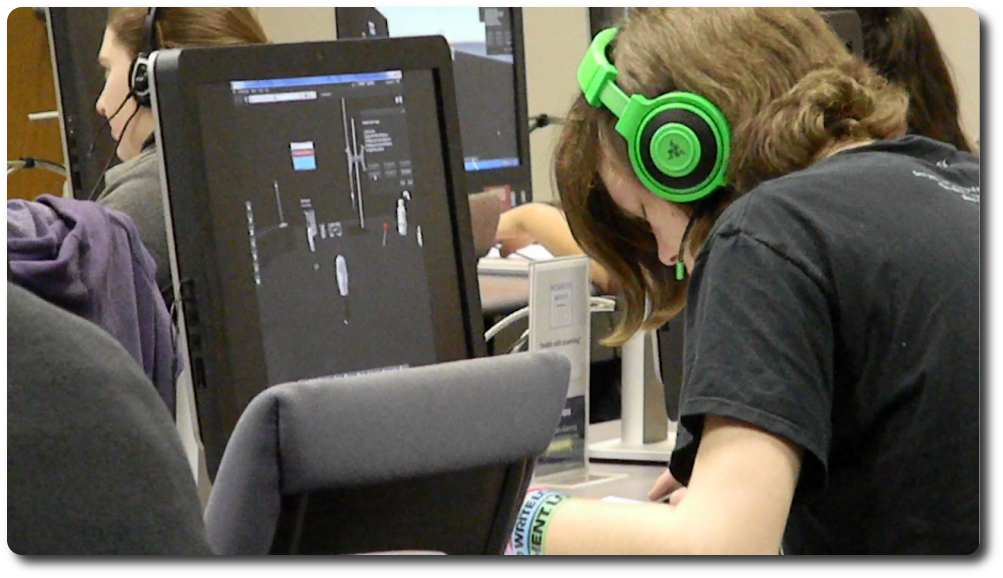
For this work, Wendy uses two groups of students, each of whom is following the same course programme, with one group working in Second Life on the sky platforms, and the other working entirely in the real world. Within the virtual learning environment, efforts have been taken to present students with much the same requirements and activities their counterparts have to perform in the real world: gases must be handled, weighed, measured, etc., just as they do in a real-world lab in order for valid results to be obtained. The study is currently at the half-way mark, and due to complete in April 2015.

The NSF-funded study environments are located in the sky over the main A&M faculty space in-world, and like the facilities on the ground use the full power of SL's multi-media capabilities
The NSF-funded study environments are located in the sky over the main A&M faculty space in-world, and like the facilities on the ground use the full power of SL’s multi-media capabilities

One of the interesting outcomes of the study is that those students in SL behave in very much the same way as those in the real world chemistry lab. The same caution and responsibility is demonstrated in handling and manipulating butane as would be expected in a real chemistry lab, despite the risk of injury resulting from the flammable nature of the gas obviously being non-existent in SL. This in turn has resulted in the students working within the SL environment to retain a kinesthetic ability in using and manipulating the science equipment which is on a par with that demonstrated by the students working the physical equipment.

More interestingly, the students working in the SL lab reported they enjoyed themselves far more there than in the real lab, and felt they were much more focused, and suffered from less distraction. Even their ability to read-back and interpret data appears to be significantly better than seen within the real lab.

The kinesthetic learning (also known as tactile learning, wherein the student learns by carrying out a physical activity) results evident in the programme are interesting, as are the overall results to date.

Students in the study reported a more enjoyable experience when using Second Life, and exhibited an aptitude at least on a par with those working in a physical lab while enjoying better results
Students in the study reported a more enjoyable experience when using Second Life, and exhibited an aptitude at least on a par with those working in a physical lab while enjoying better results (image via Draxtor Despres)

The findings so far released as a part of the study – notably the results of the pilot programme – tally very well with the benefits of situational learning discussed by Liz Falconer in episode 15 of The Drax Files Radio Hour, where she noted the benefits students experience through narrative learning.

While chemistry is more a procedural activity than a narrative undertaking, the approaches used in the SL environment point very strongly to students working within the environment reacting in a similar manner to those placed in situational learning environments: their kinesthetic abilities are sharpened, even though the level of interaction with the equipment they’re using is very different to that of the physical lab, as noted above. Also of interest is the observation made as a result of the pilot programme that the artificial nature of the SL environment caused the students to be more focused on procedure and technique, rather than on results – a very important aspect of research chemistry.

There is still another year to go with the primary study, but the results, as indicated by Wendy in the video, seem to be reflecting those obtained during the pilot programme. as such, it’ll be interesting to see what does emerge when findings are fully published. In particular, it’ll be interesting to see if the finding examine the role played by aspects such as the viewer UI in shaping students’ experiences and learning abilities in the SL-based environments (e.g. were better results obtained purely because students found the virtual environment a more enjoyable environment for learning, or because the nature of the viewer UI encouraged a greater need for focus and help eliminate more common elements of distraction among students?).

Towards the end of the video, Wendy (Julia Tiraxibar in SL) talks more broadly about the potential of Second Life for education and educators, and makes some interesting and valid points about students travelling around SL (remembering that we’re talking here about students 18 and over, and therefore with the freedom of movement we all enjoy in SL). Her remarks here match the common-sense attitude expressed by Liz Falconer in episode 15 of The Drax Files Radio Hour.

This is another excellent video segment, one which takes a slightly different tack to others in the series, but which again offers much food for thought and which certainly stands as a very focused piece which would appear to be ideally suited for helping promote SL within the education sector. As such, it is one I’d strongly encourage teachers and educators to bookmark and not be afraid to show to colleagues – and indeed, for students to put before their teachers and faculty staff.

Related Links

Drax Files 17: It’s a kind of magic

Zachh Barkley is the Master of Magic in SL, as revealed in the 17th instalment of The Drax Files. While it’s not clear from the video, he appears to have joined SL as a teen, and has since built up a successful brand within the virtual world specialising in the thing that most fascinates him: magic.

Spells, incantations and more are Zachh’s stock in trade, and LSL, particles, prims and more are his hallmark. It’s the extension of a childhood love which (I’m guessing from his chat with Drax) grew out of a love of Harry Potter and early experiments with build-you-own game environments and tools.

Zachh Barkley
Zachh Barkley

Which should not be taken to mean Zachh is the archetypal Second Life user beloved of certain elements of the media (i.e. someone lacking a life). It’s clear from the video that not only does he have a life outside of Second Life, he has shown friends and family that the virtual can give rise to real world benefits, such as an income.

Those who do tend to dismiss Second Life as a crutch for the less socially capable would do well to listen to Zachh’s disarming explanation of his time with the platform – building revenue-generating business, learning skills (such as coding) which are transferrable elsewhere, mastering digital content creation (another transferrable skill) … it all adds up to something rather unique and which offers potential for development and employment (as well as fun) well beyond the platform.

There are a lot of great moments in this segment, and Zachh’s disarming openness and honesty again demonstrate that those engaged in the platform really are the best ambassadors for it. This is something I really do wish the Lab would more fully appreciate: the opportunities for strong narrative marketing which are available to them for promoting the platform to a broad cross-section of different audiences. The stories don’t have to be constructed – they’re already here, waiting to be told.

All they lack is the reach of a constructive, progressive marketing campaign. And with all the improvement and updates made to the platform over the last two years, perhaps we’re approaching the time when such a campaign can enter the planning stages – so how about it, Ebbe? Are your marketing team ready to construct a narrative around the stories we have to tell?

And with that said, there can only be one … way to sign-off this article, and that’s with another video, not a million miles removed from this segment of The Drax Files or the essence of Second Life itself.

Related Links

Drax Files 16: Live, learn and feed

The 16th episode of the Drax Files has premiered,  showcasing the work of Brique Topaz (Brique Zeiner, RL) and her organisation Live and Learn in Kenya (LLK). They are engaged in work to feed and educate poor children in Kenya, including covering fees, uniform, shoes, textbook and school supplies and now, even building a school of their own.

Brique Topaz (Brique Zeiner RL) and Kenyan children in the Feed a Smile programme

Feed A Smile is a programme run by LLK to provide nutritious warm lunches for over 400 children every day, paid for entirely from donations to the project. Over a third of the money directed at the programme comes from donations received through Feed a Smile in Second Life – and that’s a remarkable figure.

The money is raised through live music played at the Lavender Fields club, which stages around 5 or 6 events weekly and to which musicians donate their tips and visitors are asked to donate just L$100 ($0.30), which is enough to purchase a filling meal for a child in Kenya, a fact that within itself is quite mind-boggling.

The Lavender Fields club at Feed a Smile in SL

“I keep waiting for the mainstream media to realise that Relay in Second Life is the greatest human interest story,” Zander Greene commented when discussing Fantasy Faire and RFL with Drax in 2013.  “I just don’t understand why CNN and forty other media outlets aren’t beating down our door to try to tell this story.”

Those words apply equally here; who would have thought that people creating digital avatars and logging-in to a virtual environment and sharing time listening to one another’s music, could have such a profound effect on the lives of young children in Africa?

This is very much a story which should be highlighted and pushed out before the mainstream media; not because it is “feel good”, but because it is a clear demonstration of the positive and lasting influence virtual words can have on the real world, and more than an antidote to the hoary old view the media has that those involved in such spaces do so because they “lack” a life elsewhere.

“There are a lot of people out there who really want to do good things,” Brique observes, “but they don’t know how … in Second Life, it’s all there. It’s all possible.” Indeed. Where else has such an immersive, engaging and free-flowing environment become the conduit for so many from around the world to help support others?

Related Links