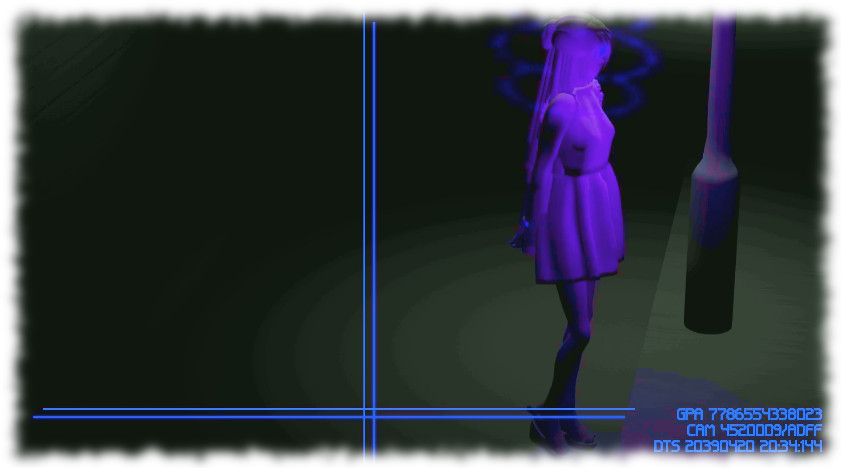
Future Shock: season 3 of the Second Life machinima series

Future Shock: sci-fi machinima

I first wrote about Future Shock, an ambitious Second Life Machinima series produced by Pryda Parx, in September 2016, when the first part in the series was released, and then revisited the project at the start of 2017.

Since then, the series has grown through a second season, and Pryda has edited the episodes on both together into two special Director’s Cut versions, the first running to just over 23 minutes and the second to a touch over 32 minutes (see Future Shock: the machinima continues, for more on both the Director’s Cuts and the second season).

Now, through November and December 2019, the third and final season of the series is being made available for viewing through Pryda’s You Tube channel.

Future Shock is perhaps one of the most ambitious machinima activities to be attempted in Second Life, a 25-episode story arc split across three seasons of episodes (8, 9 and 8 per season). Set at some point in the future, the story presents a somewhat dystopian / semi-cyberpunk world where technology infiltrates every part of people’s lives, a seemingly protective blanket for all whilst also offering the means for personal gratification and escapism through the intertwining of their physical and virtual lives.
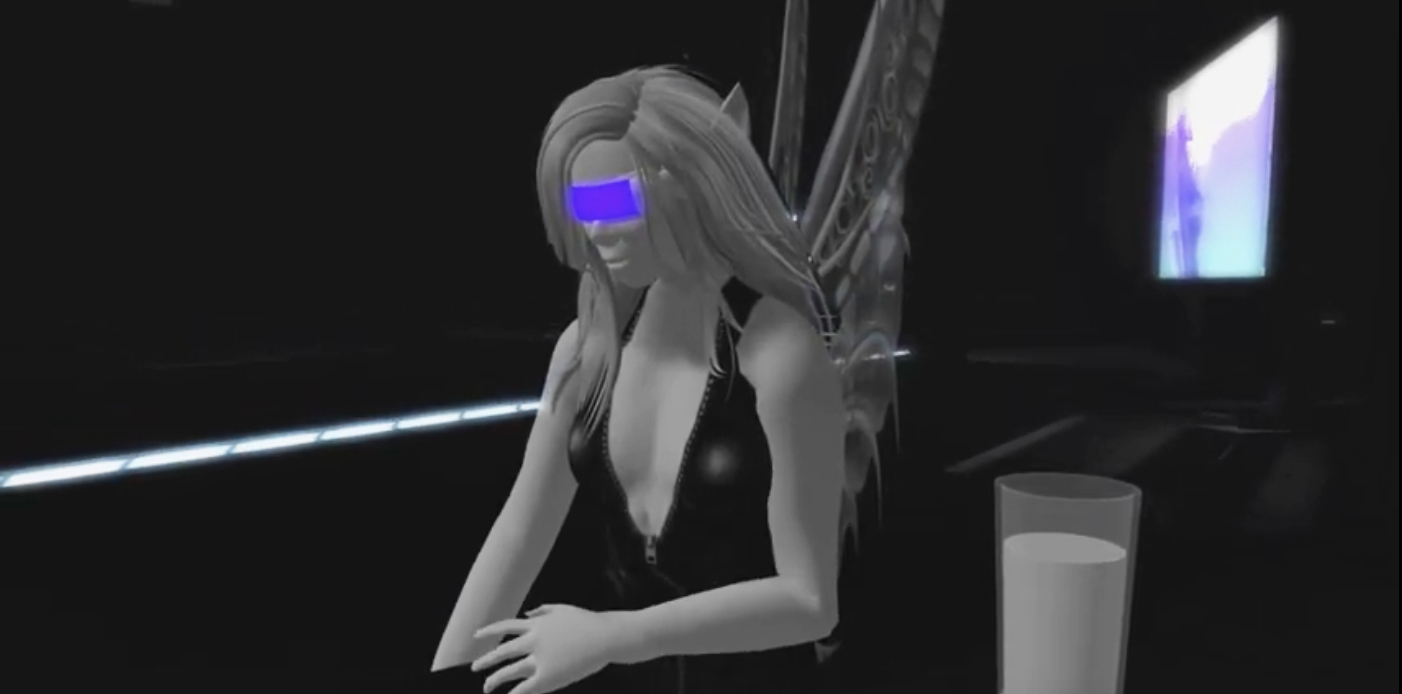
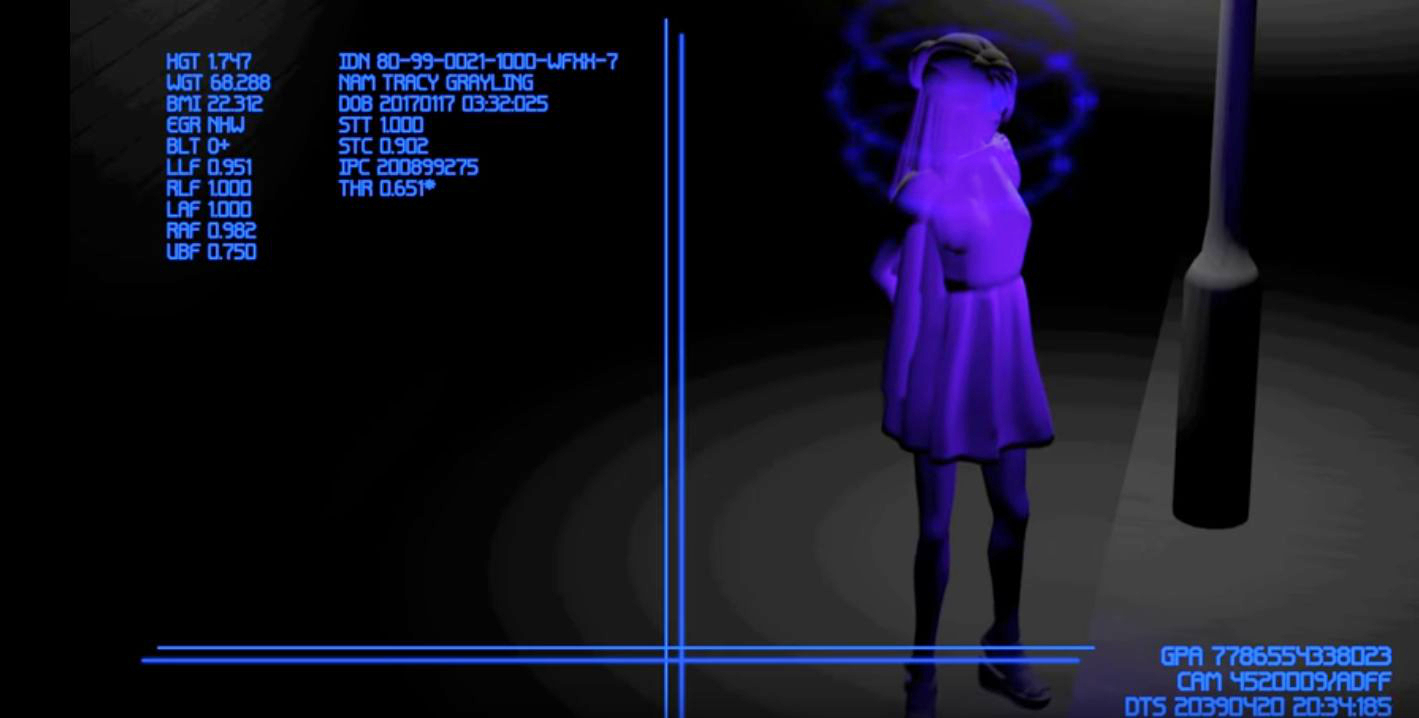
Future Shock protagonist Tracy Grayling

The latter can take the form of immersion into user-defined virtual worlds where dreams and desires are made a reality, and in the physical world, the ability for people to physically augment / redefine / rebuild their own bodies to suit their desires, in a world where everything is defined by a person’s net worth, or IP Credit (draw your own conclusions from the use of “IP”). This IP Credit can be enhanced through a variety of ways – agreeing to complete tasks that are assigned an IP value, for example.

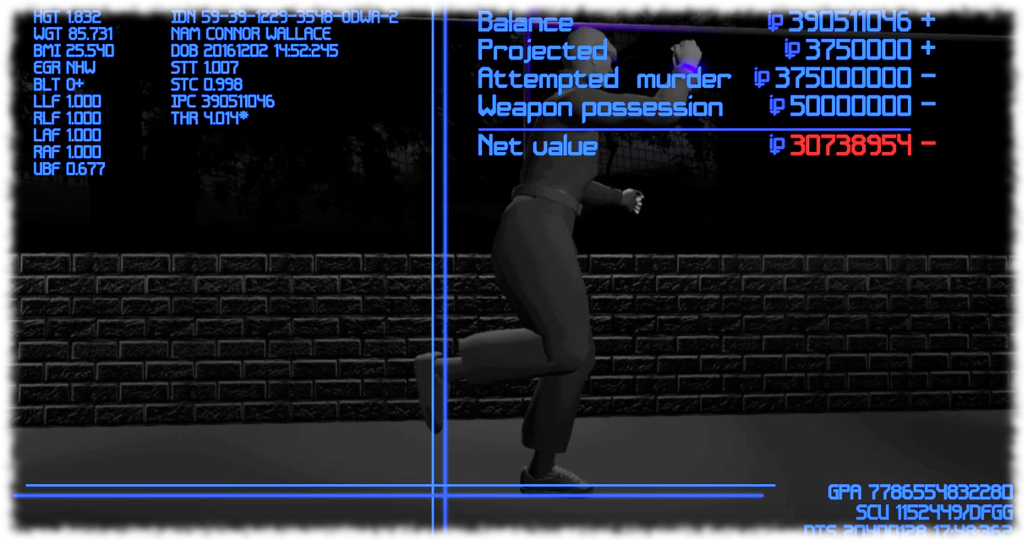
So long as a person’s IP remains positive, then all is well. But should it decline continuously, then things can become hard; and should it zero-out completely, they can find themselves clinically and harshly dealt with. And this latter point is also the case for any who question the apparent benevolence and societal rules of the overseeing technology.

A particular point of uniqueness is the non-linear storytelling technique Pryda has used. The first season, for example, tells the story from the perspective of Tracy Grayling, dropping us into the middle of her life which appears – like the lives of so many – to be self-centred, living in this world of morally questionable ethics, in which people view their time in terms of raising themselves to the next line in a balance sheet, simply to be able to make themselves “better” physically or virtually than their peers. However, is this really so, or is she – wittingly or otherwise – an agent provocateur?

This makes the first season something of a mystery thriller: much is going on, but it’s hard to determine where it is leading. At the same time, we are drawn into the the story via Pryda’s visual technique of contrasting the “real” world, filmed in flat grey and minimal, hard colour (blue, red, white), with the promise of a virtual nirvana rich in colour. In the second season, the events witnessed by Tracy are seen from an entirely different perspective: that of those apparently fighting the controlling technology. This both adds to the depth of the underpinning mystery whilst also given greater context to the first season, making the primary arc of the core storyline clearer.
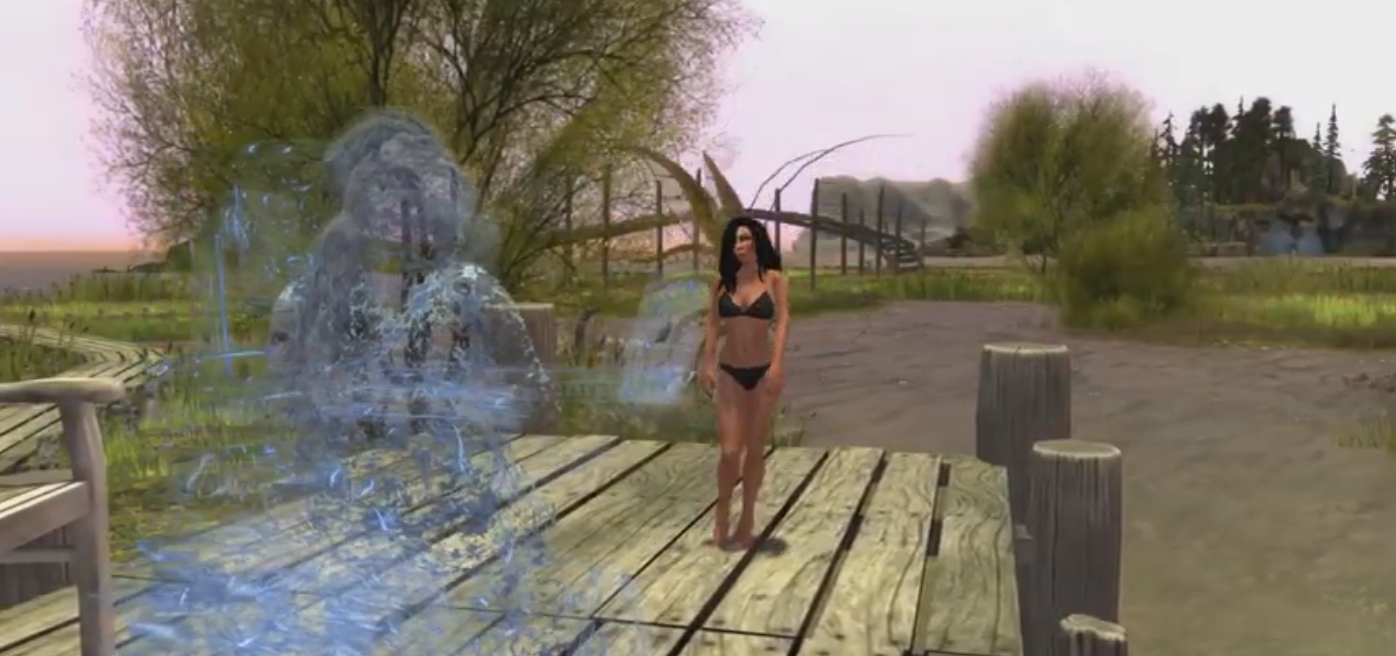
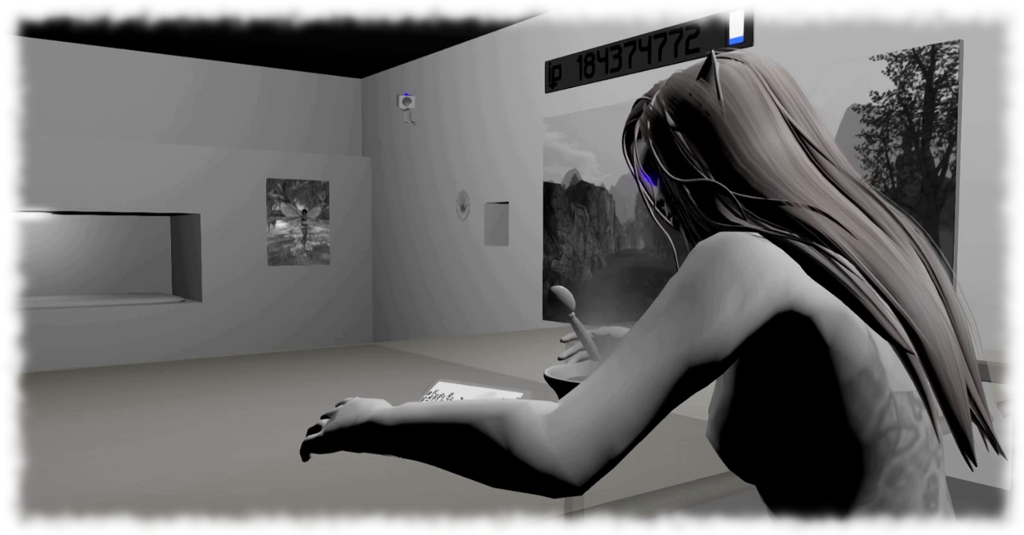
Tracy Grayling – in avatar form (r) – meets with the leader of the rebels in virtual space

With the third season, the story threads revealed in the first two seasons intertwine and draw us through a further eight episodes to the series climax.

The first part of the third season (and episode 17 overall), Brotherly Assistant is now available on You Tube. While on Thursday, November 14th, there will be a special in-world showing of episode 17 and the premier of episode 18, A Proposition, at the Grand Ballroom, Embrace Aphrodite Island (rated Adult), and the two episodes will be followed by a showing of the Director’s cut of the first season. All who are interested are invited to attend.

I don’t want to say too much about the third season – having been fortunate enough to be offered the chance to view it in advance – simply because I do not want to spoil it for others who have followed the first two seasons, or who wish to catch up with things by watching them now. What I will say is that throughout all three seasons, Pryda has woven a layered story that is worth watching throughout and – considering her own admission that season one was a case of “learn as you go” for her in terms of machinima making – one that demonstrates her growth as filmographer and storyteller.

Should you wish to catch up with the story, please follow the links below.
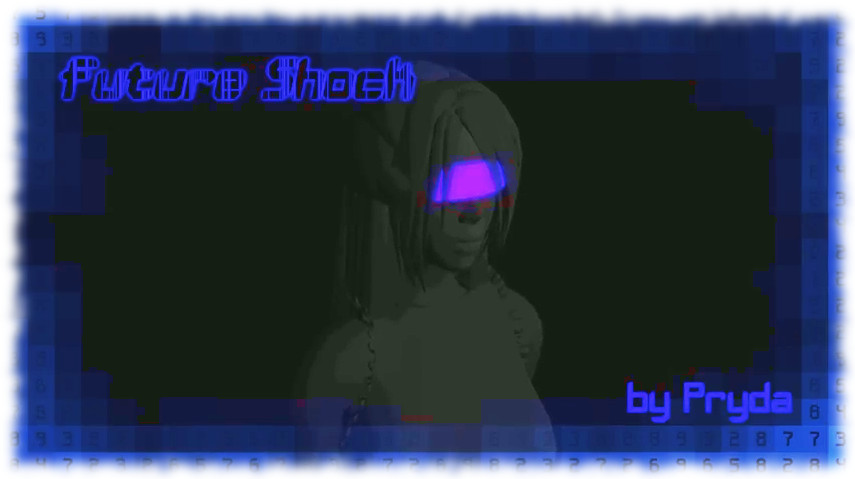
Future Shock: the machinima continues

Future Shock: sci-fi machinima

I first wrote about Future Shock, an ambitious Second Life Machinima series produced by Pryda Parx, in September 2016, when the first part in the series was released, and then revisited the project at the start of 2017, once the entire first season was available on You Tube.

In August 2017, a special “Director’s Cut” version of the first season was released, bringing all eight parts (plus the initial trailer / introduction)  together into a single 32-minute film which included previously unreleased footage, even as Pryda was working on the second season of 9 episodes. The new series was released over a period of several months in 2018, although sadly, the scheduling of things (coupled with other matters) prevented me for covering them at the time.

However, on December 27th, 2018, Pryda released another Director’s Cut, which brings all eight parts of this second season together into a single 23.5 minute film, which as with the first series version, includes previously unreleased footage. So this seems a good time to catch-up on the series, with apologies to Pryda for only now getting to it.

In short, Future Shock is a story of a somewhat dystopian / semi-cyberpunkish world where technology infiltrates every part of people’s lives, watching over them, seemingly providing both a protective blanket and providing various means personal gratification and escapism through the intertwining of their physical and virtual lives. But all is not as it seems. Rather than guiding / guarding / assisting, technology has come to dominate, defining everyone in terms of their net worth, or IP Credit (draw your own conclusions from the use of “IP”). So long as this remains positive, a person has little to fear – not even death; technology allows them to augment / redefine / rebuild their own bodies to suit their desires. But should a person’s net worth zero-out or enter a negative value, then things can become uncomfortable, and survival less-than-certain, with those in debt clinically  – if harshly – dealt with; as is also the case for those perceived to be a threat.

Tracy Grayling: protagonist – but innocent, or self-obsessed mole / agent?

Thus, this is a world of questionable moral and ethical values. people’s lives are determined by what is effectively a line on a balance sheet, while the people themselves are driven by baser instincts: greed, desire, avarice, envy, determined to raise their credit value, wanting to make themselves better physically than their peers through surgery / augmentation, or to be able to have sufficient value to escape into the virtual realm – a place reached not in the home, but within life support centres, the body fed and cared for while the mind escapes – and the all-important credit balance ticks down minute by minute.

Life in this world is very much factionalised; not everyone may approve of the way technology is all-pervading, or the way in which humanity has come to rely so wholly on it. Others simply seek to exist not caring for anything more than the next opportunity to become immersed in the virtual, while some seek to improve themselves, whilst also seeking a means for self-expression.

What made the first series engaging was both the visual style used throughout: the physical world is a dark, cold monochrome place for the most part, where colours are minimally used – blue to highlight technology, for example; red as a negative. Conversely, the virtual realm is a place vibrantly alive with colour and imagination, warm and inviting and far removed from the physical. Also, the storytelling is richly layered. This opening drops us into the middle of things, roughly 19-20 years hence. We’re quickly introduced to a number of the core elements – particularly the idea that humans are regarded as little more than constituent parts of the whole, to be recycled as required, plus the main protagonist for the story, Tracy Grayling, but the overall context can only be understood and the pieces fitted together by watching all the segments in turn – and at times returning to a previous segment in order to gain further insight.

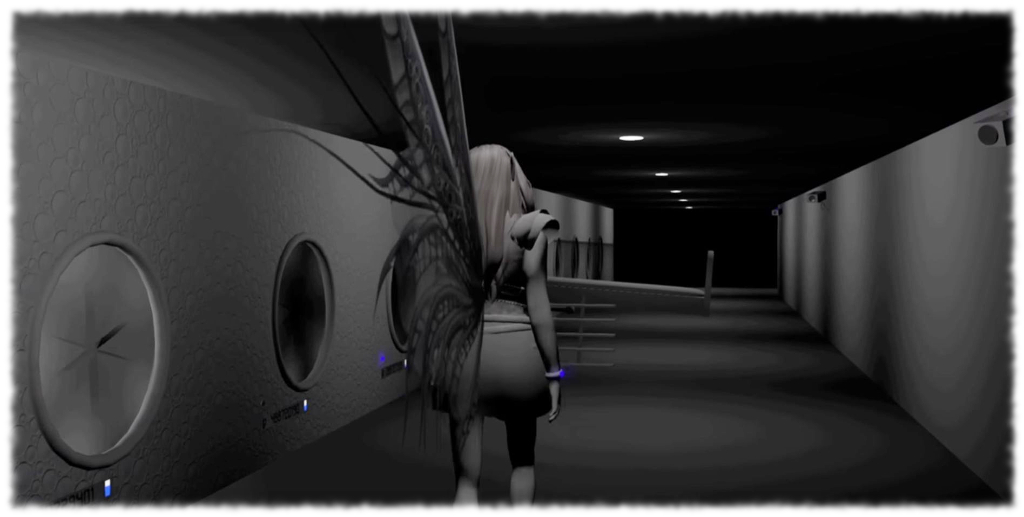
Being in sufficient credit means you can afford exotic changes to your body – such as wings. But there is still the mystery / threat / salvation hidden within the Dark Grid …

This approach is continued through the nine episodes of the second season, which adds a further layering, in that the series records the events of the first, but from the perspective of another group of characters, the “rebels”. Slightly shorter in length overall than the first season segments, the second series also lifts the production values seen within the production. In this, Pryda made no bones about the fact that in filming the first series of Future Shock, she was also going through a learning curve in terms of machinima production – and the second season shows that she has learnt a lot, and has a very definite approach to style, nuance and overall production.

Future Shock is an engaging series, one that tells both a story and raises questions about the future and our increasing reliance on technology and what it may mean for personal freedoms – including the freedom of expression. These questions have perhaps become more salient over the course of the two years in which Pryda has been working on the series; as such it is worth viewing from this perspective as well. For those who wish to see more, Pryda has also produced a series of short pieces providing insight into the principal characters. However, I would recommend only watching these after seeing the entire series; they contain significant spoilers!

Related Links

Revisiting Future Shock – sci-fi machinima in Second Life

Future Shock: sci-fi machinima

In September 2016, I previewed a new machinima series, Future Shock, by Pryda Parx. At that point in time, the first episode had just been released, and Pryda was kind enough to allow me see the next two in the series. What I saw was intriguing in terms of story, setting and production values. Given the final episode was released just before Christmas, it seemed a good opportunity to watch the episodes back-to-back and talk a little more to Pryda about the work.

When we first discussed the series in September, Pryda told me her aim was to produce a series which could entertain, but also provoke debate on technological and social trends; to explore what the future might actually hold.

To achieve this, she presents us with a world where technology infiltrates every part of our lives. It watches over us, seemingly for our own protection, as well as providing various means personal gratification and escapism. It is also a world where everyone is defined in terms of their credit and net worth. So long as both are in good standing, then you are (reasonably) safe – not even death needs be an impediment; while if there is something about your body you don’t like or feel it lacks, you can have it modified / augmented to suit your desires. Should credit evaporate or net worth show every indication of becoming negative, however, then things can be  – uncomfortable.

In a world where everything is defined by whether or not you will remain in credit, even legal judgement on your acts become a clinical binary decision equitable to life or death

Thus this is a world of questionable values, both in terms of technology and the people – who may be driven by their baser elements of self: avarice, jealousy, the potential for violence. Thus this is a world of questionable morals and ethics – a fact cleverly reinforced through the use of predominantly monochrome and grey scale settings and characters.

But there is more here as well; everything appears to be run by the “state”, against whom some have rebelled, seeking sanctuary – and more – from within the technology intended to watch over them. Thus, the story is layered, which the fully arc designed to progress over a total of three series of episodes. For this, the first element of the overall arc, we follow a central character by the name of Tracy. As much enmeshed in moral ambiguity as everyone else (she is perfectly willing to betray a lover to gain credit, and potentially go further), her character is as grey as the world she lives in.

Future Shock: Tracy
Future Shock: Tracy

By introducing us to Tracy first, Pryda effectively drops us into the middle of things. This both adds to the mystery of the series – but also makes the narrative a little hard to fully comprehend. The intent here is obviously to raise questions and encourage us to follow the story as more unfolds through the remaining two series.

“There is a complete arc,” Pryda told me. “But it will unfold slowly. The second series covers the same time period as this one, for example. But telling it from the rebels’ point of view. You get to understand more about the relationship Tracy’s boyfriend has with them, and so on. Then in the third series you discover what the state is really about.”

While the narrative might seem a little uneven in places, one thing that more certainly isn’t is the quality of the production. To put it simply, Future Shock is extraordinarily well done. Considering this is Pryda’s first foray into episodic storytelling and machinima production, it is a polished production.

Being in sufficient credit means you can afford exotic changes to your body - such as wings and the ability to fly. But there is still the mystery / threat / salvation hidden within the Dark Grid ...
Being in sufficient credit means you can afford exotic changes to your body – such as wings and the ability to fly. But there is still the mystery / threat / salvation hidden within the Dark Grid …

“Before this I’d practice making videos in Second Life with a couple of fairy/music videos, but the story with those is minimal,” Pryda informed me. “I’ve always been creative, but my writing and drawing isn’t strong, so I have been very inspired with the idea of story telling with machinima techniques. But it has all been new territory for me, and I’ve been learning as fast as I can.”

Given that her learning curve has also encompassed GIMP, Audacity for audio, and even Blender – Future Shock is an even more remarkable debut series, and there is more than enough in these first series to engage the curiosity and leave one wanting to know more about where things are going.

Sadly, it’s going to be a while before we get to find out: the second series is currently slated for a late 2017 release. But in the meantime, you can catch up with the first series on Pryda’s You Tube channel, and I’m embedding the introductory prologue to it below.


Future Shock: sci-fi machinima in Second Life

Future Shock: sci-fi machinima

Future Shock is an ambitious and intriguing new Second Life Machinima series produced by Pryda Parx, the first episode of which was released on You Tube on September 16th, 2016.

Future Shock is set in a dark future world where technology is designed to keep everyone safe and secure. At least that’s the way it is meant to be,” Pryda told me as we discussed the concept and the evolving series. “A place where technology dominates and where real life and virtual worlds intertwine.”

Unfolding over nine episodes, the story is told in something of a non-linear manner. Individual segments run to around 4 minutes each, unfolding part of the story, but as Pryda notes, “to get the most out of the audience will need to pause, rewind and revisit previous episodes; there are a lot of subtle connections between episodes which will not be apparent when first seen.”

Is technology helping us, or...
Is technology helping us, or…?

This is the case with the first segment, IP Credit, in which we are given a view of what appears to be both the real and the virtual as they intertwine. We know nothing of the character(s) we see or anything about the environment or what is going on. There is  clue to the immediate events we see in the episode’s tag-line, but how the scene fits with the rest of the story arc is something we’re going to have to return to and consider later.

“I wanted to make something for the interactive YouTube generation,” Pryda says of the series. “Something to entertain, but also to provoke debate on technological and social trends and to explore what the future might actually hold.”

What lies within - and why?
What lies within – and why?

A further striking element of the series is its presentation. Outside of the virtual realm, the world is predominantly monochrome: dark skies, dark pavements and floors, grey walls, grey people. Where colour is used, it tends to emphasise the presence of technology which, as we see as the scene unfolds, perhaps isn’t entirely benign. Dialogue is also minimal (and non-existent in the first segment, although the language can be strong when it does occur in later segments), a technique which further draws the audience into the unfolding story.

The first series has taken Pryda around a year to put together; work which unsurprisingly has required her involvement with a lot of tools – Blender for modelling, GIMP, Audacity for the distinctive audio, etc.  The remaining segments will be released on YouTube at two-weekly intervals, with the last release occurring just before Christmas.  There is also an introductory teaser, which can be seen here.

Nor does it end there. “There is a lot of background content and a coherent framework for world in which the story is set, ” Pryda told me. “Much of this background will play out over the two series following the first.”

So, if you’re on the look-out for a new and quite stylish sci-fi, which intertwines a number of themes in a unique style and approach, why not give Future Shock a go? The first segment is embedded below, and the series can be found on Pryda’s YouTube channel.