Getting a little Debonair

The DSA Debonair C33 with floats attached

Not too long ago, I wrote about my acquisition of the DSA Beechcraft King Air C90 GTX.  At the time I reviewed it, I mentioned it was somewhat bigger than my “ideal” ‘plane. Well, if only I’d been a little more alert. Not that I’m in any way disappointed with the King Air, I hasten to add (other than the issue in getting it up ramps and out of the water when using the floats), but rather because DSA are, at the time of writing, currently running a special promotion on their Beechcraft C33 Debonair.

This is a variation on the famous Bonanza design, but with a more familiar vertical tail, rather than the latter’s V-tail. However, what matters here is the Debonair comes as a “combo” plane; like the King Air, it can switch between floats and conventional undercarriage with a single command, and is presented, fully-functional, under the promotional offer at the princely some of – L$200!

The Debonair in its default textures and, beyond it, my custom version (some may notice a certain similarity with King Air I recently purchased!)

Obviously, at that price, the Debonair is an absolute bargain (so much so that when I told a friend, they leapt onto the Marketplace and bought two – one for their main account and one for their primary alt account), and I had to pick one up.  And what a bundle of joy!

This is an aeroplane that, given it likely runs the same scripts as the King Air, actually handles somewhat better, with very smooth region crossings for the most part (other than SL occasionally causing the camera to jump from the default view to one set a good ways back from the ‘plane) – no that the King Air was particularly rough. More to the point, with the floats in use and their wheels deployed, the Debonair can climb the ramp of most slips a lot easier than the King Air. I’ve tried my home ramp – although that’s now becoming redundant – the Hollywood airport slip ramp and Honah Lee Surf, and with a little power and a tap of the brakes, the Debonair took all three, where the King Air would frequently bury itself in the ramp / the terrain behind the ramp.

The DSA aircraft HUD, as presented with the Bonanza / Debonair

Being a smaller aircraft than the King Air, the Debonair only sits four, and is a bit of squeeze, but makes for a cosy flight :). As with the King Air, undercarriage options (wheels or floats) can be selected at any time, making landing options very flexible (although you can obviously make a runway landing with the floats attached, thanks to them having their own wheels.

Re-texturing the plane is pretty easy, as one would expect from a DSA plane. Download the maps from the DSA website (they’re labelled “Debonair” on the site, but the ZIP file and textures are all labelled “Bonanza”; this isn’t because they are the wrong files – as noted above, the Debonair is a variant of the Bonanza, and so uses the same texture files. the textures are supplied in .PSD, JPG and (some at least) X2 formats. However, I did note that float textures are currently absent the set (I simply re-used my King Air float textures).

The Debonair is a delight to fly and the DSA scripting makes STOL flights a joy

You can use Local Textures in the viewer to carry out “test fits” of your own designs prior to uploading anything and incurring costs; just make sure you select the required face of the plane when doing so, obviously, and be aware that you’ll need to use the same texture a number of times to achieve a finished result (e.g. you’ll need to use the wing textures individually on the wings, flaps, ailerons, tail & rudder).

Those who read my article on the King Air will see that I went for a similar colour scheme with the Debonair, and the little ego touches! OK, so I now have THREE ‘planes with the same registration, but I think I’ll be OK with the CAA / FAA! 🙂

All told, the Debonair is a great little aeroplane, and one I’ve been having a great deal of fun with – and likely will continue to do so. Certainly, as while the promotional offer is running, it is a genuine bargain.

Comparing size: the C90 King Air (to the rear) and the C33 Debonair side-by-side, and me for a sense of scale

Related Links

The King and I

DSA Beechcraft King Air C90 GTX

No, this isn’t a homage to Yul Brynner, although as the song goes, Second Life could well be a show with everything, even without him… The “King” I’m referring to is the DSA King Air C90 GTX, which has – after some considerable deliberation and bouncing around – become the latest aircraft I’ve added to my collection.

To be honest, it wasn’t actually the ‘plane I started out to get; I actually wanted something a fair bit smaller, given I already have the PBY 6A Catalina, and initially started looking at single-engined ‘planes. But for various reasons, I found myself drifting away from that choice and heading back into twin-engined territory, initially looking at Erick Gregan’s Cessna 421 (which came highly recommended, and looks to be a most excellent aeroplane).

DSA Beechcraft King Air C90 GTX
DSA Beechcraft King Air C90 GTX: the factory default finish, with my customised version beyond

However, as I live “on the water”, so to speak, I was drawn to DSA’s Beechcraft C90 GTX and Baron G58, as both of these are “combo” aircraft: you can switch between standard undercarriage or floats with a single command. In the end, and again on recommendation, I opted for the C90, although I suspect I’d have been happy with the G58.

The C90 is actually a big aeroplane; particularly when up on its floats – the picture of me doing a naughty and sitting on the wing probably gives you an idea of the size, if you’ve never seen this ‘plane before. 100% mesh, it weights-in at 96 LI, which is quite hefty – but it is packing a lot – and a physics weight of 11.7, which is slightly less than that of my MD-900, and almost one-third that of my Kv23H. It is supplied copy / mod, and is suitable for repainting, if desired (and a range of optional paint kits are available in-world from Josh Noonan – and I can personally attest to the quality of his work.

DSA Beechcraft King Air C90 GTX - a closer look at my paint scheme
DSA Beechcraft King Air C90 GTX – a closer look at my paint scheme

Indeed, the very first thing I did on getting mine, other than going for a short familiarisation flight, is repaint it. As I liked elements of the default colour scheme, I decided to stick with this as a base, and then work-in my traditional red and white. The model supports the use of local textures, which means you can play to your heart’s content creating and trying colours, and a full set of textures in JPG, PaintShop Pro and Photoshop formats can be downloaded from the DSA website.

To apply textures when working on things, simply blank a copy of the ‘plane then select the required face, then select and apply the texture from you heard drive via the viewer’s Local Texture option in the texture option of the Build floater. Note that The fuselage and the wing textures are used several times, and you’ll have to make sure they are applied to all the faces using them. For example, the fuselage texture needs to be applied to the fuselage (best to select the face by clicking on the tail), the rudder, and the nose wheel doors. When you’re happy, upload your textures to inventory & apply, or use the painting note card in the ‘plane.

DSA Beechcraft King Air C90 GTX - this is a big turboprop
DSA Beechcraft King Air C90 GTX – this is a big turboprop

I went for a very personalised look, as the photos here show, complete with my usual G-NARA registration and a bit of ego-pandering with a stylised “I” on the tail and on the winglets. I also added a touch of shine to the fuselage and wing textures, to give them more of a polished finish.

Flying-wise, this is a ‘plane aimed towards the more “realistic” end of the market (my one disappointment with the Catalina is that the flight system is rudimentary). DSA aircraft aren’t perhaps as advanced in this area as some other makes, but they are still pretty comprehensive. A detailed HUD is supplied, and commands can be given in chat as well.  One thing that is missing for those who enjoy procedure, is a need to carry-out pre-start checks (battery, magnetos, etc.); “lstart” and “rstart” will kick the respective engines into life once seated in the pilot’s seat, although the Engines button on the HUD will run through a more complete (and automated) pre-start check and engine start-up. This will also enable navigation, strobe and beacon lights for you, as well as close the boarding door.

... with a comfortable interior
… with a comfortable interior

The C90 handles really well in the air, and can be shared between pilot and co-pilot (the HUD is copy / transfer, so you can share it with friends) – make sure you both activate the co-pilot option on the HUD. Range is limited by fuel, and the plane comes equipped with a full fulling station (43 prims, which I presume works with any DSA ‘plane), or a convenient jerry can should you need to set down somewhere to refuel. Another nice touch is the inclusion of an instrument landing system (ILS), although I confess I’ve yet to actually try this, and documentation is supplied on the DSA website, rather than with the aircraft.

A slight irritant I have found is that this plane doesn’t handle water ramps at all well; with the wheels for the undercarriage deployed, it seems to require a decent run-up to a ramp at full throttle. Even then, getting ashore is far from guaranteed, and should you do so, there is the inevitable desperate throttling back before you go careering too far across an apron. Ironically, the C90 cannot make the relatively shallow ramp I have at home at all.

Also, the HUD also seems sensitive to region crossings; In the 4.5 hours I’ve been flying the plane, I’ve had buttons vanish from the HUD when clicked just after a region crossing, only to reappear on their own a short while later or at the next crossing. This is a niggle, but not a major problem.

DSA Beechcraft King Air C90 GTX - guess where? ;-)
DSA Beechcraft King Air C90 GTX – guess where? 😉

At L$5500 (at the time of writing), this isn’t a cheap light plane to have – but you do get the floats / wheel combo, and the mod options are all good, paint-wise. Overall, I’ve found the C90 more than pleasing to fly – the ramp issue following water lands notwithstanding; and particularly like the fact you can swap between floats and “standard” undercarriage mid-flight. OK, so not terribly real, but adds a certain flexibility when flying :). While this may not be the ‘plane I set out to get, I certainly have no regrets over buying it, and I’ll likely be swapping back and forth between the C90 and my Catalina quite regularly.

Related Links

Of impulse purchases and power boats

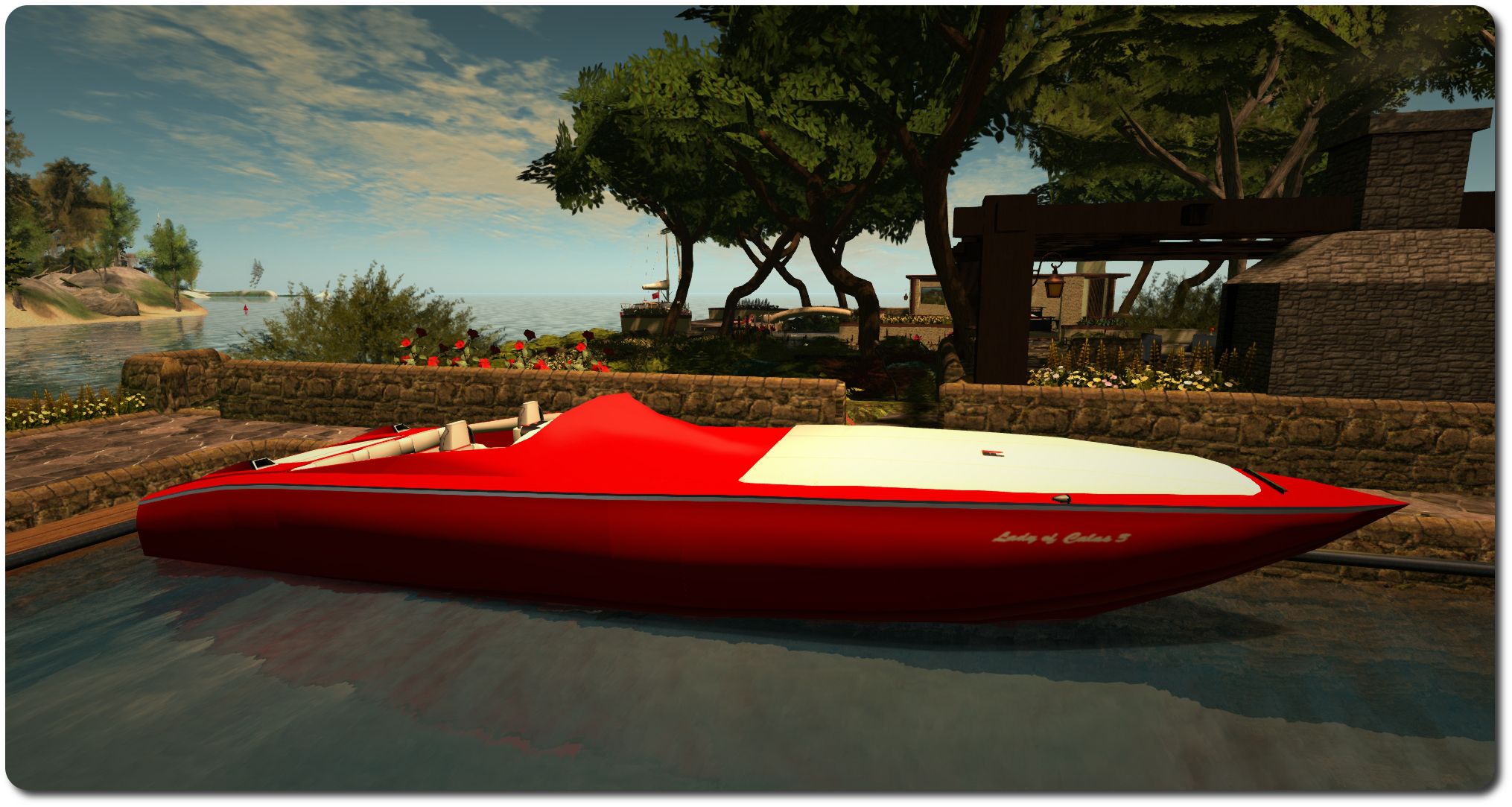
The Kv23H FoilStream at home
The Kv23H FoilStream at home. The white canvas is covering the bow seating area

As regular readers know, I’m pretty into sailing and cruising in SL. However, while I have a couple of very nice E-Tech boats, they are somewhat big and tend towards the primmy. So I’ve recently been spending time hopping around SL and trawling the Marketplace for something smaller, lighter and mesh built I could buy.

This actually proved harder than I’d imagined. Not because there is a shortage of smallish cruisers and nice little tenders to be had; quite the reverse. There are some lovely boats to be found; I just have this obsession with a red & white colour scheme, and those I saw either didn’t quite fit, or required DIY retexturing well beyond my comfort level. So I ended up making an impulse purchase simply because the colours were close enough: Kv23H FoilStream by Ape Piaggio.

The Kv23H showing the forward seating area uncovered

Not, I hasten to add, that this should be taken to mean this is a “bad” build; far from it. Ape has worked hard to produce a superb racing boat / cruiser, capable of carrying up to five people, and sought out plenty of assistance in bringing it together – such as from Analyse Dean of Bandit fame. The result is a craft that is 31 LI, 100% mesh, packed with features, and – when needs be – bloody fast.

Seating areas can be found in the cockpit, and forward in the bow area, with a small cabin area in between. The pose system allows movement between the various areas (including the sunbathing pad over the working engine cover), without the need to stand, and is available to driver and passengers. Driving-wise, the UP / DOWN keys operate the throttle in 10% increments, LEFT / RIGHT allow you to steer. If you want some really high-speed boating, PAGE DOWN will deploy the boat’s cunningly-hidden hydrofoils (you must be at 30% throttle or lower for them to deploy). Once deployed, running the throttles up to anything over 70% will lift the boat up onto the foils and you’ll literally fly across regions; this is one bloody fast boat. So much so that after lifting, I’d strongly recommend dropping the throttle down to 50% for a smoother ride.

Up on the foils at 60% throttle

When you drop back to 30% or below, the boat will settle back into the water, and PAGE UP stows the foils once more. Handling-wise, the boat is really responsive at speed, but can be a handful at 10%-20% throttle. To assist with this, Ape has added a “parkmode” option in the menu, click it and keep your speed to 30% throttle or less and it smooths-out handling. There’s also a race mode, accessed through the menu, which makes the boat compatible with popular race systems and which enables damage, while the ACSS system really does help the driver with region crossings.

Two really handy capabilities with this boat are the “park camera” and the auto-mooring function. The former places the camera above the boat, looking down on it and – with practice – allows for a lot of close-in manoeuvring both forwards and backwards. Set the boat’s home mooring position, and the latter will automatically park the boat on your return, once you’re within 10 metres of the mooring point.

Roaming Second Norway

To list all the features would turn this article into a litany, so suffice it to say that you also additional options that can be deployed, a pose system for moving about the boat without standing up, a working engine cover, two working media systems – there’s even two painting systems (texture maps supplied), one of which you can use to produce your own commercial paint kits for the boat.

There are, to be fair, some niggles, none of which are serious, but do cause grumbles. Mouselook driving requires seat adjustment, for example, so you can actually see where you’re going. However, adjustments can’t be saved, so have to be made again after standing.  I found the camera to be oddly sensitive when carrying passengers at low speeds in regions with surrounding objects, being prone to slewing into the engine compartment even when crossing parcel boundaries (i.e. moving away from my home mooring). Conversely, travelling at speed on open water with passengers across multiple region boundaries has yet to give me any problems at all. A final very small issue is with the boat’s hull texture map: the left side hull texture and the transom texture are such that if you wish to add a name to them, you’ll have to reverse it to read from right to left; if you don’t the name will be backwards when the textures are applied to the hull.

The dashboard contains working dials and a nice map function that will mark your position within a region (the yellow square) - providing you're not zipping along at an insane speed!
The dashboard contains working dials and a nice map function that will mark your position within a region (the yellow square) – providing you’re not zipping along at an insane speed! However, you’ll likely have to raise the driver’s seated position if you want to ML drive, or sit and then adopt a standing pose via the menu

But, these are minor grumbles in the scheme of things. Overall, there is no mistaking the fact this boat is well made, comes very well equipped and represents excellent value for money. Any hesitation you might sense in this article is simply because this kind of muscle boat isn’t really “me”, so I’m having a hard time persuading myself I’ll actually use it, and may yet end up resuming my hunt for something more “my” style. Either that, or I’ll await Ape’s next project, her AD25H “Little Bee” speedboat, which is looking rather good!

However, if you want to see if the Kv23H is your kind of boat, you can take a demo version out for a spin from Ape’s test location in-world and can purchase it there or from the Marketplace.

My word, what a year!

Pinoy Hideout, Lions Hill; Inara Pey, May 2014, on FlickrPinoy Hideout, Lions Hill, November 2014 (Flickr) – blog post

So 2014 draws to a close. I’ve already given a detailed review of the year as I saw it and reported on it through these pages; but before the year closes, I wanted to offer something a little more personal.

This year has been incredible for me. In terms of raw figures (for whatever they’re worth), I’ve published 950+ posts, passed through 3,000 published in total, seen the blog pass through one million page views and, at least according to WordPress, these pages (intentionally or otherwise) have been viewed from 194 countries (hello, Iran and North Korea. Oh wait, you’re not listening 🙂 ).

Jacob's Pond, End of Time February 2014The Pines at Jacobs Pond End of Time, February 2014 (Flickr) – blog post

But more particularly, the year has offered me the opportunity to visit over 100 regions and blog on them (some more than once), and to experience 136 art exhibitions, installations and performances that I’ve actually manage to document (57 sponsored by the LEA and 79 non-LEA events) – my apologies to those I missed / didn’t manage to get written-up.

Where art is concerned, I’ve been particularly privileged to be asked to join the UWA jury for Transcending Borders  – thank you, Jayjay and FreeWee, and to have also witnessed Paradise Lost: he Story of Adam and Eve’s Original Sin, which I still believe to be an outstanding masterpiece of performance art in a virtual world, and the jewel in the crown of my enjoyment of a fabulous year for art in SL. I’ve also met many more talented people in SL.

H2O - Walt Ireton (Jay Evers)
Walt Ireton was one of several artists I was fortunate enough to meet in-world and become friends with during 2014. His real-life photography exhibited in SL in shows such as H2O is amazing – blog post

As regular readers know, I’ve attempted to stay up-to-speed on technical developments, but have also found time to move house, expand my sailing and flying activities, and continue tracking Curiosity’s progress on Mars, as well as look at other “spacey” things.

I’ve also tried to improve my photographic technique and also started to get my head around image editing with GIMP (PhotoShop still has me hiding under the desk). I’ve even managed to get into “proper” machinima, something I’ve wanted to do for a long time, and have received a lot of support and advice in my efforts – thank you to everyone concerned.

2014 saw my interest in, and enjoyment of, flying and sailing increase

I really don’t want to go on at great length here; suffice it to say, the year has had its moments at times, but for the most part has been a huge amount of fun, discovery and learning. It has also been immensely rewarding simply because I see so many people returning to these pages again and again, reading, offering “likes” and feedback, providing suggestions and pointing out things of interest or providing hints and support.

So what I really want to say is, thank you to all of you for all your support through the year; and thank you for all the Tweets, re-tweets, Plurks, re-plurks, location suggestions via social media or via e-mail, comments via e-mail and in-world IMs. It may sound trite, but the reality is, without your support and feedback, this blog would simply be a collection of dry electronic pages, and I’d be without any stars to steer by.

Thank you, everyone, and I’ll see you in 2015!

Fastnet Rock, Blake Sea Crows Nest; Inara Pey, December 2014, on Flickr

Eight years on

Still enjoying SL: my island home with my toys: Catalina, MD-900, E-Tech cruiser and Loonetta-31

December 5th. Another day in SL. My 2,922nd being a small part of Second Life; eight years. Blimey.

It’s been an interesting year – one I’ll doubtless delve into in some detail my end-of-year review;  but in that time we’ve been through some interesting times. We’ve seen a change of hands at the the top of Linden Lab, the promise of a new, cutting edge virtual world platform in the near(ish) future. There’s been a huge amount of work improving, through things like the completion of Project Shining, the arrival of the CDN, HTTP pipelining, and a lot of viewer updates and added functionality such as the new photographic capabilities, group bans, better group chat, improvements to region crossings, and so on, all of which have largely helped improve things for most of us, even with the odd hiccup for so here and there.

Yes, there have been some disappointments. The ToS situation wasn’t sorted out in the way many of us were hoping to see; words were played with, but frankly, what we’ve been left with is still ambiguous in its interpretation. Then the changes to the Gaming Policy, although not something the Lab could have avoided, haven’t perhaps been as handled as clearly as might have been the case, lacking information on fees, etc. But, on the whole, it’s been a pretty positive year.

Inara Pey: then and now

On a personal level, the last year has been fun. There’s been more than enough to keep me busy on the blogging front, I’ve been able to visit and write about some stunning regions, art installations, galleries and performances, as well as trying to keep astride of all the news. All of this has meant that this blog has grown by nigh-on another 1,000 posts over the course of twelve months, and hit the 1,000,000 page views mark. Admittedly, some of the articles have been on topics away from SL and virtual worlds; my love of astronomy and space exploration has played a part in pushing up the number of posts, and of course, there’s been VR and AR to watch as well.

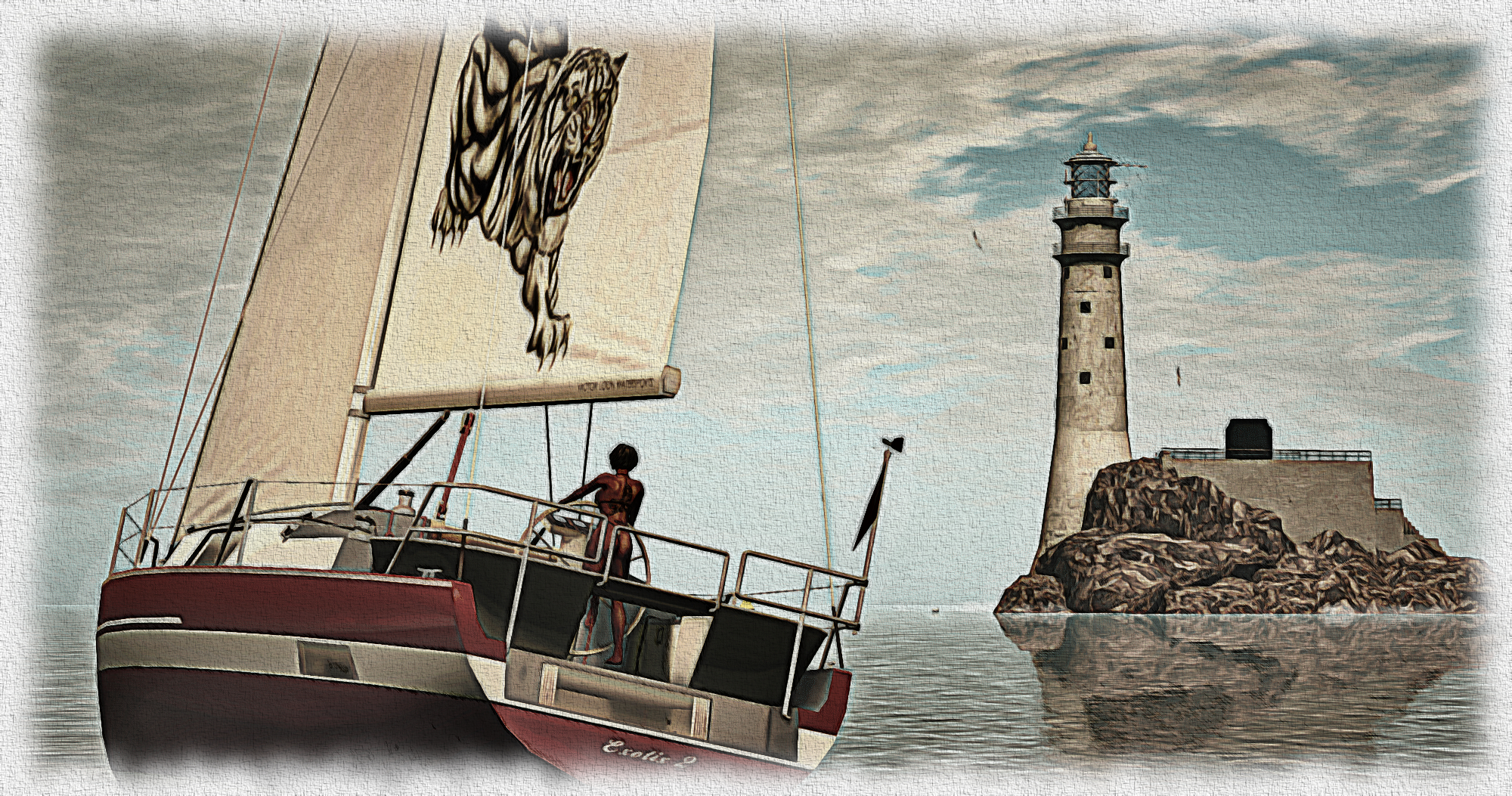
I’m still enjoying flying and sailing in SL; if anything, I’m doing somewhat more of both – my Loonetta 31, Exotix 2 sees a fair amount of use and has carried me far and wide across Blake Sea and beyond. Equally, G-NARA, my PBY-6A Catalina has seen a lot of use, and has also drawn a lot of compliments thanks to its distinctive colour scheme courtesy of the marvellous Josh Noonan.

The Catalina was actually responsible for my biggest personal change for the year: moving back on to a private island of my own, just so I could have a place to leave it sitting out in the sunshine, as seen on the right in the picture at the top of this piece. Truth be told, I’m pretty comfortable in the house, and continue to tweak the island here and there.

I am perhaps a little disappointed that it’s another year and no cake from the Lab. But still, can’t have everything – even if NASA did delay the Orion launch by 24 hours so it would launch on my rezday! 😀 .

Orion EFT-1 lifts-off exactly on time, 12:05 UTC, on Friday, December 5th, 2014. A nice rezday treat for me! :)
Orion EFT-1 lifts-off exactly on time, 12:05 UTC, on Friday, December 5th, 2014. A nice rezday treat for me! 🙂

As to the future – there is the new VW platform from LL, there’s also High Fidelity, and we’ll doubtless hear of others. Oculus Rift will eventually appear in a consumer version, and it’ll be sitting there with the likes of Magic Leap and castAR, and probably other systems and clones as well, which will allow us to enjoy environments – and maybe express ourselves – in ways we’re not even aware of. All of these things do inevitably mean challenges for Second Life; but the Lab remains committed to the platform, supporting it, improving it, and providing tools and capabilities to those of us who enjoy it.

Which may well mean that in another 12 months, I’ll be writing about nine years of involvement in SL!

Whirlybirding and painting things

A familiar fly-past: taking the MD-900 around the Fastnet Rock lighthouse

Back at the start of the year, I wrote about my experiences in getting hold of an EC-135 Eurocopter from  Spijkers & Wingtips. As noted in that article, it’s a great little helicopter – easy to fly, plenty of space in the cabin, and nicely customisable. It’s been on my helipad ever since.

Well, at least until this weekend, when it found itself returned to inventory after one last (for the time being) flight. Not because I’ve given up on flying – oh no! Rather, as the images in this piece show, I’ve swapped to a new aircraft.

Gracing my helipad at home now is the Spijkers & Wingtips MD-900 Explorer. Superficially like the EC-series of helos in terms of exterior cabin looks, this is a 7-seater helicopter that is 100% mesh, the design by Sylvira (sylviramaus). And I have to say, it is beautiful, with a wealth of detail to enjoy.

The MD-900 in its default (supplied) finish

The first thing that is immediately noticeable about the MD-900 is that it doesn’t have a tail rotor. Instead it uses a NOTAR system, employing a fan system together with a thruster mechanism at the end of the tail to both counter torque from the rotors and provide vectored thrust when turning, etc. With the S&W MD-900 the system is reproduced such that in-flight manoeuvring of the helicopter will see the directed thrust mechanism at the end of the tail moving in response to control commands, together with the twin rudders.

The helicopter comes as a comprehensive package: there is the MD-900 itself, Copy / Mod and with an LI of 54; a static display model, six customisable texture packs, optional combat script and cargo payload scripts. The default colour scheme for the helicopter is striking, and possibly the best of the supplied packs, and a further air ambulance option can be obtained from Sylvira.

The interior detailing is incredible; from the seat harness elements through to the individual buttons and dials on the controls and flight panel. Even the ducts air circulation system in the cabin is reproduced in detail, together with work front, passenger and rear cargo doors
The interior detailing is incredible; from the seat harness elements through to the individual buttons and dials on the controls and flight panel. Even the ducted air circulation system in the cabin is reproduced in detail, together with working front, passenger and rear cargo doors

Using the texture packs is a matter of unpacking the desired finish, then editing the helicopter via Edit Links Parts to drag and drop the various texture elements onto their requisite sections of the helicopter. For those who want something more personal, the textures can be saved as TGA or PNG files and amended locally & then re-uploaded at the usual L$10 a shot.

As most know, I have a penchant for red and white in my boats and planes, so one of the first things I did was grab one of the texture packs (“white with red stripe”) and download the various elements to produce a colour scheme more in keeping with my preferred style. When I did this with the EC-135, it literally took me 3 minutes to get something I was happy with  – although admittedly, I didn’t really try anything clever in editing the textures.

The MD-900 is one of the supplied texture finishes, and the default colour scheme to the rear

The MD-900 did take a lot longer. The was mostly down to my decision to go for a design which required some careful detailing around hinges and things. However, it also has to be said that, outside of the default paint scheme, the finishes on some of the packs are a trifle rough – in my case I found that white parts would have an odd splash of red where they shouldn’t (and vice versa, or that edging between the colours be a tad rough when looked at closely (and I do mean closely – the packs past muster reasonably when to the casual eye). Unfortunately, for me, once seen closely means such things are forever nagging; so I spent a good few hours doing some general clean-up, because I’m obsessive that way.

Handling-wise, the MD-900 is fabulous. I’m not sure how much updating Tig has done with her helicopter scripts, but the MD-900 really is a delight to fly. It’s very responsive, can move at a fair lick if required, and offers the usual 3rd person or Mouselook flight options (the latter feeling far more responsive that the EC-135). A HUD is provided for flying, although not essential (all commands can be entered via chat), and this reveals some of the extras – such as the searchlight (which can also be turned on / off via the chat command “sl”), the winch options for lifting cargo aloft – read the instructions carefully, and take note that cargo can behave oddly if particularly complex. There’s even a police / rescue siren!

A particularly nice touch with the more recent helicopters in in S&W range is the inclusion of auto-deploying pontoon floats. Simply drop down over Linden water in a low hover, and the floats will deploy for a water landing. They can also be manually deployed / stored when in flight via the HUD or a chat command.

My MD-900 at home
My MD-900 at home

All told, the MD-900 is a great aircraft, and niggles over the texture packs aside (they don’t in any way spoil the aircraft), it will make a great addition to any SL aviation enthusiast’s collection.

Related Links