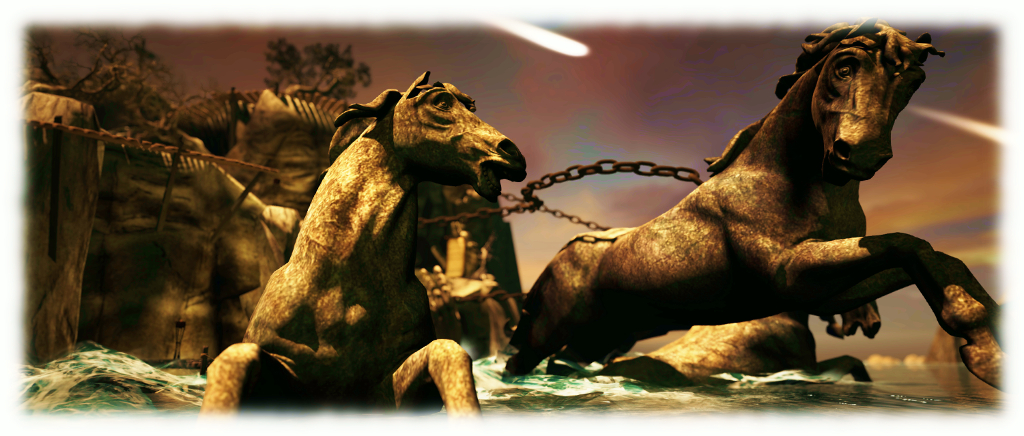
The installation is a marvellous work of art, deeply reflective of the thoughts expressed within the poem, and of Storm’s own circumstance and the trials she has faced. If you haven’t visited the installation, I urge you to do so before in closes in December, and while it may sound somewhat self-serving, I also offer my thoughts on the installation as well.
I have been drawn back to Invictus a number of times since then, wanting to produce a video of it for posterity. But what form should such a video take? Should it feature music, or the words of the poem itself? And if the words, should they be spoken, or presented on-screen? And if spoken, who should I look to recite them?
At the end of August, and having been reminded by several people that Morgan Freeman recited the poem in the film Invictus (and has done so elsewhere, it being a personal favourite of his), I opted to turn to the marvellous talent of Charlie Hopkinson, who is Morgan Freeman’s voice. And so it is that I offer a short film of Storm’s installation I hope you enjoy, and which encourages you to visit or re-visit Invictus in-world.
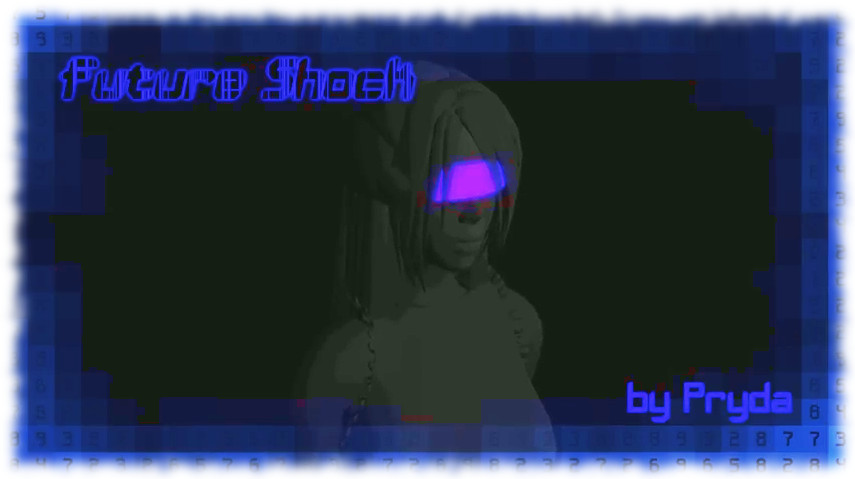
Future Shock is an ambitious and intriguing new Second Life Machinima series produced by Pryda Parx, the first episode of which was released on You Tube on September 16th, 2016.
“Future Shock is set in a dark future world where technology is designed to keep everyone safe and secure. At least that’s the way it is meant to be,” Pryda told me as we discussed the concept and the evolving series. “A place where technology dominates and where real life and virtual worlds intertwine.”
Unfolding over nine episodes, the story is told in something of a non-linear manner. Individual segments run to around 4 minutes each, unfolding part of the story, but as Pryda notes, “to get the most out of the audience will need to pause, rewind and revisit previous episodes; there are a lot of subtle connections between episodes which will not be apparent when first seen.”
Is technology helping us, or…?
This is the case with the first segment, IP Credit, in which we are given a view of what appears to be both the real and the virtual as they intertwine. We know nothing of the character(s) we see or anything about the environment or what is going on. There is clue to the immediate events we see in the episode’s tag-line, but how the scene fits with the rest of the story arc is something we’re going to have to return to and consider later.
“I wanted to make something for the interactive YouTube generation,” Pryda says of the series. “Something to entertain, but also to provoke debate on technological and social trends and to explore what the future might actually hold.”
What lies within – and why?
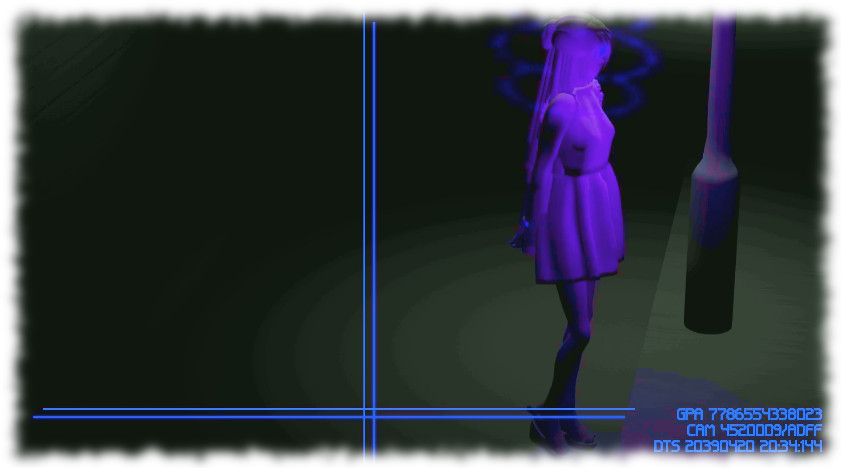
A further striking element of the series is its presentation. Outside of the virtual realm, the world is predominantly monochrome: dark skies, dark pavements and floors, grey walls, grey people. Where colour is used, it tends to emphasise the presence of technology which, as we see as the scene unfolds, perhaps isn’t entirely benign. Dialogue is also minimal (and non-existent in the first segment, although the language can be strong when it does occur in later segments), a technique which further draws the audience into the unfolding story.
The first series has taken Pryda around a year to put together; work which unsurprisingly has required her involvement with a lot of tools – Blender for modelling, GIMP, Audacity for the distinctive audio, etc. The remaining segments will be released on YouTube at two-weekly intervals, with the last release occurring just before Christmas. There is also an introductory teaser, which can be seen here.
Nor does it end there. “There is a lot of background content and a coherent framework for world in which the story is set, ” Pryda told me. “Much of this background will play out over the two series following the first.”
So, if you’re on the look-out for a new and quite stylish sci-fi, which intertwines a number of themes in a unique style and approach, why not give Future Shock a go? The first segment is embedded below, and the series can be found on Pryda’s YouTube channel.
I’ve been following – albeit from a distance – the creative talent of young film-maker and machinima maker Radheya Jegatheva. The son of Second Life colleague and friend, Jayjay Zinfanwe (of University of Western Australia fame), Radheya has shown an extraordinary gift for story telling through video and animation.
In May I wrote about Radheya’s success – helped in part by Second Life residents – in the #MyFreoStory video competition. Now the 17-year-old’s latest work has taken no fewer that three national and international prizes.
Entitled The Tyger and created using iClone 3D animation software, is a visual / aural telling of William Blake’s classic 1794 poem, The Tyger. At the end of June it received the Best Film award at the Asiagraph Reallusion 3D International Film Competition in Taiwan. Just 24 hours later it received the Best Junior Short Film award at the Warburton Film Festival, based in Victoria, in his home country of Australia, before also gaining the Best Australian Cinema Now award at the Sydney World Film Festival.
Radheya Jegatheva: young filmmaker and machinima maker
The Tyger is very much a family affair. Radheya used iClone to create the visuals seen in the film, including the stunning tiger, seen in the still in the banner to this piece. He then enlisted the help of his father to narrate the poem over the images.
Radheya selected the poem as being symbolic of a piece of very personal family history.
“The poem is a favourite of mine,” Jayjay explained as we discussed his son’s successes. “My mum would recite it to me when I was young. Then Radheya learned from his grand-aunt that the poem was the reason my mum and dad met.”
Jayjay continued, “My mum won an oratorical competition reciting The Tyger. Her prize was the opportunity to act in a major stage drama – and my dad was acting in that same drama. So they met purely because of The Tyger.”
Nor do things end there. “We’ve been informed that Tyger, Tyger has been selected for showing at two further international film festivals,” Jayjay told me.
In August, the film will be shown at the International Festival of Animated Film for Children and Youth, which will be held in Nis, Serbia – and Rayheya’s work is the only non-European selection made by the festival organisers in the 13-17 year-old category. Then in November, it will be shown at the 6th Festival Internacional Pequeno Cineasta, Rio de Janeiro, Brazil.
The film has had an impact in other ways as well. Tim Heath, Chair of the Blake Society in London, contacted Radheya to say the Society would be covering the film is their newsletter. Radheya and his family have also been contacted by universities and schools from across Europe, North America, Asia, Africa and Australia, stating they would like to use the film as a teaching tool in classes on literature, poetry and romanticism, as it presents a new means by which poetry can be interpreted.
This is another remarkable set of achievements for Radheya, and I’d like to take this opportunity to pass on my congratulations to him on all of his recent success, and to wish him all the best for the upcoming festivals in Serbia and Brazil.
A new Christian-focused machinima series filmed in Second Life, has its première on Monday, February 1st 2016. BreakOut Joyful Noise will air on the gospel / urban Dynasty Television and Charter Cable 198.
The series “centres on the town of Release and its residents. A cosy community filled with societal issues that resident’s experience. This series will address those topics that individuals struggle with in life and provide story lines that will encourage viewers to face those issues head on through the way of Jesus Christ.”
The 30-minute pilot focuses on 24-year-old Joy Jamison who works in a high-end boutique who is struggling with matters of self-image and faith.
The show has been written and produced by Exquisite Xpressionz, a group of Second Life residents comprising Keyia Hynes, Twylitedawn Keng and Wisdom Price, who have set themselves the goal “to educate, inspire, and entertain all users of the secondlife [sic] community; bridging the gap by promoting real world awareness and positive change.” Filming is by Rockford Ewing / Double Trouble Video Productions, with music by Creative Nation.
BreakOut Joyful Noise premières via stream on Dynasty TV / Charter Channel 198 at 06:00 SLT on Monday February1st, and features its own page on the Dynasty TV website. A teaser / trailer has also been produced, and is embedded below.
With the prize pool standing at over L$560,000, the list of entries in the University of Western Australia’s (UWA) Pursue Impossible Art & Film Challenge continues to grow while the clock slowly counts away the days to the deadline for submissions at midnight SLT, on October 31st, 2015.
The Pursue Impossible theme is in recognition of the UWA adopting Pursue Impossible as their clarion call to students in the physical world to achieve their fullest possible potential by studying with the university.
Within the competition, entrants are invited to consider what their “impossible” might be. Perhaps it is the goal they have achieved or which they’ve seen achieved by their loved ones, friends or family; or perhaps it is a consideration of those things we deem to be impossible, but which we may still pursue and conquer as individuals or collectively. Or maybe it is an illustration of how virtual environments empower people to visualise, create and push the boundaries of the possible. There are many options and opportunities to consider.
Art submissions must have COPY permissions, and must not exceed 150 LI, and must be free from any copyright issues – if third-party content is used in an entry, permission must and been sought and granted from the creator for its inclusion in the Challenge. Machinima entries should preferably no longer than 4 minutes and 30 seconds, must be specifically made for this challenge. All submissions should allow casual viewers to interpret how the theme is represented, or provide a means by which the piece can be understood in the context of the challenge theme.
For full details on the challenge, including submission guidelines and rules, please refer to the UWA’s Pursue Impossible announcement.
As well as the art and machinima category prizes, there will also be special cash prizes for audience participation. The prize pool for this currently stands at L$15,000 apiece for the two categories (art and machinima).
I’ll have news on the audience participation requirements once they have been officially announced by the UWA directly. In the meantime, don’t forget to check the art entries at the UWA Gallery and the video submissions on the UWA blog.
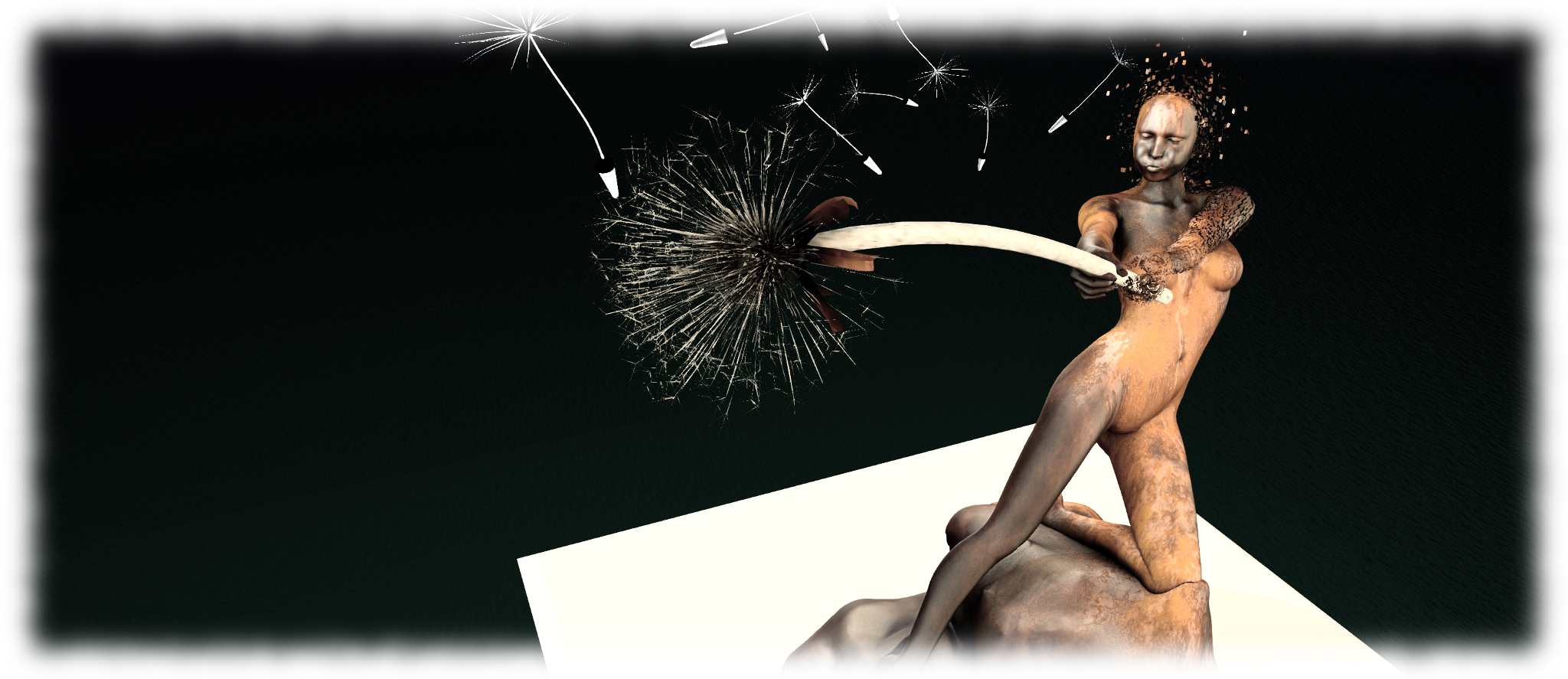
With the prize pool now standing at over L$560,000, the first entries in the University of Western Australia’s Pursue Impossible Art & Film Challenge have gone on display / are available for viewing.
As I’ve again had the honour to be a part of the jury this year, covering the event is something of a balancing act: as entries continue to be made, I may not be able to cover all of them; at the same time, as a blogger, I hope to be able to help promote the event and encourage people to both take part and see the art and machinima. So with this in mind, entries, etc which may be highlighted in this pages in the coming weeks should not be taken as any indication or personal preference on my part insofar as judging the challenges is concerned; but rather to illustrate any updates that appear.
Delain Canucci: “Connecting with the world and unite” – Pursue Impossible
Entrants to the Pursue Impossible are free to submit to either the art category (1 item per entrant) or the machinima category (multiple entries if they wish) – or both. They are invited to consider what their “impossible” might be.
Is it, for example, the goal they have achieved or which they’ve seen achieved by their loved ones, friends, family or heroes achieved and which has sought to inspire them? What have they overcome which they once thought to be impossible? How do virtual environments empower people to visualise, create and push the boundaries of the possible? What are those things we deem to be impossible, but which we may still pursue and conquer as individuals or collectively? What are the impossibilities of the mind or heart or soul? Do we see the seemingly impossible and try to overcome it, or do we allow it to overpower us?
Art submissions must have COPY permissions, and must not exceed 150 LI, and must be free from any copyright issues – if third-party content is used in an entry, permission must and been sought and granted from the creator for its inclusion in the Challenge. Machinima entries should preferably no longer than 4 minutes and 30 seconds, must be specifically made for this challenge. All submissions should allow casual viewers to interpret how the theme is represented, or provide a means by which the piece can be understood in the context of the challenge theme.
For full details on the challenge, including submission guidelines and rules, please refer to the UWA’s Pursue Impossible announcement.
The closing date for all submissions is midnight SLT, on October 31st, 2015, and winners will be announced in December 2015.
As well as the art and machinima category prizes, there will also be special cash prizes for audience participation. The prize pool for this currently stands at L$15,000 apiece for the two categories (art and machinima). So even if you’re not submitting an entry yourself, it’s worth visiting the UWA’s gallery space to view the art entries and keeping an eye on the UWA blog and the SL Artist UMA MachinimUWA VIII pages for machinima entries.
I’ll have news on the audience participation requirements once they have been officially announced by the UWA directly.




 Inara Pey: Living in a Modemworld