Rebirth … together!

2Lei Rebirth together: Mistro Hifeng
2Lei Rebirth … together: Mistro Hifeng

Open now, and with events running through until the end of November 2014 at LEA 6, under the umbrella of the LEA / UWA Full Sim Art series is Rebirth … together, presented by the 2Lei collaborative.

Now in its fifth year, 2Lei began as a project involving artists, gallery owners, musicians, etc., with the aim of raise awareness and disseminate events related to the International Day for the Elimination of Violence Against Women, which falls on November 25th.

Rebirth ... together: Krikket Blackheart
Rebirth … together: Krikket Blackheart

The installation / event is described by the organisers thus:

This year’s theme is “Rebirth… together!”. We cannot just denounce: we must dare to hope, to dream, to act, to make the dream come true and springboard for new dreams. Dreams in which men and women cooperate together to build a more just, more healthy society, in which violence does not represent the instrument upon which to convey anger, frustration, fear, and aggression.

We wish every woman’s heart beat be as strong as the drum of life. No woman will be forgotten or left behind. The “Rebirth” marks the passage of the works of artists who are exhibiting in these spaces, and the performers who will take turns on stage. The program is rich and detailed, and offers many insights. Now we want to talk about “rebirth”. A rebirth towards a world where people can live, breathe, and dream without the fear of having to defend themselves. We are reborn together in front of each painting, opera, photograph, theater or musical show that a fragment of this kaleidoscope of images, desires, dreams, passions, and every project of rebirth involves. Primarily this involves the denunciation of what is evil, of what is burning, what clip wings, and cuts short lives. Then, after the denunciation, comes the dream: the work, the strength to believe it, and to make it happen together. “TOGETHER” is the keyword of a true renaissance. And we will be the first to give testimony. Men and women who, together, believe in this project and have put in place. Thank you for sharing this journey with us.

Rebirth … together features works by artists from across Second Life and the world at large, spread across several gallery areas within the region, both at ground / water level and on floating islands overhead. All offer a mixture of 2D and 3D art, with pieces focusing on the many different ways in which violence against women can take, be it physical, emotional, mental, verbal, etc., some of which are quite striking in context and form. There are also a number of event areas scattered through the installation, which will be active through most of the remaining 10 days of the event.

Rebirth ... together: LookAtMy Back
Rebirth … together: LookAtMy Back

The programme for these events days comprises (all times SLT):

  • Friday, November 21st, 2014:
    • 13:30: “RELIVE” – Art exhibition by various artists (Duna Gant) featuring music by Morlita Quan and Ultraviolet Alter
    • 14:30: – A tour of the 2Lei installation
  • Saturday, November 22nd, 2014:
    • 13:30: SoloDonna even area – Sniper Siemens – Elettra Beardmore
    • 14:45: Music by Andromeda Slade
  • Sunday, November 23rd, 2014:
    • 13:30: Live concert by Musicante Malandrino with a Surprise Guest!
  • Monday, November 24th, 2014:
    • 13:30: L’Arme d’Amour (Viola Tatham, Andromeda Slade) present I Loved Her More Than Her Life, a one-act play written by Cristina Comencini
    • 14:00: Rosanna Tafanelli, Francesco Bonetto, Lapsus Weinstein and Alejandra Balhaus discuss issues of violence against women
  • Tuesday, November 25th, 2014:
    • 13:00: Reading and music by Libriamo Tutti – Imparafacile (Imparafacile group)
    • 14:00: Idee Libere Alternative (Francy Lytton, MarinellaMonti) present a reading of Women in rebirth by J. Folla edited by Margherita Hax, followed by a live concert by Trinity Ermingtrood and then poems by Cordediseta Rosea
    • 15:30: Official closing of the live events for this year’s 2Lei
  • Sunday, November 30th, 2014:
    • 11:00: STAND!  – the SL Fashion World Stand with 2Lei (by Mila Tatham, Aliza Karu, Bodza Blackadder, Absinthe Montenegro)
    • 13:30: Particle Show by Tansee Resident with music by Andromeda Slade
    • 14:30: Break all – together!
Rebirth ... together: Rubin Mayo, stage set for Donna in Rinascita
Rebirth … together: Rubin Mayo, stage set for Donna in Rinascita

Since 2012, 2Lei has offered events throughout the year and has participated in other SL activities with featured art exhibitions. In 2014, for example, 2Lei was represented at the SL11BCC celebrations with works by Paola Mills, and a mesh sculpture composed by Moore Tone, with creative contributions of all 2Lei committee members. Those interested in tracing the history of 2Lei may wish to visit the retrospective display area in the south-east corner of the region.

Related Links

The chaotic balance of a cosmos

Chaos, Kosmos
Chaos, Kosmos, LEA21

Chaos, Kosmos, now open at LEA21, is Giovanna Cerise’s latest full region installation. It offers a fascinating environment intended to reflect the idea of the relationship between the cosmos and chaos as seen through the lens of ancient Greek cosmology; the one (the cosmos) having arisen from the other (chaos), and which itself is still reflective of its origins, prompting generations of thinkers, philosophers and scientists to understand its structure and order, and impose upon it an order of their own.

This is an incredibly intricate – and at first glance, no pun intended, chaotic – installation. Structures exists on multiple levels, each comprising a mix of solid-looking and semi-transparent prims. All appear haphazard in design and placement – but all have an underlining organised structure, arising from the use of algorithms in their creation. Flowcharts representing these algorithms lie under, around and on the structures, further suggesting the orderliness of their form and design in contrast to their undisciplined appearance.

Chaos, Kosmos
Chaos, Kosmos, LEA21

Givanna describes this relationship thus, “the beautiful, good and rational order of the world, which always comes from a messy background. The Chaos is not definitely passed by the construction of an intelligible world and of the shapes, but it still continues to be as the foundation on which also the Kosmos stand.”

It’s a very visual representation of a complex concept  – one which, I have to say, works very well. So much so that I’d suggest that more than one visit will be required to understand all of the subtle complexities in the design, and that in doing so, the visitor is liable to have their perceptions challenged and challenged again – just as the cosmos has persistently challenged us to re-evaluate our thinking about it.

Chaos, Kosmos
Chaos, Kosmos, LEA21

Order from disorder – or at least the unformed – also arises in art, through all its many mediums, as Giovanna notes, “It could be understood as a creative act of the artist who derives a sense and an aesthetic and meaningful order from the formless matter.” Again, this is strongly reflected in the nature and style of this installation as a whole, and also in much subtler aspects of the work. One element of the piece, for example, features a design representative of a human hand on which neumes appear, a clear reference to music, reminding us of the link between music and mathematics, here forming almost tonal algorithms which echo the foundations of the installation itself.

The best way to observe the piece as the artist intended is to set your windlight to sunset or midnight, although other lighting works well with many of the structures; then use the teleport system (indicated by the compasses) to move around the elements of the build in the order Giovanna desired. Once you have completed an initial circuit, I’d recommend spending a little time flying and observing for yourself, as there is a lot to seen beyond the preset teleport destinations.

Chaos, Kosmos
Chaos, Kosmos. LEA21

All told, an intriguing installation – one which will open to the public through until the end of December 2014 as a part of the current round of the LEA’s Artist In Residence programme.

Related Links

LEA open AIR 8 land grant applications

LEA_square_logo_60Applications are now open for round 8 of the Artists in Residence (AIR) programme operated by Linden Endowment for the Arts.

Twenty regions (LEA10 through LEA29), donated by Linden Lab and managed by the LEA, are offered under the AIR programme, and successful applicants will be given the use of one full region for a period of five months. The region may then be used on an individual or group basis for such diverse activities as:

  • Full sim exhibitions and / or immersive installations
  • Curated projects, especially those which have a connection to physical exhibitions and events (mixed reality).
Sister Planet, LEA AIR 7 entry by Kimika Ying - review
Sister Planet, LEA AIR 7 entry by Kimika Ying – review

Artists are asked to take no more than 3 months to execute their build, so that their installation is open to the public for at least the last 2 months of their grant. However, artists may also open their installation ahead of the three-month build deadline, and many artists in the past have used their land to have multiple exhibits.

The timeline for application as it currently stands is:

  • Application deadline: November 30th, 2014
  • Notification by: December 15th, 2014
  • Sim handover and public announcement: January 1st, 2015
  • End of round: June 30th, 2015.

The application form can be found at the end of the official announcement for AIR round 8. Those needing assistance in completing the form can refer to some guidelines provided by Honour McMillan.

Bread and Roses, LEA AIR 7 entrant
Bread and Roses, LEA AIR 7 entry by Elle Brewster – review

Those wishing to available themselves of a smaller amount of space for art exhibits and projects can apply for space on an LEA core region. These grants run for approximately three months, with parcels / regions available on LEA1, LEA2, LEA4, LEA8 and LEA9.

Related Links


A visit to a Sister Planet

Sister Planet
Sister Planet LEA27

Sister Planet is Kimika Ying’s latest installation at the LEA, and given I enjoy science-fiction and have a bit of an interest in space exploration and astronomy, it’s one that should be right up my street. It takes as its theme what is often referred to as Earth’s “sister planet”, Venus (so-called because it has a similar size, gravity, and bulk composition to that of Earth). But what is presented here is not the Venus known to science today, but rather the Venus science-fiction once presented to us, even as late as the 1940s: a warm, wet planet with verdant rainforests existing under its heavy clouds.

Here, then, is a world from an alternative universe, where human beings have started to explore, establishing a small base on the edge of a verdant rainforest surrounded by hills and strange rocky outcrops, and above which the odd volcano or two pokes its snout.

Sister Planet
Sister Planet LEA27

The forest itself is both strangely terrestrial in nature, and also very alien, while the base camp mixes parts of old rockets with pot-bellied units sitting on spindly legs. Above the trees and beneath the clouds, strange green creatures fly, often chasing large seed pods which periodically drift up into the sky. The creatures have no wings as such, but propel themselves by a sudden spinning motion, which also gives them their name; while under the canopy of trees, other strange flora and fauna reside.

Of course, we now know that all the early hopes of Venus really being a sister planet to Earth have been well and truly dashed; the planet is in fact one of the most inhospitable places in the solar system; yet the old science-fiction stories might, under other circumstances have been right. The orbit of Venus sits just beyond the inner edge of what is called the “circumstellar habitable zone”, or “Goldilocks zone”, the region around a star within which planetary-mass objects with sufficient atmospheric pressure can support liquid water at their surfaces, and thus possibly offer conditions suitable for the advent of life. As such, an exploration of what / if with regards to Venus perhaps isn’t in appropriate.

Sister Planet
Sister Planet LEA27

Sadly, however, I’m not sure that this installation succeeds in doing that; while the blog that  accompanies the installation makes for good reading, chart as it does both the development of the idea and Kimika’s leap into mesh content creation, I’m not sure it achieves anything else. Certainly, as one who very much enjoyed at appreciated Kimika’s Oceania Planetary Park, which formed a part of the fifth round of LEA AIR grants, I came away from Sister Planet somewhat disappointed.

Related Links

Of bread and roses

Bread and Roses
Bread and Roses

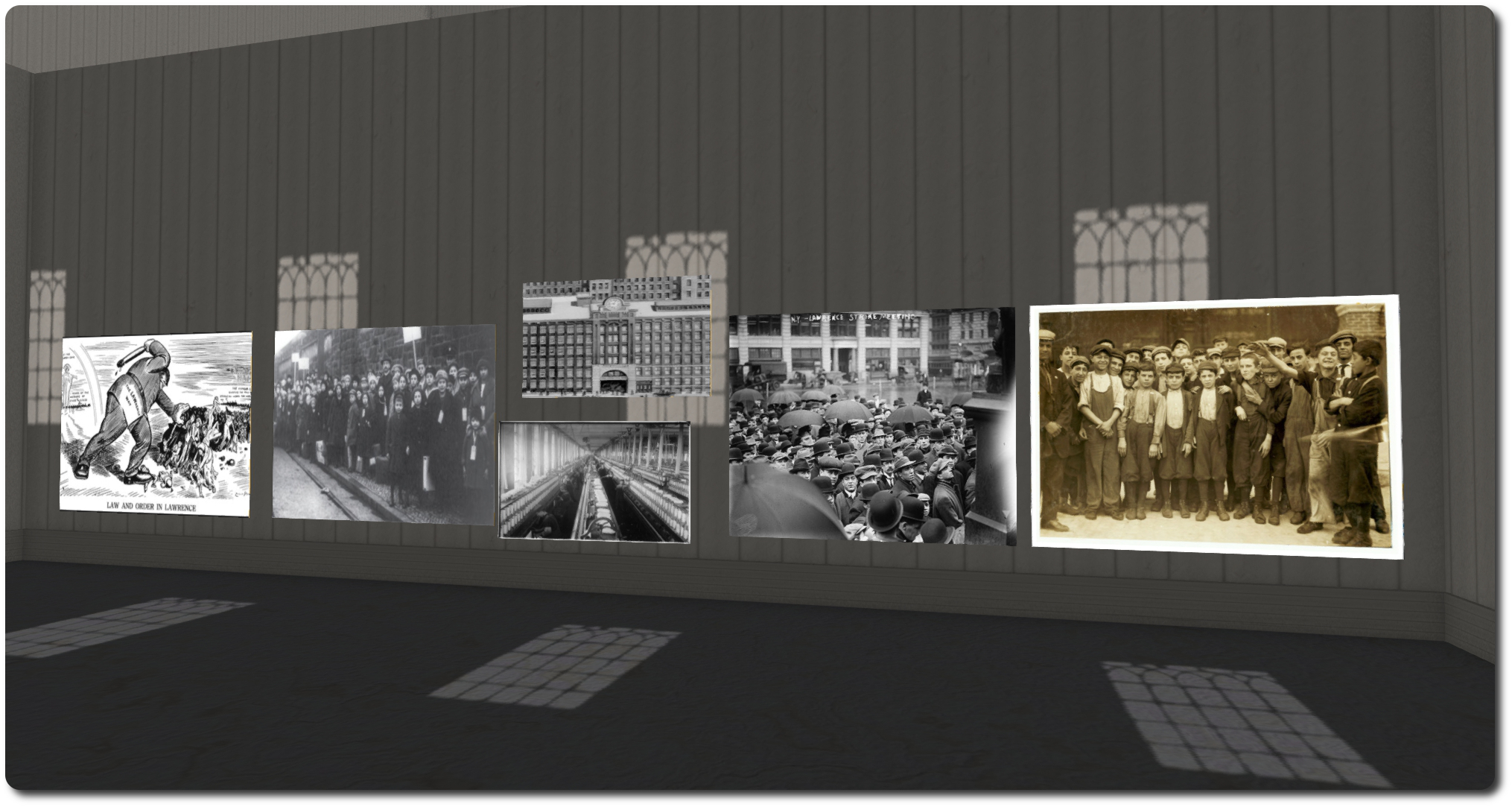
Bread and Roses, located at LEA13, is an interactive, educational installation commemorating the 1912 Lawrence Textile Strike, and which is open now through until the end of December 2014.

The strike, which commenced on January 1st, 1912, was prompted by textile mill owners in the town of Lawrence, Massachusetts, arbitrarily cutting workers pay after a new law reduced the working week from 56 hours to 52. The cut, amounting to around 30 cents, equated to the loss of around three loaves of bread for the already hard-pressed working families in the town (hence one of the strike’s other names: “The Three Loaves Strike”).

To put this in perspective, the staple diet of mill workers and their families in Lawrence was bread and molasses. Meat was a luxury few could afford. What’s more, the conditions were so harsh that the mortality rate for children was 50% by age six, and that 36 out of every 100 mill workers, male or female, were dead by the age of 25. Families were crammed into poorly maintained tenement blocks; thus the pay cut was, to say the least, cruelly severe.

With its largely immigrant population (some 51 different nationalities), the work force in Lawrence had been deemed by more conservative trade unions to be too ethnically divided to be properly organised. However, under the guidance of the Industrial Workers of the World (IWW), representatives of which had been active in the town ahead of the imposition of the pay-cut, the strike grew within a week to encompass some 20,000 workers and ran through a harsh winter prior to both sides reaching agreement.

Bread and Roses
Bread and Roses

The strike particularly came to the attention of the United States as a whole (and the rest of the world) after local police attempted to prevent IWW from sending 100 children from striking families in Lawrence to Philadelphia to stay with the families of supporters of the strike until it had reached a conclusion. Arriving at the railway station, the police drew their batons and began clubbing mothers and children alike, in full view of the press, resulting in Congressional hearings being called.

In the end, the mill owners acceded to the demands of the strike organisers. Pay was raised, working conditions were improved – but it was in the end something of a pyrrhic victory.  The IWW refused to enter into written agreements, allowing the mill owners to slowly but surely take back the concessions made, whilst also removing union representatives from their workforce.

Bread and Roses
Bread and Roses

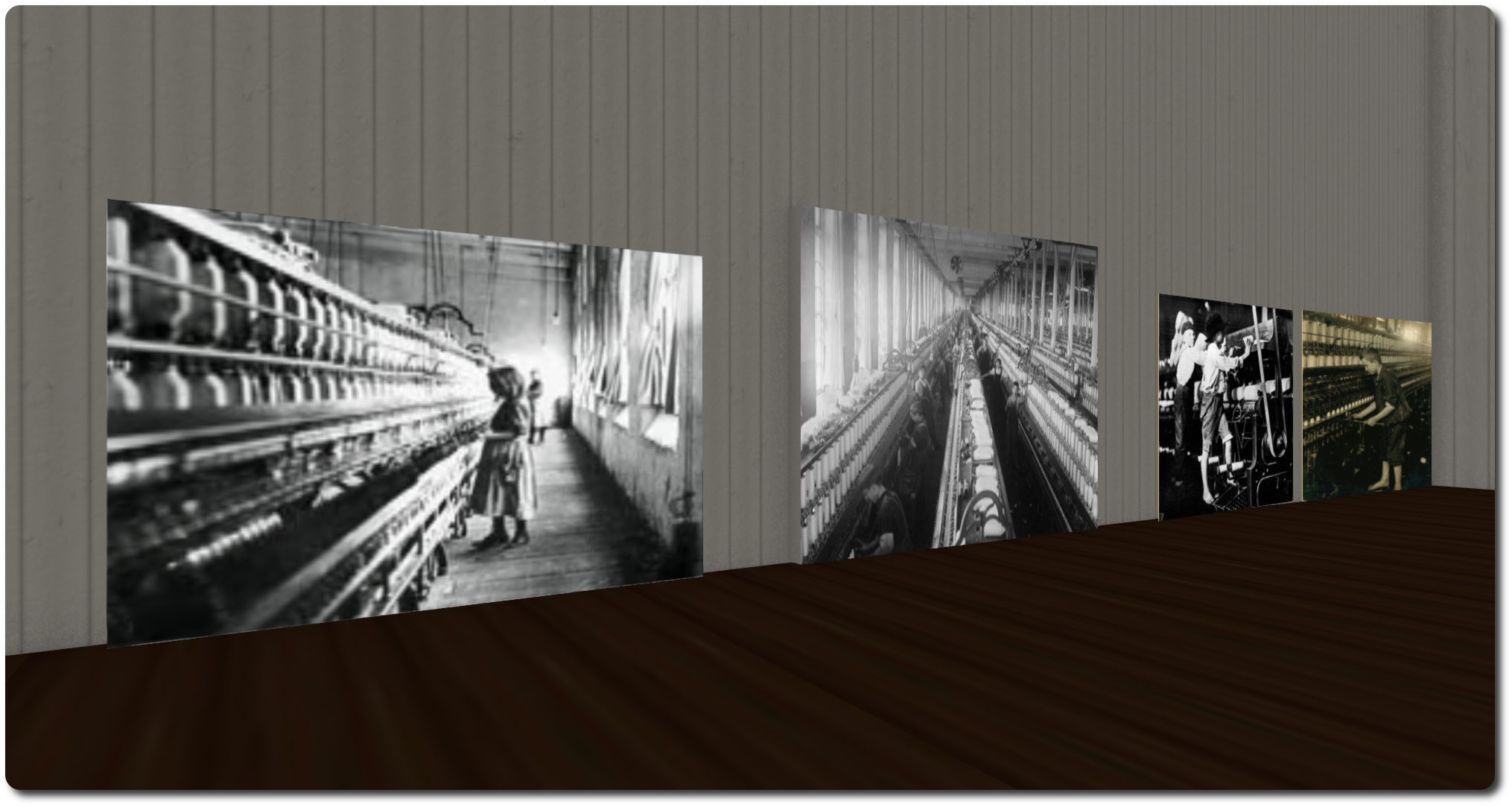
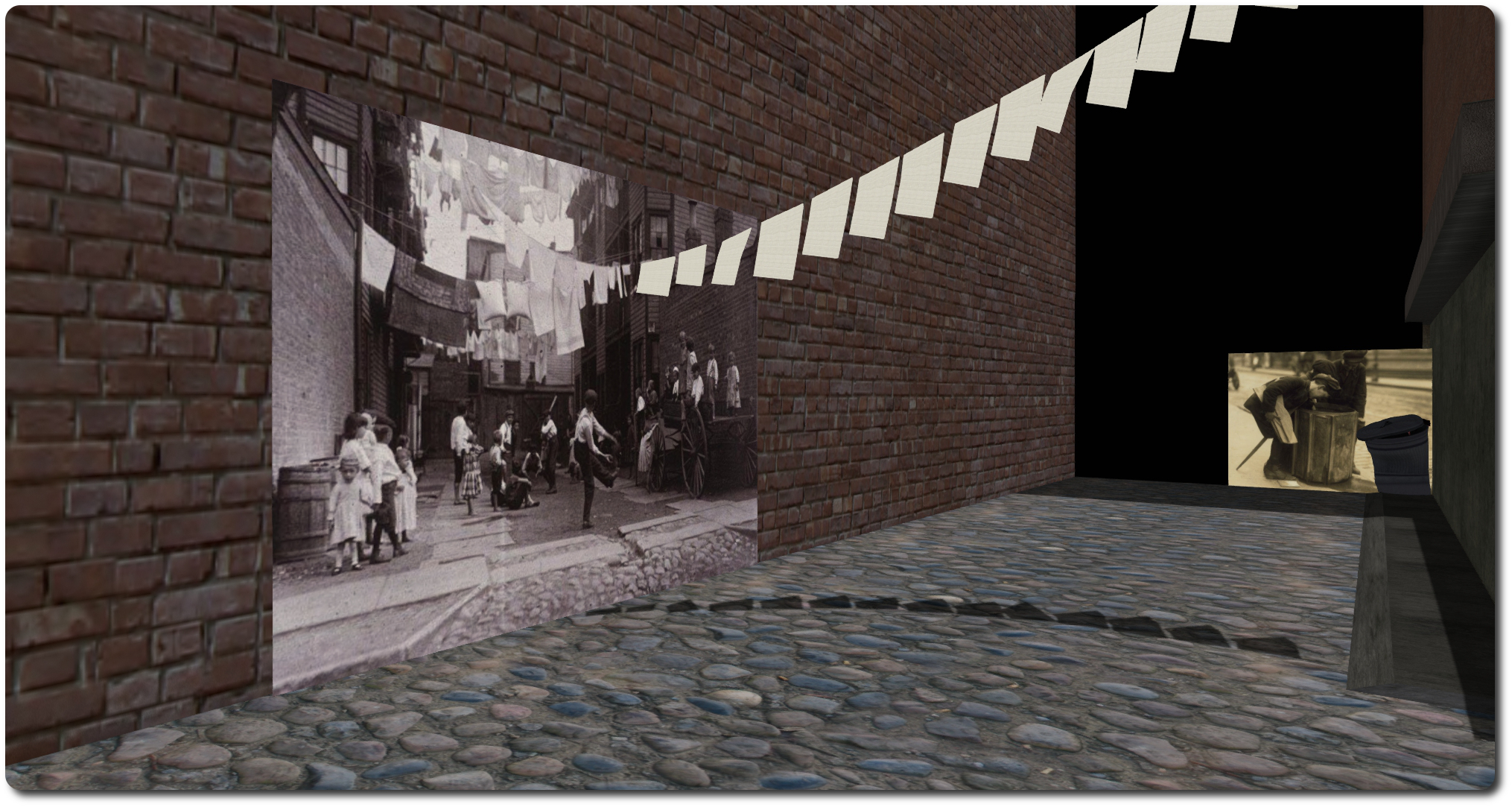
The installation at LEA13 is the brainchild of Canadian-born Dr. Sharon Collingwood (aka Ellie Brewster in SL), a Professor in the Women’s Studies department at The Ohio State University, Columbus, Ohio. It’s an interactive piece, aimed a school students, and offers plenty to do.   A tour through the set takes students through a mill where images provide visual and text-based information on the strike, while large blue buttons provide additional information or questions to be answered by students. In addition, there are media elements and links to external web resources.

As well as examining the strike, the installation also offers some social commentary as well; not just in the strong contrast between the houses and attitudes of the well-to-do mill owners and the frightful conditions endured by the workers – but also in the often entirely blinkered viewpoints of movements which marked the times. The latter is perhaps most clearly demonstrated in the house occupied by the (white, middle-class) suffragettes, citing the strike as an example of the “power” embodied within women, whilst ignoring the black scullery maid in the kitchen…

Bread and Roses
Bread and Roses

An exploration of the installation will reveal it to be seemingly incomplete. There are empty rooms, etc. This is intentional, as it is hoped that students will add to the exhibit throughout its duration. In addition, students can assume one of four identities prior to explore the exhibit and, for the benefit of those who may not be familiar with using Second Life, there is a brief set of tutorial items offering basic instructions on finding one’s way around the viewer.

All told an interesting glimpse into history, and a useful educational tool. Those wishing to use the classroom facilities within the exhibit should contact Ellie Brewster in-world.

And the title of the piece? “Bread and Roses” was another name by which the strike came to be known, after being incorrectly linked to the strike by author Upton Sinclair. The origins of the phrase in fact seem to lie with labour union leader, Rose Schneiderman, who was not directly involved in matter in Lawrence, but who stated during a speech that, “The worker must have bread, but she must have roses, too.” This in turn inspired James Oppenheim to write a poem of the same name, which in turn became a song strongly associated with labour movements and the concepts of fair wages and dignified working and living conditions.


Bread and Roses: Joan Baez and her sister, Mimi Farina, who founded “Bread and Roses”, a nonprofit co-operative organisation, designed to bring free music and entertainment to institutions: jails, hospitals, juvenile facilities, nursing homes, and prisons.

Related Links

Of trees, cultural hysteria and shit

LEA_square_logo_60Over the years, AIR has presented artists with the opportunity of using a full sim region and offering SL residents immersive environments they can enjoy. Over the years, this has led to some fascinating and quite amazing installations which might otherwise never have seen the light of day. Other times, it has to be said, the results have been less than satisfying.

As life has been keeping me a tad busy of late, I decided to combine recent visits to three of the current LEA Artist In Residence (AIR) installations into a single article. Into which of the above two categories they might fall is a matter of individual choice.

Travel Narratives into Trees

Uan Ceriaptrix uses Travel Narratives into Trees to offer visitors insight into the things that please him: natural environments unfettered by the imprint of human intervention, coloured by the natural flora and fauna within it, how these define reality for us, and the responses they evoke within us.

Travel Narratives into Trees, LEA14

Or at least, that’s the intent. On an island which itself has a distinctly organic shape, perhaps a creature swimming in the sea. From this rise a series of leafless trees, almost claw-like in their appearance. Eye-like buds grow from the trees, while your path along the island creature is marked by giant ants, flowers and the skeletal forms of what might be dogs.  The path leads to a smaller island, guarded by crocodiles (complete with a pose, if you fancy being their next meal) and on which can be found a teleporter leading you up to the second part of the installation.

Here sits a desert-like landscape, albeit one with plenty of trees and shrubs, in the midst of which sits a gigantic hollow tree which appears to be part study, part laboratory. Stairs and platforms wind their way upwards inside and around it, leading the visitor to various scenes of labour.

Travel Narratives into Trees, LEA14

Metaphor is strong here, with clues provided by the artist’s biography and the notes accompanying the build. Whether the metaphor measures up to the visitor’s eye, however, is perhaps questionable.

Cultural Hysteria

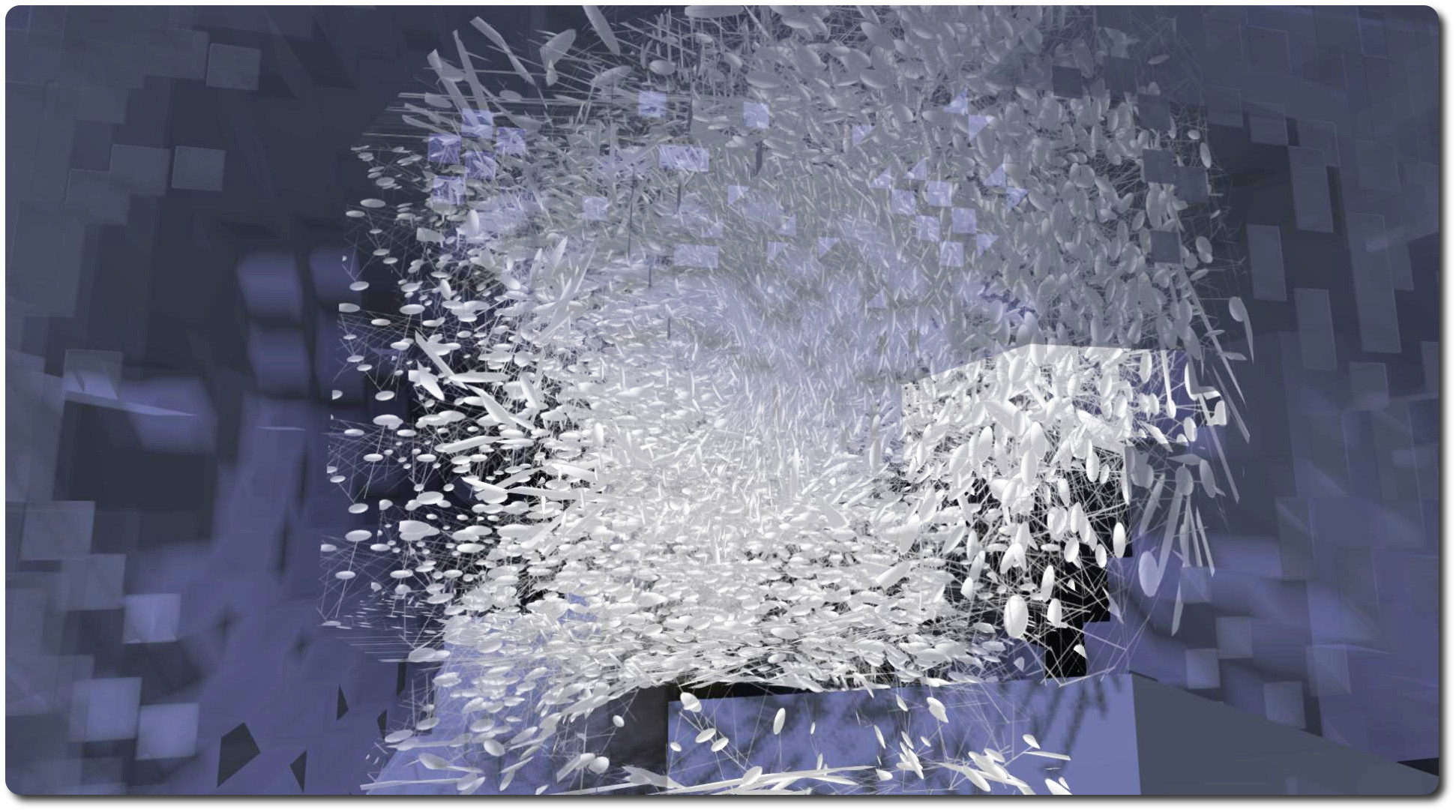
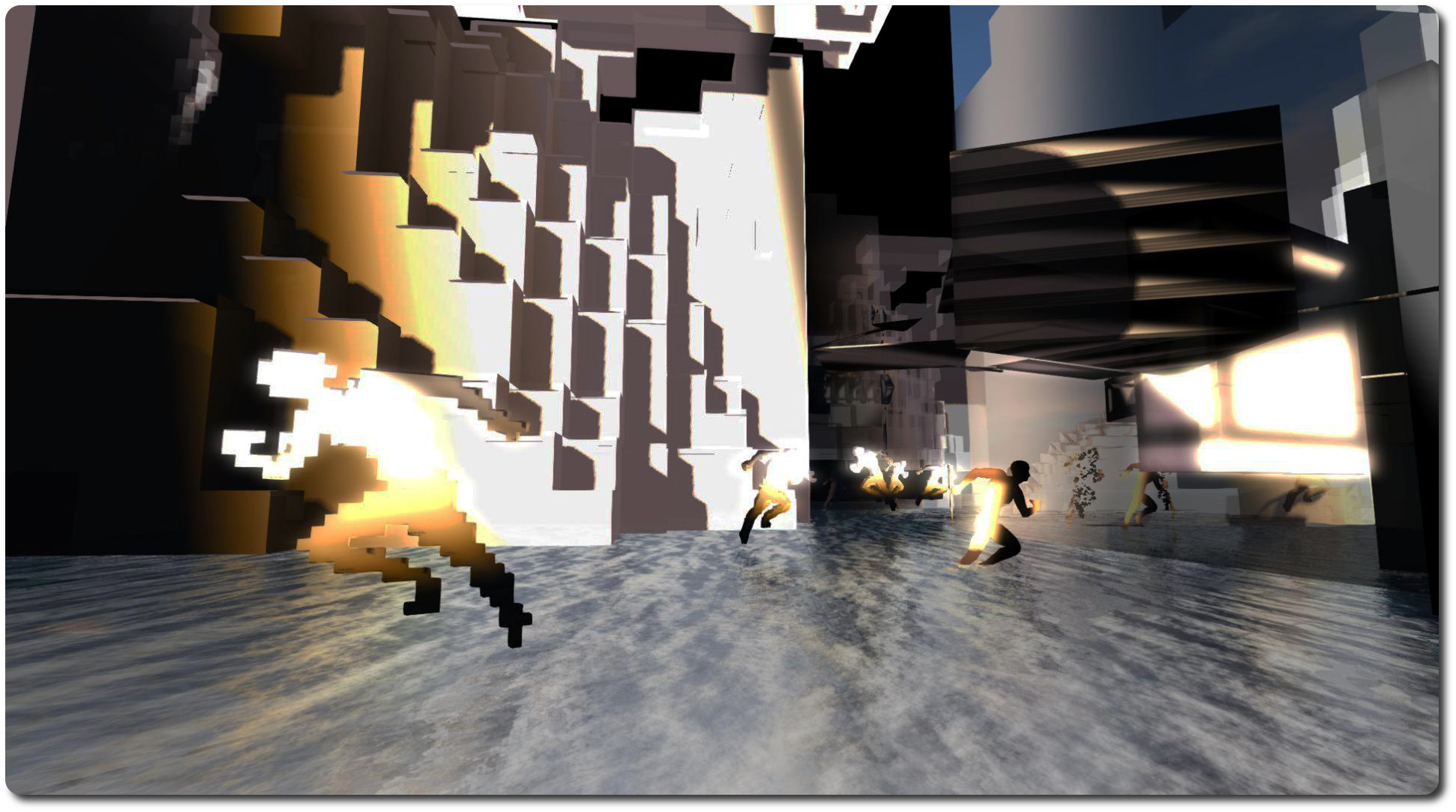
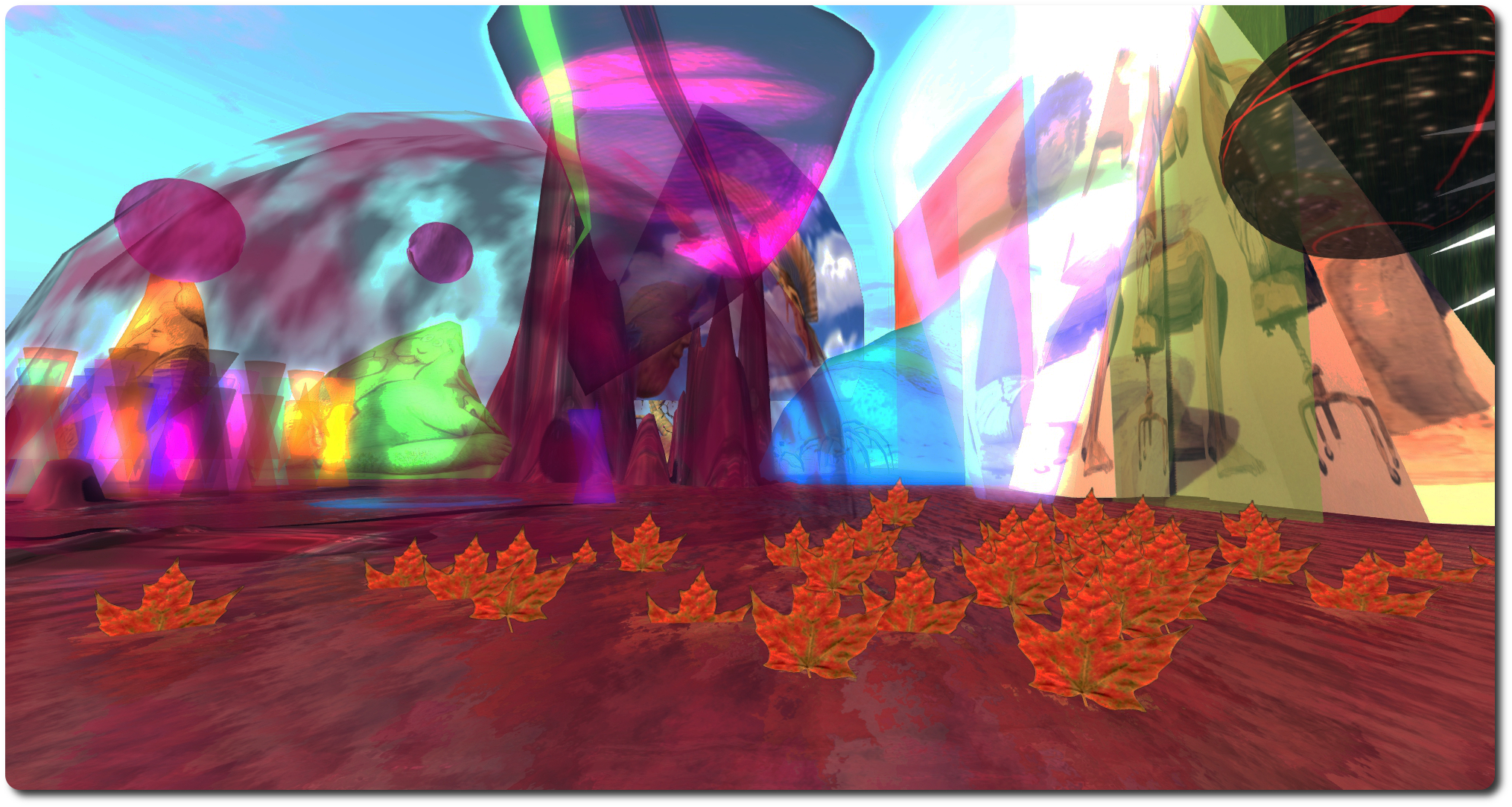
Mario Zecca’s Cultural Hysteria is designed to be a piece that grows of the months of its existence. Starting with the build at ground  / water level, successive platforms will be added over time,  with the installation as a whole used as a venue for music, dance and poetry events.

Cultural Hysteria, LEA15

Mario says of the installation, “the textures in the 3D prims, were derived from a process of  automatic drawing. I used color or scribbles to create a texture or area and then allowed the images to arise. These are images that I have “drawn” from my imagination, the feedback from a lifetime of studying while I enjoyed cartoons, comic books, illustration and academic drawing. While building the installation here I had my avi walk around to get the walking point of view and perspective. My goal is to share and convey, in the form of an immersive visual environment, the unknown, undocumented and unmeasured language of art.”

Cultural Hysteria, LEA15

The result is certainly colourful, and does require a fair amount of camming around to see. The region is filled with prims, some flexi, some static, some of which display static images, others moving images, some of which have glow applied, and so on. In terms of potential appeal, however, I’m really not sure how this installation will strike people. Perhaps we’ll only be able to really make a determination once all the levels have been added and, as Mario promises, the title of the piece becomes evident as they arrive.

Ovis Aries

So to Sheep – or to use the Latin as creator Sowa Mai (aka artist Stephen Beveridge) does, Ovis Aries. From the start, this piece is somewhat unusual and hard to define. Take the description, for example:

Sowa Mai has once again sidestepped his original idea and brought us a complete bastardization of the whole Second Life art ouvre.  With this pile of shit he has left on our doorstep it is safe to say this will be the last time he is invited to participate. Don’t miss it.

Ovis Aries, LEA22
Ovis Aries, LEA22

Well, errm. Yes. Interesting reading. Taking the proverbial pee? And if so, at whom? The artist himself, or the “whole Second Life art ouvre”? It would be easy to conclude the latter, but let’s not be so hasty.

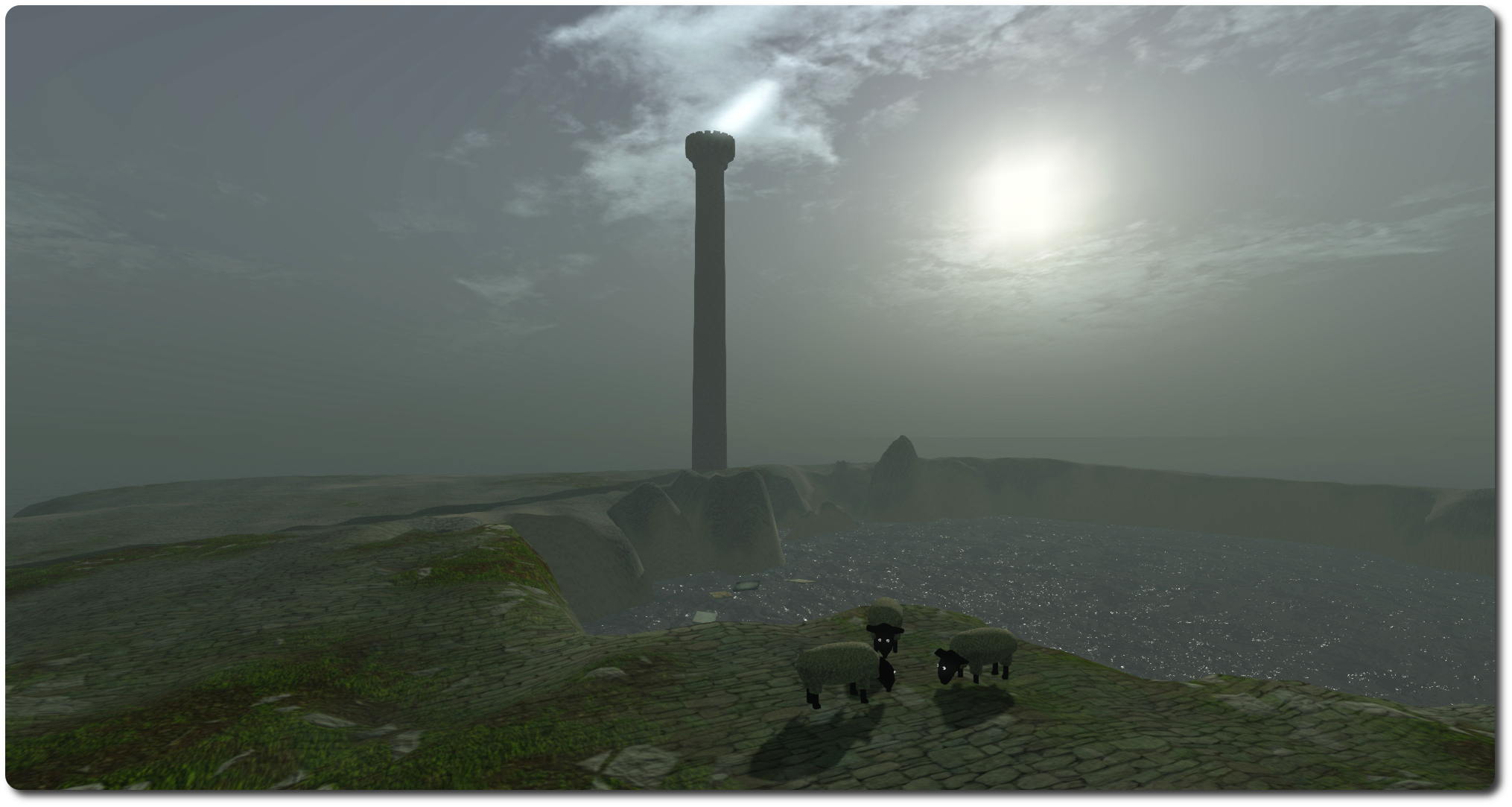
Your arrival is marked by a trio of sheep, one of whom can be chatty. If you’re on your own, it will initially discard with any pleasantries with a curt, “Go get a friend and we’ll talk…”. However, wait long enough, or have someone else present, and the sheep will engage in some ostentatious art babble – a poke, perhaps, at the world of art critics?

Ovis Aries, LEA22
Ovis Aries, LEA22

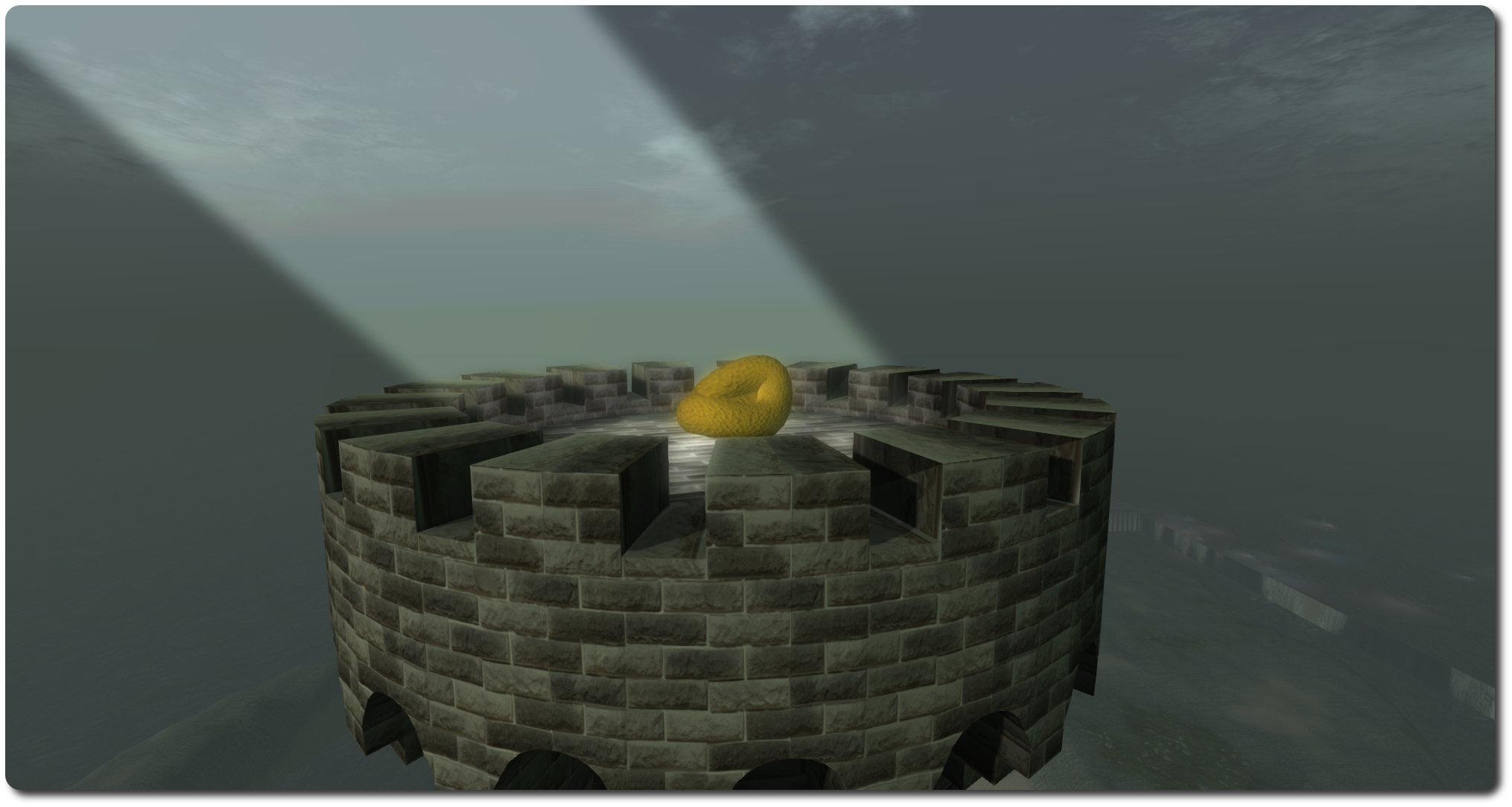
The sheep stand on a barren landscape enclosing, quarry-like, a body of water and shrouded in an evocative, misty windlight. A single stone  tower rises from this landscape, while four transparent prims located to one side of the land offer a sound scape of crowd noises. At the top of the tower, celestially spotlighted sits … a turd, while down just above the water (and below it, for those who look) are images of the artist’s real-life abstract art.

Again, metaphor runs strong here, right down to the title of the piece. For those looking for a clue as to intent of this piece, a note card from the artist available at the landing point might hold a clue or two, dwelling as it does on issues of judgement. There is also a hint of questioning identity as well, found both within the note card and perhaps in the way the images of the artist’s work are presented.

Given that judgement does play a role in the artist’s definition of the work, I’ll leave it to you to form your own opinion of this installation – exactly as he intended.

Related Links