When Life Gives You Apples…

When Life Gives you Apples ... Run! - LEA 6
When Life Gives you Apples … Run – LEA 6

Now open at LEA 6, in what is the final installation under the UWA’s Full sim Art series as we’re currently familiar with it, is Rebeca Bashly’s When Life Gives You Apples … Run

As Jayjay Zifanwee notes while introducing the piece in the UWA blog, it is fitting that Rebeca should be the final artist to participate in the Full sim Art series in its current format; in 2011, she was the very first artist to participate in the series – indeed, in any LEA exhibition – when her remarkable interpretation of Dante’s Inferno opened in October of that year (my review of which you can read here).

When Life Gives You Apples … Run Offers a provocative look at the subject of the abuse of women, either by others or by themselves.  “Looking at various myths, legends and fairy tales, apple seems to be pretty unfortunate for a woman. When an apple appears in a story, you know that something will go bad,2 Rebeca says of the piece. “From Eve, thru Greek mythology to Snow White there was always a catch with an apple. It is beautiful, delicious, tempting, seductive. A Perfect disguise for all bad that can come. I use it as a symbol for the monstrosities that woman too often don’t recognise as such in its early stages.”
When Life Gives you Apples ... Run! - LEA 6
When Life Gives you Apples … Run – LEA 6

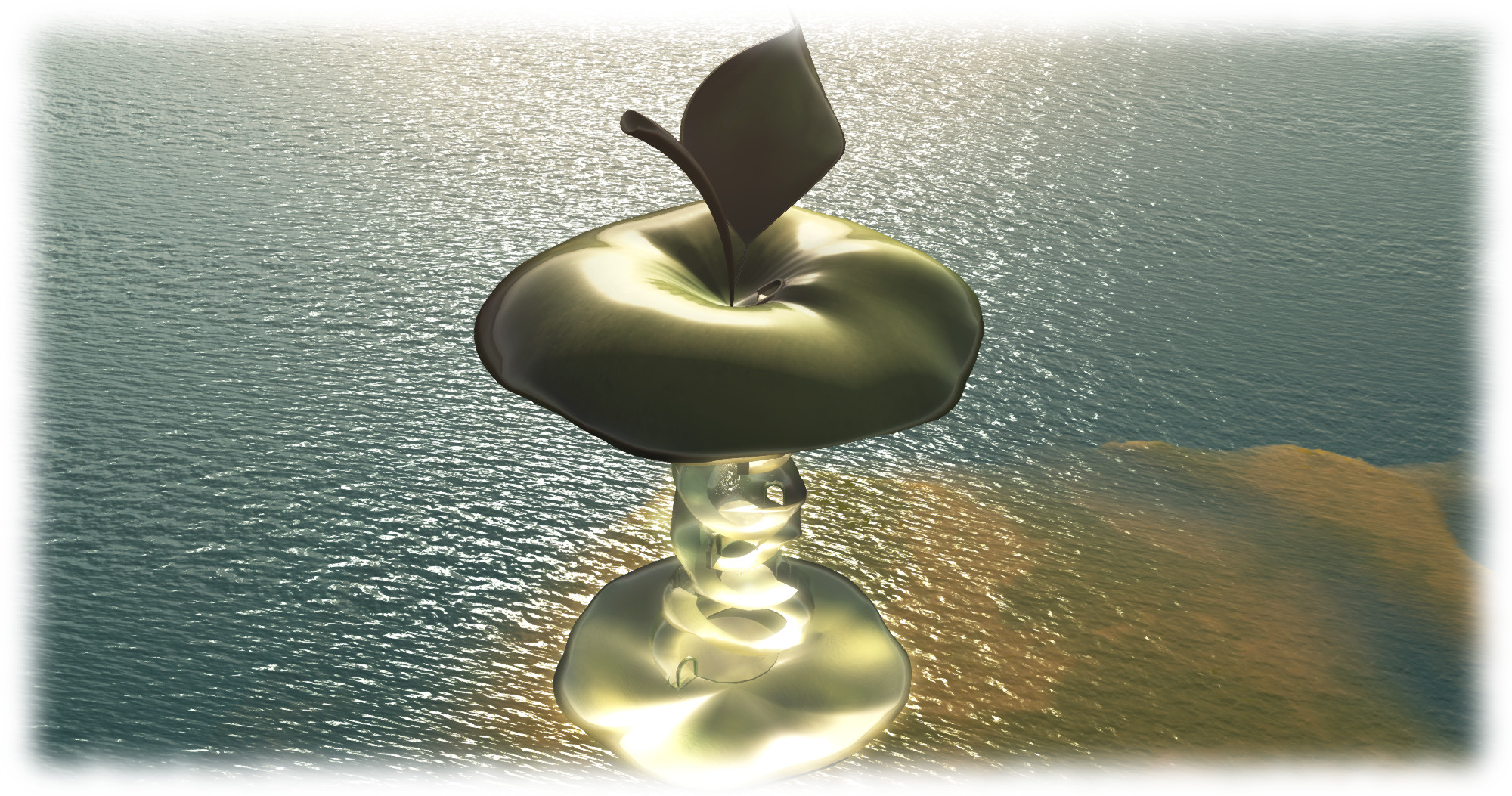
And indeed, the central part of the installation is – an apple. A quiet incredible apple in fact – or at least the core of one, as it has clearly been eaten. Constructed of mesh and over 70 metres tall, the apple sits on the ground, stalk pointing to the sky, the uneaten flesh at its lower end serving as the arrival point, where a smaller apple sits, offering visitors an introductory note card.

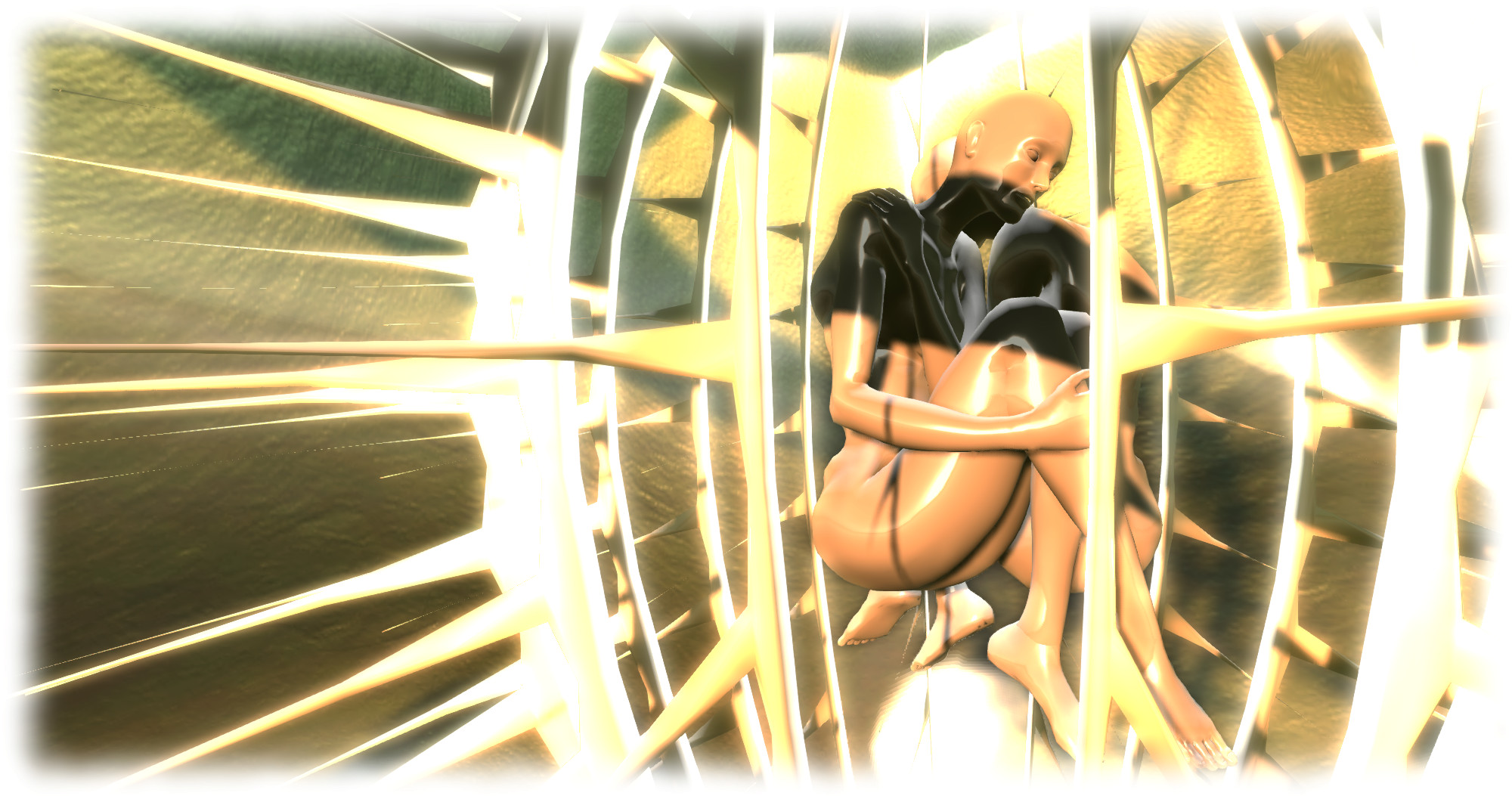
Winding up through the the core of the apple is a tunnel visitors are asked to follow.  This leads the way up to a couple of teleport platforms at different levels within the apple’s core, a sculpture in occupying the space between them; and it is by taking these teleports that the visitor is led to the parts of the installation dealing more directly with the theme of abuse (or perhaps “subjugation” might be an equally valid term) either inflicted from within or without.
When Life Gives you Apples ... Run! - LEA 6
When Life Gives you Apples … Run – LEA 6

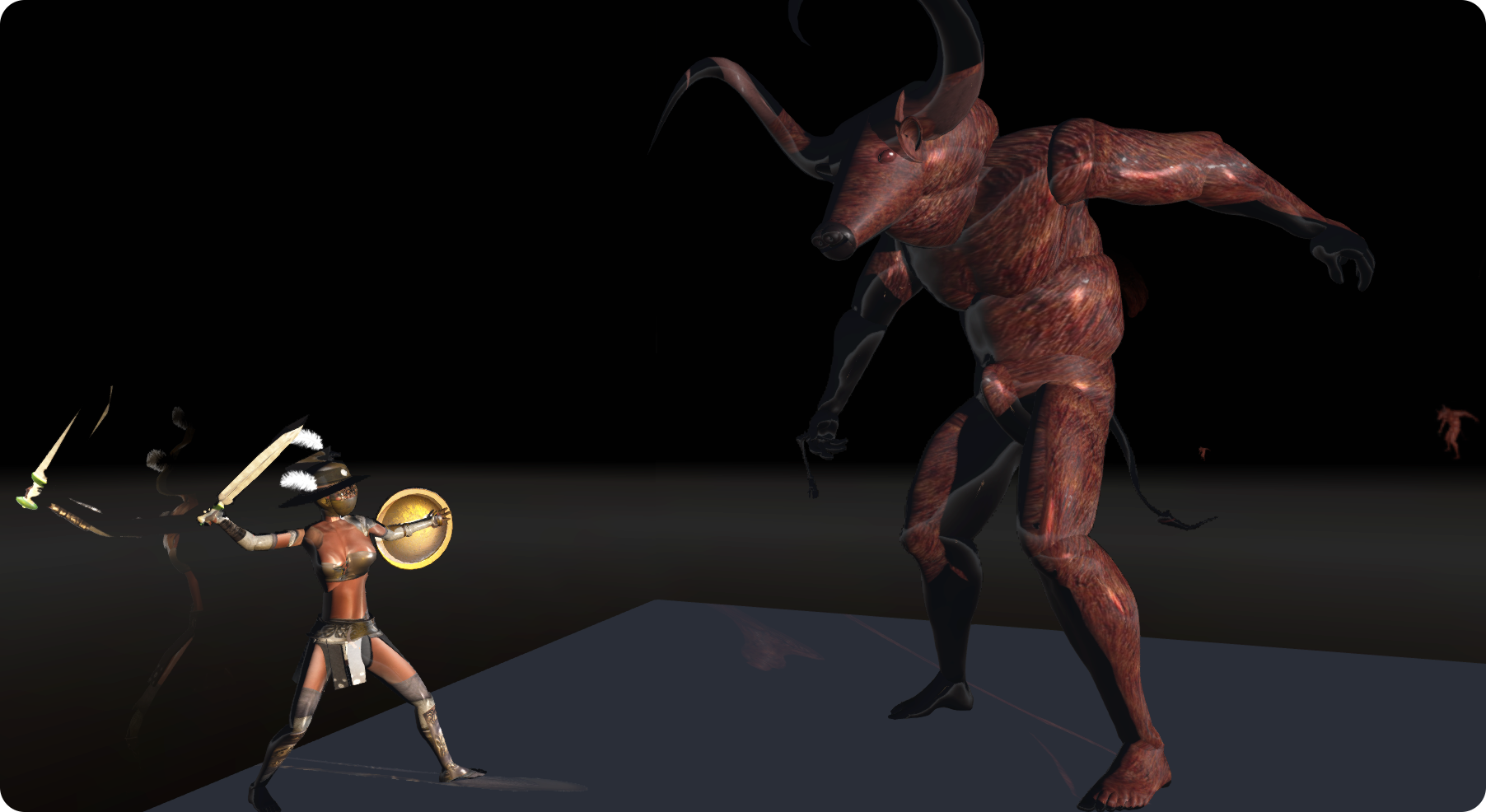
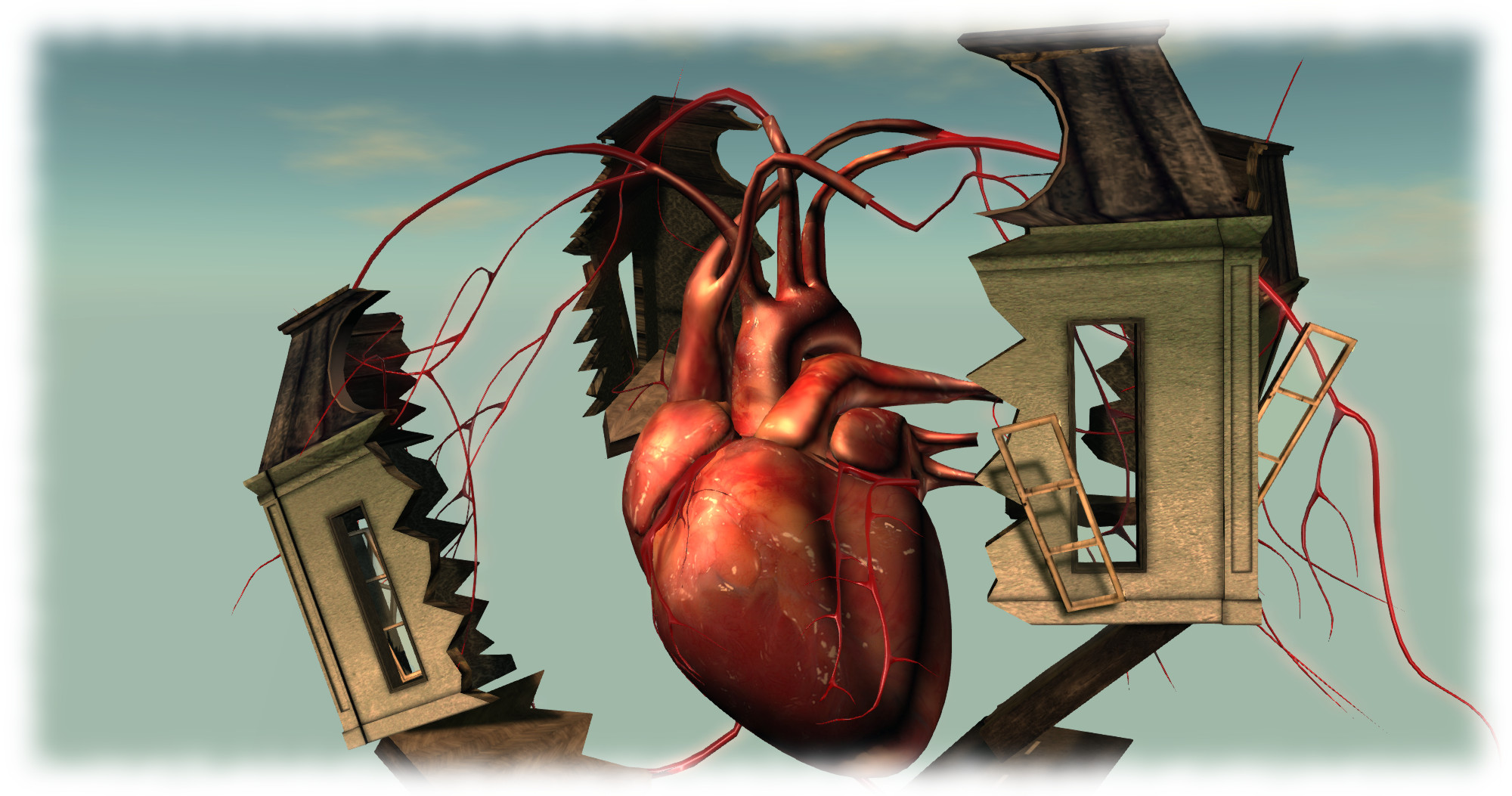
In the first, Home Sweet Home, we see a house being torn apart by a giant heart, both suspended above an open road – itself an image of freedom. The accompanying story suggestive of a person caught in a relationship marked by the abuse of lairs, deceptions, stories, words, finally breaking the circle and finding freedom in herself and in the world at large.

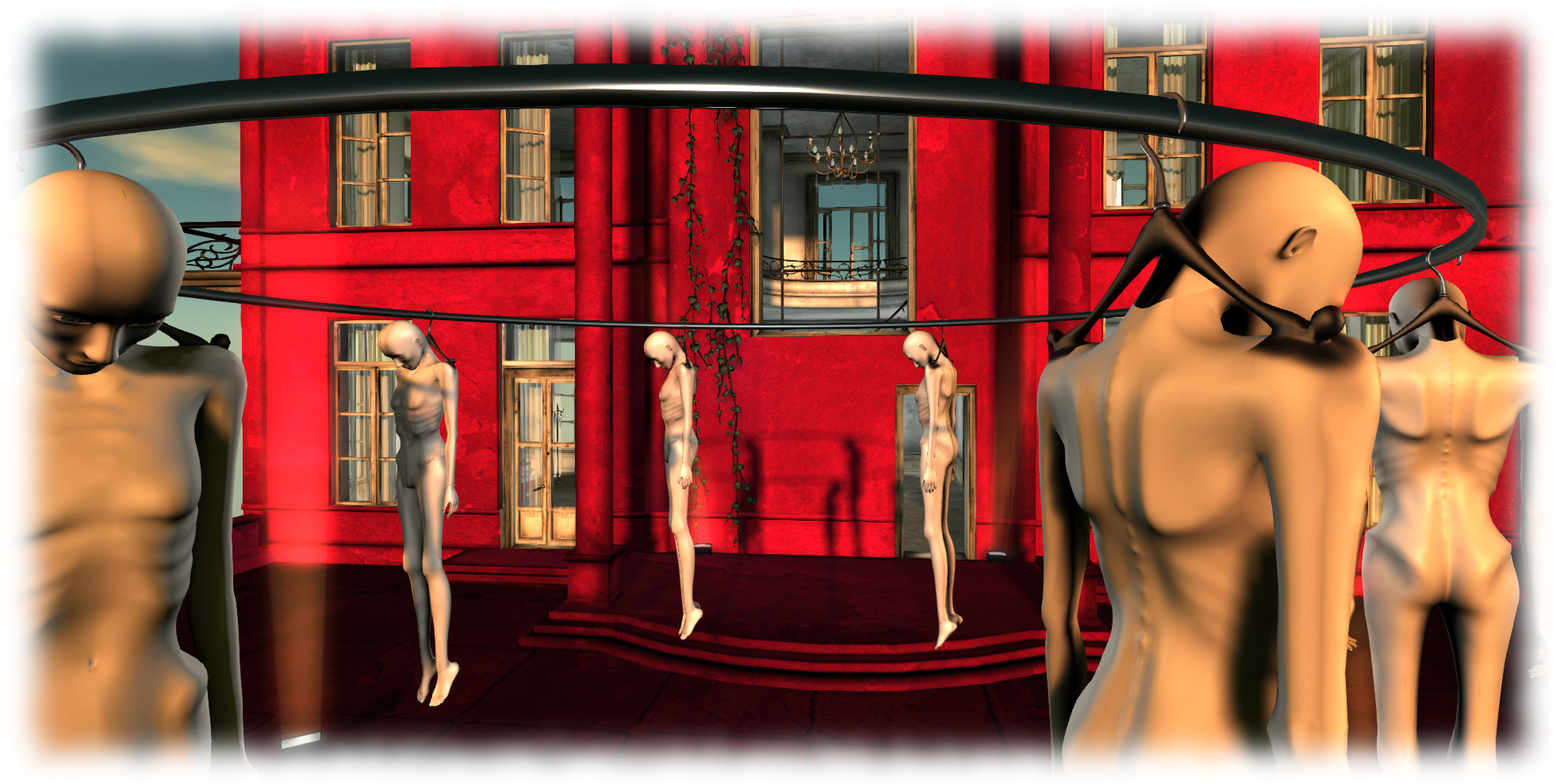
In the second, the subject matter focuses on self-abuse in the form of anorexia nervosa and Bulimia nervosa, and the destructive effects they can have on those stricken with them. This is also accompanied by a story, that of the Doll’s House.
When Life Gives you Apples ... Run! - LEA 6
When Life Gives you Apples … Run – LEA 6

There is strong symbolism throughout this installation, be it with the story platforms, or the sculpture of the caged women. Even the tunnel winding up through the apple core has a meaning of its own, for example; an echo of the way in which maggots can bore through an apple, ruining its wholesome appearance via decay from the inside, just as relationships or lives which might appear whole from from outside are slowly decaying from within, as with the vignettes presented by this build.

As noted towards the top of this article, When Life Gives You Apples … Run is a provocative piece; but one of Rebeca’s strengths is that she’s never fought shy of making people think.  As such, this is a worthy piece on which to close the current UWA Full Sim Art series.

Related Links

Lost Paradise

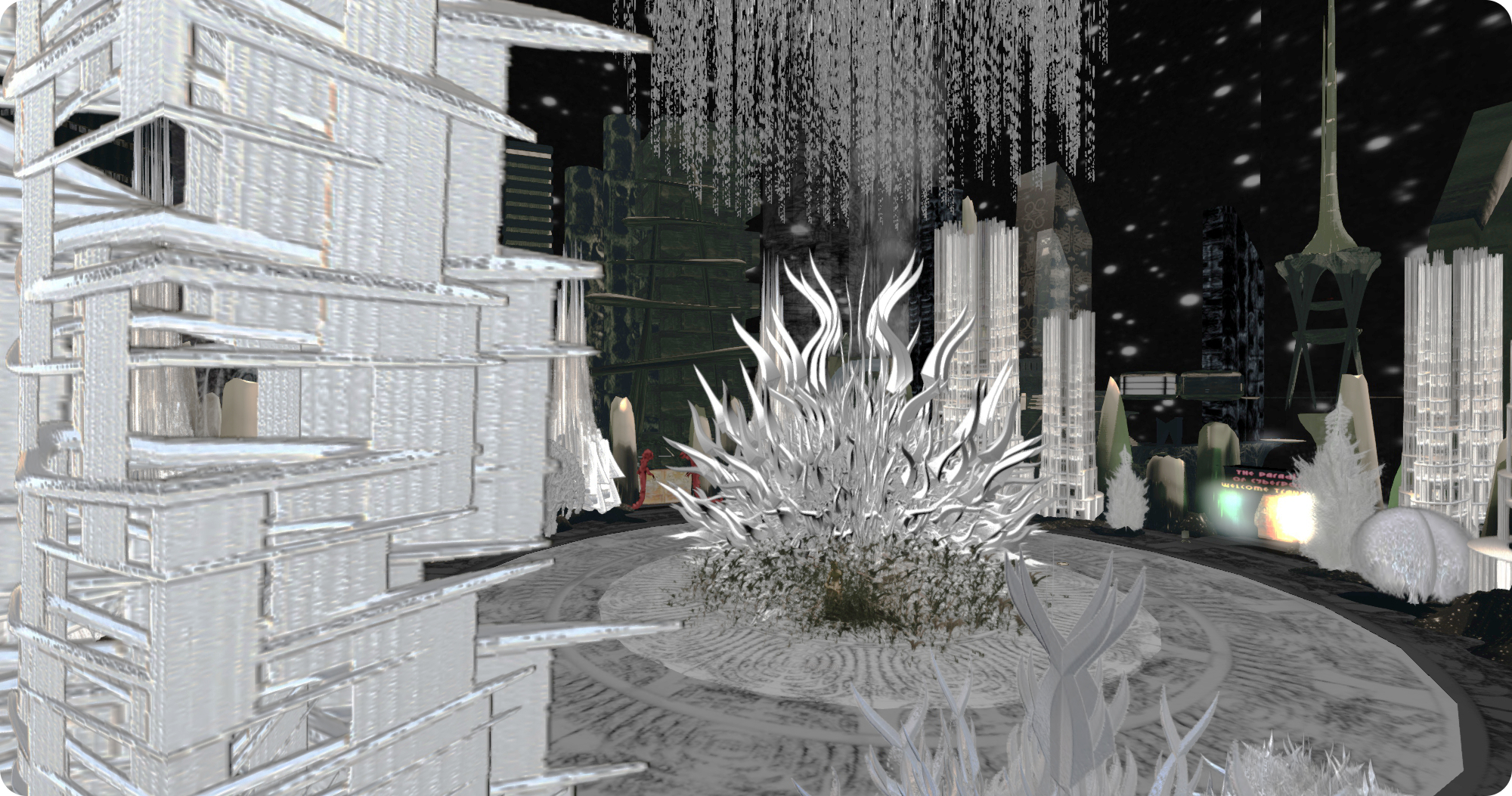
The Paradise of CyberPolis

Currently open to explore, although the official opening doesn’t take place until Sunday, March 15th, is The Paradise of CyberPolis, by Asmita Duranjaya and Sable (snakeappletree) at LEA 12. It is billed as a “a grey-scaled story and game-based art installation”, and comes with a narrative storyline visitors are asked to follow whilst exploring the installation, solving clues, with the explanatory notes reading:

Crash-landing on an urban planetary system …

A researcher is slowly awaking from unconsciousness, starting to explore the environment of an ancient, abandoned cyber-city and to solve its mysteries. Seven letters need be found to experience the last surprising solution.

The Paradise of CyberPolis

The starting point is the researcher’s crashed aircraft, complete with unconscious space-suited researcher. A HUD is also offered, and you’ll need this in order to unlock (literally) the mysteries and make your way to the surprising solution.

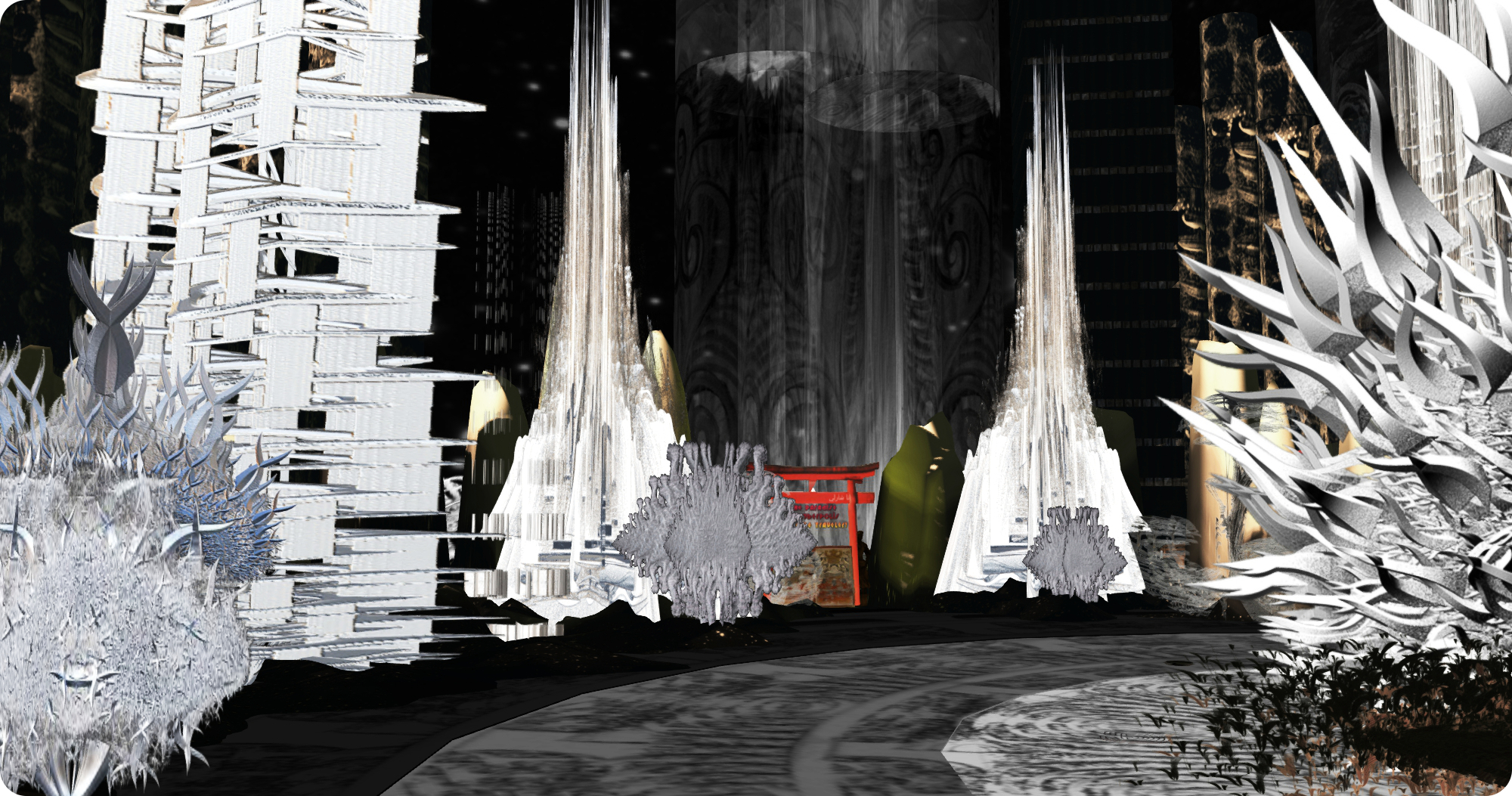
The HUD actually takes the form of a journal (available in English or German), written by the researcher, describing their initial examinations of this world and the discoveries made. Your task is to follow the clues in the book, re-trace the researcher’s  footsteps and learn all that they have learned, and in the process find the seven letters mentioned in the introduction. Four of these will be required to unlock the gates of the cyber-city proper (your initial investigations taking place outside of the city’s core), while all seven are needed to unlock the final secret.

The Paradise of CyberPolis
The Paradise of CyberPollis

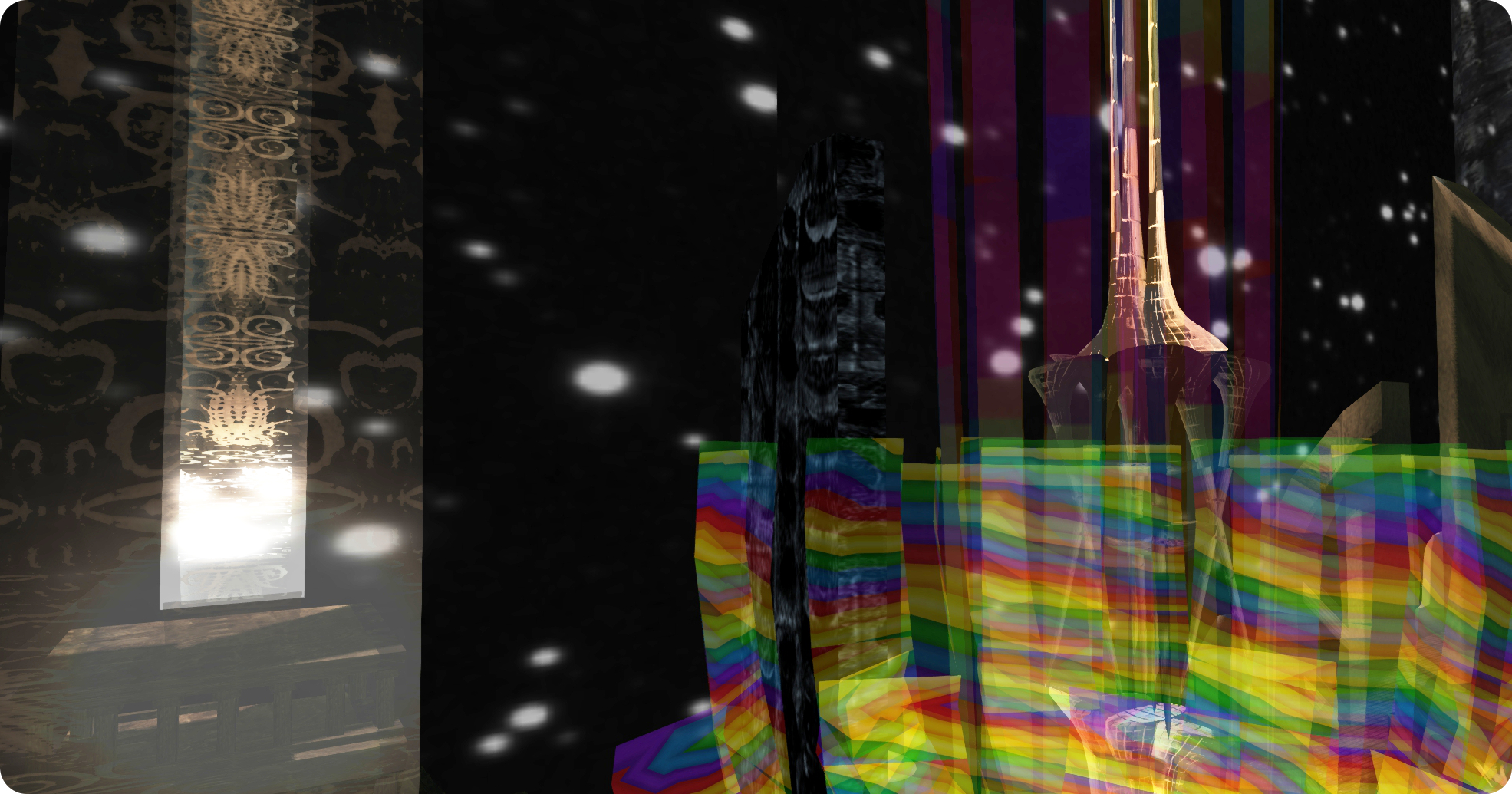
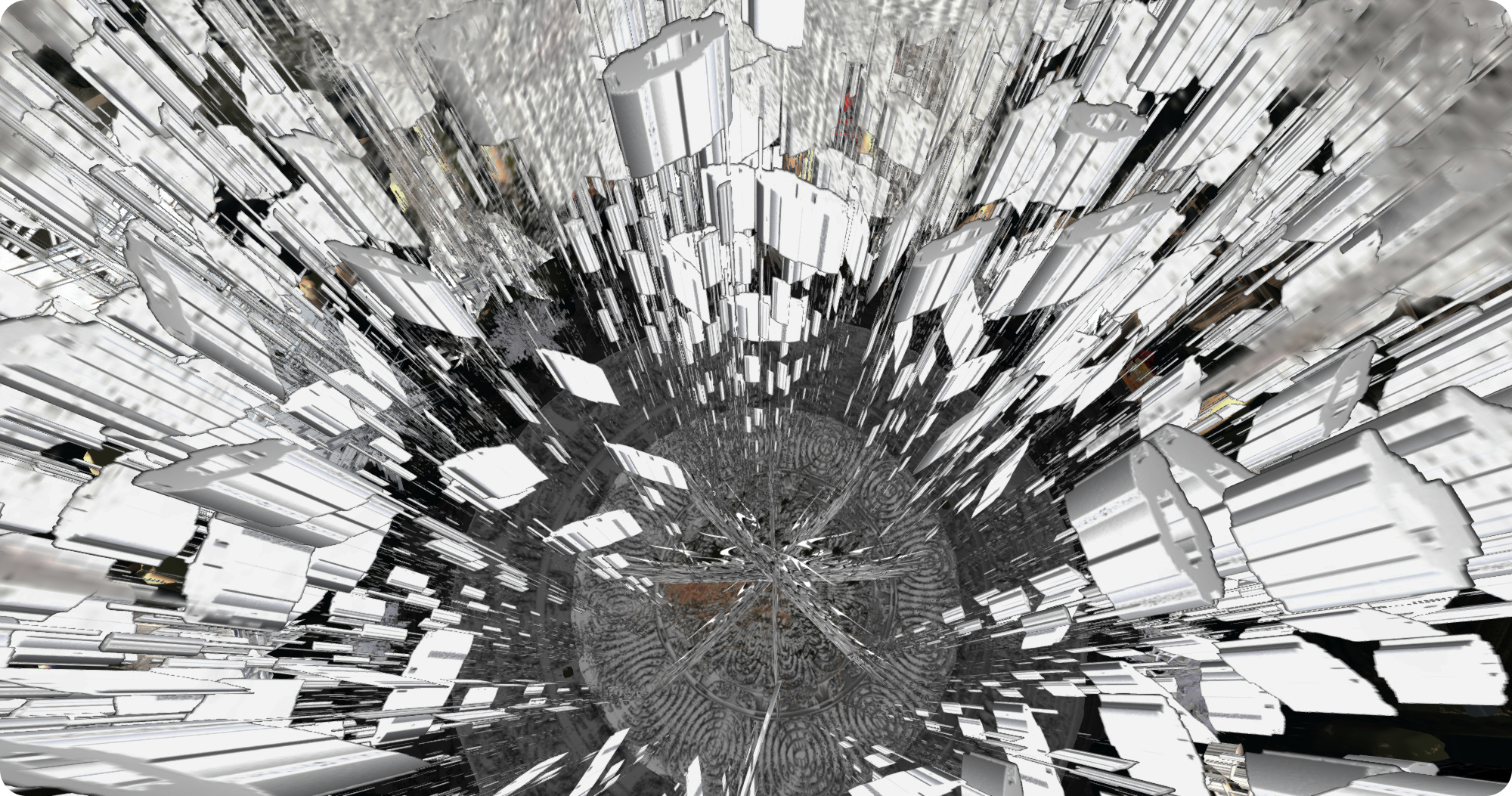
Along the way you’ll encounter a curious environment with mixed influences from the worlds anime, cyberpunk and dystopian sci-fi, in a story with something of a spiritual slant. Most of the landscape is a muted greys and whites, but there are splashes of colour scattered throughout, which form visual cues to places you might want to investigate more closely.

As a game, the idea almost works; you read the book, you riddle the clues, you uncover the required letters. But there is a problem. Of the seven letters to be discovered, only three actually require you investigate the city due to them requiring direct interaction with in-world objects to properly identify the letters in question; the other four can be discovered just by reading the book. Thus, it is possible for some of the visual context of the story to be lost as one simply reads ahead, identifies the letters and goes directly to things like opening the gates of the inner city; and sad to say, I’m not sure that much would be lost from the experience in doing so.

The Paradise of CyberPolis

The build itself, while interesting to explore, bears a strong resonance to the NeoCyberCity both artists recently built at Asmita’s own Space4Art / Port Lyndus region (indeed, the two builds appear to share many common elements). As such, it’s actually quite hard to determine why there was a need to utilise an LEA region to produce this particular piece, rather than incorporate it into a pre-existing and similarly themed environment already operating.

Related Links

FreeWee’s Lab: the magic of sound, light, physics and colour

The power of projected lights at FreeWee's Laboratory v.8.0: Music, Myth, Magic, Light, Shadows, Physics, LEA27
The power of projected lights – neither of these figures is textured; the colours and clothing on them is created purely be projected lights. FreeWee’s Laboratory v.8.0: Music, Myth, Magic, Light, Shadows, Physics, LEA27

FreeWee Ling is perhaps best known for her tireless work on behalf of the University of Western Australia (UWA), and co-organiser and curator of the UWA’s art-related projects, activities and galleries within Second Life. She recently – and rightly – gained recognition from the Australian Department of Education for this work when she was awarded her an Endeavour Fellowship at the end of 2014. This has allowed her to travel from her home in the eastern United States to spend four months at the UWA in Perth, Australia, where she is based with the UWA’s Department of Physics.

In conjunction with her time at the UWA in the physical world, FreeWee has been granted the use of a LEA Artist in Residence region, where she has established FreeWee’s Laboratory v.8.0: Music, Myth, Magic, Light, Shadows, Physics, a unique combination of workshop, study space, laboratory and gallery focused on helping her demonstrate the potential of virtual worlds to students at the UWA.

FreeWee's Laboratory v.8.0: Music, Myth, Magic, Light, Shadows, Physics, LEA27
FreeWee’s Laboratory v.8.0: Music, Myth, Magic, Light, Shadows, Physics, LEA27

When you arrive in the region, it may look somewhat chaotic and perhaps even feel half-finished. Don’t let this put you off; this is a workshop / lab, and what is on offer more than makes up for chaotic the appearance. Keep in mind as well, that elements within the installation may change over time in order to meet FreeWee’s evolving needs as a part of her work at the UWA.

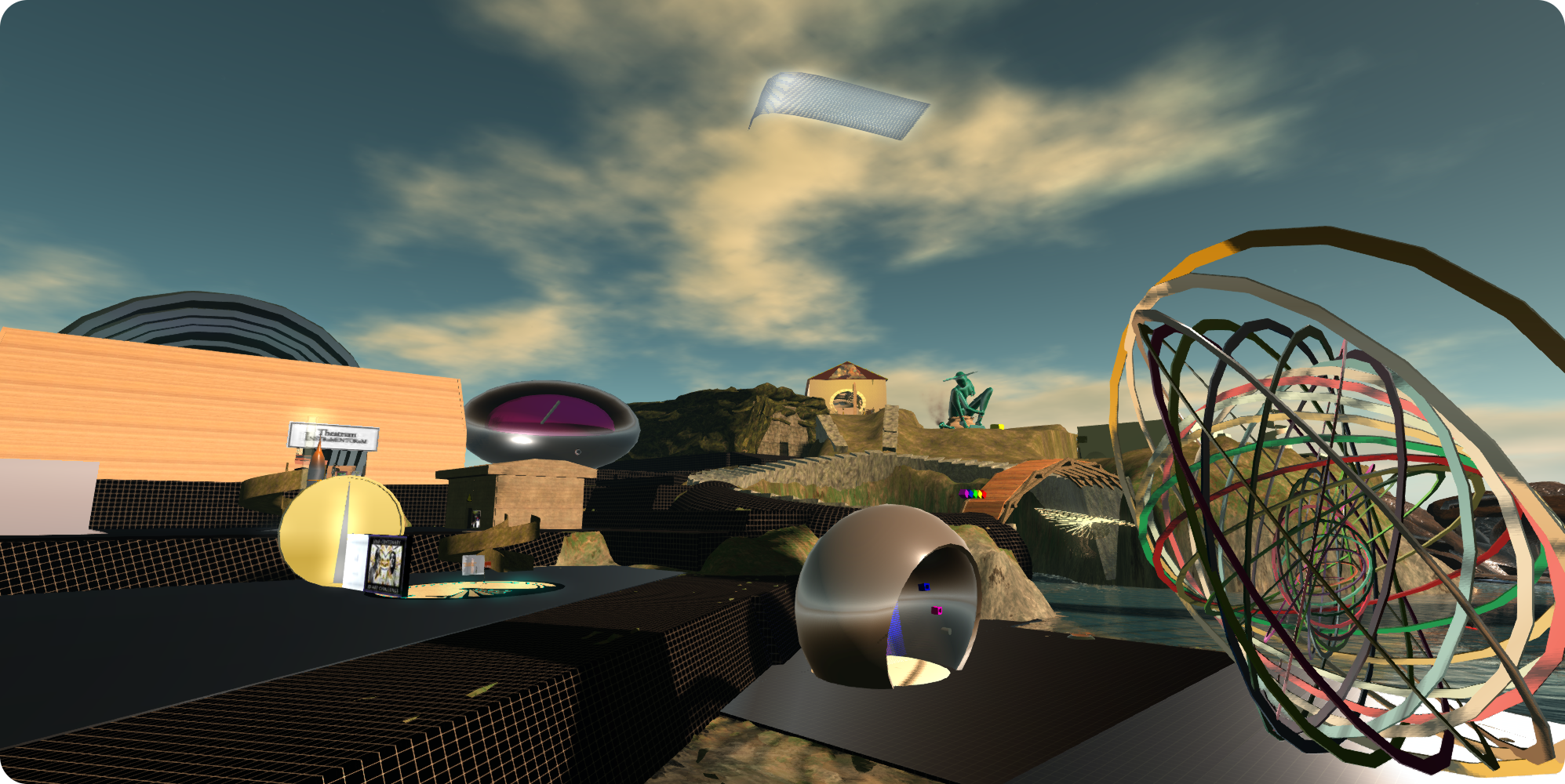
As FreeWee is working with the Department of Physics at the UWA, many of the items within the region explore the nature of physics in Second Life, be it through movement, light or colour.  Just up the ramp from the landing point, for example, is her award winning nanoprim physics lab from 2010, together with a rocket that will take you up to her Solar Observatory, which I’ll have more to say about anon.

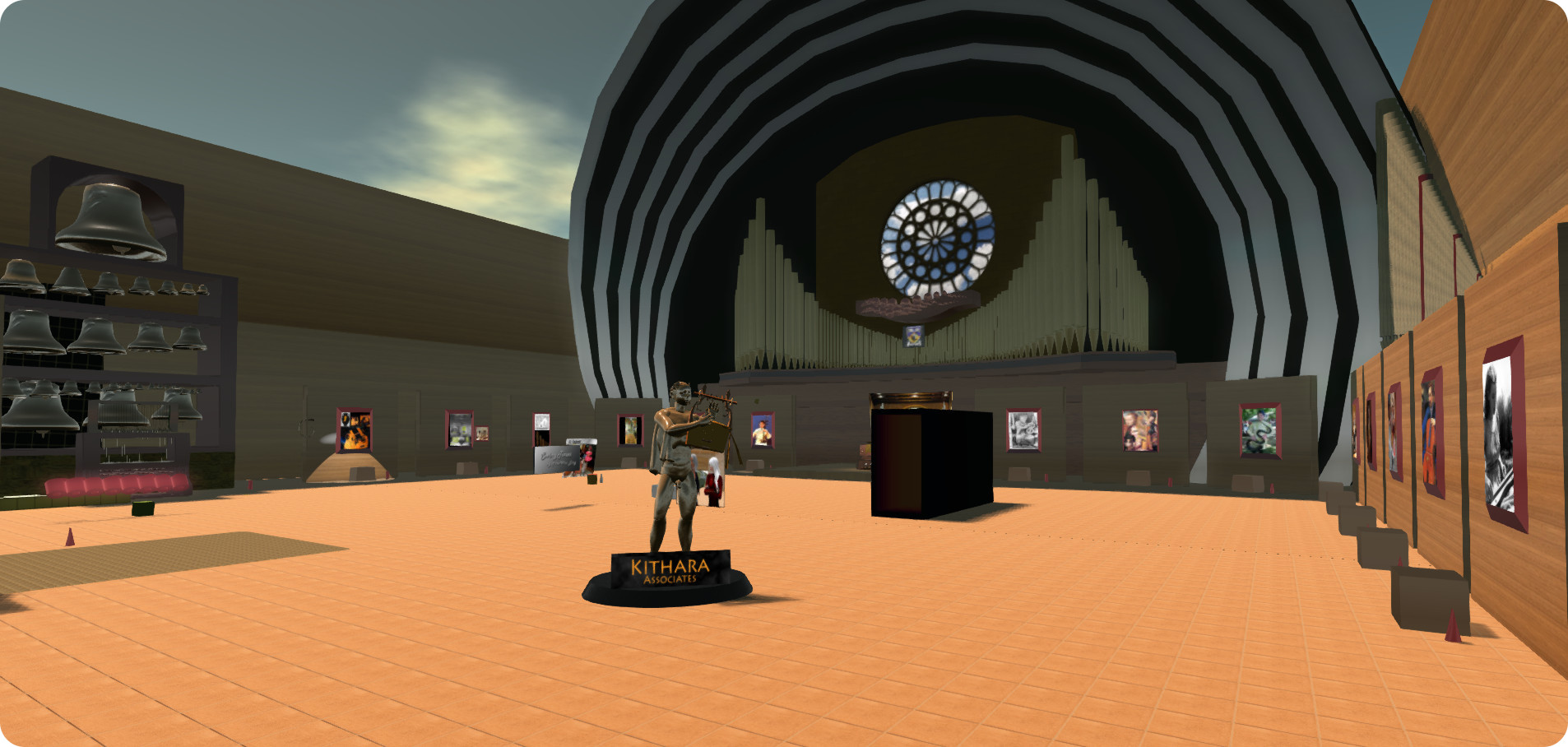
FreeWee is a musicologist by education, with a specialist interest in the history, use and physics of music. Together with fellow musicologist Oriscus Zauberflote, she formed the Kithara Associates, which is focused on the creation of musical instruments in SL that are reasonably authentic in appearance, in order to enhance the immersive experience of the platform for the purpose of learning and research, and this work is also present within the installation, in the form of the Theatrum Instrumentorum.

FreeWee's Laboratory v.8.0: Music, Myth, Magic, Light, Shadows, Physics, LEA27 - Tthe Theatrum Instrumentorum
FreeWee’s Laboratory v.8.0: Music, Myth, Magic, Light, Shadows, Physics, LEA27 – the Theatrum Instrumentorum

This is, in essence, a museum of musical instruments featuring photographs and information boards of the instruments in the physical world, and samples of instruments built in-world, some of which extend to the creation of hybrid / fictional instruments depicted in works of art. Several of the pieces are playable, and I particularly enjoyed using the carillon to play a melody I’d had to learn many, many moons ago when starting to learn to play the piano. Also on offer within the Theatrum is a teleport up to Swingtones, a demonstration of the effectiveness of sound in helping to create an ambient, immersive environment.

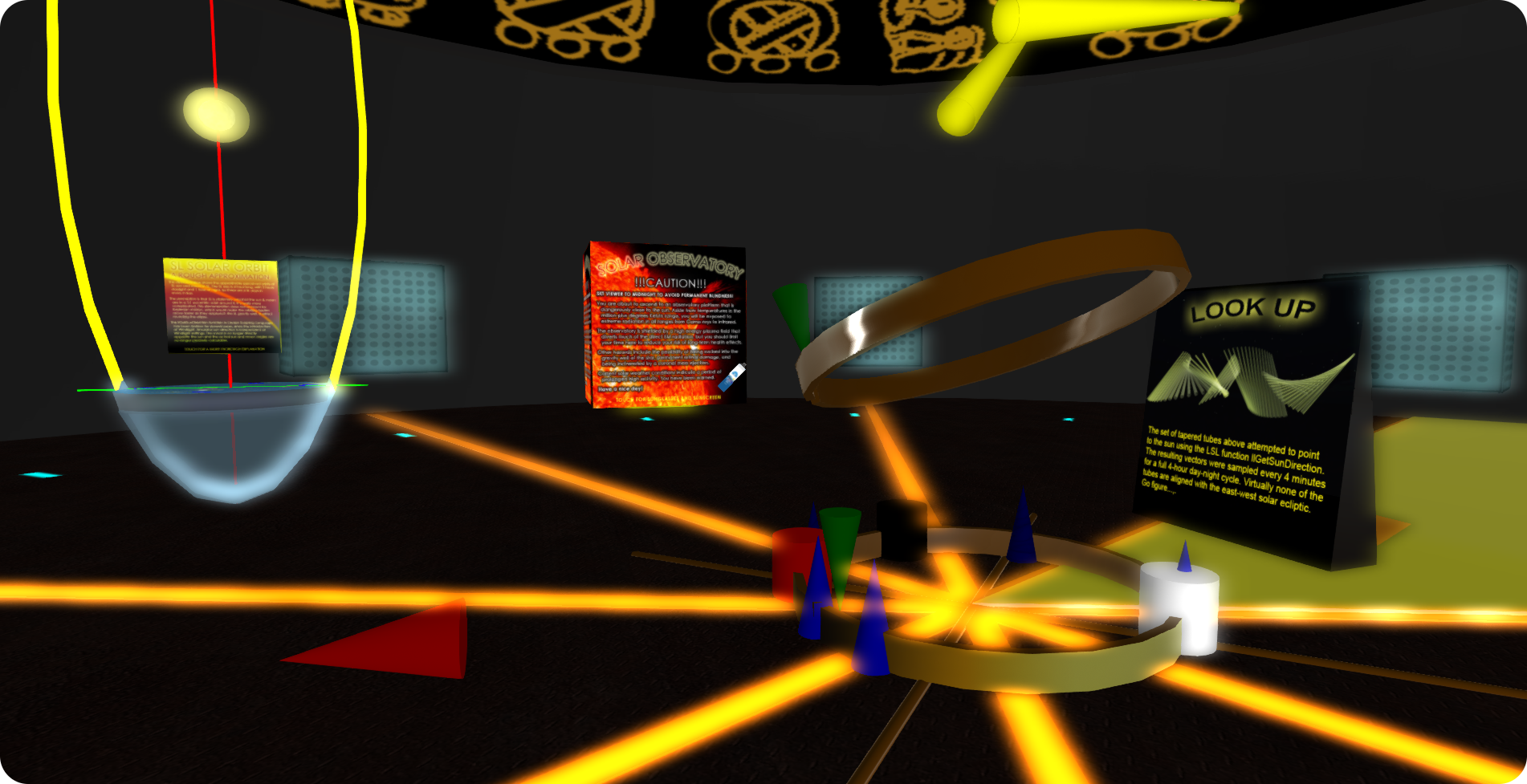
The Solar Observatory mentioned earlier, and which can be reached by rocket, is spread over two levels. The lower level presents visitors with both an introduction to elements of solar and stellar astronomy and also provides insight into the peculiarities of the SL “solar system” and day / night cycle, with interactive demonstrations throughout, as well as well-written information cards and links to external sources.

FreeWee's Laboratory v.8.0: Music, Myth, Magic, Light, Shadows, Physics - the lower floor of the Solar Observatory
FreeWee’s Laboratory v.8.0: Music, Myth, Magic, Light, Shadows, Physics, LEA27 – the lower floor of the Solar Observatory

The upper level, reached by elevator, offers the chance to study the Sun first hand, complete with coronal mass ejections (CMEs), sun spots and the flow of the solar wind. The elevator is guarded with a firm caution about the risks of blindness and exposure to gamma radiation should you opt to take the elevator, but both both sun screen (SPF 1000) and sunglasses are thoughtfully provided to mitigate the effects of both 🙂 . At the top of the elevator is a platform allowing you to view the Sun Sunshine-like, or if you’re feeling particularly daring, you can rez a chameleon flyer and fly yourself around the Sun. However, if you opt to do the latter, do try to keep in mind the story of Icarus, and what happened when he flew a tad too close to the Sun …

Elsewhere in the region you can find a novel “get away from it all” rezzer system, interactive art pieces, a gallery of FreeWee’s own art and, in what is another superb demonstration of SL’s capabilities in the Projection Room (a large white building on the east side of the region.

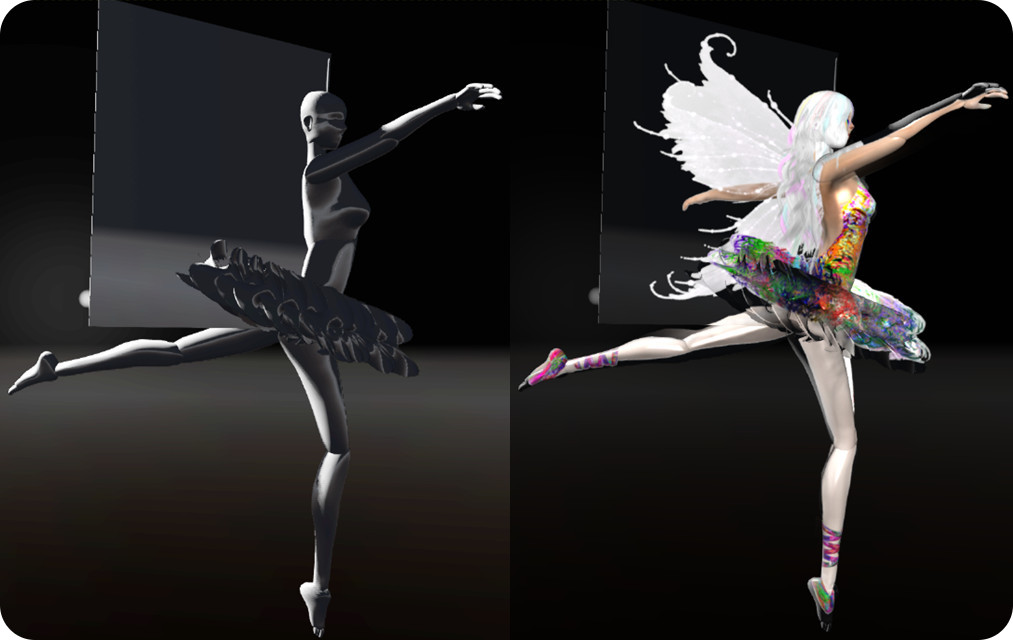
The power of projected lights - the image on the left shows an untextured figure; on the right, the same figure, lit entirely by projected lights. FreeWee's Laboratory v.8.0: Music, Myth, Magic, Light, Shadows, Physics, LEA27
The power of projected lights – the image on the left shows an untextured figure; on the right, the same figure, lit entirely by projected lights. FreeWee’s Laboratory v.8.0: Music, Myth, Magic, Light, Shadows, Physics, LEA27

This focuses on the use of projected lights in Second Life. As such, you will need to have the Advanced Lighting Model graphics option enabled on your viewer (you do not need to enable shadows, so any performance hit you may experience shouldn’t bee too great), and keep in mind that none of the figures in the room are actually textured. What you see as you move around and active the lighting sources is purely the result of using projected light sources and textures.

All told, the Laboratory makes for a fascinating installation, one in which it is easy to become absorbed in the individual elements on offer, allow of which are provided with informative note cards which not only provide insight into what they are and how they work, but often explore the creative processes involved in creating them, and provide a glimpse into FreeWee’s mind and thought processes, further enhancing the time one takes in exploring the installation.

Highly recommended.

Related Links

Doing it with mirrors in Second Life

Speculum - LEA6
Speculum – LEA6

Speculum is the title of Giovanna’s Cerise’s new installation at LEA6, the home of the UWA’s Full Sim Arts series.

While the title of the piece may give rise to thoughts of certain medical examinations, let me assure you that this is not the intent here. Giovanna is using the word purely to mean “mirror”, and quite without any hint of medical connotations at all, although there are a number of oddly endearing figures earnestly peering into what appear to be mirrored lenses close to the landing point.

Speculum - LEA6
Speculum – LEA6

Giovanna explains the installation thus:

The mirror, as multiplicity and continuous playback. The mirror, where the invisible overlaps the original and the hidden appears suddenly. The mirror, as an illusion of which you can not do without. The mirror as a projection in an unreal dimension. The mirror that opens the door to …

 Beyond the figures with their little eyepieces held up to their lens-like heads, is a truly astonishing build, which Giovanna recommends is viewed using either the Verdigris windlight setting or a sunset setting. I used both, and they serve the installation well.

Speculum - LEA6
Speculum – LEA6

The main parts of the build comprise huge, intricate wooden structures, gigantic lattices of beautiful complexity, which hold aloft great cog-like discs representing mirrors. Three of these rise from the waters of the region, their mirrors pointing skywards, while a fourth floats overhead, holding its mirrors upright.

Between and under these stands another construct, a huge rectangular piece, partially wreathed in shadow, within which sits a series of white convex forms, again suggestive of mirrored lenses. To fully appreciate this piece, you not only need to see it from without, but also travel through it (click the single mirror cog raised on a pole at the landing point to be teleported). The optical effects seen as you walk through the “lenses”  and shadow areas can be striking.

Speculum - LEA6
Speculum – LEA6

Giovanna has always shown great aptitude in using light and space in her work, as well as using geometric forms and structures, and her artistry with all of them is very much on display here. This is a stunning and immersive build, and will remain in place through March. I do thoroughly recommend you pay a visit.

Related Links

Previewing a walk through SL’s history

The Greatest Story Ever Told - LEA17
The Greatest Story Ever Told – LEA17

During the Round 6 of the Artist In Residence (AIR) series at the Linden Endowment for the Arts (LEA), Sniper Siemens produced a wonderful retrospective on Second Life, looking back over the platform’s history from 2001 through until 2014, with a small peep at what might be coming.

At the time of that exhibition, Sniper had just two weeks to get everything together and create the installation. as a result, as delightful as it was, much was left unsaid.

Now, as a pert of the AIR Round 8 submissions, Sniper has returned to the LEA to present a re-worked and expanded look at SL’s long and tangled history with The Greatest Story Ever Told, which officially opens to the public at 15:00 SLT on Saturday, February 7th, 2015. Having been given the opportunity to have a preview walk through the installation, I can say that it is, quite simply, superb.

As with the original, the visitor is taken on a chronological walk through SL’s vast and tangled history, only here the journey starts in 1999, and instead of walking through a watery domain, one is lead through a wooded landscape along a series of paved footpaths which allow the platform’s history to unfold as one progresses along them.

The Greatest Story Ever Told - LEA17
The Greatest Story Ever Told – LEA17

And history is quite literally everywhere, right down to the names of the paths themselves, which start off evocatively enough: Battery Street (complete with a model of the Lab’s offices there), which is followed by Da Boom, Natoma, Ritch, Zoe – all the names of some of the original 16 regions which comprised Second Life at its “birth”, and which were themselves drawn from the names of streets around the Lab’s original base of operations in Linden Street, San Francisco (and the fact that several of them are all the locations of eateries / hostelries was, I’m sure, entirely coincidental 🙂 ).

The paths lead the visitor chronologically through SL’s history, with information boards, images and interactive elements, together with a small army of little residents and Lindens, encompassing key events and changes. The information provided is drawn from a number of sources, including the Second Life wiki and the wiki’s History of Second Life pages. Several of the boards make for interesting reading, as they present information written at the time some events were unfolding, thus given them an added sense of presence.

The Greatest Story Ever Told - LEA17: recalling the days of the paid teleport hubs
The Greatest Story Ever Told – LEA17: recalling the days of the paid teleport hubs …

As with the original presentation, both technical and social changes are documented, with many of the “blanks” in the original now completed. As a result, a much richer picture of Second Life is painted, the good and the bad, the ups and the downs, and some events are put into their proper perspective – such as the FBI’s 2007 look into certain activities in SL. Nowadays, this is often seen causing the Lab to later ban gambling on the platform. However, as the information provided in The Greatest Story Ever Told reveals, this really is a case of post hoc, ergo propter hoc., and the circumstances of both the investigation and the reasons for banning gambling on the platform are quite different.

The path eventually leads the visitor to 2015, and a brief look at what the Lab’s next generation platform might hold for us. It is followed by a little Linden and resident holding a sign: This is not the end – a clever play on the fact that this isn’t the end of the installation, as the path leads on to a retrospective of the Burning Life (now BURN2) event in SL, and in a more subtle touch, to the fact that the new platform doesn’t mean Second life is coming to an end.

The Greatest Story Ever Told - LEA17: ... and correcting the misconceptions around the FBI's 2007 investigation of certain activities in SL ...
The Greatest Story Ever Told – LEA17: … and correcting the misconceptions around the FBI’s 2007 investigation of certain activities in SL …

There is a lot to take in with this installation; not only through the information boards and images and little vignettes one passes, but also in the overall way in  which everything is presented. Take, for example, use of high walls along two sides of the installation which, while preventing any overlap between it and the neighbouring installations, combines with the setting of The Greatest Story to remind us of something of SL’s “walled garden” reputation. Then there is the way in which many technical elements intrinsic to SL’s development are also presented: windlight, projected lighting, mesh, materials.

All told, this quite simply a brilliant expansion of the original concept, and I’m really pleased that Sniper has been given the opportunity to revisit the subject, expand upon it, and in doing so, has retained the same touch of humour in many of the individual pieces presented within it. The Greatest Story Ever Told is a genuine delight, something everyone should find the time to visit and walk through.

Given the nature of the installation, I’ll leave the final words here to Sniper:

The History of Second Life is the story of all us.

Every single person who has decided to be part of it must to thank a small group of peoples  that one day they saw  a vision. If today you can rez a prim, drive a car or dance in a disco, it is possible  thanks to  this small group of people. Many others have continued to maintain it and develop it, even without a remuneration. So, learn to respect those who allowed this and enjoyed  the best Second life.

The Greatest Story Ever Told - LEA17
The Greatest Story Ever Told – LEA17

As a reminder: the Greatest Story Ever Told – SL History 1999-2015 opens to the public at 15:00 SLT on on Saturday, February 7th. Note that teleports may not work until then.

Coastal views and Borderlines

Borderlines, LEA24
Borderlines, LEA24

Oberon Omura, who helps me keep abreast of things that are happening in the SL art world, sent me a little missive about Lemonodo Oh’s new installation at LEA24, which opened on Thursday, January 28th.

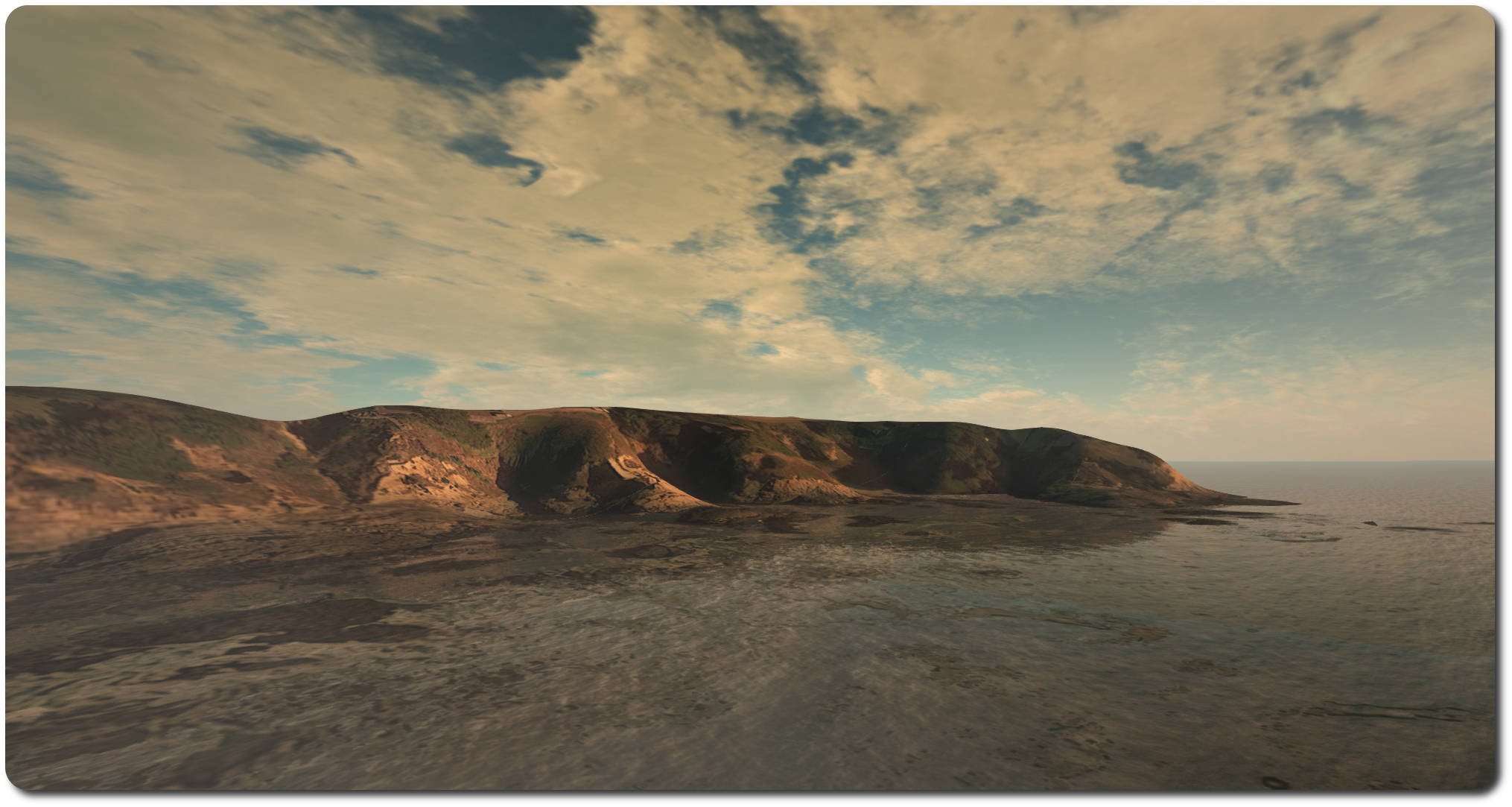
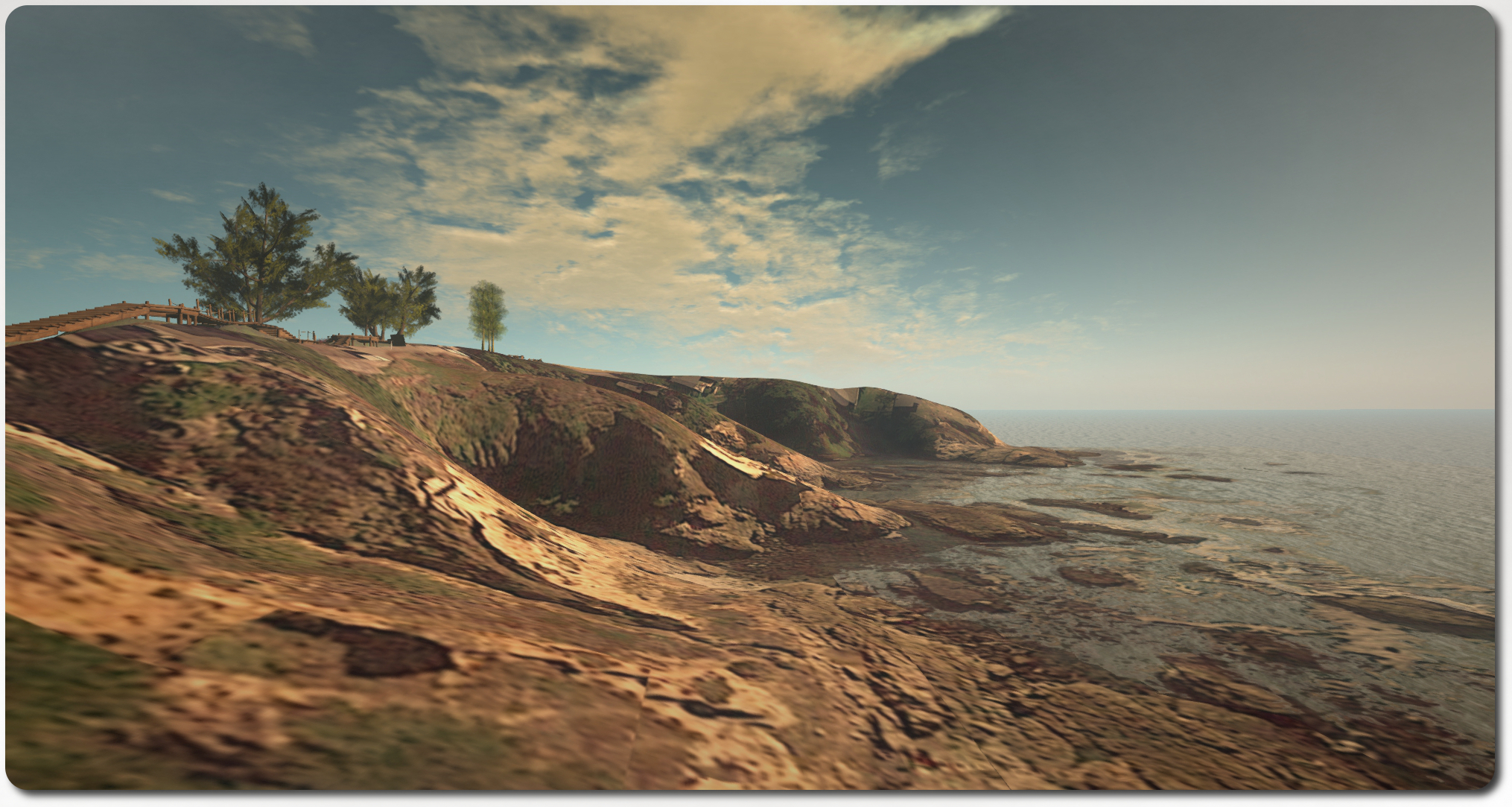
Borderlines is described by the artist as being inspired by the walks across SL organised by Vanessa Baylock, which caused him to come up with “defining a three-dimensional study area of a coastal region in maps and translating it to 64 sq m meshes and flat prims as appropriate.”

Borderlines, LEA24
Borderlines, LEA24

The result is what I’d define as an interpretation of a stretch of coastline, rather than a representation of that coastline. While the images used on the mesh and prim elements may well have been drawn from images available on Google Maps (and from, I believe, California), when put together as a whole and viewed panoramically under the right lighting, they could easily be part of the coastline from almost anywhere in the world; for my part, and while twiddling around with windlights, I was very much reminded of parts of both the Devonshire / Cornish coastline in the south-west of England and also of the Yorkshire coast.

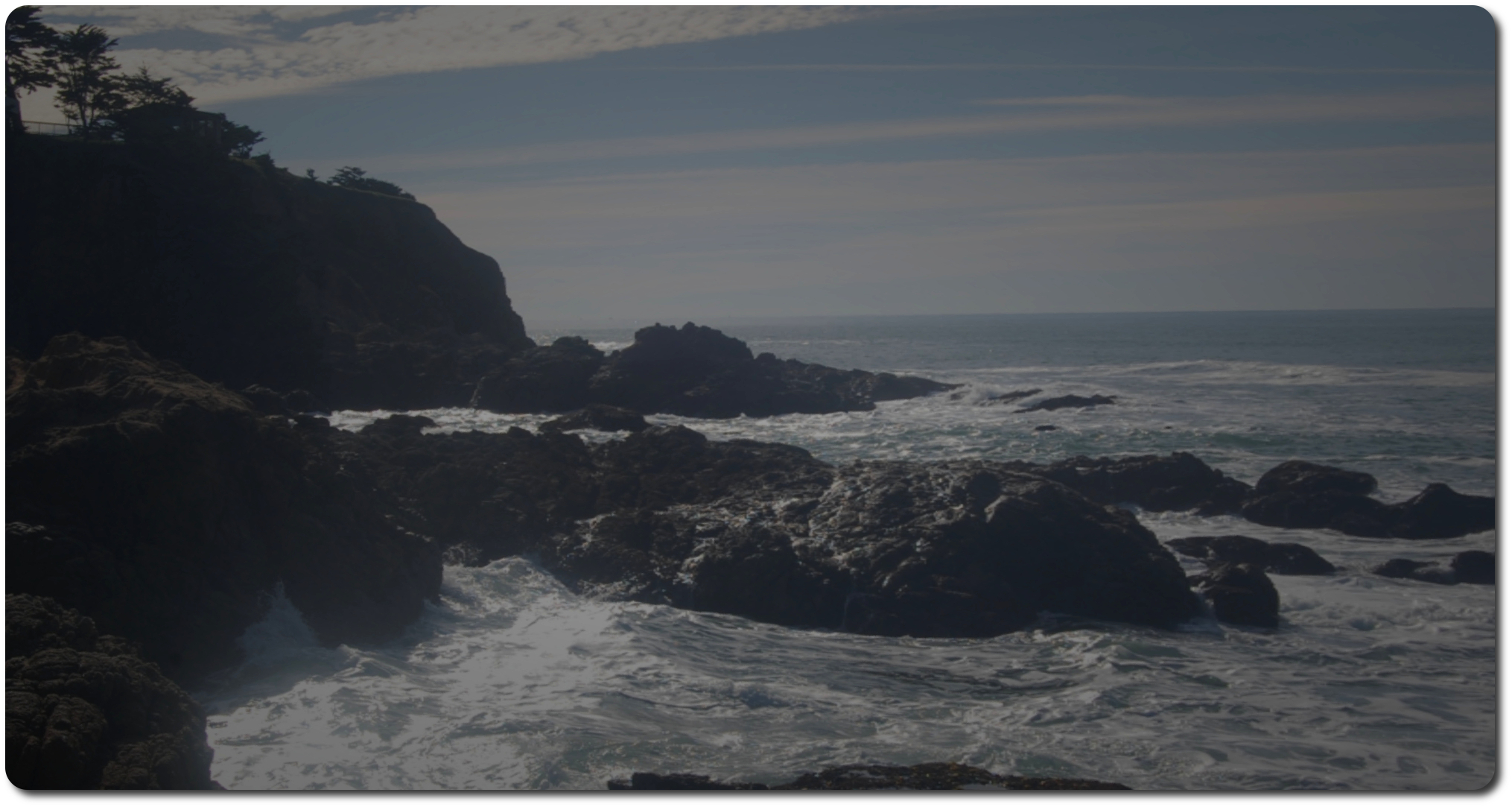
Scattered across the low-lying areas of the installation are a number of dramatic photographs which, if not of the same areas of coastline as represented in the model, bear a strong resemblance to them in places. These are cleverly hidden from view until approached, when they slow fade into view, and add a striking new depth to the piece.

Borderlines, LEA24
Borderlines, LEA24

Lemonodo notes that while the project hasn’t worked out entirely as conceptualised, it nevertheless involves a number of borderlines – hence the title. Some of these may be obvious, others not so, Lemonodo doesn’t enter into specifics, so it is up to observer to hypothesize. Several did suggest themselves to me, including the use of the region boundary between this installation and that of the Medici University on LEA23 (which involves Vanessa Baylock whose grid-wide walks initially inspired this piece, remember).

I confess to being more intrigued by matters of perception and contrast, particularly when looking at the coastline from various distances and camera positions, and the manner in which it presents itself to the viewer and the (perhaps untended) questions on perception and depth raised by the inclusion of Lemonodo’s quite beautiful photographs (of which I’d frankly like to see more) against the background of the somewhat “flat” appearance of the Google Maps images when see up close and as they form the backdrop to the photos.

Borderlines, LEA24
Borderlines, LEA24

However you look at Borderlines, be it as art or an experiment in modelling or perception, Borderlines offers an intriguing addition to the current selection of Artist In Residence builds at the LEA.

Related Links