Arriving at the Remnants of Earth

The City Skyline - Remnants of Earth
The city – Remnants of Earth

It’s often claimed that Second Life isn’t a game – to which the counter-claim is often, “true, but it is a platform on which games can be created” (I should know, I’ve said it enough times myself!). And the Lab have certainly put a lot of mechanisms in place which allow games to be created – the most recent being the forthcoming deployment of Experience Keys / Tools (although, like everything else in SL, they have potential and uses well beyond games within the platform).

Now there’s a new game in town which demonstrates just how flexible a platform Second Life can be for game-play and role-play. Remnants of Earth, developed by Melna Milos and her team, seeks to bring together immersive role-play and elements of traditional pen-and-paper RPGs such as the use of dice and statistics together with combat, and MMO-style activities such as adventuring and gathering, to present what the creators describe as, “the  first  pen and paper table top game in SL, while still keeping the core features of any other role-play sim. Players can interact with NPCs and other players to accomplish goals, and even engage in heated PvP faction wars.”

Game-play for Remnants of Earth takes place across several different elevations in the region, including the ground-level desert

The backdrop to the story is most easily lifted directly from the comprehensive website for the game:

The current year is 2130, mankind has just passed the pre-mature stages of expanding out into the solar system over the years and have established colonies on moons such as Titan, Ganymede, and the Earth’s Moon along with key planets such as Mars, Venus and Jupiter. After the Resource War and the following horrific events of The Gate Incident, Earth has been rendered a mostly barren husk of its former glory devoid of a proper rule of law from the neglect of its former governing body, and is controlled loosely by it while everything else is ruled by either crime, vagrants or corporation military contractors and police for whatever goal they may be shooting for.

Against this backdrop, you find yourself on what remains of Earth, which has largely become – if I might borrow from a certain film franchise – a “wretched hive of scum and villainy”, not only for humans, but for assorted other groups as well: the Drevii, Mytharri, Shivan, Verga’an, and Anshri, who together with the Mutants, Splicers and cybernetic beings / creations, have their own factions in the form of organisations, clans, and syndicates.

Two citizen of the city discuss matters, the droid belonging to one keeping a wary eye on things. Not all exchanges in Remnants of Earth are so peaceful in content ...
Two citizen of the city discuss matters, the droid belonging to one keeping a wary eye on things. Not all exchanges in Remnants of Earth are so peaceful in content …

From these races, you can create a character, forge a role and join with the game. As well as the website and the accompanying wikia, the initial landing point for the game provides visitors and new player with much additional information, such as note cards on various guilds, and initial items required to participate in the game. These include a HUD (which includes your game dice), turn tracker and starter items  – you’ll need to join the RoE group for the latter. There is also an Adventure Pack available for L$ 1,000, which provides tokens for assorted items. – backpack, rifle, sword, personal transport vehicle, mining drills.  If you simply wish to observe things, make sure you pick-up and wear the OOC Observer tag.

If you intend to get involved in playing RoE, do keep in mind that while it is not a requirement, for players to do so, Teamspeak 3 may be used by other players – you can find out more on RoE’s Teamspeak page, which includes a link to the Teamspeak client, and notes on setting it up for use with RoE.

Once suitably equipped, arrivals can make their way through to the shuttle to Earth – click on this and you’ll be transported “Earthside” and the city game play area. This is a richly detailed, full-region city build which offers multiple levels and areas to explore and in which to execute game play.

Are EarthGov's police impartial? EarthGOV is, after all, a mega corporation ...
Are the police in Remnant’s of Earth impartial? After all, the police force is operated by EarthGOV, which itself is a mega corporation where business interests tend to come before governance…

Continue reading “Arriving at the Remnants of Earth”

What dreams might come when you visit Pandora’s Box?

Pandora's Box of Dreams, Diamond Bay; Inara Pey, April 2015, on Flickr Pandora Box of Dreams, Diamond Bay (Flickr) – click any image for full size

Note: this vision of Pandora Box of Dreams is closed.

Dreams are our mind’s creations, places where  mind takes us to relax, to enjoy and to ease from rest of the world. Come dreamer, let the slumber take you, close your eyes and just focus on the weight of body easing away with each breath you take, and with each breath you become less here and more in our dreams…

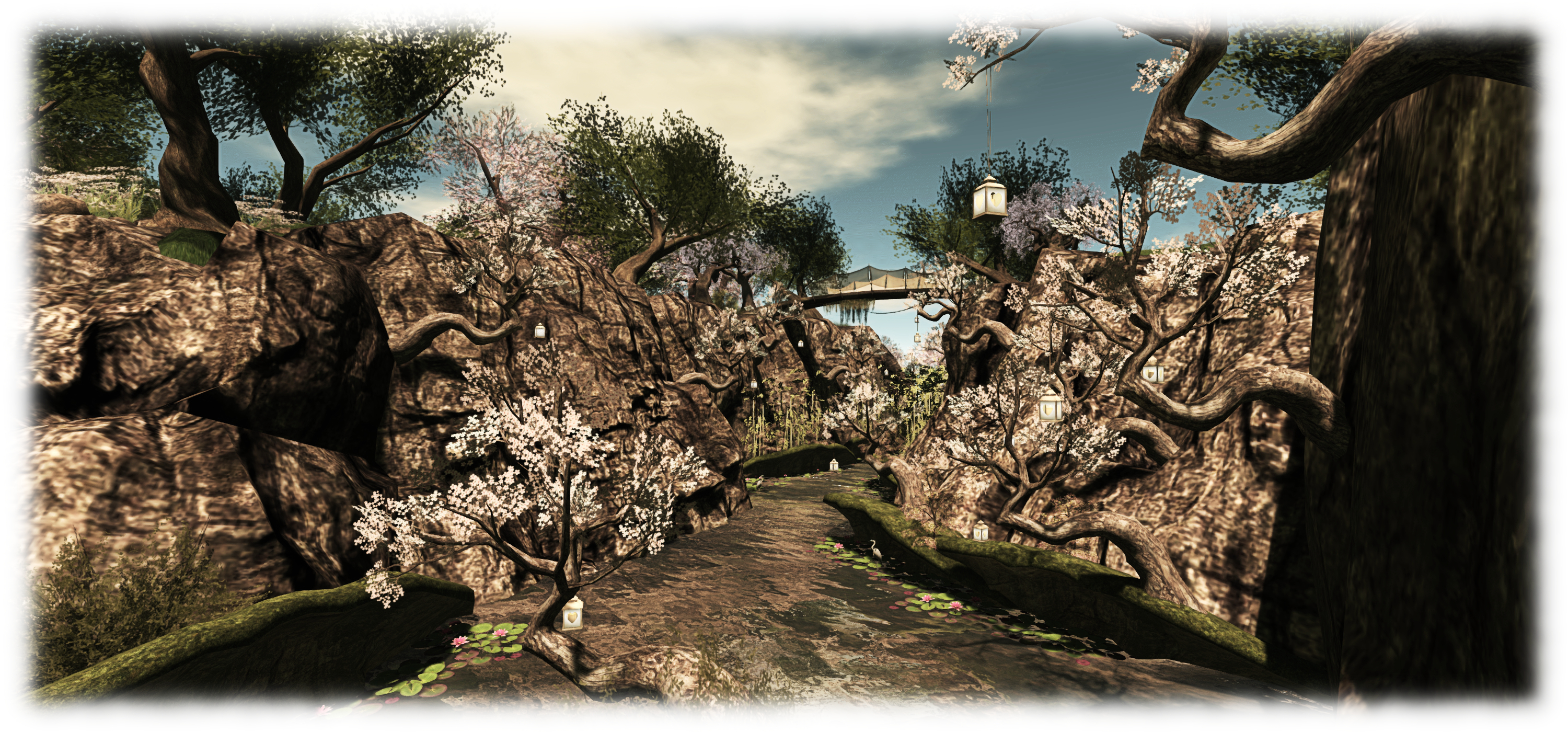
So, in part, reads the welcome which is ethereally whispered to those arriving at Pandora Box of Dreams, in the Homestead region of Diamond Bay. Designed by Lokhe Angel Verlack (Jackson Verlack), this is a place where, as the introduction suggests, Dreams are encouraged. The greeting is given at the arrival point, high in the air over the region, as you pass through a series of veils to come to a bed located among shrubs heavy with leaves of green and red and gold, and among them, slender boughs bearing white sakura blossoms. Climb on to the bed, let your dreams take you, and you’ll be transported to a land rich in colour and filled with the sounds of nature. Pandora's Box of Dreams, Diamond Bay; Inara Pey, April 2015, on Flickr Pandora Box of Dreams, Diamond Bay (Flickr)

Your journey through this land – a series of beautifully sculpted islands rising on rugged cliffs and rocks from the waters below –  starts within a modest Japanese bath house. Do make sure you have local sounds enabled prior to leaving it; if you don’t you’ll be missing out on the full ambience of these tranquil isles.

For the first part of your exploration, you’ll need to follow the steps up under the Torii gates, as this is the route to access the rest of the islands or, if you prefer, make an initial descent to the water’s edge deep within one of the gorges separating the islands. Once you have passed the gates on the far side of this path, however, where you roam is up to you; just as our dreams are free to lead us where they will, so to are visitors free to wander wherever their feet might take them. Pandora's Box of Dreams, Diamond Bay; Inara Pey, April 2015, on Flickr Pandora Box of Dreams, Diamond Bay (Flickr)

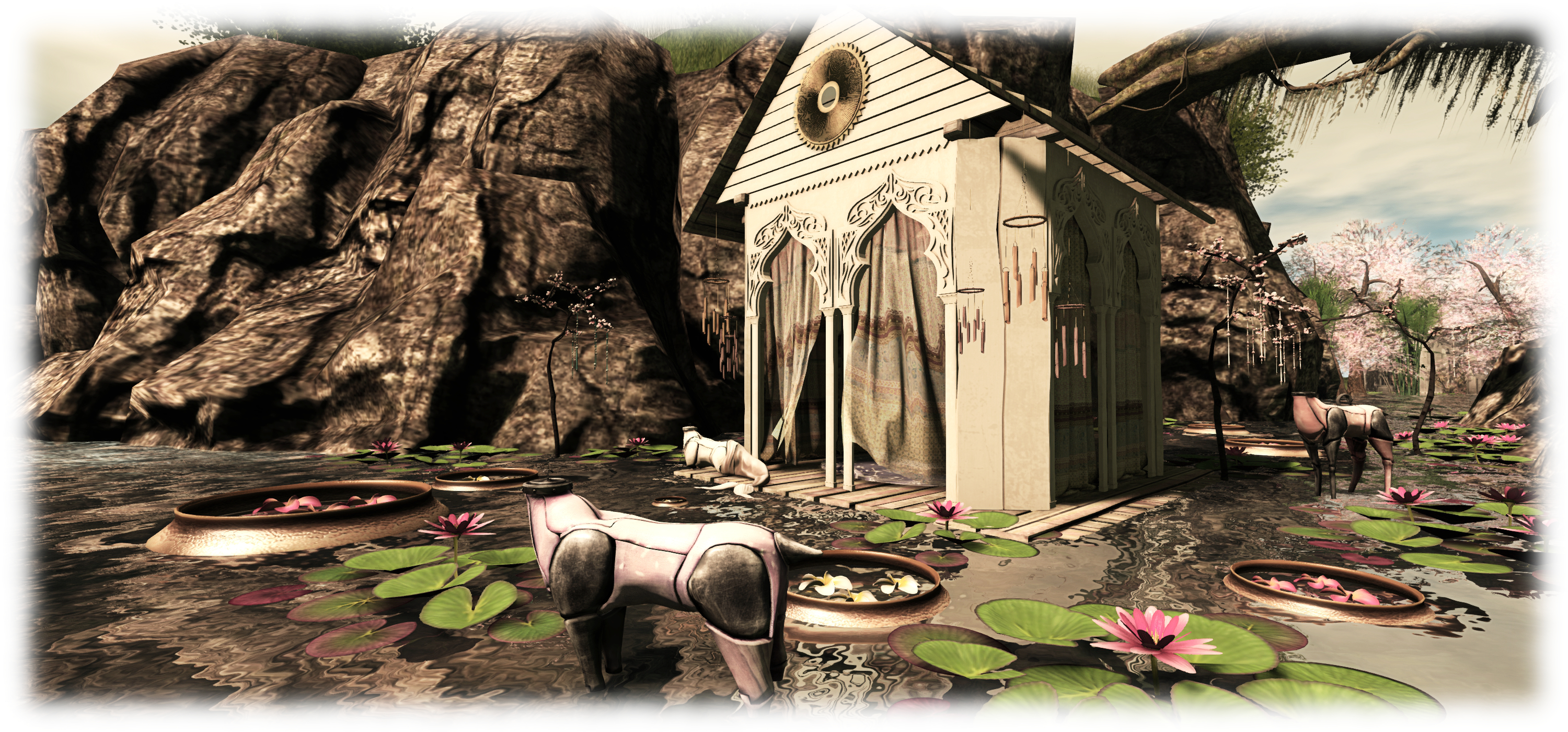
Perhaps you’ll make your way down to the waters of the deep gorges separating the islands one from another; or perhaps you’ll take the bridges spanning them to explore the other grass-covered isles and make your way to the little open house made from converted railway carriages and rest awhile.

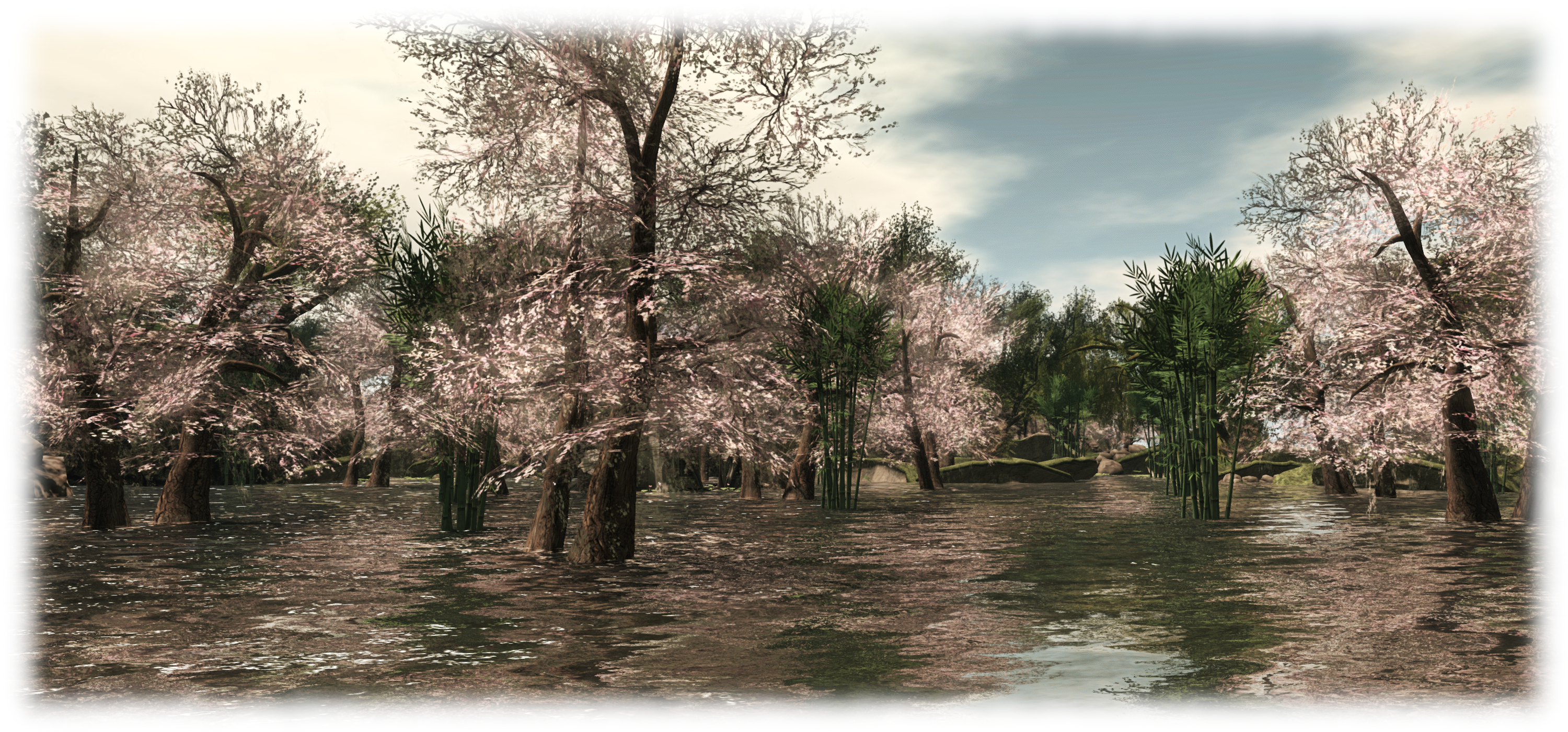
Maybe you’ll travel further, and make your way down to the water’s edge by way of tree-lined steps and past a wooden platform where Japanese delicacies await and a great stone harp stands, and thus come to the flooded cherry blossom garden. If you’re wise, you’ll give yourself time to do all of these, and discover everything else the islands have to offer, and allow them to wrap their magic around you like a comforting blanket. For those taking photographs, and there is a lot here to photograph, don’t forget you are invited to share them in the Pandora Box of Dreams Flickr group. Pandora's Box of Dreams, Diamond Bay; Inara Pey, April 2015, on Flickr Pandora Box of Dreams, Diamond Bay (Flickr)

Such is the design of the region that when it comes to photography, experimenting with windlight settings and the time of day slider is an absolute must; this is a place which lends itself naturally to a wide range of lighting, making it a wonderful subject for pictures. As with many places in SL, moving between windlights can cause a particular scene to magically and quite unexpectedly transform itself before your eyes. But here, the sensation when it does, is like slipping from one part of a dream into another, a feeling which enhances the overall theme of the region.

Do note as well that if you want to rez props for photography, you can join the local group – there is a nominal fee of L$50 for doing so, and an invite should be sent to you on your initial arrival in the region. All told, Pandora’s Box of Dreams is a visual delight; a place guaranteed to soothe the soul and / or get the camera clicking. The design is simple yet elegant, uncluttered and serene, and harmonious in its presentation. Highly recommended.

Returning to a picturesque Hideout

Piony Hideout, Lions Hill; Inara Pey, March 2015, on Flickr Piony Hideout, Lions Hill (Flickr) – click any image for full size

I first visited Pinoy Hideout, the full region designed by Neva Crystall for Kate Gavin, in November 2014, and found it to be a peaceful setting with much to see and enjoy.  The region has now been redesigned, again by Neva, to become somewhat more cosmopolitan in places whilst also retaining a rural feel as well.

The urban section of the new design looks to be leaning towards a retail venue, many of the building appearing to offer ideal space for stores. The buildings themselves present an interesting mix of styles, giving the streets a curious and engaging feel that small parts of London, Paris and Naples have been lifted up, mixed together, and then put back down in an eye-catching bend of looks and feel.

Piony Hideout, Lions Hill; Inara Pey, March 2015, on Flickr Piony Hideout, Lions Hill (Flickr)

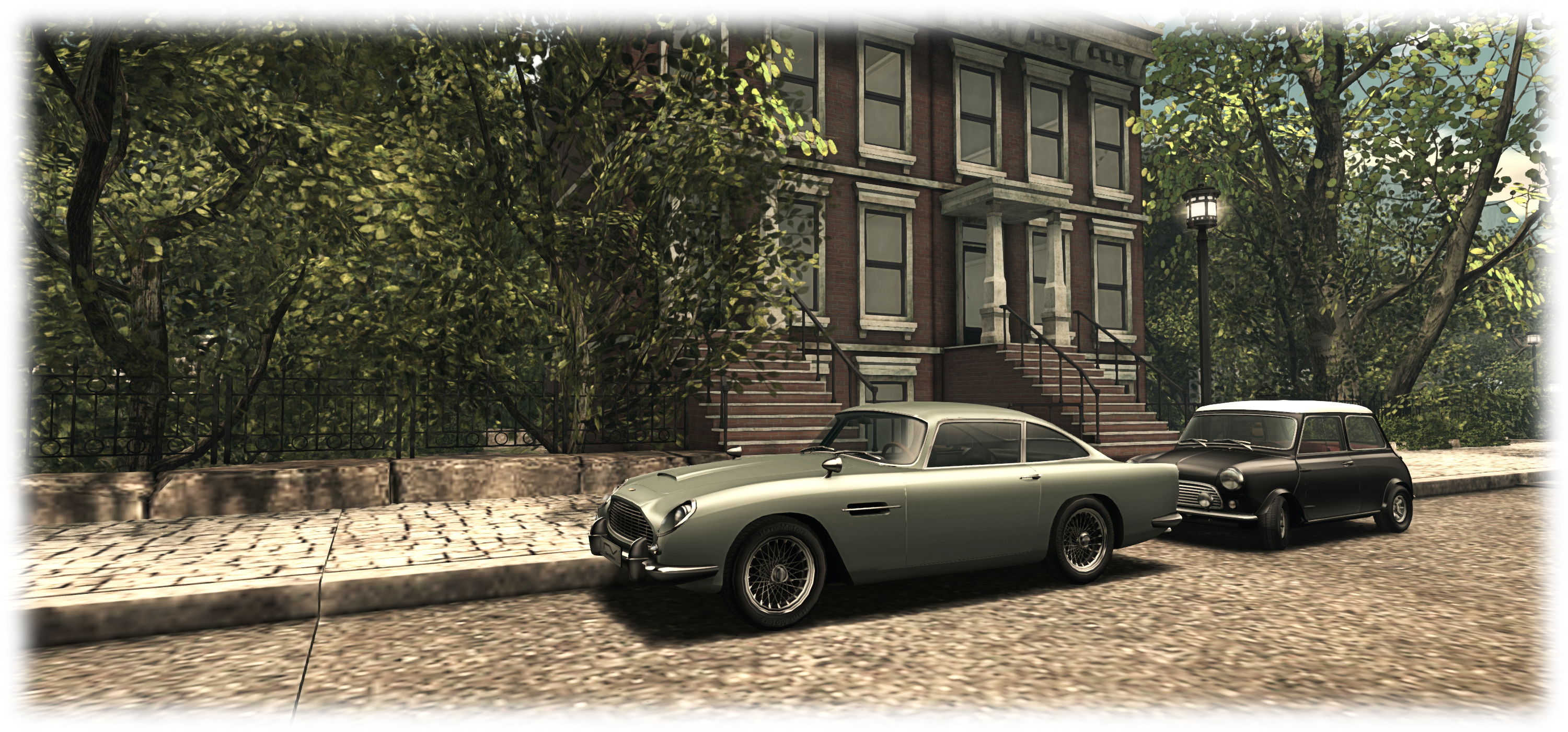
Walk down the main west / east street for example, and you might be strolling along a street in North London, with square-fronted Victorian / Georgian style houses rising from the footpath, against which are parked a little Mini Cooper and an Aston Martin, suggesting (yes, OK, colours allowing!) Charlie Croker and James Bond are in town.

Turn a couple of corners, however and you are walking a little street with a far more European look and feel, complete with Parisian newspaper / magazine kiosk, a little Vespa scooter parked alongside. Crossing the east end of the region sits a waterfront area, with stone pier complete with moored sailing boats, giving Pinoy Hideout a touch of a Mediterranean feel.

Piony Hideout, Lions Hill; Inara Pey, March 2015, on Flickr Piony Hideout, Lions Hill (Flickr)

To the north and south of the region are more open spaces, rural to north, complete with farm and country church, and more park-like to the south, where sits a large wooden events barn, paved footpaths and a gazebo-shaded seating area.

Exploring the region offers up many opportunities for photography, as well as for simply sitting down and enjoying time with friends. As well as the gazebo mentioned above, there’s an outdoor cafe, park benches and assorted cuddle spots awaiting discovery, as are little paths cutting between building and the rocky plateaus which help to naturally break-up the landscape.

Piony Hideout, Lions Hill; Inara Pey, March 2015, on Flickr Piony Hideout, Lions Hill (Flickr)

I enjoyed my original visit to Pinoy Hideout back in November, it offered an interest mix of settings as well as presenting people with a lot to do. The new design retains all of the latter; but to my eye at least, presents a much more integrated look as one travels around it; there is far more of a feel of continuity of style and theme evident than perhaps was offered in the original design. This alone makes a re-visit more than worthwhile, and it’ll be interesting to see if designers and stores do take-up residence in the offered spaces, assuming they will be made available for rent, and to see what events might take place in the barn on the south side of the region.

Piony Hideout, Lions Hill; Inara Pey, March 2015, on Flickr Piony Hideout, Lions Hill (Flickr)

Related Links

Matoluta: spring 2015

Matoluta Sanctuary, Sartre; Inara Pey, March 2015, on Flickr Matoluta Sanctuary (Flickr) – click any image for full size

Mz Marville sent me a note card recently, announcing that Matoluta Sanctuary had re-opened with a new look. As regular readers will know,  the Matoluta estate has appeared a number of times in this blog, starting with its original opening back in July 2014. The focus of the estate and the community behind it is to raise awareness of the plight of the Colonial Spanish Horse on the North American continent.

These horses, perhaps more familiarly known as Spanish Mustang by some although there are in fact several strains and sub-strains, are  descendants of the original Iberian horse stock brought to America from Spain, and are one of only a very few genetically unique horse breeds worldwide.

Matoluta Sanctuary, Sartre; Inara Pey, March 2015, on Flickr Matoluta Sanctuary (Flickr) – click any image for full size

Covering the regions of Sarte and Hudhufushi, the Sanctuary has always presented visitors with an open landscape, rich is scenery and wildlife, and offering plenty of space for equine role-play. The new design, which I know Mz Marville had been putting a good many hours work into prior to the re-opening, still offers some wide open spaces for enjoying nature; however, these have been joined by a horse ranch / farm as well, presenting even more of a mix of environments and landscaping.

From the landing point, located close to the boundary of the two regions, visitors can set out to explore on foot or, if they prefer, on horseback, using the rezzer system located alongside the barn straddling both regions, and which offers a venue for live events. Of the two regions, Sartre continues to offer open spaces where horses and other animals can roam, while Hudhufushi offers the ranch / farm environment. Here can be found a large stables, which form a part of a new project Mz is working on, which I’ll likely be covering come April.

Follow the track beyond this, and you’ll come to a field where tractors are ploughing, crops are growing and, across the furrows, another barn stands, offering shelter for pigs and cattle. Above this, atop a low plateau, sits an orchard where apples are waiting to be picked.

Matoluta Sanctuary, Sartre; Inara Pey, March 2015, on Flickr Matoluta Sanctuary (Flickr) – click any image for full size

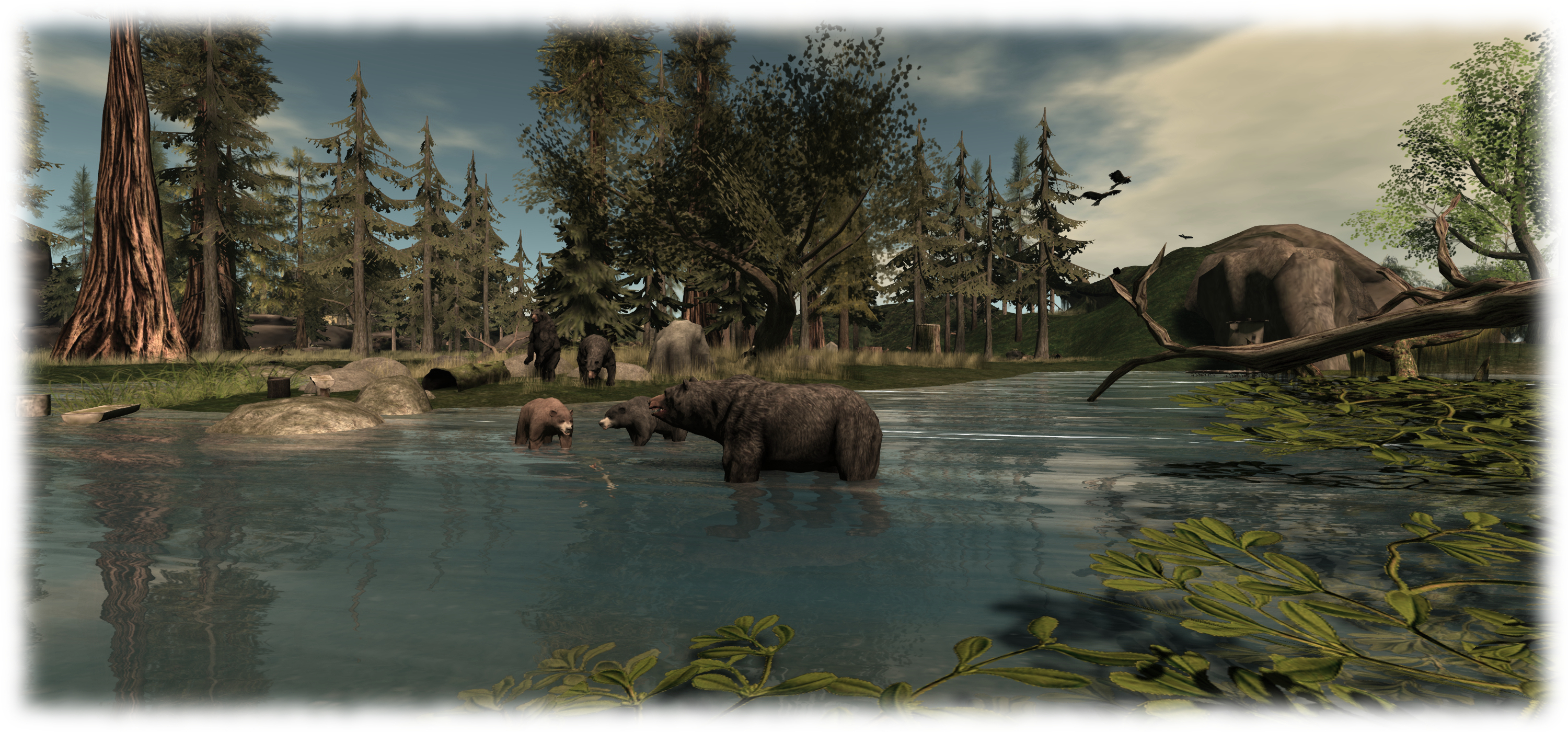
Around to the north-east of Hudhufushi, the land become wilder, blending into Sartre’s landscape of grasslands, winding rivers, tall trees and rugged, rocky outcrops; a place where deer roam, sheep graze, bears fish and eagles soar; thus many of Matoluta’s familiar motifs can be found, but located in a new environment. There is a private home located in the south-east corner of Sartre, but otherwise the entire region is, like Hudhufushi, free to roam.

Throughout both regions there as numerous places to sit and relax – camp sites, tree houses, and so on, and plenty of opportunities for photography, including posed selfies in a hot air balloon or astride a pack-laden horse. Those who aren’t so keen on getting around on horseback can find a bicycle rezzer at the edge of the track in Hudhufushi, and can thus pedal their way around places.

Matoluta Sanctuary, Sartre; Inara Pey, March 2015, on Flickr Matoluta Sanctuary (Flickr) – click any image for full size

To mark Matoluta’s re-opening, a photo contest is once again being run, although time is growing short for entries – all of which must have been received by April 1st.  On offer are three prizes of L$750 apiece. Thus wishing to enter should submit up to two photos of the Matoluta regions to the Matoluta Flickr group. The photos must have the region SLurl in their descriptions, but that’s the only requirement. Pictures can be landscape or portraits, although entrants are encouraged to display a love for nature and focus on awareness for the preservation of wild horses.

Related Links

Caladan: tranquility in an Indian garden

Caladan, Forever Dreams; Inara Pey, March 2015, on Flickr Caladan (Flickr) – click any image for full size

Morgana Carter alerted me to Caladan, a stunning garden build by Antinéa (Antinea Torok), after she spotted Goizane Latzo’s photos of the garden over on the Bitacora blog. Although intended to showcase Antinéa’s parcel and sim design skills, the garden is open to visitors as a place to visit, presenting a beautiful and tranquil setting to be explored and enjoyed at leisure.

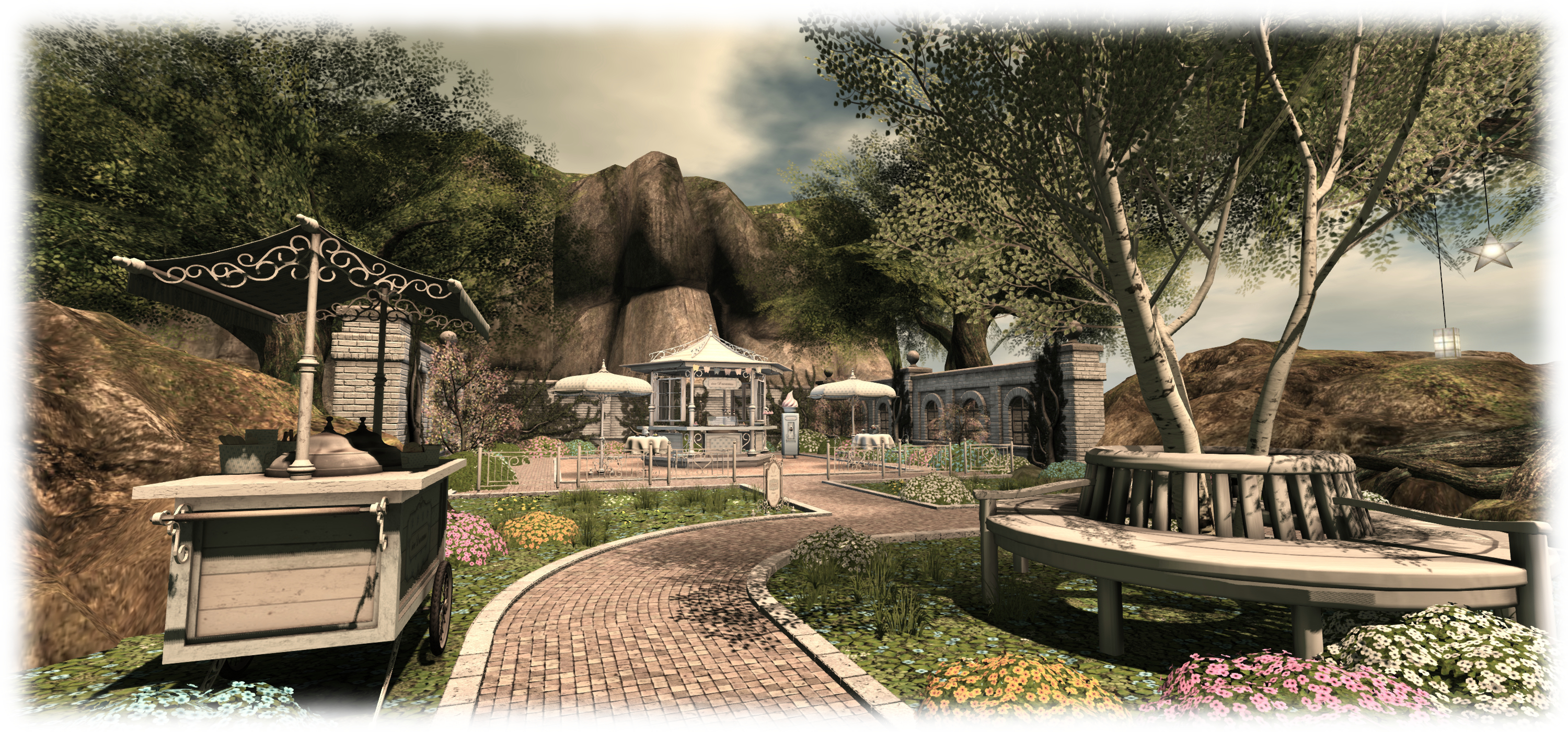
The arrival point, to one side the the parcel and sitting atop a small plateau area, offers seating and refreshments for visitors, with a small ice cream kiosk and accompanying trolley, making it a delightful little meeting place it is own right. However, a paved footpath leads the way down from it, inviting visitor to descend and explore, offering a view across open water to a off-sim extension as they do so, its position giving the impression that one is looking out over a broad, slow-flowing river, bordered on the far bank by high cliffs and foothills, tall waterfalls dropping down their flanks.

Caladan, Forever Dreams; Inara Pey, March 2015, on Flickr Caladan (Flickr)

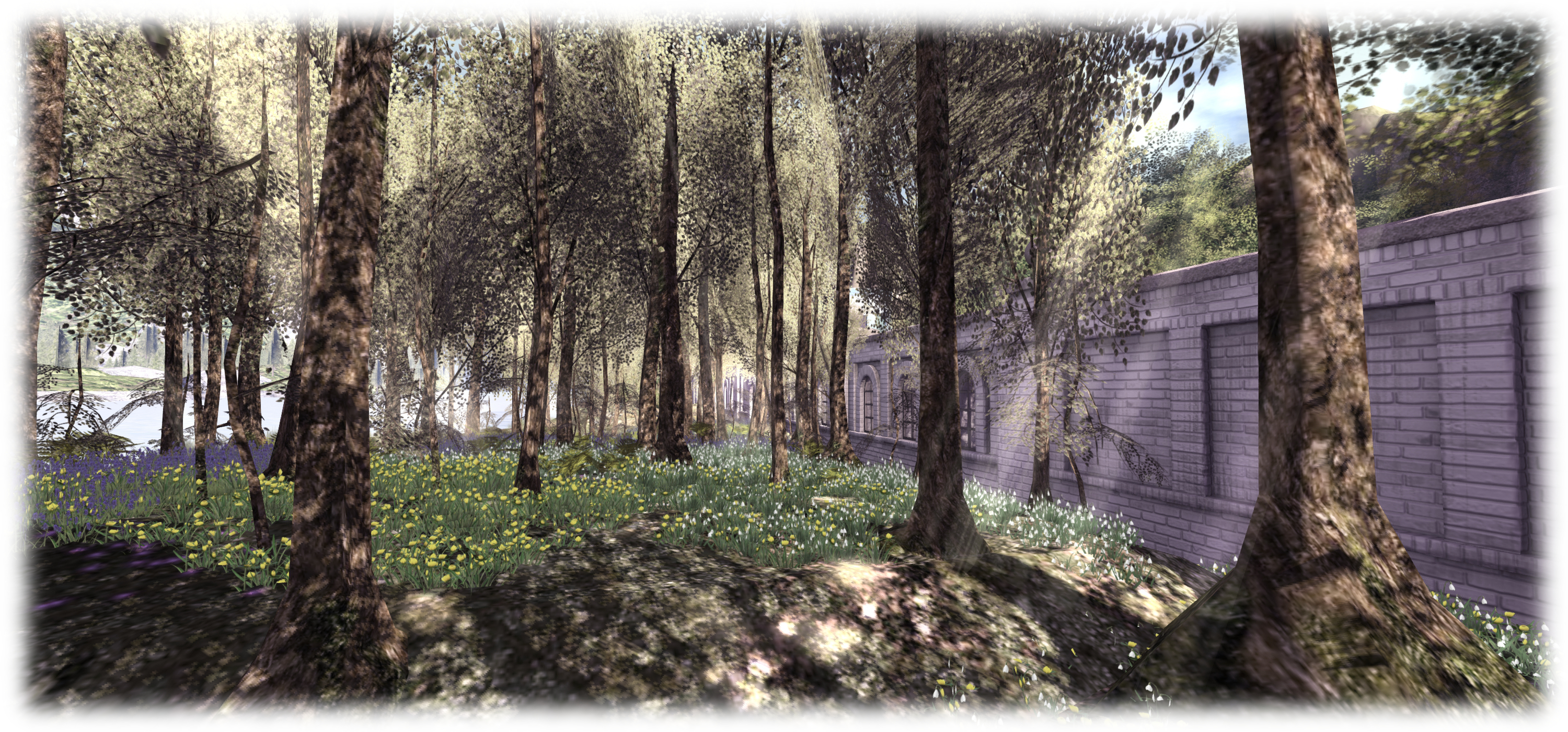
Continue onwards along the path and it gives way to a grassy steps, leading down to a waterside walk which gracefully arcs between the river and a wooded copse filled with the colour of summer flowers, a tall grey stone wall just beyond it, hinting at something yet to be discovered.

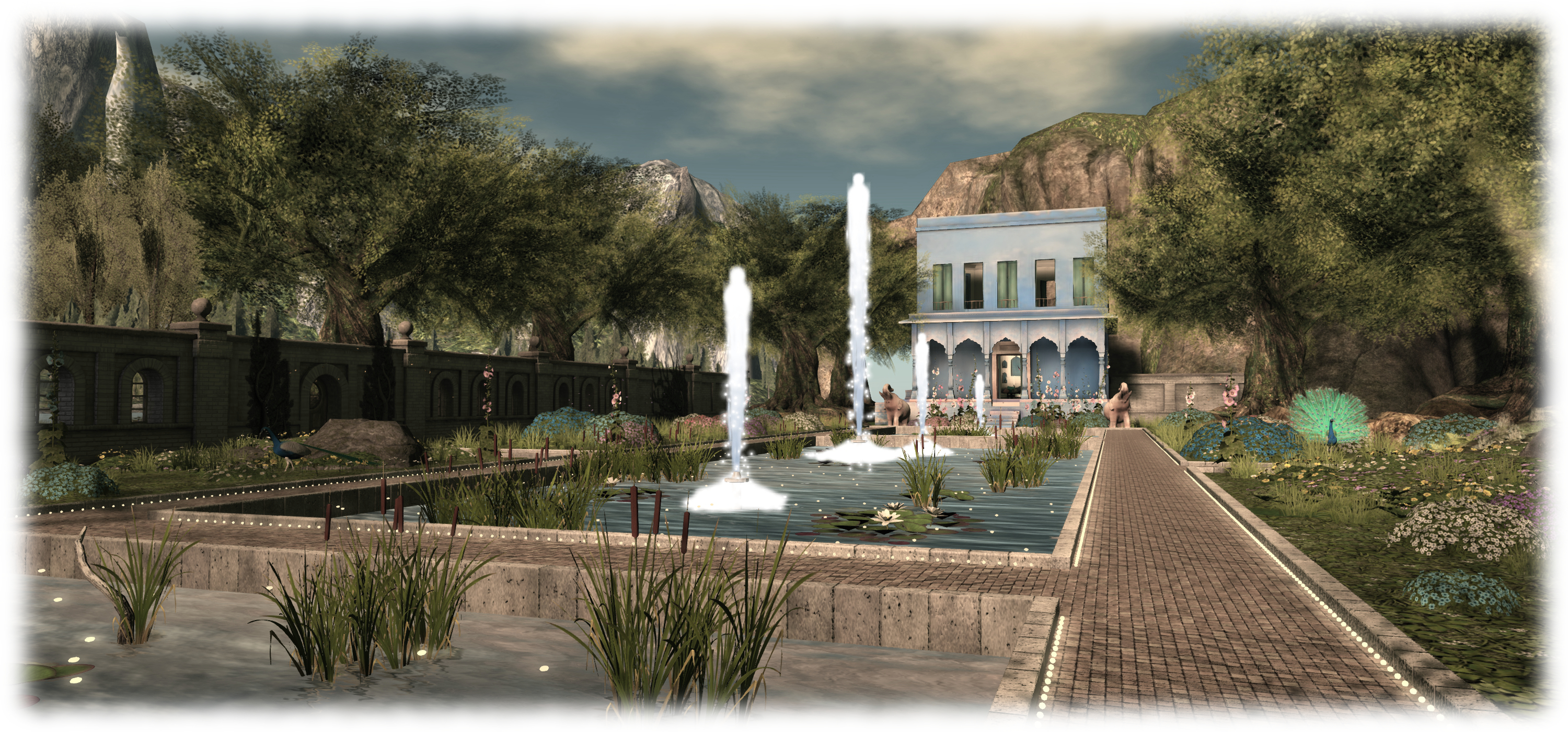
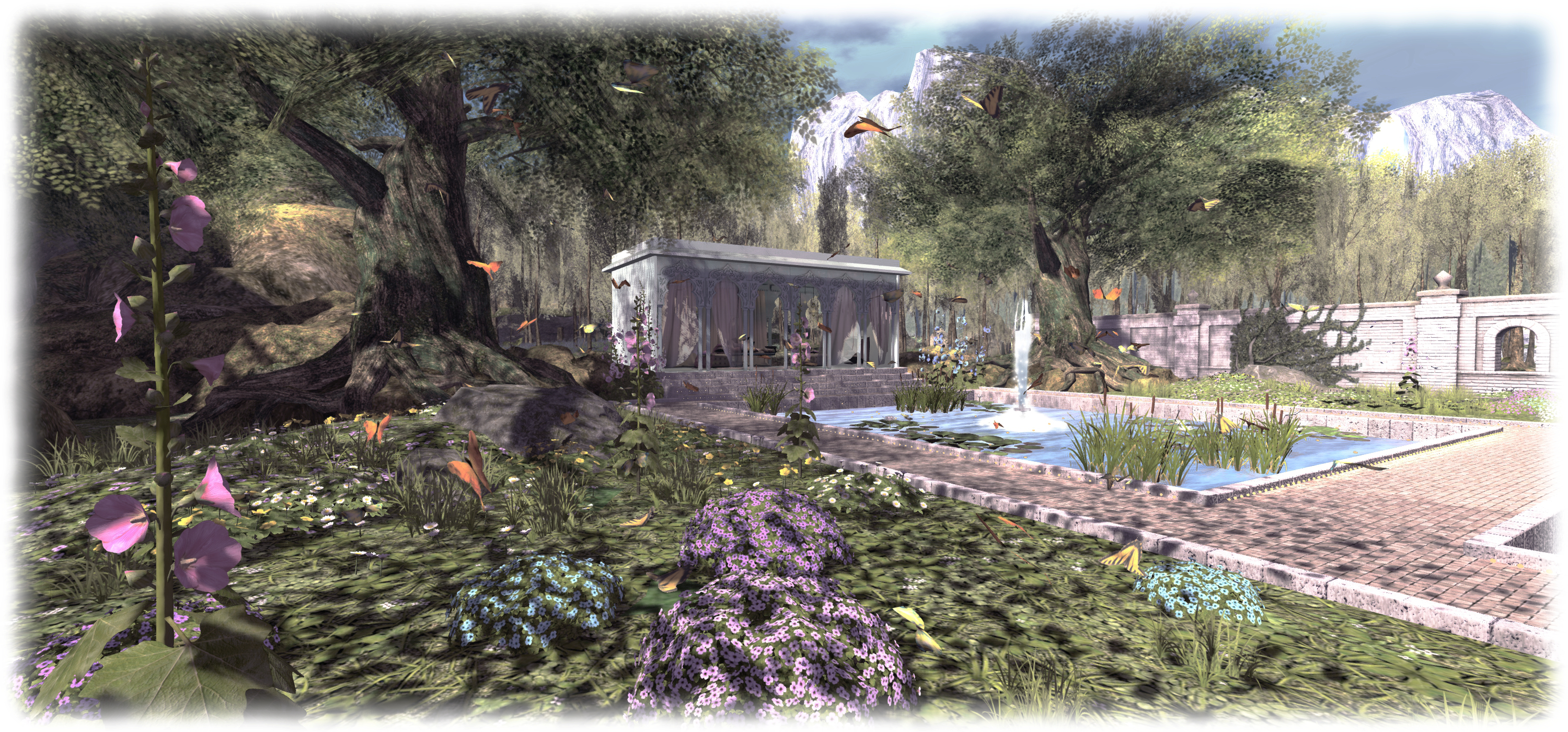
Follow the path as it curls around the copse, and it will bring you to the wall – or more correctly, to a heavy wooden door set into the wall. Beyond this lies a beautifully designed garden, a place which could have been lifted from India or perhaps Sri Lanka, such is its design. As you enter, to one sits a tall blue-walled house, and to the other, facing the house, a cool summer pavilion. Long pools of water with tall fountains lie between the two. Footpaths, gently lit by tiny lights set into their bounding kerbs, offer the way around and between the pools and link house to pavilion.

Caladan, Forever Dreams; Inara Pey, March 2015, on Flickr Caladan (Flickr)

The detail here makes Caladan a delight to the eye; flowers bloom, peacocks strut, butterflies circle over flowers and sunlight slants its way through the shade of trees to one side of the garden, opposite the wall, where the ground rises sharply beyond, providing a natural barrier to the rest of the world.

This is a place not only to be seen, but savoured. Birds sing, the splash and hiss of fountains their accompaniment, while the summertime look and feel becomes a balm which encourages relaxation, be it within the pavilion or inside the coolness of the house (which is open to the public).

Caladan, Forever Dreams; Inara Pey, March 2015, on Flickr Caladan (Flickr)

Featuring content and designs from a number of designers and merchants, and with plenty of opportunities for simply sitting and relaxing (or cuddling) as well as for photography, Caladan offers a tranquil respite from the hustle and bustle of Second Life; you can even partake of a little yoga to help cleanse mind and spirit while visiting!

Related Links

Caladan (Rated: Moderate)

Returning to a Second Life watercolour

The Trace Too; Inara Pey, March 2015, on Flickr The Trace Too (Flickr) – click any image for full size

Almost a year ago, I finally got around to blogging about Kylie Jaxxon’s delightful homestead region, The Trace, having featured it a number of times in snapshots without actually writing about it. At the time, the region was presented as one of the most extraordinarily natural reaches of coastline I’ve seen in Second Life; so much so that while blogging, I referred to it as a watercolour, such was the beauty of the design and presentation.

Unfortunately, health matters intervened, forcing Kylie to abandon The Trace at the end of 2014 for health reasons; but there is no unhappy ending here, rather the reverse. Kylie is once again focused on Second Life, and she has once again been putting her eye and talent to work on designing a new region. This is called, appropriately enough, The Trace Too, and also fittingly, it once again presents a stunning coastal landscape, echoing the spring glory once seen at The Trace. Which is not to say it is in any way “just” a reproduction of the original’s appearance from a year ago; far from it!

The Trace Too; Inara Pey, March 2015, on Flickr The Trace Too (Flickr) – click any image for full size

The Trace Too offers visitors a splendid beach area, the tide apparently in a state of retreat  leaving the wet sand exposed under a spring afternoon’s sun, and in places still waterlogged. A lone wooden pier rises from the edge of the receding water, reached by a series of heavy wood logs to which planks have been nailed to form crude bridges over the more permanent pools of water left in the sand.

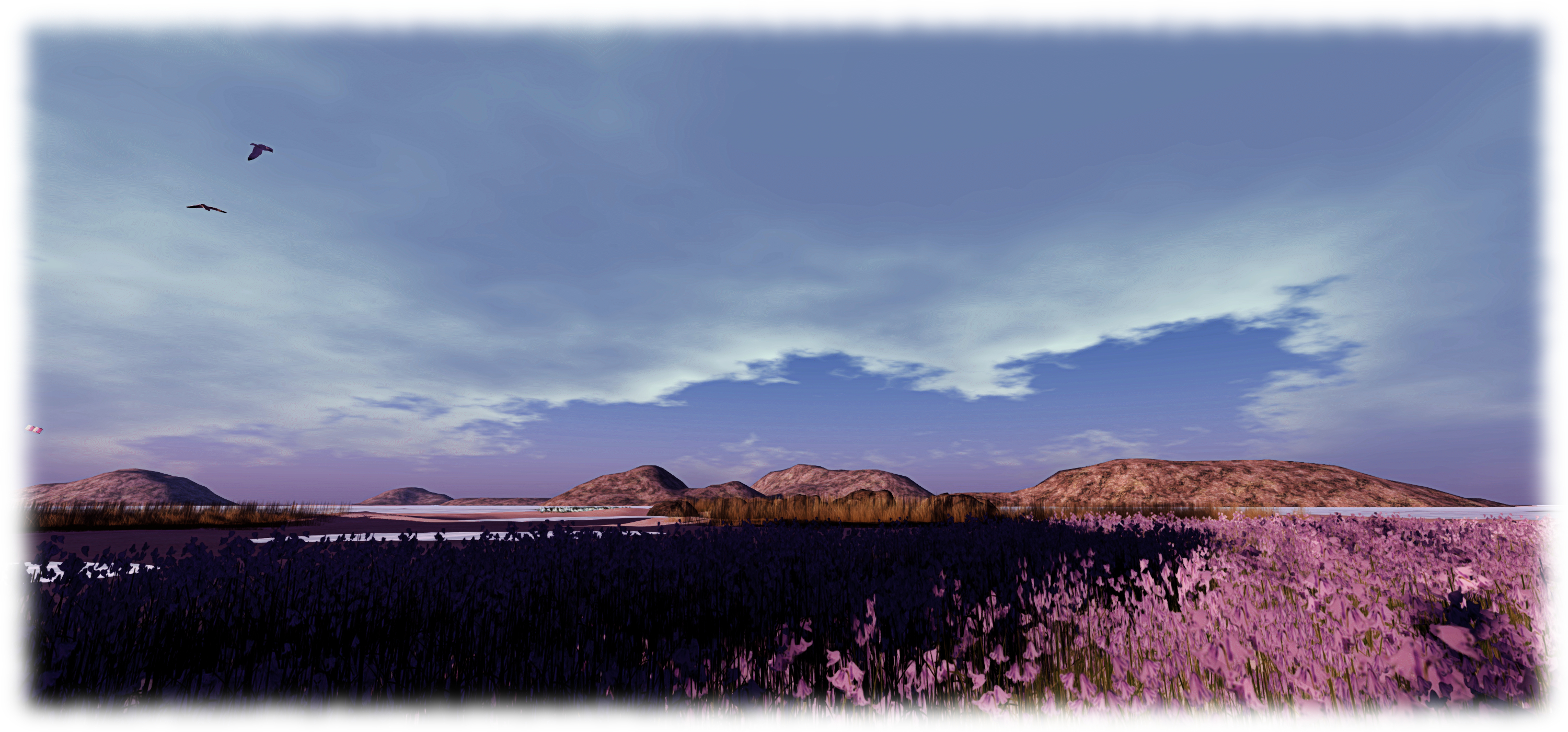
Behind these sandy flats, the island proper rises, slopes protected from any ravages from  the sea by huge boulders and rocks. Flat-topped, the island is home to a row of beach houses and a small lighthouse, the sand around them sprinkled with tough grass and a gentle tide of bluebells that surge and sway in the breeze. A path cuts through the flowers, running down to another beach which stretches away toward distant waters, the sand here dry and fine, a small caravan park testament to the fact the sea doesn’t encroach here.

The Trace Too; Inara Pey, March 2015, on Flickr The Trace Too (Flickr) – click any image for full size

With the surrounding offshore islands, it’s not hard to imagine this to be somewhere on the New England coast; indeed, with a little more grass to cover the ground, I could well imagine it being somewhere on the Scottish coast, looking out over the waters of the Atlantic at some of the inner islands. As it is, while walking the beach, I was put in mind of the long summer time walks I’ve enjoyed along the sands below Bambrough Castle in Northumberland, even if large offshore islands are not common in the waters of the North Sea there…

There are plenty of places to sit to be found throughout the region, all of them offering calming views of the sea, and many to be enjoyed as a group as well as individually or as a couple, making The Trace Too an ideal rendezvous when meeting friends. Rezzing is open for those wishing to pull a few props out of their inventory for photography, but do please remember to pick things up after yourself! Should you enjoy your visit, please do consider showing your appreciation for Kylie’s work through one of the tip cans which can be found at various points across the island.

The Trace Too; Inara Pey, March 2015, on Flickr The Trace Too (Flickr) – click any image for full size

As you may gather, The Trace Too is wonderfully evocative and atmospheric, and definitely somewhere you’ll want to visit if you haven’t done so already. And when you do, please make sure to have local sounds enabled to catch the hiss of the tide and the plaintive cries of gulls, many of which can be found circling and gathering in the north-east corner of the region, and all of which adds further depth to the experience.

Related Links