Sailing away at the End of Time

End of Time comprises four regions in Second Life: Crow, Eotia, Tide and Wabe. It offers wide open spaces to explore and enjoy, complete with water on which to sail. Wabe carries an Adult rating, otherwise the regions are all moderate. All four are open for people to visit, although there are some private residences on Eotia, and visitors are asked to respect people’s personal space around these.

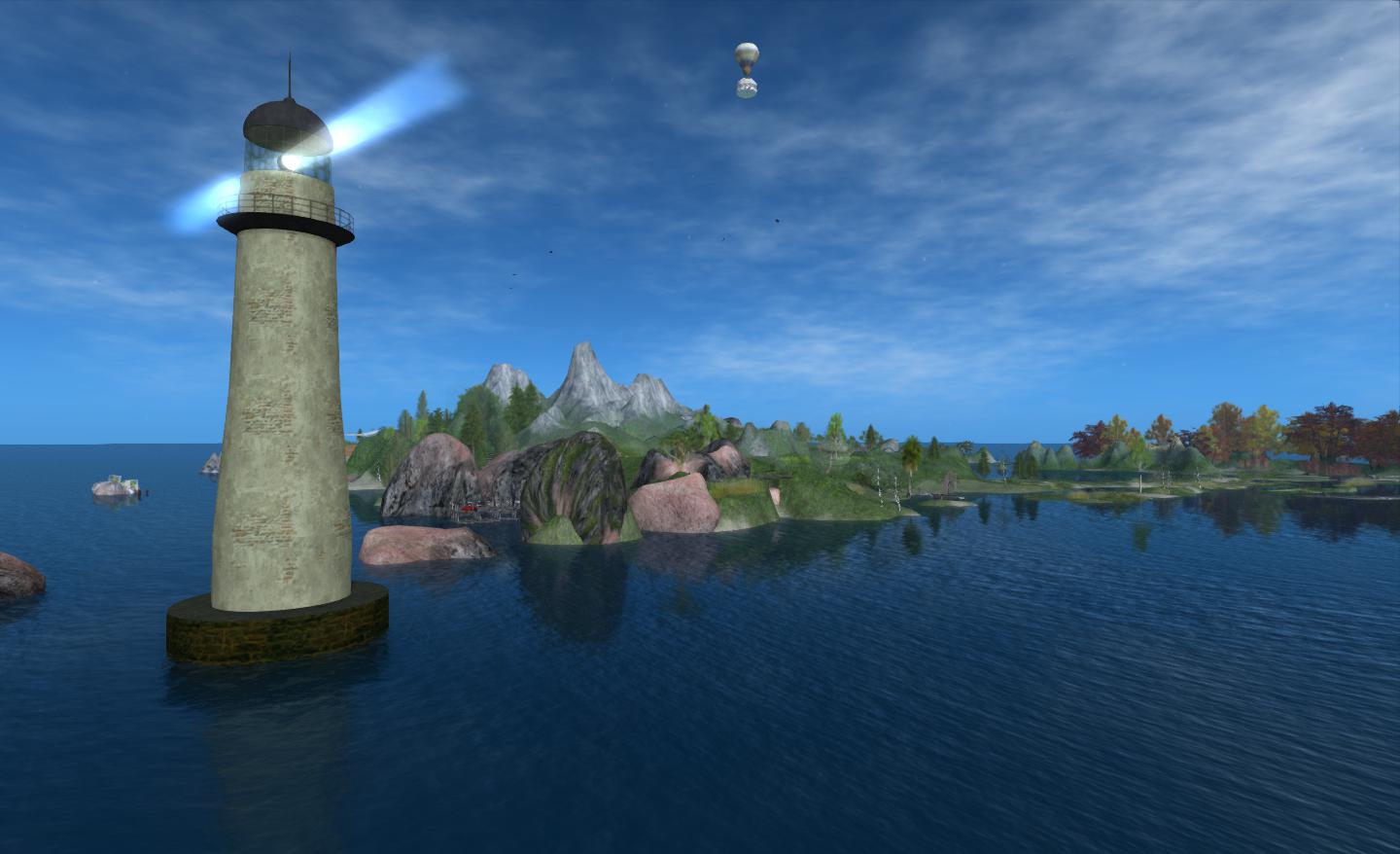
Teleporting to End of Time will deliver you to the North-east corner of Crow, with the backdrop of the sea behind you, from which rises the tall finger of a lighthouse. Before you lay rolling hills, meadows, beaches, walks, and places to simply sit and enjoy, either on your own or with a friend or loved one.
End of Time

Where you go from here is up to you – there is a teleport board if you want to hop around the main sights, or you can set off at random or follow the signposted paths. If you’re not up to walking and the teleport doesn’t appeal, take the steps down from the arrival-point and pick up a bicycle, which can be a fun ride – and the nice thing about it is that it doesn’t immediately de-rez on dismounting, so you can actually get off and walk around a spot for a few minutes before resuming your ride. Be warned, however, that the bicycle doesn’t handle going up slopes very well! For my part, I like to wander when I arrive, although I have a few favourite spots I enjoy, and sometimes go directly to one of them.
End of Time

Several of the beauty spots in the regions are within their own parcels, which have parcel privacy enabled, allowing people to sit and talk without being overheard from outside, or having to rely on IMs.

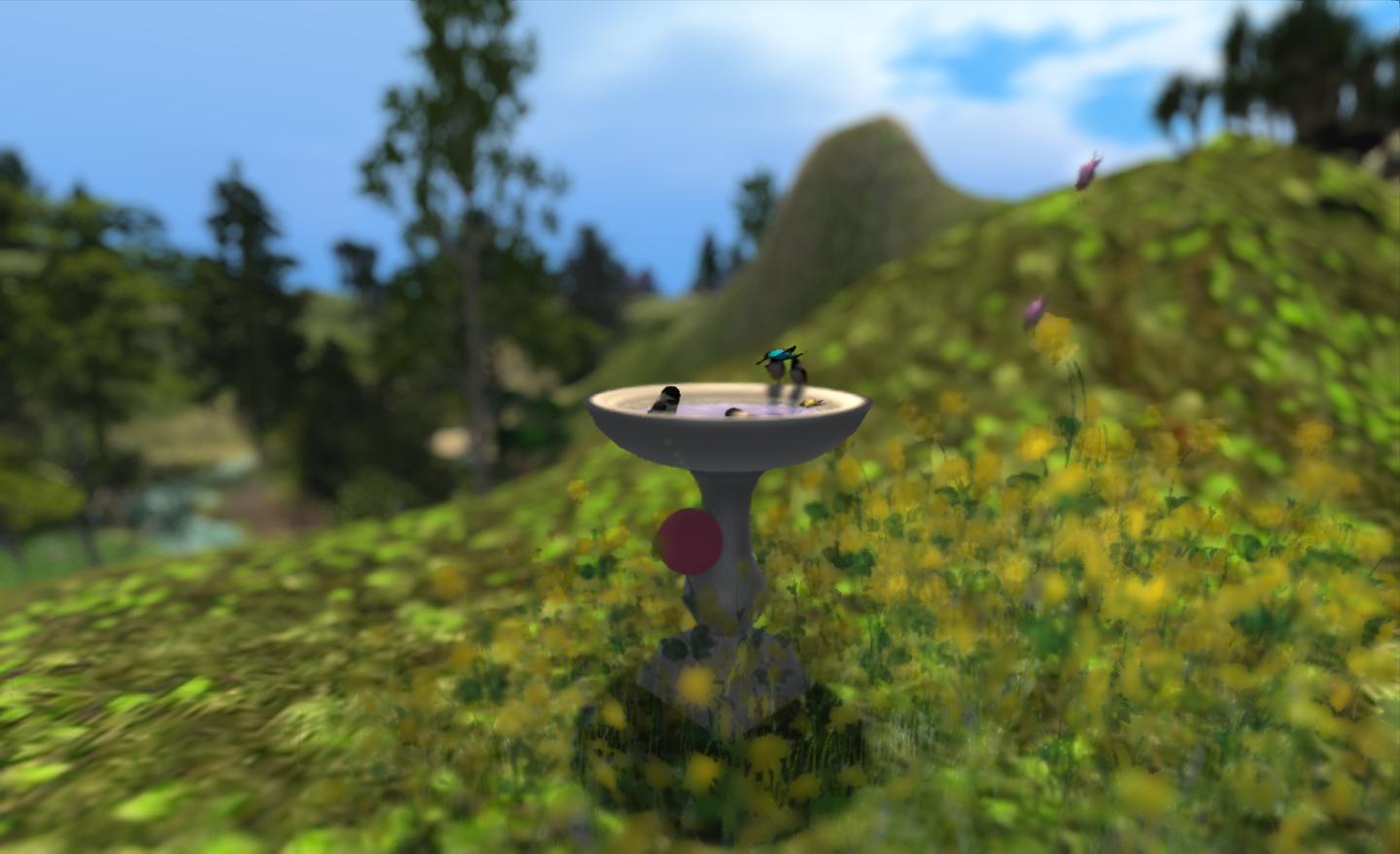
Wildlife is very much a part of End of Time, with rabbits, birds and butterflies all around the main teleport arrival point, deer in the woodland glades, ducks on the water, and more butterflies flittering around meadow flowers.

Butterflies is also the name of an art exhibit by Feathers Boa, and which can be found in – or rather under – Eotia. It features seven images by Feathers depicting the seven ages of woman. The pictures carry one from babe to old age, each stop along the way marked by words which encapsulate the age being depicted. Given my own position in the seven stages, I find it an evocative piece which causes me to recall past years and give thought to the future. If I’m honest, it also raises the question as to why I devote a fair amount of my time sitting in front of my computer using a virtual world – but that, perhaps, is something for a future post in this blog.

End of Time

To the east of Eotia and Crow lie Wabe and Tide, both of which are largely devoted to water. Both have open rezzing, and visitors can, if they wish, rez their own boats and sail in the lagoon-like waters (please remember to take back anything you do rez when you’re done!). For those without boats of their own, a sailing skiff can be found at the quay at the north end of Crow, which you can (with a little cheating) sail into Wabe and Tide.
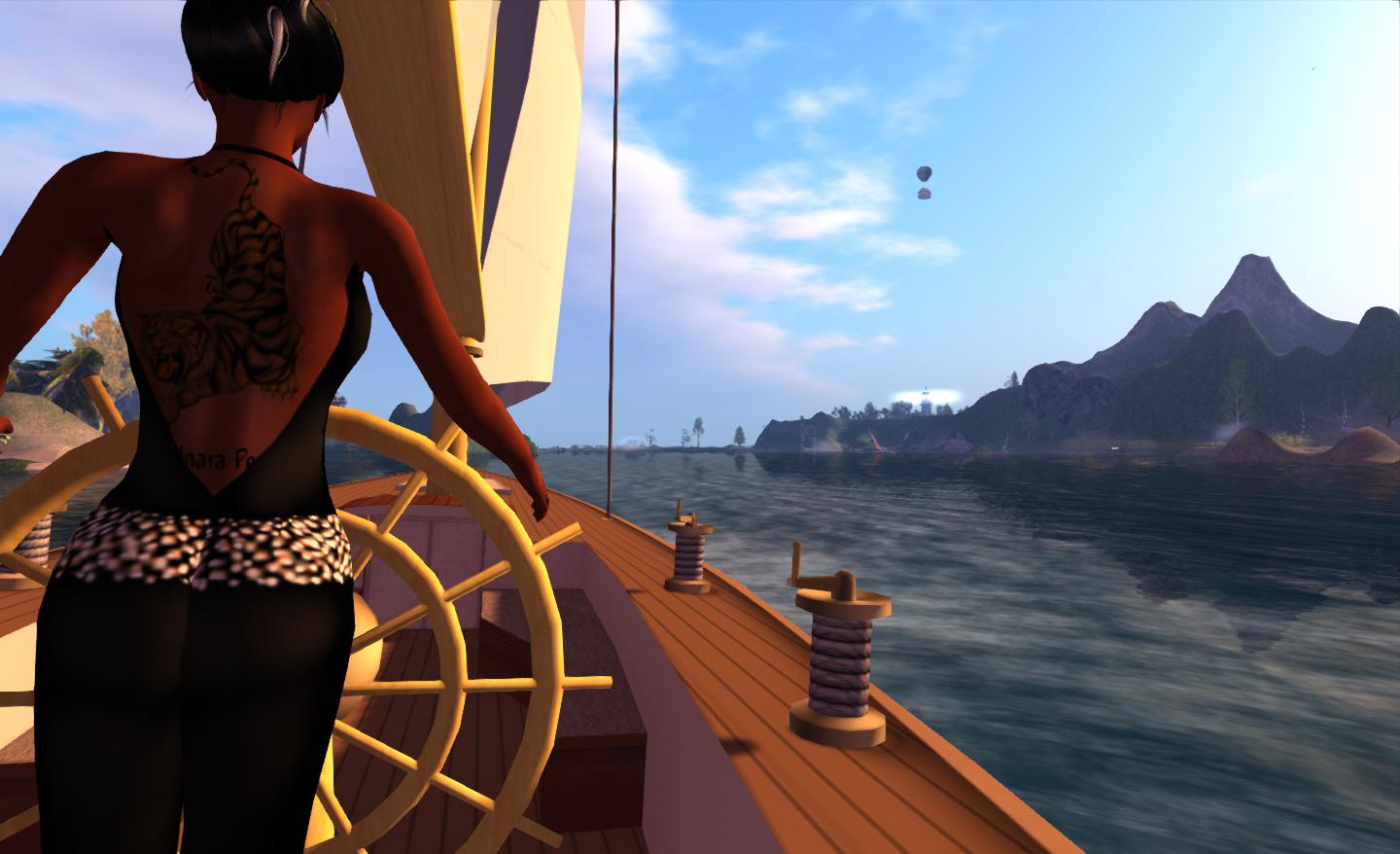
End of Time

All four regions offer a relaxed approach to exploration and places to share with others. There are a number of dance anywhere systems among the places to visit, allowing the romantically inclined to dance some of the time together – and the music stream lends itself to romantic dancing. All four are also well-suited to photography as well, and lend themselves very naturally to a wide range of Windlight settings.
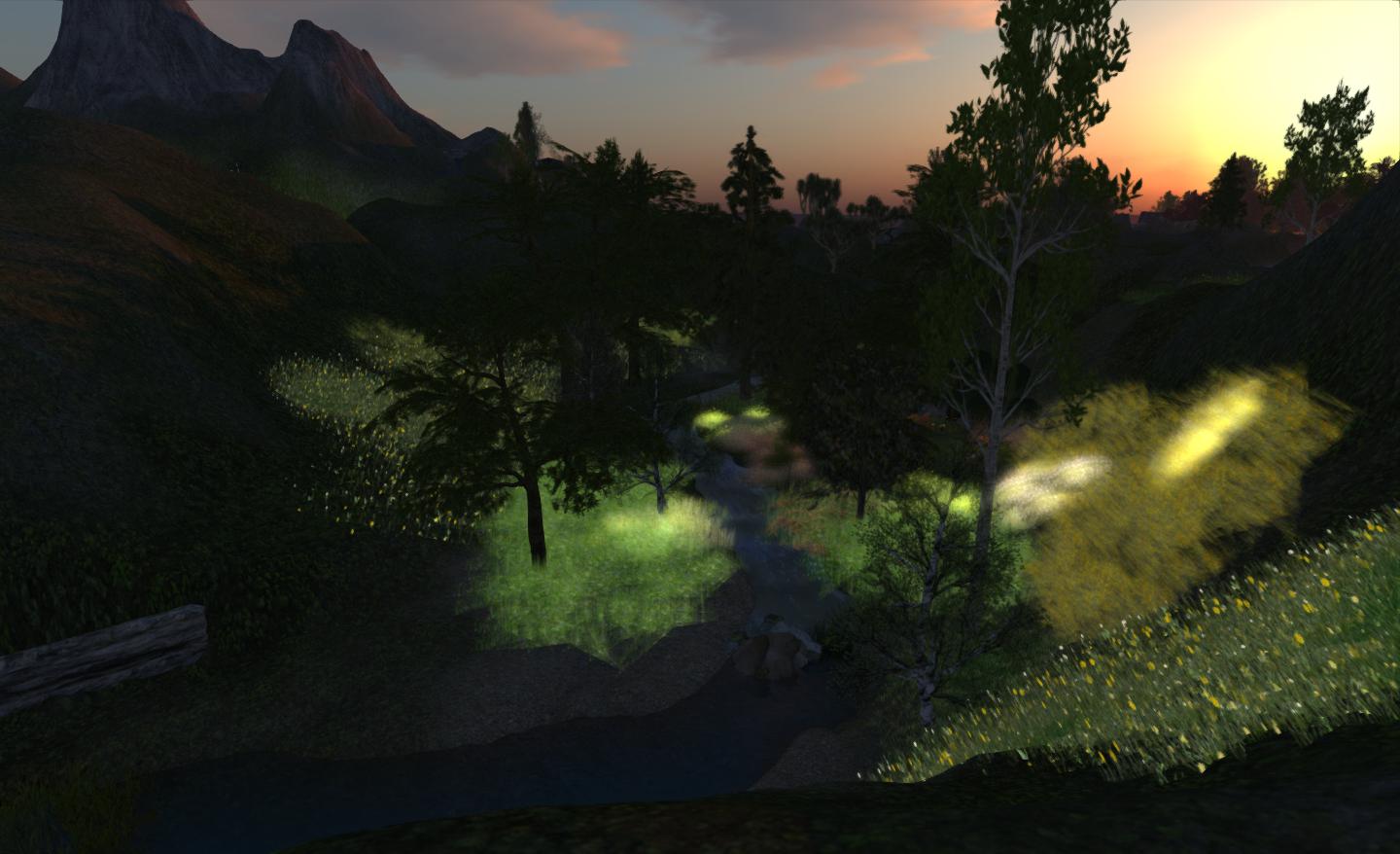
End of Time

End of Time is one of those places that provides exactly what it says on the bottle: a place to relax and a place to explore. Enjoy!

Related Links


Chouchou: blending music and art in SL

Chouchou is a Japanese duo formed in Second Life “to search for new possibilities of music”. In-world they are musician Arabesque Choche and vocalist Juliet Herberle, who have been together since 2007.

Together they have three regions in Second Life, centred on Chouchou itself, where one can visit and hear their music or attend their concerts. The regions contain unique and fascinating builds open to the public, and which are well worth a visit by SL explorers and photographers alike.

Before you pay a visit, however – and I hope you will after reading this article – please make sure you have your viewer set to use the region Windlight defaults and that you have media enabled in order to hear Chouchou’s evocative music.

Chouchou

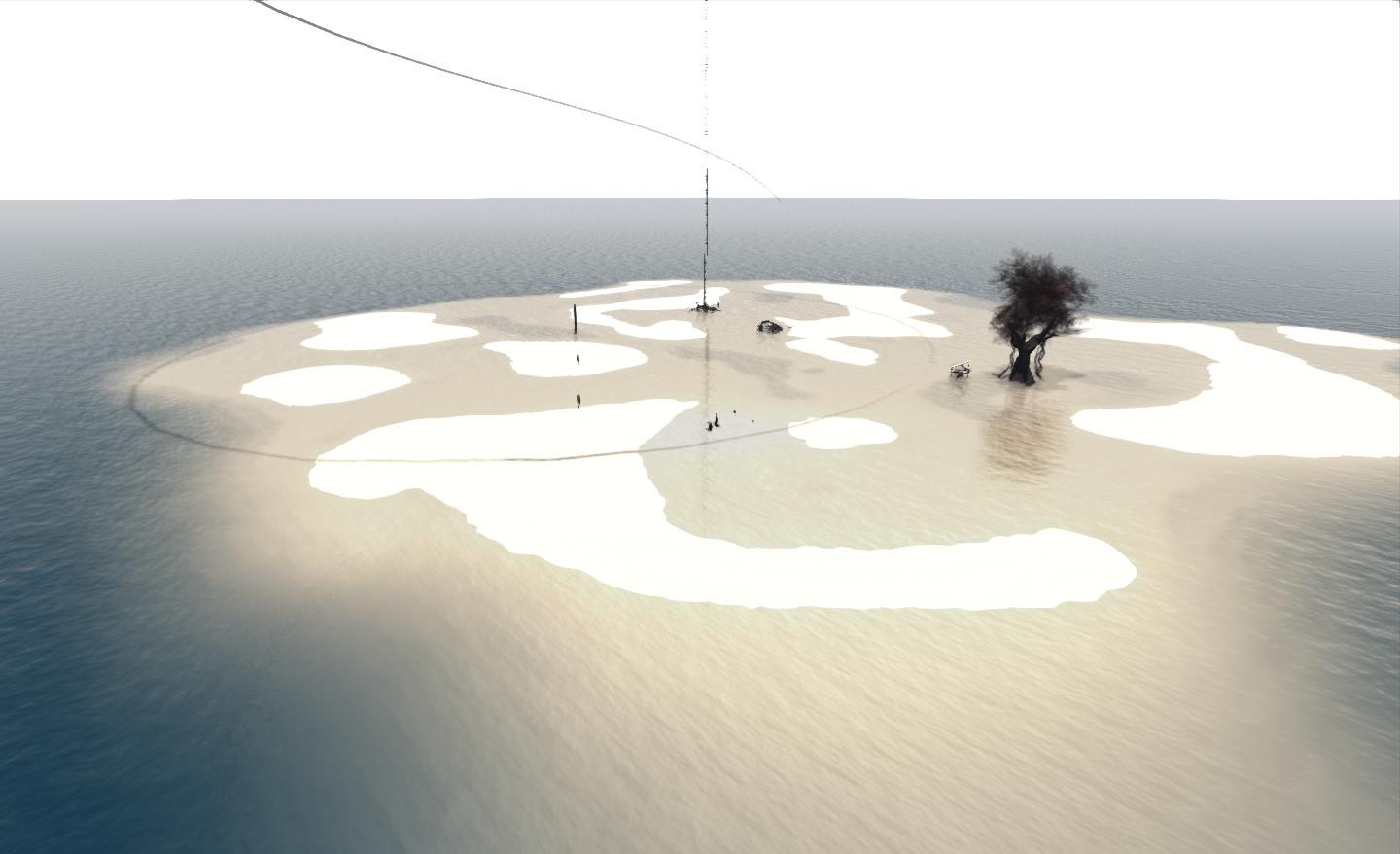
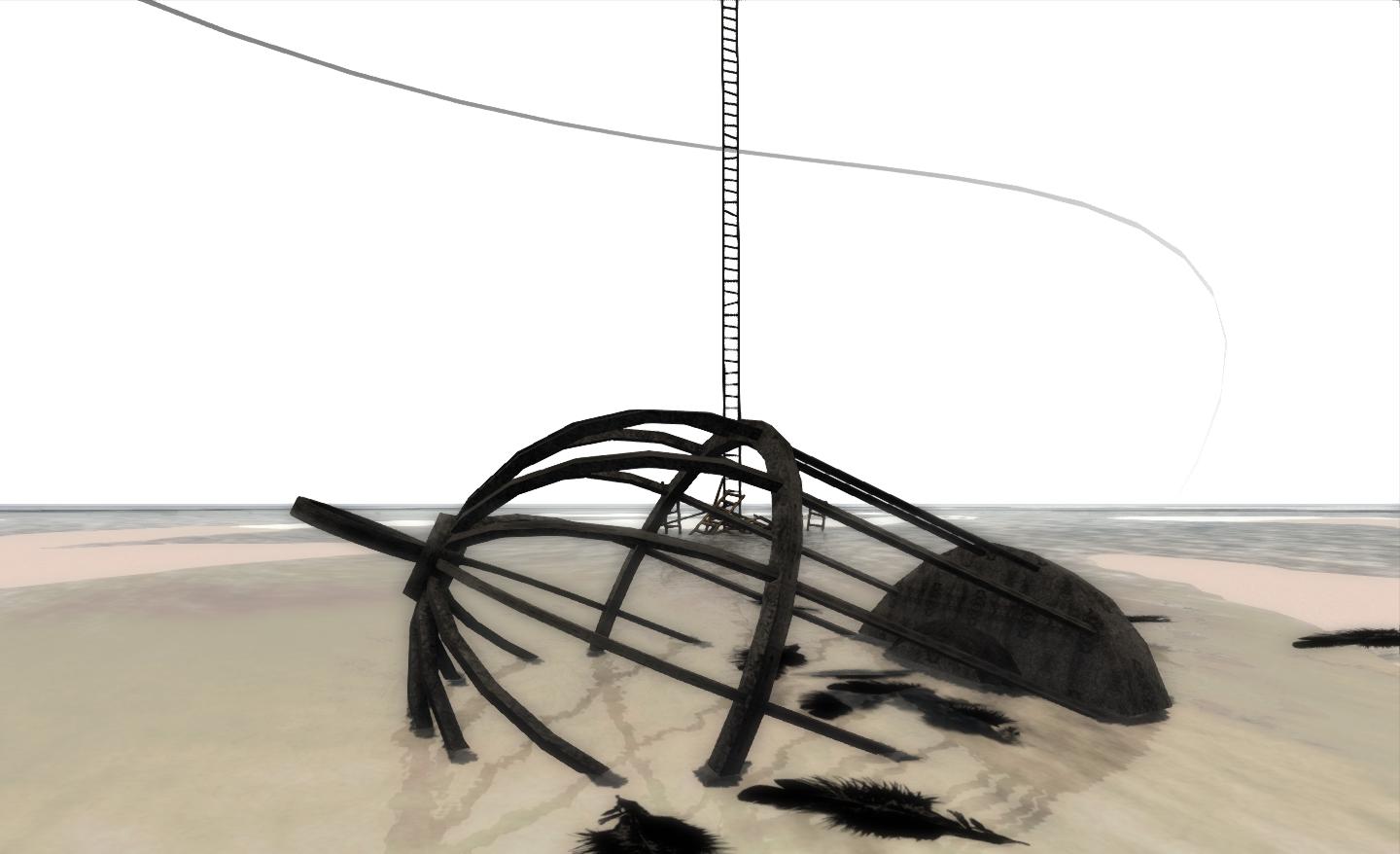
Chouchou region at ground level is a minimalist build – just a series of sand bars in the water, interspersed with a few seemingly random items: a piano sitting under a lone tree, a cage of some description and a ladder leading upwards to the sky. Feel free to wander and listen to the music; Juliet Herberle has a wonderful voice when singing in both English and Japanese, and it forms a melodic accompaniment to your wanderings – which will no doubt lead you to the strange, heaven-pointing ladder.

Cage, and ladder

The ladder is actually a teleport, and will whisk you  to one of three unique sky venues which are an essential part of any visit to Chouchou. Additionally, the teleport can take you to a store (on another region) where you can obtain an in-world radio which allows you to play Chouchou’s music on your own land as well as Juliet Herberle’s own radio show (presumably in Japanese – I confess to not having tuned-in).

Islamey

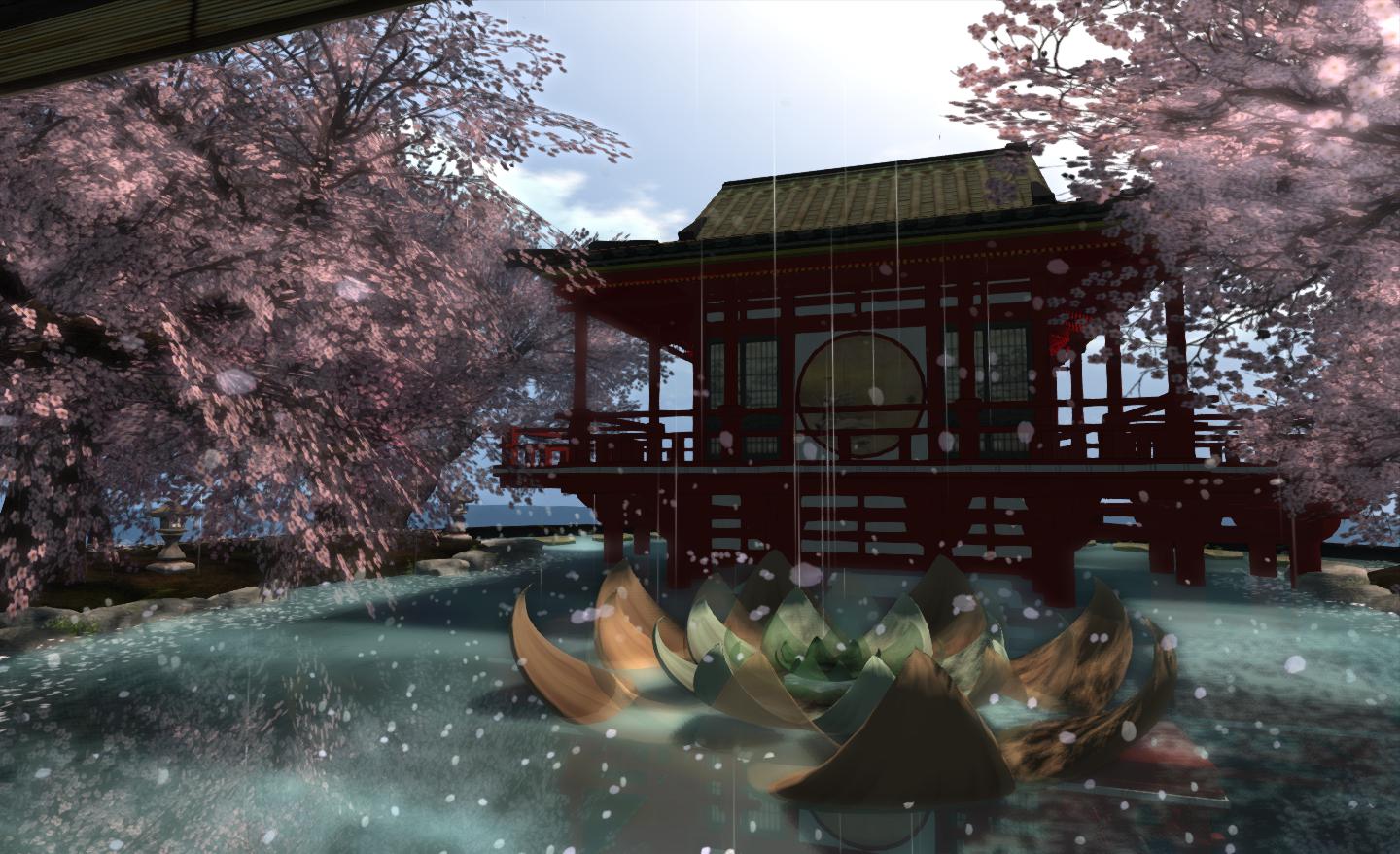
Islamey, one of the three skyborne venues, is a Japanese-themed garden and a venue for Chouchou’s monthly concerts. When not being used for these, it is a place of quiet contemplation where you can come when you want to give free passage to thoughts and ideas, or when you simply want to find peace and let Chouchou’s music soothe you gently. It would be nice to have a few more places to sit quietly around the garden, but this doesn’t detract too much from the serenity of the place.

Islamey

The Babel

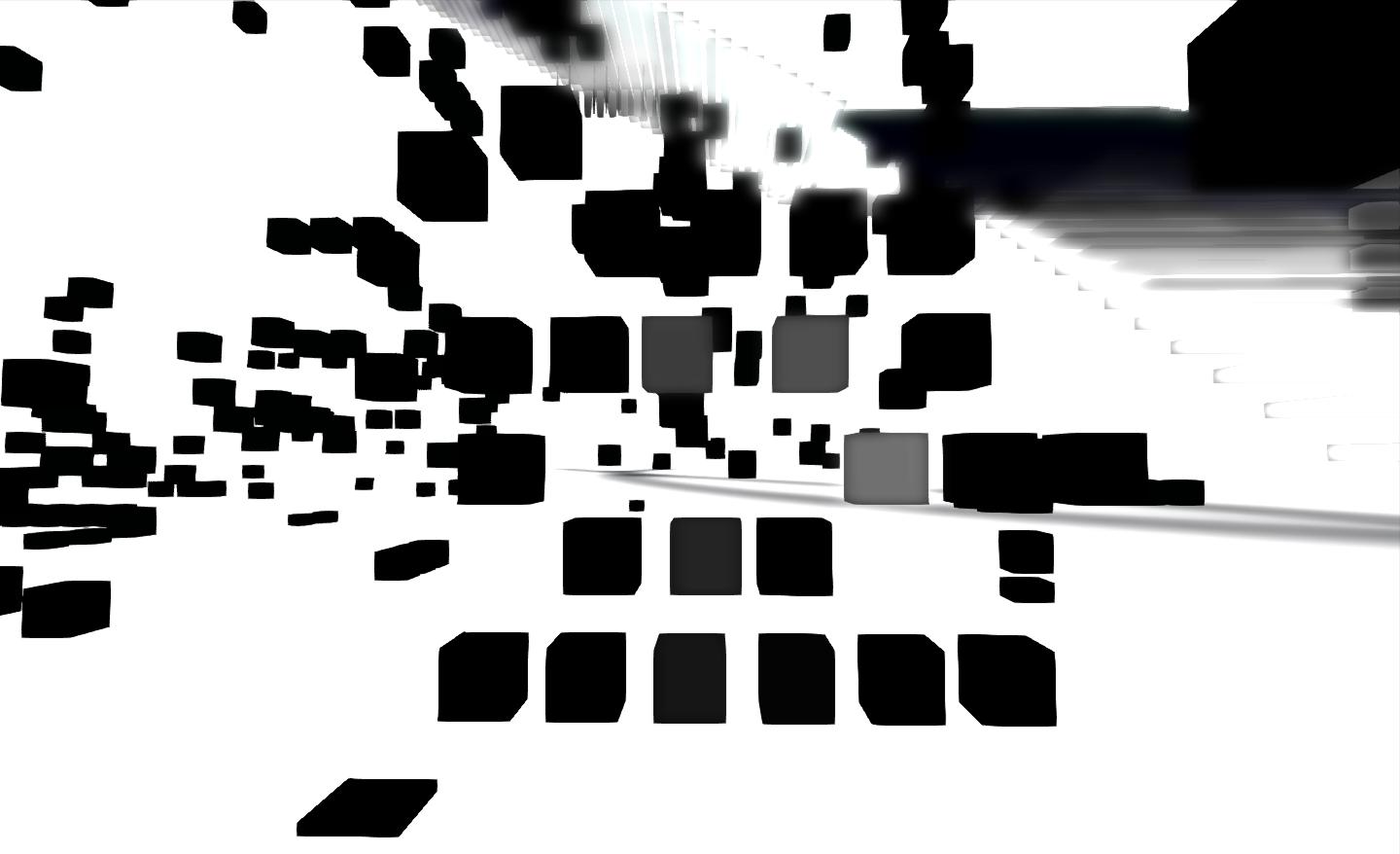
This is a musical construct comprising boxes, elements and levels, which may at first glance appear completely random – but there is order. Each box is a sound – a note or chord – which is played when touched. Some will play once when touched, others work on a toggle – they will play until touched again.

Boxes themselves are arranged in musical elements, with the lowermost boxes in an element representing bass notes or chords, and the boxes above containing percussion or melody elements. By touching the boxes in an element you can create various harmonies – or, if you opt to stay with the lower boxes in an element, what amounts to a discordant noise.

A musical element (foreground) with others around it at The Babel

Elements come together in the levels of The Babel, with each level perhaps analogous to an album, and the elements the tracks of the album. It’s a fascinating idea and anyone with any interest in music will doubtless finding it enticing and spend time producing harmonies and melodies – I did.

Memento Mori

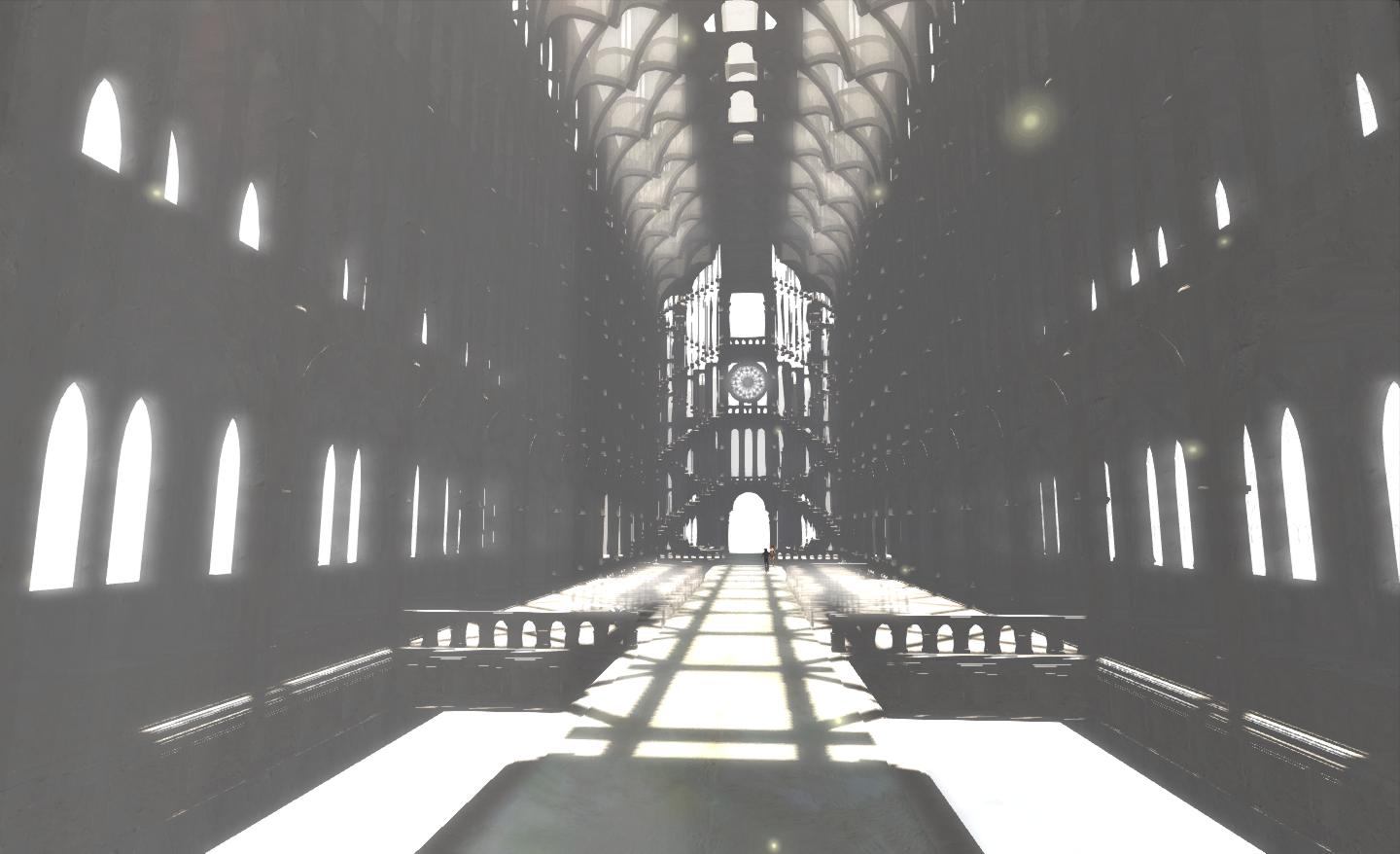
Literally “Remember your mortality”, this is a magnificent build styled after the great medieval cathedrals – hence, perhaps the name – sitting high in the sky. To stay this is a stunning build would be an understatement; it is magnificent. You arrive on stairs leading up to the cathedral proper – and it is worth not camming ahead to spoil the impact (Windlight allowing), as it is quite breathtaking to arrive at the top of the steps to see this magnificent build before you, arching high overhead, the wide nave drawing ones eye to the distant piano sitting on a raised dais.

Memento Mori

Here you can walk down the nave and past ornate pews awaiting an audience, or climb one of the many and spectacular stairways up into the high reaches of the cathedral and look down on those below. Several Windlight options are in use in the build, so don’t be surprised in the lighting levels charge as you explore.

Memento Mori lends itself to be photographed, whether using the default Windlight settings or those of your own. In fact, it is next to impossible not to take photos, and if I’m totally honest, there are times when the build is slightly spoiled by being too saturated by the local ambient lighting, so some experimentation on your part might be required to achieve the perfect result.

Memento Mori

Taken individually or as a while, Chouchou have provided a series of builds that represent one of the great strengths of Second Life: freedom of expression. Beautifully themed and executed, framed by Chouchou’s own fusion of traditional Japanese music with modern styles, this is a place one should visit – and savour.

Related Links

Birdland returns to SL

There have been many jazz clubs and jazz lounges in Second Life, so much so that those of us who frequent them all tend to have our favourites. There are a number I have permanently landmarks in my inventory, all of which I have enjoyed spending time at over the years.

But there is only one that has ever stolen my heart – as it did for just about everyone who ever visited it. That club was Birdland. Part of the reason many of us fell in love with it was down to the music: a wonderful mix of jazz and the Great American Songbook, spun into a wonderful and romantic fusion by Alma Fushikizoh, the club’s creator and resident DJ.

But it was not just the music that made Birdland special; the build itself was simply stunning: a true labour of love beautifully crafted to create the perfect ambience for romance and long evenings of dancing and conversation. As Alma once told me back in 2009, “Birdland is a Romantic Lounge; a place to dance with your loved one – a place to flirt, a place to meet extraordinary people”.

The original Birdland, circa 2009

There was also the fact that Alma and her partner (both in SL and in RL), Blysse Biondi, regarded everyone who frequented Birdland as being part of their extended family in SL; imbuing the club with a very special atmosphere that, for most of the clubs “regulars”, made it a genuine home-from-home in Second Life.

Sadly, Birdland vanished from the grid when Alma and Blysse had to retire from Second Life due to personal reasons – and its absence was sorely missed. For my part, I’ve never come across another club that combines the same measure of look, ambience, romance, friendliness and fun.

I was therefore surprised when I logged-in to SL back in June to find Alma and Blysse both on-line and to get a bright, sunny, “We’re back!” IM from Alma. Just having two long-time friends back was reason to celebrate – so it was with a sense of stunned surprise that I accepted an invite from Alma to be one of the first to see that not only were they both once more settled in SL – but also that Birdland itself is back as well and is being readied for a Grand Re-opening!

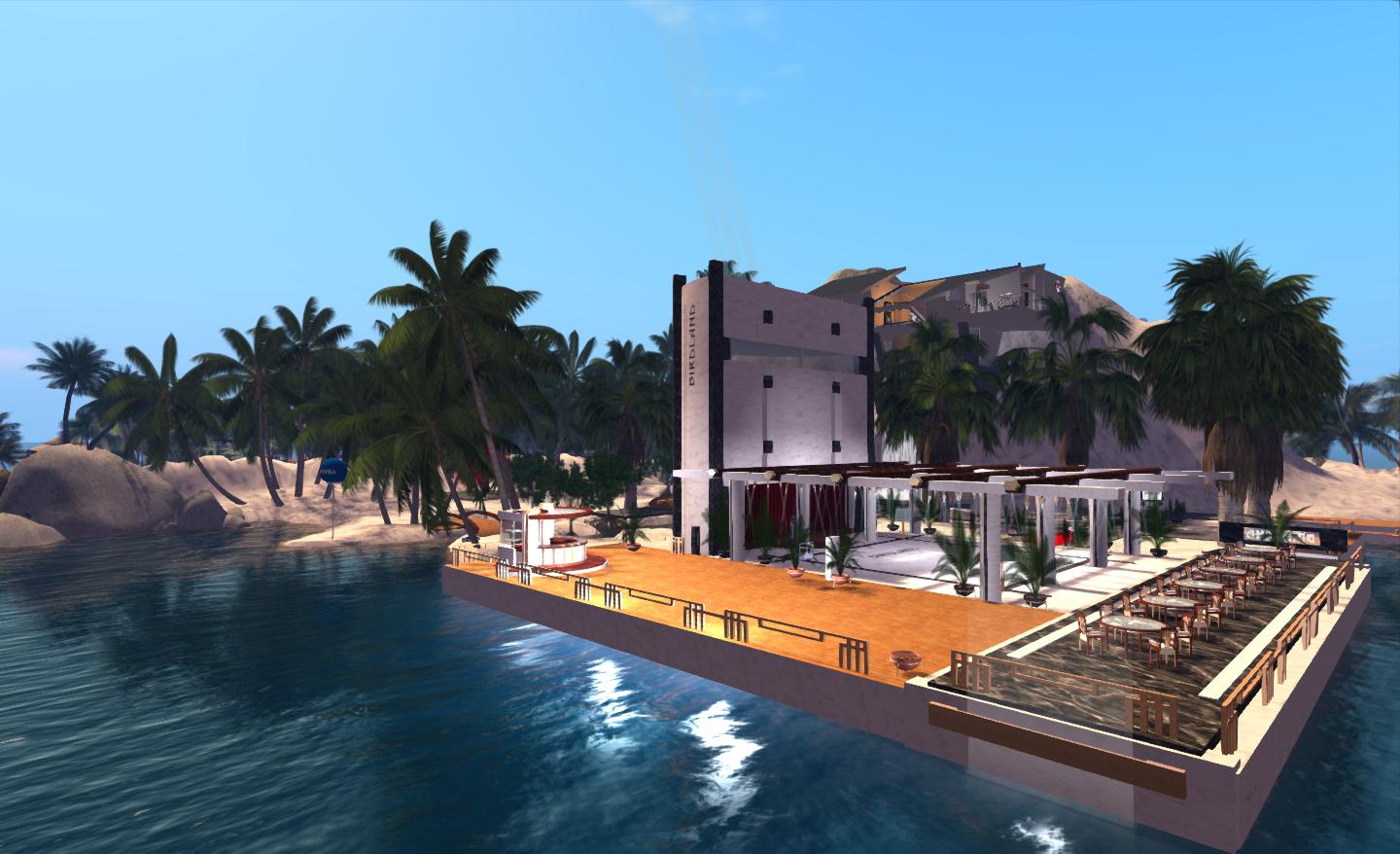
Birdland today

Birdland today is exactly as it was on the last day I saw it before Alma and Blysse had to depart SL; only the setting has changed. Seeing it brought back a wealth of memories; this was a place I’d spent some of the most satisfying evening of my entire Second Life, simply relaxing with the music and enjoying the company of friends in a manner that no other club has, in all honesty, managed to match for me.

Here is a place you can dance under the moonlight (the club is specifically designed for viewers with the time set to sunset or midnight), or sit and chat with friends, watch the sunset from the broad wooden deck, or sit on the beach and cuddle while being serenaded by some of the finest songs every recorded by some of the world’s greatest voices.

Touring the club in its new location with Alma and Blysse, I couldn’t help but feel I’d somehow come home again. Looking at the familiar marble-finished dance floor with the inlaid logo, lit by the rafter-fitted spotlights, wandering the deck overlooking the sea and passing among the tables and chairs overlooking both the dance floor and the sea, I felt the years melt away. With some people only too willing to spread doom and gloom about regions closing and stores vanishing in SL, I couldn’t help but feel something precious has returned to Second Life.

The dance floor and stage at sunset

There is still some work to be done before the club formally opens its doors; and Alma and Blysse are wisely not rushing things; the formal opening will take place in September, giving them more than enough time to finish-off the details here and there.

In the meantime, the club informally opened on August 2nd, and will feature a range of weekend events between now and the end of August to start warming things up. Alma will again be putting together sets for each weekend and will be mixing them with requests from patrons and guests at the following times:

  • Fridays: 17:00 SLT
  • Saturdays: 11:00 and 17:00 SLT
  • Sundays: 11:00 and 17:00 SLT

Live entertainment will very much be a part of the new Birdland as well, and updates on performers and performances as well as DJ sets from Alma will be available through the Birdland in-world group.

I’m certainly looking forward to spending evenings there with friends old and new, dancing to some of the greatest music ever written and listening to some of Second Life’s finest entertainers. I hope to see some of you there are well.

Please note that Birdland does operate a formal / smart dress code with gowns and tuxedos preferred.

Related Links

Svarga: of memories old and new

Svarga is a place of legend among those who have been active within Second Life for more than four or so years. Created by Laukosargas Svarog in 2006, in a time before sculpts – or even flexiprims – Svarga was a place of mystery and beauty; a must-see destination within SL.

Svarga

In its heyday, Svarga was famous for its rich design and unique artificial ecosystem, as well as a number of other features which allowed for a very immersive experience. Then, in 2009, the region became unreachable in-world and remained that way for some time. In March 2010 the sim made a “return” after Linden Lab had apparently purchased it from Laukosargas Svarog in a move “To provide a way for this high-quality experience to live on in the ever-changing world of Second Life.” At the time, the move was largely welcomed within the community, simply because Svarga was – and is – regarded as so unique among “early” builds, although some did express a certain discomfort at the idea of the Lab stepping-in to preserve regions in this way and where it might lead.

When Svarga initially returned, elements were missing: the ecosystem was only partially restored, the tour system had gone, as had the ambipod and light show. Since then, a new tour system has been added – using giant wasps, which is entirely in keeping with the feel of the region, and Svarga remains very much a testament to all that could be achieved just through the use of the humble prim.

Nor does what has been lost in any way detract from one’s visit; the spires and walkways remain, complete with torches, flags and the small library of old books referencing SL. The offshore glade still provides a rich lavender carpet of flowers where you can sit and think alone, or share time with a friend or loved one. For the keen-eyed, the underground caverns lie waiting to be explored, and birds and bees can still be seen among the flora as footpaths lead you between the strange plants and trees and over rope bridges, or to the door of the hexagonal house where you can sit among the cushions or play the waiting drums. Take the wasp tour, and you can learn more about the history of the region, and its roots in old Slavic mythology.

Svarga: ideally suited for Windlight experiments in photography

If you’ve never visited Svarga before, I recommend you do. It has a mystique and mystery that makes any visit worthwhile. As it came at a time before Windlight, it doesn’t utilise any special presets of its own – and thus presents itself as an open canvas for the imaginative SL photographer, as there is nothing to influence the choice of sky and water presets. For the romantic or those seeking a place to sit and share company with a friend or small group of friends, Svargat offers a calming, gentle environment in which to spend time and perhaps reminisce about the “good old days”.

Svarga
Svarga

Related Links

You win or you die 2: Highgarden

Earlier this month I paid a visit to the Mountains of the Moon, a Game of Thrones role-play region in Second Life. The region is linked with that of Maui West and Maui Central, wherein can be found Highgarden, the seat of House Tyrell. Given my love of George R.R. Martin’s A Song of Ice and Fire – or Game of Thrones as it is perhaps now more widely known, thanks to the HBO series of the same name – I could hardly visit the one without also visiting the other. So today I made a journey to the rose-enfolded walls of Highgarden.

Bandor Tyrell: Lord of Highgarden

The arrival point  is a small gazebo standing just outside the walls of the great fortress (although you can also reach Highgarden via the Game of Thrones Role-play Welcome Centre). Here you will be able to obtain background information on the setting for role-play within the sim, an “observer” tag (which you should wear if you are a casual visitor and wish to make it clear you are not actively engaged in role-play), and a wealth of additional information, including establishing a suitable character, historical information on House Tyrell, and information on how to address others when in character (a useful primer – even as an observer, it is polite to address others in-kind). Simply click the large image of Highgarden to receive the information pack.

Role-play here is set in the same period as Mountains of the Moon – before the seven kingdoms of Westros were “united” under the rule of Aegon Targaryen; this allows characters to move freely between the two regions, allowing full continuity of role-play.

As with the Mountains of the Moon, the visualisation  here (created by Bandor Tyrell, otherwise known as Bandor Beningborough) is impressive. As depicted in the books, Highgarden sits on the Roseroad linking Oldtown on the coast with Kings Landing, as the road follows the broad river Mander. Like the Mountains of the Moon, sim extenders have been used to great effect here, particularly in reference to the creation of the Mander itself.

Highgarden

Details on the design and layout of Highgarden itself is not as well-defined within the books as somewhere like The Eyrie, and this tends to leave matters open to interpretation in terms of look and feel.  Bandor Tyrell has opted for a look that has echoes of a romanticised Arthurian period (think BBC’s Merlin series, or Le Morte d’Arthur), with the castle having something of a French / German fortified château / schloss look combined with the more traditional curtain walls and round-towered gatehouses more often associated with medieval times. In this, the look of the castle reflects the high chivalric and romantic ideals personified by the Tyrells herein as well as presenting an environment entirely in keeping with G.R.R. Martin’s vision of Westeros as a whole.

Within the curtain walls sits a small town, complete with sept, bathhouse and housing for some of the members of the Game of Thrones Roleplay group. During the personal tour he kindly volunteered to give me, Bandor explained that the housing, when available, is offered free to group members. The town also continues beyond the walls, where the “small folk” – peasants and farmers to you and me – live and work and where the local brothel resides.

The brothel underlines the fact that role-play here mirrors the lifestyles found within the books; while outright nudity or public lewdness for the sake of it is not welcomed, role-play that remains true to the overall themes and ideals of Martin’s world is allowed (and sometimes encouraged!) and this can involve a degree of bawdy goings-on in some public spaces; hence the regions – as with Mountains of the Moon – are rated Adult.

This open nature of role-play here allows many other elements found within Martin’s novels to be played-out as well. Political intrigue, treachery, false alliances – all have their place and serve to make matters all the more – interesting – for those immersing themselves in the role-play.

The lists

The diverse richness of role-play is also reflected in the fact that combat  – for honour or for sport (in the form of competitive melees or jousts) – is very much part of the events that take place at Highgarden – all of them handled in character.  The castle also hosts dances, which are open to all, either in character or OOC, and which offer the curious the opportunity to sample Highgarden life in a more relaxed atmosphere than full-on role-play might allow, while at the same time offering an experience more immersive than might be obtained when visiting as a casual observer.

As with the Mountains of the Moon, there is much to explore and see here. You can witness the seven new gods of Westros in the sept, or sit under the spreading branches of the weirwood in the godswood and contemplate the old ways. If you prefer, you can explore the buildings of the town and wander the halls of the castle. If you are so minded, you can venture further afield and follow the Roseroad out into the wilderness – but be warned! There are both wolves and brigands wandering the woods and hills, neither of whom may take kindly to your explorations.

Highgarden has been put together with a lot of forethought in order to encourage the broadest possible GoT role-play, with the layout on both Maui Central and Maui West having been recently overhauled to enhance this. Together with The Mountains of the Moon, they are generating a significant amount of interest among GoT role-players. Both have certainly piqued my interest, and it is entirely possible I’ll be returning to both not only as a visitor – but also with a character backstory!

Related Links

Neva River: where thoughts drift

Update: Neva River is currently closed to public access

I’ve previously written about Wendy Xeno’s work in Second Life, having covered both Hazardous and Humanoid in these places. So I was intrigued to learn that she had helped with the design of Neva River, owned by Atteris Amarth and Neva Crystall.

Neva River
Neva River

Those who visited Humanoid will find Neva River somewhat familiar in terms of broad themes and tones: the same use of water and warm colours. The region offers a contemplative setting, with two houses designed by yacchan Clip and interior fittings by Neva Crystall which are open to exploration. Visitors are welcome to wander around the ground level areas and the houses, take photographs and simply pause and reflect in the last rays of a setting sun as clouds skitter overhead and birds wheels around the tree-tops before settling as the night draws in.

Use the local Windlight environment settings and enjoy.

Related Links