Reflections on The Looking Glass

The Looking Glass is the joint creation of Marcus Inkpen and partner Sharni Azalee, and is located on their sim of Horizon Dream. It’s a fascinating mix of elements brought together in an inspirational and highly photogenic feast for the eyes.

The Looking Glass

The arrival point sits on a small quay in one corner of the sim. From here you are free to wander and explore the region – or if you wish you can click on the Mystery Gift box and receive a clue designed to help you on your way to fining the gift itself. The clue is given as a verse from a poem:

The fields are all dried up, the corn’s all gone dead,
So he pulled up his post and to the shore he did head.
There are no crows there now, to bug him all day,
So he tries his best to scare the seagulls away.
An old crumbling tower lends his new home some shade,
And a little bird sings to him until the daylight does fade.

A sign swings from a post beside a rickety set of wooden steps leading up from the quay to a small town of indeterminate age. Here are discrete stores where you can purchase various creations by both Sharni and Marcus – some of which are in evidence around the sim itself. Careful where you walk however, as an exposed manhole cover hints there may be things going on below ground as well as above.

Wander through town and you’ll eventually come to the Looking Glass Amphitheatre, an open field where stands an ornate glass stage and a grand piano – a place for dances and other events. From here you can return to the town and climb the stairs to the huge Clock Tower that dominates the hill behind the town – or you can take a more direct route up the rocky side of the hill to reach it.

The Clock Tower and hall

The Tower’s hall is a gallery used to display work by other SL artists. During my most recent visit it featured a display by Skusting Dagger.

Several options for exploration offer themselves to you from the Tower, which you take is up to you. For my part, I walked out along the “bridge to nowhere”, as I call it, to appreciate Marcus’ imaginative sculpture La Mer. On my return, I headed up to the Temple Ruins – a place better reached by teleport, or by flying, admittedly.

La Mer by Marcus Inkpen

The Temple ruins is referred to as a particle stage, and is used to hosts various events on the sim; the most recent being by InterfaceD Dreamscape who presented a particle show, with music by Novulino.

One of the delights of The Looking Glass is the juxtaposition of themes and ideas: the town area seems to be old, but has hints of it having somewhat modern setting: the pool table in the bar, the television aerials poking up from chimney and rooftops, the no parking signs, and so on. As one walks through it, one cannot help but feel that while it may once have known better days, it is now running to seediness and no-one really cares about it any more.

That no-one cares is evidenced by the Forrest theatre, which appears to be still in use, despite having threadbare carpets, smashed glass in the front doors and the domed windows above, while the stage itself is exposed to the sky thanks to a partially collapsed roof, while the walls at the back of the building are broken and ruined. Whether the damage is the result of age and disrepair, or the result of a possible fire, is yours to decide..

Elsewhere, the buildings suggest something more medieval in tone, or at least leaning towards fantasy – something that is heightened by the wonderful Floating Islands that form a peaceful retreat within a peaceful sim. There’s even a touch of The Waltons, with a small farm-style layout from The Looking Glass Victorian Cottage range.

Wizard’s Retreat with Sky Gardens beyond

The mix means that The Looking Glass is very photogenic and makes an excellent subject for machinima; in fact it has already been the backdrop for a film by the ever-talented rockerfaerie on YouTube (aka ColeMarie Soleil in SL). If you are going to be taking photos of the sim, I’d recommend that you set the Sun to sunrise to generate the most dramatic results. At least it worked for me, I think – although I’m admittedly far from an expert in such maaters, and useless with Photoshop when it comes to post-processing.

The Sky Gardens

The sim may not be as complex as somewhere like Alpha and Omega Points, and when not hosting a live event, may appear somewhat quiescent – but to me, both of these facts actually enhance its appeal.

But this doesn’t mean there is not to discover. Even when you’ve finished above ground and taken a trip up to the Floating Islands or the Floating Victorian house, there is more to seek out – if you can find it. Just what is the history of the hidden throne room? And romantics won’t want to miss the crystal garden. I would offer a word of warning, tho, should you find your way underground; the teleport at the town’s manhole can be a little brusque in helping you back to the surface!

As well as exploring, this is a place one can come to when one simply wants to be in-world, but without the pressure of needing to “do” something; the sim invites you to wander, to sit and simply enjoy. It’s a place I come to when feeling reflective. It’s also an attractive visit because it is not only a work that expresses the talents of two well-known SL artists, it is a work that actively promotes the work of other artists as well.

Floating Victorian House

I have to admit I very much like the way in which products from The Looking Glass are presented as a part of the overall build – it is subtle but highy effective and demonstrates very clearly both the build quality involved and how the products can be used. It’s also a clever strategy in that it doesn’t leave items like vendor boards sticking out like sore thumbs. If you do see anything you particularly like, be it a house, a bridge, a street lamp or item of interior decor, it can be found in one of The Looking Glass stores in town. I have to admit, I’ve been sorely tempted by the Floating Island range, given the latest iteration of my own home is built into a floating rock. Truth be told, the waterfall from the Floating Island range still does call to me whenever I visit!

Lighthouse with the landing point to the right, and the Floating House beyond, left

Whether you are looking for a place to visit, somewhere to film or an inspirational location for your photography, The Looking Glass is a fabulous place to visit. Exploration here is easy, with an edge of mystery, and there is much to see and enjoy without it impinging on all your time.

Definitely worth a visit or three!
The Alpha and Omega of SL

Update: Alpha and Omega Points have both closed.

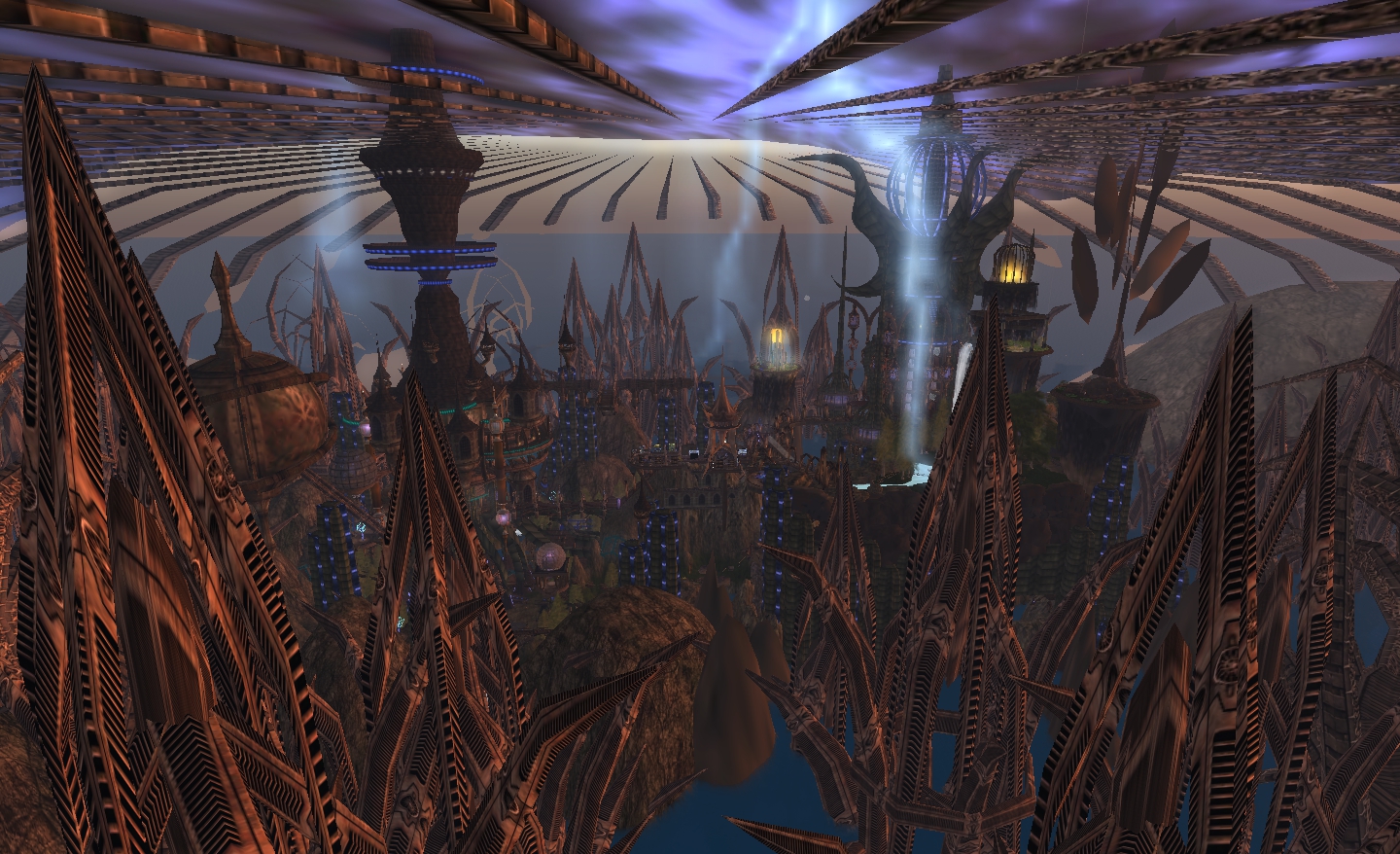
Alpha Point and Omega Point are two stunning builds in Second Life created by Masoon Ringo and Sweetlemon Jewell. Occupying a full sim and a Homestead sim, they form a marvellous build that combines fantasy and science-fiction in a way that simply demands exploration. Just make sure you give yourself plenty of time to do so; there is much to see – and much that can be so easily missed if you rush things.

I was introduced to the regions by Himitu Twine, who spends a good deal of time at both, wandering and exploring – and after the first time I joined her at them, I could well understand why. The combined build is simply glorious. Nor is it entirely static; Omega Point has altered over time, and I’ve no idea as to how permanent the current layout is. So, if you’re reading this piece six months after it is written, don’t be surprised if you follow the SLurls and find things have changed; it simply means you have a new experience to enjoy and will still have much to see and discover.

Alpha and Omega Points

Before you do pay a visit, make sure you turn your draw distance up as far as you comfortably can in order to get the fullest impact of the build; I recommend a setting of around 300m. Also, like a lot of regions nowadays, both Alpha Point and Omega Point have their own Windlight presets, and I recommend you keep to them after you’ve arrived.

The current teleport co-ordinates are such that whether you travel to Alpha Point or Omega point, you arrive at more-or-less the same place: an arrivals area that spans the boundary between the sims, high up and central to the build as a whole. While a marker clearly defines the sim boundary itself, I suggest you wait until things rez before moving around too much, least you find yourself bouncing off the boundary itself (although crossing between the sims, providing you do so at walking pace, is generally very smooth).

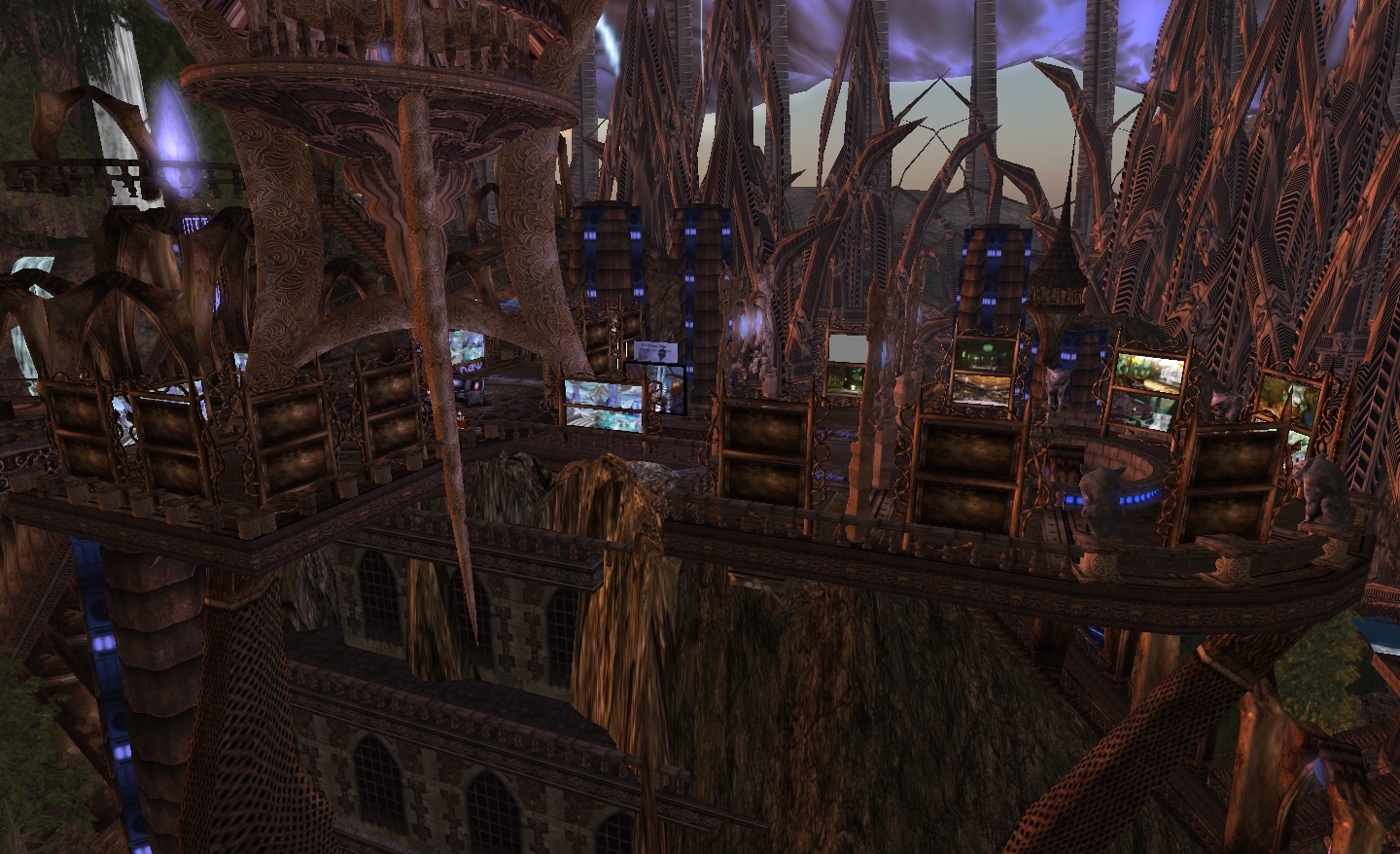
Once rezzed, cam out a little and orbit around your position. What appears to be a spired city, with trees and waterways below and a storm-laden sky above surrounds you, and you get the first indication of the complexity of the place. But don’t go camming too far out and peering into windows and doorways – you’ll simply spoil what is to come. This is a place that is best discovered through exploration.

The arrivals areas themselves have a series of teleport panels to get you to many of the points of interest and beauty in the build. At Alpha Point there are also a couple of flying options you can use to get around. However, I do suggest you ignore both flying and teleports to start with.

Teleport arrivals: Alpha (l) and Omega (r)

The arrival areas also have stairs and walkways leading from them, and if you really want to experience the build, then you should really start by using Shanks’ pony: take the stairs and start your explorations on foot.

At the time this article was written, the stairs from the Omega Point arrival area lead down to a lower level from which you could make your way to the huge central tower, crossing a gargoyle-lined bridge, or you could carry on down even further to other walkways, landings and stairways until, eventually, you reach the ground. From here, it is possible to wander among trees and fallen sections of the build, long forgotten and half-buried that point to a story yet to be told about the passage of time in this place. There is much to be discovered while down among the trees, so don’t be afraid to wander wherever you will.

“Climb the stairs, Jim!” – yes, that’s me at the top!

Take the long staircase down from the Alpha Point arrivals area, and you’ll come to a walkway that leads the way around a stunning view of a waterfall. Follow the walkway further, and you’ll pass back under the waterfall, and so enter the labyrinthine lower levels of the build. Here hang paintings and images high up along tall walls, each with a story of its own. Here too, are stairways leading both up and down…

Sims extensions – cleverly used (click to enlarge)

One of the things I love about this build is the imaginative use of off-sim phantom prims to create an even more fantastical realm. In places, it’s as if the build never actually ends; it simply continues beyond our reach, down a hall, along a path or around a corner. It’s so tantalising; the effect engages the imagination and leaves one with a sense of “if only”; if only we could walk around that distant corner and slip under that shadowed archway, or reach those distant doors! What would we find, what wonders would await us – what stories would we have to tell? Lying beyond our reach, these parts of the build demand we fill their hidden promise with people, places – and creatures…

Never knowing quite where you are going to end up is another reason I like visiting; follow a route down into the bowls of the build, and it is quite possible that if you take enough stairs and turn enough corners, you’ll find that the way you thought lead back to where you came from has actually lead you somewhere else entirely. Just do be careful where you do walk, however, some of the walkways appear to lead you towards a destination, only to end abruptly, as if a section has fallen away; whether through age or other reason is up to you to decide.

Flyers – a great way to get around

Should you tire of walking, but still have no wish to use the teleports, you can opt to take one of the flying options mentions earlier (so much more fun than free-flying on your own!). Find them back on either side of the Alpha Point arrivals area and teleports.

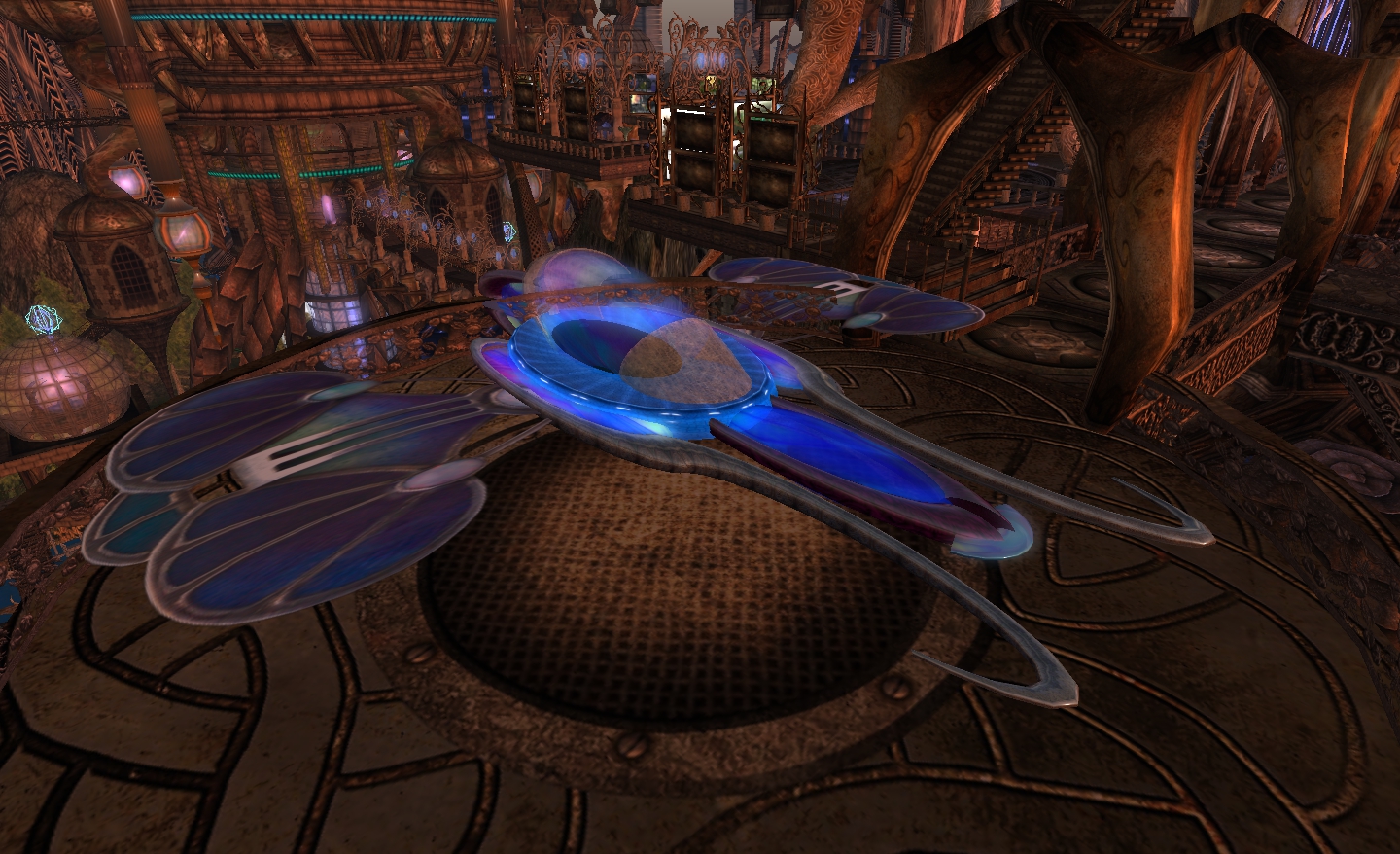
You can choose from a flying bubble or a craft that resembles a dragonfly for your aerial excursion. Each carries up to two people, allowing a friend to share the experience with you. Full instructions are provided via hovertext, and the usual keyboard controls can be used to control direction / height. Both craft are rez-on-demand from the master version, and will de-rez when you stand up from them. They are certainly a great way to see the build from above, and both perfectly match the theme and design of the place. While crossing  between the sims is very smooth for the most part, it’s worthwhile keeping an eye on your co-ordinates and taking things gently as you do reach the boundary between the two.

Romance or solitude also await those who seek them

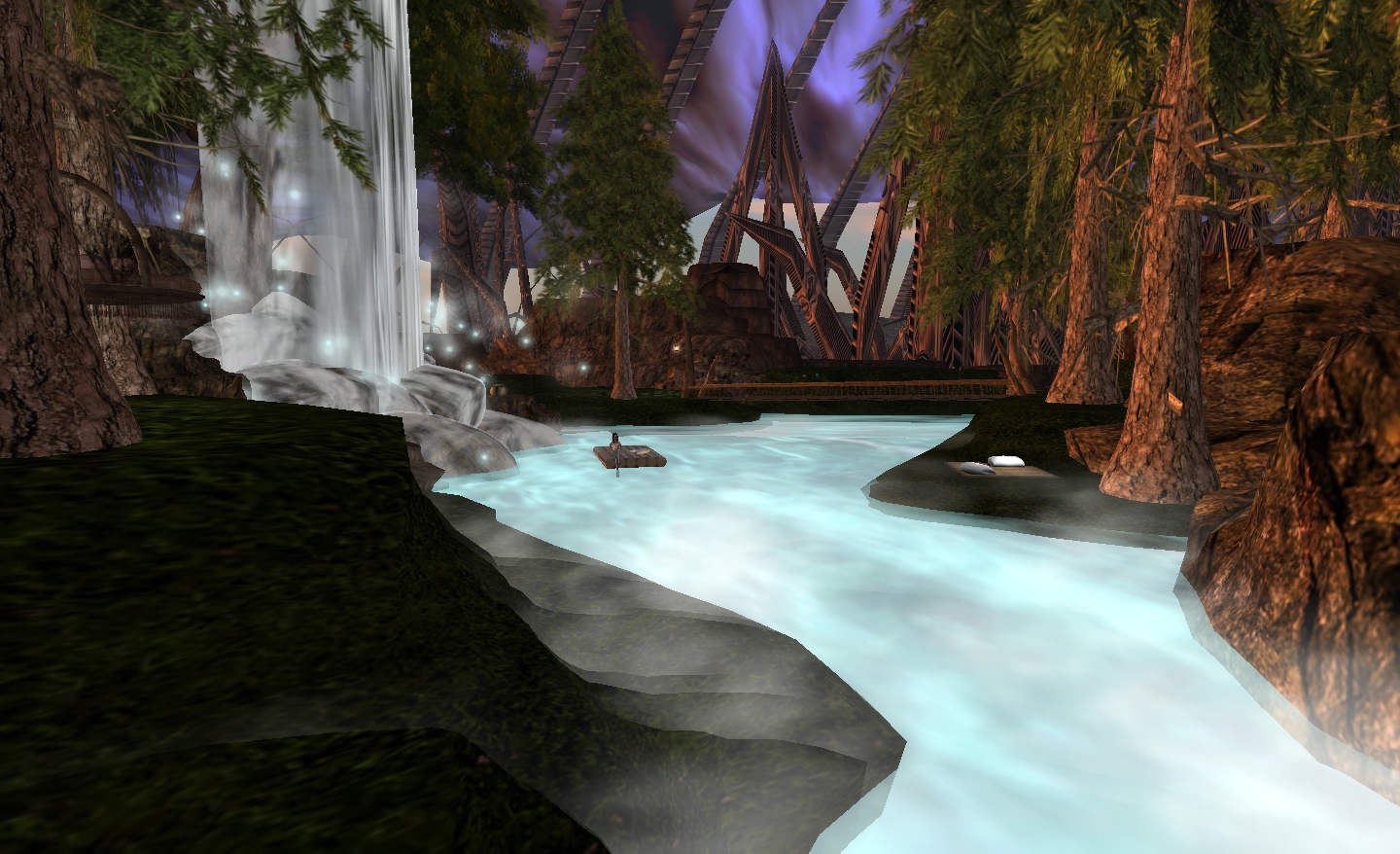
Nor is the build short on romance. You can dance the time away in a ballroom or among the trees or beside the tumbling waters of a fall; you can cuddle quietly in one of many sofas and seats to be found throughout the build, or amidst the trees and grass of a floating garden; you can spend time admiring a waterfall, sitting on the banks of a river or sharing a raft as the water cascades down from high above…

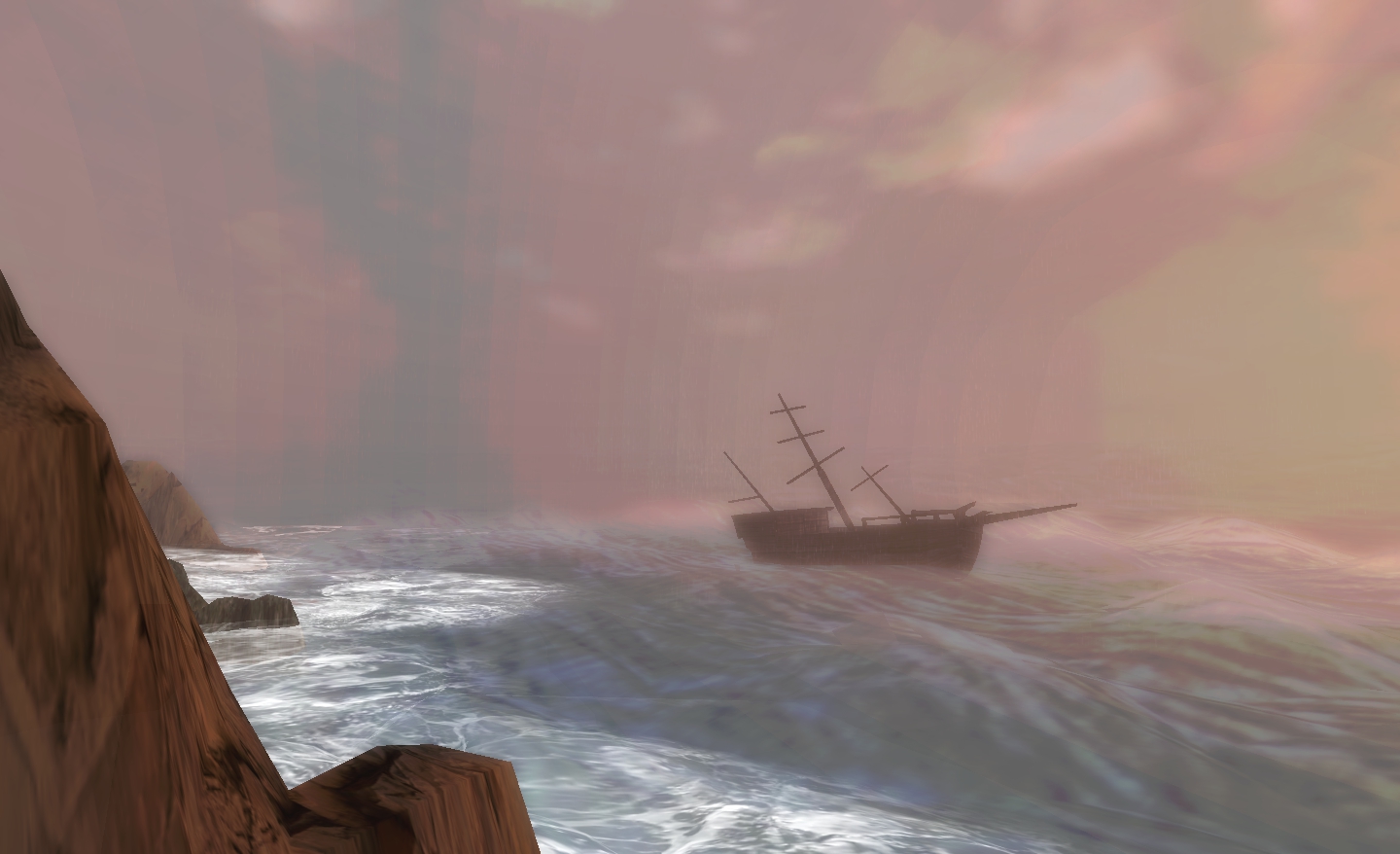
There are also stories to be found as well, if you take the time to seek them – or at least, the hints of stories to be told – such as that of the storm and the shipwreck.

The wreck and the waves

Whither sailed the ship before the storm caught her and tossed her toward the rocks? What was her cargo? Did anyone from the shore witness her sad fate – and what of her crew? Did they live to tell of her loss, or did they perish in the unforgiving arms of the sea?

The start of the story is there for you to see – but how it should end is down to your imagination, and your imagination alone – but you’ll have to find it by exploring in order to settle on your own tale!

Even with the flyer options, however, there are some places here that are best reached via teleport. One of them is the fantastic “Village to Heaven”.

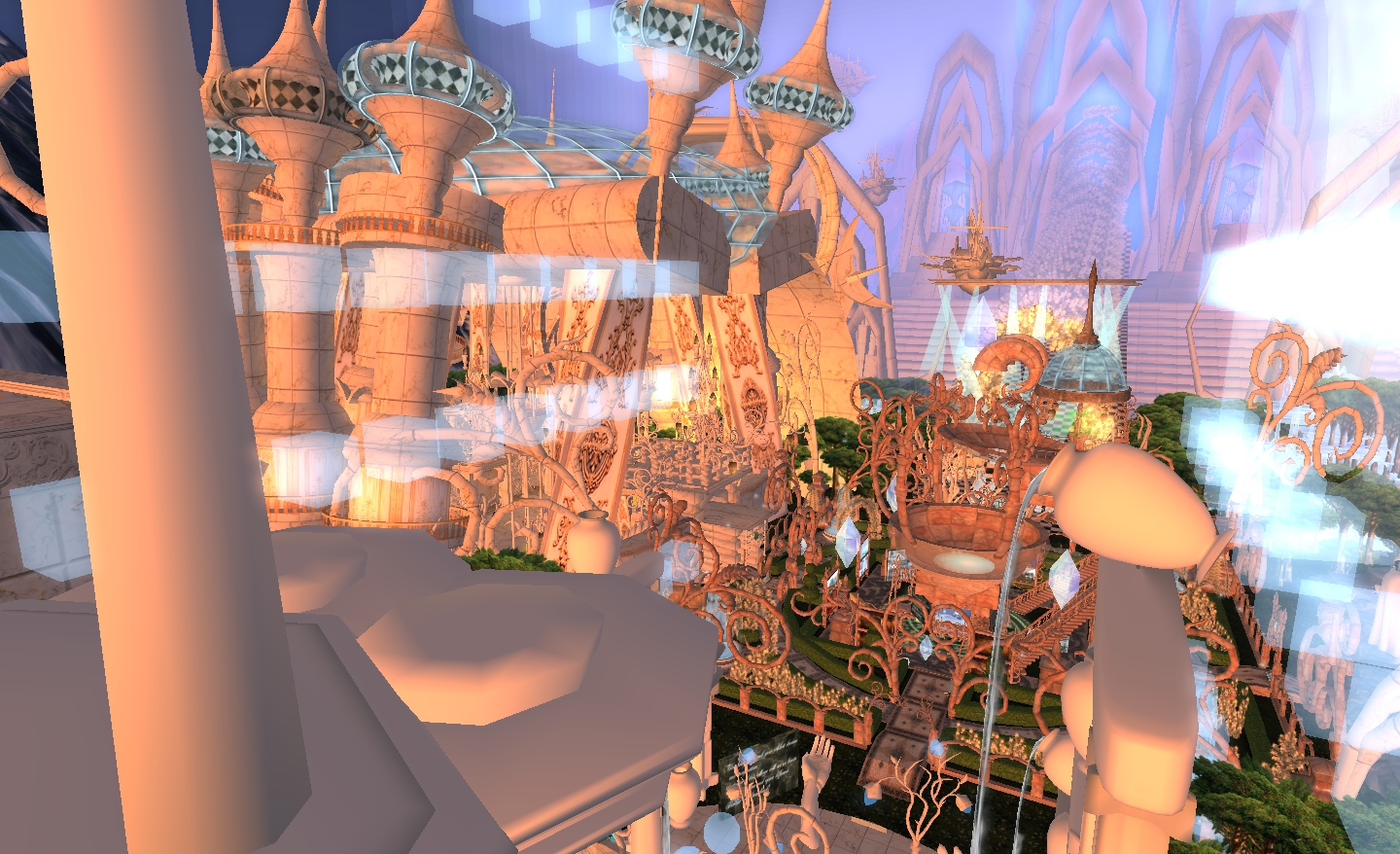
Set high in the sky and surrounded by perilous mountain peaks, this is another stunning build, rendered in ivory, marble and ice blue, with gleaming cloud-ships sailing by, and  lush woodlands below.

“Village to Heaven”

The scale and attention to detail here is equally as stunning as the build on the ground, including the use of phantom prims to extend the beautiful fantasy of the place beyond the limitations of the sim boundary, again giving the illusion of places we cannot visit and stories we cannot witness.

Take the path from the teleport, for example, and follow it through the doors leading into a huge amphitheatre – a feast for the eyes in itself – then cross to the other side and open the second set of doors. Just where does the path, sloping upwards and guarded by pairs of white-cloaked statues, lead? What lies beyond the gilded doors at the far end of the climb? You can never know for sure, as they lie beyond the edge of the sim – but as you walk as far as you can towards them, you can be sure your imagination will be asking questions as to what might be there, and who the robed statues really represent…

Another stunning use of a custom sim extension – where exactly does the sim end? Walk the path and find out…

Teleports are available here as well, but you should take the time to explore on foot, there is so much to see. The Village comprises parts representing the four elements: Air, Water, Earth and Fire – and I found that Air and Water in particular put me in mind of Tolkien’s Imladris – and I expected to hear the soft lament of elves if I turned on my sound.

Cloud ships

The key here is, again, to take your time with your explorations. When you have seen all you wish to see, look around once more. The chances are there is a path or stair or doorway you may otherwise miss.

When you are satisfied with all you’ve seen, return to the teleport point and climb the stone stairs. These lead up to the a Fall Pod platform. Here, every few seconds a ball will drop and roll towards a tunnel-like chute. Grab one quick with a right-click and SIT, and take a ride back down to the world below. It will reveal things that have so far escaped your attention as you return to the Alpha Point arrival area.

If there is one problem with this build, it is that when it comes to reviewing it, there is simply too much to see. This article is already around the 2000 word mark, and I’ve barely scratched the surface of the place. To try to capture everything in words and images would take a novella. But then, frankly, words and images alone do not do Alpha Point and Omega Point any justice. This is not something to be read about and looked at via static pictures; to do so would be like convincing yourself you’ve watched The Fellowship of the Ring on the basis of seeing and reading the film poster.

To really appreciate this build, it has to be visited; it is something that should be experienced, explored, enjoyed – and savoured – and I urge you to do just that. But be warned: once you have visited the Alpha and Omega of Second Life, you are likely to find yourself coming back time and again. The build is magnetic, inspiring…

…Addictive.

Omega Point

To further whet your appetite just a little more, here’s a machinina video JJCCC Coronet produced just over a year ago, showing how Omega Point looked back then.

Related Links

Destination: Duché de Coeur

An impressive build: Duché de Coeur, languedoc Coeur

Every once in a while as one travels around Second Life, one comes across a place that is so utterly unexpected, that one cannot help responding to it by thinking, “This is what Second Life is about!”

Duché de Coeur is just such a place. To my shame, I’d never come across it in nigh-on five years of SL wanderings until Pete Linden passed me information on a festival being held there in July. That the festival was a mix of arts and music was intriguing enough; that it was in its second year, even more so. I had to investigate; and I’m glad I did.

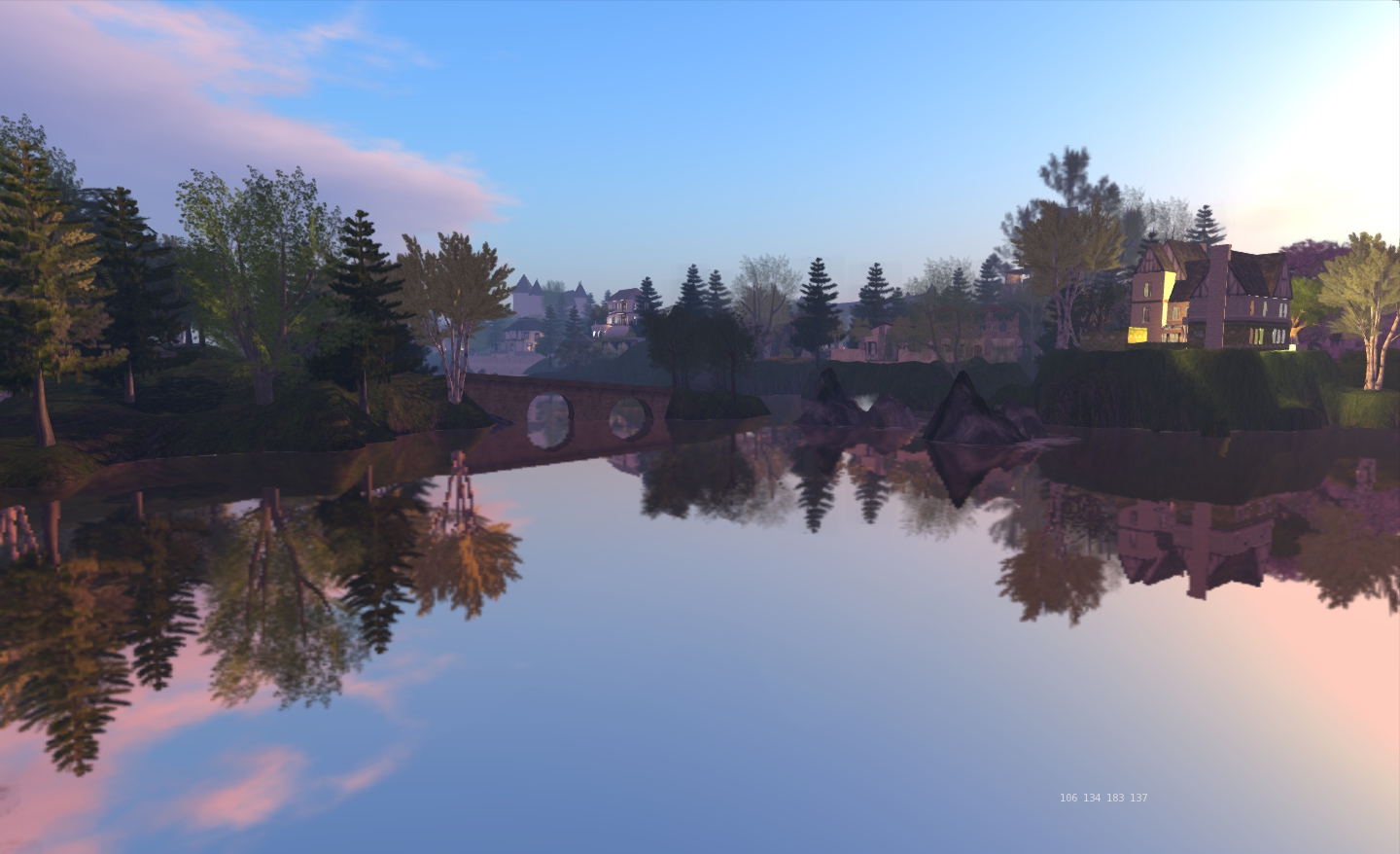
Morning reflections

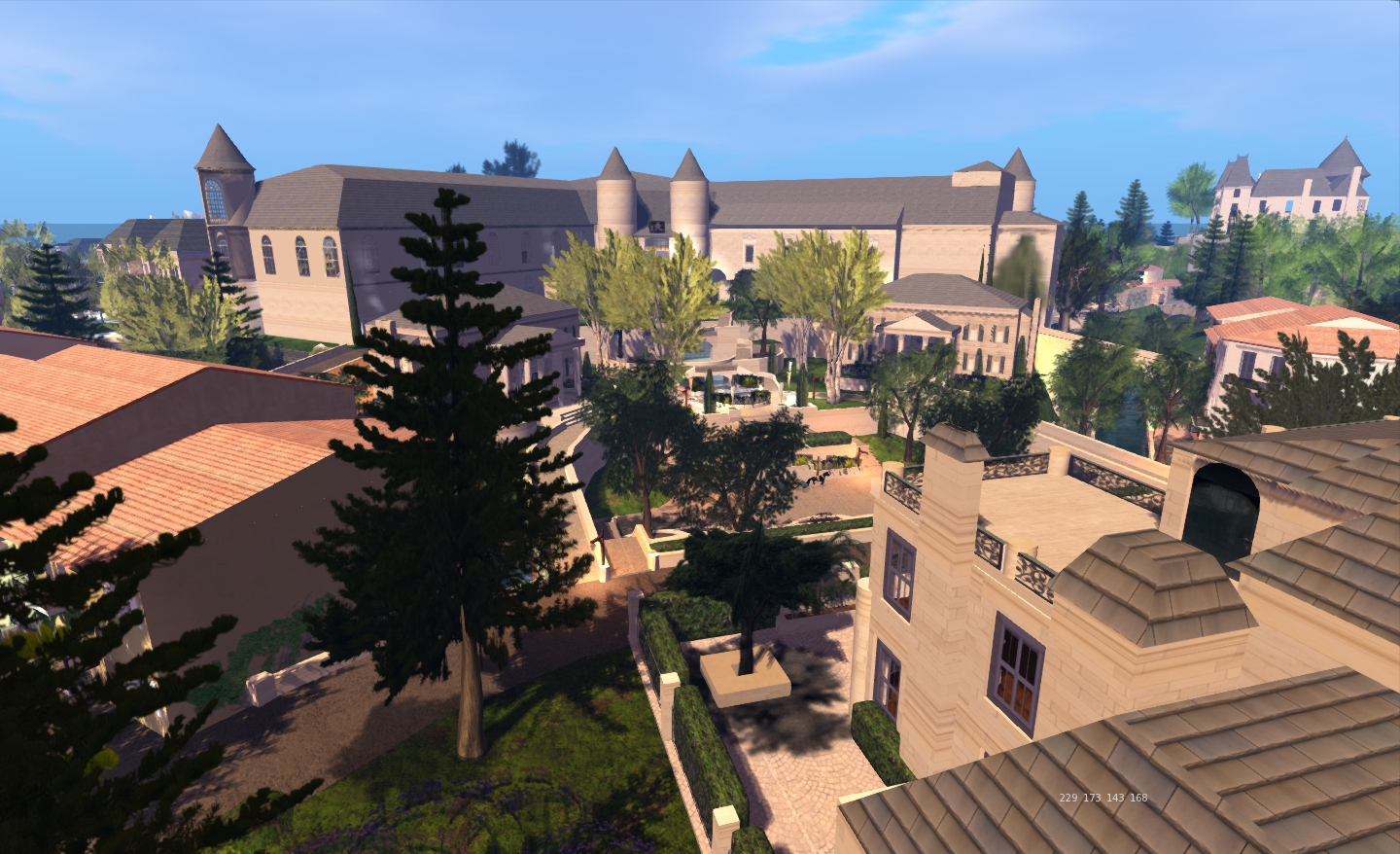
Centred on the Languedoc Coeur region in-world, Duché de Coeur is a Second Life community in the truest sense of the word: a gathering of like-minded people from around the world who have come together to create and develop something in-world that is both reflective of, and an extension to, their real-life interests and passions.

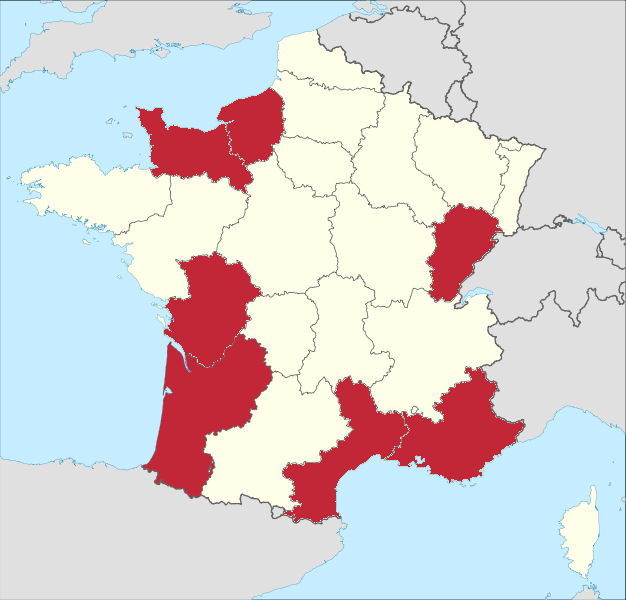
The regions of France that inspire the sims of Duché de Coeur

Comprising 14 sims, The Duchy represents a fictitious area of France that comprises the real life regions of Provence, Languedoc, Aquitaine, Poitou, Normandie, Touraine, and Franche-Comté as they were in the 18th Century – the Age of Enlightenment. It is an openly idealistic take on the Age, combining the period’s advancement of knowledge and value system with romance and chivalry; although that’s not exactly how it started out. When first established, the Duchy was far more focused on romanticism, as founder Bedrich Panacek explained, when I met him and fellow community leaders SkyRider Varriale (his partner) and Baharat Atlas, recently.

“The Duchy was originally inspired by the book Angélique,” Bedrich said as we sat together in the Green Room at the Duchy’s Opera House. “Gradually it moved forward 100 years with Tatiana and Skye,” he adds, smiling at SkyeRyder Varriale, seated beside him, who takes up the story.

“Bedrich and I met and formed a partnership, both personal and business. We were both interested in France in the 1700’s 1800’s, and I had experience building and landscaping for another game company, while Bedrich is the IT guy, the scripter. Our ideas works together. We also have a third partner, TatianaDokuchic Varriale who has contributed lovely works to the Duchy.”

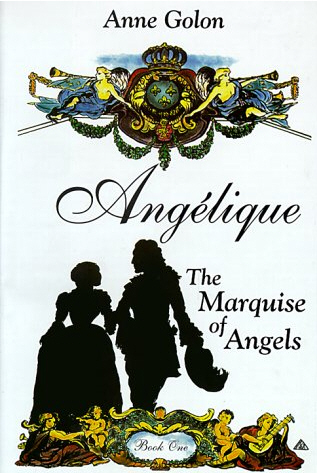
Angélique, the Marquise of the Angels

The ‘Angélique’ Bedrich refers to is  Angélique, the Marquise of the Angels, the first is a series of novels set in the 17th Century written by French author Anne Golon and her husband (responsible for researching the story), Serge Golon. Published in English under the pseudonym Sergeanne Golon, the book was itself inspired by the life of Suzanne de Rougé du Plessis-Bellière, and grew to a series of 13 novels published between 1956 and 1985, with a fourteenth, Angélique et le Royaume de France, due to be published in November this year, and an as-yet untitled fifteenth volume set to conclude the series.

But why this period in particular?

Bedrich takes the question, “Much of western government and ideals are based on concepts that were discussed by some of the greatest thinkers in England and France in the Age of Enlightenment. Centres of thought including L’Académie Francaise, L’Academie Royale des Sciences, and L’Academie Royale de Musique were some of the most important public institutions that caused people to question established thought. We wanted to try and capture that, bring it to life.”

Education and the arts both play important roles in the Duchy, which hosts an annual Arts and Music Festival, together with a season of events that commences in September; all of which are co-ordinated by Baharat Atlas and Pekel Panacek (no relation to Bedrich). And while there is a degree of role-play among the community members (something I’ll return to in a moment), the more organised quarterly role-play events are primarily aimed at providing insight into the history of France over a 400-year period spanning the 15th to 19th Centuries.

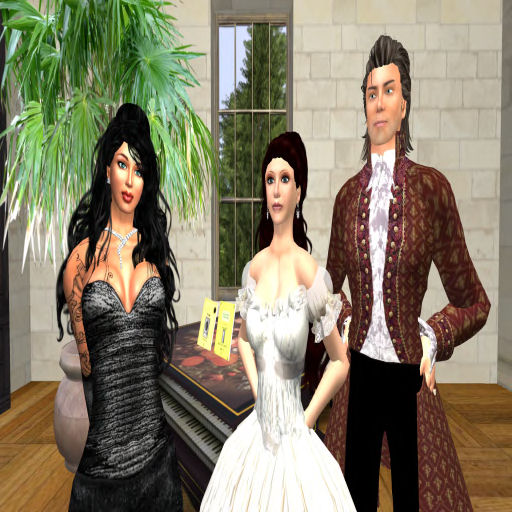
Creative force: Baharat Atlas, SkyeRyder Varriale & Bedrich Panacek

When it comes to the matter of events in the Duchy, both Bedrich and Skye are full of praise for the contirbution Baharat has made, and continues to make, “She understood our desire to make this an open, sophisticated, environment,” Bedrich explains.

“She organised our music program, which has taken off,” Skye agrees, “She has really brought events alive here.”

So what is it that attracted Baharat to the Duchy? “I was first attracted to the beauty [of Languedoc, the original sim],” she explains, “That it had an interesting movement and energy unlike any other sim.”

Walking through the avenues and along the footpaths of the Languedoc, it is easy to see what Baharat means; not only are the buildings correct to the period, there is a certain harmony and balance that is clearly apparent. This has been continued throughout the additional sims in the Duchy as they have been added over the years, a subtle mixing of nature and architecture and blending of movement through the use of rivers and canals, that breathe a romantic life into the sims that one rarely comes across elsewhere.

There is also an historical subtlety to the Duchy; all of the builds are either modelled on real life buildings from the period, or they have been carefully crafted to be representative of the the various regions of France included in the Duchy.

The lighthouse

To take the lighthouse overlooking the habour as an example. This is a reproduction of the 75m-tall Phare de Barfleur-Gatteville, built in 1774, and still stands as a museum to lighthouse-keeping today. The Queen’s Hamlet, meanwhile is a reproduction of The Petit Trianon, originally intended for Madame de Pompadour, who died four years prior to its completion. Following her passing, Louis V awarded it to his last Mistress, Madame du Barry, prior to it becoming a country escape for young Queen Marie Antoinette when she need to escape the court of her husband, Louis XVI.

Morning reflections II

Nor does the historical element end with the buildings.

As I mentioned earlier, while role-play is not the primary aim of the Duchy, many of the residents engage in the period life on sim: they adopt roles suited to the age, as well as the style of dress, mannerism and courtesies. Most joining this broader role-play element (which is not a pre-requisite for living in the Duchy) also outfit their houses (all of which are designed and built by Skye) with period furnishings where possible. There are also efforts to establish an economy within the Duchy reflective of the period in order to give added depth and authenticity to living on the sims.

The authenticity extends to transportation as well. While teleporting is permitted, residents often prefer to travel on foot or by one of the scripted means available to them: by boat or by horse-drawn carriage. Both systems are the brainchild of Bedrich, and demonstrate considerable flexibility of use. Resident can, for example, use the carriages to travel between one another’s homes across the Duchy or to reach the notable centres of activity, such as the Académie Royale de Musique. In addition, visitors can also use them to reach public destinations within the Duchy; carriages can be summoned as required by clicking the signs located around the sims. Boats on the canals and waterways perform a similar function, again allowing residents and visitors a natural freedom of movement.

Your carriage awaits….

Nor are you restricted to horse and carriage or boat; given the Duchy presides over the period of the Montgolfier brothers, balloons are also available for people to float serenely over the sims,enjoying the sights and this innovative (for the time!) mode of transportation.

Given the historical context of the Duchy, the focal point for activity is very much centred on the four Academies which have been established. These are:

  • L’Académie Royale des Sciences, which is being developed to help people become familiar with the huge impact of French science on the world. Those with a passion for science and its history are encouraged to become involved with the Academy by recreating experiments and ideas (“laboratories” are available for rent where diagrams, models, etc., can be displayed)
  • L’Académie Royale de Musique at the Versailles Opera House inspired Duché de Coeur Opera House, is the focal point for all music and threatre-related events in the Duchy, supported by a number of other venues across the sims
  •  L’Académie Royale de Peinture et de Sculpture is one of the focal points for the visual arts in the Duchy, supported by a second area at the village docks
  • L’Académie Francaise is intended to host literature readings, ettiquete lessons, French lessons, art exhibits, etc., and offers a venue suitable for discussions and presentations suitable and related to the Age of Enlightenment.
The magnificent entrance to the Opera House at the Duché de Coeur by night

As a venue for events, the Duchy offers many opportunities for artists across Second Life. This year’s Arts and Music Festival saw no fewer than 28 performances across two days, covering a range of musical styles and which also included a dance presentation. September will see the commencement of the new arts and music programmes which I’ll be endeavouring to cover.

As mentioned above, education is an important aspect of the Duchy’s activities. “We have had several different types of groups use the Duchy for their events,” Skye said, “And we would like to do more. We recently conducted a tour for an educational group.”

“The Virtual Pioneers,” Bedrich continued from her with a nod, “We showed them some of the issues that resulted in the French Revolution. [As a result]  they are going to host their annual historical society meeting here in January.”

One of the estate’s parks

Given the immense amount of work that has gone into the sims of the Duchy – including seasonal changes to the land and trees, one can understand why; it represents a truly unique window on history, one that is fully embraced by both those who manage it and those who choose to settle there. Indeed, it is a mark of the success of the Duchy that it has grown in response to demand, the sims being added to meet both the needs of those wishing to live there and the growing success of its events calendar. What is equally remarkable is that none of the original charm and romance of the Duchy has been lost over the four years of its development; while the focus of the sims may have broadened from the original setting and embodiment of Angélique, it has gained depth and breadth as a result – and offers residents and visitors alike a lot to share and take-in.

Related Links

(click here view the slideshow full screen)

Addendum

Even with the amount of work that goes into a piece like this, with copy passing back and forth to ensure accuracy of content, it is inevitable errors still slip through on the part of the writer.

As per the comments below, I should have indicated Bedrich Panacek was the co-founder of the Duchy (alongside Skye and Tatiana). As can also be seen from Tatiana’s and Skye’s comments, the division of labour within the Duchy is more complex than the article indicates.


Destination: ISM

Grid: Second Life

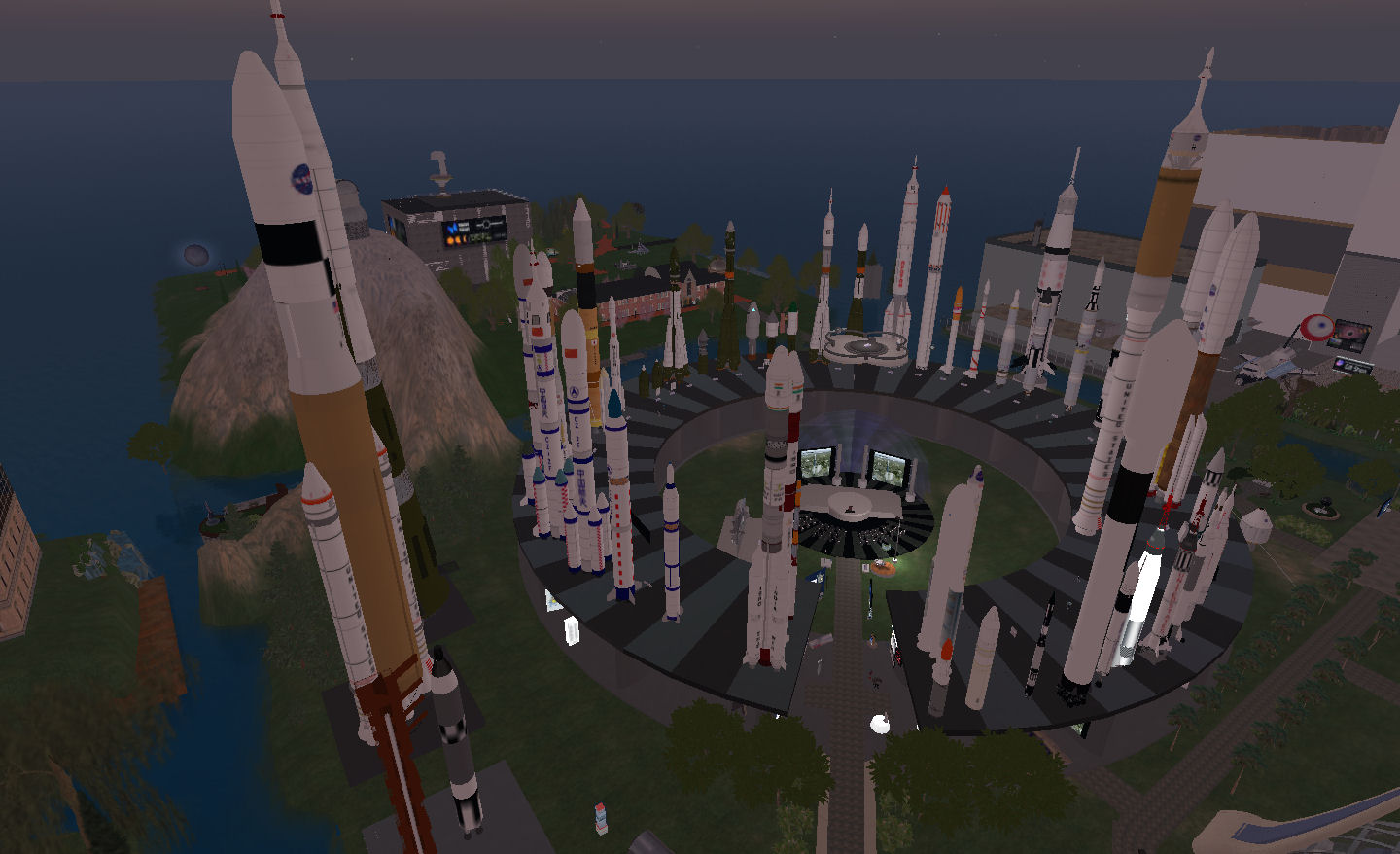
The Rocket Ring

Given I’ve written about my very tenuous link to the space shuttle Endeavour, I thought that for this instalment of Destination: I’d take a look at the International Spaceflight Museum (ISM).

ISM is perhaps one of the most famous destinations in Second Life and a fabulous example of what can be achieved through dedication and hard work on the part of a group of enthusiasts. Starting modestly on the sim of Spaceport Alpha, the ISM now covers two sims – Alpha and Bravo, and forms the hub of a group of (non-affiliated) sims dedicated to science, the environment, technology and space – including NASA’s own CoLab sim. The museum and its sims are overseen by the ISM Corporation, a Kansas, USA, non-profit organisation currently seeking 501c3 tax exemption with the US IRS.

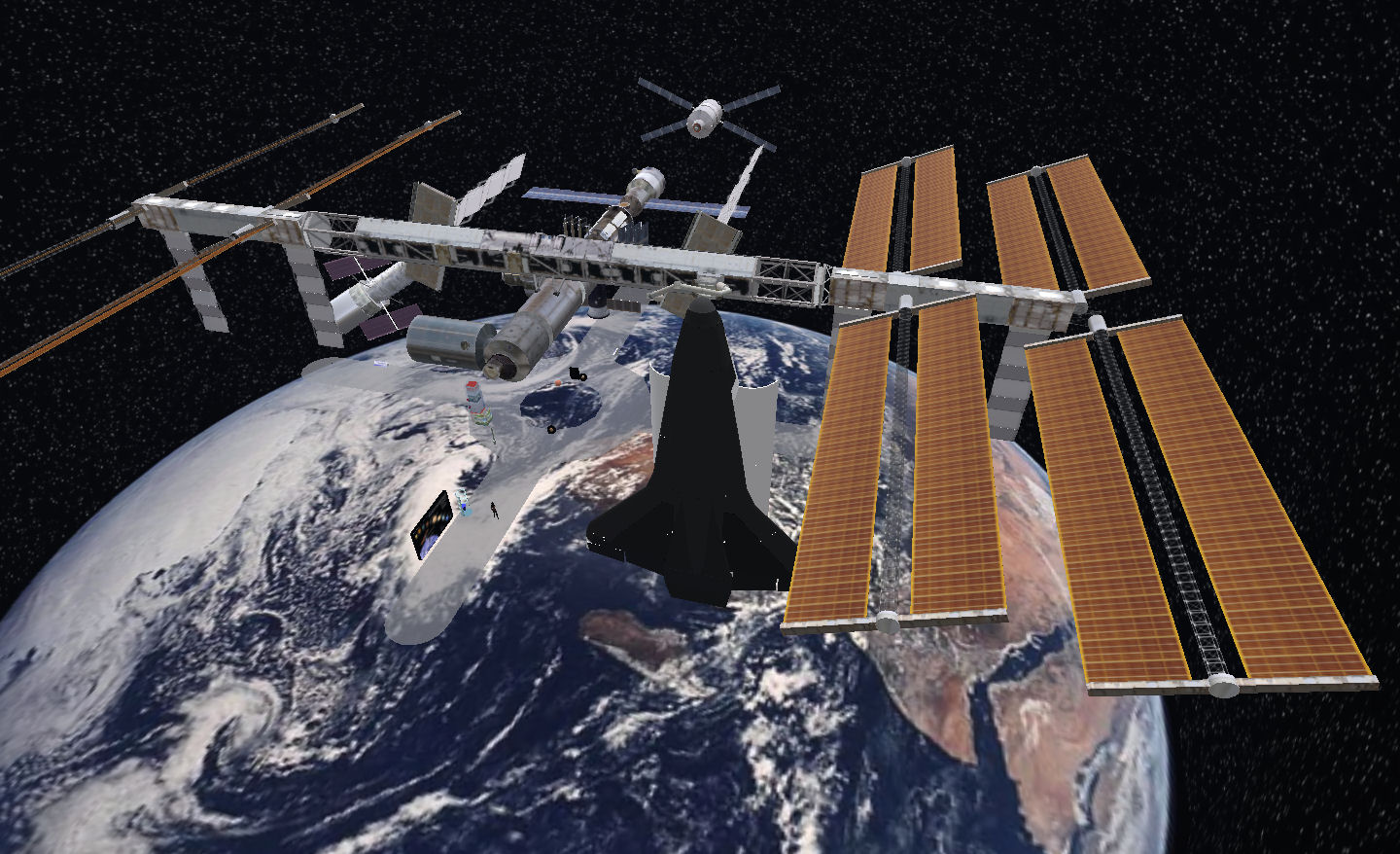
ISM arrival: LEO

As one would expect from a long-established SL facility that tackles such an engaging and absorbing subject as the exploration of space, ISM is exceptionally well-thought out. Use the main LM (from Search), and you’ll find yourself in low Earth orbit, standing on a platform with the glorious arc of the Earth below you and the magnificent and somehow delicate form of the International Space Station overhead, complete with space shuttle (the Endeavour!) and two Soyuz craft docked with it, while a European Automated Transfer Vehicle makes its final approach to dock. Also hanging in space beside the station, a little incongruously, is the Hubble Space Telescope.

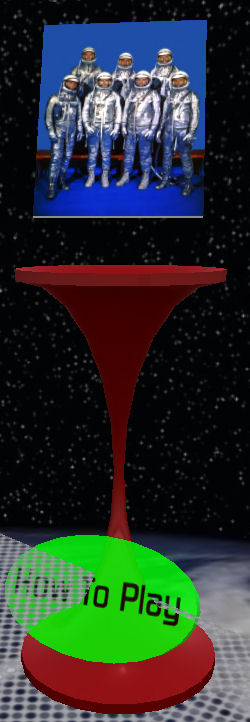
Trivia quiz plinth

The first thing that strikes you on arriving – after the magnificence of the display around you, is the sheer care that has been put into things. Around the walkway are hovertext icons, carefully positioned so they don’t intrude on your wanderings, but which provide a wealth of information. Additionally, each of the models in the exhibit is accompanied by a clickable plaque that will take you to a dedicated, multi-lingual wiki page that provides detailed information on the exhibit.

Also located on the platform is the main teleport unit / ISM map, and the first station in the museum’s Trivia Quiz. In this, you collect game cards by answering questions on space and space exploration. Cards can be redeemed at the ISM gift shop (or that’s the theory; to be honest, I’ve never found the object used to redeem the cards – but the quiz is still fun).

Travel to the Planets

The teleporter will carry you to any of the planets in the solar system, where you can find out more out our celestial neighbours and any space missions that have visited them. It’s actually while on the solar system tour that things get very slightly irritating.

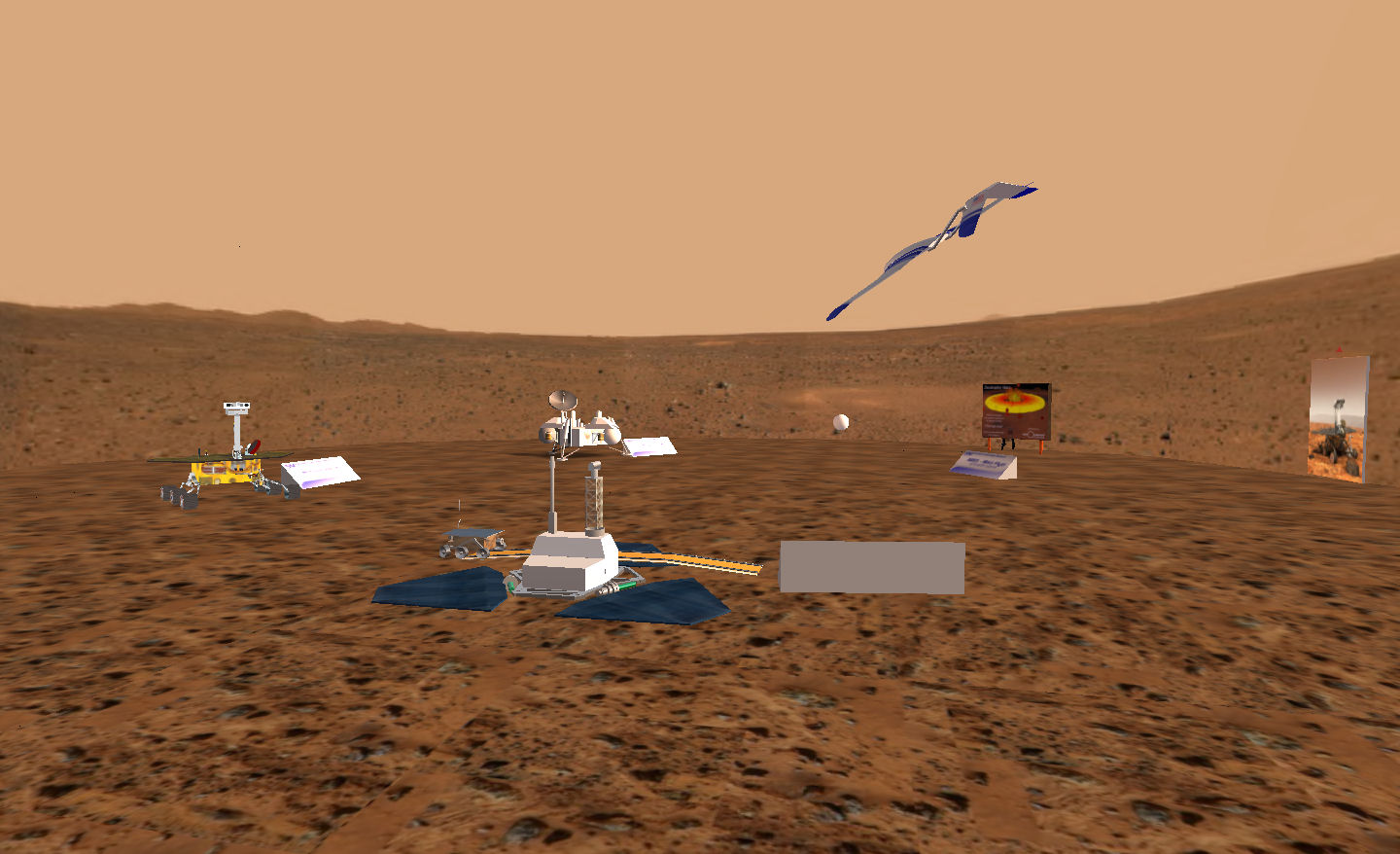
On the surface of Mars

While the exhibits are informative and well laid-out, the fact is that once you’re away from the arrival area, it’s pretty hard to get off the tour – there are no “return” teleport points. So if you opt to hop directly to, say, Mars, finding your way back to Earth, Venus or Mercury is a tad difficult.

Each of the displays exists in its own sphere or cube, with (again), plenty of information to absorb as you admire them. Were I to pick a favourite, it would be Mars – but then that planet has always held a mystical fascination for me – simply because you can pay a visit to the surface of our oft-visited neighbour in space.

The Pluto / Charon display, ostensibly marking the “end” of the solar system, allows you to take a peek at some of our nearest interstellar neighbours as it includes a three-dimensional model of our corner of the galaxy, complete with clickable stars!

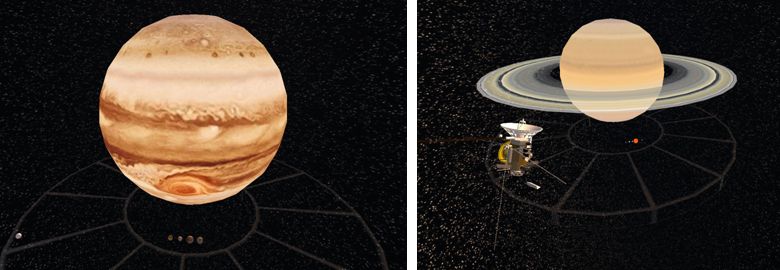
Jupiter (left) and the Galilean moons; Saturn (right) and the Cassini / Huygens mission

The Pluto / Charon display also appears to offer a novel way of moving on in your explorations: a parachute to get you down to the ground! This is something of a novel approach, to be sure, but as I have my own chute, I strapped it on and stepped off the edge of the catwalk only to splat myself on the ground as the lag prevented my chute from opening in time. Ah, well.

Feet on the ground – head in the clouds

Fortunately, no-one ever dies in SL, so after picking myself up and dusting myself down in the hope that no-one noticed, I found myself in the middle of the Rocket Ring. Here you can learn about all the rockets ever flown – and some that never did or have yet to take to the skies. In the centre of the garden is the ISM theatre, which frequently hosts talks on space flight, space exploration, astronomy and the like, and which broadcasts a NASA TV fee during space missions. Under the Rocket Ring you can find a wealth of other information – some of which may help you with questions from the 2nd Trivia Quiz plinth, which also can be found here as well.

Not all the displays are static, either – you can, for example you can ride atop a Titan II rocket in a Gemini capsule into outer space, our climb aboard a space shuttle and have a look around. You can also visit the Planetarium and take in a show. And if you don’t fancy trudging around the sims, try taking the tour ride – just make sure you can get seated before the vehicle moves off!

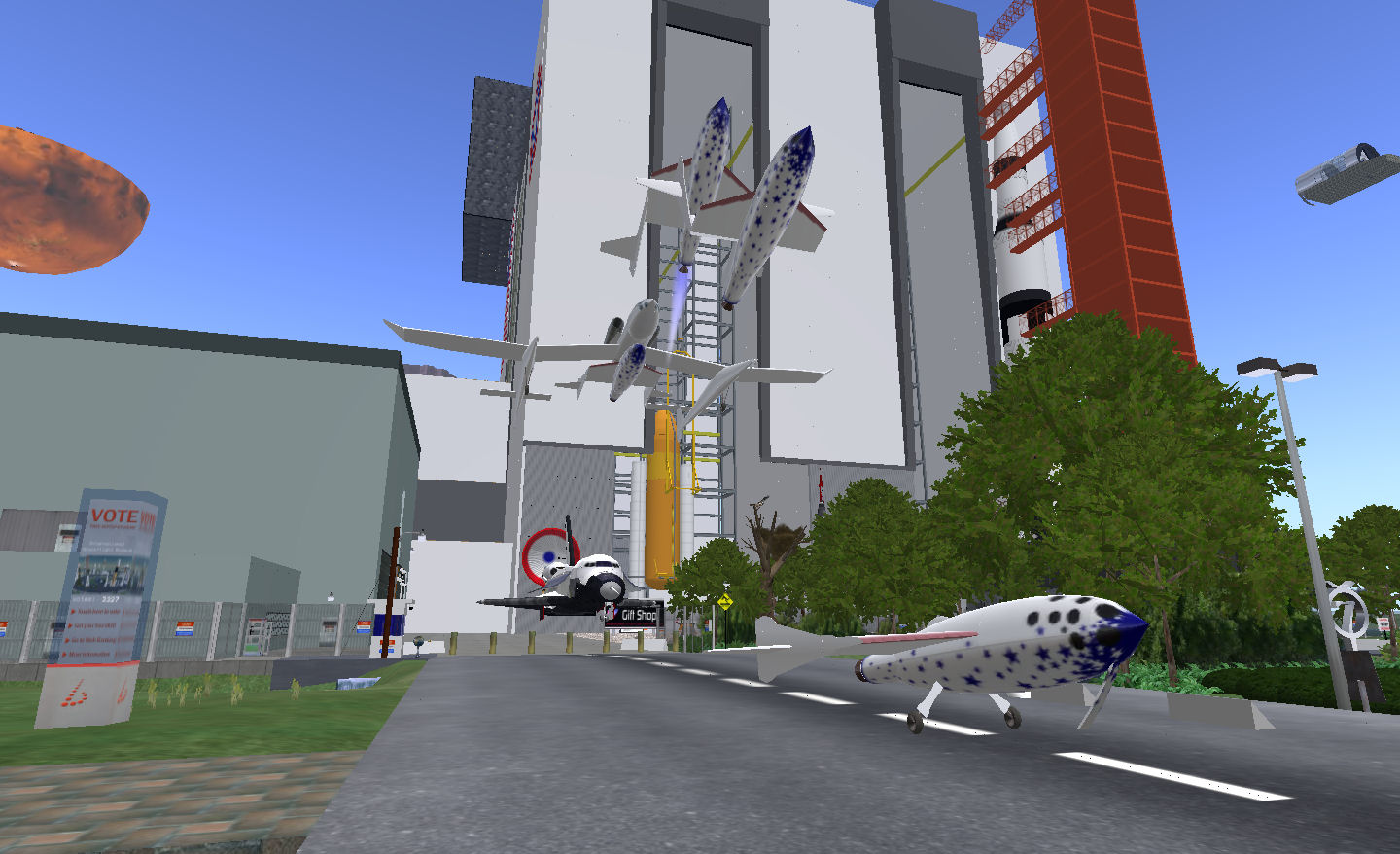
Spaceship 1, The Shuttle and Spaceport Bravo

Across the water, in Spaceport Bravo (be a little careful around the sim boundary, the crossing can be rough) sit replicas of some of the more famous buildings from America’s Kennedy Space Centre – including the imposing bulk of the Vehicle Assembly Building. Here you can see the huge Saturn V rocket, used to launch men to the Moon, find out about other hardware, past and present…and complete another part of the Trivia Quiz. Atop the Vehicle Assembly Building is the observation deck; turn your draw distance up and enjoy the view (just be sure to notch it back down again to reduce the lag when you leave).

While the ISM is not officially linked to or affiliated with NASA, it is bounded on two sides by NASA sims: NASA CoLab and the Explorer sim, operated by NASA / JPL. Both of these are well worth a look around as a part of your visit.

There are some problems with the museum, lag being perhaps the biggest. There are 14,229 prims scattered around the sim in dozens of exhibits and buildings – that’s a lot of drawing for your Viewer to handle. There are also information givers, web page redirectors, scripted vehicles and displays, all of which contribute to the server-side load. Given this, lag is understandable, and because of it – while it is tempting to pump up Draw as far as possible to see everything – I’d recommend that, unless you have a super high-end system, you keep draw turned down while moving around, and slide it back up while looking at individual exhibits on the ground. I’d also advise you limit your flying; the lag can make this a questionable activity – you can easily hit a sim boundary without warning as the lag grabs you, and end up rubber-banding hither and thither or getting unceremoniously dumped on another sim.

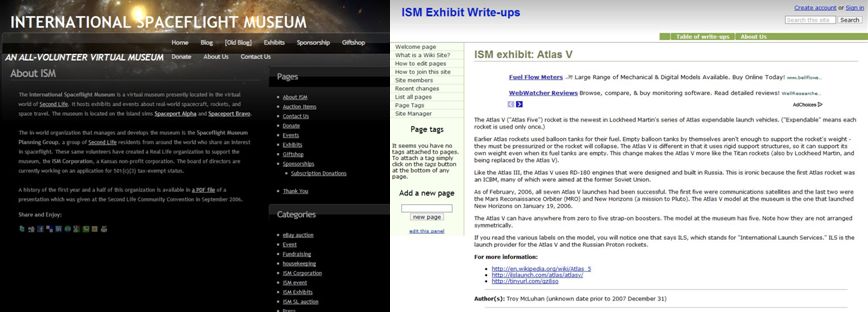
Away from the in-world experience, the ISM website offers a wealth of information on the museum, those responsible for it, what is going on in terms of upcoming events and a whole host of other information and news. The site is extremely well presented with excellent navigation. Of equal use is the ISM Wiki – reached via any of the in-world exhibit plaques. While this can interrupt the immersive experience while actually touring the ISM, it contains masses of information that is well-worth a look-in – and it does so in multiple languages, providing everyone with a chance to delve into it.

ISM website and wiki

Overall, ISM is one of the best attractions put together within Second Life. Whether you are a space enthusiast or just casually interested in taking a look, it has a lot to offer and represents an immersive and educational experience. The “wow!” factor tends to be high, and the exhibits are stunning both for the care and detail that has gone into their construction, and because of what they represent; the exploration of space and our understanding of the universe around us are truly awe-inspiring. And the ISM delivers much of that awe directly to your monitor screen.

But don’t just take my word for it – go pay a visit yourself!

Related Links


Destination: SS Galaxy

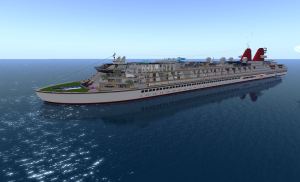
It’s three sims in length, you need to set your draw distance to over 600 metres if you want to see it all in one go, and the upper deck is over 30 metres above sea level.
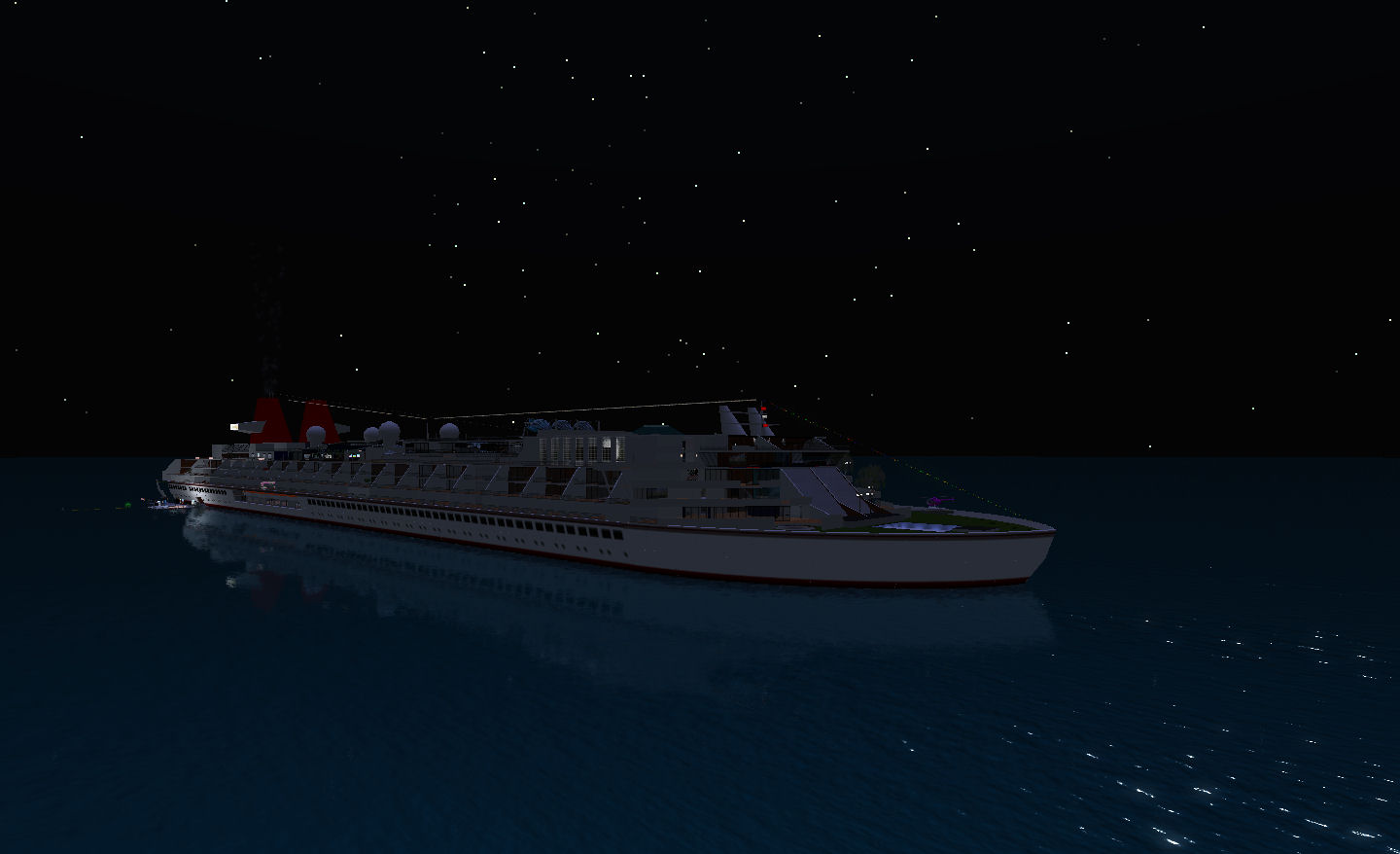
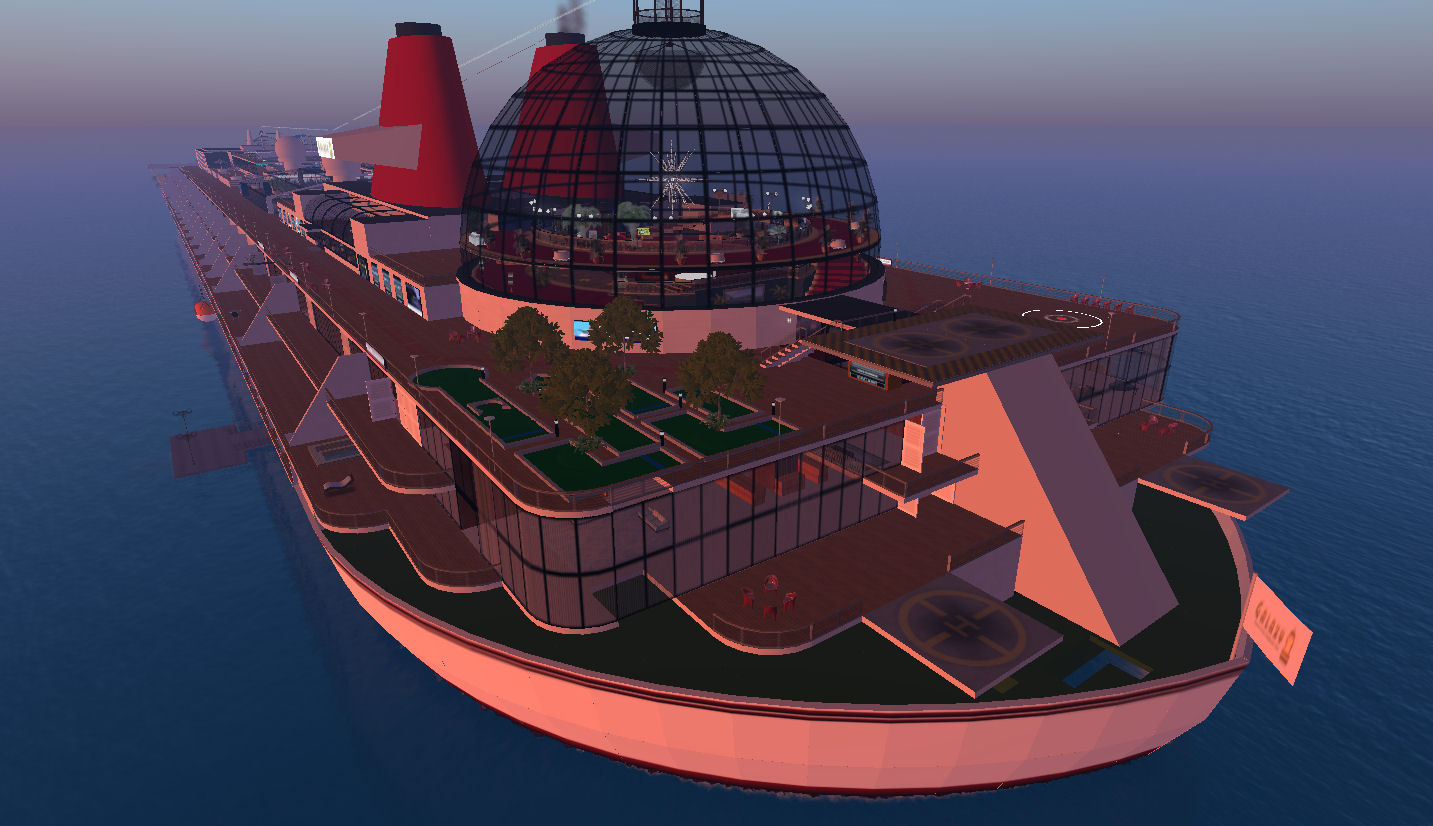
However you look at it, the SS Galaxy is an amazingly impressive build. Cruise ship, wedding venue, ballroom, recreational centre, shopping mall, home – the ship is all of these, and more. I first came across her when looking for a new dance venue and had no idea what to expect. Since that time, she’s become a familiar place I love to visit and introduce friends to.

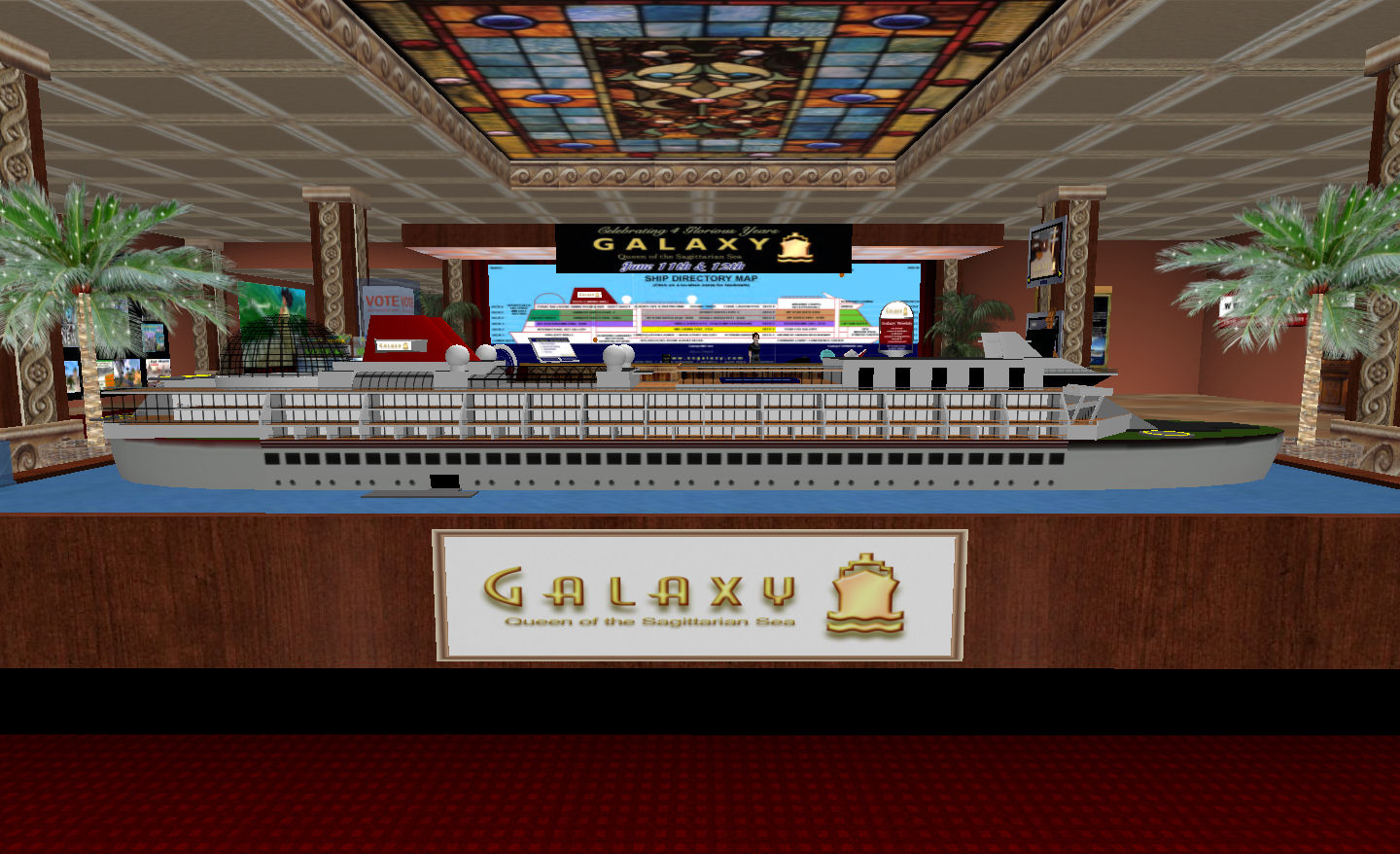
The model of the Galaxy and the deck plan

If you use the Landmark Tp, you’ll arrive at the default boarding point on a floating pier located towards the aft end of the ship. Unless you have Draw turned up, it’s hard to appreciate exactly what you’re facing – but don’t let that put you off.

The pier itself forms a part of the ship’s recreational facilities, offering dinghy sailing, fishing, scuba diving, windsurfing and jet skiis. For the romantically inclined, there are wooden rez-on-demand rafts that will take you on a tour around the ship. The rafts provide a gentle commentary about the Galaxy, slowing periodically alongside points of interest. Set your local time to midnight if you want to add to the romance and enjoy a cuddle as you sail! If you prefer, you can take one of the rez-on-demand dinghies and plot your own course around the ship.

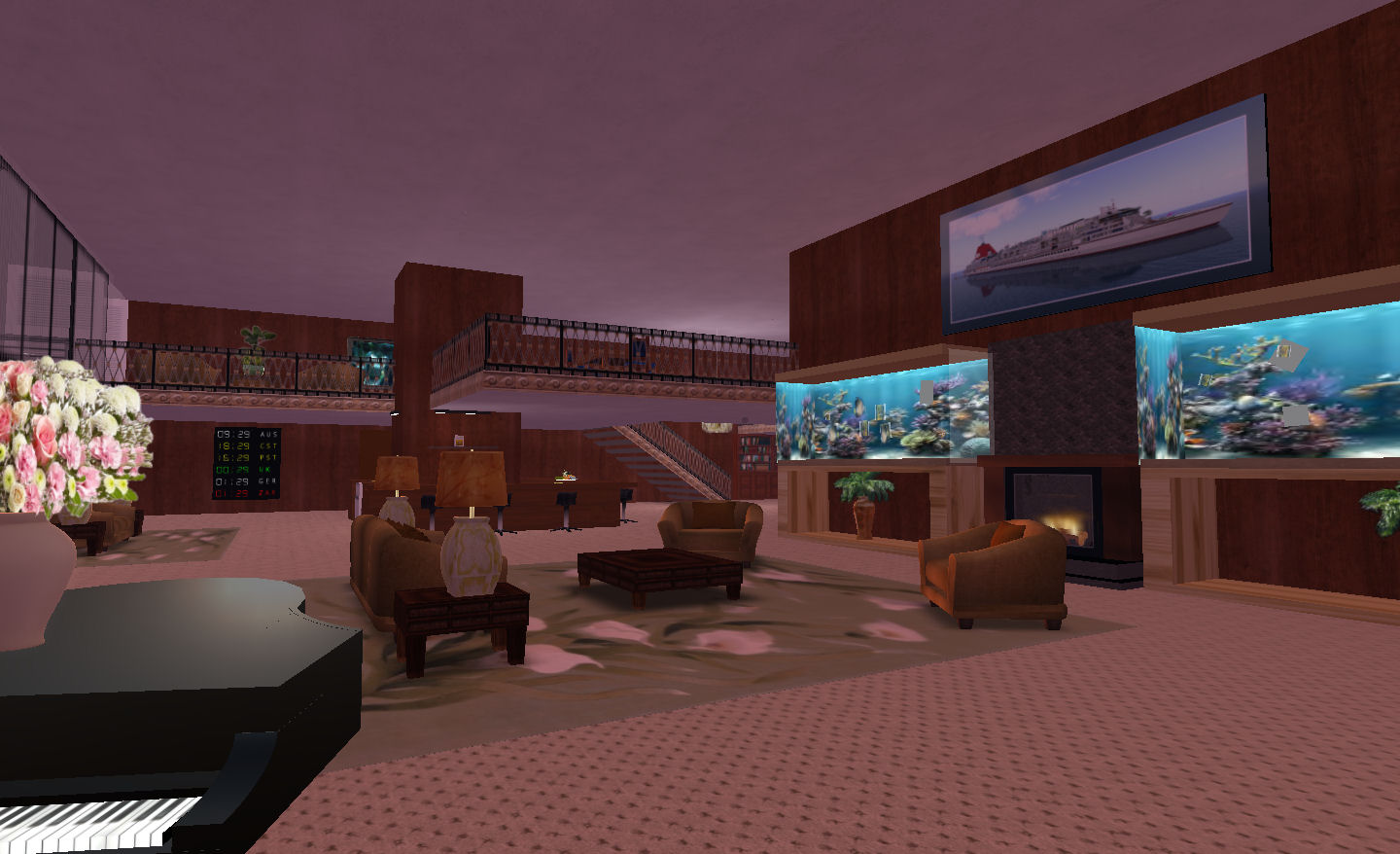
Entering the Galaxy, you might think you’re actually arriving at a luxury hotel – the embarkation area resembles an upmarket hotel lobby, complete with glass-panelled ceilings and rich carpeting on the floors. Pride of place here goes to a scale model of the ship, with a wall-mounted deck plan and guide located on the far wall, behind the main information desk. To the left lays the main section of the aft shopping mall, while to the right a broad companionway leads forward through the centre of the ship.

The Galaxy at night

As the embarkation area is in the aft sim, it’s usually best to start your exploration here and gradually work your way forward. To do this, take the elevator up to Deck 5. This will deposit you in one of the galleried walkways that lead you past some of the many suites and staterooms that are available for rent. Some of these are quite huge, and extend over two or three  decks of the ship, offering plenty of room and balconied views out over the sea. Continue aft past these and up a short flight of steps and you arrive on the stern deck – and a recreational heaven.

Stern recreation area and helipads

Here you can try your hand at putting (L$10 for 30 mins), or go sky diving (a personal favourite from waay back) – standard and pro chutes on sale at the vendors or pick up a basic freebie – and even add a bubble game to your skydiving fun;  if you’re feeling really energetic, take a short walk up the starboard side and give the rock climbing wall a go. If none of this grabs you, plonk yourself in one of the deck chairs and watch the world go by – you might even witness the comings and goings of a helicopter or two over the aft helipads (four in total: two for public use, two for the use of the occupiers of the ship’s two stunning Aft Staterooms, which are provided fully (and tastefully) furnished and which have a personal prim allowance on top).

Zodiac ballroom

Directly forward of the recreation area and helipads sits the huge dome of the Galaxy’s galleried Zodiac Ballroom with its circular dance floor, raised stage, upper gallery seating area and – way up at the top of the dome – a private dance area just for two.

Passing through the ballroom, you arrive at the upper section of the aft shopping mall, with doors either side leading back out to the upper deck. Take the port side doors, and you’ll find yourself coming out near another game I’ve always enjoyed aboard the Galaxy – the skeet / clay pigeon shooting (L$10 a game).

Moving forward from here, you’ll come to the first of the sim boundaries that divide the ship into three parts. At one time these were highlighted – and needed to be, as crossings could be a bit rough; but in difference to those that say “sim crossings are getting worse”, here’s one place where that is not the case. Approach the crossing gently (eyes on your co-ordinates!), and you’ll get over it with virtually *no* rubber-banding.

One of the two aft staterooms

Once across the boundary, you’re in the midships section of the liner, and can visit the ice skating rink, take a splash in the upper deck pool area, or pop down and walk among the trees of the arboretum. The pool and rink offer plenty of room for fun, with skates available from the rink-side vendor in the case of the latter.

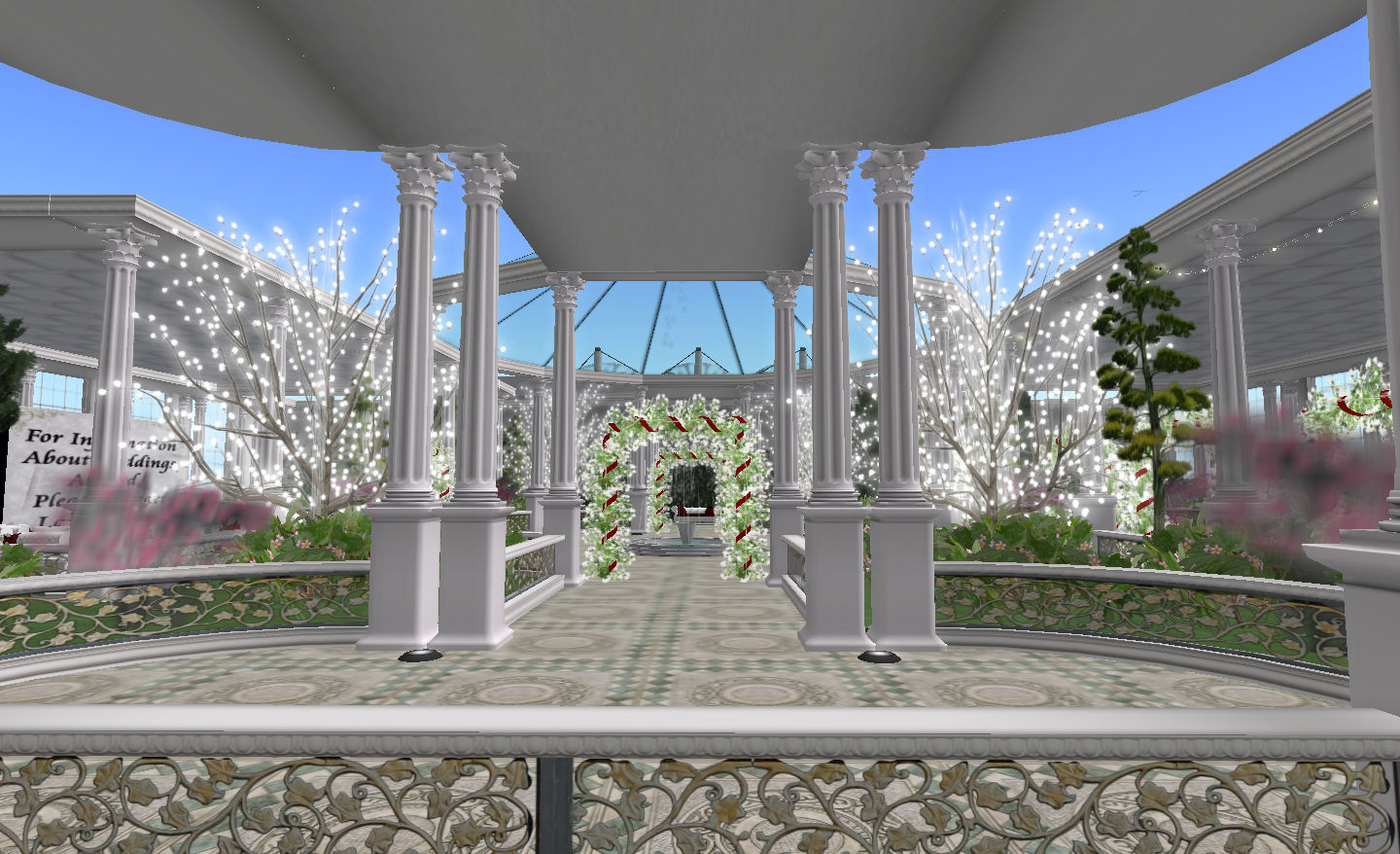
The forward end of the ship houses the huge and ornate wedding area, complete with trestles of flowers, tables, chairs, a dance floor, reception area and the ceremonial area. A chapel is located in one corner of this area, providing a place for quiet introspection.

The wedding chapel and reception area

Across the companionway from the chapel is the ship’s bridge, where you can take a look over the controls and generally play Captain. Above this is the forward observation lounge with room for dancing or sitting and chatting. Directly below the bridge are the Galaxy’s two enormous forward suites, each of which spans three decks.

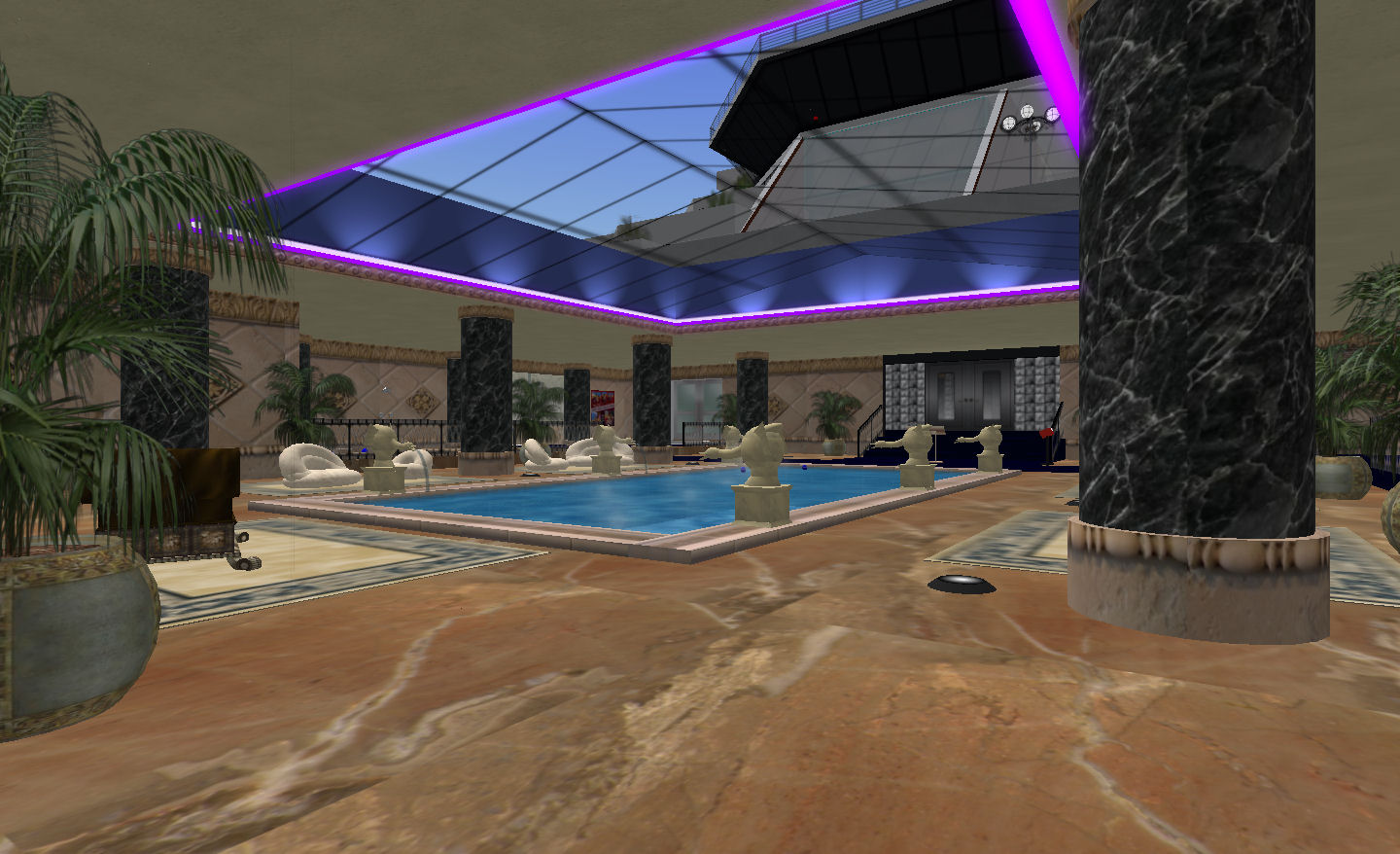
Also at the fore end of the ship lay the Boiler Room Nightclub and the Galaxy’s spa and fitness centre. The latter includes a pool, sauna, Jacuzzi and exercise machines for that perfect pumped prim look – note that it is also “clothing optional”!

Dining out, Japanese-style

For those who like dining out in Second Life, the Galaxy offers a choice of restaurants. My personal favourite is the Japanese garden, featuring individual chalets where you can dine in comfort, drinking in the night-time ambience and enjoying the company of friends.

And it doesn’t end there – there is more to discover in and around the SS Galaxy, but I’m going to leave this as a taster and tease. If you want to find out more, you should take time out and pay the SS Galaxy a visit – you won’t be disappointed.

The spa’s swimming pool

Places mentioned in this article

Recommendations when visiting the Galaxy

  • Make sure you turn up your draw distance as far as your system can comfortably handle
  • If you want to get around the ship quickly, make sure you pick up and Information Card from one of the many note card givers around the ship – they contain a host of useful landmarks
  • Be aware that the ship is home to a lot of people as well as a place to visit
  • Give yourself plenty of time to explore
  • Keep an eye out for the holodeck
  • If you’re confused as to where you are, look out for one of the cutaway plans of the ship to orient yourself.
A life on the ocean wave: staterooms, suites and cabins for rent

Related Links

Destination: Mont Saint-Michel

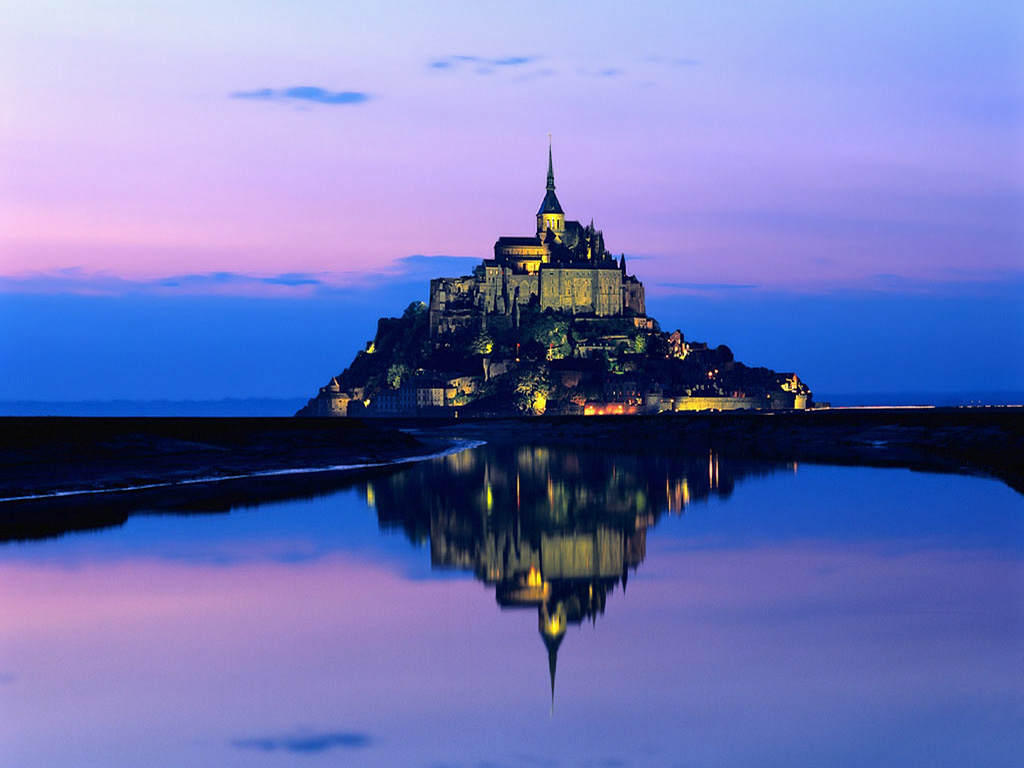
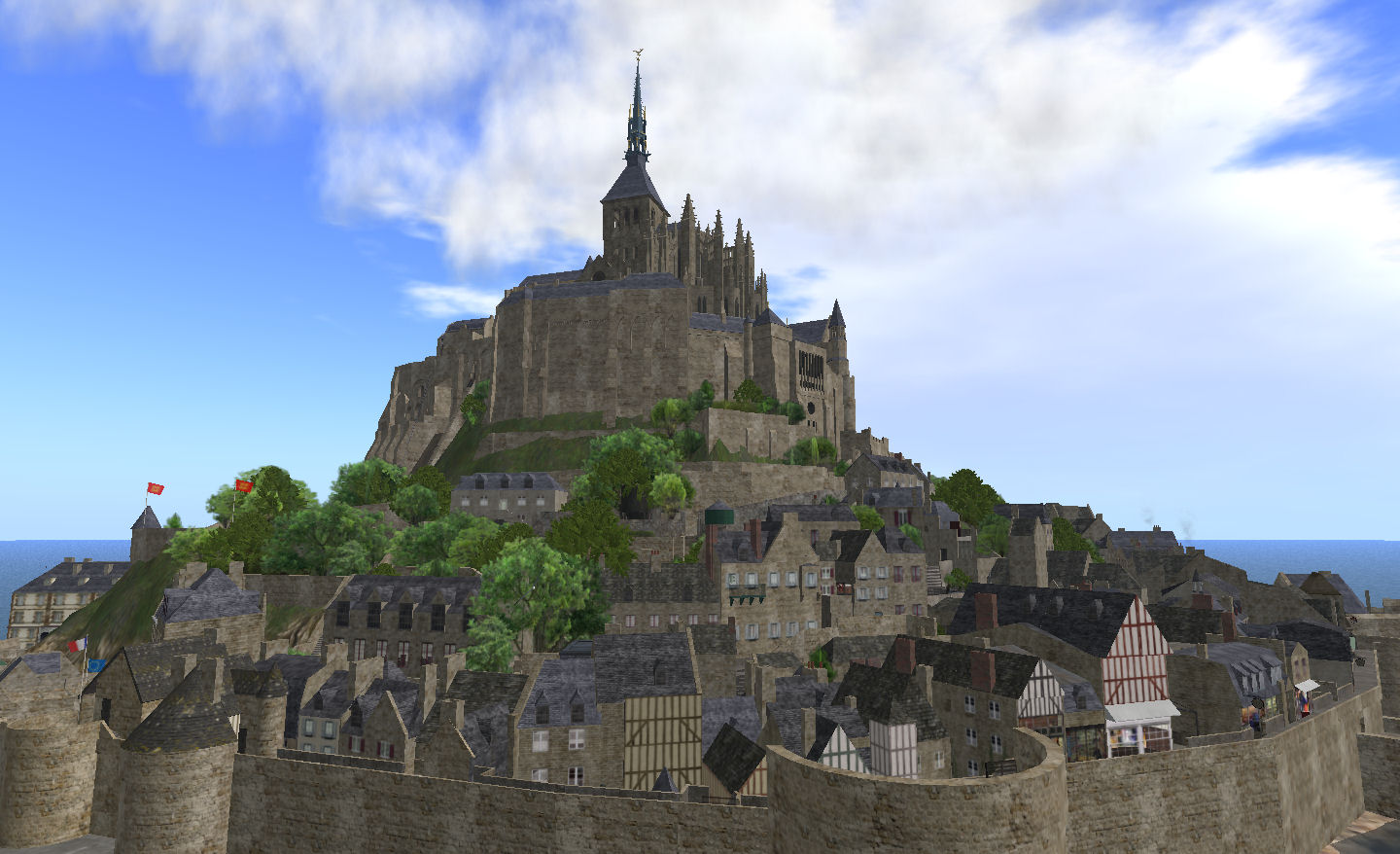
Sitting in the mouth of the Couesnon River roughly a kilometre offshore from the mainland, and connected to it by a causeway, lays the magnificent Mont Saint-Michel. Occupied since before the Roman times, the islet (less than a kilometre square) rose to prominence in the middle ages as a religious centre, gaining strategic significance when it was annexed by William Longsword, Duke of Normandy in 933, and 100 years later when it supported William, Duke of Normandy’s claim to the English throne.

It’s also famous for being painstakingly reproduced to careful scale within Second Life by Moeka Kohime. Featured on the French version of the Second Life homepage, the sim is a magnificent testament as to what can be achieved when building in Second Life with the humble prim – or in this case, 14,328 humble prims.

Mont Saint Michel, Second Life

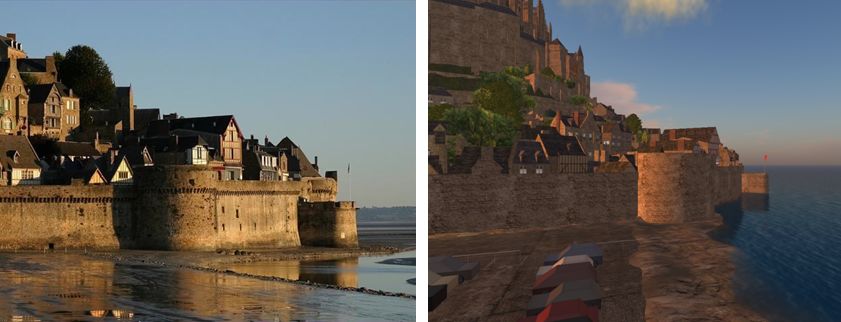
The Mont faithfully reproduces the original in almost every visual aspect; no mean feat given it occupies an area a quarter of the size of the original. Yet it is not just a mere “look but don’t touch” showpiece: it is also scaled to allow avatar access, providing a fully immersive experience for visitors who can walk through the narrow streets, browse shops and wend their way up to the magnificent monastery that crowns the island.

I’ve known about the Mont in Second Life for years – yet I’ve never visited it until this week; I now regret not having done so sooner. Arriving (via a friend’s Tp) in the causeway car park (something that will hopefully vanish in the near future, to reflect the fact that it is being replaced at the real Mont as a part of the project to return it to its original island status), which sits on an adjacent sim, I carefully crossed into *Edelweiss* and followed the walkway to the entrance.

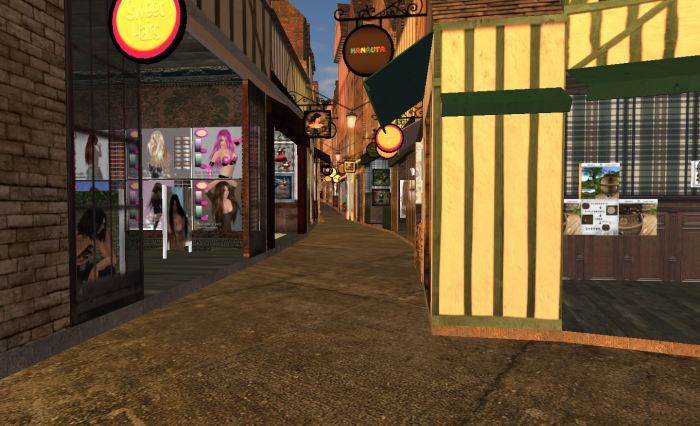
On entering the citadel, the attention to detail is immediately apparent – two massive wrought-iron bombard canon, left by the English after they failed to capture the island during the great siege of 1423-24, lay in the entranceway, just as they do in the original. Beyond these, past the information bureau is a small wooden bridge leading you into Le Grand Rue, and the sim’s shopping mall filled with boutique-style shops that fit the look and feel of the original Mont.

The streets of Mont Saint-Michel and Mont Saint Michel in SL

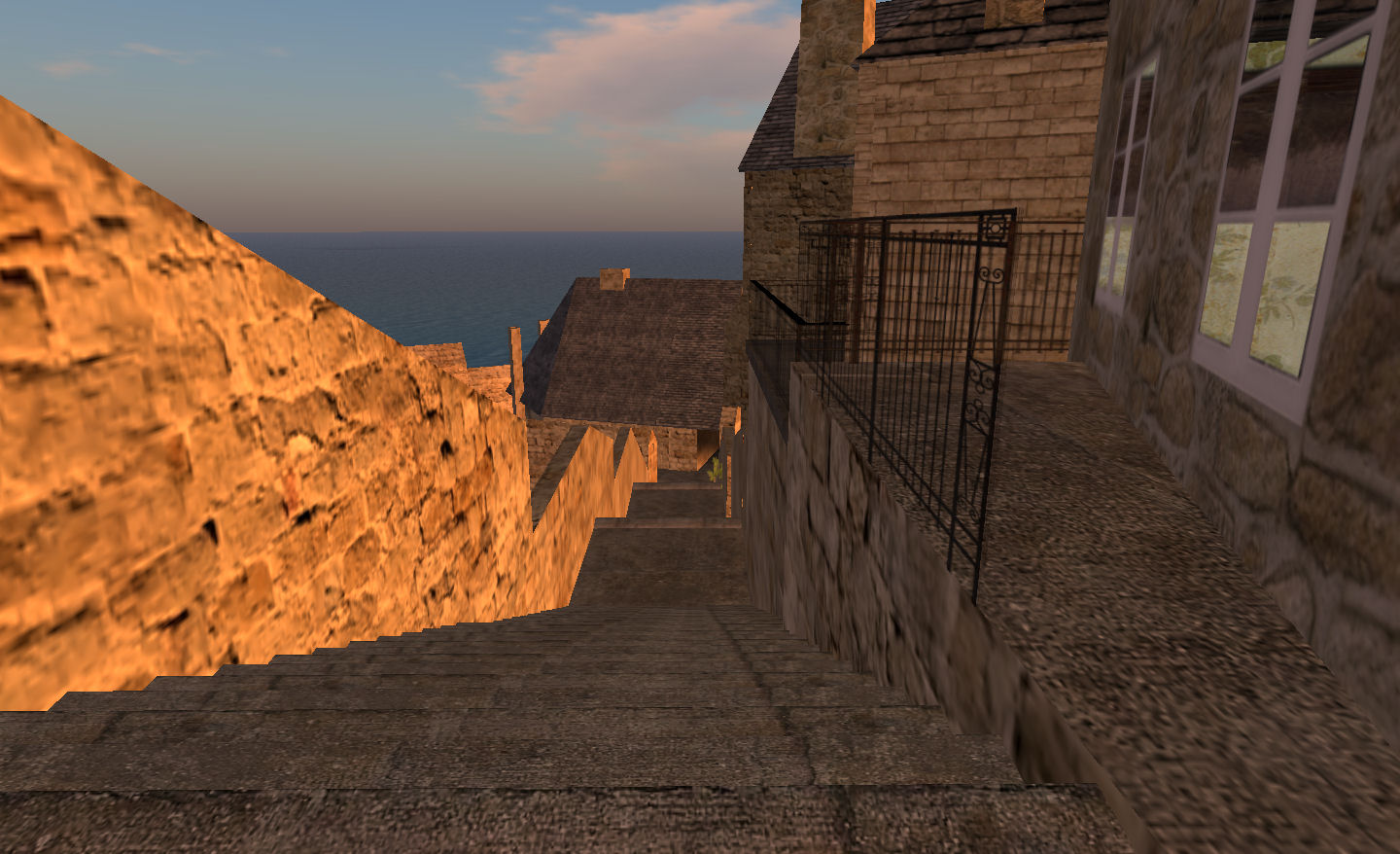
From here you can choose to either wander the Grand Rue, browsing the boutiques, or you can take one of the many stairways leading further up onto the island and towards the towering edifice of the abbey.  This is one of the joys of the Mont is Second Life – it is a charming warren of walkways and passages that – as with the actual Mont – make exploring it full of anticipation: what lies under the next arch, at the top of the next stairway, around the next stone-walled corner? As you wander, you can peek through windows into the homes of the “locals” (none of the houses are actually occupied, but the detail again adds to the charm and realism of the place), or pause for a breather along the way at one of the many vantage-points and simply enjoy the view.

The sea walls

The monastery itself is beautifully reproduced in some detail, from the stepped entranceway through to the high cloister and its covered walkways and garden, suitable for quiet contemplation. The interior captures the magnificence of a medieval abbey, and one can almost imagine the monks chanting prayer, or quietly going about their business, conversing in hushed tones as they walk around the cloister. I have to admit that the mood for me was heightened as I was listening to Christopher Franke’s The Celestine Prophecy while exploring – but even without it, it’s hard not to fall into the atmosphere of the place.

Wandering the isle

There are a few things to be wary of: in a couple of places, the build exceeds the sim boundaries, and if you try to follow the outer sea wall all the way around the island, you’re going to find yourself inexplicably bouncing against empty air in a couple of places (and may get bounced right through a wall and down to the sim-edge below). Keep an eye on your bearings, and use the provided covered walkways to avoid this. The Mont was also constructed with the default camera angle in mind. As such, if you use adjusted camera positioning, either through a HUD or Penny Patton’s super Camera Offsets, you may experience the odd camera movement stutter or find your camera swinging unexpectedly through a house wall to give you a view of the interior. This is worth it however, as overall, you get a much more “involved” feel for the place with a decent set of offsets.

Of course, if you are good with navigation, the most immersive way of experiencing the island is through Mouselook – and I really recommend you try; the Mont comes alive in so many ways, and you really do not know what awaits you around the next corner. It is certainly worth keeping to Mouselook when walking around the monastery itself.

Cafe au lait among the rooftops

When you’ve done with your wandering, make sure you seek out the Café Poulard and have a well-deserved rest, either in the café itself, or out on the upper floor balcony with its sea view. It’s also a great place from which to camera around the island and make sure there is nothing you’ve missed in your wanderings, and which might be worth a Mouselook attempt to find when you leave the café.

If there is one thing perhaps missing from the build, it is the opportunity to learn about the history of the real Mont Saint-Michel; the museum is devoid of displays, information plaques are minimal, and so on. This is a shame, as the sim represents a superb place to enthral, educate and promote. Of course, no-one wants to be bashed over the head with facts and figures and historical diatribes, but it would be nice to see some context around the build and its real life counterpart.

Mont Saint-Michel is – to use the superlative yet again – a truly magnificent build. If you haven’t done so already, I’d recommend you do; you will not be disappointed, and you’ll be capturing a slice of history from two worlds in the process.

Cloisters – real and reproduced
Le Grand Rue
Mont Saint Michel

Addendum

When someone says to me, when I mention Mont Saint-Michel, “Did you find the hanger and the spaceship under it?” I tend to think they are trying to tug on my leg in the hope that bells ring. When three people independently raise the same subject (one of whom swears they’ve never read my blog), I get the feeling that either there is something to the comments, or the world is out to get me.

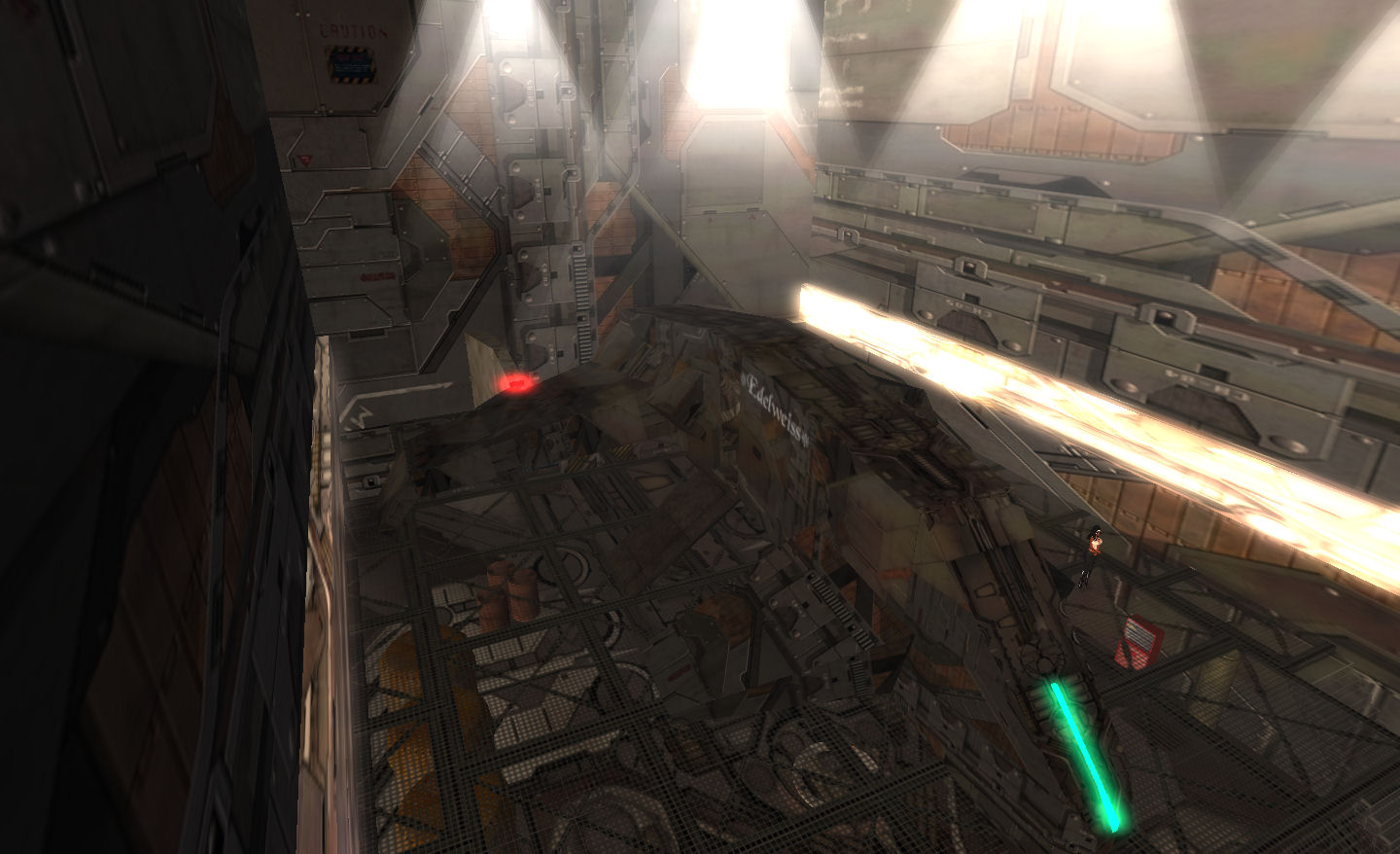
The Edelweiss

Given the second reaction is pretty much my everyday state of being at the moment (you’d be the same if you’d had the same issue with technology this last week, believe me), I opted to go with “there is something to the comments. So off I zoomed to have a nose around. And guess what? There is a hanger hidden under the Mont – although I’m not sure if what is inside is a spaceship or so kind of futuristic aircraft.

The Edelweiss sits in a bunker under the Mont, apparently fuelled and ready for flight (although you don’t appear to be able to board her), lit from above by powerful spotlights.

It’s a strange thing to have under an abbey atop a small islet, and certainly well-hidden from casual eyes; had I not received three separate prompts on the matter, I’d have remained in ignorance of it being there. But it does raise an interesting question…given the accuracy of the rest of the build…is there yet something extraordinary to be found under the crypts of the real Mont Saint-Michel? Could it be that those 11th and 12th century monks who built the original abbey actually knew more than they were letting on?! The mind boggles! ;-).

That said, I’m not telling you where it is. Go and find it for yourself! ;).

Related Links