Moni’s Discolouration Disrupted in Second Life

IMAGOLand Art Galleries: Moni Beebe – Discolouration Disrupted

Having been caught up with things in the physical world for much of March (and still trying to clear up the last few issues as April 2024 starts its merry dance to becoming at part of the year’s history!), I’m caught in something of a game of catch-up with events, exhibitions and what have you. In terms of some exhibitions, there are some I simply won’t get to, as their days are numbered and they’ll have likely ended before I can get to them.

However, there is one exhibition I really wanted to try to cover before it vanishes into the ether (it having opened nigh-on a month ago at the time of writing, on March 6th, 2024). It is Monique Beebe’s Discolouration Disrupted, which (again at the time of writing this piece) is still available at Mareea Farrasco’s IMAGO Art Galleries.

IMAGOLand Art Galleries: Moni Beebe – Discolouration Disrupted

I’ve been an admirer of Moni’s work ever since her first exhibition in Second Life in 2017. Her work, which has until relatively recently focused on avatar studies, is always marvellously expressive and rich on both narrative and, frequently, a degree of subtext as well. Her exhibitions tend to be thematically driven and often highly sensual in nature, and the former is certainly true of Discolouration Disrupted, as evidenced by its subtitle Unveiling the Beauty in Imperfection, which itself might also be seen as a subtextual comment on modern society’s obsession with perfection when it comes to the human body.

No liner notes appear to be provided for the exhibition, allowing viewers to plumb the depths of the pieces and discern their relationship to the central theme for themselves. The pieces are a mixture of still life and animated works – be sure to enable the media option in your viewer (click the movie camera icon towards the top right corner of the viewer window) to see the latter in motion – and all appear (and forgive me if I’m wrong here, Moni) to be digitally generated.

IMAGOLand Art Galleries: Moni Beebe – Discolouration Disrupted
The still life images perhaps offer the clearest link to the theme of beauty in imperfection in the manner they juxtapose clearly beautiful / handsome figures (aka society’s “perfection”) with styles and colour mixes that whilst not undermining the stated beauty of the figure(s) within them offer a degree of discordance with their beauty, drawing the eye from them and imbuing a sense of mismatch or an unfinished feel to them – thus presenting the idea of the imperfect. Yet at the same time it is these very clashes of style and / or the sense of the unfinished which actually provides each piece with a depth of beauty that reaches well beyond what might have been had they been presented as “unblemished” works. The animated images share this to a degree, but also offer additional dimensions to the core theme – the blurring of images, the use of a mask and veils, etc.

And while it may just be my personal interpretation, some of the pieces perhaps present subtextual commentary on society in other ways as well. The likes of Break Away, Hiding, Undisclosed, Empowerment, and even Fish in the Sea, all appear to offer a degree of commentary on current reactionary moves in (particularly) patriarchal / pseudo-religious circles towards matters of a woman’s bodily autonomy, the dismissing of female equality / empowerment, the right to gender identification and self-identification and choice in general.

IMAGOLand Art Galleries: Moni Beebe – Discolouration Disrupted

But again, this is an interpretation informed purely by matters that impact my own thinking, and not necessarily those intended by the artist. You might well – in fact most likely will – find the images within Discolouration Disrupted speaking to you very differently. As such I do urge you to visit this exhibition, and to do so before it does vanish from IMAGO altogether, possibly in the next few days.

SLurl  Details

Noa Cloud: Master of Landscapes in Second Life

Maison de la Chouette, March-April 2024: Noa Cloud

Maison de la Chouette is a new art venue – at least for me – operated by the veritable Owl Dragonash, a superb patron of the arts herself, and also a talented Second Life photographer. A further gallery nestled within the Corsica South Coasters area, it joins the likes of NovaOwl and the galleries at Port Emyniad (and locations in between) in presenting the opportunity for visitors to explore the local landscape and trails and appreciating a rich variety of SL art (see: Art and a walk in Southern Corsica in Second Life).

I was drawn to Maison de la Chouette specifically because it is, throughout March and April, hosting an exhibition of art by Noa Cloud. The holder and creator of [REN] (of Noa is perhaps best known amongst SL explorers as the holder and creator of [REN], which I last visited in May 2023 (see: The idyllic beauty of REN in Second Life). Noa is a gifted writer, a musician and actor, and himself an explorer of Second Life. He is also a talented photographer-artist ([REN] is also home to his own gallery) with a focus on SL landscape and avatar studies.

Maison de la Chouette, March-April 2024: Noa Cloud

At Owl’s Maison, he is presenting fifteen images showcasing his landscape work, and they are both beautifully rendered and carry a depth of artistic express which mark them as instantly purchasable for display in anyone’s SL home. Several of the pieces offer images of SL’s wildlife and animals, generally casting them in the most delightful way of telling a little stories of love, companionship, childhood and fun, utilising characters he discovered on his journeys around SL.

The images are present in both panoramic and square formats, with the latter offering a patterned border around them. This reminded me of the old postage stamps with there “crenelated” edges resulting from being torn off of their printed sheets along the perforations surrounding them. This patterning adds to the sense of these images belonging to a special collectable set.

Maison de la Chouette, March-April 2024: Noa Cloud

Noa’s gift in his photography is to combine a skilled eye for framing and cropping with an equally keen eye for spotting both detail and the opportunity to offer a story with his work. The result is that there is a certain visual poetry imbued in the finished pieces; a suggestion that if they haven’t had a story or poem written about them, then one is due. Just take Solitary as an example of this or, on a more humorous and enchanting level, Beby Bird (which also stands as testament to the creativity of whoever is responsible for this pairing of birds).

Not that these are pieces that need to be dissected to be appreciated; they can be enjoyed very much in and of themselves, and the setting within Maison de la Chouette’s gentle Tuscan flair of villa and terrace (the is displayed both indoors (both floors) and out) demonstrate how perfectly Noa’s images lend themselves for display at home.

Maison de la Chouette, March-April 2024: Noa Cloud

I understand that the “opening” party for the exhibition – in reality, a mid-point celebration – is to be held on March 19th, 2024, commencing at 13:00 SLT with live music by Grace Loudon, followed by a DJ set from 14:00 SLT. Might see you there!

Slurl Details

Presence: an artistic expression of absence in Second Life

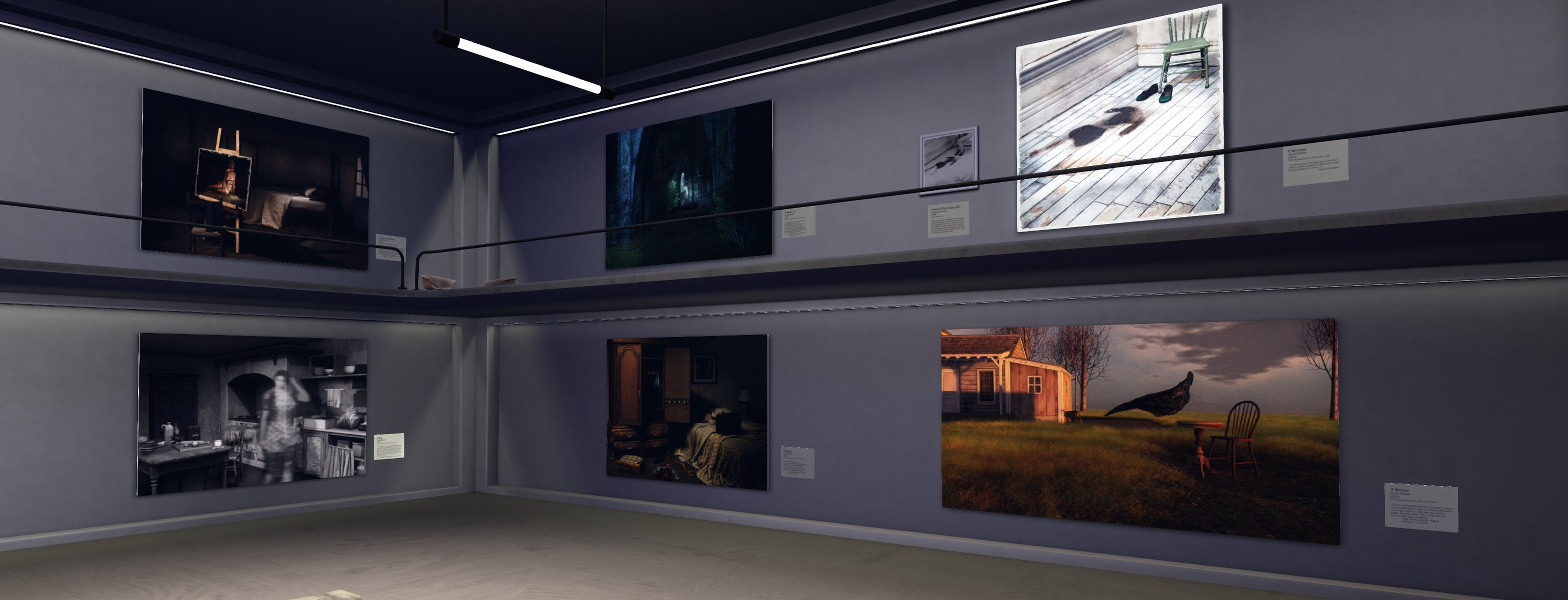
HeArt and Soul Gallery, February 2024: Scylla Rhiadra – Presence

In January 2024, Scylla Rhiadra presented an exhibition entitled Containers at Mareea Farrasco’s IMAGOLand Art Galleries (see: Containers: an artistic voyage of expression and constraint in Second Life). It offered an examination of how spaces – be they at home or at work or somewhere between, whether public or private – can both help organise and protect us as individuals whilst also giving us the freedom to fully express who we are, whilst at the same time they can also inform, contain, and constrain us in how we reveal ourselves to the world at large – and perhaps actually to ourselves as well.

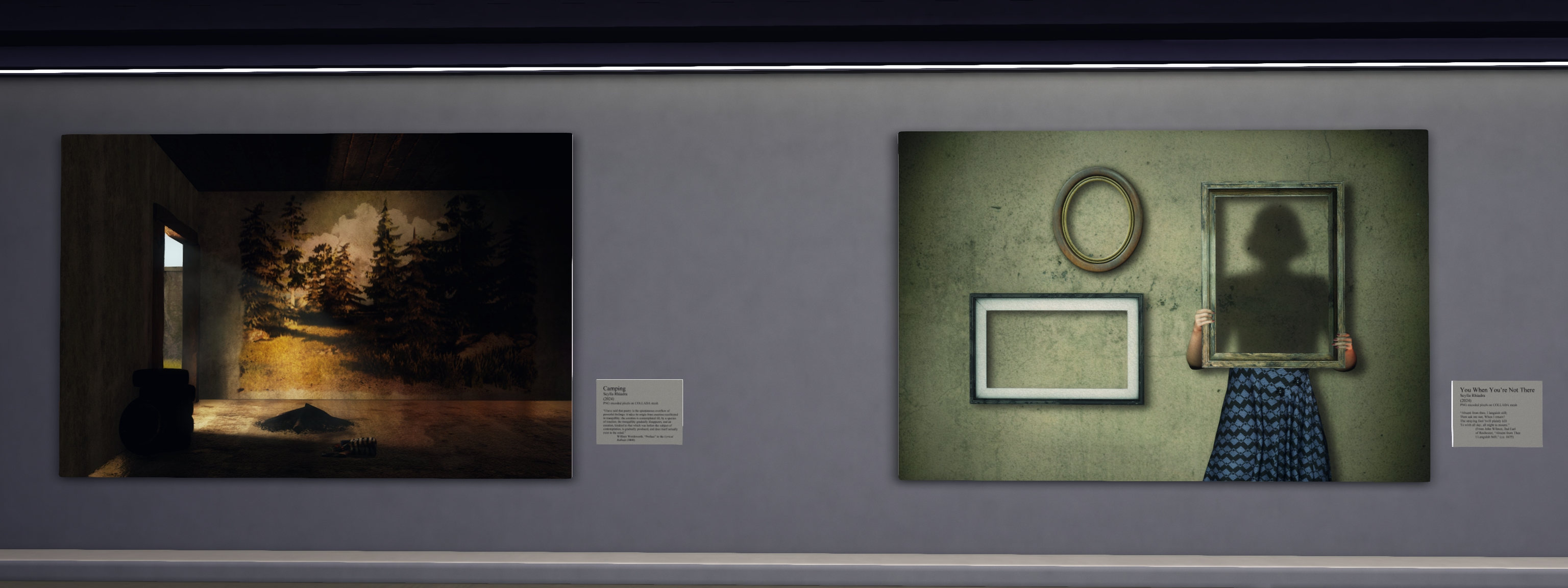
Now, at HeArt and Soul Gallery, operated by Tom Willis and Lizzy Swordthain, she offers an exhibition of work which can be considered a further chapter on the theme, offering an alternative perspective. In Presence Scylla does not look and the manner in which the spaces we occupy and move through affect us – but how we impact the spaces and places through which we move, oftentimes long after we have departed.

HeArt and Soul Gallery, February 2024: Scylla Rhiadra – Presence

We all leave a mark on the places we move through, and on life as a whole. The size of that mark obviously varies from the celebrated statesperson or global celebrity down through the favourite uncle or teacher from school; but our mark is undeniable:

We are presences even in those places where we are not, by virtue of our actual absence: we leave a trace embedded in what did not happen: the somethings we might have said that remain unspoken, or the somethings that might have been done that we were not present to do.

– Scylla Rhiandra, Presence, February 2024

As with Containers, the images Scylla supplies are studies in composition and narrative. Each holds a story, or at least a vignette which is clearly discernible. In addition, each image is again accompanied by a board containing a considered quotes from a piece of literature designed to further illustrate the image itself; and like those found in Containers, it is hard not to feel these selections offer insight into Scylla – and allow her to leave a further little “her shaped” hole in use which accompanies the one created by each picture. Certainly, I again felt that distant kinship with her purely through the pieces and authors she has selected.

HeArt and Soul Gallery, February 2024: Scylla Rhiadra – Presence

Also like Containers, the collection making up Presence are layer in potential meaning and subtext. There is the meaning offer through the title of each piece, the reflection of that title and meaning through the selected text, the framing of the theme used to express the ide; all of which are expected. But then there are the more subtle aspects: those which lie in the way in which each piece chimes with us personally, the memories and thoughts conjured – perhaps most of all by the people who have touched our lives but who have now moved on in one way or another, only to leave one of those small holes in our thoughts and memories.

Another beautifully poignant and expressive series of Scylla.

SLurl Details

Lost at Nitroglobus in Second Life

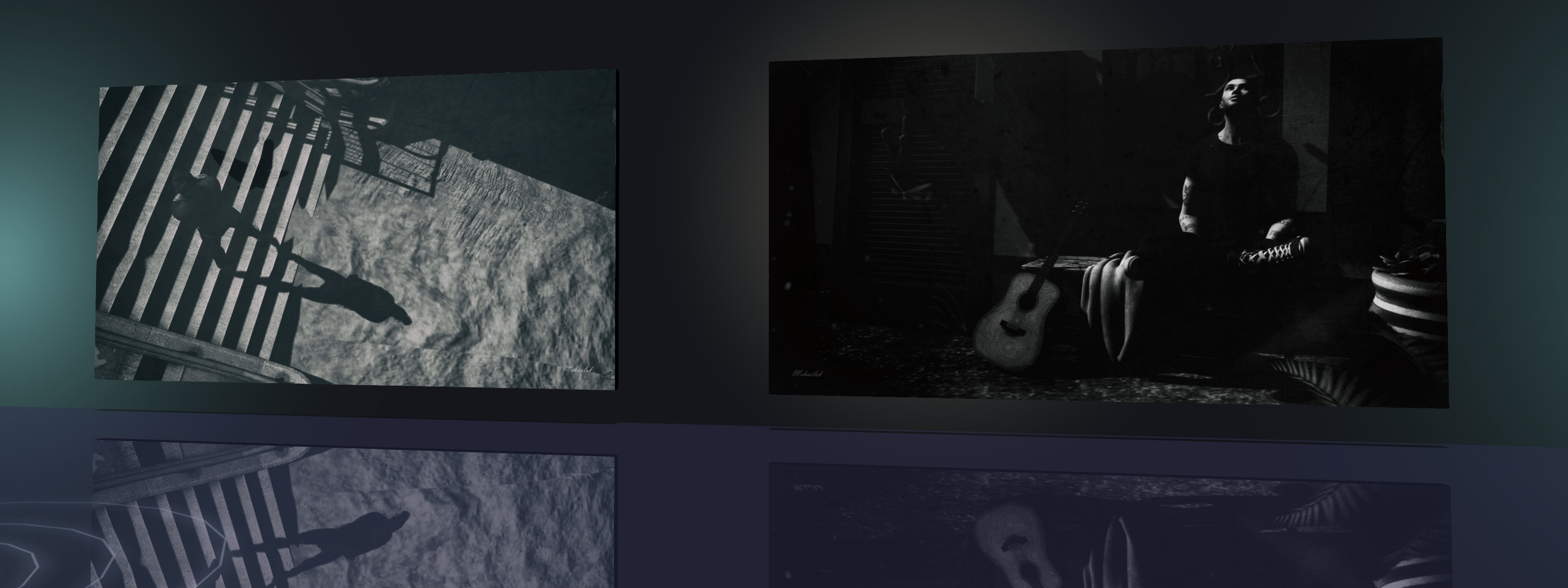
Nitroglobus Roof Gallery, February 2024: Mihailsk – Lost
‘Tis better to have loved and lost
Than never to have loved at all.
– In Memoriam A.H.H (1850) Alfred, Lord Tennyson

The above words, written in the 27th Cantos of Tennyson’s elegy to his friend (and lover?) Arthur Henry Hallam- who died at the tender age of 22 -, have become something of a modern proverb since they first appeared in that poem. They are often offered in consolation to someone who has lost  – through death or other departure – a person who has meant so much to them.

Nitroglobus Roof Gallery, February 2024: Mihailsk – Lost

The words, whilst generally sincerely meant, likely don’t come as much comfort for anyone in the throes of loss; rather they likely sound like a hollow consolation, such is the hurt, the loneliness, the sense of desolation which tend to overwhelm us at such times. However, the poem is more than a trite 2-liner; through its cantos, Tennyson expresses a range of feelings and reflections on the passing of his friend and a poetic essay on the cruelty of nature.

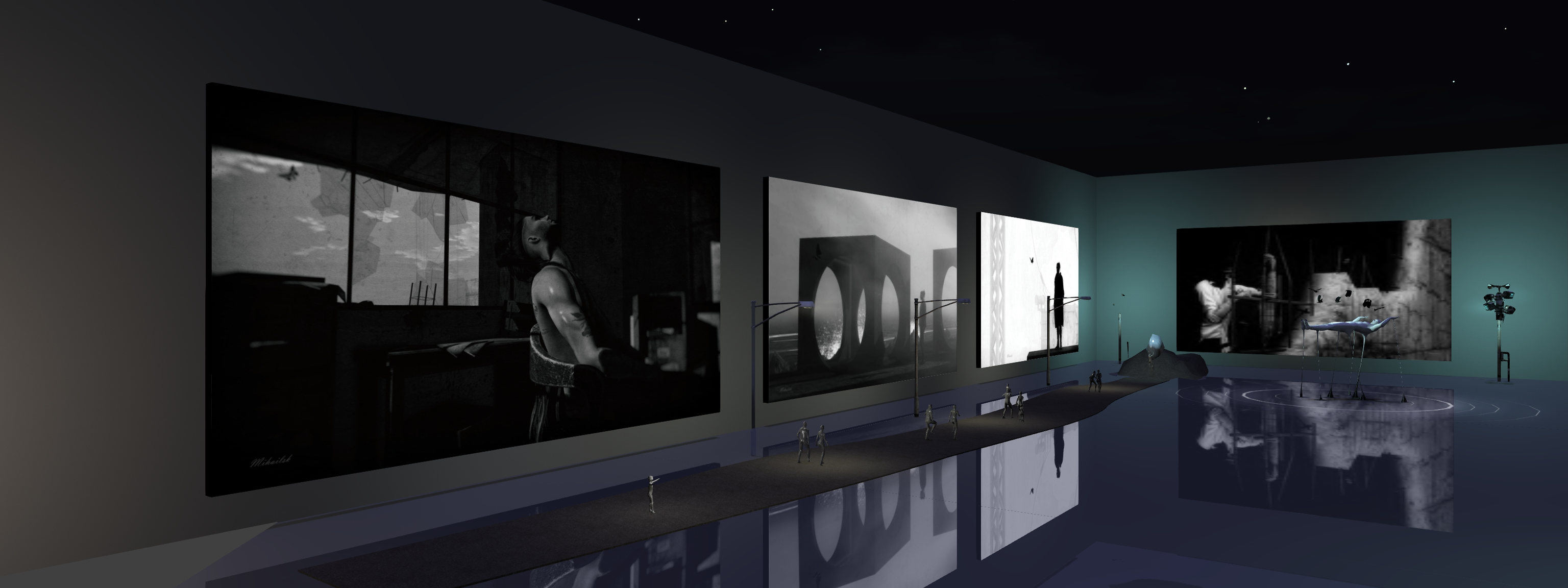
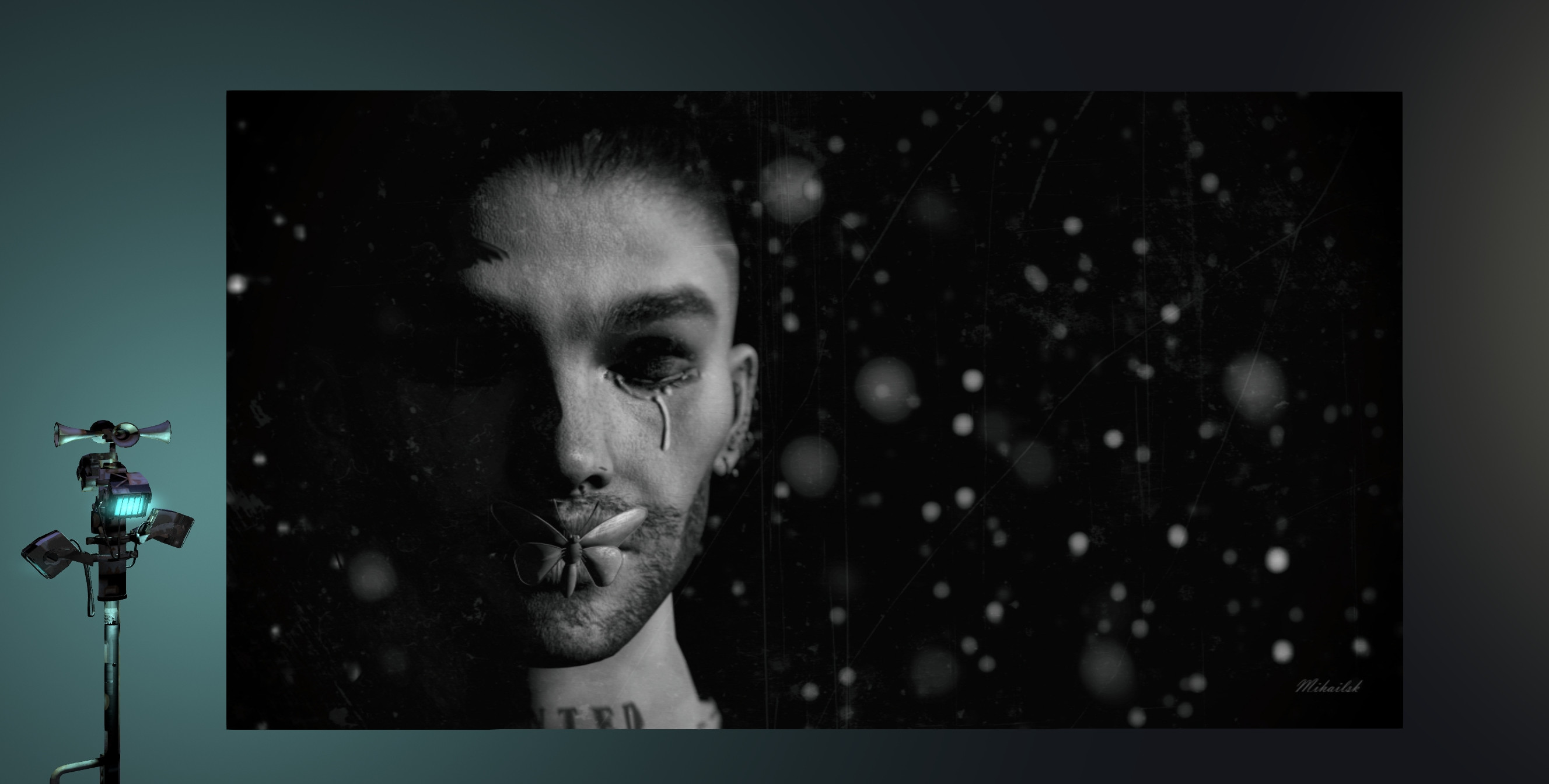
As such, it has much in common with Mihailsk’s latest exhibition, which opened within the Nitroglobus Roof Gallery operated and curated by Dido Haas (and which served to introduce Mihailsk’s art to the world of SL art exhibitions back in 2021 – see: Mihailsk’s Baptism of Fire in Second Life). Like that exhibition, this latest, entitled Lost is a highly personal selection of art, dealing as it does with his coming to terms with the lost – or rather, disappearance – of his Second Life partner.

Within it, and like Tennyson’s poem, Mihailsk explores the rawness of emotions as the loss is felt and the resilience of the heart which allows us to (perhaps) eventually accept and move forward in life. However, where Tennyson used 2,916 lines of iambic tetrametre, Mihailsk uses his marvellous, minimalist monochrome style (his lingua franca, if you will) across a dozen images to convey a similar depth of emotions, feelings, prayers and wandering thoughts as found in Tennyson’s poem. Each image is a poignant canto in its own right, elegantly conveying its feeling and sentiment even without recourse to skilling out its name via the Edit floater.

Nitroglobus Roof Gallery, February 2024: Mihailsk – Lost

These are pieces which, so artfully created as they are, in places enfold a heartfelt sense of the artist’s inner emotions and sense of self whilst also reflecting his outward feelings and sentiments. Elsewhere, they reveal the wellspring of hurt and loss only one who has loved deeply can perhaps feel – and the resilience born of that love which can, in time, allow that person to look back on what has been lost and accept the proverb of Tennyson’s words as true.

Just take, for example, Take Care, and Be Well. Both offer kind sentiments to the one who has vanished, each with its butterfly symbolising taking flight to a new life / escape; at the same time, they both evoke a sense of loneliness and loss through the shadowed figure, standing either with hands thrust dejectedly into pockets or leaning against a bicycle with its promise of travels – but with nowhere to go. Then there is Wish, evocatively capturing those shadowed moments of hurt and want; when the one wish is to have all back as it was – whilst knowing it can never be so; or Mute Pain, perhaps the rawest of the images in terms of its emotional tone and impact.

And just as Tennyson’s In Memoriam A.H.H carries broader themes within it, so too does Lost bear witness to the wider truth that whilst Second Life might well be a fleeting realm of digital “make believe”, the emotions and feelings we bring to it, or which are stirred within us as a result of our interaction here are as genuine, lasting and impactful as any we might experience within the physical world. Indeed, they may well be worse, in that this world is unique in the way people can simply vanish, leaving those who remain without any knowledge of why or where they went – or how they might be, physically and mentally. Thus loss here can be shrouded in the additional hurt of just not knowing.

Nitroglobus Roof Gallery, February 2024: Mihailsk – Lost

Powerful, emotive and with a beating heart of love, strength and resilience, Lost is a stunning collection of images wrapped within very personal feelings which should not only be seen, but absorbed like the words of an elegy. When visiting, do be sure to view Adwehe’s sculpture Revival of Psyche, made especially for this exhibition and which helps underscore its emotional content.

SLurl Details

Mareea’s artistic reflections of Apollinaire in Second Life

IMAGOLand Galleries, February 2024: Mareea Farrasco: Les Colchiques

Wilhelm Albert Włodzimierz Apolinary Kostrowicki is unlikely to be a name familiar to many. Born in Rome in August 1880, he was of mixed Polish-Lithuanian and (it is thought, as his father was never positively identified) Italian heritage. However, he is exceptionally well-known under the name he adopted following his emigration to France whilst a teenager: Guillaume Apollinaire.

Regarded as one of the foremost poets of the early 20th century, Apollinaire was an impassioned defender of the emerging art movements of the first decades of the 20th, century – particularly cubism and surrealism, both of which he is responsible for naming as such (the latter in the preface to his play The Breasts of Tiresias, itself regarded as one of the first pieces of surrealist literature.

As a poet, Apollinaire was influenced by the Symbolist movement, and it was from this that he developed a style of poetry which eschewed punctuation and sought to reflect modern times and life in form. In doing so, he would express the view that art – visual or written – should not be rooted in any particular theory, but should be born of intuition and imagination, so as to be as close as possible to life, nature and the world around us.

IMAGOLand Galleries, February 2024: Mareea Farrasco: Les Colchiques

Both the influence of the symbolist movement and his own emerging style are perhaps best reflected in his 1913 volume of poems, Alcools. Within that volume is what is regarded as one of the most poignant poems written in his too-short life (Apollinaire died at the age of 38 due to complications from a wound received in 1916 whilst he was serving in the French infantry, and which left him weakened and vulnerable to the ravages of the 1918 Great Influenza Epidemic – aka the “Spanish flu” pandemic). That poem is Les Colchiques, which is the subject of an exhibition of digital art by Mareea Farrasco, which opened in February at her IMAGOLand Galleries in Second Life.

The poem presents a bucolic setting: cows grazing within a field as children come to play, before the cowherds come to take the cows home. It sounds idyllic – and can be taken as such. However, the overall framing of this three-stanza poem is also deeply layered, exploring ideas of the cyclic nature of life, mortality, beauty, and the passage of time. The opening stanza starts by referencing the fact that in their grazing, the cows are poisoning themselves as they are eating colchiques – aka Colchicum autumnale, the very toxic autumn crocus (although not a true crocus) – growing wild in the meadow. It then goes on to compare the colour of the flowers within the field with the eyes of the poet’s love, enfolding the idea that just as the poisonous nature of the plants lay hidden in their rich and lovely lilac colour, so too has the captivating beauty of the poet’s love come to poison his life by captivating and enthralling him.

IMAGOLand Galleries, February 2024: Mareea Farrasco: Les Colchiques

In the second and third stanzas we have the children coming to play in the field, and within the poet’s observations of them lie the idea that the girls within the group will one day be mothers, and their daughters will one day come to play in the fields, just as their mothers did before them, thus introducing the idea of life’s cyclical nature and the passage of time; at the same time, the fleeting nature of beauty is folded into the comparison of fluttering eyelids with flower petals being lost on the wind. Finally, the cows are drawn from the field by the singing of the herdsmen, the children having also departed, leaving only the deadly flowers – a subtle commentary on mortality and the transient nature of life.

Within her exhibition, Mareea presents images that travel through the literal forms present within the poem, perhaps emphasising the themes of love and childhood innocence within the stanzas a little more than their deeper interpretations. However, the richness of the poem’s metaphors are present within many of the pictures for those who seek them . Note how, for example, Les enfants de l’ecole viennent avec fracas focuses on young girls, thus reflecting the poem’s second stanza’s observation concerning mothers and daughters; similarly, whilst Et ma vie pour tes yeux lentement s’empoisonne might be drawn from the final line of the first stanza, the lowered eyelids of the parasol-carrying young woman perhaps reflects the second stanza’s views on time and the fleeting nature of beauty.

IMAGOLand Galleries, February 2024: Mareea Farrasco: Les Colchiques

Thus, and like the poem itself, these images, set within an environment designed to further reflect the more innocent and pastoral nature of the poem’s beauty, offer a simplicity and complexity of interpretation Apollinaire himself would have both recognised and appreciated.

SLurl Details

Les Colchiques, IMAGOLand Galleries (Rising Phoenix, rated Moderate)

Matrescence and art: a tribute in Second Life

ARTCARE Gallery: Carelyna: Matrescence

Matrescence is a term which may not be familiar to many, although it was first coined in 1973 by American medical anthropologist Dana Raphael. The dry dictionary definition of the term (when available – not all dictionaries even recognise it) reads as:

The process of becoming (and coming to inhabit the role of) a mother. From the Latin mātrēscēns, mātrēscō (I become a mother)

I say “dry” as the definition actually leaves so much unsaid. The birth of a first child is profoundly transformative for a woman – as transformative as that any human passing through adolescence, bringing as it does  physical, psychological, hormonal, etc., changes. However, while science and culture keep us well informed about the latter, matrescence is far less understood (and thus often confused with postpartum depression / PMAD).

ARTCARE Gallery: Carelyna: Matrescence

The difference is, motherhood is quite literally life-changing; one that unlike adolescence, can be experienced more than once, although the first time is probably the most impactful because it is a step into the unknown: a complete watershed – physically, emotionally, mentally / psychologically and spiritually, – between all that came before and all that follows after. It is a transition which artists and ARTCARE Gallery owner Carelyna beautifully sums up within her exhibition entitled Matrescence:

Matrescene is … a ritual of passage, a spectrum of emotional and existential ruptures, it’s much like a caterpillar becoming a butterfly. Matrescence is lifelong in the sense that one you become a parent, you will forever be.

This is a description offering much to ponder about motherhood. However, and more particularly here, it is used as a personal way to recognise and pay tribute to Carelyna’s own mother and all she offered, and who passed away at the end of 2023.

Comprising twelve pieces in Carelyna’s distinctive abstract style, Matresence presents rich interpretations on many of the elements and changes associated with becoming a mother (offering the safest place for the life within her to grow, the blooming of her pregnancy, birth, the psychological and emotional pressures, the gaining of strength and wisdom, and more). At the same time the pieces offer insight into all that Carelyna’s mother meant to her: a pair of loving arms to hold and protect, a giver of wisdom, a soother of fears and worries, a guide and comfort through puberty / adolescence – and (again) more.

ARTCARE Gallery: Carelyna: Matrescence

Carelyna’s work is always rich and vivid in its use of colour and tone. Here the choice of colour and use of brushwork results in a series of pieces which individually stand on their own merit as a work of abstract art, whilst the subject framing and personal nature folded into each of them brings added depth and interpretation.

SLurl Details