Why SL Go won’t continue, and OnLive opted to sell

Farewell SL Go; one of OnLive's most successful services, but nevertheless one unlikely to be saved
Farewell SL Go; one of OnLive’s most successful services, but nevertheless one unlikely to be saved

Since the announcement that OnLive’s gaming services are to shut down at the end of April, there has been understandable upset from within the SL community (and from some OpenSim users as well, given Firestorm on SL Go can be used to access OpenSim grids).

Following the news, there were a plethora of requests made to Sony on social media that they continue to provision SL Go as a service and an on-line petition was started in the hope of achieving the same end. Unfortunately, these requests and the petition overlook one thing.

As OnLive made clear in their statements on the future of their gaming services, and as I attempted to point to in my original article on this news, Sony didn’t actually acquire OnLive’s services. They took the opportunity to purchase the IP and 140 patents the company held relating to cloud gaming and other “assets” (which would most likely appear to be the additional 135 patents related to cloud gaming  OnLive had pending), without actually buying OnLive’s services. So technically, there’s nothing for them to “continue” to offer SL Go users.

What’s more, as Dennis Harper, the SL Go Product Manager at OnLive, made clear in these pages, taking the IP and patents is akin to taking the heart and lungs of OnLive’s services; without them, a service like SL Go cannot easily be continued by someone else. At least, not without money changing hands and someone having the infrastructure by which they can deliver the service.

So, are Sony the Big Evil for doing this? did they gobble OnLive’s patents to stifle competition? Is this, as was dramatically stated in some quarters as the news broke, some kind of first shot in a forthcoming “VR battle” between corporations? Well …. No.
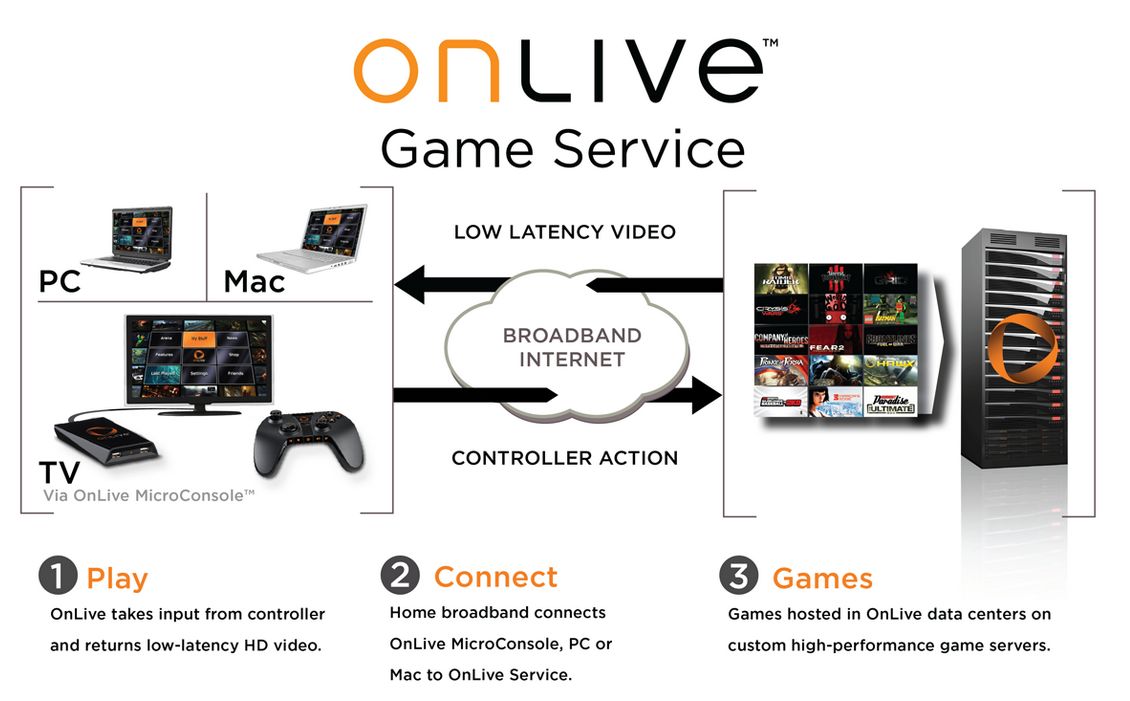
From the start, OnLive was well ahead of the curve, and even though we're reaching a point were the viability of cloud-based gaming can be demonstrated, it seems few are yet willing to take a gamble on taking-on the kind of services OnLive have offered
From the start, OnLive was well ahead of the curve, and even though we’re reaching a point were the viability of cloud-based gaming can be demonstrated, it seems few are yet willing to take a gamble on taking-on the kind of services OnLive have offered (image courtesy of OnLive)

The truth is that OnLive put itself on the market.

That this is the case can be found in another post on the company’s blog entitled, A Bright Future for Cloud Gaming At Sony. As well as containing useful historical information, the post underlines the specific issues the company’s management had been forced to face:

Since 2012, the company has dramatically improved its technology and business models such that all of its 5 services are gross margin positive, ranging from 43% to 86% margin … The company also was able to achieve conversion rates from free trial to paid of between 64-78% for its services. Despite these positive metrics, the lifetime value (TLV) of a subscriber was still less than the cost to acquire subscribers (CPA), but they were converging. While we knew we could not get to break-even on our own, we believed that there were many large companies who would be able to get there.

In other words, in order to get to a break-even point,  OnLive’s management felt the company needed to be offered-up for acquisition, albeit hopefully as a going concern.

Perhaps the first fully public hint that this was the case may have actually come in a blog post issued a couple of days ahead of Sony deal being announced. Of course, by the time the post appeared, the deal was undoubtedly cut and dried; nevertheless, The 2015 Case for Cloud Gaming and OnLive, could almost read as the company laying out its stall in order to attract a suitable investor / acquirer.
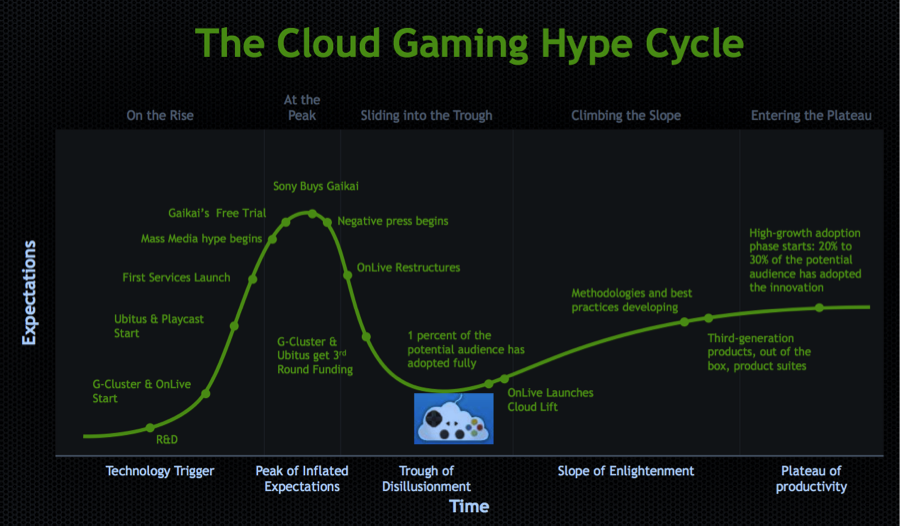
Despite the fact the Nvidia suggested OnLive themselves were helping to lift cloud gaming out of the Trough of Disillusionment towards its Plateau of Productivity, no-one was interested in acquiring the company as an operational concern when OnLive decided to seek outside assistance (image: Nvidia via OnLive)

Unfortunately, despite all the positive indicators they could show, the Cloud Gaming hype cycle had bitten hard; no-one OnLive approached was willing to take them on as a going concern. Not even the fact that Nvidia had indicated the worst was behind the sector, and that OnLive itself was helping to push the technology up the Slope of Enlightenment, could encourage anyone to acquire the company outright. Thus the deal with Sony for the IP and patents sale was agreed.

Why didn’t Sony acquire OnLive as a whole? Because they already have their own cloud gaming service, PlayStation Now, which came out of a 12-month beta programme in January 2015. The OnLive patents understandably offer more value when put to work within PlayStation Now than Sony would be liable to find in buying-out OnLive as a whole, so they didn’t bother.

Interestingly, and entirely coincidentally, PlayStation Now has its own link to Second Life. It is built on the back of Gaikai, a Japanese streaming game provider acquired by Sony in 2012. Gaikai is the company Linden Lab worked with in an attempt to provide the means of streaming Second Life to web browser, a service which underwent a limited beta run in 2010, as the video below demonstrates.

But to draw things to a close; however “unjust” it might appear, all of this means that SL Go cannot really be saved. The patents which enabled it to function are gone, and the services upon which it runs are closing down. The only real options are for someone else to come along and offer a similar service of their own, or for LL to work with a partner to provide such as services, as they once attempted with Gaikai.

Both would seem unlikely; in the case of the former, SL perhaps represents too small a community of users to be worth catering for (and remember, SL Go came about in part as a result of rather unique circumstances). And while I tend to lean towards LL having an interest in cloud-based streaming, I don’t think that interest is with regards to Second Life, so I can’t see them getting directly involved in trying to provide a streaming solution for SL access. If nothing else, they’ve likely got enough on their plate already.

SL Go was a great and brave experiment. It is a shame that its days are drawing to a close; but OnLive, through their services as a whole, have proven what might be achieved. In that respect, they are right when they proclaim that cloud gaming has a bright future.

SL Go discontinued as OnLive sells patents

Even ideas around offering Sl Go as a Premium offering, while simple in concept, are potentially less-than-simple to implementUpdate, Friday, April 3rd: An on-line petition has been started to try to persuade Sony to keep SL Go running as a service.  In all honesty, the likelihood of this succeeding is less than slim, but if you would like to add your name to the petition, it can be found here.

On Thursday, April 2nd, it was announced that the SL Go streaming service supplied by OnLive has been discontinued.

The move is part of a wider shut-down of services that will take place on Thursday, April 30th, following a decision by the company to sell its portfolio of patents to Sony Computer Entertainment America.

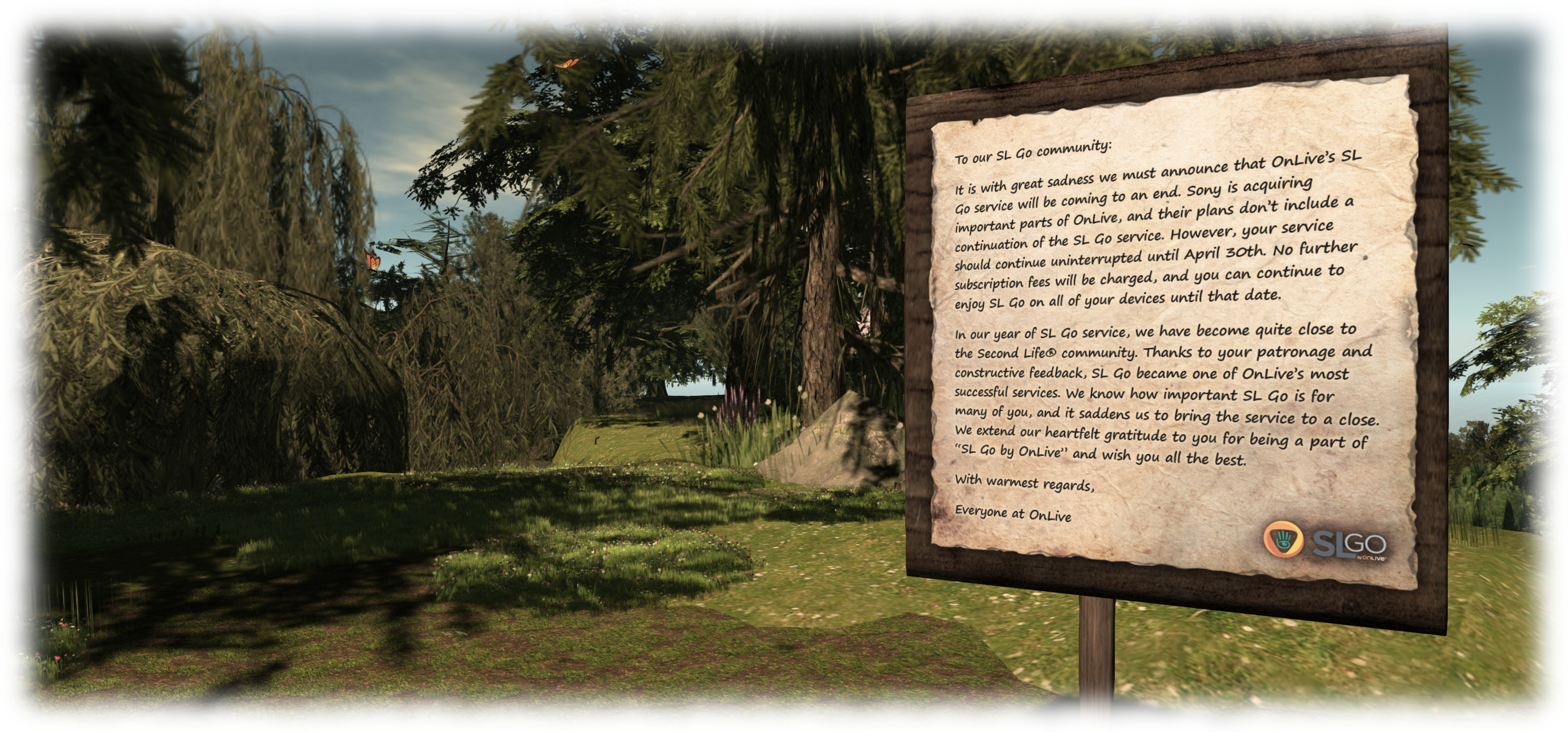
An official announcement on OnLive’s SL Go website reads in full:

It is with great sadness we must announce that OnLive’s SL Go service will be coming to an end. Sony is acquiring important parts of OnLive, and their plans don’t include a continuation of the SL Go service. However, your service should continue uninterrupted until April 30, 2015. No further subscription fees will be charged, and you can continue to enjoy SL Go on all of your devices until that date.
In our year of SL Go service, we have become quite close to the Second Life® community. Thanks to your patronage and constructive feedback, SL Go became one of OnLive’s most successful services. We know how important SL Go is for many of you, and it saddens us to bring the service to a close. We extend our heartfelt gratitude to you for being a part of “SL Go by OnLive” and wish you all the best.
With warmest regards,
Everyone at OnLive
SL Go provided a means to access Second Life through Android devices, followed by the iPad - something SL users had been hoping to see for years
SL Go provided a means to access Second Life through Android devices, followed by the iPad – something SL users had been hoping to see for years

In a personal address sent out to those with whom he’s been in contact with over the course of the last year or more, OnLive’s Product Manager for SL Go Dennis Harper – someone whom I’ve come to regard as a friend both in-world and through our communications outside of the platform – said:

To my good friends and partners in Second Life,
 It breaks my heart to tell you that OnLive (OL2, Inc) has been acquired and will be closing down the game service, including SL Go.  The official press release is attached.
 SL Go Island will continue to exist for a while, but we have removed the Pay with L$ feature.
 The OnLive and SL Go services will continue to operate in full capacity until April 30.  All services will be free to anyone who has or creates an account.  All prices for the service have been set to $0.00, including SL Go.
 On a personal note; you all have been so supportive of SL Go.  You have my heartfelt thanks for all you have done.  I have made some good friends in SL and it greatly saddens me that this project is ending.  You all have accepted us n00bs into your community and mentored us on what Second Life really is.  I have learned so much!  My sincere thanks to all of you.

This is and unfortunate end, not just for SL Go, but also for everyone at OnLive, a company which had come through a lot to provide a unique on-line gaming service and which has tried to enter a very unique environment with SL Go, and has done so by providing a very successful approach to providing access to Second Life (and OpenSim) to people while on the move through their delivery to Android and iPad devices, and to those using older, lower-specification hardware.

SL Go has also allowed users to enjoy the full richness of Second Life on relatively low-end machines. Following a recent severe hardware failure on my primary PC, SL Go became my primary means of accessing SL for some 2 weeks while the "main" machine was repaired; above, I'm running it on a humble 2 GB win 7/32 Asus PC EE 1201N
SL Go has also allowed users to enjoy the full richness of Second Life on relatively low-end machines. Following a recent severe hardware failure on my primary PC, SL Go became my primary means of accessing SL for some 2 weeks while the “main” machine was repaired; above, I’m running it on a humble 2 GB win 7/32 Asus PC EE 1201N

I’ve been fortunate enough to be somewhat closely involved in SL Go, initially being offered the opportunity to help beta the product, and then in helping to report on and promote the service, and (hopefully) provide OnLive, through Dennis and his team with useful feedback, support and advice.

As such, I’d like to take this opportunity to offer Dennis, Jeff, Shae, Jersey, Robby and everyone else at OnLive involved in SL Go – including Jane Anderson in the US and Mark Bevan here in the UK,  my thanks and my heartfelt best wishes for the future. I do, however hope that we’ll continue to able to see one another in-world, at the very least.

In writing about the situation, in Ars Technica (linked to at the top of this article and in the links section below),  Kyle Orland notes:

Looking back, it seems OnLive was just a little bit too far ahead of the curve, both in terms of market readiness and the Internet infrastructure necessary for streaming games. As low-latency bandwidth continues to become cheaper and more accessible around the world, it seems likely someone will nail the correct combination of business model, game selection, and easy-to-use interface to become the industry’s answer to Netflix. That company will owe a debt to OnLive for getting the ball rolling and proving that streaming gaming was something that was worth trying in the first place.

I couldn’t agree more.

Related Links

Firestorm TTT: building

firestorm-logoIn the Firestorm Tool Tip Tuesday video for Tuesday March 31st, 2015, Jessica takes a look at the assorted tools and options Firestorm provides in order to assist people with in-world building. As with some of the other TTT video, various options described within the video are not exclusive to Firestorm, which makes the video a worthwhile watch by anyone wishing to get more to grips with building, manipulating prims, and so on; although admittedly, if you’re not using Firestorm, you’ll have to poke at your preferred viewer’s Preferences, etc., to see where the options might reside.

Starting with changing the default colour of the basic rezzed prim shapes, the default size, prim status (physical, phantom, etc), and the next owner permissions (a function now common to all viewers, including LL’s own), Jessica takes a rapid-fire run through many of the the more frequently used build options and tool additions.

The build sub-tabs on Firestorm, located under Preferences > Firestorm, present access to the majority of additional options and capabilities associated with building using the viewer

This includes a look as assorted features within the build floater itself, many of which are, again, presented through other viewers as well, including the ever-popular prim alignment option (which, sadly, remains as something the Lab have refused to adopt, as they feel it does not fulfil enough potential use cases, despite the fact it actually achieves precisely what it sets out to do).

The video concludes with a look at the Z-drop and Z-take options, which respectively allow you to drop the contents of a folder into an in-world prim without needing to select and physically drag-and-drop them, and to take a number of in-world objects and place them within a root folder in your inventory – both of which are powerful and useful options, before finally providing an overview of one of the most useful building resources within Second Life: Builder’s Brewery. You can also find out more about BB through their website.

Getting to grips with building isn’t easy, and while this video isn’t intended as a beginning guide, for those who have paddled in the shallows of building, it offers some very useful pointers. Even those with a little more experience might also find it contains some interesting little tips!


2015 viewer release summaries: week 13

Updates for the week ending: Sunday, March 29th, 2015

This summary is published every Monday, and is a list of SL viewer / client releases (official and TPV) made during the previous week. When reading it, please note:

  • It is based on my Current Viewer Releases Page, a list of all Second Life viewers and clients that are in popular use (and of which I am aware), and which are recognised as adhering to the TPV Policy. This page includes comprehensive links to download pages, blog notes, release notes, etc., as well as links to any / all reviews of specific viewers / clients made within this blog
  • By its nature, this summary presented here will always be in arrears, please refer to the Current Viewer Release Page for more up-to-date information.

Official LL Viewers

  • Current Release version updated to version 3.7.26.299635 on March 24th (formerly the Avatar Hover Height viewer) download page, release notes, wiki page, AHH overview
  • Release channel cohorts (See my notes on manually installing RC viewer versions if you wish to install any release candidate(s) yourself):
    • No updates
  • Project viewers:
    • Avatar Layer limits project viewer, version 3.7.26.299805, released on March 25th – allows users to wear up to 60 wearable layers (jackets, shirts, tattoo, alpha, etc.) in any combination  (download and release notes)

LL Viewer Resources

Third-party Viewers

V3-style

  • Black Dragon updated to version 2.4.2 Beta on March 23rd, and then to version 2.4.2 on March 29th – core updates: volumetric light fall-off; multi-line chat; Avatar hover Height, bug fixes (change log)
  • Restrained Love Viewer updated to version 2.9.7 on March 26th – core updates: RLV fixes and Avatar Hover Height inclusion (release notes)
  • UKanDo updated to version  3.7.24.28080 on March 24th – core updates: Avatar Hover Height inclusion, RLV updates, nips and tweaks (release notes)

V1-style

  • Cool VL Viewer Experimental branch updated to version 1.26.13.5 on March 28th – core update: global wearables limit (release notes)

Mobile / Other Clients

  • No updates.

Additional TPV Resources

Related Links

Firestorm: of releases and springing into Spring

firestorm-logoAs noted in a recent TPV Developer meeting summary, things are in a state of flux with regards to Firestorm updates.

Originally, it had been hoped the team would have an update released during March; however, there have been numerous projects coming through the Lab which have encouraged the team to delay their release. These include things like fixes for the assorted issues of attachments either dropping off following region crossings (notably teleports) or failing to attach, and also with the upcoming Viewer-Managed Marketplace updates (VMM).

In addition, testing of the current pre-release beta has resulted in a very mixed bag of feedback from users involved in the beta process. Some have reported significant issues which may be linked to HTTP pipelining or the recent AIS v3 updates from that Lab, while others have indicated they’ve encountered very few issues, up to and including the attachment loss / failure issues mentioned above (although somewhat limited due to PC issues, my own use of the 4.7.0 pre-release versions of Firestorm has given me almost no issues whatsoever).

Because of this, it now seems likely that the Firestorm team will be handling the next release as follows:

  • Two initial preview releases, issued to the Firestorm preview group. One of these will have the latest AIS v3 updates and HTTP pipelining updates from the Lab enabled by default, and the other will have them disabled by default. The hope is these will help determine how many users may be impacted by any AIS v3  / HTTP pipelining issues, and how things should be defaulted for the follow-up releases
  • A public beta release will follow these two preview releases, which will see Firestorm brought up to par with the current LL viewer code
  • A “full” release will follow some weeks after the beta release, which may include any additional updates from the Lab (e.g. the attachment fixes and / or VMM, depending on the overall status of these updates from the Lab).

No precise time scales are available for any of these releases, but it seem likely (based on comments passed at the TPV meeting linked-to above), that there will likely be an initial call for users to join the Firestorm preview group to assist with the preview testing. The public beta then many still appear later in April.  So, keep an eye on the Firestorm blog for any call that may be made, and for news on upcoming releases.

Seth Regan (Mankind Tracer in SL) will be headlining Firestorm's
Seth Regan (Mankind Tracer in SL) will be headlining Firestorm’s “Fed up with Winter” party, with Firestorm’s Ed Merryman spinning the discs afterwards

In the meantime, the Firestorm has announced a “Fed up with Winter!” party – or as I’ll prefer to call it, a “spring into Spring” party.

Headlining the event which will start at 12:00 noon SLT on Saturday, March 28th, will be Seth Regan, known in-world as Mankind Tracer. After his set, Firestorm’s own Ed Merryman will be providing the music in his usual style of spinning the discs until he (or everyone else) fall over from exhaustion!

The party is open to all – or at least, all who can get into the region, and will take place in a party area overhead on the Firestorm Support island.

Black Dragon 2.4.2 goes beta; UKanDo 3.7.26 and RLV 2.9.7 get AHH

There have been a number of rapid-fire TPV updates this week, so here’s a quick overview for Black Dragon, UKanDo and RLV.

Black Dragon 2.4.2 Beta

On Monday, March 23rd, Black Dragon updated to version 2.4.2 Beta, with Niran focusing on further updates to rendering, although there are some interesting WIP elements as well.

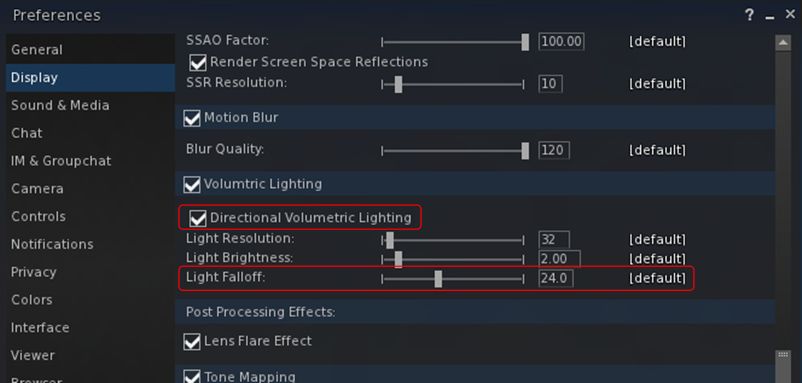
In particular, Niran notes that he’s done further work on the volumetric lighting capability, notably adding a Falloff slider to both Preferences -> Display and the Machinima Sidebar (F1), so that Godrays will fall off the closer they are to the camera which will be further smoothed in future releases), and working to get volumetric lighting working with FXAA and glow.

Black Dragon 2.4.2 Beta add options for both directional volumetric lighting and Godrays Falloff

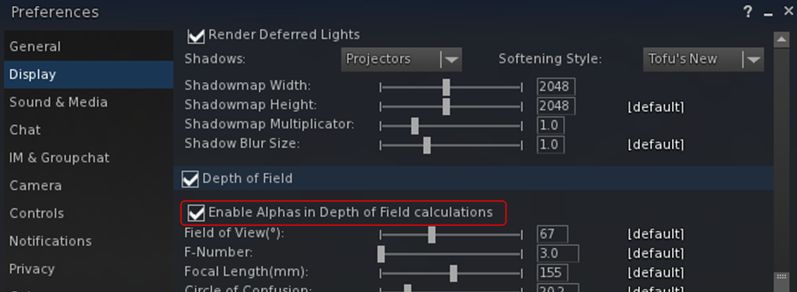
Also within Preferences -> Display, Niran has added a check box for enabling alphas in depth of field calculations. When unchecked, this excludes alpha from both depth of field and volumetric lighting calculations to prevent focus issues (depth of field) and odd lighting effects (volumetric lighting). when checked, both depth of field and volumetric lighting calculations will include alphas in the field of view.

The new option for enabling / disabling the inclusion of alphas is DoF and volumetric lighting calculations. The option is unchecked (alpha inclusion disabled) by default

Other additions with this release comprises:

  • A Custom System Memory option and a separate slider for the “linked” memory version
  • A chat colour for Friends
  • (as a work-in-progress) a new information system for Preferences to tell possible performance breakers and problems that could occour with certain options.

As always, for a full list of changes / updates, please refer to the viewer’s release notes.

Related Links

UKanDo 3.7.26

The UKanDo v3 style viewer updated to release 3.7.26.28080 on Tuesday, March 24th. This update brings the viewer up to parity with the Lab’s 3.7.25 and 3.7.26 code, and almost up to spec with Marine Kelley’s RLV updates (2.9.7 of RLV having appeared just after the UKanDo update).

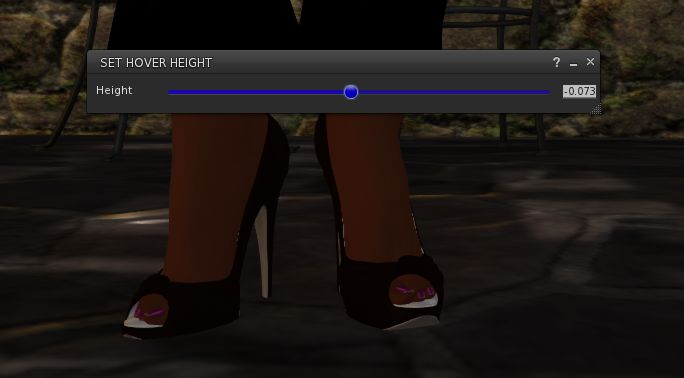
UKanDo 3.7.26 includes the Lab's new Avatar Hover Height capability
UKanDo 3.7.26 includes the Lab’s new Avatar Hover Height capability

In particular, this release sees UKanDo gain the maintenance fixes from the 3.7.25.299021 official view release and the new Avatar Hover Height functionality which has just become a part of the official release viewer.

In addition, this release of UKanDo includes:

  • Disabled the RLV start-up restriction feature by default. Re-enable via the “RLVStartUpRestriction” Debug setting or the RLV tab under General in Prefernces
  • FIRE-15489 by Ansariel Hiller – Add confirmation when unlinking objects, released under LGPL
  • RLV – Quick fix Courtesy of Nicky Perian, and tidy-up.
  • A fix for the “nolink>” parser bug, courtesy of Drake Arconis (Alchemy Viewer).

Related Links

RLV 2.9.7

This release of the Restrained Love Viewer sees assorted fixes for recent RLV release and the inclusion of the Lab’s Avatar Hover Height (AHH) capability, which came about as a result of a detailed formal proposal being put before Lab by members of the Firestorm team during a TPV developer meeting in June 2014.

Currently, and as noted by Marine, AHH is not yet linked to her existing “@adjustheight” capability and slider in the top bar of the viewer.

Related Links