2026 week #12: SL Open Source (TPVD) meeting summary

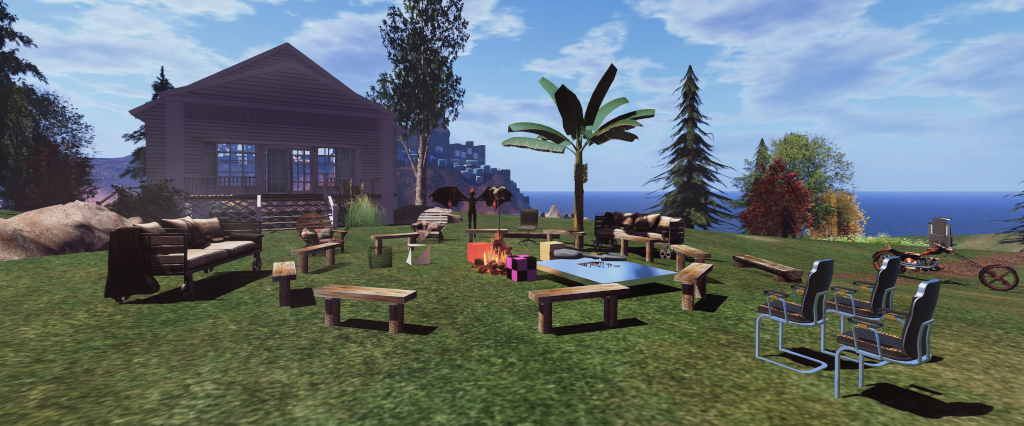
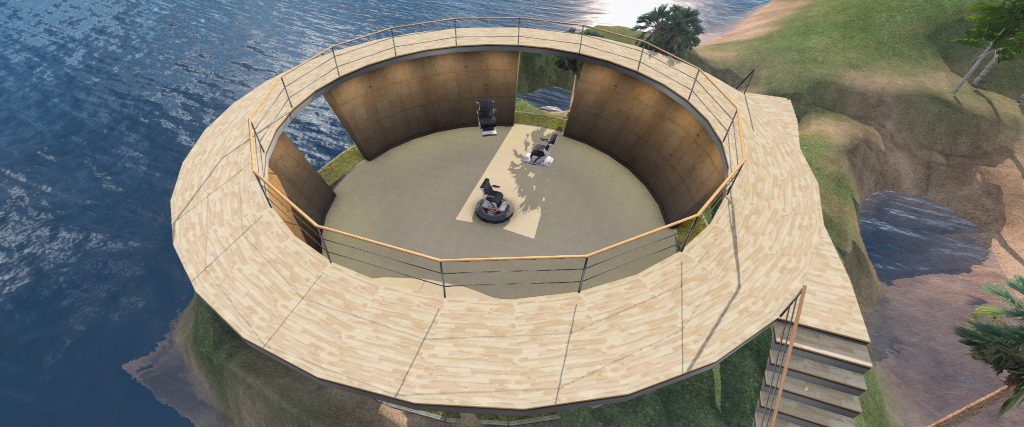
Hippotropolis Theatre: home of the OSD/TPVD meeting
The following notes were taken from:

  • Pantera’s video (embedded at the end of this article) and my chat log of the Open-Source Developer (OSD) meeting held on Friday, March 20th, 2026, together with my chat log of that meeting.
  • Please note that this is not a full transcript of the meeting but a summary of key topics.
Table of Contents

Meeting Purpose

  • The OSD meeting is a combining of the former Third Party Viewer Developer meeting and the Open Source Development meeting. It is open discussion of Second Life development, including but not limited to open source contributions, third-party viewer development and policy, and current open source programs.
    • This meeting is generally held twice a month on a Friday, at 13:00 SLT at the Hippotropolis Theatre and is generally text chat only.
  • Dates and times of meetings are recorded in the SL Public Calendar.

Official Viewer Status

  • Default viewer  – Legacy search; WebRTC improvements; QoL improvements – 26.1.0.22641522367 – March 12.
  • Second Life Project Viewers:
    • Second Life Project Flat UI – 26.2.0.22829286351, March 20 -“flat” UI and font updates.
    • Second Life Lua Editor Alpha viewer 26.1.0.21525310258, February 12.
    • Second Life One Click Install viewer 26.1.0.21295806042, January 26 – one-click viewer installation.
    • Second Life Voice Moderation viewer 26.1.0.20139269477, December 12, 2025 – Introduces the ability to moderate spatial voice chat in regions configured to use webRTC voice.

Upcoming Viewers

Viewer 2026.01.01 – One-Click Installer / Velopack

  • Remains the current viewer development focus, with a beta (RC) update targeting a potential availability in week #13 (week commencing Monday, March 23rd). Actual promotion to release status depends on how long the viewer may ned to remain at RC status.
    • There is one major blocker to promotion, which is being worked on, but otherwise, it is “very close” to being a candidate for release, user feedback allowing.
  • Geenz Linden noted that the repo for the viewer is getting updates to more easily ship updates for those TPVs opting to adopt Velopack as their updater.
  • Velopack benefits:
    • The move to Velopack allows LL and TPVs  to move off from VVM with the exception of cohort management, and allows LL to discontinue the old SLVersionChecker all of which should streamline the viewer install and update processes as experienced by users.
    • Velopack also opens the door to partial viewer updates  – although LL are still in internal discussions on when to actually start doing this.
  • A side effect of this viewer, when generally available, is that it will not automatically uninstall versions of the viewer using the old install / update processes, and there will be no requirement to manually uninstall such versions (although users can if they wish). The reason for this latter point is a concern that inexperienced users will simply click YES when asked if they wish to remove all their settings, etc., and thus lose them.
  • Testing of this viewer against incoming new users to SL saw a “not insignificant” increase in day 1 user retention..

Viewer 2026.02 – “Flat” UI and Splash Screen Refresh

  • An alpha version (see viewer status, above) was released on Friday, March 20th, but without the log-in splash screen updates. These will be in an upcoming update.
  • This viewer includes the “flat” UI design, font updates and WebRTC voice moderation capabilities to help align viewer-side WebRTC updates more with the server-side.
Example of the upcoming flat UI. Via: Geenz Linden / Github #4681/2

Viewer 2026.03 – Maintenance Release

  • 2026.03 will now see the return of official viewer maintenance releases, with the initial focus on viewer performance improvements, together with a focus on top crashers and regressions, up to a certain limit, so they can be kept as relatively small releases rolled out on a reasonably fast basis.
  • 2026.03 should see (partial list):
    • A backporting of the texture streaming changes at the very least, with Geenz particularly focused on getting lower RAM usage in general.
    • Kitty Barnett’s long-waiting avatar appearance fixes.
  • Geenz also hopes to get some work done on lightening the main thread burden in the viewer – which is potentially more difficult, and may take longer.
  • A hope with this cycle of maintenance releases is to put a reasonable dent in some of the debt we’ve accumulated with PBR’s release.

Viewer 2024.04 – SLVP or LUA (TBD)

  • The 2026.04 viewer release is liable to be either the Second Life Visual Polish (SLVP) release (containing all of the SSR, PBR Specular, and HDR EEP parameters work), or a SLua release.
  • Work on improving mirrors for SLVP is currently on hold whilst 2026.01.01 and 2026.02 is on the table.
  • SLVP is liable to spend a long time at alpha status (which may be why SLua moves ahead of it in the order of things).

WebRTC Deployment

  • This commenced on Wednesday, March 18th, with a deployment to the BlueSteel RC channel covering approximately 3.4% of the grid.
  • This early release allows us to verify performance, stability, and compatibility in real-world conditions before expanding further.
  • Users in the release candidate channel may experience:
    • Failure of peer-to-peer (P2) Voice calls between regions on WebRTC and the rest of the grid. These will not be fully resolved until WebRTC is grid-wide.
    • Differences in audio quality depending on being in or out of the release candidate channel.
    • Ongoing tuning and iteration as we gather feedback.
    • For more details, see: WebRTC Voice in Second Life — Limited Release Begins March 18, 2026.
  • The next, larger deployment is currently scheduled for week #14 (commencing Monday, March 30th). However, a smaller deployment might be made in week #13.
  • There are thoughts being given to next steps for WebRTC: transcription, the ability in-preferences to hear how you sound, etc. (a replacement for echo canyon), but these are subject to other priorities.
  • The existing Vivox Voice service is liable to be shut down “a few months” after the WebRTC deployment has been completed. However, no target date has as yet been decided.
    • During the deployment phase, Vivox, users on the latter will not have spatial Voice when in WebRTC regions, although they should have p2p/conference/group voice with others on Vivox regions.

General Discussion

  • Mesh Convex Hulls:
    • The new physics choice for mesh uploads is currently available on ARM Macs, and on the “to do” list for other viewers.
    • Geenz’s first choice for the role choked on a lot of content for SL, so VHACD is the choice of libraries.
    • As has been previously mentioned, the aim is to remove the Havok sub-libraries from the viewer entirely – but this a process several steps down the line.
  • There was a general discussion on performance, lightening the load on the viewer’s main processing thread (some noted above).

Next Meeting

2026 week #11: SL CCUG meeting summary

Hippotropolis Campsite: venue for CCUG meetings
The following notes were taken from:

  • My chat log and audio recording  of the Content Creation User Group (CCUG) meeting of Thursday, March 12th, 2026.
  • Please note that this is not a full transcript of either meeting but a summary of key topics.
Table of Contents


Meeting Purpose

  • The CCUG meeting is for discussion of work related to content creation in Second Life, including current and upcoming LL projects, and encompasses requests or comments from the community, together with related viewer development work.
    • This meeting is generally held on alternate Thursdays at Hippotropolis and is held in a mix of Voice and text chat.
  • Dates and times of meetings are recorded in the SL Public Calendar.

Official Viewer Status

  • Default viewer  – Legacy search; WebRTC improvements; QoL improvements – 26.1.0.22641522367 – March 12 – NEW
  • Second Life Project Viewers:
    • Second Life Lua Editor Alpha viewer 26.1.0.21525310258, February 12.
    • Second Life Voice Moderation viewer 26.1.0.20139269477, December 12.
      • Introduces the ability to moderate spatial voice chat in regions configured to use webRTC voice.
    • Second Life One Click Install viewer 26.1.0.21295806042, January 26, 2026 – one-click viewer installation.

Viewer Notes

Viewer 2026.01

  • Promoted to default release ahead of the meeting – see above.

Viewer 2026.01.o1

  • The next viewer targeting promotion to default status.
  • Comprises the one-click installer / updater.
  • It is hoped promotion of this viewer is “weeks away” rather than “months”.

Viewer 2026.02

  • 2026.02 remains on track for the “Flat” UI and font updates + plus a possible refresh of the log-in splash screen.
  • It now also includes the WebRTC voice moderation capabilities (as seen in the project viewer) to help align viewer-side WebRTC updates more with the hoped-for server-side deployment.
Example of the upcoming flat UI. Via: Geenz Linden / Github #4681/2

Viewer 2026.03

  • Some changes on this – originally defined as the SLVP – Second Life Visual Polish viewer, the status has changed such that 2026.03 is liable to one of the following:
    • The SLUA viewer update, or
    • The Visual Polish viewer, including the long awaited SSR improvements. PBR specular for residents who are more familiar with the old Blinn-Phong work flow + HDR controls in EEP so residents can decide how bright or dark things should be, or
    • A new performance improvements viewer option.
  • It is possible that further water improvements might find their way to this SLVP viewer, and also that as some of the updates require sever-side changes, the promotion of SLVP might be subject to delay once available, to allow time for the server changes to be slotted into the simulator release schedule.
  • It is also possible some of the above might be combined into a single viewer release under the 2026.03 banner.
  • The potential for making monthly promotions to get all the current inflight viewers up to release status is also being discussed at the Lab. 

Viewer Performance Discussion

  • Better performance is obviously always a benefit to using SL, and currently there is an internal discussion at the Lab overtrying to make some further performance improvements ahead of any release of the SLVP viewer, to enable the latter to better leverage them (e.g. by “shaving off” some VRAM usage).
  • VRAM is particularly problematic for performance as many SL creates will try to crank the texture resolution for every single material slot to the maximum, whether it is visually beneficial to do so or not. The 2K white emissive texture is an example of this.
  •  Geenz Linden has been making changes to introduce “texture channels”. That is, to more intelligently stream specific maps  – diffuse, normal, emissive,, specular, etc., at different resolutions to more intelligently manage VRAM usage with little reduction by way of a scene’s visual fidelity, particularly in scenes with a lot of high resolution textures for every material / material slot.
  • It has been noted that for this to work, there must be a means for users to make adjustments to suit their visual needs. These might take the form of a texture quality drop-down in the viewer’s Graphics settings.
  • The texture discussion led to musings on how best to identify texture size / resolution, and the complexities involved (e.g. the asset system doesn’t know – or need to know the specific resolution of a texture, it doesn’t entirely make sense for the logical to determine a texture’s resolution and how to manage it o sit within the server, which leaves the viewer – which requires the texture to be downloaded anyway – and such controls can be ignored by specific viewers simply by not adopting the code, so proactively handling texture resolutions is complicated.
  • Other work on performance might see changes to the avatar render cost calculations because, ironically, these appear to impact performance.

General Discussions

  • SLua:
    • There is a “breaking change” coming to SLua “in the next couple of weeks” which is apparently not deemed worthy of a blog post, so notification will be via Discord and social media – because “communications”.
    • It will require every current SLua script to be recompiled and restarted.
  • A discussion on using GPU texture compression to help with performance – something that would require work on LL’s part, but not out of the question for consideration.
  • HDRI support for environments – again, not out of the question. The major question is how are they to be encoded:
    • Creating a new asset type specifically for them is not seen as “super practical”.
    • While the JPEG2000 specification supports HDRI, it is “probably not the most effective application for SL’s specific use for HDRIs.
    • There needs to be a means of encoding them that is GPU memory friendly, as HDRIs are memory heavy (whilst HDRIs are already used in the rendering pipeline,  LL uses them as sparingly as possible for this reason.
    • EEP would also require updates to fully support them.
    • None of the above is seen as particularly impossible to overcome, it does require further discussion among all the relevant stakeholders0.
  • It is hoped that tweaks to the EEP ambient sky settings will help make environments using PBR to “pop” more and will help improve the current Mainland ambient lighting issues.
  • A number of general discussions on WIBNis (“wouldn’t it be nice if….”), none of which are currently in development..

Next Meeting

2026 week #10: SL Open Source (TPVD) meeting summary

Hippotropolis Theatre: home of the OSD/TPVD meeting
The following notes were taken from:

  • Pantera’s video (embedded at the end of this article) and my chat log of the Open-Source Developer (OSD) meeting held on Friday, March 6th, 2026, together with my chat log of that meeting.
  • Please note that this is not a full transcript of the meeting but a summary of key topics.
Table of Contents

Meeting Purpose

  • The OSD meeting is a combining of the former Third Party Viewer Developer meeting and the Open Source Development meeting. It is open discussion of Second Life development, including but not limited to open source contributions, third-party viewer development and policy, and current open source programs.
    • This meeting is generally held twice a month on a Friday, at 13:00 SLT at the Hippotropolis Theatre and is generally text chat only.
  • Dates and times of meetings are recorded in the SL Public Calendar.

Official Viewer Status

  • Default viewer 2025.08 – 7.2.3.19375695301 – maintenance update with bug fixes and quality of life improvements – December 2.
    • Notable addition: new VHACD-based convex decomposition library for mesh uploads.
  • Second Life Release Candidate viewer  2026.01 – 26.1.0.22641522367 , March 5.
    • Legacy search; WebRTC improvements; QoL improvements.
  • Second Life Project Viewers:
    • Second Life Lua Editor Alpha viewer 26.1.0.21525310258, February 12.
    • Second Life Voice Moderation viewer 26.1.0.20139269477, December 12.
      • Introduces the ability to moderate spatial voice chat in regions configured to use webRTC voice.
    • Second Life One Click Install viewer 26.1.0.21295806042, January 26, 2026 – one-click viewer installation.

Upcoming Viewers

Viewer 2026.01

  • Was lined up for promotion to release status, but LL has ben seeing some suspiciously low fault rates – less than 1%, rather than the more usual average fault rate accounting for freezes and crashes being closer to something like 5-7%.
  • As a result, the view is going to be left at RC status through until early in week #11.

Viewer 2026.1.1 – One Click Install

  • 2026.1.1 is the new designation for the one-click install and velopack viewer (currently 26.1.0.21295806042).
  • This is unlikely to move to release status for at least a couple of weeks as it works through QA testing, particularly given this viewer represents a pretty big migration from the old updater to the new one. 

Viewer 2026.02

  • This viewer is about to undergo an “Alpha” update, designed to gather feedback from users.
  • This is the viewer with the new “Flat” UI updates, font changes and WebRTC voice moderation capabilities, and  might additionally receive some backported updates to texture streaming.
Example of the upcoming flat UI. Via: Geenz Linden / Github #4681/2

Viewer 2026.03 -“SL Visual Polish” (SLVP)

  • 2026.03 is set to include:
    • The “long baking” SSR improvements that were started last year. This version of the viewer will likely have a long beta soak time to allow feedback on these changes to be gathered.
    • PBR specular for residents who are more familiar with the old Blinn-Phong workflow. This will:
      • Include another texture slot (tint of the specular reflection).
      • Work with metallics.
      • Follow the glTF specification, but will likely initially be without glTF overrides, as this requires server-side work.
      • This work is currently being wrapped-up.
    • HDR controls in EEP so residents can decide how bright or dark things should be. This work does require simulator-side updates. This will likely initially have server-side support on Aditi (the Beta grid).
  • It may additionally include:
    • Further mirrors optimisations and a new “Ultra” quality setting that will enable a system mirror for water. A caveat on this work is that while this “water mirror” might up the quality of water reflections, it will do so at a performance hit; SSR for water will always be faster and less intensive.
    • Inclusion of an emissive strength setting for PBR.
    • Further performance optimisations.
  • The current repository for this viewer (valid March 6th, but may change) is available here.
  • This viewer may be in a head-to-head with the SLua viewer as to which gets promoted first when the time comes.

Grid-Wide WebRTC

  • A small deployment to the Preflight simulator Release Candidate channel was made on Thursday, March 5th, intended to address some server stability issues.
  • It is hoped that the deployment will quickly move to the BlueSteel RC.
  • There is still no Voice echo canyon for WebRTC for self-testing your own Voice system. However, one is still under consideration.

General Discussion

please refer to the video as well.

  • Geenz Linden has not had time to address the much-requested alpha-gamma fixes due to a focus on the SLVP viewer. It is also anticipated this work will require a decent bit of scoping, including understanding what needs to remove server-side to avoid a potential permissions hole.
  • Geenz has also has made further commits for the reimplementation of SSR after he found a good way to get hierarchical Z tracing working in the viewer.
  • He has also finally got the separable SSR pass working from another branch, which leads to a ton of optimisation potential for SLVP. For example, this now allows rendering of SSR at half or even quarter resolution, while the output for glossy SSR can be filtered, leading to less graininess on PBR surfaces and water.
  • There is also now a mirror for water reflections – which as was noted above, requires the Ultra quality setting and will impact viewer performance. but which is independent to SSR for water reflections.
  • The long-awaited Appearance fixes, as supplied by Kitty Barnett, are being targeted for the 2026.03 viewer.
  • There has been some musing on re-working the viewer graphic settings to make them easier to parse (such as making options drop-downs grouped by the Low to Ultra quality settings, with only the relevant options appearing for each. However, this work is only at the musing stage, not something being pursued.
  • A general discussion of texture handling – including the option to add blank texture detection and reduced these to 1×1 to help reduce the RAM load with textures.
  • A general discussion on a number of issues bugs (e.g. the AMD bug which sees the avatar textures broken on newer AMD GPU drivers  – which is hopefully being addressed by AMD; MOAP input handling bugs on Linux & Apple, said to make playing some games in SL impossible, etc- see the last 15 minutes of the video for more).

Next Meeting

2026 week #9: SL Open Source (TPVD) meeting summary

Hippotropolis Theatre: home of the OSD/TPVD meeting
The following notes were taken from:

  • Pantera’s video (embedded at the end of this article) and my chat log of the Open-Source Developer (OSD) meeting held on Friday, February 27th, 2026, together with my chat log of that meeting.
  • Please note that this is not a full transcript of the meeting but a summary of key topics.
Table of Contents

Meeting Purpose

  • The OSD meeting is a combining of the former Third Party Viewer Developer meeting and the Open Source Development meeting. It is open discussion of Second Life development, including but not limited to open source contributions, third-party viewer development and policy, and current open source programs.
    • This meeting is generally held twice a month on a Friday, at 13:00 SLT at the Hippotropolis Theatre and is generally text chat only.
  • Dates and times of meetings are recorded in the SL Public Calendar.

Note: The OSD/TPV meeting has tended to occur in the same week as the content Creation User Group meeting over the last several months, resulting in a lot of repetition of information between the two meetings (and combined summaries on this blog). An attempt is being made to break this cycle by having the next OSD/TPV meeting on Friday, March 6th, 2026 before reverting to the usual every other week format (so the meeting after that will be March 20th, 2026) – thus putting the OSD/TPV meeting and the CCUG on alternate weeks.

Official Viewer Status

  • Default viewer 2025.08 – 7.2.3.19375695301 – maintenance update with bug fixes and quality of life improvements – December 2.
    • Notable addition: new VHACD-based convex decomposition library for mesh uploads.
  • Second Life Release Candidate viewer 2026.01 – 26.1.0.22359044520 , February 25 – NEW
    • Legacy search; WebRTC improvements; QoL improvements.
  • Second Life Project Viewers:
    • Second Life Lua Editor Alpha viewer 26.1.0.21525310258, February 12.
    • Second Life Voice Moderation viewer 26.1.0.20139269477, December 12.
      • Introduces the ability to moderate spatial voice chat in regions configured to use webRTC voice.
    • Second Life One Click Install viewer 26.1.0.21295806042, January 26, 2026 – one-click viewer installation.

Upcoming Viewers

Viewer 2026.01

  • Remains the current viewer development focus with the release of the beta (RC) version, although this will be shifting more to 2026.02.
  • The velopack one click installer / updater is not in the initial beta, and may now in fact slip to 2026.02.
  • 2026.01 includes a high priority fix for specific Bluetooth headset configurations which will benefit WebRTC.
  • Now available as an alpha viewer (above).
  • As the name suggests, triggers a one-click install / viewer update process.
  • Also includes improved monitoring / logging of viewer freezes and crashes, etc.

Viewer 2026.02

  • 2026.02 remains on track for the “Flat” UI and font updates.
  • It now also includes the WebRTC voice moderation capabilities (as seen in the project viewer) to help align viewer-side WebRTC updates more with the hoped-for server-side deployment (see below for more).
  • This viewer might additionally receive some backported updates to texture streaming.
  • No Alpha / Beta viewer is available as yet for this release..
Example of the upcoming flat UI. Via: Geenz Linden / Github #4681/2

Viewer 2026.03 -“SL Visual Polish” (SLVP)

  • 2026.03 had been looking to an April release, however, it might slip back to 2026.04. Part of the decision-making on this is related to upcoming server-side updates to EEP and glTF which are seen as being required prior to SLVP shipping.
  • It will likely to include:
    • The “long baking” SSR improvements that were started last year. This version of the viewer will likely have a long beta soak time to allow feedback on these changes to be gathered.
    • PBR specular for residents who are more familiar with the old Blinn-Phong workflow. This will:
      • Include another texture slot (tint of the specular reflection).
      • Work with metallics.
      • Follow the glTF specification, but will likely initially be without glTF overrides, as this requires server-side work.
    • HDR controls in EEP so residents can decide how bright or dark things should be. This work does require simulator-side updates. This will likely initially have server-side support on Aditi (the Beta grid).
  • It may additionally include:
    • Further mirrors optimisations and a new “Ultra” quality setting that will enable a system mirror for water. A caveat on this work is that while this “water mirror” might up the quality of water reflections, it will do so at a performance hit; SSR for water will always be faster and less intensive.
    • Inclusion of an emissive strength setting for PBR.
  • The Pull Request  for this work can be found here – #5385.

General Viewer Notes

  • Firestorm hosted a Townhall recently, with Lab presence, to try to determine why a percentage of Firestorm users remain reluctant to move away from a 6.x version of that viewer to a PBR-supporting version. The predominant issues appear to be concerns over performance and the degraded water visuals seen with PBR viewers.
    • One aspect of people refusing to move is hearsay: “X said PBR sucketh and has poor performance, therefore I will not even try it”, regardless as to whether this might be true for them or not; another is, potentially, people’s general unwillingness to change from what they like.
    • Exactly how to address such issues / beliefs/perceptions is no easy task.
    • A suggestion was made to have “toggle” in the viewer so users can determine which rendering system they wish to use (e.g. “legacy” or “PBR”). This is far more complicated than it sounds, requiring continued support of two rendering pipes in the viewer, potentially leading to multiple complications and the potential content breakage. As such, it is not going to happen.
  • Geenz Linden is continuing to work with texture streaming and resolutions, with some of the work possibly surfacing in 2026.02 as noted above. He further noted that:
    • Work is not stopping at texture streaming improvements; the Lab is laying plans to deal with some of the “bigger performance bullet points”.
    • It is known that PBR  has introduced performance bottlenecks, many of which have been dealt with, others of which still need work. To this end, the Lab may start running Tracy “very, very regularly” to identify bottlenecks so they can be addressed.
    • The hope is that when adding a new PBR feature / capability, at least one existing bottleneck will be corrected.
  • As noted in the 2026 week #5 OSD meeting, there are potential changes coming to the viewer build chain. These involve updates to CMake and a Pull Request relating to vcpkg. The latter is still under review, and is likely to be implemented “bite by bite”, rather than all at once. It will also be likely to go into its own branch and not emerge until after the SLua /Linux viewer work reaches release status, so as to not over-complicate things for TPVs.
  • TPV Developer Henri Beauchamp (Cool VL Viewer) suggested splitting the viewer’s main thread so that the rendering code can be separated from messaging and objects updates, thus smoothing frame rates in the viewer.
    • Geenz Linden indicated that this had been looked at by a Product Engine engineer, and that it was felt that doing so would help out massively with porting the viewer to other graphics APIs.
    • However, actual work on this has not as yet started, as there is a need to “chip away” at getting approval together with a need to avoid disrupting existing releases.
    • Such is the scale of the work, it could involve “a few quarters” of effort to implement.
    • It was noted that while some multi-threading has been introduced to the viewer, this is mostly “lighter work” more easily removed from the main thread, which still does most of the heavy lifting via a single CPU core.
  • The last point rotated into a more general discussion on the viewer, threads, the future potential for removing coroutines and fibers in favour of “actual” threads, etc. Please refer to the last 10-15 minutes of the video.

Grid-Wide WebRTC Deployment

  • This was targeting a March 2026 deployment, following the usual simulator-side deployment process (a selected RC channel or channels for the first deployment, followed by deployment to all remaining RC channels usually a week later, then a final deployment to the SLS Main channel, usually a week after that).
  • However, it now appears hat the deployment is likely to be delayed, although no specifics have been given on why or when. .

Next Meeting

2026 week #7: SL CCUG and Open Source (TPVD) meetings summary

Hippotropolis Campsite: venue for CCUG meetings
The following notes were taken from:

  • My chat log of the Content Creation User Group (CCUG) meeting of Thursday, February 12th, 2026.
  • Pantera’s video (embedded at the end of this article) and my chat log of the Open-Source Developer (OSD) meeting held on Friday, February 13th, 2026, together with my chat log of that meeting.
Table of Contents

Please note that this is not a full transcript of either meeting but a summary of key topics.

Meeting Purpose

  • The CCUG meeting is for discussion of work related to content creation in Second Life, including current and upcoming LL projects, and encompasses requests or comments from the community, together with related viewer development work.
    • This meeting is generally held on alternate Thursdays at Hippotropolis and is held in a mix of Voice and text chat.
  • The OSD meeting is a combining of the former Third Party Viewer Developer meeting and the Open Source Development meetings. It is open discussion of Second Life development, including but not limited to open source contributions, third-party viewer development and policy, and current open source programs.
    • This meeting is generally held twice a month on a Friday, at 13:00 SLT at the Hippotropolis Theatre and is generally text chat only.
  • Dates and times of meetings are recorded in the SL Public Calendar.

Official Viewer Status

  • Default viewer 2025.08 – 7.2.3.19375695301 – maintenance update with bug fixes and quality of life improvements – December 2 – No Change.
    • Notable addition: new VHACD-based convex decomposition library for mesh uploads.
  • Second Life Beta (RC) viewer 26.1.0.21522948608, February 12 – NEW.
    • Legacy search; WebRTC improvements; QoL improvements.
  • Second Life Project viewers:
    • Second Life Lua Editor Alpha version 26.1.0.21525310258, February 3 –  No Change.
    • Second Life Voice Moderation viewer 26.1.0.20139269477, December 12 – No Change.
      • Introduces the ability to moderate spatial voice chat in regions configured to use WebRTC voice.
    • Second Life One Click Install viewer 26.1.0.21295806042, January 26, 2026 – one-click viewer installation.

Upcoming Viewers

Viewer 2026.01

  • Remains the current viewer development focus with the release of the beta (RC) version, although this will be shifting more to 2026.02.
  • The velopack one click installer / updater is not in the initial beta, but is “off to one side” whilst being allowed to “cook” for longer. This may get folded back into 2026.01, but the Lab is not “super married” to this being the case.
  • 2026.01 includes a high priority fix for specific Bluetooth headset configurations which will benefit WebRTC.
  • Now available as an alpha viewer (above).
  • As the name suggests, triggers a one-click install / viewer update process.
  • Also includes improved monitoring / logging of viewer freezes and crashes, etc.

Viewer 2026.02

  • 2026.02 remains on track for the “Flat” UI and font updates.
  • It now also includes the WebRTC voice moderation capabilities (as seen in the project viewer) to help align viewer-side WebRTC updates more with the hoped-for server-side deployment currently targeting March 2026.
  • No Alpha / Beta viewer is available as yet for this release..
Example of the upcoming flat UI. Via: Geenz Linden / Github #4681/2

Viewer 2026.03

  • 2026.03 is described as a “visual polish” for the viewer. This viewer is likely to include:
    • The “long baking” SSR improvements that were started last year. This version of the viewer will likely have a long beta soak time to allow feedback on these changes to be gathered.
    • PBR specular for residents who are more familiar with the old Blinn-Phong work flow. This will:
      • Include another texture slot (tint of the specular reflection).
      • Work with metallics.
      • Follow the glTF specification, but will likely initially be without glTF overrides, as this requires server-side work.
    • HDR controls in EEP so residents can decide how bright or dark things should be. This work does require simulator-side updates. This will likely initially have server-side support on Aditi (the Beta grid).
  • The Pull Request  for this work can be found here – #5385.
  • 2026.03 is looking towards an April release.

General Viewer Notes

  • Viewer-side Blinn-Phong alpha-gamma improvements were raised as possible inclusion for 2026.03. The Lab’s viewer is that while these will be coming, it will not be until after supporting server-side updates have been made in order to avoid what the Lab sees as potential content breakage. This matter was viewed as “not up for debate”.
    • There is a chance that the server-side work might be undertaken and completed in time for the viewer-side fixes to be included in 2026.03, but currently, Geenz isn’t willing to commit to this due to other on-going work.
  • User Animats is developing the Sharpview viewer. This includes an “infinite draw distance” – see this video as an example.
    • The Lab has been looking over this work internally, and there has been some discussion on supporting the work and giving it more of an official path.
    • Geenz noted having the map system provide terrain heightmaps could be a start.
    • Geenz also suggested having prim stand-ins for distant objects, but noted that this is a “down the road thing”.
  • Geenz Linden has requested developers put their eyes on PR #5429.
    • The release ordering for this would b after the SLua works reaches release status, due to both that viewer and this work having ties to the the official Linux viewer build.
    • It is unlikely the SLua work will be merged into a main viewer code until around the 2026.04 viewer, which means the work in PR#5429 is unlikely to reach a viewer release until summer.
    • Given the changes it may bring to some TPVs, this is seen as no bad thing, as it gives the opportunity for feedback and planning, etc.
  • A general discussion on re-enabling water reflections as a part of the upcoming SSR / HDR improvements. Options were mentioned, and Geenz seemed to lean towards “a slight optimization to mirrors on thin probes is not out of the question to help ‘backfill’ probe data”, before noting this would have to be very narrowly scoped for inclusion in the 2026.03 viewer.
  • The transmission index of refraction (IoR – good for water reflections) project is seen as requiring more time and input than the PBR specular work, despite a good amount of work being done on the transmission / IoR work. As such, it is awaiting a re-prioritisation to continue – and this might be a while before it is forthcoming, because there is still a fair amount of complexity involved in any implementation.
  • A general discussion towards the end of the OSG meeting on HDR, HDR skies, improving the brightness of the SL Sun, etc.

Grid-Wide WebRTC Deployment

  • The Lab is currently looking at a March deployment of WebRTC voice across the grid, but this is subject to possible change.
  • The viewer server is currently in a beta soak test (see: WebRTC Voice Open Beta is Expanding).
  • Deployment will follow the usual simulator update route:
    • First week: limited deployment to selected RC channels (e.g. Bluesteel / Preflight).
    • Second week (providing no significant issues occurring): wider deployment to all RC channels.
    • Third week: deployment to the Main SLS channel, marking WebRTC as grid-wide.
  • As noted in the viewer notes above, there are fixes going into the upcoming 2026.01 viewer related to WebRTC:
    • These are each described as affecting a “small number” of users.
    • The first fixes an issue where some people may lose voice without reconnecting once in a while.
    • The second relates to problems with certain Bluetooth headsets losing audio after toggling PTT.
    • LL would ideally link to see TPVs cheery-pick these fixes for inclusion in their viewers so as to be available to users as WebRTC commences deployment.
  • A server-side  fix to address a spatialization bug was released on Monday February 9th, and appears to have dealt with the last known significant server bug.

CCUG Meeting General Discussions

  • A request was made for a check box to be added to the PDR editing tools to ignore the alpha channel in order to allow Blinn-Phong specular textures could be re-used.
    • This was seen as a “little tricky” given the way BP specular has been implemented in SL, which have resulted in some compatibility between BP and PBR (e.g. the colour RGB parts), whilst others are not.
    • Whilst some comprises could potentially be mead, they would deviate away from the glTF specification, which is not what LL wants to do.
  •  Geenz indicated he is mulling the idea of possible adjustments to texture streaming to help improve it – such as streaming specular, metallic and even base colour at lower resolutions, whist keeping the normal map at the required resolution. This, he feels would compensate for any loss of detail on specular, metallic or base colour, whilst decreasing the overall streaming load.
  • Scriptable IK was raised as an idea. This was something the currently suspended Puppetry Project was looking at, as well as things like use of webcams for animations, etc. It is not clear if / when this work might be re-animated (no pun intended).
  • Blend shapes / custom rigs were again raised for discussion, with Geenz again noting that the issue is in part a problem with the internal SLMesh format used by SL not being particularly flexible.
    • Before anything could be done to support things like custom rigs and similar, there would need to be a new implementation of the SLMesh pipeline.
    • This would allow LL to develop a new, more flexible SLMesh format, which is more resilient to things like unexpected data and would also allow support for new fields (e.g. bland shapes – which could even be hooked up to the current slider system and / or be scriptable, etc).
    • However, such a project would be relatively long-term and require consideration of other issues (e.g. support for over 20 years of animations which will continue to require support and thus would need things like retargeting).
    • Therefore how to fit it into the roadmap and ensure the required resources are available is not currently clear given the number of other priorities already in play / awaiting attention.
  • The above encompassed a discussion on external tools which might help in look creation, clothes fitting, etc., such as Character Creator and Marvelous Designer, which can be used with SL as an external tool, whilst having a good level of integration into Sansar .

Next Meetings

2026 week #5: SL CCUG and Open Source (TPVD) meetings summary

Hippotropolis Campsite: venue for CCUG meetings
The following notes were taken from:

  • My chat log of the Content Creation User Group (CCUG) meeting of Thursday, January 29th, 2026 and my chat log of that meeting
  • Pantera’s video (embedded at the end of this article) and my chat log of the Open-Source Developer (OSD) meeting held on Friday, January 30th, 2026.
Table of Contents

Please note that this is not a full transcript of either meeting but a summary of key topics.

Meeting Purpose

  • The CCUG meeting is for discussion of work related to content creation in Second Life, including current and upcoming LL projects, and encompasses requests or comments from the community, together with related viewer development work.
    • This meeting is generally held on alternate Thursdays at Hippotropolis and is held in a mix of Voice and text chat.
  • The OSD meeting is a combining of the former Third Party Viewer Developer meeting and the Open Source Development meetings. It is open discussion of Second Life development, including but not limited to open source contributions, third-party viewer development and policy, and current open source programs.
    • This meeting is generally held twice a month on a Friday, at 13:00 SLT at the Hippotropolis Theatre and is generally text chat only.
  • Dates and times of meetings are recorded in the SL Public Calendar.

Official Viewer Status

  • Default viewer 2025.08 – 7.2.3.19375695301 – maintenance update with bug fixes and quality of life improvements – December 2 – No Change.
    • Notable addition: new VHACD-based convex decomposition library for mesh uploads.
  • Second Life Project Lua Editor Alpha version 7.2.3.19911032641, December 5 –  No Change.
  • Second Life Project Voice Moderation viewer 26.1.0.20139269477, December 12 – No Change.
    • Introduces the ability to moderate spatial voice chat in regions configured to use WebRTC voice.
  • Second Life Project One Click Install viewer 26.1.0.21295806042, January 26, 2026 – one-click viewer installation.

Upcoming Viewers

Viewer 2026.01 – One-click Installer / Updater

  • Now available as an alpha viewer (above).
  • As the name suggests, triggers a one-click install / viewer update process.
  • Is still being worked on, with a focus on ironing out some kinks in the one click install, including an uninstaller for old non-velopack viewers that can be triggered when required, the usual registry stuff for Windows, and so on.
  • Also includes improved monitoring / logging of viewer freezes and crashes, etc.

Viewer 2026.02 – “Flat” UI, Font Changes

Example of the upcoming flat UI. Via: Geenz Linden / Github #4681/2
  • This viewer is to be part of the Lab’s “first impressions” push to make SL resonate more with incoming new users and hopefully encourage them to keep logging in.
  • Will include a new “flat” UI (as seen in the Project Zero (viewer in a browser) version) which comprises things like a font change, a colour scheme change,  and generally giving the viewer a more “modern” look and feel. This is not a major UI overhaul in terms of overall look and feel, more an aesthetic one.
  • Font changes within this viewer are currently described as “experimental”.
  • Also looking like it will include a log-in landing refresh.
Example of the upcoming flat UI. Via: Geenz Linden / Github #4681/2

General Viewer Notes

  • Work on clearing viewer bugs and implementing smaller feature requests into the viewer is continuing, so users can expect more of this, allowing for other priorities in viewer work.
  • On the viewer development side:
    • There should be some vcpkg movement in the near future. A Pull Request for this work via a third-party developer is apparently in progress, but will not be shipped immediately on approval. Rather, it will be allowed “soak time” so other developers can assess impact on their build pipelines downstream and the like.
    • There will also be some CMake project changes, although these appear to be more of a “modernization” push, to bring CMake in the viewer into line current CMake project norms.
  • LL is contemplating bringing back viewer maintenance releases to try to encourage some TPVs to pick-up bug fixes and incorporate them faster into their viewers (rather than waiting for a major viewer update which includes bug fixes to get to release status and then merging them).
    • If this is done, the maintenance releases will be “much smaller in scope” than past maintenance updates (so a kind of taking bug fixes that are flowing into upcoming major viewer releases, cherry picking them and then QA’ing and releasing them as a small update to the viewer.
    • Those TPVs at the meeting indicated this could either add to their workload or that they would not alter their existing workflow due to overheads, but instead will continue to cherry-pick upstream fixes as a part of their own release cycles.
  • In response to questions on whether Kitty Barnett’s RLVa code contributions will be included in the official viewer (and which are currently pending fixes she has submitted for RLVa avatar appearance fixes anyway), Geenz Linden stated:
If we did, it’d likely be a very progressive and targeted thing that we do. And hopefully not in a way that significantly makes downstream more difficult to maintain. It’s a longer discussion that needs to be had basically. 
    • This led to concerns that LL could end up implementing a variant of  RLVa that is at odds with the current RLV/RLVa API, and effectively end up being ignored for being incompatible. In response, Geenz further noted:
I’d prefer one that everyone can participate in if we do go that route so we can be more targeted with others helping to guide that. Last thing we want to do is make it take 7 months to ship a TPV just because we made a change to RLVa. We also have to consider overall content compatibility and such.
  • Also as per the last meeting, official Linux support is aligned with the in-progress SLua viewer .

“First Impressions” Context

  • This work is focused on trying to ease that first experience for a lot of new residents to try and drive up retention numbers.
  • The work is seen more-or-less as experimentation at this point in time, but the goal is to drive up first day engagement among incoming new users to encourage them to continue to log-in to SL.
  • Work on this is on multiple fronts, and more will be shared on it in due course.

Grid-Wide WebRTC Deployment

  • The Lab is currently looking at a March deployment of WebRTC voice across the grid, but this is subject to possible change.
  • The viewer server is currently in a beta soak test (see: WebRTC Voice Open Beta is Expanding).
  • The last major server crash has been fixed, and there have been none since that fix went in.
  • There is an upcoming fix – see Pull Request #5322  (included in viewer 2026.01) – to address some of the issues with voice dropping. The recommendation is for TPVs to get this into their viewers for a good user experience.
  • An upcoming server-side update will hopefully address some of the issues with WebRTC spatialisation (e.g. voice volume varying greatly with even small camera position movements on the part of a listener).
  • Additional connection tweaks for WebRTC have been made to the 2026.01 viewer to help improve voice performance (e.g. to improve auto-reconnect).
  • Feedback on people’s experiences with WebRTC is still being sought (notably via the beta testing).

SLua Update

  • An update to the SLua project viewer is forthcoming.
  • As noted above, this will bring with it support for Linux
  • Still no confirmation as to when SLua will go live across SL

General Discussion

OSD Meeting

  • SSR and PBR water real time reflections and shadows: Geenz indicated that work is progressing on this and that when available, it will be given “a proper” alpha/beta/Release Candidate process.

  • The was noted that whilst improvements on SSR and PBR water reflections are being made, they will never 100% match pre-PBR views without a lot of work being put into optimisation, what would likely still result in mixed feedback without any significant win.
  • This led to a general discussion on addressing water reflections and shadows.

CCUG Meeting

  • PBR lighting: still on the list of potential updates, but requires “quite a few” server-side changes in order for it to happen.
    • The existing SL lighting system has a range of constraints dating back 20+ years, and so would require significant modification in order to enable PBR lighting support.
    • As such, this is currently viewed as being on the back burner for the foreseeable future, while other things are worked on.
  • A question was asked on whether it would be possible for an Animesh using only ten bones in total to have a lower Land Impact / rendering cost than one rigged to 10 out of the 110 bones of the default skeleton. Short answer: no, not without custom rigs.
  • Custom rigs themselves are acknowledged as something SL should have, but the work involved in enabling them is extensive and touches on multiple areas (e.g. re-targeting bones for clothing fits; re-targeting animations – and even a couple overhaul of the animation system -, etc.). There is also work to be carried out elsewhere that would yield benefits for things like quality of life which are of a higher priority. As such, custom rigs are not something currently on the roadmap.
  • In-world mesh creation tools: unlikely to be a thing, as the implementation would be costly in time and effort, and likely would not measure up to the capabilities of external tools like Blender.
  • It was asked if the import route for rigged meshes could be “streamlined” without the need for AvatarStar / MayaStar. Neither of these tool are actually a requirement for rigged mesh import / export, rather they are tools that can help with the process of rigging from within SL. Meshes that have been correctly rigged and weighted using external tools should import correctly through the current import mechanisms (COLLADA or glTF).
  • Overhauling the mesh import file format  / process through the support of something like OpenUSD is an idea that is being mulled over within the Lab. However, a) this is not something that is likely to be prioritised in the next 12 months; b) it is something that would require a lot more in the way of discussion before moving towards it; c) there is still work to be done in improving the import / export of currently supported formats before trying to add to them / replace them.
  • Materials import for meshes: this is something the Lab wanted to implement for glTF mesh import (rather than having to import materials separately).
    • However, due to the way in which asset uploads to SL work, it proved to be more a complex issue than first thought.
    • The hope is that the work can be returned to in the future, possibly using a new import flow that is more in line with other platforms and tools, but this is not something on the current roadmap.
  • PBR specular support: this is still something Geenz would personally like to get done, but it is currently sitting behind various other items which need to be completed / implemented in order to clear time for working on it. Also, this work does have impacts on things like the glTF upload validator, scripting, simulator support, managing glTF overrides (which are currently not well handled) etc., all of which would have to be factored into the work and which are outside of Geenz’s immediate responsibilities.
  • In terms of extending glTF support in general (PBR specular, IoR, etc.), the preference at the moment is to fix more of the existing issues / bugs within the existing PBR capabilities before adding further options.
  • The meeting was somewhat sidetracked by talk on the use of bots, ToS bot violations, Tiny Empires, etc., the majority of which are more of a Governance issue.

Next Meetings