Home For Christmas at Calas, 2017

Home for Christmas

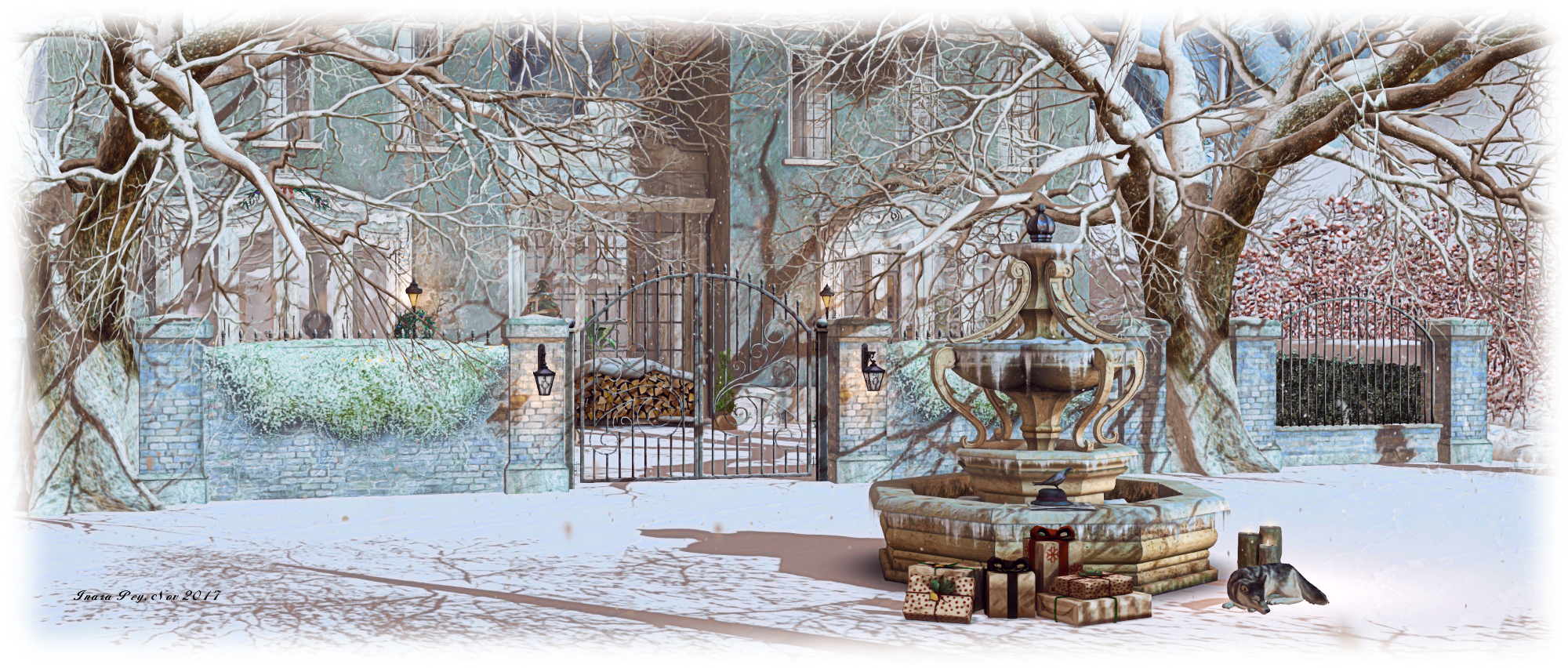
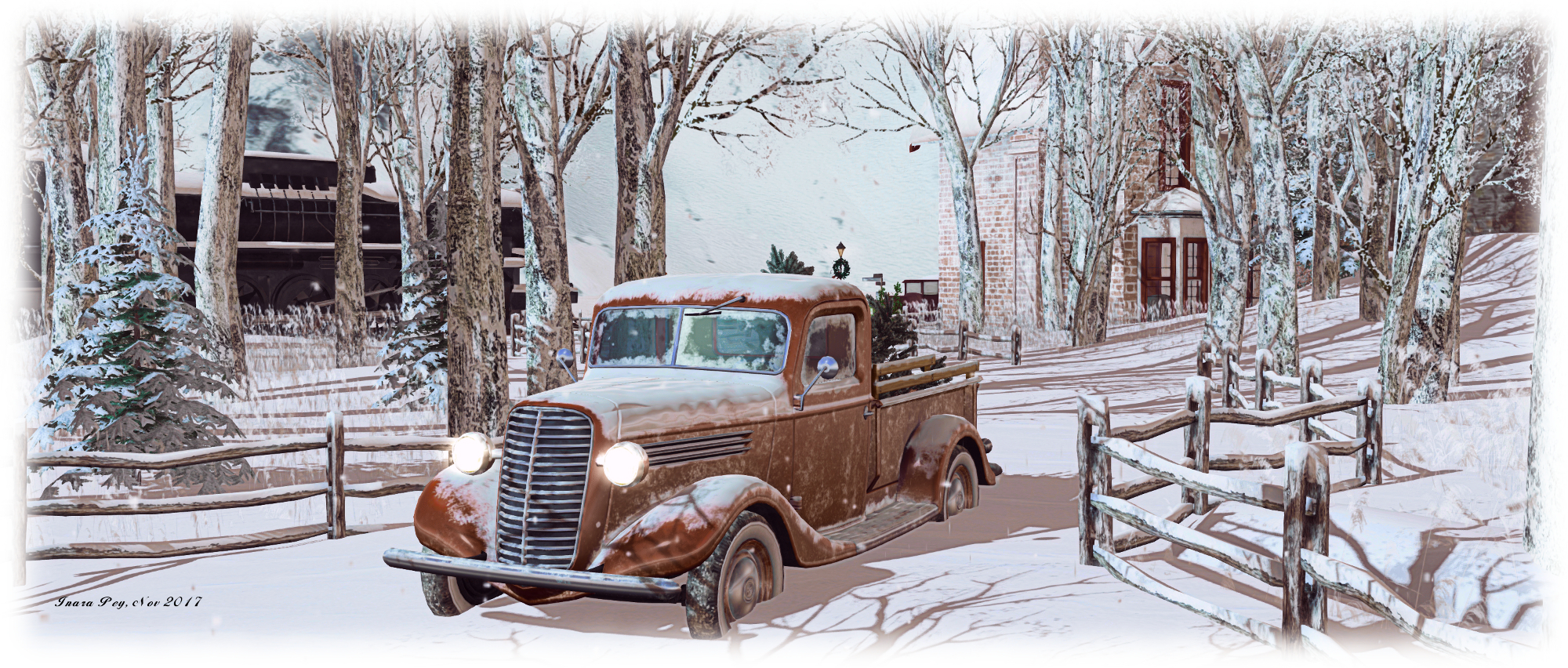
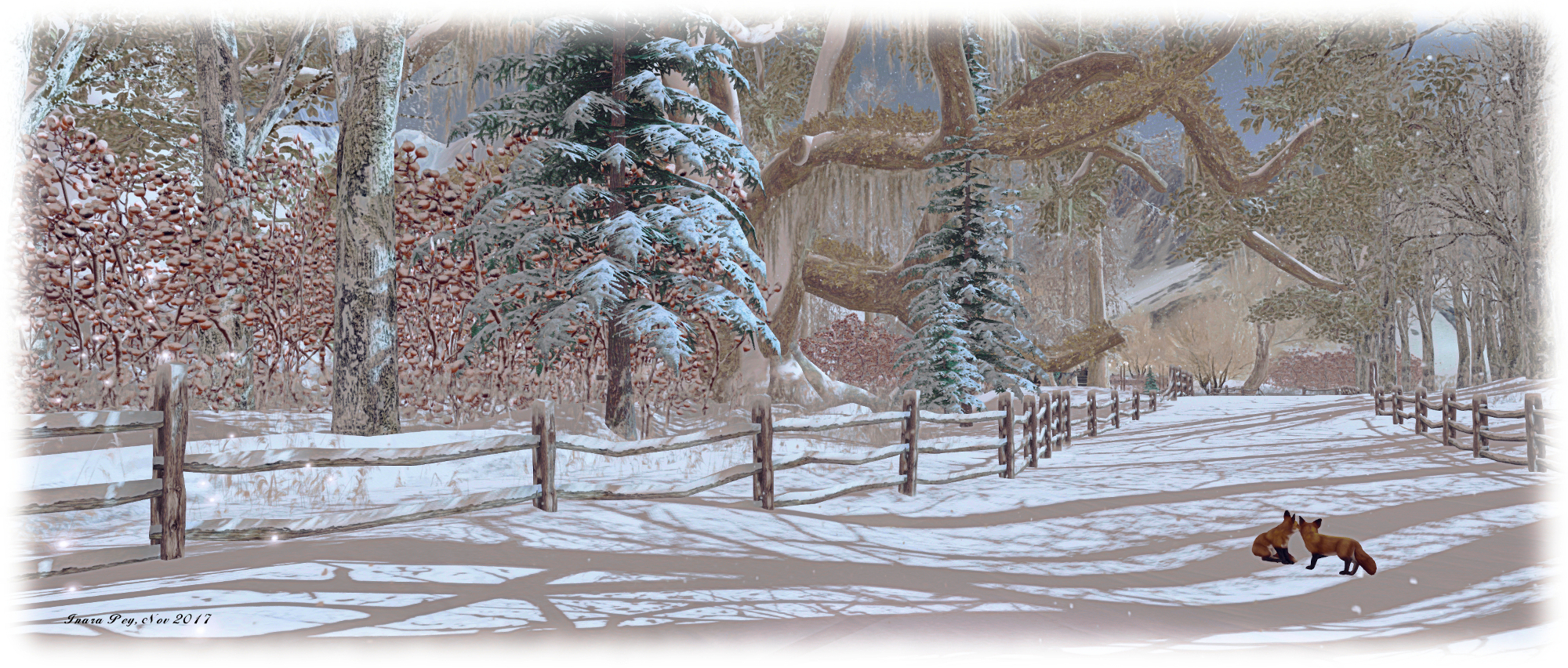
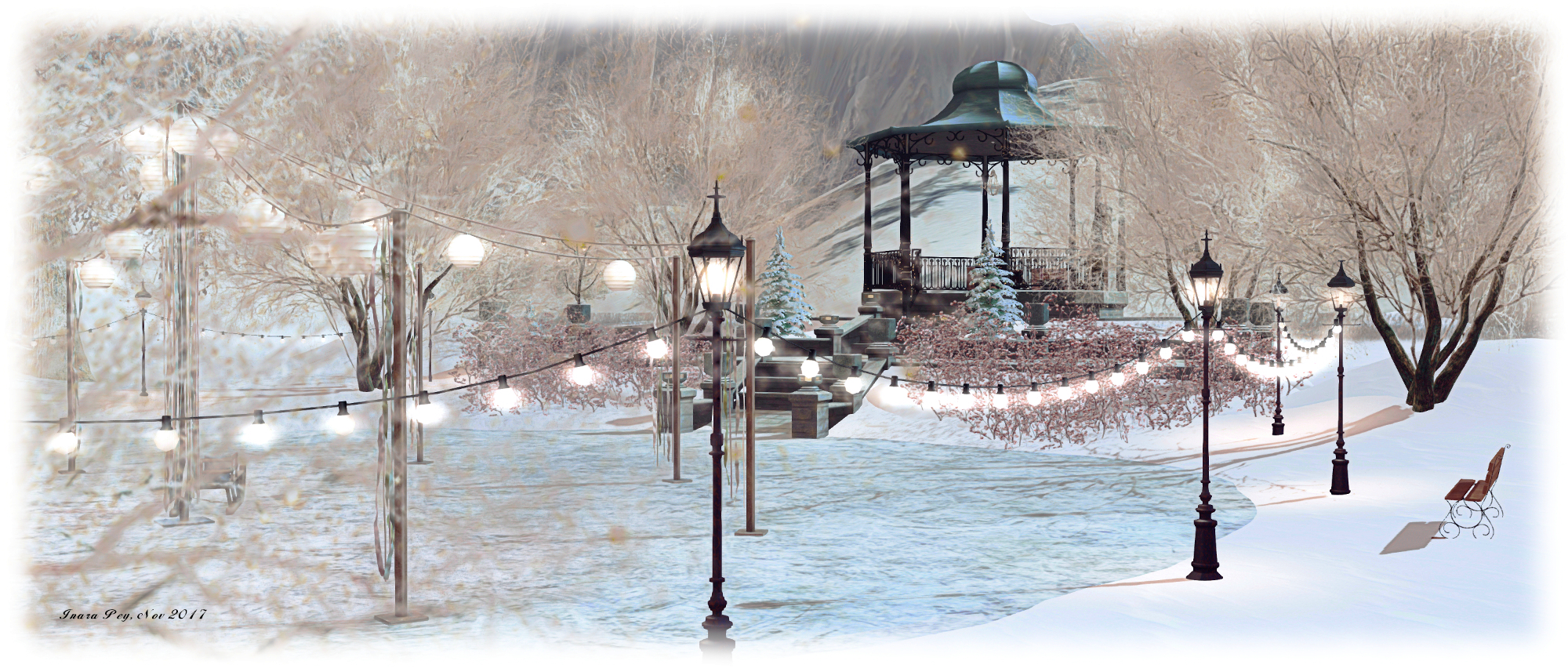
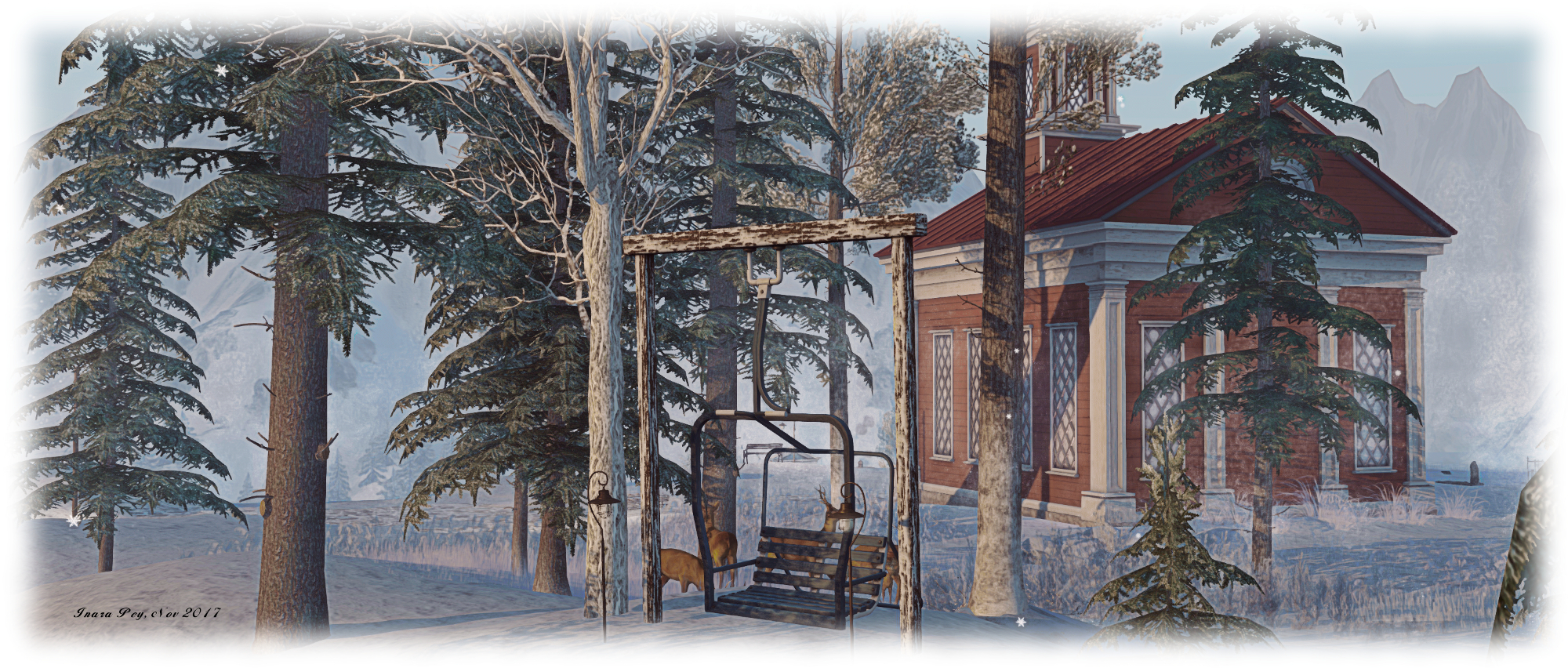
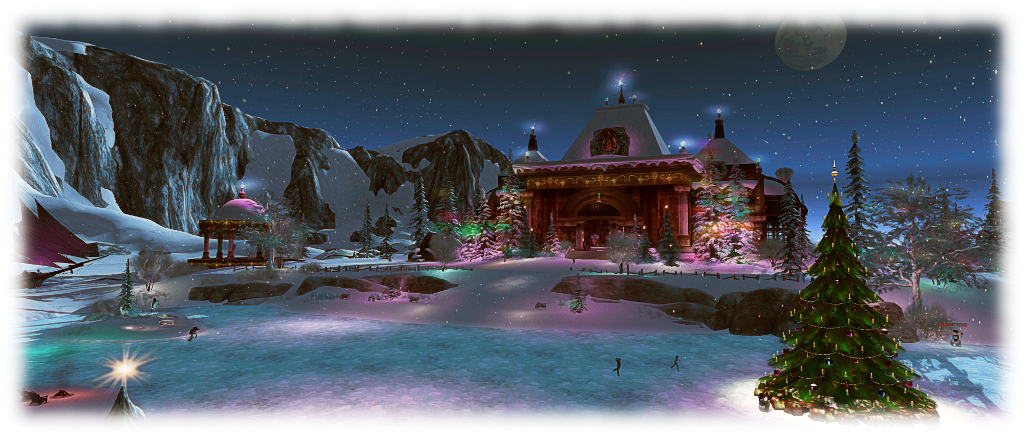
Open now and through until the end of 2017, is the Calas Galadhon winter regions offering visitors a traditional Christmas experience called – appropriately enough – Home for Christmas.

Spread across two regions, Home For Christmas has all the familiar touches from Ty Tenk and Truck Meredith those familiar with their Christmas arranges know and enjoy: the Christmas Pavilion, entertainment, sleigh rides, skating, balloon and reindeer tours. In addition, this year offers visitors the chance to ride Bento reindeer around the regions.
Home for Christmas

A visit starts on the southern side of the build. From here it’s a short walk to the teleport to go directly to the Christmas Pavilion; however, taking it means missing out on much of the scenery. Instead, we recommend a short walk along the path leading east from the teleport board to where the sleigh rides await.

As with previous years, there is a choice of sleighs, one for couples and the other for up to four people to share. Simply sit in a waiting sleigh, and when set, touch the back of the sleigh to start the ride. You’ll be taken around and through the regions, along the trails to eventually arrive at the Pavilion, where you’ll be dropped off. If you prefer, the balloon tour is also available short walk from the landing point, and four couples in particular be a romantic way to see the regions as you drift through the air above them.

Home for Christmas

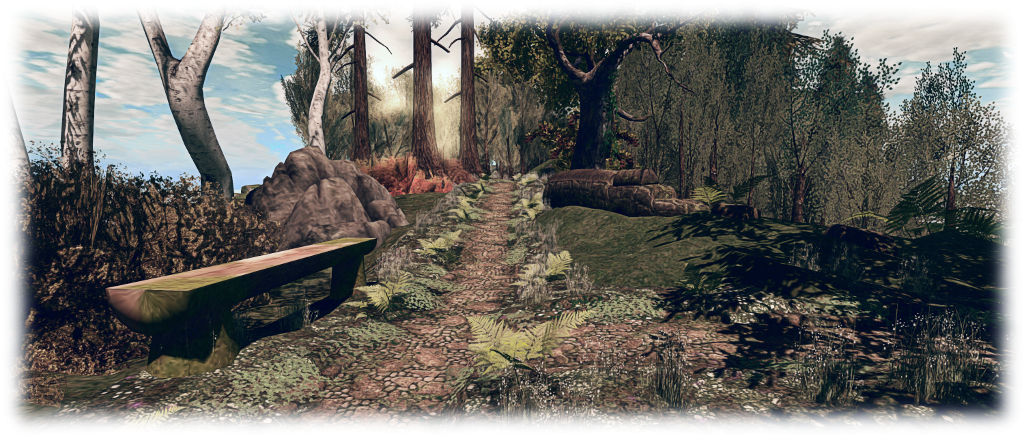
Reindeer and horse rides can be found at barns in the regions, and I recommend that rather than relying purely on the tours and rides, people explore by taking a reindeer for a ride, or walking the numerous trails and paths between the trees and rocks – sign boards will ensure you don’t get lost. This is because there is much to see and  even if you take a tour there are places you’re going to want to stop and look around  / enjoy. There’s the snowy house, for example, offering snuggles for couples or the warmth of a fire as a break from the cold. Then there is also the old stone temple, where cuddles and dances can be enjoyed.

The core of the regions remain, of course, the Calas Christmas Pavilion, with the great tree before it in the middle of the skating lake, camp fires and seats, and Santa’s Schooner sitting just off-shore. Keep an eye out, as well, for the look-out points and the various critters around the landscape, and which bring in to life.

Home for Christmas

“Things have been crazy for us lately,” Ty informed me as we discussed the build. “It looks like, for the first time in nine years, we wont be able to turn the Calas sims to a winter theme as well. But there is plenty of snow and skating at home for Christmas, and we hope people will enjoy themselves there.”

We’ve little doubt people will enjoy a visit – and quite possibly more than one, because Home for Christmas is a fabulous place to enter into the Christmas spirit and ready yourself for the holiday season in a most traditional way.

Home for Christmas

SLurl Details

Winter at Cherishville in Second Life

Cherishville; Inara Pey, November 2017, on FlickrCherishville – click any image for full size

Cherishville, designed by Lam Erin, currently sporting a winter setting, has been openedfor around two weeks for visitors to enjoy and photograph.  Sharing a Homestead region with a private residence, Cherishville forms an L-shaped parcel running along the north and east sides of the region, which is surrounded by tall, snow-covered mountains but separated from them by frozen water.

There is no enforced landing point – although one has been set; as this delivers visitors on a snow-clad hill, I’ve offered an alternative land mark which – unless the landing point is enforced – will deliver you to the little parade of establishments on the east side of the region. It’s a charming, almost period setting, vehicles from the 1930s sitting on a snow-covered road, a steam train rolling slowly towards the local station.

Cherishville; Inara Pey, November 2017, on FlickrCherishville

Looking at this little parade, with its cafés and shops, I couldn’t help but be put in mind of Frank Capra’s It’s a Wonderful Life  – particularly when seeing the setting in black-and-white – to the point where I wouldn’t have been surprised to see James Stewart as George Bailey running along the little street shouting, “Mary! Mary!” In colour, the setting is cleverly themed, with red,  white and green window frames, gables and roof-tops matching the colours of the season.

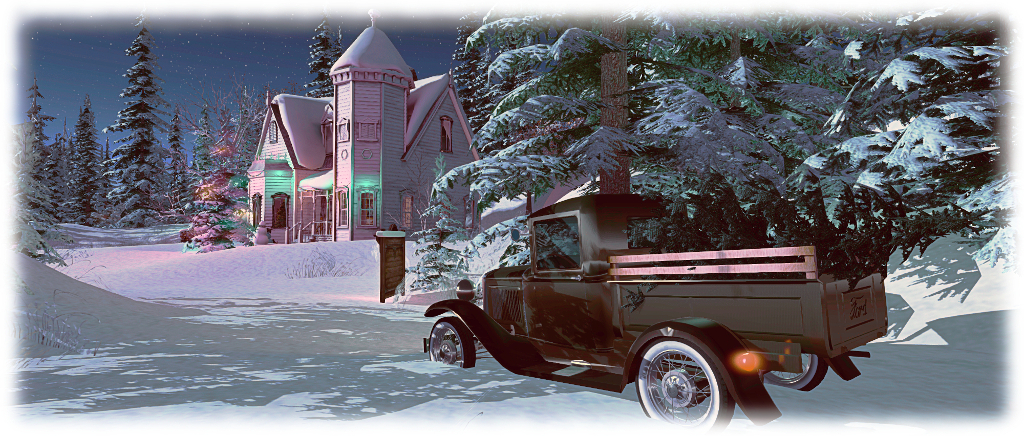
Follow the road northwards and the buildings give way to a country road, bordered by fences on either side. Here the land is blanketed in deeper snow, trees frosted and white, dog roses offering clouds of red colour between tree trunks. A pick-up truck – of a later period than the vehicles at the village – sits on the road, which leads the way to a frozen pond. Here, skates can be obtained from a sign board. But when skating, do mind the lantern posts set out across the ice! Steps on the far side of the pond offer a way up to a band stands converted into an open-sided snug, comfortable armchairs ranged before a roaring fire.

Cherishville; Inara Pey, November 2017, on FlickrCherishville

The land above and behind the little row of shops – reached via a set of snowy steps rising from a pair of gabled gates or via snow-covered slopes – presents a broad open area, again deep in snow, with just a sprinkling of silver birch trees and pale bushes. A delightful little bar sits to one side, offering mulled wine and other hot drinks.

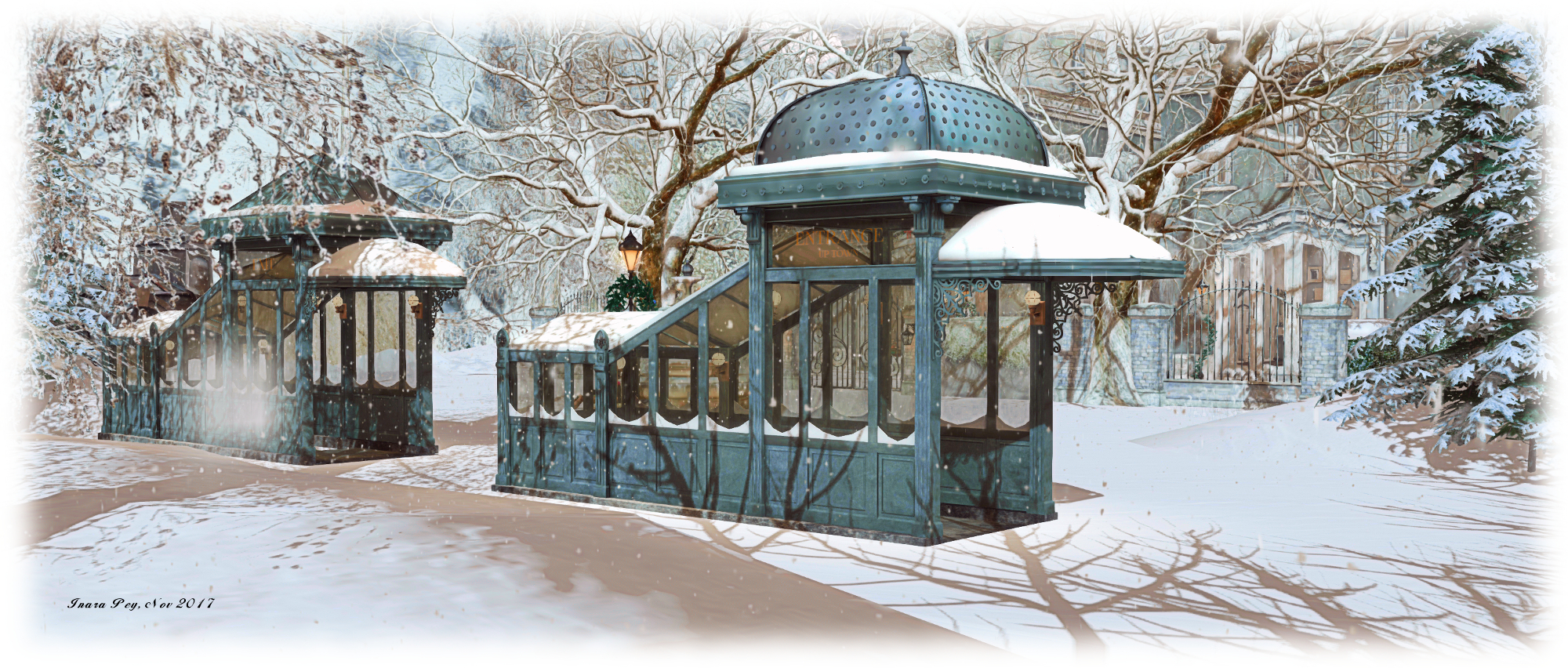
Further steps climb up to a further small plateau, where sits a house with – rather surprisingly – the entrance and exit to / from a subway station. The house is perhaps a little rough around the edges, however, it is furnished in something of a shabby-chic manner, a look which fits well with the aged look of the interior décor. Open to the public, one half of the house offers a small photo studio awaiting use – and it’s not the only place suited to photography. The little hamlet, the bandstand, the train – all offer backdrops for photographers to take avatar-centric shots, while the landscape itself invites photography. Those who do take pictures are asked to consider submitting to the Cherishville Flickr group.

Cherishville; Inara Pey, November 2017, on FlickrCherishville

Word is already spreading about Cherishville – and I’d like to thank both Shakespeare and Stavros Gracemount for alerting me to it being open so Caitlyn and I could visit – as such, it is proving popular with visitors. However, given it is only open to the public for a brief period, a visit sooner rather than later is recommended.

Just as a final point, a line of hills towards the middle of the region, running west to east and north to south to form another L, separate Cherishville from the private parcel on the region. This is protected by a security orb to maintain the owner’s privacy, so should you opt to visit, it would perhaps be best to treat the hills as the boundary without climbing them, and help the neighbours keep their privacy.

Cherishville; Inara Pey, November 2017, on FlickrCherishville

SLurl Details

Return to the Outer Garden in Second Life

The Outer Garden; Inara Pey, November 2017, on FlickrThe Outer Garden – click any image for full size

It’s been two years since my last visit to The Outer Garden, designed by Bisou Dexler. At that time, the build occupied a sky platform above a quarter region. It now occupies a full region, both in the air and on the ground.

Visits start in the air over the region, on a wintry platform which – for me – brought back memories of my last visit to The Outer Garden. Trees of green or frosted with snow sit on a landscape blanketed in white, through which tracks and paths  – some obvious, some simply  marked by the trees themselves.

The Outer Garden; Inara Pey, November 2017, on FlickrThe Outer Garden – Winter Garden

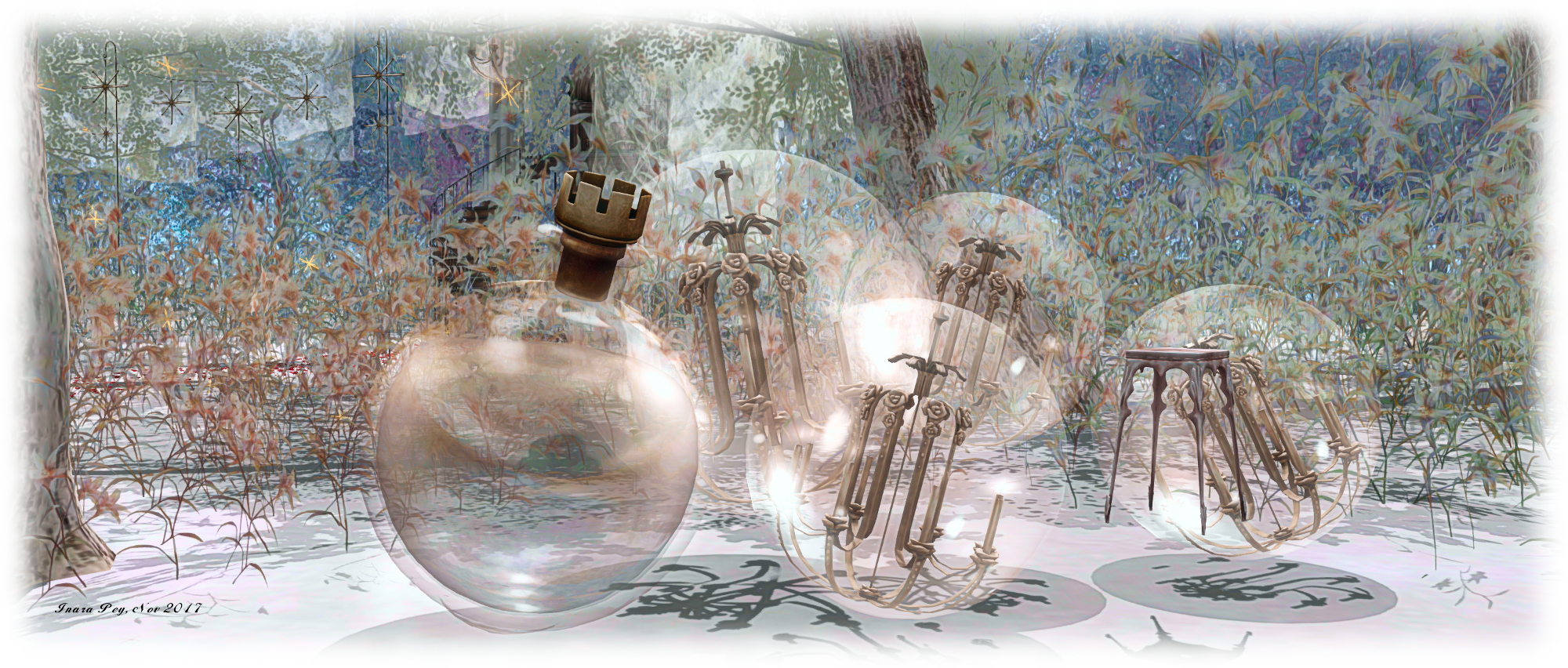
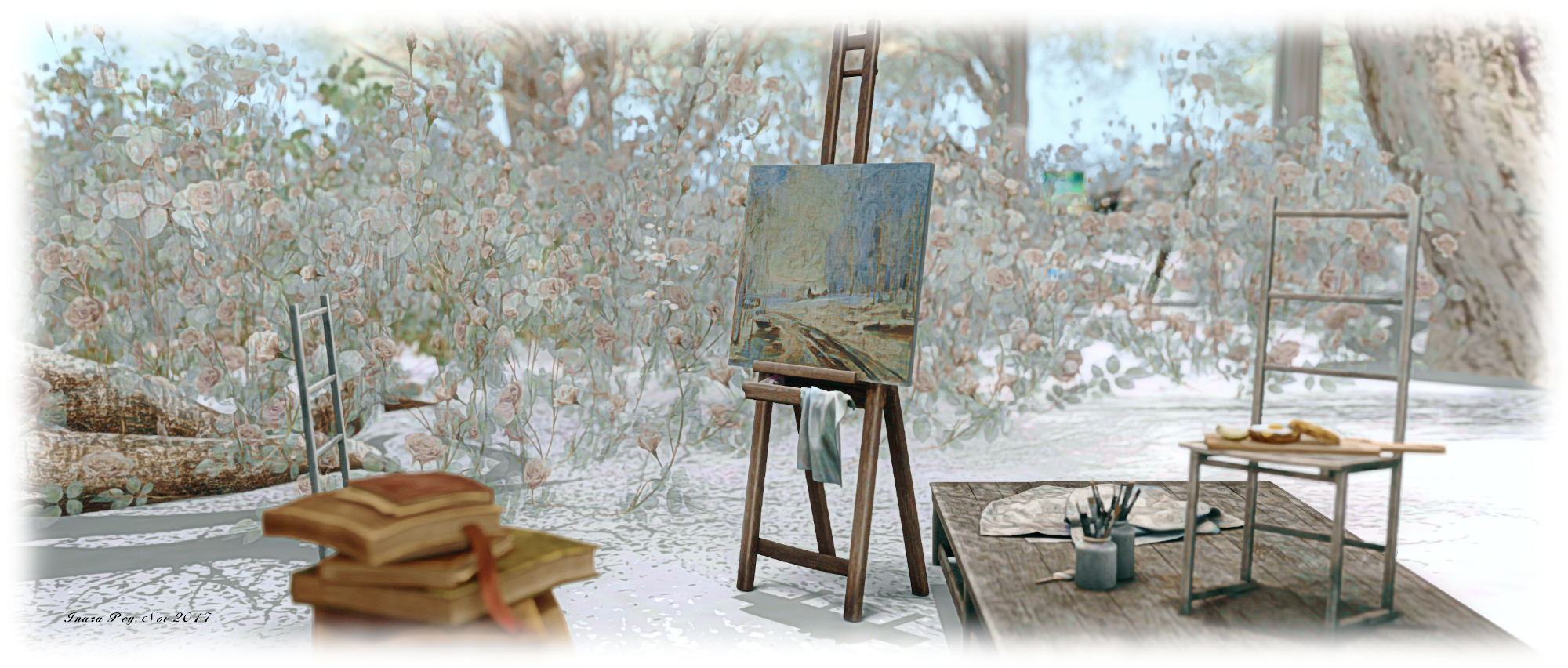
Under boughs and alongside tracks lie points of whimsy and rest. Some of these hold strong memories of the former iteration of the garden: an ice cream stand with seating outside of it. Not far away sits an artist’s easel. For the whimsy, giant Christmas decorations are scattered around, while teacup rides appear to have been tossed into the air around an old carousel.

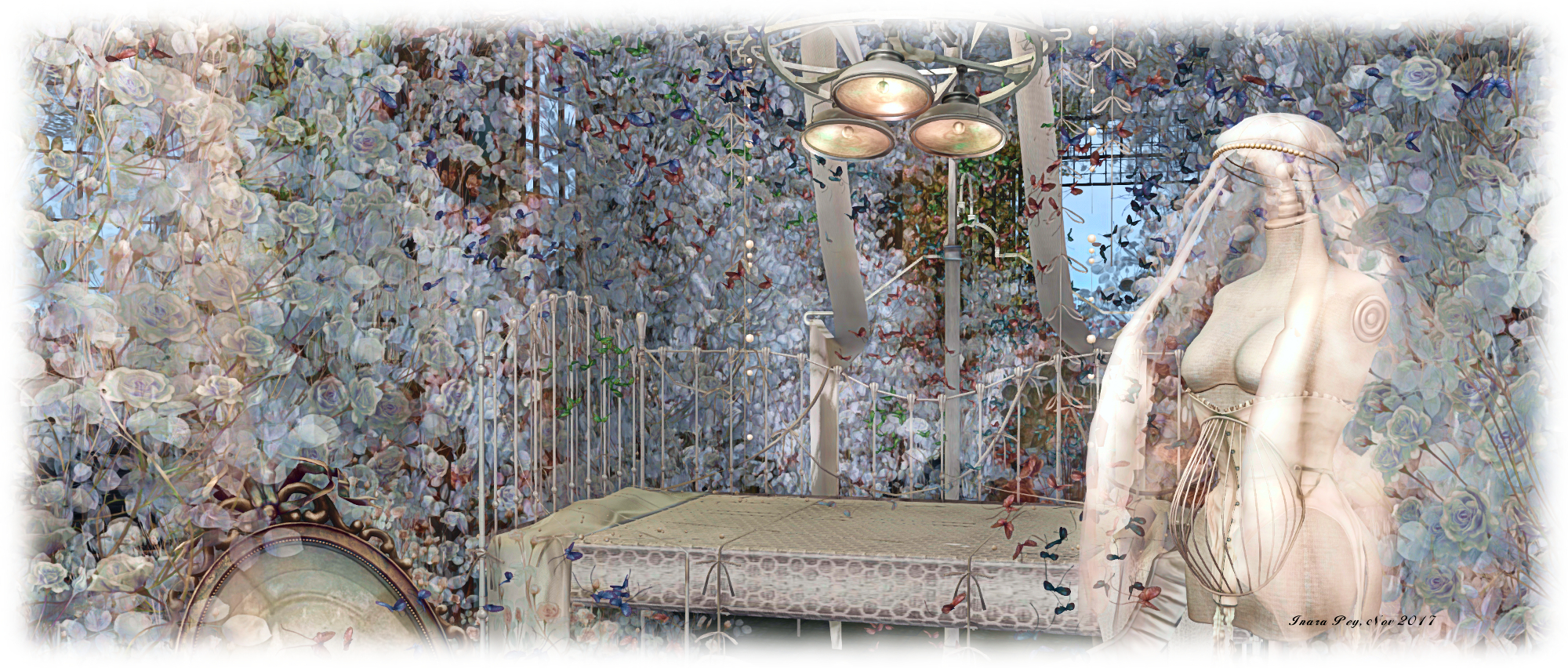
More whimsy can be found in the little club for chicks (the feathered kind), complete with a cabaret floor show, tables and a bar tucked away into a tree trunk. For the romantics, a copse of multi-hued trees hides a cosy snug of a lounge with plush chairs and a canopied bed.

The Outer Garden; Inara Pey, November 2017, on FlickrThe Outer Garden – Winter Garden

Close to the landing point is a mirror, a teleport; it provides access to three more areas: the skyborne tuki reirou platform, home of 月玲瓏 – The Moon is Serene – the latest addition to The Outer Garden: an altogether intriguing setting.

On teleporting to it, visitors are invited to walk through a garden path which seems to be floating among the clouds. Flowers border a walk  in turn lined by candles and screens, between which sit paper umbrellas. Overhead, rather incongruously, hang lighting grills without a ceiling, together with a hand-pulled cart. All of this points towards a beckoning Moon, inviting you to walk to it.

The Outer Garden; Inara Pey, November 2017, on FlickrThe Outer Garden – The Moon is Serene

“You go through the moon, to the garden of a picture scroll,” Bisou says of this. “You are a character of the scroll, what kind of story can you tell me? I hope for a good story!” The scroll itself, the huts and grasslands stretched out along it, forms a brightly lit setting, reached by a set of Torii gates winding down from the back of the Moon.

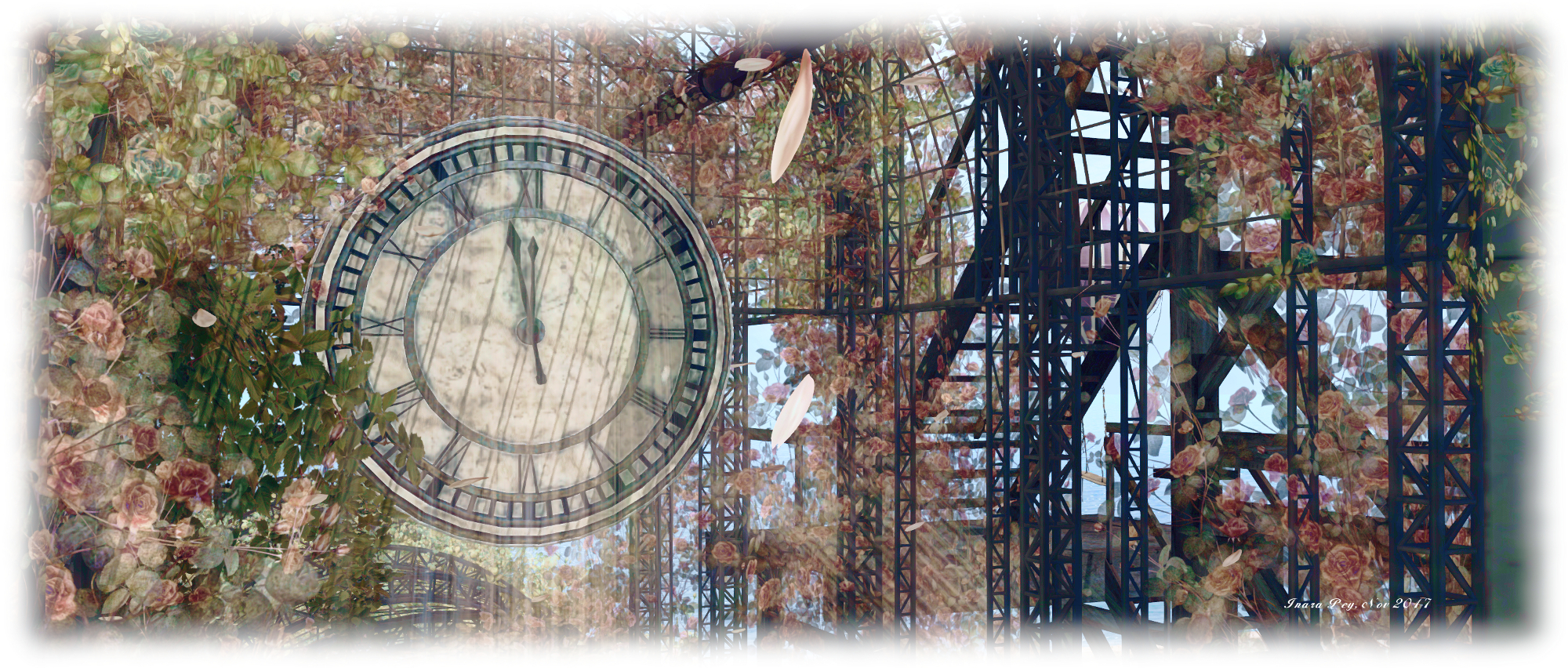
The second destination point is the Rose Garden, located on the ground level. This, for me. also carries with it strong echoes of The Outer Garden as it was in 2015. Within a huge crystal palace is a marvellously atmospheric rose garden with lower and upper levels, halls to explore, and places to relax.

The Outer Garden; Inara Pey, November 2017, on FlickrThe Outer Garden – Rose Garden

Also on the ground level is the Boat House, another snowy garden spot, where you can take a boat to the Rose Garden – although oddly, instructions on how to get from the Boat House to the Rose Garden can be found at the latter. I assume this is because it may have once been the original landing point. Both face a third ground level area, which given it has no teleport link, may not be completed yet – but it does offer another intriguing setting – complete with diesel locomotive hanging in the sky.

In 2015, I felt that, by only covering a 1/4 region, The Outer Garden was an absolute treasure, a tour de force demonstration that less is very often more when it comes to designing an environment. Despite now being an entire region, this still holds true, largely because of the way in which Bisou has used the space available to her.

The Outer Garden; Inara Pey, November 2017, on FlickrThe Outer Garden – Winter Garden

For example, the winter garden doesn’t cover the entire area of the region, but keeps to a size of just over a 1/4 of the region’s area, and so reflects much of the feel of the earlier iteration. Similarly The Moon is Serene stands as an independent setting, divorced from the winter garden and the ground, providing an immersive setting – although the use of glow might impact the performance for some.  Similarly, the lighting on the ground allows the developed areas there to stand apart from one another, adding depth to each of them.

As such, it remains a rewarding visit.

Related Links

A vision of Greenland in Second Life

Groenland Kangamiut; Inara Pey, November 2017, on Flickr Groenland Kangamiut – click any image for full size

Designed under the It All Starts With A Smile (IASWAS) banner, Groenland Kangamiut is a new region design by Kaelyn Alecto (TheNewKae). It is based on the physical world township of Kangamiut, located on a small island off the west coat of Greenland in the Davis Strait connecting Baffin Bay with the Labrador Strait.

“With its typical colourful houses, fishing harbour, ice landscapes, frosted atmosphere and the sound of the bitter wind,” Kaelyn says of the design, “We tried to be original and as realistic as possible, while keeping a small part of fantasy of course. Have fun!”

Groenland Kangamiut; Inara Pey, November 2017, on Flickr Groenland Kangamiut

The village sits nestled in the arms of an inlet, almost fjord-like in its deep cut, a single channel of water pointing the way to the open sea – presumably the Davis Strait – to the west. The shops and houses rise up the lower slopes of the inlet in brightly painted tiers, crowned by a red-painted chapel. To the north, the valley wind onwards, its floor lifting above sea-level, snow-covered slopes caught between high shoulders of rock, disappearing in the distance.

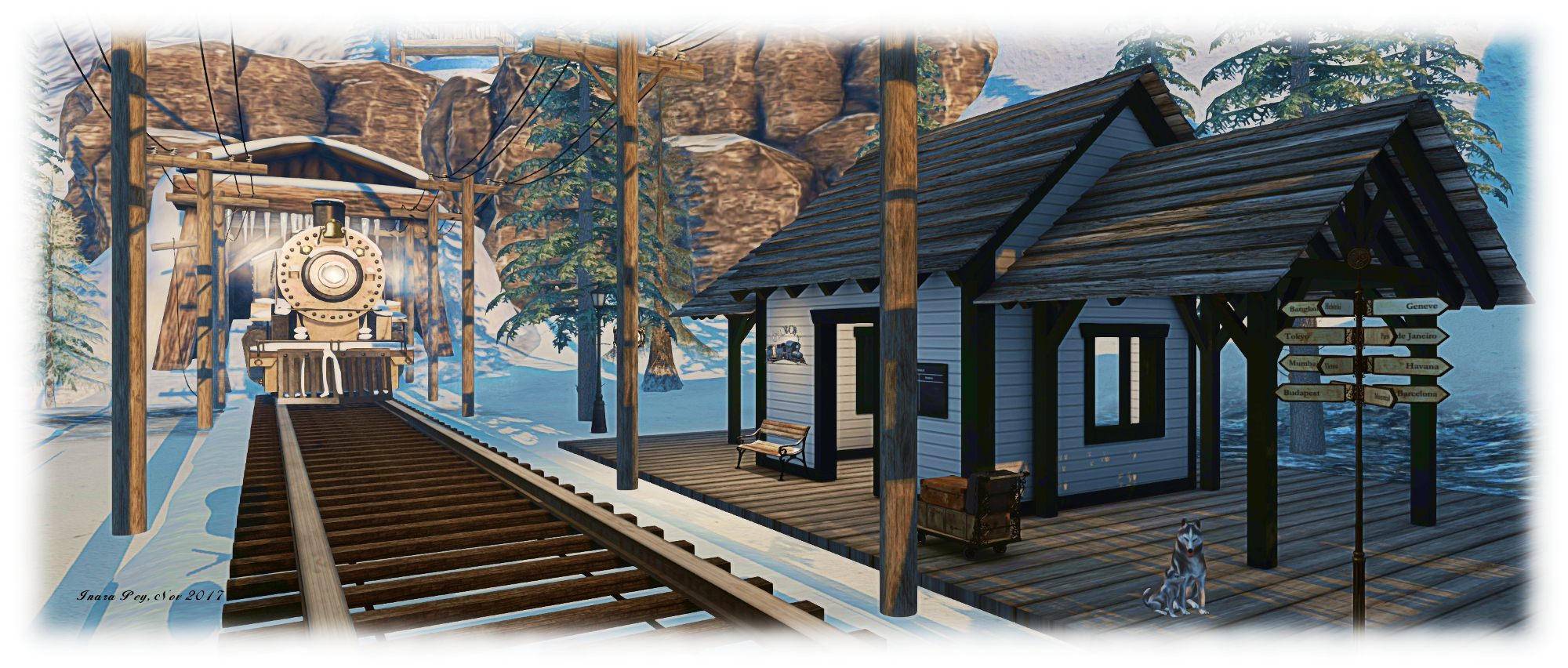
The west side of the village is split between a busy group of wharves, warehouses and shops, bordered on either side by houses built out on slits over the water on either side, their large decks suggesting they might be summer holiday homes. On the north side, these give way to the spur line of a railway overlooking the frigid waters, a locomotive just emerging from a tunnel burrowing under the high cliffs behind the village.

Groenland Kangamiut; Inara Pey, November 2017, on Flickr Groenland Kangamiut

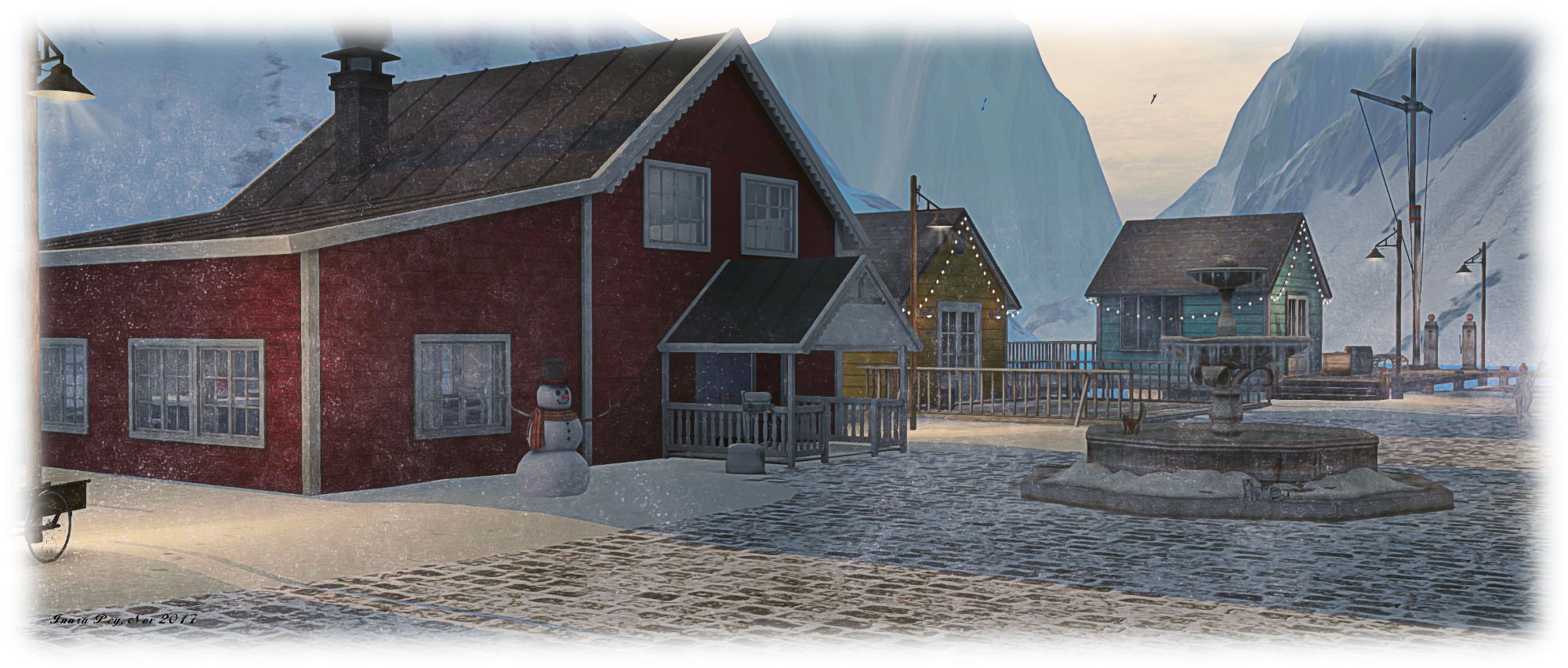
Visitors arrive in what might be referred to as the village square – a cobbled surface in which sits a fountain. Snow swirls around the bricks of the pavement and between the painted houses on either side, as several routes of through the village offer themselves for exploration.  To the north, the cobbled pavement lead to the busy waterfront. From here, where wooden walkways and stone steps climb the hill to the next level of the village, while a board walk runs along the northern shore to the little railway station.

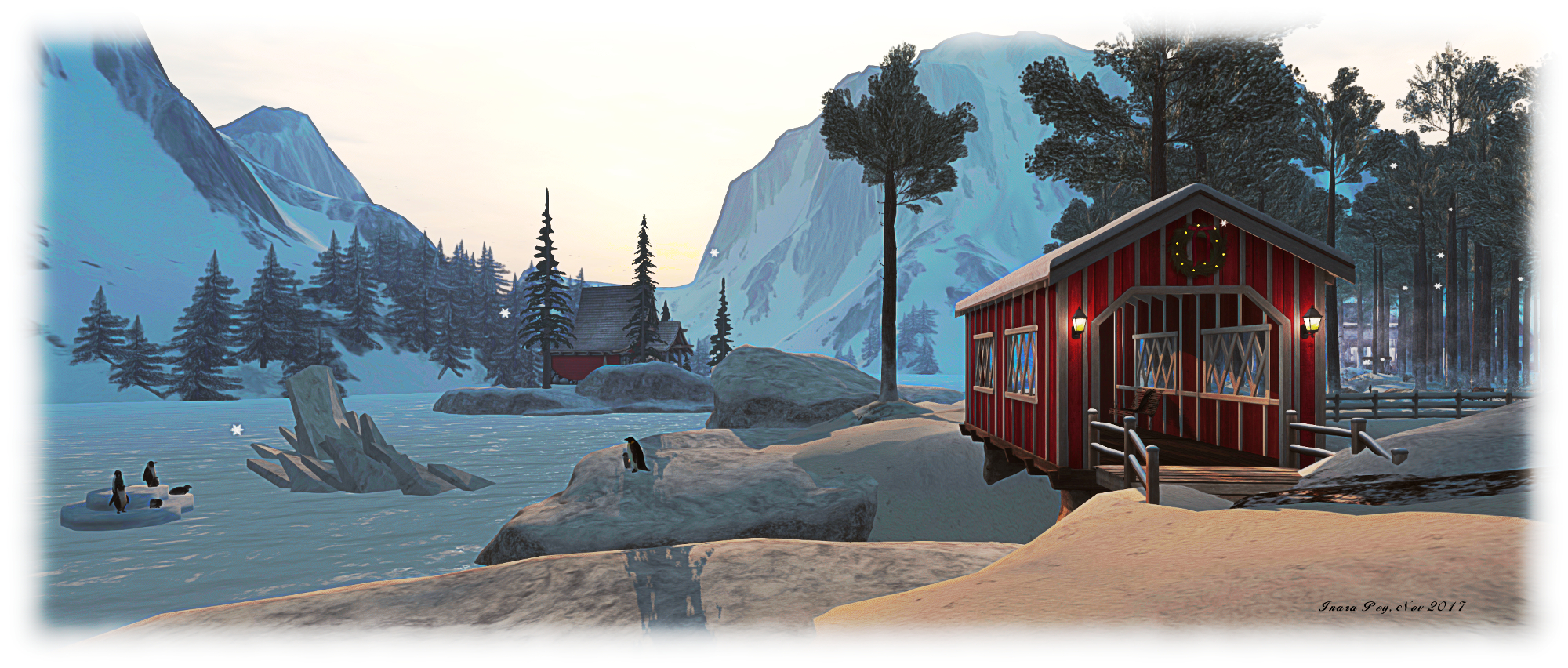
Closer to the fountain, steps offer a short cut up to where a brick-paved footpath winds up through the houses, eventually reaching the little church up on its high look-out point. South of the landing point, meanwhile, the pavement gives way to a wooded trail. Snow-covered and winding through frosted firs trees to where a camp site looks out over cold, blue-grey waters to a cosy house sitting along on a rocky islets. A red barn-style bridge crosses a narrow stretch of water close by, a further trail on the far bank winding up the hill in an alternate route to the church.

Groenland Kangamiut; Inara Pey, November 2017, on Flickr Groenland Kangamiut

This south path also offers one of the regions little quirks. While wolves reindeer and a polar bear  – all common enough to the northern hemisphere – can be seen among the trees and out in the snow; this side of the region also has a little group of penguins sitting on an ice flow, an emperor penguin and her young watching them from the shore. Given their far more southern origins, the presences of these penguins might seem odd, but they are in keeping with the fantasy twists found in IASWAS designs. Equally, their appearance on the southern side of the region seems to be a subtle nod and wink to their more usual domain being the southern latitudes.

What I particularly like about Groenland Kangamiut is the way the east side of the region has been blended with the region surround, rather than leaving a watery gap between region and scenery. For me, blending region and backdrop in this was adds a level of depth to a design, by making them equal partners in a scene, rather than separate entities. This really gives the feel that the village is sitting on the edge of a rugged island, and thus a natural part of a greater whole.

Groenland Kangamiut; Inara Pey, November 2017, on Flickr Groenland Kangamiut

Featured in the November 17th edition of the Destination Guide highlights,Groenland Kangamiut is a beautiful setting, and one well worth visiting.

SLurl Details

Hollywood highlights and more in Second Life

The undersea world of Blake Deeps – just a part of all there is to explore in the Hollywood estates and regions north , east and south of Blake Sea.

I’ve been a resident of Hollywood Estates, bordering Blake Sea for getting on for five years now (I think!), and while I’ve covered one or two points of interest around the estates that are open to the public, there is actually a lot to see and enjoy. This being the case, I thought I’d offer an island-hopping guide to some of the places worth a visit, particularly by boat or by air (seaplane perhaps being the best for the latter, or a helicopter with floats!).

For obvious reasons – it being something I’ve been very involved with – I’m going to start at Holly Kai Park. The home of Art at the Park (since 2008), Caitinara Bar (music Wednesdays and Fridays from 16:00 SLT), with a live events area (The Pavilion), nature trails, a permanent exhibition of art from the collection of Nber Medici, co-owner of the Hollywood Estates along with MarkTwain White, bumper boats, kayaks, as well as featuring Seanchai Library, bringing you live stories in Voice every week, Holly Kai Park has a lot to offer visitors.

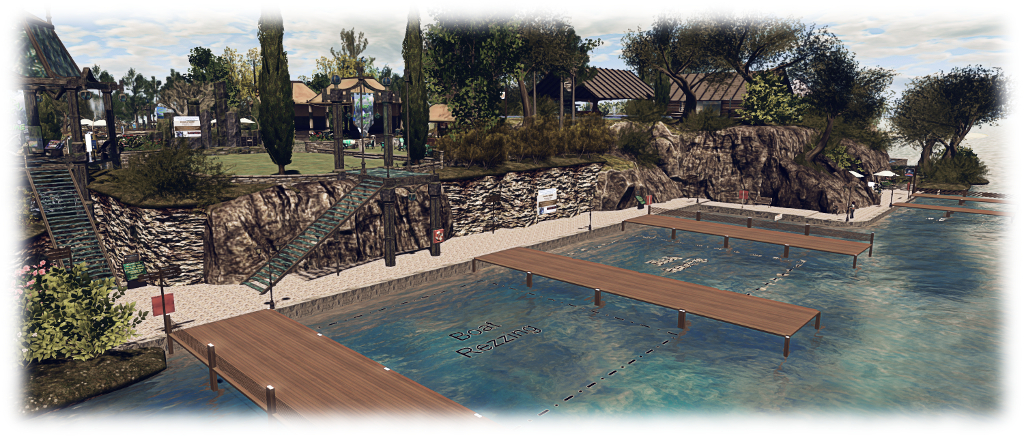
Holly Kai Park boat moorings and Art Hill

The docks on the east side of the park offer 2.5 hours of mooring before auto-return kicks in, giving you plenty of time to explore, and re-rezzing of boats (or seaplanes! is possible. This also makes Holly Kai Park a good leaping-off point for travels by water. Head north and then west around Holly Kai Estate, following the waterway, and you’ll eventually come to the Tugby Arena, with matches held every Sunday at 08:00 SLT  – find out more by reading my article on matches.

Just south of the Tugby arena is Dutch Harbor. While not strictly part of the Hollywood estates, it is home to Analyse Dean’s magnificent stern wheel paddle steamers. These are truly magnificent vessels, which I blogged about back in 2014.  The Dixie Belle has been available for sale since around the middle of 2017 (and I’m overdue an update on the steamers and what’s been happening with them!), and you can walk across to the demo version at Dutch Harbour and try it for yourself.

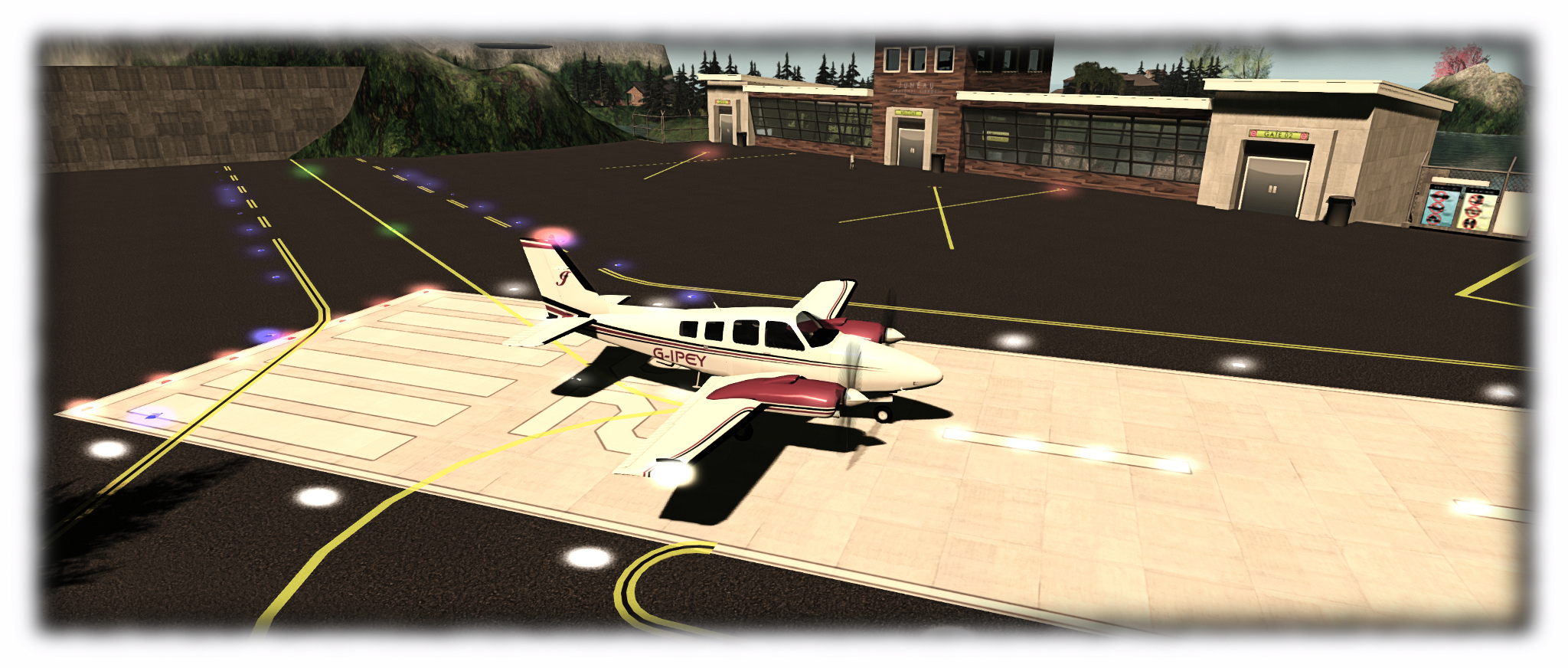
Juneau Regional Airport offers a chance to explore Blake Passage by air, or to stop off on a trip and hop around the local sights.

If hiking is more your thing, you can head west-north-west from Holly Kai Park to the Columbia River. Although largely residential in nature, the hills above the southern bank of the river offer a hiking route. Marked by boot prints on the ground and yellow tour guide boxes, the trail runs westwards to Columbia Bar, and offers views out over the river valley to the north and the surrounding islands to the south.

Unfortunately, rezzing isn’t available at either end of the trail, but a short hop away by TP, is Juneau Regional Airport, offering rezzing for light aircraft, and a short distance to the north, the Hollywood Estates land office has a boat rezzing area (2 minute auto-return) at the moorings in front of it. From here you can explore the Blake Passage regions by boat.  A little further to the north at Skagway, is the headquarters of the Second Life International Folkboat Fleet (SLIFF). With races held every Sunday starting at 07:00 SLT, this is a popular community, and sailing lessons can also be had here for those just getting started. If you don’t fancy walking / teleporting, you can catch the Skagway & White Pass train from the rezzing area outside the front of the airport terminal, and which will transport you to all points north in Blake Passage. You can jump off on passing the Hollywood Estates land office, or at the SLIFF centre at Skagway.

Folkboat racing around the regions of Blake Passage

South and west of Holly Kai Park lies the famous Hollywood International Airport. With rezzing for aircraft of any size, and water rezzing for boats, it offers the perfect leaping-off point for exploring Blake Sea itself, the regions to the south, and for travelling east through the islands leading to the community of Second Norway. If flying out of a major airport like Hollywood isn’t to your liking and you have a light aircraft, you might like to try flying out of the grass strip at Foliage Airfield.  This is a tight little strip, but one I like using when testing different planes, and it is ideal for single and light twin-engined aircraft and helicopters. Just across the water from Foliage sits the historic Greenhouse, a towering prim structure by Transparent Banshee celebrating a bygone building era of Second Life. The gardens and Greenhouse are both open to visitors.

Head south from Hollywood Airport, and you can find your way to the Honah Lee estate, and in particular Palomar Landing, with moorings for boats, seaplanes and helicopters (5 minute auto-return, re-rezzing permitted). This marks the start of the island circle trail and the trailway to the stars, which allow you to travel on foot or by horseback around the 6-region core of Honah Lee, ride up to the Palomar observatory, and visit the marine nursery. I last rode the trails here in 2013, so some of the article I wrote at the time might be out-of-date, but hopefully it’ll act as a primer for those visiting.

Horseshoe Park is tucked away among the islands east of Blake Sea, but makes for a pleasant stop while sailing

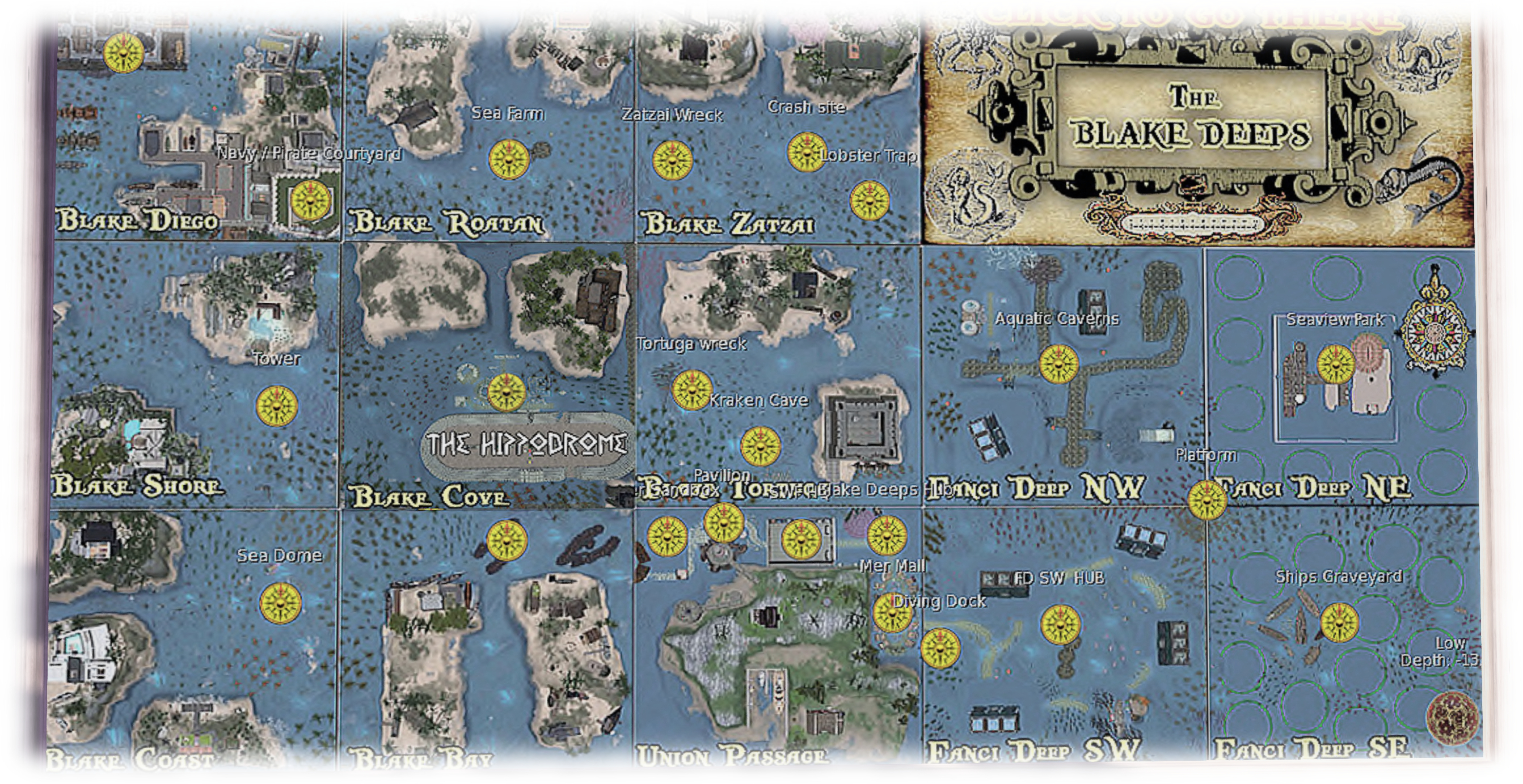
All of this is really just scratching the surface of everything on offer in these regions and the lands surrounding Blake Sea. Those who like sailing / boating might also like to visit Horseshoe Park (30 minute auto-return at the dock), which offers a pleasant break while exploring the surrounding waterways. There’s also the delights of underwater exploration along the regions of Blake Deeps. A good place to start these might be from the historic Freeport Township of Flotsam, and you can read more about it and the merfolk community of Fanci’s deep here and here.

Additional Links

Exploring Lapprock Lighthouse in Second Life

Lapprock Lighthouse

Lapprock Lighthouse sits to the south-east of the steampunk role-play community of New Babbage, guarding the waters of the Vernian Sea. Recently featured in the Destination Guide Highlights, the lighthouse is an imposing structure, a thick finger of stone and brick rising though a heavy mist from the plug of rock upon which it sits. The design by Vic Mornington (Victor1 Mornington) is both decorative and functional, and I’ve little doubt the sweeping eye of its light misses very little in the waters around it.

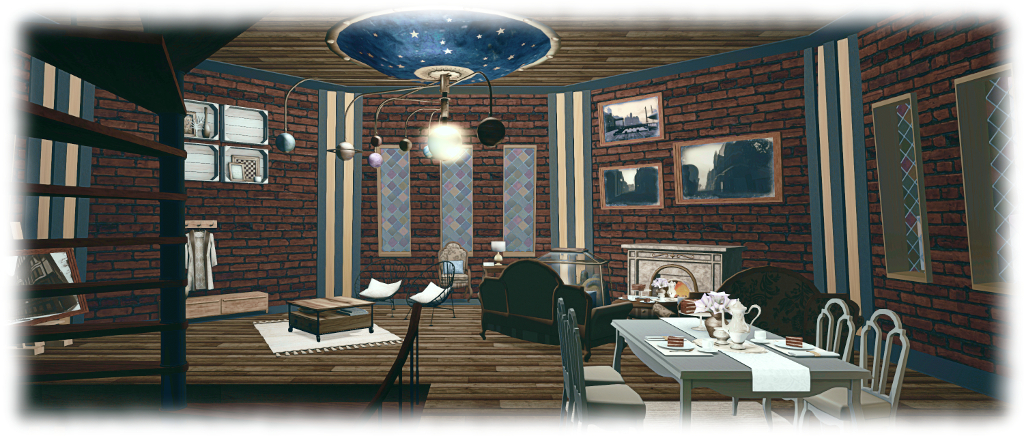
Pass through the main entrance, and you’ll find what you might expect from such a place: a slightly dreary looking storage space befitting a working lighthouse. However, climb the spiral stairs winding upwards from near the centre of the room, and you might be surprised by what you find above: a most convivial apartment space presenting very comfortable living accommodation.

Lapprock Lighthouse

This comprises a day room, with a lounge are warmed by a fireplace, a dining space and illumination provided by an ornate ceiling orrery, with lots of little  touches around the room which make it a very cosy setting. Above this sits a bedroom, complete with a second, table-mounted, orrery, with a (somewhat austere) library occupying the floor above it. The stairs then continue their upward wind through two further floors, seemingly given over to research.

Nor is this all that there is to be found in the Vernian Sea. Down on the entrance level of the lighthouse is a drum-like steel structure in the centre of the floor. Open on one side, it forms an elevator shaft leading downwards (if the shaft is visible, click the control panel on the left of the opening to call the elevator). Click the elevator car to stand in it, then select Tunnels from the displayed dialogue box to descend into the ocean depths below the lighthouse.

Lapprock Lighthouse: under the Vernian Sea

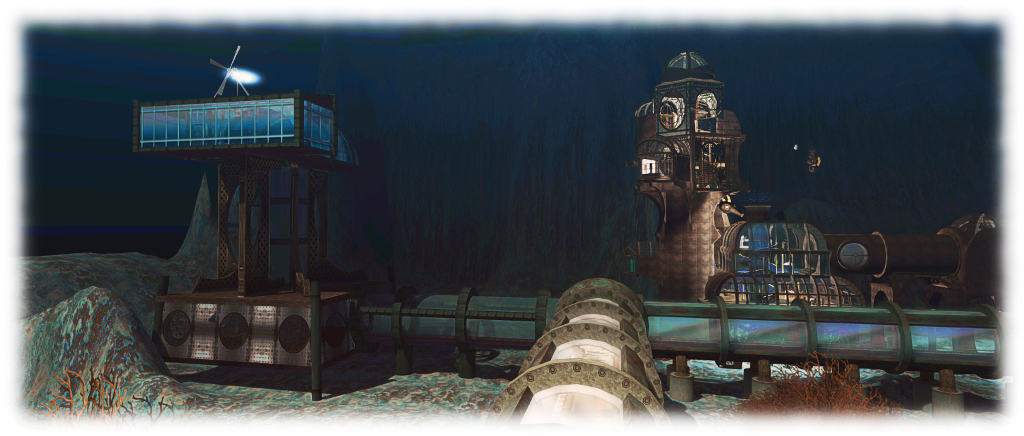
Here lies a series of glass and steel walkways running pipe-like just above the ocean floor, stoutly supported on steel and concrete legs. These walkways provide access to a number of undersea structures, such as the Lotus of the Sea Lounge, with its glass domed roof, complete with steel petals ready to close and protect it should the need ever arise, and Aegir’s Hall, named for the Norse jötunn Ægir (“sea”). Some of these can be reached directly, some (again, as with Aegir’s Hall) require the opening of an airlock or two.

However, when exploring this undersea realm, please do keep in mind that these halls and spaces  – like Lapprock Lighthouse itself – are offered for rent, and while the lighthouse is open to public visits, this might not be true for all of the spaces under the sea. Above and behind Aegir’s Hall, for example, is what appears to be a private living space  which may not be open to public exploration.

Lapprock Lighthouse: under the Vernian Sea

Travel far enough along the undersea corridors, and you’ll likely eventually find your way to a second elector station. This will carry you upwards to the dockside at New Babbage, where, if you’ve not visited before, you can continue your explorations. For this article however, it is where I’ll leave things.

There’s a curious feeling of history wrapped around Lapprock Lighthouse and the facilities on the seabed beneath it, perhaps due in part to much of the latter being prim builds (there’s also the fact New Babbage represents one of the longest-running communities in Second Life, having been established a decade ago). As such it makes for an interesting – intriguing, even – visit.

SLurl Details