Call for chapter proposals on art in virtual worlds

Dr. Denise Doyle of the University of Wolverhampton, UK, has issued a call for chapter proposals for a new book to be entitled New Opportunities for Artistic Practice in Virtual Worlds, which she will be editing.
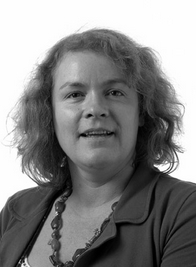
Dr. Denise Doyle (image courtesy of Wolverhampton University)

Dr. Doyle is an Artist-Researcher, and Senior Lecturer in Digital Media at the University of Wolverhampton, PhD Co-Supervisor at SMARTlab Research Institute, University College Dublin, and Adjunct Professor in Virtual Worlds and Digital Practice, Ontario College of Art and Design University (OCAD U), Toronto, Canada. During her PhD research she developed Kriti Island, an art laboratory space in Second Life, to investigate creative practice in virtual world spaces. She has published widely on the subject of the virtual and the imaginary, the experience of the avatar body in virtual worlds and game spaces, and the use of virtual worlds for creative practice.

Her call for proposals has been issued through a number of outlets, including Wired Online, and JISCM@il. It reads in part:

Introduction

Although virtual worlds remain unstable phenomena a substantial amount of research continues to be undertaken within them and is reflected in the number of disciplines that study them particularly in an interdisciplinary context.  Whilst there is already a history of artists investigating new spaces and new technological forms this exploration has continued more recently with sections of the artistic community utilising virtual worlds as a new form, or a new potential artistic space. Established real-world artists have explored virtual worlds as environments for practice and a number of artists and designers have continued to specifically work with Second Life to explore the potential and limitations of the platform itself. A range of early key works and other seminal works produced in Second Life still hold strong to be scrutinised in the context of new technologies and for their contribution in expanding our understanding and experience of virtual space.

Objective of the Book
The mission of the publication is to provide a coherent account of artistic practices in virtual worlds and to consider the contribution the Second Life platform has made in an historical, theoretical and critical context within the field of art and technology and digital art. The book will bring together a diverse group of stakeholders who have yet to have a coherent dialogue on Second Life’s contribution to artistic practice and will provide a platform to bring together artists critical reflections on the work they have undertaken in the platform and in other virtual worlds. Finally, the volume will examine the specific features and characteristics of Second Life that contribute to the virtual aesthetics and languages born out of the nature of avatar-based interaction that have been developed by the artistic and creative community.

Target Audience
The volume is intended for both artists and scholars in the fields of digital art, art and technology, media arts history, virtual worlds, games studies and a broader academic audience who are interested in the history of art and technology and the philosophical implications of virtual space. It will be an important study book for media arts, games studies and virtual worlds studies students and will be a useful resource as a historical and critical reference for new media art. The book will be of value to the field of the philosophy of technology and contribute to the continued theoretical discourse of physical and virtual space.

Researchers and practitioners are invited to submit a 2-3 page chapter proposal which clearly explains the mission and concerns of the proposed chapter, and the call includes a list of recommended topics proposals might consider (although they are not restricted to just that list of topics. Chapters from accepted proposals will be reviewed on a double-blind review basis. Contributors may also be requested to serve as reviewers for this project.

The book is scheduled to be published by IGI Global (formerly Idea Group Inc.), and it is anticipated it will be released in 2015. Please refer to the call itself and the IGI global website for details of their publications.

Important Dates

  • February 28, 2014 –  Proposal Submission Deadline
  • March 15, 2014 – Notification of Acceptance
  • June 30, 2014 – Full Chapter Submission
  • August 30, 2014 –  Review Results Returned
  • October 15, 2014: – Final Acceptance Notification
  • October 30, 2014 – Final Chapter Submission

Those wishing to submit proposals, or who require further information on this call should contact:

Dr. Denise Doyle
Faculty of Arts, MK Building
Molineux Street
University of Wolverhampton
WV1 1SB

With thanks to Draxtor Despres

Rod Humble departs the Lab

Update January 26th: My own look back at Rod Humble’s time at Linden Lab.

Update January 25th: Gamesbeat has caught-up with the news.

Update: Games industry has covered the news as well.

Update: The message on Rod Humble’s Facebook page confirming his departure from the Lab reads: “Its been a great 3 years! All my thanks to my colleagues at Linden Lab and our wonderful customers I wish you the very best for the future and continued success! I am starting-up a company to make Art, Entertainment and unusual things! More on that in a few weeks!”

Jo Yardley has posted that Rod Humble has apparently left Linden Lab. In a blog post she states:

In a personal message to me via facebook send a few minutes ago, Rod Humble told me that he has left Linden Lab as CEO last week.

After 3 years of running Linden Lab and bringing a lot of improvements to Second Life he resigned and is going to start up his own company that will make art, entertainment and all sorts of wonderful stuff.

It is not yet clear who will replace him but I wish him lots of success with his new project.

This news comes as a bit of a surprise and shock and there is no official announcement yet.

As noted in Jo’s post, there is no official announcement on the matter, but I have contacted the Lab in an attempt to gain further verification. I’ll provide an update should any reply be forthcoming. Even if confirmation is given, and there is no reason to doubt the veracity of Jo’s post, it is unlikely the circumstances behind his departure will enter the public domain

Second Life tax requirements: form W-8BEN

As recently reported, in November, the Lab commenced e-mailing users meeting certain criteria to submit tax documentation to the Lab, which was subsequently expanded upon via a blog post on the matter.

In both the e-mail and blog post, reference was made to two IRS forms: W-9 (for U.S. residents) and Form W-8BEN (for non-U.S. residents), which must be completed and returned to Linden Lab within 30 days of any request for them being received in order to avoid having funds from accounts being withheld as stimplated by the US Internal Revenue Service (at the current rate of 28% of the gross amounts received).

With reference specifically to Form W-8BEN, concern has more recently be expressed at the fact it calls upon the person submitting it to provide either an Employer Identification Number (EIN) or an Individual Taxpayer Identification Number (ITIN), either of which must be obtained from the IRS. However, the EIN is not something everyone outside of the US may be in a position to obtain, while obtaining an ITIN can take from between four and six weeks (compared to the Lab’s stated requirement that the form and supporting documentation be submitted to them within 30 days of receipt of the request).

Confusion was further heightened when several people indicated that had supplied Form W-8BEN to the Lab without either an EIN or ITIN.

As a number of people contacted me on this matter, I dropped a line to Peter Gray, the Lab’s Director of Global Communications, asking of the Lab could provide further clarification as to whether Form W-8BEN must have either an EIN or an ITIN in order to be submitted to the Lab. He replied with the following:

Hi Inara,

The users whom we have asked to submit the W8-BEN need only complete the fields in Part I, #1-5 (which does not require an EIN nor an ITIN). 

We regret the confusion this form has recently caused for some users. To help avoid this confusion moving forward, we’ve uploaded a new version of the form that allows users to complete only the necessary fields and will update the messages sent to users when this information is requested.

Best,

Peter

[My emphasis in the above.]

Hopefully, this will resolve any confusion where this particular matter is concerned.

Also, and purely as a point of reference:

Deirdre Young pointed me towards Kat Fetisov’s attempts to unravel W-8BEN, which have also been referred to by Ciaran Laval.

Kat’s circumstances, being what is effectively a UK-based Sole Trader, are such that she was able to get an EIN directly from the IRS, with the form-filling taking place over the ‘phone.  Those who are in a similar situation as Kat may want to consider approaching the IRS to obtain an EIN for future reference. Should this be the case, please refer to Kat’s blog, where she has provided clear guidance on doing so based on her experience.

Related Links

Raising the roof: HTTP gets a blog post

Those who read this blog know I try to report on the various LL projects which are on the go, both server-side and viewer side and – in some cases – both.

Monty Linden: sdpearheading the HTTP work
Monty Linden: spearheading the HTTP work

One of the latter is the HTTP project work, which has been in progress over the last couple of years and spearheaded by Monty Linden, who has been slowly but surely making dramatic changes to SL’s sometimes creaky communications mechanisms. This work started with texture fetching, way back in 2012, and has steadily progressed from there,  with changes being made both server-side and within the viewer.

Much of this work has gone unsung among the greater populace of SL as a whole, which is a shame, as Monty is perhaps one of the great heroes of SL and the Lab for taking-on this work and developing a project and roadmap which not only massively improves viewer / server communications and their overall robustness, but which is also having beneficial impact elsewhere (such as Monty rebuilding third-party libraries critical to the viewer and putting in place mechanisms to ensure they are properly maintained going forward) and also preparing the ground  for HTTP pipelining.

Monty's HTTP work encompasses viewer / server communications
An early phase of Monty’s HTTP work from 2013

Most recently, Monty’s work has involved overhauling the way in which mesh is handled between the viewer and the server (both uploads and – in particular – downloads), something which has been an issue since mesh was first introduced, due to the manner in which it effective “shotguns” the network, and also because – to a degree – people don’t fully understand the impact certain debug settings have on viewer / server communications.

The fruits of this labour have already been released server-side, and now the viewer changes are reaching a point where they will soon be filtering into viewers of all flavours, the code having now moved from a project viewer to a release candidate viewer.

(This viewer should also address the DNS problems many users have experienced and eliminate the need to use the Google DNS workaround for those who have been affected.)

The HTTP project has improved "under the hood" performance in SL in a number of areas, starting with texture fetching, anf through greater robustness of connections through the use of keepalives
The initial HTTP work raised the request rate ceiling within the viewer for texture and mesh data from A up to the blue line of C. Future work will hopefully raise it still further

The blog post is a careful and clear explanation of the work which has gone on to date, covering all aspects of the project, the positives and some of the negatives, while touching on some of the complexities of viewer / server communications which are outside of the Lab’s direct control, but which these changes may well still help alleviate to some degree. The piece also looks to the future and what also might be folded-in to the work, allowing for management decisions, staffing, and other priorities as well. While the look ahead is somewhat speculative at this point in time, it does point towards some intriguing options, such as updates to HTTP services such as inventory operations…

All-in-all, the post is a worthwhile read for anyone with any interest whatsoever in the work the Lab is putting into trying to improve Second Life and improve the experience for all of us who use it.

The Drax Files Radio Hour: Osprey remembered and the future of VR

The second broadcast from the attic studios of The Drax Files Radio hour kicks-off with an introduction by Strawberry Singh, before launching into a wide-ranging segment which covers news from SL and beyond, further feedback on the inaugural broadcast, including more on the Oculus Rift, some discussion on SL’s status as a niche product and the more, and a tribute to Osprey Therian.

Osprey Therian

Vivian Kendall - Osprey Therian in Second Life, who passed away in RL in 2013, but her legacy lives on in SL
Vivian Kendall – Osprey Therian in Second Life, who passed away in RL in 2013, but her legacy lives on in SL

It is with the tribute to Osprey that I’m choosing to start this piece, as it is the core of this episode – and rightly so.

Osprey Therian (Vivian Kendall in RL), artist, long-term SL resident and both a friend and inspiration to many, passed away in December 2013, much to the sadness of all who knew her. Her legacy is not just physical through her work in SL and RL, but also emotional, because she did touch so many and in many different ways.

Through a number of interviews and discussions, Draxtor reflects on the lives – real and virtual – of someone who, while she would doubtless be embarrassed at being called such – was very much an iconic figure where Second Life is concerned, and in so many different ways.

Through the words of Marianne McCann, Jim Purbrick (formerly Babbage Linden) and Salazar Jack (Justin Esparza in RL), Drax presents an engaging, uplifting portrait of Osprey and her approach to life, virtual reality, health and more. It is a piece which touches upon many different areas of the real and virtual, all of which Osprey herself no doubt would applaud and, were she able to, add her voice to the comments and the broader discussions which could so easily arise from the subjects touched upon. As a tribute, this is a beautifully handled segment, and full kudos to Drax as both interviewer and producer, for the overall scope of the piece.

Is SL nothing without Controversy?

Controversy is hard to avoid in Second Life, and not long after the initial episode of TDFRH was broadcast, the show was tangentially caught in some controversy over the interview with Ash Qin on the subject of the NSA and eavesdropping, etc., on virtual worlds (and the Internet as a whole), which prompted a response from Ash himself. This prompted Drax to point out that the show is “not the BBC”, and the intent is not to undertake investigative journalism, but to provide general news and commentary on the metaverse as a whole. Which is a fair point.

However – and while I certainly don’t expect either Drax nor Jo to have their finger on the pulse of absolutely everything that has happened in SL, past or present, a show such as TDFRH can only be enhanced by demonstrating aware of past history, where it is relevant. This is not to say I find the critique levelled at the inclusion of the interview with Ash Qin to be valid in and of itself, but I do applaud both Drax’s and Jo’s response to the criticism and their openness and willingness to seek support from people in ensuring critical bases are covered.

Did the FBI try to get LL to "block" OTR IMs server-side?
Did the FBI try to get LL to “block” OTR IMs server-side?

As an extension of this, episode 2 makes mention of OTR and its use (most notably within the v1-style Phoenix viewer) and how, apparently, there was pressure within the Lab to have the capability for OTR-encrypted person-to-person messaging “blocked” on the server-side, with the intimation that the overall pressure for this was coming from a government agency (the FBI being specifically mentioned).

The story comes via a former Linden Lab employee and makes interesting  – indeed, curious – reading; particularly given that the OTR system itself, as members of the Phoenix (now Firestorm) team have stated, was apparently deeply flawed in terms of how well “protected” IM conversations really were / are.

Continue reading “The Drax Files Radio Hour: Osprey remembered and the future of VR”

Lab issues Required Account Documentation notice

secondlifeIn November, the Lab commenced e-mail users meeting certain criteria to submit tax documentation to the Lab. The requests were met with a certain amount of confusion, which the Lab attempted to clarify later that month via a blog post on the matter.

On Tuesday January 14th 2014, the Lab issued a new blog post indicating that they would once more be contacting users who again meet certain criteria with a request they provide required account documentation required by the Lab to fulfil its legal obligations.

The blog post, which appeared in the Commerce section of the SL blog (and thus avoided appearing on users’ dashboards), reads in full:

In addition to required tax documentation (which we blogged about in November 2013), US law separately requires that institutions such as Linden Lab obtain, verify, and record information confirming the identification of account holders who submit a certain volume and/or amount of Process Credit Requests.

We have recently begun emailing users who need to submit this information. If you receive such a notice from us, you will need to follow the instructions and provide the required documentation within thirty (30) days.

These emails are being sent through our Support system. If you are among those individuals who need to provide this information, you can verify the request in your Case History in the Support Portal and reply to the Case if you have any related questions.

There has already been some consternation on Plurk on the matter of required documentation, noticeably among merchants requesting to upgrade the Business Level of their account, only to find their ability to cash-out frozen while they supply the required information and who have yet to receive any e-mail from the Lab forewarning them of these requirements.  While perhaps a matter of unfortunate timing on terms of such requests being made and e-mail being sent out, it does also perhaps suggest that (again) the Lab need to rethink their approach to handling what might be regarded as critical communications with their users.

This could be handled simply by the Lab ensuring such announcements appear on the dashboard of people’s accounts (regardless as to how widely or not LL believe the dashboard might be used) and, given they have an “official” presence on both Plurk and Twitter, actually Plurked and Tweeted, particularly given the information given in such blog posts is of far more import to people than pointers to the Pic of the Day, at least until the supporting e-mail arrives in their in-box.