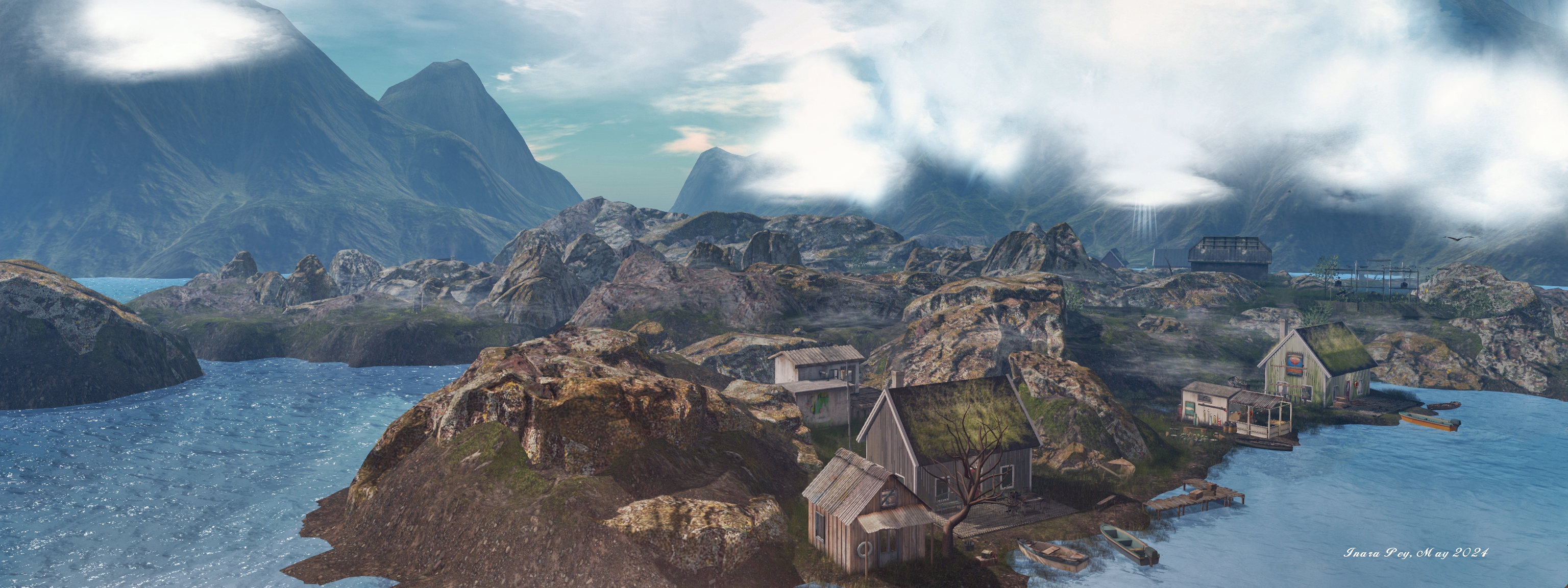
Open for a period of a month – through until late May 2024 – is a new Homestead region design by Dandy Warhlol (Terry Fotherington). Called Vindfjell, it is a marvel of windswept, Nordic beauty, balancing the region perfectly against the surrounding backdrop.
It’s my wont to often try to place regions with natural settings like this against locations within physical world which they might – if they existed – reside, or at least helped to inspire them. In some cases, this is helped by the region creator pointing to their inspiration or inspirations for their designs; sometimes it is possible to take a lead from the overall design and the designer’s background; other times, it is pure guesswork and imagination on my part.
With Vindfjell, it might be easy to point to Telemark County in Norway – specifically the Vindfjell mountain and nature reserve. However, whilst the name might well be taken from that area of Norway, I’d suggest that’s as far as the inspiration goes; the region itself folds numerous ideas and elements into it so that it is possible to see influences from across the Nordic countries of Finland, Sweden, Norway and Iceland and their associated autonomous regions, together with the likes of Denmark’s Faroe Islands and Greenland.
This is a place of rugged beauty and hardy living; a sheltered island sitting within fjords and inlets where fisher folk can live protected from the harsher aspects of North Atlantic weather, and from which they could depart in their boats to ply their trade, perhaps supplemented by a little sheep farming (although the sheep also likely help feed them!).
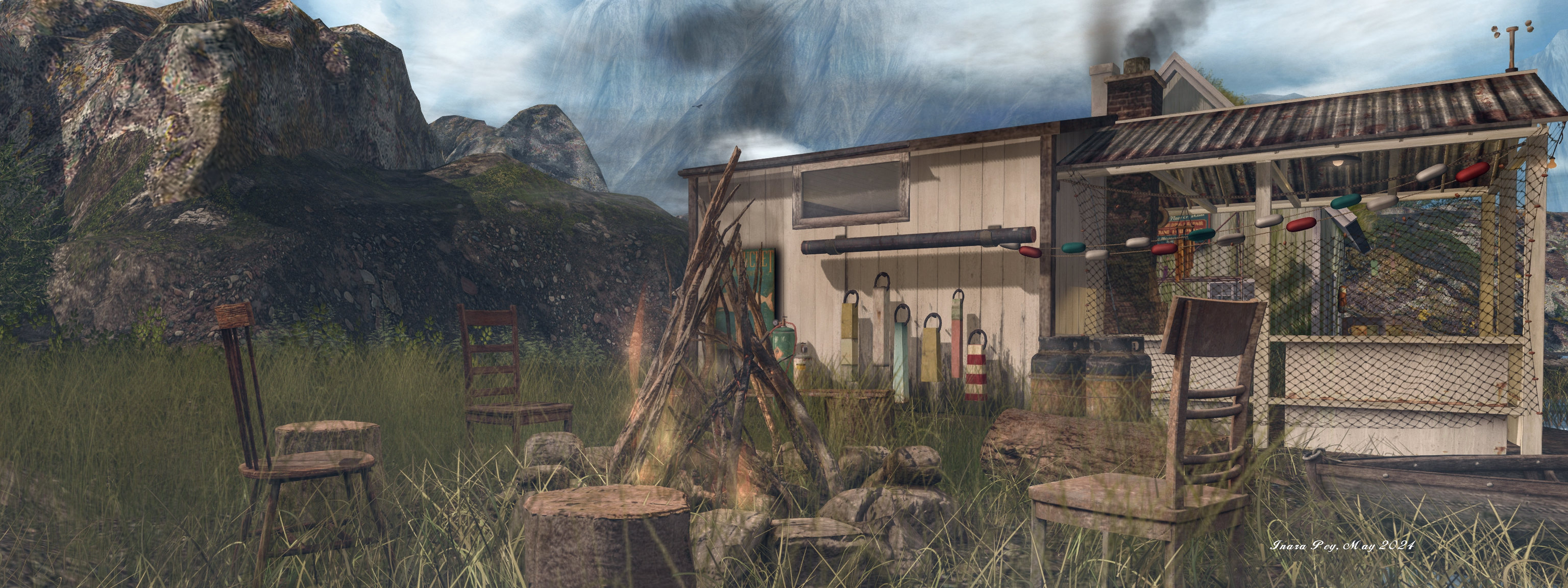
Given this, and as one might expect, the houses and cabins tend to confine themselves to the coastal aspects of the setting, where they can be easily reached by boat; indeed few are without a wharf, jetty or wall where boats may come alongside. Most – as typical of many Nordic houses in remote / rural areas – have a semi-turfed roof to help with insulation. These and the rugged nature of the island I found particularly evocative of my times in the northern parts of Iceland around Akureyri (which remains a place with one of the most spectacular runway approaches I’ve experienced, flying down through the ever-narrowing fjord) and Mývatn.
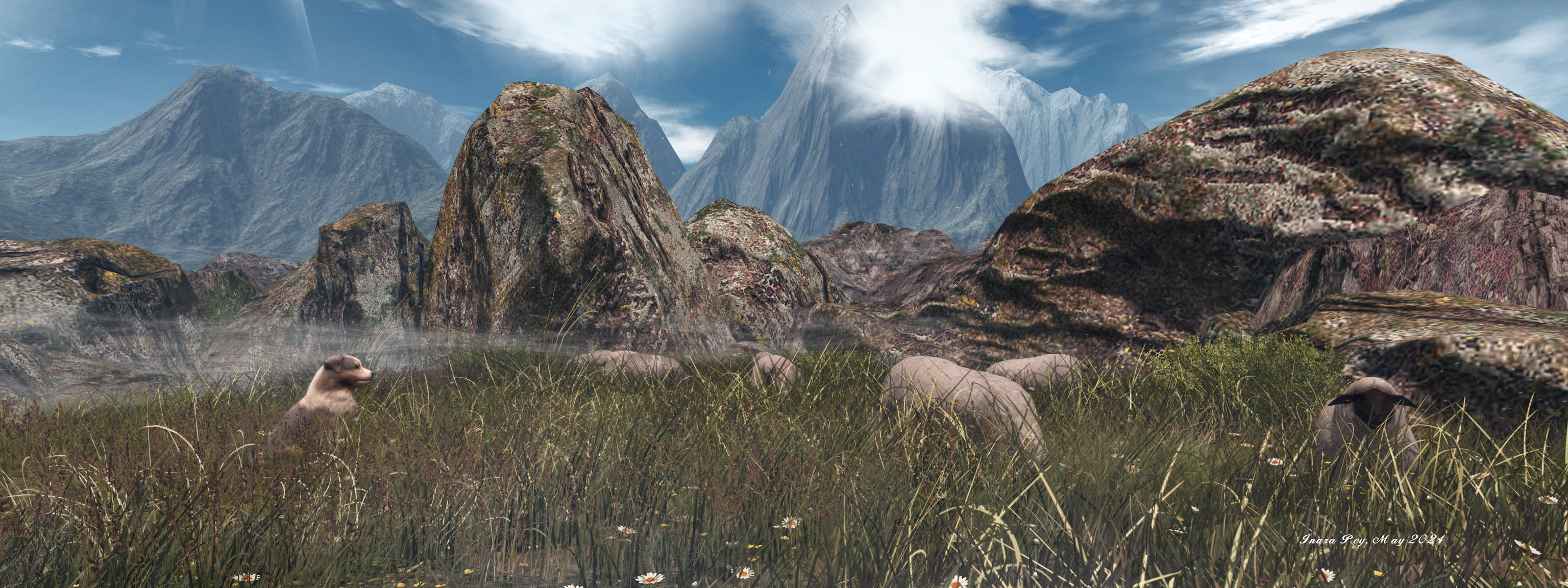
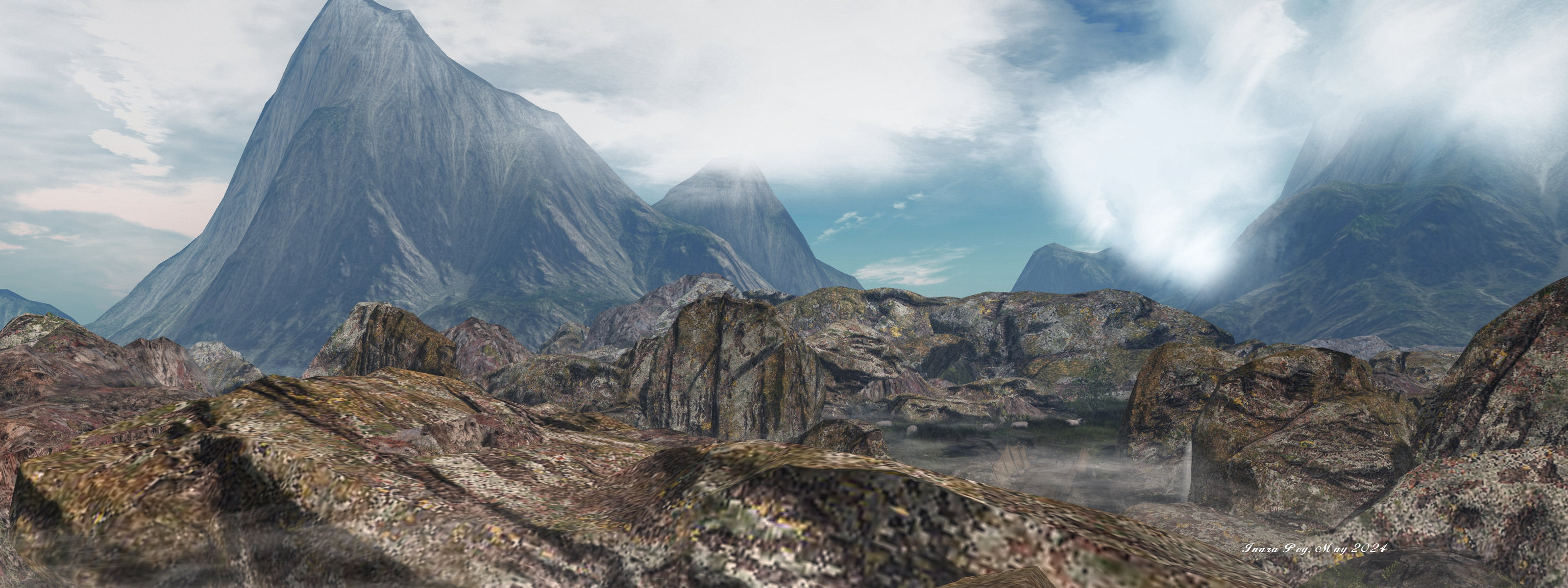
Most of the setting’s interior is given over to rocky beauty, with scrub grass and the occasional tree breaking the ground – something else that brought to mind parts of Iceland (and indeed, some of the remoter points along the north coast of Scotland I’ve seen).
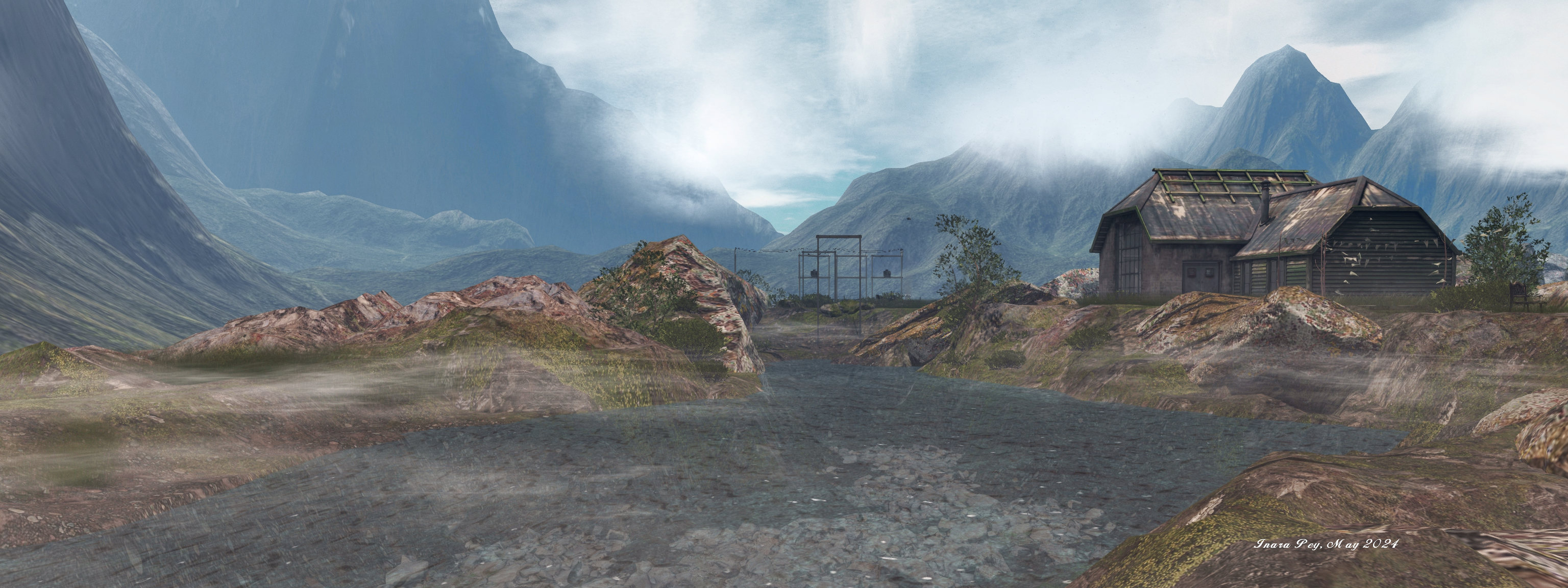
However, the one exception to this is a large industrial-like structure sitting somewhat inland, balanced between a deep gorge cutting its way through the landscape and a large body of water. Its presence, coupled with the electrical power lines close by together with the water and nearby falls might suggest this may once have been a hydroelectric power generation centre, or perhaps a place where geothermal energy had once been used to provide local power.
Or maybe the building had some other purpose, now being deserted; the choice is left totally open to the imagination – which adds further to the beauty of the setting, allowing as it does visitors to cogitate their own narratives as to the history of this place.
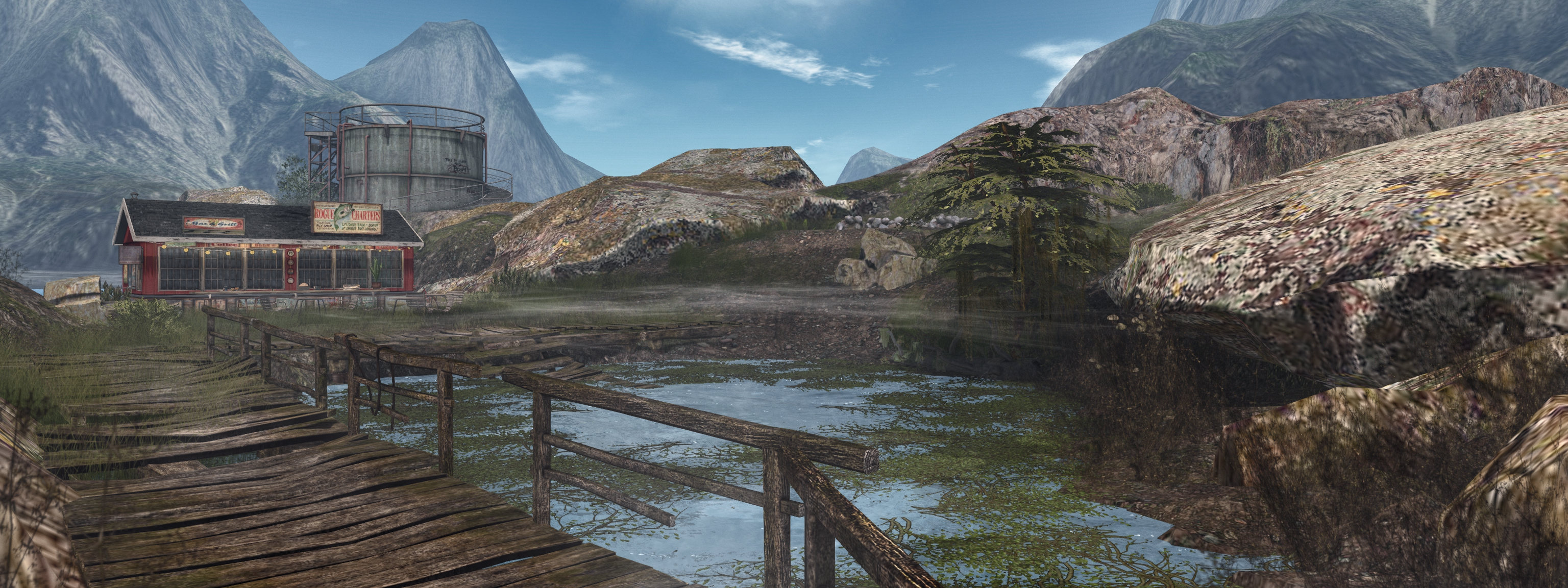
A further hint that the island once had something of an industrial use sits on the north-western headland, misty waters encroaching upon three sides. This is the kind of promontory many would look to site a lighthouse. Instead, Dandy (wisely, in my opinion) eschews that cliché and instead offers an ageing storage tank as a sentinel overlooking the waters, the gentle twist of steps around its circumference making an easy climb to its flat top, the threatening graffiti notwithstanding!
The landing point for the region sits somewhat towards the centre, amidst the scrub grass where sheep are grazing peacefully, having wandered up a narrow valley from the little farmhouse / fisherman’s cabin on the southern coast. As well as providing the route back to that cabin – no doubt followed by the sheep as night closes in, and the sheep dog herds them gently home – the grassland also presents a path and board walk down to the north side of the land, from where the storage tank mentioned above might be reached, together with the grassy spit of land forming the island’s northern side and which provides space for a couple of windswept houses.
In addition, the graceful arc of a stone bridge spans the gorge from this sheltered grazing, giving arrivals the means to reach the old industrial unit with its attendant body of water or follow a fence-marked trail down to the little hamlet occupying the south-east east of the setting, as they find shelter against the elements on their southern side by a blocky bluff of a headland poking out into the sounding waters.
Throughout all of this, Dandy has added further ambience to the setting via the region EEP, and through the use of mesh “puff” clouds, low-lying misty and floating seed heads float and flow as they are caught on the wind (in some cases to be blown helter-skelter between the narrower walls of rock, where one much reasonably expect any breeze to be funnelled and accelerated). That said, the static nature of the mesh clouds are a little at odds with the haunting hiss of the wind present in the sound scape – but one can forgive their refusal to move simply because they add a further depth to the setting.

Dandy calls the setting “ephemeral”, mostly because Vindfjell is only with us for a short time. As such, it’s a fitting term – but one to which I’d personally add the word “beauty”, as the setting really is glorious in its natural beauty and sense of being. A fabulous celebration of the rugged pulchritude of Nature, this is a setting very definitely not to be missed.
SLurl Details
- Vindfjell (Harmony Bay, rated Moderate)

 Inara Pey: Living in a Modemworld